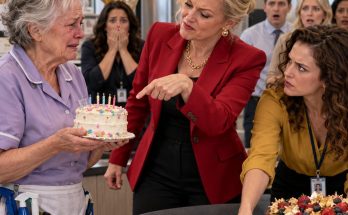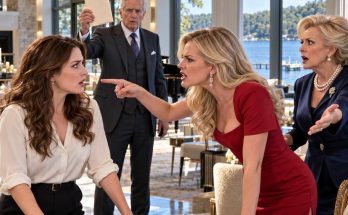
At Grandma’s Will Reading, Mom And My Brother Split The House And $412,000. Mom Pointed At Grandma’s Old Dog. “Take Him. Nobody Wants Either Of You.” My Brother Laughed. I Knelt Beside Him, Then Took Him Home. A Month Later, Mom Offered Me Her Share. She Needed One Favor…
At my grandmother’s will reading, my mother pointed at her aging dog and said, “Take him. Nobody wants either of you.” My brother laughed while they discussed selling the house and dividing the money as if I were already gone. I left with the dog, his medicine, and an old spiral notebook nobody wanted. Thirty days later, Mom appeared at my apartment offering me her entire inheritance for one signature. Then I turned that notebook over and found a message Grandma had hidden where she knew my mother would never look.
Part 1
My name is Leah Mercer, and the first time I understood how completely my mother could erase a person, I was sitting at my grandmother Ruth’s kitchen table while an attorney read a will that contained everybody’s name except mine. The kitchen looked almost exactly as it had when I was a child—yellow curtains, chipped white cabinets, a clock shaped like a rooster—but Grandma was gone, and without her the room felt like a stage after the audience had left. Her attorney, Martin Bell, opened a tan folder and explained that Ruth’s house outside Kearney, Nebraska, along with roughly four hundred thousand dollars in savings and investments, would be divided equally between my mother, Nora Mercer, and my older brother, Evan. My mother barely waited for Martin to finish before saying the realtor could come Tuesday.
Evan asked whether he could take Grandma’s chest freezer, and Mom said yes as if she already owned every spoon in the drawers. Martin reminded her that probate had to begin before anything could legally be transferred, but she waved that aside with the confidence of someone accustomed to making people follow her instructions. Mom had been a registered nurse for more than thirty years, and she spoke to lawyers, waitresses, clerks, and her own children in the same calm voice she used when telling a patient to roll over. I sat near the back door because no one had told me where to sit. Hank, Grandma’s fourteen-year-old black Lab mix, stood with his shoulder pressed against my knee.
Mom finally noticed him after the paperwork was closed. “What are we doing with that dog?” Evan asked, not looking at Hank so much as at the problem of Hank. Mom glanced down, then toward me. “Leah can take him,” she said. When I didn’t answer, she added, “Take him. Nobody wants either of you.” Evan let out a short laugh before catching himself, and Martin stared at the closed folder in front of him as though something inside it suddenly required his full attention.
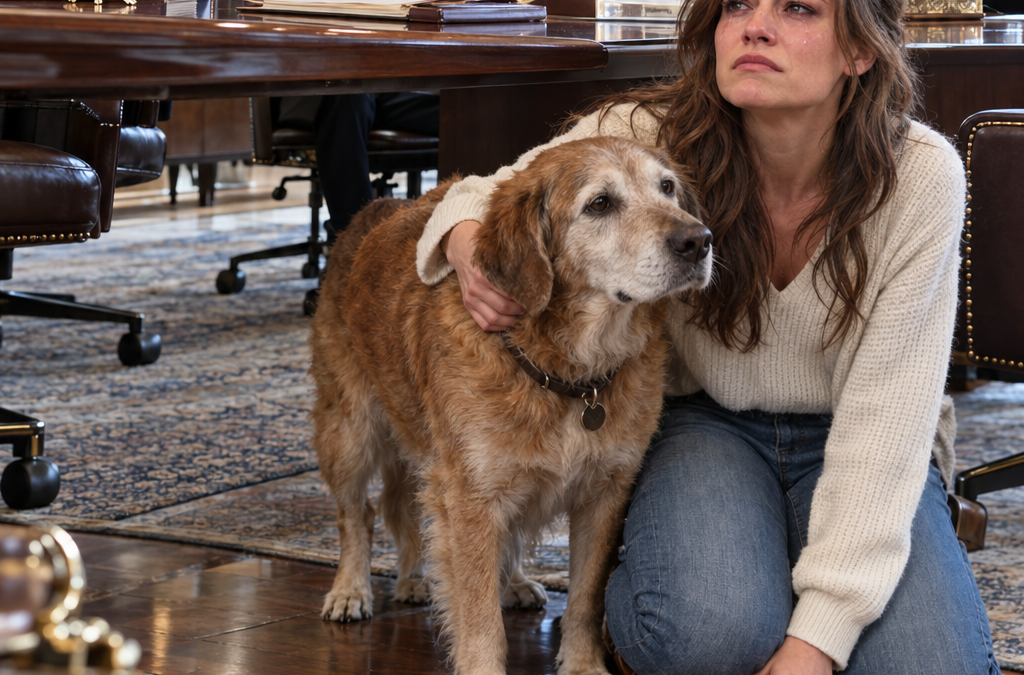
I remember the cold of the kitchen floor through my pants when I crouched beside Hank. His muzzle had gone almost completely gray, his eyes milky around the edges, and he leaned his whole heavy head into my hands the second I touched him. I did not give Mom the reaction she expected. I picked up his leash, the grocery bag containing his medicine, his food bowls, and the faded green bed he had slept on beside Grandma’s bedroom door. “His chart goes too,” Mom said. “Everything that belongs to him.”
That chart was a spiral notebook with masking tape across the front. In Grandma’s square handwriting, the tape read HANK’S BOOK—GOES WHERE HE GOES. I knew the notebook better than anyone because I had written in it twice a day for three years. Grandma had ruled every page down the middle: her schedule on the left, Hank’s on the right. At six each morning and six each evening, I had recorded the time, what each of them had been given, and my initials.
Three years earlier, Grandma had broken her hip the same week I was accepted into a nursing program in Grand Island. Mom had stood in the hospital corridor with a clipboard tucked under her arm and said, “You’re closest, and you haven’t started school yet. She needs somebody until she gets back on her feet.” I deferred my enrollment because everyone said it would be temporary. Temporary became a month, then winter, then another spring, and by the time Grandma could walk without a walker she had other problems that made living alone impossible. I kept paying rent on my small duplex while sleeping at her house most nights, partly because Mom insisted changing my address would complicate Grandma’s insurance.
My days became measured by ordinary things nobody applauds. Coffee before sunrise, breakfast, Grandma’s medicine mixed into applesauce because she hated swallowing pills, Hank’s medicine hidden in peanut butter, laundry, grocery lists, appointments, and my four-hour shift doing accounts at a farm supply cooperative. Every evening, Grandma inspected the notebook. If I wrote 6:00 when the kitchen clock showed 6:02, she made me correct it. “Two minutes count if somebody ever asks,” she would say. “People remember what they want. Paper remembers what happened.”
Mom came most Sundays after church. She wore her scrubs, checked Grandma’s blood pressure once in a while, collected the mail, talked for twenty minutes, and left. Yet at church people thanked her constantly for keeping her mother at home. I once heard the pastor praise her from the pulpit for “the quiet sacrifice of daily caregiving,” while I stood near the coffee urn stacking foam cups. Mom lowered her eyes with perfect humility. She never corrected him.
When Grandma died three years later, Mom wrote the obituary. One sentence said Ruth Mercer had been lovingly cared for at home by her devoted daughter, Nora Mercer, RN. My contribution was reduced to two words in a list of surviving relatives: granddaughter Leah. I folded that newspaper page and left it on my kitchen counter, not because I planned to confront anyone, but because I had spent three years learning that what gets written down can matter later.
After the will reading, Hank spent two nights pacing my duplex as if Grandma might be hiding in one of the rooms. On the third night, he finally lay across my bedroom doorway and stayed there. I was two months behind on rent, working every hour the co-op could give me, and counting Hank’s remaining pills when I should have been figuring out how to pay the electric bill. Mom did not call. Evan did not call either.
Thirty days after she told me nobody wanted either of us, Mom parked outside my duplex carrying a covered casserole.
And the first thing she asked when I opened the door was whether I still had Grandma’s notebook.
Part 2
Mom had not stepped inside my duplex in three years. She placed the casserole on my kitchen table, removed her gloves, and looked around with an expression that suggested she was examining a room before discharge. “You’ve kept it nice,” she said, though she had never seen it messy. Hank came slowly from the bedroom, and Mom surprised me by bending slightly toward him. “How’s the old guy doing?”
“In fourteen years, you’ve never asked me that.”
Her smile tightened. “People can change.”
She had worn a blue cardigan instead of scrubs, and for a few seconds she looked like the mother I remembered from grade school—the woman who packed sliced apples in my lunch, worked night shifts, and once drove through a snowstorm because I had forgotten my costume before a Christmas concert. She sat across from me and put her hand over mine. “I’ve been thinking about what I said at Mom’s house. I was angry. Grief makes people ugly sometimes.” Her thumb moved once against my knuckles. “You did more for her than anyone knew.”
Those were words I had wanted from her for years. Hearing them loosened something inside me before I could stop it. I hated myself a little for how quickly I wanted to believe her. Then she reached into her purse and pulled out a two-page document assigning her share of Grandma’s estate to me. Half the house, half the cash, everything she was due to receive after probate.
“I had this prepared,” she said. “You deserve something.”
I read my name twice. Leah Mercer. Beneficiary of Nora Mercer’s entire distributable interest. Behind Mom’s shoulder, the late-rent notice still hung from my refrigerator. Half an inheritance could have cleared every debt I had, put me back in nursing school, and bought enough time that I would not have needed to choose between groceries and Hank’s next veterinary appointment. For about a minute, I let myself imagine that my mother had finally seen me.
Then she reached into her purse again.
“This part is just paperwork.”
The second document was only one page. It had an insurance company logo at the top, a claim number, and my name typed beneath a blank signature line. The statement above it said that I confirmed Nora Mercer, RN, had personally provided daily skilled nursing care to Ruth Mercer in Ruth’s home during the final three years of her life. Mom uncapped a pen and placed it beside my hand. “They need a household member to verify it.”
I read the sentence again.
“You didn’t provide daily care.”
“I supervised.”
“You came Sundays.”
“I coordinated her treatment. I handled insurance, prescriptions, appointments.”
“You collected her mail.”
Her eyes cooled slightly. “Leah, don’t turn this into something childish.”
I lifted the first document, the one giving me her inheritance. The signature line at the bottom was still empty. “You’ll sign this after I sign that?”
“It’s all part of getting things settled.”
“So you’re buying my signature.”
Mom leaned back. “I am trying to give you something after you received nothing.”
The cruelty of that sentence took a second to reach me. She had said received as though the will were weather, as though she had not spent the morning after Grandma’s funeral discussing what furniture she wanted. I slid the insurance form back across the table. “I’ll sign anything true.”
Her hand stayed beside the pen. “This is true enough.”
“No.”
The warmth disappeared from her face. “You lived with Mom without paying her rent for three years. Let’s not turn that into a career.”
“I kept my duplex the entire time because you told me to.”
“You were there because you had nowhere more important to be.”
Hank shifted under the table and leaned against my leg.
Mom stood. She put the inheritance document back into her purse but left the verification form on my table. “The company needs that before the sixteenth. Think about what you’re refusing.”
After she left, I stared at the form for almost an hour. Nobody offers half a house and tens of thousands of dollars for a harmless signature. Whatever the insurance company wanted, Mom feared the truth more than she valued Grandma’s estate.
At six, Hank came to the kitchen and stood beside his bowl. He had always known the schedule better than I did. I gave him his medicine, opened Grandma’s notebook, and wrote 6:01 in the right-hand column. The left side had been blank since Grandma died.
I decided to tuck Mom’s form inside the back cover so I would not lose it.
That was when I saw writing on the cardboard.
The letters were shaky and pressed so hard into the cover that I could feel their grooves beneath my fingertips.
Every entry in this book was written by Leah. She was the one who cared for me. Ruth Mercer. January 11.
Below Grandma’s name was another signature.
Witnessed: Connie Dillard, RN.
There was a phone number.
My phone buzzed before I could dial it. A text from Mom filled the screen.
My whole share for one signature. Think about what that means.
I took a screenshot.
Then Evan called.
“Mom says you’re making some insurance form into a federal case.”
“What did she tell you?”
“That they need confirmation she cared for Grandma.”
“Did she mention offering me her entire inheritance?”
Silence.
Not ordinary silence. The kind that changes the shape of a conversation.
“She offered you what?”
I looked at the notebook again. Grandma’s message had been hidden on the one place Mom would never bother examining—the cover of a dog’s medication chart.
“Nothing,” I said. “Forget it.”
After Evan hung up, I began flipping through the pages more carefully. Small stars appeared in the margins every few weeks, always in Grandma’s handwriting. I recognized some dates: the night the furnace failed, the week she had pneumonia, the morning I missed work because she could not stand without help. Once, during her second winter, she had watched me initial the notebook and whispered, “Somebody ought to keep records on the person keeping records on everybody else.”
At the time I thought she was joking.
Now I understood the stars were hers.
Grandma had not merely been checking her medications.
She had been documenting me.
The next morning, I called Connie Dillard.
She answered on the second ring, and the moment I said my name, she replied, “You finally found the back cover.”
Part 3
Connie would not explain anything important over the phone. She told me to bring the notebook and come to her house after her shift. “And don’t leave that book sitting around,” she added. “Take it with you.” Her tone was calm, but it was the kind of calm that made me obey immediately. At seven that evening, Hank and I drove across town with the notebook wrapped in one of Grandma’s old dish towels.
Connie opened the door before I knocked. She was in her early sixties, silver-haired, narrow-faced, and still carried herself with the efficient posture of a nurse even in jeans and socks. The first thing she did was crouch beside Hank. “There’s my gentleman,” she said, holding his old face between her hands. Hank wagged his tail twice with more energy than he had shown all week.
She put the notebook on her kitchen table and read it from the last page backward. She moved quickly at first, then slower. “This is better than some hospital medication records,” she said finally. “You never missed documenting a dose?”
“Grandma wouldn’t let me.”
“No. She wouldn’t.”
Connie poured coffee and told me what had happened during Grandma’s final month. When hospice admitted her, Connie called Grandma’s long-term-care insurer to coordinate services. The insurance representative told her they already had records showing a registered nurse had been providing daily in-home care for nearly three years. That nurse was my mother.
“I thought maybe Nora was coming while you were at work,” Connie said. “So I asked Ruth what time her daughter usually handled her medications.”
“What did Grandma say?”
“She asked me for my glasses.”
Connie had written Mom’s name on a pad. Grandma read it twice and went very still. Then she asked, “Who told them that?” Connie explained that the insurer had been paying under a nursing-care provision because documentation submitted over the years represented that Mom was providing the service.
My coffee turned cold while I listened.
“How much?”
“I don’t know the exact total.”
“But approximately?”
Connie hesitated. “A lot, Leah.”
I worked with numbers. My brain did what it always did when frightened—it calculated. A professional daily-care rate multiplied across three years could reach well into six figures. Suddenly Mom’s offer made sense. Her half of Grandma’s estate was not generosity. It was cheaper than whatever she might be forced to repay.
“Why didn’t Grandma tell me?”
“She didn’t want you confronting Nora while she was dying.”
That sounded exactly like Grandma. She could be stubborn about protecting other people from battles she had decided were hers. Connie explained that once Grandma understood what had happened, she asked what she could legally document without changing her will. Connie suggested she speak with an attorney, but Grandma refused. “She said if a dying woman suddenly rewrote everything in favor of the granddaughter caring for her, your family would accuse you of manipulating her.”
I almost laughed because it was so painfully accurate.
“So she used the notebook.”
“She wrote the statement on the back, and I witnessed it. Then she made a recorded statement for hospice.”
My fingers tightened around the cup. “There’s a recording?”
Connie nodded. “It belongs to the hospice file. I can’t give it to you. But she recorded in her own voice who provided her daily care, who administered her medicine, and what she understood about the insurance claim. I filed an internal report the following morning.”
“Mom knows?”
“She’s known there was an investigation for weeks.”
That explained the casserole, the cardigan, the sudden concern for Hank. It explained why Mom had needed my signature specifically. Hospice records already placed me in the house. The insurer had one version of events saying Nora Mercer, RN, had delivered daily care. They now had a hospice nurse saying Leah Mercer had been there instead.
My mother needed me to make the two stories match.
I did not cry at Connie’s table. What I felt was stranger than anger. For years I had assumed Mom took credit for my caregiving because she enjoyed admiration. That had hurt, but vanity was ordinary. This was different. She had converted my invisible labor into something measurable, billable, and apparently profitable.
“She had six weeks after Ruth learned the truth,” Connie said quietly.
“To do what?”
“To make sure someone would believe you.”
When I got home, I opened the notebook again and examined every starred page. Grandma had chosen moments when the care was hardest. The night she could not breathe. The morning ice closed the roads and I slept on the couch because I was afraid she would fall. Christmas Eve when Mom stopped by for twenty minutes, accepted praise from relatives, and left before Grandma needed help getting to bed.
The stars had been Grandma’s witness marks.
Two days later, a woman at the grocery store grabbed my wrist near the bread aisle. “Your mother is an angel,” she said. “Three years caring for Ruth at home. I don’t know how she managed her job too.”
Behind her, the local newspaper displayed Mom’s photograph. Prairie View Senior Living, where she supervised nursing staff, had nominated her for the county’s Family Caregiver Award. The article praised her for practicing at home the compassion she expected from employees.
I bought my bread without correcting the woman.
Outside, Evan was leaning against my truck.
“You need to sign the form.”
“No.”
“Mom’s attorney says this could delay probate.”
“Then probate gets delayed.”
“Half that estate is mine too, Leah.”
I opened my truck door. “Then maybe ask Mom why my signature controls your money.”
He looked away.
That told me more than if he had answered.
The insurance form included a claim number and a telephone number at the bottom. That night I called. A man named Daniel Price answered, asked for the claim number, then paused after I gave my name.
“Yes,” he said. “We’ve been hoping to speak with you.”
I stared at Hank sleeping near the refrigerator.
“What do you need from me?”
“The truth,” he said. “Preferably with documentation.”
For three years I had written the truth twice a day without realizing anyone would ever need it.
Five days later, I drove to Grand Island with Grandma’s notebook beside me.
And for the first time in my life, I was about to put my name on something my mother had not chosen for me.
Part 4
The insurance examiner’s office was smaller than I expected. Daniel Price wore a short-sleeved dress shirt and had the tired expression of a man who spent his days reading explanations written after people realized numbers no longer agreed. He did not ask whether I was angry with my mother. He asked where I slept between Grandma’s hip fracture and her death, who administered medication, who prepared meals, and who was normally present at six in the morning and six in the evening.
I answered only what I knew.
Then I handed him the notebook.
Daniel spent almost an hour copying it page by page. The machine flashed beneath Grandma’s handwriting, my initials, the dates, the corrections where she had made me change 6:00 to 6:02. He copied the front cover, the back cover, Connie’s signature, and every page in between. When he finished, he counted several lines with his finger. “More than two thousand entries.”
“Probably.”
“And these initials are yours?”
“Yes.”
“Any entries by your mother?”
“No.”
He asked me to write a statement. The night before, I had drafted two furious pages describing Sundays at church, the obituary, Mom’s forty-minute visits, and every time I had watched strangers congratulate her. Then I crossed nearly all of it out. Anger could be argued with. Dates were harder.
My final statement contained four paragraphs. I wrote where I lived, what care I provided, how the notebook was maintained, and that I had never signed any document verifying Mom provided daily nursing care. Daniel read it back to me. I signed it.
That signature cost me whatever chance remained of receiving Mom’s inheritance.
I knew that before the pen touched paper.
Two days later, Mom left a voicemail sounding almost cheerful. “I told them the form is coming Thursday. I’ll stop by Wednesday and pick it up. Thank you for finally being reasonable.” I listened twice, saved it, and said nothing.
Wednesday came.
Mom did not.
Thursday afternoon, Daniel called and asked me to return to his office.
This time he already had a document on his desk.
It was the same household verification Mom had left in my kitchen. Same claim number. Same sentence claiming she had provided daily nursing care. But the signature line was no longer blank.
My name appeared in blue ink.
Leah Mercer.
I recognized Mom’s handwriting immediately. She made capital L’s with a little hook at the top, the same hook that appeared on every birthday card she had ever given me.
Daniel kept his voice neutral. “Is that your signature?”
“No.”
“Did you authorize anyone to sign your name?”
“No.”
“Do you recognize the handwriting?”
I looked again. “I would rather you compare it independently.”
He nodded, then moved his hand from the bottom of the document.
There was a witness signature.
Evan Mercer.
For several seconds, I only stared at my brother’s name.
“He witnessed this signature,” Daniel said. “Did you sign anything in his presence?”
“I haven’t been in a room with him since before this form was brought to me.”
Daniel placed my previous statement beside the new verification. My statement had been received and stamped eight days before the form containing the forged signature.
“That timing matters,” he said.
The word forged sounded larger than the room.
Until then, I had thought Mom was pressuring me to participate in a lie. What lay in front of me was different. I had said no, and she had decided my refusal was merely an inconvenience.
Daniel asked whether she had discussed the form through text or voicemail. I unlocked my phone and showed him everything: her offer to give me her entire inheritance for one signature, her message saying I would come around, and the voicemail thanking me for being sensible before the forged document was submitted. He copied the messages.
The next morning Evan called.
“Did you tell them I watched you sign?”
“I told them the truth.”
“Mom brought me a paper. Your name was already there. She said you signed it at your apartment and forgot to get a witness.”
“So you signed as witness.”
“I was late for work.”
I almost laughed. “That’s your explanation?”
“She’s Mom.”
There it was. The family sentence that had excused almost everything for thirty years.
“She told you that you saw me sign something you didn’t see.”
Silence.
“Evan, when they ask, tell them exactly what happened.”
His breathing changed. “Why would she fake your name if the form didn’t matter?”
I considered protecting him from the answer. Then I remembered him laughing at Grandma’s kitchen table.
“Because the night she brought it to me, she also brought a document giving me her entire half of Grandma’s estate if I signed.”
“What?”
“House. Money. Everything.”
For a long time he said nothing.
Finally he whispered, “I asked her for twenty thousand dollars in March. My business loan reset. I told her I was drowning.”
I waited.
“She told me the estate couldn’t spare anything.”
That was the moment Evan understood Mom had been willing to sacrifice his inheritance too if it protected her.
Three weeks later, I received a court notice. Grandma’s estate had been temporarily frozen. The insurer was seeking removal of Mom as personal representative until the disputed claim and financial records could be reviewed.
Then the rumors started.
At church, Mom told people I had authorized her to sign my name and changed my story because I was angry about the will. At the grocery store, someone whispered that grief had made me vindictive. One of Grandma’s neighbors told me gently that families sometimes “remember caregiving differently.”
I stopped trying to defend myself.
Martin Bell, the attorney who had read Grandma’s will, withdrew from representing Mom in probate.
He gave no public reason.
But I remembered him staring at his closed folder the day she told me nobody wanted me.
A hearing was scheduled for Thursday morning.
Mom planned to bring her boss, the pastor, and several friends to testify about her character.
I brought one old dog, one spiral notebook, and three years of six o’clocks.
I thought that was all I had.
Until Connie called the night before the hearing and said, “The judge has approved Ruth’s recording.”
Part 5
The county courtroom had dark wood benches polished by decades of nervous hands. I arrived early and sat near the aisle with Grandma’s notebook in my lap. Mom entered wearing a gray blazer with the small silver RN pin she had worn to the will reading. Behind her came Russell Tate, the administrator of Prairie View Senior Living, and Pastor Mitchell from our church.
Evan arrived alone.
He sat two rows behind Mom.
That told me where things stood before anyone spoke.
The judge began with the verification form. He read its central sentence aloud: Nora Mercer, RN, personally provided daily nursing care to Ruth Mercer during the final three years of her life. Then he opened Grandma’s notebook.
“Mrs. Mercer, this document records medication administration twice daily.”
Mom folded her hands. “That notebook was mostly for the dog.”
The judge looked down. “The cover says Hank’s Book. The first page says, ‘Left side Ruth, right side Hank.’”
“She kept informal household notes.”
“Who is ‘she’?”
“Leah.”
“So your daughter maintained this record.”
“Yes, but I supervised my mother’s care.”
The judge turned several pages.
“Your initials do not appear.”
“I kept separate professional records.”
The insurer’s attorney asked where those records were.
Mom said she had lost access to an old computer.
Then the judge turned the notebook over.
Every entry in this book was written by Leah. She was the one who cared for me.
The courtroom became very quiet.
Mom’s attorney objected that Grandma’s handwritten statement lacked context, but Connie testified that she had witnessed Ruth write it while mentally competent. Connie described hospice admission, her call to the insurer, and Grandma’s reaction when she learned daily nursing services had apparently been billed under her daughter’s name.
The judge called Evan next.
My brother looked smaller than I remembered.
He admitted Mom had brought him the verification with my name already signed. She told him I had signed at home and only needed him to witness it. He acknowledged he did not actually see me write my name.
Mom turned slightly in her seat.
“Evan.”
Just his name. Quiet and warning.
The judge looked at her.
“Mrs. Mercer, you will not address the witness.”
Evan’s face went red. “Yes, Your Honor. I didn’t see Leah sign.”
Then came my messages.
The insurer produced Mom’s text: My whole share for one signature.
Next came her voicemail thanking me for being sensible and saying she would collect the form Wednesday.
The judge compared dates. My refusal and statement had been received before Mom submitted the document containing my name. Her voicemail showed she still believed the original form remained with me after the alleged signature date.
Mom’s attorney stopped taking notes.
Russell Tate, sitting behind her, slowly closed his folder.
Then a clerk placed a small speaker on the judge’s bench.
Static filled the room.
Behind it came a sound I had heard thousands of mornings.
Grandma’s coffee percolator.
My throat tightened before she even spoke.
“My name is Ruth Mercer. I know where I am, and I know what day it is.”
Her voice was slower than I remembered but unmistakably hers.
“My daughter Nora is a nurse. She was not my nurse. Leah gave me my medicine in the morning and at night. Leah stayed here. Leah wrote it down. If somebody is getting paid for being here every day, ask them why their initials aren’t in the book.”
No one moved.
The recording continued.
“I loved both my children. Loving somebody doesn’t make a false thing true. Leah gave up school because we told her I needed her. I should have asked what she needed.”
I lowered my eyes.
Grandma paused long enough that the percolator became loud.
Then she said, “That girl thinks nobody sees her because the people taking credit never turn around. I see her.”
The recording ended.
Pastor Mitchell’s head had dropped.
Russell Tate removed his glasses.
Mom touched the RN pin on her lapel.
The judge ruled before lunch. Mom was removed immediately as personal representative of Grandma’s estate, replaced by a bank-appointed administrator. Her share was frozen pending reconciliation of the insurance claim. Evan’s share was temporarily restricted while investigators reviewed whether estate funds or other accounts had been used improperly. The forged verification was referred to the county attorney.
The judge made no speech about justice.
He simply read the orders.
That almost made them heavier.
In the hallway, Mom sat alone on a wooden bench with her purse on her knees.
Russell stopped in front of her.
“I’m withdrawing the caregiver award nomination.”
She did not look up.
“Come to my office before your next scheduled shift.”
Then he approached me.
“It should have been your name in the nomination.”
Months earlier, that sentence might have mattered more than anything. Now it felt strangely small.
“No, thank you,” I said. “I wasn’t doing it for an award.”
A reporter from the local paper asked whether I wanted to make a statement.
I shook my head.
To reach the stairs, I had to walk directly past Mom.
She looked at her hands.
I did not slow down.
At home, I gave Hank his evening medicine and opened the notebook. I expected triumph. Instead I felt exhausted, almost hollow.
Grandma had finally said publicly what I had never managed to say for myself.
I was there.
I had done the work.
And now everyone knew.
Sunday morning, I almost skipped church. Then I decided I had surrendered enough rooms to other people’s stories. I sat in my usual pew.
Mom’s place was empty.
Inside the bulletin was a small correction to Grandma’s obituary.
Ruth Mercer was cared for at home during her final years by her granddaughter, Leah Mercer.
Pastor Mitchell did not apologize publicly. At the door after service, he simply met my eyes and nodded once.
I folded the bulletin and slipped it into Grandma’s notebook.
That afternoon, Connie called.
“Ruth left another recording.”
“I thought the court heard it.”
“That one was for anyone who needed proof.”
Connie paused.
“This one was never meant for court.”
My hand tightened around the phone.
“Who was it meant for?”
“You.”
Part 6
Connie placed the recorder on her kitchen table the following evening. Hank lay on a blanket near the stove, too tired to investigate anything beyond the smell of peanut butter. Connie poured tea, touched my shoulder once, and left the room.
Grandma’s voice began without an introduction.
“Leah, if you’re hearing this, then things probably got ugly.”
I laughed once through my nose because even dying, Grandma apparently understood our family.
“They’re going to tell you that you stayed because you had nowhere else to go. They’ll call you help, or company, or convenient. Don’t let somebody rename three years of your life just because the right name embarrasses them.”
I pressed my palms together.
“I needed you after the hip. That part is true. But somewhere along the way, needing you became wanting you there. There’s a difference. You were never trapped in that house because you had nothing better. You stayed because you loved an old woman who was scared to be alone.”
Hank lifted his head when he heard her voice.
Grandma continued.
“I know about school. Your mother told me you had postponed it because the timing didn’t work. She didn’t tell me the timing was me until much later.”
I closed my eyes.
“I’m sorry.”
Two words.
No explanation attached.
No attempt to soften them.
“I wanted to change the will. Connie told me I could talk to somebody. But if I changed everything at the end and left the house to you, Nora would say you influenced me. Evan would believe her because believing her is easier than examining anything. So I left the will alone and made sure the truth had somewhere else to live.”
There was a long pause, followed by the clink of a spoon.
“Go back to school if you still want it. If you don’t, choose something else. But choose it yourself. And put the two minutes when it’s two minutes.”
The recording stopped.
I got down on the floor beside Hank.
He shifted until his ribs leaned against me.
For years, the sentence that had hurt most was Mom saying nobody wanted either of us.
Grandma had corrected it from beyond the grave.
Need was not the same as want.
Mom had needed my signature.
Grandma had wanted me at her table.
That difference carried me through the next several months.
The state nursing board temporarily suspended Mom’s license while investigating the insurer’s complaint and the forged verification. Prairie View placed her on unpaid administrative leave. The insurance company calculated that payments connected to the disputed caregiving representations exceeded one hundred and seventy thousand dollars.
The estate administrator discovered something worse.
Several reimbursements had been deposited into an account Mom controlled jointly with Grandma for household expenses. Over time, thousands had been transferred into Mom’s personal account. Some paid ordinary bills for Grandma, but others covered Mom’s credit cards, vacations, and payments on a newer SUV.
Mom’s wrongdoing had not begun with one desperate form.
The form was simply the first time she needed somebody else to certify the story she had been telling for years.
Evan called me after the administrator showed him the accounting.
“I didn’t know.”
“I believe you.”
“I should’ve asked.”
“Yes.”
“I laughed that day.”
I knew exactly which day.
“I know.”
He started apologizing.
I stopped him.
“You don’t need to give me a speech. Just stop saying you didn’t know as if not knowing happened by accident. You didn’t want to know.”
He was quiet.
“That’s fair.”
It was the first useful thing my brother had said in months.
The court eventually released most of Evan’s inheritance after investigators concluded he had not participated in the financial scheme before signing the witness line. He still faced consequences for falsely witnessing the signature, though prosecutors treated his cooperation differently from Mom’s conduct. He sold his struggling equipment business, paid down debt, and moved two hours away.
We did not become close.
But we stopped pretending we had been.
My own life remained financially unimpressive. No magical inheritance arrived. The house belonged to the estate, and Mom’s frozen share was consumed largely by repayment obligations and legal expenses. I was still in my duplex, still driving the Ford Ranger, still working at the cooperative.
Yet something had changed.
The co-op manager offered me full-time bookkeeping work.
Connie helped me contact Central Nebraska Community College.
My old nursing seat was long gone, but the program director remembered my deferral and invited me to reapply. Connie wrote a recommendation describing three years of documented medication management, home caregiving, and coordination with hospice.
I left the application unsigned for nine days.
Signing it frightened me more than signing my statement against Mom.
That form was not about surviving someone else’s actions.
It asked me to choose a future.
One evening, five minutes before Hank’s six o’clock medicine, somebody knocked on my door.
Mom stood outside.
She wore a plain blue blouse. No blazer. No RN pin.
Two tiny holes remained in the fabric where the pin had once been.
She carried no casserole.
No purse.
No papers.
Her hands were empty.
“It was you,” she said.
I did not answer.
“With Mom. Every morning. Every night.”
“You already knew that.”
Her mouth tightened.
“I know.”
“You knew when you wrote the obituary.”
“Yes.”
“You knew when you took the insurance money.”
She looked away.
“Yes.”
For the first time in my life, my mother had come to my door without a version of events prepared in advance.
Then she said the sentence I had expected from the moment the investigation began.
“Can you forgive me?”
Part 7
I looked at Mom through the screen door and understood something I had not understood when Grandma died. Forgiveness and access are not the same thing.
“I don’t know,” I said.
Her face changed.
Not dramatically. Just enough to show she had expected a different answer.
“I’m your mother.”
“I know who you are.”
“I’ve lost my job.”
“You may lose your license.”
“Yes.”
“Those things happened because of what you did.”
She nodded once.
“I know.”
It was tempting to use that moment to unload everything. The obituary. The church. The will reading. The insult. Three years of being invisible while she accepted casseroles from people congratulating her for my work. Instead, I went to the kitchen table, opened Grandma’s notebook to an unused page, and tore the sheet carefully along the spiral.
I handed the blank graph paper to Mom.
“What is this?”
“You spent years writing versions of my life for other people. Write your own version now.”
Her fingers closed around the paper.
“What do you want me to say?”
“The truth.”
“About what?”
“All of it.”
She looked frightened.
That interested me more than tears would have.
“When you can write what happened without blaming grief, me, Grandma, Evan, the insurance company, your job, or anybody else, sign your name at the bottom. I’ll read it.”
“You won’t talk to me?”
“I’m talking to you now.”
“I mean after.”
“I don’t know.”
Mom looked past me toward the kitchen. Hank’s nails clicked across the linoleum because he knew six o’clock was approaching.
“You’re punishing me.”
“No. Punishment is somebody else’s job now.”
I closed the door.
I did not slam it.
Through the window, I watched Mom stand on the sidewalk with the blank notebook page in both hands.
Then she walked to her car.
The criminal case moved more slowly than town gossip. Mom eventually entered a plea to reduced charges related to insurance fraud and falsifying the verification document. She agreed to restitution, probation, professional restrictions, and surrender of her nursing license rather than continue fighting charges that could have produced harsher consequences.
Thirty-five years as a nurse ended with paperwork.
There was something grimly appropriate about that.
People asked whether I felt guilty.
Some meant well.
Others wanted drama.
“She worked her whole life for that license,” one woman said.
I learned to answer, “Yes.”
Nothing else.
Mom had worked for it.
Mom had lost it.
Both statements could be true without requiring me to rescue her from the space between them.
A month after she came to my door, an envelope arrived.
Inside was Grandma’s graph paper covered in Mom’s handwriting.
I expected excuses.
The first sentence surprised me.
I knew Leah was providing the daily care and allowed people to believe it was me because their admiration made me feel important.
I sat down.
Mom wrote that the insurance billing began when a representative explained benefits available for professional nursing care. She convinced herself that because she was a nurse and supervised Grandma’s overall health, she qualified. When payments arrived, the money made that interpretation easier to maintain.
Then came the sentence that mattered most.
When I learned the insurer was questioning the claim, I tried to purchase Leah’s false confirmation with my inheritance.
Below it she wrote:
When she refused, I signed her name.
No passive voice.
No “mistakes were made.”
She acknowledged using Evan because she believed he would follow instructions without asking questions.
Then she wrote about the will reading.
I told my daughter nobody wanted her because humiliating her made it easier for me to believe I did not owe her anything.
I stopped there.
For almost an hour I could not continue.
The apology was two pages later.
I am sorry.
I do not expect forgiveness.
I do not deserve to decide when you should be ready to see me.
At the bottom, she had signed Nora Mercer.
The signature looked exactly like the handwriting on my forged name.
That hurt in a way I had not expected.
I put the letter inside Grandma’s notebook.
Then I called Mom.
“Did you write it yourself?”
“Yes.”
“Does Evan know?”
“No.”
“Did a lawyer tell you what to say?”
“No.”
I believed her.
“Thank you for writing it.”
She began crying.
I waited.
Then she asked, “Can I see you?”
“Not yet.”
Her crying quieted.
“Okay.”
We ended the call.
That was not reconciliation.
It was simply the first conversation we had ever had where Mom accepted a boundary without negotiating.
Summer came.
I was accepted into the nursing program.
My employer arranged reduced hours during clinical rotations. Connie helped me find weekend work with hospice, where I learned quickly that three years caring for one stubborn grandmother did not mean I knew everything about nursing.
Hank slowed down.
His hips worsened, and some mornings I had to help his back legs find the floor.
Still, at six, he came to the kitchen.
Always six.
The estate administrator notified me that Grandma’s house would be sold after personal belongings were removed.
Evan mailed me the back-door key.
The note inside said only:
Take what’s yours before August 21.
I almost threw the key in a drawer.
Instead, on August 21, before sunrise, I drove Hank back to Grandma’s house.
The kitchen was nearly empty.
But the old percolator still sat on the stove.
And beneath the window, pushed against the wall, was Grandma’s table.
Part 8
I filled the percolator with water because leaving it dry felt wrong.
The house echoed without curtains or rugs. Boxes stood along the hallway, each marked for auction, donation, or family. Pale rectangles remained on the walls where photographs had hung for decades.
Hank walked directly to the kitchen table.
He circled twice and lowered himself beside my chair.
For a moment we were three years earlier.
Grandma in her robe.
Sunrise over the grain elevators.
Coffee beginning to knock.
“Put the two minutes,” she would have said.
I opened her notebook.
Only one unused ruled line remained on the final page.
I had saved it without deciding to.
The last entry in Grandma’s column was the evening before she died. The following morning’s line remained empty because when I went down the hallway before six, she was already gone.
For years I could not write anything there.
Writing “none given” felt clinical.
Writing “deceased” felt cruel.
Leaving it blank felt like the only honest thing.
So I left it blank again.
Instead, I gave Hank his medicine and wrote 6:02 on his side.
Then I reached into my bag and removed my nursing-school enrollment form.
I had already been accepted, but registration required one final signature.
The form lay exactly where Grandma’s will had once lain.
The difference made me smile.
Three years earlier, I had given up my seat because everyone else’s emergency seemed more legitimate than my future.
This time, no one had asked me to sacrifice anything.
No one had offered me money for my name.
No one had placed a pen between my fingers.
I read the form all the way to the bottom.
Then I signed Leah Mercer.
Plain L.
Mine.
I sat there longer than necessary.
After court, people sometimes expected me to describe what happened as justice. I never liked the word. Justice sounded clean and symmetrical. Nothing about our family was either.
Grandma was still dead.
Mom still lost the career she had spent most of her adult life building.
Evan and I still had years between us that apologies could not return.
I still carried memories of people praising my mother while I washed Grandma’s sheets.
The truth did not erase those things.
It simply stopped requiring me to pretend they were something else.
Mom and I eventually began speaking once every few weeks.
Not because I decided everything was forgiven.
I never made that announcement.
She volunteered at a food pantry, worked a nonmedical administrative job, and rented a smaller apartment after selling her house to help with restitution.
When we talked, she sometimes tried to explain.
I stopped her.
“You wrote the explanation already.”
After a while, she learned.
Evan visited me during my second semester of nursing school.
He brought coffee and sat at my kitchen table while Hank slept nearby.
“I used to think you were Mom’s favorite problem,” he said.
“That sounds affectionate.”
He smiled.
“I mean she always talked about you like you were the one making everything difficult.”
“I know.”
“I believed her.”
“I know that too.”
He looked at Grandma’s notebook on the shelf.
“I’m sorry I laughed.”
This time I let him finish.
Our relationship did not become sentimental.
We did not suddenly spend holidays together.
But when he said something, I started believing he meant it.
That was enough.
Hank lived long enough to see me finish my first year.
One autumn evening, he stopped eating.
The veterinarian told me his heart was failing and his body was tired.
I brought his green bed into my bedroom and slept on the floor beside him the way I had slept near Grandma during her last week.
At six the next morning, he did not get up.
I knew before I touched him.
For several minutes, I kept my hand on his ribs where movement should have been.
Then I made coffee.
Habit is strange that way.
I opened Grandma’s notebook.
His final line was waiting.
I wrote the time.
I wrote no dose.
Then, after staring at the page for a long while, I added:
Stayed until the end.
LS.
I closed the notebook.
Mom came to my apartment that afternoon.
I had told Evan, and he had apparently told her.
She stood at the door without asking to come in.
“I’m sorry about Hank.”
“Thank you.”
She looked toward the empty place near the kitchen table.
“Your grandmother loved that dog.”
“She did.”
“She loved you too.”
I met her eyes.
“Yes.”
There had been a time when hearing Mom acknowledge that would have broken me open.
Now it simply felt true.
She did not ask whether I forgave her.
I appreciated that.
Before she left, she said, “I’m glad you went back to school.”
I almost told her Grandma had said the same thing.
Instead I said, “So am I.”
Years later, the object I kept from Grandma’s house that mattered most was not jewelry, furniture, or money.
It was the percolator.
It sits on a shelf in my kitchen now, dented near the handle and stained inside from thousands of mornings.
Beside it is the notebook.
Occasionally, when nursing students complain during clinical rotations about documentation, I tell them records are not busywork when somebody’s life depends on being believed.
I never tell the whole story unless they ask.
Most don’t.
They see an old spiral notebook and assume it contains medication times for a woman and her dog.
Technically, it does.
But it also contains the exact place where my mother’s lie became too heavy to carry.
It contains my grandmother’s final attempt to protect me without turning me into another object the family could fight over.
It contains proof that showing up counts even when nobody applauds.
And tucked inside the back cover is Mom’s handwritten confession.
I kept it for the same reason I kept Grandma’s notes.
Not to punish her.
Because paper remembers what people later wish had happened differently.
The house was sold.
The estate closed.
After restitution and expenses, there was far less money left than anybody expected.
I received none of Mom’s share.
I never asked for it.
The only thing she had once offered me that I wanted was acknowledgment, and by the time she gave it honestly, I had learned not to build my life around getting it.
People sometimes ask whether I forgave her.
I tell them that is the wrong question.
I stopped carrying her choices as evidence about my worth.
That was enough.
Some relationships survive because everything returns to normal.
Ours survived only because normal ended.
Mom learned that being my mother did not give her ownership of my name.
Evan learned silence can become participation.
I learned love does not require volunteering to disappear.
And Grandma, even at the end, understood something all of us had missed.
The person who keeps showing up is not necessarily the person with nowhere else to go.
Sometimes she is the person making a choice nobody else values until she stops making it.
The last morning I spent in Grandma’s empty kitchen, I signed my nursing-school form while the old percolator knocked on the stove.
The clock read 6:02.
I wrote down the two.
THE END!