At Dinner, Dad Slammed The Table. “Grandma’s Going To A Home. Your Sister Needs Her Room. Don’t Like It? Pack Your Bags!” I Didn’t Argue. I Packed Grandma’s Bags, Then Mine, And We Left. Three Days Later, Grandma Was Planting Roses At Our New Place While A Sheriff Knocked On Their Door…
My father announced that Grandma was going into a care home because my sister wanted her bedroom, and everyone at the table acted as if the decision had already been made. Grandma, still struggling to speak after her stroke, tried to answer, but Dad talked over her before the first word came. I didn’t fight him. I packed her things, then mine, and drove away. Three days later, the sheriff came looking for the woman Dad claimed I had kidnapped—and Grandma finally finished the sentence nobody had waited to hear.
Part 1
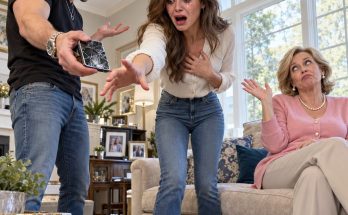
“Your grandmother is going to Willow Creek. Jenna needs the room before the wedding.”
My father, Mark Donovan, said it over roast chicken on a Thursday evening in June, then brought the flat of his hand down hard enough to make the silverware jump. My mother, Elaine, stared at her plate; my younger sister Jenna froze with a fork halfway to her mouth, and her fiancé, Luke, suddenly became fascinated by the condensation on his water glass. Beside me, my grandmother Ingrid opened her mouth, her brows drawing together with the effort of finding whatever word she wanted.
Dad didn’t wait.
“Your mother is exhausted,” he said, passing the potatoes as if we were discussing the weather. “Willow Creek has nurses, activities, everything she needs. We’ve already spoken to them.”
Grandma’s stroke sixteen months earlier had left her with expressive aphasia. She understood us perfectly, could read the newspaper, beat me at gin rummy, remember appointments I forgot, and sing old hymns almost effortlessly, but spoken words often jammed somewhere between thought and mouth. Dad had discovered that if he spoke quickly enough, people mistook her silence for agreement.
That night, I finally noticed how often he did it.
Jenna leaned toward Grandma with the polished voice she used at the real-estate office. “And the timing actually works out great because Luke and I need somewhere to stay after the wedding while our condo closes. We’re doing the room in this really soft green. You’ll love Willow Creek, Grandma.”
Grandma looked at her, then at Dad.
“Na—”
“Mom, please,” Dad said. “We’re not doing this at dinner.”
I had spent nine years as a court reporter in Snohomish County, taking down other people’s words exactly as they spoke them. I had watched liars unravel because one sentence contradicted another, watched frightened witnesses become steady once someone finally stopped interrupting them, and learned that silence could be evidence if you knew when not to fill it.
So I didn’t argue.
Dad expected me to. I could see it in the set of his shoulders. If I raised my voice, he would become calm, reasonable Mark Donovan, devoted son and exhausted caregiver, while I became Claire, his emotional thirty-two-year-old daughter making a scene.
Instead, I stood.
Grandma looked up at me.
“Come on,” I said.
She pushed her chair back.
Dad frowned. “Where are you going?”
“To pack.”
“Claire, don’t be ridiculous.”
I kept walking.
Grandma came behind me slowly, her right foot dragging just enough to whisper against the carpet. One step, hand on the rail, pause, another step. By the time she reached her bedroom, I had an old blue suitcase open across the bed.
She pointed to what she wanted.
First came my grandfather’s steel lunch pail, dented at one corner from thirty-two years at the Everett shipyard. It was heavier than I expected. Then the brass bell from Grandma’s nightstand, the chipped blue coffee mug she used every morning, two unfinished knitting projects, and a coffee can from the bottom of her closet that clinked when I lifted it.
My mother appeared in the doorway holding a small kitchen radio.
She placed it inside the suitcase.
“She listens at six,” she whispered.
I looked at her.
“Mom, are you seriously letting him do this?”
Her eyes flicked toward the hallway.
“He thinks it’s best.”
“That isn’t what I asked.”
She swallowed.
Below Grandma’s bedroom window, where her rose garden had once run along the porch, a strip of pale concrete stretched beside the driveway. Dad had poured it two summers earlier after deciding the roses were “too much work” for her.
Grandma pointed outside.
“The roses?” I asked.
She nodded.
Two surviving canes sat in an old bucket behind the garage, where she had hidden them after Dad pulled the rest out by the roots. I carried the bucket to my car.
This house had belonged to Grandma and Grandpa for forty-one years. Three winters earlier, after Grandpa’s health began failing, they transferred it to Dad because he said handling taxes, insurance, and paperwork would be easier if everything were consolidated.
“Just keeping things simple,” he had told us.
By nine that night, Grandma and I were standing beside my car.
Dad remained on the porch with his arms crossed.
“You’ll bring her back Sunday.”
I shut the trunk.
“Willow Creek expects her Monday morning,” he continued. “She can’t live with you, Claire. Your place has steps. You work full time. You haven’t thought this through.”
“My place doesn’t have steps.”
His expression changed.
I had rented a small cottage in Mukilteo three weeks earlier.
I hadn’t told him.
Jenna came onto the porch. “This is so unnecessary.”
Luke followed her but said nothing. He walked down and opened the passenger door for Grandma.
She lowered herself carefully into the seat and placed one hand on the steel lunch pail in her lap.
Then she looked back at the house.
“N—”
Dad exhaled loudly.
“See? She can’t even tell you what she wants.”
Grandma turned away from him.
I drove.
The cottage had two bedrooms, cedar siding, a porch light that made everything look warmer than it was, and a front-door key that stuck halfway unless you lifted the handle. While I fought with the lock, Grandma waited patiently behind me.
“I signed the lease in May,” I told her.
She nodded.
“Three weeks after you told me Dad was making calls.”
Another nod.
Inside, she went immediately to the kitchen table and placed Grandpa’s lunch pail on the wood.
The latch snapped open.
Papers filled the bottom.
A durable power of attorney, signed the previous September, named me as Grandma’s representative for financial and medical matters when she requested assistance. Beneath it was a receipt from an attorney who had apparently visited her at home, paid in cash, along with a letter from her speech therapist stating that Ingrid Donovan remained cognitively competent despite severe expressive aphasia.
Then came a folded page covered in Grandma’s shaky left-handed writing.
Seven words.
IF MARK SAYS I AGREED, ASK ME.
I read it twice.
“You arranged all this?”
Grandma tapped her ear.
“Because I listen?”
She nodded.
The answer hurt more than I expected.
Not because I was particularly brave or capable. Not because I was the family hero. She had chosen me because I waited long enough to hear the end of her sentences.
I showed her the bedroom nearest the kitchen.
“I thought this one would be easier.”
She looked inside.
“No stairs,” I added. “You’ll be safer.”
She watched me for several seconds, then carried her suitcase inside.
I took that as agreement.
That was my first mistake.
At six the next morning, the marine forecast was already playing on Grandma’s radio. She stood at the kitchen counter pouring coffee into her chipped blue mug with her left hand, and on the table beside her the coffee can sat open, its contents arranged in small stacks of quarters and dimes.
She pointed at the attorney’s receipt.
Then at the coins.
“You paid him with this?”
She nodded.
Mitten money.
For years she had knitted traditional Norwegian-pattern mittens and sold them at the church bazaar. She had apparently saved every spare dollar until she could hire a lawyer without Dad seeing a charge.
My phone began vibrating.
Dad.
Then again.
And again.
By lunchtime, I had fourteen missed calls.
The voicemails started gently.
“Claire, honey, let’s talk.”
Then sharpened.
“Willow Creek expects Mom Monday.”
Then changed completely.
“You are not thinking about the twenty-sixth.”
I listened twice.
The twenty-sixth?
A text arrived from Mom.
Dad has Grandma’s checkbook and pension card in his desk. He says she has to come home Sunday. He keeps talking about the 26th. Please don’t tell him I told you.
I looked toward Grandma.
She was knitting at the table, moving one needle slowly through cream-colored wool while the weak fingers of her right hand steadied the yarn.
“What happens on the twenty-sixth?”
Her hands stopped.
For the first time since we had left the lake house, fear crossed her face.
Part 2
Grandma didn’t answer my question.
Instead, she got up at three that afternoon and made coffee because three o’clock had been coffee time in her house for longer than I had been alive. The cup tilted slightly as she poured; hot coffee ran over the back of her hand, and when I grabbed for a towel, she caught my wrist.
She wiped her own hand.
Then she poured again.
The message was clear.
Stop doing things for me before I ask.
I sat across from her and turned my phone facedown. Grandma resumed knitting, one deliberate loop at a time, while fourteen missed calls became seventeen.
Sunday morning, I spread everything from Grandpa’s lunch pail across the kitchen table. Power of attorney. Attorney’s receipt. Speech therapist’s competency letter. Two statements from a trust created after Grandpa’s death. A brochure I hadn’t noticed before lay folded beneath them.
Harbor View Independent Living.
One-bedroom apartments.
Across the front, in Grandma’s left-handed block letters, she had written:
ASK ABOUT AUGUST.
I stared at it.
She had never intended to stay with me permanently.
She had been planning a home of her own.
Grandma stood at the window looking toward the bucket of rose canes we still hadn’t planted.
I folded the brochure and slid it into the drawer beside the takeout menus.
Not now, I thought.
She needed stability.
She needed me.
My phone buzzed.
Mom.
He called 911. He told them you took her. Deputies are coming.
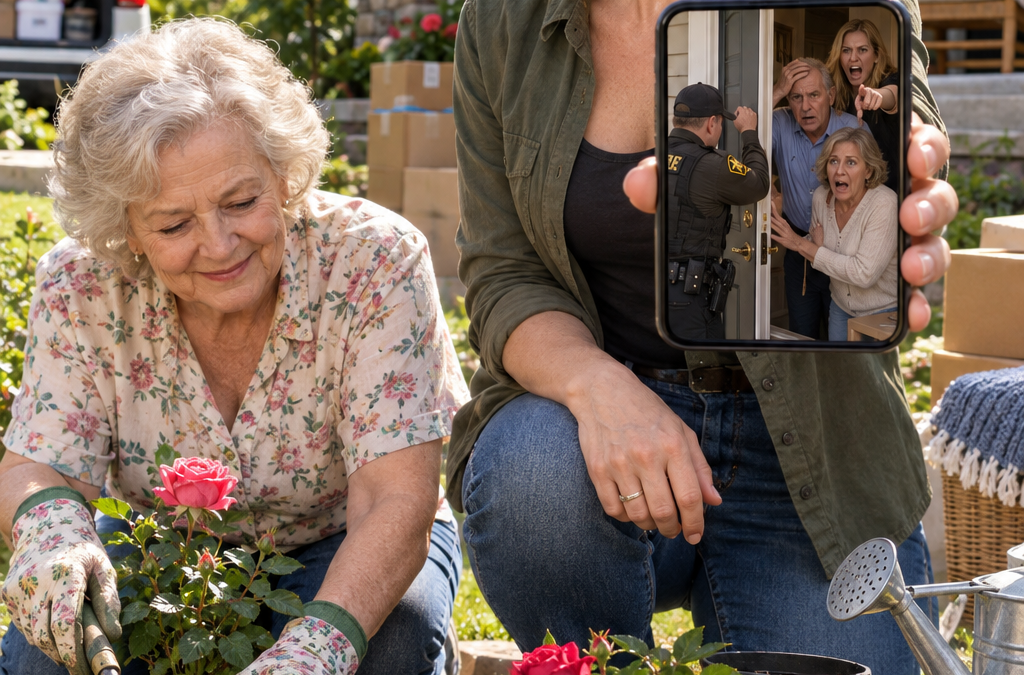
The county SUV arrived shortly after one.
Two deputies got out. The older one looked at me over the hood and frowned with recognition.
“Claire Donovan?”
“Tom?”
Deputy Tom Hansen had worked courthouse security before joining patrol. For years, he had stood ten feet behind me in Courtroom Six while I transcribed hearings.
The younger deputy consulted a tablet.
“The reporting party says his seventy-eight-year-old mother has dementia, is essentially nonverbal, and was removed from his residence without consent by his adult daughter.”
“She doesn’t have dementia.”
“Ma’am—”
“She has expressive aphasia. She understands what you’re saying. She just needs time to answer.”
A bell rang behind me.
Once.
Grandma stood in the doorway holding Grandpa’s lunch pail under one arm and the brass bell in her hand.
I stopped talking.
That mattered.
She came down the porch steps and handed Hansen the folder.
He opened the power of attorney.
“Mrs. Donovan, did your granddaughter force you to leave your son’s home?”
Grandma’s mouth worked.
“No.”
The word came rough but unmistakable.
The younger deputy looked up.
“Do you want to return there?”
Grandma stared at him.
Her jaw shifted as if the word were caught on something.
“Nnn…”
Nobody interrupted.
“Nay.”
Hansen smiled faintly.
“My grandmother used that one too.”
Grandma reached for his notebook and wrote:
I LEFT. MARK KEEPS MY CHECKBOOK.
The younger deputy’s posture changed.
“Your son has access to your money?”
She nodded.
“Do you want him to?”
She wrote one word.
NO.
Hansen photographed the paperwork.
“We’ll close the missing-person complaint,” he said. “And someone will follow up regarding the financial property.”
Grandma looked at me.
The bell rang.
At me.
I understood later why.
She had not needed me to explain aphasia to the deputies. She had needed me to shut up long enough for her to explain herself.
That evening, Mom called from the garage. I could hear the old freezer humming behind her.
“The deputies called your father,” she whispered. “Adult Protective Services is coming tomorrow.”
“Good.”
“He’s furious.”
“He filed a false report.”
“He says he was worried.”
“Mom.”
Silence.
Then she said, “There’s something else. He borrowed against money from Grandpa’s trust.”
I stood very still.
“What money?”
“I don’t know exactly. He bought the boat after Neil died, and he said some distribution was coming this summer. He keeps saying the twenty-sixth.”
Grandpa Neil had worked around boats for thirty-two years and never owned one.
Dad’s glossy twenty-four-foot fishing boat had appeared in the driveway six months after the funeral.
“He told Pastor Reynolds I kidnapped her,” Mom added.
“Of course he did.”
Grandma stood in the kitchen doorway.
She had heard enough.
She took the magnetic pad from the refrigerator and wrote:
26 = NEIL?
The next morning, she carried one rose cane down from the porch and began digging beside the cottage foundation.
I reached automatically for the trowel.
Her good hand closed around it.
“Mine.”
The word came clearly.
I let go.
She dug slowly, struggling with the angle of her wrist, black soil collecting beneath her fingernails. My hands ached to help, but I remained on my heels while she lowered the rose into the ground and pressed the dirt down herself.
At four that afternoon, Hansen and an Adult Protective Services investigator knocked on Dad’s door.
I know what happened because Mom called me afterward.
Dad answered wearing his friendly public face.
“Thank God,” he said. “Did you find her? She gets confused.”
“Your mother answered our questions herself,” Hansen told him.
“She can barely speak.”
“She spoke enough.”
Dad gripped the doorframe.
The investigator asked that Grandma’s checkbook, pension card, identification, and personal mail be returned immediately.
“I’ll have to find them.”
“She says they are in your desk.”
Mom said Dad went pale.
Behind him, Jenna stood in Grandma’s old bedroom with green paint on her forearms.
Dad looked over his shoulder.
Then back at the investigator.
“I was trying to help my mother.”
The woman handed him a card and case number.
“Then helping her return her property shouldn’t be difficult.”
When they left, Dad went into the garage and slammed his palm against the side of the new boat.
That evening, I came inside and found Grandma’s bell sitting alone in the middle of the kitchen table.
Under it lay a note.
CHOIR 7.
Grandma was gone.
The nearest bus stop sat at the end of our road.
I grabbed my keys.
By the time I reached Trinity Lutheran, the choir was halfway through “Blessed Assurance.” I slipped through the back doors and stopped.
Grandma stood in the alto row.
She was singing.
Not humming.
Not searching.
Singing every word.
The stroke had damaged the pathways she used for spontaneous speech, but music traveled another route. The melody carried language where ordinary conversation could not.
I sat in the last pew and cried quietly.
After rehearsal, she came down the aisle with her purse hanging from her weak arm.
“You took the bus.”
“Yah.”
Her expression dared me to object.
Behind her came Ingrid Bergstrom, a silver-haired soprano who had known Grandma for decades.
“She’s been threatening to come back for months,” Ingrid told me. “Well, threatening musically.”
Grandma smiled.
On the drive home, she sang a short phrase.
“One door,” I heard.
“That isn’t in the hymn.”
At home she picked up the tablet Dad had purchased after her stroke and tapped the screen.
A message appeared.
THIS DEVICE HAS BEEN LOCKED BY ACCOUNT OWNER.
My phone buzzed.
Mom.
He shut down the tablet. Mine is restricted too.
Grandma stared at the dead screen.
Then she placed it facedown.
Exactly the way I always placed my phone when I wanted someone to know I was listening.
I opened the kitchen drawer and removed the Harbor View brochure.
Then I took a spare cottage key from my purse.
“I hid this.”
Her eyes narrowed.
“I thought you weren’t ready.”
Silence.
“I picked your room without asking. I hid the apartment brochure. Dad keeps deciding things for you, and I told myself I was different because my decisions were nicer.”
Grandma pulled the notepad closer.
ONE DOOR.
“Your own door?”
She nodded.
“What do you want?”
She wrote slowly.
AUGUST. MINE.
And for the first time, I understood that rescuing somebody and controlling them could grow from very different intentions and still cast the same shadow.
Part 3
Mom arrived before sunrise Tuesday with Grandpa’s armchair strapped to the roof of her car.
Luke had apparently stopped by before his shift at Boeing and helped lift it up there without asking why. That was Luke’s best quality: when he didn’t know what to say, he usually found something useful to carry.
Mom stood in my kitchen with both hands around a coffee mug.
“Your father put it at the curb.”
Grandma came out of the bedroom, saw the chair, and stopped.
The brown fabric had gone shiny along one arm where Grandpa’s hand had rested through forty years of newspapers, baseball games, and six-o’clock marine forecasts.
Grandma sat down.
“Neil.”
Mom covered her face.
After a while, she said, “There’s something I should have told you.”
Last October, Dad had driven Grandma to an appointment with the family physician. Before leaving, Mom had heard him in the bathroom practicing a sentence into the mirror.
“My mother has asked to go somewhere she can be properly cared for.”
He repeated it three times.
Then he told the doctor.
Later he told Pastor Reynolds.
Then a lawyer connected to Grandpa’s trust.
“She never said that,” Mom whispered. “Not once.”
“Why didn’t you stop him?”
Her mouth tightened.
“Because every time I tried, he made the house unbearable for three days. And eventually silence felt cheaper.”
“That doesn’t make it harmless.”
“I know.”
Grandma pointed toward the coffee pot, then toward the chair opposite her.
Mom sat.
Nothing was forgiven.
But she stayed for coffee.
At nine, I bought Grandma a new tablet and opened a wireless account in my own name. Back home, I installed her speech application and began loading phrases.
I’M HUNGRY.
I’M TIRED.
CALL CLAIRE.
Grandma watched.
Then deleted every one.
She typed:
COFFEE.
Then:
NO.
Then:
MY TURN.
I laughed.
The laugh caught halfway out because she was right again.
At ten, Ingrid forwarded us an email from the church prayer chain.
PLEASE KEEP INGRID DONOVAN IN YOUR PRAYERS AS SHE HAS CHOSEN TO ENTER A CARE COMMUNITY. THE FAMILY REQUESTS PRIVACY DURING THIS TRANSITION.
Signed:
Mark Donovan, Church Council.
Grandma read it twice.
She typed:
LIAR.
Then erased it.
“Do you want to answer everybody?”
She shook her head.
“Just Ingrid?”
A nod.
Her message took several minutes.
NOT IN CARE. MUKILTEO. COFFEE THURSDAY 3.
I wanted to reply to the entire church list, attach the power of attorney, explain aphasia, and burn Dad’s reputation to ash with perfectly formatted facts.
I didn’t.
It wasn’t my message.
By evening, four women from the choir had texted Grandma directly.
Wednesday morning, her speech therapist, Marisol Vega, arrived carrying a canvas tote and an expression that said she had already heard more than enough.
She sat beside Grandma.
Not beside me.
“Losing the ability to produce words,” Marisol said, “is not the same as losing the thoughts behind them.”
Grandma nodded sharply.
“She understands complex conversations. She understands money. She understands consequences. Music and automatic language can sometimes bypass the speech block, which is why singing comes more easily.”
Marisol wrote a fresh capacity letter.
Then Grandma typed:
HARBOR VIEW. AUGUST.
I took a breath.
“One bedroom?”
“Yes.”
The English word came clearly.
Marisol glanced at me.
I smiled despite myself.
“Then we’ll schedule a tour.”
Grandma’s shoulders relaxed.
Marisol held up one finger.
“One more thing. Nobody gets to put a telephone beside her and answer questions on her behalf just because they’re impatient.”
My skin prickled.
“The trust payment?”
“I don’t know anything about a trust. I’m telling you what your grandmother has been worried about since spring.”
Grandma reached for her tablet.
MARK. PHONE. YES.
“You think he wants you to say yes to something?”
She nodded.
Marisol’s face hardened.
“If a bank, doctor, attorney, or benefits administrator calls, they ask her directly. If she wants you to assist, she tells them that. No one gets to manufacture consent.”
Before leaving, Marisol placed an index card on the table.
“If there’s something you need to say to one person and the words keep getting stuck, we can write it and practice it. Sometimes setting the sentence to rhythm helps.”
Grandma typed:
MARK. TABLE.
Outside, the rose canes had produced their first new leaves.
That afternoon Grandma announced she was walking down to the lake.
“Alone?”
She held up ten fingers.
“Ten steps behind?”
A nod.
So I followed ten steps back.
Every instinct told me to move closer whenever her weak leg dragged over loose gravel. I forced myself not to.
Halfway down the path, Ingrid Bergstrom approached with a terrier.
Her face filled with pity.
“Oh, Ingrid, sweetheart. We heard—”
Grandma stopped directly in front of her.
She sang the first few notes of “Blessed Assurance.”
Then said:
“Coffee. Thursday. Three.”
Ingrid laughed, then cried, then hugged her.
Later she texted me:
I’m telling the sopranos. Mark can send another email if he wants.
At the cottage door, Grandma put her own key into the lock before I could reach mine.
It took three attempts.
I waited through all three.
That afternoon, we visited the yarn shop for another skein of cream wool.
The cashier recognized Grandma.
“Your son detailed my husband’s boat last year. Such a helpful man.”
Grandma inserted her debit card.
DECLINED.
The cashier’s voice immediately softened.
“Oh, honey. Do you want your granddaughter to—”
Grandma straightened.
I paid before I could stop myself.
Outside, she stared at me.
“I’m sorry.”
“Nay. Mark.”
Her pension deposit had gone into the joint account Dad had controlled since the stroke.
My phone buzzed.
Mom sent a photograph of an envelope bearing Grandpa’s trust logo.
She arrived that evening with the actual letter.
Dad had already opened it.
The trust administrator had received two conflicting distribution instructions.
One, signed by Grandma the previous September, directed her beneficiary payment to a separate account.
A second, submitted in May, redirected the payment to an account controlled by Dad.
Grandma’s signature appeared on both.
She stared at the second one.
Then shook her head.
At the bottom of the letter, one paragraph explained everything.
Because the instructions conflicted, the trust would release funds on June twenty-six only after verbal confirmation from Ingrid Donovan or her authorized representative.
Mom sat down hard.
“That’s why he needs her home.”
I heard Dad’s old phrase in my head.
Willow Creek expects her Monday.
Monday was June twenty-sixth.
“He doesn’t need Grandma in the house,” I said.
Mom looked at me.
“He needs her beside his phone.”
Part 4
Dad called twenty minutes after we finished reading the trust letter.
I put the phone on speaker and laid it in the center of the kitchen table.
His voice came warm and careful.
“Sunday dinner. Everyone together. No arguments.”
Mom closed her eyes.
Dad continued. “I’m making lefse. Your grandmother’s room is finished. Jenna worked really hard on it. She should at least see it before making any decisions.”
I looked at Grandma.
She pulled the notepad toward herself.
YES. SUNDAY. MY TABLE.
I read the words twice.
“You want to go?”
She nodded.
Mom whispered, “He’ll keep her overnight if he can.”
Grandma heard.
“Yes.”
Not helpless.
Not confused.
Yes.
I picked up the phone.
“We’ll come Sunday.”
“Good girl,” Dad said.
I nearly hung up.
Grandma rang the brass bell.
Once.
I looked at her.
She pointed to herself.
Her decision.
Not mine.
“We’ll come,” I repeated.
Dad sounded pleased.
“Now we’re acting like a family.”
Friday morning, Marisol returned to help Grandma prepare what she wanted to say.
Grandma typed the first sentence.
YOU DO NOT SPEAK FOR ME.
I wrote on the index card:
I would prefer to speak for myself.
The bell rang immediately.
I looked at my polite little sentence.
Then at her.
“You’re right.”
I crossed it out.
Marisol hid a smile.
By lunchtime, the card had four sections.
IN AUGUST, I MOVE TO HARBOR VIEW. MY DOOR.
CLAIRE IS MY VOICE WHEN I ASK, NOT MY KEEPER.
MARK, YOU ARE MY SON. YOU DO NOT SPEAK FOR ME. NOT TO THE DOCTOR. NOT TO CHURCH. NOT TO THE BANK.
SUNDAY IS MY TABLE IF YOU CAN BE QUIET.
“Church” kept catching behind Grandma’s teeth.
Marisol helped her place the phrase over the rhythm of a hymn.
She sang it once.
Then spoke it.
Again.
Again.
Every repetition seemed to return another inch of ground somebody had taken from her.
Friday evening, Dad drove to the cottage carrying supermarket flowers.
“Mom, come home and see your room.”
Grandma stood behind the screen door.
“It’s brighter,” Dad continued. “Jenna painted it. You can stay Sunday night if you want. No pressure.”
I almost laughed at the phrase.
No pressure.
From the man who had called the sheriff.
“Claire, open the door.”
I didn’t.
“Be an adult.”
Grandma stepped beside me.
“Sunday.”
Dad smiled.
“Exactly. Sunday.”
Grandma closed the inner door in his face.
He left the flowers on the porch.
Saturday morning, we toured Harbor View.
The leasing manager kept speaking to me.
“So your grandmother would have a one-bedroom, and does she require assistance with—”
“Ask her.”
The woman blinked.
Then turned toward Grandma.
Grandma inspected the apartment with the seriousness of a building inspector. She opened the windows, checked the height of the kitchen counters, turned every stove knob, stood in the shower, and opened the closet doors.
At the entrance, she placed her palm flat against the door.
“Mine?”
“If you want it,” the manager said. “We have availability at the end of August.”
“Yes.”
A form was placed on the counter.
I kept my hands behind my back.
Grandma signed it herself, slowly and crookedly with her left hand.
Outside, I leaned against the hallway wall.
Letting someone go turned out to be a physical sensation.
A looseness in the chest that felt suspiciously like loss.
Grandma came out.
“Sunday. Coffee.”
“At your place?”
She nodded.
“Am I invited?”
A tiny smile.
“Yes.”
I laughed.
That afternoon, Ingrid texted to tell me Dad was at the annual Sons of Norway picnic explaining his version of events to half the lodge.
I should have ignored it.
Instead, I went.
Dad stood behind a grill wearing an apron bearing the lodge crest.
“We’re bringing Mom home tomorrow,” he was telling a group of older women. “The sheriff situation was just a misunderstanding. Claire’s overwhelmed.”
Then he saw me.
“There she is.”
He came around the grill and hugged me before I could step back.
“My girl means well.”
The women looked at me with pity.
One touched my wrist.
“Caregiving is so stressful, sweetheart.”
I had come planning to tell them everything.
The false police report.
The locked tablet.
The checkbook.
The trust letter.
Instead, my throat closed.
Dad knew exactly how to build a room where contradicting him made you look cruel.
Then Hansen appeared beside me holding a paper plate.
He was off duty, wearing jeans and a lodge T-shirt.
“The bratwurst is better than the salmon this year,” he said.
Nothing else.
No rescue.
No public correction.
Just an exit if I wanted one.
I walked away.
Back at the cottage, Grandma had finished the second mitten.
The matching pair lay on the kitchen table.
She looked at my face.
“Mark?”
I sat.
“He told everybody I’m overwhelmed.”
She waited.
“I couldn’t say anything.”
Still she waited.
“My voice disappeared.”
Grandma opened Grandpa’s lunch pail and took out one mitten.
She slid it over my right hand.
A mitten she had knitted with one working hand.
Then she typed:
TOMORROW. YOU TOO.
“I don’t know what I want to say.”
She typed:
YOUR WORDS.
So I wrote one sentence on the back of the Harbor View brochure.
YOU TOLD ME TO PACK MY BAGS. I DID. YOU DON’T GET TO DECIDE WHO THAT MAKES ME.
Grandma read it.
Nodded once.
Then got flour from the cabinet.
We spent the afternoon making lefse for Sunday dinner.
Just before sunset, someone knocked.
Jenna stood outside without makeup, clutching a folder against her chest.
“I was looking for the lodge contract in Dad’s desk.”
She stepped inside.
“I found this instead.”
She opened the folder.
A deposit receipt for the wedding lodge.
A transfer from Grandma’s pension account.
And a yellow legal-pad page in Dad’s handwriting.
SUNDAY: AFTER GRACE, TELL MOM TRUST CALLS MONDAY.
SHE STAYS NIGHT.
IF SHE STALLS: “MOM’S TIRED.”
I TALK.
ELAINE SAYS: “I AGREE.”
Jenna touched the final line.
“He told me Grandma wanted Willow Creek.”
Nobody answered.
“He told me she gave me the room.”
Grandma stared at her.
Jenna’s eyes filled.
“I don’t know where I’m supposed to stand now.”
Grandma pulled over the tablet.
SUNDAY. SIT BY ME.
Then she added two words.
ROOM KEY.
Jenna looked toward the dark window.
“What happens if she says no tomorrow?”
This time, Grandma answered aloud.
“No.”
Part 5
Sunday evening, the lake house smelled exactly as it had before everything changed.
Roast beef.
Coffee.
Fresh paint.
Dad showed us Grandma’s old bedroom before dinner.
The walls were muted green, the curtains new, the furniture rearranged. Her photographs and knitting baskets remained in boxes stacked in the garage.
“See?” Dad said. “Nothing was ever permanent.”
Grandma touched the bare windowsill where Grandpa’s lunch pail had once sat.
Then walked away.
At the table, Dad’s phone lay facedown beside his plate.
Same place.
Same posture.
Same confidence.
Luke sat by the window. Mom sat at Dad’s right hand. Jenna entered last, lifted her chair, and carried it around the table until she was beside Grandma.
Dad stared.
“What are you doing?”
“Nothing.”
Grandma placed Grandpa’s lunch pail beside her plate.
Then the brass bell beside her fork.
Dad said grace.
He thanked God for family.
He thanked God for reconciliation.
He thanked God that his mother had “come home.”
Grandma’s expression didn’t change.
“Amen,” Dad said.
His hand moved toward his phone.
“Before we eat, there’s one practical thing. Tomorrow morning at nine, the trust administrator calls. Mom will stay here tonight so I can help her through it.”
Grandma looked at him.
“It’ll take five minutes,” Dad continued. “All you have to say is yes.”
The bell rang.
Once.
Dad stopped.
“Mom has something she wants to say,” he announced. “I’ll explain because she’s tired.”
The bell rang twice.
Jenna’s hand flattened against the table.
Luke set his fork down.
Grandma opened the steel lunch pail and removed the index card.
Dad leaned toward her.
“You don’t need to prove anything.”
Grandma looked directly at him.
Then began.
“In… August…”
The next word stuck.
Nobody moved.
“I… move… Harbor View.”
Dad’s lips parted.
“My door.”
“Mom—”
Bell.
Dad went silent.
Grandma continued.
“Claire… voice… when I ask.”
Her eyes shifted toward me.
“Not keeper.”
Heat rose behind my eyes.
I let it.
Then she turned back to Dad.
“Mark.”
His name came clean.
“You… are… my son.”
His face changed.
“You do not speak… for me.”
The word “church” caught.
She closed her eyes.
Sang three notes under her breath.
Then continued.
“Not doctor. Not church. Not bank.”
The entire table heard the melody underneath the sentence.
Dad looked toward Mom.
She lowered her eyes.
He looked at Jenna.
She stared at Grandma.
Luke studied him with an expression I had never seen before.
Finally Grandma read the last line.
“Sunday. My table. If… you… quiet.”
Six people sat in silence.
For sixteen months, Dad had treated waiting as wasted time.
Now nobody saved him from it.
I removed the Harbor View brochure from my purse and placed it beside Grandma’s plate.
“You told me to pack my bags,” I said. “I did. You don’t get to decide what kind of daughter that makes me.”
Dad leaned back.
“Claire, I was trying to deal with an impossible situation.”
“No. You were creating a version of the situation where only your words counted.”
“That’s ridiculous.”
Mom stood.
For one frightening second I thought she was leaving.
Instead, she lifted her chair from Dad’s right side and carried it around the table.
She set it beside Grandma.
Then reached into her cardigan pocket.
Grandma’s checkbook.
Her pension card.
Her identification.
All three went onto the table.
“I took them from your desk,” Mom said.
Dad stared at her.
“You went through my things?”
“They were her things.”
Jenna placed a bedroom key beside the checkbook.
“I called the lodge.”
Dad turned sharply.
“The wedding deposit is being refunded.”
“What?”
“We’re getting married in Luke’s parents’ backyard.”
“That deposit was nonrefundable.”
“It became refundable when I explained whose account paid it.”
Dad’s face emptied.
Luke spoke quietly.
“My parents already said yes.”
“You all planned this behind my back?”
Grandma rang the bell.
Dad glared at it.
She pointed toward his plate.
“Eat.”
Mom almost smiled.
For several minutes, the forks made the only sound.
Finally Dad tore a piece of Grandma’s lefse and chewed it.
His eyes went wet.
He looked furious about that too.
Then, for the first time I could remember, he asked Grandma a question without supplying the answer.
“Mom… do you need anything?”
Grandma considered him.
“No.”
A simple word.
Dad nodded.
The trust call came to my cottage the next morning at nine.
Grandma sat at the kitchen table.
I sat beside her with my hands in my lap.
The administrator’s voice came through the speaker.
“Mrs. Donovan, we have conflicting payment instructions. Do you want the June distribution deposited into the individual account ending in four-one-eight-two?”
“Yes.”
“For the record, did you authorize Mark Donovan to redirect those funds?”
“No.”
I didn’t speak.
The administrator continued.
“Did you sign the May instruction changing the destination account?”
“No.”
Another pause.
“Thank you. Our legal department may contact you.”
Dad’s boat loan had been structured around the expected June distribution.
When the money did not arrive, the payment was called.
Three days later, a FOR SALE sign appeared beside the boat.
But that wasn’t the worst consequence.
The trust’s legal department compared the disputed May instruction with Grandma’s genuine signature from September.
They didn’t match.
A week later, an investigator requested bank records.
The pension account showed transfers Grandma had never authorized: the wedding lodge deposit, boat payments, insurance premiums, and several thousand dollars Dad had moved into his household account after her stroke.
Mom called me crying.
“I knew he was using the pension for bills.”
“Did you know Grandma hadn’t agreed?”
Silence.
That was the answer.
Grandma didn’t celebrate when I told her.
She typed:
HOW MUCH?
I gave her the figure.
She stared through the kitchen window for a long time.
Then wrote:
NOT MONEY.
“What is it, then?”
She looked at me as though the answer should have been obvious.
MY NAME.
That was the deeper theft.
Dad had used her signature.
Her silence.
Her reputation.
Her motherhood.
Everywhere he needed permission, he had simply borrowed her identity and filled in the answer himself.
Part 6
By July, the boat was gone.
Dad’s seat on the church council disappeared shortly afterward.
Pastor Reynolds never made an announcement, but Ingrid told us Dad had “stepped away for family reasons,” which was church language for everybody knew something and nobody wanted to describe it over coffee.
The financial investigation remained civil at first. Grandma’s attorney demanded repayment of the unauthorized transfers, and Dad’s lawyer advised him to cooperate before the trust referred the signature issue further.
He sold the boat.
Then a motorcycle.
Then some expensive fishing equipment.
Every dollar went back into Grandma’s account.
Dad called twice.
She declined both calls.
He sent a letter.
She read it once and placed it in Grandpa’s lunch pail without answering.
“What did he say?” I asked.
Grandma slid it toward me.
I didn’t open it.
“Do you want me to read it?”
“No.”
So I didn’t.
That was harder than it sounds.
For years, our family treated information as communal property and boundaries as insults. Dad searched desks, Mom overheard from hallways, Jenna borrowed clothes without asking, and I solved problems before anyone admitted they had one.
Grandma was teaching me privacy at thirty-two.
Mom began attending counseling.
Dad mocked it until she moved into the guest room.
Then he stopped mocking it.
One Thursday, she came to coffee and said, “I don’t know if I’m leaving him.”
Grandma stirred cream into her cup.
Mom looked at me as if I might supply the correct answer.
I didn’t.
She laughed once without humor.
“You two are getting very good at this.”
“At what?”
“Making me decide things myself.”
Grandma smiled into her mug.
Jenna’s wedding changed with surprising ease.
Luke’s parents had a backyard sloping toward the lake, a broad cedar deck, and enough room for folding chairs beneath two maple trees. Jenna cancelled the oversized lodge flowers, cut the guest list, and paid Grandma back the portion of the deposit Dad had taken from her pension.
One evening she sat on our porch helping Grandma wind yarn.
“I should have asked about the room.”
Grandma kept winding.
“I just liked hearing that something was mine.”
Her voice cracked.
“Dad made it sound like you were already gone.”
Grandma stopped.
She placed one hand on Jenna’s wrist.
Not forgiveness.
Attention.
There was a difference.
Then she typed:
YOU BELIEVED EASY.
Jenna winced.
“I know.”
Grandma added:
NEXT TIME ASK HARD.
Jenna nodded.
At the end of July, Dad drove to the cemetery while Grandma was visiting Grandpa’s grave.
I had taken her there but stayed in the car because she had written:
GRAVE ALONE.
Through the windshield, I watched her carry the first rose from the cottage garden down the row of stones.
Grandpa Neil’s marker stood beside the plot where Grandma’s own name was already engraved with the final date left blank.
She placed the rose.
Dad’s truck entered the lot.
My entire body tightened.
He parked twenty yards away.
Got out.
Then stopped.
He did not approach.
Grandma saw him.
She finished what she was doing.
Only then did she walk toward him.
They spoke for less than two minutes.
When she returned to the car, I waited.
Finally she said, “Sunday.”
“Did you invite him?”
She nodded.
“To Harbor View after you move?”
Another nod.
“Are you forgiving him?”
She frowned.
Then took out her tablet.
NO.
A second line.
DOOR OPEN NOT SAME.
I read it again.
An open door was not erased history.
It was access under conditions.
Dad’s conditions had ruled the family for years.
Now Grandma would set hers.
The first week of August, Mom called to say Dad had finally admitted he knew Grandma never wanted Willow Creek.
“He said he thought once she got there she’d adjust.”
“That isn’t better.”
“I know.”
“He filed a kidnapping report.”
“I know.”
“He took her money.”
“I know.”
Mom exhaled.
“He keeps saying he was under pressure after Grandpa died.”
“Everybody was.”
That became the sentence I carried with me.
Everybody was grieving.
Everybody was afraid.
Everybody had bills.
Everybody had complicated relationships.
But only Dad had chosen to solve those problems by turning someone else into a signature.
At Jenna’s wedding, Grandma sat in the front row.
Dad sat behind her.
He arrived alone.
Mom came separately.
Nobody made a scene.
Jenna wore a simple ivory dress and carried flowers from Luke’s mother’s garden. When she and Luke exchanged vows, Grandma cried openly.
During the reception, Dad approached me near the fence.
“Can we talk?”
“We are talking.”
His mouth tightened.
“I’m still your father.”
“Yes.”
“I made mistakes.”
“Yes.”
“I lost control of things.”
“No.”
He looked at me.
“You didn’t lose control,” I said. “You had too much of it.”
“That’s what you think?”
“That’s what happened.”
He looked toward Grandma.
“She hates me now.”
“You’d have to ask her.”
“I’m asking you.”
“And that’s the problem.”
I walked away.
He didn’t follow.
By the end of August, Harbor View called.
Grandma’s apartment was ready.
Moving day arrived under a pale blue sky.
I packed boxes.
She unpacked half of them because I kept putting things where she didn’t want them.
The blue mug went beside the sink.
The radio went on the counter.
Grandpa’s chair faced the balcony.
The surviving rose cutting went into a large pot outside.
Finally, Grandma carried the steel lunch pail into the bedroom herself.
“Where do you want the bell?” I asked.
She pointed beside the front door.
We hung it from a small hook.
Underneath, she taped a card written in her left hand.
RING IF YOU WANT IN.
Then she held out her palm.
The apartment key lay in mine.
I gave it to her.
“Mine,” she said.
“Yeah.”
She smiled.
This time I pronounced it the way she did.
“Yah.”
Part 7
The first night Grandma slept at Harbor View, I went back to the cottage and discovered how loud an empty house could be.
No six-o’clock radio.
No knitting needles clicking against ceramic.
No brass bell.
I stood outside the bedroom near the kitchen, the one I had chosen for her without asking, and finally understood why she had resisted settling into it.
It had always been temporary.
I had been the one pretending otherwise.
On Tuesday, the sopranos visited Harbor View.
Thursday belonged to Mom.
Sunday became family coffee.
Grandma made the schedule herself.
I was invited, not assigned.
At first, that stung.
Then it began to feel like freedom.
Mom moved out of the lake house in September.
Not because I told her to.
Not because Jenna pushed.
She rented a small apartment near Everett and took a job three mornings a week at a garden center.
“I’m fifty-five,” she told us at coffee. “I have no idea what I’m doing.”
Grandma drank from the chipped blue mug.
“Good.”
We laughed until Mom did too.
Dad remained in the lake house.
Without Grandma’s pension deposits, Mom handling the groceries, Jenna needing rooms painted, and me answering every family emergency, he encountered the ordinary consequences of being responsible for his own life.
He sold the house that winter.
That surprised all of us.
The place was too expensive once the refinancing and repayment agreement caught up with him.
When he told Grandma, she asked one question.
“Roses?”
Dad blinked.
“The bushes?”
Grandma nodded.
“There aren’t any left.”
She looked toward the rose pot on her balcony.
“Here.”
Dad lowered his head.
“Yeah.”
He attended Sunday coffee about once a month.
The first few visits were painful.
He talked too much.
Explained everything.
Defended details nobody had mentioned.
Finally, one Sunday, Grandma rang the bell while he was midway through describing why the trust instructions had “looked worse on paper than they were.”
He stopped.
She pointed at his coffee.
“Drink.”
He drank.
For twenty minutes, nobody discussed the past.
That was probably the closest our family ever came to peace without pretending nothing had happened.
I never returned to the relationship I once had with him.
He occasionally texted.
I answered when necessary.
Birthdays became cards.
Christmas became two-hour visits instead of three-day obligations.
When he complained that I had become cold, I told him, “No. I became specific.”
He didn’t like that.
I did.
Grandma’s legal dispute ended in November.
Dad repaid the remaining unauthorized withdrawals and signed an agreement acknowledging he had no authority to transact on Grandma’s behalf. The trust declined to pursue additional action after the funds were restored and Grandma, through her attorney, requested that the matter end there.
That was her choice.
Not absolution.
Not reconciliation.
Choice.
I asked her once whether she wanted him punished more severely.
She typed:
I WANT HIM STOPPED.
Then:
HE STOPPED.
I understood.
She was not interested in building a prison out of our family simply because Dad had once tried to build one around her.
But she also never gave him financial access again.
Never let him accompany her alone to medical appointments.
Never signed a document he brought.
Never allowed him to explain her intentions.
Love, she seemed determined to prove, did not require amnesia.
One cold afternoon, I met her downstairs at Harbor View for a walk.
She wore the cream-and-black mittens she had knitted after the stroke.
Her right hand remained weak.
Her speech remained slow.
Nothing miraculous had happened.
Recovery had not turned her into the woman she had been before the stroke.
Instead, she became more unmistakably herself.
We walked toward the lake.
At the bench where I used to stop ten steps behind, she sat beside me.
“Claire.”
“Yeah?”
“Court.”
“You want to know about work?”
She nodded.
I told her about a hearing from that morning.
A witness had taken nearly thirty seconds to answer a difficult question.
The attorney interrupted halfway through.
The judge stopped him.
“Let her finish,” the judge had said.
Grandma smiled.
“Good judge.”
“Very.”
She looked across the water.
After a while, she said, “You… finish?”
“My sentences?”
She nodded.
“Sometimes.”
Her eyebrow rose.
“Okay. Often.”
Another look.
“I’m working on it.”
She patted my knee.
The lake was gray beneath the November sky.
Nothing dramatic happened.
No sirens.
No accusations.
No secret documents.
And I realized the real ending to what had happened was not Dad selling his boat or losing his council position.
It was this.
A slow conversation nobody was rushing.
Part 8
By the following spring, Grandma had become famous at Harbor View for two things: Norwegian mittens and refusing to let anybody carry something she could still carry herself.
She grew roses on the balcony.
Joined a weekly singing group.
Started helping another resident with aphasia use a communication tablet.
On Sundays, she hosted coffee at three.
Her table.
Her door.
Her rules.
The steel lunch pail usually sat open on a sideboard.
It no longer held emergency papers.
The power of attorney lived in a locked file cabinet.
The trust documents were finished.
The attorney’s receipt had been framed by Jenna as a joke, though Grandma insisted the coffee-can coins were the important part.
Inside the lunch pail were only mittens.
Pairs and pairs.
Cream.
Black.
Red.
Gray.
Things made slowly by one hand while the other learned how to help.
Dad still came sometimes.
He always knocked.
That mattered.
One Sunday, he arrived early and stood in the hallway with his hands at his sides.
Grandma opened the door.
He waited.
“Come.”
He entered.
Not home.
Not his mother’s room.
Not property he managed.
Her apartment.
He sat at the far end of the table.
Mom arrived next carrying cinnamon bread.
Jenna and Luke came with photographs from their honeymoon.
Ingrid Bergstrom appeared wearing a scarf far too elegant for coffee.
I came last.
The door was closed.
I reached for the knob.
Then noticed the bell.
For a second, I almost opened the door anyway.
Old habits.
Instead, I rang.
Inside, chairs scraped.
Grandma opened the door.
Her face lit.
“Claire.”
“Am I late?”
She checked the clock.
“Yes.”
I laughed.
She let me in.
During coffee, Jenna pulled a pair of mittens from the lunch pail and forced Luke to wear them for a photograph.
“They’re too small.”
“They’re handmade. Suffer respectfully.”
Dad laughed.
Then stopped himself as if unsure whether laughter was allowed.
Grandma heard.
“Laugh.”
So he did.
Later, while everyone else argued about whether Luke looked ridiculous, Dad turned toward Grandma.
“Can I ask you something?”
She nodded.
“I keep trying to figure out when I became…”
He searched.
Grandma waited.
Dad looked at me, perhaps from habit.
I gave him nothing.
He tried again.
“When did I stop listening?”
Grandma’s face became still.
For a moment, I wondered whether she would answer.
Then she lifted one finger.
“After… Neil.”
Dad swallowed.
Grandpa’s death.
Dad stared at the table.
“I thought I had to handle everything.”
Grandma nodded.
“Yes.”
“And then you had the stroke.”
“Yes.”
“And everything got worse.”
She waited.
Dad pressed both hands together.
“I was scared.”
Grandma’s eyes softened slightly.
Not absolution.
Recognition.
Dad continued.
“But being scared doesn’t explain all of it.”
“No.”
“I liked being the person everyone needed.”
The room had gone quiet.
Mom looked at him.
Jenna stopped adjusting Luke’s mitten.
Dad breathed out slowly.
“And whenever someone disagreed with me, I called it chaos.”
Grandma nodded once.
“Yes.”
“I don’t know how to fix that.”
She took a piece of cinnamon bread.
Chewed.
Swallowed.
Then said:
“Practice.”
Dad laughed once.
A broken little sound.
“Yeah.”
Nobody told him everything was all right.
Because it wasn’t.
And strangely, that made the moment feel more real.
Later that afternoon, everyone left except me.
Grandma stood at the balcony clipping dead leaves from the rose bush.
I leaned against the doorframe.
“You know what’s funny?”
She looked over.
“I spent nine years getting paid to capture exactly what people said, and I still thought listening meant hearing fast enough to answer.”
Grandma returned to the rose.
I continued.
“When Dad said you needed a home, I thought my job was to give you a better one.”
She clipped another leaf.
“But you already knew what home meant.”
She glanced at the apartment around us.
“Door.”
I smiled.
“Your door.”
She nodded.
I thought about the lake house.
The dinner table.
The room painted green.
The sheriff standing in my yard.
The word Dad had refused to wait for.
No.
Such a small word.
But Grandma’s no had done more than stop a nursing-home placement.
It had exposed the checkbook.
The forged instructions.
The pension transfers.
The church emails.
The doctor’s conversations.
The entire architecture of a family that had become comfortable letting one man narrate everyone else.
Dad had not fallen because I outsmarted him.
I had not revealed some secret fortune or hidden authority.
He had simply kept doing the thing he had always done until the consequences finally met him.
He spoke for Grandma to the sheriff.
So the sheriff spoke to Grandma.
He controlled her money.
So the bank records exposed him.
He redirected the trust.
So the trust required her confirmation.
He told the church she had chosen silence.
So she returned to choir and contradicted him in her own voice.
Every lie had created the witness that eventually answered it.
I had my own reckoning too.
I had to admit that love could become controlling when fear dressed itself as competence.
I had to stop reaching for every trowel.
Stop unlocking every door.
Stop answering every question.
Stop treating Grandma’s pauses as empty space.
A few weeks later, Dad sold the lake house.
Before the new owners moved in, Grandma asked me to drive her there one last time.
The place looked smaller without our cars in the driveway.
The strip of concrete remained where her roses had once grown.
Dad waited on the porch.
He handed her a cardboard box.
Inside were photographs, Grandpa’s old work gloves, two hymnals, a Christmas tablecloth, and the wooden key rack that had hung beside the door for decades.
Five hooks.
Grandma ran her fingers across them.
Dad said, “I thought you might want it.”
“Yes.”
He looked relieved.
Then caught himself.
“Do you?”
Grandma smiled.
“Yes.”
He had asked twice.
The second time correctly.
We loaded the box into my car.
Dad remained beside the driveway.
Before Grandma got in, she turned around.
“Mark.”
He stepped closer, then stopped several feet away.
“Yeah?”
“Sunday. Three.”
His eyes filled.
“I’ll be there.”
She pointed at him.
“Knock.”
He laughed.
“I will.”
At Harbor View that Sunday, the whole family gathered around Grandma’s table.
Dad knocked.
Grandma let him in.
Mom poured coffee.
Jenna passed cinnamon bread.
Luke wore the mittens voluntarily this time.
Ingrid talked too loudly about choir politics.
Grandma sat at the head of the table with the brass bell hanging beside her door and Grandpa’s lunch pail resting open nearby.
At one point, everyone started talking at once.
Grandma lifted one hand.
The room quieted.
She began a sentence.
The first word came easily.
The second did not.
Nobody supplied it.
Nobody guessed.
Nobody looked away.
We waited.
Her mouth shaped the sound once, then again.
Finally the word arrived.
Then another.
She finished the whole sentence in her own time.
And every person at the table was still listening.
THE END!