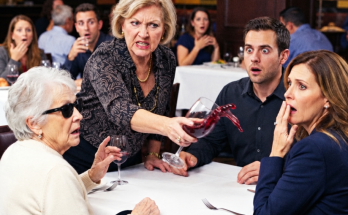
MY GRANDMOTHER LEFT ME A BOX OF FAKE JEWELRY WHILE MY SISTER GOT HER HOUSE AND MY BROTHER GOT $240,000. THEY LAUGHED AT ME—UNTIL A JEWELER FOUND A $680,000 RUBY AND GRANDMA’S SECRET LETTER EXPOSED WHAT THEY’D DONE. 💔😭
THE HOOK
My grandmother died and left me her jewelry box.
My sister got the house.
My brother got the savings.
Between them, they received more than $240,000.
I got a wooden box filled with costume jewelry.
Fake pearls.
Tarnished bracelets.
Broken earrings.
Plastic gemstones.
I was furious.
At the reading of the will, my sister leaned back in her chair and smirked.
“I guess Grandma knew who really mattered.”
My brother laughed.
I said nothing.
I took the jewelry box home.
For three days, it sat on my kitchen table.
I almost threw it away.
But something stopped me.
Maybe it was guilt.
Maybe it was curiosity.
Or maybe it was the memory of Grandma’s final words.
“Don’t judge a gift until you understand why it was given.”
I opened the box.
Underneath the fake pearls, I found a small velvet pouch.
Inside was a ring.
Thin gold band.
Old-fashioned setting.
A deep red stone that looked cloudy beneath years of dust.
I almost put it back.
Instead, I took it to a jeweler.
He examined it under a microscope.
Then stopped talking.
His face changed.
“Where did you get this?”
“My grandmother.”
He looked at me.
“Do you know what you have?”
I shook my head.
He swallowed.
“This appears to be a natural Burmese ruby. Unheated. Approximately four carats.”
I frowned.
“What does that mean?”
He turned the ring toward me.
“It means this could be worth at least six hundred and eighty thousand dollars.”
I stared at him.
He continued.
“Possibly more. The setting appears Edwardian. Around 1910. If the origin and treatment are confirmed by a respected laboratory, this could attract serious collectors.”
I couldn’t breathe.
Six hundred and eighty thousand dollars.
For a ring my grandmother had hidden beneath fake pearls.
I didn’t tell my sister.
I didn’t tell my brother.
I contacted an auction house in New York.
Their preliminary estimate was between $750,000 and $1.1 million, subject to authentication.
The auction was scheduled for six weeks later.
Then my sister called.
“I heard you found something valuable.”
I closed my eyes.
“Who told you?”
“That doesn’t matter.”
“What do you want, Vanessa?”
She laughed.
“You don’t seriously think you get to keep a million-dollar ring, do you?”
“Grandma left me the jewelry box.”
“She didn’t know what was inside.”
“How do you know?”
“Because if she did, she never would’ve left it to you.”
I hung up.
The next morning, a letter arrived from a law firm.
My sister was contesting the will.
The letter claimed Grandma hadn’t understood the value of the jewelry.
It demanded that the ring be included in a new distribution of the estate.
I sat at my kitchen table, shaking.
Then my phone rang.
It was Grandma’s old neighbor, Mrs. Whitmore.
Her voice trembled.
“Sweetheart, I heard your sister is trying to take the ring.”
“Yes.”
There was a long silence.
Then she whispered:
“Your grandmother knew.”
My heart stopped.
“What?”
“She knew exactly what that ring was worth.”
I gripped the phone.
Mrs. Whitmore began crying.
“And there’s something else you need to know.”
“What?”
“Your grandmother didn’t leave you that ring because she loved you more.”
I couldn’t speak.
“She left it to you because seventeen years ago, your sister and brother did something terrible.”
I felt the room tilt.
“What did they do?”
Mrs. Whitmore whispered:
“They stole the inheritance that was supposed to belong to you.”
PART 1 — THE GRANDDAUGHTER WHO ALWAYS SHOWED UP
My name is Claire Bennett.
I’m thirty-eight years old.
I have an older sister named Vanessa and a younger brother named Ryan.
And until six weeks ago, I believed I understood my family.
I was wrong.
Our grandmother, Eleanor Bennett, was eighty-nine when she died.
She lived in a small white house at the end of Maple Street.
The house had blue shutters.
A narrow front porch.
A garden filled with roses.
And a kitchen that always smelled like cinnamon.
Grandma wasn’t wealthy.
At least, that’s what everyone believed.
She wore the same sweaters for years.
Reused gift bags.
Clipped grocery coupons.
And insisted that perfectly good furniture didn’t need replacing just because it was old.
But she was generous in ways that didn’t involve money.
She remembered birthdays.
She listened when people talked.
She wrote handwritten letters.
And she had a remarkable ability to make you feel as though you were the only person in the room.
When I was little, she called me her “quiet heart.”
Vanessa was the ambitious one.
Ryan was the charming one.
I was the one who noticed when Grandma’s hands hurt.
The one who helped carry groceries.
The one who stayed behind after family dinners to wash dishes.
I don’t say that to make myself sound better than my siblings.
We were different people.
And for a long time, I believed those differences were harmless.
Vanessa became a real estate agent.
Ryan worked in finance.
I became an elementary school librarian.
I loved my job.
I loved books.
I loved helping children discover stories that made them feel less alone.
But I never earned much.
I rented a small apartment.
Drove an old Honda.
And lived carefully.
When Grandma’s health began declining, I started visiting every afternoon.
At first, I brought groceries.
Then I helped with laundry.
Then I began organizing her medications and driving her to appointments.
Eventually, she needed more help.
Vanessa visited occasionally.
Ryan called on holidays.
Neither was completely absent.
But the ordinary work fell mostly to me.
And I did it because I loved her.
One evening, while I was washing dishes, Grandma sat at the kitchen table watching me.
“Claire?”
“Yes, Grandma?”
“Do you ever get tired?”
I smiled.
“Of dishes? Constantly.”
She laughed.
Then her expression became serious.
“I mean tired of taking care of everyone.”
I turned off the water.
“Sometimes.”
She nodded.
“That’s an honest answer.”
I dried my hands.
“But I don’t mind helping you.”
“I know.”
She looked toward the window.
Then said something strange.
“People show you who they are when they believe there’s nothing left to gain.”
I frowned.
“What do you mean?”
She smiled sadly.
“Nothing, sweetheart.”
I didn’t understand.
Not then.
PART 2 — THE LAST CONVERSATION
Three weeks before Grandma died, she asked me to bring her jewelry box.
It sat in the top drawer of her bedroom dresser.
Dark walnut.
Brass hinges.
A faded floral design carved into the lid.
I’d seen it my entire life.
As a little girl, I loved opening it.
Grandma would let me try on her necklaces.
Most were inexpensive.
Plastic beads.
Fake pearls.
Old brooches.
A bracelet missing half its stones.
She called them her “treasures.”
I brought the box to her bedside.
She placed a trembling hand on the lid.
“Do you remember playing dress-up with these?”
I smiled.
“Of course.”
“You always liked the pearls.”
“They made me feel fancy.”
Grandma laughed softly.
Then she opened the box.
She lifted a strand of fake pearls.
Held it for a moment.
And placed it back.
“Claire, when I’m gone, I want you to have this.”
I looked at her.
“Grandma, don’t talk like that.”
“Sweetheart, I’m eighty-nine.”
“I know.”
“And I’m tired.”
My throat tightened.
She squeezed my hand.
“Promise me you’ll keep the box.”
“Of course.”
“Even if other people think it’s worthless.”
I frowned.
“Why would they?”
She looked away.
“Because some people only see the price of things.”
I smiled.
“Then they don’t know you very well.”
Grandma’s eyes filled.
She touched my cheek.
“No,” she whispered. “They don’t.”
Then she said:
“Don’t judge a gift until you understand why it was given.”
I promised.
At the time, I thought she meant the sentimental value of her jewelry.
I had no idea she was leaving me a secret worth more than a million dollars.
And I certainly didn’t know that the jewelry box contained evidence of a betrayal that had begun seventeen years earlier.
PART 3 — THE WILL THAT BROKE MY HEART
Grandma died peacefully in her sleep.
I was devastated.
For months, I’d known the day was coming.
But knowing doesn’t make losing someone easier.
The morning after she died, I walked into her kitchen and instinctively reached for the blue mug she used every day.
Then I remembered.
She would never drink from it again.
I sat at the table and cried.
The funeral was held the following Saturday.
Vanessa wore an expensive black dress.
Ryan arrived in a new SUV.
They both cried.
I believe their grief was real.
But even at the funeral, Vanessa asked whether the house had been appraised.
Ryan wanted to know which bank held Grandma’s savings.
I told them to wait.
“We just buried her.”
Vanessa sighed.
“Claire, we’re only trying to get organized.”
I said nothing.
Two weeks later, we gathered in attorney Daniel Mercer’s office for the reading of the will.
Grandma’s estate wasn’t enormous.
The house was valued at approximately $170,000.
Her savings totaled about $70,000.
There were a few other ordinary possessions.
Vanessa received the house.
Ryan received the savings.
I received the jewelry box and its contents.
I stared at the attorney.
“That’s all?”
He looked at the document.
“Yes.”
Vanessa smiled.
Ryan avoided my eyes.
I felt heat rise into my face.
I wasn’t expecting riches.
But I had been there for Grandma.
Every appointment.
Every late-night call.
Every hospital visit.
Every frightening moment when she forgot where she was.
And now my sister had the house.
My brother had the money.
And I had a box of fake jewelry.
Vanessa leaned toward me.
“I guess Grandma knew who really mattered.”
I looked at her.
“Don’t.”
She raised her eyebrows.
“What? I’m just saying.”
Ryan chuckled.
I wanted to cry.
Instead, I stood.
“Can I take the box now?”
Mr. Mercer nodded.
“Of course.”
He handed it to me.
I carried it to my car.
And drove home.
I placed it on my kitchen table.
Then sat beside it for a long time.
I felt ashamed of my anger.
Grandma had loved me.
I knew that.
But grief can make people unreasonable.
And in that moment, I felt forgotten.
Three days later, I opened the box.
And everything changed.
PART 4 — THE RUBY
The ring was hidden beneath a false bottom.
I didn’t discover the compartment immediately.
First, I sorted through the jewelry.
Fake pearls.
Broken clasps.
Tarnished earrings.
A silver-colored bracelet with missing stones.
Then I noticed that the velvet lining wasn’t sitting flat.
I lifted it.
Underneath was a small pouch.
Dark blue.
Tied with a faded ribbon.
Inside was the ring.
I held it up to the light.
The ruby was deep red.
Not bright or flashy.
Almost mysterious.
The gold band was delicate.
Tiny details surrounded the stone.
I didn’t know anything about antique jewelry.
But something about it felt different.
I took it to a local jeweler named Samuel Price.
He had owned his shop for thirty years.
When I handed him the ring, he smiled politely.
“Family piece?”
“Yes. My grandmother’s.”
He examined it.
Then became very quiet.
He reached for a magnifying loupe.
Then a microscope.
He studied the stone for several minutes.
Finally, he looked up.
“Miss Bennett, have you had this appraised before?”
“No.”
“Do you know its history?”
“No.”
He leaned back.
“I don’t want to give you a definitive valuation without laboratory testing.”
I nodded.
“But?”
He swallowed.
“This appears to be a very significant ruby.”
I laughed nervously.
“How significant?”
“Potentially six figures.”
I stared at him.
He continued.
“Possibly more.”
He explained that the stone appeared to be approximately four carats.
Its color and internal characteristics suggested a natural ruby.
The setting looked Edwardian.
Around 1910.
And if a respected laboratory confirmed Burmese origin and no heat treatment, collectors might pay extraordinary sums.
“Could it be worth ten thousand dollars?” I asked.
He smiled faintly.
“Miss Bennett, I would not be surprised if the right buyer paid hundreds of thousands.”
My hands began shaking.
“How many hundreds?”
He hesitated.
“Six hundred and eighty thousand would not be an unreasonable preliminary possibility.”
I stared at him.
Then laughed.
Not because it was funny.
Because my brain couldn’t process what he’d said.
Grandma’s ring.
The one hidden under fake pearls.
Could be worth more than the house and savings combined.
I thanked him.
Took the ring.
And walked outside.
I sat in my car for twenty minutes.
Then called an auction house in New York.
PART 5 — THE CALL FROM NEW YORK
The auction specialist’s name was Rebecca Shaw.
She specialized in antique jewelry.
I sent photographs.
Measurements.
And the jeweler’s preliminary notes.
Two days later, she called.
“Claire, this is an interesting piece.”
My heart raced.
“Really?”
“Very.”
She explained that the ring would need laboratory certification and an in-person examination.
But based on the photographs and preliminary information, it might attract significant interest.
“Do you have an estimate?” I asked.
“Only a provisional range.”
I held my breath.
“Seven hundred and fifty thousand to one point one million dollars.”
I sat down.
Rebecca continued.
“That could change substantially after testing. Auction prices are never guaranteed.”
I barely heard her.
A million dollars.
Grandma had left me a ring worth potentially a million dollars.
I thought about Vanessa’s smirk.
Ryan’s laughter.
The attorney’s office.
The jewelry box sitting on my kitchen table.
Then I thought about Grandma’s final words.
Don’t judge a gift until you understand why it was given.
For the first time, I wondered whether she had known.
I asked Rebecca to arrange the necessary authentication and insurance procedures.
The ring was scheduled for a possible auction six weeks later.
I told almost nobody.
Just my closest friend, Hannah.
And Samuel, the jeweler.
But secrets rarely stay secret in small towns.
Especially when money is involved.
Four days later, Vanessa called.
PART 6 — THE SISTER WHO WANTED EVERYTHING
“Claire.”
Her voice was unusually sweet.
“Hi, Vanessa.”
“I heard you took Grandma’s jewelry to a jeweler.”
My stomach tightened.
“Where did you hear that?”
“Oh, people talk.”
I said nothing.
“So?”
“So what?”
“Was anything valuable?”
I looked at the ring’s insurance paperwork.
“Why?”
She laughed.
“Don’t be difficult.”
“I’m not.”
“Look, if there’s something valuable in that box, we should discuss it.”
I felt anger rise.
“Why?”
“Because we’re family.”
I almost laughed.
“Funny. You didn’t say that when Grandma left you the house.”
“That was different.”
“How?”
“The house was specifically listed.”
“So was the jewelry box.”
Vanessa sighed.
“Claire, Grandma probably thought it was junk.”
“Maybe.”
“If she’d known something valuable was inside, she would’ve divided it fairly.”
I looked at the photograph of Grandma on my bookshelf.
“Are you sure?”
Vanessa’s voice hardened.
“Don’t start.”
“Start what?”
“Acting like you were her favorite because you brought groceries.”
I closed my eyes.
“I never said that.”
“You always act like you’re better than us.”
“Vanessa, I just want to be left alone.”
She lowered her voice.
“How much is the ring worth?”
I didn’t answer.
“Claire.”
I hung up.
The next morning, Ryan called.
He tried a different approach.
“Hey, sis.”
“Hi.”
“I heard there’s some confusion about Grandma’s jewelry.”
“There’s no confusion.”
“Vanessa thinks we should have it independently appraised.”
“It is being appraised.”
“Great. Then we’ll know what we’re dividing.”
I stared at the phone.
“We?”
Ryan sighed.
“Come on, Claire. You know Grandma would’ve wanted us to share.”
“Then why didn’t you share your savings?”
Silence.
“That was different.”
“Apparently everything is different when the money belongs to you.”
He hung up.
Two days later, I received a letter from a law firm.
Vanessa was contesting the will.
And Ryan had joined her.
PART 7 — THE FIRST LEGAL THREAT
The letter was written in language designed to frighten me.
It claimed Grandma may not have understood the true value of the ring.
It questioned whether the jewelry box had been intended to include an item of extraordinary worth.
It suggested that a fair distribution required further legal review.
It requested that I refrain from selling, transferring, or disposing of the ring.
I read it three times.
Then called attorney Daniel Mercer.
He listened carefully.
“Claire, don’t respond directly to their lawyer.”
“Can they take it?”
“That depends on the will, the facts, and the applicable law. We need to review everything.”
I felt sick.
“Grandma specifically left me the jewelry box.”
“Yes.”
“Then why isn’t that enough?”
“Because people can challenge estates, even when their arguments ultimately fail.”
I sat down.
“What should I do?”
“Get independent counsel. Preserve all documents. And don’t sell the ring while its ownership is being disputed.”
I agreed.
That afternoon, I contacted an estate-litigation attorney named Julia Grant.
She reviewed the will.
The jewelry-box bequest.
The auction correspondence.
And the letter from Vanessa’s attorney.
Then she asked a question I hadn’t considered.
“Claire, did your grandmother know the ring was valuable?”
“I don’t know.”
“Did she ever mention it?”
“No.”
“Did she have any records?”
“Not that I’ve found.”
Julia nodded.
“We should investigate.”
I looked down.
“Why?”
“Because if she knew exactly what she was giving you, that may help explain her intent.”
I thought about Grandma’s last words.
And the strange way she’d insisted I keep the box.
Then I remembered Mrs. Whitmore.
Grandma’s neighbor.
Her closest friend for forty years.
I called her that evening.
And she told me something that changed the entire case.
PART 8 — THE NEIGHBOR WHO KNEW
Mrs. Whitmore was eighty-two.
She lived across the street from Grandma.
She’d been there when my parents divorced.
When I graduated from high school.
When Grandpa died.
When Grandma began needing help.
She answered my call on the third ring.
“Claire, sweetheart.”
“Hi, Mrs. Whitmore.”
“I’ve been meaning to call you.”
“About what?”
She hesitated.
“Your grandmother.”
My throat tightened.
“I miss her.”
“So do I.”
I explained the ring.
The appraisal.
The lawsuit.
Mrs. Whitmore was quiet.
Then she whispered:
“Eleanor knew.”
I sat up.
“What?”
“She knew about the ruby.”
My heart pounded.
“How?”
“She had it examined years ago.”
I couldn’t speak.
Mrs. Whitmore continued.
“She took it to a specialist in Boston.”
“When?”
“About seven years ago.”
I stared at the wall.
“Why didn’t she tell anyone?”
“She didn’t want your sister and brother to know.”
I swallowed.
“Why?”
Mrs. Whitmore sighed.
“Because she had already learned what happened the last time they knew there was money.”
I frowned.
“What are you talking about?”
She began crying.
“Oh, Claire.”
“Please tell me.”
There was a long silence.
Then she said:
“Your grandfather left money for you.”
My heart stopped.
“What?”
“Not just for you. For all three of you.”
I gripped the phone.
“When?”
“Seventeen years ago.”
I shook my head.
“Grandpa died when I was twenty-one.”
“Yes.”
“He didn’t leave us anything.”
Mrs. Whitmore was quiet.
Then she whispered:
“That’s what you were told.”
I couldn’t breathe.
“What do you mean?”
“Your grandfather created three separate education and housing funds.”
I stared at the wall.
“How much?”
“Sixty thousand dollars each.”
My mouth went dry.
“Sixty thousand?”
“Yes.”
“Then where’s mine?”
Mrs. Whitmore began crying harder.
“That’s what your grandmother spent years trying to find out.”
PART 9 — THE INHERITANCE I NEVER RECEIVED
I met Mrs. Whitmore the following morning.
She sat in her living room with a folder on her lap.
Inside were copies of old bank statements.
Letters.
Notes written in Grandma’s handwriting.
And a photograph of Grandpa.
His name was Henry Bennett.
He had worked as a machinist for forty years.
He saved carefully.
Invested modestly.
And believed education was the greatest gift he could give his grandchildren.
When he died, he’d arranged for three funds.
One for Vanessa.
One for Ryan.
One for me.
Each originally worth sixty thousand dollars.
The money was intended to help us with education, housing, or other important beginnings.
Grandma had been named to oversee the arrangements.
But after Grandpa’s death, she became seriously ill.
For months, she relied on relatives to handle paperwork.
Vanessa was twenty-six.
Ryan was nineteen.
I was twenty-one.
I was away at college.
Working part-time.
Struggling to pay tuition.
I remembered calling Grandma to ask whether Grandpa had left anything to help.
She told me there was nothing available.
I’d believed her.
Now I was staring at documents suggesting otherwise.
Mrs. Whitmore pointed to a bank statement.
“Your grandmother discovered irregularities years later.”
I studied it.
Transfers.
Withdrawals.
Accounts closed.
Some signatures looked unfamiliar.
“Who did this?”
Mrs. Whitmore looked at me sadly.
“Your sister and brother.”
I shook my head.
“No.”
“She found records showing money from your fund had been redirected.”
My hands trembled.
“To where?”
“Some went toward Vanessa’s first home.”
I stared.
“Her first house?”
Mrs. Whitmore nodded.
“And some helped Ryan cover debts.”
I couldn’t speak.
Grandpa had left me money.
Money that might have helped me finish college without loans.
Money that might have helped me buy a home.
Money that could have changed my life.
And my siblings had benefited from it.
I felt sick.
“Why didn’t Grandma tell me?”
Mrs. Whitmore looked down.
“Because she was ashamed.”
“Of what?”
“Of trusting them.”
Tears filled my eyes.
“She tried to recover the money. But by the time she understood what had happened, the records were complicated, and some of the funds had been spent.”
I covered my face.
“Why didn’t she go to the police?”
“She considered it. She spoke to an attorney. But she was frightened of tearing the family apart.”
I stared at her.
“So she kept quiet.”
“Yes.”
I felt anger rise.
“Then she let me struggle for seventeen years.”
Mrs. Whitmore began crying.
“I know.”
I stood.
For a moment, I couldn’t bear to hear another word.
Then she reached for my hand.
“Claire, there’s something else.”
I turned.
“Your grandmother never stopped trying to make it right.”
PART 10 — THE LETTER HIDDEN IN THE BOX
Mrs. Whitmore handed me a small envelope.
It was sealed.
My name was written across the front.
In Grandma’s handwriting.
I stared at it.
“Where did you get this?”
“She gave it to me six months before she died.”
“Why?”
“She said to wait until you found the ring.”
My hands shook.
I opened it.
Inside was a letter.
My dearest Claire,
If you’re reading this, then you’ve found the ring.
I hope you’ve also discovered what it is.
I wish I could be there to see your face.
You always loved the jewelry box when you were little.
You never cared whether the pearls were real.
You only cared that we were playing together.
That is one of my favorite memories.
But I owe you an apology.
Many years ago, your grandfather tried to provide for all three of his grandchildren.
He wanted each of you to have a chance to build a life.
I failed to protect your share.
I trusted the wrong people.
And when I discovered what had happened, I was too frightened to confront the truth openly.
You suffered because of my silence.
I watched you work two jobs while paying off student loans.
I watched you worry about rent.
I watched you put other people’s needs before your own.
And every time you told me you were fine, I felt the weight of what I’d allowed.
I cannot give you back those years.
But I can tell you this: I never forgot.
The ring belonged to my mother.
She received it from her mother, who brought it into our family long ago.
For decades, I thought it was simply an old family jewel.
Then I learned what it was worth.
I considered selling it.
But I realized I wanted to leave you something that belonged to our family’s history.
Something your brother and sister had never touched.
Something I could give you freely and clearly.
So I changed my will.
I left Vanessa the house.
I left Ryan the savings.
And I left you the jewelry box, including everything inside it.
I knew the ring might be worth more than the other gifts.
That was intentional.
But please understand something, sweetheart.
This was never meant to buy your forgiveness.
It was never meant to make you love me.
It was my attempt to acknowledge a wrong I should have addressed much sooner.
You deserved honesty years ago.
I’m sorry I didn’t give it to you.
And if your sister and brother challenge my wishes, I have left the necessary records with my attorney.
I love you, Claire.
Not because you cared for me.
Not because you visited.
Not because you were useful.
I love you because you’re my granddaughter.
And I hope you never measure your worth by what anyone leaves you.
All my love,
Grandma Eleanor.
I couldn’t finish reading aloud.
I pressed the letter against my chest.
And cried.
For the first time since Grandma died, I wasn’t crying only because I missed her.
I was crying because I finally understood how much she’d hidden.
How much she’d regretted.
And how complicated love could become when people were too afraid to tell the truth.
PART 11 — THE COURTROOM REVELATION
Julia Grant reviewed Grandma’s letter.
Then she requested additional estate records.
The documents showed that Grandma had revised her will with legal advice.
The jewelry-box bequest was deliberate.
And the estate attorney had recorded her instructions.
The letter didn’t automatically resolve the dispute.
But it was important evidence.
So were the old financial records.
When Vanessa and Ryan learned that I had found documentation about Grandpa’s funds, their attitude changed.
Vanessa called me.
“Claire, we need to talk.”
I answered cautiously.
“About what?”
“Grandma’s estate.”
“You can speak to my lawyer.”
She sighed.
“Don’t be ridiculous.”
I said nothing.
Then she lowered her voice.
“Look, maybe we can settle this privately.”
“Settle what?”
“The ring.”
I stared at the wall.
“You mean the ring you said Grandma accidentally left me?”
Vanessa was silent.
I continued.
“She knew, Vanessa.”
“What?”
“She knew what it was worth.”
“That doesn’t prove anything.”
“She left a letter.”
Silence.
“And she left records about Grandpa’s money.”
Vanessa inhaled sharply.
“Claire…”
“Did you take money from my fund?”
She didn’t answer.
“Vanessa.”
Her voice changed.
“You don’t understand what things were like back then.”
I closed my eyes.
“Then explain.”
“I had a mortgage. Ryan was in trouble. Grandma wasn’t well.”
“And I was paying my tuition with loans.”
“We thought you’d be fine.”
I felt my chest tighten.
“You thought I’d be fine?”
“You were always independent.”
I laughed bitterly.
“That’s your explanation?”
“Claire, we were young.”
“So was I.”
She began crying.
“I made mistakes.”
“Yes,” I whispered. “You did.”
Then she said:
“Please don’t destroy the family over money.”
I closed my eyes.
The same family she’d mocked at the reading of the will.
The same family she’d threatened with a lawsuit.
Now she wanted peace.
Because the truth was finally reaching her.
I spoke quietly.
“I didn’t create this problem, Vanessa.”
Then I ended the call.
At the first court hearing, the judge considered the estate dispute and scheduled further proceedings.
My lawyer presented the relevant documents.
Grandma’s revised will.
Her written instructions.
The records relating to the ring.
And the evidence that she had understood the significance of the bequest.
Vanessa’s attorney argued that the distribution was unexpectedly unequal.
But Grandma’s own instructions made clear that the unequal result was intentional.
The legal questions still had to be addressed under the applicable rules.
Yet the emotional truth was already undeniable.
Grandma had known.
And my siblings had known far more about the family’s money than they’d admitted.
PART 12 — THE CONFESSION
Two weeks later, Ryan came to my apartment.
He looked exhausted.
“Can I come in?”
I hesitated.
Then stepped aside.
He sat at my kitchen table.
The same table where I’d first opened Grandma’s jewelry box.
For several minutes, he said nothing.
Then he whispered:
“I’m sorry.”
I stared at him.
“For what?”
He looked down.
“For the money.”
I felt my throat tighten.
He rubbed his face.
“I was nineteen. I had debts. Vanessa said there was money available.”
“Mine.”
He nodded.
“I knew it was supposed to be yours.”
I looked away.
He continued.
“She told me we’d replace it before you noticed.”
I laughed bitterly.
“I didn’t even know it existed.”
He began crying.
“I know.”
I stared at him.
“Did Grandma know?”
“Not at first.”
“And when she found out?”
“She was furious.”
I nodded.
“She should’ve told me.”
“Yes.”
Ryan wiped his face.
“I was ashamed.”
I looked at him.
“You were ashamed, so you let me struggle?”
He closed his eyes.
“Yes.”
The honesty hurt more than another excuse would have.
He continued.
“I watched you work during college.”
My eyes filled.
“I know.”
“I watched you skip vacations.”
“Yes.”
“I watched you drive that old car for years.”
I stared at him.
“And you never said anything.”
He shook his head.
“No.”
For a long time, we sat in silence.
Then Ryan said:
“Vanessa wants to fight you for the ring.”
“I know.”
“I don’t.”
I looked up.
He swallowed.
“I’ve told my attorney I want to withdraw from the challenge.”
I didn’t speak.
“And I want to help repay what I took.”
My eyes filled.
“Ryan…”
“I don’t know how long it’ll take. But I want to try.”
I looked at my brother.
For the first time in years, he wasn’t charming.
He wasn’t joking.
He wasn’t trying to talk his way out of trouble.
He was simply a man admitting what he’d done.
And I realized something painful.
An apology couldn’t return my twenties.
But it could be the beginning of a different future.
“I appreciate you telling me,” I whispered.
Ryan nodded.
Then he looked toward Grandma’s photograph.
“She knew I was wrong.”
“Yes.”
He began crying again.
“And she still left me the savings.”
I looked at him.
“Maybe she hoped you’d learn something from that.”
He nodded.
“Maybe.”
PART 13 — THE AUCTION THAT ALMOST NEVER HAPPENED
The estate dispute delayed the auction.
Rebecca Shaw called me from New York.
“We’ll need to postpone the sale until the ownership questions are resolved.”
I understood.
But I was disappointed.
Not because I was desperate to become wealthy.
Because I wanted the uncertainty to end.
The ruby had changed everything.
My siblings barely spoke to me.
Family friends took sides.
People I’d known for years suddenly wanted to know the details.
Some congratulated me.
Others suggested I should divide the money to keep the peace.
One relative said:
“It’s just a ring, Claire.”
I stared at her.
“Then why is everyone fighting over it?”
She had no answer.
I stopped discussing the case publicly.
I focused on my work.
My students.
My friends.
My ordinary life.
Then Julia called.
“We’ve received a settlement proposal.”
Vanessa was willing to withdraw her challenge if I paid her a portion of the ring’s eventual sale proceeds.
I laughed.
“No.”
Julia remained calm.
“We’ll review the proposal carefully.”
I looked at Grandma’s letter.
“She’s already getting the house.”
“Yes.”
“And she benefited from money that belonged to me.”
“We’re investigating those claims separately.”
I took a breath.
“I don’t want revenge.”
“I understand.”
“But I won’t reward her for trying to take something Grandma deliberately left me.”
Julia nodded.
“That’s a position we can communicate.”
The dispute continued.
Eventually, after the evidence was exchanged and reviewed, Vanessa withdrew her challenge as part of a formal resolution that preserved my ownership of the jewelry box and ring.
The financial issues relating to Grandpa’s old funds were addressed separately through documented agreements.
It wasn’t a dramatic courtroom victory with everyone cheering.
There was no judge pounding a gavel and declaring me the favorite grandchild.
There were simply documents.
Lawyers.
Signatures.
And a family forced to acknowledge facts it had hidden for years.
The ring was finally cleared for sale.
And the auction house scheduled a new date.
PART 14 — THE MILLION-DOLLAR MOMENT
I traveled to New York with Hannah.
It was my first time attending a major jewelry auction.
The room was elegant.
Bright lights.
Quiet conversations.
People who seemed comfortable discussing amounts of money I’d never imagined possessing.
The ruby had been examined by specialists.
Its characteristics and provenance had been documented as far as possible.
The auction estimate remained high.
Rebecca met me before the sale.
“Nervous?”
I laughed.
“Terrified.”
She smiled.
“Whatever happens, remember that an estimate isn’t a guarantee.”
I nodded.
The ring appeared in the catalog.
An Important Edwardian Ruby and Diamond Ring.
I stared at the photograph.
It looked extraordinary.
Nothing like the dusty ring I’d found beneath Grandma’s fake pearls.
Then the bidding began.
The opening amount was already more money than I’d ever seen.
A paddle rose.
Then another.
The auctioneer called out the next figure.
The room became very quiet.
The price climbed.
Six hundred thousand.
Seven hundred thousand.
Eight hundred thousand.
I gripped Hannah’s hand.
Nine hundred thousand.
My heart raced.
Then the bidding slowed.
One buyer offered a million.
Another countered.
The auctioneer waited.
Then announced the final hammer price.
$1,080,000.
I couldn’t move.
Hannah squeezed my hand.
“Claire.”
I stared ahead.
“Claire, it’s over.”
I began crying.
The final amount I would receive would be lower after applicable fees and expenses.
But the sale was life-changing.
Grandma’s ring had sold for more than a million dollars.
And the first thing I thought wasn’t about a house.
Or a car.
Or a vacation.
I thought about Grandma sitting beside me on her bedroom floor.
Laughing while I wore fake pearls.
I remembered her saying:
“You look like a queen, sweetheart.”
I had been six years old.
And I had believed her.
PART 15 — THE SECRET ACCOUNT
I thought the auction was the final surprise.
It wasn’t.
A month later, Julia called.
“Claire, there’s another document.”
I closed my eyes.
“What now?”
“Something your grandmother arranged shortly before she died.”
My heart tightened.
Julia explained that Grandma had established a small trust for a specific purpose.
It wasn’t worth millions.
It wasn’t another hidden fortune.
It contained a modest amount of money.
But the instructions were unusual.
The funds were to be used to locate people connected to an old family photograph and deliver letters Grandma had written.
I frowned.
“What people?”
Julia hesitated.
“Your grandfather’s sister.”
I sat up.
“Grandpa had a sister?”
“Yes.”
I stared at the wall.
“I’ve never heard of her.”
“Her name was Margaret.”
My breath caught.
Grandma had named me Claire Margaret Bennett.
After Grandpa’s sister.
A woman I knew nothing about.
Julia continued.
“She disappeared from the family’s life decades ago after a disagreement over an inheritance.”
I closed my eyes.
Another inheritance.
Another family separation.
Another story hidden beneath silence.
But this time, the secret wasn’t about money.
It was about someone Grandma had spent years trying to find.
PART 16 — THE WOMAN IN THE PHOTOGRAPH
The photograph showed two young women standing beside a train station.
One was Grandma.
The other had dark hair and a bright smile.
On the back, someone had written:
Eleanor and Margaret, 1954.
I stared at it.
Grandma looked barely twenty.
She was laughing.
Margaret had her arm around her shoulders.
Julia handed me a letter.
It was addressed to Margaret.
Dear Margaret,
I don’t know whether this will ever reach you.
I’ve spent too many years wishing I could undo the day we stopped speaking.
We were young.
We were proud.
And we allowed an argument about money to become more important than the love we’d shared.
I wish I had called you.
I wish I had apologized.
I wish I’d told you that no inheritance was worth losing a sister.
Now I’m old, and I don’t know how much time I have left.
If you receive this, please know that I never stopped thinking about you.
Your sister in every way that mattered,
Eleanor.
I sat in silence.
Grandma had spent decades regretting a family separation caused by money.
Then she’d watched her own grandchildren repeat the same mistake.
And she had tried, in her imperfect way, to prevent the past from happening again.
I asked Julia whether Margaret was still alive.
She nodded.
“We found her.”
My heart stopped.
“Where?”
“In Pennsylvania.”
I stared at her.
“She’s ninety-one.”
Tears filled my eyes.
“And she wants to meet you.”
PART 17 — THE AUNT I NEVER KNEW
Margaret Bennett lived in a small assisted-living community outside Pittsburgh.
I traveled there two weeks later.
Hannah came with me.
I carried Grandma’s letter.
And the old photograph.
Margaret was sitting beside a window when I arrived.
She had white hair.
Bright eyes.
And a smile that reminded me of Grandpa.
When she saw me, she began crying.
“Claire?”
I nodded.
“Yes.”
She reached for my hands.
“You look like Henry.”
My throat tightened.
“My grandfather?”
She nodded.
“My little brother.”
I sat beside her.
For a long time, she held my hand.
Then she asked:
“Is Eleanor really gone?”
I nodded.
“Yes.”
Margaret closed her eyes.
A tear rolled down her cheek.
“I waited too long.”
I handed her the letter.
She read it slowly.
Sometimes stopping.
Sometimes wiping her eyes.
When she finished, she pressed it against her chest.
“Oh, Ellie.”
I looked at her.
“That’s what you called her?”
Margaret smiled through tears.
“Always.”
She told me stories I’d never heard.
Grandma learning to dance.
Grandpa falling in love.
Family picnics.
A childhood full of laughter.
Then she explained the argument that had separated them.
Their parents had died.
A small inheritance had been divided.
Margaret believed she’d been treated unfairly.
Grandma defended the arrangement.
Harsh words were exchanged.
Letters went unanswered.
Years passed.
Then decades.
And pride became a wall neither knew how to climb.
Margaret looked at me.
“We were both wrong in different ways.”
I listened.
“But we were too stubborn to admit it.”
She squeezed my hand.
“Don’t do that with your family, Claire.”
My eyes filled.
“I’ll try.”
She smiled sadly.
“Trying doesn’t mean letting people hurt you again.”
I looked up.
“It doesn’t?”
“No, sweetheart.”
She shook her head.
“Forgiveness and trust aren’t the same thing.”
I began crying.
Margaret held my hand.
“Sometimes you can forgive someone and still need distance.”
I nodded.
“And sometimes the best thing you can do is tell the truth before it’s too late.”
We spent the afternoon looking at photographs.
She showed me pictures of Grandpa as a child.
She told me about Grandma’s favorite songs.
And before I left, she handed me a small envelope.
“For you.”
I opened it.
Inside was a photograph of Grandma and Margaret as young women.
On the back, Margaret had written:
WE WERE SISTERS LONG BEFORE WE FORGOT HOW TO BE FRIENDS.
I hugged her.
And for the first time, I understood that Grandma’s final gift wasn’t only the ring.
It was the chance to end a pattern of silence that had lasted generations.
PART 18 — THE FAMILY MEETING
Three months after the auction, I invited Vanessa and Ryan to my apartment.
Ryan arrived first.
He brought flowers.
Vanessa came twenty minutes later.
She looked nervous.
We sat at the kitchen table.
The jewelry box was between us.
Vanessa stared at it.
“I haven’t seen that since Grandma died.”
I nodded.
Ryan looked down.
For a moment, nobody spoke.
Then I said:
“I want to tell you something.”
I showed them the photograph of Grandma and Margaret.
I explained the family separation.
The letters.
The reunion I’d had with Margaret.
Ryan listened quietly.
Vanessa wiped her eyes.
When I finished, she whispered:
“I didn’t know.”
“Neither did I.”
She looked at the jewelry box.
“Grandma never told us.”
“No.”
Ryan spoke.
“She kept so many things inside.”
I nodded.
“Yes.”
Vanessa looked at me.
“Claire, I’m sorry.”
I waited.
She took a breath.
“Not just for contesting the will.”
Her voice trembled.
“For what happened with Grandpa’s money.”
I looked at her.
She continued.
“I told myself you didn’t need it as much as I did.”
Tears filled her eyes.
“I told myself I’d pay it back.”
She looked down.
“And then I stopped thinking about it because it was easier.”
I swallowed.
“I was struggling, Vanessa.”
“I know.”
“I worked nights.”
“I know.”
“I almost dropped out of college.”
She began crying.
“I know.”
I looked away.
For years, I’d wanted her to admit what she’d done.
Now that she was admitting it, I didn’t feel victorious.
I felt sad.
Sad for the years we’d lost.
Sad for the lies.
Sad for Grandma.
Sad for the three children we’d once been.
Vanessa whispered:
“I don’t expect you to forgive me.”
I nodded.
“Thank you for saying that.”
Ryan reached across the table.
“I want to make things right.”
I looked at him.
“Then keep your repayment agreement.”
He nodded.
“I will.”
I turned to Vanessa.
“And stop pretending Grandma accidentally left me the ring.”
She lowered her eyes.
“I will.”
I took a breath.
“I don’t know what our relationship will look like.”
Neither spoke.
“But I don’t want to spend the rest of my life fighting over money.”
Vanessa began crying.
“Neither do I.”
I looked at the jewelry box.
“Then let’s start by telling the truth.”
PART 19 — WHAT I DID WITH THE MONEY
People often ask what I did with the auction proceeds.
The answer surprises them.
I didn’t buy a mansion.
I didn’t quit my job.
I didn’t suddenly become someone who wore expensive clothes or traveled first class.
I paid the auction-related expenses and handled the tax and financial questions with qualified professionals.
Then I paid off my student loans.
I bought a modest house.
A little place with a garden.
And a front porch.
I planted roses.
Just like Grandma’s.
I set aside money for my future.
Then I created a small scholarship fund.
Not because Grandma had asked me to.
But because I knew what it felt like to struggle through school while believing there was nobody to help.
The scholarship supported students facing financial hardship.
Especially those working while studying.
I called it the Eleanor and Henry Bennett Opportunity Fund.
When Julia asked why I included both grandparents’ names, I smiled.
“Because they both wanted us to have a chance.”
The first scholarship recipient was a nineteen-year-old woman named Sofia.
She worked evenings at a grocery store.
Studied early childhood education.
And helped care for her younger siblings.
When I met her, she thanked me.
“This changes everything,” she whispered.
I smiled.
“I’m glad.”
She began crying.
“I thought I might have to leave school.”
I thought about my younger self.
Twenty-one.
Exhausted.
Working late.
Wondering whether I could afford another semester.
And I realized that while money couldn’t return the years I’d lost, it could help someone else avoid the same struggle.
That mattered to me more than the number on the auction receipt.
PART 20 — THE FINAL TWIST
One year after Grandma died, I received a package from Margaret in Pennsylvania.
Inside was an old diary.
It had belonged to Grandma.
Margaret had found it among letters they’d exchanged decades earlier.
On the first page was written:
Eleanor Bennett, 1953.
I spent an evening reading it.
Most entries were ordinary.
School dances.
Family dinners.
Dreams of marriage.
Plans for the future.
Then I found an entry dated December 1954.
It described the ruby ring.
My heart raced.
Grandma wrote that the ring had belonged to her mother.
But the next sentence made me stop.
Mother says the ring must never be sold simply because someone wants to appear wealthy.
I kept reading.
She says it should belong to the person who understands that its true purpose is to help someone when help is needed.
I stared at the page.
Then I turned it.
A later entry described Margaret.
Grandma’s sister-in-law.
The argument.
The inheritance.
The silence.
Then, years later, another entry.
This one was dated seven years before Grandma died.
Today I learned the ruby may be worth more than everything else I own.
I thought I would feel rich.
Instead, I felt frightened.
Money has already cost this family too much.
I must decide what to do with it.
I turned another page.
And found an entry written shortly before Grandma changed her will.
Claire came today.
She brought groceries, cleaned the kitchen, and stayed to watch an old movie.
She laughed at the same silly parts she loved when she was little.
She asked whether I was lonely.
No one else had asked me that in months.
I told her I was fine.
She stayed anyway.
My eyes filled.
The next paragraph read:
I have decided to leave Claire the jewelry box.
Not as payment for caring for me.
Love should never be treated like a bill.
But because I owe her the truth about Henry’s money.
And because I want her to have something that was never touched by the mistakes we made.
I hope she uses it to build a life she chooses for herself.
I wiped my cheeks.
Then I turned the page.
The final entry was written only weeks before Grandma died.
Her handwriting was shaky.
I have been thinking about the day I first gave Claire the fake pearls.
She was six.
She put them around her neck and asked whether she looked beautiful.
I told her she looked like a queen.
She laughed and said she would wear them forever.
I wish I could tell her now that she never needed real jewels to be precious.
I hope she knows.
I hope she knows how much I love her.
I closed the diary.
And cried for a long time.
Because the biggest twist wasn’t that Grandma had secretly owned a million-dollar ring.
It wasn’t that my siblings had stolen my inheritance.
It wasn’t even that she had known the ring’s value.
The biggest revelation was that Grandma had spent her final years trying to correct a mistake she’d been too afraid to acknowledge.
And the ring was only one part of that effort.
Her real final gift was the truth.
A truth that hurt.
A truth that changed my family.
A truth that gave me the chance to make different choices.
PART 21 — THE STRONGER EMOTIONAL ENDING
Two years after Grandma’s death, I hosted Christmas dinner.
At my new house.
The little one with the roses.
Vanessa came.
Ryan came.
Their children came.
Hannah came.
And Margaret traveled from Pennsylvania with her caregiver.
She was ninety-three.
When she stepped into my living room, she looked around and smiled.
“Ellie would’ve loved this place.”
My eyes filled.
“I hope so.”
Margaret touched the roses in a vase.
“She always loved flowers.”
I nodded.
“I know.”
Dinner wasn’t perfect.
Vanessa and I still had difficult conversations.
Ryan was continuing to make restitution.
Some wounds remained tender.
We weren’t suddenly the happy family we’d pretended to be in old photographs.
But we were learning to speak honestly.
And that was more meaningful than pretending nothing had happened.
After dinner, I brought out Grandma’s jewelry box.
Vanessa stared at it.
“Why do you still have that?”
I smiled.
“Because Grandma asked me to keep it.”
I opened the lid.
Inside were the fake pearls.
The tarnished bracelets.
The broken earrings.
The plastic gemstones.
The ruby was gone.
Sold.
Its proceeds had helped me build a different life.
But the jewelry box remained.
I lifted the fake pearls.
Margaret laughed softly.
“Oh, Eleanor loved those.”
I smiled.
“So did I.”
Vanessa looked down.
“I remember you wearing them when we were little.”
I nodded.
“You used to tell me they were ugly.”
She winced.
“I was awful.”
I laughed gently.
“Sometimes.”
She smiled through tears.
Then I handed her the pearls.
“Here.”
She looked startled.
“What?”
“Try them on.”
Vanessa stared at me.
“Claire…”
“Come on.”
She laughed.
Then placed them around her neck.
Ryan grinned.
“You look ridiculous.”
Vanessa threw a napkin at him.
For a moment, we were children again.
Not the people who’d fought over an estate.
Not the adults who’d spent years hiding mistakes.
Just three siblings laughing around a kitchen table.
Margaret watched us with tears in her eyes.
Then she whispered:
“Eleanor would’ve liked this.”
I looked at Grandma’s photograph on the mantel.
And smiled.
Later that evening, after everyone left, I sat alone beside the Christmas tree.
The house was quiet.
I opened the jewelry box one more time.
At the bottom was a small piece of paper.
I’d seen it before.
It was an old note Grandma had written when I was six.
The handwriting was faded.
But I could still read it.
For my little Claire,
May you always know that the most precious things in life cannot be bought.
Love, Grandma.
I held the note.
And thought about everything that had happened.
The will.
The humiliation.
The ruby.
The lawsuit.
The stolen inheritance.
The hidden letters.
The auction.
The family reunion.
The scholarship.
The new house.
The roses.
And the woman who had loved me imperfectly, but deeply.
I thought about the first day I’d opened the box.
How angry I’d been.
How forgotten I’d felt.
How close I’d come to throwing it away.
Then I looked around my home.
The bookshelves.
The warm lights.
The photographs.
The little garden beyond the window.
I finally understood something.
Grandma had not left me a perfect family.
She had left me the chance to face the truth about an imperfect one.
And I had chosen not to let their greed define the rest of my life.
I didn’t have to pretend the betrayal hadn’t happened.
I didn’t have to surrender what was mine to prove I was kind.
And I didn’t have to close my heart forever to protect myself.
I could have boundaries.
I could demand honesty.
I could accept genuine change.
And I could still love the people who were learning, slowly, to do better.
I placed the note back inside the box.
Then closed the lid.
For a moment, I imagined Grandma sitting beside me.
Her soft gray sweater.
Her gentle smile.
Her hands folded in her lap.
I imagined her asking:
“Do you understand my gift now, sweetheart?”
And in the silence of my living room, I whispered:
“Yes, Grandma.”
Tears rolled down my cheeks.
“I finally understand.”
Because the most valuable thing in that jewelry box had never been the ruby.
The ruby had changed my finances.
But the truth had changed my life.
And Grandma’s love, with all its regrets and imperfections, had given me the courage to choose what came next.
I turned off the Christmas lights.
Carried the jewelry box upstairs.
And placed it on my dresser.
Not in a safe.
Not behind a lock.
But where I could see it every morning.
A reminder that wealth can be hidden beneath ordinary things.
That greed can destroy families.
That silence can allow injustice to continue.
And that sometimes, the greatest inheritance isn’t what someone leaves behind.
It’s the truth they finally give you—and what you choose to do with it.
The next morning, I woke to sunlight pouring through the window.
I made coffee.
Walked into the garden.
And stood beside the roses.
One had begun blooming early.
A small pink flower.
Delicate.
Beautiful.
I smiled.
“Good morning, Grandma.”
And for the first time since she died, I didn’t feel as though I’d lost everything.
I felt grateful for what remained.
The memories.
The lessons.
The love.
And the chance to live a life that was finally my own.
THE END. ❤️💔😭