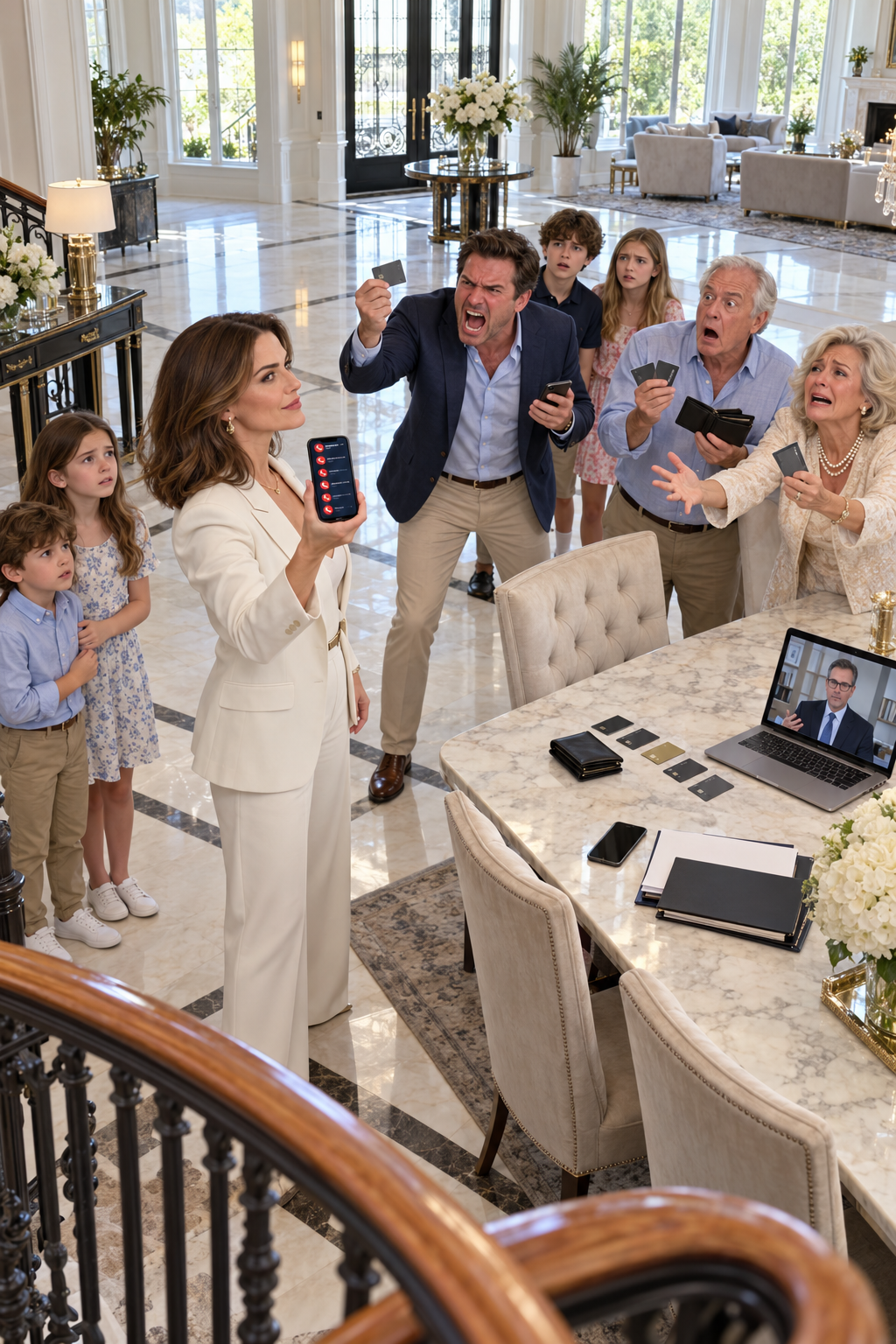
My Brother Said His Kids Were Welcome at Thanksgiving, but Mine Weren’t. I Stopped Paying for Everyone, and by Morning I Had 64 Missed Calls.
My Brother Texted The Group Chat: “New Rule: No Kids At Family Dinners Except Mine.” Mom Reacted With A Thumbs-Up. Dad Wrote: “Finally.” I Screenshot It, Forwarded It To My Accountant, And Replied: “New Rule: No Family Lives On My Money Except Mine.” I Updated The Access On Four Authorized Cards That Night. By Morning… 64 Missed Calls.
Three hours before Thanksgiving dinner, my brother texted me a new family rule: no children were allowed at Mom’s house except his. My nine-year-old twins had already packed their overnight bags, and I had paid for half the holiday meal. Mom knew what he was doing, but she told me to accept it. I didn’t argue. I made one rule of my own, took my children somewhere else, and turned off my phone. By morning, I had sixty-four missed calls and a message that made me question everything my family had told me about money.
Part 1
The first thing I remember about that Thanksgiving is the smell of cinnamon coming from my kitchen and my daughter standing on a chair, carefully arranging little pastry leaves around the edge of a pumpkin pie. My son was at the table, using a black marker to write everyone’s name on folded place cards. He had spelled his uncle’s name wrong twice and was getting frustrated because the third card looked crooked. I was reaching for the dish towels when my phone buzzed against the counter.
The message was from my older brother, Wes Ellis. It was 12:14 p.m., and we were supposed to be at our mother’s house by three.
“New rule for Thanksgiving. No kids except mine. We need a calmer afternoon this year. Hope you understand.”
I read it three times, waiting for the words to turn into something reasonable. Wes had two children, eleven and thirteen, who would apparently be attending as usual. My twins, Addie and Finn, were nine, well-behaved, and so excited about Thanksgiving that Finn had spent the previous evening researching different ways to fold napkins.
I typed, “Are you serious? Why would your kids be allowed and mine wouldn’t?”
His response came almost immediately. “Because it’s my house for the day. I’m hosting. Don’t make this a whole thing.”
That was interesting, considering the house belonged to our mother, Judith, and I had just spent $428 on groceries and catering supplies for the dinner Wes was supposedly hosting. I had also paid $1,150 toward Mom’s housing expenses that month, replaced her broken dishwasher in September, and arranged for the porch railing to be repaired before winter. Apparently, I was considered part of the household when something needed paying for, but not when my children wanted mashed potatoes with their cousins.
My name is Maren Ellis. I was thirty-two at the time, a divorced mother of twins living outside Milwaukee, Wisconsin. I worked as an architectural restoration specialist, mostly on old theaters, libraries, churches, and historic houses. My work involved finding out what was failing beneath beautiful surfaces, which made it particularly embarrassing that I had spent years refusing to examine the structure of my own family.
I called Mom before answering Wes again. She picked up after six rings, sounding breathless, with football commentary and people talking behind her.
“Mom, did you know Wes just told me not to bring the twins?”
There was a pause, followed by the sound of a door closing. “Maren, honey, we’re trying to keep things peaceful today.”
“Peaceful for whom?”
“Wes has been under tremendous stress, and Talia is still upset about what happened with the credit card. We thought it might be better if everyone had a little space.”
Talia was our younger sister. Six days earlier, she had used my credit card without permission to purchase a $1,486 dining set for Mom’s house. I had discovered the charge while buying lumber for a restoration project, and when I asked Talia to reimburse me, she accused me of humiliating her over something that was supposed to benefit the family.
I hadn’t confronted her publicly or threatened her. I had simply sent the receipt and asked for the money back by Friday. Somehow that had become an unforgivable act of aggression, while photographing my credit card during a previous visit apparently counted as a harmless misunderstanding.
“Mom, you’re telling me my children aren’t welcome because I asked Talia to return money she took from my account?”
“Nobody is saying that. Wes just wants a relaxed atmosphere.”
“Then why are his kids invited?”
“Because they’re already here, Maren. Please don’t turn this into an argument.”
I looked across the kitchen at Addie, who was trying to balance the last pastry leaf on her fingertip. She had picked out a green velvet dress for dinner and insisted on wearing the little pearl earrings her grandfather had given her when she was born. Finn had packed a board game because he thought his cousins would enjoy playing after dessert.
I asked Mom whether she had told Wes to reconsider. Her answer was a tired sigh, followed by, “Sometimes being the bigger person means accepting that not everything is fair.”
That sentence had followed me through most of my adult life. When Wes needed help, I was supposed to understand that he had responsibilities. When Talia made mistakes, I was supposed to remember that she was sensitive. When I needed something, I was reminded that I was capable, independent, and fortunate enough to manage on my own.
My father had died eight years earlier, when I was twenty-four and pregnant with the twins. After his funeral, Mom began calling me whenever something around the house went wrong. At first, helping her felt like honoring him; eventually, the requests expanded to include Wes’s business expenses, Talia’s certification classes, car repairs, groceries, insurance payments, and whatever unexpected obligation nobody else wanted to handle.
I said, “All right, Mom. We’ll make other plans.”
She sounded relieved. “Thank you, sweetheart. I knew you’d understand.”
“I understand what you’re asking.”
I ended the call before she could confuse those two statements.
Explaining the situation to my children was harder than speaking to either adult. Addie noticed my expression and asked whether Grandma was sick. Finn stopped writing place cards when I told them the plans had changed, and for a moment the only sound in the kitchen was the refrigerator humming.
“Did we do something wrong?” he asked.
“No,” I said. “You didn’t do anything wrong.”
“Then why can Mason and Sophie go?”
I could have invented an excuse about limited seating or a scheduling mistake. Instead, I told them the adults hadn’t made a fair decision and that I wasn’t going to force them to spend a holiday somewhere they weren’t equally welcome. Addie quietly took off her pearl earrings, placed them beside the pie, and asked whether we could still eat somewhere nice.
I booked a table at a small restaurant near Lake Michigan that was serving Thanksgiving dinner. Then I packed up our dessert, changed into a sweater, and called the credit card company to report the charge I hadn’t authorized. I also stopped the automatic transfer scheduled for Monday and changed the payment arrangements on every account where my money was covering someone else’s obligations.
The bank representative warned me that stopping an automatic payment wouldn’t cancel any underlying agreement I had personally signed. I confirmed that the household transfers were voluntary, requested written confirmation, and made a note to review the remaining accounts after the holiday. I wasn’t trying to hurt anyone financially; I simply wasn’t going to continue funding arrangements I had never been allowed to question.
At 4:38 p.m., after we were seated at the restaurant, I sent one message to the family group chat.
“Since my children and I are no longer included in family gatherings on equal terms, I will no longer be contributing to the household budget, paying for family purchases, or providing unpaid repairs. Any expenses belonging to me will be handled by me. Everything else is now the responsibility of the adults who agreed to it.”
Wes replied with a laughing emoji. Talia wrote, “Unbelievable.” Mom asked me to call her immediately, but I turned my phone face down and concentrated on helping Finn cut his turkey.
The restaurant smelled of roasted rosemary, coffee, and buttered rolls. An older couple at the neighboring table smiled when Addie accidentally knocked her water glass against the bread basket. The woman handed her an extra napkin, and the man jokingly announced that he’d once caused considerably worse damage with a bowl of clam chowder.
That was how we met Ruth and Frank Bellamy.
Ruth had worked as a school librarian, and Frank was a retired commercial electrician who recognized the name of a theater I had recently restored. Within twenty minutes, he and I were arguing cheerfully about whether modern contractors understood anything about old plaster ceilings. Ruth listened to the twins explain their favorite books and somehow remembered every detail.
When she learned our Thanksgiving plans had fallen apart, she didn’t pry. She just asked whether we would mind joining their table for dessert, since Frank had ordered two different pies and was pretending both were necessary for his health.
We stayed until nearly nine. Addie laughed so hard at one of Frank’s stories that she spilled whipped cream on her sleeve. Finn asked Ruth whether he could bring her a drawing of the building I was restoring, and she wrote her phone number on the back of our receipt.
For the first time that day, I wasn’t thinking about the dining set, the money, or my mother’s silence. I was watching my children enjoy themselves around two people who had no reason to make them feel welcome except that they wanted to.
At home, I tucked the twins into bed and finally checked my phone.
There were sixty-four missed calls.
Twenty-one were from Mom, seventeen from Wes, eleven from Talia, and the rest from various relatives. The messages ranged from angry demands to warnings that I was putting the family in an impossible position. But one voicemail from my mother, recorded at 11:46 p.m., made me sit down on the edge of my bed.
“Maren, you don’t understand what you’ve interrupted. Wes says the payment has to go through Monday, or they’re going to start asking questions about the house. Please call me before anyone finds out.”
I listened twice, staring at the dark hallway outside my children’s rooms.
The mortgage wasn’t due Monday. And I had never agreed to make payments for anything belonging to Wes.
Part 2
I woke at 6:20 the next morning to find Finn standing beside my bed holding a plate with two slightly burned pieces of toast. He had made breakfast because, in his words, I looked tired after all the grown-up nonsense. Addie appeared behind him carrying the rest of the pumpkin pie, and for a few minutes we sat together eating an extremely strange breakfast while snow flurries drifted past the bedroom window.
I didn’t want the children’s first morning after Thanksgiving to become another episode of adults arguing about them. I told them we would go to the library later and pick out movies for the weekend. Then I made coffee, opened my laptop, and began doing something I should have done several years earlier: accounting for every dollar I had given my family.
The transfers weren’t difficult to find. Most went into Mom’s checking account, though some had been paid directly to utilities, repair companies, or lenders. Each expense had sounded temporary when she requested it, and I had never bothered to put them together because I assumed helping my widowed mother was simply what a responsible daughter did.
Over the previous twenty-four months, I had paid $23,680 toward her household expenses. That didn’t include the dining set, gifts, groceries, or countless weekends spent doing restoration work for free. It certainly didn’t include the hours I had taken away from my children because someone needed a broken cabinet repaired or a leaking window inspected immediately.
I printed the records and arranged them across the kitchen table. Seeing them together was strangely humiliating, not because I regretted every payment, but because I recognized how thoroughly my family had incorporated my generosity into its normal financial planning. Nobody had ever asked whether I could afford to keep doing it.
At 8:03, Mom called again. I answered and put the phone on speaker while I washed the coffee mugs.
“Thank goodness,” she said. “Maren, you need to put that transfer back.”
“Good morning to you, too.”
“This isn’t funny. Wes has been trying to reach you all night.”
“I saw the calls.”
“Then why didn’t you answer?”
“Because I was spending Thanksgiving with my children.”
She ignored that. “You can’t suddenly change financial arrangements without discussing them with people.”
I dried my hands and sat down. “Which arrangements, Mom? The ones I agreed to, or the ones you and Wes made assuming I would pay?”
Her breathing changed. “It’s complicated.”
“Then explain it.”
“Wes has been helping me manage the house. There are expenses that have to be covered, and your contribution was part of the plan.”
I reminded her that she had described my monthly payments as help with property taxes, maintenance, and a manageable mortgage balance. She admitted that wasn’t the entire picture, then immediately insisted I was making the situation worse by demanding explanations on a holiday weekend.
“Yesterday, you told me to stay away because asking questions created drama,” I said. “Today, you’re asking me for money and still refusing to answer them.”
“Your brother is trying to protect this family.”
“From what?”
She hesitated long enough that I heard someone else speaking in the background. Then she said, “We can discuss it after you restore the payment.”
I declined. She hung up before I could ask about the loan again.
Around eleven, my aunt Deborah called. Unlike the others, she began by asking how Addie and Finn were doing. I told her the truth, including why they had missed dinner and what Talia had done with my card.
Deborah was quiet for several seconds. “That’s not what Judith told us.”
“What did she tell you?”
“That you refused to come because Wes asked everyone to keep the children’s noise down, and you were upset about some furniture you’d agreed to buy.”
I looked at the copies of my bank statements scattered across the table. Mom hadn’t merely avoided telling people what happened; she had altered the story until my reaction seemed unreasonable and everyone else’s behavior seemed harmless.
Deborah also told me something unexpected. Three years earlier, Mom had taken out a substantial home-equity loan, claiming she needed it for structural repairs and to help Wes expand his contracting business. Deborah had assumed I knew about it, since Mom had described me as the family’s financial expert.
“I’m not a financial expert,” I said. “I repair historic buildings.”
“Well, your mother always talks as though you’re managing things.”
That explained more than Deborah realized.
That afternoon, I searched the public property records for Mom’s house. The mortgage and home-equity documents showed a loan secured against the property, though not how the proceeds had been spent. I found a business registration for Wes’s renovation company, established shortly before the loan, and a record showing that it had closed operations eighteen months later.
Wes had told everyone his company was merely taking a break between major contracts. He still drove a large truck with the business logo on the doors and talked constantly about new opportunities. I had even helped him repair equipment when he claimed a delayed client payment had left him temporarily short of cash.
I sent Mom a short message asking for copies of the loan statements and an explanation of which debts my monthly transfers had been servicing. I made it clear that I wasn’t assuming wrongdoing simply because she had borrowed money. I wanted to know why I had been asked to support an arrangement that nobody had disclosed to me.
Her response was a single sentence. “You are destroying your relationship with this family over money.”
I didn’t answer.
By Saturday, the accusations had spread. Talia posted a long message about relatives who used financial generosity to control other people. Wes told our cousins that I had deliberately endangered Mom’s home during the holidays, although he conveniently omitted the fact that he had banned my children from Thanksgiving.
There were moments when I wanted to publish the bank records and watch the story collapse. Instead, I contacted the card issuer again, submitted the information about the unauthorized purchase, and gave the company the details it requested. I also made an appointment with a financial counselor to review my own accounts and confirm that nothing else had been opened or guaranteed in my name.
That Saturday afternoon, Ruth texted.
“Frank says you owe him a better explanation of why the old Orpheum Theatre needed an entirely new electrical system. Coffee tomorrow? Children welcome, obviously.”
I stared at the message for a long time. The word “obviously” was doing more work than she could possibly have known.
We met at a neighborhood coffee shop with mismatched chairs and a crooked chalkboard menu. Ruth brought colored pencils for Addie and Finn, and Frank arrived carrying an old brass door hinge he’d found at an estate sale. He placed it on the table as though presenting an ancient artifact, then challenged me to identify the period.
I spent the next hour talking about restoration methods while my children covered an enormous sheet of paper with elaborate drawings. Neither Ruth nor Frank asked what happened with my relatives, but when Finn mentioned that Grandma hadn’t wanted them at Thanksgiving, Ruth quietly told him adults sometimes made hurtful decisions and children shouldn’t have to carry responsibility for them.
That evening, Mom finally sent the loan paperwork.
The balance was far larger than I expected. Nearly $94,000 remained on a home-equity loan that had originally been for $110,000, and the monthly payments had increased after the introductory interest rate expired. Mom’s pension and Social Security covered her ordinary living costs, but the additional debt had pushed her budget beyond what she could comfortably manage.
Attached to her email was a note explaining that Wes had needed startup capital and that she had expected his company to repay her within two years. When the business failed to produce enough income, she had used my contributions to help keep the loan current. She had also borrowed smaller amounts to cover Talia’s expenses, making her cash flow even tighter.
I finally understood why my family treated ordinary questions about money as personal attacks. My payments had allowed everyone to avoid discussing decisions they were ashamed of making, and they had grown dependent on the silence that kept those decisions hidden.
Then I noticed an older email included in the attachment chain.
It was from Wes, dated nine days before Thanksgiving, telling Mom that his wife’s parents were coming to dinner and might help finance his next business venture. He wanted the gathering to look stable, prosperous, and uncomplicated.
The last sentence made my stomach tighten.
“Keep Maren out of the financial conversation, and don’t let her kids start asking questions about why she’s always paying for everything.”
For the first time, I understood that my children hadn’t been excluded because they were noisy.
They had been excluded because they were old enough to notice what the adults were hiding.
Part 3
For several minutes, I sat in front of my laptop reading Wes’s email until the words stopped looking like words. I thought about the twins’ place cards, Addie’s green dress, and the way my mother had sounded relieved when I agreed not to come. She had known that my children were being pushed aside to protect a financial arrangement built around my money. Worse, she had understood the reason and decided it was acceptable.
I forwarded the email to my personal account, saved the loan documents, and closed the laptop. I considered confronting Wes, but I knew the conversation would become another argument about my tone rather than his behavior. For once, I wanted to spend my energy making decisions instead of persuading other people to admit what they had already done.
I wrote Mom a letter explaining that I would no longer contribute to debts I hadn’t knowingly agreed to support. I wouldn’t repair the house without a paid contract, lend money to Wes, or cover Talia’s purchases. If she wanted independent financial advice, I would help her find someone qualified, but I wouldn’t provide additional money or assume responsibility for the loan.
She replied that I was abandoning her when she needed me most.
That hurt, especially because I remembered sitting beside her after Dad’s funeral, promising we would take care of each other. But there was a difference between keeping that promise and agreeing to finance every poor decision my siblings made. I had spent years treating those two things as though they were identical.
The immediate consequences were less spectacular than my family predicted. Wes couldn’t secure financing for his new business because his previous venture had left him with outstanding obligations and little income to demonstrate. His wife’s parents declined to invest after reviewing the figures, which he somehow blamed on me even though I hadn’t spoken to them.
Talia returned the dining set, although the refund didn’t cover every fee associated with the transaction. My card issuer completed its review, and I was no longer responsible for the unauthorized purchase. She sent me a furious message accusing me of embarrassing her, but by then I had stopped confusing her embarrassment with my wrongdoing.
Mom began meeting with a housing counselor and an attorney to understand her options. She eventually sold the large house, paid off the secured loans, and moved into a modest townhouse with lower monthly expenses. She wasn’t left penniless or homeless, although losing the house where she’d lived with Dad was painful.
I felt sad about the sale. I had spent part of my childhood polishing the oak banister and helping Dad plant tomatoes behind the garage. Still, I refused to believe that preserving those memories required me to spend the next twenty years servicing debts created by choices I hadn’t made.
Over the following months, Ruth and Frank became familiar figures in our lives. They invited us to Sunday dinners, remembered school events, and occasionally picked up the twins when work kept me later than expected. The first time I asked Frank to collect Finn from soccer practice, I apologized repeatedly for the inconvenience.
He looked at me as though I’d asked him to carry a refrigerator up three flights of stairs.
“Maren, I retired so I could stop doing things I didn’t want to do. Picking up Finn and getting him ice cream is something I very much want to do.”
He returned with both children, despite only Finn having practice, because he’d called Addie and invited her along. They came into my kitchen arguing about which ice cream flavor deserved to be considered the national favorite. Frank had apparently taken both sides of the argument at different points and was enjoying the confusion.
Ruth was quieter but just as consistent. She attended Addie’s school art exhibition and remembered to ask about the watercolor painting she’d been working on for weeks. When Finn struggled with reading comprehension, she helped him discover adventure books that were challenging without making him feel foolish.
Their kindness unsettled me at first. I was accustomed to favors that created future obligations, even when nobody stated the terms directly. I kept waiting for Ruth or Frank to present some enormous request that would explain everything they’d done.
It never happened.
Once, after Frank spent a Saturday helping me replace a damaged porch light, I tried to hand him money. He accepted enough to cover the part he’d purchased, then asked why I seemed uncomfortable having someone do something nice for me. I couldn’t answer without explaining most of my childhood, so I made a joke about being stubborn.
He didn’t laugh. He simply said, “You know people can enjoy being useful without needing to own a piece of you afterward.”
I remembered that sentence for a long time.
The twins began calling them Grandma Ruth and Grandpa Frank after Ruth made a birthday cake shaped like the historic theater I was restoring. She spent an entire afternoon constructing the roof out of chocolate wafers, and the finished building collapsed when Frank tried to put candles on it. The children loved the disaster more than any professionally decorated cake we could have purchased.
My mother heard about the nicknames from a relative and called to complain. She said I was teaching the children to replace their real grandmother with strangers. I told her she was welcome to build a relationship with them, but that relationship would have to involve showing up and treating them kindly rather than demanding exclusive rights to their affection.
She didn’t speak to me for six weeks.
During that period, she missed Addie’s school concert and Finn’s first baseball game of the season. Both events had been on the calendar for months, and neither child asked me to call and remind her. That was the part that bothered me most: they were already learning to expect disappointment without announcing that they were disappointed.
Two years after Thanksgiving, Aunt Deborah invited me to Mom’s sixtieth birthday dinner. She said the family wanted to move forward and that Talia had promised there would be no arguments. I discussed it with the twins, who chose to spend the evening with Ruth and Frank instead.
I went because some part of me wanted to see whether time had changed anything. I brought a framed photograph of Dad that I had restored from an old damaged negative. Mom cried when she opened it and held me tightly enough that I briefly wondered whether we might finally be able to speak honestly.
Then dinner started.
Wes spent most of the evening talking about a small property-maintenance company he’d joined. Talia described the difficulties of becoming financially independent, making frequent references to people who didn’t understand loyalty. Mom thanked everyone for supporting her during what she called the hardest period of her life.
When dessert arrived, Talia raised her glass.
“At least the people who really cared stayed around when things got uncomfortable.”
Several relatives glanced toward me. Mom stared at her plate, and Wes smiled into his drink. I put down my fork and waited, giving someone the opportunity to correct what had just been said.
Nobody did.
“Talia,” I said, “are you talking about me?”
She tilted her head. “If you feel guilty, that’s your business.”
I asked whether she’d like to explain why she had used my credit card without permission. Her face reddened, and she said I was bringing up old arguments to make her look bad. Before I could respond, Deborah spoke from the opposite end of the table.
“I’d actually like to understand that,” she said. “Because I was told Maren approved the purchase.”
The conversation changed after that. I explained the charge, the canceled Thanksgiving invitation, the years of household contributions, and the home-equity debt without raising my voice. When Wes interrupted to claim that I had sabotaged his financing, I asked whether his lenders had rejected him because of my actions or because of his business records.
He didn’t answer.
Mom finally slapped her palm against the table. “This is exactly why we didn’t want you at Thanksgiving. You make everyone discuss things that should stay private.”
The words seemed to hang above the plates.
I looked at her carefully. “We?”
She realized what she’d said. For two years, she’d allowed me to believe that Wes had made the decision and she’d simply been too weak to challenge him. Now she’d admitted she’d wanted me absent as much as he had.
“You all agreed I should stay away,” I said, “because you were afraid I’d discover what happened to the money.”
Mom started crying. Wes accused me of ruining her birthday, and Talia muttered that I was enjoying myself. I stood, thanked Deborah for inviting me, and collected my coat. I wasn’t enjoying anything, and I was tired of being told that telling the truth was crueler than hiding it.
Mom followed me into the hallway and caught my sleeve.
“Your father would hate seeing us like this,” she whispered.
I thought about Dad teaching me how to repair the loose banister when I was twelve. He’d always said that covering a broken joint with paint wouldn’t make it strong enough to hold someone’s weight. I gently pulled my sleeve free.
“Then maybe we should have stopped pretending everything was fine before somebody got hurt.”
Driving home, I passed Mom’s old house and saw unfamiliar curtains hanging behind the living room windows. The people who lived there now knew nothing about our arguments, the second mortgage, or the Thanksgiving that had divided us. To them, it was simply a house they had purchased.
At Ruth and Frank’s, the twins were asleep upstairs after watching an old Christmas movie. Ruth made tea while Frank folded the blankets on the couch, and nobody demanded that I explain why I’d arrived with red eyes. Eventually, I told them what had happened.
Ruth listened without interrupting, then asked what kind of relationship I wanted with my mother if I stopped trying to make her understand.
For the first time, I realized I didn’t know.
And that frightened me more than the possibility of losing her, because I’d spent my entire life believing that keeping my family together was my responsibility.
Part 4
The next year, I stopped organizing my decisions around whether my mother would approve of them. It didn’t happen through a dramatic announcement or a confrontation. I simply began noticing how much easier ordinary life became when I wasn’t anticipating the next request, accusation, or family emergency.
I took on a major restoration project involving a nineteenth-century opera house in Madison. The building had suffered decades of water damage, careless renovations, and neglected maintenance, but the original ornamental ceiling was still intact beneath several layers of paint. I spent eighteen months coordinating craftsmen, engineers, conservators, and contractors to bring it back to life.
On opening night, Ruth and Frank sat in the front row with Addie and Finn. Frank wore a suit he complained about throughout dinner, and Ruth carried binoculars because she wanted to inspect the ceiling details. When the curtain rose, I found myself watching them instead of the stage.
My mother had received an invitation. She texted that morning saying Talia needed help preparing for a job interview and that she wouldn’t be attending. I didn’t call to argue, and I didn’t try to convince myself she had a better reason.
I was disappointed, but my evening was too full to let that disappointment swallow everything else.
That project also introduced me to Graham Pierce, a structural engineer who had been hired to evaluate several load-bearing walls. Graham had a dry sense of humor, a collection of terrible neckties, and the unusual ability to disagree with me without treating the disagreement like a competition. Our first serious conversation lasted forty minutes and concerned a staircase that the building owner wanted to relocate.
Three months later, we went to dinner. He ordered a dessert he’d never tried before, disliked it, and still insisted on paying for it because, as he explained, the restaurant had fulfilled its side of the agreement. I found that more attractive than I probably should have.
Graham met the twins slowly and without trying to impress them. He helped Finn construct a model bridge for a school project and listened to Addie explain why she wanted to become a veterinarian. When we disagreed about something, he discussed it directly instead of disappearing or asking someone else to intervene.
I told him about Thanksgiving after we’d been dating for six months. He listened until I finished, then asked whether I wanted him to understand my boundaries or help me change them. It was such a thoughtful question that I had to sit with it for a moment.
“Understand them,” I said. “I spent years with people trying to change them.”
“Then that’s where we’ll start.”
By the fourth anniversary of that Thanksgiving, Graham had become part of our ordinary routine. We made breakfast together on weekends, attended the children’s events, and learned how to leave each other alone when work had been exhausting. The twins liked him, but what mattered more was that they never appeared anxious about how he would react to their mistakes.
Ruth and Frank welcomed him with varying degrees of subtlety. Ruth asked whether he preferred coffee or tea, while Frank questioned him about structural engineering for nearly an hour. Later, Graham told me he felt as though he’d been interviewed by a retired building inspector who also happened to be evaluating his marriage prospects.
Frank admitted he liked him after Graham spent an entire Saturday helping repair the old garage door without once suggesting they replace it.
Around that time, Frank had a health scare that resulted in several days of hospital observation. He recovered, but seeing him in a hospital bed, irritated by the television remote and wearing a gown that didn’t quite close at the back, frightened me more than I expected. I brought him a book about historic Milwaukee buildings, and the twins made cards covered in hand-drawn electrical outlets.
Ruth called me every evening with updates, even when there was nothing new to report. One afternoon, she asked whether I could come over the following Sunday because she and Frank wanted to discuss something important. She sounded nervous enough that I spent the next three days imagining every possible problem.
When I arrived, Frank had arranged three cups of coffee on the dining table. Ruth sat beside him, turning a folded piece of paper between her fingers. The dining room smelled of fresh bread, and sunlight fell across a stack of documents that looked suspiciously official.
Frank cleared his throat. “We need to ask you something, and I don’t want you feeling pressured.”
Ruth smiled nervously. “We’ve been talking to an attorney about adult adoption.”
I looked from one of them to the other, trying to understand what she meant.
“We know you’re grown,” she continued. “You have a career, children, and your own life. We aren’t trying to take the place of anyone, and we certainly aren’t asking you to give up your independence.”
Frank reached across the table. “But you’ve become our daughter in every way that matters to us. We thought maybe you’d like the law to recognize that, too.”
I stared at the papers.
Ruth explained that they had considered the decision carefully, including the legal and personal consequences. They weren’t making the offer because Frank had been ill or because they felt sorry for me. They wanted to make a permanent commitment to a relationship that had already become central to their lives.
For several moments, I couldn’t speak. I thought about how casually they had invited three strangers to share dessert four years earlier, and how consistently they’d shown up afterward. They knew the children weren’t always easy, that I worked long hours, and that my life came with responsibilities they couldn’t simply wish away.
They loved us anyway.
I asked for time to think, and they immediately agreed. We spoke with the attorney, discussed the implications for my existing family relationships, and talked through what the decision would mean to the twins. Nothing was rushed, and there was no expectation that I should say yes because of what Ruth and Frank had done for us.
One evening, Addie asked whether accepting would mean we no longer had Grandma Judith. I explained that family relationships weren’t a competition and that choosing one connection didn’t automatically erase another. Finn thought about that for a moment before asking whether Grandpa Frank would finally be allowed to complain officially about the condition of my car tires.
When I told Frank, he said that was the first practical question anyone had asked about the whole process.
I accepted.
The adoption was finalized after the appropriate legal process, with Graham and the twins beside us. Ruth cried when the judge congratulated our family, and Frank had to clean his glasses twice before he could read the documents. We celebrated at the same restaurant where we’d met, sitting at a larger table this time because four years had changed the size of our family.
I kept my professional surname and incorporated Bellamy into my legal name. I didn’t post an announcement or send photographs to my biological relatives, because I didn’t want the decision to become another argument. It was something I had chosen for myself, not something I had done to punish anyone.
They found out anyway.
Talia called first, demanding to know why I had allowed strangers to adopt me. I told her that Ruth and Frank had been family to me long before the paperwork. She accused me of embarrassing Mom and making our childhood look terrible, which was an odd complaint considering I hadn’t mentioned our childhood to anyone publicly.
Wes sent a message saying I’d gone too far. He added that our father would never have approved, although he hadn’t spoken to me directly in almost two years. I didn’t respond to either of them.
Mom came to my house the following afternoon.
She stood in my kitchen, looking at a photograph of Ruth and Frank with the twins. Her expression was difficult to read.
“You changed your name?”
“Part of it, yes.”
“But I’m your mother.”
“I know.”
“Then why would you let other people become your parents?”
I considered all the arguments I might have made. I could have brought up Thanksgiving, the missed school events, the unpaid work, or the way she’d concealed the home-equity loan. But none of those things explained the real reason I’d accepted Ruth and Frank’s offer.
“Because they asked me,” I said. “Because they love me and the children, and because I love them. It wasn’t a decision about you.”
Mom sat down at the kitchen table. She looked smaller than I remembered, and for once she didn’t immediately try to turn the conversation toward Wes or Talia. She admitted that seeing the adoption photograph had forced her to think about how often she’d treated my presence as something she could count on regardless of her behavior.
I appreciated that she was finally thinking about it. I also knew thinking wasn’t the same as changing.
Several months later, Graham proposed during a weekend trip to Door County. The twins knew about his plans and had spent weeks conspiring with Ruth and Frank to help him choose the ring. I said yes before he’d finished asking, and Finn announced that the entire operation had been much more stressful than he’d expected.
We planned a small wedding for the following summer, five years after the Thanksgiving that had changed everything.
I invited Mom, Talia, and Wes. The invitation didn’t erase the distance between us, and I had no intention of pretending otherwise. I included them because I wanted them to have an opportunity to attend a happy occasion without demanding control over it.
Wes declined, claiming he had a scheduling conflict. Talia accepted without comment. Mom called to ask whether Ruth and Frank would be sitting in the front row, and I told her they would.
Then she asked who would walk me down the aisle.
“Frank,” I said.
For several seconds, she didn’t speak.
Finally, her voice trembled. “Maren, what am I supposed to tell everyone when they ask why your own mother isn’t the one standing beside you?”
I looked at the wedding invitation resting on my desk.
“You can tell them the truth, Mom. Frank is walking with me because he’s been there for me.”
Her silence told me that, even after everything, she was still more worried about what people would think than about why I had made the decision.
Part 5
On the morning of my wedding, I woke before my alarm and listened to rain tapping against the windows of the little inn where we were staying. Addie was asleep on the sofa in her bridesmaid pajamas, while Finn had somehow managed to kick all his blankets onto the floor. My wedding dress hung from a hook near the wardrobe, and a pair of ivory shoes sat beneath it with tissue paper still stuffed inside the toes.
I was thirty-seven, five years older than the woman who had stood in her kitchen holding a phone and trying to understand why her children weren’t wanted at Thanksgiving. My hair had a few more gray strands, my business had grown, and the twins were nearly teenagers. I had people in my life who knew how I took my coffee, remembered my difficult days, and understood that asking for help wasn’t the same as admitting failure.
Ruth arrived carrying breakfast sandwiches and a garment bag filled with things nobody would need until somebody desperately needed them. She had safety pins, extra stockings, tissues, hair clips, and a little sewing kit. Frank appeared ten minutes later to announce that the weather forecast had improved, although his damp shoulders suggested the rain hadn’t received the announcement.
Graham sent me a photograph of his wedding shoes with the message, “I have successfully tied both. Ready for marriage.”
I laughed so loudly that Addie woke up.
The ceremony was scheduled for four o’clock in a restored lakeside conservatory outside Milwaukee. I had chosen the venue because the glass ceiling reminded me of the buildings I loved working on, and because the gardens offered enough space for the children to run around without worrying about breaking anything. Graham had insisted that we include a small display showing photographs of our families, including my father.
At eleven, Mom arrived with a neatly wrapped box and an expression I couldn’t quite interpret. She hugged the twins, complimented Addie’s dress, and asked Finn about school. He answered politely, though the easy excitement he’d shown when Ruth arrived wasn’t there.
I didn’t blame him. Children remember who keeps their promises, even when adults wish they’d forget.
Mom watched Ruth adjust my veil and help Addie fasten a bracelet. For a moment, I saw the sadness pass across her face. She wasn’t being deliberately excluded from those moments, but she no longer occupied the place she’d once assumed would always belong to her.
When Ruth stepped outside to check on the flowers, Mom asked whether we could speak privately.
I agreed, partly because I wanted to know what she needed to say and partly because I didn’t want unfinished tension following me into the ceremony.
She sat in an upholstered chair near the window, carefully smoothing the skirt of her dress. “I’ve been thinking about Thanksgiving,” she said.
I waited.
“Not just the dinner. Everything that happened before it. The money, the way I treated your children, the things I expected you to do because your father wasn’t there anymore.”
Outside, someone rolled a cart across the stone walkway. The wheels rattled over the uneven joints, and for a moment the ordinary sound made the conversation seem strangely unreal. I’d imagined hearing these words so many times that I almost didn’t recognize them when they finally came.
Mom looked at me. “I told myself you were strong enough to handle whatever I asked. I used that as an excuse to give your brother and sister whatever they wanted, even when it meant taking something from you.”
“You didn’t just ask me to help,” I said. “You made decisions involving my money, then punished me when I wanted to understand them.”
“I know.”
“And you hurt Addie and Finn.”
Her eyes filled. “I know that, too.”
She reached into her purse and pulled out an old photograph. It showed Dad sitting on the back porch with a tiny baby balanced against each shoulder, looking exhausted and happier than I’d ever seen him. I remembered the afternoon it had been taken, the late summer heat, and the smell of tomatoes growing beside the steps.
“He used to say you were the person he worried about least,” Mom whispered. “I think I took that to mean I didn’t have to worry about you at all.”
I looked at the photograph, then at her. For years, I’d wanted her to understand that being dependable didn’t make me immune to rejection. Hearing her acknowledge it mattered, but it didn’t restore the holidays she’d missed or the trust she’d spent so casually.
“I’m sorry, Maren,” she said. “For Thanksgiving, for the money, for making your children feel unwanted. I was wrong, and I should have said that years ago.”
It was the first apology she’d offered without explaining why someone else’s feelings mattered more than mine.
“Thank you for saying it,” I answered.
She looked at me hopefully. “Do you think we can start again?”
I considered the question before responding. “I don’t want to go back to the relationship we had. We can see what kind of relationship is possible now, but it has to be different, and I’m not promising anything today.”
She nodded slowly. There were tears on her cheeks, but I didn’t rush to comfort her or reassure her that everything would be fine.
That was new for both of us.
Before leaving, she glanced toward the photograph of Ruth and Frank on the dressing table.
“I always thought somebody else becoming your family meant I’d lost you.”
I adjusted the bracelet on my wrist. “You were losing me long before I met them, Mom. You just didn’t notice because I kept answering the phone.”
She closed her eyes for a moment. Then she stood, thanked me for speaking with her, and returned to the guests.
At three forty-five, Frank knocked gently on the dressing room door. He was wearing a dark blue suit with a silver tie, and his hair had been combed so carefully that I suspected Ruth had supervised the entire process. He looked at me, opened his mouth, and then immediately took off his glasses.
“Oh, for heaven’s sake,” he muttered. “I promised myself I wasn’t doing this.”
I crossed the room and hugged him.
He held me for a long moment, then stepped back to straighten the edge of my veil. “You know, when Ruth suggested inviting you and the kids to our table that Thanksgiving, I figured we’d make three people feel a little better for an evening.”
“You did.”
He smiled. “I had no idea what I was getting myself into.”
“Neither did I.”
He offered me his arm. “Ready?”
I looked through the doorway toward the ceremony hall. I could hear quiet music, chairs moving, and the indistinct murmur of people gathering. Somewhere beyond the glass doors, Graham was waiting with a smile I knew almost as well as my own reflection.
“Yes,” I said. “I really am.”
We walked down the aisle together.
The rain had stopped, leaving drops suspended along the glass ceiling. Sunlight moved across the floor in pale rectangles, and I could smell the white roses arranged beside the chairs. Addie stood near the front holding a small bouquet, while Finn, looking unusually serious in his suit, waited beside Graham.
Ruth sat in the front row with a handkerchief already pressed to her eyes. Across the aisle, Mom was crying quietly. Talia sat beside her, watching as Frank placed my hand in Graham’s.
Frank didn’t deliver a speech about giving me away. He simply squeezed Graham’s shoulder and said, “Take good care of each other.”
The ceremony was simple. Graham promised to respect my independence even when our decisions were difficult, and I promised to build a life with him that had room for honesty, mistakes, and growth. When we exchanged rings, Finn grinned so widely that several guests began laughing before the officiant had finished speaking.
At the reception, Ruth danced with Frank despite his complaints about his knees. Addie and Finn persuaded Graham to join them in a ridiculous dance they’d practiced for weeks. I watched the three of them spinning beneath the warm lights, laughing when Finn stepped backward into a chair.
Later, I noticed Mom speaking quietly with Frank near the garden doors. He listened with his hands folded in front of him, occasionally nodding. When they finished, she touched his arm briefly and returned to her table.
I asked him what they’d discussed.
“She thanked me for looking after you and the kids,” he said.
“What did you say?”
“That it wasn’t a chore.”
He returned to his dinner as though the conversation required no further explanation.
Talia approached me after the cake was cut. She looked uncomfortable, holding an untouched glass of sparkling cider and twisting the stem between her fingers. For once, she didn’t begin with a complaint.
“I saw the photographs from the adoption,” she said.
I nodded.
“You looked happy.”
“I was.”
She glanced toward Ruth, who was helping Addie wrap leftover cake for the ride home. “I thought you were doing it to embarrass Mom.”
“I know you did.”
“But it wasn’t about us.”
“No.”
Talia stared at the floor. “I think that’s what bothered me most.”
We stood quietly for a moment while music drifted from the reception hall. Then she said something I hadn’t expected.
“When you stopped helping financially, I thought you wanted us all to suffer. But I ended up getting a steady job, paid off my credit cards, and stopped borrowing money from Mom. Wes had to find regular work, too.”
I waited.
“We kept saying you ruined everything,” she continued. “But most of those problems were already there. You just stopped paying to hide them.”
It was the most honest thing I’d heard from her in years.
“I’m glad things are more stable,” I said.
She nodded. “I’m sorry about the dining set. And about Thanksgiving. Especially what we did to the kids.”
I believed that she regretted it. I also knew that trust wasn’t something I could restore simply because she had finally found the right words. I thanked her for apologizing, and when she asked whether we might have coffee sometime, I said I would think about it.
I didn’t offer a date.
Wes never apologized. He sent a congratulatory card a week after the wedding, signed by his wife and children, without mentioning anything that had happened. I placed it with the other cards, and I didn’t contact him.
Over the following months, Mom began making small, consistent efforts to rebuild a relationship with the twins. She asked before visiting, attended Finn’s school presentation when he invited her, and accepted it when Addie preferred to spend a weekend with Ruth. She no longer asked me to intervene in Wes’s finances or solve Talia’s problems.
I appreciated the changes without pretending they erased the past. Our relationship became cordial, occasionally warm, but never returned to the intimacy I’d once tried so hard to create. I stopped feeling guilty about that distance, because I understood that closeness was the result of trust, not something a parent could demand simply because of biology.
The next Thanksgiving, Graham and I hosted dinner in our own home. Ruth brought sweet potatoes, Frank argued about the correct way to carve a turkey, and the twins made place cards for everyone. Mom was invited, and she came without asking whether Wes and Talia would be there.
At the table, Addie placed an extra chair near the window for a neighbor who had recently lost her husband. The woman arrived carrying a small dish of cranberry sauce and looked almost embarrassed when she saw how much food we’d prepared. Ruth welcomed her inside while Finn took her coat.
I watched my daughter pull out the chair and say, “We saved you a place.”
There was nothing dramatic about the moment. Nobody had to give up a seat, prove they deserved an invitation, or explain why one person’s comfort mattered more than someone else’s. We simply moved the dishes closer together and made enough room.
Later that evening, after the guests had left and the twins were upstairs watching a movie, I found my old phone in a drawer while looking for spare batteries. It still contained a screenshot from that Thanksgiving five years earlier: sixty-four missed calls, most of them from people who had been desperate to reach me because their financial arrangements had suddenly changed.
I studied the screenshot briefly before deleting it.
For a long time, I’d imagined that the satisfying ending to my story would involve my family realizing how badly they needed me. I thought the money would run out, the bills would pile up, and someone would finally admit that I had been holding everything together. But the truth was far less dramatic and much more important.
They adjusted.
My mother sold a house she could no longer afford to keep. My brother found employment that didn’t depend on borrowed startup money. My sister learned to manage her own expenses. None of them needed me to sacrifice my security or my children’s happiness to survive.
What they had needed was for me to keep believing they couldn’t manage without me.
Graham came into the kitchen and began wrapping the leftovers while I washed the serving dishes. We talked about the weekend, the twins’ upcoming school activities, and whether Frank would ever accept that I knew more about restoring old buildings than he did. It was an ordinary conversation at the end of an ordinary holiday, and I found myself appreciating how peaceful that could be.
Five years earlier, my brother had announced that only his children were welcome at Thanksgiving. My mother had supported him, my sister had helped turn the decision against me, and I had walked away believing I’d lost the family I’d spent my life trying to protect.
I hadn’t known that two strangers would offer my children a seat at their table, or that the kindness of that single evening would become years of birthdays, school concerts, family dinners, and eventually a new legal family. I hadn’t known that someone would love me without depending on my income, or that my children would grow up surrounded by adults who understood that affection couldn’t be earned by surrendering self-respect.
I didn’t regret helping my mother when she genuinely needed it. I regretted how often I’d ignored the difference between helping someone and allowing them to use me.
My brother had made one rule that Thanksgiving: his children counted, and mine didn’t.
I made a different one.
Nobody would ever have to purchase a place in my home with money, favors, silence, or obedience. The people I loved could disagree with me, make mistakes, and face difficult circumstances without fearing that my affection would disappear. But they couldn’t treat my children as less important, take what wasn’t theirs, and expect access to our lives without accountability.
And when I looked around our table that Thanksgiving, I finally understood what my father had been trying to teach me all those years ago.
A beautiful structure means very little if the foundation cannot support the people inside it.
This time, I had built a home that could.
THE END!