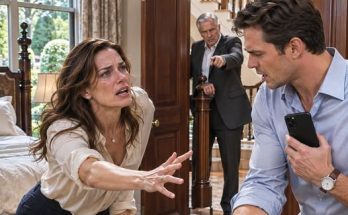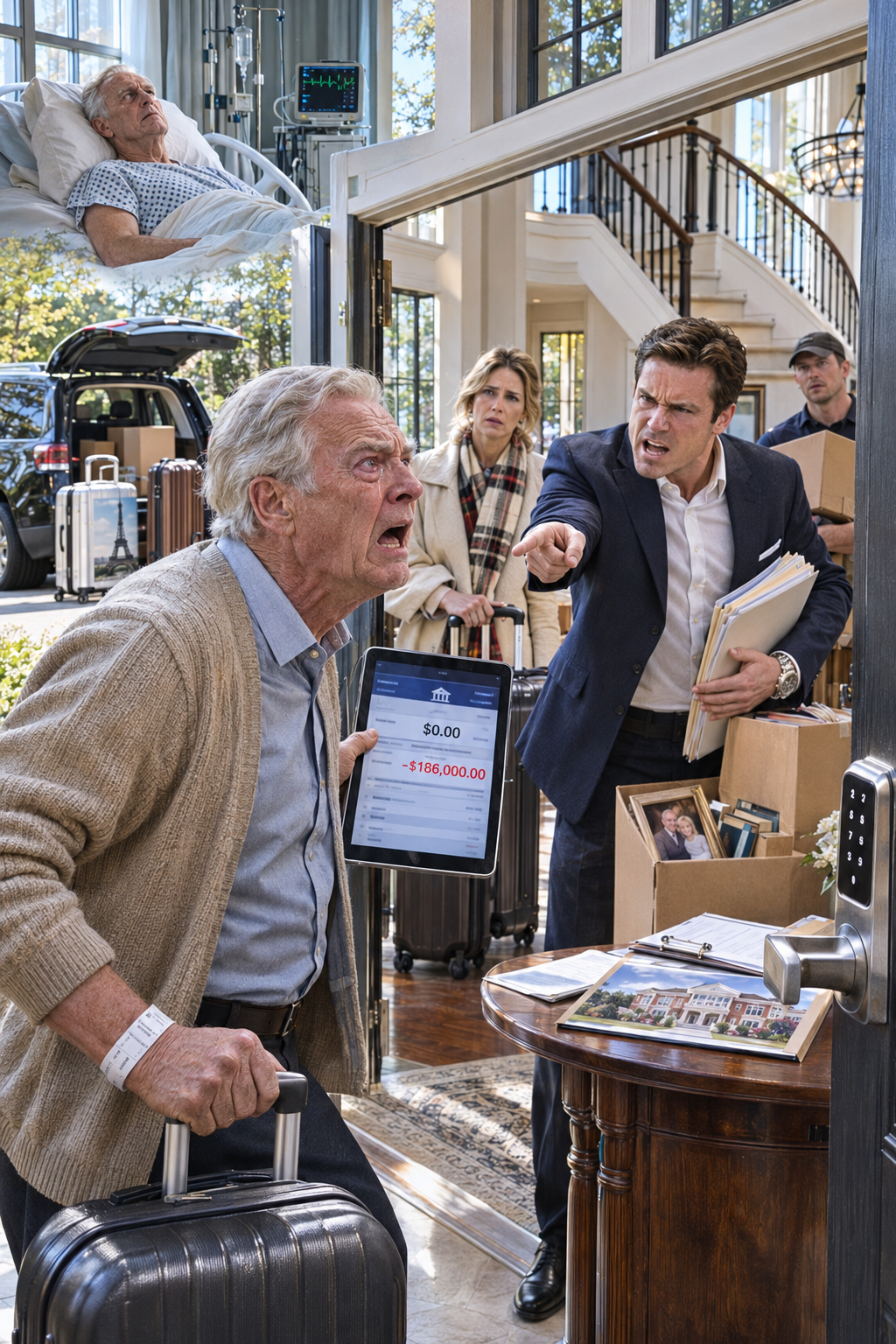
I discovered that my son had changed the locks on my house before I learned he had stolen nearly every dollar I had saved. At seventy-one, three days after my heart surgery, I had been lying in a hospital bed believing my family was taking care of everything, while the very person I trusted most was beginning to dismantle my life. By the time I was discharged seventeen days later, $186,000 had disappeared from my savings account, my belongings were being packed into boxes, and arrangements were underway to move me into a care facility I had never agreed to enter. The cruelest part was that my son had found time to organize a luxurious European vacation but could barely spare a few minutes to visit his father in the hospital.
# Part 1/6
My name is Hinrich Weber, and for more than thirty years, I had lived in a modest two-story house just outside Lancaster, Pennsylvania. My wife, Ingrid, and I bought the property when our son, Lucas, was still young enough to fall asleep in the back seat during the drive home from school. We had immigrated from Germany with little money, a few suitcases, and the belief that hard work would eventually provide our family with the stability we had dreamed about. The house needed extensive repairs when we purchased it, but I was a contractor who knew how to straighten crooked floors, repair leaking roofs, and make an aging building sound again. Ingrid was the one who turned those repaired walls into a home, filling the garden with lilacs, hanging family photographs along the staircase, and making every Sunday dinner feel like a small celebration.
When Ingrid died, I remained in that house because I could not imagine living anywhere else. Every room contained some reminder of her, from the chipped blue bowl she used for mixing bread dough to the small pencil marks inside the pantry door that recorded Lucas’s height as he grew. I had continued managing the household on my own, tending the garden when my knees allowed it and keeping up with the maintenance that inevitably came with an older property. My son occasionally suggested that I should consider somewhere smaller, but I always told him I would make that decision when the time felt right. I never imagined he would eventually attempt to make it for me.
Lucas was forty-two and had taken over the construction company I built from nothing. Seven years earlier, I sold him the business through an installment agreement because I wanted him to inherit the opportunity to build something lasting rather than simply receive a gift he had never earned. He was supposed to make regular payments until the purchase price had been satisfied, and those payments, together with Social Security and our savings, gave me a comfortable but careful retirement. I never considered myself wealthy, although Ingrid and I had accumulated enough money to feel secure against ordinary emergencies. We had spent a lifetime being cautious with money, keeping old cars longer than necessary and avoiding debt whenever possible, because neither of us had forgotten what it felt like to have almost nothing.
My heart surgery had been scheduled after several increasingly worrying medical appointments. The doctors explained what needed to be done, what recovery might involve, and why I should arrange help for the first few weeks after leaving the hospital. Lucas offered to handle the practical details, saying that I should concentrate on getting through the operation rather than worrying about bills, appointments, or household arrangements. In August, he brought a notary to my kitchen and presented a financial power of attorney, explaining that it would allow him to manage my expenses if I became temporarily unable to do so. I read the document, listened to the explanation, and signed because I believed I was protecting myself from complications, not handing my son the means to ruin me.
The surgery itself went well enough, but my recovery was slower than anyone had hoped. There were mornings when standing beside the hospital bed felt like more effort than an entire day of construction work once had, and even lifting my arm into a shirt required concentration. Lucas visited twice during my seventeen-day stay, each time remaining near the doorway as though he had another appointment waiting somewhere. On his second visit, I asked whether the house was secure and whether someone could help me when I returned, and he assured me that our longtime neighbor, Mrs. Brandt, had agreed to stay nearby. “Everything is handled, Dad,” he said, glancing at his telephone before leaving, and those words gave me comfort I now wish I had questioned.
On the Tuesday morning of my discharge, a nurse named Ellen Aiden helped me prepare to leave. She was practical, patient, and unwilling to tolerate the stubbornness I had developed from decades of insisting I could do everything myself. When I struggled to put on my jacket, she held the sleeve steady and reminded me that recovering from major heart surgery was not a contest. “And Mrs. Brandt will be there tonight?” she asked while checking the discharge instructions, and I repeated what Lucas had told me. Ellen placed the paperwork in my overnight bag, told me not to carry anything heavy, and watched carefully as the hospital transport service helped me toward the exit.
Lucas had stopped answering his telephone by then, but I assumed he was busy with the company or already traveling with his family. The hospital social worker had arranged my ride home, my prescriptions were ready, and a visiting nurse was scheduled to check on me the following afternoon. During the journey, I watched Pennsylvania farmland pass beyond the window and thought about how good it would feel to sleep in my own bed. I imagined making coffee in Ingrid’s old kitchen, listening to the familiar ticking of the hallway clock, and sitting in the garden when I was strong enough. Nothing in my mind prepared me for what happened when the driver carried my bag up the porch steps.
The brass deadbolt I had installed years earlier was missing, replaced by an unfamiliar black keypad. At first, I assumed Lucas had upgraded the security system while I was away, but my key would not enter the new lock, and pressing the doorbell brought no response. I tried the handle twice, then stepped backward to look through the front window, where I noticed that the hallway table had been moved and the curtains were hanging differently. The driver asked whether someone was supposed to meet me, and I felt the first unpleasant sensation of uncertainty settle beneath the soreness in my chest. Before I could answer, I heard a familiar voice from across the lawn.
“Mr. Weber, what on earth are you doing here?” Ruth Brandt was standing beside her garden with a rake in one hand, staring at my hospital wristband and the overnight bag near my feet. I told her I had just been discharged, and the expression on her face changed so quickly that I became frightened before she said another word. “Lucas told me you weren’t coming home,” she replied, setting down the rake and approaching the porch. She explained that my son and daughter-in-law had told her I would be transferred directly from the hospital into a residential care facility because my condition had deteriorated. The driver helped me into a chair, and Ruth promised to stay with me before he reluctantly left.
Ruth brought a glass of water, collected my bag, and sat beside me while I tried to understand what she was saying. According to her, my daughter-in-law, Karina, had supervised a locksmith at my front door the previous week and explained that the changes were necessary because I was becoming confused and might wander outside without supervision. She had told Ruth the doctors were concerned about dementia and that the family was arranging a permanent place for me at Lindenhoff, a personal care facility outside Lancaster. I stared at Ruth, wondering whether I had misunderstood something during my hospital stay, because no doctor had ever suggested that I suffered from dementia. When I told her this, she covered her mouth and whispered that she should have called me to check.
Ruth had known our family for twenty years, and I understood why she had believed Lucas. She had watched him grow into a businessman, attended Ingrid’s funeral, and brought me homemade soup when my wife died, so it would never have occurred to her that he might be lying about something as serious as his father’s health. I wanted to reassure her that she had done nothing wrong, but I was struggling to control my breathing and could feel exhaustion settling into my legs. Instead, I reached for my telephone and called Lucas, waiting through several rings before his voicemail answered. I tried a second time, then a third, and finally decided to call my bank.
At first, I only wanted to know whether Lucas had used my money to pay for the new lock and whatever other work had been done inside the house. I called the customer-service number printed on my debit card, answered the security questions, and asked the representative to check for unusual transactions. After a long silence, she explained that several transfers had recently been made under the financial authority granted to my son, then placed me on hold while she reviewed the account. When she returned, her voice had become noticeably more careful. “Mr. Weber, your current available balance is twenty-three dollars,” she said, and for a moment I thought I had misheard her.
I asked her to repeat the number, then asked about the savings account that should have contained the money Ingrid and I had accumulated over decades. She explained that three substantial transfers had been made since my operation, totaling $186,000, and that the first had occurred only three days after my surgery. The transactions had been processed using Lucas’s financial power of attorney, and the account was now effectively empty. I told her I had never authorized my son to take my savings for himself, asked that his access be stopped immediately, and reported suspected financial exploitation. As she began explaining the fraud investigation process, I looked at Ruth sitting beside me and realized that the locked door was only the beginning of what my son had done.
# Part 2/6
The bank representative transferred me to another department, where a second employee explained that the transactions could be flagged as suspected misuse of a power of attorney. She helped block the debit card associated with the account, recorded my objections to the transfers, and explained that stopping further withdrawals would be easier than recovering money already moved elsewhere. I asked whether the bank could simply reverse the transactions, but she told me that an investigation would have to establish where the money had gone and whether legal measures were necessary. When the call ended, nothing had been restored, and my savings still amounted to twenty-three dollars. Ruth had remained beside me throughout the conversation, holding my discharge folder against her knees as though keeping it safe might somehow protect me.
For several minutes, neither of us spoke, and I concentrated on the sound of traffic passing beyond the trees. Eventually, Ruth cleared her throat and admitted there was something else she thought I should see. She took out her telephone, opened Instagram, and showed me photographs Karina had posted from a family vacation in Mallorca, Spain. In the first picture, Lucas was reclining beside a swimming pool with a drink in his hand, while Karina smiled beside him in an expensive-looking dress. Behind them stood a villa surrounded by palm trees, its wide terrace overlooking the brilliant blue Mediterranean.
I studied the photograph without immediately understanding why Ruth seemed so uncomfortable. Then she showed me more pictures, including one of my two granddaughters playing in the pool while Karina’s parents relaxed on lounge chairs nearby. They had taken the girls and her parents on a family holiday while I was recovering from heart surgery, and not one of them had mentioned the trip to me. Later, I would learn that my granddaughters had been told I needed uninterrupted rest and would be staying somewhere with nurses until I felt better. At that moment, however, my attention was drawn to something far more personal than the vacation itself.
Around Karina’s neck was a delicate gold chain with a small heart-shaped pendant. I leaned closer to Ruth’s telephone and enlarged the photograph, noticing the slightly flattened edge of the heart that no amount of polishing could conceal. I had bought that necklace for Ingrid on our twentieth wedding anniversary, saving for months because I wanted to give her something beautiful that she could wear for the rest of her life. Years later, the pendant had caught in a kitchen drawer, and although a jeweler repaired most of the damage, one small indentation remained. I knew that necklace as well as I knew the lines on my own hands.
After Ingrid’s funeral, I had placed the necklace inside a leather case and locked it in the basement safe with our important documents. Lucas knew the combination because I had given it to him years earlier in case there was an emergency and he needed to locate insurance papers or identification. Karina had never been given the necklace, and I had never suggested that she was entitled to take it. Ruth quietly asked whether it belonged to Ingrid, and when I nodded, she saved copies of the photographs before putting her telephone away. I could barely speak because the image had transformed my suspicions into something painfully concrete.
I wanted to enter the house immediately, inspect every room, and find out how much else had been taken. For one foolish moment, I considered the small basement window near the bulkhead entrance, remembering how I once climbed through it when a swollen back door refused to open. I even pushed myself up from the porch chair, but a sharp pulling sensation across my chest reminded me how recently my body had been opened and repaired. Ruth caught my elbow and told me I was not climbing through any windows, no matter how badly I wanted to get inside. She suggested calling someone who could help without risking my recovery, and I knew exactly whom she meant.
Gerhard Falk had been my attorney and friend for more than twenty years. He helped prepare contracts when my construction business was growing, advised Ingrid and me about our estate arrangements, and attended her funeral without making empty speeches about how everything would eventually be fine. When I called, he listened without interrupting as I explained the changed locks, the missing money, the care facility, and the photograph of Karina wearing Ingrid’s necklace. He asked whether Lucas owned any part of the house or held a lease, and I told him the property belonged entirely to me. “Stay with Ruth until I arrive,” he said, his voice becoming firm, “and please don’t try to force your way inside.”
Gerhard arrived before supper carrying a document folder and wearing the same dark coat he had worn to countless business meetings. He brought copies of the property records from my estate file, which showed that Ingrid and I had owned the house together and that sole ownership had passed to me after her death. He had also contacted the local police nonemergency number to explain that an elderly homeowner recovering from surgery had been locked out under suspicious circumstances. A locksmith arrived shortly afterward, examined my identification and ownership documents, and agreed to open the door while an officer stood nearby. The officer explained that he could document suspected criminal activity and help prevent a confrontation, although he could not determine complicated legal questions on the porch.
When the door finally opened, I stepped into a house that looked familiar but no longer felt like mine. There was a strong fragrance of lavender candles, the kind Karina always burned, and several pieces of furniture had been moved away from their usual positions. Ingrid’s framed photograph was missing from the hallway table, along with the crocheted runner she had made during one winter when heavy snow kept us indoors for almost a week. A modern framed print leaned against the wall, and cardboard boxes were stacked beside the staircase as though someone had begun clearing the place for a new occupant. On the bottom step lay a small pink sneaker belonging to my youngest granddaughter, and I picked it up before sitting down because my legs had started trembling.
Gerhard asked where I wanted to begin, and I told him the basement because I needed to know whether the safe had been opened. He took my telephone so he could show me what he found while I remained seated upstairs, and the officer accompanied him to document anything suspicious. As they walked through the basement, I watched shelves I had built with my own hands appear on the screen, many of them now crowded with boxes labeled KEEP, DONATE, or STORAGE. My tools had been pushed aside, and Ingrid’s serving dishes were packed between layers of grocery advertisements, including the porcelain platter she always brought out at Christmas. Seeing our belongings treated like unwanted inventory made me feel as though someone had begun erasing the evidence that we had ever lived there.
The safe was still bolted behind the storage shelves, exactly where I had installed it many years earlier. I gave Gerhard the combination, and he photographed the surrounding area before opening it under the officer’s observation. The leather jewelry case was lying open on a shelf inside, its dark velvet lining empty, confirming what the Mallorca photograph had already suggested. Several original documents remained in place, but a folder I did not recognize had been placed on top of my insurance papers. Gerhard photographed its position before carefully lifting it out and examining the contents.
Inside were copies of an application to Lindenhoff and documents concerning a proposed permanent admission. One page appeared to authorize the facility to begin arrangements for my relocation and carried a signature that was supposed to be mine. I had never seen the form, never agreed to move into Lindenhoff, and certainly had not signed anything authorizing my son to arrange a permanent move. Even at a glance, I noticed that the first letter of my surname had been written differently from the way I had signed it throughout my life. Gerhard reminded me that the handwriting alone would not settle the matter, but he assured me the document could be compared with whatever version had actually been submitted.
Another page was a printed email from a real estate agent asking Lucas to provide documentation proving his authority before she could proceed with listing my house. I read the message twice, understanding that Lucas had apparently been exploring the possibility of selling a property that did not belong to him. The agent had not agreed to proceed merely because my son claimed to speak for me, and Gerhard confirmed that the house had not been transferred out of my ownership. That was the first piece of genuinely reassuring information I had received all day. Someone outside my family had asked a question my son apparently did not expect to answer.
The officer documented the folder, and Gerhard brought it upstairs so I could look through the pages without having to climb down to the basement. I stared at the false signature and wondered how long Lucas had been planning everything, whether he had decided before my surgery that I would be easier to control once I was weak and frightened. “He was arranging to remove me from my own home while I was lying in that hospital,” I said, and Gerhard pulled a chair beside mine without trying to contradict me. I began crying, partly from anger and partly from exhaustion, while he quietly handed me a clean kitchen towel. After several minutes, I remembered something that made me straighten in my chair: two years earlier, following a break-in at my garden shed, I had installed a small motion-activated camera in the basement, and its view included the area directly in front of the safe.
# Part 3/6
The camera had been installed to monitor the basement entrance and storage shelves, not to spy on my family. It recorded whenever movement occurred, saving short video clips to a local recorder in the upstairs study, and unlike the outdoor cameras, Lucas had never asked about this particular device. Gerhard helped me find the recordings from the days immediately after my operation, and we watched them together on the computer while the officer stood nearby. The first clips showed Lucas carrying flattened cartons downstairs, followed by Karina holding packing tape and a thick black marker. They moved through the basement as casually as people preparing their own property for storage, which somehow made the images more disturbing.
We found the recording of the safe being opened several minutes later. Lucas entered the combination without hesitation, pulled open the heavy door, and stepped aside while Karina reached for Ingrid’s jewelry case. She removed the necklace, held it against her own throat, and moved toward an old mirror leaning beside my workbench. Lucas approached her from behind, took the chain from her fingers, and fastened the clasp while she admired herself. I recognized the movement of his hands because I had once watched him perform that same small kindness for Ingrid when arthritis made it difficult for her to close the clasp herself.
There was no audio, no dramatic confession, and no explanation that could transform what I was watching into a misunderstanding. The recording simply showed my son opening my safe and helping his wife put on a necklace that belonged to my dead wife. Gerhard stopped the video before I had to watch them walk away, and the officer carefully noted the recording system and the approximate time shown on the screen. They arranged for the original footage to be preserved and for copies to be provided through the proper investigative process. I declined Gerhard’s offer to watch the clip again because I already knew I would remember those images for the rest of my life.
Before the locksmith left, he removed the electronic keypad and installed a conventional lock that I could operate without depending on anyone else’s code. Gerhard made sure I received every key and helped check the doors and windows while the officer completed his initial report. We also secured the safe and began making an inventory of the belongings that appeared to have been moved or removed. There were still so many unanswered questions, but I knew that the house was legally mine, that the necklace had been taken, and that the documents concerning Lindenhoff needed serious investigation. For the first time since stepping onto my porch, I felt that the situation was no longer entirely beyond my control.
Gerhard remained at the house while we contacted the bank again and prepared written revocation of the power of attorney I had granted Lucas. He explained that the document was broader than I had appreciated, but that managing another person’s finances did not automatically permit an agent to enrich himself or disregard the owner’s interests. We also examined my health care documents, removed Lucas from the responsibilities I no longer wanted him to hold, and arranged to notify the relevant institutions. Everything had to be recorded properly because a telephone conversation alone would not necessarily be enough to prevent future problems. By the time Gerhard finished making notes, evening had settled over the garden, and I was struggling to keep my eyes open.
Ruth insisted on sleeping in the downstairs guest bedroom rather than leaving me alone. She checked the doors, placed my discharge paperwork on the kitchen counter, and made sure I had water and my telephone beside the bed before turning out the lights. I lay awake listening to the familiar sounds of the house, wondering whether Lucas had ever felt guilty while moving my possessions or whether he had convinced himself that everything belonged to him eventually anyway. The thought that hurt most was not that he had wanted my money, but that he apparently believed my life could be reorganized without my permission. Somewhere in Spain, he was enjoying a holiday while I was frightened of falling asleep in a home I had owned for thirty years.
The following morning, Ruth prepared oatmeal and set my medications beside the breakfast plate, checking each bottle against the hospital’s instructions. When I complained that she was fussing over me, she replied that she certainly was and that I should concentrate on eating before the oatmeal became cold. Her ordinary impatience was a comfort after a day filled with things I could barely comprehend. That afternoon, the home health nurse arrived for her scheduled visit, examined my recovery progress, and listened while I explained the situation with Lucas. With my permission, she contacted my doctor’s office and helped coordinate additional assistance so that stress and household difficulties would not interfere with my physical recovery.
Gerhard helped arrange temporary paid care through a local service and advanced the initial expense as a documented loan. Thankfully, Lucas had not reached a separate retirement account held at another financial institution, and after his authority there was revoked, I could arrange funds for essential bills. I was far from financially helpless, although the disappearance of $186,000 represented decades of discipline and sacrifice that could not be casually replaced. On Wednesday, I visited the bank with Gerhard and requested printed records of the three transfers, along with a complete copy of the power of attorney. The manager was courteous but careful, making no promises about recovery while explaining which records could be supplied immediately and which would require further investigation.
The transaction history confirmed that the first withdrawal occurred three days after my surgery, while I was still receiving intensive medical care. Two more transfers followed during my hospitalization, leaving only twenty-three dollars in an account that had been intended to support me through old age. Lucas had described the money as funds being set aside for my future care, an explanation the bank had recorded without knowing what was actually happening inside my family. Gerhard pointed out that the destination accounts and subsequent spending would matter more than Lucas’s convenient description of the transactions. I understood then that proving betrayal was not simply a matter of telling people how deeply I had been hurt.
A report was made to the county program responsible for investigating suspected financial exploitation of older adults. Later that week, a financial crimes detective named Sabine Krueger contacted me and arranged to take a detailed statement. She asked about the August signing appointment, the timing of my operation, the property documents, the safe, and the people who had seen the changes made to my house. I began explaining what Lucas had been like as a child, perhaps because I needed her to understand that I had not simply handed my finances to a stranger. She listened respectfully before guiding me back to the dates and transactions, reminding me that the evidence would be stronger if we separated what I knew from what I feared.
I gave her copies of the photographs Ruth had preserved and the information about the basement recording. Gerhard helped establish a clear record of how the video files had been collected, and the detective arranged to obtain the relevant financial documents through the appropriate channels. She also wanted to speak with Ruth, the locksmith, and the people involved in the care facility application. I asked whether Lucas could be arrested immediately, and she explained that a serious financial case required tracing transactions and establishing what authority had been used and how. I did not like the answer, but I appreciated that she refused to promise a quick result simply because I was desperate for one.
By Friday, the bank confirmed that Lucas’s access had been disabled and acknowledged receiving the formal revocation. Gerhard began seeking legal measures to preserve any disputed funds that might still exist, although he reminded me that asking a court to act was different from knowing whether a judge would grant the request. I spent that evening sorting through my hospital paperwork, trying to make sense of a week in which the simplest task had become complicated by my son’s actions. Ruth brought me a cup of tea, then left me alone when she saw I needed quiet. I was looking at Ingrid’s empty photograph frame when my telephone began ringing, and Lucas’s name appeared on the screen for the first time since my return.
# Part 4/6
It was a little after two in the morning when Lucas finally called, and I had been sitting awake in the living room because sleep would not come. For one brief, foolish instant, I hoped he had learned about my discharge and was calling to ask whether I was safe. Instead, he began speaking quickly about a problem with the bank, explaining that the debit card I had allowed him to use for occasional errands had stopped working. “I don’t understand what happened, Dad,” he complained, sounding irritated rather than worried, “because we’re still away, and Karina’s parents have expenses before their flight home.” I listened to him for several seconds before quietly explaining that the card had been canceled.
His tone changed immediately, and he demanded to know why I would interfere with an arrangement he was supposedly managing on my behalf. I asked whether he remembered that I had undergone heart surgery, and he replied that of course he remembered, but there was no need for me to become unreasonable about financial matters. When he asked where I was staying, I told him I was sitting in my own kitchen, and the silence that followed was more revealing than anything he had said before. “Who let you inside?” he finally asked, and when I explained that a locksmith had opened the door, he began insisting that I should not be living there alone. I told him Ruth was staying with me, and he answered, almost angrily, that this was not what the family had arranged.
Lucas launched into an explanation about protecting me, securing the house, preparing for future medical expenses, and organizing my possessions so that I would not have to worry about them. He described the transfers as temporary and insisted that the money was still intended for my benefit, although he offered no explanation for why I had been left with twenty-three dollars. I waited until he finished, then asked why Karina was wearing Ingrid’s anniversary necklace in the vacation photographs. There was another long pause before he said Karina thought I would want her to have a keepsake, and I replied that she could have asked instead of taking it from my safe. When he said we would discuss everything after he returned, I told him Gerhard had already sent formal notice and that any further conversation about my property would have to take place through the lawyers.
“You called an attorney against your own son?” he demanded, sounding genuinely offended. I looked at the financial statements spread across my table and wondered how he could still imagine that he was the injured party. “Enjoy the remainder of your vacation, Lucas,” I said, and ended the call before he could offer another explanation. Ruth appeared in the doorway a moment later, wearing slippers and the guest robe Ingrid had kept hanging behind the bedroom door, and asked whether I needed anything. I told her I was all right, although both of us understood that the words were only partly true.
Over the following days, Lucas sent several messages, alternating between anger and appeals for sympathy. He claimed I had misunderstood the purpose of the transfers, accused Gerhard of turning me against my family, and warned that my actions would hurt his daughters. One message insisted that Karina had been helping organize the house because I had always been too attached to belongings that should have been donated years ago. I forwarded everything to Gerhard rather than responding, knowing that an argument conducted through text messages would solve nothing. I also changed passwords, updated contact information with financial institutions, and documented the household belongings that appeared to be missing.
Gerhard contacted Lindenhoff with my written permission, and the admissions director confirmed that Lucas had first made inquiries before my operation. An application had been submitted during my hospitalization, accompanied by documents that suggested I required a permanent placement and that my son was acting with my agreement. The facility had not approved my admission because several essential requirements remained incomplete, including medical information, an assessment, and clarification about certain signatures. I spoke directly with the director and explained that I was mentally capable of making my own decisions and had never consented to move there. She documented my objection, agreed to preserve the submitted materials, and assured me that no admission would proceed based on the disputed application.
Gerhard also explained that the financial power of attorney did not magically give Lucas authority to declare me incapable of deciding where to live. Any contested guardianship would require a separate legal process involving a court, and no such proceeding had been filed against me. Lucas had apparently relied on the assumption that doctors, neighbors, bankers, and administrators would accept his statements without questioning them because he was my adult son. Fortunately, the care facility had requested additional information, and the real estate agent had asked for documentation instead of immediately placing the house on the market. Those cautious decisions by strangers had prevented the situation from becoming even more serious.
When Lucas returned to Pennsylvania, his attorney contacted Gerhard and began disputing my interpretation of the events. The lawyers exchanged correspondence concerning the transfers, the documents, and the belongings removed from the house, while the detective continued tracing where the missing funds had traveled. Financial records eventually showed that my savings had been deposited into accounts Lucas controlled, and portions of the money had been used to pay personal debts and travel-related charges. Some money remained available for potential recovery, and legal measures were taken to restrain disputed funds where the evidence justified doing so. The photographs from Mallorca helped establish the circumstances, but the bank records provided the more important proof of how my money had actually been spent.
During those months, I learned that a financial investigation moved at a pace entirely different from the urgency of personal betrayal. There were appointments when I had to describe the same events again, weeks when I heard nothing, and mornings when I woke convinced that someone would find a harmless explanation for everything. I continued cardiac rehabilitation, walking carefully on a treadmill while other patients discussed their families, their medications, and the ordinary inconveniences of getting older. One man complained that his daughter telephoned every evening to make sure he had eaten properly, and I told him he should appreciate having someone who cared enough to ask. He laughed, unaware that I was fighting back tears.
Gerhard also reviewed the installment agreement through which Lucas had purchased my construction business. The company legally belonged to Lucas under that agreement, and nothing about the dispute gave me the right to reclaim it simply because he had betrayed me. When payments became overdue, Gerhard addressed them through the contractual remedies available rather than trying to use the criminal investigation as leverage. I deliberately avoided contacting employees or customers, many of whom had known me for years, because I did not want them forced to participate in a family conflict. Protecting what remained of my dignity became almost as important as recovering the money.
About six weeks after I returned home, Gerhard called to say Karina had agreed to return Ingrid’s necklace through the attorneys. The jewelry arrived in a padded envelope, and its return was documented in coordination with the investigator before Gerhard gave it to me. I opened the leather case at my kitchen table and examined the little gold heart, running my thumb carefully across the familiar flattened edge. The clasp still worked, and there were no obvious signs of damage, yet I found myself remembering how Ingrid used to wear it while shopping for groceries, attending Lucas’s school performances, and preparing holiday meals. I remembered one afternoon when she leaned over me as I repaired the kitchen sink, and the pendant brushed my forehead, making me complain that she was blocking the light.
I sat with the necklace in my palm for a long time, understanding that my anger had become tangled with the grief I thought I had learned to live beside. What hurt was not only that Karina had worn the necklace without permission, but that Lucas had helped her put it on as though his mother’s possessions were simply waiting to be claimed. I closed the case and arranged to place the jewelry and important documents in a more secure location, where I would not spend every evening worrying whether someone might open another safe. The return of the necklace did not repair my relationship with my son, but it restored one small thing that had belonged to Ingrid and me. For the first time since leaving the hospital, I began thinking about what I wanted the remainder of my life to look like, rather than simply reacting to what Lucas had done.
# Part 5/6
For the next several weeks, I tried to convince myself that remaining in the house was the only way to prove Lucas had failed to take it from me. I slept downstairs because climbing the staircase was still difficult, and I depended on help whenever I needed something from the basement or wanted to carry laundry between floors. The building I had repaired and maintained for most of my adult life had become more demanding than I was willing to admit, especially while my chest was healing. Ruth suggested that I consider an apartment with fewer stairs, and I initially rejected the idea because I felt as though moving would mean surrendering. She listened patiently before asking whether I genuinely wanted to spend my remaining years proving something to a son who had already taken too much.
Her question stayed with me longer than I expected. A few days later, while we were sorting through the kitchen cupboards, I told her that I did not want Lucas deciding where I lived, but that I also did not want my anger at him making the decision for me. Ruth nodded and said she would help whether I stayed or moved, provided I stopped pretending I could carry heavy boxes while recovering from heart surgery. We began sorting the rooms slowly, making separate lists of items to keep, donate, or sell, and I insisted on reviewing everything that belonged to Ingrid. This time, the decisions were mine, and no one marked a box without asking what I wanted done with its contents.
We found Ingrid’s hallway photograph wrapped in a towel at the bottom of a carton labeled DONATE. Ruth handed it to me without speaking, and I carried it upstairs myself after my doctor had cleared me for more physical activity. The frame was slightly dusty, but the photograph inside was undamaged, showing Ingrid standing beside the lilac bushes on a spring morning not long after our twenty-fifth anniversary. I cleaned the glass and returned it to the hallway table, where its absence had bothered me every day since coming home. I wanted the house to look like our home again before I made the decision to leave it.
Lucas and Karina had left various belongings behind while rearranging the property, including plastic storage bins, cleaning supplies, folding chairs, and some toys belonging to the girls. Gerhard arranged for their attorney to receive an inventory and coordinate collection, so there would be no later dispute about missing or damaged possessions. I refused to keep anything as leverage, even though part of me wanted Lucas to experience the helplessness of discovering that someone else controlled his belongings. The little pink sneaker I had found on the staircase went into the collection with the children’s toys. When those items were removed, the house finally began to feel less like a place interrupted in the middle of someone else’s plans.
Selling the property took time, and I made sure I was not rushing because of fear or humiliation. I interviewed agents, reviewed the market information, and discussed offers with Gerhard, who encouraged me to make decisions based on my needs rather than the conflict with Lucas. Four months after my hospital discharge, the sale closed, and I moved into a smaller apartment near downtown Lancaster. The building had an elevator, the grocery store was within easy reach, and from the living room window I could see a church steeple rising above the neighboring rooftops. There was also a market nearby that reminded me of the places Ingrid enjoyed visiting, and I found myself imagining how she would have arranged the furniture.
On the morning I left the house, I walked through every room as carefully as I used to inspect a completed construction project. I checked the windows, opened the cupboards, and stood for a moment in the bedroom where Ingrid and I had spent so many years discussing ordinary things that now seemed precious. Inside the pantry door, I found the pencil lines we had made to record Lucas’s height when he was growing up, including one marked with his name and the words “age nine.” I remembered him standing with his heels pressed against the wooden frame, trying to stretch taller while Ingrid laughed and told him to stand properly. I photographed the marks, closed the pantry door, and handed over the keys without looking back a second time.
My new apartment was quieter than the old house, especially during the first few nights. There were no familiar floorboards creaking in the hallway and no sounds of tree branches brushing against the upstairs windows, but there were also no steep staircases or unfinished maintenance jobs waiting for me. Ruth visited regularly, and the paid assistance became less necessary as my strength returned through rehabilitation. I began walking to the market, first slowly and only when the weather was good, eventually building enough confidence to carry a small bag of groceries home. The independence I recovered came in modest pieces, and I learned to value each one.
Meanwhile, the criminal investigation continued through most of the following year. Detective Krueger and the financial investigators obtained additional records, interviewed people involved in the transactions, and examined the documents Lucas had submitted concerning my finances and the proposed care arrangements. I gave formal statements, reviewed dates with Gerhard, and corrected details when records showed that my memory of a particular day was not exact. The detective reassured me that the case would depend on documented transactions and corroborating evidence, not on my ability to recall every event perfectly. That was a relief because recovering from surgery while confronting a family betrayal had left some of those early days blurred together.
The legal process was nothing like the swift resolutions people described in television dramas. Hearings were scheduled and occasionally postponed, attorneys requested records, and months passed before the full picture of Lucas’s actions emerged. Eventually, the evidence established that he had used his financial authority to divert my savings for purposes unrelated to my care, while false documents had been created in connection with the arrangements made during my hospitalization. Lucas ultimately agreed to plead guilty to charges arising from the theft and the false paperwork. Karina’s involvement was handled in a separate proceeding, with decisions based on the evidence concerning her own actions rather than simply the fact that she was married to Lucas.
I attended Lucas’s sentencing with Gerhard, who sat beside me while Detective Krueger remained near the prosecutor. When Lucas entered the courtroom wearing a suit, I was startled by how much older he looked than he had in the vacation photographs, his face drawn and his shoulders rounded. For a moment, I remembered the young man who used to call me when his truck broke down or a construction job presented a problem he had not yet learned to solve. Then the prosecutor described the first transfer from my savings account, made while I was still recovering in the hospital, and the memory disappeared beneath the weight of what he had chosen to do. I kept my eyes on the papers in my lap because I did not trust myself to look at him.
When the judge invited me to make a statement, I unfolded the single sheet of paper I had prepared with Gerhard’s help. I explained that I had signed the power of attorney because I expected to need assistance after surgery, and that I had entrusted my son with access to my savings for the purpose of paying bills and handling emergencies. I described returning home with medication and discharge instructions, only to discover that my locks had been changed and that people had been told I could no longer make decisions for myself. “I was not asking my son to take over my life,” I said, holding the paper steady with both hands, “and I never gave him permission to take the money my wife and I spent a lifetime saving.” I told the court that the hardest part had been standing outside my own front door, too weak to enter and unable to understand why my son had done this.
The sentence included incarceration and an order requiring Lucas to repay the money he had unlawfully taken. I understood from the prosecutor’s explanation that restitution was a legal obligation, not a guarantee that the entire amount would immediately appear in my bank account. Some money had already been spent, some had been recovered through legal proceedings, and the remainder would have to be collected under the court’s order over time. I watched Lucas being led away without feeling the satisfaction I had once imagined a guilty plea might bring. He had been held responsible for what he had done, but no judge could return the years when I believed he was someone I could trust without reservation.
# Part 6/6 (FINAL PART)
After the sentencing, I returned to my apartment and placed the court documents in a drawer beside the financial records Gerhard had helped me organize. I had once believed that a guilty verdict would make everything feel settled, but the truth was more complicated because the stolen money, the broken trust, and the damage to our family could not be resolved by a single hearing. Gerhard continued supervising the legal work associated with restitution, making sure recovered funds were properly accounted for and that the remaining obligations were documented. Each time a payment was received, I recorded it carefully, reminding myself that an amount written in a court order was different from money actually returned. It was a lesson I had never expected to learn at seventy-one.
The proceeds from selling the house gave me financial security that Lucas had not managed to destroy, and the recovered portion of my savings provided additional protection. Gerhard recommended revisiting my estate arrangements because the documents Ingrid and I had prepared years earlier no longer reflected the circumstances of my life. We discussed establishing a trust administered by an independent trustee, with clear written instructions governing how certain assets could be managed and distributed. I also maintained a separate account under my direct control for everyday expenses, because I had no intention of surrendering my independence merely because someone had abused my trust. The objective was not to create an arrangement that made dishonesty impossible, but to ensure that no single person could again exercise such sweeping authority without accountability.
At the appointment to sign the revised documents, Gerhard placed the paperwork in front of me and waited while I examined every page. Years earlier, I might have skimmed portions of the legal language because I trusted the people involved to explain anything important, but that habit had changed. I asked questions about the trustee’s responsibilities, the circumstances under which funds could be released, and what would happen if I became genuinely unable to manage my affairs. Gerhard answered each question without rushing, occasionally turning back several pages to show how one provision connected with another. When I finally signed, I felt neither triumphant nor suspicious, only relieved that the arrangements reflected decisions I had made for myself.
My relationship with Lucas remained the most difficult part of everything that followed. Through his lawyer, he sent requests to speak with me, and occasionally messages arrived expressing regret or asking whether I would consider meeting him at some point in the future. I did not respond directly because I could not yet separate his words from the circumstances that had forced him to say them. A part of me still remembered the boy who helped Ingrid carry groceries, the teenager who worked beside me on summer construction jobs, and the young father who once placed his newborn daughter in my arms with tears of happiness in his eyes. Those memories remained real, but they no longer erased the equally real fact that he had exploited me while I was at my most vulnerable.
I often thought about whether I had made mistakes raising him. Ingrid and I had worked long hours to provide him with opportunities neither of us enjoyed in childhood, and perhaps we had protected him from consequences more often than we should have. I remembered forgiving missed installment payments when the construction business was struggling, helping him with unexpected expenses, and assuming his financial difficulties would always be temporary. But when I examined those choices, I understood that ordinary parental generosity did not explain or excuse what he had done. Lucas was an adult who had made repeated decisions over many days, and I could acknowledge my own imperfections without accepting responsibility for his deception.
The greatest sadness concerned my granddaughters, who had been pulled into circumstances they were too young to understand. They had not changed the locks, transferred the money, or taken Ingrid’s necklace, and I refused to make them answer for their parents’ actions. That spring, a greeting card arrived through an arrangement handled by the adults’ attorneys, its cover decorated with flowers in bright colors. Inside were two short messages in different handwriting, telling me they missed me and hoped I was feeling better. I sat at the dining table with the card open for a long time before writing a reply that told them I loved them, described my new apartment, and mentioned the bakery around the corner where I had discovered particularly good cinnamon pastries.
I did not ask the girls to explain anything about their parents or tell them details that might make them feel responsible for choosing sides. Children should not have to untangle the actions of adults simply to maintain a relationship with their grandfather. I enclosed a photograph of the view from my apartment window and another of the flowers I had begun growing in pots on the balcony. When I received confirmation that my reply had been delivered, I placed their card in a small wooden box with other family keepsakes. Their photograph now stood beside Ingrid’s on a shelf in the living room, where I could look at all three faces without pretending that our family had returned to what it once was.
Life gradually acquired routines that had nothing to do with lawyers, investigators, or financial statements. I completed my cardiac rehabilitation program, kept attending follow-up appointments, and learned how to recognize the difference between ordinary fatigue and the warning signs my doctors had told me to take seriously. The first time I walked to the market and back without needing to stop halfway, I felt a quiet satisfaction that reminded me of finishing a difficult construction job. I began preparing simple meals again, reading the newspaper over breakfast, and keeping fresh flowers near Ingrid’s photograph whenever they were available. These were small accomplishments, but after so many months of depending on other people, they mattered enormously.
At one of my final medical follow-ups, I remembered Ellen Aiden, the nurse who had helped me into my jacket on the morning I left the hospital. She had asked whether someone would be waiting at home, and I had confidently repeated the arrangements Lucas had invented. I asked the clinic staff whether they could pass along a note thanking her for her patience and care during my recovery. I wrote that the first days after my discharge had been difficult, but that kind neighbors and medical professionals had helped me remain safe while I recovered. I also told her that someone had carried my bag after all, just as she had instructed, although the person who helped had not been the one I expected.
Ruth remained one of the most important people in my life, visiting every Sunday unless either of us had another commitment. She usually brought lemon cake, although she had developed the habit of leaving half at home after discovering that I would eat almost anything she placed on my kitchen counter. Sometimes we walked to the market together, and sometimes we sat beside the window discussing local news or complaining about the weather. She had been retired for years, yet she still corrected grammatical errors in the newspaper as though her former students might be responsible for them. I teased her about it, and she reminded me that I still inspected the shelves and cupboards of every building I entered, so neither of us had entirely retired from our old professions.
One afternoon, Ruth asked whether I thought I would ever speak with Lucas again. I considered the question carefully because I knew she was not asking me to forgive him or encouraging me to remain angry forever. I told her that I could not predict how I might feel in five years, but that for the present, distance was necessary for my health and peace of mind. Forgiveness, if it ever came, would not mean forgetting what had happened or placing my finances and home under his control again. Ruth accepted the answer without offering advice, and we returned to discussing whether the market would have fresh asparagus the following week.
There were still evenings when sadness arrived unexpectedly, usually when I encountered something that reminded me of Ingrid or the years when Lucas was young. The necklace remained secured with my important belongings, but occasionally I took it out and held the gold heart in my palm while recalling the woman who had worn it for so long. I no longer looked at the Mallorca photographs, and I had stopped checking whether the remaining restitution had been paid more often than necessary. My life had become larger than the case that once threatened to consume every waking thought. I could remember what happened without allowing it to determine everything I did afterward.
The first genuinely warm Sunday of spring arrived with sunlight spilling across the apartment floor and the distant sound of church bells drifting through an open window. I had set two plates on the table and was making coffee when I heard Ruth’s familiar double knock at the door, followed by the patient silence of someone who knew she was welcome but would not enter without permission. I opened the door and found her standing in the hallway with her handbag over one arm and a small covered plate in the other, smiling as she told me the bakery had been unusually crowded. “You know you have a spare key,” I reminded her, moving aside so she could come in. Ruth smiled and answered, “Of course I do, Hinrich, but this is your home,” and as I welcomed her inside and closed the door behind us, I realized how much it meant to hear someone acknowledge that simple truth.
For most of my life, I had believed a home was something a man built, paid for, and protected with strong walls and reliable locks. I had spent decades repairing houses for other families, making sure their doors closed properly and their foundations could withstand the years, yet the greatest damage to my own home had come from someone I had trusted enough to give a key. Losing the old house had been painful, but leaving it had not meant losing the life Ingrid and I had created together. Her photograph was still on my shelf, the memories of our marriage remained mine, and the right to decide how I lived had returned to my own hands. As Ruth carried the cake into the kitchen and began complaining about how slowly I arranged the coffee cups, I understood that I no longer needed to prove anything by standing guard over a particular building.
The door was locked because I chose to lock it, and the people who entered were there because I wanted them inside. I still carried disappointment, and I knew there would be questions about my son that I might never be able to answer. But I had survived the surgery, protected what remained of my savings, recovered the necklace Ingrid had treasured, and found a life in which my decisions were respected. At seventy-one, I had been forced to learn that sharing blood with someone did not guarantee loyalty, and that trusting another person should never require abandoning responsibility for yourself. Most importantly, I had learned that even after betrayal by someone you love, it is possible to open your own door again and feel completely at home.
THE END!