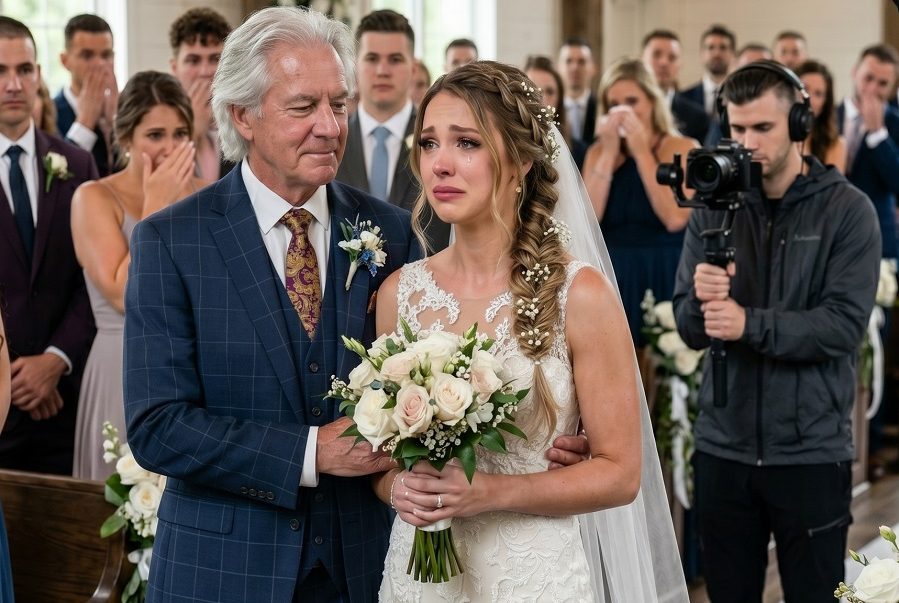
My parents skipped my wedding to fly to Dubai with my brother. I asked my husband’s father to walk me down the aisle instead. The documentary crew filmed everything. It went viral with 14 million views. A few days later, I had 93 missed calls…
On the morning of my wedding, my mother didn’t send a message or an apology. Instead, she sent a photo from business class.
She was smiling at the camera, oversized sunglasses resting in her hair, a glass of orange juice in her hand. Fifteen minutes later, she posted another photo—this time showing the Dubai skyline through the airplane window. My father sat beside her looking completely satisfied, while my younger brother Caleb leaned across both of them like they were posing for a luxury vacation advertisement.
At 10:14 a.m., while I stood in a bridal suite in Asheville, North Carolina, half-zipped into my wedding gown as a makeup artist curled my lashes, my mother finally texted me six words:
“Couldn’t miss this opportunity. Be understanding.”
I stared at the screen until my vision blurred.
They had known the wedding date for eleven months.
Daniel and I had carefully planned the wedding around everyone else’s schedules because my parents were always “complicated.” My father constantly had business obligations. My mother was always busy with volunteer board duties. Caleb moved from one dramatic crisis to another—the kind that somehow became a full family emergency whenever he wanted attention.
When Caleb was invited on a luxury real-estate trip to Dubai by one of Dad’s clients, my parents decided to join him just three weeks before my wedding.
They didn’t ask me to move the date.
They didn’t pretend they had no choice.
They simply chose him—just like they always had.
The only difference this time was that cameras were there to capture it.
Not for anything shallow or sensational. Daniel’s cousin Elise was producing a documentary about modern family traditions, and with our permission, a small film crew had been recording parts of the wedding weekend: interviews, preparations, candid moments, and the emotional structure of the celebration.
They were supposed to capture joy.
Instead, by noon, they were filming me standing silently beside a rack of bridesmaid dresses while my maid of honor whispered:
“Do you want us to stop filming?”
I should have said yes.
But humiliation has a strange way of making you practical.
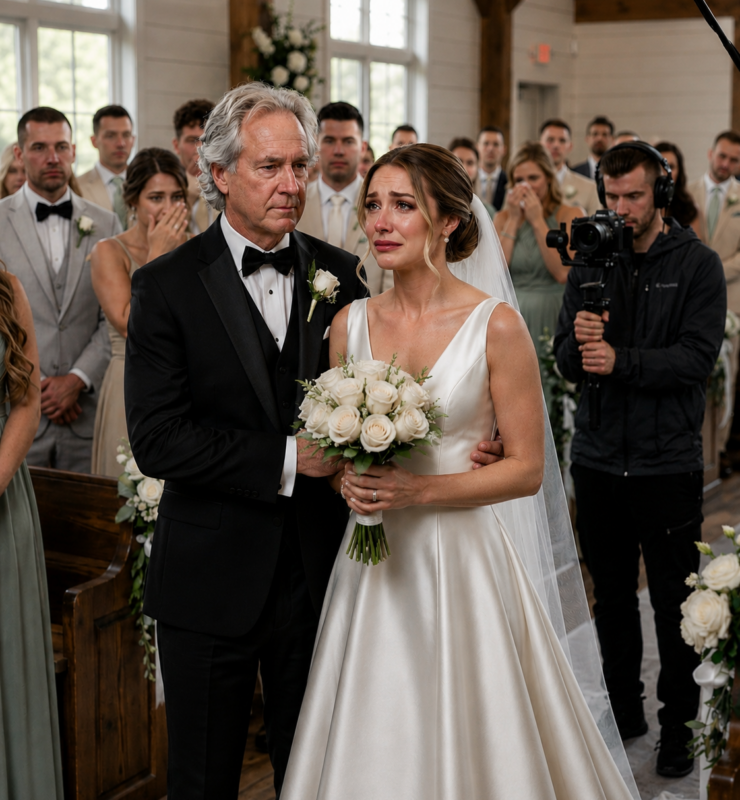
“No,” I replied. “They made their choice. I’m making mine.”
At 3:40 p.m., only ten minutes before the ceremony, I stood behind the garden doors with my bouquet trembling slightly in my hands.
My father wouldn’t be there.
My mother wouldn’t be there.
My brother was probably enjoying dessert in another country.
Then Daniel’s father, Richard Hale, stepped beside me.
He was tall and broad-shouldered, with silver hair and kind eyes—the kind of man who only speaks when his words truly matter.
He looked at me once, understood everything immediately, and quietly said:
“You are not walking into this marriage alone.”
When the music began, I placed my hand on his arm.
The cameras captured every second of it.
The guests stood as I entered. Daniel looked at me and immediately burst into tears. Richard walked me down the aisle with more dignity than my own father had shown in his entire life.
Three weeks later, that moment went viral.
By the fourth day, the video had reached fourteen million views.
And when I finally turned my phone back on, I discovered ninety-three missed calls.
The clip itself lasted only two minutes and eighteen seconds.
That was all it took.
The documentary team released a short teaser featuring soft music, quick shots of flowers, Daniel wiping tears from his eyes, and then the moment Richard offered me his arm.
In the background, my voice could faintly be heard asking:
“Are you sure?”
And Richard answered steadily:
“I’ve never been more certain.”
But one small detail changed everything.
Just before the doors opened, the audio captured my maid of honor quietly saying:
“Her parents flew to Dubai with her brother this morning.”
That single sentence spread like wildfire online.
People replayed the clip, analyzed every detail, shared it everywhere, and cried over it. Thousands of strangers filled the comments with stories of their own families and experiences.
By Monday morning, news outlets had picked up the story.
By Wednesday, the video had surpassed fourteen million views across multiple platforms.
I hadn’t posted any of it myself.
In fact, I had done the exact opposite. I muted notifications, ignored messages, and tried to settle into something resembling normal life with Daniel in his townhouse outside Charlotte.
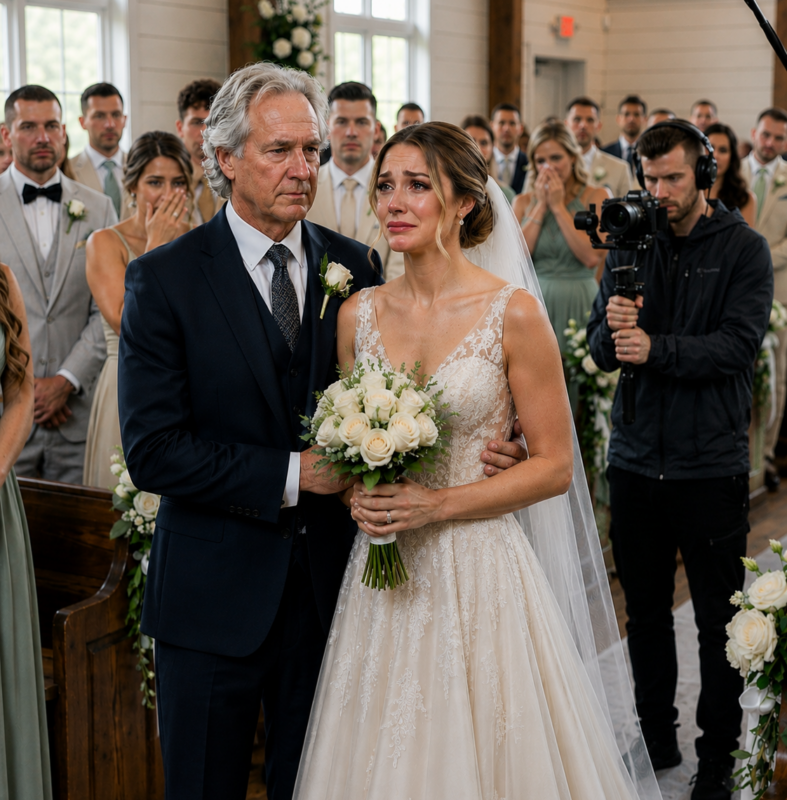
But virality doesn’t respect privacy.
It reaches you anyway—through stores, strangers, and endless messages.
Eventually, the flood of notifications completely drained my phone battery.
When I finally charged it again, I saw ninety-three missed calls waiting for me.
Thirty-one from my mother.
Twenty-two from my father.
Seventeen from Caleb.
The remaining calls came from relatives, family friends, and even people I hadn’t spoken to in years.
Daniel glanced at the screen and quietly said:
“That’s not concern.”
He was right.
Concern calls once or twice.
This was panic.
I listened to one voicemail from my mother. It began with tears and ended with anger.
“How could you let people think we abandoned you? Do you know what this is doing to us?”
That was the moment something inside me finally settled.
Not:
“Are you okay?”
Not:
“We’re sorry.”
Only:
“What about us?”
By the next morning, the story had evolved beyond emotion—it had become specific.
People connected Caleb’s Dubai posts to my wedding date. Someone uncovered my mother’s deleted Instagram story. Others compared timestamps. Then they found old family photos—birthdays, graduations, holidays—where the pattern became impossible to ignore:
Caleb stood at the center, celebrated and adored.
I remained at the edges, quietly present.
Then another clip surfaced online.
In it, Richard was asked why he stepped in to walk me down the aisle.
His answer was simple:
“Because no daughter should ever wonder if she’s worth showing up for.”
That line spread even faster than the first video.
And suddenly, the missed calls made perfect sense.
My parents weren’t reaching out because they had suddenly found love.
They were reaching out because the world had finally found the truth.