I Was At Work When The Nurse Called. “Your Little Sister… She Was On The Bus. She’s The Only Survivor.” I Screamed At The Detective, “Find Them!” He Laughed In My Face. “Kid, The Vipers Own This City. Go Home Before You Get Hurt.” I Called My Estranged Dad. He Didn’t Send Lawyers. He Sent The Air Force. “They Wanted A War?” He Whispered. “I’m Bringing The Apocalypse.” He Leveled The Entire Cartel Compound In Seconds.
“They Begged For Mercy. He Gave None.”
Part 1
The smoke reached me before the sirens did.
It rolled across the intersection in thick black ropes, crawling above the roofs of stalled cars and bending under the late afternoon wind. I had smelled burning rubber before. I had smelled overheated engines, bad brakes, dumpster fires behind the grocery store where I worked double shifts. But this smell had something else inside it, something metallic and bitter that made my tongue go numb.
I left my beat-up sedan crooked against the curb and ran.
People were standing in clusters, phones lifted, mouths open but not making real words. A woman in a blue cardigan kept repeating, “Oh my God, oh my God,” while a man beside her held both hands over his ears as if the sound had not ended yet. Police lights snapped red and blue across the storefront windows. An ambulance backed up over broken glass. Somewhere, a child was crying with a thin, exhausted sound.
Then I saw the bus.
It lay on its side in the middle of the road, yellow paint torn open, windows shattered, black smoke breathing from the engine. The words on the side were scratched but still readable enough to hurt me.
Laya’s school district.
My knees almost went out.
“No,” I said, but it came out too quiet to matter. Then louder. “No. Laya!”
I pushed through the crowd until a uniformed officer caught me by the chest and shoved me back. He was broad, sweaty, chewing gum like this was crowd control outside a concert.
“Back up,” he snapped. “Scene is secured.”
“That’s my sister’s bus.”
His eyes flicked over me, fast and bored. Work shirt, cheap shoes, grease under my thumbnail from fixing my own car that morning. Nobody important.
“Casualties were transported,” he said.
“Where?”
“Mercy General.”
“Is Laya Vance alive?”
He looked away too quickly.
My stomach hollowed out. “Answer me.”
“Move along.”
I grabbed his sleeve. Not hard. Just desperate. “She’s ten years old. She draws horses on her math homework. She wears purple sneakers with stars on them. Tell me if she’s alive.”
His jaw tightened. “I said move.”
Another officer stepped between us. That was when I recognized him.
Dominic Hale.
Everyone in our neighborhood knew Officer Hale. He was the kind of cop who never saw the men collecting envelopes from bodegas, never noticed the cars without plates idling behind the pawn shop, never showed up until the shouting stopped. He always had fresh sunglasses, polished boots, and the lazy confidence of a man who knew exactly who protected him.
His eyes landed on me. “Mason Vance.”
“Where is she?”
He gave me a look that tried to pass for sympathy and failed. “Mercy. That’s all I know.”
“Who did this?”
Dominic glanced toward the bus, then toward the crowd. “Wrong place, wrong time.”
I stared at him. “That bus is full of bullet holes.”
“Gang crossfire.”
“That wasn’t crossfire. They boxed the bus in.”
His expression changed for half a second. Not surprise. Irritation.
“Mason,” he said, lowering his voice, “go to the hospital. Pray if you do that kind of thing. Do not start asking questions in the street.”
“Why?”
He leaned closer. I could smell coffee on his breath.
“Because the Vipers own this part of town, and people who poke their heads up tend to lose them.”
Something in me went cold.
The Vipers. Dealers, extortionists, ghosts with green serpent tags painted under overpasses. People whispered their name at night and acted stupid in daylight. They were everywhere and nowhere, protected by fear, money, and men like Dominic.
I backed away from him, not because he scared me, but because if I stayed another second, I might do something that would get me arrested while my sister was bleeding somewhere without me.
The drive to Mercy General should have taken twelve minutes. I made it in seven. I ran red lights. I jumped curbs. Horns screamed around me. My phone buzzed twice in the cup holder, probably my mother, probably everyone, but I could not look down.
All I could see was Laya’s face.
Laya with strawberry ice cream on her chin. Laya asleep on my couch because Mom and Julian were fighting downstairs. Laya holding my old Air Force toy plane and asking why Dad never visited.
When I burst through the emergency room doors, chaos swallowed me whole.
Parents cried into each other’s shoulders. A man punched a vending machine until security dragged him away. Nurses moved fast, sneakers squeaking against polished floors. The air smelled like bleach, old coffee, and panic.
I found the front desk and slapped both hands on it.
“Laya Vance,” I said. “She was on the bus.”
The nurse behind the computer stopped typing. Her badge read Brooke. Her face softened in a way I hated immediately.
“She’s in surgery.”
The room tilted. “Alive?”
“She’s fighting.”
That word did not comfort me. Fighting meant the other side still had a chance.
I sat because my legs would not hold me. My hands shook so hard I locked them together. Across the room, Dominic walked in with another cop, laughing under his breath at something on his phone. Laughing. While my sister was under bright lights with strangers cutting her shirt off, trying to keep her heart beating.
I stood and crossed the room.
“You know who did this,” I said.
Dominic looked up slowly. “You need to calm down.”
“You know.”
He sighed, like I was a parking ticket he did not feel like writing. “The Vipers were settling business. Bus got caught in the middle. Tragic.”
“You’re lying.”
His smile disappeared.
“Careful, kid.”
I stepped closer. “She’s ten.”
“And if you keep shouting my name in a public hospital, you might not make it to eleven emotionally.” He tilted his head. “Go home. Let grown people handle grown problems.”
I looked around. At the parents. At the nurses. At the cop who had already decided no one mattered enough to be saved.
My hands stopped shaking.
I walked outside into the ambulance bay, where the night air was cool and sour with exhaust. For five years, I had refused to call the number buried at the bottom of my contacts.
The General.
Victor Vance.
My father. Billionaire defense contractor. Former Air Force commander. A man who could move governments faster than he had ever moved toward his own son.
I hated him.
But I loved Laya more.
The phone rang once.
“Mason,” he answered, voice low and sharp. “Why are you calling this line?”
“They shot Laya’s bus,” I said. My voice sounded dead, even to me. “The police are covering it up.”
Silence.
Then he said, “Where are you?”
“Mercy General.”
“Stay there.”
“Dad—”
“Look at the sky.”
The call ended.
At first, there was nothing but smog and a few weak stars. Then the sound came.
Not sirens.
Rotors.
A black helicopter dropped through the clouds, fast and unmarked, shaking the hospital windows as it descended toward the roof.
My father was not coming to visit.
He was arriving like war.
And as the wind tore across the parking lot, I realized I had not called a parent.
I had called a weapon.
### Part 2
The helicopter landed so hard the ground seemed to jump.
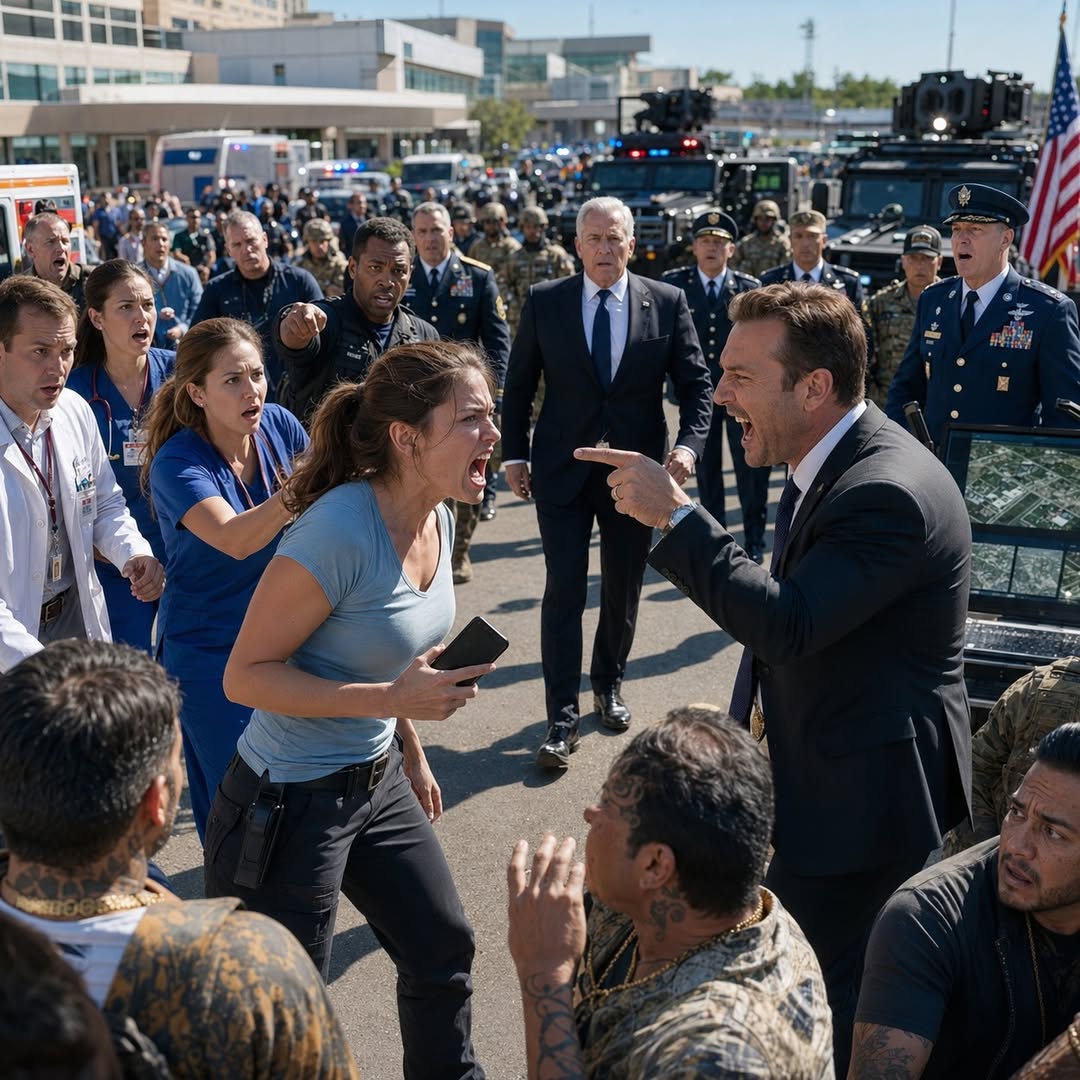
Dust blasted across the ambulance bay. A nurse screamed and ducked behind a parked van. Two paramedics froze with a stretcher between them, both staring up as the black machine settled onto the roof pad, its rotors chopping the air into thunder.
The side door opened before the blades slowed.
Three men jumped out first. Dark suits. Earpieces. Eyes that never stopped moving. They were not bodyguards in the celebrity sense. They looked like men who had memorized the exits of every room they had ever entered and knew seven ways to kill with a pen.
Then my father stepped out.
Victor Vance had not gotten smaller in five years. That annoyed me for some reason. I wanted time to have bent him, softened him, proved that leaving us had cost him something. Instead, he looked carved from cold stone. Gray at the temples. Black coat. No tie. No panic.
His eyes found me instantly.
“Mason.”
Not son. Not are you hurt. Just my name, delivered like a command.
“You came fast,” I said.
“You said they shot Laya.”
That was all he gave me, but for one second his eyes moved toward the hospital doors, and I saw something crack behind them.
One of his men stepped close. “Perimeter is loose, sir. Local law enforcement inside.”
“Then tighten it,” Victor said. “No one enters the ICU without my approval. Especially police.”
“You can’t just take over a hospital.”
He looked at me. “Do you want to debate authority, or do you want your sister alive?”
I shut my mouth.
We went through the sliding doors together. People turned before we reached them. That was the strange thing about power. It had a sound even when nobody spoke. Conversations died. Security guards straightened. Nurses glanced over, confused, then frightened by how quickly the room rearranged around him.
Dominic was near the vending machines again, coffee in hand.
When he saw Victor, his face lost color.
That was the first useful thing Dominic had done all night.
Victor did not go to him yet. He walked to the nurse’s station and placed a slim black card on the counter.
“I need the surgeon working on Laya Vance.”
Brooke looked at the card, then at him. “Sir, family has to wait—”
“I funded your cardiac wing,” Victor said quietly. “And the emergency imaging suite. I am not asking twice.”
Her fingers trembled as she picked up the phone.
I hated how easily the world bent for him. I hated that I needed it to.
Dominic approached, rolling his shoulders like he was trying to look casual.
“Mr. Vance,” he said. “Didn’t know you were in town.”
Victor turned to him slowly. “You didn’t know several things tonight.”
Dominic’s smile twitched. “We’re handling the situation.”
“You called a planned attack on a school bus gang crossfire.”
“That’s what it looks like.”
Victor stepped closer. He did not raise his voice. He did not have to.
“What gang uses two vehicles to trap a bus, fires in a controlled pattern, and leaves before patrol response?”
Dominic’s jaw worked.
Victor continued, “Random violence does not buy officers new fishing boats, Dominic.”
The room went so quiet I could hear a monitor beeping somewhere down the hall.
“I don’t know what you’re implying,” Dominic said.
“I am not implying anything. I am deciding how much of you to remove.”
Before Dominic could answer, a woman in green scrubs hurried toward us. Surgical cap. Tired eyes. Mask hanging around her neck.
“I’m Dr. Harper,” she said. “Laya Vance’s surgeon.”
My father turned fully toward her. “Tell me.”
She looked from him to me, and the professional mask slipped just enough to show exhaustion.
“She survived surgery. One wound to the shoulder, another along her side. The impact when the bus turned caused additional trauma. We have her stabilized, but she is sedated and on assisted breathing. The next forty-eight hours matter.”
“Will she wake up?” I asked.
Dr. Harper did not lie fast enough.
“We hope so.”
Hope was a terrible word. It had no spine.
Victor nodded once. “She gets a private ICU room. Extra staff. No unauthorized visitors.”
“Medical decisions remain with the hospital.”
“Of course,” he said. “Your decisions keep her alive. Mine keep everyone else away.”
Dr. Harper studied him, then nodded. “I’ll take you up.”
The ICU floor smelled colder than the ER. Antiseptic. Plastic tubing. The stale fear of families whispering outside rooms because loud voices felt disrespectful near death.
Laya looked smaller than I had ever seen her.
White sheets swallowed her. Tubes framed her face. A bandage wrapped her shoulder. Machines breathed and counted and hummed for her like they were trying to remember the rhythm she had forgotten.
I touched her hand.
“Hey, Lil,” I whispered. “It’s Mason.”
Her fingers did not move.
Victor stood at the foot of the bed, perfectly still. For a moment, all his sharp edges seemed useless. He walked closer and placed two fingers gently against her wrist, as if checking that she was real.
“You hold on,” he said, so quietly I almost did not hear. “That is an order.”
I wanted to hate him for saying it that way.
Instead, I had to turn my face.
Outside the room, two of his men took positions by the door. Hunter, the one with a scar along his jaw, approached with a tablet.
“Conference room secured. We have hospital cameras, traffic access, and city feeds coming in.”
Victor looked at me. “Come.”
“I’m not leaving her.”
“If you want to help her, you come.”
“She needs family.”
“She needs the people who did this stopped before they come back.”
That landed.
I squeezed Laya’s hand once and followed him.
The conference room had probably held budget meetings that morning. Now it was all laptops, cables, maps, and cold blue light. Hunter put traffic footage on the largest screen.
A grainy image showed Laya’s bus rolling down Stanton Avenue.
My throat tightened.
“Play it slow,” Victor said.
The bus approached an intersection. A dark SUV slid behind it. Another crossed ahead and stopped just long enough to force the driver to brake.
“They boxed it in,” I said.
Victor’s face hardened. “Yes.”
The video jumped. Smoke. People running. The SUVs leaving in different directions.
Hunter pulled up another camera. “They regrouped here. Downtown garage under Silverline Tower.”
“That’s not Viper territory,” I said.
“No,” Victor replied. “That is money territory.”
A file opened beside the footage. Ownership records. Shell companies. Board names. One name appeared near the bottom.
Councilman Preston Hail.
I remembered him from smiling billboards. Safe streets. Strong schools. Family values.
“Of course,” I muttered.
Victor leaned over the table. “Eliza, you seeing this?”
A woman’s voice came through the speaker. “I am. Silverline Holdings links to three campaign donors and one paper-only investment firm called Northbridge Capital.”
At the name Northbridge, Victor went still.
“You know it?” I asked.
“I know enough to dislike hearing it twice.”
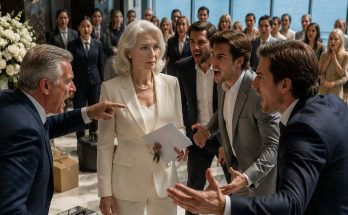
Dominic entered without knocking.
“This is a restricted hospital area,” he said.
Victor did not look away from the screen. “Leave.”
Dominic’s face flushed. “This is my jurisdiction.”
Victor finally turned. “Your jurisdiction is bleeding upstairs.”
“You cannot run your own investigation.”
“You cannot run any investigation while taking money from the men I’m hunting.”
Dominic stepped forward. Hunter tapped a key.
A file appeared on the screen.
Dominic’s name. Complaints. Internal affairs records. Payments. Disappearing evidence. Cases closed too cleanly.
Dominic’s mouth opened and shut.
Victor’s voice dropped. “Go write your false report. Go tell the Vipers you tried. But if you or anyone wearing that badge goes near Laya’s room, I will turn your life into a cautionary tale.”
Dominic left without another word.
Eliza’s voice returned. “Victor, Northbridge is buried deep. But I found a legal filing through Sterling and Vance.”
My blood cooled.
Sterling and Vance was my mother’s new husband’s firm.
Julian Sterling. My stepfather. Always smiling. Always asking about Victor. Always pretending he cared.
Victor looked at me.
And for the first time that night, the enemy was not just outside.
He might have been sitting at our dinner table.
### Part 3
Victor did not say Julian’s name right away.
That scared me more than if he had shouted it. My father was never louder when he was most dangerous. He went quiet. Clean. Precise. Like every unnecessary part of him shut down so the machine underneath could work.
“Eliza,” he said, “pull Julian Sterling’s financials. Six months. Focus on transfers disguised as consulting, escrow, legal retainers, or political donations.”
“Already moving,” she said. “But I’ll need time.”
“We may not have any.”
The conference room smelled like hot plastic from the laptops and burnt hospital coffee nobody had touched. On the screen, the traffic camera kept looping. The bus. The SUV. The trap. Every replay cut deeper.
I rubbed both hands over my face. “Julian can’t be involved.”
Victor looked at me with pity, which somehow felt worse than anger.
“Because he bought your mother flowers? Because he wore sweaters at Christmas?”
“Because Laya loved him.”
“That has never stopped a weak man from serving a stronger one.”
I wanted to argue, but the memory had already opened.
Julian at Sunday dinner asking if Victor still owned the aerospace patents outright. Julian laughing too hard when I told him I had no interest in the company. Julian offering to help me “make peace” with my father, as if he were gathering information under the cover of concern.
Hunter zoomed in on the garage beneath Silverline Tower.
“Snake’s crew came out of this entrance twenty-two minutes after the shooting. We tracked them to the Velvet Room.”
I knew the place. Everybody knew it. A downtown club where councilmen’s sons, influencers, dealers, and men with no visible jobs drank at thousand-dollar tables under red lights.
Victor put on his coat.
“We’re going.”
“To the club?” I said.
“Yes.”
“What about the police?”
He gave me a look.
“Right.”
“You stay here,” he said.
“No.”
“Mason.”
“I saw her in that bed. I saw Dominic laugh. I’m not sitting in a hospital conference room while you scare people in bottle service.”
His eyes measured me.
“This is not a movie. Men like Snake do not confess because someone makes a dramatic entrance.”
“Then why are you going?”
“To make him choose which fear matters more.”
I stepped closer. “If this started because of you, then I deserve to know. If it started because of me, I deserve to look him in the eye.”
That finally landed.
Victor nodded once. “You stand beside me. You do not speak unless I ask you to. You do not play brave. Brave gets people killed when it is not disciplined.”
“I understand.”
“No,” he said. “You are angry. That is not the same thing.”
The ride to the Velvet Room was silent. Hunter drove with one hand on the wheel and the other near his radio. The city slid past in wet neon and dirty brick, the kind of American downtown that looked glamorous from drone footage and desperate at street level.
At the club entrance, a line wrapped around the block. Girls in silver dresses hugged themselves against the cold. Guys in expensive sneakers pretended not to stare when Hunter parked in front of a hydrant.
A bouncer stepped forward. “You can’t park there.”
Victor got out.
The bouncer stopped talking.
It was almost funny, except nothing was funny anymore.
Inside, bass shook the floor. Lights strobed red and blue. The air smelled like perfume, sweat, expensive liquor, and the sweet chemical fog clubs used to make everything feel less real. Victor cut through the crowd without touching anyone. People moved anyway.
The VIP platform was guarded by two men whose jackets hung wrong over their ribs.
Armed.
One lifted a hand. “Private area.”
Victor looked past him to the booth.
Three men sat around a low glass table crowded with bottles. The middle one had a serpent tattoo curling up his neck. Gold teeth flashed when he laughed.
Snake.
Victor did not look at the guard.
“Tell him the landlord is here.”
“What?”
Victor held up his phone. “I bought the building four minutes ago.”
The guard blinked.
Hunter leaned in and whispered something into his ear. Whatever he said drained the man’s face. He stepped aside.
Snake noticed us halfway up the steps. His smile widened first, then stiffened when he recognized Victor.
“Well, well,” he called over the music. “Victor Vance. You lost?”
Victor stopped at the edge of the booth. “You have five minutes.”
“For what?”
“To decide whether you want to leave this city breathing.”
The two men beside Snake shifted. One reached under the table.
Hunter moved half a step.
They stopped.
Snake’s smile turned thin. “You don’t scare me, old man. I know who protects us.”
“I know who paid you.”
That cut through the booth like glass.
Snake’s eyes flicked to me. To Victor. Back to me.
Victor leaned down, palms on the table. “A school bus was attacked today. My daughter is in an ICU because your men were sloppy.”
Snake’s face changed.
Not guilt. Not grief.
Recognition.
He had known about the bus. He had not known about Laya.
“Listen,” he said, voice dropping. “That wasn’t supposed to happen.”
My control snapped.
“Children were on that bus.”
Victor’s hand shot out and gripped my arm, not hard enough to hurt, hard enough to stop me.
Snake swallowed. Sweat shone at his hairline under the red lights. “We didn’t pick the target. We just took the job.”
“Who paid you?” Victor asked.
Snake shook his head.
Victor checked his watch. “Four minutes.”
“You don’t get it. He’ll kill me.”
“Three.”
Snake’s knee bounced under the table. “There was no name. Only Northbridge.”
Victor did not blink.
“And the target?” he asked.
Snake looked at me again.
The bass seemed to fall away. The club, the lights, the crowd, all of it thinned until only his finger existed, rising slowly and pointing straight at my chest.
“Him.”
I could not breathe.
“What?”
“The son,” Snake said. “We were told to hit the son. Not the girl. The son.”
“That bus wasn’t mine.”
“No,” Snake whispered. “But you were supposed to be near it. They said you picked Laya up on Thursdays. Said you’d be standing at the corner.”
I had.
Most Thursdays.
Except that day, my manager had begged me to cover a late delivery. I had told Laya I would meet her at home instead.
The room tilted.
Snake kept talking because fear had opened him. “It was a message. To the father. They said if the heir could die in the street, the old man would sell.”
Victor’s eyes went black.
“Run,” he said.
Snake froze. “What?”
“Run.”
Snake and his men scrambled out of the booth so fast one bottle shattered on the floor. Clear liquor spread under the table like melted ice.
I stood there, numb.
Laya was not collateral damage from some random street war.
She had been hit by a bullet meant to break my father through me.
And as Victor turned toward the exit, I knew exactly where we had to go next.
Julian Sterling had smiled at my mother in the hospital waiting room with blood money on his hands.
### Part 4
I threw up in the alley behind the club.
It came hard and sudden, nothing but acid and shock, one hand braced against damp brick while the bass from inside thudded through the wall like a second heartbeat. Hunter stood at the mouth of the alley, giving me privacy without turning his back on the street.
Victor waited beside the SUV.
He did not comfort me.
Part of me hated him for that. Another part knew if he had put a hand on my back, I might have broken into pieces and never stood up again.
When I wiped my mouth and walked back, he held out a bottle of water.
“Drink.”
I took it. My hand shook again.
“He said I was the target.”
“Yes.”
“Laya is in that bed because I changed my schedule.”
“No.”
I looked up sharply.
Victor’s voice was hard. “Laya is in that bed because men chose money over human life. Do not steal their guilt and call it yours.”
That should have helped.
It did not.
We got into the SUV. Hunter pulled away from the curb, calm as always, while drunk people laughed near the velvet rope behind us, completely unaware that their city had shifted under their feet.
Eliza came through the speakers.
“I found the transfers.”
Victor looked down at his tablet. “Show me.”
Three lines appeared. Two million dollars each. Routed through legal consulting accounts, then out through layered firms, then into Northbridge-controlled wallets.
The sender: Sterling and Vance.
The dates marched down the screen.
The final transfer had cleared the morning of the shooting.
My throat closed.
“Julian paid for it.”
Eliza’s voice softened. “Mason, I’m sorry.”
Victor scrolled. “Any direct communication?”
“Encrypted, but I recovered fragments from a cloud backup his assistant probably didn’t know existed. Keywords: acquisition pressure, heir problem, route confirmation, Thursday pickup.”
Thursday pickup.
My pickup.
I gripped the seat until my fingers hurt. “I want him.”
“You want answers,” Victor said.
“No. I want him afraid.”
“That too.”
The SUV turned toward the suburbs, where lawns were trimmed, porch lights glowed warm, and nobody imagined monsters wore wedding rings and tax-law smiles.
“My mother is home?” I asked.
“Yes,” Victor said. “With Julian.”
My heart kicked. “What?”
“His phone was at the hospital twenty minutes ago. Now it’s moving toward the house.”
“Then we call her.”
“If we call, we spook him.”
“She could be in danger.”
“She already is.”
I stared at him. “You knew?”
Victor’s jaw flexed. “I suspected. Now I know.”
That was my father’s world in one sentence. Suspect quietly. Confirm brutally. Move when the board is visible.
The house looked exactly as it always had when we arrived. White columns. Blue shutters. Hydrangeas my mother babied every summer. A brass porch light shaped like a lantern. It was the kind of house people drove past and thought, good family.
Victor stopped me before I opened my door.
“This has to be you.”
“Why?”
“If I go in, it becomes an operation. If you go in, you are a worried son checking on his mother.”
“What if Julian is inside?”
“He is not yet. We have maybe eight minutes.”
“And if you’re wrong?”
“Then you leave.”
I almost laughed. “You’ve met me, right?”
His expression tightened, just slightly. “Yes. That is why I am telling you before you decide not to.”
He handed me a small earpiece.
“Eliza will open anything digital. Hunter and I are one block away.”
“One block?”
“If Julian has watchers, a convoy at the curb tells him everything.”
I got out.
The night was too quiet. Sprinklers clicked somewhere down the street. A dog barked once, then stopped. I used the key Mom had never asked me to return.
Inside, lavender and furniture polish wrapped around me. The house was dark except for the kitchen light over the stove. My mother’s purse sat on the entry table. Her shoes were kicked off crookedly, one tipped against the wall. She was home.
I moved toward Julian’s office.
His door was half shut. The room smelled like leather, printer ink, and his expensive cedar cologne. On the wall behind the desk hung the sailboat painting he loved because it made him look old-money instead of desperate.
“There should be a safe,” I whispered.
Eliza answered in my ear. “Behind the painting. I’m reading the home network. Keypad is online.”
I lifted the frame. There it was, smooth black steel set into the wall.
“I don’t know the code.”
“I do. Or I will in three seconds.”
The keypad beeped.
The safe opened.
Inside were hard drives, envelopes, and a thick manila folder with a label printed in clean black letters.
PROJECT SKYFALL.
My skin prickled.
I opened it.
Photos of me outside my apartment. Me buying gas. Me holding Laya’s backpack while she tied her shoe. A school bus route printed in color. A note beside Stanton Avenue: visibility poor, police response delayed, route predictable.
I had to sit down.
Then I found the email.
The acquisition cannot proceed while the son remains a viable successor. Remove the obstacle. The father will understand pressure when blood reaches the pavement.
No signature. Just a code name.
ARCHITECT.
Headlights swept across the office wall.
“Mason,” Victor said in my ear. “Julian arrived early. Get out.”
Car doors slammed outside.
I shoved the folder into my jacket.
Then I heard Julian’s voice downstairs, sharp and shaking.
“Snake talked. Vance knows.”
Another man answered. “Then we clean it.”
My blood turned cold.
Julian said, “The wife too. She saw too much at the hospital. Make it look like a break-in.”
My mother.
She was upstairs asleep.
In that second, everything simple and childish inside me died.
I picked up the heavy brass paperweight from Julian’s desk.
Victor’s voice came through my ear, low and urgent. “Mason, hide.”
But footsteps were already on the stairs.
And my mother’s bedroom door was between them and me.
### Part 5
The paperweight felt ridiculous in my hand.
It was shaped like a sailing knot, heavy brass polished smooth by years of sitting on Julian’s desk, pretending to be tasteful. Against men who came to murder people in their sleep, it might as well have been a coffee mug.
Still, I held it tighter.
The first man reached the top of the stairs with a compact rifle pressed to his shoulder. He wore black gloves and a gray jacket. No mask. That was how confident they were. Not criminals expecting witnesses. Cleaners expecting silence.
I stepped out of the office and swung.
The brass caught him high on the side of the head. He went down against the hallway table, sending a vase of dried flowers across the carpet.
The crash woke my mother.
“Mason?” she called from behind her door.
“Mom, lock the door!”
Another man came up fast. He hit me in the ribs with the butt of his weapon, and the pain exploded white behind my eyes. I fell hard. My shoulder struck the wall. The folder slid halfway out of my jacket.
Julian appeared behind him.
He was wearing the same navy coat he had worn at the hospital. The one my mother said made him look distinguished. Now his face was damp with sweat and his hair was loose over his forehead. A pistol shook in his right hand.
“Mason,” he said. “You should not be here.”
I coughed, trying to breathe. “Neither should you.”
His eyes dropped to the folder.
His expression broke.
“Give that to me.”
“You paid them.”
“Mason, listen to me.”
“You paid them to kill me.”
His mouth opened, but no lie came out fast enough.
“They weren’t supposed to hit the bus like that,” he said finally. “It was supposed to be controlled.”
A laugh tore out of me, ugly and raw. “Controlled?”
“I was pressured.”
“By who? Northbridge? Architect?”
His face twitched at the code name.
There it was.
My mother’s door opened.
She stepped into the hallway in her robe, hair loose, face pale from crying and sleeplessness. For a heartbeat she looked only confused.
Then she saw me on the floor.
She saw the man bleeding by the stairs.
She saw Julian’s gun.
“Julian,” she whispered. “What did you do?”
He turned toward her.
“Clara, go back inside.”
“What did you do?”
“I said go back inside.”
Her eyes moved to me. “Mason?”
“He tried to have me killed,” I said. “They hit Laya instead.”
The words seemed to enter her one at a time. Her face collapsed around them.
Julian’s breathing turned ragged. “I loved you, Clara.”
“No,” she said, stepping back. “No, you don’t get to say that.”
“I had debts. You don’t understand what they were threatening.”
“You brought killers into my house.”
His hand tightened on the gun.
That was the moment I knew he was not panicked anymore. He was choosing.
“Julian,” my mother said, voice trembling, “put it down.”
“I can still fix this,” he whispered.
Victor’s voice came through my earpiece. “Down.”
I dropped flat.
The hallway window shattered inward.
Hunter came through in a storm of glass and black rope, slamming into the second gunman before he could aim. The gunman crashed into the wall. Victor appeared at the top of the stairs a second later, not running, not out of breath, his pistol steady in both hands.
“Drop it,” he said.
Julian spun toward him.
Victor fired once.
The shot cracked through the hallway, deafening. Julian screamed and the pistol fell from his hand, skidding across the carpet. He clutched his wrist and folded to his knees.
My mother screamed too, but not for him. She dropped beside me, hands fluttering over my face, my ribs, my shoulders.
“I’m okay,” I lied.
Victor walked past us and stood over Julian.
Julian sobbed. “Victor, please.”
“You should have chosen bankruptcy,” Victor said.
Hunter zip-tied Julian and the two men with efficient, almost bored movements. My mother watched like she was staring at a stranger wearing her husband’s skin.
Julian looked at her, tears streaking his face. “Clara, I didn’t mean for Laya—”
“Do not say her name,” she said.
Her voice was quiet, but it cut him worse than Victor’s bullet had.
We took Julian out through the garage. Neighbors’ curtains glowed faintly. Someone’s sprinkler still clicked. The world refused to look as broken as it was.
In the SUV, Victor opened the Project Skyfall folder under the dome light. He scanned the emails, the photos, the route notes. His face hardened page by page.
Then he reached the final sheet.
All the color drained from him.
I had never seen that happen.
“What?” I asked.
He turned the page toward me.
At the bottom was a short authorization.
Proceed with pressure sequence. Bloodline leverage approved.
Signed only with the code name.
ARCHITECT.
“You know him,” I said.
Victor looked out the window at the sleeping street.
“I thought he was dead.”
“Who?”
“Quinton Cross,” he said. “Former military contractor. Callsign Architect. We ran an operation together in Baghdad in 2004. It went bad.”
“Bad how?”
“His team died. Mine didn’t.”
“And he blamed you?”
“He blamed my bloodline.”
The SUV seemed suddenly too small.
Victor closed the folder.
“This was never just about the company.”
“What was it about?”
His eyes met mine.
“Revenge.”
Behind us, Julian began to sob harder, but nobody looked at him.
We had caught the traitor in the house.
But the man who had used him was still outside, and he had spent twenty years learning how my father fought.
### Part 6
Victor’s private airfield sat beyond the last belt of suburbs, past warehouses with rusted loading docks and dark fields where the wind moved through weeds like whispers.
I had been there once as a kid.
I remembered standing behind a chain-link fence with Laya in my arms, watching one of Dad’s jets climb into a white summer sky. I remembered Mom saying, “Wave to your father,” even though the plane was already too high for him to see us. I remembered deciding that day that airplanes took people away and did not bring them back.
Now the airfield looked like the opposite.
It looked like everything my father had abandoned us for had come home armed.
SUVs lined the tarmac. Men unloaded black cases under floodlights. Mechanics moved around a white jet with its engines humming. A medical transport waited near a hangar, lights flashing silently. Every shadow had a person inside it.
Julian was dragged into a side building and tied to a metal chair.
He looked smaller under fluorescent lights. His expensive coat was gone. His shirt stuck to his back. Without the house, the money, the smile, he was only a frightened man who had sold people he called family.
Victor set the Project Skyfall folder on the table in front of him.
“I need Quinton Cross.”
Julian shook his head. “I never met him.”
Hunter stood behind Julian, arms folded.
Victor said, “Try again.”
“I swear. It was all encrypted. He used dead drops, servers, relays. I just moved documents and money.”
“You gave him my son’s schedule.”
Julian’s face twisted. “I didn’t think they would actually—”
Victor hit the table so hard Julian flinched like the room had cracked.
“You do not get to soften the verb.”
My mother was not there. She had gone with the ambulance to the airfield medical unit where Laya had been moved under guard. I was glad. If she had heard Julian still trying to make himself sound unlucky instead of evil, it might have broken something in her that could never heal right.
“Quinton said something once,” Julian whispered. “About watching from a place where you taught boys to fly.”
Victor went still.
“Fort Devlin,” I said.
He looked at me.
“You mentioned it once. Old training base.”
“It was decommissioned eight years ago.”
Eliza’s voice came through the laptop on the table. “Not empty, though. I pulled fresh satellite. You need to see this.”
Hunter turned the screen.
Fort Devlin appeared from above in grainy thermal imaging. Old runway. Cracked hangars. Barracks like dead teeth. In the center, heat signatures moved around vehicles. Not a few. Dozens.
“What is he staging?” Victor asked.
Eliza zoomed in. “Servers. Power units. Communication equipment. Some kind of mobile control center.”
Julian began shaking his head. “No. No, he said it was only leverage.”
Victor turned to him. “What did he call it?”
Julian squeezed his eyes shut.
“Skyfall.”
The room chilled.
My phone buzzed.
Unknown number.
The message had no greeting.
Your sister survived the first lesson. Your city will not survive the second. Midnight. Watch the sky.
I showed Victor.
For the first time since the hospital, I saw doubt move across his face.
“How long?” I asked.
He checked his watch. “Three hours and seventeen minutes.”
“To do what?”
“To find out whether he is bluffing.”
“He isn’t,” Eliza said quietly. “I’m seeing probes against city infrastructure. Power grid. Emergency services. Hospital networks. Air traffic routing. It’s not fully active yet, but he’s inside the walls.”
I thought of Mercy General. Of all the people still there. Parents in waiting rooms. Patients connected to machines. Nurses who had done nothing wrong except show up to work in a city men like Julian treated as a bargaining chip.
“We call the FBI,” I said.
Victor’s mouth tightened. “We call them with what? A folder from an illegal safe entry, a corrupt lawyer tied to shell accounts, and a dead man’s code name? By the time they verify enough to act, Quinton triggers whatever he built.”
“So we just become an army?”
“No,” he said. “We become faster than paperwork.”
He stepped away and made a call.
I only heard half.
“Ryder. Full package. Domestic. Three hours. Yes, I know what I’m asking. Name your price.”
A pause.
“Done.”
He ended the call.
“Who is Ryder?” I asked.
“Someone I trusted once.”
“That doesn’t answer anything.”
“In this family, that is sometimes the best answer available.”
I almost laughed. The sound never made it out.
We went to the hangar where Laya had been moved. Inside, the space had been transformed into a sealed medical room. Machines surrounded her bed. A generator throbbed outside. My mother sat beside her, holding her small hand between both of hers.
When Mom saw Victor, her expression twisted with too many emotions to name.
“Is she safe here?” she asked.
“Safer than the hospital,” he said.
“That is not what I asked.”
He looked at Laya. “No one is safe until this is finished.”
Mom closed her eyes.
“I married him,” she whispered. “I brought him into our house.”
“You did not pull the trigger,” I said.
She looked at me as if she wanted to believe that but could not afford it yet.
Victor touched the rail of Laya’s bed. “I am ending it tonight.”
Mom laughed once, broken and bitter. “You always did know how to turn pain into a mission.”
He absorbed that without defending himself.
“You are right,” he said. “But tonight a mission is what we have.”
Outside, engines grew louder.
We stepped onto the tarmac as three black helicopters arrived low over the fields. A man climbed out of the first before the rotor fully settled. Gray hair. Scarred face. Flight jacket with no insignia.
“Victor,” he said.
“Ryder.”
Ryder looked toward me. “This your boy?”
Victor’s answer came after a beat. “Yes.”
That one word hit harder than I expected.
Ryder turned back. “I brought helicopters. Pilots. Ground team. And before you ask, two fast movers can be overhead in forty minutes, but if they fire on American soil, we all become ghosts.”
“They fire only if Quinton does.”
Ryder studied him. “You always did like impossible promises.”
The next forty minutes were a blur of preparation. Radios checked. Maps marked. Men loaded gear. I stood near the medical hangar with a pistol Victor had placed in my hand after showing me the safety twice.
“You only use it if someone gets past us,” he said.
“I don’t want to shoot anyone.”
“Good. Hold on to that.”
The helicopters lifted first.
Then came the jets.
Two dark shapes screamed across the sky, so low the tarmac shook under my shoes. Their engines tore the night open. The sound was not just loud. It was physical. It pressed into my ribs and rattled my teeth.
Laya’s machines kept beeping behind me.
My mother gripped my arm.
Above us, my father’s war jets circled toward Fort Devlin like hunting hawks.
And for the first time that night, I wondered whether the sky itself could be angry.
### Part 7
Fort Devlin looked dead from the road.
That was the trick. The front gate hung crooked. Weeds pushed through the cracked pavement. An old sign warned trespassers in faded red letters. The barracks beyond it sat dark and low against the horizon.
But through Victor’s tablet, the place was alive.
Thermal images showed men moving between buildings. Heat bloomed around generators. Vehicles shifted near the old runway. Quinton Cross had built his revenge inside a corpse and counted on the world not looking at dead things.
I rode in the second SUV against Victor’s orders.
He had told me to stay at the airfield. I had told him if the attack was aimed at my blood, my blood was coming. He gave me the kind of stare that made grown men reconsider their careers, then opened the SUV door.
“Stay behind me,” he said.
It was the closest thing to permission I was getting.
The convoy cut its lights a mile out. We moved through service roads and muddy tracks, tires whispering over gravel. The helicopters stayed low beyond the ridge. The jets circled high enough that we could not see them, but I felt them, the occasional deep roll of thunder above the cloud cover.
Eliza fed information through our earpieces.
“Twenty-six heat signatures. Maybe more inside shielded rooms. Strong network activity from main hangar. Countdown is live.”
“How long?” Victor asked.
“Fifty-two minutes.”
Ryder’s voice cut in. “Teams in position.”
Victor looked at me. His face was lit green by the dashboard.
“When this starts, you will want to move toward noise. Do not. Noise is bait. You move toward the objective.”
“What’s the objective?”
“Stopping whatever Quinton built.”
“And Quinton?”
Victor chambered a round. “He is a problem after the objective.”
The lead truck reached the fence.
It did not slow.
Metal screamed as the reinforced bumper tore through chain link. Floodlights snapped on across the compound. For half a second everything froze in white light.
Then gunfire erupted.
Bullets struck the armored glass with sharp metallic pops. I ducked instinctively. Victor did not. Hunter drove through the first burst, swerved behind a concrete barrier, and braked hard.
“Out,” Victor ordered.
The air hit me cold and full of noise. Engines. Shouts. Gunfire cracking from the barracks. The smell of dust and old fuel rose from the ground.
Ryder’s men moved like one organism, pouring out of vehicles, returning controlled fire, pushing toward the main hangar. Nobody shouted movie lines. Nobody wasted motion. That made it worse. This was not chaos to them. It was work.
Victor grabbed my vest and pulled me behind a truck.
“You see that door?” he said, pointing to the hangar’s side entrance.
“Yes.”
“That is where we go when Ryder’s team opens the front.”
“What if someone’s inside?”
“There will be.”
Before I could answer, one of the helicopters rose over the far hangar, its spotlight cutting across the yard. Men scattered. A voice boomed through an external speaker, ordering surrender. The answer was more gunfire.
Victor tapped his radio. “Fast movers, show them the ceiling.”
A sound like the end of the world split the night.
One jet screamed over Fort Devlin, so low the old windows shattered. Car alarms wailed. Men threw themselves to the ground. The jet did not fire. It did not need to. It announced that Quinton no longer owned the sky.
“Move,” Victor said.
We ran.
My legs felt clumsy in the vest. My mouth tasted like copper. A man stepped out from behind a forklift, raising his weapon. I froze.
Victor fired twice.
The man dropped behind the forklift with a cry, alive but no longer holding the gun.
“Keep moving,” Victor snapped.
Ryder’s team breached the hangar front with a charge that cracked through the compound. We hit the side door at the same time. Hunter kicked it open.
Heat rolled out.
The hangar was filled with servers.
Rows and rows of black towers hummed under portable cooling units. Cables ran like vines across the floor. Generators shook behind sandbag walls. Monitors glowed with maps of the city.
In the center was a countdown clock.
Forty-six minutes.
“That’s not a missile system,” I said.
Eliza answered, horrified. “No. It’s worse.”
Victor moved toward the nearest terminal. “Explain.”
“He’s not launching anything into the sky. He’s inside the city infrastructure. Power grid, hospital backup systems, emergency routing, traffic control, air traffic coordination. This countdown triggers a cascading failure.”
“Can you stop it remotely?”
“No. He air-gapped the final command server. You need physical access.”
A slow clap echoed from above.
Everyone froze.
A man stood on the upper catwalk under a flickering work light. Thin, pale, wearing a black tactical jacket. His hair was gray at the sides, his face sharp with old hunger. One arm rested casually on the railing.
Quinton Cross.
“Victor,” he called. “You brought thunder.”
Victor raised his rifle. “Shut it down.”
Quinton smiled. “Still giving orders to the dead?”
“You are not dead.”
“No. Just buried. There is a difference.”
Ryder’s men trained weapons on him, but Quinton did not flinch.
“If I fall, the system accelerates. If you cut power, it accelerates. If your hacker touches the wrong file, it accelerates.”
“What do you want?” I shouted.
His eyes turned toward me.
A strange tenderness crossed his face, and that frightened me more than his smile.
“The son,” he said. “You look like him before he learned to count bodies.”
Victor stepped half in front of me. “Your fight is with me.”
“My fight was with you twenty years ago,” Quinton said. “Tonight is about teaching.”
He lifted a small device.
Hunter fired, hitting the device from his hand. Quinton stumbled back as sparks flew. Ryder’s men surged toward the stairs.
But Quinton laughed.
On the central monitor, the countdown flashed red.
Protocol escalated.
Thirty minutes.
“Eliza?” I yelled.
“I’m trying. He locked the command layer behind biometric confirmation.”
“What biometric?”
A new message appeared.
ARCHITECT AUTHORIZATION REQUIRED.
Quinton vanished through a door on the catwalk.
Victor’s face hardened.
“We need his hand on that scanner.”
The hangar trembled as another jet roared overhead.
The sky belonged to my father.
But the city’s heartbeat was locked behind the fingerprint of a ghost.
### Part 8
We chased Quinton through the bones of Fort Devlin.
The old service corridor smelled like rust, wet concrete, and mouse droppings. Red emergency lights pulsed along the ceiling, turning every face into something demonic for half a second at a time. Somewhere behind us, Ryder’s team fought to secure the server hangar. Somewhere ahead, Quinton moved through a base he clearly knew better than we did.
Eliza spoke fast in our ears.
“He is heading east. There is a communications building attached to the old tower.”
“Why go there?” Victor asked.
“If he can reach a live uplink, he may bypass the local lockout and trigger from a secondary device.”
“How much time?”
“Twenty-six minutes.”
I ran harder.
Pain stabbed through my ribs with every breath. The hit from Julian’s man had left something bruised deep inside me. My lungs burned. My shoes slapped water from old puddles across the corridor floor.
Victor moved like pain was information he had decided not to read.
We burst outside between two hangars. The sky had begun to pale at the edges, deep black giving way to bruised purple. Dawn was coming, whether the city survived to see it or not.
A hundred yards away, Quinton limped toward a low brick building with a radio tower beside it. Two of his men guarded the entrance.
They saw us and opened fire.
Victor shoved me behind a concrete block as bullets chewed sparks from the ground. Hunter slid behind an old fuel drum to our right.
“We need him alive,” I yelled.
“Then we remove everyone around him,” Victor said.
That was the thing about my father. Even in panic, he sorted the world into steps.
The tower dish began rotating.
Eliza cursed. “He’s locking onto a private communications satellite.”
“Mine?” Victor asked.
“Yes.”
His jaw clenched.
“He always did enjoy stealing from better men,” Quinton’s voice crackled suddenly over the base speakers. “But don’t worry, Victor. I only need it for a minute.”
Victor pulled out his sat phone.
Ryder’s voice came through. “Tell me you are not thinking what I think you are thinking.”
“My jet is still in the air?”
“Circling back with wing damage from debris. Pilot says she can make the strip.”
“Can she make one low pass?”
A pause.
“Victor.”
“Can she?”
Ryder exhaled. “Yes.”
Victor looked at the tower, then at me.
“What are you doing?” I asked.
“Taking away his voice.”
“That jet cost what, sixty million dollars?”
“It is metal.”
“And the pilot?”
“Best I know.”
The radio crackled.
Victor said one word. “Skyfall.”
For a moment, nothing happened.
Then the sound came, lower than the fighters, heavier, familiar in a way that twisted my childhood memories into something frightening. Victor’s private jet appeared over the tree line, descending too low, lights blazing, engines screaming.
Quinton’s guards looked up.
So did I.
The jet clipped the radio tower with surgical violence.
Metal shrieked. The dish tore free in a spray of sparks. The tower folded sideways, crashing into the dirt as the jet climbed, smoke trailing from one engine but still airborne.
The guards stood frozen.
Victor moved.
He fired, Hunter fired, Ryder’s men closed from the flank. The guards dropped their weapons and went down under a storm of orders and zip ties.
We hit the communications building door together.
Inside, the room was hot and loud. Servers lined one wall. A terminal glowed in the center. Quinton stood before it, one hand pressed against his bleeding shoulder, the other typing fast.
He looked up as we entered.
“You always break your toys when someone else wants to play with them,” he said.
Victor aimed at his chest. “Step away.”
Quinton smiled and slammed his palm onto the keyboard.
The countdown on the terminal changed.
Ten minutes.
“Eliza!” I shouted.
“He accelerated it,” she said. “I need access now.”
I ran to the terminal. “Tell me what to do.”
“Connect your phone to the port under the console.”
My fingers fumbled with the cable. The screen flashed.
BIOMETRIC REQUIRED.
“Quinton,” Victor said. “Put your hand on the scanner.”
Quinton laughed. “No.”
Hunter stepped toward him.
Quinton moved fast for a wounded man, grabbing a fire axe from the wall and swinging at the server rack. Sparks exploded. One monitor died. Another flickered.
“If I cannot watch you suffer,” he screamed, “I can still make you listen to the sirens.”
Hunter tackled him.
They crashed into the floor, rolling between cables. Quinton fought like a starving animal. Victor joined, pinning his arm. I watched the clock.
Six minutes.
“Eliza, can we bypass?”
“No. The scanner needs a live confirmation.”
Quinton spat blood onto the floor and smiled at me. “How old is your sister?”
I saw red.
I grabbed his wrist with both hands and dragged it toward the scanner. He thrashed, but Victor locked his shoulder. Hunter held him down. Quinton’s fingers curled away from the glass like claws.
“Press it flat!” Eliza yelled.
I slammed his thumb onto the reader.
The scanner beeped.
ACCESS GRANTED.
“Now what?”
“Hold connection. Do not move.”
Lines of code raced across my phone. The clock kept falling.
Five minutes.
Three.
One.
At thirty seconds, the room lights flickered.
At ten seconds, Victor looked at me, and for the first time, I saw fear without armor.
At three seconds, the countdown froze.
SYSTEM SHUTDOWN COMPLETE.
No one moved.
Then Ryder’s voice came over the radio. “City grid stabilizing. Hospitals reporting backup systems normal. Air traffic unaffected.”
I sank to the floor.
For ten seconds, I could not hear anything but my own breath.
Quinton lay pinned, laughing softly.
“You think this ends me?” he rasped. “You still think wars have one front.”
The terminal flickered.
A video feed opened.
At first, I did not understand what I was seeing. White curtains. Medical monitors. A small hand under a blanket.
Laya.
A woman in scrubs stood over her bed.
Dr. Harper.
She looked directly at the camera and smiled.
“Victor,” she said, voice calm and poisonous. “You stopped the city from falling.”
She lifted a syringe filled with clear fluid.
“But you forgot who was already inside the room.”
My heart stopped so completely I thought I had died standing there.
### Part 9
Victor did not shout.
That was how I knew he was terrified.
His face went blank, all emotion disappearing behind the old commander’s mask, but his eyes fixed on the monitor with such force it seemed like he could reach through the screen and drag Dr. Harper away from Laya by will alone.
“Harper,” he said.
On the feed, she tilted her head. “You remember me now?”
Victor’s jaw tightened. “Mara.”
The name changed the room.
Quinton laughed from the floor, breathless and ugly. “Took you long enough.”
I stared at my father. “You know her?”
Victor did not look away from the screen. “Combat medic. Baghdad. She was with Quinton’s team.”
Dr. Harper smiled. “I held men together with my hands while your father called in the strike that trapped us. I listened to Quinton scream their names for years. You built towers. We built graves.”
Victor stepped closer to the monitor. “Laya had nothing to do with Baghdad.”
“Neither did my daughter,” Harper said.
The room went silent.
For one awful second, the war had a face I could almost understand. Then Harper uncapped the syringe, and understanding burned away.
“Mara,” Victor said, voice low. “Do not touch her.”
“She looks peaceful,” Harper whispered. “That is more mercy than you gave us.”
I turned and ran.
I did not think. I did not ask where the helicopter was. I just ran out of the communications building into the waking gray of dawn, stumbling over broken concrete, lungs tearing in my chest.
Victor caught up before the door.
“Mason!”
“Get me there!”
“We are.”
Ryder had a helicopter already spinning near the hangar, rotor wash flattening weeds against the ground. We climbed in as it lifted, the doors still open. Fort Devlin dropped away beneath us, small fires smoking around the compound, men moving like ants among vehicles and floodlights.
Victor slammed on a headset.
“Eliza, talk to me.”
“I have the medical hangar feed,” she said, voice shaking. “Harper locked the interior door. Your guards are breaching, but it is reinforced from the inside.”
“My mother?”
“Outside the room. She’s trying to get in.”
The monitor in the helicopter showed my mother pounding on the glass panel beside the medical door, screaming soundlessly. Inside, Laya lay still, unaware that death had returned wearing a doctor’s badge.
I hit the wall of the helicopter with my palm. “Break the window. Shoot the lock. Do something.”
“It’s sealed medical glass,” Eliza said. “The room was designed to protect her.”
“Now it’s a cage.”
Victor leaned forward. “Systems access?”
“Everything except the physical lock. Harper severed the control line.”
“Ventilation?”
A pause.
“Yes.”
My stomach dropped. “Dad.”
He understood the fear in my voice and answered it before I finished.
“Not poison. Sedation. Enough to drop Harper, not Laya. Laya is intubated; her breathing circuit is isolated.”
“You’re sure?”
“No,” he said.
That honesty nearly broke me.
On the screen, Harper placed the syringe on the tray and looked toward the door where my mother beat her fists bloody.
“She loved you,” Harper said to Victor through the camera. “They all did. That was your gift. Men followed you. Women trusted you. Children waited for you. And you left wreckage everywhere.”
Victor closed his eyes for half a second.
Then opened them.
“Eliza. Do it.”
A hiss sounded faintly through the feed.
Harper looked up.
At first, nothing happened. Then she swayed. Her hand reached for the tray, fingers brushing the syringe. My mother screamed outside the door. I stopped breathing.
Harper took one step toward Laya.
Then another.
Her knees folded.
She collapsed beside the bed.
The syringe rolled under the cart.
I exhaled like I had been underwater.
The helicopter slammed down at the airfield so hard my teeth clicked. I jumped out before anyone told me not to. Victor was beside me. We ran across the tarmac toward the medical hangar as guards forced the door open.
My mother was on the floor inside, sobbing against Laya’s bed rail. Nurses checked monitors. One of Victor’s men zip-tied Harper, still unconscious, with a gentleness she did not deserve but medicine required.
I reached Laya’s side.
Her monitor beeped steady.
Steady.
Steady.
I touched her forehead. Warm. Alive.
My knees gave out. I held the bed rail and cried in a way I had not cried since I was twelve and finally understood my father was not coming home for my birthday.
Victor stood on the other side of the bed, one hand braced against the rail. He looked at Laya, then at me, then at my mother.
“I am sorry,” he said.
No one answered right away.
My mother wiped her face. “Sorry does not bring back what your wars took from people.”
“No,” he said. “It does not.”
“And it does not erase what you took from us.”
His face tightened. “No.”
I looked at him through wet eyes. “Then don’t ask for forgiveness today.”
“I wasn’t.”
“Good.”
Because I did not have it. Not yet. Maybe not ever in the easy way people liked in stories. He had saved Laya. He had also built the kind of life where men like Quinton knew exactly where to aim.
Outside, dawn broke over the airfield.
For the first time since the smoke at the intersection, the sky was quiet.
But quiet did not mean clean.
There were still traitors to face, bodies of evidence to drag into the light, and a little girl who had to wake up in a world none of us could explain.
### Part 10
Laya woke up three days later.
Not dramatically. Not like in movies where someone’s eyes fly open and everyone laughs through perfect tears. She came back slowly, stubbornly, like she was climbing a hill in the dark and refusing to sit down.
First her fingers twitched around mine.
I thought I imagined it.
Then her eyelids fluttered.
My mother, half-asleep in the chair, sat upright so fast her blanket fell to the floor.
“Laya?”
Her eyes opened just a sliver. Cloudy. Confused. Still here.
I leaned close. “Hey, Lil.”
She looked at me for a long time, as if my face were a word she had to sound out.
Then she whispered, rough and tiny, “Your hair looks bad.”
My mother made a sound that was half laugh, half sob. I put my forehead against Laya’s hand and cried again, because apparently that was who I was now, a man who cried in medical hangars and did not care who saw.
Victor stood at the back of the room.
He did not rush forward. He did not claim the moment. He stayed near the wall with his hands folded, watching like a man outside a church he was not sure he was allowed to enter.
Laya noticed him.
“Dad?”
His face broke.
Only for a second.
Then he walked to her bed and took her other hand. “I’m here.”
She blinked slowly. “There were loud planes.”
“Yes.”
“Were they yours?”
A tiny smile touched his mouth. “Some of them.”
“Cool,” she whispered.
Then she fell asleep again.
The investigation became a storm.
Not the kind with thunder. The kind with documents, sealed warrants, sudden resignations, federal agents appearing at doors before sunrise, lawyers refusing interviews behind sunglasses. Victor had kept every file, every video, every transfer, every word Snake and Julian had given up. When the government finally arrived, he handed them a mountain and dared them to pretend it was dust.
Councilman Preston Hail resigned within forty-eight hours.
Dominic Hale was arrested leaving a gym with a duffel bag full of cash and three passports. I watched the footage online from beside Laya’s bed. He looked smaller without the uniform.
Snake tried to run south and did not make it out of the state.
Julian Sterling hired the kind of attorney men hire when they know they are guilty but still believe money is a religion. He requested to speak to my mother from jail.
She said no.
Then he requested to speak to me.
I said yes.
Not because I wanted closure. Closure was a word people used when they wanted pain to become organized.
I wanted him to see me alive.
The visiting room smelled like disinfectant and old sweat. Julian sat behind thick glass in an orange jumpsuit, one wrist bandaged, his face gray and unshaven. He looked up when I sat down.
“Mason,” he said into the phone.
I waited.
“I know you hate me.”
“That would require more energy than I’m willing to spend.”
His eyes filled. “I made mistakes.”
I almost smiled. “A mistake is missing an exit. You hired killers.”
“I was trapped.”
“So was Laya. In a school bus.”
He flinched.
Good.
“I loved your mother,” he said.
“No,” I said. “You loved standing beside her while you reached for my father’s company.”
“That’s not fair.”
I leaned closer to the glass. “Fair was gone the second you gave them my schedule.”
He started crying then. Maybe for himself. Probably for himself.
“I need Clara to understand,” he said.
“She understands.”
“Can you tell her I’m sorry?”
“No.”
His face crumpled.
“You don’t get a messenger,” I said. “You don’t get a final soft place to land. You don’t get to turn betrayal into a misunderstanding. My mother owes you nothing. Laya owes you nothing. I owe you less.”
“Mason—”
I hung up the phone and walked out while he was still saying my name.
Outside, Victor waited beside the SUV.
“You did not have to do that,” he said.
“Yes, I did.”
He nodded.
For a while, we stood in the jail parking lot, the winter sun bright and cold on the windshields around us.
“Do you want me to take you back?” he asked.
I looked at him.
Five years ago, I would have wanted him to beg. To explain. To say he had been wrong every day he missed, every school play, every birthday, every ordinary dinner where Mom pretended the empty chair did not matter.
Now I was too tired for begging.
“I want you to stop trying to fix everything with force,” I said.
He absorbed that.
“I don’t know if I can.”
“Then learn.”
He looked older in the daylight. The lines around his mouth were deeper. His eyes, once terrifyingly clear, seemed worn down by all the fires he had survived and started.
“I would like to try,” he said.
“That’s not forgiveness.”
“I know.”
“It’s probation.”
A small smile moved across his face.
“I have served under worse terms.”
“Don’t make jokes.”
“It was a poor attempt.”
“It was.”
We got in the SUV.
For once, Hunter was not driving. Victor drove himself. Carefully. Almost awkwardly. Like a man practicing ordinary life.
### Part 11
One month after the bus attack, Mercy General reopened its children’s recovery wing with new glass in the windows and extra security at every entrance.
Laya insisted on wearing purple sneakers.
The nurses said she should use the wheelchair until she reached the physical therapy room. Laya said wheelchairs made her feel like an old lady. My mother said she could walk ten steps and then sit. Laya negotiated for fifteen. They settled on twelve.
She took fourteen because she was Laya.
I walked beside her, one hand hovering near her elbow even though she kept glaring at it.
“I’m not made of glass,” she said.
“No, you’re made of attitude.”
“And bones.”
“And bones.”
“And strawberry ice cream.”
“That too.”
She smiled, but it faded when we passed a window overlooking the main road. A yellow school bus drove by below, ordinary and loud, full of kids pressed against windows, backpacks bouncing.
Laya stopped.
Her fingers tightened around the rail.
I did not tell her she was safe. People say that when they need to believe it themselves. Instead, I stood beside her and watched the bus pass.
After a while, she asked, “Did they catch the bad people?”
“Yes.”
“All of them?”
I thought of Quinton in federal custody under a name the news never used. Harper locked in a medical prison ward. Julian awaiting trial. Dominic trying to trade names for leniency. Preston Hail claiming he had been misled by advisors while his accounts told a different story.
“Enough of them,” I said.
She looked up. “That’s not all of them.”
I hated how smart she was.
“No,” I said. “Probably not all. But the ones who hurt you can’t reach you.”
She nodded, accepting the only honest answer I had.
Victor visited that afternoon.
He knocked before entering, which was new. In the old days, he entered rooms as if doors were formal suggestions. He carried a paper bag from the diner Laya liked, the one that made milkshakes too thick for straws.
Mom looked up from the chair. Something passed between them. Not love. Not yet. Maybe not ever again. But less war.
“You brought fries?” Laya asked.
“Extra crispy.”
“You remembered.”
Victor glanced at me. “I am working on that.”
Laya ate three fries before the nurse caught us and threatened all of us with hospital-approved pudding. Victor took the scolding without pulling out a card, buying a wing, or restructuring the building. I noticed. So did Mom.
Later, when Laya fell asleep with her sketchbook open on her lap, I stepped out onto the balcony.
The city looked almost peaceful from above.
That was another trick.
Sirens still moved through the streets. Politicians still lied. Men still made deals in rooms without windows. But somewhere below, parents were walking children home. Nurses were changing IV bags. Bus drivers were checking mirrors twice. Life, stubborn and bruised, kept going.
Victor came out behind me.
“I sold the aerospace division,” he said.
I turned. “What?”
“Not to Northbridge. To a vetted group with federal oversight. I am stepping back from weapons systems.”
“You loved that company.”
“I loved being useful. Then I confused useful with untouchable.”
The wind moved cold across the balcony.
“What will you do now?”
“I don’t know.”
That was the most human answer I had ever heard from him.
“You could start with dinner,” I said.
He looked at me carefully.
“With boundaries,” I added. “No security team at the table. No classified calls. No buying the restaurant if the waiter is slow.”
His mouth twitched. “That last one seems restrictive.”
“Probation, remember?”
“Yes.”
“And Mom decides for herself if she wants you in her life. Laya decides too. I don’t speak for them.”
“I understand.”
I believed that he wanted to understand. That was not the same as trusting him, but it was not nothing.
Inside, Laya stirred and opened her eyes.
“Are you guys doing serious balcony talking?” she called weakly.
“Yes,” I said.
“Gross. Come look.”
We went back in.
She turned her sketchbook around.
The drawing showed a yellow bus, but not broken. It was flying. Not with wings exactly, but lifted by dozens of bright balloons. Beneath it stood four figures: me, Mom, Laya, and Victor. Above them, the sky was full of planes, but none of them were firing. They were simply there, guarding the clouds.
“It’s not finished,” she said.
Victor looked at it for a long time.
“It’s beautiful,” he said.
Laya shrugged, pretending she did not care.
“You’re in it,” she told him. “But you have to keep earning your spot.”
My mother covered her mouth.
I looked away so Laya would not see me smile too hard.
Victor nodded solemnly. “Understood.”
That was the ending people did not clap for because it did not explode.
No wedding. No instant forgiveness. No perfect family rebuilt in one speech.
Julian did not get absolution. Dominic did not get his badge back. Harper and Quinton did not get to turn grief into a license to destroy strangers. The men who thought money could buy silence learned that some screams reached the sky.
As for my father, he did not get the past erased.
He got a chair by Laya’s bed.
He got dinner on Fridays if he showed up on time.
He got the chance to become ordinary, which might have been the hardest mission of his life.
And I got my sister’s hand in mine, warm and alive, as she complained about hospital pudding and told me my hair still looked bad.
Outside the window, a plane crossed the blue afternoon.
Laya watched it until it disappeared.
Then she squeezed my fingers and whispered, “I’m still here.”
I squeezed back.
“We all are.”
THE END!
Disclaimer: Our stories are inspired by real-life events but are carefully rewritten for entertainment. Any resemblance to actual people or situations is purely coincidental.