Part 1
The heavy silence in the house was the first thing that changed, though I didn’t recognize it at the time. For thirty years, our home had been a place of predictable warmth—filled with the chaotic noise of raising two boys, the shared triumph of building two successful careers, and a quiet, unshakeable connection. We had money, we had respect, and we had a pact, spoken aloud more than once over the decades: If it ever stops working, if temptation ever steps in, we tell each other the truth and walk away with our dignity. I believed in that promise like a religious text. I believed in her.
Then, the world shattered in sequences. First came the phone call on March 19th—the brutal, senseless reality that my father had been murdered in a hit-and-run accident. The grief was a physical weight, crushing the breath out of me. Shortly after, the economic tide turned, and my wife lost the executive job she had held for years.
Suddenly, the dual-income safety net we had relied on was gone. But instead of the panic I expected, a strange, chilling calm settled over her. She stopped looking for work. When my father’s estate was settled and a healthy inheritance was deposited into my account, her drive to find a job evaporated completely. I laid out the math clearly, sitting at the kitchen island with spreadsheets: for our retirement timeline to work, she needed to be working.
“I’ll handle it,” she would say, her voice smooth, almost detached. “Don’t worry about it.”
I trusted her, so I didn’t worry. I was too busy drowning in the grief of losing my dad to notice that the woman sitting across from me at dinner was already gone.
It started with small discrepancies—odd withdrawals, credit card statements that didn’t arrive in the mail, passwords that suddenly stopped working. Whenever I questioned her, she looked at me with an expression of mild offense, rewriting reality so seamlessly that I questioned my own memory. She was hiding her phone, leaving the room for “work calls” that made no sense for an unemployed woman, and dressing with an effort she hadn’t made for me in years.
The truth didn’t come out in a dramatic confession. It came out on a Tuesday afternoon when I logged into my dad’s inheritance account to pay a contractor.
The balance wasn’t just low; it was systematically gutted. Thousands upon thousands of dollars had been drained over the last eleven months. And as I sat there, staring at the digital theft with a racing heart, a text message popped up on our shared family iPad on the counter. It was an explicit, deeply intimate message from a number not saved in her contacts, referencing a luxury hotel stay funded by my father’s blood money.
Thirty years of marriage dissolved into the glow of a tablet screen. The woman I loved hadn’t just broken our pact; she had spent nearly a year bleeding me dry while I was at my absolute lowest.
Part 2
The confrontation didn’t feature screaming. When you’ve been with someone for three decades, a betrayal this massive leaves you entirely hollow, stripping away the energy required to yell.
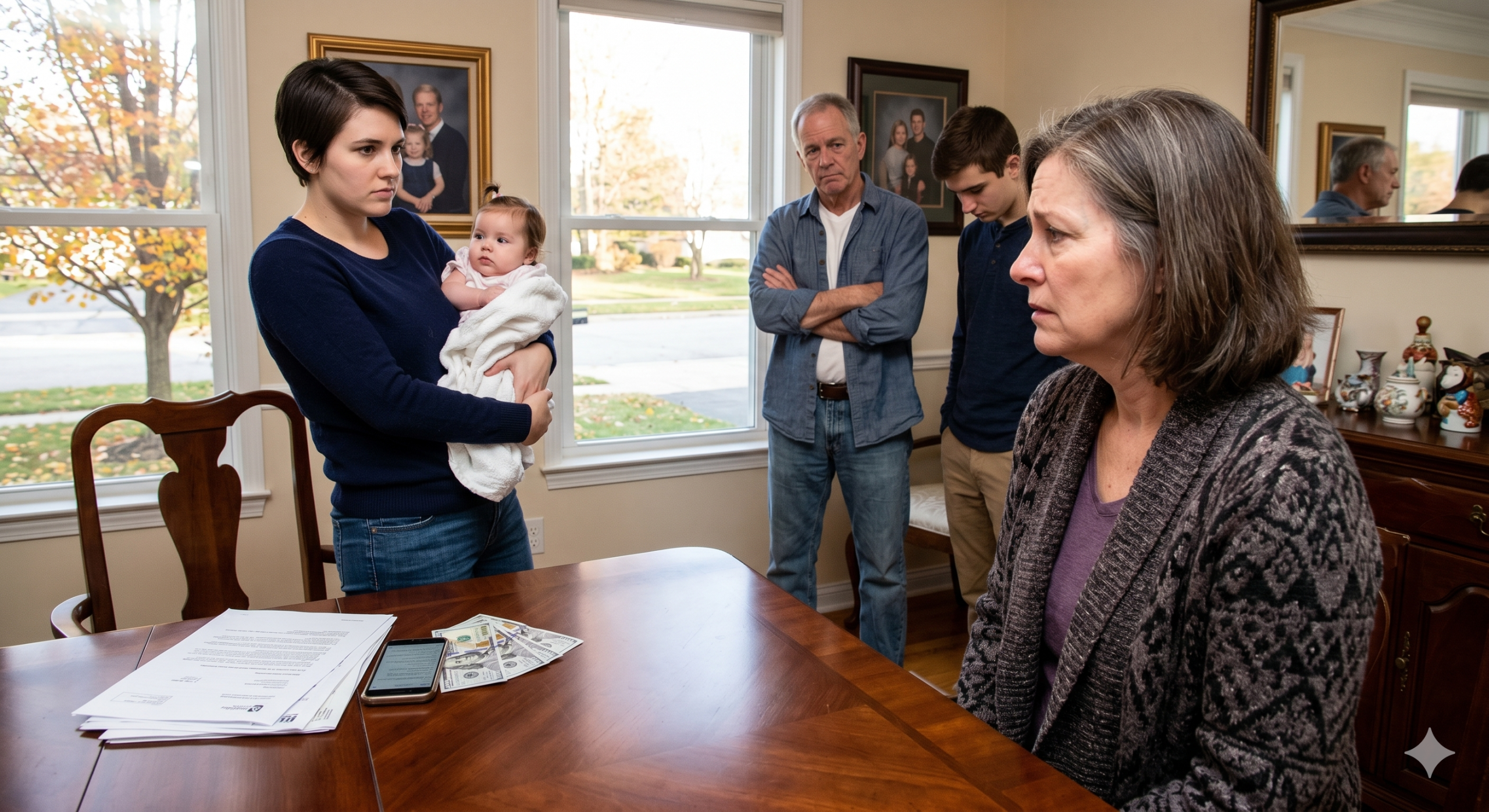
When she walked through the front door that evening, dropping her keys onto the counter right next to the glowing iPad, I didn’t say a word. I just pointed at the screen, and then at the printed bank statements spread across the kitchen island—eleven months of systematic theft laid bare under the sharp recessed lighting.
For a split second, I saw it: the flicker of absolute panic in her eyes. But it vanished as quickly as it came, replaced by a cold, calculating mask I didn’t recognize.
“It’s not what it looks like,” she said, her voice chillingly steady.
It was the ultimate insult. The text on the screen was a detailed thank-you from her lover for a weekend getaway at a five-star resort, paid for with a debit card linked directly to my murdered father’s inheritance.
“We had a pact,” I managed to say, my voice cracking under the weight of thirty years of misplaced trust. “We promised each other dignity.”
“Dignity?” she scoffed, suddenly turning defensive. The cognitive dissonance was on full display as she began rewriting our entire history right in front of me. “You think it’s dignified to sit on a pile of money while I lose my job? You think I was going to beg you for every dollar? You were too busy grieving to care about this family!”
It was a sickening twist of logic. She had convinced herself that stealing my father’s legacy was a form of self-preservation, a justified retaliation for her own career failures. She had taken my vulnerability during the worst tragedy of my life and used it as a smoke screen to bleed me dry. Over the next two hours, the lies unraveled entirely. It wasn’t just a weekend fling; it had been going on for nearly a year. She had been funding another man’s lifestyle, buying expensive dinners, and draining my accounts while pretending to look for work.
Our sons, now grown, arrived at the house later that night after I called them, my hands shaking so badly I could barely hold the phone. Seeing the look of pure disgust and disappointment on her own children’s faces was the only thing that cracked her armor. She tried to approach them, weeping, but they stepped back, standing firmly by my side.
The next morning, before the sun even hit the horizon, I was sitting in the office of a high-powered family law attorney.
“Inheritances are generally considered separate property,” the lawyer told me, looking over the gutted accounts. “But because she had access and integrated it into your marital accounts, she used it. We are filing for an emergency freeze on all assets immediately. We are going to claw back every single cent she spent on that affair.”
As I signed the paperwork to dissolve my 30-year marriage, I looked out the window. The woman I loved for three decades was gone, replaced by a stranger who had traded her family, her dignity, and her integrity for eleven months of cheap thrills and stolen money. She wanted to retire on my grief—but the court papers were about to ensure she’d be paying for her choices for a very, very long time.
Part 3 the ending
The courtroom was entirely devoid of the drama you see on television; instead, it possessed a sterile, clinical coldness that felt entirely fitting for the death of a thirty-year marriage.
My attorney did exactly what he promised. Because my father’s inheritance had been kept in a distinct account, the judge saw her systematic withdrawals not as marital spending, but as outright, malicious dissipation of separate asset property. Every hotel receipt, every expensive dinner, and every wire transfer to her lover’s account was projected onto a screen in black and white.
Sitting across the aisle, she looked smaller than she ever had. The defensive arrogance she had flashed in our kitchen months ago was completely gone. There was no more rewriting history. Confronted by the cold hard data of her own greed, she could only stare at her hands.
The final decree was devastating for her. The judge ruled that the depleted funds from my father’s inheritance would be deducted entirely from her share of the marital assets, including the equity in our home. To make it right financially, she wouldn’t be coasting into a comfortable, stolen retirement. The court ordered the sale of the house, and after the clawbacks for her theft and legal fees, she was left with a fraction of what she expected. At nearly fifty years old, with no job and a ruined reputation, she was forced to re-enter the workforce at entry-level, facing the exact reality she had destroyed our family to avoid.
As for me, I bought a small, quiet place closer to our two boys.
The money she took was largely recovered through the asset split, but the true wealth was what I felt the day the papers were signed: peace. The grief of losing my father still hits me in waves, but it is no longer tangled up in her betrayal. I kept my dignity, I kept my sons’ respect, and I kept the promises I made thirty years ago.
She got the thrill of an eleven-month affair, but in the end, it cost her everything. And as I sat on my new porch, watching the sunset with a quiet cup of coffee, I realized that the pact we made decades ago had finally been fulfilled. We went our separate ways—and she got exactly what she deserved.