I Was A Former Mossad “Kidon” Agent, And I Resigned After A Tragedy. Now I’m A Butler For A Wealthy Family. When Their Daughter Was Kidnapped, The Police Were Lost. Kidnappers Called, Laughing, “Give Us $3 Million Or You’ll Get Her In A Body Bag.” The Father Was Devastated And In Shock. I Told Him, “Sir, Cancel The Transfer. I Will Have Miss Jenifer Home In Time For Dinner.”
Part 1
By six in the morning, the Pierce mansion smelled like lemon oil, hot coffee, and money.
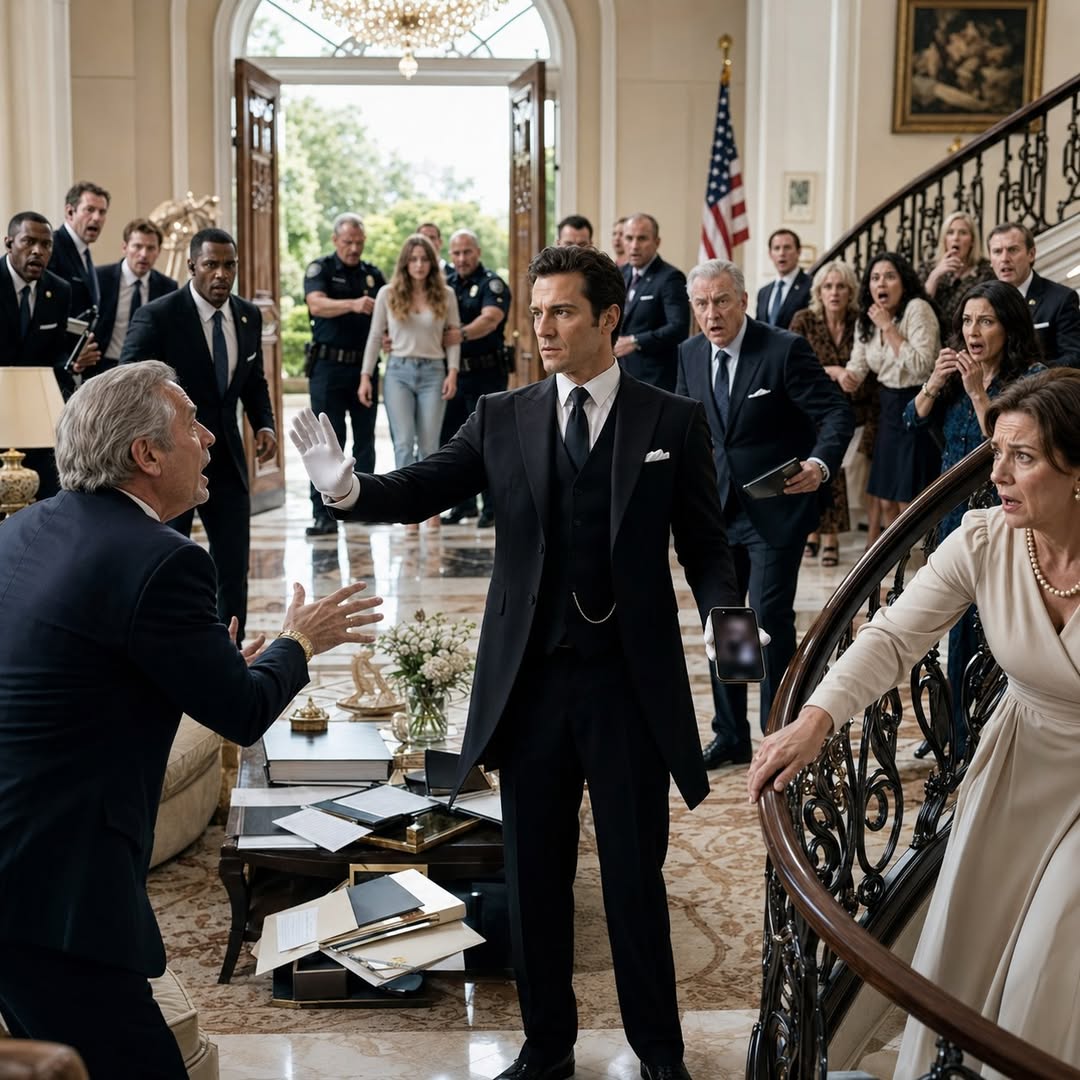
I stood in the grand foyer with a linen cloth folded over my left wrist, polishing fingerprints off a black marble table nobody ever used. Above me, the chandelier scattered pale pieces of light across the floor, each crystal throwing its own little blade. Outside, the lawn rolled down toward iron gates, wet with spring mist. A house like that was built to impress people. It was not built to protect them.
That was the first thing I noticed when Roman Pierce hired me.
The cameras were expensive but badly placed. The windows were reinforced, but the staff entrance stuck out like an invitation. The panic room behind Roman’s study had a keypad, a steel door, and enough bottled water for a weekend, but whoever installed it had never imagined fear with patience.
I had.
For three years, I had served breakfast, arranged flowers, opened doors, and pressed suits. I knew which spoon Roman preferred with his grapefruit. I knew his daughter Jennifer hated lavender because it reminded her of the hospital where her mother died. I knew the housekeeper hummed old country songs when she was nervous.
And I knew the black sedan passing the front gate for the third time was not lost.
I kept my hand steady on the marble.
“Leo?”
Roman Pierce stood at the foot of the staircase, tying his cuff links with the distracted irritation of a man whose companies had more alarms than his home. He was forty-five, silver beginning at the temples, handsome in the way rich men become handsome when everyone around them agrees not to mention exhaustion.
“Yes, sir?”
“Jennifer lands at noon tomorrow. Make sure her room is ready.”
“It already is.”
He smiled, but only with one side of his mouth. “Of course it is.”
Jennifer Pierce was twenty-one, sharp as broken glass and twice as bright. She was studying international relations at Columbia, though Roman still called it “school” as if she were twelve and leaving lunch boxes in the back seat. She came home for spring break every year with three suitcases, six causes, and a way of talking to me like I was a person instead of furniture.
Her room had fresh white sheets, tulips instead of lavender, and the framed photograph of her mother placed exactly where she liked it.
Roman watched me for a moment too long.
“Leo, before you came here, you said you worked private security.”
“I did.”
“Where?”
I folded the cloth once. Then again. “Overseas.”
“That covers half the planet.”
“Yes, sir.”
A small silence settled between us. He had wondered about me for years. I had seen it in the way his eyes paused on the old scar near my collar, the way he noticed I never stood with my back to open doors, the way I could tell which member of his board was lying before they finished a sentence.
Roman was not stupid. That was part of the problem.
He started to ask another question, but his phone vibrated. His face changed before he answered. Business face. Battle face.
“Pierce,” he said, already walking toward the study.
I waited until the door closed before I turned toward the window.
The black sedan slowed by the gate again.
This time, the rear passenger window lowered two inches.
Not enough for a greeting. Enough for a lens.
My body remembered things my mind had spent three years burying. Desert heat. Hotel carpet. A child’s terrified eyes. The sound a silenced gun still makes when you are the one holding it.
I went to the security room behind the kitchen and checked the monitors. Gate camera. North drive. Service road. West garden. The sedan was gone now, but the feeling stayed, crawling cold and familiar between my shoulder blades.
Peace was a beautiful lie. I had known that when I accepted this job.
Still, I had hoped.
I opened the bottom drawer beneath the monitor bank. Under spare batteries and old instruction manuals was a phone wrapped in black cloth. No number. No logo. No reason to exist in a butler’s desk.
I did not turn it on.
Not yet.
Outside, a crow landed on the fountain and dipped its beak into the water. On camera three, the gate guard stepped out of his booth, looked down the road, and touched his earpiece.
He had told me last week he hated wearing earpieces.
I leaned closer to the screen, and for the first time in three years, I felt my old life lift its head.
Someone was watching the house.
And worse, someone inside the house might be helping them.
### Part 2
Jennifer arrived with windburned cheeks, a cracked phone screen, and a backpack covered in stickers from countries she had not yet visited.
“Leo!” she called before the driver had even shut the trunk.
She hugged me in the driveway like she always did, fast and careless, smelling of airport air, peppermint gum, and the cheap coffee she bought because she said expensive coffee tasted like “burned ambition.”
“Miss Jennifer,” I said, stepping back. “Welcome home.”
She narrowed her eyes. “You still refuse to call me Jen.”
“Correct.”
“One day I’ll break you.”
“Many have tried.”
She laughed, and for a few seconds the house felt warmer.
Roman came out behind me, trying to hide how much he had missed her. He failed. Jennifer dropped her bags and ran into his arms. I looked toward the gate while they held each other, because happiness makes people blind and someone in my former profession learns to watch the edges of every tender moment.
A delivery van slowed on the road.
It did not stop. It did not belong to any company I recognized. A white van with mud sprayed deliberately over the rear plate.
I looked at Walt, the senior gate guard. He was pretending not to watch it.
That was new.
At lunch, Jennifer talked about college, her professors, and a summer program in Eastern Europe she wanted Roman to fund. Roman pretended to object, then asked for the exact cost. The dining room windows were open, and the smell of wet grass drifted in with the clink of silverware.
“You worry too much,” Jennifer told him.
“I’m your father. It’s contractual.”
“Leo worries too much. You just fund the worrying.”
I poured water into her glass. “I prefer to think of it as professional imagination.”
“See?” she said. “Terrifying.”
Roman’s phone buzzed. Once. Twice. Then again. His expression tightened.
I saw Jennifer notice.
“What now?” she asked.
“Nexus,” Roman said.
The name had been circling the mansion for weeks like a shark. Nexus Corporation wanted Pierce Dynamics. Roman did not want to sell. The press called it a hostile acquisition. I called it a siege wearing a suit.
“They’ve filed something in Singapore,” Roman said. “Emergency injunction. Our counsel says I need to be there by morning.”
Jennifer set down her fork. “You just got home.”
“I know.”
“I got home two hours ago.”
“I know that too.”
There it was. The small crack in the perfect glass. Jennifer looked away first, but only because she loved him enough not to show how much it hurt.
I stood behind Roman’s chair and said, “Sir, perhaps your daughter should travel with you.”
Both of them looked at me.
Jennifer groaned. “Not you too.”
Roman studied my face. “Why?”
“Change of scenery,” I said. “And the house has had several small security irregularities.”
Jennifer leaned back. “Irregularities. That sounds like the polite word for murder.”
“No one has been murdered today.”
“Comforting.”
Roman’s phone buzzed again. He looked down, cursed softly, and stood. “I don’t have time to argue. Jennifer, stay on the property. Leo, tighten whatever you need to tighten.”
“Yes, sir.”
Jennifer crossed her arms. “I’m twenty-one, Dad.”
“And I’m still your father.”
By sunset, Roman’s helicopter lifted from the back lawn, whipping the tulips flat and shaking the windows. Jennifer stood beside me under the portico, her hair flying around her face.
“He always leaves,” she said, but lightly, like a joke that had gone stale.
“He comes back.”
“Not the same thing.”
I did not answer. Some truths are not made better by agreement.
After dinner, Jennifer went upstairs to video call her friend Robin. I walked the mansion.
Every door. Every camera. Every blind spot.
At the staff entrance, I found a smear of gray dust on the brass handle. Not dirt. Not ash. Fine, powdery residue from a disposable latex glove, the kind used by careful men who did not want to leave skin behind.
I checked the lock.
No scratches. No forced entry.
Someone had a key.
A small noise came from the corridor behind me.
I turned.
Walt stood there in his security uniform, cap tucked under one arm. He smiled too quickly.
“Evening, Leo. Everything okay?”
His right hand was in his pocket.
My eyes went to the pocket, then back to his face. “That depends.”
“On what?”
“On why you’re inside the house.”
He swallowed. Once.
Before he could answer, a scream ripped through the second floor.
Jennifer.
I was already moving before Walt’s cap hit the floor behind me.
### Part 3
I reached Jennifer’s room in twelve seconds.
That was slower than I wanted.
Her door was open. A lamp had been knocked sideways, casting yellow light across the ceiling. Jennifer stood beside her bed in a Columbia sweatshirt and white jeans, holding her phone with both hands. Her face had gone bloodless.
“Someone was in here,” she whispered.
I entered without stepping directly through the center of the room. Old habits. Bad rooms teach you where to put your feet.
The window was closed. No broken glass. Her bags lay half-unpacked, clothes spilling over the rug. On the bed, someone had placed a single photograph.
Jennifer at the airport that morning.
Taken from across the terminal.
I picked it up by the corner. The paper was still faintly warm from a portable printer.
“When did you find this?”
“Just now. I came back from brushing my teeth and it was there.”
“Did you see anyone?”
“No.”
The phone in her hand rang.
Blocked number.
I looked at her. “Give it to me.”
She did, but the moment my fingers touched it, the ringing stopped. A text appeared instead.
Pretty room. Bad curtains.
Jennifer made a small sound in her throat.
I looked at the windows. White curtains, moving gently though the glass was shut. Air pressure from the vent. No person behind them.
Another text came.
Tell the butler to stop looking for the camera.
Jennifer stared at me. “Camera?”
I moved slowly, casually, as if I were adjusting the curtain rod. My eyes tracked reflections in the dark window. Lamp. bed. dresser. smoke detector.
The smoke detector above the closet had a black dot that did not belong.
I smiled faintly, not because I was amused, but because fear hates being ignored.
“Miss Jennifer, go stand by the door.”
“Leo—”
“Now.”
She obeyed. Good girl. Brave girl.
I took the desk chair, climbed up, and twisted the smoke detector loose. Inside was a camera no larger than a shirt button, wired to a battery pack.
Jennifer covered her mouth.
The phone rang again.
This time, I answered.
For three seconds, there was only breathing. Male. Controlled. A faint echo behind him. Concrete walls, maybe. Then a sound in the distance: metal rolling over metal. A loading dock door.
“Pierce residence,” I said.
A soft laugh. “The butler.”
“I have been called worse.”
“I believe that.”
His voice had age in it. Not old, but worn. Anger kept too long becomes a second accent.
“Who are you?”
“You can tell Roman Pierce that Damon McIntyre called.”
The name meant nothing to Jennifer. It meant a little to me. Roman had once mentioned an early partner, years ago, after too much Scotch and one of those lonely business dinners where powerful men confess only the parts that flatter them.
“Mr. Pierce is unavailable,” I said.
“Oh, I know exactly where Roman is. Somewhere over the Pacific, pretending the world still obeys him.”
Jennifer’s eyes widened.
Damon continued, “His daughter, however, is available.”
The room became very quiet.
“What do you want?”
“Thirty million dollars transferred before midnight. Then Roman signs over the patent rights he stole from me. If he refuses, Jennifer disappears permanently. If anyone calls the police, she dies on camera. If you try to move her, she dies before you reach the gate.”
Jennifer gripped the doorframe.
I kept my voice mild. “That seems difficult, considering she is standing in front of me.”
Damon laughed again.
“No, Leo. She’s standing in front of you because I want her afraid before we take her. Fear makes people obedient.”
Downstairs, glass shattered.
Not a window.
The security office.
A second later, every light in the house went out.
Jennifer screamed, but only once.
I pulled her behind me and drew the small weapon I had not wanted to carry in this house. In the dark, the mansion creaked like a ship. Somewhere below us, footsteps crossed broken glass.
Not one man.
At least four.
The phone was still pressed to my ear.
Damon whispered, “Let’s see what kind of butler you really are.”
Then Jennifer’s bedroom door slammed shut behind us, and the lock clicked from the outside.
### Part 4
The first rule of being trapped is never to accept the shape of the trap.
Jennifer pulled at the doorknob. “It won’t open.”
“I know.”
“We’re locked in my own room.”
“For the moment.”
“For the moment? Leo, this is not a tea problem.”
The house below us groaned with movement. Heavy boots. A drawer opening. Someone speaking low through a radio. The power outage had killed the chandeliers, but moonlight poured through the windows, turning Jennifer’s room silver and strange.
I moved to her closet.
“What are you doing?”
“Looking for the door.”
“There is no door in my closet.”
“Not one you know about.”
The Pierce mansion had been built in 1928 by a steel man with enemies and imagination. Behind the cedar paneling in Jennifer’s closet was a narrow service passage once used by maids to move between rooms unseen. I had found it my second week on the job, cleaned it my third, and oiled the hidden hinges once a month since.
Jennifer stared when the wall opened.
“You knew about that?”
“Yes.”
“How many secret passages are in this house?”
“Enough.”
We slipped inside. The passage smelled of old wood, dust, and the faint metallic tang of pipes. Jennifer’s shoulder brushed mine as we moved. She was shaking, but she kept silent. That mattered. Panic is loud. Courage often sounds like breathing through your nose when every part of you wants to sob.
Through a narrow vent, I saw two men enter her room. Both wore black clothing, gloves, masks. One carried a crowbar. The other held a tablet showing the mansion’s camera feeds.
They expected us to be inside.
The man with the tablet cursed. “Room’s empty.”
A voice crackled from his radio. “Find her. McIntyre wants the girl alive.”
“And the butler?”
A pause.
“Optional.”
Jennifer’s hand found my sleeve.
We kept moving.
My goal was simple: get her to the old laundry stairwell, then out through the east garden, then into the caretaker’s tunnel beyond the pool house. My conflict was equally simple: the intruders had the main halls, the cameras, and at least one insider’s knowledge of the estate.
Then I saw Walt.
He stood near the back staircase, speaking to one of the masked men. No mask. No shame. The old gate guard who had waved Jennifer through rainstorms and helped Roman change a flat tire two summers ago was holding a set of mansion keys.
Jennifer saw him too.
Her breath caught, sharp and wounded.
That was the first emotional turn of the night. Fear became betrayal.
“Why?” she mouthed.
I shook my head. Later.
Walt handed the man a folded floor plan. “Panic room’s behind the study. If Leo’s smart, he’ll take her there.”
Wrong, I thought.
But not stupid.
I changed direction.
Jennifer followed me down a vertical ladder into the wall beside the second-floor linen closet. We emerged near the kitchen pantry. The smell of onions and dishwasher steam still lingered from dinner. Broken glass glittered across the security room floor. All monitors were dark except one, which showed static.
I reached under the bottom shelf where Mrs. Dalloway kept bulk rice and removed a small emergency bag.
Jennifer stared at the contents. “Leo.”
“Put this on.”
“It’s body armor.”
“Yes.”
“Why is there body armor behind rice?”
“Because no one looks behind rice.”
The landline rang.
Once.
Twice.
Every speaker in the house clicked alive.
Damon’s voice filled the mansion.
“Roman Pierce, your daughter is leaving with me. You will receive instructions. If you disappoint me, you will receive pieces.”
Jennifer flinched.
I took the nearest phone and answered.
“Mr. McIntyre.”
A pause. “Still alive.”
“So far.”
“You sound calm for a servant whose house is falling apart.”
“It is not my house.”
“No. But she is your responsibility, isn’t she?”
I looked at Jennifer. She was pale, frightened, furious. Too young for this, but no longer a child.
“Yes,” I said. “She is.”
“Then bring her to the front hall.”
“No.”
His breathing changed.
“You don’t understand the situation.”
“I understand enough.”
Footsteps thundered above us. Someone had found the open passage.
Damon said, “I have men in the house.”
“And I have Miss Jennifer.”
He laughed. “For now.”
Then the kitchen door burst inward.
Three men came in fast. I pushed Jennifer behind the island and moved before they could understand that the butler was no longer behaving like a butler.
The fight lasted eight seconds.
When the last man hit the tile, Jennifer was staring at me like I had become someone else in front of her.
Maybe I had.
Then something slammed into the back of my head, hard and bright, and the kitchen floor rushed up to meet me.
The last thing I heard was Walt’s voice, shaking.
“I’m sorry, Leo. They have my son.”
When I opened my eyes again, Jennifer was gone.
### Part 5
Blood has a smell people forget until they remember.
Copper. Salt. Warmth.
I woke on the kitchen floor with my cheek against cold tile and that taste in my mouth. The clock above the stove read 10:43 p.m. I had been out for twelve minutes, maybe fifteen. Too long. Long enough for a team to move a hostage through the service gate, switch vehicles, and disappear into the wet black roads beyond the estate.
Jennifer was gone.
For one second, the old grief rose in me so violently I could not breathe. A girl on white carpet. A father reaching for a gun. A mistake that survived even though I had not deserved mercy.
Then I forced myself up.
Pain is information. Panic is waste.
Walt sat against the cabinets, both hands zip-tied in front of him, crying without noise. The intruders had left him alive because cowards dislike cleaning up their own messes.
I cut the tie from his wrists.
He looked at me as if I were the judge already.
“They took my boy,” he said. “They sent me a video. He was in a chair, Leo. He’s sixteen. I didn’t know what else to do.”
I wanted to hate him. It would have been easier.
“Where did they take Jennifer?”
“I don’t know. I swear.”
I grabbed his collar and pulled him close enough that he could see exactly what lived behind my eyes.
“Walt, I am not Roman Pierce. I am not the police. I am the last man between that girl and whatever they planned. If you know anything, this is the moment you decide what kind of father you are.”
He trembled. “Damon said the exchange would happen near water. That’s all. I heard one of them mention cold storage. And… and the woman.”
“What woman?”
“I never saw her face. She called the orders. Damon acted like he was in charge, but when she spoke, he shut up.”
New information. Damon was not the top of the chain.
The emotional turn came next: this was worse than revenge.
I went to the security desk and pulled the hidden phone from its drawer. My thumb hovered over it. For three years, I had not turned it on. Not when nightmares woke me. Not when Roman asked too many questions. Not when loneliness pressed against the walls of my room above the garage.
Tonight, peace had been taken from me. Choice had been taken from Jennifer.
I turned it on.
The screen lit with one word.
HAWK.
I typed a message to a number I still remembered in my hands.
Package taken. Pierce family compromised. Need traffic, harbor, airfield, private security channels. Northeast corridor. Time critical.
The reply came thirty seconds later.
Hawk, you are retired.
I typed back.
Not tonight.
While I waited, I checked what the kidnappers had left behind. One black glove. A torn piece of duct tape. Tire marks outside the service gate. The marks were wide and shallow, a heavy van but not an armored one. The glove smelled faintly of diesel, cheap tobacco, and fried onions.
Not much.
Then I found the first real clue.
A petal stuck near the threshold. Purple. Crushed. Not from our house; I had removed every lavender arrangement years ago because Jennifer hated the scent. This was not lavender, though. It was stock flower, common in cheap funeral sprays and industrial floral wholesalers.
Water. Cold storage. Funeral flowers.
I looked at the map in my mind.
There was a refrigerated warehouse district near the Hudson, where fish markets, flower distributors, and meat trucks all shared the same cracked roads before dawn.
My phone buzzed.
Three vehicles left Pierce estate during outage. Two decoys. One white refrigeration truck diverted south. Plate cloned. Last camera hit near Red Hook industrial zone.
Another message followed.
Unknown female linked to Nexus proxy. Name: Mara Voss. Former corporate intelligence. Dangerous.
Mara Voss.
I repeated the name once, softly, giving it weight.
Walt looked up. “Can you get her back?”
I went to the pantry, opened the second hidden panel, and took out the thing I had sworn I would never touch again. Not because it was a weapon, though it was. Because it belonged to a man I had buried.
“I will get her back,” I said.
Walt swallowed. “Shouldn’t we call Roman?”
I looked toward the dark driveway where rain had begun to fall, washing away the tire tracks.
“Call him. Tell him not to pay.”
“What?”
“Tell him his daughter is still alive because they need her. Tell him to stall. Tell him…”
My throat tightened once, then steadied.
“Tell him the butler is handling it.”
I walked out into the rain, and by the time I reached the garage, the first sirens were still miles away.
### Part 6
Red Hook at midnight smells like river mud, spoiled ice, diesel smoke, and old fish.
I drove without headlights for the last three blocks, leaving the car under a dead billboard advertising luxury condos no one had built yet. Warehouses rose around me in dark rectangles. Loading docks. Chain-link fences. Security lights buzzing blue-white in the rain.
A good place to hide a scream.
I moved through alleys with my coat collar up and my hands empty. An armed man draws one kind of attention. A tired older man walking through rain draws another. People see what they expect.
At the third warehouse, I found the white refrigeration truck.
The plate was gone. The engine hood was cold. A smear of mud on the rear bumper matched the road outside the estate. My chest tightened, but I kept my pace slow.
Goal: confirm Jennifer had been here.
Conflict: the place was too quiet.
New information came in the form of a sound. Not a cry. Not a voice. A metallic tap from inside the loading bay. Three taps. Pause. Two taps.
Someone nervous, hitting pipe with ring or nail.
I slipped through a side door with a broken latch and entered a room colder than the rain outside. Condensation crawled down the walls. Empty flower buckets lined the floor. Funeral ribbons drooped from hooks, their gold lettering half-torn.
Beloved Father.
Forever Missed.
Rest in Peace.
My stomach turned.
In the center of the room sat a chair with duct tape hanging from its arms.
Jennifer’s scarf lay across the seat.
Blue wool. I had folded it over her suitcase handle that morning.
I picked it up.
Still warm.
A trap can be a room, a message, or a feeling. This was all three.
The lights snapped on.
Four men stepped from behind stacks of plastic crates. One held a phone pointed at me, recording. Another smiled like he had practiced it.
“The butler,” he said. “You really came alone.”
I lowered Jennifer’s scarf. “Where is she?”
He laughed. “Damon said you’d ask that before you started bleeding.”
“Damon talks too much.”
The man’s smile slipped.
There are men who enjoy violence because it makes them feel large. They are usually the first to fall apart when violence stops obeying them. These men were not soldiers. They were hired weight. Rough, confident, and poorly informed.
The fight was ugly in the way close rooms make everything ugly.
No elegance. No movie silence. A crate toppled. Someone cursed. My shoulder hit concrete. A fist split my lip. Cold water splashed under my shoes. One man reached for his waist and I broke his wrist against the edge of a steel table before he could make the night louder.
When it ended, all four were breathing.
I needed answers.
The one with the phone was awake enough to understand pain and afraid enough to prefer conversation.
“Where is Jennifer Pierce?”
He spat blood. “Gone.”
“Where?”
“I don’t know.”
I pressed my thumb beneath his jaw, not enough to damage, enough to promise I knew how.
“Try again.”
His eyes rolled. “Private dock. That’s all I know. Woman moved her. Said warehouse was compromised.”
“Mara Voss?”
He nodded too fast.
“Damon?”
“At the dock. Losing his mind. He thought this was his show, but she took the girl. Said Pierce was worth more alive than dead.”
My phone vibrated.
A message from my old contact.
Roman’s plane diverted. Unknown parties attempted contact midflight. Federal channels slow. Nexus shell companies tied to defense tech acquisition. Jennifer likely leverage for patents, not ransom.
The emotional turn landed hard.
Jennifer was not only a hostage. She was a key.
Roman’s company did not just make commercial software. He had lied by omission to his daughter, to his staff, perhaps even to himself. Pierce Dynamics had something someone was willing to start a private war to steal.
One of the men on the floor began laughing weakly.
“You don’t get it,” he said. “They know who you are.”
I turned.
“What did you say?”
His grin trembled. “The woman. Mara. She said if the old ghost came, let him follow the scarf. Said he’d understand eventually.”
I felt the room tilt, not from injury.
From recognition.
“Old ghost” was not random.
Only a handful of people had ever called me that.
I walked to the far wall where someone had pinned a photograph with a butcher knife. It showed Jennifer sitting in a van, blindfolded but alive. Across the bottom, written in black marker, were six words.
You should have stayed dead, Hawk.
The cold room seemed to close around me.
This was not just Roman’s past anymore.
Mine had found the house too.
### Part 7
I did not drive to the private docks immediately.
That was what Mara Voss wanted.
Angry men are easy to steer. Guilty men even more so. She had left my old code name on the photograph because she wanted my hands shaking around the wheel. She wanted me thinking about graves, not roads.
So I sat in the stolen quiet behind the billboard and forced myself to breathe.
Rain tapped the windshield. My lip had stopped bleeding. My left shoulder was stiff. Jennifer’s scarf lay on the passenger seat, blue wool darkened by warehouse damp.
I called Roman.
He answered on the fifth ring. His voice sounded like it had aged ten years in one night.
“Leo?”
“Your daughter is alive.”
For three seconds, he could not speak.
Then, “Where is she?”
“Moving. I am tracking.”
“I’ll pay. Whatever they want, I’ll pay.”
“No.”
“Don’t you tell me no. She’s my child.”
“And paying will not bring her home. It will only prove she works as leverage.”
His breath ragged through the line. In the background I heard aircraft noise, a pilot speaking, someone else arguing in legal language.
Roman said, “They told me to transfer thirty million, then prepare patent access codes. They knew about contracts I never made public.”
“Defense contracts.”
Silence.
Jennifer did not know, but Roman did. His shame had a sound.
“They were classified,” he said. “I couldn’t tell her.”
“You should have told someone.”
“I trusted my security.”
“Your security sold you for a kidnapped son and fear.”
A wounded pause. “Walt?”
“Yes.”
“My God.”
“No more secrets, sir. What does Nexus want?”
Roman exhaled. “We built adaptive intrusion shields for infrastructure systems. Power grids, water treatment, military logistics. In the wrong hands, it could show someone exactly where to strike.”
There it was. The deeper threat beneath the ransom.
“What is Mara Voss?”
“I don’t know.”
“I think she knows me.”
Another silence, sharper than the first.
“Leo, who are you?”
I looked at the warehouse lights fading in my mirror. “Someone your enemies did not plan for.”
“That is not an answer.”
“It is the only useful one right now.”
I ended the call before he could ask again.
Then I made another call, to the number that had answered Hawk.
A woman picked up. Her voice was older now, but still made of iron and cigarette smoke.
“Leo.”
“Leah.”
“You waited three years to call, and now you bring me a mess with Americans, corporate spies, and your dead name on a wall.”
“Do you know Mara Voss?”
“I know of her. German mother, Russian father, Swiss passport when convenient. Sold intelligence to whoever paid and loyalty to no one. She crossed paths with your unit in Prague eight years ago.”
Eight years ago.
A hotel hallway. A failed handoff. A woman in a red coat walking away as two men bled behind me.
I had never seen her face clearly.
Leah continued, “She lost people because of you. Maybe money. Maybe more.”
“Can you find the dock?”
“I already did. Pier 41. But Leo, listen to me carefully. There is no boat registered to leave.”
“Then why move her there?”
“To make you look at the water.”
My eyes went to the rearview mirror.
Behind me, far in the wet dark, a black SUV rolled slowly past the end of the street.
Not toward the river.
Away from it.
Mara had not moved Jennifer to a boat.
The dock was a mirror. A trick. A place where I would arrive breathless and late while Jennifer left by land.
I started the engine.
“Leah, cameras west of Red Hook. Look for convoys avoiding tunnels.”
“Already searching.”
The SUV turned left under the expressway.
I followed at a distance, headlights off until traffic swallowed us. It moved with purpose but without hurry. That told me Jennifer was either inside or the driver wanted me to believe she was.
The emotional turn came as we passed a gas station.
In the glow of its lights, I saw Jennifer’s hand press briefly against the rear window.
Not waving.
Not begging.
Writing.
One letter in fogged glass.
M.
Then the hand vanished.
I gripped the wheel.
She was alive. She was thinking. She had given me something.
But before I could close the distance, a second vehicle shot out from a side street and slammed into my rear quarter panel.
The world spun into headlights, rain, and metal.
When the car stopped, my forehead was against the steering wheel and the SUV was gone.
On the cracked windshield, rain drew crooked lines over the city lights.
And through the ringing in my ears, my phone buzzed with a new message from Mara Voss.
Wrong road, Hawk.
### Part 8
The crash should have killed a slower man.
It nearly killed me anyway.
My ribs burned when I breathed. The airbag had split my brow. Steam hissed from the hood. The second vehicle, the one that had struck me, sat sideways across the street with its front end crushed. The driver was already running.
I let him run.
A foot soldier running away is less useful than the road he leaves behind.
Inside his abandoned car, I found a rental agreement under a false name, a paper coffee cup from a roadside diner, and a receipt for diesel bought forty minutes earlier near Newark.
Newark meant airport, freight yards, or industrial corridors.
The letter Jennifer had drawn on the window had been M.
Mara. Maybe.
Or something she saw.
Mill.
Market.
Medical.
I closed my eyes and replayed the few seconds of gas station light. Jennifer’s hand. Rear glass. Her sleeve. Behind her, through the opposite window, a flicker of red neon.
Not a gas sign.
A word.
MEADOW.
There was no Meadow in Red Hook. There was Meadowlands across the river, with warehouses, rail spurs, and private airstrips close enough to move a hostage before dawn.
Goal: reach the Meadowlands before Mara moved Jennifer again.
Conflict: I was injured, burned, and being fed false trails by someone who knew my habits.
New information came from Jennifer herself.
My phone rang from her number.
I answered without speaking.
For two seconds there was static. Then her voice, small but steady.
“Leo?”
“Miss Jennifer.”
“I don’t have long. They don’t know I got Walt’s old phone from the floor of the van. I hid it under my leg.”
Pride hit me so hard it almost became pain.
“Where are you?”
“I don’t know. It smells like coffee and oil. I hear trains. There’s a painted sign outside, red letters, something with Monarch. They keep saying the plane can’t wait past four.”
Monarch.
Coffee. Oil. Trains. Meadowlands.
“Are you hurt?”
“No. Scared. Angry. Mostly angry.”
“Good. Anger keeps the blood warm.”
A shaky breath that might have been a laugh.
“Leo, they keep talking about you. Mara said you used to be a ghost. Damon said you’re just an old servant with a gun. Then she slapped him.”
“Damon is a fool.”
“I noticed.”
A muffled voice sounded near her.
“Listen carefully,” I said. “Stay useful to them. Do not be brave for pride. Be alive for me.”
She whispered, “Okay.”
Then, softer, “Dad lied to me, didn’t he? About the company.”
“Yes.”
The truth hurt her through the phone. I heard it.
“He always says it’s to protect me.”
“People say that when they want love without accountability.”
Another voice. Closer.
Jennifer rushed, “Monarch Coffee Roasters. I saw it on a bag. Leo, there’s a woman here. She has a scar across her lip. She knows your name.”
A hand slapped the phone. The line went dead.
I called Leah.
“Monarch Coffee Roasters,” I said. “Meadowlands. Near rail. Private air access.”
She did not ask questions. Old professionals are kind that way.
“Searching.”
I stole the crash driver’s car. It pulled hard to the right, but it moved. Dawn was still two hours away. Trucks owned the highway, their taillights red smears in the rain. My body wanted a hospital. My mind wanted a room with no memories. My hands wanted the wheel steady.
Leah called back.
“Abandoned roasting facility off County Road 7. Rail spur behind it. Small private airstrip three miles east. Property recently leased by a Nexus shell.”
“Send authorities.”
“I did. They are thirty minutes out.”
“Too late.”
“Leo.”
The way she said my name took me back twenty years.
“Do not become what you left.”
I looked at Jennifer’s scarf on the seat.
“I became that the moment they took her.”
“No. You became that years ago. Tonight you get to choose whether that is all you are.”
For a moment, I hated her.
Then I saw the first sign for the Meadowlands exit.
I slowed, because rushing into a trap only flatters the trapmaker.
On the horizon, beyond black reeds and warehouse roofs, a red neon sign flickered weakly in the rain.
MONARCH.
And beside it, a private jet’s lights blinked awake.
### Part 9
The Monarch Coffee building had been dead for years, but old smells stay in old walls.
Burned beans. Machine oil. Wet cardboard. Rust.
I approached from the rail side where weeds grew waist-high between tracks. The building sat low and broad under the rain, brick walls painted with a faded crown logo. A private road ran from its loading dock toward the small airstrip beyond the marsh. Two SUVs waited near the dock. A third faced the road with its engine running.
That was the getaway car.
Not the plane. Not yet.
Mara was patient. She would not move Jennifer to open ground until she had confirmation that Roman was bending. Damon, if still involved, would be less patient. That difference could break them apart if pushed.
I circled wide and climbed a rusted service platform to the second floor. Through cracked glass, I saw men moving below. Six armed. Maybe more in offices. Jennifer sat in a metal chair near the center of the roasting floor, wrists tied in front of her, face bruised but eyes open.
Alive.
Damon paced in front of her like a man rehearsing an argument he had already lost.
Mara Voss leaned against a table near the old machines, elegant in a dark coat, scar cutting pale across her upper lip. She watched Damon the way adults watch children holding matches.
My goal changed. I did not need to defeat everyone. I needed to separate Jennifer from their control before the plane moved.
Conflict: too many eyes, too open a floor, and Mara knew my name.
New information came when Damon shoved his phone toward Jennifer.
“Tell your father to stop stalling.”
Jennifer lifted her chin. “No.”
Damon’s hand rose.
Mara caught his wrist before he struck her.
“Do not damage leverage,” she said.
“She’s mocking me.”
“She is twenty-one and frightened. You are fifty and still whining about paperwork.”
Even Jennifer blinked at that.
Damon pulled free. “Roman stole my life.”
“No,” Mara said. “Roman bought your shares. You signed because you wanted fast money and applause. Then the company became a kingdom and you discovered regret.”
The words hit Damon harder than a punch.
That was the emotional turn. The villain who had built himself out of grievance was smaller than his own story.
I moved.
Not with noise. Not with drama. The first lights went out on the west side of the floor. Then the east. The old breaker panel sparked exactly enough to make the guards look the wrong way. Darkness spread in broken squares.
A man came up the stairs toward me. I met him before his boot touched the top step and lowered him gently, because falling bodies are loud.
Below, Mara smiled into the dark.
“Hawk,” she called. “I wondered when you would stop crawling.”
Jennifer’s eyes searched the shadows. I wanted to answer, to give her comfort. I did not.
Mara continued, “You remember Prague?”
I remembered rain on cobblestone. A red coat. Bad intelligence. Two dead men who should have lived.
“You ruined an expensive evening,” she said.
I moved along the catwalk.
Damon shouted, “Where is he?”
“Everywhere useful,” Mara replied.
She was calm. Too calm.
Then I saw why.
A small blinking light under Jennifer’s chair. Not a bomb big enough to bring down the building. Something simpler. A leash. If Jennifer moved too far, someone would know. If I rushed, Mara would have time to hurt her.
Mara had not expected to stop me with men.
She had expected to stop me with love.
For three years, I had arranged Jennifer’s flowers, watched her leave coffee rings on Roman’s antique tables, listened to her argue that the world could be improved if people stopped being cowards. Somewhere between those ordinary moments, she had become my child in every way except blood.
Mara knew that now.
She lifted a small remote from her pocket.
“Come out,” she said, “or she pays for your nostalgia.”
Jennifer did not cry. She looked into the dark and shook her head once.
No.
Brave girl.
Stupid, brave girl.
I stepped from the shadows onto the catwalk.
Every gun in the room rose toward me.
Mara smiled.
“There you are,” she said. “The family butler.”
### Part 10
There is a kind of fear that clears the mind instead of clouding it.
I stood above the roasting floor with guns pointed at my chest, rain dripping from my coat, blood drying near my eyebrow. Below me, Jennifer sat tied to a chair and tried to look less terrified than she was. Damon looked triumphant. Mara looked entertained.
That was dangerous. Entertained people take risks to stay amused.
“Put your weapon down,” Mara said.
I raised my empty hands.
Damon squinted. “He doesn’t have one.”
Mara’s eyes did not leave mine. “That is rarely true.”
She was right.
But a weapon is only one kind of advantage.
I said, “Let the girl go.”
Damon laughed. “You’re negotiating from a catwalk.”
“I am offering you a future with prison meals instead of a closed casket.”
His face flushed. “You think you scare me?”
“No. I think the truth scares you.”
Mara tilted her head. “And what truth is that?”
I looked at Damon. “Roman did not ruin your life. You did. You sold your share, spent your money, and fed your failure until it needed a hostage to feel important.”
Jennifer’s eyes flicked to Damon.
Good. She understood. Keep him emotional. Keep Mara calculating. Split the room.
Damon stepped toward her. “Shut up.”
“You chose the one person Roman would burn the world for because you wanted to feel powerful. But you were never in charge. She used you. Nexus used you. Even your men left you.”
His mouth opened. Nothing came out.
Mara clapped slowly once. “Still cruel with language. I had forgotten that.”
“No,” I said. “You remembered enough to leave my name on a wall.”
Her smile thinned.
There. A small crack.
New information: this was personal for her too, but not in the way Damon’s was. Mara did not hate with heat. She hated with bookkeeping.
“You cost me Prague,” she said quietly. “You cost me people, money, and reputation.”
“You sold names to men who butchered them.”
“I sold information. Buyers choose usage.”
“Coward’s grammar.”
Her scar tightened.
Emotional turn: Mara could be angered. Good.
The building lights flickered. Outside, thunder rolled over the marsh. Or not thunder. Aircraft engines cycling at the airstrip.
Time shrinking.
Mara gestured with the remote. “Come down.”
“If I do, she goes free.”
“If you do not, she dies eventually. Tonight, tomorrow, after Roman signs. Details are flexible.”
Jennifer’s breathing changed. She had spotted something behind Mara: the old conveyor belt chain hanging from a ceiling track. Her fingers, tied in front of her, moved slowly against the arm of the chair.
She was not waiting to be rescued.
My chest tightened with pride and dread.
“Miss Jennifer,” I said, still looking at Mara, “remember what I told you in the kitchen?”
Her voice shook. “About staying alive?”
“After that.”
A pause.
“Point. Squeeze. Keep squeezing.”
The guards laughed because they thought I meant a gun.
Jennifer did not have one.
She had her anger, her wrists, and the broken metal edge of the chair where she had been working the tie for minutes.
The tie snapped.
She threw herself sideways.
Mara pressed the remote.
Nothing happened.
Because while we had spoken, my old contact Leah had done what Leah did. Jammed the simple signal from somewhere outside with equipment no civilian company could buy.
Mara’s eyes went cold.
Then the world became movement.
Jennifer rolled behind the chair. I dropped from the catwalk onto a stack of burlap coffee sacks, hit badly, and kept moving because pain could complain later. The room erupted in shouting. One guard fired into the ceiling. Damon ducked like a man who suddenly understood stories end in bodies.
I reached Jennifer as she crawled toward an old roaster. Her hands were bleeding.
“Can you run?” I asked.
“Yes.”
“Then run badly. It makes you harder to predict.”
She almost laughed. Almost.
We moved between machines as the guards tried to regain order. Mara vanished toward the offices. Damon chased her, shouting that she could not leave him.
That was the next turn. The partnership was breaking.
At the rear door, Jennifer and I found the last obstacle.
Walt’s son.
Sixteen, bound to a chair in the loading office, face swollen from crying, very much alive.
Jennifer stopped.
“Leo.”
The plane engines outside grew louder.
I looked from the boy to the runway lights beyond the dirty window.
Saving Jennifer was no longer enough.
Mara had left us a choice with teeth.
And somewhere in the building, Damon began screaming.
### Part 11
I cut Walt’s son free with a box cutter from the loading desk.
His name was Ethan. I had known that, of course. I knew all the staff families by name, birthdays, allergies, favorite snacks, because good service is mostly memory and care disguised as efficiency.
He fell against me sobbing. “Please don’t leave me.”
“I won’t.”
Jennifer put one hand on his shoulder. “Stay behind us. Do exactly what Leo says.”
Ethan nodded at her because fear recognizes authority when kindness carries it.
Outside, the private jet’s engines whined higher. Through the rain-streaked window, I saw Mara crossing the loading yard with two guards and a hard case in her hand. Not Jennifer. Not Damon.
The data.
Roman’s patents, defense access keys, whatever Nexus had managed to steal or copy before the kidnapping collapsed. Mara had already abandoned the hostage plan. Professionals do not mourn failed strategies. They take what remains and leave.
Goal: stop Mara from leaving with the case.
Conflict: Jennifer and Ethan were exposed, injured, and the airstrip was open ground.
New information came when Damon stumbled out behind her, one hand pressed to his side, shouting her name.
“You promised!” he yelled. “You promised I’d get Pierce.”
Mara did not turn. “You got close.”
“I gave you everything.”
“You gave me drama.”
He raised a gun with both hands, shaking.
For one wild second, Damon McIntyre had the power to change the whole ending.
Mara’s guard shot him before he could fire.
Jennifer gasped. Ethan covered his ears.
Damon fell to his knees in the rain, looking surprised, as if betrayal was a language he had never expected to hear spoken to him.
Mara stepped over him.
That emotional turn was ugly but useful. Damon was no longer the threat. He was proof.
I pulled Jennifer and Ethan behind a forklift.
“Take him,” I told Jennifer. “North fence. There’s a drainage gate under the tracks. Leah’s people are waiting beyond it.”
“No.”
“Miss Jennifer.”
“I am not leaving you.”
“You are not arguing with me while a jet is leaving.”
Her eyes filled, but she kept her jaw tight. “You said family doesn’t leave family.”
“I never said that.”
“You didn’t have to.”
There are moments when the past reaches for your throat. Mine did then. The child in Dubai. The blood on white carpet. The resignation letter. Three years of pretending serving tea could balance a life measured in ghosts.
I looked at Jennifer and realized the choice Leah warned me about had finally arrived.
Was I only the weapon?
Or could I be the man holding it for the right reason?
I pressed the car keys into Jennifer’s hand. “Five minutes. If I am not back, you go.”
“I won’t.”
“You will, because Ethan cannot drive.”
She hated me for using the boy. Good. Hate can move feet.
She grabbed Ethan and ran low through the dark toward the fence.
I turned toward the airstrip.
Mara was halfway across the yard. The jet door stood open, light spilling onto the wet pavement. One guard behind her, one ahead. The hard case locked to her wrist.
I did not have time for elegance.
I drove the damaged SUV through the chain-link gate.
The guard ahead turned at the sound. Too slow. I struck the floodlight tower, not him, and the tower crashed down in sparks across the runway service road. The jet pilot cut power instinctively. For ten seconds, confusion owned everyone.
I used all ten.
Mara reached the stairs. I reached Mara.
She swung first, a short blade flashing in runway light. It caught my forearm. Hot pain opened under my sleeve. I drove her backward against the plane stairs. The hard case slammed between us.
“You should have stayed retired,” she hissed.
“You should have stayed forgotten.”
She smiled through rain. “You still think this is about the girl. There are ten copies. Twenty. You stop me, someone else sells the keys.”
“Maybe.”
The guard behind me raised his weapon.
A shot cracked across the yard.
The guard dropped.
Jennifer stood by the warehouse door, both hands locked around the small pistol Walt’s son must have taken from a fallen man. Her face was white, but her arms were steady.
She had not run.
Of course she had not run.
Mara used my distraction. She drove her knee into my ribs, tore free, and scrambled up the stairs into the jet.
I followed.
Inside, the cabin smelled of leather and fuel. Mara turned at the aisle, blade raised. The fight was close, brutal, and silent except for breath and impact. She was younger, fast, and cruel. I was older, injured, and done forgiving people who threatened my family.
I pinned her wrist against the bulkhead until the blade fell.
She laughed in my face. “Kidon always did love children. So many dead ones to make up for.”
The words hit the deepest wound I had.
For half a second, I wanted to kill her.
Instead, I tightened the zip tie around her wrists and let her live to answer questions in rooms with bright lights and no doors.
That was my choice.
Outside, federal vehicles and local police finally flooded the yard in red and blue. Leah’s people came with them, quiet figures in dark coats who looked at me once and understood too much.
Jennifer ran across the tarmac.
I stepped down from the plane, the hard case in one hand, blood running down the other.
She stopped in front of me, breathing hard.
Then she slapped me across the face.
“Five minutes?” she snapped. “Really?”
I looked at her, at Ethan alive behind her, at Mara being dragged into custody, at Damon bleeding but breathing under the hands of paramedics.
And for the first time that night, I laughed.
Then my knees buckled.
### Part 12
I woke in a hospital room that smelled like antiseptic, old coffee, and flowers I had not arranged.
That offended me more than the stitches.
Jennifer was asleep in the chair beside the bed, curled under a thin blanket with her boots still on. Roman stood at the window, looking out at the gray morning as if the city had personally betrayed him.
He turned when I moved.
For a moment, neither of us spoke.
Then he said, “My daughter is alive.”
“Yes, sir.”
“My company still exists.”
“For now.”
He nodded, accepting the correction. “Federal agents have been here twice. People from agencies I’m apparently not cleared to ask about have been here three times. A woman named Leah told me that if I bothered you before the doctor cleared it, she would have me removed from my own hospital wing.”
“That sounds like Leah.”
Roman came closer. He looked smaller without the suit jacket, without the empire wrapped around him. Just a tired father with red eyes.
“Who are you, Leo?”
This time, he deserved an answer.
“My name is Leo McGowan now. It was not always. I worked for an Israeli special operations unit. I did things governments deny and remember. Three years ago, something happened. A child was hurt during an operation. She lived, but that did not matter. I resigned. I came here because your house needed a butler and I needed to become someone who folded napkins instead of flags.”
Roman absorbed that like a man being handed a weight he could not put down.
“Why didn’t you tell me?”
“Would you have hired me?”
He almost smiled. “Probably faster.”
Jennifer stirred, opened her eyes, and sat up sharply. “Leo?”
“I am difficult to kill.”
“You are impossible to obey.”
“Also true.”
She stood and hugged me carefully, avoiding the bandages. I had been stabbed, bruised, concussed, cracked in two ribs, and shouted at by three doctors. None of that hurt as much as the gentleness with which she held me.
Roman looked away.
Jennifer did not.
“Dad told me everything,” she said. “The contracts. Nexus. The lies.”
Roman flinched. “Jennifer—”
“No.” Her voice was steady. “Not yet.”
There it was, the ending so many families avoid by pretending survival erases betrayal.
It does not.
Jennifer looked at her father, not with hatred, but with something firmer and sadder. “I love you. But you put a wall around the truth and called it protection. That wall almost got me killed. I’m not forgiving that today just because I’m alive.”
Roman’s face broke a little.
He nodded. “I know.”
That mattered. Not enough, but it mattered.
The aftermath came in pieces over the next weeks.
Damon McIntyre survived and was charged with kidnapping, conspiracy, extortion, and more federal crimes than his lawyers could pronounce without sweating. He tried to tell reporters Roman had stolen his life. Nobody listened for long. The evidence showed a man who had chosen revenge every morning until it became his only personality.
Mara Voss talked after three days. Not from fear of pain. People like her do not fear pain enough. She talked because Leah’s people and the FBI showed her exactly how many partners had already abandoned her. Nexus collapsed under raids in four countries. Servers were seized. Accounts frozen. Men in expensive offices discovered that treason looks less impressive in handcuffs.
Roman stepped back from Pierce Dynamics for six months and brought in federal oversight for the defense work. He hated every second of it, which was how I knew it was necessary.
Walt resigned. Roman paid for Ethan’s therapy anyway. Jennifer approved of that. So did I.
As for me, I returned to the mansion with twelve stitches in my arm and strict instructions not to lift anything heavier than a coffee cup.
Mrs. Dalloway ignored those instructions and made me soup.
The house changed after that night. More cameras, better gates, fewer secrets. Roman no longer asked where I learned something. Jennifer no longer accepted “for your safety” as an answer. She went back to Columbia with a security detail she personally interviewed and bullied into reading her thesis proposal.
The night before she left, she found me in the conservatory trimming tulip stems.
“You know,” she said, “you don’t have to stay a butler.”
I placed a tulip in the vase. “What should I be?”
She leaned against the table. “Family.”
I looked at the flowers because they were easier than her face.
“I do not know how to be that.”
“Yes, you do.” She smiled softly. “You’re just weird about it.”
Outside, evening settled over the lawn. The iron gates stood closed. The cameras watched the road. Somewhere beyond the trees, the world remained dangerous, hungry, and full of men who believed money could purchase the right to hurt people.
Inside, the mansion smelled like tea, lemon oil, and fresh tulips.
Peace was still a lie.
But some lies are worth defending until they become almost true.
Jennifer left the next morning. Roman walked her to the car, awkward and careful, learning how to be honest one sentence at a time. She hugged him, but not easily. Forgiveness, if it ever came, would have to be earned without shortcuts.
Then she hugged me.
“Don’t rearrange my room,” she said.
“I would never.”
“You always do.”
“Only improvements.”
She laughed, got into the car, and rolled down the window as it started toward the gate.
“Leo?”
“Yes, Miss Jennifer?”
“If anyone ever kidnaps me again, I’m haunting you.”
I bowed slightly. “Then I will prevent the inconvenience.”
The car disappeared down the drive.
Roman stood beside me for a long while.
Finally, he said, “Thank you.”
I watched the gate close behind his daughter.
“No, sir,” I said. “Thank me when she comes home to a house that deserves her.”
Then I went back inside to polish the marble table beneath the chandelier, where the morning light broke itself into bright, sharp pieces.
This time, every piece looked like something I could protect.
THE END!
Disclaimer: Our stories are inspired by real-life events but are carefully rewritten for entertainment. Any resemblance to actual people or situations is purely coincidental.