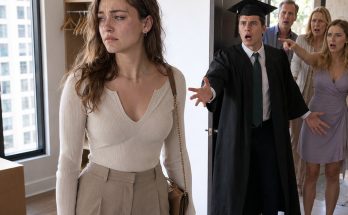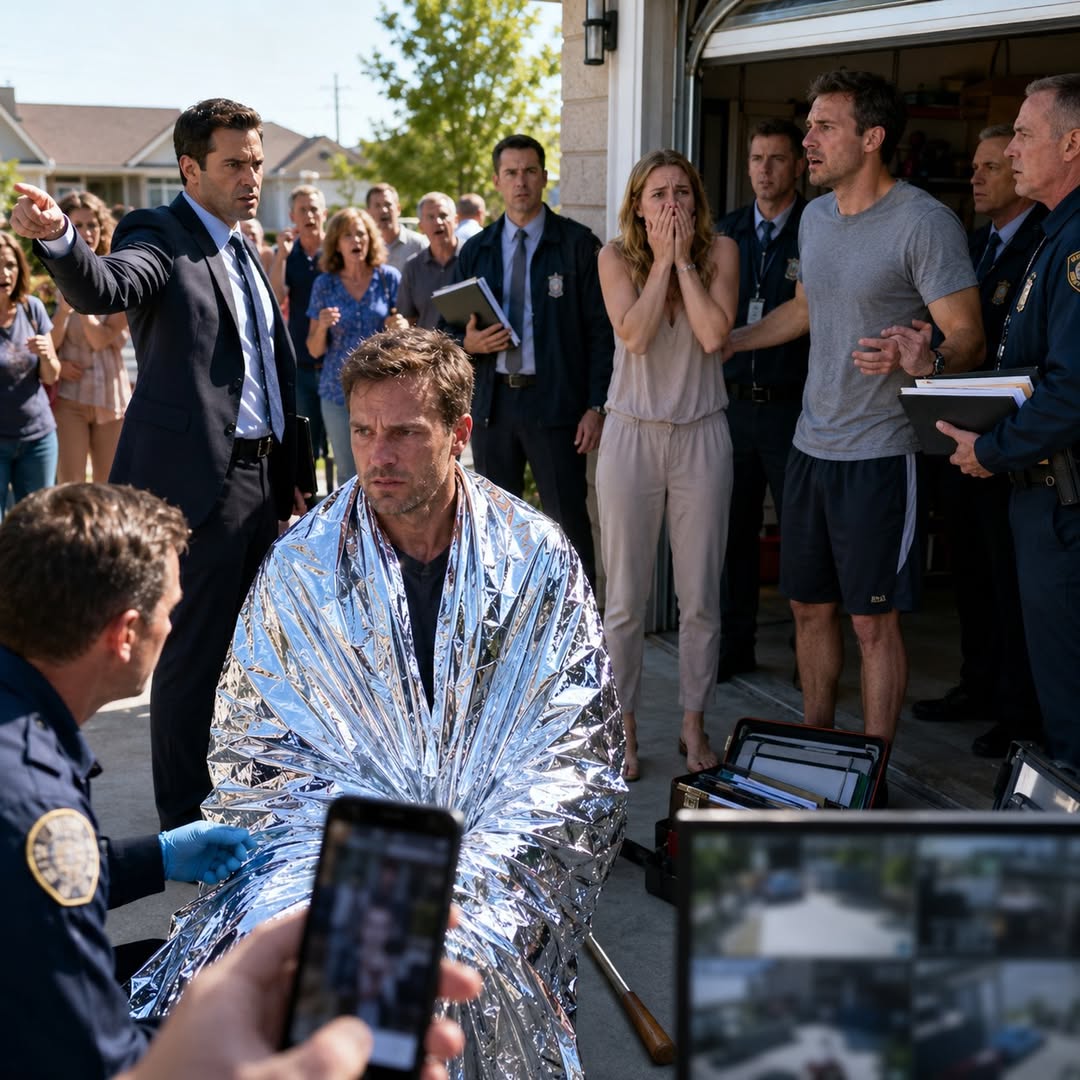
When I Came Home Early, My Wife’s Boyfriend Attacked Me With A Baseball Bat Twenty-Three Times. They Left Me Bleeding In The Garage. My Wife Filmed It, Laughing. I Crawled To My Phone And Called My Cousin, Who Was An Ex-Mafia Boss, And Whispered, “Cousin, Make Them Vanish.” What He Did To Them Was Worse Than Hell.
Part 1
I used to believe a man could pour enough sweat into a life to make it solid.
Concrete, steel, payroll, mortgages, wedding vows. I believed if you showed up early, stayed late, paid your bills, kissed your wife before work, and never let a promise sit unfinished, life would respect you back.
That was before the silver Mustang in my driveway.
My name is Royce Monroe. I was thirty-four years old, owner of Monroe Contracting, three active job sites across Dallas, forty-seven men on payroll, and enough debt, equipment, permits, and sleepless nights to make most people quit before breakfast.
I liked work that left proof behind. A wall where there had been air. A foundation where there had been dirt. A paycheck in a man’s hand on Friday. My father had built houses before he built debt, and when he died, he left me more lessons than money. I started with his old tools, one truck that coughed black smoke, and a company name nobody trusted anymore.
By the time I turned thirty-four, people trusted it again.
My wife, Marjorie, used to be proud of that.
Back in high school, she would sit on the tailgate of my truck while I changed oil in somebody’s driveway, kicking her white sneakers and telling me I was going to build us a house one day. She had strawberry lip gloss, big dreams, and a laugh that made me think I could survive anything.
Six years into marriage, that laugh had changed.
“You’re always covered in dust,” she said that morning, standing in our kitchen with a mug of coffee she hadn’t made herself. The house smelled like vanilla candles and the lemon cleaner our housekeeper used on Thursdays. “Maybe you should hire someone else to do the dirty part.”
I looked down at my jeans. There was drywall dust at one knee and a thin line of dried mud above my boot.
“Dirty part pays for clean countertops,” I said, trying to smile.
She didn’t smile back.
Her silk robe brushed the floor as she turned away. It was the pearl-colored one I bought her for our anniversary, the kind of expensive fabric that made me hesitate before touching it with calloused fingers.
“I’m serious, Royce. You own the company. Act like it.”
“I’ve got a site inspection at Henderson. Then Riverside. I’ll be home late.”
“You always are.”
I stepped closer and kissed her cheek. She smelled like jasmine perfume and some lotion from a store where one candle cost more than a tank of diesel.
She let me kiss her, but her face stayed turned toward the window.
I should have noticed the coldness then. Not annoyance. Not loneliness. Coldness. There’s a difference.
At the time, I told myself marriage had seasons. I told myself she was bored, maybe lonely, maybe tired of eating dinner alone while I chased permits and concrete deliveries. I told myself I’d fix it after Riverside closed.
That was the lie men like me tell ourselves. One more project. One more deal. One more sacrifice, then everything will calm down.
That Friday, everything did calm down.
Too much.
The Henderson project finished three hours early. Final walkthrough passed without a single correction, which never happened. The inspector even slapped me on the shoulder and said, “Monroe, you keep this up, you’ll make the rest of these contractors look like clowns.”
I should have gone back to the office. There were invoices stacked on my desk, two subcontractors waiting on callbacks, and one concrete supplier who needed yelling at.
Instead, I stopped by a florist.
Marjorie loved white roses. At least, she used to. I bought two dozen, then called that Italian place in Highland Park where she liked the lobster ravioli. They had a table at seven-thirty.
I remember feeling stupidly hopeful as I drove home. The kind of hope that makes a grown man rehearse casual lines in his truck.
Thought we could use a night out.
You looked tired this morning.
I miss you.
The sun was low and hot over Dallas, turning every windshield into a flash of fire. My truck rattled over the curve into our neighborhood, past perfect lawns and brick houses with security cameras tucked under their gutters.
Then I saw the Mustang.
Silver. Clean. Waxed so bright it reflected the garage door. Parked crooked in my spot like whoever owned it had never learned respect for another man’s driveway.
My first thought was not affair.
It was salesman.
Then repair guy.
Then one of Marjorie’s friends with a new car.
But the roses suddenly felt heavy in my hand.
I killed the engine before opening the garage door all the way. The motor groaned overhead, louder than usual, but the music inside swallowed it. Bass thumped through the kitchen wall. Not Marjorie’s music. Something slick and clubby, all pulse and no soul.
I sat there with my hand on the steering wheel.
A contractor survives by listening to the little warnings. A hairline crack in concrete. A worker who won’t look you in the eye. A number on a bid that feels too clean.
That afternoon, the warning was a car I didn’t know and music my wife hated.
I stepped out quietly. The roses brushed against my thigh. Their paper crinkled like a secret trying to speak.
Through the small window in the garage door, I could see part of the living room.
Marjorie stood near the couch in her anniversary robe.
A man stood behind her.
He was younger than me, maybe late twenties, broad-shouldered, gym-built in the polished way that comes from mirrors and protein shakes, not lumber and ladders. He had one hand on her waist, the other sliding along her arm. He leaned down and said something against her ear.
She laughed.
Not politely.
Not nervously.
She laughed the way she used to laugh with me when we were nineteen and broke and certain the world owed us a future.
The roses slipped from my hand.
For a second, I couldn’t hear the music anymore. I could only hear my own breathing, rough and confused, like I’d been dropped into somebody else’s nightmare.
Then the man kissed her neck.
I opened the door.
“What the hell is this?”
Marjorie jumped like she’d been slapped by the sound of my voice. Her face moved through shock, fear, then irritation so fast I almost missed the worst part.
Irritation.
Like I had walked into a room I didn’t own.
The man turned slowly. He didn’t move away from her. Didn’t apologize. Didn’t even pretend shame belonged in the room.
He smiled.
“Royce,” Marjorie said. “You’re home early.”
“Clearly.”
My eyes stayed on him. “Who are you?”
He stretched his neck once, like he was warming up before a workout. “Dante Pham.”
The name meant nothing to me. The smirk did.
“Get out of my house,” I said.
Dante glanced around the living room, then back at me. “Your house? That’s funny.”
Marjorie’s face tightened. “Dante.”
“No, baby, let him hear it.” He took one step toward me. His cologne hit first, sharp and expensive, cutting through the vanilla candles. “She told me plenty. Half of everything is hers anyway, right?”
My stomach dropped, not from jealousy anymore.
From memory.
Marjorie asking about company accounts three weeks earlier.
Marjorie wondering why her name wasn’t on more paperwork.
Marjorie joking about life insurance while scrolling on her tablet in bed.
Small things. Little cracks in the foundation.
“How long?” I asked.
Marjorie looked away.
Dante didn’t.
“Eight months.”
Eight months.
Something inside me shifted, not breaking yet, just moving out of place.
“She said she was bored,” he added.
The room got smaller. The lights got brighter. I could see every stupid detail: a lipstick print on a wine glass, his jacket over my chair, Marjorie’s wedding ring still on her finger.
I stepped forward.
Not to hit her. I had never hit a woman in my life.
But Dante lifted his chin like he wanted it. Like he had been waiting for me to become the angry husband on camera.
And that was when Marjorie said, very calmly, “Dante, get the bat.”
At first, I thought I had misheard her.
Then he walked to the hall closet.
My old aluminum bat was there. A Louisville Slugger from high school, dented near the barrel, kept mostly because my father had once watched me hit a double with it and shouted himself hoarse from the bleachers.
Dante pulled it out like it belonged to him.
I looked at Marjorie. “What are you doing?”
She lifted her phone.
The camera light glowed red.
“Insurance,” she said softly.
And for the first time in twelve years, I saw my wife clearly.
### Part 2
The first swing hit my shoulder before I could raise my arm.
Pain burst white behind my eyes. Not red like people say. White. Pure and blinding, like a welding flash.
I stumbled into the kitchen island. A ceramic bowl shattered against the floor, scattering lemons across the tile. One rolled under the refrigerator. I remember that lemon more clearly than I remember the second swing.
The second swing caught my forearm.
Something cracked.
I heard it before I felt it, a dry snap like a board breaking under too much weight.
Marjorie gasped, but not the way a wife gasps when her husband is hurt. She gasped like the scene had become more real than expected.
“Keep going,” she said.
Dante’s face changed while he swung. The smirk disappeared, replaced by a wild concentration. He wasn’t just attacking me. He was performing. For the phone. For her. For whatever story they had written before I came home early and ruined their timing.
I tried to get to him once. I caught his shirt with my good hand and drove him backward into the dining table. Chairs screeched. A vase tipped and spilled water across the floor.
For half a second, I saw fear in his eyes.
Then Marjorie screamed, “Royce attacked him! Dante, defend yourself!”
That was for the camera.
Even through the pain, I understood.
They wanted me violent. They wanted a story. Angry husband. Lover forced to protect himself. Tragic ending. Widow with mascara tears and trembling hands.
The third swing hit my ribs.
The air left me.
I went down on one knee.
The house I had paid for blurred around me. Recessed lights. Imported rug. Framed wedding photo above the mantel. In the photo, Marjorie wore white lace and rested her hand on my chest like I was her safe place.
Now she stood five feet away filming me bleed.
“Not on the rug,” she snapped suddenly.
Dante paused, breathing hard. “What?”
“Drag him to the garage.”
That was the moment I stopped believing any piece of the woman I loved was still in the room.
They each grabbed me under an arm. My left side screamed so sharply I nearly blacked out. My boots scraped across hardwood, then tile, then the concrete step down into the garage.
The air changed. Hotter. Oil and sawdust. Rubber from my truck tires. The familiar smell of work, of every Saturday I had spent fixing tools and sharpening blades.
They dropped me beside my truck.
My cheek hit concrete.
The garage light hummed overhead.
“Make it look real,” Marjorie said. “But don’t kill him yet.”
Yet.
That word dragged me back from the edge.
I forced my eyes open.
Dante stood over me, chest heaving, bat loose in one hand. There was a small cut on his cheek from where I’d shoved him into the table. He touched it, looked at the blood on his finger, and smiled again.
“You really should’ve stayed at work, man.”
I wanted to answer. I wanted to say something sharp and fearless.
All that came out was a wet cough.
Marjorie crouched near me, phone still pointed. Her robe had a red spot near the hem. My blood. She noticed it and frowned like I had ruined the fabric.
“You were always so predictable,” she said. “Work, home, sleep. Work, home, sleep. Do you know what it’s like being married to a machine?”
I stared at her.
She wanted me to argue. To beg. To ask why. Maybe she needed me to give her one last reason to feel justified.
I didn’t give it to her.
That angered her more than screaming would have.
“Hit him again,” she said.
Dante did.
After the tenth swing, counting became strange.
Numbers floated away from meaning. There was only impact, breath, darkness, light, the echo of metal against bone, Dante grunting, Marjorie whispering directions.
“Not his face too much.”
“Careful, we need him conscious.”
“Turn him. The camera can’t see.”
I learned something about betrayal on that floor.
It isn’t loud at first.
It’s quiet.
It’s the person who knows exactly where you keep your keys, your medicine, your passwords, your emergency cash, your old baseball bat. It’s the person who has watched you sleep deciding the best way to make your death believable.
At some point, they left me.
Dante dropped the bat with a clang and leaned against my truck.
“I need a minute.”
“You need to wash,” Marjorie said. “There’s blood on your shirt.”
“There’s blood everywhere.”
“It’s fine. We’ll clean after.”
They were talking like I was already gone.
“Then what?” Dante asked.
Marjorie’s voice lowered. “Then he comes at you with the gun. You struggle. It goes off.”
My eyes moved toward my tool cabinet.
My gun safe was in my office, upstairs.
She knew the code.
Of course she did.
“Baby,” Dante said, suddenly uncertain, “this is getting messy.”
“It was always going to be messy.” Her voice sharpened. “You want the money or not?”
Silence.
Then Dante laughed under his breath.
“Yeah. I want the money.”
Their footsteps moved away. The door to the house opened, then shut.
Water ran somewhere upstairs.
I lay still.
For maybe ten seconds, maybe a full minute, I let myself die in pieces. Husband. Fool. Provider. Man who thought love could be repaired with dinner reservations and white roses.
Then my father’s voice rose from some old place inside me.
Pain is temporary. Quit is forever.
I moved my right hand.
Nothing happened.
I tried again.
My fingers scraped concrete.
Pain surged so hard I bit my tongue. Blood filled my mouth, copper and hot.
My phone.
It had fallen from my pocket during the beating. I remembered hearing it skid. I turned my head by inches, vision swimming, and saw a black rectangle beneath the workbench.
Five feet away.
Five feet had never looked so far.
I dragged myself toward it.
My left arm was useless. My ribs stabbed with every breath. The concrete was gritty beneath my cheek, warm from the day’s heat. I moved by planting my right elbow, pulling, stopping before I passed out, then pulling again.
A trail followed me.
I didn’t look back at it.
The phone screen was cracked but alive. My thumb left red streaks as I tapped. Once. Twice. Wrong contact. Wrong screen. I nearly dropped it.
Then I found the number.
It wasn’t saved under a name.
Just three letters.
O.L.
Octavio Lester.
My cousin.
To most people in Dallas, Octavio was a ghost story with a mugshot. To me, he was the fourteen-year-old boy who had slipped lunch money into my backpack after my parents died. The man who disappeared for twelve years after federal investigations, family wars, and rumors so ugly people lowered their voices when saying his name.
Once a year, he texted me from a new number.
Still breathing, primo?
Two weeks ago, I had answered.
Still swinging hammers.
Now I pressed call.
It rang once.
Twice.
Three times.
A click.
“Primo?” His voice was cautious, low. “That you?”
I swallowed blood. “Cousin.”
Silence sharpened.
“Royce?”
“My wife,” I whispered. “Her boyfriend. Bat. Twenty-three times.”
He did not ask if I was joking.
That was Octavio.
“Where are you?”
“Home.”
“How bad?”
“They’re going to shoot me.”
For three seconds, the line was dead quiet.
Then his voice turned into ice.
“You still breathing?”
“Barely.”
“Then keep doing it. I’m coming.”
“They’ll be back soon.”
“Hide. Fight. Crawl through fire if you have to. You hear me?”
I heard footsteps above me.
My heart kicked once, hard and terrified.
“They’re coming,” I said.
“Royce,” Octavio said, “listen to me. Don’t die before I get there.”
The line went dead.
The shower shut off upstairs.
I looked at the workbench.
Hammer. Wrench. Box cutter. Nail gun.
My fingers closed around the nail gun just as the kitchen door opened.
And for the first time since the bat came out, I didn’t feel like prey.
### Part 3
Dante came down first.
I could tell by the rhythm of his footsteps. Heavy, careless, confident. Marjorie followed, lighter steps, pausing near the door like she didn’t want to get too close to what she had helped make.
“Royce?” Dante called in a singsong voice. “Still with us?”
I held my breath behind the truck.
The garage smelled like blood now. Mine. Warm metal and concrete dust and the faint sweetness from crushed roses near the kitchen step. The bouquet had been dragged with me somehow, white petals scattered across the threshold like pieces of a joke.
“He was right there,” Marjorie said.
Dante cursed.
A cabinet opened. Something clinked.
“He moved.”
“He can’t have gone far.”
Her voice trembled on far, and I almost smiled. Not because anything was funny. Because fear had finally entered her world, and it looked good there.
I shifted the nail gun in my right hand.
It was meant for framing lumber, not saving my life. The safety tip was stiff. My fingers barely worked. I had one chance to make it matter.
Dante stepped around the truck.
He had my revolver in his hand.
Seeing it there, loose in his grip, made my stomach twist. That gun had belonged to my father. He kept it locked, cleaned, respected. Dante held it sideways like an idiot in a movie.
“Found you,” he said.
I rolled out and fired.
The nail gun barked.
Dante screamed and dropped hard against the side of the truck, clutching his thigh.
Marjorie shrieked.
I fired again.
This one hit high, near his shoulder, tearing through fabric and pride more than flesh. He staggered backward, the revolver clattering across the concrete.
“You—” he gasped.
I didn’t hear the rest. I was already trying to pull myself up against the bumper.
My vision narrowed. Black crowded the edges. Every breath scraped. But I had bought seconds, and seconds were currency now.
“Pick up the gun!” Marjorie screamed.
Dante was curled on the floor, cursing, both hands pressed to his leg.
“You pick it up!”
She looked at him, then at me.
Something ugly hardened in her face.
She grabbed the revolver.
I dove behind the truck as the first shot cracked through the garage.
The sound was enormous inside that closed space. My ears rang. A bullet sparked off a metal shelf and buried itself somewhere in the wall.
She fired again.
Wild.
Then again.
I counted because counting was better than panic.
Three.
My father’s revolver held six.
“Royce!” she screamed. “Stop making this worse!”
That almost made me laugh.
I pressed my back to the truck tire, nail gun across my lap, blood soaking my shirt.
“Worse?” I called, my voice broken. “You tried to murder me.”
“You ruined everything!” she shouted.
There it was.
Not I’m sorry.
Not please.
You ruined everything.
Dante groaned. “Marj, we gotta go.”
“No. No, if we leave now, it’s over.”
“It is over!”
“Shut up!”
Their plan was cracking. I could hear it in the space between them. The romance had lasted through hotels, lies, fantasies, and whispered plans over expensive drinks. It was not built for blood on concrete and sirens that might arrive any second.
Except no sirens were coming.
Not yet.
Only Octavio.
I thought of him driving through Dallas traffic with that calm face of his, the one that never gave away anger until it was too late. I hadn’t seen him in years, not in person. A burner phone call here, a coded text there, a birthday card once with no return address and five hundred dollars tucked inside.
When we were kids, he was the dangerous one and I was the quiet one.
Life had a way of correcting labels.
Marjorie fired a fourth shot.
The bullet punched through the truck’s side panel. Hot metal grazed my ear. I flinched and hit my ribs against the tire, nearly blacking out.
Two left.
“Come out,” she said, breathing hard. “Royce, come out and we can talk.”
I closed my eyes.
I knew that voice.
It was the voice she used with customer service when she wanted a fee waived. The voice she used with me when she wanted a new car, a trip, another chance after overspending. Sweetness stretched over steel.
“You don’t want to do this,” she said.
“You already did.”
Silence.
Then Dante whispered something I couldn’t hear.
Marjorie answered, “He called someone.”
My blood chilled.
“How?” Dante asked.
“His phone’s gone.”
I glanced toward the workbench.
The phone lay there, screen dark, smeared red.
They saw it too.
Dante pushed himself upright, limping badly. “Who did you call, Royce?”
I said nothing.
Marjorie moved closer to the truck. I could see the hem of her robe. Bare feet. Red-painted toenails. One foot stepped into a small puddle of my blood, and she recoiled with disgust.
That disgust saved me.
While she looked down, I reached under the truck and fired blind.
The nail struck the concrete near her ankle and ricocheted.
She screamed and stumbled backward. The revolver went off again, punching a hole through the ceiling.
Five.
One left.
Then I heard tires outside.
Not the smooth roll of a neighbor’s SUV.
Fast. Gravel spit against the curb. A door slammed. Then another.
Marjorie froze.
Dante looked toward the garage door.
“Police?” she whispered.
The garage door exploded upward with a metallic shriek as someone yanked the emergency release from outside.
Light flooded in.
Octavio Lester stood in the opening.
He was not tall. Not huge. He wore a dark jacket, dark jeans, and the expression of a man who had already decided how the room would end. Behind him stood Mike Chavez, six-foot-four, wide as a refrigerator, with hands like cinder blocks.
Marjorie swung the revolver toward them.
Octavio moved before she finished turning.
One moment he was ten feet away. The next, his hand closed around her wrist. He twisted, not dramatically, not wildly, just enough.
She cried out.
The revolver hit the floor.
Mike crossed the garage and caught Dante by the back of his neck. Dante tried to swing. Mike absorbed it like weather and drove him face-first against the side of my truck.
The fight was over in four seconds.
Octavio’s eyes found me behind the tire.
For the first time, his face changed.
“Jesus, Royce.”
“I stayed breathing,” I said.
His jaw tightened.
“That you did, primo.”
Marjorie started crying then. Real tears, maybe. Or the closest thing she had available.
“Octavio, please. This isn’t what it looks like.”
He looked at the bat. The gun. My phone. The blood trail across the garage. Then he looked at her.
“Funny,” he said. “It looks exactly like what it is.”
Mike zip-tied Dante’s wrists, then Marjorie’s. Dante cursed until Mike leaned close and whispered something I couldn’t hear. After that, Dante stopped cursing.
Octavio knelt beside me.
His hands were gentle when he checked my pulse, my ribs, my arm. That almost broke me more than the pain.
“You need a hospital.”
“No,” I said.
“Royce.”
“Not yet.”
His eyes searched mine.
I knew what he saw there because I could feel it.
The old Royce would have begged for help, trusted the system, believed truth was enough. The old Royce was still somewhere on the garage floor near the bat, leaking out into the concrete.
This version of me wanted to know how deep the betrayal went.
And I wanted Marjorie to say it with her own mouth.
Octavio looked at Mike. “Medical kit. Then we talk.”
Marjorie lifted her head. Her mascara had run black down her cheeks.
“Talk?” she whispered.
Octavio smiled without warmth.
“Yes,” he said. “You and I are going to have a very honest conversation.”
### Part 4
Octavio did not turn my house into a horror show.
That mattered to me later.
In the moment, pain and rage blurred everything, and some dark part of me wanted every bad thing possible to happen at once. But Octavio was not reckless. He was organized. Precise. Terrifying because he didn’t need to shout.
Mike brought in a black medical bag from the SUV. Inside were bandages, splints, antiseptic, scissors, things I recognized from job-site emergency kits, and things I didn’t ask about.
Octavio cut my shirt open.
The fabric peeled away from my skin.
I clenched my teeth so hard my jaw hurt.
Marjorie sat zip-tied near the wall, watching. Dante was beside her, breathing through his mouth, eyes darting from Mike to the open garage door as if escape might stroll in and offer him a ride.
“Royce,” Marjorie said softly, “please listen to me.”
Octavio didn’t look up. “Speak again before I ask you to, and you’ll regret interrupting family time.”
She shut her mouth.
I should have felt satisfaction.
I felt cold.
Mike splinted my arm. I nearly passed out when he moved it, but he worked fast and knew what he was doing. Octavio pressed gauze to a cut along my scalp, then wrapped my ribs tight enough that breathing became smaller but steadier.
“You’re going to a real doctor,” he said under his breath.
“Later.”
“Soon.”
“After.”
His eyes narrowed. “After what?”
I looked past him at Marjorie.
“After I understand.”
Something flickered in his face. Not approval exactly. Recognition.
He stood.
“Fine.”
We moved to the basement because the garage door was open and the neighbors in our subdivision were the kind who noticed trash cans left out too long. I had built that basement workshop myself. Concrete walls. Sound-dampening panels because I used power tools late at night. Rows of labeled bins. Workbench. Old radio. A single small window facing the side yard.
I had loved that room.
Now Mike carried me down the stairs and set me in a rolling shop chair near the workbench. Every bounce sent fire through my ribs.
Marjorie and Dante were placed on the floor across from me.
Not beaten. Not tortured. Just bound, watched, cornered.
That was enough to strip the performance from them.
Dante was the first to crack.
“Look, man,” he said to Octavio, “this got out of hand.”
Octavio pulled another chair around and sat backward on it, arms folded over the top.
“Out of hand,” he repeated.
“Yeah. We didn’t mean—”
“You brought a bat.”
Dante swallowed.
“You brought a gun,” Octavio continued. “You staged a camera. You rehearsed a self-defense story. That isn’t out of hand. That’s a plan.”
Marjorie began crying again.
“Royce, I was scared.”
I looked at her.
Of everything she could have said, that insulted me the most.
“Scared of what?”
She blinked.
“Of you.”
For half a second, I almost admired the nerve.
Octavio tilted his head. “Try again.”
She looked at him, then at me. Her eyes were wide, wet, searching for the version of me she could still manipulate.
“I was unhappy,” she whispered. “You were never home. I felt invisible.”
“You could’ve divorced me,” I said.
Her mouth trembled.
“I would’ve given you the house,” I added. “Money. Whatever. You knew that.”
Dante looked at her sharply.
That small glance told me something.
He hadn’t known.
Octavio saw it too.
“Interesting,” he said. “Dante thought murder was the profitable route because someone told him divorce wouldn’t be.”
Marjorie stared at the floor.
“Eyes up,” Octavio said.
She raised them.
“When did it start?” I asked.
“At the gym,” she said.
“When?”
She hesitated.
Octavio leaned back and waited.
“Eight months ago.”
The same number Dante had thrown at me like a trophy.
“Who brought up my life insurance?”
Her lips parted.
Dante snapped, “Don’t answer that.”
Mike took one step forward.
Dante went quiet.
Marjorie whispered, “I did.”
The basement seemed to tilt.
My body was already broken, but this was a different kind of injury. Cleaner. Deeper.
“You looked for it?” I asked.
“In your office.”
“When?”
“Three months ago.”
The night she had brought me coffee while I worked late at my desk.
I remembered that clearly. She had stood behind me, rubbing my shoulders, asking about passwords because she “wanted to understand our finances better.” I had felt grateful. Hopeful. Like maybe she wanted back into our life.
All she wanted was a map.
Octavio took out his phone and started recording.
“Start from the beginning,” he said.
Marjorie shook her head. “No.”
“Then I’ll call the police, and Royce’s lawyers will bury you alive in court.”
That got her attention.
Not prison.
Not guilt.
Lawyers. Money.
Octavio smiled slightly, as if her soul had just introduced itself.
“You’re not dealing with a crying husband anymore,” he said. “You’re dealing with evidence.”
Dante laughed once, bitter and panicked. “Evidence? You people broke into a house and tied us up.”
Octavio looked around. “This is Royce’s house.”
“You know what I mean.”
“I know exactly what you mean. You’re hoping the rules protect you now that your plan failed.”
Dante said nothing.
Octavio’s voice lowered. “Rules are wonderful things. But you should have thought about them before you picked up that bat.”
For the next hour, they talked.
Not because they wanted to.
Because Octavio understood pressure the way I understood load-bearing walls. Push too hard and things collapse. Push correctly and they reveal where they are weak.
Dante blamed Marjorie.
Marjorie blamed Dante.
Between their accusations, the truth came out.
They had met at her gym. He had flattered her, touched her arm, told her she deserved excitement. She had complained about me, first vaguely, then cruelly. He had joked about rich widows. She had not treated it like a joke.
They had used hotel rooms paid from a hidden account.
A hidden account funded partly by money skimmed from my business.
That detail made my hands shake.
Not because of the amount. Forty thousand dollars would not sink Monroe Contracting.
Because my men had worked for that money.
Men with mortgages. Kids. Bad knees. Lunch pails. Men who trusted me to keep the company clean.
She had stolen from all of us.
Octavio looked at me when that came out.
I nodded once.
Keep going.
So he did.
“Whose idea was today?” he asked.
Dante pointed at Marjorie. “Hers.”
Marjorie pointed at Dante. “He said he could handle Royce.”
“Handle,” I said.
Dante flinched at my voice.
“You smiled,” I told him. “When you hit me.”
He looked away.
Marjorie whispered, “Royce, please.”
I laughed then.
It hurt so much I almost cried, but I laughed anyway.
“Please what? Please forgive you? Please understand? Please let you keep the robe?”
Her face crumpled.
Good.
Octavio stopped the recording and saved it. Then he sent it somewhere. Maybe to himself. Maybe to ten places. I didn’t ask.
“What happens now?” Marjorie asked.
Octavio stood.
“Now Royce goes upstairs. A doctor comes. You two remain here. Tomorrow, we decide how much of your future is spent in prison and how much is spent wishing you had chosen prison sooner.”
Dante paled.
Marjorie looked at me with sudden desperation.
“Royce,” she said, “you loved me.”
That sentence found the last soft thing in me.
I looked at her for a long time.
“Yes,” I said. “I did.”
Hope flashed across her face.
Then I finished.
“That man is dead.”
### Part 5
The doctor arrived at midnight in a gray sedan with no stickers, no vanity plates, and no curiosity.
His name was Russell Duncan. He was thin, sixty-something, with silver hair combed neatly back and a leather bag that looked older than he was. He didn’t ask why my garage looked like a crime scene. He didn’t ask why Mike answered the door. He didn’t ask why Octavio paid him in cash before he even opened his bag.
That told me everything I needed to know.
He examined me in my bedroom while Octavio stood by the window and Mike stayed downstairs.
“Three broken ribs,” Russell said. “Left forearm fractured in two places. Concussion. Scalp laceration. Deep bruising across the back and shoulder. You should be in a hospital.”
“Can you keep me out of one?”
He sighed like a man who had heard too many bad questions from stubborn men.
“I can keep you alive. I can set the arm well enough until proper imaging confirms it. I can stitch what needs stitching. I can make you comfortable. But you are not invincible, Mr. Monroe.”
“Never claimed I was.”
Russell glanced at Octavio.
Octavio gave the smallest nod.
The doctor went to work.
There are kinds of pain that make you bargain with God, and there are kinds that leave no room for bargaining. Setting that arm belonged to the second kind. I bit down on a towel and saw sparks behind my eyes. Sweat ran cold down my neck. Somewhere below me, beneath the floorboards, Marjorie shouted something I couldn’t make out.
The sound did not move me.
That scared me.
Not because I wanted to forgive her. I didn’t.
Because I had imagined for years that love was an object inside the chest. A thing that could bruise, crack, ache.
But what I felt for Marjorie wasn’t injured.
It was gone.
Like a room after demolition.
Russell stitched my scalp, wrapped my ribs, stabilized the arm, and gave me strict instructions I mostly ignored as soon as he said them.
“You need rest.”
“I need answers.”
“You need both.”
Octavio walked him downstairs afterward. I lay on my bed and stared at the ceiling fan.
That fan had annoyed Marjorie. She said it looked cheap. I had installed it myself the first week we moved in because the bedroom got too warm in August. She wanted some chandelier thing that cost twelve hundred dollars and moved no air.
I had forgotten that fight.
Now it returned with others.
Not big explosions. Small humiliations.
Her wiping my kiss from her cheek before a charity dinner.
Her calling my truck “that dirty thing” in front of neighbors.
Her telling a friend, “Royce is good with his hands,” in a tone that made it sound like a defect.
At the time, I laughed.
A man laughs at small cuts when he believes the hand holding the knife still loves him.
Octavio came back twenty minutes later.
He had changed his shirt.
That detail sat between us.
“Don’t tell me,” I said.
“I wasn’t going to.”
He pulled a chair beside the bed and sat. The bedside lamp cast sharp shadows across his face. He looked older than I remembered, but not softer.
“You’re healing,” he said.
“Physically.”
He nodded.
For a while, neither of us spoke.
Outside, the neighborhood was quiet. Sprinklers clicked somewhere across the street. A dog barked twice, then stopped. The world had the nerve to continue.
Finally, I asked, “What did they say while I was up here?”
“More truth. More lies. Same pattern.”
“Tell me.”
He leaned back. “Dante has done versions of this before.”
My eyes shifted to him.
“With married women?”
“Rich lonely women. He gets close. They buy him gifts. Sometimes he convinces them to drain accounts. Usually he disappears before husbands get involved.”
“Usually.”
“Marjorie escalated.”
I let that settle.
Part of me wanted Dante to be the architect of it all. The predator. The snake. The reason my wife became unrecognizable.
But the truth was uglier.
She had not been hypnotized. She had chosen.
“What did she say about me?” I asked.
Octavio’s mouth tightened.
“Say it.”
“She said you bored her.”
I stared at the ceiling fan until its blades blurred.
“She said,” he continued carefully, “that you cared more about concrete and payroll than her. That you came home smelling like dust. That she married potential and got a foreman with a bank account.”
There it was.
I waited for pain.
Nothing.
Only a strange, calm clicking into place.
A final beam sliding into its bracket.
“She spent the money though,” I said.
Octavio almost smiled. “That part didn’t bore her.”
I closed my eyes.
Downstairs, something thumped. A muffled voice. Mike’s low reply.
“What are you going to do with them?” I asked.
“That depends on you.”
I opened my eyes. “No.”
“No what?”
“No disappearing them. No basement justice. No bodies in rivers. I called you because I was dying. I wanted rage. I still do. But I also built something clean, Octavio. I won’t let them turn me into them.”
He studied me for a long moment.
Then he laughed once under his breath.
“There he is.”
“Who?”
“My cousin.”
I looked away.
He leaned forward. “Listen to me. There are legal ways to destroy people. Slower, yes. Less satisfying in the first five minutes. But thorough.”
“You have the video?”
“Her phone. The attack. Their confession. The gun. The bat. Your blood. A neighbor’s security camera caught Dante arriving and you coming home.”
“Neighbor?”
“Janine Peterson. Three doors down. She called me back after I rang her. Good woman. Very angry after she saw enough.”
I pictured Janine, a retired school principal who always waved from her garden. She had once brought Marjorie banana bread after a storm knocked our power out.
“Does she know?”
“She knows you survived. She knows enough to help.”
I breathed carefully.
Every inhale hurt.
“Then we call the police.”
Octavio’s face did not change, but something in his eyes warmed.
“Your wife will say we forced the confession.”
“Let her. We have the original video.”
“She’ll say Dante attacked me and you threatened them.”
“Let her.”
“She’ll cry.”
“I know.”
“She’ll look smaller than she is.”
My jaw tightened.
“I know.”
Octavio stood and walked to the window. For a moment, he looked like the boy who had once stood outside my parents’ funeral in an oversized black suit, trying not to cry because he thought crying made him less useful.
“You sure?” he asked.
I thought of the bat. The robe. The lemon under the refrigerator. The way Marjorie’s face had twisted when my blood touched her foot.
“I’m sure.”
He nodded.
“Then we do it right.”
At 2:13 a.m., Octavio called a lawyer before he called the police.
Not just any lawyer.
Elena Ward, a criminal defense attorney with a voice like polished stone and a reputation for making prosecutors sweat. She arrived thirty-five minutes later wearing jeans, boots, and a blazer thrown over a T-shirt. Her hair was pulled into a tight knot, and she carried two phones.
She listened.
She watched the videos.
She looked at me once, long enough to understand I was not a man asking permission.
Then she said, “Here’s how we keep them from stealing the story.”
At 3:26 a.m., the police arrived.
Red and blue lights washed across my bedroom wall.
From downstairs, I heard Marjorie begin to sob.
Not from guilt.
From calculation.
Elena looked at me and said, “Do not speak unless I tell you to.”
Then she opened the door.
### Part 6
Police lights make everything look guilty.
Even clean walls. Even trimmed hedges. Even a man lying in his own bed with his arm in a cast and blood dried at his hairline.
Two officers entered first, hands near their weapons until Elena calmly introduced herself and explained there were two restrained suspects downstairs, one severely injured homeowner upstairs, and multiple videos preserving the incident.
That sentence changed the air.
Paramedics came next. They wanted to transport me. Elena insisted I comply. Octavio said nothing, which meant he agreed. I hated the idea of leaving my house before I knew Marjorie was in handcuffs, but I had already won the first war by staying alive.
A man has to recognize the next battlefield.
They loaded me onto a stretcher at 4:02 a.m.
As they carried me through the living room, I saw the white roses crushed near the garage step. One bloom had turned pink at the edge.
Then I saw Marjorie.
She sat on the couch with her wrists cuffed in front of her, wrapped in a blanket an officer must have given her. She looked small. Pale. Trembling. Exactly the way Octavio said she would.
Dante sat in a chair across from her, also cuffed, face swollen, leg bandaged by paramedics. He would not look at me.
Marjorie did.
Her eyes filled instantly.
“Royce,” she whispered.
Elena walked beside my stretcher. “Do not answer.”
I didn’t.
That was harder than I expected.
Not because I wanted to comfort her. Because for twelve years, when Marjorie said my name in that broken voice, my body reacted before my brain. Move closer. Fix it. Pay for it. Apologize even when you don’t understand what you did wrong.
This time I stayed still.
Her tears fell.
I watched them without moving.
One officer asked her a question. She turned away from me and started speaking fast.
Too fast.
I caught pieces.
“He attacked Dante.”
“I was scared.”
“It happened so quickly.”
“My husband has a temper.”
Elena leaned close to my ear. “Let her talk.”
So I did.
The paramedics rolled me out into the dawn. The sky was gray-blue, the neighborhood waking in pieces. A sprinkler ticked. A garage door opened down the street, then stopped halfway. Someone was watching.
Janine Peterson stood on her porch in a robe, arms crossed.
When our eyes met, she lifted one hand.
Not a wave exactly.
A promise.
At the hospital, everything became bright lights, questions, machines, needles, X-rays, forms, more questions. Elena stayed. Octavio stayed until a detective asked him to leave the room, then he waited outside like a shadow with a pulse.
Doctors confirmed what Russell already knew and added more details I didn’t want. The broken ribs had narrowly missed worse damage. My forearm needed surgery. Concussion monitoring. Stitches redone. Bruising documented inch by inch with photographs.
Evidence, Elena reminded me.
Every mark was evidence.
By noon, Detective Harris entered.
He was mid-forties, tired eyes, coffee breath, wedding ring, cheap tie. The kind of cop who had seen too many people lie badly and too many lie well.
Elena sat beside my bed.
Detective Harris looked at me, not the file.
“Mr. Monroe, I’ve watched the video from your wife’s phone.”
My throat tightened.
“Okay.”
“I’ve also watched the neighbor’s driveway footage. We recovered the bat, firearm, shell casings, and your phone. Your wife and Mr. Pham have both given statements.”
Elena’s pen paused.
“And?” she asked.
The detective’s mouth flattened.
“And their statements do not match the evidence.”
For the first time since the garage, I breathed without feeling like the air itself was against me.
Harris continued. “Mrs. Monroe claims you attacked Mr. Pham without warning. But the video begins before any alleged attack. It shows her directing him to retrieve the bat.”
My eyes closed.
Hearing it from someone else made it real in a new way.
“She recorded it?” I asked.
“She recorded enough.”
Elena touched my wrist lightly. Careful.
Detective Harris noticed but didn’t push.
“Mr. Monroe, did you know about the affair before yesterday?”
“No.”
“Did you threaten either of them before the attack?”
“No.”
“Did you call Mr. Lester after the attack began?”
“Yes.”
“Why?”
I looked at him.
“Because I thought I was going to die.”
He wrote that down.
The interview took forty minutes. I told the truth, but not every truth. I told him Octavio arrived and restrained them. I told him Mike helped. I told him we waited for legal counsel. I did not dress it up. I did not pretend calm. I did not mention the dark things I had wanted in those first minutes, because wanting is not doing, and that difference mattered.
When Harris left, Elena exhaled through her nose.
“You did fine.”
“What happens now?”
“Charges. Attempted murder, aggravated assault, conspiracy, evidence issues, financial crimes once we open the business records. Dante may try to flip on her. She may try to flip on him. Good. Let them eat each other.”
I stared at the ceiling.
“Will she get bail?”
Elena’s expression hardened. “I’ll do everything possible to make sure she doesn’t.”
Three hours later, Octavio came in with coffee he wasn’t supposed to have and a paper bag from a diner.
“You look terrible,” he said.
“You always this comforting?”
“Only with people I like.”
He sat beside the bed.
For a while, we watched muted daytime television. Some home renovation show where a smiling couple argued about backsplash tile. I almost laughed at the absurdity of it.
Then Octavio said, “You made the better call.”
“Doesn’t feel better.”
“Better rarely does at first.”
I turned my head toward him. “Would you have done it my way?”
He smiled faintly. “No.”
“At least you’re honest.”
“I am with family.”
A nurse came in to check my IV and told Octavio visiting hours were limited. He gave her a look so polite and empty that she forgot to enforce the rule.
After she left, he leaned closer.
“There’s something else.”
I already knew from his tone that I wouldn’t like it.
“What?”
“Marjorie had an appointment with a financial planner next week. Not your usual guy. Someone Dante knew.”
“Why?”
“They were preparing for after.”
After.
Such a small word. A whole grave inside it.
“She was going to sell the company?” I asked.
“Pieces of it. Maybe all. Depends which document trail is real.”
My heart started pounding hard enough to set off the monitor.
Elena, who had returned silently, looked up from her phone.
“Royce,” she said.
“My men,” I said. “Their jobs.”
“We’ll protect the company.”
“She touched my company.”
Octavio’s eyes stayed on mine.
That was the first time he saw the thing in me that scared even him.
Not rage over the affair.
Not pain over the bat.
Something deeper.
Marjorie had not only tried to kill me.
She had reached for what I built, what my father’s ruined name had become, what forty-seven families depended on.
The marriage was dead.
The war was just beginning.
### Part 7
Surgery made time slippery.
I went under with white hospital lights above me and woke with my arm bolted back together, my mouth dry, and Elena arguing on the phone near the window.
“No,” she said. “My client will not sign anything routed through his wife’s attorney. Freeze the accounts. All marital transfers over ten thousand get flagged. Business accounts are separate. I don’t care what petition she files from holding.”
Holding.
The word warmed me better than the blanket.
Marjorie was in jail.
Dante too.
Not vanished. Not punished in some basement legend. Jailed. Booked. Photographed. Reduced from secret lovers to defendants in orange.
A practical satisfaction settled over me.
It wasn’t enough.
But it was a start.
The next week became a blur of pain management, legal meetings, police follow-ups, and business triage. My foreman, Calvin Briggs, came to the hospital on the second day wearing his work boots and a face like thunder.
Calvin was fifty-eight, Black, broad-chested, with a gray beard and the calm authority of a man who had forgotten more about construction than most people ever learned. He had worked for my father before working for me.
He stood beside my bed and stared at the cast, the bruises, the stitches.
“Boss,” he said finally, “tell me who needs burying.”
Elena, sitting in the corner, looked up sharply.
I almost smiled.
“Already handled.”
“Handled legal or handled handled?”
“Elena is in the room.”
“So legal, then.”
“It has to be.”
Calvin nodded, though I could tell part of him hated that answer. Loyalty is not always pretty. Sometimes it arrives wearing muddy boots and offering prison time.
“How’s the Henderson crew?” I asked.
“Working.”
“Riverside?”
“Working.”
“Payroll?”
“Covered. I called the bank when Ms. Ward told me. They tried to get cute. I got less cute.”
That did make me smile.
He pulled an envelope from inside his jacket and set it on the bed.
“What’s that?”
“From the men.”
Inside were handwritten notes. Some short. Some misspelled. Some on torn notebook paper. A few gift cards. A photo of the Riverside crew holding a sign that read: Get Well Boss. We Got The Site.
I stared at that photo longer than I meant to.
Marjorie had called me boring for building a company. But that company had built something back around me.
People.
Trust.
The kind of loyalty she had mistaken for dirt.
“Don’t cry,” Calvin said. “Makes me uncomfortable.”
“I’m not crying.”
“You’re thinking about it.”
“Get out of my hospital room.”
He grinned.
Before he left, he turned serious. “We heard rumors.”
“What kind?”
“That she was sniffing around the company books. Asking questions. Talking like she had authority.”
I looked at Elena.
She leaned forward.
Calvin continued. “Two weeks ago, she came by the office when you were at Henderson. Wanted access to vendor contracts. Said you asked her to review them.”
My pulse sharpened.
“Who gave them to her?”
“Nobody. Lydia told her no.”
Lydia was my office manager. Sixty-two, churchgoing, terrifying.
“Marjorie didn’t mention that,” I said.
Calvin snorted. “Because Lydia made her leave.”
Elena wrote something down.
“Anything else?” she asked.
Calvin looked at me, then at her. “Lydia said Mrs. Monroe took pictures of the whiteboard in Royce’s office.”
“What was on it?” Elena asked.
I already knew.
“Cash flow projections,” I said. “Equipment loans. Bid numbers. Riverside schedule.”
Elena’s expression turned very still.
“That could support financial conspiracy.”
Calvin nodded once, satisfied, like he had delivered a beam exactly where it belonged.
After he left, I asked Elena to get Lydia’s statement. She already had her phone out.
Octavio visited later that evening.
He brought clothes, my laptop, and a sealed folder.
“What’s in the folder?”
“Copies of things Marjorie hoped nobody would find.”
“You’ve been busy.”
“I dislike waiting rooms.”
Inside were bank statements, hotel receipts, gym membership records, screenshots of messages, and a list of transfers from one of my smaller business accounts into a personal account I had never seen.
The amounts were clever.
Nine hundred here. Twelve hundred there. Vendor reimbursements. Fake consulting fees. Nothing dramatic enough to catch my eye while I was working seventy-hour weeks.
But over six months, it became real money.
“She stole from me while planning to inherit from me,” I said.
Octavio sat down.
“Yes.”
I flipped through the pages.
Dante’s name appeared on several payments disguised as training packages. A gym. A boutique hotel. A jeweler.
I stopped on the jeweler.
Marjorie had bought him a watch.
A ten-thousand-dollar watch.
With money skimmed from my company.
I thought of my father’s old truck, the one I sold for parts to make payroll during my first year running Monroe Contracting. I thought of Calvin working two weeks without cashing his paycheck because he knew I was stretched thin. I thought of every scar on my hands.
Then I started laughing.
Octavio watched me carefully.
“It’s not funny,” I said.
“No.”
“I bought her anniversary robe with money from a roofing bonus.”
“I remember.”
“She bought him a watch with stolen payroll.”
My laughter stopped.
The room changed with it.
“I don’t just want prison,” I said.
Octavio’s eyes did not move.
“I want everything stripped. Every lie. Every dollar. Every friend who thought she married beneath herself. Every person she performed for. I want the world to know exactly what she is.”
Elena, who had entered during that last sentence, closed the door behind her.
“That,” she said, “I can help with.”
Court came faster than I expected and slower than I could stand.
At the first hearing, Marjorie wore a plain navy jail uniform and no makeup. Her hair was pulled back. She looked thinner already. When she saw me enter in a wheelchair, her face collapsed into tears.
The judge saw them.
The prosecutor saw them.
I saw the calculation behind them.
Dante sat at another table, avoiding her eyes.
That told me their love story had ended somewhere between booking and blame.
The prosecutor argued they were a flight risk and a danger. Elena supplied evidence summaries. The video. The gun. The financial theft. The planning.
Marjorie’s attorney said she was a frightened wife trapped in an abusive marriage.
The words landed in the courtroom like poison.
My hands tightened around the wheelchair arms.
Elena leaned down behind me.
“Breathe.”
Marjorie looked at me then. Not with guilt. With strategy.
She was still trying to kill me.
Just with a different weapon.
The judge denied bail.
Marjorie’s mouth opened in shock.
Dante cursed under his breath.
For the first time since the Mustang, I felt something close to peace.
But as officers led her away, Marjorie turned and mouthed four words at me.
You’ll still pay.
And I knew she had one more move left.
### Part 8
Marjorie’s last move arrived in the form of a television reporter.
Her name was Blair Collins, and she stood outside the courthouse two weeks later with perfect hair, a concerned face, and a microphone held like a weapon. I saw the clip from my apartment because I had sold the house before the blood was fully scrubbed from the garage.
The segment opened with our wedding photo.
That made my stomach turn.
Not the attack video. Not the crime scene. Our wedding photo.
Me in a black tux. Marjorie glowing under soft lights. The lie looking beautiful.
Blair Collins said, “A prominent Dallas contractor is at the center of a disturbing domestic violence case, but new allegations from his jailed wife suggest there may be more to the story.”
More to the story.
I sat on my rented couch with my arm in a cast, ribs wrapped, a glass of water sweating on the coffee table.
Octavio stood by the window.
Elena sat beside me, expression unreadable.
The report continued. Anonymous friends claimed Marjorie had felt controlled. A former gym acquaintance said she seemed afraid. Someone from one of her charity circles described me as “intense” and “old-fashioned.” No one mentioned the video of her ordering Dante to get the bat.
Because that evidence wasn’t public yet.
Marjorie knew the legal system moved carefully.
Public opinion did not.
The camera cut back to Blair.
“Royce Monroe has not responded to these allegations.”
Elena muted the television.
My apartment went silent.
It was a clean place downtown with rented furniture, white walls, and no memories. I had moved there because every room in the old house had teeth.
“She’s trying to poison the jury pool,” I said.
“Yes,” Elena replied.
“She’s calling me an abuser.”
“Yes.”
“I never touched her.”
“I know.”
Octavio turned from the window. “Then we answer.”
Elena shook her head. “We answer correctly.”
Correctly meant waiting two days while she filed motions, spoke with the prosecutor, and prepared a statement that would not damage the criminal case. Waiting felt like swallowing glass.
In those two days, my phone became a battlefield.
Old acquaintances texted vague concern.
Hope you’re okay, man. Crazy story.
Some didn’t text me. They texted Calvin. Lydia. My project managers.
A supplier paused a credit extension pending “clarity.”
That word nearly made me throw my phone.
Clarity.
The clearest thing in the world was my blood on the garage floor, and still Marjorie had found fog to hide in.
On the third morning, Elena called a press conference.
Not big. Not theatrical. Just courthouse steps, a prepared statement, and enough evidence released through proper channels to shift the ground under Marjorie’s lies.
I wore a suit that didn’t fit over the cast.
Calvin drove me. Octavio came separately because he preferred arriving unnoticed. Lydia showed up wearing pearls and an expression that could curdle milk.
Reporters shouted questions.
“Did you abuse your wife?”
“Were you aware of the affair?”
“Is it true your cousin has organized crime connections?”
That last one made Octavio smile from the back of the crowd.
Elena stepped to the microphones.
“My client, Royce Monroe, will not try this case in the media. However, recent false allegations have forced a limited response.”
She laid it out without drama.
The affair.
The life insurance search.
The stolen business funds.
The video recorded by Marjorie herself.
The neighbor’s footage.
The firearm.
The staged self-defense plan.
Then she played twelve seconds of audio.
Just twelve.
Marjorie’s voice, clear as glass:
“Dante, get the bat.”
The crowd changed.
You could feel it.
Reporters stopped leaning forward for scandal and started leaning forward for truth.
Elena stopped the clip before the violence. She didn’t need to show it. Those four words did more damage than blood ever could.
I stepped to the microphone after her.
My legs shook, partly from pain, partly from fury.
“I loved my wife,” I said.
My voice came out rougher than expected.
“I worked hard because I thought I was building a future with her. I was wrong. The woman I married made choices. She chose lies. She chose theft. She chose another man. Then she chose violence. I will not forgive her. I will not protect her reputation at the cost of the truth. And I will not let her destroy the company my employees depend on.”
Questions erupted.
I ignored them.
Elena touched my elbow, and we left.
By evening, the story had turned.
Not completely. Stories never turn cleanly. Some people still wanted me guilty because a rich contractor husband fit the villain shape better than a crying wife. Some wanted conspiracy because Octavio’s name was too tempting. Some wanted both.
But most people heard Marjorie’s voice and understood.
Dante’s attorney understood too.
A week later, Dante offered to cooperate.
He claimed Marjorie was the mastermind. He gave prosecutors messages, hotel receipts, recordings of her discussing money. He probably thought betrayal would save him.
It didn’t.
Marjorie retaliated by claiming Dante had manipulated her.
The romance decomposed in public.
I watched from a distance, healing slowly, learning how much pain could live in ordinary movements. Buttoning a shirt. Laughing. Sneezing. Reaching for a glass. Every small thing made my body remind me what happened.
But my company stabilized.
Lydia found every stolen dollar.
Calvin kept the sites moving.
The Henderson client sent flowers. Riverside extended the deadline without penalties. My men refused to let rumors touch the work.
One Friday, six weeks after the attack, I visited the Riverside site for the first time.
I wore a hard hat over the scar near my hairline and kept my cast tucked close to my chest. The air smelled like diesel, wet earth, sawdust, and hot metal.
Home.
The crew saw me and stopped.
For a second, nobody spoke.
Then Calvin yelled, “Don’t stand around staring. Boss already looks bad enough.”
Laughter broke the tension.
Men came up one by one. Handshakes. Shoulder touches. Careful hugs. No speeches. Working men don’t always need speeches.
A young carpenter named Luis handed me a Sharpie.
“What’s this?”
“Cast needs signatures.”
By the end of the afternoon, my cast was covered in names, jokes, Bible verses, and one badly drawn skull courtesy of the electricians.
Near the wrist, Calvin wrote: Solid foundation.
That night, alone in the apartment, I looked at those words until they blurred.
For the first time, I did cry.
Not for Marjorie.
For myself.
For the man on the garage floor who thought everything he built had been a lie.
It hadn’t.
She was the lie.
The rest was still standing.
### Part 9
The divorce took less time than the criminal case and somehow felt dirtier.
Criminal court was about evidence.
Divorce court was about inventorying the wreckage of a life.
The house. Accounts. Vehicles. Jewelry. Retirement funds. Furniture. Wedding gifts. A set of china we had never used because Marjorie said it was “for real occasions.” Every object had to be named, valued, assigned.
It was strange seeing love translated into spreadsheets.
Elena brought in a divorce attorney named Grant Meyers, a neat man with tired eyes and the personality of a locked filing cabinet. He had no interest in my heartbreak. I liked that about him.
“Given the circumstances,” Grant said, “we pursue unequal division, recovery of stolen funds, protection of business assets, and immediate dissolution where possible.”
“Plain English.”
“She gets as little as legally possible.”
“Good.”
Marjorie fought at first.
Through her attorney, she claimed emotional distress, coercion, marital neglect, and entitlement to part of Monroe Contracting. She wanted spousal support while awaiting trial. She wanted access to personal property from the house. She wanted her jewelry.
Her jewelry.
I remember laughing when Grant read that.
Not because it was funny.
Because I had once spent three months secretly saving for a diamond bracelet she wore twice before calling it “a little plain.”
Now she wanted it from jail.
Grant adjusted his glasses. “We can return personal items that are not evidence.”
“No,” I said.
Elena, who attended every meeting involving Marjorie, looked at me.
I corrected myself.
“Return what the court requires. Nothing more.”
That became my rule.
Nothing more.
No extra mercy. No private closure. No emotional discount because we once danced in a rented reception hall while my father’s old friends toasted us with cheap champagne.
The law would give her what it required.
I would give her nothing.
At the temporary orders hearing, Marjorie appeared by video from jail. Her face filled a screen mounted near the judge’s bench. She looked thinner, paler, her hair dull without salon care. But her eyes were still hers.
Still measuring.
Still searching.
When Grant argued she had stolen marital and business funds, her attorney objected. When he produced the account trail, the objection died.
When he argued she should have no access to the company, her attorney suggested I was using the criminal case to financially punish her.
The judge looked over her glasses.
“Counselor, your client is charged with conspiring to murder the owner of that company.”
That line carried me for a week.
The court froze disputed assets, protected the business, ordered preservation of evidence, and denied temporary support.
Marjorie’s face on the screen remained still.
But I saw the moment she understood.
The money was gone.
Not spent. Not hidden. Gone from her reach.
Without money, Marjorie had fewer friends.
That was another ugly lesson.
The charity women stopped defending her once financial theft became public. The gym deleted social media photos of Dante. Her parents, who had always treated me like a useful machine their daughter had cleverly acquired, called me once.
I let it go to voicemail.
Her mother cried. Her father said things had “gotten out of hand” and asked if I could “show grace.”
I deleted the message.
Grace had been on the garage floor with me.
They hadn’t come looking for it then.
The criminal plea negotiations dragged into month three.
My body improved faster than my sleep.
The cast came off. Physical therapy began. The first time I tried to grip a hammer again, my hand trembled so badly I had to set it down.
The therapist, a cheerful woman named Dana with merciless thumbs, told me nerves healed on their own schedule.
“So does trust,” she added one day.
I looked at her.
She shrugged. “You’re not the first betrayed man to take it out on resistance bands.”
I liked Dana.
She didn’t ask questions unless she needed answers.
By month four, Dante took a plea.
He agreed to testify against Marjorie in exchange for a reduced sentence recommendation. Still years. Many years. But not the maximum.
When Elena told me, I felt anger rise.
“He swung the bat.”
“Yes.”
“Twenty-three times.”
“Yes.”
“He gets to bargain?”
“He gets prison. He gets a record. He gets to be known as the man who tried to kill someone for a married woman’s money. And his testimony helps bury her.”
I hated that she was right.
Dante’s statement was colder than I expected.
He said Marjorie had pushed for my death. She had talked about insurance, business valuation, widowhood. She had rehearsed tears in a hotel mirror. She had told him where the bat was, where the gun was, when I usually came home.
“She said Royce was too loyal to suspect anything,” he told prosecutors.
That line stayed with me.
Too loyal.
As if loyalty were a disability.
Marjorie refused to plead.
Pride can look like strength from a distance. Up close, it often looks like stupidity wearing perfume.
Her trial began seven months after the attack.
By then, I could walk without stiffness, though cold mornings made my arm ache. I had moved from the apartment to Denver, where Monroe Contracting opened a second office after a commercial opportunity became too good to ignore.
Dallas felt haunted.
Denver felt unfinished.
I liked unfinished things.
They could still become something.
I returned for the trial in a navy suit and a tie Lydia had chosen because she said my taste was “depressing under pressure.” Octavio flew in with me. Calvin came too. Mike sat in the back of the courtroom every day, silent and mountainous.
Marjorie entered wearing a conservative gray dress.
For one stupid second, my brain supplied an old memory: Marjorie in a gray sweater at seventeen, stealing fries from my plate at a diner after a football game.
Then she looked at me.
The memory burned away.
The prosecutor opened with the video.
Not all of it.
Enough.
The jury heard her say, “Dante, get the bat.”
They saw her filming.
They heard me ask what she was doing.
They heard her say, “Insurance.”
Someone in the jury box covered their mouth.
Marjorie stared straight ahead.
When I testified, the courtroom felt too small.
The prosecutor walked me through the day. Work. Flowers. Mustang. Affair. Bat. Phone call. Survival.
“Did you at any point attack Dante Pham before he struck you?”
“No.”
“Did you threaten your wife?”
“No.”
“Did you love your wife?”
Her attorney objected.
Overruled.
I looked at Marjorie.
“Yes,” I said. “More than she deserved.”
Her face twitched.
The prosecutor paused.
“Do you forgive her?”
Another objection.
This time the judge allowed the question after a narrow argument.
I could feel the courtroom waiting.
“No,” I said.
One word.
Clear.
Final.
Marjorie closed her eyes.
I hoped she heard that word every night for the rest of her life.
### Part 10
Marjorie took the stand against her attorney’s advice.
That was the beginning of the end.
Until then, her defense had been smoke. Suggestion. Marriage problems. Emotional manipulation by Dante. Fear of me without evidence. A fragile woman trapped between two forceful men.
Then she opened her mouth, and the smoke blew back in her face.
At first, she performed well.
Soft voice. Trembling hands. Carefully placed pauses. She described loneliness, my long hours, the empty house, the way she felt “unseen.” A few jurors watched with sympathy.
I hated them for it.
Then I remembered sympathy is not belief.
Her attorney asked gentle questions.
Dante was charming, wasn’t he?
Yes.
Did he pressure you?
Yes.
Were you afraid when Royce came home?
Yes.
Did everything happen quickly?
Yes.
Then the prosecutor stood.
Her name was Naomi Bell, and she had spent the whole trial looking almost bored. That changed when she approached the podium.
“Mrs. Monroe,” she said, “you testified that Mr. Pham pressured you into a plan you didn’t fully understand.”
“Yes.”
Naomi lifted a page.
“This is a text from you to Mr. Pham three weeks before the attack. You wrote: ‘If Royce is gone before Riverside closes, the valuation is cleaner.’ Did I read that correctly?”
Marjorie’s face changed by one shade.
“I don’t remember the context.”
Naomi nodded as if that were reasonable.
“Let’s find context.”
She put the messages on the screen.
There they were.
My life reduced to bubbles of text between my wife and her boyfriend.
Insurance.
Company value.
My schedule.
My gun safe.
My habits.
He always comes through the garage.
He won’t expect anything from me.
He trusts me too much.
That one turned the courtroom silent.
Naomi let the silence sit.
Good lawyers know silence is a blade.
Marjorie tried to explain. Then explain the explanation. Then blame Dante. Then claim sarcasm. The more she talked, the less human she seemed.
Finally, Naomi played the audio again.
“Dante, get the bat.”
Then she asked, “Were you being sarcastic there too?”
Marjorie had no answer.
Dante testified the next day.
He looked smaller in a suit.
Prison waiting in a man’s future can shrink him before he ever gets there. He avoided my eyes as he described the affair, the planning, the money, Marjorie’s impatience, his own greed.
He did not make himself innocent.
That made him more believable.
“I thought we’d scare him at first,” he said.
Naomi asked, “And then?”
Dante swallowed. “Then she said scaring him didn’t pay.”
A sound moved through the courtroom.
Marjorie stared at him with pure hatred.
There was the woman I had met in the garage. Not lonely. Not fragile. Not manipulated.
Hungry.
The jury deliberated for nine hours.
Nine hours is long enough to imagine every possible disaster.
I sat in a courthouse conference room with Elena, Grant, Octavio, Calvin, and Lydia. Nobody said much. Lydia knitted something blue with angry little motions. Calvin drank coffee like it had insulted him. Octavio watched the door.
When the verdict came, my legs felt strangely steady.
We returned to the courtroom.
Marjorie stood beside her attorney.
The foreperson, a middle-aged woman with tired eyes, read the verdicts.
Guilty.
Conspiracy to commit murder.
Guilty.
Aggravated assault.
Guilty.
Financial crimes.
Guilty.
Each word landed like a beam set into place.
Marjorie did not cry.
That surprised me.
She turned slowly and looked at me.
For the first time, there was no performance left. No wife. No victim. No socialite. No grieving almost-widow.
Only rage.
She mouthed something.
I couldn’t read it.
I didn’t care.
Sentencing came later.
Forty years.
Not life. Not death. Forty years with parole far enough away that her beauty, charm, and lies would all age behind concrete and steel.
Dante received twenty-two.
The divorce finalized three weeks after sentencing.
Grant called me on a Tuesday morning.
“You’re unmarried,” he said.
I stood in my Denver office overlooking the mountains, phone pressed to my ear, and waited for some grand emotion.
There wasn’t one.
Just quiet.
“What did she get?”
“Court-required personal property. No interest in the company. No support. Restitution ordered. You keep the protected assets.”
“Good.”
“Congratulations, I suppose.”
“Doesn’t feel like congratulations.”
“No,” Grant said. “It rarely does.”
After we hung up, I opened the bottom drawer of my desk.
Inside was my wedding ring.
I had stopped wearing it the night of the attack, but I hadn’t known what to do with it. Throwing it away felt theatrical. Keeping it felt poisonous.
That afternoon, I drove to a construction site outside Denver where we were breaking ground on a mixed-use development. Snow still clung to the mountains in the distance. The air was thin and clean. My crew moved across the site in bright vests, machines growling, earth opening under steel teeth.
Calvin had relocated west to help run operations because, in his words, “Dallas got boring once nobody was allowed to threaten murder anymore.”
I walked to the edge of the excavation.
Fresh concrete would be poured there the next week.
Foundations.
Always foundations.
Octavio arrived in a black SUV and stood beside me without speaking.
I held up the ring.
He glanced at it. “You want advice?”
“No.”
“Good. I didn’t have any.”
I closed my fist around the ring once, feeling its smooth circle press into my palm.
Then I dropped it into the dirt.
A machine moved later that day. Earth shifted. The ring disappeared beneath the future.
Maybe that was dramatic after all.
I didn’t care.
That night, Octavio and I ate at a small steakhouse downtown. No speeches. No whiskey-fueled confessions. Just food, quiet, and the strange comfort of family that had survived every ugly thing history threw at it.
“You staying in Denver?” he asked.
“Yes.”
“Good.”
“You?”
“I have business in Colorado.”
“Legal business?”
He cut into his steak. “Legal enough for dinner conversation.”
I shook my head.
He smiled.
Months passed.
Then a year.
The scars changed color. My arm regained strength. My ribs stopped aching unless storms rolled in. Monroe Contracting became Monroe Development Group, and the Denver office grew faster than I expected. Some of the Dallas crew stayed behind. Some followed. New people joined. We built warehouses, retail spaces, apartment buildings, things with foundations deep enough to outlast the men who poured them.
I dated once.
Her name was Claire. She owned a coffee shop near my office and had a laugh that didn’t ask anything from me. On our third dinner, I told her I was divorced but not the details. On our fifth, I told her enough.
She listened without touching me, without pity.
Then she said, “I’m not asking you to trust me quickly.”
That was why I saw her again.
And again.
It did not become some magical cure. Life is not that generous. I still woke some nights hearing the bat. I still checked door locks twice. I still hated silver Mustangs irrationally. Trust returned like physical therapy: slow, painful, boring, necessary.
Two years after the attack, I received a letter from Marjorie.
Prison mail.
I recognized her handwriting before I opened it.
Claire was in the kitchen making coffee. Sunlight moved across the floor of the house I had bought in Denver, a smaller place than the Dallas house, warmer, with wood beams and a view of the mountains.
I stood by the trash can and read the first line.
Royce, I know I don’t deserve forgiveness, but—
I stopped there.
She was right about the first part.
I tore the letter into small pieces without reading the rest.
Claire watched from the doorway.
“You okay?”
I thought about that.
The old Royce would have needed to know every word. He would have searched the letter for remorse, explanation, some final proof that the woman he loved had existed somewhere inside the woman who destroyed him.
The man I had become did not need anything from Marjorie.
Not apology.
Not closure.
Not pain.
“Yeah,” I said. “I am.”
And I meant it.
### Part 11
Five years after the garage, I returned to Dallas for the opening of the Riverside complex.
It had taken longer than planned, survived scandal, financing issues, storms, supply shortages, and my own near-death. But there it stood: glass, brick, steel, and stubbornness spread across three city blocks.
Monroe Development Group’s name was etched near the entrance.
My father’s last name.
Clean again.
The ribbon-cutting was the kind of event Marjorie would have loved. Cameras. Local officials. Catered food on tiny plates. Women in expensive dresses. Men pretending not to network while networking with both hands.
I arrived with Claire.
Not as a date I was afraid to name.
As my fiancée.
Her ring was simple because she liked simple. When I proposed, I had done it on a Sunday morning over burnt pancakes, and she cried because I had hidden the ring inside an empty coffee tin from her shop. No audience. No violin. No performance.
Real things, I had learned, often look ordinary from the outside.
Octavio came too, wearing a suit that probably cost more than my first truck. Mike stood near the back, scanning the crowd out of habit. Calvin complained about the appetizers. Lydia corrected the mayor’s pronunciation of my name before he took the stage.
Everything was exactly as it should be.
Until Marjorie’s mother appeared.
I saw her near the east entrance, older now, thinner, hair still sprayed into shape. Her husband was not with her. She held a small clutch in both hands like it was keeping her upright.
Claire noticed my body change.
“You know her?”
“Marjorie’s mother.”
Claire’s face softened, but she said nothing.
I appreciated that.
Mrs. Vance approached slowly. Security looked at me. I gave the slightest nod. Let her through.
“Royce,” she said.
“Mrs. Vance.”
She flinched at the formality.
For years, she had insisted I call her Evelyn. Back when she praised me for being hardworking while making it clear she thought her daughter had married down.
“You look well,” she said.
“I am.”
Her eyes moved to Claire’s ring.
A shadow crossed her face.
“I heard you were engaged.”
“Yes.”
“She seems lovely.”
“She is.”
The conversation had nowhere to stand.
Behind us, workers adjusted microphones. Guests laughed near the champagne table. The Dallas sun flashed off the new building’s windows.
Mrs. Vance swallowed.
“Marjorie asked me to come.”
There it was.
Claire’s hand found mine, not gripping, just present.
“She wanted me to tell you she’s changed,” Mrs. Vance said. “Prison has humbled her. She prays. She regrets everything.”
I looked at the building.
Five years earlier, Marjorie had planned to own the value of this project after my funeral.
Now she had sent her mother to haunt its opening.
“No,” I said.
Mrs. Vance blinked. “I haven’t asked anything yet.”
“Yes, you have.”
Her eyes filled. “She’s my daughter.”
“I know.”
“I’m not excusing what she did.”
“You are standing here at my company’s opening asking me to carry her regret for her. That is excusing enough.”
Her mouth trembled.
“She wanted you to read one letter.”
“No.”
“Royce, please. She has nothing.”
I turned back to her then.
That sentence might have moved me once.
Now I heard what lived beneath it.
She has nothing, so give her something of yours.
Peace. Attention. Forgiveness. A door cracked open.
No.
“She has exactly what she earned,” I said.
Mrs. Vance recoiled as if I’d slapped her.
I kept my voice calm.
“I don’t hate her every day anymore. That’s the mercy I gave myself. But I will not forgive her to make her sentence easier. I will not read her letters. I will not send messages. I will not pretend that remorse after conviction is the same thing as love before betrayal.”
A tear slid down her cheek.
“She says she still loves you.”
Claire’s fingers tightened around mine once.
I almost laughed, but there was no humor in it.
“Love that arrives after the money is gone, after the plan fails, after the cell door closes?” I said. “That isn’t love. That’s hunger looking for a softer cage.”
Mrs. Vance looked away.
For a moment, I saw not the proud woman who had once corrected my grammar at dinner, but a mother crushed between shame and attachment. I did feel sorry for her.
Feeling sorry did not change my answer.
“Go home,” I said gently. “Don’t come to me for her again.”
She nodded, unable to speak, and walked away.
Claire stood beside me in silence.
Octavio appeared on my other side as if summoned by discomfort.
“You want me to have someone walk her out?” he asked.
“No. She’s leaving.”
He watched her go.
Then he glanced at Claire. “You still marrying him after that? He’s very dramatic.”
Claire smiled. “I like dramatic when it comes with boundaries.”
Octavio considered this. “Healthy. Suspicious, but healthy.”
The ceremony began ten minutes later.
The mayor spoke. Investors spoke. I spoke last.
I had planned remarks about development, jobs, resilience, and community. Good remarks. Safe remarks.
But standing there, looking at my employees, my cousin, my future wife, and the building that had almost become my obituary, I folded the paper and put it in my pocket.
“My father used to say every structure tells the truth about its foundation,” I said into the microphone. “If the foundation is weak, the building eventually admits it. If it’s strong, it can carry more weight than anyone expected.”
The crowd quieted.
“I learned that the hard way. A few years ago, I nearly lost my life. I did lose my marriage, my home, and the version of myself that thought loyalty meant ignoring cracks. But I didn’t lose my foundation. I had family. I had workers who became brothers. I had people who told the truth when lies were easier. And I had a choice.”
I found Claire in the crowd.
She smiled.
“I could let betrayal define what I built next, or I could build something betrayal couldn’t reach.”
I turned slightly, gesturing toward the Riverside complex.
“This is what we built.”
Applause rose.
Not wild. Not movie-perfect. Real applause from real people under a hot Dallas sky.
Calvin cut the ribbon with oversized scissors and immediately complained they were dull. Lydia cried and denied it. Octavio shook hands with a councilman who had no idea he was speaking to the reason two murderers had not escaped justice. Mike ate six tiny crab cakes in under two minutes.
Life, stubbornly, beautifully, continued.
That evening, I walked alone through the finished building.
The floors gleamed. The air smelled of new paint, polished stone, and electrical systems warming for the first time. Through the tall windows, Dallas glowed in the dusk.
I stopped in the central atrium.
Five years ago, I had crawled across concrete toward a phone, leaving blood behind me, trying to survive forty more minutes.
Now I stood on stone I owned, beneath lights I had approved, inside a future that had refused to die with the old me.
My phone buzzed.
A text from Octavio.
Still breathing, primo?
I smiled.
Then I typed back.
Still building.
### Part 12
Claire and I married in October.
Not in Dallas. Not in some ballroom with crystal chandeliers and people measuring the price of flowers. We married outside Denver, in a small lodge with mountains behind us and golden leaves moving in the wind.
Calvin walked me down the aisle because he said I needed supervision.
Lydia cried openly this time and threatened anyone who mentioned it.
Octavio stood beside me as best man, which made the officiant visibly nervous until Claire whispered that he was “mostly retired.” Mike handled security and somehow also became the favorite person of every child at the wedding by letting them sit in his parked SUV and press the siren button he definitely should not have had.
I expected fear at the altar.
It came, but not as a warning.
More like weather passing over a rebuilt roof.
When Claire appeared, wearing a simple dress and a smile that reached me before she did, I thought about Marjorie for less than a second.
Not with longing.
With recognition.
Some people are lessons sharpened into people.
Then Claire reached me, took my hands, and noticed the slight tremor in my left one.
She rubbed her thumb over the scar near my wrist.
“I’m here,” she whispered.
“I know.”
And I did.
That was the difference.
At the reception, Octavio gave a toast that began sweet, turned threatening toward anyone who might hurt me, and somehow ended with everyone laughing except the photographer. Claire’s father asked me if Octavio was joking.
I said, “Usually.”
He did not look comforted.
Later, after music and cake and Calvin’s terrible dancing, Claire and I stepped outside. The mountain air was cold enough to sting. Stars scattered across the sky like sparks from a grinder.
“You disappeared for a second during the vows,” she said.
I looked at her.
“I came back.”
“I know.”
We stood shoulder to shoulder.
“I don’t want to be loved like glass,” I said. “Like everyone has to be careful around the broken man.”
She leaned her head against my arm.
“Good. I don’t have the patience for glass.”
That made me laugh.
She looked up. “I mean it. You’re not broken to me, Royce. You’re repaired. There’s a difference. Repaired things have history. Sometimes they’re stronger at the seam.”
I kissed her under the cold stars and believed her.
Not blindly.
Never blindly again.
But belief with open eyes is better anyway.
Years passed.
The business grew. We built in Colorado, Texas, Arizona. I started a foundation for trade school scholarships in my father’s name. The first recipient was Luis’s younger brother. The second was Janine Peterson’s granddaughter, who wanted to become a civil engineer and had no patience for people who underestimated her.
Janine came to the scholarship dinner wearing a blue dress and told me I looked less haunted.
“You look more dangerous,” I told her.
“I always was,” she said.
Fair enough.
Dante’s name appeared in the news once, three years into his sentence, after he got into trouble inside. I read the headline, felt nothing, and closed the tab.
Marjorie wrote every few months for a while.
I never read past my name.
Eventually, the letters stopped.
Maybe she gave up. Maybe prison taught her silence. Maybe she found a new audience. It didn’t matter.
The last time I heard anything about her, it came from Elena over lunch nearly ten years after the attack.
“She was denied early parole,” Elena said.
I cut into my steak.
“Okay.”
“That’s it?”
“That’s it.”
Elena studied me, then smiled. “Good.”
That night, I went home to the house Claire and I had filled slowly and deliberately. Not with expensive things meant to impress strangers, but with objects that belonged to our life. A crooked ceramic bowl from a road trip. Framed photos of job sites. Books with coffee stains. A porch swing Calvin claimed was badly installed until I handed him tools and told him to fix it himself.
Our daughter, June, was asleep upstairs.
She had Claire’s eyes and my stubbornness, according to everyone who had ever tried to get her into pajamas.
I stood in her doorway for a while, listening to her breathe.
That was when the past came for me sometimes.
Not as terror anymore.
As memory.
A garage. A bat. My phone under the workbench. My cousin’s voice telling me to stay alive.
I had stayed alive for revenge at first.
Then for justice.
Then for work.
Then for love.
Then for this small sleeping person with one sock on and one sock missing, clutching a stuffed rabbit by its ear.
Claire found me there.
“You okay?”
I nodded.
“Just thinking.”
“Dangerous.”
“Usually.”
She slipped her hand into mine.
My left hand. The scarred one. The one that had relearned grip, trust, gentleness.
Downstairs, my phone buzzed on the kitchen counter.
I checked it later.
Octavio.
Still breathing, primo?
He sent it every year on the anniversary. Not because we were trapped in that night, but because we had survived it.
I looked around my kitchen.
Warm light. Coffee cups in the sink. A child’s drawing stuck to the refrigerator. Claire humming upstairs as she turned off lights.
Then I typed back.
Still breathing. Still building. Still mine.
I set the phone down and stepped onto the back porch.
The Denver night was clear and cold. In the distance, the mountains stood black against the stars, ancient and unbothered. The air smelled like pine, rain, and the faint sawdust scent that always followed me home no matter how many times I showered.
Once, Marjorie had wrinkled her nose at that smell.
Now it made me smile.
It smelled like work.
Like survival.
Like foundations.
People think revenge is the moment your enemies fall. They’re wrong.
Revenge is waking up years later in a life they couldn’t steal.
It is signing payroll for men who stood by you.
It is loving someone new without handing them the knife.
It is hearing your child laugh in a house with no ghosts strong enough to own it.
It is refusing forgiveness not because hate rules you, but because truth does.
Marjorie once wanted my life.
She never understood that my life was not the house, the money, the company, or the name on the accounts.
My life was the part of me that crawled across concrete when dying would have been easier.
The part that made the call.
The part that stayed breathing.
And that part became stronger than anything she tried to destroy.
THE END!
Disclaimer: Our stories are inspired by real-life events but are carefully rewritten for entertainment. Any resemblance to actual people or situations is purely coincidental.