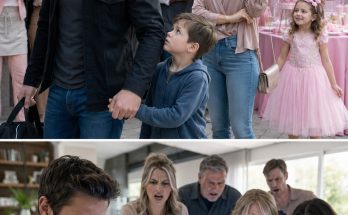
The day my father came home from the hospital, he looked like a man who had been carried back from a place he had not fully escaped.
That was the first thought I had when I saw him step out of Sarah’s car and pause beside the open passenger door, one hand braced on the roof, his chin lowered, his gray cardigan hanging off his shoulders in a way that made my throat close. He had once been the kind of man who refused help with anything that had weight. Refrigerators. Engine blocks. Bags of concrete. Grief. He had carried all of it as if accepting another person’s hands would cost him something no one else could understand.
But that afternoon, his hospital bracelet flashed pale against his wrist, and the wind moved through his white hair, and for one terrible second he did not seem like my father.
He seemed like a smaller version of him.
Not weak. I would never have used that word where he could hear it. My father had built his whole life around refusing weakness, or at least refusing the appearance of it. He had been widowed at fifty-one and somehow still made breakfast, paid bills, remembered school forms, fixed leaks, showed up for every graduation, and carried on with that stubborn, silent endurance men in our town mistook for strength because nobody had ever taught them another name for pain.
He was smaller in a different way. Smaller the way a house becomes smaller after the people inside it stop laughing. Smaller the way a coat looks when it has been left on the back of a chair too long, still holding the shape of somebody who is gone.
“Easy,” Sarah said from the driver’s side, though she said it gently, almost like she was speaking to a skittish animal.
Dad glanced over at her, not annoyed exactly, but close.
“I’m standing,” he said.
“I can see that.”
“I’ve been standing since before you were born.”
“Then you’ll have no problem letting me carry the bag.”
He almost smiled. Almost. Then the effort seemed to tire him, and he let her take the plastic hospital belongings bag from the back seat.
I came down the porch steps before he could pretend he did not need me. I had left work early, which would cost me later, but I could not let him come home to an empty driveway. Sarah had insisted on picking him up from the hospital after her early shift because she understood things about dignity that most people missed. She knew my father would rather let her drive than let me see how much help he needed getting dressed. She knew he would endure her kindness more easily than mine because with me there was history in every movement.
“You look better than yesterday,” I said.
It was a lie, but not a cruel one.
Dad lifted his eyes to me. They were clearer than they had been under the fluorescent hospital lights, but the skin beneath them had turned bruised and thin.
“I looked like hell yesterday,” he said.
“You look like slightly less hell today.”
This time he did smile, just enough to show me he was still in there.
“Don’t sweet-talk me, kid.”
I was thirty-eight years old, a husband, a father, a man with a mortgage, bad knees of my own, and a truck that sounded like loose silverware every time I started it. But to him I was still kid, and that afternoon the word hurt me more than it should have because it sounded like a rope thrown across years.
Sarah moved past us with his bag. “Soup’s on the stove. And before either of you make that face, yes, it has actual chicken in it. Not just the idea of chicken.”
“You worked all morning,” I said.
She did not stop walking. “And you were going to feed him what? Toast and guilt?”
Dad huffed, which for him counted as laughter.
The house smelled exactly like a family trying not to fall apart. Chicken broth, disinfectant wipes, old coffee reheated too many times, laundry detergent, and the sharp medicinal smell of the menthol cream the discharge nurse had told us to rub into Dad’s knees before bed. Grocery bags still sat on the counter, half-unpacked. A bunch of celery leaned against a box of cereal. The kids’ school papers had been shoved into a pile beside the toaster. One sneaker lay upside down near the mudroom door, abandoned by my son after soccer practice. The ordinary mess of our life waited there, innocent of what was coming.
My daughter, Mia, was the first one to notice the bracelet.
She was nine, all elbows and bright questions, old enough to sense fear but young enough to believe adults could still answer it properly. She stood in the hallway with her spelling notebook clutched against her chest, staring at Dad’s wrist.
“Grandpa,” she said, “do you still have to wear that?”
Dad looked down as if the bracelet had appeared there by magic.
“No, sweetheart,” he said. “I guess I just brought part of the hospital home.”
Sarah, standing by the stove, changed for half a second. Her face softened in that quick, private way she had when she was trying not to let sadness show in front of the children. Then she turned away and stirred the soup harder than necessary, scraping the wooden spoon along the bottom of the pot.
My son, Noah, came barreling in from the living room, then slowed abruptly when he saw Dad. He was seven and did not know what to do with frailty. Boys that age are built for speed, noise, and blunt truths, not for seeing their grandfather diminished.
“Can you still fix my bike chain?” he asked.
Mia elbowed him.
“What?” Noah said. “He said he could.”
Dad leaned one hand against the table. “Not tonight. But bring it by me this week.”
“You live here now?” Noah asked.
The room paused. Children have a talent for walking straight into the center of a thing everyone else is circling.
“For a while,” I said.
Dad looked at me when I said it. Something passed across his face, too quick to name.
My brothers were already there.
Michael, the oldest, stood near the counter with his phone in one hand and his other hand tucked into the pocket of his pressed slacks. He had come from his office, though he had made sure everyone knew he had rearranged a meeting to be present. He drove over in a clean SUV that looked too large for our narrow driveway and had parked close to the mailbox, angled slightly outward, as if escape had already been planned. Michael had always been handsome in the organized way of men who paid other people to cut their hair at regular intervals. He wore worry like an inconvenience.
Daniel stood closer to the back door, shoulders hunched inside his work jacket from the repair shop he had opened six months earlier. The jacket smelled faintly of motor oil and metal filings. His hair was damp with sweat at the temples, and his eyes carried the restless arithmetic of a man who had recently discovered that owning a business did not mean controlling anything. Daniel looked tired, too, but not the way Dad looked tired. Dad looked tired from surviving. Daniel looked tired from numbers that chased him into sleep.
“Good to see you upright,” Michael said to Dad.
Dad nodded.
Daniel stepped forward awkwardly, then seemed unsure whether to hug him. He settled for patting his arm.
“You need anything, Dad?”
Dad looked around the kitchen, at all of us, then down at the manila envelope tucked beneath his arm. I noticed it then for the first time. It was not thick, but the way he held it made it seem heavy.
“I need to show you something,” he said.
His voice was thin.
That scared me more than the envelope.
Sarah turned the heat under the soup down low. The kids drifted toward the doorway, sensing that the air had changed. I almost told them to go upstairs, but Dad glanced at them and then at me. There was an apology in his face. Not for them. For all of us.
He placed the envelope on the kitchen table and rested his palm on top of it.
The late afternoon light came through the blinds in narrow strips, cutting across the salt shaker, the stack of permission slips, a mug with a chipped rim, and the envelope that would change the shape of our family. Outside, a neighbor’s SUV rolled past slowly. On the porch, the little American flag Sarah had put out after Memorial Day tapped against its wooden pole in the breeze.
Michael sighed before Dad even opened it.
Daniel lowered his eyes.
Sarah came to stand beside me. She did not touch my arm, but I felt her presence settle there like a brace.
Dad opened the envelope and took out the papers.
The first page had the kind of clean, official formatting that makes bad news look civilized. Thick letterhead. Perfect margins. Numbers arranged in columns. Legal phrases that seemed designed to be understood only after they had already done their damage.
At the top, beneath Dad’s name, was the amount.
$2,160,000.
I remember the number because it did not look real. It looked like something from a lawsuit involving corporations, not something that belonged on our scratched kitchen table beside a child’s spelling notebook and a pot of soup. It was too large to fit inside our life. Too clean, too round, too far beyond any panic I had practiced for.
I had worried about medical bills. I had worried about Dad’s prescriptions. I had worried about the mortgage, about the brakes on my truck, about Mia needing new glasses, about the school activity fees that kept appearing in emails written with cheerful fonts and no understanding of exhaustion. I had not worried about two million dollars because some numbers sit so far outside your daily fear that you do not even know to fear them.
Michael picked up the page, read half of it, and set it down quickly.
“Dad,” he said, “what did you do?”
The words were not loud, but they landed hard.
Dad’s jaw worked. He looked down at his hands. His hospital bracelet shifted when his fingers curled.
“It started as a business guarantee,” he said. “Years ago. For the warehouse property. I thought it was settled after the refinance.”
“What warehouse property?” I asked.
“The old Mill Road site.”
I knew the place. Everyone in our town did. A long brick building near the rail spur, half-used for storage and half-empty depending on the decade. Dad had once owned a small share in it with two men he trusted because they had gone to high school with him and attended the same church dinners and shook hands like honor was still a currency banks accepted.
Michael’s face tightened. “You guaranteed debt on Mill Road?”
Dad did not answer right away. That told us enough.
Daniel leaned forward, suddenly alert. “With who?”
Dad rubbed the side of his thumb against the table, a nervous motion I had never seen from him before. “There were papers. They told me it was temporary. Standard. The kind of thing they needed to move the refinance through.”
“Who told you that?” Daniel asked.
Dad swallowed.
Nobody spoke.
That silence named the guilty without needing names.
I could picture it because I had seen it happen to men like my father before. Not stupid men. Not careless men. Men who had worked all their lives with tools, schedules, weather, and handshake deals, then aged into a world where younger men in fitted shirts used words like bridge loan, restructure, standard exposure, liquidity event. Men who were proud enough to pretend they understood because asking too many questions felt too much like surrender. Men who believed a signature still meant the same thing it had meant when they were thirty.
Michael stepped back from the table.
“I can’t do this,” he said.
Nobody had asked him to do anything.
That was how fast fear moved through him. It leapt ahead of obligation and built a wall before love could speak.
Dad looked up. His expression was difficult to read.
Michael lifted both hands, palms out, as if defending himself from an accusation not yet made.
“I’m serious. Ethan’s college bills are crushing us. Laura’s parents need help. We’re already stretched, Dad. I can’t take on something like this.”
Daniel rubbed his face with both hands.
“My shop is barely surviving,” he said. “I’m not even paying myself some weeks. I’m behind on vendor invoices. I don’t have anything left.”
Their voices were different, but the meaning was the same.
Then they looked at me.
It happened slowly and all at once. Their bodies turned first. Michael angled away from the counter. Daniel shifted his weight. Dad kept his eyes on the table, which somehow made it worse. Sarah stood beside me, still enough that I could hear the old wall clock ticking above the pantry door.
There are moments when everyone in a room quietly agrees who is supposed to sacrifice.
No one says, You are the one who stays.
No one says, You have always been the one who answers the phone.
No one says, Your life is already plain enough that it can absorb more damage.
They just look at you with the expectation of people who have mistaken your endurance for permission.
I had gotten married the year before. Sarah and I had bought that house because the mortgage was cheaper than rent only if nothing broke, no one got sick, and every paycheck arrived exactly when it was supposed to. We had two children, one income that depended on overtime, and another that depended on a hospital schedule that changed every time someone else called out. Our savings account was not a safety net. It was a puddle we were trying not to step in.
The truck needed brakes. The water heater made a sound like gravel whenever the shower ran too long. Mia needed new glasses because she had started squinting at the television but insisted she was only “thinking with her eyes.” Noah’s shoes had split near the toe. We were one medical bill, one missed shift, one broken appliance away from math that did not work.
I looked at Dad.
His hair had gone completely white at the temples. His shoulders curved inward. His hands trembled as he tried to gather the pages back into order, but they kept sliding out of line beneath his fingers. He looked embarrassed.
That was what undid me.
Not the number.
Not the fear.
The embarrassment.
This was the man who had taught me to change a tire in the rain because, as he put it, a person should know how to get home without begging strangers. This was the man who had packed lunches after Mom died, putting strange combinations into brown paper bags because he did not know what children liked without her guidance but refused to let us go hungry. This was the man who had burned pancakes every Saturday for three months before figuring out the heat was too high. The man who had stood at my wedding in a suit that did not quite fit and told Sarah, with his hand on my shoulder, “He works too much, but he loves steady.”
Now he could not meet my eyes.
Michael started talking again, something about legal advice and options and not rushing into emotional decisions. Daniel muttered that maybe the documents could be challenged. Their words filled the room like smoke. I could not hold on to any of them.
I reached for the pen lying near the mail pile.
Sarah looked at me.
She did not smile. She did not nod as if this was noble. She did not give me the soft approval people imagine wives give in stories when men do something ruinous and selfless. Her face went pale. Under the table, her hand found my knee and squeezed once, hard enough to say, I am terrified. Hard enough to say, I am here.
“Let me read all of it,” I said.
Michael exhaled sharply. “Don’t be stupid.”
I looked at him. “I said let me read it.”
For the next twenty minutes, the kitchen became a courtroom without a judge. We spread the papers across the table. Debt notice. Late-fee summary. Property papers. Repayment demand. Personal guarantee. Refinance amendment. Copies of signatures. County clerk stamp. Dad’s name appeared again and again, printed, signed, initialed, attached to phrases that made my stomach go cold.
Sarah read beside me, slower than I did, her lips moving faintly. Every now and then she tapped a line with her finger and asked a question. She understood forms better than most people because hospitals had trained her to mistrust paperwork that looked too simple. She saw the trap before I understood its mechanics.
“They rolled the original guarantee into the amended obligation,” she said quietly.
Michael glanced at her. “You’re a nurse, Sarah.”
She did not look up. “And you’re not a lawyer, Michael.”
The room went still.
I almost laughed, not because it was funny, but because it was the first clean sound in a dirty hour.
Dad stared at the papers. “They said it would protect the property.”
“Who is they?” Sarah asked.
Dad’s mouth tightened.
I knew then that there was a person at the center of this. Maybe more than one. Someone had looked my father in the face and seen not a man but equity, habit, trust, age. Someone had counted on him being too proud to ask his children to read the fine print. Someone had counted right.
“What happens if no one signs?” Daniel asked.
I heard the hope in his voice and hated him for it.
Dad answered without looking at us. “They move against the house. Against the remainder of my accounts. Against anything tied through the guarantee.”
Michael said, “Then maybe they do. I mean, Dad, maybe bankruptcy—”
“No,” Dad said.
It was the strongest he had sounded all day.
Michael stopped.
Dad’s eyes lifted slowly. “Your mother’s house is not going into a court file.”
The words took the air out of the room.
Mom had been gone almost sixteen years, but there were still things in Dad’s house that belonged to her as if she had only stepped out. A blue mixing bowl with a crack near the rim. The cedar chest at the foot of their bed. Curtains she had sewn in the dining room. A rosebush outside the back fence that bloomed wildly every spring because Dad pruned it with the precision of a man keeping a promise. That house was not grand. It was not even in great shape. But it had held us once, and to Dad, losing it was not a financial event. It was a second death.
“At 6:43,” I said, because I had looked at the microwave clock without meaning to and the time burned itself into me, “I’ll sign as guarantor on the payment arrangement. But not without copies of everything. And tomorrow we call an attorney.”
Michael’s eyes widened. “You can’t be serious.”
“I am.”
“You have a family.”
“I know exactly who I have.”
That landed somewhere I did not intend. Daniel looked away.
Sarah squeezed my knee once more, then released it.
Dad whispered my name.
I turned to him.
The shame on his face had changed into something worse. Relief, maybe. Relief can be cruel when it comes at another person’s expense. He knew it. That was why his eyes filled before he forced them clear.
“I didn’t bring this here to ask you,” he said.
“Yes, you did,” I said softly. “You just hated yourself for it.”
He closed his eyes.
Michael called it brave after I signed. He said it in the strange, hollow tone people use when they are grateful someone else has stepped into danger and they want gratitude to sound like admiration.
Daniel called it temporary. He said once the shop got stable, he would help. Once cash flow improved. Once things settled. He said it so many times that the words lost shape.
Dad said nothing.
The pen left a small dent in the paper where my hand had pressed too hard.
That night, Michael left first. He said Ethan had an online advising meeting and Laura would be worried if he stayed out too late. He hugged Dad carefully, as if illness might rub off on his shirt, then clapped me on the shoulder and told me we would “figure it out as a family.” He did not look at Sarah when he said it.
Daniel lingered longer. He helped carry Dad’s bag to the small room off the hallway that we had once used for storage and homework overflow. He stood there awkwardly while Sarah changed the sheets and Mia placed a drawing on the dresser that said Welcome Home Grandpa in crooked purple letters.
“I’ll come by this weekend,” Daniel told Dad.
Dad nodded.
Daniel did not come that weekend.
He texted Sunday evening: Sorry, shop emergency. Soon.
Soon became a text every few weeks.
Then it became a thumbs-up emoji when I sent updates about Dad’s prescriptions.
Then it became silence unless money came up.
Dad moved into our house two days later officially, though the truth was he had moved in the moment he stepped through the kitchen door with that envelope. We put his recliner by the front window because he liked watching the street. Sarah cleared half the laundry room for his medication bottles, discharge papers, compression socks, blood pressure cuff, and the growing folder she labeled PAYMENT PLAN in blue marker. She taped a calendar beside the fridge and wrote every due date by hand, using red for lender calls, blue for medical appointments, green for school events, and black for shifts.
The calendar began to look like a battlefield map.
The first morning, I called the lender at 8:12 from the truck before my shift. I sat in the warehouse parking lot with the engine off, watching men in safety vests move through the fog of exhaust and dawn, while a recorded voice told me my call was important. By the time a human answered, my coffee had gone cold. She transferred me after twelve minutes to someone who said the file was incomplete. That person gave me another number, which led to a department that was closed despite the hours printed on the letter.
I called again at 1:30 during lunch and ate a vending machine sandwich with one hand while holding the phone with the other. I called again after my second shift because the automated system kept asking for numbers printed on papers Dad could not find. I learned quickly that large financial institutions do not shout. They exhaust you politely. They place you on hold beneath soft music. They ask for verification you have already given. They use phrases like escalation path and documentation gap until your anger feels childish because every person on the line sounds calm enough to be innocent.
By the end of the first week, Sarah had made a binder.
Not a folder. A binder.
Three inches thick. White. Plastic cover. Tab dividers. A pocket for receipts. A zipper pouch for pens, highlighters, sticky notes, and a cheap calculator from the dollar store.
She labeled sections in her careful handwriting: hospital bills, property papers, lender letters, payment receipts, attorney notes, medication schedule, phone call log.
That binder became the fourth adult in our house.
It sat on the counter like a judge.
Sarah wrote down everything. Dates. Times. Names, when people gave them. Extension numbers. Confirmation codes. The exact wording of promises. The exact wording of refusals. When the automated system hung up after twenty-three minutes, she wrote that down too. When a representative named Candace said the hardship review could not proceed without the same form we had mailed twice, Sarah wrote, Candace, 3:14 p.m., says no form received; faxed again 3:52 p.m.; confirmation attached.
She had never been a woman impressed by panic. Give Sarah a crisis and she turned it into paper, meals, schedules, and clean sheets. She could be frightened while still moving. I envied that.
I worked double shifts at the warehouse until the soles of my feet felt bruised from the inside. The job was not complicated, which somehow made the exhaustion worse. Load, scan, stack, move. Inventory corrections. Late trailers. Pallets that leaned wrong. Supervisors who said we were a team whenever they meant no one was going home on time. Some nights my hands cramped so badly I had to sit in the truck until I could straighten my fingers around the steering wheel.
The first time I came home and sat on the bottom porch step because I could not make myself stand again, I thought no one saw me. The house glowed softly through the curtains. I could hear Mia practicing spelling words with Sarah inside. I could hear Noah complaining about bath time. Dad’s television murmured from the front room, the volume too low for him to hear but high enough for him to pretend he was watching. I sat there in the dark with my lunch bag beside me and my work boots planted on the cracked concrete step, breathing like a man who had walked farther than he had.
Sarah saw me through the window.
She did not come out. She knew I would hate that.
The next night, there was a paper cup of coffee waiting on the step.
Still hot.
She never mentioned it.
That was how Sarah loved people. Not loudly. Not with speeches. She put coffee where your hand would reach for it. She packed leftovers in plastic containers and pretended she preferred the smallest portion. She told the kids grilled cheese counted as a cozy dinner when all of us knew it was cheap. She bought Dad socks with non-slip grips and left them on his chair without saying he had nearly fallen in the hall. She clipped coupons after midnight at the kitchen table, not because coupons would save us, but because she refused to let helplessness have the last word.
In March, we sold my motorcycle.
It was a fifteen-year-old Yamaha with scratches on one side from a slide I never told Sarah about until after we were married. I had bought it used before the kids, before the house, before life narrowed into responsibilities. It had always represented a version of me that still had somewhere to go without needing permission from bills. I rode less after Mia was born, almost never after Noah. Still, keeping it in the garage felt like keeping a door open.
The buyer came on a damp Saturday morning. He was younger than me, excited in a way I could not resent. He walked around the bike, asked the right questions, checked the tires, nodded at the engine. I had cleaned it the night before under the garage light, wiping dust from the mirrors, polishing chrome that did not need polishing, stalling in every possible way.
When he counted the cash in our driveway, Dad watched from the window.
I could feel him watching.
I did not look up.
The money went toward arrears and two prescriptions and one attorney consultation that ended with a tired man in a brown suit telling us the documents were ugly but enforceable unless we could prove misrepresentation, which would cost more money to chase than we had to spend. He did not say hopeless. Lawyers rarely do. He said difficult in a tone that meant the same thing.
In June, we canceled the family trip.
It was supposed to be three nights near Lake Michigan in a small rented cabin with bad Wi-Fi and a fire pit. Nothing extravagant. We had booked it months before Dad got sick, before the envelope, before every dollar in the house acquired a destination before it arrived. Mia had drawn a list of things she wanted to do: collect rocks, eat pancakes, see sunset, maybe swim if not freezing. Noah wanted to roast marshmallows and “sleep in a woods house,” as he called it.
I sat them down after dinner and explained we would have to wait until another time.
Mia listened with the serious face children use when they are trying to protect adults from their own disappointment.
“It’s okay,” she said. “I like sleeping in my own bed anyway.”
Noah looked down at his plate. “Can we still get ice cream from the gas station on Friday?”
Sarah said yes before I could think about the cost.
Dad heard it from the recliner.
He heard everything.
He heard Sarah tell the pharmacy clerk she would come back for the second prescription after payday. He heard me on the phone at night asking if there was any hardship plan that did not begin by destroying my credit. He heard Mia stop asking for book fair money and Noah pretend his shoes still fit. He heard Sarah crying once in the shower, though she thought the water covered it. He heard me in the garage hitting the side of a shelving unit with the flat of my hand because rage needed a sound and I could not make it inside the house.
Children learn the shape of worry when it lives with them long enough. They do not need to understand numbers. They understand faces. They understand which cereal disappears from the pantry and does not come back. They understand when adults speak too brightly. They understand the difference between “not today” and “not anymore.”
Still, something unexpected happened inside that hard year.
Dad came back to us.
At first, he was quiet. He sat in the recliner by the window with the television on low, staring at the street as if waiting for a delivery that never came. He ate because Sarah put food in front of him. He took pills because she lined them up. He answered questions with one or two words. The hospital had sent his body home, but some other part of him had remained in that bed under fluorescent lights, where nurses woke him for vitals and doctors spoke over him in language that made him feel like an object being discussed for repair.
I did not know how to reach him. That shamed me. I could sign a debt guarantee that might ruin us, but I did not know how to sit beside my father and talk about fear. We had never been that kind of family. Affection passed between us disguised as usefulness. He changed my oil; I fixed his gutters. He showed up early; I returned borrowed tools in better condition. Love was understood, but rarely examined. Once you start naming things like fear and regret and shame, there is no telling what else might come loose.
Mia reached him first.
One afternoon in late March, she brought him her spelling list. Sarah was at work, I was making macaroni at the stove, and Noah was building something dangerous out of couch cushions in the living room. Mia climbed onto the rug near Dad’s recliner and handed him a wrinkled sheet.
“Quiz me,” she said.
Dad blinked. “On what?”
“My words.”
“I don’t have my glasses.”
“They’re on your head.”
He touched his hair and found them there. For the first time in days, I saw him look embarrassed in a harmless way.
Mia waited, patient but bossy.
He lowered the glasses onto his nose and held the paper too far away. “Necessary,” he read, pronouncing it with exaggerated suspicion. “Who made this word?”
“My teacher.”
“Your teacher is mean.”
Mia laughed. “Grandpa.”
“Any word with that many letters is showing off.”
“You have to say it in a sentence.”
Dad cleared his throat. “It is necessary for teachers to stop giving children words with too many letters.”
Mia rolled onto her stomach, laughing so hard she kicked the rug.
The next day, she brought the list again.
By the third week, they had a routine. She sat cross-legged on the rug after school, still wearing her backpack half the time. He sat in the recliner with his reading glasses on the end of his nose, the porch flag moving outside the window behind him. They argued gently over whether certain words deserved to exist. He told her Wednesday was a dishonest word because it looked one way and behaved another. She told him beautiful needed all its letters because pretty things were allowed to be complicated.
Noah came next.
His bike chain had been slipping for days. I kept meaning to fix it, but meaning to do things became a crowded room that year. One Saturday morning, he dragged the bike to the front porch, leaving a black mark across the floor Sarah had mopped an hour earlier.
“Grandpa said he could fix it,” he announced.
Dad looked up from the recliner. “I said bring it by me. I did not say bring it into the house.”
Noah froze, guilty and hopeful.
Sarah looked at the tire mark, closed her eyes for one second, then pointed toward the door. “Driveway.”
Dad rose slowly. I started forward to help, but he gave me a look that stopped me. He took his cane and followed Noah outside.
I watched from the garage as Dad lowered himself onto an overturned bucket beside the bike. His hands shook when he reached for the wrench, but once he began explaining, his voice steadied.
“You see this?” he said, tapping the rear axle nut.
Noah crouched close. “Yeah.”
“Don’t put your face so near it. You want grease on your nose?”
Noah immediately wiped his nose, though there was nothing on it.
Dad showed him how to loosen the rear axle and pull the wheel back just enough to tighten the chain.
“Don’t force a thing that only needs patience,” he said.
I stood very still.
He had said the same thing to me when I was twelve, crouched beside my own bike in the alley behind our old house while summer rain ticked against the metal trash cans. I had forgotten the exact words until they came back in his voice. Memory can be merciless that way. It waits years, then opens a door without asking.
By the time Sarah found them, Noah had grease on his cheek and Dad was laughing into his sleeve because the boy had proudly declared himself “a chain doctor.” Sarah stood in the doorway with a laundry basket against her hip and smiled like the house had given something back.
Dad changed after that. Not all at once. Not in a way that would have made a movie scene. He did not suddenly become cheerful or strong or free of pain. But he began participating in the house again. He told Mia stories about Mom when she was a girl, stories he had kept locked away too long because he thought remembering would hurt us. He showed Noah how to sort screws by thread, how to test a flashlight battery, how to fold a pocketknife safely even though Sarah made both of them sit at the table under supervision for that lesson. He asked me about work and actually listened. He asked Sarah whether the hospital had been short-staffed again, and when she said yes, he shook his head as if personally offended by management decisions.
One evening, Sarah brought him soup and adjusted the blanket over his knees without making a fuss about it. Dad looked at her for a long time.
“You didn’t have to be kind to me,” he said.
Sarah set the spoon beside his bowl.
“You’re his dad,” she said. “That makes you ours too.”
Dad looked down fast.
I was standing in the hallway, hidden just enough to pretend I was not hearing them. I saw his eyes fill. I saw Sarah pretend not to see. In that small mercy, she became dearer to me than she already was.
After that, I noticed he started writing.
At first it was only a few lines here and there. Yellow legal pads. Backs of envelopes. Blank margins of old bills. Sometimes he wrote at the kitchen table in the early morning before anyone else came down. Sometimes he wrote in the recliner while the television murmured. Sometimes when I entered the room, he turned the paper over.
I thought it was shame. I thought he was making lists of what he had cost us. Amounts, maybe. Debts within debts. The kind no lender can collect but no decent man can stop calculating.
I asked once, “You writing to somebody?”
“No,” he said, too quickly.
“Making notes?”
“Something like that.”
I let it go because his privacy was one of the few things he still owned outright.
The debt did not improve quickly. Debt of that size is not a storm; it is weather. It becomes the condition under which life happens. You wake beneath it. You eat beneath it. You celebrate birthdays beneath it. You learn to laugh without forgetting it is there.
We negotiated payment terms that felt less like a solution than a slower drowning. The lender agreed to a structured arrangement after we sent documents, updated documents, corrected documents, and documents proving we had already sent documents. There were calls where I remained calm and calls where I did not. Sarah became our memory because mine began failing under stress. I forgot where I put keys. I forgot to sign a school form. I forgot Noah’s pajama day and sent him in jeans, which made him cry in the car until I drove home, found dinosaur pajamas in the laundry basket, and brought them to school like a man delivering medicine.
The kids adapted in ways that broke my heart.
Mia began asking, “Is it expensive?” before asking whether she could have something.
Noah started saving coins in a jar labeled “house money,” though no one had told him to. One evening I found Dad standing in the hall outside Noah’s room, looking at that jar on the dresser. He touched the doorframe as if steadying himself.
The next day, the jar was gone.
I found it later in Noah’s closet, hidden behind a stuffed dog. When I asked him about it, he shrugged.
“Grandpa looked sad when he saw it,” he said.
I sat on the edge of his bed, unable to speak.
There are costs no ledger captures. A child learning to hide his kindness so it does not hurt an old man is one of them.
Michael visited twice in the first three months.
The first time, he brought a fruit basket from a grocery store that still had the discount sticker on the bottom. He talked too loudly, asked Dad generic questions, checked his phone six times in twenty minutes, then left because Ethan had a tournament. The second time, he came alone and stood in the kitchen while Sarah reviewed the binder.
“This is a lot,” he said.
Sarah looked up. “Yes.”
“I mean, you’re really tracking everything.”
“Yes.”
He flipped a few pages with the cautious curiosity of a man inspecting a machine he did not intend to operate.
“I’ve been meaning to contribute,” he said.
Sarah did not answer.
He glanced toward the living room, where Dad was asleep in the recliner. “Things are complicated right now. Ethan’s tuition deposit, the market, Laura’s parents—”
Sarah closed the binder.
The sound was not loud, but Michael stopped talking.
“I’m sure it’s complicated,” she said.
He flushed. “I’m not the enemy here.”
“No,” Sarah said. “You’re not here enough to be.”
I expected him to get angry. Instead he looked wounded, which irritated me more. People who disappear often want credit for not being cruel when absence has done the work for them.
After he left, Sarah stood at the sink for a long time, washing the same mug twice.
“You don’t have to fight him,” I said.
She turned off the water. “I’m not fighting him. I’m keeping the room honest.”
Daniel was harder to resent because his failure looked more like drowning than escape. The shop consumed him. Every time he called, I could hear machines in the background, a customer asking questions, his own anxiety leaking through. He sent small amounts twice, apologizing both times for how little it was. Then the payments stopped. He promised to come by after work and canceled because a transmission job had gone bad. He promised to take Dad to a follow-up appointment and texted that morning saying his only employee had called in sick. Sarah drove Dad instead after a twelve-hour shift, her eyes red from lack of sleep.
I wanted to hate Daniel cleanly, but resentment kept catching on memory. Daniel had been the brother who made Mom laugh when she was sick. He had slept on the floor outside my room after her funeral because I was fourteen and pretending I was fine. He had once sold his baseball cards to buy me a used amp because he knew I wanted one. People do not become disappointing all at once. That is what makes it hard. You keep remembering who they were while dealing with who they are.
The one-year mark arrived without ceremony.
There was no family dinner. No speeches. No sudden rescue. No check in the mail from a remorseful brother. No justice from the men who had misled Dad into signing papers he did not understand. Just another gray afternoon, another shift, another list of things to pay.
Michael did not call.
Daniel texted at 10:04 a.m.: How’s Dad doing?
I replied: Tired today. Knee pain worse. Lender call at 3. Appointment Thursday.
He sent a thumbs-up emoji at 10:17.
Nothing else.
I worked until my lower back felt like it had rusted in place. On the drive home, rain streaked the windshield, and the wipers made a dragging sound I could not afford to fix yet. I passed the road that led to Dad’s old house and almost turned by habit. We still checked it once a week. Sarah insisted we keep heat low but running through winter so the pipes would not freeze. I mowed the lawn when I could. The rosebush by the fence bloomed in wild red clusters that spring, indifferent to debt.
When I got home, Sarah had made pasta because pasta was cheap and filling and could be stretched with canned tomatoes and the last onion in the drawer. Mia and Noah argued over who got the last piece of garlic bread. Sarah split it in half with the fairness of a judge, then gave both pieces to them and pretended she did not want any. Dad noticed. He noticed everything now, and each kindness seemed to enter him like both gift and wound.
He ate half his plate and said it was good.
At 9:17 p.m., he called me into his room.
I remember the exact time because I looked at the clock on the microwave as I passed the kitchen. Sarah stood at the sink washing lunch containers for the next day. The dishwasher clicked behind her, though we rarely used it anymore because it leaked if loaded too full. The hallway smelled like laundry detergent, menthol cream, and the old wood smell of the dresser we had moved from Dad’s house.
He was sitting on the edge of the bed in his flannel shirt, the cuff frayed open. The bedside lamp made his face look carved, all lines and shadows, but his eyes were clear in a way that put me on alert.
“Sit down,” he said.
I sat in the chair beside him.
For a moment, he did not move. He rested both hands on his knees and stared toward the closet door. I could hear Sarah in the kitchen rinsing plastic lids. I could hear Noah talking in his sleep from down the hall. A car passed outside, tires hissing on wet pavement.
Dad opened the top drawer slowly.
He took out a folded sheet tucked inside a clear plastic sleeve. It had one crease down the middle, as if he had opened and closed it many times. His fingers trembled, but not from weakness alone. He handed it to me with both hands.
“Read it,” he said.
I thought it was another notice.
Another adjustment.
Another proof that doing the right thing still came with interest.
My hands felt tired before I opened it.
But the first line was not a demand.
It was a notarized transfer deed.
The second line named the property.
The third line named the new owners.
Me and Sarah.
For a few seconds, sound left the house. The dishwasher click disappeared. Sarah at the sink disappeared. The floor vent’s rattle under the window disappeared. I stared at the paper until the words blurred, then sharpened, then blurred again.
The property was Dad’s old house and the attached parcel behind it, including the small rented garage near the alley and the strip of land where developers had tried twice to buy options. It was not a mansion. It was not the kind of property that made people gasp at dinner parties. But in our town, land was land, and Dad’s parcel sat close enough to new commercial expansion that its value had been quietly rising for years.
He had transferred it.
Not sold it.
Not promised it later.
Transferred it.
To us.
At the bottom was Dad’s signature, uneven but unmistakable. Beside the notary stamp, in his handwriting, he had written one sentence.
To the child who came back when everyone else found a reason not to.
I read it once.
Then again.
Then again because my mind refused to hold it.
“Dad,” I said.
That was all I could get out.
He nodded toward the drawer.
“There’s more.”
Sarah came to the doorway at that moment, drying her hands on a dish towel. She saw my face and stopped.
“What happened?”
Dad reached into the drawer again and pulled out a thinner envelope, sealed with tape. On the front, in black pen, he had written: FOR MICHAEL AND DANIEL.
I did not want to open it.
Not because I feared what was inside, but because I already understood what would happen once my brothers found out there was something to lose. Love can be vague when sacrifice is required. It becomes very specific when property appears.
Dad nodded.
So I opened it.
Inside was a copy of the deed. Behind it was a handwritten ledger.
Not the ledger I expected.
Dates. Amounts. Phone calls. Visits. Missed visits. Prescriptions. Copays. Groceries. Gas. Hours worked. Promises made and not kept. Small kindnesses recorded in plain language, without flourish, without accusation.
Sarah paid for medication when I forgot wallet.
Sarah made soup after double shift.
Sarah cut coupons after midnight.
Evan sold motorcycle.
Mia read spelling words with me.
Noah asked if chain could wait because Dad was tired.
Michael said he would come Sunday. Did not come. Texted Tuesday.
Daniel said business too hard this month. Did not ask whether medicine was covered.
Sarah changed bedding when fever came back.
Evan called lender from truck before work.
Mia gave me half cookie.
Noah hid house-money jar because he thought it made me sad.
Dad had documented everything.
Not in anger. That was what made it devastating. The handwriting was too careful for rage. It looked more like a man trying to tell the truth before someone louder rewrote it. A record of care. A record of absence. A record of what love had cost when no one else was counting.
Sarah sat on the edge of the bed.
The dish towel slipped from her hand.
For the first time all year, she covered her mouth and cried without turning away.
Dad looked at her.
“I saw you,” he said.
She shook her head, but he kept going.
“I saw the coffee. The medicine. The coupons. The nights you fed everybody else first. The way you folded my socks so I wouldn’t feel old needing them. The way you wrote down every name on those calls. The way you made my room look like a room and not a place somebody put a problem.”
Sarah pressed the towel to her eyes.
“I wasn’t doing it for a deed,” she whispered.
“I know,” Dad said. “That is why your name is there too.”
I looked back at the paper.
He was right. I had seen my own name first because shock had narrowed my vision. But Sarah’s name sat beside mine in the same legal line, equal and permanent.
My father had not given the property only to his son.
He had given it to the woman who made room for him when his own children made excuses.
“Dad,” I said again, uselessly.
He leaned back a little, worn out by the act of revealing what he had carried.
“I should have done it sooner,” he said.
“No.”
“Yes,” he said. “I kept thinking fairness meant dividing things evenly. But fairness isn’t pretending people did the same when they didn’t.”
Sarah lowered the towel.
The room felt too small for all that had entered it.
“What about Michael and Daniel?” I asked, though I knew.
Dad’s face changed. Pain moved through it, but not uncertainty.
“They’ll be angry.”
“Yes.”
“They’ll say you influenced me.”
“Yes.”
“They’ll say I was sick.”
“Were you?”
He looked at me then, and for a moment the old force returned. Not the force of a man carrying a refrigerator, but the deeper force of a man who had lived long enough to stop confusing peace with silence.
“I was sick,” he said. “I was not blind.”
The next morning, I called Michael first.
It was 8:05 a.m. The kitchen was cold because the furnace had kicked off early, and the coffee maker sputtered like it resented us. Dad sat at the table in his flannel shirt, the ledger closed in front of him. Sarah stood by the sink, holding a mug she had not drunk from. Mia and Noah were upstairs getting ready for school, unaware that another fault line was about to open beneath the family.
Michael answered on the fourth ring.
“Hey,” he said, distracted. “I’m walking into something. Everything okay?”
“No,” I said. “But you need to hear this from me before anyone else.”
That got his attention.
“What happened? Is Dad—”
“Dad signed over the property.”
A pause.
“What property?”
“The house. The parcel. Everything attached.”
The silence shifted. I could almost hear his mind rearranging priorities.
“What do you mean signed over?”
“To me and Sarah.”
Another pause, longer this time.
Then he laughed once. Not because it was funny.
“That’s insane.”
“Michael—”
“No. That’s insane. You can’t just take advantage of him while he’s sick.”
I looked across the kitchen at Dad’s ledger. Sarah closed her eyes briefly.
“He wants you to come over,” I said.
“Of course he does. Because you know this won’t hold up.”
“Come over,” I repeated. “Bring Daniel if you want. We’ll talk here.”
“I have meetings.”
“Then cancel them.”
He made a sound of disbelief. “Listen to yourself.”
“No,” I said. “For once, you listen. Dad wants to talk. Today.”
I hung up before he could turn the conversation into something more polished.
Daniel arrived first at 9:22, wearing the same work jacket, his hair uncombed, panic already visible in the way he stepped onto the porch. He looked at me through the screen door and did not ask how Dad was. That told me too much.
Michael arrived nine minutes later. His SUV pulled in fast, stopping crooked behind Daniel’s truck. He got out in a navy coat, phone in hand, jaw set. He looked less like a son visiting his father than a man arriving at a negotiation he had not authorized.
They both came into the kitchen with the same expression.
Not grief.
Not concern.
Calculation wearing a family face.
Dad sat at the table with the ledger in front of him. Sarah had put coffee out because she was still Sarah, but nobody touched it. The morning light was gray and flat, making every face look older. The binder sat on the counter. The deed lay in its plastic sleeve beneath Dad’s hand.
Michael started before he sat down.
“Dad, this isn’t fair.”
Dad looked at him. “What part?”
Michael hesitated, annoyed that the first strike had not landed.
“What part? The part where you sign away family property to one son behind everyone else’s back.”
Daniel nodded quickly. “This is going to tear the family apart.”
Dad opened the ledger.
“No,” he said. “It was already torn. This just shows where.”
The room went quiet.
I had never heard my father speak that way to us. Not even when we were teenagers. He had always believed in restraint, in letting men feel the weight of their own behavior without public humiliation. But something about that ledger had freed him from protecting us from the truth.
Michael looked at me. “You put him up to this.”
Heat rose in my chest so fast it scared me. For one ugly second, I wanted to throw every receipt across the table. I wanted to make him read the pharmacy slips, the lender logs, the grocery totals, the dates of every night Sarah went without sleep because Dad had a fever or I was working past midnight or a payment had bounced back for reasons no one at the lender could explain. I wanted to ask where fairness had been when Mia stopped asking for books and Noah hid coins in his closet. I wanted to ask why family only became sacred when real estate was involved.
But Dad lifted one hand.
Not much.
Just enough.
So I stayed quiet.
He turned the ledger toward them.
His handwriting filled the pages.
Michael stared at it without touching it.
Daniel reached first. His fingers moved over the page slowly, as if reading by touch could soften the words.
He saw his name.
Daniel said shop emergency. Did not come.
Daniel promised Tuesday. No call.
Daniel sent $100. Apologized. Said more soon.
Daniel said business too hard this month. Did not ask whether medicine was covered.
His face changed. Shame arrived there not dramatically but physically, draining color from his cheeks.
“Dad,” he said.
Dad did not rescue him.
Michael took the ledger then, more aggressively, flipping pages until he found his own name. I watched his confidence falter as dates accumulated.
Michael visited twenty-two minutes. Took call in driveway.
Michael said he would check with Laura about helping. No answer.
Michael said Ethan tuition impossible. Did not ask what payment due.
Michael sent fruit basket. Sticker still on bottom. Sarah cut up fruit so it would not spoil.
Michael’s mouth tightened. “You wrote down the fruit basket?”
Dad’s eyes did not move from him. “I wrote down everything.”
“That’s petty.”
“No,” Dad said. “Petty is remembering only what helps your argument.”
Sarah inhaled softly.
Michael looked wounded, then angry, then both.
“I have responsibilities,” he said. “You know that. I have a son in college. I have a mortgage. Laura’s family—”
Dad nodded. “You have responsibilities.”
“So you punish me for not having two million dollars lying around?”
“No,” Dad said. “I did not punish you for being unable to pay. I watched what you did when you could not pay.”
Michael’s face flushed.
Dad continued, his voice quiet but steady. “You could not pay. But you also did not come. You did not call unless someone called you first. You did not ask if Sarah needed help sitting at the hospital. You did not ask whether your brother had eaten before his second shift. You did not ask if the children were scared. You waited to see if the problem would land somewhere else.”
“That’s not fair,” Michael said, but the words had less force now.
Dad turned to Daniel. “And you. I know the shop is hard. I know you are afraid every month. I know that kind of fear. But you let your fear become a reason not to see mine.”
Daniel lowered his head.
The silence that followed was unbearable because it contained too much truth.
Sarah stood near the sink, tears on her face, making no effort to hide them. She was not crying from victory. There was no victory in that kitchen. Only exposure.
Michael flipped another page and stopped when he saw Sarah’s name written again and again.
Sarah paid copay.
Sarah made soup.
Sarah bought socks.
Sarah changed bedding when fever came back.
Sarah called pharmacy.
Sarah sat with me after nightmare.
Sarah told Noah not to put house-money jar on table.
Michael swallowed.
For once, he had no speech ready.
Dad took the deed back and laid his palm on top of it.
“I did not give this away because you are bad sons,” he said. “I gave it to them because when I became inconvenient, they did not treat me like a problem.”
Daniel sat down slowly as if his legs had gone out from under him.
Michael stared at the table.
From down the hall came the soft thud of Mia’s bedroom door. She walked into the kitchen in pajamas, her hair tangled, backpack dragging from one hand.
She stopped when she saw everyone.
“Did I miss the bus?” she asked.
It was so ordinary, so beautifully out of place, that something in me almost broke.
Sarah wiped her face quickly. “No, baby. You have twenty minutes.”
Mia looked around, uncertain. Then her eyes found Dad.
He waved her over.
She went to him without hesitation.
He put an arm around her shoulders and pulled her close. She leaned into him, trusting the room because he was in it.
That was when I understood what the year had really done.
It had not made us rich. It had not erased the debt. It had not made the lender kind or the paperwork fair. It had not repaired every old wound between brothers. But it had shown my father where home was.
Not the biggest house.
Not the cleanest bank account.
Not the children who used the word family only when it was time to divide something.
Home was the place where someone kept soup warm, wrote down prescription times, made coffee for a tired man on the porch step, and created space beside the window for an old one to heal.
Michael left angry that day.
He did not shout, because Michael did not like to look uncontrolled. He gathered his coat with sharp movements and told Dad this was disappointing. He told me we would “regret letting money come between us,” which would have been funny if it had not been so insulting. Money had not come between us. It had simply illuminated the distance already there.
At the door, he turned back.
“You’ll hear from an attorney,” he said.
Dad looked tired suddenly. Not frightened. Just tired.
“I hope you choose better than that,” he said.
Michael’s face changed for a second. A flicker. Then he left.
Daniel stayed.
He sat at the kitchen table long after Michael’s SUV pulled away. Sarah took Mia and Noah to school because they had already missed too much that year, and the house became quiet except for the furnace clicking on and the faint sound of traffic beyond the windows.
Daniel did not look at Dad.
“I was ashamed,” he said finally.
Dad waited.
Daniel rubbed both hands over his face. “Every time I thought about coming over, I thought about how I didn’t have money. Then I thought if I came without money, I’d look useless. So I stayed away. Then staying away made it harder to come. I know that sounds stupid.”
“It sounds human,” Dad said.
Daniel looked up then, surprised.
Dad’s face softened. “Human doesn’t mean harmless.”
Daniel’s eyes filled. He looked like the younger brother I remembered, the one who cried when Mom lost her hair and then made jokes at dinner so she would laugh anyway.
“I’m sorry,” he said.
Dad nodded once. “Then start there.”
Daniel came back the next day with groceries.
Not expensive groceries. Milk, eggs, potatoes, apples, coffee, chicken thighs, a bag of oranges because he remembered Dad liked them cold. He stood on the porch holding the bags like an offering, embarrassed before anyone opened the door.
Sarah let him in.
She did not make it easy. She did not make it hard either. She took the bags, said thank you, and told him Dad was in the living room.
That was how trust began returning with Daniel. Not in speeches, not in dramatic forgiveness, but in groceries, repaired hinges, and rides to appointments when he could manage them. He came on Sundays after closing the shop, smelling of oil and cold air, and sat with Dad during football games neither of them cared about as much as they pretended. Sometimes they spoke. Sometimes they didn’t. Once, I found Daniel in the garage fixing the loose railing on the porch without telling anyone. He had brought his own screws.
Michael took longer.
For two weeks, he did not call.
Then he called me at work, which annoyed me enough that I almost let it go to voicemail. I answered from the break room, surrounded by vending machines and men eating from microwaved containers.
“I’m not suing,” he said.
I leaned against the wall. “Good.”
“I talked to someone.”
“Of course you did.”
He ignored that. “They said it would be hard to challenge unless we could prove incapacity.”
“Dad is not incapacitated.”
“I know.”
For the first time, his voice sounded less polished.
“I know,” he repeated.
I waited.
He exhaled. “Laura said I was being ugly.”
I did not respond because agreeing too quickly would end the conversation.
“She said if her father had moved in with Ethan one day and we barely showed up, we’d know exactly what that meant.”
I pictured Laura, who was quieter than Michael but not weak, looking at him across some expensive kitchen island and telling him the truth in a way he could not escape.
“She’s right,” I said.
“I know.”
Another silence.
Then he said, “Can I come by Sunday?”
“Ask Dad.”
“I’m asking you.”
“It’s Dad’s house too.”
That sentence struck me after I said it. Our house. Dad’s house. Sarah’s house. The old definitions had changed without asking permission.
Michael came Sunday with no fruit basket.
He arrived wearing jeans, which made him look oddly younger, and carrying a paper bag from the pharmacy.
“Laura called in the refill,” he told Sarah, not quite meeting her eyes. “I picked it up.”
Sarah took the bag and checked the label automatically. “Thank you.”
He nodded.
Dad watched from the recliner.
Michael crossed the room slowly. “Hey, Dad.”
Dad looked at him for a long moment. “Hey.”
“I’m sorry.”
It was not a full apology. Not yet. It was too small for what had happened and too late to be clean. But it was the first honest sentence he had offered in months.
Dad motioned to the chair beside him.
Michael sat.
No one mentioned the deed.
That became the rule for a while. Nobody mentioned the deed unless necessary. It sat in the binder now, copied and filed, but its presence hovered anyway. Property changes people, even when no one is trying to be changed. Michael became cautious around Sarah, polite in a way that held both shame and resentment. Daniel became helpful to the point of overcorrecting, volunteering for tasks no one had assigned. Dad watched them both with affection and sadness, understanding perhaps that he had forced a truth into the open and truth, once released, does not go neatly back into the drawer.
The debt remained.
That is the part people dislike in stories. They want a revelation to solve the math. They want the deed to erase the phone calls, the late fees, the anxiety of envelopes, the ugly little calculations done in the grocery aisle. But life rarely offers that kind of clean exchange. The property was valuable, yes, but tangled with liens, tax implications, market timing, legal cautions, and Dad’s insistence that we not sell unless we absolutely had to. It gave us security, eventually. It gave us leverage. It gave us the knowledge that our sacrifice had been seen. But it did not make the mountain disappear overnight.
We kept climbing.
Sarah kept the binder neat.
I kept making calls.
Dad kept his ledger, though after the morning with my brothers, what he wrote began to change.
Mia spelled necessary right today.
Noah fixed chain by himself.
Sarah laughed at dinner.
Evan slept six hours.
Daniel brought oranges.
Michael sat one hour. Did not check phone.
Those notes were different. Not proof for a future argument. More like a man teaching himself how to notice repair.
Spring became summer. The porch flag faded at the edges. Dad’s knees still hurt, but he moved better when the weather warmed. He began walking to the mailbox with Noah beside him, both of them pretending Noah was not there in case Grandpa wobbled. Mia started reading books aloud to him that were far too dramatic for his taste, and he became invested despite himself in the fate of fictional children and their magical problems.
One evening in July, I came home to find Dad and Sarah arguing in the kitchen about dumplings.
Not real arguing. Family arguing. The kind that means both people know they belong enough to disagree.
“You make them too big,” Dad said.
Sarah stood at the counter with flour on her cheek. “They are normal-sized.”
“They’ll swell.”
“They’re dumplings, not balloons.”
“My mother made them smaller.”
“Then your mother had more patience.”
Dad pointed at her, delighted. “That’s true.”
I stood in the doorway and watched them, hit by a feeling so sharp I had to turn away. Joy, when it returns after a long absence, can feel like pain because the body no longer trusts it.
Michael began coming every other Sunday. At first, he performed helpfulness like a man hoping for a grade. He brought groceries too expensive for us to buy and looked disappointed when Sarah thanked him without emotion. He asked Dad what needed fixing and seemed relieved when given tasks with clear endpoints: replace a porch bulb, move boxes from the basement, drive him to the barber. Gradually, the performance thinned. He started staying after the task ended. He watched baseball with Dad. He helped Noah with math, which surprised everyone because Michael had once been impatient with children who were not his own. Mia asked him one afternoon whether rich people had different cereal, and he choked on his coffee.
“We’re not rich,” he said.
Mia looked at his watch. “Okay.”
Sarah had to leave the room.
Daniel’s repair came differently. He showed up tired, often late, sometimes distracted, but he showed up. He fixed the porch railing, then the leaky faucet, then the loose cabinet hinge Sarah had stopped mentioning because everything more urgent had crowded it out. He took Dad to two appointments and sat through one lender call with me, growing pale as he listened to the polite machinery of debt grind through our day.
“God,” he said afterward. “You do this all the time?”
“Pretty much.”
“I didn’t know.”
“I told you.”
He looked down. “That’s not the same as knowing.”
I could have punished him with silence. Part of me wanted to. But I was tired of being a man who stored every injury like ammunition.
“No,” I said. “It’s not.”
That was all.
In August, Dad had a bad night.
Pain, fever, confusion. Sarah noticed first because she had developed an ear for changes in his breathing through walls. By the time I reached his room, he was sitting on the edge of the bed, sweating, trying to stand though he did not know where he was going.
“Need to check the furnace,” he muttered.
“It’s August, Dad.”
“Your mother said the house is cold.”
My chest tightened.
Sarah moved with professional calm, but her eyes flicked to mine. She checked his temperature, called the after-hours nurse line, asked questions, answered questions, wrote things down because even fear had to be documented. We took him to the emergency room at 1:12 a.m., leaving Michael’s wife Laura to come sit with the kids because Sarah called her before I thought to call anyone.
At the hospital, Dad drifted in and out. Infection, they said. Treatable, they said. Observation, fluids, antibiotics. Words that sounded manageable only after the first terror passed.
Michael arrived at 3:30 a.m. wearing a sweatshirt and shoes without socks. Daniel came ten minutes later, hair flattened on one side, face gray.
For once, no one asked who had called whom too late.
We sat in the waiting area under lights that made everyone look guilty. Sarah leaned forward with her elbows on her knees. I sat beside her, our shoulders touching. Michael paced until Laura told him to sit down through a text message because apparently she was managing him remotely. Daniel brought coffee from a machine that produced something closer to brown water.
At 5:40, a nurse told us Dad was stable.
Michael sat down hard and covered his face.
Daniel cried openly.
I felt nothing for several seconds, then everything at once.
Sarah took my hand. Her fingers were cold.
Dad came home two days later weaker but himself. The first thing he said when he saw Mia was, “Necessary.”
She burst into tears.
He looked alarmed until she threw her arms around him carefully.
After that, something softened between all of us. Hospitals have a way of rearranging pride. Standing near the possibility of losing someone makes inheritance seem obscene for a while. Michael stopped talking around the debt and started asking directly what needed to be paid that month. Daniel created an automatic transfer from his shop account, small but regular. Laura began sending meals on Wednesdays, always too much, always in containers labeled with heating instructions. Sarah accepted them without comment, which in our household counted as diplomacy.
The lender negotiations improved in the fall, not because the lender became decent, but because the property transfer and attorney letters gave us better footing. We refinanced part of the obligation under terms that still made me nauseous but no longer felt like a loaded gun on the table. The old Mill Road mess did not vanish. There were still disputes, still documents to chase, still men who had profited from Dad’s trust and slept fine. But the immediate threat to Mom’s house loosened enough that Dad stopped flinching when mail arrived.
One Saturday in October, we drove to Dad’s old house to clean the gutters and check the heat.
He had not been back inside since moving in with us.
I asked twice if he was sure.
He snapped at me the second time, which meant yes.
The house looked smaller too. Not neglected exactly, but paused. Dust lay on the side tables. The kitchen smelled faintly stale. Mom’s blue mixing bowl sat in the cabinet where it always had, visible through the glass. Dad stood in the doorway for a long time, one hand on his cane, looking at the rooms that had held his marriage, his children, his widower years, his stubborn solitude.
“You okay?” I asked.
“No,” he said. “But I’m standing.”
I laughed softly because it was the same answer he had given Sarah in the driveway a year before.
He moved through the house slowly. In the living room, he touched the back of Mom’s chair. In the bedroom, he stood by the dresser and opened the top drawer, then closed it again. I did not follow him in. Some grief deserves a closed door.
Outside, Daniel cleaned gutters with more enthusiasm than skill. Michael raked leaves in his expensive jeans and complained only once when he stepped in something questionable near the side yard. Sarah and Laura sorted pantry items, tossing expired cans and making quiet conversation. The kids ran in the backyard until Noah discovered the rosebush and asked if Grandma had planted it.
Dad came outside for that.
“Yes,” he said. “She planted it the year before Mia was born.”
Mia looked up. “So she knew me?”
Dad’s face changed.
“Not in the way we wanted,” he said. “But she knew you were coming.”
Mia considered this, then touched one red bloom with her fingertip.
“She had good taste.”
Dad laughed, and the sound moved through all of us like sunlight through a room we had forgotten had windows.
That winter was not easy, but it was different.
Hardship shared is not half hardship. People say that because they want suffering to sound tidy. Shared hardship is still heavy. But it becomes less humiliating. There is someone to witness the lifting. Someone to say, I see the weight. Someone to take a corner, even if only for a while.
Michael paid the January pharmacy bill without announcing it. Daniel took Noah to buy shoes and let him choose a pair with bright green stripes. Laura brought Mia a stack of used books from a library sale and told her every serious reader needed a pile taller than her nightstand. Sarah returned to sleeping more than four hours at a time. I stopped sitting on the porch step every night, though the coffee appeared there sometimes anyway.
Dad’s ledger continued.
Michael brought medicine.
Daniel fixed shelf.
Laura made stew.
Mia read whole chapter.
Noah beat me at checkers. Suspect cheating.
Sarah slept late. Good.
Sometimes I read the entries when Dad left the notebook open. Not because I meant to pry, but because his handwriting had become part of the house’s weather. A record not of debts owed, but of care received, care offered, repair attempted. He was teaching us, though none of us had asked, that love becomes real when it becomes specific.
Not I care.
I picked up the medicine.
Not I’m here for you.
I sat in the waiting room.
Not family first.
I came when it was inconvenient.
One evening months after the deed, after dinner had been cleared and the kids had gone upstairs, I found Dad on the porch watching the flag move in the wind. It was cold enough that I almost told him to come inside, but then I remembered how much he hated being managed, so I brought him a blanket instead and set it over his knees without speaking.
He looked at it, then at me.
“You and Sarah are turning into the same person,” he said.
“She’d be insulted by that.”
“No, she wouldn’t.”
I sat in the chair beside him. The street was quiet. Across the road, the Hendersons’ porch light flickered in that way it had for months. A dog barked twice and stopped. Somewhere far off, a train horn sounded, low and lonely.
Dad rubbed his thumb along the edge of the blanket.
“Do you regret signing that paper?” he asked.
I knew which paper he meant. Not the deed. The guarantee. The thing that began the year of overtime and coupon clipping and children learning too early that adults can be afraid.
I leaned back and watched the flag lift, fall, lift again.
I thought about the motorcycle leaving the driveway. I thought about Mia’s lake trip list folded in a drawer. I thought about Noah’s hidden jar of coins. I thought about Sarah at midnight, writing confirmation numbers under a kitchen light while everyone else slept. I thought about the anger I had carried toward Michael and Daniel, and how heavy it had become before I learned to set some of it down. I thought about Dad’s face at the kitchen table, embarrassed beyond words, and the way his shoulders had seemed to cave inward under the weight of needing help.
Then I thought about him now, wrapped in a blanket on my porch, alive.
I thought about Mia spelling necessary correctly while he declared the word morally offensive.
I thought about Noah saying “Don’t force a thing that only needs patience” while fixing his chain.
I thought about Sarah crying when she saw her name on the deed, not because of property, but because being seen after a year of invisible labor can break even the strongest person open.
I thought about my brothers sitting at the kitchen table, finally confronted with a record of what love looks like when no one is clapping.
“No,” I said.
Dad nodded.
He looked older than ever, but lighter somehow. The debt had not disappeared, but shame no longer owned the whole room. Money had turned our family into accountants for a while. It had made us count dollars, hours, visits, prescriptions, apologies. It had revealed every absence with brutal precision. But love, real love, had kept its own ledger too.
Dad reached into the pocket of his cardigan and pulled out a folded piece of paper.
“Another notice?” I asked.
“No.”
He handed it to me.
It was a page from his notebook, torn carefully along the edge. There were only a few lines on it.
Evan came home tired. Sat with me anyway.
Sarah put coffee on porch again.
Mia says beautiful things can be complicated.
Noah says house money is secret unless needed.
Family is not who stands closest when the picture is taken.
Family is who stays after the picture is put away.
I read it once, then folded it again.
“Dad,” I said, because apparently that was still the only word I had for moments too large to hold.
He looked out at the dark street.
“I spent too many years thinking leaving something behind meant splitting it into equal pieces,” he said. “House, land, tools, accounts. Like love could be measured fair that way.” He paused, breathing carefully through whatever pain the cold had brought into his knees. “But what you leave behind is also what people learn from how you leave it.”
I did not answer.
He did not need me to.
After a while, Sarah opened the front door.
“You two planning to freeze out here?” she asked.
Dad looked at me. “There she is.”
“Inside,” she said. “Both of you.”
“Yes, ma’am,” Dad said, and began the slow work of standing.
I helped him, though I let him pretend I was only steadying the chair.
Inside, the house was warm. Mia had left a book open on the couch. Noah’s shoes with the green stripes sat crooked by the door. The binder rested on the counter, still thick, still necessary, but no longer the only adult in the room. Beside it lay Dad’s notebook, open to a fresh page.
Sarah locked the door behind us.
Dad eased into his recliner by the window, the place we had made for him when everything felt like loss. He looked around the room at the scattered evidence of our life, the toys, the bills, the blankets, the soup pot on the stove, the spelling list stuck to the fridge with a magnet from a vacation we had taken years before. His eyes moved over all of it with the quiet attention of a man who had almost lost the meaning of home and then found it in a smaller, messier, truer place.
When I look back on that year, I do not remember the number first.
Not the $2,160,000.
Not the repayment schedule.
Not the late fees lined up in clean black columns.
Those things mattered. Of course they mattered. They changed our days, narrowed our choices, aged us in ways no one apologized for. But they are not what comes back first when memory opens that door.
I remember the hospital bracelet on Dad’s wrist.
I remember Sarah stirring soup too hard because she did not want anyone to see her face.
I remember Michael stepping away from the table before anyone asked him to step forward.
I remember Daniel staring at the floor, already defeated by numbers.
I remember the pen in my hand at 6:43 p.m., and Sarah’s grip under the table telling me she was afraid but not gone.
I remember coffee on the porch step.
I remember Mia laughing over the word necessary.
I remember Noah’s grease-smudged cheek.
I remember Dad’s ledger, every kindness written plainly enough that no one could pretend not to understand.
I remember a folded document in my shaking hands.
I remember Sarah’s name beside mine.
Most of all, I remember my father’s uneven handwriting beside the notary stamp, the sentence that made my whole body go numb because it said what no one in our family had ever been taught to say directly.
To the child who came back when everyone else found a reason not to.
For a long time, I thought that sentence was about me.
I know better now.
It was about Sarah too. It was about my children. It was about the version of Daniel who found his way back with groceries and shame in his hands. It was even, eventually, about Michael, who had to lose the argument before he could understand the wound. It was about every person who learns, too late or just in time, that love is not proven by what you claim when the room is warm and the table is full.
Love is proven when someone becomes inconvenient.
When the soup is cheap.
When the pharmacy says the refill is not covered.
When the porch step is cold and a tired man cannot make himself open the door yet.
When the old father who once carried everything alone finally has to set down his pride and see who reaches for the weight.
That year did not end our troubles. It did not make us saints. We still argued. We still worried. We still had bills and resentment and days when forgiveness felt less like grace than unpaid labor. But the house changed. Or maybe we did. The walls seemed to hold more sound after that. More laughter. More truth. More ordinary mercy.
And Dad, who had come home looking smaller than any of us were ready to admit, became large again in a different way.
Not because he could lift refrigerators.
Not because he could outwork younger men or pretend pain did not hurt.
He became large in the way a man becomes when he finally tells the truth and lets it stand.
The flag still taps against the porch pole when the wind comes right.
Sometimes, on quiet evenings, I hear it from the kitchen while Sarah writes something on the calendar and the kids argue over snacks and Dad calls from the living room that Wednesday is still a dishonest word.
And every time, I think of that envelope on the table, the fear in the room, the number too large to fit inside our lives.
Then I think of what fit there anyway.
A recliner by the window.
A binder on the counter.
A cup of coffee on a cold porch step.
A daughter’s spelling list.
A boy’s bicycle chain.
A woman’s name on a deed because kindness, too, deserves a legal record.
A father’s handwriting.
A family, damaged but not finished, learning the difference between being related and coming back.