The Guest List Was Already Full
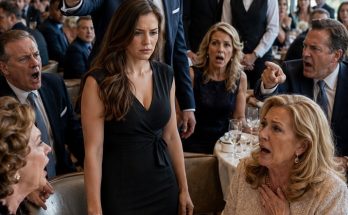
My mother looked at me and said, “We’re not paying for this wedding.” My sister smiled and added, “Better luck next time.” I only nodded and replied, “Understood.” A few weeks later, my dad, my mom, and even my sister kept calling nonstop. I smiled at my phone and texted back, “The guest list is already full.”
The sentence did not sound dramatic when I said it. It did not need to. By then, I had learned that the most permanent decisions in life rarely arrive with shouting. They arrive quietly, in a text message, in a signed document, in a room where everyone suddenly understands that the person they underestimated has stopped asking for permission.
But on the afternoon my mother canceled my future with one polished sentence, I had not yet become that calm woman.
I was standing in her living room on King Street in Charleston, holding my wedding binder against my chest like it could protect me. The binder was pale blue linen, the kind of thing I had bought from a stationery store because I wanted the planning to feel joyful, organized, and real. Inside were three years of quiet dreaming: fabric swatches, pressed flowers, vendor notes, hand-drawn sketches of table settings, printed photos of ivy-covered garden arches, and a folded napkin sample Ethan had laughed at because he could not understand why one square of linen cost more than dinner.
My mother, Veronica Reed, sat in her favorite wingback chair facing the garden. The late afternoon light came through the tall windows and caught the rim of her teacup. She held it delicately, as if even chamomile needed to be treated like a social obligation. Her posture was perfect. Her cream blouse had no wrinkles. Her pearls rested at her throat with the quiet authority of inherited judgment.
“We’re not paying for this wedding,” she said.
For a moment, I thought she meant something else. Maybe one invoice. Maybe a disagreement over the caterer. Maybe the florist had raised the quote again, and she wanted to talk through the budget. My mind reached for reasonable explanations because daughters like me are trained to soften sharp words before they hit.
“What do you mean?” I asked.
She did not turn away from the window. “Exactly what I said.”
The grandfather clock in the hallway ticked so loudly I could feel it behind my eyes.
My father, Charles Reed, stood near the fireplace with one hand in his pocket and the other resting on the mantel. He looked at the floor, not at me. He was an architect, a man who designed beautiful houses for families he barely knew, but at home he had spent thirty years perfecting the art of disappearing while still standing in the room.
“Dad?” I said.
He shifted his weight. “Your mother thinks it’s best.”
My sister Grace gave a soft laugh from the sofa. She was perched on the armrest in a white dress, her blond hair falling perfectly around her shoulders, her phone loose in her hand. Grace always looked like she had been arranged for a photograph. She was two years older than me, though she had spent most of our lives acting like a second mother whenever mine wanted backup.
“Better luck next time,” Grace said.
She smiled when she said it.
That smile hurt more than my mother’s sentence. My mother’s coldness was familiar, a room I had been locked in before. Grace’s pleasure was different. It was intimate. She knew exactly where the blade went because she had watched my mother sharpen it.
I looked down at the binder. A corner of the guest list peeked out from the side pocket. Ethan’s family names were written in my handwriting: his parents, his brothers, his grandmother from Savannah who had already bought a lavender dress, the high school principal who had introduced us to the school counselor who introduced us to each other. Our friends. My college roommate. My old art teacher. People who loved us without asking whether that love improved their standing in anyone’s eyes.
“I thought you wanted to help,” I said.
My mother finally turned her head. Her expression was not angry. It was worse. It was calm, almost tired, as if I were making this more difficult than necessary.
“I wanted to prevent embarrassment.”
My fingers tightened around the binder rings.
“Embarrassment?”
“Olivia,” she said, with the faint sigh she used whenever she wanted to sound compassionate while cutting me down, “a wedding reflects the family. It is not just about two people making sentimental promises in a garden. It is a public statement. And this wedding, as planned, is not appropriate for the Reed name.”
Grace looked back down at her phone, still smiling.
I felt something inside me reach for Ethan. Not his body, because he was across town at the high school finishing a late counseling session, but his steadiness. His hand on the back of my neck when my mother’s comments left me quiet after Sunday dinner. His voice saying, “You do not have to earn your place with me.” His face when I showed him the Ivy Oaks brochure and he said, “If that garden makes you happy, then that’s where we get married.”
“He is a good man,” I said.
My mother’s eyes cooled. “He is a school counselor.”
“He helps kids who need someone.”
“He has no real prospects.”
My father made a small sound, but he did not speak.
Grace looked up again. “Mom is trying to save you from waking up in five years with a mortgage, a tired husband, and a life that smells like cafeteria coffee.”
I stared at her. “You mean a normal life?”
“I mean a small one.”
The room went still after that.
A small life.
That was what they had always feared for me. Not cruelty. Not loneliness. Not being unloved. They feared modesty. They feared ordinary kindness. They feared anything that could not be displayed at a benefit dinner or printed under a photograph in the Charleston society pages.
My mother set her teacup down with a tiny porcelain click.
“If you insist on going through with this, you and Ethan may fund it yourselves. I will not attach my name or my resources to a mistake.”
There it was. The final polished stone laid on top of my chest.
The wedding binder suddenly felt ridiculous in my arms. All those swatches, those notes, those little dreams made in private hope. I had mistaken her financial involvement for acceptance. I had believed, foolishly, that when she offered to handle the vendor payments, she was offering a hand. I had not understood yet that my mother never handed over help without tying a string to it.
I should have argued. The old Olivia would have. She would have pleaded, explained, negotiated, tried to make the room understand that love was not a stain. She would have cried, and Grace would have enjoyed it, and my father would have watched the mantel as if the marble had answers.
But something in me went strangely quiet.
I closed the binder.
The sound of the rings snapping shut was soft, but Grace looked up.
I looked at my mother’s face, then my father’s lowered eyes, then my sister’s satisfied smile.
“Understood,” I said.
My mother blinked once. She had expected a scene.
I gave her none.
I walked out of the living room, down the cold marble hall, and through the front door without looking back. Outside, King Street was warm and bright. A carriage moved slowly past with tourists leaning in to hear the driver’s story about some house built before the Civil War. People carried iced coffees and shopping bags. Somewhere nearby, a church bell struck the hour.
The whole world continued, indifferent and alive, while the last hopeful piece of my childhood fell silent inside me.
I sat in my car for ten minutes before I called Ethan.
He answered on the second ring. “Hey, Liv. How did the caterer meeting go?”
I heard the noise behind him: lockers closing, a teenager laughing, the echo of the school hallway. He sounded tired but happy to hear me.
I opened my mouth, and for one second, nothing came out.
“Olivia?” he said, instantly alert. “What happened?”
I looked at the wedding binder on the passenger seat. The blue linen cover had a small dent where my fingers had pressed too hard.
“My mother pulled the money,” I said.
There was silence on the other end. Not the cold kind. The careful kind.
“Okay,” he said. “Come home. We’ll figure it out.”
The phrase should have frightened me. In my family, “we’ll figure it out” meant panic with a tablecloth over it. With Ethan, it meant two people sitting down together and telling the truth.
So I drove home.
Our apartment was above a bakery on a quiet side street, small and warm and constantly smelling faintly of sugar. Ethan was waiting at the kitchen table with two mugs of tea and a legal pad. He had taken off his tie, rolled up his sleeves, and pulled the chair beside him close to mine.
“We can still do it,” he said.
I laughed once, thinly. “You don’t even know what ‘it’ costs.”
“I know I’m marrying you, not a centerpiece.”
That almost broke me.
I sat down and opened the binder. We went line by line. Venue. Food. Flowers. Photographer. Rentals. Dress alterations. Music. Deposits already paid by my mother’s account, or so I believed. Balance due in thirty days. Balance due in forty-five. Final head count in two weeks.
By midnight, the legal pad was covered in numbers.
The wedding my mother had insisted on “elevating” was not the wedding Ethan and I would have planned alone. She had added costs with the ease of someone spending money she did not respect. A champagne station. Custom escort cards. Upgraded florals. Valet service. A string quartet for the ceremony, though Ethan and I had been perfectly happy with a guitarist.
“I let her do this,” I whispered.
Ethan reached across the table. “You wanted your mother to love you.”
I looked at him.
He did not soften the truth, and somehow that made it kinder.
“I wanted her to show up,” I said.
“I know.”
For the next few days, I lived in a fog of calls and calculations. I emailed vendors asking about reducing packages. Most were sympathetic. Some were not. Deposits were nonrefundable. Contracts had deadlines. My mother had made herself the point of contact for several accounts, which meant every change required extra verification.
Then, on a Tuesday afternoon, the phone rang while I was addressing invitations.
It was Sarah from Ivy Oaks Garden, our venue coordinator.
“Hi, Olivia,” she said, sounding uncomfortable. “I’m sorry to bother you, but I wanted to confirm the cancellation before we release the date. We have another couple interested.”
My pen rolled off the table.
“What cancellation?”
A pause. “The cancellation notice we received last week.”
“I didn’t cancel.”
The silence on her end stretched.
“Oh,” she said softly. “I think you should see the form.”
A minute later, an email appeared in my inbox.
I opened the attachment.
The Ivy Oaks cancellation form filled my screen. At the bottom, above the date, was my name.
Olivia Reed.
My signature.
Except I had never signed it.
The room narrowed. The bakery smell vanished. The noise from the street became far away. I stared at the curling shape of the O, the angle of the R, the soft pressure of the line. It looked like mine. It looked enough like mine to fool a vendor. But the rhythm was wrong. The hand behind it was too controlled.
My mother’s.
Then the calls began.
The florist had received a cancellation.
The photographer too.
The caterer had already been told the event was off due to “private family concerns.”
Every vendor had a form.
Every form had my signature.
By six o’clock, my wedding had been quietly dismantled by paperwork.
When Ethan came home, he found me sitting on the floor with printed emails arranged around me like evidence in a case. He took one look and dropped his bag.
“What did she do?”
I held up the Ivy Oaks form.
His face changed.
Ethan was gentle by nature. It was not weakness, no matter what my family believed. He was gentle because he knew what anger could do to young people who had nowhere safe to put it. He had built a career on staying calm while others fell apart. But that night, I saw anger move through him like a storm behind glass.
“She signed your name?”
“Yes.”
“We need a lawyer.”
“Yes.”
He stopped, surprised. “You agree?”
I looked at the papers on the floor. “Not for the wedding.”
His brows drew together.
“For everything.”
I did not fully know what I meant yet. I only knew that the forged cancellation forms had opened a door in my mind. My mother’s behavior had always been controlling, but this was different. This was not disapproval. It was deliberate. It was practical. She had taken control of the vendor payments, then used that access to cancel the event. She had not simply withdrawn support. She had removed the wedding itself.
There had to be a reason beyond embarrassment.
The next morning, I called every vendor again and asked them to forward original payment receipts, deposit sources, cancellation emails, and any documents bearing my signature. I created a folder on my laptop called Evidence. It felt dramatic for about ten seconds. Then the first receipt arrived.
Payment source ending in 4418.
The next receipt had the same account.
So did the next.
I recognized the last four digits because I had seen them before on an old bank statement tucked inside a file box in my closet. It was an account my parents had told me was empty. A custodial account my grandfather had supposedly opened for my college expenses, then depleted before my sophomore year.
I pulled the file box down from the shelf and searched until I found the thin folder.
Olivia Reed Custodial Account.
The last statement was years old. The balance then had not been much, or at least that was how I remembered it. I looked closer and saw something I had never noticed before: transfer references, account routing numbers, and a notation for an associated trust.
Trust.
The word sat on the page like a hidden hinge.
I called Eleanor Carter that afternoon.
Ms. Carter had been my grandfather’s attorney before she became the sort of lawyer old Charleston families consulted when wills, trusts, or reputations needed delicate handling. I remembered her from childhood as a tall woman with silver hair and a voice that could make adults sit straighter. She had sent me birthday cards until I was fifteen, always with a handwritten note in blue ink.
Her assistant put me through almost immediately.
“Olivia Reed,” Ms. Carter said warmly. “It has been far too long.”
“I need to ask you about an old account,” I said.
By the time I finished explaining, the warmth had gone out of her voice.
“Come to my office tonight,” she said.
“Tonight?”
“Yes. After hours would be best.”
Her office downtown was in a narrow brick building with brass numbers on the door and dark wood floors that creaked gently underfoot. The reception area was empty when I arrived, but light glowed from beneath her office door. Ms. Carter stood when I entered.
She had aged, of course, but not softened. Her silver hair was pinned low at the nape of her neck, and her glasses hung from a chain around her neck. On her desk sat a leather folder with my name embossed on the corner.
Seeing my name there made my mouth go dry.
She gestured to the chair across from her. “Sit down, Olivia.”
I sat.
She opened the folder.
“Your grandfather loved you very much,” she said.
The sentence was so unexpected I nearly cried.
“He worried about the family dynamic. He admired your mother’s intelligence, but he did not trust her judgment when it came to control. He believed you might need protection from the very people who would claim to be protecting you.”
I stared at the documents as she turned them toward me.
Irrevocable Trust Agreement.
My grandfather’s signature.
My name.
A number that made my breath stop.
Two hundred seventy-five thousand dollars.
“I don’t understand,” I whispered.
“This was never a simple college savings account,” Ms. Carter said. “It was a trust. Your parents were named temporary trustees until you reached either your thirtieth birthday or the date of your legal marriage. At that point, the remaining funds were to transfer fully to your control, and the trustees would be required to provide a final accounting.”
“My thirtieth birthday?” I said.
She looked at me carefully. “Your mother petitioned to extend control, claiming you were financially dependent at the time.”
“I wasn’t.”
“I know.”
My hands began to shake.
She placed bank statements on the desk. One after another. The paper stack grew like a wall between the past and the story I had been told.
Kitchen remodel.
Grace Designs seed funding.
Country club fees.
A trip to Italy.
My father’s car.
Grace’s wedding expenses.
Vendor deposits for my wedding.
Each line was ordinary in typeface and devastating in meaning.
“They used it,” I said.
“Yes.”
“For themselves.”
“Yes.”
“And for Grace.”
Ms. Carter’s eyes softened. “Yes.”
I touched one statement with two fingers. The account had funded the scarf, the parties, the marble kitchen island, the boutique that Grace had treated like a glamorous hobby until it started losing money. It had paid for the life my mother displayed while telling me to be practical, humble, grateful. It had paid for Grace’s coronation of a wedding, while my own love was called inappropriate.
“How much is gone?” I asked.
Ms. Carter did not look away. “More than one hundred fifty thousand dollars that cannot be justified as being for your benefit.”
The words entered me slowly.
More than one hundred fifty thousand dollars.
My grandfather’s gift. My safety. My future. The money I had been told was gone because I needed an education, when in fact scholarships and loans and part-time jobs had carried me through while they used my trust as a private bank.
Then the final shape emerged.
“If I marry Ethan,” I said, “the trust releases.”
“Yes.”
“And they have to provide an accounting.”
“Yes.”
“That’s why she canceled the wedding.”
Ms. Carter folded her hands. “I believe so.”
The room was silent except for the faint hum of the air conditioner.
All my life, I had thought my mother did not value me because I had failed to become the daughter she wanted. Now I understood something colder. She had kept me feeling small because small daughters do not ask to see bank statements. Small daughters accept explanations. Small daughters keep hoping for approval instead of hiring attorneys.
I gathered the copies Ms. Carter gave me. My hands had stopped shaking.
“What do you want to do?” she asked.
The question was not legal. Not entirely.
It was personal. A threshold.
If I acted, there would be no pretending afterward. No Thanksgiving table where everyone avoided the subject. No future phone call where my mother sighed and said we had all been emotional. No father standing silently while she rewrote reality. No Grace smirking from the sofa.
There would be paper.
There would be records.
There would be public truth.
I thought of Ethan waiting at home with tea. I thought of the Ivy Oaks cancellation form. I thought of my grandfather’s signature, trying to protect a child who did not yet know she would need it.
“File,” I said.
Ms. Carter nodded once. “I’ll prepare everything.”
The legal process began quietly, as real consequences often do.
My mother received the notice by courier on a Thursday afternoon. I know because Grace called me seven times in fifteen minutes, then sent a text in all caps demanding to know what I had done. My father called once and left no voicemail. My mother did not call that day. She waited until the next morning and sent a message so controlled it could have been engraved on a plaque.
This is beneath you, Olivia. Withdraw this before you cause permanent damage to this family.
I wrote back one word.
Understood.
Then I blocked her for the weekend.
Ethan and I moved our wedding plans to a folder labeled Later. There was grief in that, but also relief. For the first time, no one was trying to dress our love in borrowed status. We ate takeout on the apartment floor and talked about the future without centerpieces. Ethan never told me to forgive. He never told me anger would harm me. He simply sat beside me when the nights got quiet and said, “Whatever happens, we face it together.”
The hearing took place on a bright autumn morning at the Charleston County Courthouse. The sky was too blue for what I was about to do.
I wore a navy dress, simple pearl earrings my grandmother had left me, and low heels because I wanted to stand comfortably. Ethan held my hand as we walked up the courthouse steps. His thumb moved once across my knuckles, a silent message: I am here.
Inside the marble hallway, I saw them.
My mother wore a cream suit and her usual pearls. She looked immaculate from a distance, but when I came closer, I saw the faint tremor in the hand holding her handbag. My father stood beside her, gray-faced and older than I remembered. Grace stood with them in a pale pink dress, her lips pressed together, eyes sharp with anger.
For once, none of them looked superior.
They looked exposed.
My mother’s gaze swept over Ethan and stopped at our joined hands.
“Olivia,” she said, as if greeting me at a luncheon. “There is still time to end this embarrassment.”
I looked at her. “You already tried ending my wedding.”
Her face tightened.
Grace stepped forward. “You are really going through with this? Dragging our family into court over a misunderstanding?”
Ms. Carter appeared beside me before I could answer. “Good morning, Grace.”
Grace closed her mouth.
Some women can silence a room without raising their voice. Eleanor Carter was one of them.
In the courtroom, my mother sat straight-backed while Ms. Carter presented the forged cancellation forms. A handwriting expert’s report identified similarities between the signatures and samples of my mother’s writing. Vendor emails showed the cancellation notices had come from an account my mother controlled. Ivy Oaks had kept the digital record. The florist had saved the voicemail. The caterer had timestamped the form.
My mother watched all of it as if she were watching a weather report about a storm in another state.
Then came the trust.
Bank statements appeared on the screen at the front of the courtroom. Clean rows. Dates. Amounts. Memo lines. Receipts matched to withdrawals. Ms. Carter moved through them with careful precision.
“Twenty-five thousand dollars for a kitchen renovation at the defendants’ residence.”
My mother’s jaw tightened.
“Fifty thousand dollars transferred to Grace Davenport’s boutique.”
Grace looked down.
“Country club dues, travel expenses, vehicle payments, and wedding expenses for the defendants’ elder daughter, all drawn from a trust created for Olivia Reed’s sole benefit.”
My father closed his eyes.
When my mother took the stand, she performed beautifully at first. She spoke of family unity, shared resources, and my supposed emotional impulsiveness. She described Ethan as unsuitable with such polite language that it almost sounded like concern. She said she had delayed the wedding to protect me from a mistake.
The judge listened without expression.
Ms. Carter approached the stand.
“Mrs. Reed,” she said, “did Olivia authorize you to sign her name on the cancellation forms?”
My mother lifted her chin. “I acted as a mother.”
“That is not an answer.”
“I acted to protect her.”
“Did she authorize you?”
My mother’s lips thinned. “No.”
A sound moved through the room.
Ms. Carter continued. “Did Olivia authorize you to use trust funds for your kitchen renovation?”
“It was a family home.”
“Did she authorize it?”
“No.”
“Did she authorize the transfer to Grace Davenport’s boutique?”
Grace shifted in her chair.
My mother’s hand tightened around the edge of the witness stand. “That business reflected well on the family.”
“Did Olivia authorize it?”
“No.”
The word came out sharp enough to reveal the anger underneath.
Ms. Carter paused, allowing the answer to settle.
Finally, she asked, “Were you aware that Olivia’s legal marriage would trigger release of the trust funds and require a final accounting?”
My mother did not answer immediately.
That silence was the whole case.
“Yes,” she said at last.
The judge leaned back.
I felt Ethan’s hand find mine under the table.
The ruling was not theatrical. It was worse for my mother because it was precise. The court ordered full repayment of the misused funds, additional damages, and removal of my parents from any remaining authority connected to the trust. The judge’s voice remained steady as he spoke about fiduciary duty, signatures, and accountability.
My mother stared straight ahead.
Grace covered her face.
My father looked at me once, and in his eyes I saw something that might have been apology if he had been a braver man.
Outside the courtroom, my mother broke away from my father and came toward me.
The hallway smelled faintly of floor wax and rainwater from people’s shoes. Sunlight slanted through the tall windows. Reporters were leaving in a rush, already whispering into phones.
“Olivia,” my mother said.
I stopped.
She looked smaller without the witness stand between us.
“We need to talk,” she said. “This has gone far enough. We can repair this privately.”
I almost laughed.
Privately. Her favorite word when truth became inconvenient.
“No,” I said.
Her face flickered. “I am your mother.”
“You signed my name.”
“I was trying to save you.”
“You were trying to save yourself.”
Her eyes filled, but the tears did not move me the way they once would have. They were too late. Too useful.
She lowered her voice. “We are still family.”
For years, I had wanted that sentence. I had wanted it to mean shelter, belonging, a place at the table. But in her mouth, family had always meant access. It meant my silence, my forgiveness, my willingness to absorb damage so the surface stayed smooth.
I looked at her and finally saw the truth without flinching.
“We were family a long time ago,” I said. “You canceled that too.”
She inhaled as if I had touched a bruise.
Then I turned and walked out with Ethan.
I did not look back.
For months afterward, they called.
At first, they called through lawyers. Then through distant relatives. Then through my office. My father left one voicemail saying he hoped we could “find a path forward.” Grace left several, each angrier than the last, accusing me of ruining her business, ruining our parents’ reputation, ruining everything she claimed to have built. My mother’s messages were the hardest because they sounded soft. She mentioned my father’s health, old holidays, my grandfather, the wedding binder she still had, as if memory could be used as currency.
I deleted most of them.
But then, spring came.
Ethan and I reopened the wedding file.
Not the old binder. I threw that away one Saturday morning and bought a plain white notebook instead. We still wanted Ivy Oaks Garden. The venue, to its credit, had held a cancellation opening for us after hearing enough of the story to feel responsible. We chose a smaller date in May, when the white roses would be in bloom and the live oaks would shade the lawn.
This time, the wedding was ours.
No champagne station unless we wanted it. No society guest list. No names invited because my mother owed their mothers favors. No seating chart designed around status. We invited fifty people: Ethan’s big, loud family, my closest friends, Ms. Carter, my college roommate, the art teacher who had once told me my sketches had feeling, and the neighbors who had fed our cat when the lawsuit made me forget small practical things.
Three weeks before the wedding, my mother found out.
I do not know how. Charleston leaks information the way old roofs leak rain.
The calls started again. My father first. Then Grace. Then a number I did not recognize, which turned out to be my mother calling from someone else’s phone. Ethan and I were sitting on the porch of our apartment, eating takeout from paper containers, when my phone lit up for the fifth time in ten minutes.
Mother.
I watched the screen until it went dark.
A voicemail appeared.
Then a text.
Olivia, this is still your wedding. We should be there.
Grace texted next.
Don’t be cruel. People will talk if Mom isn’t invited.
My father wrote:
Please don’t close the door forever.
I held the phone in both hands.
For one moment, the old ache stirred. Not enough to change my mind, but enough to remind me that healing is not the same as becoming stone. A daughter can know the truth and still mourn the mother she did not get. A bride can be happy and still feel the empty space where a father should have chosen her.
Ethan looked at me. “You okay?”
I smiled, and this time the smile was real.
“Yes.”
I typed one message into the group thread they had created without my permission.
The guest list is already full.
Then I turned off my phone.
Our wedding day arrived with clear May light and a breeze that moved through the oaks like a blessing.
I got ready in the bridal suite at Ivy Oaks with my two best friends, Sarah and Maya, and Ms. Carter, who insisted she was only there to deliver a document but stayed to button the back of my dress because her hands were steady and mine were not. My gown was simple, made of soft crepe with clean lines and no lace imported for anyone’s approval. I wore my grandmother’s earrings and carried white roses tied with blue ribbon.
There was no mother fixing my veil.
No father waiting outside the door to walk me down the aisle.
For a few seconds, standing before the mirror, I let myself feel the shape of that absence.
Then Maya squeezed my shoulder. “Ready?”
I looked at my reflection.
I did not see a rejected daughter.
I saw a woman who had chosen herself and been chosen well.
“Yes,” I said.
I walked myself down the aisle.
The garden was full of faces that loved me without conditions attached. Ethan stood beneath the rose arch in a charcoal suit, eyes already wet, smiling like he had been waiting his whole life to see me appear. His mother cried openly. His father pretended not to. His brothers grinned. My friends beamed. Ms. Carter sat in the front row, straight-backed and proud.
Every step felt like reclaiming ground.
When I reached Ethan, he whispered, “Hi.”
Such a small word.
Such a safe place.
We wrote our own vows. He spoke about seeing me clearly when I had spent years feeling invisible. I spoke about choosing peace, not because life would always be easy, but because we would never use love as leverage. When the officiant pronounced us married, Ethan kissed me gently, and the applause rose around us like sunlight.
For the first time in my life, a celebration belonged to me without being borrowed, judged, or used.
At the reception, we served food we actually loved: shrimp and grits, roasted vegetables, biscuits with honey butter, lemon cake, and late-night coffee. No one cared whether the napkins were impressive. People danced barefoot on the lawn. Ethan’s grandmother outlasted half the bridal party. Sarah gave a toast that made me laugh and cry at the same time.
Near sunset, I stepped away from the music and stood at the edge of the garden.
My phone was in my clutch, turned off.
I did not need to check it to know there would be messages. Maybe anger. Maybe pleading. Maybe photographs of my mother looking wounded in pearls. Maybe Grace demanding to know how I could do this to family.
But across the lawn, Ethan was looking for me.
When he found me, his face softened.
“You disappeared,” he said.
“Just for a minute.”
He held out his hand. “Come back?”
I looked at him, then at the garden, the people, the lights being strung between the trees, the life I had almost allowed my family to take from me.
“Yes,” I said.
I took his hand and returned to the party.
Two years later, people still ask whether I regret not inviting them.
The answer is no.
Not because it was easy. It was not. There were nights after the wedding when grief still surprised me, small and sharp. A commercial with a mother adjusting a bride’s veil. A father-daughter dance at someone else’s reception. A holiday card addressed to Mr. and Mrs. Ethan Hayes with no mention of the family I had left behind.
But regret is different from grief.
I grieved what should have been.
I do not regret protecting what is.
With the money restored from the trust, I opened a small bridal design studio in Charleston’s historic district. The front windows face a quiet street lined with gas lamps and old brick. I design dresses for women who want to feel like themselves on the happiest days of their lives. Some arrive with mothers who listen. Some arrive with mothers who criticize. When I see a bride go quiet under someone else’s opinion, I always ask her the same question gently.
“What do you want?”
You would be surprised how many women need permission to answer.
I know because I was one of them.
My mother still lives in Charleston. So does my father. Grace’s boutique closed after the judgment forced my parents to stop quietly supporting it. I hear things occasionally because the city is small and stories travel through open doors. My mother resigned from committees she once ruled. My father’s firm downsized. Grace tells anyone who will listen that I chose money over family.
That used to bother me.
Now it sounds like a person describing a room she has never entered.
I did not choose money over family.
I chose truth over performance.
I chose the man who loved me over the people who measured him.
I chose a guest list filled with warmth instead of a ballroom full of judgment.
And when my phone lit up with their names before my wedding, I did not scream, plead, or explain.
I simply remembered my mother’s living room, Grace’s smile, the forged signature, the trust documents, the courthouse hallway, and the girl I used to be, holding a blue binder and waiting for permission to be happy.
Then I smiled at my phone and sent the only answer that still felt necessary.
The guest list was already full.