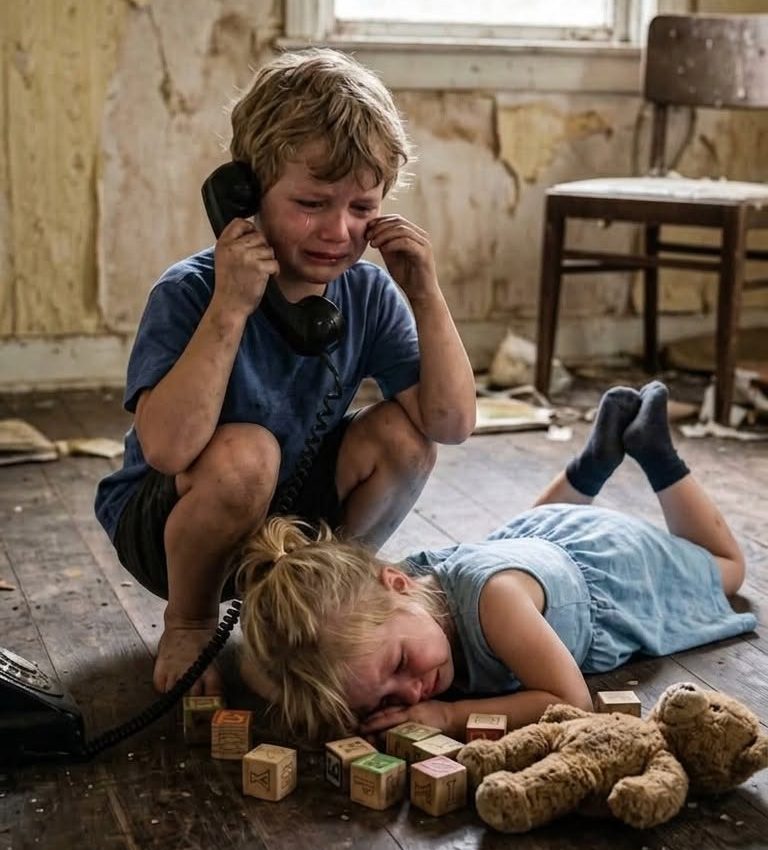
Part 1: The Call
“Don’t call me anymore.”
Those five words hit harder than any argument ever could.
There was no yelling.
No warning.
No dramatic fight.
Just a quiet Tuesday afternoon and my son’s voice on the phone.
“Don’t call me anymore.”
I laughed at first.
Not because it was funny.
Because my brain refused to process what I had just heard.
“What are you talking about?”
Silence.
Then a sigh.
The kind of sigh people make when they’ve already made up their minds.
“Mom, please.”
“Please what? You’re my son.”
Another pause.
Then the sentence that would replay in my head for the next fourteen months.
“Karen thinks it’s best.”
Karen.
His wife of three years.
The woman who appeared in his life after I had spent thirty-two years raising him.
The woman who somehow now had more influence than his own mother.
My stomach twisted.
“So this is her idea?”
“Mom—”
“No. Answer me.”
He didn’t.
And that silence told me everything I wanted to hear.
Or at least everything I convinced myself was true.
Karen was behind this.
Karen wanted me gone.
Karen was taking my son away.
I spent the rest of that evening staring at family photos.
There was one from Little League.
One from high school graduation.
One from college.
One from his wedding.
My favorite was still the picture of him at six years old missing his two front teeth and holding a fishing pole almost taller than he was.
How does someone go from calling you every day to telling you never to call again?
I couldn’t understand it.
So I did what hurt parents often do.
I started keeping score.
Every sacrifice.
Every late night.
Every baseball game.
Every tuition payment.
Every birthday party.
Every Christmas morning.
I replayed thirty-two years of motherhood looking for an answer.
And every time, I arrived at the same conclusion.
Karen.
It had to be Karen.
Weeks passed.
Then months.
I called twice.
Straight to voicemail.
I left messages.
No response.
I texted on Thanksgiving.
Nothing.
Christmas.
Nothing.
His birthday approached fourteen months later.
I stood in the greeting card aisle for nearly twenty minutes.
The logical part of me said not to send anything.
The hurt part of me couldn’t accept that.
Finally, I bought a simple card.
No guilt.
No accusations.
No mention of Karen.
Just six words.
“I love you. Happy birthday. Mom.”
I sealed the envelope and dropped it into the mailbox.
Then I went home.
Three days later, something arrived in my mailbox.
An envelope.
With my son’s handwriting on the front.
And for the first time in fourteen months, my hands started shaking.
Part 2: The Letter
My hands shook as I carried the envelope into the kitchen.
Fourteen months.
Fourteen months of silence.
Fourteen months of unanswered calls, unread messages, and wondering what I had done wrong.
And now there was a letter.
From my son.
I sat down slowly.
The return address was his.
The handwriting was his.
For a moment, I just stared at it.
Part of me was terrified.
Part of me was hopeful.
Finally, I opened it.
Inside was a single sheet of paper.
No “Dear Mom.”
No greeting.
Just words.
The first sentence hit me immediately.
“Karen didn’t ask me to stop talking to you.”
I blinked.
Read it again.
Then a third time.
My chest tightened.
The next line hurt even more.
“I let you believe that because it was easier than telling you the truth.”
I could feel my heartbeat in my ears.
The truth?
What truth?
I kept reading.
My son wrote about childhood memories.
Not the ones I remembered.
Not baseball games.
Not birthdays.
Not Christmas mornings.
Different memories.
Memories I had forgotten.
Or never noticed.
The time I laughed when he wanted to quit baseball because he hated it.
The time I told him engineering was a “real career” and photography was a hobby.
The time I criticized the apartment he proudly showed me after college.
The time I interrupted him so many times at dinner that he simply stopped sharing things.
Each story seemed small.
Tiny.
Insignificant.
But there were dozens of them.
One after another.
A pattern.
And patterns are harder to ignore than individual mistakes.
Then I reached the paragraph that made me put the letter down.
“Mom, every conversation was about what you wanted, what you thought, or what you approved of. I spent years trying to earn your approval. Eventually I realized I never would.”
Tears blurred the page.
Because I wanted to argue.
I wanted to defend myself.
I wanted to explain.
But deep down, something felt uncomfortably familiar.
I picked the letter back up.
The final page talked about Karen.
Not as a villain.
Not as a manipulator.
As the first person who had asked him a question nobody else had ever asked.
“What do you want?”
According to him, he didn’t know how to answer.
Not at first.
Because he’d spent so many years trying to become the version of himself he thought I wanted.
Then came the sentence that broke me.
“Karen didn’t take me away from you. She helped me see I was allowed to have boundaries.”
I sat there for a long time.
The kitchen grew dark around me.
The untouched cup of coffee turned cold.
And for the first time in fourteen months, I wondered if I had been asking the wrong question.
Maybe the question wasn’t:
“Why did my son leave?”
Maybe the question was:
“Why did he feel he had to?”
At the very bottom of the page was one final paragraph.
And after I read it, I knew my life was about to change again.
Part 2: The Letter
My hands shook as I carried the envelope into the kitchen.
Fourteen months.
Fourteen months of silence.
Fourteen months of unanswered calls, unread messages, and wondering what I had done wrong.
And now there was a letter.
From my son.
I sat down slowly.
The return address was his.
The handwriting was his.
For a moment, I just stared at it.
Part of me was terrified.
Part of me was hopeful.
Finally, I opened it.
Inside was a single sheet of paper.
No “Dear Mom.”
No greeting.
Just words.
The first sentence hit me immediately.
“Karen didn’t ask me to stop talking to you.”
I blinked.
Read it again.
Then a third time.
My chest tightened.
The next line hurt even more.
“I let you believe that because it was easier than telling you the truth.”
I could feel my heartbeat in my ears.
The truth?
What truth?
I kept reading.
My son wrote about childhood memories.
Not the ones I remembered.
Not baseball games.
Not birthdays.
Not Christmas mornings.
Different memories.
Memories I had forgotten.
Or never noticed.
The time I laughed when he wanted to quit baseball because he hated it.
The time I told him engineering was a “real career” and photography was a hobby.
The time I criticized the apartment he proudly showed me after college.
The time I interrupted him so many times at dinner that he simply stopped sharing things.
Each story seemed small.
Tiny.
Insignificant.
But there were dozens of them.
One after another.
A pattern.
And patterns are harder to ignore than individual mistakes.
Then I reached the paragraph that made me put the letter down.
“Mom, every conversation was about what you wanted, what you thought, or what you approved of. I spent years trying to earn your approval. Eventually I realized I never would.”
Tears blurred the page.
Because I wanted to argue.
I wanted to defend myself.
I wanted to explain.
But deep down, something felt uncomfortably familiar.
I picked the letter back up.
The final page talked about Karen.
Not as a villain.
Not as a manipulator.
As the first person who had asked him a question nobody else had ever asked.
“What do you want?”
According to him, he didn’t know how to answer.
Not at first.
Because he’d spent so many years trying to become the version of himself he thought I wanted.
Then came the sentence that broke me.
“Karen didn’t take me away from you. She helped me see I was allowed to have boundaries.”
I sat there for a long time.
The kitchen grew dark around me.
The untouched cup of coffee turned cold.
And for the first time in fourteen months, I wondered if I had been asking the wrong question.
Maybe the question wasn’t:
“Why did my son leave?”
Maybe the question was:
“Why did he feel he had to?”
At the very bottom of the page was one final paragraph.
And after I read it, I knew my life was about to change again.
The Ending
A year later, my son invited me to his house for a family barbecue.
Nothing fancy.
Just burgers on the grill.
Kids running through the yard.
Karen arranging plates on the picnic table.
The kind of ordinary day I once would have overlooked.
Now it felt like a gift.
Halfway through the afternoon, my grandson tugged on my sleeve.
“Grandma, come see my treehouse!”
I followed him across the yard.
My son walked beside us.
For a moment, neither of us spoke.
Then he stopped.
“Mom?”
“Yeah?”
He looked out toward the house.
“I wasn’t trying to punish you.”
My throat tightened.
“I know.”
“I just needed space.”
I nodded.
“I know that too.”
For years, I would have argued.
Explained.
Defended myself.
This time, I listened.
He smiled.
“You’ve changed.”
I laughed softly.
“About thirty years too late.”
He laughed too.
Then something happened that I never expected.
He put his arm around my shoulders.
The same little boy I had once carried into kindergarten.
The same young man who had stopped answering my calls.
The same son I thought I’d lost forever.
“I love you, Mom,” he said.
Simple words.
But after everything we’d been through, they meant more than I can explain.
That evening, after everyone went inside, I sat alone on the back porch.
The sun was setting.
The yard was quiet.
And I thought about the fourteen months of silence.
For a long time, I believed those months were the worst thing that ever happened to me.
I was wrong.
They were the thing that finally forced me to listen.
The truth was painful.
The apology was painful.
Change was painful.
But losing my son forever would have been worse.
Before I left that night, Karen walked me to my car.
“I’m glad you came,” she said.
I smiled.
“I’m glad you never gave up on him.”
She shook her head.
“I never did.”
Then she added something I’ll never forget.
“And I’m glad you didn’t give up on yourself.”
I drove home with tears in my eyes.
Not sad tears.
Grateful ones.
Because sometimes the happiest endings aren’t about getting things back the way they were.
Sometimes they’re about becoming better than they were before.
And as I pulled into my driveway, my phone buzzed.
A text from my son.
Just four words:
“Drive safe. Love you.”
This time, I smiled before replying.
“Love you too.”
And for the first time in many years, it felt like home again.