Part 1 — (setup + the exact trap)
“You owe my parents fifty thousand dollars,” my ex-husband said, voice steady with the kind of confidence that only comes from believing nobody will challenge you.
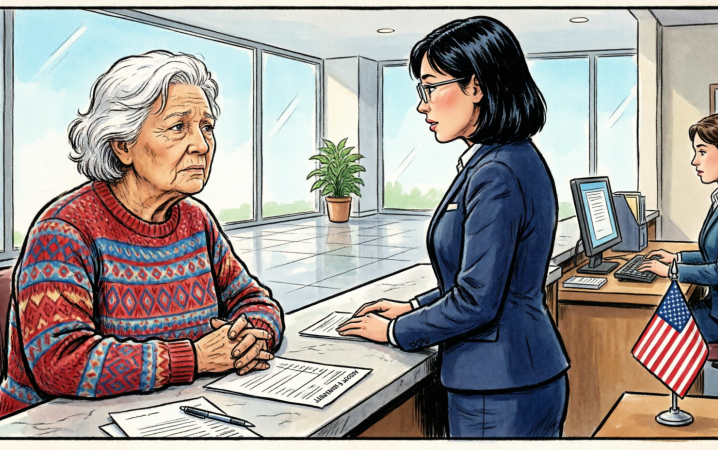
We were in the mediation room, fluorescent lights humming overhead, walls too blank to feel safe. The mediator sat between us like a referee. A neat folder lay open on the table. A pen waited in their hand.
My ex didn’t need to raise his voice. He didn’t need to look angry. He just slid a piece of paper forward—pristine, thick, notarized. The edges were too clean, the ink too perfect, like it had been printed for the moment it would be used.
“A notarized agreement,” he said. “With your signature. For the down payment. We borrowed it back then.”
He placed it in front of me like the paper itself was the verdict.
The words swam as I stared. My name was on it—spelled correctly. The line where my signature should be matched, down to the slight curve I’d always made at the end. It was detailed enough to make my stomach lurch, because I recognized the rhythm of how my hand moved.
But I hadn’t signed it.
I had never signed it.
My ex leaned back slightly, as if the outcome had already happened and all that remained was for me to accept it.
The mediator glanced at him, then at me, and their expression softened in that way professionals do when they think a spouse is about to get overwhelmed.
“Ms. [My Name],” the mediator said gently, “he’s bringing a document. It’s notarized. Let’s understand what you—”
“I understand what it is,” I cut in, keeping my tone calm on purpose. “It’s notarized.”
I reached for the contract. My fingers didn’t tremble—at least, not on the surface. Inside, my mind was sprinting through possibilities. If this was real, it meant someone had forged my identity. If it was a forgery, it meant someone had done it carefully enough to pass the first glance test.
Either way, it wasn’t something I could afford to react to emotionally.
I didn’t panic.
Not because I wasn’t scared.
Because fear would be exactly what he wanted.
I tapped the bottom of the page with my fingertip. “Can I examine the notary stamp?”
The mediator blinked. “Of course. We can—”
“Not only the stamp,” I said. “The notary’s details. Who notarized it, and what exact date and place are listed?”
My ex-husband’s confident smile tightened into something harder. “It’s notarized. It doesn’t get more official than—”
“Let me see,” I said, and kept my gaze on the paper, not on him.
The mediator looked down and turned it slightly toward the light.
The notary stamp at the bottom was clear. Name. Commission. Seal. Everything placed like it mattered.
Then I noticed something that didn’t fit.
It was subtle, but my eyes caught it the way they catch an unfamiliar face in a familiar crowd: the stamp’s associated person listed on the page—someone I recognized from a social media profile I’d only come across once, during that period when my ex-husband suddenly became “serious” about moving on.
His new girlfriend.
I didn’t want to accuse anyone based on a feeling. So I went one step further. One step that would either confirm the truth or prove I was wrong.
I took out my phone and opened a public flight registry website.
“Are you going to start searching flights in the middle of mediation?” my ex asked, almost laughing.
The mediator’s brows rose, but they didn’t stop me. They looked curious now—interested instead of pitying.
I typed in the exact date on the contract.
September 14th.
Then I searched by my name and passport details, and I found it immediately: the entry that showed my travel record.
A twelve-hour flight to Tokyo.
Boarding time and itinerary details aligned with the week I remembered packing that suitcase like it was the last normal moment of my life before he shattered it.
I didn’t rely on memory alone.
I relied on records.
When the screen loaded, I turned the phone so the mediator could see.
“This document is dated September 14th,” I said. “The notary information is linked to your girlfriend.”
My ex-husband’s posture changed. Just a fraction. Like he’d felt the ground shift under his feet but was still pretending he hadn’t noticed.
“And on September 14th,” I continued, holding my phone steady, “I was on a flight to Tokyo. Here’s my passport.”
I placed my passport on the table, opened to the page showing the stamp and the itinerary. I didn’t even exaggerate. I didn’t dramatize. I didn’t tell a story about why I was traveling.
I just put proof in front of them.
The mediator leaned in, scanning. Their expression changed from pity to alertness.
My ex-husband reached for the contract—too fast. His fingers closed around the paper with a sudden urgency that didn’t match earlier confidence.
“You don’t understand,” he said. “This is—”
“It’s not possible,” I replied quietly.
The room felt smaller after that.
The mediator sat back and made a note with their pen. “Mr. [His Name], we will need to verify authenticity and the notary’s commission details.”
My ex tried to grab the narrative back before it slipped away. “It doesn’t matter that she traveled. People can sign documents before a date—there’s—”
“Then show me why the notary is your girlfriend,” I said, and my voice stayed level. “Show me why it matches her stamp. And show me why I, specifically, was allegedly signing something on a day I was in Tokyo.”
He went silent.
Because even silence can confess when you were never prepared to face evidence.
The mediator looked at him carefully. “Ms. [My Name]—what else can you provide?”
I had been asked that question in a hundred hypothetical nightmares.
So I answered like I’d rehearsed the truth.
“I already sent a copy,” I said.
The mediator’s eyes widened. “To—?”
“To someone who can verify the document’s metadata and chain of custody,” I said. “And to a secure inbox that can’t be edited.”
My ex-husband snapped, “You can’t—”
“I can,” I said. “Because I knew you’d try something like this. I just didn’t know how far you’d go.”
The mediator held up a hand—gentle but firm. “All right. We’re going to pause. We’ll address this document separately.”
My ex-husband’s confident smile was gone completely now.
In its place was something else—something sharp, frantic, and exposed.
Because what he’d brought to mediation wasn’t just a legal document.
It was a trap.
And this time, I’d already walked around it with receipts.
Part 2 — (the forensics + the collapse)
The mediator didn’t rush.
They just lifted their pen, tapped it once against the folder, and said, “We’re pausing this agreement discussion.”
My ex-husband started to protest immediately—something about how notarization was “presumptively valid,” about how the mediator should “assume the document is authentic until proven otherwise.” He spoke quickly, like speed could replace evidence.
But the room had changed.
Now it wasn’t pity on the mediator’s face. It was caution. Calculation. The kind of look people get when they realize they might be assisting something improper.
The mediator turned to me. “Ms. [My Name], I’m going to need more than flight confirmation. We’ll verify the notary directly. And we’ll also request the notary’s journal entry for September 14th—if that entry exists—and the commission record.”
My ex’s eyes flicked toward the window as if he wanted to run.
“You can’t just—” he began.
The mediator cut in, calm and absolute. “We can. And we will.”
They slid the contract into a separate envelope like it was evidence, not a bargaining chip.
Then the mediator looked at my ex and said something that made his entire posture stiffen:
“Mr. [My Name], I want the complete chain of custody for where this document came from. Who provided it to you, and when did you obtain it.”
He opened his mouth—then stopped.
The mediator wasn’t asking to be polite. They were asking so they could build a timeline strong enough to survive scrutiny.
My ex-husband leaned forward, trying to regain control of the narrative.
“It’s simple,” he said. “My parents gave me the money. My parents paid for the down payment. We have an agreement. There’s no need for—”
“There is every need,” the mediator replied.
I didn’t interrupt him. I watched his hands.
They were clean. Too controlled. The first time he’d grabbed the paper, it had been quick—impulsive almost. Now he was trying to act like he never cared. Like he was above the drama.
The mediator asked for permission to contact the notary.
My ex immediately tried to block it with procedural language—“consent issues,” “privacy,” “unnecessary delay.”
But the mediator wasn’t taking the bait. They simply said they would proceed and that we would schedule a follow-up session only after the verification step.
The meeting ended with everyone collecting their things.
Except my ex-husband didn’t pick up his folder right away.
He stayed seated for a beat too long, staring at the contract envelope as if he thought staring hard enough would reverse what we’d learned.
I could feel my pulse in my throat.
Not because I thought he’d win.
Because I had realized something important:
He hadn’t tried to cheat me by accident.
He’d practiced. He’d prepared. And he’d chosen the date deliberately.
September 14th.
A day I was out of the country—precisely the kind of day that makes a forged document become believable if people assume you can’t disprove it quickly.
Verification Day
Two days later, the mediator called me.
The tone was different now—less mediation, more investigation.
“We contacted the notary listed on the contract,” they said.
My hands went cold.
“Okay,” I managed.
“We were told the journal entry for that commission date does not match what’s reflected on your document.”
I didn’t speak. I couldn’t. My brain turned over the sentence again and again like it was trying to find the part that wasn’t real.
The mediator continued, carefully:
“Also, the notary’s stamp details—specifically, the name/identifier linked to that stamp—do not correspond to the notary you were told notarized the agreement.”
My ex-husband had claimed notarization made it final.
But the mediator was saying the notarization itself was wrong.
Not just “questionable.”
Wrong.
“And,” the mediator added, “the notary stated they did not notarize anything for you or the parties listed on that contract.”
My mouth opened slightly, but no sound came out.
So it wasn’t a near-miss forgery.
It was an engineered one.
I swallowed. “What happens next?”
The mediator paused, then chose their words with care, like they were placing something sharp onto the table.
“We will request a formal authenticity determination through the appropriate channels. In addition, we will address possible sanctions or fraud-related referral depending on what the other evidence indicates.”
My ex-husband had counted on the system being too slow to catch up.
This time, it wasn’t.
Not with facts on paper and records in place.
The Follow-Up Session
When we returned to mediation, my ex walked in like he’d rehearsed a new version of confidence.
He didn’t look at me at first. He looked at the mediator’s hands, the folder, the chair arrangement—as if the setup mattered more than truth.
The mediator placed the contract envelope in the center and set out a second stack of documents.
Then they spoke directly.
“Mr. [His Name], we have verification results regarding the notary stamp and journal records. The notary disputes having notarized the agreement and the stamp identifiers do not match.”
My ex’s face twitched.
Not much—just a flicker at the eyes. But I saw it.
He was realizing: this wasn’t going to become “a misunderstanding.”
It was going to become a case.
The mediator continued. “Therefore, the contract will not be treated as valid in this matter. We will not use it as the basis for any offset against alimony.”
My ex opened his mouth to argue.
The mediator cut him off immediately. “Mr. [His Name], you brought a document to mediation that has been indicated as fabricated or improperly notarized. I’m going to pause and address process and potential consequences.”
My ex tried one last tactic—attack the messenger.
“You’re just taking her word,” he snapped, pointing at me like he could blame the proof. “She sent her copy to someone. Who knows what she did. Who knows what she edited.”
The mediator’s expression didn’t change, which somehow made it worse.
“Ms. [My Name], we asked about your ‘copy sent’ step,” they said.
My heart hammered.
This was the moment I could either look prepared—or look like I was guessing.
So I answered cleanly and exactly.
“I sent a copy,” I said, “to a secure inbox used for document requests and to the mediator file itself through the established procedure we agreed to.”
I didn’t exaggerate. I didn’t say “metadata” unless asked. I just stuck to chain-of-custody language the system understood.
The mediator nodded. “Thank you.”
Then they turned back to my ex.
“And Mr. [His Name], you will provide us, in writing, the source of the agreement and when you received it—including who transmitted it to you and whether you had it notarized independently.”
His jaw tightened.
He tried to speak, but the words came out wrong, like he couldn’t decide which story to tell.
Because now he couldn’t rely on the document being treated as fact.
It wasn’t.
It was just ink with a false stamp.
And the mediator had already moved past giving him the benefit of doubt.
The Real Blow
After a brief recess, the mediator returned with the final decision for the session:
- The fabricated agreement was excluded from negotiations.
- No alimony offset would be permitted based on it.
- The mediator would file a referral for investigation regarding potential fraud/forgery implications through the proper legal route.
- Any future filings by either party would require stricter verification.
The room didn’t feel triumphant.
It felt resolved.
Like the system finally stopped being polite to manipulation.
My ex didn’t argue again.
He sat down slowly, shoulders dropping the way people do when they realize the ground they were standing on has been removed.
I looked at him and felt something calm settle behind my ribs.
Not anger. Not panic.
Relief sharp enough to taste.
Because for the first time since he accused me, the truth wasn’t “my side” versus “his side.”
It was simply what the records said.
And the records didn’t bend.
Part 3 — (anticipation + his second attempt fails)
He left that follow-up session quieter than he’d entered.
No more confident smile. No more “pristine notarized contract” language. Instead, he kept clearing his throat and asking the mediator if we could “just wrap this up,” like speed might still rescue him.
But the mediator didn’t play speed games anymore.
They told us the mediation would pause while the verification and any referrals were handled through the proper channels. In plain terms: the document he’d brought wasn’t just weak—it was treated as unreliable, and that mattered.
I should’ve felt finished.
Instead, I felt the opposite.
Because I’d learned something about liars with paperwork: once the first lie fails, the next one often arrives fast—either as a second document or a new claim built to confuse the process before anyone can check.
That night, I didn’t vent. I didn’t spiral.
I did the only thing that keeps you safe against fraud: I prepared.
I pulled every email, text, and screenshot from the period around September 14th—anything that showed where I was, what I was doing, and what my signature patterns looked like. I saved my flight confirmation details again. I saved the passport page copy. I wrote down dates and times in a clean timeline.
Then I asked my lawyer—quietly, by phone—one question:
“If he files anything else claiming my signature, what verification should we request immediately?”
My lawyer didn’t sound surprised.
“Ask for proof of notarization and notarization logs first,” she said. “And demand authenticity determination before any document gets used as a basis for offsets or claims. Also: keep your system.”
Keep your system.
That’s what I did.
The Second Filing
Ten days later, there it was: a new filing request sent through the mediation channel.
This one was “additional documentation.”
My ex’s message attached another “agreement” with my name, this time claiming it was a revised contract. He alleged it was corrected after the first one. He tried to frame it as “administrative,” like mistakes happen and notarization can still guarantee truth.
The mediator emailed me immediately:
“Ms. [My Name], please review. We may need to pause if authenticity is in question.”
My stomach tightened so fast I had to sit down.
This wasn’t random.
This was his response to being blocked.
He hadn’t stopped. He’d pivoted.
But this time, I didn’t react like a person getting hit by surprise.
I reacted like someone with a plan.
I forwarded the filing to my lawyer and replied to the mediator with exactly what I’d rehearsed:
- Request confirmation of the notary journal entry and commission record for the revised agreement.
- Request the notary’s direct verification (journal excerpt or written confirmation).
- Request that no offset against alimony be permitted based on this revised document until authenticity is confirmed.
- Flag the prior incident as relevant to credibility and request stricter document handling going forward.
The mediator didn’t argue.
Instead, they thanked me for the clear request and told my ex they needed the verification step completed before the document could be considered.
The Corner He Didn’t See
Two days after that, the mediator called me.
“The notary contact is again inconsistent,” they said, voice careful. “This stamp is linked to the same individual as before, but the records again don’t match what the document claims.”
I closed my eyes.
Same girlfriend. Same pattern. Same “trust the stamp” tactic.
My ex wasn’t learning.
He was escalating.
And now the mediator had a second data point: he wasn’t merely wrong—he was persistent.
“Do you want us to proceed with formal referrals,” the mediator asked, “based on the repeated submission of documents that appear fabricated or improperly notarized?”
I didn’t have to think long.
“Yes,” I said. “Because this isn’t a misunderstanding. It’s a method.”
My ex tried to fight the process once more during a short conference call. He argued the mediator should consider “good faith.” He said he was “just trying to resolve things.” He tried to twist it into me being “uncooperative.”
But the mediator cut through that quickly, because they had something stronger than a narrative now:
A repeated pattern that didn’t survive verification.
And fraud doesn’t get better with repetition.
It only gets more provable.
The Final Blow
When the formal status update came, it didn’t include dramatic headlines or cinematic courtroom thunder. It was bureaucratic—because real consequences usually arrive in paperwork, not in movie speeches.
The mediator confirmed:
- The revised agreement would not be accepted for any alimony offset.
- The matter would be escalated for potential fraud/forgery investigation.
- Future filings would require authentication steps before being introduced as evidence for financial adjustments.
- The mediation would close unless both parties agreed to continue without disputed document claims.
My ex’s final message to the mediator was brief and furious.
He didn’t apologize.
He just threatened to “fight it.”
But fighting it didn’t matter anymore.
The system had stopped treating his papers like truth and started treating them like what they were: unverified attempts to manipulate an outcome.
What Changed for Me
After the mediation ended, I felt something I didn’t expect.
Not just relief.
I felt ownership back.
Ownership over my identity. My signature. My timeline.
I didn’t win because he ran out of lies.
I won because I ran out of vulnerability.
I had anticipated the next move—and the moment he tried to forge again, the system refused to reward him for speed, confidence, or paperwork polish.
That night, I opened my timeline file on my phone, added one final note, and saved it.
September 14th — Tokyo — passport confirmed — notarization records mismatch — second forged submission blocked.
Then I closed the screen and turned the phone face down.
For the first time since he accused me of owing his parents and “using my signature,” the fear stopped having somewhere to go.
It couldn’t attach to anything anymore.
Because the records held.
And I did what I’d learned to do:
I didn’t panic.
I anticipated.