Inheriting $35M, Before I Could Tell My Husband, The Notary Said: “According To The System, You’ve Been Divorced For 2 Months…” I Stayed Silent For Five Seconds, Then Did This.
Part 1
The probate attorney stopped typing in the middle of a sentence.
Until that moment, the only sounds in the conference room had been the low hum of the heating vent, the soft tapping of rain against the twenty-third-floor windows, and the occasional whisper of paper as Meredith Shaw turned another page of my father’s will.
Then the keyboard went silent.
The attorney, Simon Bell, leaned closer to his monitor. His expression changed so slightly that another person might not have noticed. His mouth tightened. His eyes moved from the screen to me, then back again.
“Ms. Marlowe,” he said carefully, “before we continue, I need to verify your current marital status.”
I tightened my fingers around the leather handle of my purse.
“Married.”
Simon glanced toward Meredith.
Meredith had been my father’s attorney for nearly two decades. She was a composed woman in her early fifties who wore charcoal suits, sensible heels, and the expression of someone who had never misplaced a document in her life.
Now she looked uneasy.
Simon cleared his throat. “The Washington court system lists your marriage to Adrian Cross as dissolved.”
For five seconds, I heard nothing.
Not the rain.
Not the vent.
Not even my own breathing.
“That’s impossible,” I said.
“The final decree was entered two months ago.”
I stared at him.
“My husband reminded me to take an umbrella this morning.”
It was a foolish thing to say, but it was the first thing my mind produced.
At 7:12 a.m., Adrian had texted me.
Rain’s getting worse. Take the black umbrella. The blue one leaks.
The message was still on my phone.
So was the photograph he had sent the night before of our cat sleeping on his laptop. So was the grocery list we had shared on Sunday. So was the reminder about dinner with his parents next weekend.
Normal things.
Married things.
The small domestic crumbs that convince you a life is still intact.
Simon folded his hands. “Do you recall signing a waiver of service or a marital settlement agreement?”
“No.”
“Any documents presented as part of a divorce?”
“No.”
Meredith’s chair scraped sharply against the floor.
“Pull the docket,” she said. “Every filing. Every attachment.”
Simon hesitated. “I’ll need authorization.”
“You have it,” I said.
My voice sounded calm, but my palms had gone cold.
Twenty minutes earlier, I had learned that my father had left me an estate worth approximately thirty-five million dollars. Commercial properties. Investment accounts. Shares in a regional freight company. A warehouse complex near Tacoma. Money I had never expected and did not yet know how to grieve over.
The most important sentence in his will had not been the number.
It had been the protection.
All assets were to remain my sole and separate property, never to be merged with marital funds unless I signed a separate agreement after receiving independent legal advice.
My father had protected me even after death.
And somehow, before I could tell my husband about the inheritance, I had discovered that I apparently no longer had one.
The printer behind Simon began to wake.
Its mechanical whir sounded obscenely loud.
Page after page slid into the tray.
Petition for dissolution.
Waiver of service.
Property settlement.
Final decree.
The mailing address listed for all notices was not our home in Queen Anne.
It was Northstar Systems, the software company Adrian and I had built together.
Simon placed the documents in front of me.
At the bottom of the waiver was my signature.
I knew the shape of it instantly—the long opening stroke, the narrow loop in the M, the final line tilting upward.
It was not a crude forgery.
It was mine.
A memory stirred beneath the shock.
A thick binder.
Yellow signature tabs.
Adrian standing behind my office chair while my father lay in intensive care.
Just routine financing documents, he had said. We need them signed tonight.
I had not read every page.
I had trusted him.
Meredith touched my wrist. “Elena, do not call Adrian.”
I looked at her.
“He divorced me without telling me.”
“And if he managed that,” she said quietly, “we need to find out what else he managed before he realizes you know.”
My phone vibrated on the table.
Adrian’s name appeared on the screen.
How did the probate meeting go?
I stared at the message while the rain blurred Seattle into streaks of gray beyond the glass.
Then I turned the phone facedown.
I had inherited thirty-five million dollars that morning.
But the real inheritance my father had left me was a warning I had understood too late: never confuse love with permission to stop paying attention.
And now I needed to learn exactly what my husband believed he had stolen from me.
### Part 2
Two months before the probate meeting, I still believed my marriage was merely tired.
Adrian and I had been together for eleven years and married for eight. We started Northstar Systems in a rented office above a plumbing supply store in SoDo, where the pipes rattled every time someone flushed the upstairs toilet and the windows trembled when freight trains passed.
I handled contracts, clients, payroll, hiring, investors, and every crisis that required a human conversation.
Adrian built the product.
He could stare at a wall of code and see structure where I saw symbols. In the early days, we joked that he gave Northstar a brain and I gave it a pulse.
By the time we reached 140 employees, people in Seattle’s tech scene treated us like a success story.
Husband and wife.
Co-founders.
Proof that love and ambition could share the same office without destroying each other.
Nobody photographed us after midnight, when we sat at opposite ends of our kitchen island eating reheated food in silence.
Nobody saw Adrian turn his phone facedown whenever I entered a room.
Nobody smelled the unfamiliar perfume clinging faintly to his coat.
I noticed those things.
I simply kept finding explanations for them.
Northstar’s new enterprise platform was six weeks from its investor demonstration. Adrian was working late. He was meeting consultants. He was under pressure.
I was under pressure too, but marriage trains women to translate neglect into stress and cruelty into exhaustion.
Our inability to have children had widened every crack between us.
For four years, I had attended appointments, tracked cycles, endured procedures, and memorized medical terms I never wanted to know. Every month seemed to end beneath the same fluorescent clinic lights.
Adrian attended the first few appointments.
Later, he became too busy.
His mother, Diane, never missed an opportunity to remind me that time was passing.
At family dinners, she would place a hand over mine and say, “A career is wonderful, Elena, but a house needs children to become a home.”
She always said it sweetly.
That made it worse.
One Sunday, she served roast beef in her Spokane dining room while rainwater dripped from our coats by the door.
My father-in-law, Leonard, carved the meat. Adrian’s sister discussed her daughter’s soccer tournament. Diane watched me move potatoes around my plate.
“There’s a new specialist in Bellevue,” she announced.
Adrian sighed. “Mom.”
“I’m trying to help.”
“You’ve helped enough,” I said.
The table went quiet.
Diane’s eyebrows rose. “I didn’t mean to upset you.”
That was her favorite defense. She could strike a match in a dry room, then act surprised when something burned.
Adrian drove us home without speaking.
The windshield wipers swept back and forth. Seattle’s lights reflected in the wet freeway like smeared gold.
“You embarrassed her,” he finally said.
I turned toward him. “She discussed my fertility over dinner.”
“She cares about us.”
“She cares about a grandchild.”
His jaw tightened. “Not everything is an attack, Elena.”
“Not everything is concern.”
He gripped the steering wheel harder.
When we reached home, he went directly upstairs. Ten minutes later, I heard the shower running.
His phone remained on the kitchen counter.
I had never searched it.
That night, I almost did.
The screen lit with a message preview from a number not saved under a name.
Milo keeps asking when you’re coming home.
Before I could pick up the phone, Adrian returned.
He saw the glowing screen.
For half a second, fear crossed his face.
Then he reached for the phone and gave a tired laugh.
“Evan’s kid,” he said. “He calls the office home because Evan practically lives there.”
Evan Doyle was Adrian’s lead developer. I knew he had a son, though I could not remember the child’s name.
I wanted to believe the explanation.
So I did.
Adrian kissed my forehead and told me he had to return to the office.
I stood in the kitchen after he left, listening to rain strike the skylight.
On the counter sat the dinner I had packed for him in a glass container.
He forgot to take it.
At 1:08 a.m., he texted that he was sleeping in the office lounge.
The following morning, I passed Evan near the elevators.
“How’s your son?” I asked.
He blinked at me.
“My son?”
“Milo.”
The color drained slightly from his face.
Then the elevator doors opened, and he stepped inside without answering.
For the first time, the explanation I had chosen began to feel less like trust and more like a lie I was telling myself.
### Part 3
Meredith moved the divorce documents into neat rows across her conference table.
I sat opposite her with a cup of coffee I had not touched.
The office smelled of printer toner, old leather, and the cinnamon candle her assistant kept near reception. Outside, buses hissed through rainwater on Fourth Avenue.
“Start with the day you signed,” Meredith said.
“My father had been admitted to the hospital again.”
My voice caught on the word father.
Daniel Marlowe had died three weeks earlier from complications of a heart condition. Grief still arrived in unpredictable waves. Sometimes it came through a familiar song. Sometimes through the smell of cedar. Sometimes through the realization that I could no longer call him to ask what to do.
I closed my eyes.
“Adrian brought a binder into my office. He said it contained financing resolutions and technical schedules for the new investment round. There were signature tabs on maybe thirty pages.”
“Did anyone else see him give it to you?”
“My assistant may have. Joanne from reception brought it upstairs.”
Meredith wrote down the name.
“Did you keep a copy?”
“I assumed legal had one.”
“Northstar’s legal department?”
I nodded.
“Who selected the company’s outside counsel for that financing work?”
“Adrian.”
Meredith stopped writing.
“There was no financing closing that week,” she said.
I looked at her.
“We can confirm, but I reviewed the board calendar while you were at probate. The financing documents were still being negotiated. Nothing required thirty immediate signatures.”
Heat rose into my face.
I remembered Adrian leaning over my chair, massaging my shoulders while I signed.
Don’t you trust me?
I had smiled and said, “Unfortunately.”
He had laughed.
That laugh now returned to me with a different meaning.
Meredith slid the waiver closer.
“This document says you voluntarily accepted electronic service and agreed that all correspondence could be sent to Northstar’s headquarters.”
“He controlled the mail.”
“Possibly. Who logs incoming legal correspondence?”
“Joanne Pike. Reception and administration.”
“And who has authority to collect mail addressed to executive officers?”
“Adrian and me.”
Meredith sat back. “He did not forge your signature. He created conditions in which you would sign without informed consent, then prevented you from learning what you had signed.”
“Can the divorce be undone?”
“We can challenge it. Fraud, misrepresentation, lack of informed consent. But reversing the decree may not be your best first move.”
The idea offended me.
“He stole my marriage.”
“He may have done more than that.”
She tapped my father’s will.
“The inheritance is clearly separate property. Because the decree predates your father’s death, Adrian’s legal argument to any portion of the estate becomes even weaker.”
“So his scheme protected me from him.”
“In one narrow sense.”
A laugh escaped me. It sounded brittle and unfamiliar.
My father had spent years telling me that every contract contained two stories: the one people wanted you to see, and the one hidden in the consequences.
Adrian had written himself out of thirty-five million dollars before he knew the money existed.
That irony did not make the betrayal hurt less.
It made it colder.
Meredith gave me a list.
Obtain certified copies of all filings.
Preserve emails and calendar records.
Review building access logs.
Secure original corporate documents outside the marital home.
Do not confront Adrian until we understood the company’s vulnerability.
“Why the company?” I asked.
“Because he routed a personal legal proceeding through it. That means he treated Northstar’s systems as part of his deception.”
My phone buzzed.
Adrian again.
Dinner tonight? I’ll cook.
He had not cooked in months.
I stared at the message.
Meredith watched my face. “What did he say?”
“He wants to make dinner.”
“Answer normally.”
I typed with stiff fingers.
Sounds good. I may be late.
His reply came almost immediately.
No problem. I’ll wait.
I put the phone down.
“He knows something,” I said.
“Or he senses distance.”
I left Meredith’s office carrying a sealed envelope containing the certified decree.
Instead of going home, I drove to Northstar.
The lobby was nearly empty. Joanne sat behind the marble reception desk, winding a scarf around her neck.
She smiled when she saw me, but the smile vanished too quickly.
“Long day?” she asked.
“Very.”
I placed my hands on the desk.
“Joanne, where are the incoming legal-mail logs from February and March?”
Her fingers stopped moving.
“In storage, I think.”
“You think?”
“We changed filing systems.”
“I need them tomorrow morning.”
She swallowed. “Of course.”
As I turned toward the elevators, I saw Adrian step out of one.
He carried no laptop bag.
His hair was damp, and the collar of his shirt was open.
For a man who claimed to have spent the day in a server room, he smelled freshly showered.
He smiled and kissed my cheek.
“Perfect timing,” he said. “We can go home together.”
Over his shoulder, Joanne lowered her eyes.
That was when I understood that whatever had happened was not contained inside my marriage.
Someone at Northstar had helped him hide it.
### Part 4
Adrian made mushroom risotto that evening.
It had been the first meal he cooked for me when we moved into our original apartment, back when we owned two folding chairs and argued about whether we could afford real Parmesan.
The kitchen filled with butter, garlic, white wine, and memory.
He set the table with linen napkins.
He opened the bottle of red my father had given us for our anniversary.
Every detail felt rehearsed.
“You seem distracted,” he said.
I watched him spoon risotto onto my plate.
“Probate was harder than I expected.”
He lowered his eyes sympathetically. “Did your father leave a mess?”
“No. He planned everything carefully.”
“Of course he did.”
Adrian sat across from me. Candlelight moved over his face.
For eight years, I had known the line beside his mouth when he was amused, the small crease between his brows when he concentrated, the way he tapped his thumbnail against a wineglass when anxious.
That night, he tapped four times.
“Anything unexpected?” he asked.
The question sounded casual.
It was not.
I cut into a roasted mushroom.
“Some property. Investments. Meredith is still sorting out the values.”
“How much?”
“I don’t know yet.”
The tapping stopped.
He drank his wine.
“Well, whatever it is, we’ll handle it together.”
I looked at him.
He had legally divorced me, hidden the notices, and sat at my table using the word we.
“What?” he asked.
“Nothing.”
After dinner, he suggested we watch a movie.
I said I needed sleep.
In the bedroom, I waited until his breathing deepened, then carried my laptop into the bathroom and turned on the exhaust fan.
I searched our shared cloud storage.
Adrian had always managed the folders related to technical operations, but I had administrative access as CEO. I searched terms from the divorce documents: dissolution, waiver, settlement, Cross v. Marlowe.
Nothing.
Then I searched the filename printed at the bottom of the signed agreement.
A result appeared in an archived directory labeled Schedules—Series B.
The folder had been deleted three months earlier but remained in system recovery.
Inside were dozens of legitimate technical documents.
Buried between an encryption audit and a product-licensing schedule was a PDF titled Appendix 14C.
I opened it.
My divorce waiver.
The metadata showed it had been uploaded by Adrian.
A second user had downloaded it the following morning.
Joanne Pike.
I took screenshots and saved them to an encrypted drive.
Then I found something else.
A forwarding rule had been created in my corporate email account. Messages containing the words court, dissolution, service, decree, or family law were automatically redirected to a hidden folder, marked as read, and forwarded to an external address.
The rule had been installed using executive administrator credentials.
Adrian’s credentials.
I felt physically ill.
This was not a moment of weakness or an impulsive betrayal.
He had built a system.
A quiet machine designed to remove me from my own marriage while allowing me to continue performing the duties of a wife and business partner.
I closed the laptop when I heard movement in the bedroom.
Adrian appeared in the doorway.
“Why are you working in here?”
“The light was bothering you.”
He leaned against the frame, watching me.
“Are you sure everything went smoothly today?”
“Yes.”
He studied my face for several seconds.
Then he smiled.
“You’ve never been good at hiding stress.”
My pulse thudded in my throat.
“I learned from watching experts.”
His smile weakened.
For one dangerous moment, neither of us moved.
Then his phone rang.
He glanced at the screen and stepped away quickly.
“I need to take this.”
He went downstairs.
I waited thirty seconds, then followed silently to the landing.
His voice drifted from the living room.
“No, she doesn’t know.”
A pause.
“I said I’ll handle it.”
Another pause.
Then his voice softened in a way I had not heard directed at me in years.
“Put Milo on.”
I gripped the banister.
A child’s distant voice squealed through the phone.
Adrian laughed.
“Hey, buddy. Daddy will come tomorrow.”
My stomach dropped.
The message on his phone had not been from Evan’s son.
The child was real.
And Adrian had just called himself Daddy.
### Part 5
I contacted Mason Cole the next morning from a pay phone inside a downtown hotel.
It felt absurdly old-fashioned, but Meredith had advised me not to use any device connected to Northstar’s systems until an independent specialist checked them.
Mason and I had attended the University of Washington together. He had worked in corporate investigations before starting a private intelligence firm that handled fraud, internal theft, and executive misconduct.
He answered on the second ring.
“Elena Marlowe,” he said. “Either you’re inviting me to a reunion or something has gone terribly wrong.”
“I need you to investigate Adrian.”
There was a short silence.
“How legally?”
“Completely.”
“Good answer.”
We met at a coffee shop in Pioneer Square where the brick walls smelled faintly damp and the espresso machine screamed every few minutes.
I gave him copies of the divorce records, Adrian’s calendar, recent expense reports, and the external email address that had received my redirected court notices.
Mason read without interrupting.
When he finished, he closed the folder.
“You understand I may find things you can’t unlearn.”
“I already know there’s a child.”
His expression sharpened.
“How?”
“I heard him on the phone.”
“Do you know the mother?”
“No.”
That was not entirely true.
A name had begun circling my thoughts, but I refused to give it shape without proof.
Years earlier, I had helped a young woman leave a desperate situation in West Virginia.
Tessa Reed had been twenty-two, thin as a wire, with pale hands and frightened eyes. My father and I met her during a charitable outreach trip to a former mining town.
Her mother, Colleen, owed money to several predatory lenders. The debt itself was modest, but penalties had multiplied. Tessa claimed her mother intended to pressure her into living with an older man who had promised to pay everything.
I settled the debts directly through an attorney.
Then I helped Tessa move to Seattle.
I paid for a studio apartment and a user-experience design program. I bought her a refurbished laptop. I recommended her for an internship.
She used to call me her guardian angel.
My father disliked the phrase.
“People who are grateful usually show it,” he once said. “They don’t announce it every time they want something.”
I accused him of being cynical.
He told me kindness without boundaries was not kindness. It was surrender.
Tessa had disappeared from my life gradually. Fewer calls. Longer gaps between messages. A story about returning home to help her mother. Then a quiet move back to Seattle that I learned about months later.
The last time I saw her was at my father’s memorial.
She had stood at the rear of the chapel in a black dress, watching Adrian more than she watched me.
At the time, I thought grief had made me suspicious.
Now I wondered whether grief had briefly made me observant.
Mason began with public records and surveillance in public places.
Two days later, he sent one sentence.
Adrian isn’t at the Portland conference. Meet me in Bellevue.
I parked across from a luxury condominium complex facing Lake Washington.
Rain had stopped, but the sky hung low and silver. The water beyond the buildings looked like hammered metal.
Mason climbed into my passenger seat and handed me a tablet.
The first photograph showed Adrian entering the lobby.
The second showed a woman following him.
Tessa.
Her hair was longer. Her coat looked expensive. She carried herself with the confidence of someone who no longer feared being overlooked.
The third photograph showed a little boy in a green raincoat running toward Adrian.
Adrian knelt and opened his arms.
The boy crashed into him laughing.
Tessa stood behind them, smiling.
The scene looked effortless.
A family greeting a father after work.
I zoomed in until the pixels blurred.
“How old?” I asked.
“Almost four.”
That meant the child had been conceived during my first year of fertility treatments.
While I sat in clinics, Adrian had been building a second life.
Mason handed me another file.
“The unit is owned by a shell company. Money for the purchase appears to connect to multiple Northstar vendors.”
My grief changed temperature.
Until then, the betrayal had been painfully personal.
Now it touched the company.
“How much money?”
“I don’t know yet.”
Across the street, Adrian lifted the boy onto his shoulders.
Tessa hooked her arm through his.
Then the boy looked toward the road.
For one terrible second, I thought he saw me.
He pointed at my car and said something.
Adrian turned his head.
I slid lower in the seat as his eyes moved across the parked vehicles.
He did not find me.
But Tessa did.
Her gaze stopped directly on my windshield.
And the smile disappeared from her face.
### Part 6
Tessa could not see through the tinted glass.
I repeated that to myself as Mason and I remained motionless in the parked car.
Still, her expression unsettled me.
She stood on the sidewalk with one hand resting on the boy’s shoulder. Adrian followed her gaze, scanned the street, then said something that made her shake her head.
They entered the building.
Mason exhaled.
“That was close.”
“She sensed something.”
“Guilty people usually do.”
He drove away first. I waited several minutes before pulling into traffic.
When I arrived home, Adrian was already there.
His Tesla sat in the garage, still wet from the road. He had changed into gray sweatpants and a Northstar T-shirt and was slicing apples at the kitchen counter.
“Hey,” he said. “How was your day?”
I set my purse down.
“Productive.”
He pushed a plate toward me. “You haven’t been eating.”
The tenderness in his voice almost impressed me.
An hour earlier, those same hands had lifted his child onto his shoulders.
Now he was arranging apple slices for the woman he had secretly divorced.
“Where were you?” I asked.
“The conference.”
“In Portland?”
He paused for less than a second.
“Most of it. I came back early.”
“What was the keynote about?”
“Cloud scalability.”
He said it without blinking.
I took an apple slice and bit into it. The crisp sweetness turned to paste in my mouth.
“I met with Meredith again,” I said.
His knife stopped against the cutting board.
“About the estate?”
“Yes.”
“How large is it?”
“We’re still valuing everything.”
He resumed cutting.
“You know you can tell me anything.”
I nearly laughed.
Instead, I said, “Do you remember Tessa Reed?”
This time, the knife slipped.
The blade nicked his thumb.
A bright bead of blood appeared.
“Tessa?”
“The young woman I helped years ago.”
“Vaguely.”
He turned on the faucet and held his thumb beneath the water.
“She came to Dad’s memorial.”
“I don’t remember.”
I watched the red disappear down the drain.
He dried his hand and wrapped it with a paper towel.
“Why are you asking?”
“I thought I saw someone who looked like her.”
“Seattle is full of people who look alike.”
His voice had sharpened.
I leaned against the counter.
“You’re right.”
He studied me.
Then he reached for his phone and typed a message.
That was enough.
I walked into my office and closed the door.
Within minutes, Mason texted.
They’re moving. Tessa and the child just left through the service garage with luggage.
Adrian had warned her.
He knew I was close.
I called Meredith from the secure phone.
“I confronted him indirectly. He alerted her.”
“Then the quiet phase is ending,” she said. “We accelerate.”
That afternoon, Priya Desai, Northstar’s controller, joined me in a windowless conference room on the seventh floor.
Priya was precise, skeptical, and incapable of pretending numbers meant something they did not.
I asked her to examine four years of vendor payments controlled by Adrian’s technology division.
She stared at me.
“Is this a routine audit?”
“No.”
“Is Adrian under investigation?”
“I can’t answer yet.”
She closed her laptop.
“Elena, if I’m supposed to investigate the CTO without telling him, I need written authority.”
I placed a board resolution on the table.
She read it, nodded once, and reopened the laptop.
“Then I’ll need forty-eight hours.”
She returned in twelve.
At 10:40 p.m., she called me into her office.
Three monitors glowed in the darkness.
“Northstar paid $930,000 to vendors that appear to have no employees, no facilities, and no verifiable work product.”
She opened a spreadsheet.
One vendor was Reed Technology Services.
Registered agent: Colleen Reed.
Tessa’s mother.
Other payments flowed through virtual offices and mailing addresses in West Virginia and Idaho. The invoices contained vague descriptions—security support, emergency hardware procurement, architecture consulting.
No serial numbers.
No delivery confirmations.
No technical reports.
“Who approved them?” I asked, though I already knew.
Priya opened the authorization records.
Adrian Cross.
Evan Doyle.
And, on three payments, Elena Marlowe.
My own name.
My electronic signature.
I stared at the screen.
“I never approved these.”
Priya’s face hardened. “Then someone used your credentials.”
A chime sounded from my laptop.
An email had arrived from Adrian.
Attached was a document authorizing another $180,000 payment to Reed Technology Services.
His message contained only one sentence.
Please sign before morning. Urgent launch expense.
I looked at the false invoice, then at the signatures already stolen from me.
Adrian was not retreating.
He was testing whether I was still willing to obey.
### Part 7
I did not sign the invoice.
Instead, I replied that finance required supporting documentation before releasing funds.
Adrian appeared in my office eleven minutes later.
He closed the door behind him.
“What’s the issue?”
“No issue. Priya needs delivery records.”
“It’s emergency infrastructure.”
“Then there should be a purchase order.”
He leaned over my desk.
“We don’t have time for bureaucracy.”
“We have time to document one hundred eighty thousand dollars.”
His nostrils flared.
For years, Adrian’s anger had arrived disguised as disappointment. He rarely shouted. He made people feel incompetent until they apologized for inconveniencing him.
That tactic had worked on me longer than I wanted to admit.
“You’re becoming paranoid,” he said.
“I’m becoming careful.”
“Because of your father’s money?”
The question came too quickly.
I kept my expression still.
“What about it?”
“You’ve been secretive since probate.”
“So have you.”
His eyes narrowed.
Then he smiled.
It was the smile he used with difficult investors—patient, superior, almost kind.
“Elena, we’re both under stress. Let’s not turn every operational decision into a marital conflict.”
“We’re divorced, Adrian.”
The smile vanished.
Silence filled the office.
He straightened slowly.
“Who told you?”
“The court.”
He walked to the window and looked down at the wet streets.
When he turned back, he no longer looked surprised.
Only irritated.
“You signed the documents.”
“You hid them inside corporate paperwork while my father was dying.”
“You should have read them.”
The cruelty of the sentence settled between us.
I had expected denial.
Part of me had even hoped for panic, remorse, some sign that the man I loved remained trapped inside the person standing before me.
Instead, he sounded like someone explaining a late fee.
“You redirected court notices,” I said.
“You agreed to electronic service.”
“I did not know what I was signing.”
“That isn’t my fault.”
I rose from my chair.
“Who is Milo?”
His expression changed.
Not guilt.
Calculation.
“My son.”
The words entered the room with no ceremony.
I gripped the edge of my desk.
“And Tessa?”
“The woman who gave me a family.”
For several seconds, I could only hear the faint rattle of rain against the window.
“I gave you eleven years.”
“You gave me work.”
“I went through four years of fertility treatment.”
“And every year, this house became more miserable.”
His voice hardened.
“I wanted a child. My mother wanted a grandchild. I was tired of living in a museum with a woman who treated every dinner like another board meeting.”
I could have listed every sacrifice.
The appointments I scheduled around his launches.
The meals I left warming.
The nights I held him when servers failed.
The money my father invested when no bank would touch us.
But arguments about love are pointless once the other person has rewritten history to justify betrayal.
“You embezzled company money,” I said.
That startled him.
Only briefly.
Then he walked to the door and locked it.
“You need to be very careful with that accusation.”
“I have invoices.”
“You have paperwork you don’t understand.”
“I understand shell companies.”
He stepped closer.
“Do you understand Northstar’s architecture?”
The change in his voice chilled me.
“The platform launches in nine days,” he continued. “Every core authentication layer, deployment key, and recovery protocol runs through systems I designed.”
“That makes you an employee with specialized access. Not an owner of the company.”
“It makes me the person who can stop it.”
He pulled out his phone and opened an administrative dashboard.
A red control sat beside a cluster of deployment environments.
“One command,” he said. “The demonstration fails. Investors walk. Clients begin asking questions.”
“You’d destroy your own company?”
“I’d protect my position.”
My secure recorder was running inside the pen holder on my desk.
Adrian did not know.
He leaned closer.
“You will stop the audit. You will approve the vendor payment. You will not interfere with Tessa or Milo. After the launch, we negotiate a public transition.”
“What do you want?”
“Twenty percent more equity. A permanent board seat. Full technical control.”
“And the inheritance?”
His eyes gave him away.
He knew there was money.
He just did not know how much.
“We’ll discuss fair division,” he said.
“You already divorced me.”
“You still benefited from our marriage.”
I almost admired the greed required to make that statement.
I looked down, allowing my shoulders to slump.
“What happens if I refuse?”
Adrian unlocked the door.
“Then Northstar has a catastrophic week, and evidence appears suggesting its CEO approved fraudulent vendor payments.”
He left.
I remained beside my desk until his footsteps disappeared.
Then I removed the recorder.
His voice played back clearly.
One command. The demonstration fails.
I called Meredith.
“He confessed to cyber sabotage and threatening to frame me.”
“Good,” she said.
It was a strange response to the destruction of a marriage.
But I understood.
For the first time, Adrian had stopped hiding behind paperwork.
He had shown us the weapon.
Now we could replace the ammunition before he pulled the trigger.
### Part 8
Meredith brought in Noah Barrett.
He arrived at my father’s cabin near Snoqualmie wearing jeans, hiking boots, and a faded University of Washington hoodie. He looked younger than forty until he began speaking.
Then every sentence carried the tired precision of a man who had spent years cleaning up other people’s technical disasters.
“I don’t participate in domestic revenge,” he said.
We stood in the cabin’s living room while rain moved through the pine trees outside. My father’s old cast-iron stove clicked as it heated.
“I don’t need revenge,” I said. “I need Northstar secured.”
Mason placed the evidence folders on the dining table.
Noah did not touch them.
“Do you have authority over the systems?”
“I’m CEO and majority shareholder.”
“Board authorization?”
Meredith handed him a signed resolution.
“Independent legal approval?”
She handed him another document.
“Immutable backups?”
“Being created now,” I said.
Noah finally looked at the files.
He reviewed Adrian’s threats, the deployment logs, and screenshots of the control dashboard. When he reached the page containing my father’s name, he stopped.
“Daniel Marlowe was your father?”
“Yes.”
He removed his glasses.
“His foundation paid my final two years of college.”
I stared at him.
“My father never mentioned you.”
“He didn’t mention most people he helped.”
Noah folded the paper carefully.
“He sent one letter. It said assistance was not ownership and gratitude was not a debt. He told me to build something useful and leave the ladder down.”
My throat tightened.
The people I had helped had used my kindness as an entrance into my life.
One person my father helped had arrived without asking for anything except proper authorization.
Noah put his glasses back on.
“I’ll take the job.”
For six nights, the cabin became a secure engineering site.
Monitors covered the dining table. Network diagrams replaced my father’s fishing maps. The air smelled of pine, coffee, hot electronics, and takeout containers.
Noah’s team rebuilt access controls around a clean copy of Northstar’s platform.
They replaced master keys.
Created independent recovery systems.
Separated Adrian’s personal credentials from company infrastructure.
Installed immutable logging.
Most importantly, they constructed a mirror environment.
To Adrian and Evan, it would appear that their access remained untouched.
In reality, every command they issued would be isolated and recorded.
At 2:17 a.m. on the fourth night, Noah called me over.
“Someone installed a hidden failure routine.”
Lines of code filled the screen.
“What does it do?”
“Under normal traffic, nothing. Under investor-demo load, it corrupts session authentication and crashes the platform.”
“Can you prove who wrote it?”
“The original commit came from Evan Doyle’s account. The architecture notes were created under Adrian’s private repository.”
I watched the cursor blink beside the malicious code.
“Remove it.”
“No.”
I looked at Noah.
“We quarantine it and let them believe it remains active. If we delete it, they know we found it.”
The idea made me uneasy.
“You want them to attempt sabotage?”
“I want them to reveal intent in a controlled environment.”
Meredith agreed.
So did Mason.
I thought of my father telling me not to chase a dishonest person through the dark. Turn on the lights and wait, he used to say. Most thieves will show you what they came to steal.
The following morning, I announced company-wide security protocols ahead of the investor demonstration.
Every deployment required a logged ticket and dual approval.
No executive was exempt.
Adrian objected during the leadership meeting.
“We’ll lose speed.”
“We’ll gain accountability,” I said.
Evan avoided my eyes.
That afternoon, Joanne appeared at my office door.
Her face looked gray.
“Can I speak to you privately?”
I closed the door.
She sat but did not remove her coat.
“I found the mail logs,” she whispered.
“Good.”
“I need you to understand. I didn’t know at first.”
“Know what?”
Her eyes filled with tears.
“Adrian told me the court envelopes involved a confidential restructuring. He paid me to route them to him.”
“How much?”
“Ten thousand dollars.”
I said nothing.
She began crying.
“Then I saw your name. I realized it was a divorce, but he said you knew. He said you were keeping it quiet until after the launch.”
“You watched me come to work every day.”
“I was afraid.”
“Of losing your job?”
She nodded.
I slid a legal pad across the desk.
“Write down everything. Dates, instructions, payments, where the mail went.”
Her hand trembled as she took the pen.
Before she could begin, my office phone rang.
Security had found an unauthorized device attached beneath the reception desk.
A device connected directly to Northstar’s internal network.
Joanne looked at me in horror.
“I didn’t put that there.”
I believed her.
Which meant Adrian’s plan was larger than the hidden code.
He had placed a physical doorway inside the building.
And someone still had access to it.
### Part 9
The unauthorized device was a compact network bridge disguised inside an ordinary power adapter.
Noah examined it in a secure room.
“It can create an outside connection that bypasses several internal controls,” he said. “Someone could use it to regain access after credentials are revoked.”
“Can we trace the connection?”
“We can monitor it.”
“Then leave it active.”
Meredith gave me a hard look.
“In isolation,” Noah added. “It will connect only to the mirror environment.”
We replaced the device with an identical instrument under our control.
Then we waited.
Adrian grew more affectionate.
That frightened me more than his anger.
He sent flowers to my office.
He brought coffee to leadership meetings.
He began referring to our early years in front of employees.
“Remember when Elena closed our first hospital contract with a borrowed laptop?” he said one afternoon, smiling across the table.
Everyone laughed.
I smiled too.
We performed our marriage like actors in a production neither of us could leave before opening night.
At home, we slept in separate rooms.
Adrian told his parents I needed space because of grief.
He told Tessa something else, because she began sending messages from unfamiliar numbers.
You can’t keep a father from his son.
Adrian chose us because you only care about money.
Please don’t punish an innocent child.
I did not respond.
Milo was innocent.
That was the one truth in her messages.
Three days before the demonstration, I came home to the sound of a child laughing.
A small pair of dinosaur rain boots sat beside the entry rug.
My body went cold.
Milo raced through the hallway holding a toy airplane.
Behind him came Tessa, wearing my father’s old navy-blue apron.
I had kept it folded in the pantry after he died because it still carried a faint scent of cedar smoke and barbecue spices.
Seeing it on her felt more intimate than finding her in my bed.
“Elena,” she said softly. “I’m glad you’re home.”
Adrian stood in the kitchen.
“What is this?”
“Tessa’s building had a plumbing issue,” he said. “They need somewhere to stay for a few nights.”
“No.”
His eyes hardened. “Don’t create a scene in front of Milo.”
Tessa knelt beside the boy.
“Why don’t you show Elena your airplane?”
The child approached me cautiously.
One wing had come loose.
“Daddy said he’d fix it.”
I looked at Adrian.
He showed no shame.
I crouched and snapped the wing into place.
Milo smiled. “You’re good at fixing things.”
“Sometimes.”
The front door opened.
Diane and Leonard entered carrying grocery bags.
Diane rushed toward Milo.
“There’s my beautiful grandson.”
She kissed his cheeks while Leonard stood near the door, unable to meet my eyes.
“You knew,” I said.
Diane turned.
“Adrian explained everything.”
“He explained that he tricked me into signing divorce papers?”
“He explained that the marriage had been over for years.”
Tessa lowered her eyes, performing discomfort.
Diane placed an arm around her.
“A man deserves a family, Elena. You have your company. You have your father’s money. Adrian has a son.”
The casual reference to the inheritance told me Adrian had been talking.
“How much did he say my father left me?”
Diane’s face shifted.
“I don’t know.”
“You brought it up.”
“You always make everything hostile.”
Leonard murmured, “Diane, maybe we should go.”
“No. I’m tired of walking on eggshells because Elena can’t accept reality.”
She turned toward Tessa.
“This young woman gave us what we prayed for.”
I looked at the room.
My couch.
My father’s apron.
My wedding photographs.
Adrian’s mistress.
His parents.
His child.
They had entered together because they believed humiliation would weaken me.
Instead, something inside me became perfectly still.
“You can stay tonight,” I said.
Adrian looked surprised.
“Tomorrow, we discuss practical arrangements.”
Diane smiled triumphantly.
Tessa’s shoulders relaxed.
They thought I had surrendered.
I carried my purse upstairs, locked myself in my office, and activated the recording system Meredith had authorized for my private workspace and common areas of the home where permitted.
Downstairs, glassware clinked.
Diane laughed.
Then Adrian’s voice rose through the floor vent.
“After the launch, Elena will sign. She won’t risk the company.”
Tessa asked, “And the inheritance?”
“She hasn’t told me the number yet.”
Diane answered for him.
“Whatever it is, Milo deserves half.”
I saved the recording.
Then another voice spoke.
Leonard.
“You should all stop. This is wrong.”
Silence followed.
Adrian said something too low to hear.
Leonard replied more clearly.
“I saw the DNA report, Adrian. You need to tell them.”
My hand froze above the keyboard.
Downstairs, a chair scraped violently across the floor.
And Tessa began to scream.
### Part 10
I opened my office door but did not go downstairs.
Adrian’s voice carried through the house.
“What report?”
Leonard answered in a strained whisper. “The envelope in your mother’s kitchen. From a testing laboratory.”
Diane snapped, “You had no right to open that.”
“It had our address.”
Tessa’s voice shook. “It was an old test. It doesn’t mean anything.”
“Then why did it say Adrian was excluded?” Leonard asked.
The silence that followed seemed to press against the walls.
My first emotion was not satisfaction.
It was pity for Milo.
He was downstairs surrounded by adults who had built their ambitions around his identity.
A child should never become evidence.
I heard him begin to cry.
Tessa immediately changed tactics.
“The test was wrong. Adrian knows that.”
Adrian’s voice sounded distant.
“You told me you never tested.”
“I was scared.”
“Who is the father?”
“No one important.”
Diane began speaking rapidly.
“Those companies make mistakes. Look at Milo. He has Adrian’s eyes.”
Children apparently inherited whichever features served the nearest lie.
I returned to my desk and texted Mason.
There may be an existing paternity report. Trace it quietly. Protect the child’s privacy.
Downstairs, Adrian ordered his parents to leave.
Diane protested.
Leonard said nothing more.
After the front door closed, Tessa came upstairs and knocked on my office.
“Elena?”
I opened the door but remained in the frame.
Her mascara had streaked beneath one eye.
“I know you heard.”
“I heard enough.”
“Leonard misunderstood.”
“Did he?”
She folded her arms over herself.
For a moment, I saw the frightened young woman from West Virginia.
Then I noticed my father’s apron still tied around her waist.
“I never planned this,” she whispered.
“Which part?”
“Falling in love with Adrian.”
“The shell companies?”
Her face went blank.
“The stolen money?”
“I don’t know what you’re talking about.”
“Your mother received nearly a million dollars through Northstar vendors.”
Tessa’s fear became real.
“You investigated us.”
“You entered my company, my marriage, and my house. Did you expect privacy?”
She stepped closer.
“You think you saved me, so I was supposed to worship you forever.”
“I expected you not to steal from me.”
“You always looked at me like a project.”
“I paid your debts, your rent, and your education.”
“There. That tone.”
“What tone?”
“The one that says I should stay beneath you.”
I studied her.
My father had warned me that gratitude could rot into resentment when someone hated being reminded of the help they had accepted.
“I never asked you to stay beneath me.”
“You didn’t have to. You had everything. A rich father. A company. Adrian.”
“And you decided that meant you were entitled to take it?”
She lifted her chin.
“Adrian came to me.”
“So did the money.”
Her lips parted.
Before she could answer, Adrian appeared at the top of the stairs.
“Tessa, take Milo to the guest room.”
She moved past him.
Adrian waited until the door closed.
“Whatever Leonard said changes nothing.”
“It changes quite a lot for you.”
His face tightened.
“Don’t enjoy this.”
“I don’t.”
And I did not.
Watching him discover that the family he used to justify destroying me might also be built on deception did not heal anything.
It only revealed that predators sometimes mistake other predators for partners.
Adrian lowered his voice.
“The demonstration is in forty-eight hours. You will sign the equity agreement tomorrow.”
“What agreement?”
He pulled several pages from his jacket.
A restructuring contract transferred eighteen percent of my shares to him and granted him permanent control over technical operations.
“I’m not signing that.”
“You will if you want the launch to succeed.”
“You already divorced me. Why should I trust any promise?”
“You don’t need trust. You need leverage.”
He placed the contract on my desk.
“Sign by noon tomorrow, or the product dies onstage.”
I picked up the pages and read every line.
Then I smiled.
“Leave it.”
Adrian mistook that for fear.
He walked away satisfied.
The next morning, Meredith gave me an identical-looking version of the contract. It contained no transfer of equity, no control rights, and an acknowledgment that any agreement obtained through threats was void.
At 11:52 a.m., Adrian entered my office.
I signed the harmless copy.
He barely looked at the pages before taking them.
The man who had taught me the price of signing without reading had become too arrogant to follow his own lesson.
As he left, my phone received a message from Mason.
Found the laboratory and the alleged biological father. He’s flying to Seattle tonight.
Attached was a photograph.
I recognized the man beside Tessa immediately.
He had attended my father’s funeral.
And Adrian had introduced him to me as a Northstar vendor.
### Part 11
The man’s name was Caleb Boone.
He had grown up near Tessa in West Virginia and worked intermittently as a mechanic, delivery driver, and construction laborer. Public records showed that he had received monthly transfers from one of Colleen Reed’s shell companies for almost three years.
Mason met him at Sea-Tac Airport.
Caleb did not come willingly out of moral courage.
He came because the payments had stopped.
By midnight, we sat in a private conference room at Meredith’s firm.
Caleb wore a worn denim jacket and kept rubbing his palms against his knees.
“Tessa told me Adrian would take care of the kid,” he said. “She said everybody would be better off.”
“You knew Milo was yours?” I asked.
“I suspected. The test confirmed it.”
“Why did Adrian believe Milo was his?”
“Tessa started seeing him around the same time. She told him the dates lined up.”
Meredith placed several printed messages on the table.
Caleb had preserved years of conversations.
Tessa promising him money if he stayed away.
Colleen threatening to report him for harassment if he contacted Milo.
Later, Tessa wrote that Adrian was preparing to leave his wife and would provide a better life.
One message made my stomach turn.
Elena will fund all of us without realizing it. Adrian knows how to handle her.
Caleb watched my face.
“I’m sorry.”
“No, you’re not.”
He looked down.
He was not sorry for me. He was frightened for himself.
That distinction mattered.
Mason opened another file.
Caleb had also performed occasional deliveries for the shell companies. He transported boxes to Northstar’s loading dock—mostly empty computer cases and recycled equipment used to create the appearance of legitimate purchases.
“Who instructed you?” Mason asked.
“Colleen. Sometimes Tessa. Once Adrian.”
“Did Evan Doyle know?”
Caleb nodded. “He signed receiving forms.”
By morning, Meredith had secured his sworn statement.
Priya completed the forensic accounting report.
Noah finalized the secure production environment.
The board’s independent directors approved emergency suspension procedures for Adrian and Evan if they attempted sabotage.
The demonstration began at ten o’clock in a hotel ballroom overlooking Elliott Bay.
Investors filled the front rows. Employees sat behind them. Technology reporters gathered near the aisles. Giant screens displayed Northstar’s blue-and-white logo.
Adrian wore a dark suit and the watch I had given him on our fifth anniversary.
He looked confident.
Tessa sat near Diane and Leonard.
Milo was not present. For that, I was grateful.
I stood backstage listening to the host introduce me.
Noah’s voice came through my earpiece.
“Real environment secure. Mirror active. Evan has logged into the hidden repository.”
“Let him proceed.”
My hands were cold, but my mind was clear.
I walked onto the stage.
Applause rose.
For twenty minutes, I presented Northstar’s history, our platform, our clients, and our vision for expansion.
The live demonstration performed flawlessly.
Then Adrian stood from the front row.
He held a microphone one of the event staff had not given him.
“I need to stop this presentation.”
Whispers spread across the ballroom.
He faced the investors.
“As Northstar’s co-founder and chief technology officer, I have discovered unauthorized changes made under Elena’s direction. These changes created a critical security risk.”
On the screen behind me, a notification appeared in the mirror environment.
Hidden failure routine armed.
Adrian opened his laptop.
“I cannot allow this demonstration to continue.”
He pressed a key.
The screens remained bright.
Five seconds passed.
Then ten.
Adrian looked at his laptop.
Access denied.
Noah stepped from the technical booth.
“My name is Noah Barrett. I lead the independent security team authorized by Northstar’s board.”
The main screen changed to a diagram of the isolated attack.
“The command Mr. Cross just executed attempted to activate malicious code designed to crash this demonstration. That code has been contained and documented.”
The ballroom erupted.
Adrian stood motionless.
Evan rushed toward an exit.
Two security officers blocked him.
I took the microphone.
“This morning, Northstar’s independent board committee received evidence of attempted cyber sabotage, fraudulent vendor payments, and unauthorized use of executive credentials.”
The screen displayed a summary of the forensic audit.
Nine hundred thirty thousand dollars.
Shell companies.
False invoices.
Approval trails.
Adrian shouted, “This is fabricated.”
Priya walked onto the stage.
“No,” she said. “It is reconciled.”
At the rear of the ballroom, Colleen grabbed Tessa’s arm.
They tried to leave.
Mason stood in the aisle beside two detectives and a process server.
Adrian looked toward Tessa.
She looked toward the doors.
Neither looked at me.
The alliance had begun collapsing exactly as dishonest alliances always do—each person searching for the fastest escape.
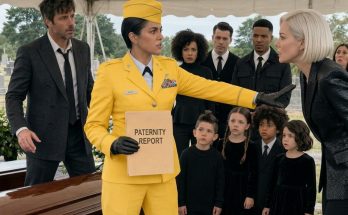
Then Meredith entered carrying a sealed folder.
She handed it to Adrian.
“There is one more document relevant to the personal story you used to justify these crimes.”
Adrian tore it open.
I watched his eyes move across the paternity report.
His face emptied.
He looked at Tessa.
“Milo isn’t mine?”
Tessa began crying.
Diane made a strangled sound.
Leonard closed his eyes.
The room blurred with cameras, whispers, and movement.
But the loudest sound was Adrian’s laptop striking the floor as it slipped from his hand.
He had destroyed his marriage for a family that had never been his.
And yet, when he looked at me, his expression was not remorse.
It was blame.
### Part 12
The detectives did not arrest Adrian onstage.
Real investigations rarely unfold with the speed and neatness of television.
They escorted him and Evan into separate rooms. Devices were collected under warrants prepared from the evidence Meredith had already submitted. The board placed both men on immediate administrative suspension.
Colleen was served with civil claims related to the shell companies.
Tessa was served with preservation orders prohibiting her from destroying communications or financial records.
Investors remained in the ballroom while Noah’s team continued the demonstration.
That mattered.
Northstar did not collapse.
The product did not fail.
The company existed beyond Adrian’s control, which was the one fact he could not tolerate.
By late afternoon, I sat in a quiet room with two board members, Meredith, Priya, and Noah.
The largest investor had agreed to proceed, subject to additional oversight.
One hundred forty employees still had jobs.
I should have felt triumphant.
Instead, exhaustion settled over me like wet concrete.
When I finally left the hotel, the underground garage smelled of oil and rainwater.
My heels echoed between concrete pillars.
I reached my car and heard footsteps behind me.
“Elena.”
Adrian emerged from the shadow beside a stairwell.
His tie hung loose. His hair had fallen across his forehead. Without the stage lights and tailored posture, he looked older.
“You shouldn’t be here,” I said.
“They released me pending further action.”
I reached into my purse for my phone.
“Just listen.”
“No.”
He stepped between me and the driver’s door.
“I didn’t know about Milo.”
“That is not my problem.”
“Tessa manipulated me.”
“You diverted company money.”
“For him. I thought he was my son.”
“You stole before you knew whether the test was real.”
His face twisted.
“I made mistakes.”
“You constructed a secret divorce. You intercepted court mail. You stole my identity. You threatened our employees’ livelihoods. Those are not mistakes.”
“You pushed me away.”
There it was.
Even after everything, he needed the knife to remain partly in my hand.
“I worked beside you for eleven years.”
“You stopped being my wife.”
“You stopped treating me like a person.”
He raised his voice.
“You had your father. Your money. Your authority. Everyone admired you. Do you know what it was like always being introduced as Elena Marlowe’s husband?”
I stared at him.
Northstar’s technical genius.
The brilliant co-founder.
The man employees credited with building the product.
He had been praised constantly, yet resentment had convinced him admiration was deprivation.
“You wanted to punish me for succeeding.”
“I wanted something that was mine.”
“So you stole what was ours.”
I moved toward the car.
He grabbed my wrist.
The contact lasted less than a second.
Mason appeared from behind a parked SUV and pulled Adrian away. A plainclothes detective who had been assigned to monitor the situation rushed forward.
Adrian struggled.
“Tell them to stop!” he shouted at me. “Elena, tell them this is a family matter.”
The detective forced his hands behind his back.
Handcuffs clicked.
The sound was quieter than I expected.
Adrian looked at me as if I had betrayed him.
“Drop the charges.”
“I don’t control the criminal investigation.”
“You can fix this.”
“No.”
“We built everything together.”
“You burned your part of it.”
His face crumpled—not from regret, but from the realization that his influence over me was gone.
“I loved you,” he said.
The words arrived years too late and carrying nothing I wanted.
“You loved access,” I replied. “To my trust, my company, my father’s support, and the life I maintained while you built another one.”
The detective led him away.
I stood beside my car until the garage became quiet again.
For years, I had imagined that if Adrian ever admitted he loved me, the words would mean something.
Now they sounded like a key inserted into a lock that had already been changed.
My phone rang.
It was Diane.
I considered ignoring it, then answered.
“This is your fault,” she sobbed. “My son is being treated like a criminal.”
“He is under investigation for crimes.”
“You humiliated us in public.”
“No. The truth became public.”
“Milo is still our family.”
I closed my eyes.
“Milo is a child you used as proof that I was defective. Do not pretend your concern is suddenly pure.”
She began crying harder.
“Adrian needs you.”
“He needed me when I was useful.”
“He’s your husband.”
“No, Diane. Your son made certain I was legally divorced two months before my father died.”
The irony finally reached her.
She went silent.
I ended the call.
As I drove out of the garage, Seattle’s evening rain began again.
For once, I did not feel trapped beneath it.
I rolled down the window and let the cold air enter the car.
Then Meredith called with news that changed the case again.
The court clerk had found surveillance footage from the day my divorce documents were filed.
Adrian had not submitted them alone.
Someone from my father’s inner circle had gone with him.
### Part 13
The woman in the courthouse footage was my father’s former financial assistant, Celeste Warren.
She had worked for him for nine years and resigned six months before his death, claiming she wanted to care for an ill sister in Oregon.
I remembered Celeste as quiet and efficient. She wore silk scarves, remembered everyone’s birthdays, and always placed a peppermint beside my father’s coffee.
She also knew the structure of his estate.
Meredith arranged a meeting with federal investigators and the county prosecutor’s financial-crimes unit.
Bank records revealed that Celeste had received $75,000 from a consulting company controlled by Adrian.
In exchange, she had given him partial information about my father’s assets.
Not the final value.
Not the protective clauses.
But enough to tell him I would inherit substantial wealth.
The secret divorce had never been only about Tessa.
Adrian believed that if he manipulated me into signing a property settlement, maintained control over Northstar, and pressured me after my father’s death, he could negotiate access to the inheritance from a position of strength.
He had divorced me to remove obligations while preserving influence.
Then he planned to make me sign the money back to him.
Celeste surrendered after investigators confronted her with the transfers.
Her statement provided the missing timeline.
Adrian first approached her at a Northstar holiday party. He complained that my father never respected him and claimed he needed information to protect the company from estate complications.
Later, the requests became more specific.
How much did Daniel own?
Was I the sole heir?
Would the assets be liquid?
Did the will include trusts?
Celeste gave him answers one piece at a time.
Greed rarely announces itself with a single enormous decision. It grows through small permissions until a person no longer recognizes the line they crossed.
When I learned the truth, I went to my father’s empty house.
The rooms smelled of dust, cedar, and the lemon polish his housekeeper used on the stairs.
His reading glasses remained on the desk.
A half-finished crossword puzzle lay beside them.
I sat in his chair and cried for the first time since probate.
Not graceful tears.
Not the silent movie kind.
I bent forward and sobbed until my ribs hurt.
I cried because my father had seen danger coming but had died before he could name it.
I cried because I had defended Adrian whenever Dad questioned him.
I cried because every warning now sounded obvious, and hindsight is cruelest when it borrows the voice of someone you can never answer.
Inside the desk, I found a sealed envelope with my name.
Meredith later told me it was not legally part of the will. It was simply a letter.
Elena,
If you are reading this, I am gone, and you are probably trying to be strong for everyone else.
Do not.
Strength is not pretending something did not hurt. Strength is deciding pain will not be allowed to choose your future.
You have always believed love means opening the door. Sometimes love means closing it before the storm enters.
Help people. Trust people. Build things with people.
But never hand anyone the only key.
I read the letter three times.
Then I carried it to the kitchen and sat at the table where Dad used to make pancakes on Sunday mornings.
My phone displayed seventeen missed calls.
Five from Diane.
Four from Leonard.
Three from Tessa.
Two from Northstar reporters.
One from Adrian’s attorney.
And two from an unknown number.
I answered the unknown caller.
“Elena?” a woman said.
“Yes.”
“My name is Rachel Doyle. I’m Evan’s wife.”
I straightened.
“I found something in our home safe. Evan told me it was a life-insurance file, but it contains copies of Northstar documents and a list of overseas accounts.”
She began crying.
“There are also messages between Evan and Adrian. They were planning to blame you for everything if the launch failed.”
I looked at my father’s letter.
Never hand anyone the only key.
“Do not confront Evan,” I said. “Call Meredith Shaw. I’ll send you her number.”
Rachel inhaled shakily.
“There’s one more thing.”
“What?”
“They discussed what would happen if you refused to sign after the demonstration.”
My hand tightened around the phone.
“What were they planning?”
“They were going to report you for financial fraud using documents they created under your name.”
That part I expected.
Then Rachel spoke again.
“They also planned to declare you mentally unfit and have Adrian appointed to manage your assets.”
The divorce had been only the first trap.
If the launch scheme had succeeded, Adrian intended to take my reputation, my company, and my legal control over my own life.
### Part 14
Adrian eventually pleaded guilty to a collection of charges tied to wire fraud, corporate theft, identity misuse, obstruction, and attempted cyber sabotage.
Evan cooperated in exchange for a reduced sentence.
Celeste admitted selling confidential estate information.
Colleen and Tessa faced separate civil and criminal consequences for the shell-company payments, false invoices, and financial threats involving Caleb.
The legal process lasted nearly two years.
It was not clean.
It was not cinematic.
There were delays, motions, interviews, depositions, and mornings when I woke with my jaw aching from grinding my teeth.
Adrian challenged the evidence until his own messages, recordings, access logs, and signed authorizations closed every door.
The fraudulent divorce decree was vacated because my consent had been obtained through deception.
Then I filed for divorce myself.
This time, I read every page.
I signed my name once.
Deliberately.
The final settlement gave Adrian no claim to my inheritance and no additional Northstar equity. His existing shares were subject to restitution orders and contractual repurchase provisions triggered by misconduct.
Diane wrote letters.
The first blamed Tessa.
The second blamed stress.
The third blamed me for refusing to support Adrian during “the darkest period of his life.”
Her fourth letter asked for forgiveness.
I returned all four unopened.
Leonard contacted me once.
He apologized without defending himself.
“I should have spoken sooner,” he said.
“Yes.”
“I was afraid of losing my family.”
“You remained quiet while they tried to erase me from it.”
He accepted that.
I did not forgive him, but I did not hate him either.
Indifference arrived where affection had once lived, and I found it far more peaceful than anger.
Milo went to live primarily with Caleb’s older sister while custody and support issues were resolved. Through attorneys, I established a small educational trust for him that none of the adults involved could access.
Meredith asked whether I was certain.
“He did nothing wrong,” I said.
Kindness still needed boundaries.
But boundaries did not require cruelty.
Northstar survived.
We closed the investment round six months later under tighter governance. No single executive controlled the company’s core systems again.
Noah became chief security architect, then accepted the CTO role after making me rewrite the position so technical authority was distributed across multiple teams.
“You realize this makes my job less powerful,” he said.
“That’s the point.”
He smiled. “Your father would approve.”
Priya became chief financial officer.
Joanne resigned after cooperating with investigators. I gave her no recommendation and no retaliation beyond the documented consequences of her choices.
Fear explained what she had done.
It did not excuse it.
I sold the Queen Anne house.
For months, I had avoided the kitchen because I could still picture Tessa wearing my father’s apron. I avoided the living room because Adrian’s threats seemed to remain trapped in the walls.
The new house was smaller, built on a quiet hillside overlooking Puget Sound.
The first evening I slept there, rain touched the roof softly.
No one came home late.
No phone vibrated facedown on the counter.
No second life existed across the lake.
At first, the silence felt lonely.
Then it began to feel like ownership.
I used part of my inheritance to create the Daniel Marlowe Legal Integrity Fund, which helped people challenge contracts, divorces, debt agreements, and business documents obtained through deception or coercion.
The fund’s first rule was printed beneath my father’s name:
Assistance does not purchase obedience.
The second rule came from me:
Trust is not informed consent.
Three years after the probate meeting, I stood in Northstar’s new Seattle headquarters watching rain slide down the glass.
My office no longer contained the wedding photograph.
In its place hung my father’s letter, framed behind protective glass.
Noah entered carrying two coffees.
“The board approved the employee equity expansion,” he said.
“Unanimously?”
“Even Martin, after complaining for forty minutes.”
I laughed.
Noah placed a cup on my desk.
Over the years, we had become friends. Nothing dramatic. Nothing forced. He had his life, and I had rebuilt mine. Perhaps affection would grow into something else someday.
Perhaps it would not.
I no longer treated romance as proof that a woman’s ending was complete.
My life was already whole.
That afternoon, Meredith called.
A prison-approved letter from Adrian had arrived at her office.
He claimed he had changed.
He said losing everything had taught him what I meant to him.
He asked for one meeting.
I looked through the window at Elliott Bay. A ferry moved across the water, white against the gray.
“No,” I said.
“Do you want me to keep the letter?”
“Destroy it.”
I ended the call without trembling.
For years, I had believed closure would come when Adrian understood what he had done.
I was wrong.
Closure came when his understanding no longer mattered.
The morning I inherited thirty-five million dollars, I thought the probate attorney’s words had destroyed my life.
The system shows you’ve been divorced for two months.
But that sentence did not mark the end of my marriage.
My marriage had ended quietly long before, through hidden accounts, redirected mail, unanswered questions, and every moment I was taught to doubt what I could plainly see.
The attorney’s words only turned on the light.
My father’s money gave me security.
The investigation gave me justice.
But the greatest thing I recovered was something Adrian had been stealing in small pieces for years—the right to trust my own mind.
I never forgave him.
I never needed to.
Some doors should remain closed, not because hatred stands behind them, but because peace lives on the other side.
And for the first time in my life, I held every key.
THE END!