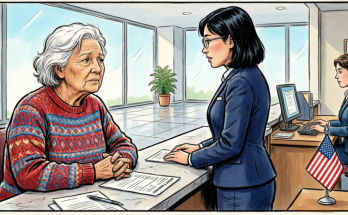
Before Our Honeymoon, My Officer Husband Canceled Our Trip For His Childhood Friend: “A Few Words And She’ll Forgive Me, She’s Crazy About Me.” Flight Canceled. I Silently Bought A Ticket To Australia…
Part 1
“Should I put your passport in the black organizer or inside the suitcase?”
I stood in the entryway of our Arlington apartment with two navy-blue passports beneath my fingertips. I had lined them up beside Ethan’s keys, their gold seals catching the soft yellow light from the pendant above the console.
No answer came from the living room.
I leaned just far enough to see down the hallway.
My husband sat on the gray sectional with his back perfectly straight, one ankle planted beneath the opposite knee. His phone was pressed to his ear. His expression revealed nothing, but I recognized the posture. It was the way Lieutenant Colonel Ethan Hale sat whenever he believed a conversation was not meant for civilian ears.
I returned to the bedroom without interrupting.
His passport went into the side pocket of the leather travel organizer. Mine went beside it. Around them, I packed two pressed shirts, his charcoal slacks, a pair of swim trunks he had owned for six years, and the brown loafers we bought together at Nordstrom.
The salesman had called them resort shoes.
Ethan had almost smiled when he said, “Then I guess I’ll finally have a reason to wear them.”
Our honeymoon was supposed to begin the following morning.
Eleven months after our wedding.
Paris had been the original plan, but Ethan’s security office rejected the itinerary because of a last-minute assignment. Then we chose Greece, only for a base inspection to appear on his calendar. The third plan was the Maldives—six nights at a resort so expensive I had felt guilty looking at the pictures.
Ethan had told me not to worry about the price.
“We only get one honeymoon,” he had said.
I had believed him.
I was folding a pair of socks when his footsteps entered the bedroom.
“Tomorrow’s flight is canceled.”
My hands stopped.
Ethan stood in the doorway, still holding his phone. At six-foot-two, he nearly filled the frame. His face was calm, as if he were telling me our dry cleaning would be delayed.
“The Joint Staff scheduled an emergency coordination meeting for the allied exercises,” he continued. “Orders from the top. We’ll postpone for two weeks.”
I looked at the open suitcase between us.
“You already canceled everything?”
“I told the travel office to handle it.”
“What about the resort?”
“They’ll move the dates.”
“And the passport?”
“I’ll return it to the security officer tomorrow.”
He checked his watch.
The entire conversation lasted less than a minute.
“All right,” I said. “I’ll unpack.”
“Thanks.”
He turned and disappeared down the hallway.
I crouched beside the suitcase and removed everything one item at a time. His shirts. His prescription. The sunscreen. The adapter. The floral dress I had bought specifically for the trip.
The tags still hung beneath one sleeve.
I pushed the dress into the back of my closet where I wouldn’t have to look at it.
My phone vibrated on the bed.
Lena, my best friend, had texted.
What time should I meet you at Dulles tomorrow? I want to see the newlyweds off.
Postponed, I typed.
Again?
I placed the phone facedown.
In the kitchen, the timer chirped. Chicken soup had been simmering for two hours, filling the apartment with the smell of thyme, celery, and roasted garlic. Ethan liked it when the noodles were added separately so they wouldn’t become soft overnight.
I ladled a bowl and carried it to his office.
“Dinner.”
He didn’t look up from the folder in his hands.
“Leave it there.”
I set the bowl on the silicone coaster I had purchased after measuring the section of desk where he usually placed his coffee. Before closing the door, I watched him turn another page.
He never looked back.
The next morning, I was watering the fiddle-leaf fig on our balcony when an unfamiliar New York number appeared on my phone.
“Mrs. Hale?” a woman asked.
“Yes.”
“This is Elite Passage Concierge. Your husband isn’t answering, and you are listed as the alternate contact. We’re confirming the seaplane transfer for tomorrow’s arrival in the Maldives.”
The watering can tilted in my hand.
Water spilled across the tile and ran toward my bare feet.
“I’m sorry,” I said. “Tomorrow?”
“Yes, ma’am. Emirates Flight 232 from Washington, connecting in Dubai. We have two passengers: Ethan Hale and Vivian Cross. Two adjacent overwater villas, as requested.”
The woman paused.
“Mrs. Hale, is that correct?”
I knew the name Vivian Cross.
She was the girl standing beside Ethan in nearly every photograph from his childhood.
And according to my husband, he had not spoken to her in years.
### Part 2
The water reached the balcony threshold before I moved.
I set the watering can upright and watched a thin stream slip between the grout lines. The June sun reflected off the puddle so brightly that I had to narrow my eyes.
“Mrs. Hale?” the concierge repeated.
My voice sounded normal when I answered.
“Yes. Keep the reservation exactly as it is.”
“Wonderful. We’ll email the final transfer instructions.”
“Thank you.”
I ended the call.
Then I knelt, wiped the balcony dry, rinsed the watering can, and returned it to the second shelf of the utility rack.
That was what I did when something inside me threatened to break. I put the outside world in order.
I sat on the sofa and searched the flight number.
Departure: 10:20 the next morning from Washington Dulles.
Destination: Malé, via Dubai.
Business-class availability: none.
Ethan had stood in our bedroom and told me an emergency briefing had canceled our honeymoon. In reality, he had kept the flight, changed the woman beside him, and apparently reserved two villas connected by a private deck.
I opened our text thread.
My most recent message said, Your prescription is in the outside pocket of the toiletry bag.
He had not answered.
Scrolling upward, I saw the architecture of our marriage laid out in gray and blue bubbles. I wrote full sentences. Ethan replied with fragments.
Okay.
Fine.
Late tonight.
Don’t wait.
The longest message he had sent that week was an instruction reminding me to wear something formal to a general’s reception.
I had never checked his phone. I had never searched his email. I had never asked why he sometimes stepped onto the balcony when certain calls came in.
Trust had always seemed like a thing you gave completely or not at all.
By noon, I walked to Whole Foods.
I bought parsley, cheddar, cherry tomatoes, and the dark red cherries Ethan liked. The woman ahead of me at the register searched endlessly through a large canvas purse while a toddler screamed beside the candy display.
I waited without irritation.
My mind had returned to the phone call Ethan took the night before.
His spine had been straight, but his shoulders had leaned slightly forward. Not the rigid posture he used with superior officers. Something softer. Almost eager.
The final words I heard had been, “I’ll handle it. I’ll make it happen.”
He once said those same words to me.
During our apartment renovation, I had mentioned wanting floor-to-ceiling windows. It was an impossible request, or so I thought. Two weeks later, a contractor arrived with revised plans.
“I told you,” Ethan had said. “I’ll make it happen.”
At the time, I believed the sentence belonged to us.
Back home, I washed the cherries, dried each one, and arranged them in the white porcelain bowl on the coffee table.
At seven, Ethan returned wearing his uniform.
His shoes clicked against the entryway tile.
“What’s for dinner?” he called.
“Steak, salad, roasted potatoes, and soup.”
“Sounds good.”
He sat at the table while I plated the meal. His fork rested on the left because he was left-handed. His phone rested beside his water glass.
“What time are you leaving tomorrow?” I asked.
His fork paused for less than a second.
“A car from the base is picking me up at seven.”
“I can make breakfast.”
“Don’t bother. I’ll eat at the cafeteria.”
“All right.”
He continued eating.
The soup had cooled to the exact temperature he preferred. His steak was medium-rare. I had remembered to leave the onions out of his salad.
He noticed none of it.
Halfway through dinner, his phone lit up. He read the message, typed quickly, then turned the screen facedown.
I finished my salad.
“Is something wrong?” I asked.
“No.”
“Work?”
“Yes.”
The answer came too quickly.
That night, he slept with his back to me. The king-sized mattress held two separate grooves, divided by an invisible border neither of us crossed.
I remembered our wedding night. Ethan had embraced me briefly, kissed my forehead, and said he was exhausted.
I had mistaken distance for discipline.
I had mistaken indifference for stress.
And I had mistaken waiting for love.
At 5:55 the next morning, he got out of bed. I kept my eyes closed as he showered, shaved, and dressed.
Then came the sound that removed the last fragment of doubt.
The soft thud of brown leather against the floor.
He was wearing the resort loafers.
The shoes he had never worn once.
The front door opened.
No goodbye. No kiss. No glance into the bedroom.
After the deadbolt clicked, I opened my eyes.
At 9:15, a text arrived.
Just reached the Pentagon. Going to be a long day.
I replied with the same word I had given him for eleven months.
Okay.
Then, at 10:23, my airline app displayed a new notification.
Flight EK232 has departed.
My husband was in the sky with another woman—and he still believed I was at home waiting to cook his dinner.
### Part 3
For several minutes, I watched sunlight crawl across the hardwood floor.
The television was on without sound. A meteorologist gestured toward a bright red map of Northern Virginia. Closed captions warned viewers to stay hydrated.
The apartment felt unnaturally quiet.
I carried the bowl of cherries into the kitchen and emptied them into the trash. They struck the bottom one after another with soft, wet knocks.
Then I washed the bowl and put it away.
By the following afternoon, I was seated in Ethan’s home office.
He treated classified documents with almost religious caution, yet his personal laptop was always open. His email was already logged in.
I typed Vivian Cross into the search bar.
Seventeen results appeared.
The first was dated January, three months after our wedding.
Landed safely, Vivian had written.
Good. Get some rest, Ethan replied.
Another email arrived on Valentine’s Day. It contained a photograph of a latte with a crooked heart in the foam.
Talented, Ethan answered.
The exchange was not romantic enough to prove an affair, but it was intimate in a way our marriage had never been. Vivian sent photographs. Ethan responded. She asked questions. He gave answers longer than one word.
In March, she asked whether he could discuss a defense-related project.
Saturday at three? he replied.
I remembered that Saturday.
He told me he had to work.
I spent the afternoon roasting pork and baking an apple crumble because he had once mentioned his mother used to make one. At nine, I covered the cold food with foil and went to bed alone.
I kept reading.
In April, Vivian wrote:
Sometimes I wonder what would have happened if I hadn’t moved away. Do you ever think about it?
Ethan answered:
Don’t live in the past. Focus on what’s in front of us.
What’s in front of us.
Not what’s in front of you.
Us.
I took screenshots.
Thirteen days before the trip, the tone changed.
Vivian: My clearance paperwork is done. Are we still going?
Ethan: Business class is booked. Fly into DC the day before. I’ll arrange everything.
Vivian: You don’t need to pay for me.
Ethan: Already handled.
The final email was sent at 11:43 p.m. four nights earlier.
See you tomorrow, Vivian wrote.
See you tomorrow. Sleep well.
At 11:43 that night, I had been lying less than three feet from him. I remembered the cold glow of his phone against the bedroom wall.
I had assumed he was reading the news.
I saved fourteen screenshots, closed the browser, and cleared the history without deleting a single message.
Then I opened the bottom desk drawer.
Our legal documents were stored in a plastic accordion folder: marriage certificate, lease, car title, banking records, insurance forms.
I removed everything bearing my name.
My premarital savings sat in a certificate of deposit linked to our household profile. Closing it early would cost me several months of interest.
I pressed confirm.
The money would clear the next day.
Our household account held a little over four thousand dollars. Most of it came from translation work I had completed after midnight while Ethan slept. He transferred fifteen hundred dollars monthly for groceries and utilities, then spoke about it as if he financed an extravagant lifestyle.
I moved every dollar that belonged to me into my personal account.
I removed his phone number from the alerts.
I disabled instant transfers.
At 3:05, I called Lena.
“Aren’t you supposed to be on your honeymoon?” she asked.
“We didn’t go.”
Her voice changed immediately. “Nora, what happened?”
“I need a divorce attorney.”
Silence.
“Are you safe?”
“Yes.”
“Did he hurt you?”
“Not in the way you mean.”
She exhaled shakily.
“I’ll find someone.”
“I need an attorney familiar with military divorces.”
“I understand.”
After hanging up, I opened an Australian employment website.
Before marrying Ethan, I had worked as a Russian-English translator. I also held an Australian interpreter certification I earned during a professional exchange program. Years earlier, I obtained a temporary work visa, then deferred the trip when the world shut down.
The visa remained valid until December.
I searched for positions in Sydney.
Three listings matched my qualifications.
One was with a commercial translation firm. Another served immigration clients. The third was a government contract involving international audit reports.
I bookmarked all three.
At 9:12 that night, Lena sent me a contact.
Daniel Mercer. Former military legal officer. Now handles divorces involving senior personnel. He can meet tomorrow.
I wrote to him immediately.
His response arrived nine minutes later.
Bring every document you have.
I looked at the clock, then at the airline tab open on my laptop.
Ethan’s resort reservation ended on June 7.
It was June 3.
I had four days before he came home.
I selected a flight departing for Sydney on June 5, entered my passport information, and purchased a one-way economy ticket.
When the confirmation appeared, I felt something I had not felt since my wedding.
Not happiness.
Not relief.
Movement.
By the time Ethan returned from paradise, there would be nothing left in the apartment except his lies—and a marriage certificate waiting beside my keys.
### Part 4
Daniel Mercer’s office occupied the nineteenth floor of a glass building in downtown Washington.
I arrived ten minutes early carrying a folder, my laptop, and a legal pad. The waiting room smelled of coffee and polished wood. Behind the reception desk, a small brass clock ticked loudly enough to count my breaths.
Daniel was in his late forties, with silver beginning at his temples and the impatient movements of someone who disliked wasted time.
He reviewed the flight confirmation first.
Then the resort invoice.
Then the emails.
“Your husband has sensitive access?” he asked.
“Yes.”
“And he claimed he was reporting to an emergency military briefing?”
“Yes.”
“Was this foreign travel officially approved?”
“I don’t believe so.”
Daniel leaned back.
“Leaving the country without reporting it could trigger a serious review. Lying to conceal the travel makes it worse. Traveling with a civilian connected to his professional responsibilities could become catastrophic.”
“I’m not interested in threatening him,” I said. “I’m interested in leaving him.”
“The facts may threaten him whether you intend them to or not.”
He continued reading.
“Virginia divorce proceedings can take time, particularly if he contests the petition. Since you’re leaving the country, I’ll need authority to act on your behalf.”
I slid a drafted power of attorney across his desk.
Daniel looked at it, then looked at me.
“You wrote this?”
“I used the state template and added litigation authority.”
He read it slowly.
“This is unusually thorough.”
“I wanted to avoid coming back.”
“Are you certain about that?”
“Yes.”
He tapped the email printouts.
“People often change their minds after the initial shock.”
“This is not the initial shock.”
“What is it, then?”
“The final piece of information.”
Daniel held my gaze for several seconds.
Then he nodded.
We discussed fees, service, banking records, and the possibility of a negotiated settlement. I waived any claim to Ethan’s retirement benefits. I wanted none of his future money, no portion of his career, and no excuse for continued contact.
Before leaving, I transferred the retainer.
Daniel checked the notification.
“I’ll file after he returns,” he said. “Serving him while he’s overseas could complicate the timeline.”
“June 8.”
“June 8,” he agreed.
The following day, I packed.
Sydney was entering winter, so I took jeans, sweaters, a light coat, and the thick socks I had purchased for a trip Ethan and I never took. My clothes filled less than two-thirds of the silver suitcase.
In the bathroom, I collected my toiletries and left his untouched. His daily prescription remained in the outer pocket of his travel bag.
He had taken it with him.
At least he had remembered something I packed.
I cleaned the apartment because I could not bear to leave chaos behind. I emptied the refrigerator of anything that might spoil. I scrubbed the stove. I washed the counters twice.
In the office, I removed my certification papers and old dictionaries. Every file belonging to Ethan remained exactly where it had been.
In the bedroom, I made the bed.
The photograph on the nightstand had been facedown for months because Ethan once said wedding displays felt “performative.” I turned it upright.
In the picture, I leaned toward him, smiling so widely my cheeks hurt. Ethan faced the camera like a man waiting for an official photograph to end.
I studied the woman I had been.
She believed patience was a form of devotion.
She believed love could be earned through attention to detail.
She believed a honeymoon would transform a marriage that had never truly begun.
I left the photograph standing.
At the entryway, I placed my apartment keys on the console. Beside them, I opened our marriage certificate to the page containing our signatures.
No note.
No accusation.
No explanation.
At six the next morning, the rideshare driver loaded my suitcase into the trunk.
“Dulles?” he asked.
“Yes.”
As we pulled away, I looked back at our building.
Eighteenth floor. Third set of windows from the left.
The curtains were closed.
My phone vibrated.
Briefing is running late, Ethan wrote. Don’t wait for dinner.
He was still lying from a resort nine thousand miles away.
I typed okay.
Then I muted him.
At the airport, I drank coffee beside the departure gate while families argued over luggage and children slept across rows of plastic chairs. A honeymooning couple sat nearby wearing matching sweatshirts. The woman rested her head on the man’s shoulder.
I expected jealousy.
Instead, I felt tired.
When boarding began, I handed over my passport and stepped onto the plane without looking back.
Twenty-four hours later, I landed beneath a bright Australian sky with one suitcase, no permanent address, and no job.
I had eighty Australian dollars reserved for a hostel and enough savings to survive several months.
What I did not know was that Ethan’s betrayal had followed me across the ocean—and hidden inside one of the first documents I would translate.
### Part 5
Sydney in June smelled like rain, coffee, and salt.
The hostel near the airport had narrow hallways, industrial carpet, and a shared kitchen where someone burned toast every morning. My room contained a metal bed, a small desk, and a window facing the wall of the building next door.
It was the most peaceful room I had slept in for eleven months.
On my first day, I bought a local phone plan and opened an Australian bank account. On my second, I delivered résumés to three translation agencies. On my third, I completed a written examination for a firm in Martin Place.
My phone buzzed constantly.
Where are you?
Call me.
Nora, answer the phone.
I ignored every message.
Ethan returned to Arlington on the evening of June 7.
I knew the moment he entered the apartment because Lena texted me.
He called. He’s looking for you.
What did you say?
That he should ask himself why his wife disappeared without telling him.
I smiled for the first time since leaving Washington.
Later, Ethan’s name appeared on WhatsApp.
Where are you?
Call me back.
I turned the phone facedown and continued writing a cover letter.
The next afternoon, I walked into the office of Harrington Language Solutions. A woman named Marjorie Price interviewed me. She wore bright red glasses and spoke in quick, clean sentences.
“Your written examination was the highest score in this group,” she said. “Ninety-eight percent.”
“Thank you.”
“Your résumé shows a gap of almost one year.”
“Personal circumstances.”
“Resolved?”
“Completely.”
She studied my face but did not pry.
“We translate commercial contracts, court documents, and regulatory filings. Deadlines are strict. Some weeks require overtime.”
“That’s fine.”
“Can you begin Monday?”
“Yes.”
The hourly rate was enough to rent a small room while I searched for something permanent.
When I left the building, I bought a latte from a café downstairs. Morning sunlight cut through the glass walls, reflecting off wet pavement.
My phone rang.
Ethan.
I watched his name flash until the sixth ring.
Then I declined the call.
The following morning, I began work beside a window overlooking Martin Place. My first assignment was a two-hundred-page joint venture agreement involving an Australian mining company and an Eastern European exporter.
The terminology was dense, but familiar.
For years, my brain had lived between languages. Marriage had pushed that part of me into a corner. Returning to translation felt like opening a door in a room I thought had no exits.
At lunch, I sat on a bench while a street musician played guitar badly but enthusiastically. Pigeons strutted around my shoes.
Three new messages waited.
Pick up the phone.
Where are you?
If you don’t answer, I’m filing a missing-person report.
I finished my sandwich.
Then I wrote two words.
Don’t bother.
The message showed as delivered.
I imagined him reading it in some Pentagon conference room, realizing I was alive, safe, and deliberately refusing to speak to him.
It should have frightened me, cutting the last thread.
Instead, it steadied me.
That evening, my parents called.
“How’s Australia?” my mother asked brightly.
I had told them Ethan and I extended our honeymoon and that he was busy with work calls. It was not a lie I enjoyed, but I needed time before they learned the truth.
“Beautiful,” I said.
“Is Ethan there?”
“He stepped out.”
“Put him on next time. Your father wants to ask him about the military museum.”
“I will.”
Afterward, guilt sat heavily in my stomach.
I promised myself I would tell them once the petition was filed.
On June 11, Ethan sent another message.
We need to talk.
I did not reply.
On June 13, a government email arrived inviting me to interview for a contract role with the Australian National Audit Office.
The position involved translating records connected to international procurement, sanctions compliance, and cross-border financial activity.
It required two professional references.
I contacted my former supervisor in Washington and an old Georgetown professor. Both agreed immediately.
That night, Ethan wrote:
What is your endgame here?
Come home. We can fix this.
I stared at the final sentence.
There was no apology.
No mention of Vivian.
No admission that he had lied.
He saw my departure as a problem to solve, not a consequence he had earned.
I closed the conversation and prepared for my government interview.
While I studied public audit reports, my husband began using military contacts to locate me.
And the first person he approached was someone willing to break the law for him.
### Part 6
My government interview took place in a glass-walled conference room overlooking the city.
Three people sat across from me: a project director, a senior auditor, and a human resources representative.
“Ms. Hale?” the director began.
“Bennett,” I corrected. “I use my maiden name professionally.”
He made a note.
“Ms. Bennett, this assignment involves sensitive corporate compliance material. Some records concern Russian-speaking jurisdictions, sanctions avoidance, shell entities, and international procurement fraud.”
“I understand.”
“Your recent address was in the Washington defense community.”
“Yes.”
“Any conflict of interest?”
“No. I have never worked for the Department of Defense, and I have no obligation to any government office.”
The senior auditor flipped through my portfolio.
“You haven’t used our reporting style before.”
“No.”
“Then how will you manage the terminology?”
I removed a translated sample from my folder.
“I reviewed your public reports and translated an excerpt from last year’s procurement integrity review.”
The director lifted his eyebrows.
“You prepared this without being asked?”
“Yes.”
He began reading.
The room became quiet except for the faint hum of the ventilation system.
When the interview ended, the director shook my hand.
“We’ll be in touch by Friday.”
Outside, cold rain misted across Sydney. I pulled up my hood and walked toward the train station, my shoes clicking against the wet pavement.
Back in Virginia, Ethan was doing something very different.
I learned the details months later through evidence disclosed during the investigation.
He met an old academy friend named Marcus Doyle at a dim steakhouse in Alexandria. Marcus worked with border and customs data.
Ethan claimed his wife had disappeared.
He said he feared I was in danger.
He did not mention that I had answered him.
He did not mention the Maldives.
He did not mention Vivian.
Marcus agreed to run an unauthorized travel search.
Two days later, he sent Ethan my departure record.
Nora Bennett.
June 5.
Dulles to Dubai to Sydney.
Economy class.
Traveling alone.
The record told Ethan where I had gone.
It also revealed when.
I left on the same morning he sent his false message about a late Pentagon briefing.
Apparently, that was when the first crack appeared in his certainty.
He checked his personal email security log and found two sessions from our apartment on June 3. The timing matched the afternoon I sat in his office.
He finally understood that I had read everything.
Not guessed.
Not suspected.
Read.
The resort coordination. The flights. The private jokes. The messages about lost possibilities. The plans made while I slept beside him.
He changed his password, but it was too late.
On June 23, a process server arrived at the Pentagon.
Daniel called me afterward.
“He’s been served.”
“How did he react?”
“He hasn’t contacted me yet.”
“He will.”
The petition included evidence of adultery, financial deception, and unauthorized foreign travel. I requested an absolute divorce, separate property, and no support from either side.
I wanted a clean exit.
Ethan’s command wanted silence.
Within hours, he was summoned by Colonel Richard Nolan, his supervising officer. The foreign trip had not been properly disclosed. His clearance review began immediately.
That evening, my phone rang twelve times.
I let it stop.
Then a message appeared.
I got the papers.
I did not answer.
A second message followed.
If you want a divorce, come back to Washington and say it to my face.
I wrote:
I’m not returning.
His reply came instantly.
The court can force a separation period. I can contest this for months.
I know, I answered.
A typing bubble appeared, vanished, and returned.
You think dragging this out helps you?
No, I wrote. It hurts you.
He understood.
The longer the dispute remained public, the deeper investigators would look into his conduct, foreign travel, finances, and outside relationships.
My phone rang again.
I declined it.
The following morning, the government audit office offered me a twelve-month contract. The rate was higher than expected. The work began in July.
I accepted.
Daniel replied to my update with a single sentence.
This puts additional pressure on his clearance review.
I was not trying to pressure Ethan.
I was rebuilding the career I abandoned for him.
But every step I took away from our marriage seemed to illuminate another corner he wanted to remain dark.
And when my first government assignment arrived, I saw Vivian Cross’s name buried in the appendix.
### Part 7
The document was four hundred and twelve pages long.
It examined international supply chains used by Australian and American contractors purchasing specialized industrial equipment. Much of the material was routine: shipping manifests, customs classifications, corporate ownership records, invoices, and legal disclaimers.
I translated forty-seven pages before I reached the appendix.
There, beneath a list of intermediaries, was a company called Cross Meridian Logistics.
Director: Vivian Cross.
I stopped typing.
The office around me continued as usual. Keyboards clicked. A printer started. Someone laughed near the kitchen. Outside the window, clouds hung low over Sydney.
I read the entry again.
Cross Meridian had been incorporated nine months earlier, shortly before my wedding.
The company claimed to provide consulting and logistics support for defense-related procurement. Its registered address belonged to a mailbox service in Delaware. Its primary banking activity moved through accounts in the United Arab Emirates.
The audit flagged several contracts for excessive pricing.
Thirty-one percent above market value.
Thirty-eight percent.
Forty-two percent.
I scrolled through the source records, careful not to exceed my authorization.
One contract originated through a procurement program overseen by Ethan’s logistics division.
My hands became cold.
I reminded myself that a shared name did not prove a crime. Vivian could have legitimate contracts. Ethan might never have influenced the selection process. The Maldives trip could be unrelated.
That was what I told myself for six minutes.
Then I reached a section containing translated internal correspondence.
One message from Vivian read:
Once the renewal is signed, I owe you more than a vacation.
The recipient’s name had been redacted in the audit copy.
But I had seen the sentence before.
It was in one of the emails I captured from Ethan’s inbox, hidden beneath the resort correspondence.
At the time, I assumed it was flirtation.
Now it looked like payment.
I did not copy restricted files or send myself government records. Instead, I documented the public corporate registration, contract numbers available through procurement databases, and the emails already in my possession.
Then I called Daniel from an empty stairwell.
“I found something.”
“What kind of something?”
“Vivian owns a logistics company that received inflated subcontracts connected to Ethan’s division.”
Daniel went silent.
“How did you discover this?”
“Through material I am authorized to translate. I can’t provide restricted documents.”
“Don’t remove anything from your workplace.”
“I won’t.”
“Do the emails you saved mention the company?”
“One mentions a project. Another says she owes him after a renewal is signed.”
“Anything about money?”
“Not directly.”
“Travel?”
“Yes.”
Daniel exhaled.
“This may be bigger than the divorce.”
“I know.”
“If he influenced procurement decisions, concealed the relationship, or expected future compensation, investigators will view the vacation as potential evidence.”
“I know.”
“Let me contact the appropriate oversight counsel. You need formal whistleblower protection before saying more.”
I stood beneath the harsh stairwell light, looking at the gray concrete wall.
“Daniel, I don’t want anyone claiming I did this for revenge.”
“They will claim it regardless.”
“That doesn’t make it true.”
“No,” he said. “The evidence makes it true or false. Your motive doesn’t change the contracts.”
After work, I returned to the small apartment I had rented in Newtown.
It had uneven wooden floors, a narrow kitchen, and a bedroom window that rattled whenever buses passed. I loved it.
I made pasta, ate beside an unpacked moving box, and listened to rain tap against the glass.
Ethan sent a message at 10:16 p.m.
I am willing to forgive what you’ve done.
I read it twice.
Then I laughed.
Not loudly. Just one sharp sound in an empty room.
He believed my departure was an offense against him. He believed emptying my own accounts was theft. He believed serving divorce papers was public humiliation.
And he was prepared to forgive me.
I did not respond.
Three days later, Daniel sent me a draft disclosure for the Department of Defense Inspector General. It contained only information legally obtained through public records and my personal communications.
I reviewed every line.
At the bottom was a space for my electronic signature.
For several minutes, the cursor blinked beside my name.
Submitting it would destroy any possibility of quiet resolution.
It might also expose millions of dollars diverted through contracts overseen by my husband.
I signed.
Forty-eight hours later, Ethan was removed from duty.
And his first question was not whether the allegations were true.
It was whether I had betrayed him.
### Part 8
Did you file the complaint?
The message arrived while I was standing in the produce aisle of a grocery store.
I placed a carton of eggs into my basket before answering.
Yes.
Three dots appeared immediately.
Do you understand what this could do to me?
I looked around.
A young father was trying to persuade his daughter to choose apples instead of cookies. An employee stacked oranges into a pyramid. Somewhere near the bakery, a machine beeped.
The ordinariness of the moment made Ethan’s outrage feel very far away.
Yes, I wrote. I understand.
His response filled the screen.
I gave you a home. I paid your expenses. I gave you a car. You lived comfortably because of me, and now you’re trying to put me in prison over one trip.
I leaned against the shopping cart.
For eleven months, Ethan transferred fifteen hundred dollars into our household account. From it, I paid electricity, internet, insurance, groceries, dry cleaning, and the cost of hosting his colleagues.
He called that supporting me.
Meanwhile, contracts connected to Vivian’s company contained millions in inflated costs.
I wrote:
You paid household bills. You did not buy my silence.
He called.
I declined.
Another message appeared.
There was no affair.
The resort booked separate villas.
They had a connecting deck, I replied.
Nothing happened.
You lied before leaving, during the trip, and after returning.
I panicked.
You planned the vacation for weeks.
I waited.
The typing indicator vanished.
Then returned.
Vivian needed help. Her company was struggling.
So you directed work to her?
I didn’t direct anything.
That statement was the first thing he wrote that sounded less like anger and more like fear.
I took a screenshot and sent it to Daniel.
At the Pentagon, investigators suspended Ethan’s access and removed him from his position. His office computer, government phone, and procurement records were secured.
Vivian was questioned at an airport after returning from an overseas trip.
Marcus Doyle, the friend who illegally searched my travel record, was placed on administrative leave when the system log revealed the unauthorized query.
One dishonest favor pulled another into the light.
Ethan returned to the apartment alone.
According to a later photograph included in a property inspection, the place had become nearly unrecognizable. Takeout containers covered the kitchen counter. Dust coated the glass coffee table. Laundry lay in heaps beside the bed.
The labels I wrote remained inside the refrigerator.
Dairy.
Produce.
Meat.
Sauces.
He had once teased me for making them.
Now they were among the only traces of me left.
On July 29, he told Daniel he would sign the settlement.
My lawyer called while I was walking home from work.
“He agreed to the divorce.”
“Without conditions?”
“He wants you to stop cooperating with investigators.”
“That is not a condition he can demand.”
“I told him the same.”
“Then send the agreement.”
“Nora, he also asked me to tell you he’s sorry.”
I stopped beneath the awning of a closed bookstore.
Rainwater dripped from the edge of the roof.
“For what?”
“He didn’t say.”
“Then he isn’t.”
Daniel was quiet.
“I’ll send the papers.”
That evening, I read every page. Ethan waived any claim to my accounts. I waived his pension and property. We agreed there would be no spousal support.
The Arlington lease was already close to expiration.
I signed electronically.
For the first time since arriving in Sydney, I removed my wedding ring.
A pale line circled my finger.
I placed the ring at the bottom of my suitcase, beneath the floral dress I had once packed for the Maldives. I had brought the dress without realizing it. It must have been caught between two sweaters in the closet.
I held it up.
Tiny blue flowers covered the fabric. The price tag still hung from the sleeve.
Instead of throwing it away, I cut off the tag and wore it to dinner with Marjorie and two coworkers.
The restaurant overlooked Darling Harbour. Lights moved across the water. Music drifted from a nearby bar.
No one knew the dress had been chosen for a honeymoon.
That history belonged only to me.
In August, prosecutors confirmed that several procurement decisions had been manipulated. Ethan had not received a direct cash payment, but investigators found promises of future employment, luxury travel, and consulting income.
Vivian had kept records.
People like her often did.
Insurance, Daniel called it.
By September, Ethan’s attorney requested a final video conversation.
I refused twice.
The third request said he intended to enter a plea and wanted to apologize before sentencing.
I agreed to ten minutes.
Not for him.
For the woman who once stood in a kitchen cooking soup while her husband planned a secret vacation.
I wanted her to hear me say the words aloud.
But when Ethan appeared on the screen, he looked so different that for one dangerous second, pity almost reached me.
### Part 9
The man on the screen wore a gray sweatshirt.
His face had thinned. Dark shadows sat beneath his eyes, and his hair—usually cut with military precision—had grown unevenly at the sides.
Behind him was a blank wall.
No Arlington apartment.
No Pentagon office.
No flags, plaques, or framed awards.
Just Ethan.
“Nora,” he said.
I waited.
His attorney sat off-camera. Daniel joined from Washington, though neither lawyer spoke.
“I appreciate you agreeing to this.”
“You have ten minutes.”
Ethan lowered his eyes.
“I’ve had time to think.”
“That happens when access to everything else is taken away.”
His jaw tightened. The old Ethan appeared for half a second—the man who considered every interruption a challenge to his authority.
Then it vanished.
“I handled things badly.”
“You lied.”
“Yes.”
“You concealed foreign travel.”
“Yes.”
“You used your position to help Vivian’s company.”
“I made introductions.”
“You approved recommendations.”
“I didn’t personally sign every contract.”
“That isn’t a denial.”
He rubbed both hands over his face.
“I’m not trying to argue.”
“You’ve spent months arguing.”
“I’m trying to tell you I understand what I lost.”
I leaned back.
There it was.
Not what he did.
What he lost.
Ethan continued.
“When you left, I realized how much you did. The apartment fell apart. I didn’t know where anything was. I forgot appointments. I kept reaching for things you always replaced before they ran out.”
His voice cracked.
“You remembered my prescription. You organized my files. You cooked every night. You made that place feel…”
He stopped.
“Convenient?” I offered.
“Like a home.”
“No. I made it feel like a home. You treated it like housing provided with support staff.”
“That isn’t fair.”
“It is exact.”
He looked toward someone off-camera, then back at me.
“I thought that was what marriage was. You taking care of the home, me taking care of the finances.”
“You transferred grocery money.”
“I earned enough that you didn’t have to work.”
“You told me I didn’t need to work. Then you used my financial dependence as proof of your generosity.”
“I never stopped you.”
“You made disappointment feel like disloyalty. Every time I mentioned returning to work, you reminded me your schedule came first.”
Ethan’s mouth opened, but no answer came.
I looked directly into the camera.
“You are not sorry because you finally understand me. You are sorry because life became uncomfortable after I left.”
“That’s not true.”
“Then tell me one thing you miss about me that has nothing to do with what I did for you.”
Silence.
Five seconds.
Ten.
He stared at the desk.
That silence hurt more than I expected.
Not because I wanted him back.
Because some small, foolish part of me had hoped consequences might force him to see me as a person.
He could not.
“I did care about you,” he whispered.
“In what way?”
“I married you.”
“That was an action. Not an answer.”
He swallowed.
“I thought there would be time.”
“For what?”
“To become better at it.”
“You gave our honeymoon to someone else.”
“It wasn’t supposed to be romantic.”
“You reserved adjoining villas.”
“She was upset. She believed I owed her something after helping with the contracts.”
“And you did.”
“I didn’t know how to handle it.”
“You handled it. You chose her.”
“I chose the situation that protected my career.”
I almost smiled.
“Look where that choice brought you.”
His eyes closed.
When they opened again, they were wet.
“I loved you in my way.”
“Your way required me to disappear while standing beside you.”
“Nora—”
“Our marriage ended before I boarded the flight to Sydney. The legal documents only recorded the date.”
He pressed a fist against his mouth.
“Can you forgive me?”
I thought of the woman arranging cherries in a white bowl.
The woman ironing collars.
The woman lying beside him while he wrote good night to someone else.
“I no longer carry enough of you to need forgiveness,” I said. “But no, Ethan. I do not forgive you.”
His face collapsed.
I felt no triumph.
Only completion.
“This is the last time we will speak.”
I ended the call.
The black screen reflected my own face.
Calm. Older. Entirely mine.
A week later, the divorce decree arrived.
But Ethan’s criminal case was not over, and Vivian still possessed one piece of evidence capable of changing both their sentences.
### Part 10
Vivian’s evidence was an encrypted archive.
Investigators recovered it from a cloud account linked to Cross Meridian Logistics. Inside were invoices, contract drafts, travel records, and hundreds of messages between her and Ethan.
The earliest began before our wedding.
That discovery did not surprise me.
What surprised me was the tone.
Vivian did not write like a lover.
She wrote like a creditor.
You owe me.
I kept my side of the deal.
Don’t become sentimental now.
In one exchange, Ethan warned her not to contact him during my wedding week.
Vivian responded:
Relax. Your perfect little wife won’t notice anything. She’s too busy proving she deserves you.
When Daniel sent me the excerpt, I read it once.
Then again.
The words should have humiliated me.
Instead, they revealed something useful.
Ethan had spoken about me.
He had described my efforts, my insecurity, and my desire to make the marriage work. Then he allowed Vivian to use those details as a joke.
He did not merely fail to defend me.
He provided the material.
Another message explained the trip.
Vivian had threatened to reveal his involvement in the contract scheme unless he delivered the vacation he promised years earlier. The Maldives was not a spontaneous romantic escape. It was a reward, a negotiation, and possibly a farewell.
That did not make it less intimate.
It made it more calculated.
Ethan had planned to return home and continue our marriage as if nothing happened.
He expected Vivian to remain useful.
He expected me to remain obedient.
Every person in his life had a function.
The federal case moved quickly after the archive was decrypted. Ethan agreed to plead guilty to conspiracy, making false statements, and misuse of his official position. Vivian cooperated in exchange for consideration at sentencing.
Marcus Doyle also pleaded guilty to unauthorized access of travel records.
Three careers collapsed around a single structure of entitlement.
Mine was the only life that improved.
By October, the audit office extended my contract. I moved into a brighter apartment near a train station, with tall windows and a narrow balcony overlooking jacaranda trees.
I bought a secondhand dining table.
The first evening after it arrived, I ate takeout noodles alone beneath a bare light bulb. The table wobbled, so I folded a piece of cardboard beneath one leg.
It was imperfect.
I adored it.
Lena visited in November.
She stepped through the front door carrying two enormous suitcases and hugged me so hard my shoulder hurt.
“You’re thinner,” she said.
“You’re louder.”
“You love me.”
“I do.”
She inspected every room, opened the balcony door, and declared the apartment too small but acceptable.
That night, we drank wine and told my parents the full story over video.
My mother cried.
My father stared at the screen with both hands folded beneath his chin.
When I finished, he asked only one question.
“Why didn’t you call us?”
“Because I knew you would tell me to come home.”
“We would have.”
“I needed to prove I could build something before anyone tried to rescue me.”
My mother wiped her eyes.
“You never had to prove that.”
“I did to myself.”
They did not ask whether I planned to forgive Ethan.
They did not suggest prayer, reconciliation, or closure.
My father said, “He is not welcome in our home again.”
That sentence loosened something in my chest.
In December, I traveled to Melbourne for work. My team reviewed a series of translated records, and the project director praised my accuracy in front of the entire department.
Afterward, he offered me an indefinite contract.
“Think about it,” he said.
“I don’t need to.”
He smiled.
“Welcome permanently, then.”
On the flight back to Sydney, I looked down at the coastline through the oval window. Sunlight scattered across the water like broken glass.
For years, I believed stability meant knowing exactly where I would sleep, what I would cook, and when my husband would return.
Now stability meant trusting myself wherever I landed.
At Sydney Airport, I reached into my suitcase for a jacket and felt something small beneath the lining.
My wedding ring.
I had forgotten it was there.
I closed my hand around the metal circle.
Outside the terminal, hot summer air struck my face.
For the first time, I knew exactly what I wanted to do with it.
But someone was waiting near the curb—and he knew my name.
### Part 11
“Nora Bennett?”
I turned.
A man stood several feet away holding a cardboard sign with the audit office logo. He looked about my age, with dark hair, wire-framed glasses, and a navy jacket folded over one arm.
“Yes?”
“I’m Owen Parker. Internal compliance. We spoke by email about the Melbourne files.”
I remembered the name.
His messages were precise, polite, and usually sent before sunrise.
“What are you doing here?”
“Our director asked me to collect the sealed records you brought back.”
He lifted a small security case.
“I expected a courier.”
“I am cheaper than a courier.”
His expression remained so serious that it took me a moment to realize he was joking.
I handed over the sealed envelope from my work bag.
“Chain-of-custody form?” I asked.
“Already prepared.”
He produced a clipboard.
As I signed, he noticed my suitcase.
“Long trip?”
“Three days.”
“You look like it was three weeks.”
“Thank you.”
“That sounded rude.”
“It did.”
“I work with documents. People are harder.”
I almost smiled.
He signed the form and stepped back.
“I won’t keep you.”
“Good.”
He started to leave, then turned.
“There’s a café near the parking garage. Their coffee is terrible, but the banana bread is excellent.”
“Is that professional intelligence?”
“Unofficial.”
“I’ll keep it in mind.”
He walked away.
That was all.
No dramatic spark.
No instant attraction.
No music appearing from nowhere.
Just a tired conversation outside an airport.
I was grateful for its ordinariness.
Near the rideshare pickup area, I removed the wedding ring from my pocket. The inside still bore the date Ethan and I married.
For a moment, I considered selling it.
Then donating it.
Then mailing it back.
Each possibility gave the ring importance.
I wanted the opposite.
Beside the curb grew a dense wall of shrubs. I flicked my wrist.
The ring caught the sunlight, traced a small arc, and vanished between the leaves without a sound.
I did not search for where it landed.
My car arrived.
“Newtown?” the driver asked.
“Yes, please.”
As we pulled away, the airport disappeared behind us.
Owen and I continued working on the same projects. Over the following months, we exchanged documents, attended meetings, and argued over whether a particular phrase should be translated as “beneficial ownership” or “controlling interest.”
He was thoughtful without performing thoughtfulness.
When he borrowed a reference book, he returned it with a sticky note marking a typographical error on page 214. When he brought coffee for the team, he remembered mine without asking.
I noticed these things because I had spent a marriage noticing everything.
The difference was that Owen noticed back.
He never asked about my divorce.
Not until six months later, when a news article reported Ethan’s sentencing.
We were standing in the office kitchen. Rain streaked the windows. My phone displayed a photograph of Ethan entering federal court.
Owen glanced at the headline, then at me.
“You knew him?”
“He was my husband.”
Owen became still.
“I’m sorry.”
“Don’t be.”
“That sounded inadequate.”
“It was accurate.”
He waited.
I expected questions.
Instead, he said, “The meeting moved to three. I’ll tell them you’re unavailable today.”
“I’m not unavailable.”
“You’re staring at the same sentence for five minutes.”
I looked down.
He was right.
“I can work.”
“I know. That isn’t always the same as needing to.”
He left before I could argue.
Ethan received a prison sentence and permanent dismissal from service. Vivian received a reduced sentence because of her cooperation, though her company was dissolved and its assets seized.
The article described Ethan as a decorated officer who had made a tragic series of errors.
Errors.
The word irritated me.
He had made choices.
Thousands of them.
Every email, every lie, every contract recommendation, every silent dinner, every time he looked at my effort and decided it required no gratitude.
A life was not destroyed by one vacation.
It was revealed by it.
That evening, Ethan’s mother sent me a letter through Daniel.
She asked me to visit her son before he began serving his sentence.
She wrote that seeing me might help him survive.
I read the letter beneath the white light of my new apartment.
Then I placed it in the recycling bin.
Ethan had spent eleven months teaching me that his needs came first.
I had finally learned not to listen.
Still, the following morning, another envelope arrived—this one written in Ethan’s handwriting.
### Part 12
The envelope remained unopened on my table for three days.
I moved it when I ate breakfast.
I moved it when I worked from home.
I placed a coffee mug on top of it so a draft from the balcony would not carry it onto the floor.
Eventually, I realized avoiding the letter gave it more power than reading it.
I opened it with a kitchen knife.
Nora,
By the time you read this, I will probably have been sentenced.
There is no request for forgiveness in the first paragraph. I know I no longer have the right to ask.
That was the first manipulation.
By announcing he would not ask, he made the entire letter an unspoken request.
He wrote about our apartment. The soup. The cherries. The labeled shelves. The wedding photograph.
He remembered details only after losing access to them.
He wrote that Vivian represented the life he imagined before duty hardened him. He claimed he did not love her, only the person he believed he had been around her.
Then he wrote:
With you, I thought I could build a respectable future. With her, I could briefly return to the past.
The sentence clarified our marriage better than any apology.
I had been respectable.
Vivian had been exciting.
Neither of us had been fully human to him.
We were symbols arranged around his ambitions.
At the end, he wrote:
I hope one day you can remember that not every moment between us was false.
I folded the letter.
That was true.
Not every moment had been false.
The soup was real.
My patience was real.
My hope was real.
The love I gave was real.
But its reality did not transform his behavior into love.
That distinction saved me.
I shredded the letter and carried the pieces to the recycling room downstairs.
When I returned, Owen was standing near my apartment door holding a paper bag.
“What are you doing here?”
“You left this at work.”
He held up a folder.
“And Marjorie sent banana bread.”
“You work for the government. Why are you delivering baked goods?”
“National security.”
I took the bag.
“Would you like coffee?”
He checked his watch.
“I have nowhere urgent to be.”
We sat on the balcony while evening settled across the neighborhood. A bus sighed at the corner. Someone played music through an open window.
Owen asked about Washington.
I told him about snow on the Potomac, humid summers, and museums that smelled like stone and old air. I did not talk about Ethan until the sky had darkened.
“When did you know you were finished?” Owen asked.
“The moment I learned about the flight.”
“Not when you found the contracts?”
“No. The crime changed the consequences. It didn’t change the marriage.”
He nodded slowly.
“People assume the worst discovery is the largest one.”
“It isn’t.”
“What was the worst?”
“That he expected me to be waiting when he came back.”
The words hung between us.
Owen looked toward the street.
“Someone believing you’ll tolerate anything is a specific kind of cruelty.”
I studied him.
“You’ve seen it before.”
“My father,” he said. “Different story. Same belief.”
We did not trade every wound that night.
We did not promise to heal each other.
We finished the banana bread and argued about whether the café version was better.
Before leaving, Owen washed both coffee cups despite my protest.
At the door, he said, “I’d like to take you to dinner.”
“That sounds dangerously personal.”
“It is.”
“I’m not looking for someone to complete a recovery narrative.”
“Good. I’m not qualified.”
“I may decide I prefer being alone.”
“Then dinner will still have been dinner.”
I appreciated the absence of pressure.
“All right,” I said. “One dinner.”
One dinner became several.
Slowly.
Carefully.
Without sacrifice disguised as proof.
Owen never asked me to become smaller so he could feel larger. He never treated my competence as a threat or my attention as a service owed to him.
When I cooked, he chopped vegetables.
When I worked late, he brought food and left without demanding conversation.
When I said no, he heard no.
A year after my arrival in Australia, I stood on the balcony of my apartment watching rain move across the rooftops.
My phone displayed a final automated notice.
The Hale divorce matter has been archived. No further action required.
I deleted the email.
Then my mother called with news from Virginia.
Someone had purchased the old apartment.
And during the move-out inspection, they found something hidden behind the wedding photograph Ethan had left behind.
### Part 13
The item was an envelope addressed to me.
It had slipped behind the nightstand and remained there after the apartment was seized and sold. The new owner gave it to the property manager, who contacted my mother through the emergency information still attached to the old lease.
My parents mailed it to Sydney.
The envelope was cream-colored, sealed, and dated three weeks before our wedding.
Inside was a single sheet of paper in Ethan’s handwriting.
Nora,
I’m not good at saying these things aloud. I know my life will always be demanding. I know I may not give you the attention other husbands give their wives. But you are steady, loyal, and good. I trust you to make a home wherever duty sends us.
I will try to deserve that.
Ethan
I read the note at my dining table.
Outside, summer sunlight turned the jacaranda blossoms almost blue.
For a few minutes, I let myself mourn.
Not Ethan.
The promise.
He had known what I offered before we married. He had recognized my steadiness, loyalty, and care. He simply viewed those qualities as resources he could depend upon without returning them.
I folded the note and placed it beside my coffee.
Owen came home carrying groceries. By then, we had been together nearly a year, though we maintained separate apartments and separate bank accounts.
He set the bags on the counter.
“What’s that?”
“A letter Ethan wrote before our wedding.”
Owen did not touch it.
“Do you want me to read it?”
“No.”
“Do you want to talk about it?”
“Not much.”
He began putting groceries away.
I watched him place the milk on the wrong shelf.
For a second, the old part of me wanted to correct him. To reorganize. To make the kitchen perfect before anyone could become annoyed.
Then Owen noticed.
“Wrong shelf?”
“There are no assigned shelves.”
“You’re lying.”
“I am.”
He moved the milk.
“Better?”
“Yes.”
He leaned against the refrigerator.
“You can tell me when something matters. You don’t have to pretend it doesn’t.”
The simple statement struck deeper than Ethan’s entire letter.
“I used to believe being easy to live with would make someone love me.”
Owen waited.
“So I removed every inconvenience. Every preference. Every complaint.”
“That sounds exhausting.”
“It was.”
“You’re allowed to be difficult here.”
“I’ll make a schedule.”
“Please don’t.”
I laughed.
That night, I tore Ethan’s old promise into four pieces and placed it in the bin.
Not angrily.
Not ceremonially.
It was paper from a life that no longer belonged to me.
Months later, I became a permanent senior translator with the audit office. My work helped identify several additional procurement schemes, none connected to Ethan. My name appeared on an internal commendation that described my attention to detail as exceptional.
The same quality my husband used without appreciating became the foundation of my career.
My parents visited Sydney the following Christmas. My father complained about the flight, the heat, and Australians driving on the wrong side of the road. My mother cried when she saw the harbor.
We ate dinner at my uneven secondhand table.
Owen cooked.
I labeled nothing.
After dessert, my father raised his glass.
“To Nora,” he said. “Who crossed an ocean without asking anyone’s permission.”
I shook my head.
“To everyone who did not ask me to return.”
We drank to that instead.
I never visited Ethan.
I never wrote.
I did not monitor his release date or ask Daniel for updates. The part of his sentence that belonged to the law was not my concern. The part that belonged to me had already ended.
Years later, I sometimes remembered the morning of my departure.
The quiet road to Dulles.
The suitcase wheels rattling across the pavement.
The false message glowing on my phone.
Briefing is running late. Don’t wait for dinner.
My answer had been okay.
For a long time, I hated that word because it represented every surrender I made inside our marriage.
Eventually, it meant something else.
I was okay when I discovered the truth.
I was okay when I boarded the plane alone.
I was okay when he begged me to return, when he blamed me, when he apologized, and when the final decree arrived.
Not untouched.
Not unchanged.
But whole.
One bright morning, Owen and I walked beside the harbor after breakfast. Ferries cut white lines across the water, and the Opera House shone beneath a cloudless sky.
He reached for my hand.
I let him hold it.
There was no ring on my finger and no promise I had been pressured to make. Just warmth, sunlight, and a life chosen one ordinary day at a time.
Behind us was an ocean wide enough to bury the woman I had once been.
Ahead of me was a city I had entered with one suitcase.
And for the first time in my life, I was not waiting for anyone to come home.
THE END!