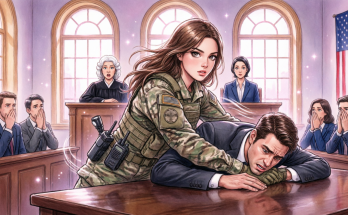
“It’s My House Now!” My Sister Smirked. My Parents Gave My Renovated Home To My Sister After She Lost Her Job, Claiming She Was Going Through A Hard Time And I Should Take The Hit. So I Triggered The Smart-Security Lockdown And Called The Cops. Thirty Minutes Later…
Part 1
The keypad flashed red.
ACCESS DENIED.
I stood on my front porch with my duffel bag digging into my shoulder, staring at those two words while the late-afternoon sun burned against the back of my neck.
Eight months overseas could make ordinary things feel unfamiliar. The air smelled too green. The street seemed unnaturally quiet. Even the chirp of a lawn sprinkler across the road sounded sharp after months of generators, radios, and aircraft engines.
So I entered the code again.
My birthday. Six digits. The same code I had used since installing the security system three years earlier.
The keypad beeped.
ACCESS DENIED.
Then a second message appeared.
MASTER CREDENTIALS CHANGED.
My hand remained suspended over the numbers.
That was when I noticed the purple petunias.
They filled the flower bed beneath the living-room window, bright and crowded, where my white climbing roses had been growing when I left. The roses had taken four years to establish. I had trained each vine along the brick myself.
Now they were gone.
I stepped backward.
The wicker chairs on the porch were not mine. Neither was the striped doormat under my boots. Through the front window, I could see pale blue curtains where my cream linen ones should have been.
A silver SUV sat in my driveway.
I recognized the vanity plate before I recognized the vehicle.
LORNSUV.
My older sister, Lauren.
I dropped my duffel bag beside the porch railing and called my mother.
“Claire!” she answered brightly. “You landed! Welcome home, sweetheart.”
I stared at the unfamiliar curtains.
“Why can’t I get into my house?”
The silence lasted less than two seconds, but it told me everything.
“Well,” Mom said, stretching the word, “that’s something we were planning to discuss.”
“What did you do?”
“Claire, don’t start with that tone.”
“What did you do?”
She exhaled as though I were being unreasonable.
“Lauren is staying there.”
I looked at my sister’s SUV.
“Staying where?”
“At the house.”
“My house?”
“She lost her job.”
“I know.”
“She couldn’t keep paying rent.”
“I know that too.”
“So your father and I helped her move.”
My fingers tightened around the phone.
“You moved her into my house without asking me?”
“You were overseas.”
“That didn’t make me dead.”
“Don’t be dramatic.”
The words came so easily that I could picture her waving one hand in dismissal.
I turned toward the keypad.
“Did Lauren change my security access?”
“She needed to feel secure.”
“In my house?”
“Claire, you’re the strong one. You have a stable career. You have options.”
There it was.
The sentence that had shaped my entire childhood.
Lauren needed help. Claire would adjust.
Lauren was sensitive. Claire could handle disappointment.
Lauren made mistakes. Claire understood consequences.
“You gave her my emergency key,” I said.
“We used it to help family.”
“That key was for a fire, flood, or medical emergency.”
“Losing your home is an emergency.”
“She had an apartment four days ago.”
“Which she could no longer afford.”
“And now I have a house I’m legally barred from entering.”
Mom’s voice hardened.
“Sometimes family means taking the short end of the stick.”
I stared at the front door I had stripped, sanded, repaired, and repainted with my own hands.
“I’ll handle it,” I said.
Her tone brightened instantly.
“I knew you’d do the right thing.”
I ended the call.
For several seconds, I listened to a lawn mower humming somewhere behind the houses. A dog barked twice. Wind stirred the leaves of the maple tree near the sidewalk.
Everything looked normal.
Someone had taken possession of my home, and the neighborhood had not even paused.
I opened my laptop on the porch railing and logged into the security system’s cloud portal.
The activity report loaded.
Emergency key used four days earlier.
Local administrator changed.
Owner credentials disabled.
New primary resident: Lauren Bennett.
I almost admired the confidence required to type that last line.
Lauren believed changing the local settings had made her the owner.
She did not understand that the cloud account, device registrations, purchase records, and master administrative authority still belonged to me.
I opened the control panel.
Full property lockdown.
A warning appeared.
ACTIVATION WILL DISABLE ALL NONESSENTIAL CONNECTED SERVICES AND REVOKE LOCAL USER PRIVILEGES.
I selected CONFIRM.
Inside the house, the internet went dark. The televisions disconnected. The garage controls locked. Guest codes vanished. Every device Lauren had added lost access at once.
My phone rang before I could close the laptop.
Lauren.
I watched her name vibrate across the screen and let it stop.
Then it rang again.
And again.
On the fifth call, a message appeared.
WHAT DID YOU DO?
A second followed.
TURN EVERYTHING BACK ON.
Then a third.
THIS IS MY HOUSE NOW.
I read that sentence twice.
Before I could respond, movement appeared on the porch camera feed.
Lauren stepped into view wearing my cream cashmere cardigan. Behind her stood a man I had never seen before, holding a leather folder and measuring the front window with his eyes.
He wasn’t dressed like a friend.
He was dressed like a real estate agent.
And when Lauren pointed toward my yard, she was smiling.
### Part 2
I zoomed in on the man’s leather folder.
A gold logo was stamped near the corner, but the camera angle kept catching glare from the sun. I could make out the outline of a house and two lines of text beneath it.
Lauren said something that made him laugh.
Then she turned toward the porch camera and lifted her middle finger.
The gesture was so childish that it almost steadied me.
Almost.
My phone rang again.
Dad.
I answered while carrying my duffel toward my truck.
“Claire, what the hell are you doing?”
No hello. No question about my flight. No welcome home after eight months.
“I’m standing outside my own house.”
“Lauren says you shut down the internet and locked the garage.”
“I did.”
“She’s crying.”
“That sounds inconvenient.”
His breath hit the phone in a heavy burst.
“You need to stop acting like this.”
“Like what?”
“Like a soldier.”
I stopped beside my truck.
“What does that mean?”
“Everything doesn’t have to become a confrontation.”
“You entered my home without permission, removed my access, moved Lauren inside, and apparently invited a real estate agent over.”
Silence.
I looked back toward the porch.
The man had disappeared inside.
Dad spoke carefully. “What real estate agent?”
“You tell me.”
“You’re imagining things.”
“I have cameras.”
Another silence.
This one was longer.
“Lauren probably invited someone to discuss decorating,” he said.
“A decorator carrying property brochures?”
“You don’t know what he was carrying.”
“I know what I saw.”
Dad changed direction.
“You haven’t lived there in eight months.”
“I was deployed.”
“You were housed by the Army.”
“I was working.”
“And Lauren needed somewhere stable.”
I opened the truck door but did not climb in.
“So you decided the house I bought was available.”
“It’s not like you were using it.”
The words entered my chest like cold air.
For years, my family had treated anything I was not actively holding as available for Lauren. Clothes. Money. Time. Vacations. Attention.
Now property.
“Turn the system back on,” Dad ordered.
“No.”
“I am your father.”
“You are not on the deed.”
His voice dropped. “Do not take that tone with me.”
“Do not enter my house without permission.”
He hung up.
I placed the phone face down on the passenger seat and drove three blocks before pulling beneath an old oak tree beside a public park.
Children chased each other near a row of swings. A golden retriever rolled in the grass while its owner pretended not to notice. The smell of hot pavement mixed with cut grass through my open window.
I watched the security footage.
The man emerged after twelve minutes. Lauren followed him onto the porch. He handed her a business card.
She tucked it into my cardigan pocket.
Then she hugged him.
I captured screenshots and saved them to a folder.
At 4:46 p.m., two women arrived carrying shopping bags and bottles of wine. Lauren greeted them like a hostess. One woman paused on the porch and admired the house.
Lauren spread both arms wide.
Even without audio, I could read her lips.
All mine.
My jaw tightened.
The living-room camera showed them opening cabinets, moving cushions, and setting drinks on my grandmother’s coffee table without coasters. One of the women walked upstairs with her phone held in front of her, apparently recording a tour.
Lauren’s calls continued.
After the seventeenth, I answered.
“What?” she snapped before I could speak.
“Hello to you too.”
“Turn everything back on.”
“No.”
“You’re embarrassing me.”
“In front of the strangers drinking my wine?”
“They’re my friends.”
“They’re trespassing.”
Her voice climbed. “Mom and Dad said I could stay.”
“They don’t own the house.”
“It’s a family home.”
“No. It’s my home.”
“You don’t even need it.”
I looked through the windshield at the playground.
“That isn’t your decision.”
“You always do this.”
“Do what?”
“Act like you’re better than everyone because you have your little uniform and your little career.”
I almost laughed.
“My career paid for the roof over your head.”
“Mom and Dad love me,” she said.
The sentence came out sharp and triumphant, like a weapon she had been waiting years to use.
For a moment, neither of us spoke.
Then I said, “That may be the first honest thing you’ve told me today.”
She inhaled hard.
“You can’t throw me out.”
“Watch me.”
I ended the call and opened the county property database. The deed remained entirely in my name. No recent filings appeared online, but updates could take days.
Then I remembered the real estate agent.
Why would Lauren bring an agent into a house she had occupied for only four days?
I called the nonemergency police number, explained the situation, and asked whether an officer could meet me at the property.
The dispatcher told me to bring proof of ownership.
I had the deed, mortgage records, tax bills, insurance policy, utility accounts, security logs, and video footage stored both locally and online.
I turned the truck toward the station.
As I pulled away from the park, my phone displayed a new email notification.
The sender was the county recorder’s office.
SUBJECT: ADDRESS CHANGE REQUEST RECEIVED.
I opened it at the next red light.
Someone had submitted a request that morning to change the mailing address associated with my property.
The requested address was my parents’ house.
And attached to the submission was a document bearing my signature.
A signature I had never written.
### Part 3
The document looked almost convincing.
Almost.
My name appeared in neat blue ink at the bottom of a one-page authorization form. The signature had the same upward hook on the C and the same long tail beneath Bennett that I used on official paperwork.
But the letters were too careful.
Mine had been copied.
I knew where they had found it too.
Two years earlier, I had given Mom a notarized medical authorization while preparing for another assignment. It allowed my parents to receive information if I was injured and unable to communicate.
It did not allow them to enter my home.
It did not allow them to manage my property.
It certainly did not allow them to imitate my signature.
The traffic light changed.
A horn sounded behind me, and I drove the remaining six blocks to the police station with my hands steady on the wheel.
The lobby smelled like disinfectant, old paper, and coffee that had been sitting too long. A delivery driver filled out a report near the entrance while a woman whispered urgently into her phone beside a row of plastic chairs.
The officer at the desk glanced at my travel jacket and then at the folder in my hand.
“How can I help you, ma’am?”
“I need to report unauthorized entry and occupation of my residence.”
He reached for a standard complaint form.
“Family situation?”
“My sister entered using an emergency key while I was overseas. She changed the security credentials, removed my access, and moved into the property without my permission.”
The officer’s expression became cautious.
“Does she receive mail there?”
“No.”
“Have a lease?”
“No.”
“Was she living there before you left?”
“No. She entered four days ago.”
“Who gave her the key?”
“My parents. They have no ownership interest.”
I placed the deed, tax bill, insurance records, and security log on the counter.
He stopped reaching for the form.
For the next fifteen minutes, he read.
When he reached the copied signature, his eyebrows lifted.
“You’re saying you did not sign this?”
“I was on a military installation several thousand miles away when it was submitted.”
“Do you know who did?”
“Not yet.”
He rose and disappeared through a door behind the desk.
My phone buzzed.
Mom: Your sister says you called the police. Tell me this isn’t true.
Lauren: You are insane.
Dad: We need to discuss this privately before you ruin everyone’s life.
I followed my attorney’s old advice even though I had not called him yet.
Never argue when the other side is volunteering evidence.
I took screenshots.
A few minutes later, an older officer with gray at his temples approached me. His nameplate read RAMIREZ.
He shook my hand.
“I reviewed what you brought. We’ll accompany you to the property and assess the situation.”
“Thank you.”
“If she claims tenancy, this could become a civil matter.”
“I understand.”
“But four days, no lease, no prior residence, and evidence of unauthorized access give us something clear to work with.”
His partner, Officer Cole, joined us.
We drove back to my street with their patrol car behind me.
By then, the sky had deepened into soft evening blue. Porch lights glowed along the block. A few neighbors stood outside pretending to pull weeds or check mail.
Officer Ramirez knocked.
“Police department. Please open the door.”
Locks turned.
Lauren opened the door wearing my cardigan and holding one of my ceramic mugs.
For half a second, irritation crossed her face.
Then she saw the officers.
Then me.
Her mouth tightened.
“What is this?”
“Are you Lauren Bennett?” Ramirez asked.
“Yes.”
“Do you live at this address?”
“Yes.”
“No,” I said.
Lauren glared at me. “Shut up, Claire.”
Officer Cole’s voice sharpened.
“Ma’am, do not speak to her that way.”
Lauren blinked. She was not accustomed to strangers correcting her.
“My parents gave me permission to live here,” she said.
“Do your parents own the property?” Ramirez asked.
“It’s a family house.”
“Do they own it?”
Lauren looked at me rather than answering.
“Claire agreed.”
“No, I didn’t.”
I handed Ramirez the deed and security report.
“This is my property. I never authorized her to enter, reside here, change credentials, or submit documents on my behalf.”
Lauren gave a brittle laugh.
“You’re really doing this?”
“I’m really doing this.”
Her friends appeared behind her in the hallway. One was still holding a wineglass.
Officer Cole noticed.
“Who are these individuals?”
“My guests,” Lauren said.
“You cannot have guests in a home you have no authority to occupy,” I replied.
Lauren’s face flushed.
“I lost my job.”
Ramirez’s voice remained even. “I’m sorry to hear that. It does not establish legal residence.”
“My sister is military. She has somewhere else to stay.”
The sentence landed harder than I expected.
My service had become evidence that I deserved less ownership of my own life.
I stepped closer.
“I slept on plywood floors during leave while repairing this house. I replaced wiring with my own hands. I rebuilt the porch you’re standing on. My uniform does not make my property available to you.”
Lauren looked away first.
Ramirez closed the folder.
“Ms. Bennett, gather the personal items you brought into the property. You need to leave tonight.”
Her face emptied.
“You can’t do that.”
“You entered four days ago without the owner’s permission. You have no lease and no evidence of established tenancy.”
Lauren’s expression changed.
The anger faded.
A small, knowing smile appeared.
“You think getting me out fixes this?” she asked.
I said nothing.
She leaned closer, lowering her voice.
“You’re too late, Claire. Dad already filed the real papers.”
Then she turned and walked upstairs, leaving me with a question I had not expected.
What exactly had my father filed?
### Part 4
Lauren took twenty-three minutes to collect her belongings.
I knew because I watched the second hand on my watch move while standing in the doorway of my own house.
Her friends slipped past the officers without meeting my eyes. One carried two unopened bottles of my wine until Officer Cole asked whether they belonged to her.
She set them on the floor so quickly that one bottle knocked against the wall.
Lauren came down dragging two suitcases over the oak floor.
The wheels left faint gray lines behind them.
Three shopping bags hung from one arm. My grandmother’s wool blanket was folded beneath the other.
“That stays,” I said.
She stopped.
“It’s a blanket.”
“It’s mine.”
Her eyes narrowed. “You have everything.”
“And you still take what isn’t yours.”
She threw the blanket onto the floor.
“You’re sick.”
“No, Lauren. I’m finished.”
She stepped close enough for me to smell wine and sweet perfume.
“Mom and Dad will never forgive you.”
“Then I’ll survive unforgiven.”
For the first time, she had no answer.
Officer Cole escorted her to the driveway. Lauren shoved her bags into the SUV, climbed inside, and backed out so fast that one tire clipped the grass.
Mom called before Lauren reached the corner.
I declined.
Officer Ramirez handed me a report number.
“Change every physical lock,” he said. “Document the interior before moving or cleaning anything.”
“I will.”
He glanced toward the hallway.
“Family disputes can become complicated.”
“Strangers usually understand they don’t own your house.”
His mouth twitched, but he did not smile.
After the officers left, I closed the front door and stood in the entryway.
The first thing I noticed was the smell.
My house had always carried a faint mixture of cedar, lemon oil, and sun-warmed wood. Now the air held perfume, takeout grease, wine, cigarette smoke, and something damp beneath it all.
It smelled occupied.
Used.
The original oak floor had three deep scratches from the entrance to the staircase. My deployment photographs were stacked facedown behind magazines. Someone had moved my grandfather’s clock into a corner and unplugged it.
The silence inside the house did not feel peaceful.
It felt like the quiet after an argument in a room where everyone had already left.
I took out my phone and began recording.
“This is Claire Bennett. Date and time are 6:42 p.m. I am documenting the condition of my residence following unauthorized occupation.”
My voice sounded detached.
Good.
In the living room, a dark wine stain spread across one corner of my grandmother’s handmade quilt.
That stopped me.
She had finished it during the last winter of her life, when arthritis had swollen her knuckles so badly that she could barely grip a needle. She used to say every house needed one object made slowly with love.
Lauren had used it beneath an ice bucket.
I photographed every stain.
The kitchen was worse.
Water rings covered the butcher-block island. A ceramic planter sat directly on the wood with damp soil scattered around it. My cast-iron skillet rested in cloudy water, rust already roughening the surface.
Three cabinet doors hung open.
A knife had been dropped blade-down on the counter, cutting a thin white scar through the finish.
Upstairs, I found boxes of Lauren’s clothes inside my closet. My uniforms had been pushed into the guest room. One garment bag lay on the floor beneath a stack of shoes.
In my bedroom, she had replaced my photographs with framed prints she must have bought that week.
Temporary guests did not redecorate.
They did not erase the owner from the security system.
They did not invite real estate agents to measure windows.
I checked the desk where I stored household records.
The drawer was open.
My backup copy of the deed was gone.
So was a folder containing an old insurance policy, mortgage documents, and several photocopies of my identification.
My pulse slowed.
Not fear.
Focus.
I downloaded all four days of security footage and copied it onto an external drive.
At 7:28 p.m., someone knocked on the back door.
I checked the camera.
Walter Grant, my seventy-year-old neighbor, stood outside holding a manila envelope. A retired Marine, he swept his sidewalk every morning and noticed everything without behaving as though he noticed anything.
I opened the door.
“Major,” he said.
“Mr. Grant.”
His eyes moved over the damaged kitchen.
“I thought you might need these.”
The envelope contained printed photographs from his exterior cameras.
Lauren’s friends arriving with wine. A man smoking on my side porch. My parents carrying boxes into the house. The real estate agent shaking Lauren’s hand.
A flash drive was taped inside the flap.
“My camera caught audio near the driveway,” Walter said.
“What did they say?”
He hesitated.
“Your father told the agent the house would soon be available for transfer. Your mother said the owner was overseas and had already agreed.”
My stomach tightened.
“Did the agent say who hired him?”
Walter pointed to the flash drive.
“You should listen yourself.”
I connected it to my laptop.
The first clip showed Lauren and the agent beside my driveway. Wind rustled through the microphone, but their voices were clear.
“I don’t want to list it yet,” Lauren said. “Dad says we need the ownership issue cleaned up first.”
The agent lowered his voice.
“And the loan?”
Lauren glanced toward the house.
“Once the title changes, I’m pulling enough equity to pay off everything.”
She laughed.
“Claire spent years building value into this place. It’s about time that helped someone in the family.”
### Part 5
I called my attorney before listening to the rest of the recording.
Michael Reyes answered on the third ring.
“Claire? You’re back.”
“I’m back.”
Something in my voice changed his tone.
“What happened?”
I gave him facts.
Unauthorized entry. Security credentials changed. Police removal. Missing documents. Copied signature. County address request. Real estate agent. Recorded discussion of a title change and equity loan.
Michael did not interrupt.
When I finished, he remained silent for several seconds.
“Send me everything.”
“I’m uploading it now.”
“Do not clean the house.”
“I haven’t.”
“Do not call your parents or your sister. Written communication only.”
“Understood.”
“And Claire?”
“Yes?”
“This is no longer a family misunderstanding.”
I looked at the rusting skillet in the sink.
“No. It isn’t.”
By midnight, Michael had contacted a property-fraud specialist and requested an emergency alert on the title. He also found something the county website had not displayed.
Three days earlier, my father had submitted a transfer packet.
Not a completed deed.
An attempted transfer packet.
It claimed I intended to add Lauren as a joint owner because I was “unable to maintain the residence due to indefinite overseas service.”
My copied signature appeared on two pages.
The packet had been rejected because the notarization was incomplete.
That was why Lauren had said the real papers were already filed.
They had tried.
They simply had not succeeded yet.
At 12:37 a.m., my mother sent an email.
Claire,
Your behavior tonight was cruel and humiliating. Your sister has suffered a devastating career setback, and instead of supporting her, you involved police officers and treated her like a criminal.
Your father and I made a temporary decision because you were unavailable. We did what parents are supposed to do: protect the child who needed us most.
We expect you to restore access immediately and allow Lauren to return until she finds work.
Mom
I read the message twice.
Then I forwarded it to Michael.
His reply arrived one minute later.
Excellent. She has admitted involvement. Do not respond tonight.
I slept in a chair beside the front door with my boots on.
Not because I expected Lauren to return, although part of me did.
I slept there because my bedroom no longer felt like mine.
At sunrise, pale light stretched across the scratched floor. Dust floated in the air. Somewhere inside the wall, an old pipe clicked as it warmed.
I made coffee in a saucepan because Lauren had taken my coffee maker.
At 8:10 a.m., a locksmith arrived.
At 9:00, a restoration contractor began photographing the damage.
At 9:40, the antique textile specialist examined my grandmother’s quilt and gently touched the stained corner.
“We may be able to lift most of it,” she said. “But the dye has already migrated into the older fibers.”
“How much?”
She hesitated before answering.
I wrote the number down.
By afternoon, estimates covered my table.
Floor refinishing. Plaster repair. Smoke remediation. Cabinet work. Security replacement. Textile restoration. Furniture repair.
The total passed thirty thousand dollars.
Then the mail arrived.
Most of it was ordinary: utility notices, advertisements, an envelope from my insurance company.
A thick white packet bore the logo I had seen on the real estate agent’s folder.
Ridgeway Property Group.
Inside was a preliminary market analysis for my home.
Lauren’s name appeared under CLIENT.
The report included photographs of every room.
Some had been taken before she damaged anything.
That meant the agent had visited earlier than the day I returned.
I checked the security archive.
The first visit had occurred two days after I deployed.
Not four days ago.
Seven months earlier.
The camera showed my mother unlocking the front door. My father followed with the agent. Lauren walked behind them, laughing.
They toured the house for forty-five minutes.
At the end of the footage, my father stood in the kitchen and placed his palm on the butcher-block island.
The audio was faint, but clear enough.
“Claire doesn’t know it yet,” he told the agent, “but this house was always going to Lauren.”
That was not an impulsive decision made after a job loss.
They had been planning to take my home for months.
And someone inside my family had known exactly when I would be too far away to stop them.
### Part 6
The next morning, Michael sent me a list of questions.
Who knew my deployment schedule?
Who had access to the emergency key?
Who had copies of my identification?
Had I ever signed a power of attorney naming either parent?
The answers formed a narrow road leading in one direction.
Mom knew the exact date I left.
Dad knew the length of my assignment.
Both had the emergency lockbox code because I had trusted them to respond to a real crisis.
Neither had power of attorney.
The photocopies of my identification had been inside the missing desk folder.
At 10:15 a.m., I received another email from Dad.
Your mother is heartbroken. Lauren is staying in our guest room and has barely eaten. You need to understand that legal threats will destroy this family permanently.
We were trying to preserve the property within the family while helping your sister recover. You have always said you did not know whether you would remain in Virginia after retirement.
No harm was intended.
The phrase preserve the property within the family made me laugh once.
Quietly.
The house was already within the family.
It belonged to me.
What he meant was that he did not consider me a permanent member of the family unless I was serving someone else.
I forwarded the message to Michael.
Then I answered with one sentence.
All further communication should be directed to my attorney.
Dad replied immediately.
So that’s it? After everything we’ve done for you?
I did not respond.
For the first time in my life, silence worked in my favor.
Without my cooperation, they began talking more.
Mom emailed three times. Lauren sent twelve messages. Dad sent a four-page explanation in which he admitted that he had contacted a title company but insisted it was only to “explore options.”
Lauren left a voicemail even though Michael had told me not to answer calls.
“You’ve always hated that Mom and Dad chose me,” she said. “This isn’t about the house. It’s about jealousy.”
I saved the recording.
By the end of the week, their own words had built half the case.
But the family story spreading through our relatives was different.
According to my aunt, I had returned from deployment, found my unemployed sister housesitting, and called the police without warning.
According to my cousin, I had promised Lauren the home and changed my mind.
According to an old family friend, I owned multiple properties and had forced Lauren onto the street.
I owned one house.
The lie about multiple properties was so specific that I knew it came from Dad.
He had always believed accuracy was optional when defending Lauren.
My aunt called Saturday morning.
“I don’t want to take sides,” she began, which meant she had already chosen one.
“Then don’t.”
“Your mother says Lauren was maintaining the property while you were gone.”
“She removed my roses, damaged the interior, and attempted to transfer ownership.”
“That sounds like a misunderstanding.”
“She copied my signature.”
My aunt became quiet.
Then she whispered, “Your father said you gave permission.”
“I didn’t.”
Another pause.
“Well, maybe everyone was confused.”
Four adults had not accidentally entered a locked house, removed the owner’s access, copied documents, contacted an agent, and discussed an equity loan.
Confusion did not require that much planning.
That afternoon, Walter came over carrying a small toolbox. He helped me lift the dining table so the contractor could examine the damaged floor beneath it.
“Families circle the person who makes the most noise,” he said.
“Lauren has always been good at noise.”
“And you?”
“I learned to be useful.”
Walter studied me for a moment.
“Useful people are often punished the first time they refuse.”
Before I could answer, a dark sedan stopped at the curb.
My parents stepped out.
Mom carried a casserole dish covered in foil. Dad held a large white envelope.
They walked toward the porch as though arriving for Sunday dinner.
I opened the door but left the storm door locked.
“You need to leave,” I said.
Mom lifted the casserole.
“We brought food.”
“I’m not letting you inside.”
Her face crumpled instantly.
“Claire, please.”
Dad raised the envelope.
“We have proof that you agreed to this.”
Behind them, Walter became very still.
Dad slid a document through the narrow opening beside the door.
It was labeled FAMILY PROPERTY AGREEMENT.
My name appeared at the bottom.
So did a signature.
This one looked authentic because it was authentic.
I remembered signing the page.
But when I had signed it three years earlier, it had been the final page of a completely different document.
Someone had attached my signature page to a new agreement.
And according to the first paragraph, I had supposedly promised my house to Lauren before I ever bought it.
### Part 7
I did not argue with them on the porch.
I photographed every page through the glass, returned the document, and said, “My attorney will contact you.”
Dad’s face reddened.
“This is your signature.”
“On a page you removed from something else.”
Mom pressed one hand against the storm door.
“No one removed anything.”
“I remember that page. It came from the emergency medical packet I signed before my last assignment.”
“You can’t prove that,” Dad said.
Walter stepped closer behind me.
The movement was small, but Dad noticed.
His tone changed.
“This is private.”
Walter folded his arms.
“You brought it to her front porch.”
Mom looked at him with wounded outrage.
“We are trying to keep our family together.”
“No,” I said. “You’re trying to keep me compliant.”
Her eyes filled with tears.
“Your sister has nothing.”
“She had an apartment.”
“She lost her job.”
“So she tried to take my house.”
“She didn’t take it. She needed it.”
Dad struck the envelope against his palm.
“You have always had more opportunities than Lauren.”
“I worked for them.”
“You think that makes you better?”
“No. I think it makes them mine.”
His jaw tightened.
For one second, the mask slipped. I saw not confusion, not concern, but resentment.
My father resented that I owned something he could not redistribute.
“You owe this family,” he said.
The words settled between us.
“For what?”
He looked stunned by the question.
Mom began crying more loudly.
Dad pointed toward the house.
“We paid for your college application fees. We helped you buy your first car.”
“I repaid the car loan.”
“We raised you.”
“You raised Lauren too. Did she repay you with my property?”
His hand dropped.
“Your sister needed a fresh start.”
“At my expense.”
“You can afford it.”
There it was.
Not innocence.
Not denial.
Just a belief that my ability to survive made harming me acceptable.
I closed the inner door.
Mom shouted my name through the glass.
Dad struck the door once with the flat of his hand.
Walter stayed until their sedan disappeared around the corner.
Then he looked at me.
“You all right?”
“No.”
“Good answer.”
I sent the photographs to Michael.
Two hours later, he called.
“The signature page contains a footer code,” he said. “They didn’t notice it.”
“What code?”
“It identifies the original medical authorization packet and the year it was generated. The supposed property agreement uses a page created eighteen months before you purchased the house.”
I sat at the kitchen table surrounded by repair estimates.
“So it collapses.”
“It does more than collapse. It supports deliberate fabrication.”
My eyes moved toward the empty space where Lauren had removed my deployment photograph.
“What happens now?”
“We send preservation notices. No one deletes email, text messages, drafts, or digital files without risking additional consequences.”
“And the county filing?”
“The fraud alert is active. Nothing can be recorded without in-person verification from you.”
For the first time in days, I breathed fully.
Then Michael continued.
“There’s something else.”
I waited.
“The title company kept the inquiry notes from your father’s phone call. He told them you were missing overseas and the family expected to obtain legal control of the property.”
My chair creaked as I leaned back.
“Missing?”
“That is the word recorded in their file.”
My family had not merely treated my deployment as an inconvenience.
They had suggested I might not come home.
Michael’s voice softened.
“I’m sorry, Claire.”
I thought of my mother’s cheerful voice when she answered the phone.
Welcome home, sweetheart.
She had sounded surprised.
Not relieved.
Surprised.
A memory returned from two months earlier. During a video call, Mom had asked whether my assignment was considered dangerous. At the time, I thought she was worried.
Then Dad had casually asked whether my life insurance beneficiary information was current.
A cold line moved down my back.
“Michael,” I said, “check whether they made any inquiries about my estate.”
He was quiet.
“I already did.”
My fingers tightened around the edge of the table.
“What did you find?”
“Your father contacted your insurance provider six weeks ago.”
I stopped breathing.
“He asked what documentation would be required if a service member died outside the country.”
### Part 8
The insurance company had not given Dad private information.
They had provided only general instructions and advised him that claims required official documentation.
Still, the inquiry changed something inside me.
Until that moment, part of my mind had continued searching for a smaller explanation.
Maybe they had panicked when Lauren lost her job.
Maybe Mom had convinced herself I would agree later.
Maybe Dad thought the title paperwork was a harmless shortcut.
But people expecting your return do not ask how to claim assets after your death.
They had not caused my deployment. They had not created the risks involved.
They had simply looked at those risks and seen an opportunity.
Michael filed the civil complaint nine days later.
It named Lauren for unauthorized occupation, property damage, attempted interference with title, and fraudulent use of personal documents.
My parents were named for facilitating entry, participating in the attempted transfer, and fabricating records.
The requested damages included restoration costs, security replacement, legal expenses, and additional losses connected to the attempted title fraud.
The total exceeded fifty thousand dollars.
When the papers were served, Mom emailed me from a new address.
You are suing your own parents after we spent our lives loving you.
I stared at the word loving.
Love had become their universal excuse for possession.
They loved me, therefore they could use my emergency key.
They loved me, therefore they could copy my signature.
They loved me, therefore my future belonged to Lauren.
I forwarded the email without replying.
Lauren responded differently.
She hired an attorney.
Her formal answer claimed I had verbally promised her the house years earlier.
It also claimed she had invested money in improvements.
The improvements were purple petunias, blue curtains, and three nails hammered into plaster.
She produced receipts totaling $1,842.
Most were for furniture she had removed when the police escorted her out.
One receipt was for a locksmith.
Another was for a document-preparation service.
That one interested Michael.
He subpoenaed the service records.
The company had helped Lauren prepare an owner-occupancy statement. During a recorded intake call, she told the clerk that I had “abandoned the property permanently.”
When asked for proof, she said my parents would confirm it.
The audio turned their story from a family favor into a coordinated plan.
Still, Lauren’s attorney believed emotion could create doubt where paperwork could not.
He requested mediation.
We met in a conference room with beige walls, sealed windows, and a machine humming stale coffee into paper cups.
Lauren sat across from me wearing a navy dress and no visible makeup. Mom sat beside her clutching tissues. Dad kept both hands folded on the table.
Their attorney spoke first.
“The family is willing to resolve this privately.”
Michael glanced at me.
I said, “What are they offering?”
Mom looked hopeful.
Their attorney cleared his throat.
“They propose that the parties dismiss all claims, share repair expenses, and allow Lauren a sixty-day transition period at the residence.”
I thought I had misheard him.
“You want her back in my house?”
“Temporarily.”
“No.”
Mom leaned forward.
“Claire, she has nowhere else.”
“She has your guest room.”
“It’s too small.”
The absurdity was almost elegant.
Lauren’s life required comfort.
Mine required sacrifice.
Their attorney tried again.
“Your parents believe litigation will cause permanent emotional damage.”
“The fraud caused permanent emotional damage,” I said.
Dad’s face hardened.
“We made one mistake.”
“You made dozens of decisions.”
“One situation,” he corrected.
“Entering the house was a decision. Changing the access was another. Removing my records was another. Copying my signature was another. Contacting an agent was another. Attempting a title transfer was another. Calling my insurer was another.”
Mom covered her face.
Lauren’s voice cut through the room.
“You weren’t supposed to find out like this.”
Everyone became still.
Her attorney turned toward her.
Lauren seemed to realize what she had said.
Michael spoke gently.
“How was she supposed to find out?”
Lauren looked at Dad.
Dad stared at the table.
“How?” Michael repeated.
Lauren’s mouth trembled.
“After the loan closed.”
The mediator stopped writing.
I felt strangely calm.
“What loan?” I asked.
Lauren whispered, “The home-equity loan.”
“And what were you planning to do with the money?”
She did not answer.
Michael placed a document in front of her.
“We already have the draft application.”
Lauren’s eyes widened.
I had not seen it before.
Neither, apparently, had my parents’ attorney.
The requested amount was $186,000.
The listed purpose was debt consolidation and business investment.
But the application contained another name beside Lauren’s.
A second borrower.
My mother.
### Part 9
Mom stared at the loan application as though it had appeared by magic.
“I never signed that,” she said.
Lauren turned pale.
Dad’s chair scraped against the carpet.
“What is this?”
Michael looked at Lauren.
“The document was recovered from the property consultant’s file. It lists Diane Bennett as co-borrower.”
Mom pulled the paper toward her.
Her name was typed beneath a digital signature.
The same copied signature method they had used against me had apparently been used against her.
For the first time since I returned, my mother looked at Lauren without protection in her eyes.
“You signed my name?”
Lauren shook her head too quickly.
“No.”
“Did you sign my name?”
“I was trying to qualify.”
Mom’s voice rose. “You used me?”
Lauren’s face twisted.
“You said you would help.”
“I said we would help you get the house.”
The mediator closed his notebook.
Every person in the room heard the admission.
Dad pressed his fingers against his forehead.
Their attorney whispered something urgent, but Mom was no longer listening.
“The loan would have made me responsible,” she said.
“It would’ve been fine once my business started.”
“What business?”
Lauren looked toward me.
That was when I understood.
She had not lost her job because of downsizing.
That had been another family story.
Michael must have seen the realization on my face.
“We obtained her employment records during discovery,” he said. “Lauren was terminated for charging personal expenses to a company account.”
Mom stared at her.
“That’s not what you told us.”
“My manager hated me.”
“The report included receipts, warnings, and a repayment agreement,” Michael continued. “She owes her former employer nearly twenty-four thousand dollars.”
Dad turned slowly toward Lauren.
“You said they eliminated your department.”
“They were going to fire other people too.”
“That isn’t the same thing.”
Lauren slammed one hand onto the table.
“Why is everyone suddenly against me?”
The question was so sincere that the room went silent.
She was not ashamed that she had lied.
She was offended that the lies had stopped working.
Her attorney requested a private break.
Michael and I stepped into the hallway.
Through the conference-room wall, voices rose and fell. Mom cried. Dad shouted once. Lauren shouted back.
Michael handed me the loan application.
“I held that evidence because I wanted to see whether they would admit knowledge.”
“Did they?”
“Your mother appears not to have known about the loan. Your father may have.”
“How can you tell?”
“He reviewed a preliminary version from his email account.”
I looked at the amount again.
One hundred eighty-six thousand dollars.
“What would have happened if the title transfer had succeeded?”
“They would have borrowed against the equity you built. If the loan defaulted, you could have lost the property before untangling the fraud.”
I thought about every weekend spent replacing rotten wood.
Every holiday sanding floors.
Every night studying repair manuals beneath a bare bulb because I could not afford contractors.
Lauren had looked at those years of labor and seen available cash.
The mediation resumed after thirty minutes.
Mom’s eyes were swollen. Dad would not look at Lauren.
Their attorney presented a new offer.
My parents would pay part of the restoration costs if I dismissed the fraud-related claims. Lauren would sign a statement relinquishing any interest in the house.
“She has no interest to relinquish,” I said.
“It would provide reassurance.”
“My deed provides reassurance.”
Dad finally looked at me.
“What do you want from us?”
It was the first honest question he had asked.
“Accountability.”
“That’s not an amount.”
“No.”
Mom reached across the table.
I moved my hand before she could touch it.
She froze.
“We were trying to help your sister,” she whispered.
“You were willing to erase me to do it.”
“We never wanted to hurt you.”
“You asked about collecting my insurance if I died.”
Dad flinched.
“That was practical planning.”
“Practical for whom?”
He had no answer.
Lauren leaned back, arms crossed.
“This is pointless. She’s enjoying this.”
I looked at her.
“I slept beside my front door because you made my bedroom feel contaminated.”
Her expression flickered.
Only briefly.
Then she said, “That’s your problem.”
Michael closed his folder.
“Mediation is over.”
As we stood, Lauren’s attorney caught his sleeve.
He whispered something and handed him a phone.
Michael listened to an audio file.
His face changed.
“What is it?” I asked.
He looked at Dad.
“The real estate agent recorded his meetings.”
Dad’s skin went gray.
“And in one of them,” Michael said, “Martin explains exactly why they chose Claire’s house instead of helping Lauren rent another apartment.”
### Part 10
The recording began with the clink of ice in a glass.
The agent had placed his phone on a kitchen counter during the meeting. He claimed it was standard practice to record client instructions after previous disputes.
Dad’s voice came through clearly.
“Rent would be throwing money away. Claire has no children, no husband, and no immediate plans to leave the military. Lauren needs an asset that can become the foundation of her future.”
The agent asked, “Does Claire intend to transfer it?”
Mom answered.
“She will resist at first.”
Dad laughed.
“Claire always resists quietly. Then she does what is expected.”
I listened without moving.
The recording continued.
The agent warned them that transferring property required the owner’s consent.
Dad replied, “We’ll create the consent.”
Lauren asked how quickly they could borrow against the house after her name appeared on the title.
Mom said, “Don’t be greedy.”
Lauren laughed.
“I’m not greedy. I’m finally getting my share.”
My share.
Not a loan.
Not temporary shelter.
An inheritance from someone still alive.
The recording ended.
No one spoke for several seconds.
Then their attorney stood.
“My clients will not continue mediation today.”
The hearing took place seven weeks later.
The courthouse smelled like stone, rain-damp coats, and floor polish. I arrived twenty minutes early wearing a charcoal suit.
I did not wear my uniform.
This was not about rank.
It was about ownership.
Lauren sat beside her attorney in a gray blazer, staring at the table. Mom clutched a packet of tissues. Dad looked smaller than I remembered.
When the judge entered, everyone stood.
Lauren’s attorney began with phrases designed to soften sharp facts.
Family misunderstanding.
Emotional hardship.
Informal arrangement.
Good-faith reliance.
Temporary occupation.
Then Michael stood.
He started with the deed.
My name.
My mortgage.
My tax records.
My insurance.
My payments.
One fact repeated through every document: the house belonged to me alone.
Next came the security logs.
The courtroom monitor displayed the emergency-key entry, deletion of my access, creation of Lauren’s profile, and changes to connected devices.
The judge leaned forward.
“Ms. Bennett, did the property owner authorize these changes?”
Lauren whispered to her attorney.
The judge repeated the question.
“No,” Lauren said.
“Did you believe the owner had died?”
“No.”
“Was she missing?”
“No.”
“Did you have reason to believe she would not return from deployment?”
Lauren glanced at Dad.
“No.”
The judge removed her glasses.
“Then why did you submit documents stating she had abandoned the property?”
Lauren’s mouth opened.
No sound came out.
Michael presented photographs of the damage.
The scratched floor. Stained quilt. smoke residue. Damaged counters. Holes in the plaster. Rusted cookware. Missing household items.
The restoration total was $38,614.
Then came the attempted title packet.
The copied signature.
The altered medical authorization page.
The address-change request.
The loan application.
Mom began crying quietly when her own copied signature appeared.
The judge did not look toward her.
Walter testified next.
He described seeing my family enter months before Lauren supposedly lost her job. He authenticated the exterior footage and explained that his cameras had recorded conversations in the driveway.
Lauren’s attorney attempted to suggest Walter disliked my family.
Walter looked at him calmly.
“I barely knew them.”
“Yet you collected evidence against them.”
“I preserved footage after the homeowner returned and discovered people inside her property.”
“So you chose a side.”
“I chose the person on the deed.”
Several people in the courtroom shifted.
The agent testified after him.
He appeared nervous but direct. He confirmed that my father knew I had not consented. He confirmed Lauren discussed borrowing against the house. He confirmed Mom expected me to resist and believed I would eventually surrender.
Finally, the recordings played.
My father’s voice filled the room.
Claire always resists quietly. Then she does what is expected.
I did not look at him.
I watched the judge instead.
Her expression changed at that sentence.
Not dramatically.
Her pen simply stopped moving.
When the recording ended, she asked Dad to stand.
“Did you say those words?”
He rose slowly.
“Yes.”
“Did you own the property?”
“No.”
“Did you hold power of attorney?”
“No.”
“Did your daughter authorize you to act on her behalf?”
“No.”
“Then what, precisely, did you believe entitled you to redistribute her home?”
Dad looked at me.
For one second, I saw the old expectation in his eyes.
Help me.
Protect the family.
Absorb this.
I looked back without expression.
He turned toward the judge.
“She was always the capable one.”
The judge’s voice became very quiet.
“That was not my question.”
Dad swallowed.
“I thought she could recover.”
The courtroom went still.
He had finally said it plainly.
He knew I would be harmed.
He simply believed I could survive the harm better than Lauren could survive disappointment.
Michael sat down.
There was nothing more to prove.
But before the judge recessed, Lauren stood without permission.
“This isn’t fair,” she said.
Her attorney grabbed her sleeve.
Lauren pulled away.
“She has always had everything.”
The judge looked at her.
“Major Bennett had what she purchased.”
Lauren pointed toward me.
“She left. She wasn’t using it.”
The judge’s expression hardened.
“Ownership does not expire when the owner goes to work.”
Lauren began to cry.
For once, no one moved to comfort her.
### Part 11
The ruling came that afternoon.
The judge returned with a stack of notes and spoke for nearly twenty minutes.
She found that Lauren had occupied the property without authorization, interfered with my access, damaged personal property, and participated in attempts to create false ownership documents.
She found that my parents had knowingly facilitated entry, encouraged the attempted transfer, and supported false representations about my consent and status.
She found Lauren additionally responsible for the fraudulent loan preparation.
The judgment was joint for restoration costs, security replacement, legal expenses, court costs, and penalties.
The final amount was $61,230.
Lauren covered her mouth.
Mom made a sound like air leaving a punctured tire.
Dad stared straight ahead.
The judge also issued a permanent order preventing any of them from entering the property, using my personal documents, or presenting themselves as authorized representatives regarding my home.
The gavel struck once.
That was all.
Real consequences rarely arrived with music or speeches.
They arrived as numbers entered into records.
Outside the courtroom, rain tapped against tall windows. People passed carrying umbrellas, coffee cups, and thick folders.
Michael shook my hand.
“You did well.”
“I mostly sat there.”
“You refused to rescue them. That was the difficult part.”
He left to speak with the clerk.
I remained near the elevators.
Mom approached first.
Her mascara had left gray shadows beneath her eyes. Dad followed several steps behind. Lauren stood near the courtroom doors with her attorney.
For one second, I wondered whether Mom would apologize.
She did not.
“How could you let this happen?” she whispered.
I almost admired the consistency.
Even after a judge had listed every action they took, Mom still described the outcome as something I had allowed.
“I didn’t make it happen.”
“You could have settled.”
“You wanted Lauren back in the house.”
“She had nowhere else.”
“She lives with you.”
“Our retirement savings,” Mom said. “Do you understand what this will do to us?”
I looked at her.
“Did you understand what losing my house would do to me?”
“You wouldn’t have lost it.”
“Lauren planned to borrow nearly two hundred thousand dollars against it.”
“We didn’t know that.”
“You knew she planned to borrow.”
Mom looked toward Dad.
He stared at the floor.
Her face changed.
“You knew the amount?”
Dad’s silence answered.
Mom stepped backward as though he had pushed her.
Lauren appeared beside them.
“This is what you wanted,” she said to me. “You wanted to destroy us.”
“No.”
“Liar.”
“I wanted you out of my house. Everything after that came from what you did.”
“You could forgive us.”
“Forgiveness wouldn’t erase the judgment.”
“You could stop collection.”
“I won’t.”
Her mouth fell open.
Mom began crying again.
“We are your family.”
“You used that word as permission.”
Dad finally raised his head.
“Claire, listen to me. We made terrible decisions. But cutting us off forever is extreme.”
“Calling my insurer because you thought I might die was extreme.”
His face tightened.
“I was preparing.”
“You were planning.”
“That isn’t fair.”
“No,” I said. “It wasn’t.”
The elevator doors opened.
I took out my phone.
Mom watched as I blocked her number.
Then Dad’s.
Then Lauren’s.
Her expression shifted from anger to disbelief.
The lawsuit had not frightened her as much as that simple movement of my thumb.
Money could be repaid.
Access could not.
“You can’t do this,” Mom whispered.
“I just did.”
“What if there’s an emergency?”
“Call someone whose boundaries you respect.”
I stepped into the elevator.
Dad moved forward.
“Claire.”
I held the door-open button for one second.
He looked desperate now.
Not for me.
For the version of me who solved problems for everyone else.
“I don’t know how to fix this,” he said.
“You can’t.”
The doors closed.
As the elevator descended, my reflection moved across the brushed metal wall. I looked tired. Older. Less certain than I had hoped to feel.
Accountability did not erase grief.
It simply prevented grief from taking the house with it.
When I walked outside, the rain had stopped.
Michael waited beneath the courthouse awning.
“There’s one more issue,” he said.
I looked at him.
“Lauren emptied several accounts after mediation.”
“Whose accounts?”
“Your parents’.”
The copied loan signature had not been the first time she used their information.
And the daughter they had sacrificed everything to protect was already preparing to leave them with the bill.
### Part 12
Lauren had transferred nearly eighteen thousand dollars from a joint emergency account into an online bank three days before the hearing.
The account existed because Mom had added her years earlier “in case something happened.”
Something had happened.
Lauren.
She also charged hotel rooms, attorney consultations, and a one-way airline ticket to a card in Dad’s name.
The flight was scheduled for the following morning.
Destination: Phoenix.
Mom called Michael’s office before sunset.
Because I had blocked her, she tried reaching me through him.
He asked whether I wanted the message.
“No.”
“It concerns possible financial fraud by Lauren.”
“That is between them.”
“They may ask you to testify about the copied signatures.”
“I’ll provide evidence if legally required.”
“But you don’t want contact.”
“No.”
The answer surprised me with its simplicity.
For most of my life, Mom and Dad had placed Lauren in the center of every emergency and then recruited me to clean the edges.
This time, I stepped out of the pattern.
Lauren boarded the flight.
She missed a scheduled meeting with her attorney. She stopped responding to my parents. Within two weeks, she had rented a furnished apartment and posted photographs online beneath captions about starting over after “escaping a toxic family.”
My aunt sent me screenshots.
I asked her to stop.
“You should know what she’s saying.”
“I already know who she is.”
My parents reported the transfers but hesitated to pursue charges. They wanted the bank to return the money without requiring Lauren to face consequences.
The bank did not operate according to our family rules.
Accounts were frozen. Investigators asked questions. Documents were compared. Mom discovered two additional credit applications submitted using her information.
For the first time, Lauren’s behavior affected people who had spent decades protecting her from it.
I did not celebrate.
I did not need revenge.
Their choices were finally arriving at their own address.
The house took four months to restore.
Workers sanded the oak floors until the suitcase scars disappeared. The butcher-block island required refinishing. Smoke-remediation machines hummed through several cold nights, filling the rooms with a dry mechanical roar.
The textile specialist removed most of the wine from my grandmother’s quilt, but a pale shadow remained in one corner.
I decided not to hide it.
I had the quilt framed behind museum glass and hung it in the living room.
The stain became part of its history.
Not the most important part.
Just proof that damage and destruction were not the same thing.
Walter helped me replant the white roses.
We worked on a cloudy Saturday morning with damp soil sticking to our gloves. He brought cuttings from an older variety his late wife had grown.
“They’ll look unimpressive this year,” he warned.
“I can wait.”
He nodded.
“Most worthwhile things start small.”
My friends came over that evening with folding chairs, food, and absolutely no advice. We ate takeout on the kitchen floor because the dining table was still in storage.
The house smelled like fresh wood finish and pizza.
For the first time since returning, laughter did not feel intrusive.
It felt like the house was breathing again.
Six months after the hearing, I received the first payment toward the judgment.
It was not large.
My parents had sold their boat and begun a structured payment plan. Lauren’s wages from a new job were subject to collection after investigators located her.
Michael sent the notice.
I filed it without emotion.
That same week, an envelope appeared in my mailbox with no return address.
Inside was a handwritten letter from Dad.
Claire,
I spent years believing strength meant you needed less from us. The truth is that your strength made it easy for us to take more.
I do not expect forgiveness.
Your mother still believes there is a way to put the family back together. I no longer think there is.
I am sorry.
Dad
I read it twice.
The apology was better than the excuses.
It was also late.
I placed the letter inside a file and closed the drawer.
An apology could be true without becoming a key.
Three nights later, my doorbell rang.
The new security camera showed Lauren on the porch.
She looked thinner than she had in court. Her hair was tied back, and rain darkened the shoulders of her jacket.
She held no suitcase.
Only an envelope.
I spoke through the intercom.
“You’re violating the order.”
“I’m leaving,” she said quickly. “I just need five minutes.”
“No.”
“Claire, please.”
Behind her, a rideshare waited at the curb.
“I came to apologize.”
“Mail it through my attorney.”
Her face tightened.
“I lost my job again.”
I said nothing.
“My wages are being taken. Mom and Dad won’t speak to me. I don’t have anywhere to go.”
The old script.
The familiar emergency.
Lauren needed help.
Claire would adjust.
She pressed the envelope against the camera.
“If you sign this, the collection stops.”
There it was.
Not remorse.
A request.
“You didn’t come to apologize,” I said.
“I said I was sorry.”
“You came to obtain something.”
Her expression hardened.
“So you’re just going to watch me suffer?”
“No, Lauren. I’m going to live my life.”
She looked past the camera toward the warm lights inside.
For a moment, I imagined opening the door.
Not to forgive her.
To prove she no longer had power over me.
Then I recognized the trap.
Boundaries did not require demonstrations.
They required doors that stayed closed.
Lauren tore the envelope in half and threw it onto the porch.
“You think you won.”
“I think I’m home.”
I disconnected the intercom.
Through the camera, I watched her stand in the rain for several seconds.
Then she turned, climbed into the waiting car, and disappeared down the street.
This time, I did not wonder whether she would return.
I changed the notification settings and went back to dinner.
### Part 13
A year after the day I found myself locked out, I hosted a small gathering in the backyard.
Nothing formal.
A long wooden table stood beneath strands of warm lights. Walter grilled chicken near the fence while my friends argued over music. Someone opened a bottle of wine and placed a coaster beneath it without being asked.
The roses had begun climbing again.
Only a few flowers appeared that first season, but they were white, bright, and stubborn against the brick.
I carried a bowl of salad outside and paused on the patio.
From there, I could see the kitchen through the open door.
The butcher-block island glowed beneath the pendant lights. My grandmother’s quilt hung behind glass in the living room. The old clock ticked steadily from the mantel.
The house no longer felt like a crime scene.
It felt lived in.
But this time, by people who understood they had been invited.
Walter handed me a plate.
“You’re staring.”
“I know.”
“Something wrong?”
“No.”
He looked toward the house.
“Something right, then?”
I smiled.
“Something right.”
My parents completed the first year of payments without contacting me directly.
Dad sent one update through Michael confirming they had moved into a smaller condominium. Mom never apologized in writing. According to my aunt, she still told people I had chosen a house over my family.
She was wrong.
I had chosen reality over a role.
The role of the strong daughter had sounded like praise when I was young.
In practice, it meant I was expected to accept less, repair more, complain quietly, and forgive before anyone changed.
I no longer wanted it.
Lauren’s financial case ended with restitution and probationary terms. She found another marketing job in Arizona, lost it, and moved again. I knew only because the collection office sent updated employment notices.
I never searched for her.
Distance was not punishment.
It was maintenance.
Near sunset, one of my friends asked the question people always asked once they knew the story.
“Do you regret taking them to court?”
The conversations around the table softened.
I looked toward the roses.
“No.”
“Not even a little?”
“I regret trusting them with the key.”
“That’s different.”
“Yes.”
The evening breeze moved through the maple leaves. Plates clinked. Someone laughed near the fire pit.
“I thought accountability would feel like winning,” I said. “It didn’t. It felt like surgery. Necessary, painful, and followed by a long recovery.”
My friend nodded.
“But you recovered.”
I looked around the yard.
“I’m still recovering.”
That was the truth.
I had not become fearless or untouched. Some mornings, a changed object still made my chest tighten before logic caught up. I checked the locks more often than necessary. I kept original records in a secure deposit box and encrypted copies in three locations.
Peace did not erase memory.
It simply gave memory less authority.
After dinner, everyone helped clear the table. Walter carried dishes inside while two friends folded chairs.
I remained near the flower bed.
A small brass plaque had been placed beside the roses.
It contained no family name.
No inspirational quotation.
Only the year I bought the house.
The year I chose to build something that belonged to me.
As darkness settled, the security system chimed softly from inside.
All doors secure.
The same system that had once displayed ACCESS DENIED now recognized me before my hand reached the keypad.
WELCOME HOME, CLAIRE.
I stood in the doorway, listening to voices from the kitchen.
For years, my parents had told me that family meant accepting the short end of the stick.
They were wrong.
Family did not require theft disguised as need.
Love did not demand that one person disappear so another could feel protected.
And strength did not mean surviving the same betrayal repeatedly.
Sometimes strength was paperwork.
Sometimes it was a courtroom.
Sometimes it was refusing to answer the door.
I turned off the porch light and closed the door behind me.
The lock clicked.
Not like a warning.
Like a promise.
The house was mine.
The peace was mine.
And no one would ever mistake my silence for permission again.
THE END!