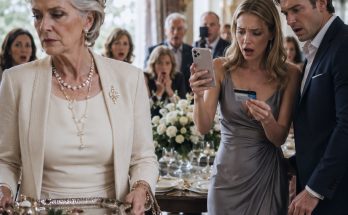
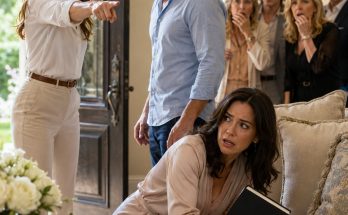
My Brother Smashed My Hand Before My Piano Competition. Dad Laughed, “Nobody Cares About Your Dream.” Mom Nodded, “You’re Just Wasting Everyone’s Time.” Then The Doorbell Rang.
### Part 1
By the time the audience started clapping, I already knew I would not be the one sitting at the piano.
That was the strange part. The competition had not even begun yet.
I was standing behind the velvet curtain of the Grand Lakes Music Conservatory, watching other finalists warm up under the soft white stage lights. Someone was playing scales on a Steinway grand so beautiful it looked almost alive, its black lacquer shining like still water. The air smelled like polished wood, old sheet music, expensive perfume, and nerves.
A volunteer in a navy blazer walked down the line and handed each contestant a number.
Mine was 23.
I folded the paper carefully and slipped it into the pocket of my black dress pants, pressing it flat with my thumb like it was something sacred. For six years, that tiny number had been the shape of my entire life.
Six years of waking up at 5 a.m. before school, then before work, then before the sun could even figure out what color the sky wanted to be. Six years of practicing until my fingertips cracked and my wrists ached. Six years of missing vacations, birthday dinners, Friday-night movies, lake weekends, sleepovers, and anything that looked like a normal young adult life.
People imagine talent looks glamorous.
It does not.
Talent looks like lonely mornings in a cold apartment, reheated coffee beside a stack of marked-up Chopin, and hands dipped into ice water after midnight. Talent looks like saying, “I can’t, I have rehearsal,” so many times people stop inviting you.
My name was Maribel Wren. I was twenty-four years old. I taught beginner piano lessons to children who still called middle C “the belly button key.” I waited tables at a family steakhouse where the floors always smelled like lemon cleaner and fryer oil. I practiced whenever the upstairs neighbor stopped stomping around.
Every dollar I earned went into one thing.
Music.
Not fame. Not luxury. Not some dreamy fantasy of being adored.
Just music.
My grandmother Odette used to say, “The piano never lies. People do.”
She was the first person who put my hands on keys and told me I was not strange for hearing stories in sound. She believed I could become a concert pianist before I even knew what that meant.
My parents believed something different.
Dad called music “an expensive hobby.”
Mom called it “a phase that went on too long.”
My older brother Callum called it “free comedy.”
Whenever relatives came over, Callum would pretend to play an invisible piano, toss his head dramatically, and make ridiculous moaning sounds. Everyone laughed. My father laughed the hardest.
Growing up, Callum never kept a job longer than six months. Someone else was always at fault. His manager. His coworkers. The schedule. Traffic. The economy. His alarm. His back. His mood. The weather.
Meanwhile, I worked every holiday I could get.
When I won my first regional music scholarship at nineteen, Dad asked whether I had considered “a real career before it was too late.”
When Callum bought a motorcycle using money borrowed from our parents, Dad called him “fearless.”
Grandma Odette whispered to me afterward, “They’re confusing loud with successful.”
That Saturday was not just another recital.
The winner of the Grand Lakes Performance Competition would receive a full scholarship to the Chicago Conservatory’s graduate performance program. Nearly four hundred applicants had submitted recordings. Twenty were invited. Four finalists were selected for the live round.
One pianist would be chosen.
My teacher, Ms. Lenora Pike, squeezed my shoulder after rehearsal the night before and said, “You’ve already won.”
I laughed because I thought she was being kind.
“I haven’t even played yet.”
She smiled at me in that quiet way of hers. “No, Mari. You’ve already become the musician you were supposed to be.”
Those words stayed with me all morning.
They stayed with me while I ironed my blouse.
They stayed with me while I packed my sheet music.
They stayed with me while I warmed my fingers over a mug of black coffee.
Then my phone buzzed.
Mom.
I stared at the screen and almost ignored it.
My mother never called before competitions. She barely acknowledged them. When she did, it was usually to ask if I had “finished pretending yet.”
Still, I answered.
“Maribel,” she said, and her voice sounded unusually soft. Almost sweet. “We made your favorite breakfast.”
I looked down at my piano bag by the door. “What?”
“Your father wants to wish you luck before you leave.”
For a second, the apartment became too quiet.
I could hear the refrigerator humming. A car passing outside. My own heart doing something stupid and hopeful.
Dad had never wished me luck for anything that mattered to me.
“Really?” I asked.
“Really,” she said. “Come by for twenty minutes. It would mean a lot to him.”
I should have known.
But hope is dangerous because it sounds so much like common sense when you want to believe someone has changed.
I told myself maybe today was different. Maybe after all those years, after watching me work and bleed and keep going, they had finally understood. Maybe my father had realized this was not a hobby. Maybe my mother had looked at me and seen more than an inconvenience.
So against my better judgment, I drove to my parents’ house.
It was a bright, cold morning. The neighborhood looked freshly scrubbed, all white sidewalks and trimmed hedges and flags hanging from porches. My parents’ colonial house sat at the end of Foxglove Court, perfect as ever, with two stone planters by the door and a brass knocker Mom polished every December even though nobody used it.
Mom opened the door before I knocked.
She hugged me.
Actually hugged me.
“You look beautiful,” she said.
I stiffened because I could not remember the last time she had said that without adding something about my hair or my weight or my clothes.
“Thanks,” I said carefully.
Dad was at the kitchen table with the newspaper open in front of him. He looked up over his reading glasses.
“You nervous?”
“A little.”
He nodded. “That’s normal.”
Callum wandered in wearing sweatpants and a faded college hoodie from a school he had never attended. He carried a bowl of cereal and looked at me like he was trying not to smile.
“So today’s the big day,” he said.
“It is.”
He patted my shoulder. “Good luck, little star.”
Something felt wrong.
Too polite.
Too easy.
But Mom was sliding pancakes onto a plate, Dad was not mocking me, and Callum was smiling like a brother from a family commercial. I pushed the feeling down because I wanted one good morning so badly it embarrassed me.
Mom insisted on taking pictures before I left.
“One by the window.”
“One with your father.”
“One with Callum.”
“Hold your bag up.”
“Smile bigger.”
Dad checked his watch. “You should probably get going.”
I looked at the kitchen clock. I still had almost two hours. Plenty of time. My hands were warm. My music was packed. Number 23 was waiting in my pocket.
I picked up my piano bag and walked toward the front door.
Behind me, Callum called, “Hey, Mari.”
I turned.
He held up the tiny silver music-note keychain Grandma Odette had given me when I was sixteen.
“You forgot your lucky charm.”
I laughed with relief. “I almost did.”
It was lying on the living room side table, right where I had set my keys during the photos.
I walked back and reached for it.
The moment my fingers touched the keychain, Callum grabbed my right wrist.
Hard.
“What are you doing?” I asked.
He smiled.
Not teasing. Not goofy.
Cold.
Curious.
Then he forced my hand down against the edge of the solid oak dining table.
Pain exploded through my fingers so fast my knees buckled.
I screamed.
He did it again.
And again.
The sharp crack echoed through the kitchen.
My mother did not move.
My father lowered his newspaper, looked at my hand swelling in Callum’s grip, and burst out laughing.
“Nobody cares about your dream,” he said.
Mom slowly nodded, her face pale but firm. “You were wasting everyone’s time.”
I stared at them, unable to understand the room I was standing in.
Callum let go.
My fingers were already turning purple. I could not curl them. I could barely breathe.
Dad smiled like he had just fixed a crooked picture frame.
“Guess you won’t embarrass yourself today.”
For the first time in my life, I understood something so simple it made the room tilt.
They had never wanted me to succeed.
Not once.
Then the doorbell rang.
Nobody moved.
Dad frowned. “We’re not expecting anyone.”
Callum walked to the front door and pulled it open.
Every bit of color drained from his face.
Standing on the porch with a black violin case in one hand was a man I had not seen in nearly eight years.
And judging by the look on my father’s face, he had been hoping that man would never come back.
### Part 2
Callum did not invite him in.
He just stood there, blocking the doorway like a child caught stealing from a cash register.
The man on the porch knocked again, even though the door was open.
Three slow knocks.
Not impatient.
Certain.
My father rose from his chair so slowly the legs scraped against the tile.
“What are you doing here?” he asked.
The man was in his late sixties, maybe older, with silver hair brushed neatly back and a dark wool coat buttoned to his throat. His face looked familiar in the way old songs feel familiar before you remember the words. He carried a weathered violin case in one hand and a brown leather portfolio under his other arm.
Then he looked past Callum and saw me.
His expression warmed for half a second.
“Maribel Wren.”
His eyes dropped to my hand.
The warmth vanished.
“What happened?”
Dad stepped between us immediately. “She’s fine.”
The man ignored him like he had not spoken.
He walked straight into the kitchen, set the violin case carefully on a chair, and stood in front of me.
“May I see?” he asked.
His voice was gentle. That nearly broke me more than the pain.
I lifted my hand. My fingers looked wrong. Swollen, bent, already bruising under the skin.
The man inhaled once through his nose.
“Who did this?”
Callum laughed nervously. “She hit the table. She gets dramatic.”
The man turned his head toward him.
“No,” he said quietly. “She did not.”
The kitchen went silent.
Even the refrigerator seemed to pause.
He took my wrist carefully and looked at my fingers with a focus that made the pain feel more real. He did not squeeze. He did not move anything. He just studied the angle, the swelling, the way my middle and ring fingers trembled.
Then he whispered, “Compression trauma.”
I swallowed. “You know injuries?”
“I know musicians,” he said.
Dad’s jaw tightened. “This is family business.”
The man looked up slowly. “When someone destroys a musician’s hand, it stops being family business.”
My mother gripped the edge of the counter.
“Solomon,” she said, and the name landed like a dropped glass.
Solomon.
My memory finally opened.
Solomon Vale.
He had been one of the judges at a regional competition when I was sixteen. I had played Chopin in a borrowed black dress with sleeves too long for my arms. I came in second. Afterward, while everyone else rushed out, Solomon Vale shook my hand and told me, “You listen before you play. Do not lose that.”
I had never forgotten him.
“You judged my regional,” I said.
He gave me a sad smile. “I did.”
Dad looked furious. “You have no reason to be here.”
Solomon’s eyes did not leave my hand. “I had every reason.”
He opened the leather portfolio. Inside were programs, photographs, letters, printed schedules, and a thick packet clipped in silver. He removed a finalist list.
Grand Lakes Performance Competition.
Contestant 23: Maribel Wren.
Beside my name, someone had written in blue ink: “Priority review. International fellowship consideration.”
My eyes blurred.
“What is that?”
Solomon looked at me.
“You were not just playing for Chicago today.”
I felt my heartbeat change.
“What do you mean?”
“There were representatives coming from three conservatories. Chicago, Boston, and Vienna. Your recordings had already moved through private review.”
I stared at him.
Dad scoffed. “Private review? For her?”
Solomon did not look at him. “For her.”
The kitchen, the pancakes, the fake family photos, the smell of maple syrup, my mother’s trembling hand on the counter—everything suddenly became too bright.
“You mean today mattered more than they told me?” I asked.
Solomon’s face softened. “Today was supposed to be the door opening.”
My knees weakened.
I looked at my hand.
My right hand.
The hand that had practiced sixths until midnight. The hand that had learned Rachmaninoff on an out-of-tune church piano. The hand Grandma Odette used to cover with her own when I got frustrated.
Callum shifted behind Dad. “Nobody knew all that.”
Solomon turned toward him. “You knew enough.”
Callum’s mouth opened, then closed.
Dad folded his arms. “She injured herself. You’re making this dramatic.”
Solomon lifted his phone.
“I arrived five minutes before I rang the bell.”
My father froze.
“I was checking the address. My phone camera was recording because I had been filming the conservatory entrance for the committee earlier.”
Dad’s face changed first.
Not fear.
Calculation.
Solomon continued, “It caught enough through the glass beside your door.”
The room became airless.
He tapped the screen once.
The video was shaky, angled from his coat pocket, framed partly by the porch railing and the narrow side window. But it showed the kitchen.
It showed Callum grabbing my wrist.
It showed my body twisting.
It showed the table.
It captured my scream.
Then Dad’s laugh.
Then his voice.
“Nobody cares about your dream.”
My mother covered her mouth.
Not because she was horrified.
Because she had been caught.
Solomon locked the phone and slipped it back into his pocket.
“I have already backed it up,” he said. “The committee has a copy.”
Dad lunged one step forward. “You had no right.”
Solomon’s voice hardened. “Neither did you.”
I barely heard the rest because pain rolled up my arm in waves. My vision narrowed. My fingers burned, then throbbed, then went cold.
Solomon took out his phone again.
“I need an ambulance,” he said.
Dad snapped, “That’s not necessary.”
“It is necessary.”
“She can go to urgent care later.”
Solomon looked at him like he was studying a stain. “If those fingers are not treated immediately, she may lose professional function.”
Lose professional function.
The phrase sounded sterile.
Polite.
It meant my life.
Mom finally spoke, her voice small. “Maybe it’s just swelling.”
I looked at her.
For the first time, I did not see my mother. I saw a woman who would have watched me ice my ruined hand at her kitchen sink while my future disappeared.
The ambulance arrived eight minutes later.
I remember the sound before anything else. The siren coming closer. The slap of paramedic boots on the porch. A woman asking, “Ma’am, can you sit down?” A man cutting away the cuff of my sleeve because my hand was swelling too fast.
“How did this happen?” the female paramedic asked.
My father opened his mouth.
Solomon said, “There is video.”
The paramedic’s eyes flicked toward him, then back to me.
“Okay,” she said softly. “We’re going to take care of you.”
They splinted my hand in the kitchen where I used to do homework while Mom cooked dinner. The same table where Callum had eaten birthday cake and I had filled out college applications. The same table now had my lucky music-note keychain lying beside a smear of syrup.
As they wheeled me out, Dad followed us to the porch.
His face had changed again.
Soft now.
Concerned.
Fake.
“Mari,” he said. “Let’s not make this bigger than it has to be.”
I looked at him from the stretcher.
For twenty-four years, I had wanted my father to sound worried about me.
Now that he did, I felt nothing but cold.
Callum stood behind him, pale and sweating.
Mom stayed in the doorway, arms wrapped around herself.
Solomon climbed into the ambulance with me.
“You don’t have to come,” I whispered.
“Yes,” he said. “I do.”
The doors closed.
The siren started.
For the first time since Callum crushed my hand, I was away from them.
No Dad.
No Mom.
No brother.
Just me, Solomon Vale, and the terrifying possibility that six years of my life had ended in less than five seconds.
I stared at my swollen fingers.
They looked like they belonged to someone else.
Then Solomon said something that made me turn my head.
“Maribel, do you know why I came to your parents’ house today?”
I shook my head.
He opened the black violin case.
There was no violin inside.
Only a blue folder thick with documents.
“I came to tell you the committee had already made a decision.”
My throat tightened.
“What decision?”
His eyes shone.
“You were our highest-scoring finalist before you ever walked onstage.”
### Part 3
At the hospital, everything smelled like antiseptic, cold coffee, and wet winter coats.
The emergency room lights were too bright. Every sound seemed sharpened—the squeak of wheels, the beep of monitors, a child coughing behind a curtain, nurses calling names over the desk. My right hand rested on a pillow wrapped in a temporary splint, and I kept staring at it as if it might become my hand again if I watched long enough.
Solomon sat in the chair beside my bed, his wool coat folded over his knees, the blue folder balanced carefully on top.
“You said I was the highest-scoring finalist,” I whispered.
He nodded.
“But I had not played today.”
“You had played for years,” he said.
I looked at him.
He opened the folder and turned it toward me.
Inside was an acceptance packet.
Not a little letter.
Not a polite “congratulations.”
A full packet.
Three years of tuition. Master classes. Housing support. Summer residencies in Europe. Invitations to perform in student showcases. Notes from faculty reviewers. A page that made no sense at first because it was too large for my life.
International Young Artists Fellowship.
My vision blurred.
“I don’t understand.”
Solomon smiled sadly. “That is because nobody told you how good you were.”
I let out a laugh that broke halfway through. “People told me I was okay.”
“The wrong people told you that.”
I tried to wipe my face with my left hand, clumsy and angry. “Why didn’t they tell me before today?”
“Some of this was meant to be announced at the ceremony. Some was still confidential. But your teacher kept sending recordings. Community recitals. Benefit concerts. Retirement home performances. Your children’s workshop last fall.”
I stared at the page.
“You saw those?”
“The committee saw them. Chicago saw them. Boston saw them. Vienna saw them.”
For years, I had played in half-empty church basements and senior centers where the piano bench squeaked and someone always coughed during the quiet parts. I played at the children’s hospital once a month because one little boy with leukemia liked Debussy and asked me if clouds had music. I played at fundraisers where nobody knew my name and people talked over the first movement until they realized the room had changed.
I thought nobody noticed.
Solomon tapped the folder gently. “The right people noticed.”
That should have comforted me.
Instead, it hurt.
Because every time my family mocked me, every time Dad asked when I would stop wasting money, every time Callum called my rehearsals “finger gymnastics,” I had believed part of them.
A doctor came in wearing purple glasses and a serious expression.
“I’m Dr. Mira Sethi,” she said. “I’m the hand specialist on call.”
The words “hand specialist” made my stomach drop.
She removed the temporary splint with such careful hands I almost cried from gratitude. She studied every finger, ordered X-rays, then returned with a tablet held against her chest.
“I’m going to be honest with you,” she said.
I nodded because my voice had disappeared.
“The middle and ring fingers have multiple fractures. There is significant swelling. There may be small bone fragments we need to stabilize surgically.”
Solomon leaned forward.
Dr. Sethi continued, “But the tendons appear intact.”
I blinked. “What does that mean?”
“It means this is serious. It means surgery. It means months of rehabilitation. It means pain, frustration, stiffness, and a recovery process you will probably hate.”
She paused.
Then her face softened.
“But it does not mean your career is over.”
I burst into tears.
Not pretty tears.
Not movie tears.
Ugly, silent, shaking tears that seemed to come from the bottom of my ribs.
Solomon looked toward the ceiling and pressed his fingers against his mouth.
Dr. Sethi waited, then said, “The most important thing is that you came immediately. Another hour or two without proper treatment could have changed the outcome.”
The room tilted again.
Another hour or two.
If Solomon had not arrived, I would have stayed at that house.
Mom would have wrapped my hand in a dish towel and said, “Let’s not be dramatic.”
Dad would have told me to lie down.
Callum would have vanished.
And by the time I realized the damage was permanent, they would have shrugged and called it unfortunate.
Not cruel.
Not planned.
Unfortunate.
Dr. Sethi explained surgery, pins, immobilization, therapy, follow-ups. I heard every third word. Solomon asked the questions I could not form. When she left, the room became quiet except for the monitor beside me.
Then Solomon’s phone rang.
He glanced at the screen.
“Maribel,” he said gently. “This is for you.”
I frowned. “Who is it?”
He pressed the phone to my left hand.
A woman’s voice came through, warm and steady. “Maribel? My name is Vivienne Aster. I chair the Grand Lakes committee.”
I sat up too fast and pain flashed up my arm.
“I’m sorry,” I said automatically. “I can’t perform.”
There was a pause.
Then she said, “We know.”
My face burned. “I worked so hard. I was ready. I swear I was ready.”
“I believe you.”
“I can send recordings. I can—”
“Maribel,” she said softly. “Listen to me.”
I stopped.
“You earned this long before today.”
The room seemed to hold its breath.
“What?”
“The committee met after reviewing the video Solomon sent and after confirming your medical emergency. We voted unanimously to withdraw the live performance requirement.”
My lips parted.
“I don’t understand.”
“You do not need to perform today. We already know how you play.”
I looked at Solomon. His eyes were wet.
Vivienne continued, “The scholarship is yours. The fellowship recommendation remains active. Chicago has confirmed your seat will be deferred until you are medically cleared.”
I covered my mouth with my left hand.
“You’re serious?”
“Yes.”
I could not speak.
Then she added, “One more thing. We will be naming a need-based resilience fund after this year’s incident. Not as pity. As a statement.”
My throat tightened.
“What statement?”
“That no artist’s future should depend on whether their own family chooses to protect them.”
The call ended a minute later.
I sat there holding Solomon’s phone, shaking.
For six years, I had imagined winning would feel like a bright door swinging open.
Instead, it felt like someone had dragged me out of a burning room and told me the sky was still there.
A nurse stepped in, looking uncomfortable.
“Miss Wren?”
“Yes?”
“There are two detectives outside.”
My stomach turned. “Already?”
She nodded.
“They’re asking to speak with you before surgery, if you’re able.”
Solomon stood. “About the assault?”
The nurse hesitated.
“Not only that.”
A detective entered first. She was tall, with dark cropped hair and a gray coat that still had snow melting on the shoulders. She introduced herself as Detective Nadia Bell. Her partner stayed near the door, quiet and watchful.
“I know this is a lot,” Detective Bell said. “But something happened at your parents’ house after you left.”
I felt my body go cold.
“What did they do?”
She placed a clear evidence bag on the bed.
Inside was a notebook.
My notebook.
The green spiral one Grandma Odette gave me when I was twelve. The cover was stained and blackened around the edges. A corner had burned away. I could still see my own handwriting through the plastic.
Tiny notes.
Melodies.
Chords.
First attempts at songs I never showed anyone.
“My neighbor called 911,” Detective Bell said. “Smoke coming from a burn barrel behind the garage.”
I stared at the notebook.
“Dad burned my music?”
Her expression hardened. “He tried.”
Solomon whispered, “He was destroying evidence.”
Detective Bell opened her folder.
“Not just evidence. We recovered damaged certificates, recital recordings, old programs, photographs, recommendation letters, and several unopened envelopes addressed to you.”
My chest tightened.
“Unopened?”
She slid one photocopy toward me.
I read the first line.
“Dear Ms. Wren, congratulations…”
The date was five years earlier.
I had never seen it.
She placed another copy beside it.
Then another.
Then another.
My breath started coming too fast.
“How many?”
Detective Bell’s voice lowered.
“Fourteen so far.”
Solomon went very still.
I looked at him. “What does that mean?”
He rubbed his forehead like he had suddenly aged ten years.
“It means,” he said, “that for years, we thought you were declining opportunities.”
The room blurred around the edges.
“I never declined anything.”
Detective Bell nodded.
“We know.”
My right hand throbbed under the splint.
But the pain in my chest was worse.
My family had not just tried to stop me that morning.
They had been stopping me for years.
### Part 4
Surgery has a strange way of making time disappear.
One minute, Dr. Sethi was drawing careful marks on my hand with a purple surgical pen. The next, I was waking up under warm blankets with my mouth dry, my fingers wrapped like a fragile package, and Solomon asleep in a chair beside me with his chin dropped to his chest.
My hand felt enormous.
Not painful at first. Just distant. Heavy. Like it belonged to someone else and had been placed beside me by mistake.
A nurse noticed my eyes open and smiled.
“You did well.”
I tried to speak. My voice came out rough. “My hand?”
“Dr. Sethi will come explain. But she said the repair went as planned.”
I closed my eyes.
Repair.
Not miracle.
Not restoration.
Repair.
I learned to love that word because it meant something had survived.
By afternoon, my hospital room had become a place where secrets came in waves.
Detective Bell returned with more evidence bags. Solomon made phone calls in the hallway. Ms. Lenora Pike arrived wearing the same blue dress she had worn to the competition, the hem damp from slush and one earring missing.
When she saw me, her face folded.
“Oh, Mari.”
I had known Ms. Pike since I was fourteen. She was small, sharp, and elegant, with silver-streaked hair usually pinned at the back of her head with a pencil. She never wasted words. If I played badly, she said, “Again.” If I played beautifully, she said, “Closer.”
But when she hugged me with one careful arm, she cried.
“I’m sorry,” she whispered.
I tried to smile. “For what? You didn’t do this.”
She pulled back.
“No. But I knew something was wrong.”
The room quieted.
I looked at her. “What do you mean?”
She reached into her worn leather purse and removed a stack of envelopes bound with a rubber band.
“I suspected someone was stopping your mail.”
My heart kicked once.
“You knew?”
“I suspected,” she said again. “There is a difference, and it haunted me.”
Detective Bell stepped closer.
Ms. Pike looked at her and nodded. “You can take copies of these.”
Then she turned back to me.
“Your mother called me when you were eighteen. She told me you were overwhelmed and that I should stop filling your head with impossible dreams.”
My mouth went dry.
“She did what?”
“She said you had decided not to pursue conservatory training. I knew it did not sound like you.”
“I never said that.”
“I know.”
Ms. Pike’s voice trembled. “So I kept submitting your recordings. I kept writing recommendations. But responses kept disappearing. When I asked you about certain deadlines, you looked confused. At first, I thought you were embarrassed. Then I realized you genuinely did not know.”
I remembered those moments.
Ms. Pike standing beside the piano after lessons, saying, “Did you receive anything from Northbridge?”
Me saying, “No, maybe they passed.”
Her mouth tightening.
Then two weeks later, “What about the summer institute in Vermont?”
Me shrugging, pretending not to care.
“I thought I was not good enough,” I whispered.
Ms. Pike closed her eyes.
“You were always good enough.”
She handed me the envelopes.
“After a while, I stopped trusting the mail. I kept copies of everything I sent. Applications. Recommendations. Responses when I could obtain them. I thought one day I would need to prove to you that the world had answered.”
My left hand shook as I touched the stack.
“I spent years thinking doors did not open for me.”
Solomon’s voice was quiet from the corner.
“They opened. Someone stood in front of them.”
Detective Bell asked Ms. Pike a few questions. Dates. Names. Calls. Copies. My parents’ numbers. Email addresses. Whether she had proof Mom ever contacted her.
Ms. Pike opened a folder.
Printed emails.
Voicemails transcribed.
A handwritten note from my father on his business letterhead requesting that “all music-related correspondence” be sent to the family home because I was “mentally fragile and easily misled.”
I read that line three times.
Mentally fragile.
Easily misled.
The words were so clean and cruel they felt worse than shouting.
I thought of my father laughing while my fingers bent wrong against the table.
“Why?” I asked.
Nobody answered immediately.
Because some questions are not questions.
They are grief looking for somewhere to sit.
Later that evening, Detective Bell told me Callum had been taken in for questioning. My father had been arrested after trying to burn the notebook and documents. My mother claimed she had “gone along to keep peace in the household.”
“She said that?” I asked.
Detective Bell nodded.
I laughed once, sharp and bitter.
“Peace.”
For years, peace had meant everyone arranging themselves around Callum’s moods. Peace meant Dad never hearing he was wrong. Peace meant Mom smiling while she erased whatever made her uncomfortable. Peace meant I swallowed humiliation so dinner could stay pleasant.
Now they wanted peace again.
But peace was not coming.
Two days after surgery, I received the first call from my mother.
I did not answer.
Then another.
Then twelve.
Then a voicemail.
Her voice was wet and trembling.
“Maribel, please. Things got out of hand. Your brother made a terrible mistake, but he is your brother. Your father is under so much pressure. You know how he gets. We can fix this as a family.”
As a family.
I listened once.
Then I sent the voicemail to Detective Bell.
Callum called from an unknown number that night.
I answered by accident because I was half asleep.
“Maribel,” he whispered. “Please don’t ruin my life.”
I stared at the ceiling.
The hospital room was dark except for a thin line of light under the door.
“My hand is in a surgical brace,” I said.
He breathed hard.
“I didn’t know it would be that bad.”
“You hit a pianist’s hand against a table three times.”
“I was angry.”
“At what?”
Silence.
“At what, Callum?”
His voice cracked. “Dad said if you won, everything would change.”
The room became colder.
“What does that mean?”
“He said you’d leave. That you’d think you were better than us. That Mom would cry all the time. That I’d look like nothing.”
I closed my eyes.
There it was.
Not jealousy alone.
Permission.
My father had not merely laughed afterward.
He had prepared the room.
“You still chose to do it,” I said.
“I’m sorry.”
“No,” I whispered. “You’re scared.”
He began crying then, messy and loud. Once, that would have worked on me. I would have softened. I would have remembered the little boy who hid under my blanket during thunderstorms.
But that boy had grown into a man who crushed my hand and watched my future bend.
“I need you to tell Dad I didn’t mean it,” he pleaded.
I looked at my bandaged fingers.
“They did not ask my hand what you meant.”
Then I hung up.
The next morning, Solomon brought me coffee and a newspaper folded under his arm.
He looked uncomfortable.
“What?” I asked.
He placed the paper on my bed.
A small headline sat near the bottom of the local section.
Family Incident Injures Grand Lakes Finalist Before Major Competition.
My name was there.
Not the whole story.
Not yet.
But enough.
Solomon watched my face.
“I can ask them to keep your name out going forward.”
I traced the edge of the paper with my left thumb.
All my life, my family had hidden what they did behind curtains, closed doors, polite smiles, and “Don’t make this bigger.”
I was tired of being kept quiet for their comfort.
“No,” I said.
My voice surprised me.
“Let it be known.”
### Part 5
Rehabilitation began with one impossible task.
“Touch your thumb to your index finger,” Dr. Sethi said.
I looked at her like she had asked me to lift the hospital.
My hand had been freed from the heavier brace that morning. It was swollen, stiff, and scarred, with thin surgical lines across the skin. The fingers that used to fly through arpeggios now trembled from the effort of being alive.
I tried.
Nothing happened.
My thumb moved halfway and stopped.
Pain shot across my palm.
My eyes filled.
Dr. Sethi did not pity me. I liked that about her.
“Again,” she said.
It reminded me of Ms. Pike.
So I tried again.
For the next several months, my life became tiny movements.
Bend.
Hold.
Release.
Lift.
Rest.
Ice.
Repeat.
There was no applause in hand therapy. No velvet curtain. No polished Steinway. Just a beige room that smelled like lotion and disinfectant, a plastic bin of therapy putty, rubber bands, warm towels, and a wall clock that moved too slowly.
My therapist, Jonah Reed, was a former baseball player with a soft voice and no patience for self-pity.
“You are allowed to be angry,” he told me during week three. “You are not allowed to quit.”
“I hate this,” I said.
“Good. Hate it while doing it.”
So I did.
I hated every second.
I hated squeezing foam blocks.
I hated tracing circles on a towel.
I hated the little wooden pegs I could not pick up.
I hated watching children on the internet play pieces I used to play before breakfast.
I hated that my left hand had become competent out of necessity while my right hand sat there like a stubborn stranger.
Some nights, I woke from dreams where I was onstage and my fingers melted into the keys.
Other nights, I heard Dad laughing.
“Nobody cares about your dream.”
That sentence followed me into grocery stores, therapy rooms, elevators, showers, and sleep. It sat beside me while I paid bills. It leaned over my shoulder when I opened emails from Chicago. It whispered every time my hand failed to move.
Then one afternoon, Ms. Pike visited my apartment with a portable keyboard under one arm.
“No,” I said immediately.
She walked past me. “Yes.”
“I can’t play.”
“You can listen.”
She set the keyboard on my kitchen table between a stack of medical bills and a bowl of oranges.
My apartment was small, with thin curtains and a radiator that clanked at night. After the story spread, people from the music community had helped cover rent and treatment costs. Chicago deferred my admission. Grand Lakes created the resilience fund. Strangers sent cards. Children I had taught mailed drawings of pianos with giant hearts above them.
My family sent messages.
Different kind of messages.
Mom wrote, “Your father is not sleeping.”
Dad wrote once, “You are destroying this family over one mistake.”
Callum wrote, “I miss my sister.”
I blocked all three.
Ms. Pike plugged in the keyboard.
“Left hand only today.”
I stared.
“Mari,” she said. “Music is not punishment. Stop treating it like a room you are not allowed to enter until you are perfect.”
That hit something tender.
I sat down.
The keys were cheap and light, nothing like a grand piano. My right hand rested in its brace on a folded towel. My left hand hovered over middle C.
“What do I play?”
“Something ugly.”
I laughed despite myself. “What?”
“Play how you feel.”
So I did.
It was not beautiful.
It was not impressive.
It was low, uneven, angry. Three notes repeated until they sounded like footsteps down a hall. Then a cluster of dissonant chords. Then one high note, thin and lonely.
Ms. Pike sat across from me with tears in her eyes.
“That,” she said, “is honest.”
I cried then.
Not because I sounded good.
Because I sounded alive.
The legal case moved slower than recovery but cut deeper.
Detective Bell kept me informed. Prosecutors reviewed the video, medical records, destroyed documents, intercepted letters, Ms. Pike’s evidence, and the burn barrel recovery. My father hired an attorney who described him as “a concerned parent overwhelmed by family stress.” My mother claimed she had been emotionally controlled by him. Callum said he had “reacted impulsively.”
Nobody said the word they all meant.
Sabotage.
A civil attorney named Arden Frost took my case after Solomon introduced us. She had silver bracelets that clicked softly when she opened files and a stare that made people tell the truth faster than they wanted to.
“What do you want?” she asked me during our first meeting.
I expected her to mean money.
I said, “I want them to stop saying it was an accident.”
She nodded. “That we can do.”
She filed claims for assault-related damages, intentional interference with educational and professional opportunities, destruction of property, and emotional distress. The numbers were large. So large I felt dizzy looking at them.
Dad finally got scared enough to request mediation.
I almost refused.
Arden advised me to attend once.
“Not to forgive,” she said. “To hear what they are willing to admit when consequences are sitting across the table.”
The mediation room was on the twelfth floor of a downtown office building. It had gray carpet, a long table, a pitcher of water, and a view of the river cutting through the city like steel.
My parents arrived first.
Dad looked smaller than I remembered. He wore a suit but no confidence. Mom clutched tissues like props. Callum sat between them, pale, thinner, eyes red.
When I walked in, Mom stood.
“Baby,” she whispered.
I held up my left hand.
“Don’t.”
She sat down.
Dad looked at my right hand, still stiff, still marked.
For one second, shame crossed his face.
Then pride covered it.
“We never wanted to hurt you permanently,” he said.
Arden’s bracelets clicked as she opened her folder.
“That is an interesting opening statement.”
Callum started crying before anyone asked him anything.
“I’m sorry, Mari.”
I looked at him.
He was waiting for the old rhythm. His tears, my comfort. His collapse, my responsibility.
I did not move.
Dad leaned forward.
“You have to understand. We thought music was taking you away from us.”
I almost laughed.
“You stole fourteen opportunities from me.”
Mom whispered, “We were afraid.”
“Of what?”
No one answered.
Arden slid photocopies of the intercepted letters across the table.
The paper made a soft scraping sound.
“Afraid of this?” she asked. “Scholarships? Invitations? Recognition?”
Dad’s face reddened.
“She would have left.”
I felt something inside me settle.
There it was.
Not concern.
Ownership.
I looked at my father, this man who had called himself practical, protective, realistic.
“You did not want a daughter,” I said. “You wanted a captive audience.”
His mouth opened.
Nothing came out.
For the first time in my life, the silence belonged to me.
### Part 6
The settlement took six hours.
By the end, the sky outside the conference room had shifted from white afternoon to a pale winter gray, and the city lights had started blinking awake below us.
My parents agreed to a written admission.
Not a dramatic confession.
Not enough for my heart.
But enough for court.
They admitted they had intercepted mail related to my music education. They admitted they had withheld documents. They admitted my father attempted to destroy materials connected to my career after the injury. Callum admitted he intentionally grabbed my wrist and caused the trauma to my hand.
The financial settlement included medical costs, rehabilitation expenses, lost opportunities, legal fees, and damages.
I did not celebrate.
Nothing about watching your family sign papers admitting they ruined pieces of your life feels victorious.
It feels like standing in the ashes of a house and being told the insurance check is good news.
When it was over, Mom tried one last time.
She followed me into the hallway, heels clicking too fast on the polished floor.
“Maribel, please.”
I stopped beside the elevators.
Her face crumpled.
“I carried you. I fed you. I stayed up when you had fevers. I know I made mistakes, but I am still your mother.”
I looked at her hands.
Soft hands.
Hands that had clapped for Callum’s smallest efforts and folded themselves neatly while mine was being crushed.
“You are my mother,” I said. “That is why it hurts more.”
She reached for me.
I stepped back.
“No.”
Her hand fell.
“I said I was sorry.”
“No,” I said. “You said things got out of hand. You said Callum made a mistake. You said Dad was under pressure. You said we could fix this as a family. You have said everything except the truth.”
She started crying harder.
“What truth?”
“You watched.”
The elevator doors opened behind me.
For a second, she looked almost angry.
Then tired.
Then old.
I stepped inside.
She whispered, “Will you ever forgive me?”
The doors began to close.
I answered before they shut.
“No.”
Not loudly.
Not cruelly.
Clearly.
The elevator carried me down, and for the first time, the word did not make me feel guilty.
No.
It was small.
It was clean.
It was mine.
Recovery was not linear. People love stories where the injured artist returns stronger, plays one perfect concert, and proves everyone wrong. Real life is messier. Some mornings, my hand moved well enough that I believed in miracles. Other days, I dropped a mug because my fingers refused to close.
I learned new fingerings.
I rebuilt scales from the ground up.
I changed repertoire.
Pieces that once fit my hands like breath now felt like locked doors. So I found windows. I studied composers who wrote with space, silence, restraint. I played slower, deeper. I stopped trying to become the pianist I had been and began meeting the pianist I was becoming.
Solomon visited often. Sometimes he brought old recordings. Sometimes he said nothing and sat by the window while I practiced five measures for an hour.
One evening, he brought his violin case.
This time, there was actually a violin inside.
“Finally,” I said.
He smiled. “You doubted me?”
“A little.”
He tuned while I warmed my left hand and stretched my right.
“What are we playing?”
“Something unfinished,” he said.
He placed a sheet of manuscript paper on the piano.
I recognized the handwriting.
Mine.
The burned notebook.
My throat closed.
“How did you get this?”
“Detective Bell recovered partial pages. Ms. Pike had copies of a few early sketches. I filled in nothing. I only arranged what survived.”
The piece was one I had written at sixteen after Grandma Odette died. I never finished it. I had called it “House Without Her,” then crossed out the title because it embarrassed me.
Solomon lifted his violin.
“You start.”
My right hand hovered over the keys.
The first chord was simple.
A minor third.
My fingers trembled, but they landed.
The sound was quiet and imperfect.
Then Solomon entered above me, his violin line thin as winter light.
Something inside my chest opened so suddenly I had to stop.
“I can’t.”
He lowered the bow.
“Yes, you can. But not all at once.”
That became the lesson of the year.
Not all at once.
I healed in fragments.
The first time I buttoned my coat with my right hand.
The first time I played a scale evenly.
The first time I taught again.
The first time I laughed without feeling guilty.
The first time I went a whole afternoon without thinking about the kitchen table.
Chicago Conservatory held my place.
One year after the injury, I moved into a small apartment near campus with exposed brick, a fire escape, and a radiator louder than my old one. The city smelled like rain on concrete, roasted coffee, and car exhaust. I loved it immediately.
The conservatory gave me practice room 4B most mornings. The piano was not the best in the building, but the room had a tall window facing an alley where pigeons strutted like critics.
I taped a note above the keyboard.
“Not perfect. Present.”
On my first day, a younger student recognized me in the hallway and whispered, “Are you her?”
I almost said no.
Then I said, “I’m Maribel.”
She blushed. “I read about you. I’m sorry.”
I had learned to hate that sentence less.
“Thank you.”
She looked at my hand. “Does it hurt when you play?”
“Sometimes.”
“Then why do you?”
I smiled.
“Because it hurts more not to.”
That spring, the conservatory invited me to give a debut recital connected to the resilience fund. At first, I refused.
“I’m not ready,” I told Ms. Pike over the phone.
She snorted. “Of course you’re not. Nobody interesting ever is.”
Dr. Sethi cleared me medically with caution. Jonah taped my fingers before rehearsals. Solomon offered to perform with me on the final piece. Vivienne Aster arranged for the concert to benefit young musicians whose families could not or would not support them.
The program was not built around proving I was the same.
It was built around telling the truth.
Bach.
Clara Schumann.
A new left-hand arrangement.
My unfinished piece for Grandma Odette, now titled “What Survived.”
Two weeks before the recital, I received a letter.
No return address.
I knew my father’s handwriting before I opened it.
“I hope someday you understand we did what we thought was best. Your success has cost this family everything.”
I read it once.
Then I placed it in an envelope and sent it to Arden.
That night, I practiced until the city outside turned silver.
The final note of “What Survived” kept breaking under my right hand.
Not because I could not play it.
Because every time I reached it, I remembered Dad’s laugh.
Solomon listened from the corner.
After the fifth failed attempt, I slammed my left palm onto the low keys.
“I hate that he is still in the room when I play.”
Solomon was quiet for a long time.
Then he said, “Then stop trying to push him out.”
I turned.
“What?”
“Play the note with him there. Let him hear that he failed.”
### Part 7
The concert hall at Chicago Conservatory was smaller than Grand Lakes but warmer.
The wood was honey-colored, the seats curved close to the stage, and the Steinway under the white lights looked less like an untouchable object and more like a waiting animal. Backstage smelled like rosin, dust, pressed fabric, and the faint metallic scent of nerves.
I stood behind the curtain with my right hand wrapped in a soft support brace.
My fingers were not purple anymore. They were not crooked. But they were changed. A thin scar crossed the base of my ring finger. My middle finger stiffened in cold weather. My hand tired faster than it used to.
It was mine.
That had become enough.
Ms. Pike stood beside me, fixing a loose thread on my sleeve even though it did not need fixing.
“Breathe,” she said.
“I am breathing.”
“Convince your shoulders.”
I dropped them.
Solomon approached carrying his violin case. Dr. Sethi came backstage for exactly thirty seconds, checked my fingers like she did not trust anyone else in the state of Illinois, and said, “Do not be heroic.”
“I thought this whole thing was heroic.”
“No,” she said. “It is disciplined. There is a difference.”
Jonah handed me a small therapy ball as a joke. “For the after-party.”
Detective Bell was in the audience. So was Vivienne Aster. So were the paramedics who had splinted my hand, the neighbor who called 911 when my father tried to burn the notebook, several students from my old teaching studio, and the little boy from the children’s hospital, now in remission, wearing a bow tie.
One chair in the front row remained empty.
Reserved.
On it sat Grandma Odette’s old wooden metronome.
Ms. Pike had brought it in a velvet pouch.
When I saw it, I almost lost my composure.
Grandma used to set that metronome beside me every afternoon and say, “Steady does not mean slow. It means faithful.”
The stage manager gave me the nod.
The audience quieted.
For one strange second, I was back in my parents’ kitchen with my hand against oak and my father laughing.
Then I stepped into the light.
The applause rose before I reached the bench.
Not wild.
Not pitying.
Warm.
Human.
I sat at the Steinway and placed my hands in my lap. I did not begin immediately. I let myself hear the hall, the small cough from the third row, the rustle of programs, the soft ticking of Grandma’s metronome even though it was not moving.
Then I lifted my hands.
The first Bach notes came clean.
Not flawless.
Clean.
There is a difference.
I played like someone walking over a bridge she had built plank by plank. Every passage had a memory under it. Therapy. Tears. Anger. Ms. Pike saying, “Again.” Jonah saying, “Hate it while doing it.” Dr. Sethi saying, “Do not be heroic.” Solomon saying, “Let him hear that he failed.”
By the second piece, I stopped listening for my father’s laugh.
By the third, I stopped wondering whether people could hear the stiffness.
By the fourth, I was not proving anything.
I was playing.
Near the end, Solomon joined me for “What Survived.”
He walked onto the stage, silver hair bright under the lights, violin tucked beneath his arm. The audience seemed to lean forward as one body.
I began alone.
Three low notes.
Footsteps.
Then a chord that used to hurt too much.
Then Solomon entered.
His violin did not cover my piano. It answered it.
The piece moved through grief without begging to be rescued from it. That mattered to me. I did not want a happy song. I wanted an honest one.
The final page approached.
My right hand had to reach a quiet chord, hold, release, then land on one single note above middle C.
In rehearsal, that note had broken me.
That night, my father entered the room again.
Not physically.
Memory has its own footsteps.
“Nobody cares about your dream.”
I saw his newspaper. Mom’s face. Callum’s cold smile. The table. The swelling. The keychain.
Then I saw everything else.
The ambulance doors.
Solomon’s blue folder.
Dr. Sethi’s purple glasses.
Ms. Pike’s envelope.
Detective Bell’s evidence bag.
Jonah’s therapy putty.
The little boy’s drawing of a piano.
Grandma’s metronome.
My own left hand waiting patiently for my right to return.
I played the note.
It held.
It rang.
It lived.
When the final sound faded, nobody moved.
For two seconds, the silence was complete.
Then the hall rose.
People stood so fast programs slid to the floor. The applause came like rain on a roof. Not thirty seconds. Not one minute. Nearly ten.
Ms. Pike cried openly.
Solomon bowed beside me with one hand over his heart.
I looked at my scarred hand resting on the keys.
It had never become perfect again.
Neither had I.
And yet there I was.
Afterward, there was a reception in the lobby with sparkling water, coffee, and little sandwiches nobody ate because everyone was too busy hugging. Students asked about technique. Donors asked about the resilience fund. A reporter asked whether I had anything to say to my family.
I thought about giving a graceful answer.
Something polished.
Something that would make strangers comfortable.
Instead, I said, “They taught me that not everyone who shares your blood wants you free. I hope people hear that before it costs them what it cost me.”
The reporter blinked, then wrote it down.
I was almost ready to leave when a security guard approached Solomon and whispered something.
Solomon’s face hardened.
“What is it?” I asked.
He looked at me carefully.
“Your mother is outside.”
My body went still.
“She says she just wants five minutes.”
Ms. Pike immediately said, “You do not owe her one.”
I knew that.
I truly did.
But something in me needed to see who my mother became when she could no longer hide behind my father, my brother, or the word family.
So I walked to the side entrance with Solomon beside me.
Mom stood under the awning in a beige coat, her hair pinned too tightly, mascara smudged under both eyes. She looked thinner. Smaller. In her hands was a gift bag.
When she saw me, she started crying.
“You were beautiful,” she said.
I did not answer.
She held out the bag.
“I brought you something.”
I did not take it.
Her hands trembled.
“It is your grandmother’s scarf. I found it in the cedar chest.”
Grandma’s scarf.
Blue wool. Soft fringe. The one that always smelled faintly like lavender.
For one second, I wanted it so badly my chest hurt.
Then I saw the performance in her eyes.
The hope that this object could become a bridge. That nostalgia could do what accountability had not.
I looked at Solomon.
He said nothing.
This was mine.
I turned back to my mother.
“You can mail it to my attorney.”
Her face collapsed.
“Mari, please. Your father and Callum are gone. I am alone in that house.”
There it was again.
Not remorse.
Need.
“I was alone too,” I said. “You were in the room.”
She flinched.
“I didn’t know how to stop it.”
“You didn’t try.”
She pressed the gift bag to her chest.
“I am your mother.”
I nodded.
“And I am the daughter you chose not to protect.”
The cold air moved between us.
She whispered, “Is this forever?”
I looked back through the glass doors at the lobby, at the people waiting for me, at Grandma’s metronome on the table near my flowers.
“No,” I said. “Forever is what you tried to take from me. This is just the rest of my life without you.”
Then I went back inside.
### Part 8
People often ask whether success felt like revenge.
It did not.
Revenge still keeps one eye on the people who hurt you. Success, real success, eventually turns its chair away.
Two years after the injury, I no longer introduced myself as the pianist whose brother crushed her hand. That story still existed. It always would. But it was not my only name.
I became a graduate fellow at Chicago Conservatory.
I taught adaptive technique workshops for injured musicians.
The Maribel Wren Resilience Fund paid application fees, travel costs, and emergency housing for students whose families tried to block their training. The first recipient was a seventeen-year-old cellist from Ohio whose parents refused to drive her to auditions. She played like her whole body was made of thunder.
After her first funded audition, she called me crying from a bus station.
“I didn’t know anyone could choose me,” she said.
I sat on my kitchen floor and cried with her.
That became the part of my life I had not expected.
The music was still everything, but it was no longer only mine.
Every door my parents had hidden from me became a door I learned how to hold open for someone else.
My family’s legal consequences unfolded quietly.
Callum took a plea deal. He avoided prison but received probation, mandatory restitution, and a record that followed him into every job interview he once blamed on bad luck. My father’s charges for evidence destruction and related offenses cost him his position at the insurance firm where he had worked for twenty-eight years. My mother sold the house on Foxglove Court after the settlement and moved into a condo near her sister.
I heard these things through Arden.
Never directly.
I kept every boundary.
No holidays.
No birthdays.
No “just checking in.”
No family group chat.
No visits because someone was sick.
No emotional emergencies designed to drag me back into the old kitchen.
People who have never escaped a family like mine love asking, “But what if they are truly sorry?”
I learned that sorry without change is just a sound people make when consequences arrive.
And even real remorse does not automatically rebuild access.
That was the hardest lesson.
Not that I could leave.
That I was allowed to stay gone.
On the third anniversary of the competition, Grand Lakes invited me back as a guest performer and speaker. I almost said no because I remembered the velvet curtain, the number 23 in my pocket, and the future I thought had died before it began.
Solomon called me the night before.
“You should go,” he said.
“You always say that.”
“Because I am wise.”
“You are unbearable.”
“Also true.”
So I went.
The conservatory looked the same from the outside—stone steps, brass doors, tall windows catching white daylight. Inside, the lobby smelled like flowers and polished floors. Young musicians hurried past with garment bags and instrument cases, their faces bright with terror.
A volunteer handed me a guest badge.
For a moment, I saw a paper number in her hand.
Mine had been 23.
I still had it.
After everything, Detective Bell recovered it from my coat pocket and returned it in a small envelope. It sat now in a frame above my desk, not as a symbol of what I lost, but of where the lie ended.
Backstage, I watched the finalists warm up.
One girl stood alone near the curtain, rubbing her hands together. She looked about sixteen, with dark curls pinned badly and shoes that were trying hard to look formal. Her face carried that familiar expression—hope bracing for disappointment.
I walked over.
“You nervous?”
She jumped. “A little.”
“That’s normal.”
She recognized me then. Her eyes widened.
“Oh my gosh. You’re Maribel Wren.”
“I am.”
“My teacher made us watch your recital.”
“Made you?”
“She said it would build character.”
I laughed.
The girl looked down at her hands.
“My parents think this is stupid,” she whispered.
The old ache moved through me, but it did not own me.
“What do you think?”
She looked toward the stage.
“I think I can’t breathe if I don’t play.”
I nodded.
“Then listen to that.”
Before I went onstage, a staff member handed me a sealed envelope.
“This was dropped off for you.”
No return address.
My stomach tightened, but only slightly now. Fear had become a visitor, not a landlord.
I opened it.
Inside was a single photograph.
Me at twenty-four, walking out of my parents’ house on a stretcher.
Under it, in my father’s handwriting, were three words.
“Are you happy?”
I stared at the photo for a long moment.
Solomon came up beside me.
“Maribel?”
I turned the photograph over.
My hand did not shake.
“Yes,” I said.
Then I walked to a trash can and dropped it inside.
The sound was tiny.
Barely anything.
A soft slide of paper against plastic.
But it felt like a door closing.
When I stepped onto the Grand Lakes stage, the audience rose before I reached the piano.
The Steinway was waiting under the same white lights.
I sat, adjusted the bench, and placed my hands on the keys.
My right hand still stiffened sometimes. My scars still tightened in cold weather. Some pieces remained beyond me, at least in the old way. But I had stopped measuring my life by what my injury had taken.
I began with Grandma Odette’s favorite hymn, arranged in my own style. Then Bach. Then “What Survived.” Then a new piece I had written for the students funded by the resilience program.
I called it “Doorways.”
The final section required both hands to cross over each other, not quickly, not brilliantly, but gently, like one hand helping the other reach the light.
As I played, I thought about the girl backstage.
I thought about every letter hidden from me.
I thought about the oak table.
I thought about Dad’s laugh.
And then, finally, I thought about none of them.
Only sound.
Only breath.
Only the weight of the keys and the living silence between notes.
When the last chord faded, I did not look for ghosts in the audience.
I looked at my hands.
They were not the hands I had before.
They were not the hands my family tried to leave me with.
They were the hands I had fought for.
The applause came, but I waited one extra second before standing.
I wanted to feel that quiet.
That clean, bright quiet.
The kind no one in my family had ever given me.
The kind I had built myself.
After the concert, the young finalist with the badly pinned curls ran up to me in the lobby.
“I played,” she said breathlessly.
“How did it feel?”
She grinned like the world had cracked open.
“Like I was not asking permission anymore.”
I smiled.
“That is the beginning.”
Later, outside, Chicago wind moved through the street, sharp and alive. Solomon offered me his arm, but I shook my head and tucked my hands into my coat pockets.
Grandma’s music-note keychain was there, cool against my palm.
I still carried it.
Not because I believed in luck.
Because I believed in memory.
I walked home under the white city lights, past coffee shops and bus stops and windows glowing gold above the street. Somewhere behind me, my old life kept calling with old voices, asking whether I was happy, whether I was sorry, whether I would come back and make them feel forgiven.
I did not answer.
I had music waiting.
I had students waiting.
I had a life that no longer fit inside their fear.
And for the first time, I understood what Grandma Odette had meant.
The piano never lies.
People do.
But when your hands find the keys again, the truth does not need to shout.
It only needs to play.
THE END!