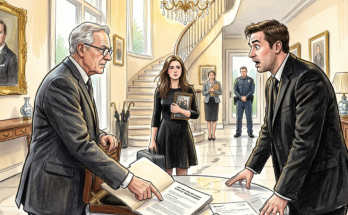
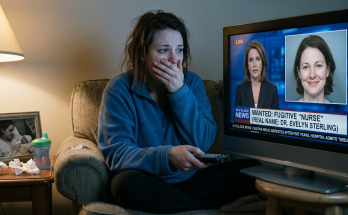
my family ignored my daughter’s surgery, then turned pale at what they saw on the CNN news
I Sent One Photo To Our Family Group Chat, My Daughter Pale After Life-Saving Surgery. “She Wants To See You,” I Wrote. My Brother Texted, “Busy. Handle It.” Mom Added, “She Lived. Stop Making Her Our Problem.” I Replied, “It’s Okay,” Then Cried. At 10 P.M., What They Saw On The News Made Them Drop Their Phones…
### Part 1
Three days after my daughter survived the surgery that nearly killed her, I sent one photograph to our family group chat.
Sadie lay against a white hospital pillow, her skin pale beneath the fluorescent lights. A plastic bracelet circled her narrow wrist, and her fingers rested around the worn gray rabbit she had slept with since preschool. I had taken the picture carefully, making sure the tubes were outside the frame.
I did not want pity.
I wanted my family to see that she was alive.
“She keeps asking for you,” I wrote. “Could someone please visit tonight?”
My older brother, Travis, answered less than a minute later.
“Busy. You’re her mother. Handle it.”
I stared at his message while the heart monitor beside Sadie’s bed continued its steady electronic rhythm.
Then my mother replied.
“She survived. Stop turning her into everyone else’s problem.”
The words blurred.
For a few seconds, I could not hear the machines or the nurses moving outside the room. I could only hear my own breathing and Sadie’s weak voice from earlier that afternoon.
“Do you think Grandma will bring the strawberry cookies?”
I typed, “It’s okay.”
It was the sentence I had used my entire life whenever my family hurt me.
I placed the phone facedown on the windowsill and turned toward the glass so Sadie would not see me cry.
My name is Megan Cole. I was thirty-five, a widow, and the only parent Sadie had left.
My husband, Ethan, had died in a highway construction accident when Sadie was three. Afterward, every school form, fever, insurance fight, birthday cake, and nightmare had belonged to me alone. I had learned how to carry groceries while holding a sleeping child. I had learned which bills could be delayed without losing electricity. I had learned how to cry silently in bathrooms.
What I never learned was how to stop hoping my family might eventually become the people they pretended to be.
Sadie’s illness had begun with exhaustion and stomach pain. For nearly a year, doctors gave us careful answers and scheduled more tests. Then one specialist sat across from me in a small consultation room and told me surgery was no longer optional.
The procedure could save her.
It could also take her from me.
For nine hours, I sat in a surgical waiting room beneath a television playing a cheerful home-renovation show. I drank coffee that tasted like burnt plastic and counted every time the automatic doors opened.
No one from my family came.
My mother, Diane, sent one message.
“Keep us informed.”
Travis sent a thumbs-up symbol.
My father, Howard, did not contact me at all.
Sadie spent two nights in intensive care. When she woke, she could barely squeeze my fingers. I leaned over her bed and whispered, “Mommy’s here,” until the words stopped sounding like language and became something closer to prayer.
On the third afternoon, she was moved to a recovery room.
That was where she began watching the door.
“Maybe Grandma was scared of the ICU,” she said.
“Maybe.”
“And Uncle Travis has a lot of meetings.”
“He does.”
Sadie studied my face.
“Tell them I don’t look scary anymore.”
That nearly broke me.
The last conversation in our family group chat before my photograph had been about Travis’s charity gala. He had been selected as a featured sponsor for an event called Bright Tomorrow, which raised money for children receiving hospital care.
My mother had posted photographs of his tuxedo fitting.
“So proud of my compassionate son,” she had written.
That evening, a nurse named Talia entered carrying fresh blankets. She was in her forties, with kind brown eyes and the quiet confidence of someone who had seen every version of family.
She looked at the empty visitor chair.
Then she looked at my face.
“Rough afternoon?” she asked.
“I’m fine.”
She did not challenge the lie.
Instead, she checked Sadie’s monitor and tucked the blanket beneath her feet.
“How’s my favorite patient?” Talia asked.
Sadie opened her eyes.
“My grandma might come.”
Talia glanced at me for half a second.
“She would be very lucky to see you.”
At six o’clock, unfamiliar voices gathered in the hallway. A small television crew was filming a story about the hospital’s young patients for CNN’s coverage of the Bright Tomorrow gala.
A reporter named Renee Parker stopped outside our door.
“We’re speaking with families about what support means during recovery,” she explained. “Your nurse mentioned Sadie has been incredibly brave. We would only film with your permission.”
My first instinct was to refuse.
I had protected my family’s image for decades. Privacy had always been the curtain we pulled over whatever happened behind closed doors.
Then Sadie noticed the camera.
“Is that going to be on TV?”
“Possibly,” Renee said gently.
Sadie turned to me.
“Maybe Grandma will see me.”
The sentence settled into the room like dust after something collapsed.
I took my daughter’s hand.
“Would you like to answer one question?”
She nodded.
When the camera light came on, Renee asked what Sadie wanted most now that the surgery was over.
Sadie did not mention toys, food, or going home.
She looked at the empty chair beside her bed.
“I just wanted my grandma to come.”
From a television at the nurses’ station, applause suddenly rose.
Then I heard my brother’s voice.
Smooth. Confident. Practiced.
“No child should ever feel abandoned after surgery.”
Renee looked toward the hallway.
Talia stopped adjusting the blanket.
I reached for my phone, where Travis’s message and my mother’s words still waited.
By ten o’clock, millions of people would see two versions of my family.
And for the first time in my life, I was going to let them decide which one was real.
### Part 2
After the camera crew left, Sadie fell asleep with her face turned toward the door.
I sat beside her and listened to the air vent hum above us. The hospital room smelled faintly of disinfectant, warm plastic, and the chicken broth Sadie had refused at dinner.
People imagine neglect as one terrible moment.
In my family, it happened slowly.
Travis was four years older than me, and from the day he was born, my parents treated his confidence like evidence of greatness. When he failed a class, my mother blamed the teacher. When I earned a scholarship, she warned me not to become arrogant.
Travis received a new car for college.
I received advice about public transportation.
Whenever I noticed the difference, my mother said, “You’ve always been jealous of your brother.”
Eventually, I stopped complaining and became useful instead.
I remembered birthdays. I washed dishes after holidays. I drove my mother to appointments and listened while she described Travis’s newest achievement.
I believed that if I became easy enough to love, they might love me without being asked.
When Ethan died, that belief should have died with him.
My mother came to my house the day after the funeral. She folded two towels, surveyed the dishes in the sink, and said, “You need to pull yourself together. Sadie depends on you.”
Travis mailed a sympathy card signed by his assistant.
My father told me not to let grief affect my job.
Still, when Sadie’s doctors scheduled her surgery, I called my mother first.
Fear makes fools of us in familiar ways.
Diane sounded concerned. She asked for the hospital name, the surgical date, and the estimated costs. Then she told me she would quietly contact relatives.
“Family takes care of family,” she said.
Over the next several weeks, my aunt Beth mentioned sending money to my mother. A cousin said she had contributed. Someone from my parents’ church asked whether the “family medical fund” had helped.
Whenever I questioned Diane, she gave me the same explanation.
“I’m organizing everything properly. You don’t want tax problems.”
I was too exhausted to demand records.
The bills continued arriving.
Now, sitting beside Sadie, I wondered why my mother’s promise had never produced a single payment.
At seven forty-five, the nurses turned up the television near their station. CNN was carrying live coverage from the Bright Tomorrow gala downtown.
I stepped into the doorway.
The ballroom looked warm and golden, filled with white flowers, crystal glasses, and people who had paid thousands of dollars to be photographed caring.
Travis stood at a podium in a black tuxedo.
My mother sat at a front table wearing pearls. My father sat beside her, his expression unreadable.
A correspondent asked Travis why pediatric recovery mattered to him.
He placed one hand over his heart.
“When a child wakes after major surgery, the most important thing is knowing family is there.”
My stomach tightened.
Behind me, Sadie slept beside an untouched visitor chair.
My phone buzzed.
For one foolish second, I thought someone might finally be asking about her.
It was my father.
“Your mother says you’re upset. Tonight is extremely important for Travis. Please don’t cause trouble.”
I read it twice.
My father had always been quieter than my mother. For years, I had mistaken quietness for gentleness.
But silence beside cruelty was not gentleness.
It was cooperation.
Renee returned around eight thirty with a release form. She explained that the hospital interview would appear during the ten o’clock CNN segment. They planned to contrast public messages about family support with the experiences of patients.
I unlocked my phone.
“There’s something else,” I said.
She read the group chat without touching the screen.
My message.
“She keeps asking for you.”
Travis’s answer.
“Busy. You’re her mother. Handle it.”
My mother’s reply.
“She survived. Stop turning her into everyone else’s problem.”
Renee’s jaw tightened.
“If you authorize this, we can show the messages with names partially obscured. But people who know your family may recognize the situation.”
“They wrote those words because they believed no one else would ever see them.”
“Are you sure?”
I looked at Sadie.
“Yes.”
At nine fifty-five, I turned on the television in her room and lowered the volume.
The segment opened inside the gala ballroom.
Travis appeared beneath perfect lighting.
“When families face medical crises, they should never stand alone.”
Then the screen changed.
Sadie lay in her hospital bed, her gray rabbit under one arm.
Renee’s voice explained that the seven-year-old had survived a high-risk procedure three days earlier.
“What did you want most after surgery?” Renee asked in the recorded interview.
Sadie looked at the empty chair.
“I wanted Grandma to come.”
The messages appeared next.
My request.
Travis’s dismissal.
My mother’s cruelty.
The report did not add dramatic music. It did not need to.
The words were enough.
Ten minutes later, Renee texted me a video recorded by another guest at the gala.
Travis stood frozen beside his table while people around him stared at their phones. My father had gone completely still.
My mother watched the screen with one hand pressed over her mouth.
Then her phone slipped from her fingers and struck the marble floor.
For once, they were not controlling the story.
They were trapped inside their own words.
My phone began vibrating almost immediately.
Relatives. Neighbors. Family friends.
Then a message arrived from Aunt Beth.
“Megan, your mother told us she had been paying Sadie’s medical expenses. Where did our donations go?”
I looked at the dark visitor chair.
The television report had exposed their cruelty.
But the question on my phone suggested it had also uncovered something much worse.
### Part 3
My family arrived at the hospital at eleven fourteen.
I remember the exact time because I had been watching the clock, waiting for Sadie’s next check, when my mother’s voice carried down the hallway.
“We are immediate family. You cannot keep us outside.”
Talia stepped into the doorway before they reached the room.
“The patient is sleeping. You need to lower your voices.”
My mother appeared behind her holding white lilies wrapped in crackling plastic. Travis still wore his tuxedo, though his bow tie hung loose around his collar. My father stood several feet behind them with his hands in his coat pockets.
Diane lifted the flowers when she saw me, as though they were proof of innocence.
“Megan, this has gone far enough.”
Not “How is Sadie?”
Not “We’re sorry.”
Not “We should have come.”
This has gone far enough.
I stood and moved between them and the bed.
“Keep your voices down.”
Travis stepped forward.
“Do you understand what you’ve done?”
His face looked pale beneath the hallway lights. The gold donor pin remained attached to his lapel.
“I showed people what you wrote.”
“You made a private conversation look monstrous.”
“What was the innocent interpretation?”
His mouth tightened.
“I was managing an important event.”
“Your niece had just survived surgery.”
“And she was stable.”
I stared at him.
That was the language my family used whenever they wanted suffering to become inconvenient. Stable meant I should stop asking. Alive meant Sadie required nothing else.
My mother pushed into the room and placed the lilies on the counter.
“I worded my message badly,” she said. “You know I didn’t mean it literally.”
“You meant it enough to send it.”
“You have always enjoyed making me the villain.”
There it was—the old turn.
My pain became my character flaw.
Before I could answer, Sadie opened her eyes.
For one second, my mother’s face softened. It was not the expression she wore when nobody was watching. It was the gentle smile she used in photographs.
She stepped toward the bed.
“Sweetheart, Grandma’s here.”
Sadie looked at her, then at Travis.
Her voice was rough from sleep.
“Did you come because of me or because of CNN?”
No one moved.
My father closed his eyes briefly.
My mother clutched the flowers.
“Of course we came because of you.”
“I waited all day.”
“Grandma had an important commitment.”
Sadie looked at Travis’s tuxedo.
“For sick children?”
Travis’s face reddened.
I reached beneath the blanket and held her hand.
“You don’t have to talk, honey.”
She closed her eyes again, but her fingers tightened around mine.
Travis lowered his voice.
“You need to issue a statement tomorrow. Tell Renee you were frightened and emotional. Tell her we have supported you throughout this.”
“That would be a lie.”
“It would correct the impression you created.”
“The impression that you ignored her?”
My father finally spoke.
“Travis, this isn’t the place.”
“Then where, Dad? The foundation chair is calling me. Sponsors are demanding explanations. I could lose my position.”
I looked at him.
“That’s what frightens you? Not what Sadie asked?”
My mother’s expression sharpened.
“You are punishing the entire family because you felt neglected.”
The old fear rose inside me.
For most of my life, three people could stand around me and repeat their version until I doubted my own memory. I had apologized for injuries they gave me because resisting them took more energy than surrendering.
Then Sadie’s surgeon entered.
Dr. Samuel Warren was still wearing his white coat. Fatigue darkened the skin beneath his eyes.
“Is everything all right?”
My mother turned toward him with instant warmth.
“Doctor, thank goodness. We are Sadie’s family. There has been a terrible misunderstanding.”
Dr. Warren looked at me first.
“Megan?”
That small choice steadied me.
“They arrived after the report aired. They want me to say they have supported us.”
Travis forced a smile.
“With respect, Doctor, this is private family tension.”
Dr. Warren’s voice remained calm.
“I cannot speak about your messages. I can speak about what I witnessed.”
The room became completely still.
“Megan attended every consultation. She signed every consent form. She waited through the operation. She remained during the intensive-care period and was present when Sadie regained consciousness. Until tonight, I had not seen any of you.”
My mother’s lips parted.
No sound came out.
Dr. Warren continued.
“Sadie needs rest. If visitors create emotional stress, their access can be restricted.”
Diane turned toward me.
“You would keep us from our granddaughter?”
I looked at Sadie’s pale face.
“I will keep anything away from her that hurts her.”
My mother recoiled.
Talia moved toward the door.
“I think it’s time to leave.”
Travis walked out first. My father followed without looking at me.
At the doorway, my mother glanced at the lilies.
“I brought those for Sadie.”
“Take them.”
“They’re beautiful.”
“She doesn’t need flowers from someone who had to be embarrassed into visiting.”
Her face hardened, and for a moment I saw what lived beneath all her performances.
“This family will not forget this.”
“Neither will my daughter.”
When the door closed, the silence felt different.
Not lonely.
Protected.
The following morning, I woke with a stiff neck and forty-seven unread messages.
Most were apologies or questions.
But Aunt Beth had sent screenshots.
Months earlier, my mother had emailed relatives asking for donations toward Sadie’s medical care. She had included her own payment details and promised to deliver one organized sum to the hospital.
Beth’s receipt showed eight hundred dollars.
My cousin’s showed five hundred.
A church group had sent twelve hundred.
None of it had reached me.
Then another donor forwarded a confirmation with a different memo.
“Bright Tomorrow gala sponsorship in honor of Sadie Cole.”
I stared at the words until my hands went cold.
While I had been delaying bills and sleeping in a hospital chair, my mother had used my daughter’s name to purchase Travis a seat beneath the lights.
### Part 4
I did not call my mother.
That surprised me.
The old version of me would have called immediately. I would have demanded an explanation, cried when Diane denied everything, and eventually apologized for my tone.
Instead, I remembered something Talia said when she found me staring at the donor receipts.
“You don’t need an argument,” she told me. “You need records.”
So I created a folder.
I saved every email, screenshot, payment confirmation, and message. I wrote down dates. I asked each donor one careful question.
“Did you believe your contribution was intended for Sadie’s medical expenses?”
By noon, twelve people had answered yes.
By evening, there were twenty-one.
The total exceeded eighteen thousand dollars.
It would not erase the hospital debt, but it could have paid for follow-up visits, transportation, physical therapy, and the weeks of work I had missed.
Instead, some portion had apparently purchased a gala sponsorship for Travis.
My phone rang repeatedly.
Travis.
My mother.
My father.
I let every call go to voicemail.
Travis’s message came first.
“Stop contacting donors. You don’t understand charitable accounting, and you could create a legal disaster.”
My mother sounded calmer, which frightened me more.
“The funds were being managed for the benefit of the family. Do not make accusations while you’re exhausted.”
My father said only, “Please handle this privately.”
Privately.
That was where my family buried everything.
I contacted the hospital’s patient advocate, a practical woman named Elena Ruiz. She listened without interrupting and reviewed the documents at a small desk beside a humming printer.
“I cannot determine intent,” she said. “But donors appear to have been told the money was for medical care. You need legal guidance.”
She connected me with an attorney named Julian Cross, who worked with families facing medical debt and financial exploitation.
Julian did not promise revenge.
He asked for evidence.
When I sent him the folder, he remained quiet for nearly a minute.
“Do not delete anything,” he said. “Do not threaten them. Do not post allegations online. We will request a complete accounting in writing.”
That afternoon, I sent one message to the family group chat.
“Please provide a record of every donation collected in Sadie’s name, including the donor, amount, date, and final use.”
Travis responded immediately.
“Not in this chat.”
My mother wrote, “We will not be interrogated while you are emotional.”
Then my father surprised me.
“If everything is legitimate, send her the records.”
No one answered him.
Renee called that evening.
“Several donors have contacted CNN,” she said. “We won’t report claims without documentation or your consent.”
“I don’t want Sadie filmed again.”
“She won’t be. This would be about fundraising records and public statements.”
I watched through the glass as Sadie colored a crooked blue house in a hospital activity book.
“I need to speak with my lawyer first.”
“That’s exactly what you should do.”
The following morning, Julian sent my mother and Travis a formal demand for accounting.
Two hours later, Travis called from an unfamiliar number.
I answered because Sadie was asleep.
“You hired an attorney?”
“Yes.”
“You’re treating your own family like criminals.”
“I’m asking where the money went.”
“You don’t understand how sponsorship works. The table created connections for Bright Tomorrow. It increased visibility.”
“Why was Sadie’s name used?”
“It made the cause personal.”
My hand tightened around the phone.
“She was lying in a hospital bed while you used her name to look generous.”
“That isn’t fair.”
“Send the records.”
My mother came onto the line.
“Megan, we made a strategic decision. Travis’s position could eventually benefit everyone.”
“Sadie needed help then.”
“You always think in such small terms.”
Small terms.
Medication. Parking fees. Meals. Recovery appointments. My daughter asking for her grandmother.
“What happened to the rest of the money?”
Silence.
That silence answered more clearly than any confession.
“I’ll speak to you through Julian,” I said.
Travis laughed without humor.
“You can’t afford a long legal fight.”
“Maybe not. But I can afford to stop lying for you.”
I ended the call.
The next CNN report aired without Sadie’s face. It showed the fundraiser email, blurred donor confirmations, and the gala sponsorship made in her name.
Renee’s narration remained controlled.
“Donors say they believed their contributions would support a child’s medical recovery. The child’s mother says she received none of those funds.”
By noon, Bright Tomorrow suspended Travis from all donor-facing roles.
His employer placed him on temporary leave.
My mother’s church removed her from its charity committee pending review.
At four seventeen, Diane sent me one message.
“Look what you have done to this family.”
I glanced at Sadie, who was awake and asking for toast.
Then I looked at the records my mother never expected me to collect.
I had not destroyed my family.
I had only stopped standing between them and the consequences of their choices.
### Part 5
My mother returned to the hospital alone two days later.
She wore a cream coat, polished shoes, and the expression of a woman arriving for a meeting she expected to control.
Talia stopped her at the nurses’ station.
“Megan has not approved visitors.”
Diane saw me through the doorway.
“I am her mother.”
I stepped into the hallway and closed Sadie’s door behind me.
“Then start acting like one.”
Her face tightened.
“People are calling me a thief.”
“Did you collect money for Sadie?”
“I managed donations.”
“Did you pay the hospital?”
She looked toward the window.
The answer was in the movement of her eyes.
“Where did it go?”
“Some of it supported Travis’s sponsorship. That table created valuable relationships.”
“For whom?”
“For the family.”
“My daughter is the family.”
“You’re simplifying a complicated situation.”
“I was choosing which bills to postpone while you bought Travis applause.”
She lowered her voice.
“He needed that gala. His company expected him to demonstrate community leadership.”
“Sadie needed her grandmother.”
“I was under enormous pressure.”
“She was seven.”
Diane reached for my arm.
I stepped back.
Her voice softened.
“If this becomes criminal, I may never recover.”
She did not say she was sorry.
She did not ask what the missing money had cost us.
She worried about recovery only when it belonged to her.
“What destroys you isn’t the investigation,” I said. “It’s what you did before anyone started asking questions.”
Tears filled her eyes.
Years earlier, those tears would have controlled me. I would have comforted her for the pain of being confronted.
Not anymore.
“Tell CNN you misunderstood,” she whispered. “Tell them I intended to repay it.”
“When?”
She had no answer.
“While Sadie was in intensive care? When I missed work? When she asked why you didn’t love her enough to visit?”
“You have changed.”
“Yes.”
The tears stopped almost immediately.
Her face became hard.
“Travis could lose everything.”
“Then he should not have built everything on a lie.”
Security escorted her from the floor after she refused to leave.
That evening, Julian called.
The district attorney’s office had begun reviewing donor complaints. A civil claim would also be filed to recover the funds.
“Your father contacted the investigator,” Julian added.
I sat straighter.
“What did he say?”
“He offered access to joint bank records.”
My father texted me minutes later.
“I did not know all of it.”
I stared at the message before replying.
“What did you know?”
He took nearly an hour to answer.
“I knew your mother collected donations. She told me she was holding them until the final hospital bills arrived. I knew the gala table was expensive. I accepted her explanation because questioning her would have caused a fight.”
I read that sentence twice.
My father had spent his life describing cowardice as peace.
“You knew enough to ask,” I wrote.
“Yes.”
“And you didn’t.”
“No.”
It was not an apology, but it was the first time he had admitted responsibility without immediately asking me to forgive him.
Three days later, Dr. Warren told us Sadie might be released by the weekend.
She smiled so widely that her whole face changed.
“Can Rabbit come home?”
Dr. Warren leaned toward the stuffed animal.
“I believe Rabbit has completed all required medical training.”
Sadie giggled.
The sound felt like sunlight entering a room that had been sealed for weeks.
That night, my father came to the hospital.
He did not bring flowers.
He waited at the nurses’ station and asked whether I would speak to him.
I stepped into the hallway.
Through the window, he watched Sadie sleeping.
“She looks better.”
“She is.”
He rubbed both hands over his face.
“I failed you.”
The words landed quietly.
They did not erase the past. They did not refill the empty chair or return the money. But they were honest.
“What will you do now?” I asked.
He looked surprised.
“I don’t need another speech, Dad. Are you going to protect them?”
“No. I gave the investigator the statements. There were transfers from your mother’s account into the gala payment. Travis reimbursed part of it later, but not until after the CNN report.”
That was new.
“After the report?”
He nodded.
“They tried to move money back before anyone requested records.”
The last possibility of innocent confusion disappeared.
This had not been careless accounting.
They knew exactly what they had done.
“You can see Sadie when she asks,” I said. “Not because you feel guilty. Not because you want me to tell investigators you’re a good grandfather.”
“I understand.”
“I don’t think you do. But you can prove it.”
He nodded and left.
The next morning, Travis sent me a message.
“You have forty-eight hours to stop cooperating, or you will destroy lives you cannot rebuild.”
I forwarded it to Julian.
Then I blocked my brother.
The threat did not frighten me the way it once would have.
Because for the first time, I understood that the most dangerous thing to people like Travis was not anger.
It was evidence they could not charm away.
### Part 6
Sadie left the hospital four days later.
She was still weak, so Talia pushed her toward the exit in a wheelchair. Sadie held Rabbit upright in her lap as though he were a fellow patient being discharged.
The nurses clapped softly.
I cried before we reached the elevator.
We did not return to our apartment immediately. The patient-advocacy office arranged a small recovery suite near the hospital for two weeks. It had a narrow kitchen, a pullout couch, and windows overlooking a parking lot.
To me, it looked like freedom.
No monitors.
No hallway alarms.
No empty visitor chair waiting to accuse anyone.
The legitimate medical account Julian established paid for the suite, follow-up transportation, and recovery supplies. Every contribution was documented. Every donor received a receipt.
On the third afternoon, the receptionist called.
“Two people are asking to see you. Diane and Travis Cole.”
“They are not allowed upstairs.”
Five minutes later, my phone rang from another unfamiliar number.
Travis’s voice sounded rough.
“We need ten minutes.”
“No.”
“Megan, my company is terminating my public role. Bright Tomorrow is considering a permanent ban. Mom could face charges.”
“You should discuss that with your lawyers.”
“We need you to say this was a family misunderstanding.”
“It wasn’t.”
“You don’t have to lie. Just say emotions were high and we’re resolving it privately.”
I looked toward the bedroom. Sadie slept with her medication schedule taped beside the door.
“You still think the problem is what people believe about you.”
“My career is collapsing.”
“Sadie’s body nearly collapsed. You told me to handle it.”
“I admitted that text was wrong.”
“You admitted it after millions of people saw it.”
My mother’s voice came faintly through the phone.
“Tell her family protects family.”
I closed my eyes.
That sentence had been the leash around my neck for thirty-five years.
“Put her on.”
Diane took the phone.
“I am begging you.”
“You begged strangers for money using Sadie’s name. You never begged Travis to visit her.”
“I made a mistake.”
“You made a series of decisions.”
“If charges are filed, my life is over.”
“My daughter believed she was unlovable because her grandmother would not sit beside her for twenty minutes.”
Silence.
Then Diane said, “Do you want to destroy me?”
“No. I wanted you to be my mother. You chose something else.”
Travis returned to the line.
“What do you want?”
The question should have been asked when Ethan died. It should have been asked when Sadie got sick. It should have been asked before they turned her pain into a gala centerpiece.
“I want every dollar returned. I want every donor notified. I want you to stop telling people I’m confused. And I want both of you to stay away from Sadie.”
“If we do that, will you help us?”
“I’ll continue telling the truth.”
“That doesn’t help us.”
“No. It helps Sadie.”
I ended the call.
That evening, Renee requested one final interview. She promised there would be no footage of Sadie.
Julian came to the suite and helped me prepare.
“Speak only to what you know,” he said. “Do not speculate. Do not attack.”
After Sadie fell asleep, I wrote until midnight.
I crossed out every sentence that sounded like revenge.
What remained was simple.
The next morning, Renee sat across from me near the window. There was one camera operator and no dramatic crowd.
Before recording began, my phone lit up with a message from my mother.
“If you do this, there is no going back.”
I turned the phone facedown.
For once, that sounded like freedom rather than a threat.
When the camera light came on, Renee asked what I wanted people to understand.
“My daughter did not ask for money that night,” I said. “She did not ask for publicity. She had survived a dangerous surgery and wanted her grandmother and uncle to visit.”
My voice shook, but I continued.
“I shared the messages because private cruelty is still cruelty. People donated believing they were helping Sadie’s medical recovery. The money did not reach us. The legal process will determine responsibility.”
“Do you want revenge?” Renee asked.
I thought carefully.
“No. Revenge would require me to build my future around their suffering. I want accountability. I want the funds returned. I want donors to know the truth. Most of all, I want my daughter to grow up understanding that love never requires her to remain silent while someone hurts her.”
The interview aired that night.
The following morning, Julian called.
Travis’s attorney had offered to return the full amount collected in Sadie’s name, cover documented medical expenses, and pay the legal costs.
It was not kindness.
It was panic written in formal language.
The investigation continued.
Travis resigned from Bright Tomorrow before the board could remove him. His employer ended his role in community partnerships. Sponsors who had once competed to stand beside him stopped returning calls.
My mother resigned from every charity committee she held.
The church issued an apology to donors.
Diane sent me one final message.
“You have taken everything from me.”
I replied with one sentence.
“No, Mom. I stopped giving you my silence.”
Then I blocked her number.
### Part 7
Three months later, Sadie returned to school part-time.
Her color came back slowly. She still tired before lunch, and some nights she woke crying because she had dreamed about hospital lights. Healing did not move in a straight line.
Some days, courage meant walking to the mailbox.
Other days, it meant admitting she was scared.
The recovered donations remained in a medical trust managed through Julian’s office. Each donor received a record explaining how the money would be used.
Aunt Beth visited and apologized until Sadie became bored and asked whether she wanted to play a card game.
“You tried to help,” I told Beth after Sadie went to bed. “My mother is the one who lied.”
“I should have sent it directly.”
“Maybe. But she counted on decent people trusting her.”
The district attorney eventually offered my mother a resolution requiring full repayment, community restrictions, and formal acknowledgment of how the funds had been solicited. Additional financial penalties followed.
There was no dramatic arrest.
Real consequences arrived through certified letters, interviews, audits, and doors quietly closing.
Travis avoided criminal charges connected to the initial collection because the evidence showed my mother had controlled the account. But records proved he knew the source of the gala payment and helped move money after the CNN segment.
His reputation never recovered.
He sent me several messages through relatives.
“I made one mistake.”
“It should not erase my whole life.”
“I am still Sadie’s uncle.”
I answered none of them.
A mistake is forgetting an appointment.
What Travis did required multiple choices: accepting money raised in a sick child’s name, standing beneath lights to praise family support, ignoring that child’s request, and trying to move funds after being exposed.
He did not lose access to us because strangers became angry.
He lost access because I finally became clear.
My father visited Sadie once she asked to see him.
He brought a puzzle book and a soft blanket patterned with stars. He stood near the doorway until she waved him closer.
“Are you really sorry?” she asked.
Howard sat carefully in the chair beside her.
“Yes.”
“Mommy says sorry means you do better.”
His eyes filled.
“Your mommy is right.”
That meeting did not repair our relationship.
Trust is not a light switch. It is a staircase built one ordinary action at a time.
My father began taking those steps. He attended one follow-up appointment when Sadie invited him. He called without demanding answers. He never defended Diane or Travis in my presence.
I did not forgive him.
I also did not punish him.
I allowed him the limited relationship his actions earned.
That was different from pretending the past had disappeared.
With part of the civil settlement, I created a small program through the hospital.
We called it Sadie’s Chair.
It provided meal cards, parking vouchers, phone chargers, clean clothes, and temporary transportation for parents staying beside hospitalized children without support.
They were ordinary things.
But I knew how enormous ordinary things become when you have slept in the same chair for three nights and are afraid to leave your child long enough to shower.
The first time we delivered care bags, Sadie came with me.
She moved slowly through the pediatric hallway, carrying a bag of stuffed animals. Talia met us at the nurses’ station and wrapped me in a careful hug.
“You look rested,” she said.
“That’s generous.”
“You look more rested than before.”
Sadie gave a small rabbit to a boy waiting for tests.
On our way out, we passed her old recovery room. Another child lay beneath the white blanket. A woman sat beside the bed holding cold coffee in both hands.
For a moment, I saw myself.
I left a care bag with Talia.
“Give it to her when it feels right.”
Outside, Sadie slipped her hand into mine.
“Did we make the program because Grandma didn’t come?”
“Partly.”
She considered that.
“And because other kids need somebody?”
“Yes.”
“That part is better.”
She was right.
My family’s betrayal had started the story.
But I refused to let it remain the purpose.
That evening, an unknown number sent me a message.
“Can we see Sadie someday?”
I knew it was my mother.
Same demand. New number.
She still believed wanting access was equal to earning it.
I deleted the message without answering.
Sadie looked up from the kitchen table.
“Who was it?”
“No one we need tonight.”
She returned to her drawing.
For the first time, I did not feel guilty.
The door was closed because peace lived behind it.
And peace had finally become more important than blood.
### Part 8
A year after the surgery, Sadie and I returned to the hospital for the anniversary event of Sadie’s Chair.
The lobby looked different without fear attached to it.
Sunlight crossed the polished floor. Volunteers arranged care bags on long tables. Parents talked quietly over coffee while children decorated paper rabbits.
Sadie wore a blue dress and silver sneakers. Her hair had grown thick again, and she moved with the restless energy of someone who had once struggled to reach a hospital-room door.
Renee attended without a camera crew.
“I thought I’d come as a person this time,” she said.
Talia stood beside her, smiling.
Dr. Warren arrived late from surgery and apologized until Sadie told him doctors were allowed to be late if they were saving somebody.
More than two hundred families had received help during the program’s first year.
Parking fees.
Meals.
Temporary lodging.
A ride home.
Someone to sit beside a parent while they showered.
No speeches about heroic donors.
No polished photographs pretending compassion belonged to a single wealthy person.
Just practical help reaching people before loneliness became another emergency.
My father attended too.
He stayed near the back until Sadie found him and pulled him toward the activity table. Their relationship remained careful. He had learned not to demand more than she offered.
Diane was not invited.
Neither was Travis.
I heard about them occasionally through relatives.
My mother sold the house after the financial settlement. She continued telling some people that I had misunderstood her intentions. Others said she admitted she had “handled things badly.”
Those words no longer mattered to me.
Travis moved to another state and took a position that kept him away from public charity work. He married six months later. I learned about it from Aunt Beth and felt almost nothing.
That surprised me most.
For years, I thought healing would arrive as triumph. I imagined feeling satisfied when my family lost the image they valued more than us.
Instead, healing arrived as indifference.
Their choices no longer controlled the temperature of my day.
After the hospital event, Sadie and I walked through the pediatric floor.
She paused outside her old room.
“Was I really that small?”
“You were always small.”
She rolled her eyes.
“I mean sick-small.”
I looked through the doorway. The room was empty between patients. The visitor chair sat beside the bed, exactly where it had been one year earlier.
“Yes,” I said. “You were very sick.”
“Were you scared?”
“More scared than I knew a person could be.”
She slipped her hand into mine.
“But you stayed.”
“Always.”
She studied the chair.
“Grandma didn’t.”
“No.”
“Do you miss her?”
Children ask direct questions adults spend years avoiding.
“I miss the grandmother I wanted you to have,” I said. “That isn’t the same as missing the person she chose to be.”
Sadie nodded slowly.
“I don’t miss waiting.”
Neither did I.
We left the hospital and drove home beneath a bright autumn sky. Our apartment was smaller than the house where I grew up, but it was warm, peaceful, and ours.
Sadie dropped her backpack by the door and asked whether we could have pancakes for dinner.
“You had pancakes yesterday.”
“So?”
I laughed.
“So, get the mixing bowl.”
While she measured flour, I checked my phone.
There was a message from my father reminding me about Sadie’s school performance. Another from Talia with a photograph of the care bags. Aunt Beth had sent a terrible joke.
No missed calls from my mother.
No demands from Travis.
No family group chat waiting to tell me whose feelings I needed to protect.
Sadie spilled milk across the counter and gasped.
“Don’t be mad.”
I handed her a towel.
“It’s milk. We clean it up.”
She watched me for a moment, almost as if she expected a deeper punishment.
Then she smiled.
That was the life I wanted to give her.
A life where mistakes were not used as weapons.
Where love did not have to be earned through silence.
Where people showed up before cameras did.
For most of my life, I believed family meant the people you kept forgiving because they shared your name.
I know better now.
Family is the person who sits in the chair when staying is inconvenient.
Family is the nurse who notices you have not eaten.
It is the relative who admits she should have asked more questions. It is the grandfather who understands that an apology is only the first step. It is a mother who stands between her child and anyone who teaches her that needing love makes her a burden.
My mother once told me Sadie had survived, as though survival was the end of her responsibility.
She was wrong.
Survival was only the beginning.
Sadie carried two plates to our little table. One pancake leaned over the edge, and syrup had already reached her wrist.
“Mom?”
“Yes?”
“Are we okay?”
I looked around our kitchen. At the crooked drawing taped to the refrigerator. At Rabbit sitting on a chair. At my daughter, alive and impatient to eat.
“We’re more than okay.”
Outside, evening light spread across the windows.
My family had turned pale when they saw the truth on CNN.
But their fear was never the ending.
The ending was this: Sadie stopped watching the door.
And I finally stopped wishing the wrong people would walk through it.
THE END!