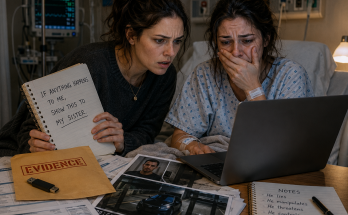
During The Toast, My Dad Muttered, “Stop Being Difficult And Just Pay The Bill.” He Expected Me To Cover A $7,000 Tab For Relatives I Hadn’t Seen In Years. I Stood Up, Left The Table, And Paid My Share At The Front. When My Sister Called, Screaming, “Where Are You?!”
### Part 1
The migraine behind my left eye had been pounding since noon, but when the regional vice president slid a cream-colored envelope across his desk and said, “Congratulations, Natalie. The director position is yours,” the pain disappeared for exactly three seconds.
I had worked toward that moment for five years.
Five years of arriving before sunrise, eating vending-machine crackers for dinner, and sleeping with my laptop open beside me. I had canceled vacations, missed birthdays, and learned how to solve disasters without raising my voice. The promotion came with a corner office, authority over three departments, and a salary large enough to make me stare at the number twice.
I should have been celebrating.
Instead, I sat in my Honda in the parking lot outside my apartment, listening to the engine tick as it cooled. My shoulders felt packed with wet sand. All I wanted was a shower, a dark room, and twelve uninterrupted hours of sleep.
My phone buzzed in the cup holder.
Brianna.
My younger sister had an instinct for money that bordered on supernatural. If someone in the family received a refund, a bonus, or even a gift card, Brianna somehow sensed it before they finished opening the envelope.
Earlier that afternoon, I had made the mistake of posting one message in our family group chat.
Big news. I finally got the result I’ve been working for.
I hadn’t mentioned the promotion or the salary. Apparently, I hadn’t needed to.
I answered.
“Natalie!” Brianna shrieked. “Tell me Dad was right. You got it, didn’t you?”
“I got it.”
Her scream forced me to pull the phone away from my ear.
“I knew it! Mom is crying. Dad has been telling everyone his daughter is a director.”
A small, embarrassing warmth spread through my chest.
Maybe I had misjudged them. Maybe, for once, they were proud of me rather than interested in what my success could buy.
“Thank you,” I said. “That actually means a lot. I’m exhausted, though. I’m going upstairs and going straight to bed.”
“Bed?” she laughed. “Absolutely not. We’re celebrating tonight.”
“Can we do something this weekend? Pizza at Mom and Dad’s would be perfect.”
“Pizza?” Her voice sharpened. “Natalie, directors don’t celebrate with coupons and paper plates. We booked a table at Aurelia for seven.”
I sat up.
Aurelia was the kind of restaurant with velvet curtains, private rooms, and servers who described butter like it had attended university. Its online menu didn’t list prices. That was usually a warning.
“Brianna, that place is expensive.”
“It’s your promotion dinner. Stop worrying about everything for once.”
“Who is coming?”
“Just family.”
Something about the answer landed wrong.
“Brianna—”
“We’re already leaving. Wear something nice.”
She hung up before I could refuse.
At six forty-five, I stood in my apartment wearing the same navy suit I had worn to work. My face looked gray under the bathroom light. I considered texting that I was sick.
Then I imagined my mother saying I never made time for family. I imagined my father calling me ungrateful. I imagined Brianna telling everyone that success had made me arrogant.
They had used those accusations before because they worked.
So I drove across town.
The valet glanced at my Honda as if it had arrived carrying a contagious disease. Inside, the restaurant smelled of polished wood, citrus, and roasted garlic. Soft piano music floated through the dining room.
The hostess checked the reservation list.
“The Harper celebration,” she said. “Your party is in the private alcove.”
“Private?”
She was already walking.
As we approached a thick velvet curtain at the back, I heard laughter. Not four voices. Not five.
A crowd.
The hostess pulled the curtain aside.
Twelve people turned toward me.
My parents sat at the head of a long table. Brianna wore a silver designer dress I had never seen before. Aunt Lydia was there. So was Uncle Ron. Brianna’s friend Madison, who had tormented me throughout high school, lifted a champagne flute and gave me a lazy smile.
Three men I didn’t recognize were already eating oysters.
Four empty vintage champagne bottles stood in silver buckets.
Brianna raised both arms.
“She’s finally here! Our wealthy executive!”
The room erupted in applause.
I stood beneath the chandelier with my purse still on my shoulder, staring at the bottles, the strangers, and the predatory delight on my sister’s face.
That was when I understood the dinner had never been planned to celebrate me.
It had been planned around me.
### Part 2
“You’re late,” my father said.
Walter Harper didn’t stand to hug me. He gestured toward the only empty chair, positioned at the far end of the table beside Uncle Ron, who was describing a medical procedure in unnecessary detail.
“I’m exactly on time,” I said.
“Same thing,” Dad replied, already turning back toward his wine.
My mother, Diane, gave me a fluttery wave.
“You look exhausted, sweetheart. You should try that concealer Brianna uses.”
“Good to see you too, Mom.”
A server appeared beside me.
“Champagne, ma’am? The table is enjoying the 1998 vintage.”
“Just sparkling water.”
“Oh, Natalie,” Brianna called. “Don’t act poor tonight. Fill her glass.”
The server poured before I could object.
I looked around the table. No one asked what my new job involved. No one asked how I felt or what I had sacrificed to earn it.
Dad asked the only question that interested him.
“So, what’s the salary?”
The conversations stopped.
Even the strangers watched me.
“I’d rather not discuss my compensation at dinner.”
Brianna smiled over the rim of her glass.
“Why are you being secretive? We’re family.”
“That doesn’t make my paycheck public information.”
Dad frowned.
“You’ve always been too guarded. We raised you better than that.”
The words scraped against an old wound.
Since I was twenty-two, I had been the family’s emergency fund. When Dad’s early retirement became permanent unemployment, I covered six months of mortgage payments. When Mom wanted expensive dental work, I paid the deposit. When Brianna’s latest career experiment collapsed, I covered her rent.
She had been a fashion blogger, a wellness consultant, an event stylist, and a personal-brand strategist. Her newest title was “creative commerce curator,” which appeared to involve buying designer clothes and photographing them in hotel lobbies.
I had paid her car insurance, utilities, and two credit-card settlements.
Every rescue came with the same speech.
“You’re the responsible one.”
“You don’t have children.”
“You make more than us.”
“You can recover.”
No one ever asked whether I wanted to keep recovering from problems they created.
The server began taking orders.
“Two grand seafood towers,” Brianna said.
“One should be enough,” I said.
She ignored me.
“Add the imported caviar service.”
Dad ordered the largest dry-aged ribeye on the menu. Madison ordered lobster with a truffle supplement. The men I didn’t know selected steaks and additional champagne.
When the server reached me, I ordered a garden salad and roasted chicken.
Brianna laughed.
“You got promoted and you’re still eating like someone’s going to audit you.”
“I like chicken.”
“You like being difficult.”
The appetizers arrived on towers of crushed ice. Shells glittered beneath the chandelier. Brianna posted photographs while Madison complained that the lighting made her look pale.
I ate bread and watched my sister’s finger slide down the menu.
She wasn’t searching for food she liked.
She was searching for the highest prices.
Halfway through the seafood, she leaned toward me.
“I’ve been developing a retail concept,” she said. “A luxury pop-up experience.”
“What does that mean?”
“A curated physical space for emerging brands.”
“A temporary store?”
Her smile tightened.
“It’s more sophisticated than that.”
“Do you have a business plan?”
“I have a vision. I need twenty thousand in seed money.”
There it was.
She rested her chin on her hand.
“You could be a silent partner. You wouldn’t even have to do anything.”
“I’m not investing.”
The table quieted.
Dad set down his glass.
“She’s your sister.”
“I know.”
“You just received a huge raise.”
“I also have savings goals.”
Brianna’s face hardened.
“What goals? You don’t even have a family.”
The sentence hit harder than I expected.
I had spent years working while she dated, traveled, and treated responsibility like an infectious disease. Now my lack of a husband and children was being used as proof that my money belonged to everyone else.
“I’m buying a home,” I said. “And saving for retirement.”
Dad slapped the table, making the silverware jump.
“Enough with the selfishness. We supported you your whole life.”
“I paid off your mortgage.”
“That was years ago. Stop keeping score.”
“You only say that because the score benefits you.”
His cheeks reddened.
“This is why you’re alone, Natalie. Every relationship is a transaction to you.”
For a moment, I couldn’t speak.
Then the main courses arrived, filling the room with the smell of butter, seared meat, and truffles.
Brianna stood and tapped her spoon against her glass.
“I’d like to make a toast.”
Her smile returned, bright and sharp.
“To my wonderful sister, Natalie, who worked so hard for her promotion and generously invited all of us here tonight.”
I stared at her.
“I didn’t invite anyone.”
She raised her voice.
“And who is treating us all to this incredible celebration!”
Glasses lifted around the table.
My father leaned toward me without meeting my eyes.
“Stop being difficult,” he muttered. “Just pay.”
Something inside me became perfectly still.
I looked at the champagne bottles, the strangers, and the family who believed humiliation was another form of permission.
Then I smiled.
“You’re right,” I said. “Tonight should be memorable.”
### Part 3
Brianna clapped like a child who had just been promised a pony.
“I knew you’d come through. Bring another bottle,” she told the server. “The older vintage.”
Dad leaned back with the satisfied expression of a man who believed authority was the same thing as victory.
Mom dabbed the corner of her mouth with a linen napkin.
“That’s my good girl,” she said.
Good girl.
I was thirty-two years old, responsible for hundreds of employees and millions of dollars in operational spending, yet at that table I had become ten again, praised only when I made myself useful.
“I need the restroom,” I said, picking up my purse.
“Don’t disappear,” Brianna warned. “We still need to discuss my investment.”
“I won’t be long.”
I walked steadily past the velvet curtain.
The restroom signs were to the right. I turned left.
Framed black-and-white photographs lined the corridor: actors, athletes, politicians, all smiling beside Aurelia’s owner. The thick carpet swallowed the sound of my heels.
At the front, the maître d’ stood beside a polished desk. His posture was so straight it looked engineered.
“Is everything satisfactory?” he asked.
“The food is excellent. I need to settle my portion of the bill.”
“Your portion?”
“I’m with the Harper party in the private alcove. I’m leaving.”
His expression remained neutral, but his eyes sharpened.
“I see.”
“I consumed one salad, one chicken entrée, and one sparkling water. I didn’t order champagne, seafood, caviar, or anyone else’s meal. I’d like to pay for exactly what I ordered.”
“The host informed us there would be one check.”
“I’m not the host.”
He glanced toward the corridor.
“This is an unusual request.”
“So was being told in front of twelve people that I was paying a bill I never authorized.”
He studied me.
I pulled out my card.
“Charge my food, add twenty-five percent gratuity to my portion, and give me a receipt. If the restaurant attempts to charge me for the entire table, I will dispute it immediately.”
For several seconds, he said nothing.
Then he turned to the computer.
“Your total is seventy-four dollars and twenty cents.”
The machine beeped. Approved.
He handed me the receipt.
“Would you like me to inform the party?”
“No. Let them finish dessert.”
A faint flicker of amusement crossed his face.
“Of course.”
Outside, cold night air touched my cheeks. For the first time that evening, I could breathe.
While I waited for the valet, I opened my banking app.
Years earlier, I had given Brianna an emergency card attached to my account. She claimed she kept it locked in a drawer.
I selected the card.
Lock immediately.
Next, I removed my payment information from the family rideshare account. I canceled the automatic monthly transfer I sent Mom. I changed the passwords for every streaming service and shopping account they used.
Each tap felt like closing a door.
By the time my Honda arrived, I had severed every financial connection I could remember.
I didn’t drive home. They knew where I lived, and once the bill arrived, panic would turn them into a search party.
I drove to my office.
The building was mostly dark. Martin, the overnight security guard, looked up from his crossword puzzle.
“Back already?” he asked.
“Family emergency.”
He looked at my face and decided not to ask.
My new office still smelled of fresh paint and unused carpet. I sat on the couch with a cup of terrible machine coffee and watched the city glow beyond the windows.
At 9:31, Brianna texted.
Where are you? Dessert is here.
Two minutes later:
Did you get lost?
At 9:47:
The server says you left. Answer me.
Then the calls began.
Brianna. Dad. Mom. Brianna again.
My phone vibrated across the desk until it sounded like an insect trapped beneath glass.
At 9:56, I answered Brianna’s call and put it on speaker.
“Where are you?” she screamed.
“At work.”
“The bill is here.”
“How was the lobster?”
“This isn’t funny! It’s almost seven thousand dollars.”
“That sounds accurate.”
“You need to give the manager your card number.”
“No.”
Silence fell so abruptly I could hear the restaurant’s piano in the background.
“What did you say?”
“I said no. I paid for my food.”
“You said tonight was a celebration!”
“It was. I celebrated by buying myself dinner.”
“You have the money!”
“And you placed the orders.”
“You’re humiliating us.”
“You invited strangers to spend my paycheck.”
A scuffle sounded on the line, and Dad’s voice replaced hers.
“Natalie Harper, you pay this bill right now, or you are no daughter of mine.”
I looked through the dark glass at my reflection.
“Is that your final position?”
“Pay it, or you’re out of this family.”
“Then I guess you no longer have a daughter.”
His anger vanished.
“Wait. Natalie, don’t be ridiculous. My card limit isn’t high enough.”
“Then everyone can contribute.”
“They’re threatening to call the police.”
“You should have considered that before ordering vintage champagne.”
Brianna began sobbing in the background.
“They won’t let us leave!”
“Good night.”
I ended the call and switched off my phone.
The silence afterward should have felt lonely.
Instead, it felt like the first honest thing my family had ever given me.
### Part 4
I turned my phone on the next morning and found thirty-seven missed calls, sixty-four messages, and enough social-media notifications to make the screen freeze.
Brianna had posted before midnight.
Her message appeared at the top of her profile beneath a photograph of Mom crying outside Aurelia.
I never thought money would change my sister this much. Last night, Natalie invited our elderly parents and close family to celebrate her promotion. She encouraged everyone to order, then secretly escaped through the back entrance and abandoned us with a nearly $7,000 bill. My father almost collapsed from the stress. Police were nearly involved. Please pray for us while we deal with this cruelty.
The comments were worse.
What kind of daughter does that?
Corporate success reveals people’s true character.
Your parents deserve better.
Brianna had tagged my employer.
Two strangers had already sent messages to my professional profile.
I sat at my kitchen counter while my coffee went cold. My stomach churned, but not from fear. From recognition.
This was how my family handled resistance. They rewrote events until my boundaries became abuse and their entitlement became suffering.
I could have responded immediately. I could have posted the receipt and explained every bottle, every guest, every threat.
But I had learned something during years of corporate disputes: the first person to become emotional usually lost control of the facts.
I took screenshots.
Every post. Every comment. Every tag.
Then I opened my laptop and checked my credit accounts.
Brianna’s panicked words from the previous night kept circling in my mind.
My cards are maxed out.
That wasn’t surprising. What bothered me was Dad’s tone when I refused to pay. Beneath the rage, I had heard another emotion.
Fear.
My credit-monitoring dashboard loaded.
The mortgage I had paid off was there. My car loan was closed. Two personal cards showed ordinary balances.
Then I saw an account I didn’t recognize.
A premium travel card opened eighteen months earlier.
Balance: $12,860.
Billing address: my parents’ house.
Authorized user: Brianna Harper.
I stared at the screen until the letters blurred.
I had never opened that card.
I clicked through the account details. The verification email looked almost identical to mine, except one letter had been added.
NatalieHarper.operations instead of NatalieHarper.operation.
The account had been created minutes before the card application.
My hands went cold.
Below it was a personal loan for $26,000. Opened four months earlier. Payments already overdue.
I pulled up the available records. The loan proceeds had been transferred into a joint account belonging to Walter and Brianna Harper.
The purchases told the rest of the story.
Designer stores.
Airline tickets.
Luxury hotels.
A leased vehicle.
Online gambling charges.
Brianna’s “business expenses” hadn’t been funded by investors.
They had been funded by me.
Or rather, by the version of me they had manufactured using my identity.
I walked to the bathroom and was sick.
Afterward, I sat on the tile floor with my back against the cabinet. The room smelled of soap and cold porcelain. I could hear a neighbor’s vacuum humming through the wall.
For years, I had accused myself of being suspicious, stingy, and emotionally unavailable because those were the words my family used.
Now the truth sat on my laptop.
They had stolen my identity while calling me selfish for refusing to give more.
My phone rang.
Dad.
I opened the voice-recording app on my tablet, set it beside the phone, and answered.
“Natalie,” he said. His voice sounded exhausted. “We need to fix this.”
“The restaurant?”
“Everything. Brianna’s post can come down. We can tell people it was a misunderstanding.”
“What do you want?”
“You pay the restaurant. We’ll repay you gradually.”
“We?”
He paused.
“Your mother and I. Brianna too.”
“With what income?”
“That attitude is exactly the problem.”
I looked at the fraudulent loan documents.
“Is there anything else you want to discuss?”
Another pause.
“I think you’ve been looking through accounts.”
There it was.
Not confusion. Not surprise.
Knowledge.
“What accounts, Dad?”
His breathing changed.
“Come to the house at one. We’ll handle this privately, like a family.”
I kept my voice soft.
“Make sure Brianna is there.”
“She is.”
“I’ll come.”
After the call, I contacted Owen Mercer, an attorney who worked with my company and had become one of the few people I trusted.
I explained the accounts.
He went silent.
“Natalie, this isn’t borrowing. This is identity theft and financial fraud.”
“I know.”
“Do you want to file a police report?”
“I want them to admit it first.”
“Then don’t go alone emotionally. Go prepared.”
For the next three hours, I printed everything.
Account records. IP logs. Transfers. Purchases. Brianna’s social-media claims. The dinner receipt.
Owen prepared two documents.
The first was a formal criminal complaint.
The second was a debt-admission and restitution agreement.
At twelve thirty, I placed both inside a black binder and drove toward the house where I had grown up.
They believed I was bringing a check.
I was bringing a choice.
### Part 5
The driveway of my childhood home was split by long cracks. Weeds pushed through the concrete, thin and stubborn, widening the damage one root at a time.
I parked behind Dad’s sedan—the sedan I had paid off—and sat with both hands on the steering wheel.
The house looked smaller than I remembered.
For years, it had felt like the center of my world. Approval lived there. Belonging lived there. Every holiday, argument, rescue, and apology had begun behind that front door.
Now it looked like a building where three adults waited for another adult to solve their problems.
I carried the binder inside.
The dining room smelled of lemon polish and stale coffee. Mom sat with a tissue pressed beneath one eye, though her face was dry. Dad occupied the head of the table with a glass of whiskey near his hand. Brianna slouched across from him, chewing gum and scrolling on her phone.
“You’re late,” Dad said.
“It’s twelve fifty-nine.”
“Did you bring your checkbook?” Brianna asked.
“No.”
She looked up.
“The restaurant gave us until five. They kept Grandpa’s watch as collateral.”
Mom made a wounded sound.
“That watch was the only meaningful thing your grandfather left us.”
“Then it shouldn’t have been offered to cover champagne.”
Dad struck the table with his palm.
“We are not debating this again. You created the crisis, and you will repair it.”
“I created it?”
“You left.”
“After paying for what I ordered.”
“You embarrassed your mother.”
Mom pressed the tissue harder against her face.
Brianna crossed her arms.
“Madison says she has never been treated so badly.”
“Madison ate lobster she couldn’t afford. I’ll survive her disappointment.”
Dad stood.
“Here is what will happen. You will pay Aurelia today. You will transfer five thousand dollars to your mother for the emotional damage you caused. Then you will publish an apology saying your bank mistakenly declined the payment.”
I almost admired the confidence.
They had committed fraud against me, publicly defamed me, and still expected compensation for the inconvenience of being discovered.
“No.”
Dad’s face became still.
“What?”
“I’m not paying the restaurant. I’m not transferring money. I’m not apologizing.”
“Then leave.”
“I will. After we discuss this.”
I dropped the binder onto the table.
The impact rattled the glass in the china cabinet.
Brianna’s gum stopped moving.
“What is that?” Mom whispered.
I opened the binder and removed the first statement.
“A premium credit card opened in my name eighteen months ago. Current balance: twelve thousand eight hundred and sixty dollars. Authorized user: Brianna Harper.”
Brianna blinked rapidly.
“I don’t know anything about that.”
I placed the next page beside it.
“The application came from this house’s internet connection.”
Dad lowered himself into his chair.
“The recovery email differs from mine by one letter,” I continued. “It was created three minutes before the application.”
Brianna’s face lost its color.
“That could be anyone.”
“Then let’s discuss the personal loan.”
I slid the document toward Dad.
“Twenty-six thousand dollars deposited into a joint account belonging to you and Brianna.”
Mom stared at him.
“Walter?”
He avoided her eyes.
“You had no right to investigate us,” he said.
I laughed once.
The sound surprised even me.
“You opened accounts using my Social Security number, and your concern is my investigation?”
“We were going to repay it,” Dad said.
“With what?”
“Brianna’s business was supposed to launch.”
“There is no business.”
Brianna stood so quickly her chair scraped the floor.
“You never believed in me!”
“I paid your rent for eleven months.”
“You always made me feel inferior.”
“I didn’t create that feeling. Reality did.”
Mom began crying for real.
“It was meant to be temporary. Your father said your credit was excellent and the loan would help everyone.”
“Everyone?”
I pointed to the spending records.
“Luxury clothes helped everyone? A leased car helped everyone? A weekend resort stay helped everyone?”
Dad lifted his chin.
“You have more than enough. We knew the promotion was coming.”
“You stole from me before I received it.”
“We borrowed against your future.”
“You don’t own my future.”
The room fell silent.
I removed the criminal complaint and placed it on the table.
“This is ready to file.”
Brianna stared at the document.
“What does that mean?”
“It means identity theft, fraud, falsifying financial applications, and theft exceeding thirty thousand dollars.”
Her mouth opened, but nothing came out.
“Dad knew,” I continued. “The account records prove his involvement.”
Mom clutched his sleeve.
“Walter, tell her this can be fixed.”
“It can,” I said.
I placed the second document beside the first.
“You have two choices.”
Dad looked at the papers as though one of them might explode.
I rested my hand on the binder.
“One sends me to the police station.”
“And the other?” he asked.
“The other removes me from this family permanently.”
### Part 6
The restitution agreement required Dad and Brianna to accept full responsibility for the fraudulent debt, transfer every account out of my name within thirty days, and repay any damage to my credit.
It also required them to surrender every copy of my personal records, sign sworn statements describing what they had done, and stop contacting my employer.
The final clause was the only one not written by Owen.
No future requests for money, credit, housing, loans, emergency support, or financial access would be made to me under any circumstances.
Dad read it twice.
“We can’t refinance this amount.”
“Then sell things.”
“What things?”
“The second car. Brianna’s clothes. The furniture. Whatever belongs to you instead of me.”
Brianna’s eyes widened.
“You expect me to sell my collection?”
“I expect you to pay your debt.”
“My clothes are part of my brand.”
“Your brand is built on stolen money.”
She turned toward Dad.
“Tell her she can’t do this.”
He didn’t answer.
For the first time in my life, he looked old. Not gentle or humbled. Just diminished. His authority had always depended on my obedience. Without it, he was an angry man in a worn dining room with bills he couldn’t pay.
Mom looked at me.
“What about the restaurant?”
“What about it?”
“If we don’t pay by five, we lose the watch.”
“That’s unfortunate.”
“It was your grandfather’s.”
“And you used it as collateral for a party designed to exploit me.”
“You could save it.”
“I could. I’m choosing not to.”
Mom’s expression changed.
The tears stopped, and resentment surfaced beneath them.
“I don’t recognize you.”
“That makes two of us.”
Brianna picked up the pen, then threw it down.
“I’m not signing anything.”
I unlocked my phone.
“Then I’ll file the report.”
“You would send your own sister to jail?”
“I would report a person who stole my identity.”
“You’re destroying my life!”
“No. I’m refusing to let you destroy mine.”
I selected Owen’s number.
Dad grabbed the pen.
“Wait.”
His hand trembled as he signed.
Each stroke of ink seemed to drain something from him.
When he finished, he pushed the agreement toward Brianna.
She shook her head.
“Daddy, no.”
“You signed the applications,” he said quietly. “Your name is everywhere.”
“You said Natalie would never find out.”
Mom covered her mouth.
There it was.
The admission I had needed.
My tablet, recording from inside my purse, captured every word.
Brianna stared at Dad in disbelief.
“You promised me.”
“I thought she would keep helping us.”
I felt something inside me crack—not from surprise, but finality.
They had counted on my loyalty as part of their criminal plan.
Brianna signed.
Her tears splashed onto the page, blurring the bottom of her last name.
I checked both signatures and returned the agreement to the binder.
“You have thirty days.”
Dad leaned back.
“I can’t believe you would do this to your family.”
“You used my identity because you believed I would choose family over justice.”
“We raised you.”
“You fed and housed your child. That wasn’t an investment agreement.”
Mom stood.
“Natalie, please. We can start over after this. We’ll go to counseling. Brianna can apologize.”
Brianna looked at her as though the suggestion offended her.
I closed the binder.
“No.”
“You don’t mean that.”
“I do.”
Dad’s jaw tightened.
“If you leave with those papers, don’t come back.”
I walked toward the front door.
Behind me, Mom began to sob again. Brianna accused Dad of ruining everything. Dad shouted that none of it would have happened if I had simply paid the restaurant bill.
At the threshold, I looked back.
They were no longer united against me. Without my money holding them together, they had turned on one another.
Dad pointed toward the driveway.
“Get out. You have no family here.”
I opened the door.
Cool afternoon air carried the smell of leaves and distant rain.
“I haven’t had a family here for years,” I said. “I’ve had dependents.”
I stepped outside.
Dad shouted something else, but I closed the door before hearing it.
For several minutes, I sat in my car without starting the engine.
My hands shook against the steering wheel. My chest hurt. Freedom did not arrive as happiness. It arrived as grief, anger, and a frightening amount of empty space.
Then my phone rang.
The number belonged to Aurelia.
For one terrible second, I wondered whether part of me would still answer and rescue them.
I let it ring until it stopped.
### Part 7
The next month was uglier than the dinner.
Brianna did not remove her post willingly. Owen sent a formal demand requiring her to delete the accusations, publish a correction, and stop tagging my employer.
Her correction was six sentences long and written in the tone of a hostage statement.
I previously shared incomplete information regarding a family dinner. Natalie did not organize the event or agree to pay for the full table. She paid for her own order before leaving. Other details are being handled privately.
She never apologized.
I didn’t need her to.
The receipt from Aurelia, my recorded calls, and the restaurant manager’s written confirmation protected me professionally. My employer’s legal department reviewed everything and closed the issue within two days.
The regional vice president called me into his office.
“I’m sorry you had to explain any of this,” he said.
“I’m sorry my family involved the company.”
He studied me.
“You handled it with more restraint than most people would.”
That sentence meant more than all the praise my parents had offered after learning about my salary.
Meanwhile, the restitution deadline approached.
Dad tried bargaining through relatives.
Aunt Lydia called first.
“Your father is under terrible pressure.”
“He committed fraud.”
“He says it was a misunderstanding.”
“Did he misunderstand whose name he used?”
She went quiet.
Uncle Ron called next.
“Can’t you forgive them after they transfer the debt?”
“Forgiveness doesn’t require access.”
“They’re still your blood.”
“So was I when they stole from me.”
Eventually, the calls stopped.
On the twenty-eighth day, an alert appeared on my credit report.
The travel card had been closed and transferred into a repayment account under Dad’s name. The personal loan followed two days later.
They had done it.
I later learned how.
They sold Dad’s second car. Mom sold jewelry. Brianna sold most of her designer wardrobe, including the silver dress she had worn to Aurelia. The leased vehicle disappeared. Several pieces of furniture vanished from the house.
Grandpa’s watch was never recovered.
The restaurant had held it for the agreed period. When Dad failed to produce the money, the watch was sold through a collector.
For weeks, he blamed me.
Then he blamed Brianna.
Then Brianna blamed him for encouraging her.
Mom blamed both of them while insisting she had only been trying to keep the family together.
No one blamed the actual pattern—the belief that my work belonged to them.
Brianna was forced to find a job. She became a receptionist at a dental office. According to Aunt Lydia, she complained constantly about schedules, dress codes, and customers who expected her to answer the phone.
Dad began driving for a delivery service using Mom’s car.
The irony would have amused me once. By then, I mostly felt tired.
I moved out of my apartment and bought a small two-bedroom condo overlooking the river. The balcony was narrow, the kitchen needed new cabinets, and the guest room remained almost empty.
It was mine.
For the first time, I decorated without asking whether someone else approved. I bought a deep green couch, framed photographs from trips, and placed fresh herbs beside the kitchen window.
I also began therapy.
In my third session, the therapist asked, “What are you afraid will happen now that you’re no longer rescuing them?”
I thought for a long time.
“That they’ll stop loving me.”
“And if love disappears when the money stops?”
I stared at the woven rug beneath my shoes.
“Then it wasn’t love.”
Saying it aloud hurt.
But it also made the room feel larger.
Mom left one voicemail near Thanksgiving.
She said the house felt empty. She said Dad had become bitter. She said Brianna barely spoke to them. Then she said, “Blood is thicker than water, Natalie. We’re ready to forgive you.”
I listened twice because I thought I had misunderstood.
They were ready to forgive me.
I deleted the message.
On Thanksgiving Day, I cooked pasta, opened a bottle of inexpensive wine, and ate dinner on my balcony beneath a wool blanket. The city lights reflected on the river.
I expected to feel lonely.
Instead, I felt peaceful.
Then someone knocked on my door.
For one panicked moment, I imagined Dad standing outside.
But when I looked through the peephole, I saw Owen holding a pizza box and a folder.
“I brought dinner,” he called, “and your final legal release.”
I opened the door.
The smell of pepperoni and warm bread filled my home.
No champagne. No velvet curtains. No hidden expectations.
Just food I had chosen and company that had not arrived with an invoice.
### Part 8
Owen placed the folder on my kitchen counter.
“All fraudulent accounts have been removed from your credit history,” he said. “The lenders accepted the signed admissions, and your father’s repayment arrangement is active.”
I opened the folder and read every page.
My name was clear.
My credit score had recovered. The loan no longer appeared under my identity. The travel card was gone.
For eighteen months, my family had quietly built a trap around my future. Now, page by page, the trap had been dismantled.
Owen opened two bottles of beer.
“To the director of operations,” he said.
I tapped my bottle against his.
“To the director of my own life.”
He smiled.
“That sounds better.”
We ate pizza at the counter and talked about work, books, and the trip I had booked for spring. I planned to travel alone through Italy for two weeks. Years earlier, I would have canceled the idea because someone in my family needed rent money or a car repair.
Now the tickets were purchased.
No one else had been consulted.
Over the following months, my life became quieter.
Not empty. Quiet.
There was a difference.
I woke on weekends without urgent messages asking for transfers. I stopped checking my phone during dinner. I increased my retirement contributions and built an emergency fund that was actually for my emergencies.
At work, I learned the director role quickly. The hours remained demanding, but they felt different when the rewards were mine. I hired strong managers, cut wasteful contracts, and led a restructuring that finished ahead of schedule.
For the first time, I understood that competence did not require self-sacrifice.
I could help people without allowing them to consume me.
Aunt Lydia sent occasional updates, though I never asked for them.
Dad refused to mention my name. Mom told relatives I had become “cold.” Brianna blocked me on every platform, then created a new account and blocked me there too.
I considered that a gift.
Six months after the dinner, a letter arrived from Mom.
Her handwriting covered four pages.
She wrote about my childhood, family vacations, and the Christmas when Dad stayed awake assembling my bicycle. She wrote that parents made mistakes. She said Brianna’s situation had “gotten out of control.” She said Dad’s pride prevented him from apologizing, but he missed me.
The final paragraph asked whether I could send enough money to repair the roof before the rainy season.
I laughed.
Not because it was funny, but because the pattern was so complete.
Even the apology had an invoice attached.
I placed the letter in a drawer and never answered.
That was my ending with them. Not a screaming confrontation. Not a dramatic reconciliation. Silence.
I did not forgive them in the way they wanted. I did not reopen the door, restore the accounts, or pretend love erased consequences.
Perhaps some part of me eventually released the anger. Carrying it forever would have allowed them to occupy space they no longer deserved.
But releasing anger was not the same as restoring access.
I could wish them no harm from a distance.
I could remember childhood moments without rewriting adulthood.
I could accept that they were my relatives while refusing to let them be my responsibility.
A year after the promotion, I returned to Aurelia.
Not with my family.
My department had completed the most successful quarter in company history, and the executive team invited me to dinner. When the server handed me the menu, I noticed the roasted chicken I had ordered that night.
For a moment, I smelled vintage champagne and heard Brianna’s spoon striking glass.
Then the memory passed.
My colleague beside me asked, “What are you having?”
“The chicken,” I said.
When the check arrived, everyone placed a card on the table for their own meal.
No assumptions. No humiliation. No performance.
I paid my portion and walked outside beneath the restaurant’s golden lights.
The same valet area stretched along the curb. Cars rolled past. Somewhere behind the doors, glasses clinked and people laughed.
A year earlier, I had escaped that building believing I had lost my family.
Now I understood the truth.
I had not lost people who loved me.
I had stopped financing people who needed me to confuse exploitation with love.
The promotion had given me a larger office and a better salary. Walking away from that table had given me something far more valuable.
Ownership of my time.
Ownership of my future.
Ownership of myself.
Dad had told me to stop being difficult and pay.
I paid exactly what I owed.
Then I left the rest of the bill where it belonged.
THE END!