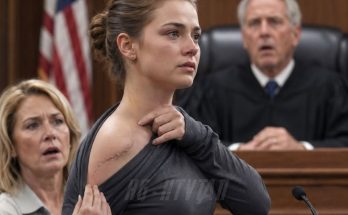
My Parents Refused To Care For My 2-Year-Old During My Emergency Heart Surgery, Saying, “You’re Always So Dramatic.” They Had Concert Tickets With My Brother. So I Hired A Nanny From The Cardiac Unit And Cut The $3,800/Month I’d Paid Toward Their Rent For 8 Years. Then The ER Doctor Said…
### Part 1
The ambulance smelled like plastic, antiseptic, and cold air from the oxygen line. A monitor beside me kept firing sharp electronic beeps while a paramedic pressed two fingers to my wrist. My chest felt as if someone had tightened a steel band around it. I was thirty-two, a nurse, a widow, and the mother of a two-year-old girl named Lily. I understood enough of the words around me to know I was in real trouble.
“Your rhythm is unstable,” the paramedic said. “The ER team is preparing for an emergency cardiac procedure.”
I called my mother. “Mom, I need you to pick up Lily. I’m in an ambulance. They’re taking me in for emergency heart surgery.” There was a pause. Then she sighed. “Claire, you always assume the worst. It’s probably anxiety.”
I stared at the ceiling while the ambulance swayed through traffic. “Mom, I’m not guessing. The paramedic is standing right here. Please. I just need you or Dad to take Lily for tonight.”
“We can’t,” she said. “We have plans with your brother.”
“What plans?”
“A concert. We’ve had the tickets for months.”
For a second, I thought I had misunderstood her. “Mom, I could die.”
Her voice hardened. “Stop being dramatic. Call one of your friends.” Then she hung up.
I kept the phone against my ear after the line went dead. The paramedic looked away, giving me the small dignity of pretending he had not heard. That hurt almost more than the pain in my chest.
At the ER, everything became bright lights, wheels, clipped voices, sticky pads against my skin. Lily sat in a nurse’s arms clutching the yellow rabbit she slept with every night. “Mama?” she whimpered.
I had no one. My husband, Daniel, had died in a construction accident three years earlier. My closest friend was working two hours away. My parents lived twenty minutes from the hospital. Twenty minutes. And they had chosen a concert.
I remembered a licensed childcare service I had once researched for emergency backup. With shaking hands, I called. A woman named Evelyn arrived less than half an hour later. She was in her fifties, wore practical gray shoes, and had the calm voice of someone who never wasted words.
She crouched in front of Lily. “Your mama has to let the doctors fix something. You and I are going home to read stories until she calls us.”
Lily studied her, then slowly offered her rabbit. Evelyn smiled. “He can come too.”
When they wheeled me toward the procedure room, Lily called, “Love you, Mama!” I raised one hand because I was too afraid to trust my voice.
Just before the doors closed, I opened my banking app. There was one automatic monthly transfer I had been making for years. It went toward a life my parents believed someone else was providing for them. I stared at the amount.
$3,800.
For the first time, I wondered why I was still paying it.
Then the anesthesiologist placed a mask over my face. The room blurred. My last clear thought was not about death. It was about my mother sitting under arena lights while strangers were fighting to keep her daughter alive.
When I woke up, my throat was raw and my body felt heavy. A nurse named Marisol leaned over me. “You’re in the cardiac ICU. The procedure was more complicated than expected, but you made it through.”
“Lily?”
“She’s safe. Your caregiver has been sending updates.”
She showed me a photo of Lily asleep in my bed, one small hand wrapped around that yellow rabbit. I cried. Not because I was afraid anymore. Because the person who had shown up for my daughter was a woman I had met that night.
My parents still had not called.
But on the third morning, my phone finally rang.
Dad.
For one foolish second, I thought he was calling to ask whether I had survived.
He wasn’t.
He wanted to know why their rent had not been paid.
### Part 2
I was still attached to a heart monitor when Dad said, “The landlord says this month’s payment didn’t go through. Can you call your brother? He handles that stuff.”
I looked at the IV taped to my hand. “Dad, I’m in the hospital.”
“Oh. Still?”
That one word told me everything.
“Yes. Still. I had emergency heart surgery.”
A pause. “Right. Well, you sound okay now. Could you just call Ryan?”
I hung up. For the first time in my life, I hung up on my father and did not call back to apologize.
The truth was uglier than he knew. Eight years earlier, when I was twenty-four and newly employed as a nurse, my parents had called in a panic. They were months behind on rent. Dad had missed work. Mom’s hours had been cut. They asked for four thousand dollars. I had six thousand saved. I gave them four.
Then came another emergency. And another. Eventually, I contacted their landlord myself and arranged automatic payments for rent and utilities. Every month, $3,800 left my checking account.
My parents never knew.
Somewhere along the way, Ryan let them believe the money came from an investment account he had created. Ryan had always been the golden child. He was charming, athletic, and permanently “one big opportunity” away from success. My parents bought him a condo, helped with cars, and financed business ideas that disappeared as quickly as they appeared.
I worked three jobs through nursing school. When I graduated with honors, my parents left the ceremony early because Ryan had an “important investor dinner.” It was drinks with friends. When Lily was born, my mother called her “a complication” because I was raising her alone.
Still, I kept paying.
$3,800 a month for ninety-six months.
$364,800.
I told myself love did not need applause. But lying in that hospital bed, I finally understood the difference between generosity and self-erasure.
On day six, Evelyn drove Lily and me home. My daughter climbed carefully onto the couch beside me and pressed her cheek against my shoulder. “Heart all better?”
“Getting better.”
She kissed my shirt over the place she imagined my heart lived.
That night, after she fell asleep, I sat at the kitchen table. The house was quiet except for the refrigerator hum and the click of the ceiling fan. I opened my banking account. The automatic payment was still there.
My finger hovered over “Cancel.”
Eight years of habit can feel like a chain even when nobody is holding the other end.
Then I remembered my mother saying, “Stop being dramatic.”
Click.
Canceled.
I wrote my parents an email. I told them the payments had always come from me, not Ryan. I gave them the exact total. I reminded them that I had called from an ambulance asking them to protect their granddaughter while doctors tried to save my life. I told them Dad’s first call afterward had been about rent.
Then I wrote one final sentence.
“Going forward, you are responsible for your own life, just as you have always expected me to be responsible for mine.”
I sent it.
The first call arrived four minutes later. Then another. Then another. By dinner, I had seventeen missed calls. By breakfast, forty-three.
The messages changed tone every few minutes.
“You’re confused.”
“You’re lying.”
“How dare you?”
“Family helps family.”
“Please, we just need a few months.”
I answered none of them.
Two days later, Ryan called.
“Claire, what the hell did you do? Mom is losing her mind.”
I looked across the room at Lily stacking blocks. “I stopped paying for people who couldn’t give me one evening when I might die.”
He went silent.
Then he said something I had waited eight years to hear.
“You mean… that money really came from you?”
### Part 3
“Yes,” I said. “Every month.”
Ryan breathed into the phone. “I thought Dad knew.”
“He didn’t. Mom didn’t. They thought you were taking care of them.”
Another silence. Then he said, “I never exactly told them I was.”
I laughed once, without humor. “You never corrected them either.”
“They were proud of me, Claire.”
“And that mattered more than the truth?”
“You don’t understand what it’s like always disappointing them.”
I stared at the scar near my wrist from the procedure. “No, Ryan. I understand exactly what it’s like disappointing them. The difference is I actually did something for them while you took the credit.”
His voice dropped. “I didn’t know you were having surgery.”
“Of course you didn’t. None of you know anything about my life.”
I ended the call.
After that, the whole family joined in. My aunt called me cruel. An uncle said parents deserved respect “no matter what.” My mother left voicemails that swung from rage to tears.
One message began, “After everything we did for you—”
I deleted it before she finished.
Two weeks later, I returned to the hospital for my first serious follow-up. I still was not cleared to drive, so Evelyn took Lily and me. The cardiology waiting room smelled like coffee and disinfectant. Daylight poured through tall windows, turning the polished floor almost white.
Lily was coloring a purple dog when my mother walked in.
Dad followed.
My stomach tightened.
Mom saw me and came straight over. “We need to talk.”
“Not here.”
“We have been calling you for two weeks.”
“I noticed.”
“Do you know what you’ve put us through?”
That almost made me laugh. Instead I said, “Do you know what you put me through?”
Dad crossed his arms. “We didn’t know it was that serious.”
“I told Mom I was in an ambulance.”
“You exaggerate,” he said. “You always have.”
Lily slid off her chair and pressed against my leg. That ended whatever softness I had left.
“My heart stopped during the procedure,” I said quietly. “Doctors had to restart it. Your granddaughter could have lost her mother.”
Mom’s face flickered, but only for a second. “We were going to come the next day.”
“You didn’t.”
“We got busy.”
“You found time to call dozens of times when the rent stopped.”
A nurse opened the door. “Claire Bennett?”
I stood.
Mom grabbed my arm. “Please. We’re going to lose the apartment.”
I looked at her hand until she released me. “You had eight years to prepare for the possibility that your adult daughter would stop paying your bills.”
“What are we supposed to do?”
“Ask Ryan. He’s the successful one.”
Her face changed because we both knew how hollow that sentence was.
Inside the exam room, my cardiologist reviewed my rhythm strips and told me the procedure had worked. “You’re healing well,” he said. “Keep your stress low.”
“I’m trying.”
When the appointment ended, Evelyn and Lily were waiting in the hallway. So was a man in navy scrubs.
Dr. Aaron Hale, the ER physician who had treated me the night I came in.
He smiled when he saw me. “Claire. You look a lot better standing up.”
“Thanks to you.”
He glanced toward the waiting room where my parents still sat. Then his expression changed.
“I couldn’t help overhearing part of that conversation.”
I felt embarrassed. “I’m sorry.”
“Don’t be.”
He hesitated.
“There’s something I think you need to know about the night you came in.”
The hallway suddenly felt colder.
“What?”
“When you were taken back, I asked for your emergency contact. You gave us your parents’ number.”
I nodded slowly.
Dr. Hale looked directly at me.
“I called your mother myself.”
My hands went numb.
“And, Claire… she understood exactly how serious your condition was.”
### Part 4
For a moment, all I could hear was the squeak of a supply cart somewhere down the hall.
I stared at Dr. Hale. “What did you tell her?”
“That you were in a life-threatening rhythm and going into an emergency cardiac procedure. I told her your condition was unstable and that immediate family should come.”
My mouth went dry. “What did she say?”
His jaw tightened.
“She asked whether you were likely to die within the next couple of hours.”
Evelyn’s hand settled gently on my shoulder.
Dr. Hale continued. “I told her I couldn’t predict that, but that there was a genuine risk you might not survive. She said that if you were still alive later, she would consider coming the next day because they had plans that night.”
I sat down on the hallway bench.
For weeks, my parents had repeated the same defense.
We didn’t know.
You always exaggerate.
We thought it was anxiety.
But an ER doctor had called them. He had removed every possible excuse.
“They knew,” I whispered.
“Yes.”
“Did you document it?”
“I documented the call in your chart.”
That detail hit harder than everything else. There was no argument left. No family version. No memory softened by guilt.
There was a medical record.
Dr. Hale looked toward the waiting room. “I’m telling you because I heard them say they weren’t aware of the severity. That isn’t true.”
My eyes burned, but I did not cry.
Something inside me had gone strangely still.
For years, I had believed my parents failed me because they did not understand me. Now I knew they understood enough.
They simply chose themselves.
“Thank you,” I said.
As we walked toward the exit, Dad stood when he saw me. I shook my head once. He stopped.
Then Dr. Hale walked past us and into the waiting room.
I heard my father say, “Doctor, what exactly are you claiming?”
I did not turn around.
Outside, the afternoon sun was so bright I had to squint. Evelyn unlocked the car.
“Where to?”
“Home.”
That evening my mother called from a new number. I answered.
She started immediately. “That doctor had no right to humiliate us.”
I almost admired how quickly she made herself the victim.
“He told the truth.”
“He made it sound worse than it was.”
“He told you I might die.”
“We didn’t think—”
“No. You did think. You thought about whether I would die before the concert ended.”
Silence.
For the first time, she had nothing ready.
Then she whispered, “Claire, we made a mistake.”
“A mistake is forgetting a birthday. You made a decision.”
“Please don’t do this to us.”
“I’m not doing anything to you. I’m just no longer rescuing you from the consequences of your own choices.”
I ended the call.
Over the next six weeks, the calls became less frequent. Then they stopped. Through relatives, I heard my parents lost the apartment and moved into Ryan’s one-bedroom condo. The arrangement apparently turned miserable within days. Ryan had no investment account, no hidden income, no magical safety net.
Without my money, the entire family story collapsed.
I expected to feel triumphant.
I didn’t.
I felt free.
I returned to work part-time. My coworkers brought meals, covered shifts, and argued over who got to babysit Lily. On her third birthday, nearly forty people crowded into the break room after my shift, singing off-key while she tried to blow out three candles at once.
Evelyn became part of our routine too. She came twice a week, taught Lily to roll cookie dough, and kept a spare pair of tiny rain boots by her back door.
Three months after my surgery, a letter arrived.
My mother’s handwriting was on the envelope.
I left it unopened on the counter all day.
That night, after Lily was asleep, I finally unfolded it.
The first line read:
“I know now that you never asked us for much because we taught you asking was pointless.”
I stopped breathing for a second.
Not from my heart.
From the shock of finally seeing the truth in her words.
### Part 5
I read my mother’s letter twice.
She did not ask for money. She did not blame Ryan, the concert, or me. She admitted that when Dr. Hale called, she had been annoyed that my emergency was interrupting their plans. She wrote that she had always told herself I was strong, capable, and independent, as if those words excused never showing up.
Then came the sentence that stayed with me.
“You were easy to neglect because you learned how to survive being neglected.”
I folded the letter.
For years, I had imagined an apology like that would heal something.
It didn’t.
An apology can be sincere and still arrive after the relationship it might have saved is already dead.
I put the letter in a drawer.
I did not write back.
Six months after surgery, I ran into Ryan at a grocery store. He stood by the frozen foods looking older than I remembered.
“Claire?”
“Hi, Ryan.”
“How’s Lily?”
“Great.”
“I’m glad.”
We stood there while a freezer motor hummed between us.
Then he said, “Living with Mom and Dad has been… educational.”
“I bet.”
He gave a tired laugh. “I see it now. How they treated you. How I let them treat you.”
I said nothing.
“I’m sorry for taking credit for the money. I’m sorry I liked being the son they bragged about more than I cared about what it cost you.”
That was probably the most honest thing my brother had ever said to me.
“Okay.”
He looked surprised. “That’s it?”
“That’s what I have.”
He swallowed. “Could we maybe get coffee sometime? Try to rebuild something?”
I thought about Lily in the car with Evelyn, waiting for me so we could go to the park. I thought about eight years of payments. I thought about my mother asking whether I would die before her plans were over.
Then I shook my head.
“No.”
His face fell.
“I’m not angry anymore, Ryan. But not being angry isn’t the same as wanting someone back in my life.”
He looked down. “I understand.”
“I hope you do. And I hope you become better because of it.”
I walked away.
That was the last private conversation we had.
My parents eventually found subsidized housing. Mom sent two more letters. I left the last one sealed.
I never resumed the payments.
I never invited them back into Lily’s life.
Not because I wanted revenge.
Because children notice who shows up.
I did not want my daughter growing up learning that love meant chasing people who treated her as optional.
My heart healed. Literally. My rhythm remained normal, and a year later I was cleared to work full-time again. I moved into a slightly bigger house with a backyard for Lily.
Evelyn came over every Sunday. My coworkers became the people listed on school pickup forms, birthday invitations, and emergency contacts.
One Sunday, Lily stood on a kitchen chair beside Evelyn, both of them dusted with flour while they attempted cookies shaped like stars.
“Grandma Evie,” Lily said, “this one looks like a potato.”
Evelyn laughed so hard she had to wipe her eyes.
I stood in the doorway and felt something warm spread through my chest.
Not grief.
Not resentment.
Gratitude.
I had spent most of my life believing family was a fixed assignment.
It isn’t.
Family is the person who answers at midnight. The person who sits beside your child when you cannot. The doctor who tells you the truth when a lie would be easier. The friends who show up carrying food and spare house keys.
My parents taught me one final lesson without meaning to.
Being a good daughter did not require sacrificing myself forever.
Forgiveness was not a debt I owed.
And love that arrives only after the money stops is not love I need.
That evening, Lily took my hand as we walked home from the park.
“Your heart okay, Mama?”
I squeezed her fingers.
“Better than ever.”
And for the first time, I knew exactly why.
THE END!
Disclaimer: Our stories are inspired by real-life events but are carefully rewritten for entertainment. Any resemblance to actual people or situations is purely coincidental.