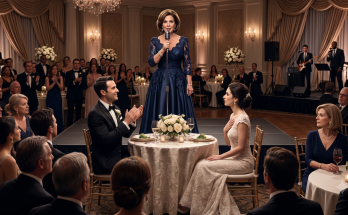
“She’s Too Stupid To Understand Business,” My Sister Told Everyone At Easter Brunch. “That’s Why She Works Retail.” My Parents Laughed. I Checked My Watch. My Executive Assistant Walked Over: “Ms. Bennett, The Morgan Stanley Merger Is Finalized. Your Tech Company Is Now Valued At $4.2 Billion.” The Table Went Silent. “Retail?” I Smiled. “I Own The Chain Where I ‘Work.’ All 847 Stores Across North America. And This Resort? I Bought It Last Month…”
### Part 1
The first thing I noticed when I stepped onto the oceanfront terrace at Seaside Springs Resort was the lilies.
Hundreds of them.
White, pink, and pale yellow blooms overflowed from crystal vases on every table, their clean floral scent mixing with salt from the Pacific and the buttery smell of pastries drifting from the outdoor kitchen. Beyond the railing, waves broke against a strip of private beach so exclusive that guests paid more for a night there than I had once earned in several months.
My sister, Vanessa Whitmore, had chosen the resort for our family’s Easter brunch.
Of course she had.
Nothing impressed my family more than an address with a waiting list.
“Audrey.”
My mother, Elaine, rose just enough to air-kiss my cheek.
“You’re twenty minutes late.”
“Sorry. I closed the store last night. We were short-staffed.”
Vanessa looked over the rim of her mimosa.
She was wearing a cream designer dress, oversized sunglasses, and a diamond bracelet that caught the morning sunlight every time she moved her wrist.
“Still working retail at thirty-four?” she asked.
Then she gave a soft laugh.
“That’s almost adorable.”
Her husband, Daniel Price, smiled into his coffee.
Daniel had recently been promoted at a major investment firm in Manhattan, and judging by the way my father had mentioned it three times before I even sat down, his new title had become a family achievement.
I took the empty seat at the far end of the table.
My usual seat.
My father, Robert, barely glanced up from the financial news on his phone.
“How’s the shop?” Mom asked.
“Busy. Spring inventory came in.”
“That’s nice.”
Two words.
Then she turned toward Vanessa with genuine interest.
“Tell Audrey about Daniel’s promotion.”
Vanessa practically glowed.
“Senior vice president. Youngest in his division.”
Uncle Charles raised his champagne glass.
“That’s something worth celebrating.”
Everyone joined the toast.
Dad leaned back proudly.
“Forty-three and already an SVP. That’s ambition.”
He didn’t have to look at me for me to understand the comparison.
Vanessa had married the right man, lived in the right Connecticut neighborhood, sent her children to the right private schools, and served on charity boards populated by people whose names appeared on hospital wings.
I supposedly spent my days folding sweaters.
Aunt Rebecca tilted her head toward me.
“Are you still at that clothing chain?”
“StyleHub.”
“Right. The mall place.”
She said mall the way someone might say landfill.
“At least you must get discounts.”
“I do.”
Vanessa leaned forward.
“Actually, Daniel’s firm is hiring administrative assistants. I could probably get you an interview.”
“I’m okay.”
“You shouldn’t dismiss it so quickly.”
“I’m not dismissing it.”
She smiled as if explaining adulthood to a teenager.
“Retail is fine when you’re nineteen, Audrey. But you’re thirty-four. At some point you need a real career. Something with advancement. Connections.”
A waiter placed eggs, asparagus, and hollandaise in front of me.
I looked down to hide my smile.
The sauce had exactly the amount of lemon I’d requested two weeks earlier.
Mom tasted hers.
“Oh, this is wonderful.”
“I’m glad.”
Vanessa glanced at me.
“Why would you care?”
“No reason.”
She shrugged and returned to talking about Daniel.
For the next half hour, they discussed venture capital, commercial property, acquisitions, and Dad’s attempt to buy one of his competitors.
Whenever I spoke, the conversation somehow drifted away from me within seconds.
It had been like that for years.
Not dramatically.
That would have been easier.
Nobody screamed that I was unwanted.
They simply trained me to understand that Vanessa’s achievements were news and mine were background noise.
Then my nineteen-year-old cousin, Ethan, looked across the table.
“Aunt Audrey, what do you actually do at StyleHub?”
Vanessa laughed before I could answer.
“She works the floor.”
Ethan frowned.
“Like management?”
“Management?”
Vanessa laughed harder.
“Audrey doesn’t understand business. She helps customers find sizes and straightens shelves.”
Dad chuckled.
“Now, Vanessa.”
“What? It’s true.”
Mom covered a smile with her napkin.
“Not everyone is built for complicated careers.”
I slowly set down my fork.
Vanessa continued.
“We’re discussing actual markets, and Audrey probably doesn’t understand half the terminology.”
“Actually,” I said, “I have an MBA.”
Silence.
Vanessa blinked.
“From where?”
“Stanford.”
Even Dad finally lowered his phone.
Mom’s smile disappeared.
“You went to Stanford?”
“Yes.”
“When?”
“I graduated seven years ago.”
Dad stared at me as if I had claimed to secretly own the moon.
“We would have known.”
I looked around the table.
“No. You would’ve known if you’d ever listened.”
Vanessa’s face tightened.
Then she gave another dismissive laugh.
“Well, if that’s even true, you’re still folding sweaters.”
I glanced at my watch.
11:47.
Right on schedule.
Then I reached for my phone and sent one short message.
Come to the terrace.
For the first time that morning, I stopped wondering whether my family would ever see me clearly.
Because in less than ten minutes, they wouldn’t have a choice.
### Part 2
Vanessa recovered quickly.
She always did.
Any fact that threatened her position in the family became something to minimize, explain away, or laugh at until everyone else followed her lead.
“Stanford,” she repeated, swirling her mimosa. “Sure.”
“I can show you the degree if you’re that interested.”
“No, no. I’m just surprised.”
“Why?”
She shrugged.
“Because people who graduate from Stanford usually do something with it.”
Daniel coughed into his napkin.
Dad nodded as though she had made an insightful point.
“Education only takes you so far. Translating knowledge into success is the hard part.”
I looked toward the fountain near the entrance to the terrace.
No sign of Rachel yet.
Good.
I didn’t want her arriving too early.
Mom asked Vanessa about her summer plans, and within seconds the conversation returned to a house in the Hamptons, a charity gala, and which private school Vanessa’s son might attend next year.
I ate slowly.
The ocean wind lifted the edge of the tablecloth.
Silverware clicked against porcelain.
Somewhere behind us, a pianist played a soft arrangement of an old jazz standard.
Everything looked peaceful.
My pulse wasn’t.
Ethan kept glancing at me.
Finally, he leaned closer.
“Did you really go to Stanford?”
“Yes.”
“What did you study?”
“Operations, technology, and finance.”
His eyebrows rose.
“That’s actually what I’m interested in.”
Vanessa overheard.
“Ethan, don’t let Audrey give you career advice.”
“Why not?”
“Because you want to build a career, don’t you?”
The table laughed again.
This time I didn’t even pretend to smile.
A shadow fell across my plate.
“Excuse me.”
I knew the voice before I looked up.
Rachel Cole stood beside the table in a charcoal suit, a slim leather portfolio beneath one arm and a tablet in the other hand. Her dark hair was pinned neatly back, and her expression carried the composed urgency I had seen in hundreds of meetings.
She had worked with me for five years.
During that time, I’d watched her negotiate contracts worth more than my father’s entire company without once raising her voice.
“I’m looking for Ms. Whitmore.”
Vanessa straightened automatically.
“That’s me.”
Rachel walked past her.
She stopped beside my chair.
“Ms. Whitmore, the merger documents cleared this morning.”
My father’s phone lowered another inch.
Rachel continued.
“The final valuation came in at $4.2 billion. Legal has confirmed all signatures, and the integration team is ready to begin Monday.”
Nobody moved.
Even the pianist seemed suddenly too loud.
Rachel placed the tablet beside me.
“Our banking partners are also requesting a call regarding the acquisition of the supply-chain division. Would you prefer Tuesday morning?”
“Tuesday afternoon.”
“I’ll schedule it.”
Vanessa’s fork slipped from her fingers and struck the plate with a sharp metallic crack.
Mom stared at Rachel.
“I’m sorry. Who are you?”
Rachel turned politely.
“Rachel Cole. Ms. Whitmore’s executive assistant and chief operating officer of Whitmore Technologies.”
Dad’s face emptied of color.
“What technologies?”
I picked up the tablet.
A financial news alert covered the screen.
Whitmore Technologies Completes Transformational Retail Merger.
I turned it facedown.
“Mine.”
Daniel’s head snapped toward me.
“What?”
“Whitmore Technologies.”
He stared.
Then his expression changed.
Recognition.
Actual recognition.
“Wait.”
He grabbed his phone and began typing.
“No.”
Vanessa looked from him to me.
“What?”
Daniel’s face had gone pale.
“Audrey Whitmore?”
“Yes.”
“You’re that Whitmore?”
I leaned back.
“Apparently.”
My uncle Charles frowned.
“That Whitmore?”
Daniel looked almost offended by the question.
“Whitmore Technologies controls one of the largest retail analytics platforms in North America.”
Nobody laughed now.
Rachel opened her portfolio.
“The finalized transaction adds 847 physical locations to our existing platform. Current projected annual revenue after integration is just over $3.7 billion.”
Mom stared at me.
“Eight hundred and forty-seven locations?”
“Yes.”
Vanessa shook her head.
“No. That’s impossible.”
“It isn’t.”
“But you work at StyleHub.”
“I do.”
“StyleHub has hundreds of stores.”
“Eight hundred and forty-seven.”
She froze.
I let the silence stretch.
Then I said it.
“I own the chain.”
Aunt Rebecca’s champagne glass stopped halfway to her mouth.
Dad leaned forward.
“You own StyleHub?”
“I acquired it six years ago when the company was close to bankruptcy.”
“With what money?”
“Investors. Financing. Equity. The normal ways acquisitions happen.”
Vanessa stared at me as though I had changed shape in front of her.
“You’re saying you bought an entire retail chain?”
“And rebuilt it.”
Rachel slid another screen toward me.
“Our stock opened at one hundred twenty-seven dollars this morning.”
Dad’s eyes narrowed.
“Your company is public?”
“It has been for three years.”
“But you never told us.”
Something inside me went very still.
“I did.”
“No, you didn’t.”
“I invited all of you to the IPO celebration.”
Mom looked confused.
“I thought that was some office event.”
“The invitation said I was CEO.”
Nobody answered.
Rachel glanced toward the resort building.
“One more thing. The general manager wants to confirm your one o’clock renovation meeting.”
Dad frowned.
“What renovation meeting?”
Rachel looked at me.
“The summer redevelopment of the resort.”
Vanessa laughed nervously.
“Why would Audrey be discussing renovations with this resort?”
I folded my napkin beside my plate.
“Because I bought Seaside Springs last month.”
Another silence.
This one was different.
Not disbelief.
Fear.
Vanessa slowly looked around at the oceanfront terrace she had spent all morning bragging about.
“You own this place?”
“Yes.”
“How much did you pay?”
“Eighty-nine million.”
Dad whispered, “Eighty-nine million dollars?”
“Cash.”
The sea breeze moved through the lilies between us.
For years, my family had treated silence as proof that I had nothing worth saying.
Now every person at that table was waiting for my next sentence.
And I hadn’t even told them the part that mattered most.
### Part 3
My mother was the first one to recover.
She pressed a hand against her chest.
“Why didn’t you tell us?”
There it was.
Not congratulations.
Not how did you build it?
Not what was it like?
Why didn’t you tell us?
As if the last decade were somehow my failure of communication.
“I tried.”
Dad shook his head.
“Audrey, no. Something this important—we would remember.”
“Would you?”
His expression hardened.
I unlocked my phone and opened an old folder I hadn’t looked at in years.
“I called when Stanford accepted me.”
Mom looked uncomfortable.
“I don’t remember that.”
“I do. Dad answered. I told him I had received the acceptance letter.”
Dad frowned.
“What did I say?”
“You said, ‘That’s good, sweetheart.’ Then you spent twenty minutes telling me about Vanessa’s engagement party.”
Vanessa shifted in her chair.
I opened another message.
“When I launched Whitmore Technologies, I sent invitations to all of you.”
Mom looked down.
“When was this?”
“September ninth, ten years ago.”
Aunt Rebecca stared at her plate.
Uncle Charles suddenly became fascinated by the ocean.
“I still have your reply, Mom.”
Her head lifted.
I read it.
“‘Sounds nice, honey. We already promised Vanessa we’d help her choose nursery furniture that weekend. Maybe next time.’”
Vanessa’s face tightened.
“There could’ve been another opening.”
“A company only launches once.”
No one spoke.
I kept going.
“When I raised our first major funding round, I mentioned it at Thanksgiving.”
Dad’s expression changed slightly.
“You said you were working with investors.”
“Yes.”
“I assumed you worked for them.”
“Because you didn’t ask.”
Rachel remained beside me, silent now.
She knew this wasn’t business.
This was archaeology.
I was digging through ten years of conversations and placing the bones on the table.
Daniel finally spoke.
“Our firm has been trying to meet with Whitmore Technologies for almost two years.”
“I know.”
His eyebrows rose.
“You know?”
“Seventeen meeting requests.”
He swallowed.
“We’ve never been able to get past your executive office.”
“That was intentional.”
Vanessa stared at me.
“Why?”
I turned toward Daniel.
“Do you remember your firm’s first presentation?”
He looked uncertain.
“No.”
“I do.”
His face changed before I even finished.
“The pitch deck referred to me as ‘Mr. Whitmore’ thirteen times. Your analyst never bothered to check who founded the company.”
Daniel rubbed the back of his neck.
“I didn’t prepare that presentation.”
“No. But it told me enough about how much research your team had done.”
Dad gave a low whistle.
“You rejected a major investment firm because of a pronoun?”
“No. I rejected them because they didn’t understand the company they wanted access to.”
He looked away.
That difference mattered.
For the first time all morning, Ethan smiled.
Not because anyone had been humiliated.
Because he understood.
Vanessa caught it.
“You think this is funny?”
“No.”
“Then stop smiling.”
Ethan sat back.
I looked at him.
“You don’t have to stop.”
Vanessa’s jaw tightened.
Then she turned to me.
“Fine. You’re successful. Extremely successful. Congratulations. But you have to admit this whole thing is bizarre.”
“What is?”
“Working inside your own stores pretending to be an employee.”
“I’m not pretending.”
“You fold clothes.”
“Sometimes.”
“Why?”
“Because executives who stop understanding customers eventually make expensive mistakes.”
Dad leaned forward now.
Interest had replaced embarrassment.
That transformation bothered me more than I expected.
Ten minutes earlier, retail work had been evidence that I was stupid.
Now that he knew the balance sheet behind it, suddenly my methods deserved examination.
I explained anyway.
“I spent six hours at a Westchester store last Tuesday because we were testing a new checkout system. Three problems appeared during real customer traffic that never showed up in simulations.”
Dad nodded slowly.
“Smart.”
The compliment felt hollow.
Vanessa whispered, “You really do work the floor?”
“Yes.”
“Why not send someone else?”
“Because sometimes I want to see the problem myself.”
Rachel’s phone vibrated.
She glanced down.
“Excuse me, Audrey. The business press wants confirmation regarding your ownership percentage after the merger.”
“Thirty-four percent remains unchanged.”
Mom’s eyes widened.
“Thirty-four percent of $4.2 billion?”
Aunt Rebecca actually whispered the calculation under her breath.
I saved her the trouble.
“My personal net worth moves with the stock price, but this morning it’s approximately $1.4 billion.”
Mom stared.
Vanessa looked sick.
Nearby diners had started noticing us.
A man two tables over subtly lifted his phone.
Another woman was whispering to her husband.
I hated that part.
This wasn’t supposed to become theater for strangers.
But Vanessa had already made it theater when she called me stupid loud enough for half the terrace to hear.
She looked at me with wet eyes.
“I called you stupid.”
“Yes.”
“I said you didn’t understand business.”
“Yes.”
“And you just sat there.”
“What would arguing have changed?”
Her mouth opened.
Nothing came out.
Then Mom reached toward me.
“Audrey, we’re proud of you.”
I looked at her hand resting halfway across the white tablecloth.
“No.”
Her fingers stopped.
“What?”
“You are impressed by me.”
Her face fell.
“That’s not the same thing as being proud of me.”
Dad sighed.
“Don’t make this harder than it needs to be.”
And with that single sentence, I realized they still didn’t understand.
Not yet.
### Part 4
“Harder than it needs to be?”
I repeated my father’s words softly.
Dad immediately recognized his mistake.
“That’s not what I meant.”
“It’s exactly what you meant.”
I could feel years of restraint gathering behind my ribs, but I didn’t raise my voice.
I didn’t need to.
“You want this morning to become a funny family story. Audrey secretly became successful. We were all surprised. We apologize. Everyone hugs. Then next Easter we’re laughing about it.”
Mom blinked rapidly.
“What’s wrong with that?”
“Everything.”
Vanessa wiped at her cheek.
“I’m trying to apologize.”
“No. You’re reacting.”
Her hand dropped.
I continued.
“If I’d told you this morning that I made forty thousand dollars a year folding sweaters, would you be crying because you regretted humiliating me?”
Nobody answered.
“Would you have apologized?”
Silence.
“Would Dad have suddenly called my work smart?”
Dad looked away.
“Would Mom have said she was proud?”
Mom’s face crumpled.
I hated seeing it.
But pity had kept me quiet for too long.
“The problem isn’t that you underestimated my net worth. The problem is that you decided my value depended on it.”
Vanessa whispered, “That’s not fair.”
“Isn’t it?”
“You’ve always been distant.”
I almost laughed.
There it was.
The redirection.
“You want to talk about distance?”
“Yes. You didn’t tell us who you were dating. You didn’t tell us about your apartment. You stopped coming home for random weekends.”
“After years of learning that anything I shared would be compared to you.”
“That’s not my fault.”
“Not all of it.”
That stopped her.
I looked at my parents.
“You built the scoreboard. Vanessa just learned how to win on it.”
Mom stared down at the table.
Dad’s jaw tightened.
Ethan said nothing, but I saw him listening carefully.
I remembered being seventeen and bringing home an academic award.
Vanessa had announced the same evening that she’d been chosen for a student leadership committee.
My certificate ended up underneath a pile of mail.
Her photo was framed.
Little things.
Hundreds of them.
Each harmless alone.
Together, they had taught me exactly where I stood.
Rachel cleared her throat.
“Audrey, I hate to interrupt.”
“Please.”
“There’s an issue with today’s reservation.”
Vanessa looked irritated.
“What now?”
Rachel glanced at the tablet.
“The family booking includes four suites, this private terrace, champagne service, and the spa package scheduled this afternoon.”
Daniel nodded.
“Yes.”
“The outstanding total is sixty-seven thousand dollars.”
Mom almost dropped her glass.
“Sixty-seven thousand?”
Daniel stared at Rachel.
“For one night?”
Rachel remained professional.
“Seaside Springs is an ultra-luxury property. The suites booked for your party are among our highest category.”
Vanessa looked at Daniel.
“You said you checked the rate.”
“I did. I thought the estimate included—”
“It doesn’t matter,” Dad interrupted.
He looked toward me.
And I saw the thought before he spoke.
Of course I did.
“So because Audrey owns the resort…”
He let the sentence trail off.
I almost admired how quickly entitlement could adapt.
Ten minutes earlier, I wasn’t capable of understanding markets.
Now I was apparently the family discount program.
Rachel looked at me.
“Would you like us to process the card on file?”
Daniel’s face tightened.
I knew he could pay it.
He simply hadn’t expected to.
I also knew my resort manager didn’t deserve a billing dispute attached to my family’s holiday.
“Charge it to my ownership account.”
Mom exhaled in relief.
“Oh, Audrey. Thank you.”
“I’m not doing it for you.”
Her relief vanished.
“I’m doing it so my staff doesn’t have to spend Easter afternoon negotiating charges with my relatives.”
Dad frowned.
“That seems unnecessarily cold.”
“No. Cold would’ve been letting Vanessa find out what the word ‘exclusive’ costs.”
Vanessa flushed.
I looked around the table.
“This is the last free stay.”
Mom’s eyebrows rose.
“What?”
“If you stay at Seaside Springs again, you pay the published rate.”
Dad stared at me.
“You’re serious?”
“Completely.”
“If you shop at StyleHub, you pay retail. If one of my companies works with one of yours, it goes through normal procurement and compliance. No introductions because we’re related. No preferential contracts. No quiet favors.”
Daniel shifted.
“Nobody asked for any of that.”
“Not yet.”
His eyes dropped.
That told me enough.
Mom reached for my hand again.
This time I moved mine.
“Audrey.”
“I’m setting boundaries.”
“You’re punishing us.”
“No. You’re experiencing a relationship where access to me isn’t automatic.”
The words seemed to frighten her more than anything about the money.
Vanessa stared at me.
“So you’re cutting us off?”
“I’m telling you that being my family doesn’t entitle you to my companies, my properties, my staff, my money, or my reputation.”
I paused.
“And after today, I’m not convinced it entitles you to much of my personal life either.”
Dad’s face changed.
That finally landed.
He had spent decades believing I would always be the daughter at the edge of the table.
Now he was beginning to understand that I could leave the table entirely.
### Part 5
The dessert arrived while no one was speaking.
Chocolate mousse shaped like small Easter eggs, raspberry glaze, thin sugar decorations that cracked under a spoon.
Mom stared at hers without touching it.
I took one bite.
The pastry chef had adjusted the cocoa percentage exactly as we’d discussed.
Perfect.
That tiny detail grounded me.
Something real.
Something I had built a relationship with through attention rather than blood.
Vanessa spoke first.
“I’m sorry.”
I looked at her.
She wasn’t performing now.
Mascara had collected faintly beneath one eye.
“I mean it.”
“For which part?”
Her mouth tightened.
“For calling you stupid. For mocking your job. For… all of it.”
“You’ve been doing it for years.”
“I know.”
“Do you?”
She nodded.
“I think I do now.”
“No. You understand that you were wrong about my career. I’m not sure you understand that you would’ve been wrong even if your assumptions were accurate.”
She looked down.
“I was jealous.”
That surprised me.
“Of what?”
“You.”
I almost laughed.
“Vanessa, you’ve spent twenty years making sure everyone knows you’re better than me.”
“Exactly.”
She rubbed her thumb against the stem of her glass.
“You never competed.”
I said nothing.
“You never seemed desperate for Mom and Dad’s approval. I was.”
Her voice trembled.
“I needed them to think I was the successful one. The impressive one. The daughter who did everything correctly.”
“That doesn’t explain humiliating me.”
“No.”
She looked at me.
“It explains why. It doesn’t excuse it.”
For once, she had said something I couldn’t immediately reject.
But understanding was not forgiveness.
“I hope you figure out why you needed me beneath you.”
She nodded.
“So do I.”
Ethan leaned forward carefully.
“Can I ask something that’s not about all this?”
I smiled despite myself.
“Please.”
“How did you actually start the company?”
That was the first question anyone at the table had asked me all day that wasn’t about valuation.
I turned toward him.
“I worked retail during college.”
Vanessa looked up.
“For real?”
“For real. The pay wasn’t great, but the education was.”
I told Ethan about inventory rooms packed with products customers weren’t buying while popular sizes stayed empty for weeks.
About managers relying on outdated spreadsheets.
About watching stores discount the wrong merchandise because nobody had good demand forecasting.
“I kept thinking someone should fix it.”
“So you wrote software?”
“Not immediately. First I learned enough coding to realize I wasn’t good enough to build the whole thing alone.”
He grinned.
“That’s reassuring.”
“I met two engineers in business school. Maya Franklin and Owen Grant. I kept bothering them with the same problem until they finally agreed it was interesting.”
“How much money did you have?”
“Not much.”
Dad looked interested again.
I ignored him.
“We worked from my apartment. The first version failed constantly. One customer almost canceled because our forecast crashed before their holiday ordering deadline.”
“What did you do?”
“Stayed awake thirty-six hours fixing it.”
Ethan’s eyes widened.
“And then?”
“We got the client back.”
I smiled.
“Eventually.”
He laughed.
That conversation felt more meaningful than every congratulation I’d received that morning.
Because he wanted the work.
Not the headline.
“Would you ever mentor someone?” he asked.
Vanessa glanced at him.
I answered before she could.
“Sometimes.”
His shoulders straightened.
“I’m studying computer science. I have a couple ideas. They’re probably terrible.”
“Most first ideas are.”
He laughed again.
“Could I show you?”
“Call my office next week.”
“Seriously?”
“Seriously.”
His whole face lit up.
“Thank you.”
Mom watched us.
“I didn’t even know you liked mentoring.”
I turned toward her.
“You never asked.”
She flinched.
Rachel checked the time.
“Audrey, you have fifteen minutes before the renovation meeting.”
I stood.
Dad stood immediately.
“Wait.”
I looked at him.
“Can we talk privately before you go?”
“About what?”
He glanced toward Daniel, then toward the others.
“Business.”
Of course.
Not ten minutes after learning what I had built, my father wanted something.
I could almost hear the gears turning behind his eyes.
“Five minutes.”
We stepped toward the terrace railing.
The Pacific was bright enough to hurt my eyes.
Dad lowered his voice.
“I’m acquiring Northcrest Manufacturing.”
“I heard.”
“We’re running into financing resistance.”
I waited.
He cleared his throat.
“Your name on the deal could change the conversation.”
There it was.
Not I failed you.
Not tell me about the last ten years.
A business request.
I looked at him for several seconds.
Then I realized my answer wasn’t difficult at all.
“No.”
His expression hardened.
“You haven’t even heard the proposal.”
“I’ve heard enough.”
And the look on his face told me exactly what our relationship had always been worth to him.
He just hadn’t known until today that I was the one holding something he wanted.
### Part 6
Dad followed me into the lobby.
“Audrey, don’t be childish.”
I stopped so suddenly that Rachel, walking several steps ahead, turned around.
The lobby smelled faintly of cedar and citrus polish. Sunlight poured through the floor-to-ceiling windows, reflecting off pale stone floors.
“Childish?”
Dad lowered his voice.
“I’m asking you to look at a legitimate business opportunity.”
“Then submit it to my investment office.”
“You know that’s not what I mean.”
“I know exactly what you mean.”
He glanced toward Rachel.
“This is family.”
I almost smiled.
“Interesting timing.”
His jaw clenched.
“You’ve made your point.”
“No, Dad. You still think this morning is about me proving something.”
“Wasn’t it?”
The question stunned me.
He actually believed that.
“Do you think I built a billion-dollar company to win an argument at Easter brunch?”
“Of course not.”
“Then stop treating my life like it exists in relation to your approval.”
He ran a hand through his gray hair.
For the first time, he looked older than I remembered.
“I made mistakes.”
“Yes.”
“But family should help family.”
“Did family help me?”
He looked irritated.
“You never asked for money.”
“I’m not talking about money.”
That silenced him.
“When I invited you to my launch, I didn’t need a check. I wanted my father in the room.”
His eyes shifted.
“When I called from Stanford, I wasn’t asking you to pay tuition. I wanted you to sound excited.”
I swallowed.
“When my first office opened, I wanted Mom to ask for the address.”
Dad said nothing.
“I stopped asking because the answer was always the same. Vanessa had something more important.”
He looked back toward the terrace.
“I didn’t realize.”
“That’s the problem.”
My phone vibrated.
A message from the resort manager.
Ready when you are.
I stepped away.
Dad reached for my arm but stopped before touching me.
“Will you at least review the acquisition?”
“No.”
“Why?”
“Because if the opportunity is strong, you don’t need your daughter’s reputation attached to it.”
His face tightened.
“And if it isn’t strong, I won’t lend you my reputation to rescue it.”
Then I walked away.
Rachel fell into step beside me.
“You okay?”
“Ask me after the board call.”
She smiled slightly.
“Fair.”
We reached the general manager’s office, where Thomas Mercer had spread architectural plans across a large conference table.
He shook my hand.
“Congratulations on the merger.”
“Thank you.”
“Quite a morning.”
I studied his expression.
“Did the terrace staff hear everything?”
He gave me the careful look of a man trying not to admit that gossip traveled faster than room service.
“Parts.”
I sighed.
“Wonderful.”
We turned to the renovation.
That was where I felt normal again.
Not powerful.
Not vindicated.
Useful.
Thomas showed me proposals for converting an underused ballroom into a technology-focused conference center.
I asked about wiring, soundproofing, power redundancy, guest traffic, and whether smart-room features could be installed without making the property feel like an airport lounge.
For forty minutes, nobody mentioned Vanessa.
Nobody mentioned Dad.
Nobody cared whether I had been impressive at seventeen.
There was simply a problem and a series of decisions.
That was the world I trusted.
Afterward, Rachel and I walked toward the private villa reserved for me.
My phone buzzed continuously.
Mom.
Dad.
Vanessa.
Daniel.
Even Aunt Rebecca.
I ignored them.
Then one message caught my attention.
Ethan.
Thank you for talking to me like my questions mattered.
I stared at the screen.
That sentence hurt more than Vanessa’s insult.
Because I knew exactly how he felt.
I replied.
They do matter. Call Rachel Monday.
A second message arrived.
Vanessa.
Please have coffee with me this week. I want to hear the real story. No Mom. No Dad. Just us.
I typed three words.
I’ll think about it.
Then deleted them.
Instead, I wrote:
Not yet.
I put the phone away.
There had been a time when Vanessa asking about my life would’ve meant everything.
But an invitation arriving only after she discovered my net worth felt different.
Late interest was not the same as love.
And I was done confusing the two.
### Part 7
The real test came three days later.
Not at brunch.
Not with tears.
With an email.
Rachel walked into my office Wednesday morning carrying coffee and a printed message.
“You’ll want to see this.”
I took it.
The sender was Daniel.
Subject: Strategic Partnership Opportunity.
I read the first paragraph.
His firm wanted an introductory meeting regarding future financing, data partnerships, and access to our post-merger retail network.
At the bottom was one sentence that made my stomach turn.
Given our family relationship, I’m confident we can find a mutually beneficial path forward.
I handed the paper back.
“Decline.”
Rachel nodded.
“Standard language?”
“Standard language.”
“No mention of Easter?”
“No.”
She smiled.
“Professional boundaries.”
“Exactly.”
An hour later Daniel called my personal phone.
I let it ring.
Then Vanessa called.
I answered that one.
“Hi.”
“Did you reject Daniel’s meeting?”
“His office received the same answer any other firm would.”
“Audrey, he’s embarrassed.”
“So?”
“You know people at his firm are asking why his own sister-in-law won’t take a meeting.”
“Then perhaps he can explain that business decisions aren’t made through family pressure.”
Vanessa went quiet.
“You’re still angry.”
“Yes.”
“How long are you going to punish everyone?”
That sentence erased whatever softness I had begun to feel toward her.
“I’m not punishing you.”
“It feels like punishment.”
“Because you’re used to access without responsibility.”
“That’s unfair.”
“No, Vanessa. Unfair was calling me stupid when you thought I had no power. This is simply me refusing to reward you now that you know I do.”
She exhaled sharply.
“I apologized.”
“And?”
“What else do you want?”
There it was.
The transaction.
Apology given.
Forgiveness expected.
Account settled.
“I don’t want anything.”
“Then what are we supposed to do?”
“Change.”
“How?”
“Start by not expecting me to erase ten years because you cried at brunch.”
Her voice went cold.
“You’ve become incredibly arrogant.”
I closed my eyes.
That hurt less than it should have.
Maybe because I had been waiting for it.
“Goodbye, Vanessa.”
“Audrey—”
I ended the call.
For several minutes I sat silently, looking through the glass wall of my office at the city below.
Then Rachel knocked gently.
“You all right?”
“Actually?”
I thought about it.
“Yes.”
Because something had finally become clear.
Vanessa’s apology had been sincere in the moment.
But sincerity wasn’t the same as change.
She felt guilty when the imbalance embarrassed her.
She didn’t yet understand why the imbalance had existed.
That afternoon, Mom called.
I almost didn’t answer.
“Audrey?”
“Hi, Mom.”
“Your sister is upset.”
“I know.”
“I think you should give her some grace.”
I laughed once.
Not because it was funny.
“Did you ever tell her to give me grace?”
Silence.
“When she mocked my clothes?”
Nothing.
“When she joked about my job?”
Nothing.
“When she told relatives I was the family disappointment?”
Mom inhaled.
“I didn’t know she said that.”
“You were standing beside her at Christmas.”
“I thought she was teasing.”
“It was always teasing when it happened to me.”
Mom started crying.
“I don’t know how to fix this.”
“You might not.”
“You’re my daughter.”
“Yes.”
“I love you.”
I looked at the framed photograph on my desk.
Not of family.
Of the original Whitmore Technologies team, six people squeezed into an apartment living room beneath a crooked whiteboard.
Maya holding pizza.
Owen asleep in a chair.
Me laughing so hard my eyes were closed.
That had been family too.
People who saw me before there was anything impressive to see.
“I love you too, Mom.”
She exhaled in relief.
Then I added,
“But love doesn’t automatically create closeness.”
Her breathing changed.
“I’m not ready to have the relationship you want.”
“For how long?”
“I don’t know.”
She began to protest.
I stopped her.
“And I’m not going to set a deadline just to make you comfortable.”
When I hung up, I expected guilt.
Instead, I felt peaceful.
For years I had thought boundaries were walls built out of anger.
I was beginning to understand they could also be doors.
And I was finally the one deciding who got a key.
### Part 8
Six months later, Seaside Springs reopened its conference wing.
The old ballroom had become something entirely different.
Natural wood, ocean-facing glass, hidden displays, smart-room systems, adaptive lighting, private meeting suites, and enough technology beneath the surfaces to run an international board meeting without making guests feel like they were trapped inside a computer.
The first major event hosted there was our annual leadership retreat.
On the opening evening, I stood alone on the terrace after sunset.
The lilies from Easter were long gone.
In their place were low arrangements of white orchids and eucalyptus.
The air smelled like salt and rosemary from the kitchen below.
Rachel joined me with two glasses of sparkling water.
“Six months.”
“Feels longer.”
“Your family behaving?”
I smiled.
“Define behaving.”
Dad submitted his Northcrest acquisition through our formal investment process.
The team rejected it.
He didn’t call me afterward.
That was progress.
Daniel’s firm eventually received a meeting with one of our finance directors after submitting a competitive proposal through normal channels.
They didn’t win the contract.
He never contacted me personally again.
Mom sent messages every Sunday.
At first they were full of guilt.
Then apologies.
Then ordinary things.
A picture of the garden.
A recipe she’d found.
A question about whether I’d read a book she liked.
I answered occasionally.
Not because everything was forgiven.
Because she had finally started talking to me without demanding anything.
Vanessa was different.
After our phone argument, we barely spoke.
She sent two long apologies.
I read them.
I didn’t answer.
At Thanksgiving, she asked if I would come home.
I declined.
She said she understood.
Maybe she did.
Maybe someday we’d sit across from each other without all the old competition between us.
But I wasn’t planning my life around that possibility.
Some relationships survived betrayal.
Others simply became smaller.
I had stopped believing every broken thing deserved restoration.
Ethan, on the other hand, had become a regular presence in my office.
His first business idea was terrible.
I told him so.
He laughed and came back with another.
That one was less terrible.
By summer, he had built a prototype for software that helped small restaurants predict food demand and reduce waste.
I introduced him to no investors.
I gave him no money.
Instead, I made him interview restaurant owners, kitchen managers, suppliers, and servers.
One afternoon he complained.
“When do I get to build the cool part?”
I smiled.
“This is the cool part.”
He groaned.
I heard myself in him.
Not because he was destined to become rich.
Because he was curious.
That mattered more.
Rachel nudged me back to the present.
“Your opening remarks are in ten minutes.”
“I know.”
“Ready?”
I looked through the glass doors.
Inside were hundreds of employees.
Engineers.
Store managers.
Designers.
Analysts.
Hospitality staff.
People from every layer of the businesses we had built and acquired.
No one cared whether I had impressed my parents.
They cared whether I made good decisions tomorrow.
That responsibility felt heavier than revenge.
And infinitely more satisfying.
My phone vibrated.
A message from Vanessa.
Hope the opening goes well. I saw the photos. The place looks beautiful. No need to reply.
I read it twice.
Then locked my phone.
Rachel noticed.
“Everything okay?”
“Yes.”
“You want to answer?”
“No.”
And I didn’t feel guilty.
That surprised me most.
For years, I’d imagined the perfect ending would be my family finally recognizing me.
I thought I wanted Mom to brag about me.
Dad to admit he’d underestimated me.
Vanessa to look at me with envy.
But once I had all of that, it felt strangely empty.
Their approval had arrived after the evidence became impossible to ignore.
The people who truly mattered had believed in me when the office was an apartment, the servers crashed twice a week, and our biggest client could’ve destroyed us by canceling a contract.
Maya believed.
Owen believed.
Rachel believed.
I learned to believe.
That was enough.
I stepped inside.
As I reached the conference room entrance, Ethan came running toward me.
“Aunt Audrey!”
“What happened?”
He held out his laptop.
“Restaurant number twelve agreed to test the prototype.”
His face was glowing.
I laughed.
“Congratulations.”
“I know it’s small.”
“No.”
I looked him directly in the eye.
“It’s the first customer who trusts you enough to test what you built. That’s never small.”
He smiled.
“Thanks.”
Then he rushed away.
Rachel watched him go.
“You realize you’re creating another entrepreneur.”
“Hopefully one with fewer family issues.”
She laughed.
My phone vibrated again.
This time it was Mom.
Proud of you today. Not because of the money. Because I finally understand how hard you worked. I wish I’d understood sooner.
I stared at the message.
Six months earlier, those words might have broken me.
Now they simply felt… kind.
Late, but kind.
I typed:
Thank you.
Nothing more.
No invitation.
No promise that everything would return to normal.
Because it wouldn’t.
And that was okay.
I had forgiven enough internally to stop carrying anger everywhere I went.
But forgiveness did not mean restoring access.
It did not mean forgetting.
It did not mean pretending that years of humiliation disappeared because the people responsible finally regretted them.
My parents remained part of my life at a distance.
Vanessa became someone I wished well from farther away.
I never gave her the old relationship back.
Maybe she eventually became a better person.
I genuinely hoped she did.
But she would have to become that person for herself, not as a ticket back into my life.
The conference room doors opened.
Applause rolled toward me.
I walked inside.
Six months earlier, I had sat at the worst seat at my family’s Easter table while Vanessa laughed because she thought I folded sweaters for a living.
The strange thing was, she hadn’t been entirely wrong.
I still folded sweaters sometimes.
I still visited stores without warning, straightened racks, carried boxes, talked to cashiers, and helped customers find sizes.
The difference was that I no longer felt the slightest need to explain why that work mattered.
A job didn’t become respectable because a billionaire performed it.
It had always been respectable.
That was the lesson my family learned too late.
And the lesson I would never forget.
I stepped onto the stage and looked through the glass wall at the dark Pacific beyond it.
For most of my life, I’d wanted a seat at my family’s table.
Now I understood something far more important.
I could build my own.
THE END!