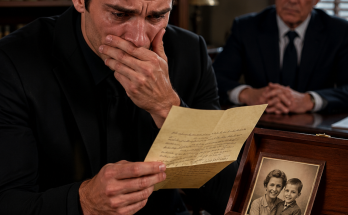
The Day Of My Interview, Mom Locked My Room. “Your Sister Is Traveling,” She Snapped. “You Are Babysitting.” I Begged For My Chance. Dad Mocked Me, “You Are A Servant, Not A Success.” My Sister Tossed Her Luggage Aside. I Climbed Out The Window And Disappeared Completely. Seven Years Later…
### Part 1
The first thing I remember is the sound of the brass lock turning on the other side of my bedroom door.
Not my mother yelling.
Not my sister’s three kids running through the hallway.
Not even my father laughing when I begged them to let me leave.
The lock.
Click.
A small sound, really. But at twenty-four years old, standing in a borrowed navy suit with a bus ticket in my purse and the most important interview of my life forty miles away, that sound felt like a judge’s gavel.
“Mom!”
I grabbed the knob and twisted it hard.
“Open the door.”
My mother, Elaine Parker, answered from the hallway.
“You need to calm down, Claire.”
“I have an interview.”
“You have responsibilities.”
Then my younger sister, Brooke, called from somewhere near the stairs.
“Tell her I already booked the car to the airport!”
A suitcase wheel bumped over the hardwood.
One of Brooke’s children started crying.
I pressed my forehead against the door.
“Brooke has three children. They are her responsibility.”
Silence.
Then my father chuckled.
That laugh stayed with me longer than anything else.
“You still don’t understand how this family works,” Graham Parker said.
Unfortunately, I understood perfectly.
We lived in Marietta, Georgia, in a red-brick house with white columns, trimmed hedges, and a circular driveway that made visitors assume we were wealthy enough to have no real problems.
My father owned Parker Logistics and Freight, a successful regional transportation company.
My mother managed the social side of our lives: charity dinners, country club events, church committees, holiday parties where everyone admired our family photographs.
And Brooke?
Brooke was the photograph.
I was the person taking it.
When Brooke wanted college tuition, Dad paid it.
When she wanted a new SUV, they called it a “safety necessity.”
When she had three children with a man who disappeared from the picture, my parents transformed her motherhood into something heroic.
She was “overwhelmed.”
She “deserved support.”
She “needed time for herself.”
That support was usually me.
By twenty-two, I worked full-time at Parker Logistics without a real title and without a paycheck. I managed dispatch changes, vendor problems, driver schedules, overdue accounts, fuel reports, and whatever else Dad dropped on my desk.
Then I came home and watched Brooke’s children.
I slept in what had originally been a storage room at the back of the second floor.
One narrow window.
One twin bed.
One metal desk.
I had once asked Dad to start paying me.
He looked genuinely offended.
“Family doesn’t invoice family.”
“I’m working forty hours a week.”
“You live under my roof.”
“I do most of your dispatch coordination.”
“And you should be grateful for the experience.”
That was the night something shifted inside me.
I stopped asking permission and started planning.
For almost a year, after everyone went to sleep, I studied business operations on a used laptop that overheated if I opened too many tabs. I learned spreadsheets, forecasting, procurement systems, project management, and everything I could find about corporate operations.
I applied everywhere.
Most companies never answered.
A few rejected me.
Then Apex Innovations Group invited me to Atlanta for a final interview for its management development program.
I read the email four times.
The salary was more money than I had ever imagined earning.
Health insurance.
Retirement benefits.
Paid training.
Most importantly, independence.
I hid fifteen dollars for bus fare inside an old paperback.
A friend from high school loaned me a suit.
On the morning of the interview, I was standing near the front door when Brooke arrived with two huge suitcases, three children, and a diaper bag.
She looked at my clothes.
“Why are you dressed like that?”
“I have an appointment.”
She dropped the diaper bag at my feet.
“Great. Watch the kids. I’m going to Miami.”
“No.”
Brooke blinked.
It may have been the first time I had ever said that word to her.
“What?”
“I said no.”
Within seconds, she was shouting.
Mom came downstairs.
Dad followed.
And somehow, my job interview became an act of betrayal against them.
“You knew Brooke needed help,” Mom snapped.
“No one told me anything.”
“Well, now you know.”
“I’m leaving.”
I picked up my purse.
Mom grabbed my arm, steered me backward, and before I understood what she was doing, shoved me into my bedroom.
Then came the click of that brass lock.
I pounded on the door until my palms hurt.
“Dad, please. This could change my life.”
His answer came through the wood.
“You’re not some corporate success story, Claire. Stop pretending. You’re useful here.”
Useful.
Not loved.
Not valued.
Useful.
Something inside me went completely quiet.
I looked at the little window beside my desk.
Then at the heavy wooden chair.
I pulled off my heels.
And for the first time in my life, I stopped thinking about what my family would do if I disobeyed them.
I started thinking about what would happen to me if I stayed.
I lifted the chair.
And swung.
The window shattered.
### Part 2
Cold February air rushed into the room.
For half a second, I just stood there staring at the broken window.
Then Brooke screamed from the hallway.
“What was that?”
I didn’t answer.
I wrapped a sweater around my forearm, pushed loose glass away from the frame, and climbed out.
The drop to the lawn wasn’t far, but I landed awkwardly and tore the knee of the borrowed suit.
Behind me, somebody unlocked the bedroom door.
“Claire!”
My mother’s voice followed me across the yard.
I kept going.
I walked three miles to the bus station with one ripped pant leg, damp hair, and a thin line of blood across my palm from a piece of glass I hadn’t noticed.
I expected Dad’s SUV to appear behind me.
It never did.
That hurt more than I wanted to admit.
At the station restroom, I cleaned my hand with brown paper towels and cold water. I used clear tape from the cashier’s counter to hold the torn hem of my pants together.
Then I boarded the bus to Atlanta.
By the time I reached Apex Innovations, the gray morning had turned into hard rain.
The headquarters looked impossible.
Thirty stories of blue glass.
A marble lobby.
People walking quickly with coffee cups and security badges.
For one terrifying moment, I almost turned around.
Everyone looked as if they belonged there.
I looked like I had escaped through a window.
Then I remembered Dad saying, “You’re useful here.”
I walked to reception.
“My name is Claire Parker. I’m here for the management program interview.”
The receptionist smiled.
“Of course. They’re expecting you.”
Those three words nearly made me cry.
They’re expecting you.
Not tolerating me.
Not using me.
Expecting me.
The interview lasted almost two hours.
A senior operations director named Martin Ellis asked what I would do if a distribution division was missing delivery targets while labor costs were increasing.
I knew exactly what I would do.
I had lived it.
I explained how I would separate scheduling failures from routing failures, review vendor reliability, identify overtime patterns, and compare them against dispatch changes.
Martin leaned forward.
“Where did you learn that?”
I hesitated.
“My family owns a freight company.”
“What was your position?”
That question caught me.
I technically had no position.
“My responsibilities were broad.”
He smiled.
“That usually means you were doing more than your title suggested.”
I almost laughed.
“You could say that.”
When I left, Martin shook my hand.
“You did very well today.”
I carried those words all the way back to my friend Rachel’s apartment.
Rachel had known me since eleventh grade. When I called her from the station, she didn’t ask whether my parents approved.
She said, “I have a couch.”
That night I slept under a scratchy blanket listening to traffic on Interstate 75 and felt freer than I ever had in my parents’ enormous house.
I never went back.
Dad called twice.
Mom called six times.
Brooke sent seventeen messages.
None asked whether I was safe.
Most asked when I was coming home.
Brooke’s final message said:
“You ruined my trip.”
I blocked her.
For eight days, I checked my email obsessively.
On the ninth morning, the message arrived.
Apex Innovations Group.
My hands shook as I opened it.
“Thank you for your interest…”
I knew immediately.
They had chosen another candidate.
I read the rejection three times.
Then I sat on Rachel’s kitchen floor and cried so hard my chest hurt.
I had escaped.
I had made the interview.
I had done everything right.
And it still wasn’t enough.
For months afterward, I assumed the reason was simple.
Someone else had been better.
I took a job waiting tables at a diner near Smyrna.
Morning shift.
Cheap black apron.
Coffee smell permanently trapped in my hair.
I rented a tiny room in a house with two other women and bought clothes from thrift stores.
It was exhausting.
It was also mine.
No one woke me up because Brooke wanted brunch.
No one handed me bookkeeping work at midnight.
No one told me my labor was the price of being loved.
About ten months later, I saw another Apex job posting.
Data operations assistant.
Entry level.
Nothing glamorous.
I almost closed the page.
Then I remembered Martin Ellis asking where I had learned to solve logistics problems.
I applied.
A week later, Apex called.
This time, they hired me.
On my first morning, I stood outside the same glass building wearing a twenty-dollar blazer I had bought secondhand.
My employee badge said:
CLAIRE PARKER
DATA OPERATIONS
I stared at it for a long time.
I thought that badge was the beginning of my revenge.
I was wrong.
It was the beginning of something much better.
### Part 3
I didn’t walk into Apex planning to become a CEO.
I planned to survive.
That was enough.
My first desk was in a windowless operations room on the seventh floor, surrounded by humming printers and gray cubicle walls.
I entered numbers into databases.
Updated vendor files.
Corrected shipping reports.
Built weekly spreadsheets nobody seemed to read.
The work was repetitive, but repetition had never scared me.
Being invisible was something I understood.
The difference was that Apex paid me for it.
My first direct deposit was $1,486.22.
I remember the exact number because I stared at it while sitting in my car and cried.
Not because it made me rich.
Because it proved my time belonged to me.
Six months later, I noticed one of our divisions was paying rush fees to the same group of suppliers almost every week.
I mentioned it to my supervisor.
He shrugged.
“It’s always been like that.”
Those five words irritated me.
I stayed late one evening and built a comparison report.
The problem wasn’t the suppliers.
It was Apex’s internal approval schedule. Purchase requests were sitting untouched until deadlines became emergencies.
I estimated what the delays were costing.
My supervisor finally looked interested.
He sent my report upstairs.
Two weeks later, the company changed the process.
Three months after that, I was promoted.
That became my pattern.
I found problems everyone else had learned to tolerate.
Then I fixed them.
I learned quickly that corporate success wasn’t about being the loudest person in the room. It was about understanding which problem actually mattered before everyone wasted energy solving the wrong one.
I moved from data operations to process improvement.
Then project management.
Then regional operations.
Every promotion came with a new office, a higher salary, and a quiet moment when I imagined my father’s face.
Eventually, I stopped imagining him.
That was when I knew I was truly getting better.
There were difficult years too.
A senior manager once presented one of my ideas as his own.
Old Claire would have stayed quiet.
New Claire walked into his boss’s office with dated drafts, meeting notes, and the original analysis.
I didn’t yell.
I didn’t cry.
I simply said, “I want the record corrected.”
It was.
I bought my first condo at twenty-seven.
Nothing extravagant.
Two bedrooms overlooking a small park.
The first night, I slept on a mattress on the floor because my furniture hadn’t arrived yet.
Rain tapped against the windows.
I kept waking up because the apartment was so quiet.
No children screaming down the hallway.
No mother calling my name from downstairs.
No footsteps outside my bedroom door.
I finally understood peace could feel unfamiliar when you had been raised in chaos.
I also went to therapy.
That mattered more than any promotion.
I learned that independence did not automatically erase conditioning.
For years, I apologized whenever anyone seemed disappointed in me.
I volunteered for extra work I didn’t need to do.
I felt guilty when I rested.
My therapist once asked me, “What do you think will happen if someone is unhappy with you?”
I answered without thinking.
“They’ll stop loving me.”
Then I heard myself.
That sentence explained most of my childhood.
By thirty, I was a vice president.
A year later, Apex acquired two companies and reorganized its leadership structure.
Our longtime CEO announced his retirement.
The board interviewed outside candidates.
They also interviewed me.
I almost laughed when they first suggested it.
Then Martin Ellis, the same man who had interviewed me years earlier, stopped me after a leadership meeting.
“You know why people trust you?” he asked.
“Because I’m charming?”
He smiled.
“No. Because you’ve done nearly every kind of work in this building. You don’t talk about employees as numbers because you remember being one.”
Three months later, the board voted.
At thirty-one years old, I became CEO of Apex Innovations Group.
My office occupied the top floor.
Floor-to-ceiling windows.
Atlanta spread beneath me in steel, glass, highways, and green patches of trees.
The company issued a press release.
Business magazines ran short profiles.
One headline called me “the operations outsider who rose from the data floor.”
My parents never contacted me.
Neither did Brooke.
I assumed they had finally decided pretending I didn’t exist was easier than admitting they had been wrong.
I was perfectly happy with that arrangement.
Then, on a rainy Tuesday morning, my executive recruiting director brought me the final candidate list for a senior project director position.
There were five names.
The third made the room disappear around me.
Brooke Parker.
My sister had applied to work for my company.
And according to her résumé, she had spent three years doing my old job.
### Part 4
I read Brooke’s résumé once.
Then again.
Then I printed it.
Not because I needed paper.
Because I wanted to feel something physical in my hands while my brain processed what I was seeing.
Senior Operations Manager.
Parker Logistics and Freight.
The dates covered almost exactly the years I had worked there unpaid.
Below the title were bullet points.
Reduced dispatch delays.
Reorganized driver scheduling.
Renegotiated vendor arrangements.
Improved invoice reconciliation.
Built weekly freight forecasting reports.
I recognized all of it.
Not generally.
Specifically.
They were my accomplishments.
One line claimed Brooke had reduced missed dispatch windows by redesigning the overnight scheduling process.
I remembered building that system at two in the morning with cold pizza beside my keyboard while Brooke was in Nashville for a bachelorette weekend.
Another claimed she had corrected a recurring billing error that saved the company thousands in lost revenue.
I had found that error.
Dad had told me, “Good catch.”
That was the closest thing to praise I received that entire year.
Brooke had stolen my work.
But anger wasn’t the emotion that bothered me most.
Confusion was.
Brooke hated Parker Logistics.
She complained that the office smelled like printer toner and diesel.
She rarely visited except to ask Dad for money.
So how had she convinced Apex’s recruiting team she was qualified enough to reach the final round?
I called our head of talent, Andrea Lawson.
“Can you come upstairs?”
Five minutes later, Andrea entered with a tablet under her arm.
I handed her the résumé.
“There’s a personal conflict here.”
She read the name.
Her eyes lifted.
“Your sister?”
“Yes.”
“Do you want us to remove her from consideration?”
“No. Not automatically.”
Andrea waited.
I appreciated that about her.
She didn’t fill silence when she knew I was thinking.
“I want the process handled exactly as it would be for anyone else,” I said. “But I also want the employment claims verified thoroughly.”
“Understood.”
“And I’m recusing myself from the hiring decision.”
Andrea nodded.
“That’s appropriate.”
I tapped the résumé.
“Something isn’t right.”
That afternoon, HR started verification.
I tried to return to my normal schedule.
Quarterly forecasts.
Acquisition integration.
A product launch meeting.
But Brooke’s résumé stayed in my mind.
Around five, Andrea called.
“Claire, we have an issue.”
I closed my laptop.
“What kind?”
“Her reference at Parker Logistics confirms everything.”
“Who was the reference?”
“Graham Parker.”
Of course.
My father.
Andrea continued.
“He says Brooke ran operations during the exact period listed.”
I looked through the window at rain streaking across Atlanta.
“Did he say anyone else held those responsibilities?”
“We asked.”
My stomach tightened.
“And?”
“He said no.”
For seven years, I had worked hard not to care what my family said about me.
That answer still hurt.
Not because I wanted Dad’s approval.
Because even after I disappeared, he was still rewriting history to make Brooke shine brighter.
Andrea lowered her voice.
“There’s something else.”
“What?”
“The recruiting system flagged an old candidate record connected to your name.”
I turned from the window.
“My name?”
“Yes. Same phone number history, same prior address. It looks like you interviewed here years ago.”
“I did.”
“I thought so.”
She hesitated.
“The old file has restricted notes.”
That got my attention.
“What kind of notes?”
“I can’t access them. They’re from a legacy compliance archive.”
“Who can?”
“Legal, HR compliance, and executive security.”
I felt an old memory stir.
The rejection email.
The timing.
How confident Martin had seemed after my interview.
For years, I had told myself I simply hadn’t been good enough.
Maybe that was still true.
Companies rejected strong candidates every day.
I didn’t want to turn old pain into a conspiracy just because Brooke had suddenly appeared.
“Don’t touch the restricted file yet,” I told Andrea. “Send the matter to compliance. I don’t want my position influencing the review.”
“Already doing it.”
That evening, I stayed later than usual.
Around seven-thirty, my general counsel, David Chen, knocked on my open door.
He was carrying a thin folder.
His expression told me the contents mattered.
“You asked compliance to review your old recruiting record?”
“Yes.”
David closed the door behind him.
“We found out why you weren’t hired the first time.”
I didn’t move.
He placed the folder on my desk.
“There was an external complaint.”
“About what?”
“About you.”
The office suddenly felt cold.
David sat across from me.
“Claire, before you read this, you should know we have no evidence Apex ever verified the allegations.”
I looked down at the folder.
Seven years of my life seemed to narrow into that single stack of paper.
Then I opened it.
And saw my mother’s words.
### Part 5
The complaint didn’t have my mother’s name on it.
It had been submitted anonymously.
But the language felt familiar before I reached the second paragraph.
The writer said I was “emotionally unstable.”
“Vindictive.”
“Unreliable around children.”
It claimed I had abandoned three small children during a family emergency after becoming violent inside my parents’ home.
There was also an accusation that I had taken money from the family business.
That part almost made me laugh.
I had worked there unpaid.
The only cash I had taken from that house was the fifteen dollars I had hidden for bus fare, and even that money came from tips I had earned helping at a church fundraiser.
I kept reading.
The anonymous writer warned Apex that hiring me could create “serious reputational and workplace concerns.”
At the bottom of the archived record was an old hiring note.
External risk allegation received after final interview. Candidate removed pending verification.
Another note followed two days later.
Position filled. Verification not pursued.
That was it.
My life had changed because someone had sent one email.
“Can we identify where it came from?” I asked.
David nodded toward the folder.
“Our security team already reviewed the preserved metadata.”
My mouth went dry.
“And?”
“The message originated from an internet connection associated with your parents’ residence at the time.”
I stared at him.
“That doesn’t prove which person sent it.”
“No.”
“Who had access to the network?”
“Presumably multiple family members.”
I appreciated that David didn’t dramatize it.
Facts first.
Always.
“Anything else?”
“There’s a device identifier in the archive.”
He slid another page toward me.
The device name was visible in an old technical log.
ELAINE-IPAD.
My mother’s first name.
I felt something inside me drop.
Not break.
That had already happened years earlier.
This felt more like an old door opening.
Behind it was every question I had stopped asking.
Why had the rejection come after such a strong interview?
Why had my parents been so certain I would eventually return?
Why had Mom left voicemails saying things like, “When this little adventure falls apart, your room will still be here”?
They hadn’t simply hoped I would fail.
My mother had tried to make sure I did.
I leaned back.
David watched me carefully.
“Do you want to stop?”
“No.”
“Claire, this is personal.”
“I know.”
“You don’t have to deal with it tonight.”
“Yes, I do.”
My voice was steadier than I felt.
“Can we establish whether the allegations were ever supported?”
“No. There are no police reports, no financial complaints, no employment records, nothing.”
“Good.”
I closed the folder.
Then I surprised myself.
I started laughing.
Not because anything was funny.
Because seven years earlier I had sat on Rachel’s kitchen floor believing I wasn’t good enough.
I had spent months thinking Apex had looked at me and seen someone ordinary.
In reality, I had made it all the way to the final stage while wearing a ripped borrowed suit after climbing out of a bedroom window.
Someone had needed to lie to stop me.
That realization didn’t make what my mother did less cruel.
But it changed the memory.
She hadn’t proved I was worthless.
She had been afraid I might discover I wasn’t.
David asked, “What do you want to do about your sister’s application?”
“Nothing outside policy.”
He nodded.
“She has a résumé integrity issue if the claims are false.”
“They are false.”
“We still document it properly.”
“Agreed.”
The next morning, HR arranged a formal employment verification call with Parker Logistics. Because Brooke had authorized reference checks as part of her application, the process was routine.
This time, legal supervised it.
I did not make the call.
I listened from another office with David and Andrea.
An HR compliance specialist named Melissa spoke to my father.
“Mr. Parker, we’re confirming employment history for Brooke Parker.”
Dad sounded older than I remembered.
But still confident.
“Absolutely.”
“Her résumé states she served as senior operations manager from 2018 through 2021.”
“That’s correct.”
My fingers tightened around the edge of the table.
Melissa asked several precise questions.
Staff oversight.
Dispatch responsibilities.
Vendor negotiations.
Financial reporting.
Dad confirmed every lie.
Then Melissa asked the question I didn’t know was coming.
“Was anyone else primarily responsible for those functions during that period?”
A pause.
My father answered.
“No. Brooke handled all of it.”
I closed my eyes.
There it was.
Not confusion.
Not a fuzzy memory.
A choice.
Andrea looked at me.
I said nothing.
When the call ended, David quietly closed his notebook.
“Now we have a documented discrepancy.”
“Enough to reject her?”
“Enough to investigate further.”
I looked at Brooke’s résumé on the table.
Seven years earlier, they had locked me in a room so she could go on vacation.
Now she had walked into my company carrying my experience like stolen luggage.
I thought I knew what would happen next.
I didn’t.
Because twenty minutes later, Andrea’s phone rang.
She answered, listened, then stared at me.
“Brooke wants to know whether the CEO will personally attend her final interview.”
### Part 6
My first instinct was to say no.
Not because I feared Brooke.
Because I didn’t trust what being in the same room with her might wake up in me.
I had spent years learning not to react the way my family expected.
They understood yelling.
Guilt.
Threats.
Tears.
What they never understood was calm.
Andrea watched me.
“You’re already recused from the decision.”
“I know.”
“You don’t have to attend.”
I looked at the Atlanta skyline.
Then at Brooke’s application.
“Would it create a compliance issue if I joined only after the interview panel completes its evaluation?”
“No. Not if the purpose is to address the discrepancy after the decision is documented.”
David agreed.
So we structured it carefully.
Three senior executives would conduct Brooke’s final interview.
I would not score her.
I would not influence their hiring recommendation.
If the panel independently found her unqualified or dishonest, HR would document it.
Only then would I enter.
For the next two days, I heard nothing.
I went to meetings.
Signed acquisition documents.
Reviewed quarterly forecasts.
At home, I cooked pasta, watered the basil plant on my balcony, and tried not to imagine Brooke walking through Apex’s lobby.
Thursday morning arrived bright and cold after two days of rain.
At 9:42, Andrea messaged me.
She’s here.
I didn’t answer.
At 10:15:
Interview underway.
At 10:51:
Panel completed scoring.
At 10:53:
Unanimous no-hire recommendation. Significant competency concerns.
Then:
Ready when you are.
I stood.
Straightened my charcoal jacket.
And walked down the executive hallway.
I had imagined seeing Brooke again many times over the years.
Sometimes she was older and apologetic.
Sometimes furious.
Sometimes we passed each other on a grocery aisle and said nothing.
Reality was stranger.
When I opened the boardroom door, Brooke was sitting at the far end of the table in a cream-colored suit, scrolling on her phone.
She looked polished.
Expensive handbag.
Perfect manicure.
Hair curled carefully over one shoulder.
For half a second, she was twenty-four again and I was standing near the front door with a diaper bag at my feet.
Then she looked up.
Her face changed so quickly it was almost frightening.
The smile disappeared.
Her phone lowered.
“Claire?”
Nobody spoke.
I walked to the head of the table.
Andrea was seated on my right.
David sat farther down with a legal pad.
Brooke looked from them to me.
“What are you doing here?”
I pulled out the chair.
“I work here.”
She laughed nervously.
“No. I mean up here.”
I sat.
“I’m the chief executive officer.”
Brooke’s mouth opened.
Nothing came out.
For a moment, I saw something I had never seen on my sister’s face.
Uncertainty.
Then she recovered.
Brooke had always recovered quickly.
“Oh my God.”
She smiled too brightly.
“You’re kidding.”
“No.”
“You’re the CEO?”
“Yes.”
Her eyes moved around the room, recalculating everything.
Then she actually laughed.
“Well… this is amazing.”
Amazing.
I almost admired the speed of the transformation.
She leaned toward me.
“Claire, this is perfect. I had no idea. Mom said you were doing some corporate thing, but she never said—”
“Brooke.”
She stopped.
“The interview panel has completed its evaluation.”
Her smile weakened.
“Okay.”
“They found serious inconsistencies between your claimed experience and your demonstrated knowledge.”
Her eyes hardened.
“I was nervous.”
Andrea slid a copy of the résumé forward.
“We also verified your employment history.”
Brooke glanced at the page.
“My father confirmed it.”
“He confirmed your statements,” Andrea said.
“Yes.”
“That does not make them accurate.”
The room went quiet.
Brooke looked at me.
There it was.
The old expression.
The one that said she expected me to rescue her from consequences.
“Claire.”
I folded my hands.
“Did you serve as senior operations manager at Parker Logistics?”
She stared at me.
“You know how family businesses are. Titles are informal.”
“Did you manage dispatch?”
“I helped.”
“Did you build the routing schedule described here?”
“Well, I was around.”
“Did you create the vendor reconciliation system?”
Her cheeks reddened.
“We all contributed.”
I had spent years imagining how satisfying it would feel to expose her.
Instead, I felt strangely detached.
Maybe revenge only feels powerful when you still want something from the person you’re punishing.
I wanted nothing from Brooke.
Not love.
Not respect.
Not even an apology.
She must have sensed that, because her tone changed.
“Can everyone leave?”
Andrea looked at me.
I said, “The formal interview is complete.”
David and the executives stepped out.
Brooke waited until the door shut.
Then she dropped the professional act.
“You’re seriously going to do this to me?”
I looked at her.
“Do what?”
“Humiliate me.”
“No, Brooke.”
I slid her résumé back across the table.
“You did that yourself.”
Her chair scraped sharply against the floor.
“You owe me.”
And just like that, I was back in Marietta.
### Part 7
“You owe me.”
Brooke said it as if the last seven years had never happened.
As if I were still the sister sleeping in the storage room.
As if she could drop her problems at my feet and walk away.
“For what?” I asked.
Her eyes widened.
“For being your family.”
I almost smiled.
“That’s interesting.”
“What is that supposed to mean?”
“It means I remember what being your family cost me.”
Brooke crossed her arms.
“So this is revenge.”
“No.”
“Then give me the job.”
“You’re not qualified.”
“You could train me.”
“That isn’t the position you applied for.”
“You own the company.”
“I run the company. There’s a difference.”
She stood abruptly.
“You always did this.”
“Did what?”
“Act like you were better than everyone because you handled Dad’s stupid spreadsheets.”
I stared at her.
“Those ‘stupid spreadsheets’ are the experience listed on your résumé.”
That silenced her.
Only briefly.
“Dad said it was fine.”
“I know.”
Her face changed.
“What does that mean?”
I opened the folder David had prepared.
Inside were two documents.
One was the verification summary from her application.
The other was the archived complaint from seven years earlier.
I placed the employment verification first.
“Dad confirmed you did work you never performed.”
Brooke glanced at it.
“So?”
“So that’s résumé fraud.”
“Oh, please. People exaggerate.”
“Not like this.”
“You’re being dramatic.”
I slid the second document forward.
“Then let’s talk about dramatic.”
Brooke read the first lines.
Her expression tightened.
I watched her eyes move down the page.
Then she stopped.
“What is this?”
“The reason my original Apex application was rejected.”
She looked up.
“I don’t know anything about that.”
“I didn’t say you did.”
That was true.
I had no evidence Brooke helped my mother send the complaint.
I wasn’t going to invent guilt because I disliked her.
But Brooke recognized something.
I saw it.
Her eyes shifted away.
“What?”
“Nothing.”
“Brooke.”
She pressed her lips together.
I waited.
Finally she muttered, “Mom said she handled it.”
The room seemed to narrow.
“Handled what?”
She realized too late what she had said.
“I don’t remember.”
“You remember enough.”
“It was seven years ago.”
“Tell me.”
Her voice rose.
“She said you needed to stop being selfish.”
I didn’t breathe.
“Did you know she contacted Apex?”
“I knew she called somebody. Or emailed. I don’t know.”
“Why?”
Brooke slammed her palm on the table.
“Because you left!”
“I left because you locked me in a room.”
“Mom locked you in the room.”
“So you could go to Miami.”
“I had already paid for the trip!”
For a second, neither of us spoke.
That sentence was so perfectly Brooke that it almost felt like satire.
I leaned back.
“Did you ever wonder where I slept that night?”
Her face flickered.
“What?”
“After I climbed through the window. Did you wonder if I had somewhere to go?”
“That’s not fair.”
“Did you?”
She looked away.
“No.”
There it was.
The closest thing to honesty I had gotten from her.
She didn’t care.
Maybe she had been spoiled.
Maybe my parents had created the monster.
Maybe she had spent her entire life being rewarded for believing my needs mattered less.
None of that changed the answer.
No.
She had not wondered whether I was safe.
Brooke sat down again.
Her anger collapsed into something more calculating.
“Claire, I’m in trouble.”
I said nothing.
“My house payments are behind.”
Still nothing.
“The kids need things. Everything is expensive. Dad’s company isn’t doing as well as it used to.”
“Then apply for work you’re qualified to do.”
“You don’t understand.”
“I understand perfectly.”
Her eyes filled with tears.
This time, I believed they were real.
That didn’t make them my responsibility.
She whispered, “Mom and Dad said you would help if I got in front of you.”
I felt a strange chill.
“They knew you were applying here?”
“Of course.”
“Did they know I was CEO?”
Brooke hesitated.
Then nodded.
I almost laughed.
So this wasn’t coincidence.
They had sent her.
Not because they missed me.
Not because seven years had taught them anything.
Because the family needed something again.
Brooke reached across the table.
“Claire, please.”
I moved my hand away before she could touch me.
Her expression hardened instantly.
“You really think you’re something now, don’t you?”
“No.”
I stood.
“I think I’m someone.”
There was a difference.
Brooke’s face twisted.
“You’ll always be the girl who took care of my kids.”
I walked toward the door.
“And you’ll always be their mother.”
I opened it.
“You should probably start acting like it.”
Security escorted Brooke from the executive floor after she refused Andrea’s request to leave.
She wasn’t dragged.
She wasn’t publicly humiliated.
She simply walked toward the elevator with a security manager beside her, furious because for once, nobody was changing the rules for her.
Before the elevator doors closed, she turned toward me.
“Mom is going to call you.”
I believed her.
Twenty-seven minutes later, my private phone rang from a number I hadn’t seen in seven years.
I knew it immediately.
My mother.
And for the first time in my life, I was actually curious what she thought she could possibly say.
### Part 8
I let Mom’s first call go to voicemail.
Then the second.
Then the third.
By noon, she had called nine times.
My father called twice.
Brooke sent emails to my corporate address until IT blocked them.
I could have ignored all of it.
Part of me wanted to.
But another part wanted one final thing.
Not an apology.
The truth.
So I asked David to arrange a call through his office.
Nothing private.
Nothing emotional.
A scheduled conversation with counsel present.
The next morning, I sat in a small conference room instead of my office.
David sat beside me.
At exactly ten, he connected the call.
Mom answered first.
“Claire?”
Her voice sounded almost the same.
That surprised me.
Seven years had changed my entire life, yet one word from her brought back the smell of furniture polish in our old hallway.
“Hello, Mom.”
She started crying immediately.
Not quietly.
Big, wounded sobs.
“Oh, Claire. Finally.”
I waited.
“We have missed you every day.”
That was the first lie.
Dad came on the line.
“This has gone far enough.”
That was more familiar.
“What has?” I asked.
“This punishment.”
“For whom?”
“For the family.”
I looked at David.
He wrote something on his notepad but didn’t react.
Dad continued.
“Your sister needs help.”
“Then help her.”
“We have.”
“Apparently not enough.”
“Claire.”
His voice sharpened.
“You have more money than you could possibly need.”
There it was.
Seven years vanished.
Different room.
Different furniture.
Same transaction.
My worth existed only in relation to what I could provide.
Mom interrupted.
“We made mistakes.”
I looked at the archived complaint on the table.
“Did you send an email to Apex after my interview seven years ago?”
Silence.
Dad said, “Why are we discussing ancient history?”
“Mom?”
She exhaled shakily.
“I was scared.”
“Of what?”
“Of losing you.”
I actually closed my eyes.
“You locked me in a bedroom.”
“We were desperate.”
“You told a company I was unstable.”
“You had broken a window!”
“Because you locked the door.”
“You were behaving irrationally.”
“I had a job interview.”
“You abandoned three children.”
“They weren’t my children.”
That sentence landed heavily.
Mom’s voice changed.
The crying stopped.
“You loved those kids.”
“I did.”
“Then how could you leave them?”
“Because loving children does not make me their unpaid parent.”
Dad cut in.
“We gave you a home.”
“And I gave your company years of unpaid labor.”
“You were learning.”
“Brooke’s résumé says she did the learning.”
Another silence.
Dad finally said, “You’re enjoying this.”
“No.”
And I meant it.
That seemed to bother him more.
I wasn’t enjoying their fear.
I wasn’t savoring their embarrassment.
I simply didn’t need them anymore.
Mom whispered, “I only contacted Apex because I thought if you got that job, you’d disappear.”
“I did disappear.”
“I know.”
“You just made my first year harder.”
She started crying again.
“I’m sorry.”
Seven years earlier, those words might have destroyed me.
Now they felt strangely small.
“Do you forgive me?” she asked.
I looked out through the conference-room window.
Employees crossed the floor outside carrying laptops and coffee.
People who knew me as Claire.
Not the maid.
Not the babysitter.
Not the daughter who existed to absorb everyone else’s inconvenience.
“No.”
Mom stopped crying.
“What?”
“I don’t forgive you.”
“You can’t mean that.”
“I do.”
“Claire, I’m your mother.”
“Yes.”
“That has to mean something.”
“It means you had a responsibility toward me too.”
Dad’s chair scraped on their end.
“This is unbelievable.”
“No,” I said. “What’s unbelievable is that you still think I owe you access to me.”
I explained the boundaries.
No calls.
No visits to my home.
No attempts to contact Apex employees.
No public accusations involving the company.
If they crossed professional lines, Apex’s legal department would respond.
For personal contact, I wanted none.
Mom whispered, “Forever?”
I thought carefully before answering.
“I don’t know what forever looks like.”
Then I told her the part I was certain about.
“But I know I’m done building my life around the possibility that someday you’ll become the parents I needed.”
I ended the call.
My hands shook afterward.
Healing apparently didn’t mean becoming made of stone.
It meant feeling the pain and still choosing the boundary.
David gathered his papers.
“You okay?”
I nodded.
Then stopped.
“No.”
He waited.
“But I will be.”
That evening, I went home early.
I took off my heels near the door.
Made grilled cheese.
Opened a bottle of sparkling water.
And sat on my balcony while Atlanta turned gold beneath the sunset.
For the first time, revenge felt irrelevant.
I had something better.
Distance.
But three weeks later, a message appeared in a private social media account I rarely used.
The sender’s name was Lily Parker.
Brooke’s oldest daughter.
My niece.
She was twelve years old now.
And her first sentence made my throat tighten.
“Aunt Claire, I don’t think Mom knows I found you.”
### Part 9
I stared at Lily’s message for almost five minutes before reading the rest.
“Aunt Claire, I don’t think Mom knows I found you. I saw your picture in an article at school. I remembered you even though everybody acts weird when I ask about you.”
My chest tightened.
The last time I had seen Lily, she was five.
She used to carry a stuffed rabbit everywhere and refuse sandwiches unless I cut them diagonally.
I kept reading.
“I know you probably don’t want to talk to Mom. I’m not asking you to. I just wanted you to know I remember you reading to me.”
That sentence almost broke me.
Not because I regretted leaving.
I didn’t.
But leaving a toxic family rarely means leaving only the people who hurt you.
Sometimes innocent relationships become collateral damage.
I had mailed books to Brooke’s children over the years through a third-party gift service.
No return address.
No message beyond happy birthday.
I never knew whether they received them.
Then Lily wrote:
“Were the books from you?”
I smiled.
I typed back carefully.
“Yes.”
The three dots appeared almost immediately.
“I knew it.”
Then:
“Mom said they were probably from somebody at church.”
I laughed out loud.
We exchanged a few simple messages.
School.
Books.
Her favorite subject was science.
She wanted to build robots.
I didn’t discuss Brooke.
I didn’t discuss my parents.
A twelve-year-old did not need to carry adult history.
Before we stopped chatting, I wrote:
“You never have to choose sides with me. You’re allowed to love your family and still become your own person.”
Lily replied with a heart.
I closed the app.
And cried.
Not the way I had cried on Rachel’s kitchen floor seven years earlier.
Those tears had come from hopelessness.
These came from realizing how far I had traveled.
A month later, the Apex board approved our largest acquisition in company history.
At the signing dinner, Martin Ellis sat beside me.
He had gray hair now and joked constantly about retirement.
Halfway through dessert, he said, “Can I tell you something strange?”
“Always.”
“I remember your first interview.”
I looked at him.
“The one where I showed up looking like I’d been attacked by a hedge?”
He laughed.
“I wasn’t going to say it.”
“You were thinking it.”
“I was.”
Then his expression became serious.
“You were my first choice.”
I stopped.
“What?”
“For the management program.”
The room around us seemed to fade slightly.
“I recommended you.”
I stared at him.
“You never knew?”
“No.”
He shook his head.
“That complaint came in and compliance froze the file. By the time anyone realized there wasn’t evidence behind it, another candidate had accepted.”
For years I had wondered whether I would have gotten that first job if Mom hadn’t interfered.
Now I knew.
I sat back.
“That’s strange to hear.”
“I’m sorry.”
“Don’t be.”
And I realized I meant that too.
If I had entered Apex through the management program at twenty-four, maybe my career would have moved faster.
Maybe I would have earned more money sooner.
Maybe I would have avoided the diner, the rented room, the exhaustion.
But those months taught me something no executive training program could have given me.
I learned I could survive without my family.
That lesson changed everything.
I never reconciled with my parents.
People sometimes dislike that part when they hear my story.
They expect success to make you generous enough to reopen every door.
They want the mother to cry.
The father to admit he was wrong.
The sister to apologize.
Then everyone hugs at Thanksgiving.
That isn’t my ending.
My parents made choices.
So did Brooke.
And adulthood taught me that forgiveness is not the entrance fee to peace.
I don’t spend my days hating them.
I don’t wake up imagining revenge.
I simply no longer give them a seat at my table.
Brooke never worked for Apex.
Her application was formally rejected for misrepresenting material experience.
From what I later heard, she eventually took an entry-level administrative job at another company.
Maybe starting honestly at the bottom will teach her what being responsible actually feels like.
Maybe it won’t.
That is no longer my problem.
Parker Logistics struggled for a few years but survived.
Dad had to sell the oversized Marietta house and move somewhere smaller.
Mom stopped appearing at several social events she once treated like royal obligations.
Again, none of that brought me joy.
Their decline was not my success.
My success was mine.
I built a company culture where junior employees could challenge broken processes without being mocked.
We created paid internships for young adults who lacked family connections.
I established a scholarship for students who worked while supporting relatives.
I never attached my parents’ names to it.
I named it the Open Door Fund.
Because once, somebody locked one in front of me.
Years after I climbed through that window, I bought a house outside Atlanta.
Not enormous.
But beautiful.
A wide kitchen.
Tall windows.
A small garden.
And every bedroom door could be unlocked from both sides.
The first morning I woke there, sunlight spread across the hardwood floor.
I made coffee and stood barefoot in the kitchen listening to birds outside.
No shouting.
No demands.
No suitcase hitting the floor.
My phone buzzed.
A message from Lily.
She had been accepted into a summer engineering program.
She wrote:
“Someday I’m going to have an office as cool as yours.”
I replied:
“Make yours cooler.”
Then I put the phone down and looked around the home I had chosen, paid for, and filled only with people who treated love as something freely given instead of something owed.
My parents once believed locking one door could decide my future.
They were wrong.
That morning in Marietta, I thought I was escaping through a broken window.
I understand it differently now.
I was walking into my own life.
THE END!