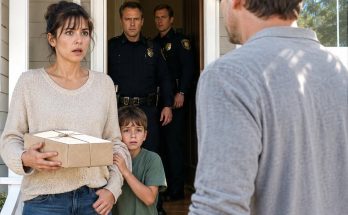
My mom passed away and left me nothing. My stepdad got the house and kicked me out. His son laughed at me, saying. “She never loved you or saw you as as real family.”
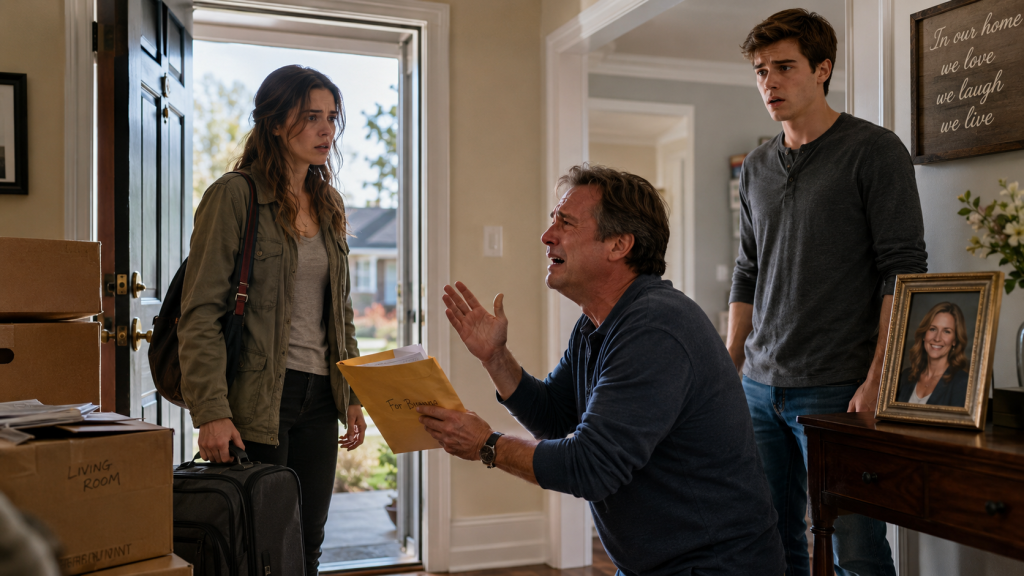
My mom passed away and left me nothing. My stepdad got the house and kicked me out. His son laughed at me, saying. “She never loved you or saw you as as real family.” I didn’t argue. I packed my things and left quietly, mostly because I didn’t have the energy to fight anymore. A week later, my stepdad called me crying and said, ” Please come here fast.” I thought something me thing terrible had happened and went I right away. When I got there, I froze when he…

PART 1
My mother died on a Tuesday morning while rain tapped softly against the hospital window, and by Friday, I had already learned how quickly grief could turn a home into a courtroom. She had been sick for almost a year, but some foolish part of me had still believed she would recover. Mothers are supposed to feel permanent when you are their child, even when you are thirty-two years old and sitting beside a hospital bed watching the machines grow quieter. Her name was Diane. She had raised me mostly alone until I was eleven, when she married my stepfather, Robert. Robert already had a son named Kyle, who was three years older than me. For twenty years, we had called ourselves a family, though some days the word fit more comfortably than others. After Mom’s funeral, Robert asked me and Kyle to meet at the attorney’s office for the reading of her will. I sat there holding one of Mom’s old handkerchiefs in my fist, expecting nothing dramatic. I didn’t care about money. I wanted her back. The attorney adjusted his glasses and began reading. Mom’s savings went to Robert. Her car went to Robert. The house—the house she had purchased before marrying him—went to Robert too. There were a few smaller gifts to charities and friends. Then the attorney closed the folder. I waited. “That’s it?” I asked. He looked uncomfortable. “That is the complete will currently on file.” “There’s nothing for me?” “I’m sorry.” I stared at the wooden table because looking at Robert felt impossible. Kyle leaned back in his chair, almost smiling. “Guess that answers some questions.” I looked at him. “What questions?” He shrugged. “Whether she really considered you family.” The cruelty of it was so absurd that I almost laughed. “She was my mother.” “Biologically, sure.” Kyle glanced toward Robert. “But actions speak louder than words.” Robert said nothing. That silence hurt more than Kyle’s voice. Two days later, Robert told me I needed to leave the house. “Leave?” I repeated. “You mean eventually?” “I mean by next weekend.” I stared at him. My childhood bedroom was upstairs. Mom’s photographs were still on the walls. Her favorite mug was still beside the coffee machine because I couldn’t bring myself to move it. “Mom has been dead for nine days.” Robert rubbed his forehead. “I need space.” Kyle, standing near the kitchen doorway, laughed softly. “Come on, Emma. The house belongs to Dad now.” “I know what the will said.” “Then why are you acting surprised?” I turned toward Robert. “You’re really kicking me out?” He avoided my eyes. “It’s better this way.” Something inside me broke quietly. Not loudly enough for anyone to notice. I went upstairs and packed. Clothes first. Then photographs. Mom’s old recipe book. A porcelain bird I had made for her in elementary school that she had inexplicably kept for twenty-one years. When I carried the last box downstairs, Kyle was sitting on the couch watching television. “Need help?” he asked, smiling in a way that made clear he didn’t mean it. “No.” He followed me to the door anyway. “You know, Emma, maybe you should stop pretending she loved you the way you thought she did.” I stopped. “What?” He nodded toward the house. “She left you nothing. Dad got everything. She never loved you—or at least she never saw you as real family.” I could have screamed. I could have reminded him that I was the one who slept in a chair beside Mom during chemotherapy. I was the one who washed her hair when she became too weak to stand. I was the one whose name she whispered when pain medication made her frightened and confused. Instead, I looked at him and realized grief had exhausted my ability to fight cruel people. “Take care of yourself, Kyle.” Then I walked out. For the next week, I slept on my best friend’s sofa and tried to rebuild a life that suddenly felt as if someone had removed its foundation. Every morning, I woke expecting a text from Mom. Every morning, I remembered. Then, exactly seven days after Robert threw me out, my phone rang at 6:14 a.m. His name appeared on the screen. I almost didn’t answer. “Emma?” His voice was strange. Broken. “What happened?” He was crying. I had never heard Robert cry, not even at Mom’s funeral. “Please come here.” I sat upright. “Is someone hurt?” “Just come. Please. Fast.” “Robert, tell me what happened.” He started saying something, stopped, then whispered, “It’s about your mother.” Twenty minutes later, I pulled into the driveway. The front door was standing open. Robert’s car was crooked across the driveway, and Kyle was sitting on the porch steps with his face buried in his hands. He looked up when I approached. For once, there was no smirk. He looked terrified. “What happened?” I asked. Kyle didn’t answer. I walked past him. “Robert?” “Down here,” he called from the basement. Mom hated the basement. She always said it smelled damp, so we used it mostly for storage. When I reached the bottom step, I found Robert standing beside the old bookcase against the far wall. Except the bookcase had been moved. Behind it was a narrow metal door I had never seen before. “What is that?” I whispered. Robert shook his head. “I didn’t know it existed.” In his hand was a small brass key and an envelope with my name written across it in Mom’s handwriting. My heart began pounding. “Where did you find that?” “In her sewing box.” He handed me the envelope. On the front, beneath my name, Mom had written: ROBERT, IF YOU HAVE ALREADY THROWN HER OUT, YOU HAVE MADE THE BIGGEST MISTAKE OF YOUR LIFE. I looked at him. His face crumpled. “Emma, I swear I didn’t know.” “Know what?” Robert turned toward the hidden metal door. “What she actually left you.” My hands started trembling as I opened the envelope. Inside was one sentence and a combination written beneath it: EVERYTHING THEY THINK THEY INHERITED WAS ONLY TEMPORARY. I entered the numbers. The lock clicked. Robert stepped backward. Kyle had followed us downstairs and was standing behind me, pale as paper. I pulled the door open—and froze. The room beyond wasn’t filled with boxes or forgotten furniture. It looked like a small private office. There were filing cabinets, bank records, a safe, and photographs covering one entire wall. In the center of the desk sat a laptop with a note taped to it. My name was written across the top. Beneath it, in Mom’s handwriting, were four words that made Robert begin crying again: EMMA, PLAY THIS FIRST.
PART 2: THE ROOM MY MOTHER BUILT FOR THE TRUTH
For several seconds, none of us moved.
The hidden room felt too quiet.
Too preserved.
As though my mother had stepped out of it yesterday and might return at any moment carrying a cup of tea.
I stared at the laptop.
At the strip of white paper taped across the screen.
EMMA, PLAY THIS FIRST.
My mother’s handwriting.
The same handwriting that had labeled my lunch bags when I was eight.
The same handwriting that had filled birthday cards, grocery lists, and little notes she used to leave beside my bed whenever she went to work before I woke.
My knees weakened.
Robert whispered:
“Emma…”
I raised one hand.
“Don’t.”
He stopped.
Kyle stood behind us near the metal door.
He had gone completely silent.
For once, I preferred him that way.
I walked toward the desk.
There was a wooden chair tucked neatly beneath it.
Mom’s cardigan hung over the back.
Blue.
Soft.
The one she used to wear on cold mornings.
Seeing it almost hurt more than seeing her name.
I touched the sleeve.
Still smelled faintly like her perfume.
Lavender.
Soap.
Home.
I had spent a week believing my mother had died and erased me from her final decisions.
Now I was standing inside a room she had apparently built around the possibility that the people she left behind might betray me.
I did not know which truth hurt more.
I sat.
The laptop was already charged.
Beside it was a small external drive and a handwritten note.
NO INTERNET REQUIRED.
Of course.
Mom had always distrusted technology exactly enough to be inconvenient.
I opened the laptop.
There was one folder on the desktop.
FOR EMMA.
Inside were several files.
The first:
PLAY FIRST — DIANE.
I clicked it.
The screen went black.
Then my mother appeared.
My breath stopped.
She was sitting in this room.
Same desk.
Same cardigan.
But thinner.
Much thinner than I remembered her before the hospital.
A scarf covered her hair.
Her face looked exhausted.
Still—
she smiled.
“Hi, sweetheart.”
I broke.
Immediately.
One sentence.
That was all it took.
I pressed both hands over my mouth.
Behind me, Robert made a strangled sound.
Kyle said nothing.
On the screen, Mom smiled again.
“If you’re watching this, then I’m gone.”
She paused.
“I hate saying that.”
A tiny laugh escaped her.
“And if Robert is standing behind you looking guilty, then apparently I knew my husband pretty well.”
Robert began crying.
I did not turn around.
Mom continued.
“Emma, before you do anything else, I need you to understand something.”
Her eyes looked directly into the camera.
“You were never disinherited.”
My throat closed.
“You were never forgotten.”
“And you were never less loved because I remarried.”
I lowered my head.
The tears fell onto my hands.
A week.
For one full week, I had carried Kyle’s words inside me.
She never loved you.
She never saw you as real family.
Mom looked through the screen as though she knew exactly which wound she was answering.
“The will Robert heard is real.”
I looked up.
“That part matters.”
“It is not a fake.”
“It is not a trick.”
“I signed it willingly.”
Robert stared at the screen.
Mom continued.
“But the will controls only the property still in my individual estate when I die.”
She smiled faintly.
“Rebecca told me to say that slowly because apparently I become incomprehensible when I’m angry.”
My eyes narrowed.
Rebecca?
A name I did not know.
Mom leaned closer.
“Most of what matters is not in that will anymore.”
Robert whispered:
“Oh God.”
Kyle snapped:
“What does that mean?”
I turned.
“Be quiet.”
He stared at me.
I turned back.
Mom continued.
“The house was transferred into the Diane Mercer Family Trust eleven months ago.”
My pulse quickened.
Mercer was her maiden name.
Not Robert’s surname.
Not Kyle’s.
Hers.
Mine.
“The trust owns the house.”
“The trust owns several investment accounts.”
“The trust owns the proceeds from the sale of my mother’s old property.”
“And the trust owns certain personal assets listed separately.”
I stopped breathing.
Robert stepped closer.
“What trust?”
My mother obviously could not answer him.
But the video almost seemed to.
“If Robert is asking what trust…”
Mom smiled sadly.
“…that is exactly why I created one.”
I closed my eyes.
Robert sat heavily on a storage box.
“I didn’t know.”
Kyle looked at him.
“You seriously didn’t know?”
“No.”
My mother continued.
“Robert was given a temporary right to occupy the house after my death.”
His head lifted.
“Temporary?”
“Yes.”
I whispered.
Mom went on.
“For twelve months.”
“Provided he followed three conditions.”
I leaned forward.
“One: Emma was to be allowed to remain in the home for as long as she wished during that twelve-month period.”
Robert closed his eyes.
“Two: no attempt could be made to sell, mortgage, transfer, or materially alter the property without the trustee’s written approval.”
Kyle’s face changed.
“Three…”
Mom paused.
Her expression became harder.
“If Robert permitted Kyle to remove Emma, intimidate her, interfere with her belongings, or represent that Emma had no remaining rights in this home…”
Another pause.
“…Robert’s occupancy privilege terminated.”
Silence.
Absolute.
I slowly turned toward Robert.
He looked like someone had struck him.
“You kicked me out.”
He started crying harder.
“I didn’t know.”
“You knew Mom wanted me here.”
“She told you that.”
“Yes.”
His voice cracked.
“But I thought it was just—”
“Just what?”
“A request?”
“A dying woman’s suggestion?”
He looked down.
I laughed bitterly.
“You thought because the will said house, everything else she said stopped mattering.”
“No.”
“Then explain.”
He had nothing.
Kyle stepped forward.
“This is ridiculous.”
I turned.
“No.”
He pointed at the screen.
“She set this up to punish Dad.”
Mom’s recorded voice continued behind him.
“And Kyle…”
He froze.
We all looked at the laptop.
My mother sighed.
“I wish I did not need a section specifically about Kyle.”
Despite myself, I almost laughed.
Kyle did not.
Mom continued.
“Kyle, if you are watching this, I do not hate you.”
His face tightened.
“I helped raise you from the time you were fourteen.”
I looked at him.
Mom’s voice softened.
“I loved you.”
Kyle swallowed.
Then she said:
“But loving someone does not require pretending I cannot see what they are doing.”
His expression changed.
My stomach tightened.
What had he done?
Mom looked down for several seconds.
When she looked back up, her face had changed.
Older.
Sad.
“Emma, there are things I deliberately did not tell you while I was ill.”
“I know you.”
“You would have stopped sleeping.”
“You would have confronted everyone.”
“You would have turned my last months into a battle.”
I started crying again because she was right.
“I didn’t want that.”
“I wanted you beside me.”
“Not defending me.”
Her voice cracked.
“I had professionals for that.”
I touched the screen.
“Mom…”
She continued.
“The filing cabinet marked A contains the trust records.”
“The cabinet marked B contains bank statements.”
“The cabinet marked C contains documents related to Kyle.”
Kyle moved.
Actually moved toward the cabinet.
Robert stood instantly.
“No.”
Kyle stopped.
“What?”
Robert stared at his son.
“You don’t touch anything.”
Kyle laughed.
“Now you care about rules?”
“Don’t.”
Something passed between them.
Something I did not understand.
I paused the video.
The silence that followed felt enormous.
I looked at Robert.
“What is in cabinet C?”
“I don’t know.”
“You expect me to believe that?”
“Yes.”
He wiped his face.
“I swear.”
I looked at Kyle.
He did not meet my eyes.
That was enough to make my stomach twist.
“What did you do?”
He scoffed.
“Nothing.”
“Kyle.”
“I said nothing.”
“Then why are you scared?”
“I’m not scared.”
“You look terrified.”
He stared at me.
Then:
“You always thought Mom liked you better.”
I almost laughed.
“She was my mother.”
“She was my stepmother too.”
“Yes.”
“And I spent twenty years being reminded I wasn’t really hers.”
I stared.
“By who?”
He opened his mouth.
Then closed it.
Robert looked down.
Interesting.
I turned back to the laptop.
“Play it.”
Robert whispered.
I looked at him.
For the first time since I arrived, he was not asking me to stop.
I pressed play.
Mom continued.
“Kyle borrowed money from me.”
He cursed quietly.
“How much?”
I whispered.
Mom answered as if she heard.
“Over four years, approximately forty-six thousand dollars.”
Robert’s head snapped up.
“What?”
That reaction looked real.
I turned.
“You didn’t know?”
“No.”
Kyle immediately said:
“She gave it to me.”
Mom continued.
“Some of that money I gave willingly.”
Kyle pointed at the screen.
“See?”
I held up my hand.
Mom continued.
“Some I did not.”
He went silent.
My skin turned cold.
“There are several transactions I disputed privately.”
“Charges made on a card I kept for medical and household expenses.”
“A transfer from an account that Kyle had no permission to access.”
“And two checks carrying signatures I do not believe are mine.”
Robert stood.
“What?”
Kyle’s face flushed.
“She was sick.”
I turned slowly.
“What did you just say?”
He realized how it sounded.
“That’s not what I meant.”
Mom continued.
“Before anyone accuses Kyle of a crime based solely on this video, don’t.”
Good.
Even dying, Mom was careful.
“The records have been preserved.”
“My attorney and financial adviser reviewed what could be verified.”
“Questions should be handled properly.”
“I am leaving facts, not verdicts.”
I exhaled.
That sounded like her too.
Fair even when angry.
Mom looked into the camera.
“What I know is that I confronted Kyle about the transactions.”
“He denied some.”
“Explained others.”
“And eventually told me I was confused because of chemotherapy.”
Robert sat down again.
Kyle stared at the floor.
I whispered:
“You told her she was confused?”
He snapped:
“She was on medication.”
“That does not answer me.”
“I was scared.”
“Of what?”
“Losing everything.”
I laughed bitterly.
“So you made her doubt herself?”
“I didn’t make her—”
Mom’s voice continued.
“I was not confused.”
Kyle went still.
“I had already begun keeping copies with Rebecca.”
Again that name.
Mom smiled faintly.
“The funny thing about people who depend on you forgetting is that they become very uncomfortable when you start writing things down.”
I almost smiled through my tears.
That was Mom.
She had always been terrifyingly organized once someone gave her a reason.
“Who is Rebecca?”
Robert whispered.
Mom answered a few moments later.
“My attorney for the trust is Rebecca Chen.”
“She does not represent Robert.”
“She does not represent Kyle.”
“She represents the trust and, after my death, Emma’s interests under the trust.”
I stared at Robert.
“You used a different attorney for the will.”
He looked stunned.
“Yes.”
Mom had separated everything.
Why?
The answer came next.
“I did this because I stopped being certain Robert would protect Emma if protecting her required disappointing Kyle.”
The sentence hit harder than anything else.
Robert bent forward.
His face in his hands.
“No…”
Mom’s recorded expression softened.
“Robert, if you hear this, I am sorry that sentence hurts.”
He started sobbing.
“But I asked you something six months ago.”
“You remember.”
Robert whispered:
“I remember.”
I looked at him.
“What did she ask?”
He could barely speak.
“Whether I would choose what was right if Kyle hated me for it.”
My chest tightened.
“What did you say?”
“I said yes.”
Mom continued.
“You promised me that Emma would never be pushed out of her own history because I died first.”
I closed my eyes.
The room blurred.
Robert cried openly now.
“I’m sorry.”
Mom continued.
“I wanted to believe you.”
“But wanting to believe someone is not the same as planning responsibly.”
“So I planned for both outcomes.”
I looked around the office.
Filing cabinets.
Safe.
Photographs.
Documents.
Every drawer was proof that my mother had hoped Robert would be good while preparing for the possibility that he wouldn’t be.
That had to have hurt her.
Maybe more than any of us understood.
Mom continued.
“If Robert honors his promise, he has a year in the house.”
“After that, Emma decides what happens to the property.”
Kyle’s head snapped up.
“What?”
“Emma may live here.”
“Sell it.”
“Rent it.”
“Keep it in trust.”
“The decision is hers.”
My mouth went dry.
The house.
My childhood.
Mom had not only protected me from being thrown out.
She had eventually left the choice to me.
Kyle laughed once.
Unbelieving.
“So she did leave you everything.”
“No.”
Mom’s voice continued.
“Emma, I did not leave you everything.”
I almost laughed.
Again.
The timing was eerie.
“Robert receives funds designated for his long-term support.”
Kyle’s expression shifted.
“There is also a separate amount reserved for Kyle, subject to resolution of disputed financial matters.”
Kyle sat straighter.
“How much?”
I turned toward him.
“You are asking the laptop?”
He shut his mouth.
Mom continued.
“I am not trying to leave behind winners and losers.”
“I am trying to stop my death from rewarding whoever pushes hardest.”
That sentence settled over all of us.
Robert looked at Kyle.
Kyle looked away.
Mom’s voice softened.
“Emma, there is something else.”
I swallowed.
The photographs on the wall suddenly caught my attention.
I had barely looked at them.
Now I did.
There were pictures of me as a child.
Mom holding me at the beach.
My first day of school.
Graduation.
College.
My wedding? No, I wasn’t married, nothing said. Better: birthdays.
But there were also photographs I did not recognize.
A younger woman beside Mom.
A man holding a baby.
A small farmhouse.
An old newspaper clipping.
And one photograph of Robert standing outside a bank with another man.
I frowned.
Mom continued.
“The safe contains documents that have nothing to do with Kyle’s financial behavior.”
Robert stopped crying.
Something in his face changed.
I saw it.
So did Kyle.
I looked at him.
“What?”
Robert shook his head.
“I don’t know.”
“You just reacted.”
“No.”
“You did.”
Mom said:
“Robert knows some of what is inside.”
He went pale.
I stared.
“Some?”
He closed his eyes.
Mom continued.
“Twenty-three years ago, before Robert and I married, I inherited money from my father.”
Robert whispered:
“Diane…”
“The amount was not enormous.”
“But I invested part of it.”
“Some successfully.”
“Some poorly.”
“Eventually, those investments became the foundation of the accounts now held in trust.”
I had never known.
Mom was comfortable.
Not rich.
At least I thought.
Then:
“Robert knows those accounts exist.”
He nodded slowly.
“But he does not know their current value.”
Kyle immediately looked toward the safe.
I noticed.
So did Robert.
Mom’s voice hardened.
“That value is not the most important thing in the safe.”
My pulse quickened.
“What is?”
Again, she seemed to answer.
“The most important documents explain why I changed my estate plan eleven months ago.”
I leaned forward.
Not because of Kyle?
Or not only because of him?
Mom continued.
“I did not change everything merely because Kyle was taking money.”
Kyle flinched.
“I changed it because after I confronted him…”
She paused.
“…Robert asked me not to tell Emma.”
Silence.
I turned toward Robert.
He looked sick.
I whispered:
“You asked her to hide it from me.”
He nodded.
“Why?”
“I thought I could fix it.”
“There it is again.”
My voice cracked.
“Fix what?”
“Kyle.”
I laughed bitterly.
“You don’t fix adults by hiding their behavior.”
“I know that now.”
“Mom knew it then.”
He looked away.
Mom continued.
“Robert told me Emma had enough stress.”
“He said she was already caring for me.”
“He said she did not need family conflict too.”
“At first, I believed that was kindness.”
Robert began shaking his head.
“Diane…”
“But then he said something else.”
The room went still.
Mom looked directly into the camera.
“He said if Emma found out, she would never forgive Kyle.”
I stared at Robert.
He whispered:
“I was scared.”
Mom continued.
“And I realized Robert was more afraid of Emma judging what Kyle had done than he was afraid of what Kyle had done to me.”
That sentence destroyed whatever defense remained.
Robert covered his face.
I whispered:
“Oh my God.”
Mom continued.
“So I began looking backward.”
Backward.
The photographs.
The records.
The safe.
“What did she find?”
Kyle asked.
For the first time, his voice sounded genuinely afraid.
Mom looked down.
“When someone makes you question one financial event, you start reviewing others.”
“I reviewed old accounts.”
“Insurance records.”
“Property documents.”
“Tax filings.”
“And I found something I did not understand.”
Robert stood.
“Turn it off.”
I stared at him.
“What?”
“Emma.”
His face had changed completely.
Not guilt anymore.
Panic.
“Please.”
“No.”
“This is between your mother and me.”
I laughed.
“She put it in a video addressed to me.”
“Turn it off.”
Kyle looked at him.
“Dad?”
Mom continued behind us.
“Twelve years ago, thirty thousand dollars left an investment account in my name.”
My heart began pounding.
Robert’s shoulders collapsed.
“The transfer went into a business account connected to Robert.”
Kyle frowned.
“What business?”
Robert said nothing.
Mom continued.
“I did authorize Robert to use money during that period.”
“I need to be clear.”
“I am not claiming the transfer itself was theft.”
Good.
Again, careful.
“What disturbed me was what happened afterward.”
I stared at Robert.
He was crying again.
But silently.
“The money moved again.”
Mom said.
“Then again.”
“Eventually, a portion reached an account associated with Kyle.”
Kyle’s face went white.
“What?”
I looked at him.
He seemed honestly shocked.
Mom continued.
“Kyle was twenty-three.”
“Still young.”
“Still capable of making bad decisions without understanding who had protected him from them.”
I frowned.
Protected him from what?
Robert whispered:
“No.”
Mom continued.
“That year, Kyle was involved in an accident.”
Kyle stopped breathing.
I remembered.
A car crash.
Late at night.
He had been twenty-three.
He told us he had fallen asleep at the wheel.
Nobody died.
At least that was what I remembered.
He had broken his wrist.
Another driver had been injured.
Robert handled everything.
Mom rarely talked about it.
My stomach tightened.
“What accident?”
I asked.
Kyle stared at his father.
“Dad?”
Mom continued.
“The accident was settled privately.”
Robert whispered:
“Stop.”
“The amount paid was substantially larger than Kyle was ever told.”
Kyle’s face changed.
“What?”
Robert stood.
“Diane is dead.”
His voice cracked violently.
“This cannot be what she wanted.”
I stared at him.
“She recorded it.”
Mom continued.
“Robert used some of my money in resolving the matter.”
“He told me at the time that his insurance and savings covered everything.”
My hands went cold.
“He lied.”
I whispered.
Robert closed his eyes.
Mom continued.
“I discovered this only during my final year.”
“I was angry.”
“But the money itself was not what frightened me.”
“People make desperate decisions for their children.”
“Sometimes bad ones.”
“What frightened me was another document attached to the settlement.”
Kyle whispered:
“What document?”
Mom’s eyes on the screen looked sad.
“A witness statement.”
Robert moved toward the laptop.
I stood instantly.
“Don’t touch it.”
“Emma.”
“No.”
He stopped.
Mom continued.
“The statement contradicted the story Kyle had been told about the accident.”
Kyle stared.
“What story?”
Robert whispered:
“Son…”
“No.”
Kyle stepped away from him.
“What story?”
Mom continued.
“Kyle was told he had fallen asleep at the wheel.”
“Yes.”
He whispered.
“That is what happened.”
Mom looked straight into the camera.
“The witness said Kyle was not driving.”
Silence.
Every person in the room stopped breathing.
Kyle laughed nervously.
“What?”
I looked at Robert.
His face told me before the video did.
Kyle whispered:
“Dad?”
Robert backed away.
“No.”
Kyle’s voice rose.
“Who was driving?”
Mom answered.
“Robert.”
The room exploded into silence.
Not sound.
Silence.
The kind that feels violent.
Kyle stared at his father.
Robert shook his head.
“It wasn’t that simple.”
Kyle’s face twisted.
“You told me I was driving.”
“You had been drinking.”
“I was twenty-three!”
“You were unconscious after the crash.”
Kyle stepped closer.
“You told me I fell asleep.”
Robert’s voice cracked.
“I was protecting the family.”
“From what?”
“Dad!”
Mom continued.
“According to the records I found, Robert was driving Kyle’s car after drinking at a business dinner.”
My stomach turned.
“The collision injured another driver.”
“Kyle had also been drinking earlier.”
“He remembers little of the hours around the crash.”
Kyle’s face had lost all color.
I remembered him after the accident.
Confused.
Ashamed.
He stopped drinking for almost a year because Robert told him he had nearly ruined his life.
Oh God.
Mom continued.
“Robert allowed Kyle to believe he had caused the accident.”
Kyle staggered backward.
“No.”
“Some legal documents were structured through counsel at the time.”
“My understanding remains incomplete.”
“I am not asking Emma to treat this video as final proof of every detail.”
“Rebecca has the underlying records.”
Robert sat down.
Broken.
Kyle stared at him.
“You let me believe that for twelve years?”
Robert whispered:
“I was scared.”
Kyle laughed.
A horrible sound.
“You made me go to counseling.”
“I know.”
“You made me apologize to that man.”
“I know.”
“You told me you paid fifty thousand dollars because I screwed up.”
“I know.”
“You told me I owed you.”
Robert cried.
“I know.”
Kyle’s face changed.
Something old suddenly becoming visible.
“You used it every time I needed something.”
Robert looked up.
“What?”
“Every time.”
Kyle’s voice shook.
“You said after what I cost you, I should be grateful.”
I stared.
The cruel son who laughed when I was thrown out was suddenly standing in front of the father who had apparently built twelve years of guilt inside him.
It did not erase Kyle’s cruelty.
It changed the shape of it.
Mom’s video continued.
“I do not know what this truth will do to Kyle.”
Neither did I.
“I do know that Robert’s decision to hide one thing became permission to hide another.”
“Then another.”
“And eventually, our family began operating around secrets nobody was allowed to question.”
Her voice softened.
“I participated in that more than I should have.”
I stared at the screen.
Mom did not make herself innocent.
That hurt.
And helped.
“I let Robert tell me some things were better left alone.”
“I allowed peace to become more important than truth.”
“I am sorry.”
Kyle sat down.
His hands were shaking.
For the first time since I had known him, he looked small.
Not young.
Small.
Mom continued.
“The safe contains copies of the accident records.”
“Correspondence.”
“The financial tracing.”
“And one letter from me to each of you.”
“To Emma.”
“To Robert.”
“To Kyle.”
My throat tightened.
Kyle looked at the safe.
A letter.
For him too.
Mom still left him a letter.
Even after everything.
She continued.
“Emma…”
I looked back at the screen.
“I am sorry that you had to discover any of this after I died.”
“I wish I had been brave sooner.”
“But dying has a strange way of clarifying which silences are mercy and which are cowardice.”
My eyes filled.
“I wanted my last months with you to be about love.”
“Maybe I kept too much from you to protect that.”
“If so…”
She smiled sadly.
“…you are allowed to be angry with me.”
I started sobbing.
“No.”
But yes.
Maybe a little.
Love does not prevent anger.
Sometimes it survives it.
Mom took a breath.
Then:
“Do not let the house turn you into people fighting over bricks.”
“The house is Emma’s to decide because I wanted her to have one place nobody could remove her from while she was grieving.”
I looked around.
The basement walls.
The hidden office.
The home above us.
“Robert’s security is provided elsewhere.”
He looked up.
“Kyle’s legitimate inheritance is provided elsewhere.”
Kyle looked toward the screen.
“But only after the disputed financial matters are resolved.”
Then Mom smiled.
A tired little smile.
“Emma, if Kyle told you I never saw you as real family…”
My breath stopped.
How?
She knew?
“…he has said similar things before.”
Kyle looked down.
Mom continued.
“He once told me you were only loyal to me because you expected the house.”
I stared at him.
He did not deny it.
“I did not believe him.”
Tears ran down my face.
“Family is not measured by who gets the largest line in a will.”
“It is measured in quieter things.”
“Who brings soup.”
“Who sits beside the bed.”
“Who remembers which blanket you hate.”
I laughed through tears.
She hated the green hospital blanket.
Said it scratched.
“Who can hear fear in your voice even when you say you are fine.”
Mom swallowed.
“You did that for me, Emma.”
“I hope I did enough of it for you.”
Then she smiled.
“Now open the safe.”
The video ended.
No music.
No dramatic fade.
Just my mother reaching toward the camera.
Then black.
Nobody spoke.
I stared at my reflection in the dark screen.
Behind me:
Robert.
Kyle.
And a room full of evidence that grief had only begun to uncover.
Eventually, Kyle whispered:
“I want my letter.”
I turned toward him.
His eyes were red.
His arrogance was gone.
I did not feel sorry enough to forget what he had done to me.
But I understood something important.
He had spent twelve years believing he had nearly destroyed another person’s life.
Robert had used that guilt to control him.
Then Kyle had turned some of his shame outward.
At me.
At Mom.
Maybe cruelty had been easier than admitting he felt permanently defective.
Explanation.
Not excuse.
I stood.
“The safe.”
Robert shook his head.
“Emma, maybe we should get Rebecca first.”
I looked at him.
That was the first intelligent thing he had said.
“Yes.”
Kyle frowned.
“Mom said open it.”
“Mom also spent eleven months working with an attorney.”
I closed the laptop.
“We are not ripping through documents at midnight because we are emotional.”
Robert nodded.
Kyle laughed bitterly.
“You sound like her.”
My throat tightened.
“Good.”
I picked up my phone.
There was a business card beside the laptop.
Rebecca Chen — Estate & Trust Counsel.
A handwritten number beneath it.
Emergency line.
Mom really had prepared for everything.
I called.
Rebecca answered on the fourth ring.
“Hello?”
“My name is Emma Mercer.”
Silence.
Then her voice changed completely.
“You found the room.”
I looked at Robert.
At Kyle.
At the safe.
“Yes.”
She exhaled.
“Is Robert there?”
“Yes.”
“Kyle?”
“Yes.”
“Has anyone opened the safe?”
“No.”
“Good.”
I almost smiled.
Apparently caution was hereditary.
Rebecca continued.
“Do not remove documents yet.”
“I can be there in the morning.”
“Okay.”
Then:
“Emma?”
“Yes?”
“I am sorry about Diane.”
My throat closed.
“She talked about you constantly.”
I had to sit down.
“Thank you.”
“She hoped you would never need that room.”
I looked at Robert.
He lowered his eyes.
“But she also told me what to do if you did.”
“What?”
Rebecca paused.
“If Robert forced you out, his occupancy rights terminated immediately.”
“I know.”
“There is another consequence.”
My stomach tightened.
“What?”
She became very careful.
“The trust directs me to initiate a complete accounting of any jointly held or trust-connected assets Robert managed during Diane’s illness.”
Robert went still.
Kyle slowly turned toward him.
I stared.
“Why?”
Rebecca did not answer immediately.
“Because Diane became concerned the disputed transactions involving Kyle were not the only unexplained movements of money.”
Robert whispered:
“No.”
I looked at him.
Rebecca heard.
“Robert?”
He said nothing.
She continued.
“Diane identified three transfers she could not reconcile before her health deteriorated.”
My pulse quickened.
“How much?”
“Combined?”
“Yes.”
A pause.
“Approximately three hundred and twenty thousand dollars.”
Nobody breathed.
Kyle stared at his father.
I whispered:
“Where did it go?”
“We don’t know yet.”
Rebecca answered.
“One was routed through an account connected to Robert.”
“One went through a company that no longer appears active.”
“And the third…”
She stopped.
My stomach tightened.
“What?”
“The third transfer occurred nine days before Diane entered the hospital for the final time.”
Robert stood abruptly.
“I can explain that.”
There it was.
Not:
That didn’t happen.
I closed my eyes.
Rebecca’s voice sharpened.
“Then explain it to counsel tomorrow.”
Kyle stared.
“Dad, where did the money go?”
Robert ignored him.
His eyes stayed on me.
“Emma.”
I almost laughed.
“Please.”
He stepped closer.
“Your mother was trying to protect all of us.”
“No.”
My voice came out quiet.
“She was trying to leave records.”
His face fell.
I continued.
“There’s a difference.”
Rebecca said:
“Emma, there is one more thing you should know before I arrive.”
I tightened my grip on the phone.
“What?”
“Diane did not discover the three transfers herself.”
I frowned.
“Then who did?”
Silence.
Then Rebecca said:
“Someone contacted her anonymously.”
Robert went white.
Kyle froze.
“What did they send?”
I asked.
“Copies of statements.”
“Dates.”
“Account numbers.”
“And a short note.”
My pulse hammered.
“What did the note say?”
Rebecca took a breath.
Then read it.
Ask Robert what happened to the money before he convinces you Kyle took all of it.
The room went completely silent.
I looked at Kyle.
He looked as stunned as I felt.
Then both of us turned toward Robert.
My stepfather’s face had collapsed.
And for the first time since I entered the hidden room, I realized my mother had not built it merely because she distrusted Kyle.
She built it because someone had warned her that the two men in her house were hiding different pieces of the same financial story.
And one of them had apparently been trying to make the other look guilty enough that nobody would ever examine him.
PART 3: THE PERSON WHO WARNED MY MOTHER
Nobody moved.
Rebecca’s words remained on speakerphone between us.
Ask Robert what happened to the money before he convinces you Kyle took all of it.
Kyle stared at his father.
Robert stared at the floor.
And I stood in the hidden room my mother had built because, apparently, dying had made her more willing to face the truth than the rest of us had been while she was alive.
I looked at Robert.
“Who sent it?”
He shook his head.
“I don’t know.”
Kyle laughed bitterly.
“That’s convenient.”
Robert turned toward him.
“You think I sent an anonymous warning about myself?”
“No.”
Kyle’s voice shook.
“I think somebody knew what you were doing.”
I looked at the laptop.
At the safe.
At Mom’s cardigan.
Then back at Robert.
“What happened to the three hundred and twenty thousand dollars?”
He opened his mouth.
Nothing came out.
“Robert.”
“It wasn’t all mine.”
My stomach tightened.
“That is not an answer.”
He rubbed both hands over his face.
“The first transfer…”
His voice cracked.
“…was connected to the accident.”
Kyle went completely still.
“What?”
Robert looked at his son.
“I needed money quickly.”
“For the settlement?”
“Yes.”
Kyle’s breathing changed.
“You told me insurance covered most of it.”
“It didn’t.”
“You told me you paid fifty thousand.”
“I lied.”
Kyle stepped backward.
“How much?”
Robert swallowed.
“One hundred and forty.”
Silence.
Kyle stared at him.
“One hundred and forty thousand dollars?”
“Yes.”
“Of Mom’s money?”
Robert closed his eyes.
“Diane’s.”
The correction mattered.
Not Mom’s.
Diane’s.
He finally said her name like the money belonged to a person.
Kyle whispered:
“So you took a hundred and forty thousand dollars from her to cover an accident you caused…”
Robert started crying.
“…then told me I caused it.”
“Yes.”
“And spent twelve years reminding me how much I cost you.”
“Yes.”
Kyle laughed.
There was nothing humorous in it.
He pressed both hands against his head.
“Oh my God.”
I watched him.
I had spent twenty years thinking Kyle was arrogant because arrogance came naturally to him.
Now I was seeing something underneath it.
Not innocence.
Not goodness hidden beneath cruelty.
Something more complicated.
A man who had been taught that shame was useful currency.
Robert had apparently kept Kyle indebted with a lie.
Kyle had learned from the best.
I whispered:
“What about the rest?”
Robert looked at me.
“The other transfers.”
He lowered his eyes.
“The second was an investment.”
“In what?”
“A construction company.”
“Yours?”
“A friend’s.”
“Name?”
“Westbridge Development.”
Rebecca’s voice came through the phone.
“I have records of Westbridge.”
Robert’s face changed.
Of course she did.
“What happened?”
I asked.
“The company failed.”
“How much?”
“Ninety thousand.”
My chest tightened.
“So two hundred and thirty thousand.”
He nodded.
“And the last ninety?”
Robert went silent.
That silence was different.
I could feel it.
Kyle noticed too.
“Dad.”
Robert sat down.
“I was going to pay it back.”
I almost laughed.
People say that about money they never had permission to take.
“Where did it go?”
He looked at me.
“To me.”
I frowned.
“What does that mean?”
“My account.”
“Why?”
He stared at the floor.
“My retirement.”
The room seemed to shrink.
I whispered:
“You moved ninety thousand dollars from Mom’s money into your retirement account?”
“It wasn’t supposed to stay there.”
“Then why put it there?”
“I was scared.”
“Of what?”
He finally looked at me.
“Of what happened after she died.”
I stopped breathing.
“She was alive.”
“I know.”
“She was still going to chemotherapy.”
“I know.”
“She was still making plans for Christmas.”
“I know.”
“And you were moving money because you were afraid of your life after she died.”
He cried.
“Yes.”
I had no words.
Not immediately.
Because grief had taught me something ugly.
People begin preparing for death before the dying person is ready to stop living.
Sometimes that preparation is necessary.
Hospice.
Wills.
Funeral plans.
Insurance.
And sometimes preparation becomes entitlement.
Robert had looked at Mom’s future absence and started padding the life he expected to have afterward.
Kyle whispered:
“Did she know?”
Robert nodded.
“Eventually.”
“What did she say?”
He started crying harder.
“That I had turned her death into a deadline.”
My throat closed.
That sounded exactly like her.
Rebecca spoke gently.
“Emma, I think we should stop here tonight.”
I looked around.
She was right.
We were exhausted.
Angry.
Grieving.
And opening the safe now would not change what waited inside.
“Tomorrow.”
I said.
Rebecca agreed.
“Ten a.m.”
Then:
“And Robert?”
He looked toward the phone.
“Yes?”
“Do not remove anything from the property.”
His face tightened.
“I won’t.”
“Do not access Diane’s old accounts.”
“I won’t.”
“Do not contact financial institutions regarding trust assets.”
“I understand.”
Rebecca paused.
“And do not discuss the pending accounting with anyone connected to Westbridge until counsel advises you.”
Robert went still.
Interesting.
Rebecca noticed.
So did I.
“What?”
I asked.
He shook his head.
“Nothing.”
I was too tired to chase another lie.
“Tomorrow.”
I repeated.
We left the hidden room.
I did not stay in the house that night.
I could have.
Technically, it was becoming mine.
But ownership does not instantly make a place feel safe again.
I went back to Hannah’s sofa.
At three in the morning, I woke from a dream where Mom was calling me from the basement.
I sat in darkness for almost an hour.
Then opened the photo I had taken of her letter.
You were never forgotten.
I read that sentence until I fell asleep again.
The next morning, Rebecca arrived with another attorney and a forensic accountant named Peter Lang.
No one opened anything casually.
The safe was documented first.
Photographed.
Then opened in the presence of all of us.
Inside were four envelopes.
EMMA.
ROBERT.
KYLE.
And one marked:
FOR COUNSEL.
There were also folders.
Bank statements.
Settlement documents.
Old correspondence.
Copies of property records.
And a small flash drive.
Kyle reached for his envelope.
Rebecca stopped him.
“Wait.”
His face hardened.
“Why?”
“Because Diane left instructions about order.”
Kyle laughed bitterly.
“Of course she did.”
I almost smiled.
Mom loved an order of operations.
Rebecca opened the counsel envelope.
Inside was a letter and a list of documents.
She read silently first.
Then looked at us.
“Diane asked that each of you receive your personal letter before the financial discussion continues.”
Kyle immediately took his.
Robert stared at his own.
Neither opened it.
I did.
Mom’s handwriting again.
Emma,
If you are reading a second letter from me, I am sorry. I clearly left you too much homework.
I laughed.
Actually laughed.
For the first time in days.
Kyle looked toward me.
I wiped my eyes.
Then continued.
There is something I need you to understand about Robert before anger makes everything simple.
I glanced at him.
He stared at his unopened envelope.
Robert was good to me for many years.
That hurt.
Because I wanted permission to hate him completely.
Mom did not give it.
He held me when I was afraid. He made me laugh. He cared for me through surgeries before the final illness. He loved me.
Then:
He also lied to me.
My throat tightened.
Both can be true.
I closed my eyes.
Of course.
She had already warned me not to simplify people.
His worst choices do not erase every good year we had.
And our good years do not erase his worst choices.
I looked at Robert.
He had started crying again.
Maybe he knew exactly what she had written.
Do not forgive him for me.
That sentence stopped me.
I loved him. I was also furious with him. Death does not require me to resolve every contradiction before leaving.
I smiled through tears.
My mother refusing even deathbed sainthood.
You may decide your relationship with Robert based on what he does after I am gone.
Then:
Not based on what you think I would have wanted.
That was freedom.
More than the house.
More than money.
She did not leave me instructions about whom to love.
She left me permission to choose.
The letter turned to Kyle.
You may also be angry with Kyle.
I almost laughed again.
He said cruel things to you long before I became sick.
True.
He took money he should not have taken.
Also true.
But some of the shame inside him was planted by Robert.
I looked toward Kyle.
His eyes were moving across his own letter.
His face had crumpled.
Understanding that is not the same as excusing him.
There it was.
Exactly what I needed.
A wound can explain why someone bleeds on you. It does not make your clothes less stained.
I stared at that line.
Then:
If Kyle becomes accountable, decide what that means to you.
If he does not, distance is allowed.
Mom always made boundaries sound like ordinary furniture.
Useful.
Unromantic.
Necessary.
The final paragraph was about the house.
I left you the choice because choice is what I was most afraid death would take from you.
My throat tightened.
You do not need to preserve my bedroom.
You do not need to keep my mug beside the coffee machine.
I started crying.
How had she known?
Grief is not a museum.
That broke me.
I covered my mouth.
Use the house. Change it. Sell it. Fill it with noise.
Or leave it behind.
Just do not confuse keeping my things with keeping me.
Then:
I am not in the walls, Emma.
I am in you.
I lowered the letter.
Could not continue for several minutes.
Finally, the last lines:
One more thing.
The anonymous person who warned me eventually identified herself.
I froze.
I looked at Rebecca.
She said nothing.
I kept reading.
Her name is Laura Bennett.
I frowned.
The name meant nothing.
She worked as Robert’s bookkeeper at Westbridge.
Robert’s face went white.
Kyle looked up.
Mom continued.
She found transfers she did not understand.
At first, she feared Robert was stealing from the company.
My heart started pounding.
What she discovered was different.
I looked at Robert.
He had stopped crying.
Now he looked frightened.
She saw money coming into Westbridge from an account connected to me.
Then money leaving Westbridge through payments labeled as consulting fees.
Rebecca shifted beside me.
I kept reading.
One of those recipients was Kyle.
Kyle went pale.
“What?”
Robert whispered:
“Diane misunderstood.”
Rebecca’s expression hardened.
“Let Emma finish.”
I continued.
Kyle may not have known where the money originated.
He stared at his father.
According to the records Laura showed me, Robert used Westbridge to move funds in a way that made some transfers look like legitimate business payments.
My stomach turned.
Not one desperate transfer.
Structure.
A method.
I do not know whether every transaction was improper.
Again, careful.
That is why counsel has the records.
Then:
Laura contacted me because she believed I had a right to know.
She later gave a signed statement to Rebecca.
I looked at Robert.
His face had collapsed.
Do not punish Laura for waiting.
She had worked for Robert for eleven years.
Truth is often easier to admire than to deliver.
My eyes filled again.
The letter ended.
I love you.
Make your own life.
Mom.
I folded it.
Nobody spoke.
Then Kyle opened his letter.
He read silently.
His face changed paragraph by paragraph.
At one point, he stood and walked away from the table.
At another, he laughed through tears.
Finally he sat again.
Robert whispered:
“What did she say?”
Kyle stared at him.
“That she loved me.”
Robert nodded.
Kyle continued.
“And that you lied to me about the accident.”
Robert closed his eyes.
“She said you were afraid.”
“Yes.”
“She said fear explained you.”
“Yes.”
Kyle’s voice hardened.
“She said it didn’t excuse you.”
Robert began crying.
Kyle looked at his letter again.
Then:
“She also said I was cruel to Emma because I was jealous.”
I looked toward him.
He swallowed.
“She said I kept competing with a daughter for a mother who never asked me to.”
That landed.
For both of us.
Kyle looked at me.
“I thought she always loved you more.”
I said nothing.
“She probably did.”
He laughed weakly.
“She was your mother.”
“That isn’t what she wrote.”
He looked down.
“She said love wasn’t a pie.”
My mouth twitched.
Mom used to say that.
Kyle continued.
“She said I kept trying to take your slice because I was afraid mine wasn’t real.”
His eyes filled.
“I’m sorry.”
I did not answer immediately.
He looked at me.
“For what I said when you left.”
“For the money.”
“For all of it.”
I stared.
“I don’t know what to do with that yet.”
He nodded.
“That’s fair.”
Good.
No demand.
No:
But I apologized.
Just fair.
Then Robert finally opened his letter.
He got halfway through before he started sobbing so hard he had to put it down.
No one comforted him.
That felt cruel.
It also felt necessary.
Not every tear needs rescuing.
Eventually he whispered:
“She said I made Kyle carry my guilt.”
Kyle looked away.
Robert continued.
“She said I confused protecting my son with controlling what everyone was allowed to know.”
His voice broke.
“And that when she got sick, I started treating money like a shield against being alone.”
He pressed the letter to his chest.
“She said she still loved me.”
Silence.
Then:
“And that love was not permission to stay in her house after betraying her daughter.”
I closed my eyes.
That was Mom.
Kindness with teeth.
The financial accounting took months.
Not days.
That mattered.
The three hundred and twenty thousand dollars became a maze of documents.
Some transfers were exactly what Robert admitted.
The accident settlement.
The failed Westbridge investment.
The retirement money.
Other movements required more explanation.
Peter Lang traced accounts.
Laura Bennett provided records.
Rebecca worked with financial institutions.
Nobody burst into the house with handcuffs.
No giant safe turned out to contain millions in cash.
Reality was less theatrical.
And much more painful.
The final accounting showed Robert had moved money without Diane’s full informed approval on multiple occasions.
Some of it he had convinced himself he was borrowing.
Some he had used for family emergencies.
Some to cover Kyle.
Some to protect himself.
Intent varied.
The secrecy did not.
The trust required repayment and offset provisions from the assets Robert was otherwise due to receive.
That meant he did not leave penniless.
Mom had set aside support for him.
But the amount was reduced significantly after accounting for what he had already taken or benefited from.
He had to move out of the house.
Not that night.
Properly.
Thirty days.
He rented a small apartment.
For the first time in decades, he lived alone.
Kyle’s situation was different.
The forty-six thousand dollars Mom had identified included some legitimate gifts.
Some loans.
And several transactions that remained disputed.
The two questionable checks were eventually determined not to match Mom’s usual signature closely enough for anyone to treat them casually.
Kyle admitted he had written one after convincing himself Mom had already agreed to help.
He said he expected to tell her later.
That was not permission.
The matter was handled through attorneys.
He repaid what was required through structured payments and his inheritance offset.
The financial consequences hurt him.
Good.
Not because pain was the goal.
Because actions had finally reached him instead of being absorbed by someone else.
The accident truth hurt worse.
Records confirmed Robert had been driving.
Kyle had been intoxicated enough after the crash that his memory was fragmented.
Robert had switched the family narrative before Kyle fully understood what happened.
The injured driver had known Robert was driving.
The private settlement documents reflected that.
Kyle simply had not seen the underlying papers.
Robert had told him the settlement existed because Kyle caused the accident.
A lie maintained for twelve years.
Kyle stopped speaking to Robert for almost nine months.
I did not interfere.
Neither did Rebecca.
Family reconciliation is not an estate-administration task.
During that time, Kyle entered therapy.
I learned only because he told me later.
Not because I was tracking him.
He stopped drinking completely.
Not because the accident had actually been his fault.
Because he realized alcohol had been woven into too many of his worst choices anyway.
That distinction mattered.
He began repaying Mom’s estate obligations without arguing every installment.
He sold the motorcycle she had always hated.
Not because she asked.
Because he needed money.
He joked:
“She finally won.”
I almost smiled.
Our relationship remained awkward.
At first.
Then one afternoon, six months after everything came out, he arrived at the house.
My house.
He stood on the porch holding a small cardboard box.
“What is that?”
He looked embarrassed.
“Some of Diane’s jewelry.”
My heart stopped.
“What?”
“I recovered a few pieces.”
He opened the box.
The blue sapphire earrings.
My grandmother’s.
The ugly silver bird brooch.
I started crying immediately.
Kyle looked away.
“I sold them to a pawn shop.”
My fingers trembled as I touched the brooch.
“How did you get them back?”
“I bought them.”
“With what?”
“My money.”
I looked at him.
He shrugged.
“They cost more the second time.”
I laughed through tears.
Then stared at the bird.
Nine-year-old me had thought it was beautiful.
It was still hideous.
I loved it.
Kyle whispered:
“I’m sorry.”
This time, I answered.
“I know.”
He looked up.
Not forgiveness.
But more than before.
He nodded.
Then left.
I did not invite him inside.
Not yet.
Three months later, I did.
That was how rebuilding happened.
Inches.
Not speeches.
Robert took longer.
At first, every apology contained an explanation.
“I was afraid.”
“I thought I could replace the money.”
“I wanted to protect Kyle.”
“I couldn’t imagine losing Diane and the house too.”
Finally, one day, I interrupted him.
“Robert.”
He stopped.
“You keep explaining why you did it.”
“Yes.”
“I already understand why.”
His face changed.
“What I need is for you to understand what it did.”
He sat quietly.
So I told him.
“You made Mom spend part of her final year investigating the person sleeping beside her.”
His eyes filled.
“You made Kyle believe he nearly ruined someone’s life.”
He looked down.
“You let him use that shame for twelve years.”
Then:
“And after Mom died, you looked at me—the person she specifically asked you to protect—and decided your comfort mattered more than my grief.”
Robert cried.
I continued.
“You did not lose the house because of me.”
“I know.”
“You lost the right to stay because of what you chose.”
“I know.”
“And if we ever have any relationship again, you cannot tell the story as if I took something from you.”
He nodded.
“I know.”
For the first time, there was no but.
That was when I believed his apology had started becoming real.
Not complete.
Started.
I did not call him Dad.
I never had.
But years later, I could sit across from him at coffee without my whole body tightening.
That was enough.
Mom’s house remained mine.
For almost a year, I could not decide what to do with it.
Every room hurt.
Her mug stayed beside the coffee machine.
Exactly where it had been.
Then one morning, I read her letter again.
Grief is not a museum.
I stared at the mug.
Then picked it up.
Washed it.
Put it in the cabinet.
I cried for an hour afterward.
But the kitchen somehow became mine again.
Slowly, I changed things.
The guest room became an office.
Mom’s bedroom became a reading room because I could not sleep in it.
I painted the hallway.
Not orange.
I was grieving, not insane.
I kept the pantry door with my height marks.
Some things are allowed to remain.
The basement changed most.
I removed the bookcase completely.
The hidden metal door stayed.
But the room behind it stopped being a vault for secrets.
I removed most of the filing cabinets after the legal matters ended.
Kept one.
Turned the room into a small library.
Mom’s cardigan still hangs over the chair.
That I could not move.
Maybe someday.
Maybe never.
Not everything requires a deadline.
Laura Bennett visited once.
The woman who warned Mom.
She was sixty by then.
Quiet.
Nervous.
She stood in my kitchen twisting her hands.
“I should have told her sooner.”
I poured coffee.
“You told her.”
“After months.”
“You still told her.”
Her eyes filled.
“Robert was my boss for eleven years.”
“I know.”
“I kept thinking there had to be an explanation.”
“There was.”
I said.
“Just not a good enough one.”
She nodded.
Then she told me something I had not known.
When Mom received the anonymous warning, she called Laura within two days.
“How did she know it was you?”
I asked.
Laura smiled.
“She didn’t.”
“She called every person who might know.”
I laughed.
That was Mom.
Brute-force honesty.
“She asked me directly.”
“What did you say?”
“I lied.”
My smile faded.
Laura nodded.
“I said I knew nothing.”
“Then I went home and couldn’t sleep.”
She looked down.
“The next morning, I called her back.”
I thought of Valerie—no, different story; ignore. Emma listened.
Laura continued.
“Your mother didn’t yell.”
“That was worse.”
“She said, ‘Thank you for telling me before fear changed your mind again.’”
My throat tightened.
We sat in silence.
Then Laura looked around.
“This was always a beautiful house.”
I smiled.
“Yes.”
“It still is.”
That mattered.
Not because she admired it.
Because for the first time, I realized I no longer saw it only as the place where Mom died.
Or where Robert threw me out.
Or where Kyle laughed.
It had become a house again.
Mine.
Years passed.
Kyle married again.
Had a daughter.
He named her Diane.
He asked me first.
“I don’t own Mom’s name.”
I told him.
He smiled.
“I know.”
“I just didn’t want you to think I was trying to take something.”
That sentence told me how far he had come.
His daughter calls me Aunt Emma.
The first time she said it, Kyle looked like he might cry.
He probably did later.
Robert eventually rebuilt a relationship with Kyle too.
Carefully.
Not by pretending the accident never happened.
Kyle made him say it plainly once.
“You were driving.”
“Yes.”
“You let me believe I was.”
“Yes.”
“You used that belief against me.”
“Yes.”
No excuses.
Kyle told me afterward:
“That was the first time I felt like I was talking to my father instead of his defense attorney.”
I understood.
Robert never regained what he once had with either of us.
That was not tragedy.
Some relationships survive by becoming smaller and more honest.
He attended holidays sometimes.
Not all.
Nobody gave him a key.
That mattered to me more than I expected.
Then, eight years after Mom died, Robert became ill.
Nothing dramatic.
Heart trouble.
Age.
Life.
Kyle called me from the hospital.
“Do you want to come?”
I thought.
Then:
“Yes.”
Robert looked surprised when I entered.
He was seventy-three.
Smaller.
Older.
Nothing like the man who once stood in my mother’s kitchen and gave me seven days to disappear.
He smiled weakly.
“Emma.”
“Hi.”
Kyle left us alone.
Robert looked toward the window.
Then:
“Your mother would be proud of you.”
I sat.
“Maybe.”
He smiled.
“She would.”
I thought of Mom’s letter.
Do not decide your relationship with Robert based on what you think I would have wanted.
So I said:
“I’m not here for Mom.”
Robert looked at me.
“I’m here because I wanted to come.”
His eyes filled.
That meant more.
I could see it.
“Thank you.”
I reached for his hand.
Not because everything was forgiven.
Because forgiveness was no longer the only measure of whether I could be kind.
He died three years later.
Kyle and I arranged a small service.
I spoke.
Briefly.
I said Robert loved my mother.
Loved his son.
Made serious mistakes.
Tried, later, to take responsibility for them.
All true.
No sainthood.
No revenge.
Just a human life.
Mom taught me that too.
The house is still mine.
I am forty-six now.
The pantry door still has my height marks.
Beside them are new ones.
Kyle’s daughter.
My best friend Hannah’s son.
Two neighborhood children I babysat during a renovation because apparently every child who enters my kitchen eventually gets measured against that door.
Mom would love that.
Sometimes I sit in the basement library.
The hidden room.
Her room.
Mine now.
The laptop no longer works.
I copied the videos long ago.
But I still keep the old machine on the desk.
And her first note.
EMMA, PLAY THIS FIRST.
Framed.
People sometimes ask whether I am grateful Mom left the trust.
Yes.
Of course.
It protected the house.
It stopped Robert from selling it.
It preserved records.
It gave me legal choices when grief had made me feel like I had none.
But the house was not the greatest thing she left me.
Neither was the money.
Not even the truth.
It was something smaller.
One sentence.
You were never forgotten.
That was what I needed when Kyle told me she never loved me.
When Robert stood silent.
When I carried boxes through the front door believing my mother had erased me from her final wishes.
I had thought inheritance was proof of love because everybody around me insisted it was.
Mom knew better.
She left Robert money and still held him accountable.
She left Kyle something and still refused to excuse him.
She left me the house, but she also told me to sell it if keeping it made me miserable.
Love was never the distribution.
Love was the care inside the choices.
The thought behind them.
The willingness to protect someone even when you knew you might not be alive to explain yourself.
On the anniversary of Mom’s death each year, I make her favorite dinner.
Chicken with too much garlic.
Mashed potatoes.
Green beans.
I use her ugly old serving bowl.
Then I sit at the table.
Sometimes alone.
Sometimes with Kyle and his daughter.
Sometimes with friends.
The house is noisy now.
Mom asked me to fill it with noise.
So I did.
And whenever someone new notices the metal door in the basement and asks:
“What’s in there?”
I smile.
“Books.”
That is true.
They do not need the rest.
Some secrets deserve exposure.
Others deserve retirement.
My mother built that room because our family had become organized around things nobody was allowed to say.
I changed it into a place full of stories anyone can open.
Maybe that is the closest thing to healing I know.
Not erasing what happened.
Changing what the room is used for.
Kyle once stood in my doorway and told me Mom never saw me as real family.
Years later, he apologized again.
I told him:
“You don’t have to keep apologizing.”
He looked at me.
“I know.”
Then:
“I just still hate that those were the last words I gave you before you left.”
I thought about it.
“They weren’t the last.”
“What?”
“You said a lot of things after.”
He laughed.
Then I smiled.
“And you helped me replace them.”
That mattered.
Because the cruelest sentence someone says to you does not have to become the final sentence between you.
Not if both people choose differently afterward.
Mom died on a Tuesday morning.
By Friday, I thought she had left me nothing.
A week later, I discovered a hidden room.
Months later, I discovered how many lies had been living inside our family.
Years later, I finally understood what she had actually left.
A house, yes.
Protection.
Records.
Choice.
But more than that—
she left me permission not to spend the rest of my life proving I had been loved.
I had been.
I was.
And now, when I walk through the front door of the house Robert once ordered me to leave, I do not think:
This is what I inherited.
I think:
This is what I chose to keep.
There is a difference.
And somewhere, I like to imagine Mom understands it.
THE END STORIES! THANK YOU FOR READING GOOD LUCK !