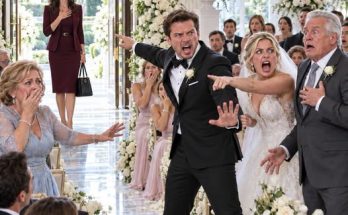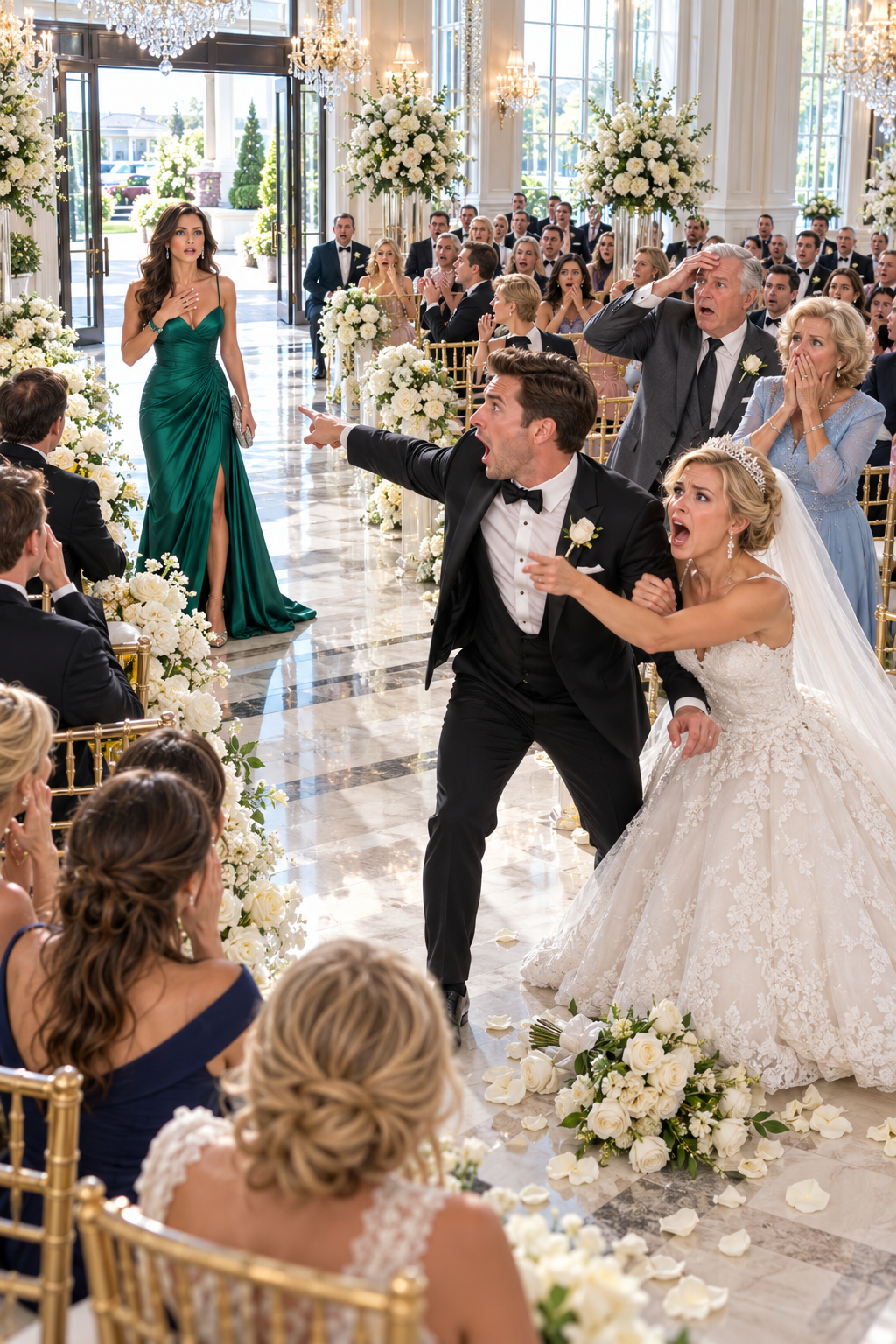
My Parents Threw Me Out On Graduation Night Because I Refused To Give My College Fund To My Sister. Dad Said: “Your Sister Will Succeed. You’ll Come Crawling Back.” I Never Did. Eleven Years Later, I Walked Into My Sister’s Wedding. The Groom Saw Me And Froze. My Sister Asked: “Why Are You Looking At Her Like That?” He Turned To Her: “You Never Told Me She Was The One.”
The night I graduated from high school, my father demanded that I sign over the $41,000 my grandmother had saved for my education. When I refused, he put my suitcase on the porch and locked the door while my mother watched. I was eighteen, holding a diploma, with nowhere to sleep. I never went back. Eleven years later, I attended my sister’s wedding and recognized a woman in a memorial photograph. That was when I realized someone had been hiding the truth for years.
## Part 1
My name is Hadley Voss, and I grew up in a brick house outside Cleveland where the Christmas decorations went up every November and the neighbors thought my family was wonderful. My father, Warren, managed a commercial roofing company, and my mother, Denise, organized church fundraisers and remembered everyone’s birthday. My older sister, Sloane, was the kind of girl adults described as extraordinary before she’d actually done anything extraordinary. I was the other daughter, the one my mother introduced with a reassuring smile and the words, “Hadley’s easy. We never have to worry about her.”
For years, I thought being easy was something to be proud of. I learned to do my homework without reminders, fix my own lunches, and keep quiet when my parents argued about money. When Sloane wanted a new dress, somebody found the money; when I needed replacement sneakers, my father asked why I couldn’t make the old ones last another month. Nobody called it favoritism because nobody in our house was supposed to notice the difference.
Sloane was two years older and had an impressive talent for turning ordinary disappointments into family emergencies. A bad grade required a meeting with the teacher, a breakup required a weekend getaway, and a stalled business idea required everyone to sit around our kitchen table discussing her potential. When I won a regional science competition, Mom suggested putting the certificate in my bedroom because the refrigerator was crowded. Sloane’s photograph from a local fashion show stayed on that refrigerator for three years.
The first time I understood what my family meant by sharing, I was sixteen. I’d spent the summer stocking shelves at a pharmacy, saving eight hundred dollars for a refurbished laptop that would help with college applications. Then Sloane’s car needed repairs, and Dad explained that my sister couldn’t be expected to build a career without reliable transportation. He took my savings after promising to replace them before Christmas, and when I asked about the money in January, he accused me of keeping score.
My grandmother was the only person who ever seemed embarrassed by how they treated me. Mabel Harker was my mother’s mother, a retired seamstress who lived in a narrow house with peeling green shutters and a garden full of tomatoes. She kept peppermint candies in a blue dish, listened without interrupting, and never confused my willingness to help with permission to use me. Whenever I visited, she would ask what I wanted for myself, a question that always took me a moment to answer.
Three months before graduation, Grandma invited me over for dinner and set a thick envelope beside my plate. Inside were account statements from a credit union and a letter explaining the savings account she’d established for my benefit when I was born. She had deposited money from alterations, holiday bonuses, and anything she could spare, leaving the account untouched through eighteen years of birthdays. The balance was a little over forty-one thousand dollars.
“Your parents know about it,” she told me, tapping the statement with a fingernail. “But knowing about something and owning it are two very different things.”
I stared at those numbers until they blurred. I’d been accepted into a community college nursing program, with plans to eventually earn my bachelor’s degree, but I’d been terrified about paying tuition and buying books. Suddenly I could imagine a future that didn’t involve begging Dad for permission every semester. Grandma watched me quietly, then removed the old silver watch she’d worn for as long as I could remember and fastened it around my wrist.
“That account is for your education, Hadley. Don’t let anyone explain away your right to use it.”
Two weeks before graduation, I came home from work and heard voices behind the kitchen door. My father was explaining that Sloane had found a promising storefront for her wellness business, but the landlord wanted a substantial deposit and the bank wouldn’t approve the financing she needed. Mom asked whether Grandma would agree to help. Dad laughed and said Grandma didn’t need to agree because the money would belong to me after my birthday.
“Hadley will sign,” he said. “She always does what we ask.”
Sloane was sitting with them. I recognized her laugh, followed by the scrape of a chair and her familiar voice saying, “She doesn’t need that much just to go to community college.”
I stood motionless in the hallway, my pharmacy uniform still smelling of cardboard and floor cleaner. None of them sounded guilty or uncertain; they were discussing my future the way people discuss moving furniture between rooms. I wanted to walk inside and demand an explanation, but I knew what would happen. Dad would call me dramatic, Mom would cry about family unity, and Sloane would accuse me of trying to ruin her opportunity.
So I said nothing and went upstairs, hoping that somehow the conversation would disappear.
Graduation night was warm enough that everyone complained about the air-conditioning inside the school auditorium. Grandma sat in the third row, clapping so enthusiastically when my name was called that I could hear her above everyone else. My parents arrived after the ceremony started, took a few photographs, and left before the reception because Sloane had dinner reservations with a potential investor. Grandma kissed my forehead and told me to call her if anything happened.
I thought she was being protective. I didn’t understand that she was warning me.
When I got home, my father was sitting at the kitchen table with a transfer authorization form and a black pen. Mom stood beside the sink, twisting a dish towel between her hands, while Sloane leaned against the counter wearing an expensive cream-colored jumpsuit. Nobody congratulated me or asked about the ceremony. Dad pointed at the chair opposite him and said, “Sit down, Hadley. We’re going to make an adult decision tonight.”
He pushed the paper toward me and explained that I would authorize the credit union to transfer my grandmother’s savings into Sloane’s business account. He described it as an investment in our family’s future, although the document didn’t mention any ownership interest or repayment terms. When I asked what I would receive, Sloane rolled her eyes. Dad folded his hands and told me that contributing to something meaningful ought to be reward enough.
“I’m going to nursing school,” I said. “Grandma saved that money for me.”
“Nursing school will still be there,” he answered. “Sloane has a real opportunity, and opportunities don’t wait for people who are afraid to take risks.”
Mom approached me with that practiced expression she wore whenever she wanted to make someone surrender without a fight. “Sweetheart, your sister has worked so hard. You can always apply for financial aid, and we’ll help when we can.”
I looked down at the signature line, remembering the eight hundred dollars I’d never gotten back. For the first time, I understood that their promises weren’t agreements; they were ways to make me stop asking questions. I pushed the paper away and told them I wouldn’t sign.
Dad remained perfectly still for several seconds. Then he said, “You can sign that document, or you can find somewhere else to sleep tonight.”
Sloane looked startled, but she didn’t object. Mom opened her mouth, closed it, and turned toward the sink as if something there required her immediate attention. I waited for one of them to remember that I was their daughter, that I had graduated from high school only two hours earlier, that I was asking for nothing except the future Grandma had already given me. Nobody said anything.
I went upstairs and filled an old suitcase with clothes, my school records, and the photograph of Grandma holding me as a baby. By the time I came downstairs, Dad had opened the front door and was waiting beside it. He looked at my suitcase and said, “You’ll be back within a year, broke and begging us to help you.” I walked past him without answering because I was afraid that speaking would make me cry.
The lock clicked while I was still standing on the porch with my diploma under one arm.
Five minutes later, Mom sent a text telling me I could come home when I was ready to put family first. I was reading it under the streetlight when my phone rang, and Grandma’s name appeared on the screen. The moment I answered, she asked where I was, and when I told her, she said she was coming to get me.
Then her voice changed.
“Hadley, listen carefully. Your father tried to submit paperwork to the credit union yesterday. I stopped it, but there is something about that account you need to know.”
I looked back at the house, where the kitchen lights were still burning.
For the first time that night, I wondered whether refusing to sign had only interrupted a plan they’d already begun carrying out.
## Part 2
Grandma arrived in her old Buick twenty minutes later, wearing slippers and a cardigan over her nightgown. She didn’t ask me to explain what had happened until we were inside the car, with the heater running and my suitcase wedged into the back seat. When I finally told her everything, she gripped the steering wheel so tightly that I could see the veins in her hands. Then she said, “They’ve been waiting for the day you turned eighteen, and I should have realized how far they were willing to go.”
At her kitchen table, she showed me a message from the credit union’s account manager, a woman she’d known for almost twenty years. Dad had contacted the branch claiming I wanted to authorize a change to my account, and he’d attempted to arrange a transfer before I had even seen the paperwork. The manager had checked with Grandma because Dad wasn’t an authorized account holder, and she’d flagged the request as suspicious. Nothing had been transferred, but Grandma had asked them to place additional security restrictions on the account until I appeared in person.
“He knew I wouldn’t approve it,” Grandma said. “That’s why he tried to get ahead of us.”
The following morning, we went to the branch together. I changed my account credentials, removed an old family mailing address, and signed instructions requiring my direct authorization for any future withdrawal. The manager explained everything carefully, making sure I understood that my parents had no right to decide how the money would be used. I left holding a fresh account statement and feeling something unfamiliar: the strange combination of having protected my future and having lost the family I’d expected to share it with.
Grandma offered me her guest room, a narrow space with flowered wallpaper and a quilt she’d sewn thirty years earlier. I accepted on the condition that she let me contribute toward groceries and utilities once I found a job. She smiled at that and said we could discuss it after I’d learned how to make coffee without leaving grounds in the pot. It was the first time in years someone had offered me help without making me feel indebted.
Three days later, Sloane called from a number I didn’t recognize. She told me the lease deadline was approaching and that the landlord had another interested tenant, then said I was being vindictive over money that I hadn’t personally earned. I asked why she hadn’t applied for a smaller location or worked another year to save the deposit. She sounded genuinely offended that I considered those reasonable possibilities.
“You don’t understand what building something important takes,” she snapped. “You’re happy settling for whatever job somebody hands you.”
I hung up before she could finish, but her words stayed with me longer than I wanted to admit. I had dreamed of nursing since volunteering at a retirement community during my junior year, and I understood perfectly well that the work would be exhausting and sometimes poorly paid. What I couldn’t understand was how a daughter planning to care for sick strangers could be considered less ambitious than a daughter planning to sell expensive candles and vitamin drinks. My parents had never treated the difference as a question worth discussing.
I started working evening shifts at a diner near Lorain Avenue that summer, saving my earnings for ordinary living expenses while reserving Grandma’s fund for school. Tuition, lab fees, uniforms, textbooks, transportation, and eventually nursing examinations consumed more of it than I’d anticipated. I lived carefully, took every scholarship I qualified for, and learned that even forty-one thousand dollars could disappear quickly without a plan. I never regretted protecting it, but I also understood that Grandma hadn’t given me a life without difficulties; she’d given me the chance to face them on my own terms.
The diner manager, Celia Greene, was a practical woman who could remember six complicated breakfast orders without writing anything down. She taught me how to calm angry customers without accepting abuse, and she noticed when I came in exhausted after studying all afternoon. Once, after I spilled an entire tray of coffee mugs, I apologized so repeatedly that she finally took me aside. “Hadley, you made a mistake,” she said. “You don’t need to spend the rest of your shift earning permission to exist.”
I thought about that sentence all the way home.
By the following spring, I’d completed my nursing assistant certification and found a part-time position at a long-term care facility. The first week nearly convinced me I’d chosen the wrong profession because I wasn’t prepared for how lonely some of the residents were. One woman asked me every morning whether her son had called, although the nurses told me he hadn’t contacted her in months. I learned to answer honestly, bring her breakfast, and stay long enough that she didn’t feel foolish for asking.
An experienced nurse named Iris Navarro noticed that I spent my breaks sitting with residents who had no visitors. She showed me how to recognize discomfort before someone could explain it and how to speak to frightened families without making promises nobody could keep. When I told her I was working toward becoming a registered nurse, she began leaving old study guides in my locker. It was the first professional relationship I’d ever had with someone who seemed more interested in what I could learn than what she could take from me.
I didn’t become successful overnight. I failed an important examination, cried in my car, met with the instructor to review every wrong answer, and passed the retake after weeks of studying. There were months when Grandma’s account balance frightened me, especially when an unexpected car repair or medical bill arrived. But I finished my nursing program, passed my licensing examination at twenty-two, and accepted a full-time hospital position in 2019. I called Grandma from the parking lot afterward, and she cried so hard I had to ask whether she could still hear me.
That evening, she baked a chocolate cake and invited Celia and Iris over. We ate it from mismatched plates in her kitchen, with my new nursing license propped against the sugar bowl. There were no speeches about how much potential I possessed or what I owed anyone for believing in me. They were simply happy, and for once I didn’t have to perform gratitude to keep someone from taking that happiness away.
My parents weren’t there. Neither was Sloane.
Through Aunt Laurel, my father’s younger sister, I occasionally heard news from home. Dad had refinanced the house to help Sloane secure her storefront after I’d refused the transfer, and her wellness brand had finally opened with a launch party covered by a local lifestyle magazine. My parents told relatives that I’d turned my back on the family over a financial misunderstanding and was struggling to finish school. Even after Laurel told them I was a licensed nurse, they continued describing me as someone who had thrown away her opportunities.
By then, I’d stopped correcting them. I worked twelve-hour shifts, paid my bills, bought a small used car, and began looking for an apartment closer to the hospital. The people who mattered knew where I was, and the people who preferred the old story could keep telling it. For the first time, I was beginning to understand that building a life and proving something to your family were two different projects.
Then Grandma started forgetting small things. First it was appointments, then the names of neighbors, and finally a morning when she couldn’t remember why she’d put a saucepan in the refrigerator. Tests revealed a serious illness that had already advanced beyond what her doctors could reasonably control. I sat with her through the appointments, recorded the instructions, and tried to make her laugh during the long drives home.
I notified my parents and Sloane as soon as we understood the prognosis. Mom said she would visit after a church event, Dad promised to find time around work, and Sloane sent a message saying she was overwhelmed by a product launch. Weeks passed without any of them appearing at Grandma’s door. When she became too weak to get out of bed, I arranged additional care, adjusted my work schedule, and spent most nights sleeping in a recliner beside her.
I didn’t resent caring for her. I resented how easily everyone else decided it was my responsibility.
One night, after she’d been awake for hours, Grandma reached for my wrist and touched her old watch. She said she’d worried that refusing my father would leave me feeling permanently excluded from the family, and that she wished she could have protected me from the pain. I told her she’d protected the part of me that mattered most. She shook her head gently and said, “You did that yourself. I only made sure you had the chance.”
Grandma died on a rainy Thursday morning in October 2021, with her hand resting in mine. Mom and Dad came to the funeral, along with Sloane, who arrived late and left before the graveside service ended. At the reception, Dad asked whether Grandma had left anything substantial in her estate, and Mom wanted to know what had happened to the savings account. I told them the account had paid for my education, exactly as Grandma intended, and that Grandma’s remaining belongings had been distributed according to her wishes.
Dad looked irritated, as though a door he’d expected to find unlocked had finally been sealed shut. Mom said she hoped we could put the past behind us now that Grandma was gone. I looked at the people gathered around us, at the neighbors carrying casseroles and the nurses who’d come straight from their shifts, and realized that almost everyone who had helped care for Grandma was a stranger to my parents. I told Mom I wasn’t interested in reopening our relationship, then went to help Laurel clear the tables.
After the funeral, Iris found me sitting alone in the hospital break room, staring at Grandma’s watch. I admitted that I’d been thinking about transferring to hospice care because the final months with Grandma had changed how I understood nursing. Iris listened, then told me there was a position opening on a team that cared for patients near the end of life. She thought I might be good at it.
I applied, interviewed, and accepted the position that winter.
At the time, I believed the worst part of my family’s story was behind me. I didn’t know that the work I’d chosen would put me beside a dying woman whose final request would eventually lead me into my sister’s wedding.
## Part 3
Hospice nursing required a kind of patience I hadn’t understood when I first entered healthcare. In a hospital, there was often a treatment to administer, a test to arrange, or a measurable improvement everyone hoped to see. In hospice, we couldn’t promise recovery, and the families knew it even when they weren’t ready to say it aloud. Our work was to manage discomfort, preserve dignity, and make certain that fear didn’t become the only thing a person remembered about their final days.
I worked with families who argued over things their loved ones no longer cared about, children who couldn’t bear watching a parent grow weaker, and spouses who still set out two coffee cups every morning out of habit. I also saw remarkable kindness, sometimes from people who had no legal or biological reason to stay. A neighbor would come every evening to read aloud, or a former coworker would bring fresh flowers every Friday. The work changed the way I thought about family because it showed me how unreliable blood could be as a measure of devotion.
In April 2022, a woman named June Price arrived at our facility following several months of unsuccessful treatment. She was sixty-four, recently widowed, and had traveled from Columbus to Cleveland seeking specialized care. Her hair had grown thin, and she wore a soft blue scarf that she twisted around her fingers whenever she became anxious. Her room overlooked a line of trees just beginning to turn green, and she asked us to leave the blinds open even when the afternoon sunlight reached her pillow.
June’s only child, Nolan, was serving overseas with the Navy. His deployment made phone calls difficult, and by the time her condition deteriorated, returning home wasn’t as simple as buying a plane ticket. She understood the practical obstacles, but she was less concerned about her own disappointment than about what her son would feel afterward. Every evening she asked whether we’d heard anything about his leave request, and every evening I watched her pretend that another delay didn’t hurt.
“He’s going to think he abandoned me,” she said one night as I adjusted her pillows.
I told her that being unable to reach someone wasn’t the same thing as choosing not to come. She looked at my face for a long moment and asked whether I knew that from experience. I hesitated before telling her that I’d spent years learning the difference between people who couldn’t show up and people who wouldn’t. June nodded, then reached out and touched Grandma’s watch, which had slipped from beneath my sleeve.
“That looks like a watch somebody loved,” she said.
I told her about Grandma, the little green-shuttered house, and how she’d worn that watch through decades of work before giving it to me. June asked why I still kept it when newer watches would probably be more accurate. I explained that Grandma had given it to me during the first year I’d been afraid of becoming an adult, and that I’d worn it through every difficult thing since. June smiled and said, “Well, if it got you here, I’m grateful she gave it to you.”
Over the next several weeks, we established a routine. On the evenings when June felt well enough to talk, she described Nolan as a child who took apart broken radios and spread their pieces across the dining room table. She told me about the terrible haircut she’d given him before his seventh birthday and the time he’d driven six hours through a snowstorm to surprise her on Mother’s Day. Those ordinary memories mattered more to her than any grand achievement because she wanted someone to understand the person her son had been before grief changed him.
Sometimes June asked about my family, too. I didn’t burden her with the whole history, but I admitted that I hadn’t spoken to my parents in years and that my grandmother had been the person who raised me emotionally, even if she hadn’t raised me legally. June listened, then told me something I’ve repeated to myself many times since. “There’s a difference between being related to somebody and being safe with them, Hadley. I hope you know that.”
Near the end of May, June received permission to make a brief video message for Nolan using her own phone. She was afraid her voice might fail before she finished, so she asked me to sit beside her and help hold the device steady. I checked that she was comfortable and that she understood what we were recording, then started the camera when she nodded. The room was almost silent except for the low hum of the air conditioner and the faint traffic outside.
“Nolan, sweetheart, I need you to hear this whenever you feel guilty,” she began. “You didn’t fail me. I knew you loved me every day, even when we couldn’t talk.”
She paused, gathering her breath, then turned her head slightly toward me. “Hadley’s here. She’s taken wonderful care of me, and she’s got this funny old watch her grandmother gave her. I told her she ought to keep it forever.”
June tried to continue but became frightened when her breathing changed. I put down the phone, leaned close, and spoke the words I’d used to reassure dozens of patients. “It’s okay, June. I’m right here. Breathe with me. I’ve got you.”
She relaxed enough to finish the message. “Find her someday, Nolan,” she whispered. “Thank her for staying with me.”
We sent the recording through June’s phone to the address Nolan had provided, and she asked me to make sure it had gone through before she rested. Later, when her strength briefly returned, she wrote a small card for him in wavering handwriting. I watched her put it into an envelope with his name on the front, but I didn’t read it. It was private, and I assumed it was another goodbye between a mother and her son.
June died four days later, just before sunrise. I was beside her, and another nurse was there when her breathing finally stopped. We followed the family’s instructions for her belongings, arranging for the envelope and the blue scarf to be sent with the rest of her personal things. Before leaving the room, I closed the blinds halfway and stood for a moment looking at the chair where she’d spent so many evenings talking about Nolan.
I wanted to find him, but the contact information in the medical record wasn’t something I could use for a personal conversation. I left a message for the family through our approved bereavement team, explaining that June had spoken lovingly of her son until the end. After that, I returned to my other patients, believing that whatever message she wanted him to have would reach him through the recording.
I didn’t know he would spend years trying to find me.
My own life continued quietly. I moved into a modest apartment with tall windows, bought furniture one piece at a time, and accepted a position coordinating the hospice nursing team. I trained new employees, spoke occasionally to nursing students, and learned to recognize the early signs of exhaustion in people who believed they were supposed to be endlessly compassionate. On difficult mornings, I thought about Grandma and June, two women who had taught me that staying for others didn’t mean surrendering myself.
Aunt Laurel remained my only consistent connection to my relatives. She called on birthdays, sent photographs of her garden, and understood that I didn’t want family news unless something truly important had happened. Through her, I learned that Sloane’s wellness company was expanding into online sales and that my parents were still helping finance parts of the business. She also mentioned that Sloane had begun dating a man named Nolan, who worked in logistics after leaving active military service.
I didn’t ask about him. For all I knew, he was another man impressed by Sloane’s carefully managed charm.
In the fall of 2025, Laurel told me they were engaged. She said Nolan seemed thoughtful and reserved, and that he’d experienced a difficult loss several years earlier. Sloane was planning an extravagant wedding for the following spring, although unexpected scheduling problems eventually pushed the date to October 2026. I wished them well and returned to preparing the next week’s staffing schedule.
Then, in August, an ivory envelope arrived at my apartment with gold lettering and a handwritten note from Laurel tucked inside. She wanted me to attend the wedding, not because my parents deserved reconciliation, but because she thought I might finally feel ready to stand in the same room without being afraid. She promised to sit with me and leave whenever I wanted. I put the invitation on my kitchen counter and spent three days trying to decide whether attending would give me peace or merely reopen something I’d spent years closing.
Eventually, I called Iris. She’d retired by then, but she still answered my calls with the same brisk affection she’d shown when I was a nervous student nurse. After listening, she said that attending a wedding didn’t mean forgiving the people who had hurt me, and that I was allowed to leave the instant I no longer wanted to be there. “Go if you’re curious about who you’ve become around them,” she advised. “Don’t go expecting them to have become different people.”
I accepted the invitation. The next morning, Sloane sent me her first personal message in eleven years.
“I’m glad you’re coming,” she wrote. “Nolan believes family is important, so let’s keep everything positive. Please don’t bring up the past, and especially don’t talk about the patients you work with. His family has experienced enough grief.”
I read the message twice, surprised by that last instruction. My parents had always been embarrassed by my work, but I couldn’t imagine why stories about patients would threaten a wedding. I replied that I wasn’t coming to discuss my career and that I expected to be treated like an ordinary guest. Sloane sent back a smiling emoji and nothing else.
Two days before the ceremony, Laurel called with a detail that made me uneasy. Sloane had asked the wedding coordinator to seat me at the farthest table from the family, claiming we were practically strangers. Laurel had objected, and Sloane had responded that she didn’t want unexpected conversations upsetting Nolan. I told Laurel not to worry about the seating because I wasn’t going to the wedding to fight for a place at the family table.
But when I hung up, I looked again at Sloane’s warning about my patients.
At the time, I thought she was ashamed of the work I’d chosen. It never occurred to me that she might be afraid of someone discovering exactly who I’d cared for.
## Part 4
Rosewood Hall stood behind a row of old maple trees on Cleveland’s east side, its limestone entrance glowing beneath the pale October sunshine. When I arrived, attendants were directing expensive cars toward a circular driveway, and guests in tailored suits were gathering beneath the portico for photographs. I wore a simple dark green dress, low heels, and Grandma’s watch, which I’d polished that morning without replacing its scratched crystal. I had promised myself I would stay for the ceremony, congratulate the couple if I had the opportunity, and leave before dinner if the atmosphere became uncomfortable.
Laurel met me inside, hugged me tightly, and apologized for the seating arrangement. She had tried to move my name closer to the family tables, but Sloane had insisted the assigned seats were final. I told her it didn’t matter, although I noticed that my place card had been set beside the doors leading toward the service corridor. From there, I would have an excellent view of people leaving the room and almost no view of my own relatives.
The entrance gallery was decorated with enormous photographs of Sloane and Nolan. Some showed them hiking together, others at charity dinners or standing beside waterfront hotels, and in every photograph Sloane looked effortlessly beautiful. Near the guest book was an enlarged family portrait I’d remembered from childhood, but something about it made me stop. It was the picture taken on Mom’s birthday when I was seventeen, only now the right side had been cropped away completely.
I had been standing on that side.
Dad appeared beside me before I could move. His hair had turned almost completely gray, but he still carried himself with the same unhurried certainty I’d known all my life. He looked from my dress to Grandma’s watch, then said, “Well, look who decided to come back after all these years.” Mom joined him, gave me a tentative smile, and asked whether I was still living alone.
“I’m doing well,” I said. “Congratulations on Sloane’s wedding.”
Dad seemed disappointed that I didn’t offer more. He mentioned how successful Sloane had become, how carefully she’d planned the ceremony, and how much responsibility came with marrying into a respected family. Mom added that Nolan was a wonderful man who valued loyalty above everything else. Neither asked a single question about my work, and I felt an unexpected relief at realizing I no longer wanted them to.
Sloane appeared a few minutes later, accompanied by a woman adjusting the train of her wedding gown. She looked beautiful in ivory satin, with pearl earrings and her hair pinned into a careful arrangement that must have taken hours. But when she saw me talking to our parents, her smile tightened and she immediately stepped between us. She thanked me for coming and asked, in a voice just low enough to sound confidential, whether I’d remembered her request to avoid discussing my patients.
“Of course,” I said. “Why are you so worried about that?”
For a moment, her expression changed. She looked toward the ceremony doors, then back at me, and said Nolan had become especially sensitive about his mother’s death. I told her I understood, since grief was something I encountered every day. She nodded too quickly and hurried away, leaving me with the uncomfortable feeling that she had been checking whether a door was properly locked.
As guests began entering the ceremony room, Laurel and I passed a memorial table decorated with white roses and photographs of deceased relatives. I recognized none of the faces at first, although I paused politely to look. Then I saw a silver frame near the center, positioned beside a candle and a folded blue scarf. The woman in the photograph had warm brown eyes, a slightly crooked smile, and the familiar expression of someone trying not to laugh while her picture was being taken.
It was June Price.
I stared so hard that the room seemed to tilt around me. The blue scarf was the same one she’d worn in hospice, and the photograph had been taken before her illness, when her cheeks were fuller and her hair still curled around her face. I read the engraved nameplate beneath the frame, then looked toward the front of the room where the groom was speaking quietly with his best man. Nolan Price wasn’t merely a man who had lost his mother; he was the son June had spent her final weeks worrying about.
Laurel noticed my expression and caught my arm. “Hadley, sweetheart, are you all right?”
She sounded frightened, and I realized my hands were trembling. I took a slow breath, placed my hand over hers, and answered in the calm voice I used when families became overwhelmed. “I’m right here, Laurel. Breathe with me. Everything’s okay.”
At the front of the room, Nolan stopped speaking.
He turned toward us with an expression I recognized from relatives who had just heard something impossible. His eyes searched the guests until they found me beside the memorial table, and then he began walking down the aisle. For a moment, I thought he was simply coming to ask why I was standing near his mother’s photograph. But when he reached me, he looked directly at my wrist.
“That watch,” he said. “Where did you get it?”
I explained that it had belonged to my grandmother. Nolan closed his eyes briefly, then asked whether I had ever worked at a hospice facility in Cleveland. When I told him where I’d been employed in 2022, he swallowed and looked back at the photograph. “My mother talked about a nurse named Hadley,” he said. “She wore an old watch, and my mom said she never left her alone when things got bad.”
“June was my patient,” I answered. “I was with her.”
He stared at me as though the words hadn’t yet settled into something he could understand. Then he pulled out his phone and opened a saved recording, hesitating before he touched the screen. I recognized June’s voice immediately, thin but determined, telling her son that he hadn’t failed her. At the end came my own voice, gentle and unmistakable, reassuring her through a frightened moment.
Nolan listened for only a few seconds before stopping the recording. His eyes were wet, and he looked suddenly much younger than he had at the altar. “I’ve been trying to find you,” he said. “I wanted to thank the person who stayed with her. I never knew your last name.”
I told him there was no need to thank me, but he shook his head. He explained that he’d returned home months after June died and had found her card among her belongings, asking him to find a nurse named Hadley. He’d sent messages through the hospice organization and tried to trace the name, but staffing changes and privacy restrictions had prevented him from finding a direct contact. The recording had become something he listened to on the days when his guilt returned.
Then he asked what his mother had said after she’d finished recording. I told him about the blue scarf, her worries about his deployment, and how she’d wanted him to know that distance hadn’t diminished his love. I described the stories she’d told about his childhood, including the broken radios he’d spread across the dining room table. Nolan covered his mouth with one hand, and I could see how long he’d carried the fear that she might have died feeling abandoned.
She hadn’t. I could finally tell him that face-to-face.
A movement near the doorway caught my attention. Sloane had entered the room with the wedding coordinator, apparently wondering why the ceremony hadn’t started, and she stopped when she saw Nolan standing beside me. Her eyes moved from his phone to Grandma’s watch, then to June’s photograph. In that single glance, I saw something I hadn’t expected: recognition followed immediately by fear.
“Nolan,” she said brightly, crossing the room. “What’s happening? Everybody’s waiting.”
He turned toward her, still holding the phone. “Sloane, this is Hadley. She was with my mother when she died.”
My sister’s lips parted, but no answer came. Nolan continued, explaining that he recognized my voice from June’s recording and that I’d confirmed details only the person caring for her could have known. Sloane reached for his arm and suggested they discuss it after the ceremony. He stepped back gently and asked a question that transformed her expression completely.
“She’s your sister, isn’t she?”
“Yes,” Sloane said. “But we haven’t been close for years. I barely know anything about her life.”
Nolan looked at me, then at her. “You told me your sister moved away. You said she wasn’t working in healthcare anymore.”
Sloane immediately began explaining that she’d been confused about my employment and that family circumstances were complicated. She told him I had abandoned our parents years earlier and had never made an effort to repair the relationship. I felt the familiar urge to defend myself, but I resisted it because Nolan wasn’t asking whether I was a good daughter. He was asking why the woman he’d planned to marry had given him false information while he searched for someone who had comforted his dying mother.
Nolan opened an old conversation on his phone. He said that in 2024, shortly after they began dating, he’d shown Sloane the recording and told her he was still looking for June’s nurse. Sloane had offered to help because she knew people around Cleveland, then reported that the nurse had apparently moved out of state. He had believed her, and eventually he’d stopped searching so intensely, although he’d never deleted the recording.
I looked at my sister, remembering every message she’d sent demanding that I remain quiet about my work.
“Did you know?” I asked.
Sloane turned toward our parents, who had joined the small crowd gathering around the memorial table. Dad immediately suggested that everyone return to their seats and let the couple handle a private misunderstanding. But Nolan didn’t move, and several guests had already heard enough to understand that this was more serious than a scheduling problem.
He showed Sloane the message she’d sent him two years earlier, saying she’d checked and there was no reason for him to keep looking in Cleveland. Then he asked her whether she’d actually contacted anyone.
Sloane stared at the screen. Her face had lost its carefully applied color, and she kept smoothing the front of her wedding gown with shaking hands. Finally, she looked at Nolan and said something so quietly that I almost missed it.
“I didn’t think you’d ever meet her.”
Nolan lowered the phone.
I had arrived expecting to confront a family that had rewritten my past. Instead, I was watching my sister admit that she’d deliberately concealed the one person her future husband had spent years hoping to find.
## Part 5
For several seconds, nobody spoke. The wedding coordinator stood near the doors holding her clipboard, while a violinist at the front of the room lowered his instrument and looked uncertainly toward the other musicians. Sloane seemed to realize she’d admitted more than she intended, because she immediately began explaining that she’d only been trying to protect Nolan from another disappointment. She said she’d watched him struggle with his mother’s death and hadn’t wanted to encourage a search that might lead nowhere.
Nolan listened without interrupting. Then he asked, “When I showed you that recording, did you recognize your sister?”
Sloane looked at me with an expression I hadn’t seen since we were children, when she’d broken something expensive and wanted me to accept the blame. She said she’d only suspected it at first, but Nolan reminded her that she’d specifically offered to make inquiries about the nurse. After a long silence, she admitted she’d checked my professional profile online and confirmed where I worked. She had known I was in Cleveland, employed at the same hospice facility where his mother had died, and she had chosen not to tell him.
“Why?” Nolan asked.
Sloane started crying. She said she hadn’t wanted him to think she was lying about her family, that she’d been ashamed of how things had ended between us, and that she’d worried he would misunderstand her relationship with our parents. But beneath all those explanations was a simpler truth she couldn’t quite bring herself to say. She had spent years describing me as selfish and unreliable, and she couldn’t bear the possibility that Nolan would discover I was the person his mother had trusted during the most frightening weeks of her life.
“I was going to tell you eventually,” she whispered.
“You had two years,” he answered.
Dad stepped forward then, placing himself between Sloane and the growing circle of guests. He insisted that our family’s history was complicated and that Nolan shouldn’t judge his daughter over something that happened when we were young. Then he turned toward me and asked why I had chosen his favorite daughter’s wedding to bring up old grievances. His voice had the same controlled authority it carried eleven years earlier, when he’d ordered me to sign away my education.
“I didn’t bring up our past,” I said. “Your daughter’s fiancé recognized me.”
Dad opened his mouth to argue, but Nolan asked him directly what had happened between us. My father began explaining that I had refused to support the family during a difficult financial period and had left home because I couldn’t accept responsibility. I watched several relatives nod, recognizing a story they’d heard many times. For eleven years, that had been the accepted explanation: Hadley had been selfish, Hadley had walked away, Hadley had chosen money over family.
So I told the truth.
I explained that Grandma had saved forty-one thousand dollars for my education and that my parents had demanded I transfer it to Sloane’s business on graduation night. I told him I’d refused, that Dad had threatened to throw me out, and that I’d spent my first night after graduation in Grandma’s guest room because my parents had locked me out. I didn’t embellish anything or describe how badly I’d cried afterward. The facts sounded terrible enough without decoration.
Aunt Laurel stepped beside me. She confirmed that Grandma had protected the account and that I’d worked through nursing school rather than accept the conditions my parents imposed. Then she mentioned something I hadn’t known: my father had told several relatives that Grandma eventually gave me the entire fund as compensation for leaving home. He’d let them believe I had taken the family’s money and disappeared without considering anyone else.
I looked at Dad. He stared at Laurel as though her decision to speak was the real betrayal.
That was when I understood something important about the years after graduation. My parents hadn’t merely decided I was a disappointment; they’d needed everyone else to believe it, too. Otherwise, people might have asked why an eighteen-year-old girl with good grades and a nursing-school acceptance letter had been put on the street for refusing to give her sister an inheritance. They had protected the family image by making my absence seem like evidence against me.
Nolan turned back to Sloane. “You knew she was a nurse, and you knew she cared for my mother. You let me believe she couldn’t be found.”
“I was scared of losing you,” Sloane said.
He looked at June’s photograph. “You let me carry that guilt because telling the truth might have made you uncomfortable.”
Sloane reached for him, but he moved away. He explained that his mother had spent her final days worrying about him, and that knowing she hadn’t been alone was something he’d needed more than Sloane understood. For two years, he’d trusted Sloane to help him find the woman his mother wanted him to thank. Instead, she’d chosen to protect the version of herself she had presented to him.
“I can’t marry you today,” he said.
He didn’t raise his voice. He simply removed his wedding ring from his pocket, placed it on the edge of the memorial table, and told the coordinator that the ceremony would not proceed. The room filled with a low murmur as guests began looking for their belongings and family members hurried toward the doors. Sloane stood motionless in her wedding gown, surrounded by white flowers and carefully arranged photographs that suddenly seemed to belong to someone else’s celebration.
My mother began crying, and Dad demanded that someone help Sloane sit down. I watched him rush toward her with the urgency I’d spent my childhood trying to deserve. There was no satisfaction in seeing my sister collapse against a chair, only the uncomfortable recognition of a pattern that had never changed. Even now, when Sloane was facing the consequences of her own decisions, our parents’ first instinct was to protect her from the discomfort of those consequences.
I walked toward the coat check, intending to leave without another conversation.
Dad caught up with me near the entrance. His face was red, and his jacket hung open, making him look less imposing than I remembered. He asked whether I could speak to Nolan and explain that Sloane hadn’t meant any harm. Then he suggested that, since I was already involved, I should help the family tell guests there had been a misunderstanding.
I looked at him carefully. This was the man who’d predicted I would come crawling back, the man who had never attended a graduation, a licensing celebration, or even his own mother-in-law’s final bedside vigil. Now he was asking me to manage the consequences of a lie I’d never told. I told him that Nolan was entitled to make his own decisions and that I wouldn’t help anyone change the facts to make them easier to accept.
“You can’t just walk away from your family again,” he said.
“Dad, you told me to leave,” I answered. “I’ve simply respected that decision.”
Outside, the afternoon had turned cooler, and the driveway was crowded with guests trying to leave without making eye contact. I stood beside my car for a moment, searching through my purse for the keys, when Nolan approached from the entrance. He’d taken off his tie, and his eyes were swollen, but his voice was steady when he asked whether he could speak to me privately.
He thanked me for caring for June, then apologized for not finding a way to contact me earlier. I told him that he had nothing to apologize for and that his mother had understood why he couldn’t return home in time. We talked for several minutes about the little things she remembered, including how proud she’d been when he’d joined the Navy and how often she’d mentioned his terrible childhood haircut. He laughed at that, unexpectedly and painfully, and for a moment I could see the boy she’d described.
Then I told him something June had said after the recording ended.
She’d been resting with her eyes closed when she asked whether I thought Nolan understood how much joy he’d brought into her life. I told her that most children never fully realize how much their parents love them, but that she had done everything possible to make sure he knew. She’d smiled and said, “Tell him I had sixty-four years of living, and being his mother was the best part.”
Nolan looked away toward the trees. When he finally spoke, he said those were words he’d needed for a long time.
We stood quietly for another minute before he thanked me again and returned to the building. There was no sudden romantic connection, no suggestion that he had canceled the wedding because he wanted someone else. We were two people connected by June, and he needed time to grieve the woman he’d lost and the future he’d just decided not to enter. I hoped he would eventually find peace, but it wasn’t my responsibility to give him a new life.
The weeks afterward brought consequences I learned about mostly through Laurel. Nolan ended the engagement, and Sloane had to absorb substantial wedding cancellation expenses, some of which my parents had agreed to cover. She also lost Nolan’s participation in a caregiver-awareness campaign she’d been preparing through her wellness company. He withdrew permission for the campaign to use his mother’s story, explaining that he no longer trusted Sloane to represent it honestly.
The company didn’t disappear, and Sloane didn’t lose everything overnight. But several planned partnerships were reconsidered, and my parents could no longer tell their preferred version of our family history without somebody asking questions. Laurel told me that Sloane had stopped speaking publicly about compassion and family loyalty, at least for the time being. I didn’t celebrate any of it, although I couldn’t pretend the consequences were unfair.
Sloane contacted me once. Her message began with an apology but quickly shifted toward explaining how much pressure she’d been under and how frightened she’d felt that Nolan would compare us. She said she’d spent her entire life trying to become the successful daughter our parents expected, and that by the time she realized she’d lied, she didn’t know how to admit it without losing everything.
I believed she was frightened. I even believed she regretted what happened. But regret wasn’t the same thing as accountability, and I wasn’t interested in becoming the person who comforted her through the damage she’d caused. I responded that I hoped she would learn to tell the truth even when it cost her something, and that I didn’t want further contact.
Mom called several days later. She asked whether we might start over now that everybody understood I’d become a respected nurse, as though discovering my profession had somehow changed what she’d done on graduation night. I reminded her that I’d been her daughter before I had a license, before I had a job, and even when I was standing outside our house with nowhere to go. She cried and said she’d made mistakes, but she still seemed to be waiting for me to reassure her that everything was forgiven.
I told her I wished her well, but I didn’t want a relationship with her or Dad. Then I ended the call and went back to preparing dinner.
A few days later, Laurel visited my apartment with a small cardboard box she’d found while sorting through some belongings Grandma had left her. Inside were photographs, old birthday cards, and a faded envelope addressed to me in Grandma’s careful handwriting. The letter was short, written during her illness, and it said she was proud of the life I’d built without sacrificing the kindness that made me who I was. At the bottom, she’d added one final instruction: “Don’t mistake being needed for being loved. The people who love you will never require you to disappear.”
I kept the letter beside my nursing license.
Life continued in ways that would have disappointed anyone expecting an elaborate revenge story. I returned to hospice work, helped train a new group of nurses, and spent Thanksgiving with Laurel, Iris, and several friends who had become my family by choice. Nolan sent a short letter through our bereavement office, thanking the team for their care and saying he’d finally been able to listen to his mother’s recording without feeling only guilt. I read it once, placed it in my drawer of thank-you notes, and went to work the following morning.
Sometimes I think about that graduation night and the girl standing on the porch with her suitcase. I remember how desperately she wanted someone to open the door, how certain she was that losing her family meant losing any chance at a happy life. I wish I could tell her that being excluded from a place where she was never valued would eventually become the beginning of her freedom.
But there’s something else I’d tell her, too.
I would tell her that she didn’t need to become extraordinary to justify keeping what belonged to her. She didn’t need a successful career, a grateful patient, or a wedding full of witnesses to prove that what her parents had done was wrong. She was an eighteen-year-old girl asking to attend school with money her grandmother had saved for that exact purpose. That alone should have been enough.
My father’s prediction followed me for years. He said I would come back broke, ashamed, and desperate for his approval, and for a long time I worked as though every good decision needed to prove him wrong. Eventually, I stopped measuring my life against what he’d expected of me. I understood that a peaceful apartment, meaningful work, and relationships without conditions were worth more than winning an argument he’d started eleven years earlier.
I still wear Grandma’s watch. The leather strap has been replaced, but the scratched crystal remains, and every morning I wind it before leaving for work. Sometimes, when I’m sitting beside a patient who is frightened, I hear its faint ticking beneath the quiet sounds of the room. It reminds me of Grandma’s kitchen, of June’s blue scarf, and of the simple difference between people who promise they love you and people who actually stay.
My family wanted me to surrender my future so Sloane could have the life she imagined. When I refused, they locked me out and spent eleven years telling everyone I’d failed.
I didn’t return to punish them, and I didn’t destroy my sister’s marriage. She did that by hiding the truth from a man who had trusted her with his grief. All I did was walk into a room, recognize someone I’d cared for, and answer a question honestly.
The door my father closed that night never opened for me again.
Eventually, I realized I didn’t need it to.
THE END!