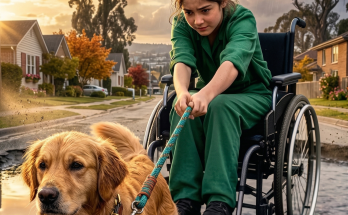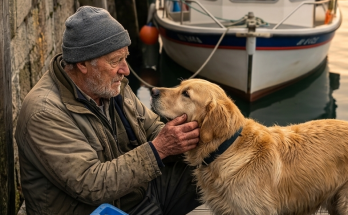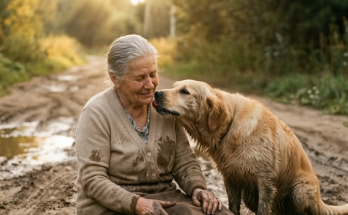
On a quiet street lined with cherry trees lived a golden dog named Milo. He had soft fur the color of sunlight and eyes that always seemed to understand more than people thought dogs could.
Before the baby arrived, Milo had been the center of the house. He followed his owner, Anna, everywhere—into the kitchen, into the garden, even to the front door when the mail arrived. But one spring morning everything changed.
Anna came home from the hospital carrying a tiny bundle wrapped in a blue blanket.
Inside the blanket was Leo.
Leo was small, smaller than anything Milo had ever seen. His hands were curled like tiny shells, and his face moved in strange expressions that Milo didn’t understand.
Milo approached slowly.
Anna knelt beside him.
“This is Leo,” she whispered, letting Milo smell the blanket.
The dog sniffed carefully. Something about the baby felt familiar—warm, fragile, and important. Milo wagged his tail once, very gently, as if promising something only he understood.
That night Milo refused to leave the nursery door.
At first Leo didn’t notice Milo much. Babies are busy learning how to breathe, sleep, cry, and stare at the ceiling. But Milo noticed everything.
When Leo cried, Milo sat beside the crib.
When Leo slept, Milo slept beside the crib.
When Leo laughed—months later, for the first time—Milo jumped up with excitement, barking softly as if he had been waiting his whole life for that sound.
Many dogs form close bonds with babies because they sense their vulnerability and respond with gentle care and loyalty. Stories and observations of dogs meeting newborns often describe an immediate protective instinct and affection between them.
Milo seemed to know Leo was part of his pack.
One summer afternoon Leo was finally old enough to sit on the floor.
He wobbled like a little tower made of pillows.
Milo brought him a ball.
Leo stared at the bright red toy as if it were a mysterious planet. Then he picked it up with both hands and dropped it.
Milo fetched it.
Leo laughed.
They repeated this game for nearly an hour.
From that day on, they were inseparable.
As Leo grew, Milo became more than a pet.
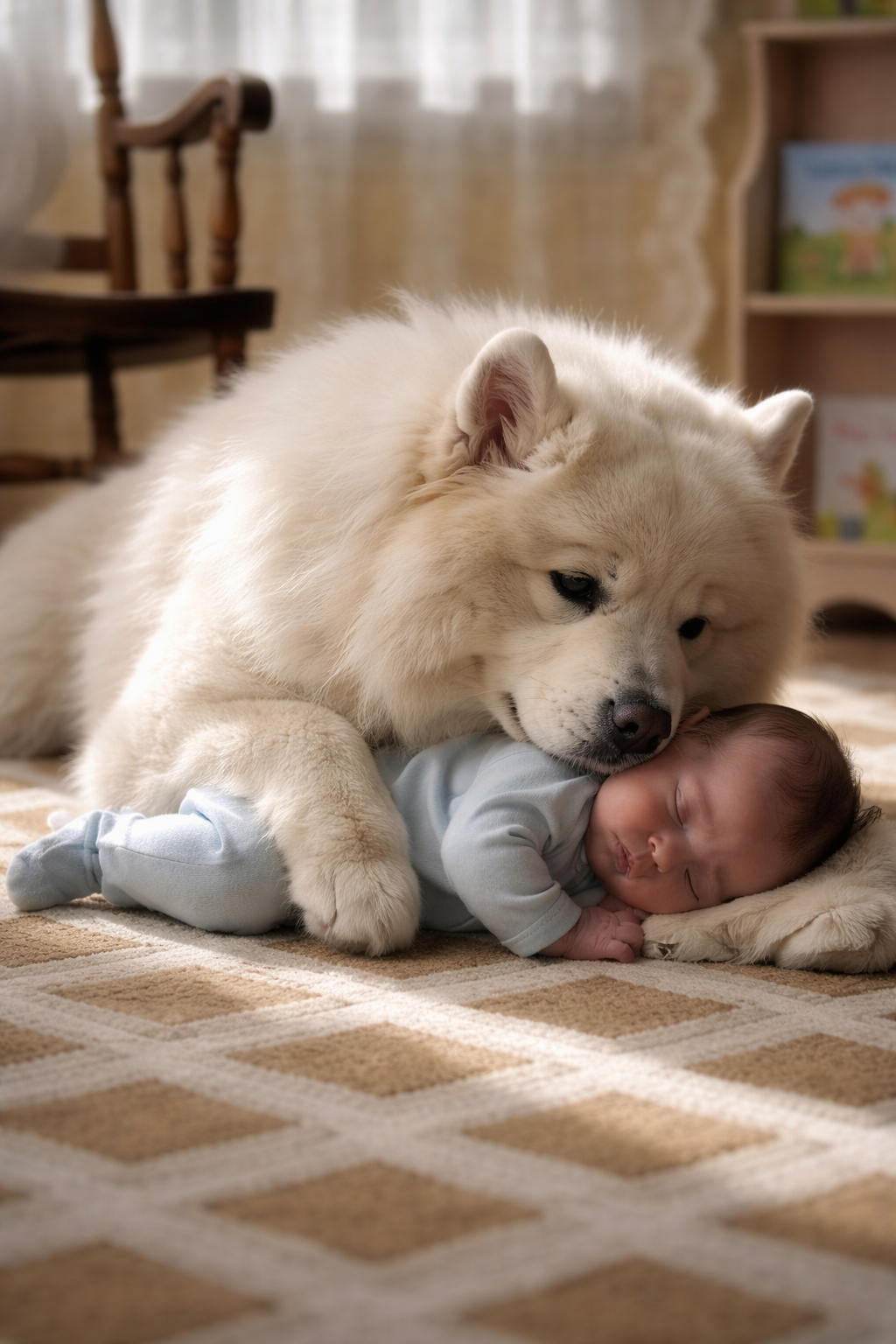
He was Leo’s pillow during naps.
He was Leo’s horse during imaginary adventures.
He was Leo’s silent listener during the long conversations babies like to have with anyone who will listen.
Leo would sit beside Milo and babble endlessly.
“Ba-ba-da goo goo ba.”
Milo would tilt his head as if considering every word carefully.
Sometimes Leo would fall asleep mid-sentence, leaning against Milo’s warm fur.
The dog never moved.
One autumn evening, when Leo was almost two years old, something happened that Anna would remember forever.
Leo had learned how to walk—but not how to stop.
He waddled through the garden chasing a butterfly, giggling wildly.
The butterfly flew near the small garden pond.
Leo followed.
Before Anna could reach him, Leo leaned too far.
But Milo was faster.
The golden dog grabbed the back of Leo’s shirt with his teeth and gently pulled him away from the water.
Leo sat down in surprise.
Then he patted Milo’s nose.
“Good dog,” Anna whispered, her voice shaking.
Milo wagged his tail like it was just another ordinary day.
Years passed the way they always do—quietly.
Leo learned to run.
Milo learned to slow down.
They walked together every morning.
Leo would hold Milo’s leash, though Milo never pulled. Somehow he knew the small human holding the rope was still learning about the world.
When Leo was sick, Milo slept beside his bed.
When Leo cried after falling off his bicycle, Milo licked his tears.
When Leo started school, Milo waited by the door every afternoon until the sound of small footsteps returned.
One winter day Leo came home sad.
He had lost his favorite toy airplane at school.
He sat on the floor beside Milo.
“I’m sad,” he said.
Milo placed his head on Leo’s lap.
Leo hugged the dog tightly, burying his face in warm golden fur.
After a few minutes he sighed.
“I feel better.”
Dogs cannot speak human language.
But sometimes they understand hearts better than words.
Time continued its quiet march.
Leo grew taller.
Milo grew older.
His golden fur turned pale in places, like snow touching sunlight.
He moved slower now, and his naps lasted longer.
But whenever Leo walked into the room, Milo’s tail still wagged the same way it had the day they met.
One evening Leo sat beside him and whispered:
“You’re my best friend.”
Milo looked up at him with those same understanding eyes.
And in that moment Leo realized something important.
Milo had watched him grow from a tiny baby who couldn’t even sit up… into a boy who could run, laugh, and explore the world.
But Milo had been there for every moment.
From the very beginning.
That night Leo placed his small blanket over Milo like a cape.
“Now you’re my superhero,” he said.
Milo closed his eyes peacefully.
He didn’t need a cape.
He had always been Leo’s guardian.
And Leo had always been his boy.