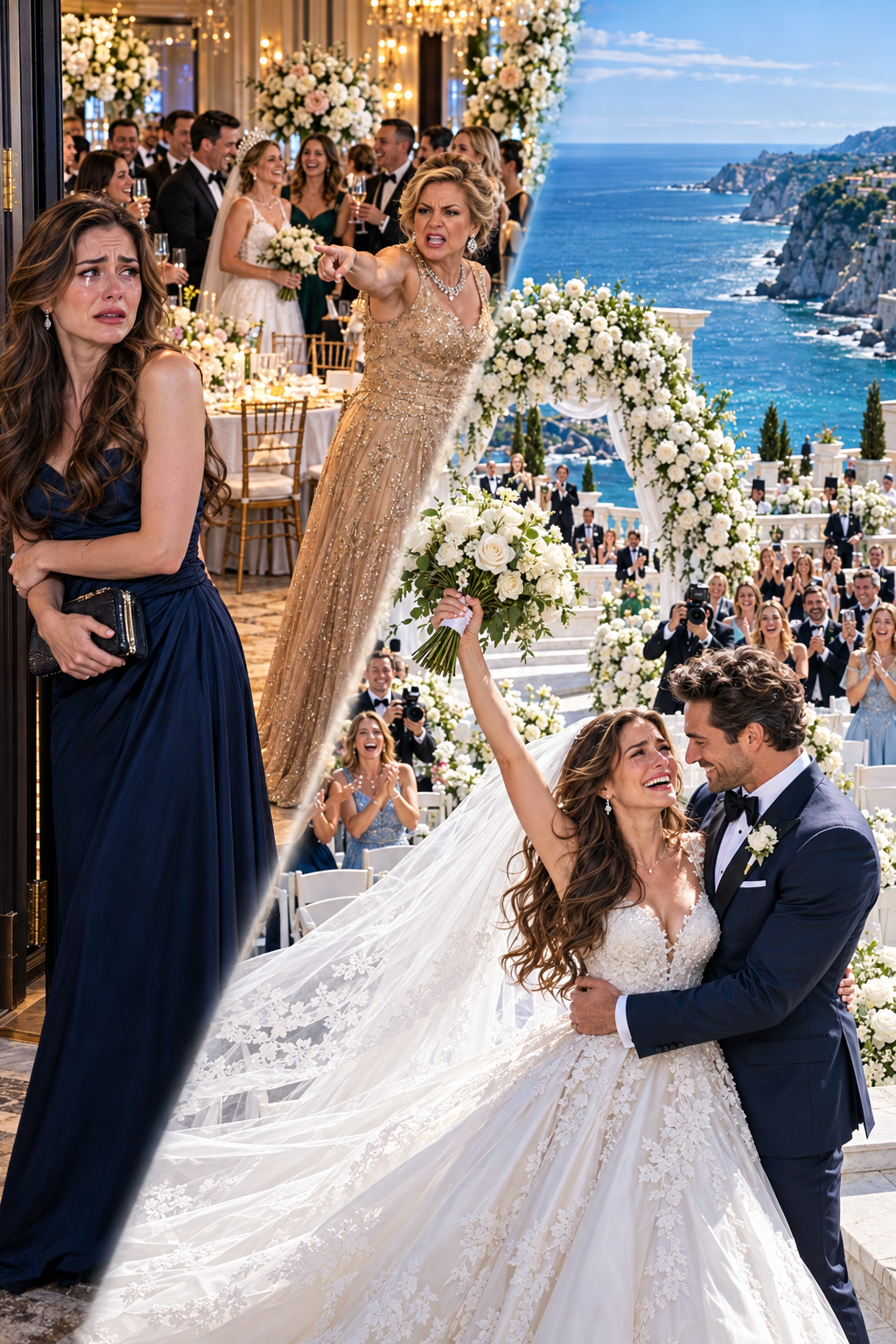
My Entire Family Was Invited To My Cousin’s Wedding. I Was The Only One Left Out. My Aunt Said, “Don’t Make Everything About Yourself.” I Didn’t Argue. Months Later, I Held My Own Wedding By The Sea… And The Photos Ended Up Going Viral.
At 8:17 on a Tuesday night, my mother accidentally sent me a screenshot proving that forty-three relatives had been invited to my cousin’s wedding, and I was the only one deliberately excluded. When I confronted her, she told me to stop making trouble, so I quietly removed several names from my own wedding guest list. Six weeks later, they all posed beneath a flower-covered arch without me. But twelve days before my wedding, my cousin called crying, and what she confessed changed everything I thought I knew about why I had been left out.
Part 1
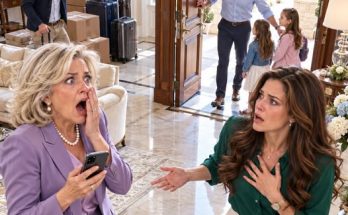
The screenshot arrived while I was rinsing a coffee mug in my apartment in Portland, Maine. My mother, Elaine Whitcomb, had apparently meant to send it to my aunt Meredith, because the image showed a family group chat labeled “Briar and Andrew’s Wedding Weekend,” followed by forty-three names and a message my mother had typed beneath it: “Are we absolutely sure Tessa hasn’t figured out she’s the only one missing?” I read that sentence three times before the water running over my hand turned cold.
My name is Tessa Whitcomb, and Briar Nolan was not some distant cousin I exchanged Christmas cards with. We had grown up twelve minutes apart outside Boston, spent entire summers sharing a bedroom at our grandparents’ lake house, and helped each other through everything from terrible first dates to our grandfather’s funeral. When Briar got engaged to Andrew Harlan, I was among the first people she called, and I had spent two weekends helping her look at wedding venues.
My phone buzzed again. “Sorry, sweetheart. Wrong person,” my mother wrote, as though accidentally sending a screenshot were the problem rather than the conversation itself. I called immediately, and she answered with a nervous, “Tessa, honey, I can explain.”
“Am I invited to Briar’s wedding?” I asked. The silence lasted long enough for me to hear my dishwasher cycling through the kitchen. Then Mom sighed and said, “Meredith thinks it would be better for everyone if you didn’t attend.”
I pressed my palm against the counter. “Everyone?” I repeated, struggling to keep my voice steady. “Even Caleb’s girlfriend, who has been dating him for five months, gets an invitation, but I don’t?” My mother said Briar deserved a peaceful ceremony, which told me exactly where this conversation was going.
Six months earlier, during our family’s Christmas party, I had walked into Aunt Meredith’s garage looking for an extra folding chair. Andrew was standing beside her parked SUV, kissing Briar’s college best friend, Simone Fletcher, with both hands buried in her hair. They separated so abruptly that Andrew knocked a cardboard box of decorations off a shelf, sending plastic ornaments rolling across the concrete.
“This isn’t what you think,” Andrew said, wiping his mouth. I looked at Simone, whose lipstick had smeared across her chin, then back at him. “Then I suggest you both take a minute to decide what you think it is,” I answered.
I found Briar upstairs sorting gifts for the younger cousins and told her privately because I couldn’t imagine letting her marry someone without knowing what I had witnessed. She cried, confronted them, and listened as Andrew claimed Simone had kissed him during an emotional conversation about her recent breakup. When I refused to support their explanation, Aunt Meredith entered the room, took one look at her daughter’s face, and ordered me to stop upsetting everyone.
By New Year’s Day, the story had changed. I had supposedly misinterpreted an innocent embrace, exaggerated the encounter, and humiliated Andrew because I had never liked him. My family expected me to apologize, but I wouldn’t retract something I had seen with my own eyes.
Now, on the telephone, my mother was suggesting that exclusion from Briar’s wedding was the natural consequence of refusing to make peace. “You have your own wedding in October,” she reminded me. “Surely you can let Briar have one day without reopening this.”
“I didn’t reopen anything,” I said. “You all decided that telling the truth was worse than what Andrew did.”
Mom began crying, which ordinarily would have made me comfort her. Instead, I asked whether Briar herself had decided not to invite me, and my mother’s hesitation told me she had no idea. I ended the conversation before she could offer another explanation that required me to pretend nothing had happened.
The following morning, Briar sent a message: “I heard you found out. I’m sorry it happened like this.” I stared at those words while my fiancé, Jonah Keene, made scrambled eggs at our little kitchen island. When I showed him the message, he read it quietly and asked whether I wanted to answer immediately.
Jonah worked maintaining electrical systems on commercial fishing vessels, and his practical way of approaching problems had always steadied me. He knew how much Briar meant to me, but he also understood that love didn’t require accepting every injury someone inflicted. “Whatever you write,” he said, sliding a plate toward me, “make sure it’s something you can live with next month.”
That evening, I replied, “I told you what happened because I loved you. I would never have tried to ruin your wedding, and I’m sorry you’ve been put in this position.” Three minutes later, the message showed as read, but Briar never answered.
Six weeks later, my entire family traveled to Massachusetts for her ceremony. Caleb posted a picture of himself wearing a navy suit beside his girlfriend, and my mother appeared in the background wearing the pale-blue silk dress I had helped her choose. By late afternoon, photographs of the estate, the flowers, and the elaborate outdoor reception were appearing across every family social media account I could see.
At 5:26, Aunt Meredith uploaded a photograph of the extended family standing beneath a white rose arch. Everyone was smiling, including relatives who hadn’t spoken to one another in years. Her caption read, “When everything else changes, family is what remains.”
I enlarged the photograph and counted forty-two familiar faces, wondering whether any of them had asked where I was. Then I noticed my grandmother’s antique silver brooch pinned to Aunt Meredith’s dress, an heirloom Briar and I had once been promised we could share for our weddings. The sight of it hurt more than the photograph itself.
Jonah found me sitting silently on our bedroom floor with my phone in my lap. He didn’t tell me to stop looking or insist the family wasn’t worth my tears. Instead, he sat beside me and said, “Being excluded hurts, but the worst part is that everyone else agreed not to ask why.”
I had no answer because he had identified the wound precisely. It wasn’t merely that I hadn’t received an invitation. It was that forty-two people had decided my absence was acceptable, provided the family photographs still looked complete.
Three days later, my mother drove to Portland carrying blueberry muffins and an expression I hadn’t seen since childhood. She sat at our kitchen table, turned her coffee cup between her hands, and confessed that she’d watched Briar scan the guests during the reception. “She asked me why you couldn’t at least come to the ceremony,” Mom said, “and Meredith told her you’d refused.”
I stopped stirring my coffee. “Refused what?”
Mom looked at me miserably. “She told Briar you said you couldn’t stand watching Andrew marry her.”
That was when I realized my family hadn’t merely excluded me. Someone had carefully arranged for Briar and me to believe we’d rejected each other.
Part 2
My mother stayed for nearly two hours, and for the first time in my adult life, I didn’t rush to make her feel better about something she’d done to me. She admitted that Meredith had called her repeatedly before the wedding, warning that inviting me would force Briar to revisit the Christmas incident. Every conversation ended the same way: Meredith insisted she knew what was best for her daughter, and everyone else agreed because disagreeing was exhausting.
“Did you ever tell Briar I wanted to come?” I asked. Mom shook her head, staring into her untouched coffee. “Then you weren’t just staying out of it,” I said. “You helped her believe I abandoned her.”
Mom flinched, but she didn’t argue. She apologized without adding excuses and offered to telephone Briar immediately. I told her that repairing the damage was her responsibility, not another task I intended to manage for the family.
After she left, I called Caleb, my younger brother, who had spent the wedding weekend helping Andrew’s groomsmen move cases of champagne into the reception hall. He admitted knowing I wasn’t invited but claimed he’d assumed Briar had made the decision herself. When I explained what Mom had confessed, he became unusually quiet and said, “Meredith told me you sent Briar some horrible message about her marrying Andrew.”
I forwarded him our entire text exchange. Ten minutes later, he called back and apologized, sounding more embarrassed than I had ever heard him. “I should’ve asked you,” he said, and I told him that was exactly what had hurt.
But knowing the truth didn’t erase the photograph under the rose arch. I couldn’t look at it without remembering how effortlessly everyone had stood together and smiled while pretending nothing was missing. For the first time, I understood that remaining part of my family might require boundaries they wouldn’t like.
Our wedding plans had been underway for nearly a year. Jonah and I had reserved a weathered coastal inn near Cape Elizabeth, with a dining room overlooking the Atlantic and a lawn bordered by beach roses. We wanted thirty-eight guests, seafood chowder, a small band, and the kind of celebration where people could actually finish conversations.
Meredith had offered to organize the reception when we first announced our engagement, but I’d declined because she treated family gatherings like corporate productions. She had recently reopened her boutique event-planning business and wanted every occasion photographed for promotional purposes. At Briar’s wedding, even the flower arrangements carried discreet cards identifying vendors connected to her company.
I understood wanting your work to succeed. What troubled me was how Meredith seemed to measure her daughter’s happiness by the appearance of the event rather than anything happening inside the marriage. Briar had once confided that she’d wanted a simple ceremony at our grandparents’ lake, but her mother had persuaded her that a luxury estate would create memories worthy of the family.
One Sunday, while addressing our invitations, I removed Meredith’s name from my spreadsheet. Briar’s name remained for another hour before I finally deleted it, too. My hand hovered over the keyboard because excluding her felt like repeating exactly what had been done to me.
Jonah noticed my hesitation and pulled up a chair. “You’re not doing this to make her suffer,” he said. “You’re deciding whether you can relax and feel safe around her on your wedding day.” He reminded me that I had spent six months waking up with the urge to defend myself to people who had already chosen their version of events.
I invited my mother, but I made it clear that I wanted her there as my mother, not as Meredith’s representative. I also invited Caleb, who drove north the following weekend to help Jonah build wooden signs for the reception. Neither of them asked me to reconsider the guest list, and that small change mattered more than another apology.
In September, I saw Briar’s wedding photograph again while scrolling through an article about elaborate New England celebrations. Meredith’s company had been credited with the event, and the article described Briar and Andrew as a couple whose love had brought two families together. I noticed that Simone appeared in several accompanying photographs, standing so close to Andrew that their shoulders touched.
I closed the article without finishing it. I had spent enough nights searching old pictures for evidence that I wasn’t imagining things. Whatever was happening in their marriage, I couldn’t fix it by continuing to investigate from a distance.
Then something happened that I couldn’t ignore. My grandmother’s longtime friend, Mrs. Fenwick, called to ask whether I was planning to wear the silver brooch at my wedding. When I explained that Meredith had worn it at Briar’s ceremony, Mrs. Fenwick sounded surprised because my grandmother had left written instructions that it be given to me after her death.
“Your grandmother was very particular about that,” she said. “She thought you’d appreciate the workmanship because you used to help her repair old jewelry.”
I remembered sitting beside Grandma at her dining room table, sorting tiny clasps and broken chains into porcelain dishes. She had promised me the brooch when I was sixteen, but after her funeral Meredith had taken responsibility for distributing her jewelry. At the time, I hadn’t questioned it because I assumed the adults were simply handling an unpleasant job.
Mrs. Fenwick offered to find the letter she had witnessed, but I asked her not to do anything yet. I didn’t want my wedding overshadowed by another dispute involving Meredith. Still, the conversation unsettled me because it suggested a familiar pattern: Meredith made decisions about other people’s belongings, relationships, and memories, then behaved as though questioning her judgment was an attack on the family.
By early October, my attention had returned to the wedding. Our photographer, Faye Mercer, had visited the inn to study the afternoon light, and our coordinator had warned us that coastal weather could change without notice. Jonah was excited about the ceremony, although he kept joking that he would need waterproof shoes.
Twelve days before the wedding, I was reviewing the caterer’s final menu when my phone rang. Briar’s name appeared on the screen for the first time in months. I considered letting it go to voicemail, then answered because something about a telephone call instead of a text felt urgent.
For several seconds, I heard nothing but uneven breathing. Then Briar whispered, “Tessa, I owe you an apology, and I don’t know how to make it big enough.”
“What’s happened?” I asked.
She started crying. “I found Andrew’s messages to Simone. They didn’t stop after Christmas.”
I gripped the edge of my desk as she struggled to continue. She told me the relationship had begun months before I caught them together, and the messages went all the way through the wedding and into their marriage. Then she said something that made the room feel suddenly airless.
“Andrew wasn’t the only person lying to me. My mother knew before I walked down the aisle.”
Part 3
Briar told me she’d discovered the affair on an old tablet that Andrew had left connected to his messaging account. At first, she had searched for a receipt from their honeymoon because a hotel charge appeared twice on their shared credit card. Instead, she found months of photographs, private messages, and reservation confirmations showing Andrew and Simone had been meeting in Boston and Providence.
The affair had continued throughout their engagement, and Andrew had booked a hotel room for Simone during their wedding weekend. Briar found a message he’d sent her less than an hour after exchanging his vows: “Wish I could get away from all these people and be with you.” I sat with my hand over my mouth, remembering Andrew smiling beside Briar in their wedding portraits.
When Briar confronted Simone, her former best friend admitted everything. Then, desperate to explain why she’d gone through with the ceremony, Simone revealed that she’d confessed the affair to Meredith three days before the wedding. She had sent Meredith screenshots of Andrew’s messages and offered to tell Briar herself.
Meredith’s response had been chillingly practical. She instructed Simone to remain silent until after the reception, reminding her that people had purchased expensive plane tickets and that the estate required full payment regardless of whether the ceremony proceeded. She also warned that exposing Andrew would destroy Briar’s confidence and make her appear foolish in front of everyone.
“She told Simone that once we were married, Andrew would settle down,” Briar whispered. “She told her that marriage was about commitment, not momentary weakness.”
I stared at the wall above my desk. “And what did she tell you about me?”
Briar began crying again. Two months before her wedding, she’d asked why my name wasn’t on the invitation list, and Meredith had claimed I’d announced I couldn’t support the marriage. Later, when Briar suggested we should talk, Meredith told her I’d made several cruel remarks about Andrew and didn’t want to see her again.
“I believed her,” Briar said. “I thought you hated me because I stayed with him.”
“I was hurt,” I answered. “But I never hated you.”
She told me she’d moved into a friend’s apartment and spoken with a divorce attorney. Andrew was insisting his affair had been a terrible mistake, although the messages proved he’d made that same mistake repeatedly for nearly a year. Briar had also discovered that several hotel charges had been paid from their shared savings, money she believed they were accumulating for a house.
Then she told me why Meredith had become so desperate to keep the wedding on schedule. The estate reception was being featured in a regional wedding publication as part of Meredith’s company’s relaunch. Meredith had arranged special vendor rates in exchange for promotional photographs, and canceling the ceremony would have jeopardized those agreements.
“She knew my marriage was beginning with a lie,” Briar said, “but she was more afraid of losing her photographs.”
After we hung up, I sat motionless until Jonah came home. I told him everything while he unpacked groceries, and he stopped halfway through putting milk in the refrigerator. “So Meredith didn’t just convince everyone you were wrong,” he said. “She used that story to keep you away because you were the one person who had already caught them.”
I nodded. The realization was painful, but it also brought an unexpected kind of relief. For months, I’d wondered whether there was something about my personality that made my relatives eager to distance themselves, and now I understood that my refusal to pretend had become inconvenient.
The next afternoon, Briar and I met at a little coffee shop in Portsmouth. She looked thinner than I remembered, with dark circles beneath her eyes and a faint indentation where her wedding ring had been. When she saw me, she stood so abruptly that her chair scraped the floor.
She hugged me, and I let her, although it took several seconds before I could return the embrace. We ordered coffee and sat across from each other, struggling to find our old rhythm. Eventually, Briar placed her phone on the table and showed me the messages between Simone and Meredith.
One message stopped me cold. Meredith had written, “Tessa cannot be there because she won’t leave this alone, and Briar needs one day without someone questioning Andrew.” Beneath it was another sentence: “Once the wedding is finished, we’ll deal with whatever comes afterward.”
I asked Briar whether she’d spoken to her mother since finding the messages. She shook her head and said Meredith had shown up at her friend’s apartment twice, demanding that she return home and discuss the marriage privately. Both times, Briar had refused to open the door.
Then Briar looked directly at me. “I know I have no right to ask, but would you consider letting me come to your wedding?”
I wanted to say yes. I also wanted to remind her that I’d spent her entire wedding day alone because she’d accepted someone else’s explanation without speaking to me. Both feelings were real, and I couldn’t make one disappear just because I finally had proof.
“You’re going to need to rebuild my trust,” I told her. “Not because you married Andrew, but because you stopped believing I deserved an honest conversation.” Briar nodded without defending herself, which was the first sign that something between us might eventually change.
I promised to give her an answer the next day. That evening, Jonah and I walked along the Eastern Promenade while the wind sent dry leaves scraping across the sidewalk. He listened as I admitted that I missed Briar, but I was afraid inviting her would make the past seem insignificant.
“She can’t undo what she did,” Jonah said. “You can decide whether she’s showing you something different now.”
I thought about the summers at the lake, the years of friendship, and how desperately I’d wanted her to believe me when it mattered. Then I thought about Briar sitting across from me in Portsmouth, accepting responsibility without asking me to excuse her.
I called her the next morning and invited her. There would be no special announcement, no dramatic family reconciliation, and no expectation that everything would return to normal. She thanked me quietly and asked whether she could help with anything before the ceremony.
I told her simply to come as my cousin.
Four days later, my mother brought me a small velvet box she’d recovered from Meredith after confronting her about Grandma’s jewelry. Inside was the silver brooch, along with a folded letter Grandma had written years before her death, describing why she wanted me to have it. Mom admitted Meredith had known about the letter but insisted the brooch belonged with whichever bride was having the grander wedding.
For once, I didn’t feel a need to argue with that reasoning. I pinned the brooch inside my wedding dress, where only I would know it was there, and returned to preparing for the ceremony.
Then, on the morning of my wedding, our coordinator called while I was having my hair done. Her voice was unusually controlled. “Tessa, there’s someone downstairs who says she won’t leave until she speaks to you.”
I already knew who it was before she said the name.
“Aunt Meredith.”
Part 4
I was upstairs in a dressing room overlooking the ocean, wearing a silk robe while a stylist adjusted the pins in my hair. My mother was fastening the clasp of my grandmother’s pearl bracelet when our coordinator, Claire, explained that Meredith had arrived without an invitation. She was demanding to see Briar and insisting that a family emergency required immediate attention.
“Tell her she needs to leave,” I said. Claire nodded, but before she reached the doorway, we heard raised voices coming from the lobby. One belonged to Meredith, and the other was unmistakably Briar’s.
I walked downstairs without changing, my unfinished hair falling over one shoulder. Meredith stood near the front entrance wearing an expensive camel-colored coat, with Briar facing her several feet away. A few guests had gathered near the dining room, pretending to study the seating arrangements.
“You are embarrassing yourself,” Meredith snapped at Briar. “I won’t allow you to make another terrible decision while you’re upset.”
Briar folded her arms. “I’m thirty-one years old, Mom. You don’t get to decide where I go anymore.”
Meredith turned when she noticed me approaching. Her eyes moved over my robe, the pearl bracelet, and the staircase behind me. “Tessa, I’m sorry to arrive like this, but apparently nobody understands how much damage this situation is causing.”
I stopped beside Briar. “You weren’t invited,” I said. “I want you to leave before the ceremony.”
Meredith looked genuinely astonished. “After everything I’ve done for this family, you’re going to throw me out?”
“You weren’t concerned about my feelings when you excluded me from Briar’s wedding,” I replied. “And I’m not interested in spending my wedding day discussing whether your decisions were justified.”
She lowered her voice, attempting the intimate tone she used whenever she wanted someone to feel guilty. “I protected my daughter from a public humiliation. Whatever mistakes Andrew made, they were private matters, and you were determined to make them everyone’s business.”
Briar took out her phone. “I have your messages to Simone,” she said. “You knew he was having an affair before the wedding, and you wanted us married anyway.”
Meredith’s face changed. For the first time, she seemed to notice the people watching from the adjoining room. She reached toward Briar’s phone, but Briar stepped backward and held it against her chest.
“I spent months thinking Tessa didn’t love me enough to come to my wedding,” Briar continued. “And she thought I didn’t love her enough to invite her. You knew we were both hurting, and you let us believe it because keeping us apart was easier for you.”
Meredith looked at me, apparently expecting me to argue. I remained silent because Briar was finally saying what she needed to say, and I wasn’t going to interrupt her. Behind us, my mother had reached the bottom of the stairs.
“Meredith,” Mom said, “go home.”
My aunt stared at her younger sister. “Elaine, surely you understand what I’m trying to do here.”
“I understand exactly what you’ve been doing,” Mom answered. “I helped you once because I didn’t want another argument, and I let my daughter pay for it. I’m not doing that again.”
Meredith’s expression tightened as if she’d been slapped. She looked from my mother to Briar, then to me, and I saw something more revealing than anger. She seemed unable to imagine that three women could disagree with her without someone secretly directing them.
Claire stepped forward and explained that the inn’s staff would escort Meredith to her vehicle. My aunt gathered her handbag, muttered that everyone would eventually regret this, and walked through the front doors. Nobody followed her.
When the doors closed, Briar began trembling. I took her hand and led her into the empty sitting room beside the staircase, away from our guests. She apologized again, but I told her I didn’t want another afternoon consumed by Meredith’s decisions.
“I wanted to watch you get married,” I said. “I don’t want you missing my wedding because of her.”
Briar wiped her eyes and nodded. For a moment, we were two cousins sitting together as we had done hundreds of times growing up, except now we were old enough to understand how much damage a family could do while claiming to act out of love.
Twenty minutes later, rain began striking the windows. The sky had turned a heavy silver, and wind rolled across the lawn hard enough to bend the beach roses. Claire suggested moving the ceremony into the dining room, where the staff had already prepared an alternative arrangement.
I looked outside at the rows of white chairs facing the Atlantic. Jonah was standing beneath the covered porch with his brother, watching the weather while struggling to keep his tie from blowing sideways. He spotted me through the window and gave me an encouraging smile.
I told Claire we would keep the ceremony outside as long as it was safe. The guests were offered clear umbrellas and wool blankets, and the staff carefully dried the chairs before everyone sat down. It wasn’t the elegant scene we’d originally imagined, but the sound of rain against the ocean made the entire place feel unexpectedly beautiful.
While I waited near the porch, a gust tore one of the ivory ribbons loose from my bouquet. It fell into the wet grass, and I bent to retrieve it, but Briar reached it first. She knelt beside me, tied the ribbon around the stems, and carefully tucked the frayed end beneath the flowers.
“Remember when Grandma used to say you could repair almost anything with enough patience?” she asked.
I looked down at her rain-soaked sleeves. “She also said some things weren’t worth repairing,” I answered.
Briar smiled sadly. “I remember that, too.”
I reached out and helped her stand. Neither of us promised that everything would return to the way it had been, but I could see that she understood why those promises would have meant very little. Across the lawn, Faye raised her camera and quietly captured the moment.
A few minutes later, my mother took my arm at the beginning of the aisle. Her eyes filled when she saw my dress, although she managed not to cry until the music started. Caleb sat in the second row, and Briar took her seat beside him, her damp hair pinned back with one of my spare clips.
The wind caught my veil halfway down the aisle, pulling it sideways so abruptly that I nearly lost my footing. I laughed, lifted it off my head, and carried it in one hand while Mom helped me keep my balance. When we reached Jonah, he squeezed my fingers and whispered, “You look like you’ve survived a small shipwreck.”
“Give me ten minutes,” I whispered back. “I’m marrying someone who knows how to fix boats.”
Our vows were simple. Jonah promised to listen when I needed to speak and remain beside me when life became difficult, while I promised him honesty even when honesty wasn’t convenient. When our officiant pronounced us married, the clouds parted just enough for sunlight to strike the water beyond the lawn.
The ocean turned bright silver beneath the gray sky. Everyone applauded as Jonah kissed me, and I could hear my mother’s laughter mixing with the rain. For the first time in months, I wasn’t wondering who had been invited somewhere without me.
I was exactly where I wanted to be.
Later that evening, we ate lobster rolls and wedding cake while the band played old favorites inside the dining room. Briar danced with Caleb, my mother hugged Jonah’s parents, and nobody mentioned Meredith again. We finished the night barefoot on the wooden porch, watching the last of the rain disappear over the water.
Four days afterward, Faye sent us the first photographs. There were images of sunlight breaking through the clouds, Jonah laughing during our vows, and my mother holding my arm as we walked down the aisle. But one photograph held my attention longer than all the others.
It showed Briar kneeling in the wet grass, repairing the ribbon on my bouquet while I reached down to help her stand.
At the time, I thought it was simply a photograph of two women beginning to find their way back to each other. I had no idea that within a week, hundreds of thousands of strangers would be looking at that same picture.
Part 5
Faye called the following Monday to ask permission to share several photographs on her professional page. She was particularly excited about the picture of Briar repairing my bouquet, which she said captured something more meaningful than a perfectly arranged wedding portrait. I agreed, provided she didn’t identify any relatives or include details about Andrew’s affair.
Before publishing, she sent me the proposed caption. It explained that the bride had once been excluded from a family wedding and that, months later, she had welcomed the cousin she had lost contact with because of a painful misunderstanding. The final sentence read, “Sometimes a family begins to heal when someone finally chooses honesty over appearances.”
I approved it because the photograph didn’t celebrate revenge. It showed two people who had hurt each other, one of them trying to repair a small physical thing while they considered whether something much larger could also be repaired. I thought a few hundred people might appreciate it and move on.
By Wednesday morning, the post had been shared more than twenty thousand times. A popular wedding photography account reposted it, followed by a national bridal publication and several lifestyle pages. Before the weekend, our wedding photographs had accumulated more than two million views across Instagram, Facebook, and TikTok.
People were fascinated by the contrast between the dramatic coastal ceremony and the quiet photograph of Briar kneeling beside me. Some wrote about being excluded from family celebrations, while others described relationships they’d repaired after years of silence. I read several moving messages, but I also noticed strangers beginning to speculate about identities and details they couldn’t possibly know.
I asked Faye to limit comments on her original post and refused two interview requests. I had no interest in turning the worst period of my life into entertainment, particularly when Briar was still trying to rebuild hers. She had finally taken control of her own story, and I wasn’t going to take that away from her.
Then Meredith called.
I was folding laundry when her name appeared on my phone. I let it ring, but she called twice more before leaving a voicemail accusing me of deliberately humiliating her. According to Meredith, people in her professional circles had recognized the wedding venue and connected the photographs to Briar’s ceremony.
“You’ve made this family look terrible,” she said. “After everything I’ve done for you, this is how you repay me?”
I listened once and deleted the message. Then I sent her a short text explaining that I’d neither identified her nor disclosed the affair, and I would not apologize for sharing photographs from my own wedding. She responded immediately: “You knew people would figure it out.”
I looked at those words for a long moment. The irony was impossible to miss: Meredith had spent months insisting that family problems should remain private while arranging a lavish public celebration around a relationship she knew was dishonest. Now she was angry because a photograph of two people being kind to each other had attracted more attention than her carefully staged event.
I didn’t reply.
Two weeks later, Briar told me the regional wedding publication had decided not to feature her ceremony. The editors had contacted her for additional photographs and permission to publish a personal interview, but she’d declined because she didn’t want to promote a marriage she was ending. Without the couple’s cooperation, the publication chose another wedding for its upcoming issue.
Meredith was furious because she’d been counting on the feature to attract clients to her revived business. She accused Briar of sabotaging her career and reminded her how much work she’d done organizing the celebration. Briar finally told her that none of those arrangements justified concealing Andrew’s affair.
For the first time, Meredith’s decisions were costing her something she valued. The lost publicity wasn’t punishment arranged by me or Briar; it followed naturally from building a professional opportunity around an occasion whose participants no longer wanted to celebrate it. Meredith had treated her daughter’s wedding as an investment, and now she couldn’t understand why her daughter refused to keep promoting it.
Around the same time, Briar began meeting regularly with her divorce attorney. Andrew initially protested that separating over an affair was excessive, but the financial records complicated his position. Their shared savings had covered several expenses connected to his relationship with Simone, and Briar’s attorney was helping her account for those charges during the divorce.
She told me about those developments over coffee, but I resisted the temptation to manage her decisions. I had spent enough time trying to protect her from Andrew, and she needed room to decide what her own future would look like. When she asked for advice, I gave it, but I no longer treated her problems as emergencies that automatically belonged to me.
My relationship with my mother changed, too. She visited Portland more often, occasionally joining Jonah and me for Sunday dinner, but she stopped bringing messages from Meredith or asking us to attend family gatherings that would require pretending nothing had happened. Once, when she mentioned missing the old holidays, I reminded her that I missed them as well.
“I know,” she said quietly. “I also know I helped make them impossible.”
It wasn’t a perfect apology or a dramatic reconciliation. It was an acknowledgment that our relationship couldn’t become healthy simply because we were tired of discussing what had gone wrong. Over time, her willingness to accept that made being around her easier.
Caleb changed in smaller ways. He stopped forwarding family gossip and began calling me directly whenever he heard something involving my name. At Thanksgiving, he and his girlfriend drove to Portland instead of attending Meredith’s annual gathering, and we spent the afternoon cooking in Jonah’s cramped kitchen.
Nobody made a speech about loyalty. Caleb burned the first batch of rolls, Jonah accidentally opened a bottle of expensive wine while preparing gravy, and Mom laughed so hard at their argument over the oven temperature that she had to sit down. It felt wonderfully ordinary.
Nearly a year after the wedding, Briar’s divorce was finalized. She had moved into a small apartment in Salem and taken a position coordinating educational programs for a local historical museum, work she’d wanted to pursue before her mother persuaded her to join the family event-planning business. She was earning less money, but she told me she hadn’t felt so comfortable making her own decisions in years.
We saw each other occasionally, sometimes for lunch and sometimes during visits to our grandparents’ old lake house. We didn’t pretend the past had disappeared, and there were subjects that still made conversation difficult. But Briar no longer asked me to accept explanations that contradicted what I knew, and I no longer tried to protect her from every uncomfortable truth.
Meredith sent one final letter that summer. It arrived in a cream-colored envelope with my married name written in careful handwriting and contained several pages about how deeply I’d hurt her. She insisted she’d acted out of love, suggested the entire family had suffered because of my stubbornness, and asked me to call so we could put the unpleasantness behind us.
I read the letter at our dining room table while Jonah repaired a small lamp beside me. When I finished, I folded it and placed it back in the envelope. I didn’t feel angry enough to write a response, and I didn’t feel guilty enough to reconsider my decision.
There was no apology in the letter, only a request that I restore the version of our family that had always been most comfortable for Meredith. I put it away with the other documents from that year and never answered.
The viral wedding photographs eventually disappeared beneath newer stories, as photographs always do. Occasionally, someone would recognize our ceremony from an old social media post, but most people had forgotten it by our first anniversary. I was grateful because the most important part of our marriage had nothing to do with strangers recognizing our faces.
The photograph hanging in our living room isn’t the famous one. It shows Jonah and me sitting on the inn’s back steps after dinner, my shoes abandoned in the grass and his tie hanging loose around his neck. I’m eating wedding cake with my fingers, and Jonah is laughing because I’ve somehow managed to get frosting on his jacket.
Through the window behind us, you can see my mother dancing with Caleb. Briar stands near the edge of the frame holding two coffee cups, one for herself and one she was bringing outside for me. It isn’t perfectly composed, and nobody in it appears to realize a photograph is being taken.
I love that picture because it reminds me of what happened after the arguments ended and the guests stopped paying attention. We ate, danced, laughed, and made room for one another without anyone deciding who deserved to be included. There were still painful things we hadn’t resolved, but we weren’t required to deny them to enjoy that evening.
Sometimes I think about the photograph Meredith posted at Briar’s wedding, the one where forty-two relatives smiled beneath a magnificent rose arch. I used to study it, searching for evidence that someone had noticed my absence. Now I rarely think about it at all.
I never received the apology I wanted from Meredith, and I no longer expect one. Briar and I are building something different from the friendship we had before, while my mother and I are learning what a relationship looks like when silence is no longer mistaken for peace. None of those changes happened because my wedding photographs went viral.
They happened because people made choices, lived with the consequences, and sometimes found the courage to make better ones.
On our first anniversary, Jonah and I returned to the coastal inn for dinner. The lawn was dry, the ocean was calm, and the same wooden steps were waiting behind the building. We sat there after dessert, watching a fishing boat cross the horizon, and Jonah asked whether I would change anything about our wedding.
I thought about the rain, the confrontation in the lobby, and Briar kneeling in the wet grass with my bouquet in her hands. Then I thought about the moment I’d reached down to help her stand, knowing that one kind gesture didn’t erase everything that had happened before it.
“Not a thing,” I told him.
He took my hand, and we stayed there until the last light disappeared from the water.
THE END!