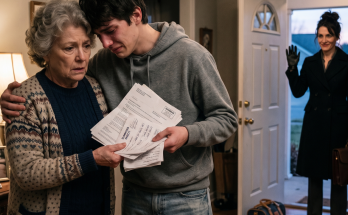
One Day Before My Sister’s Wedding, My Mother Told Me: “It Would Be Better If You Don’t Show Up… You’ll Spoil Everything.” I Didn’t Say A Single Word. Two Months Later, She Stumbled Across My Wedding Video Trending Across The World. The Guest List Was Nothing She Expected – It Hit Her So Hard She Fainted On The Spot… And Then She Noticed One Name That Turned Everything Upside Down
Part 1
The day before my sister’s wedding, my mother stood in the middle of our marble foyer and told me not to come.
Not in a trembling voice. Not with tears. Not like a woman forced to choose between two daughters.
She said it the way she told the caterer to move the champagne tower six inches to the left.
“It would be better if you don’t show up tomorrow, Claire,” she said. “You’ll spoil everything.”
I remember the smell before I remember the pain. White lilies everywhere, so many of them the house smelled like a funeral pretending to be rich. The air-conditioning was set too cold because Victoria’s florist said heat made the petals curl. My bare arms had goose bumps. Somewhere upstairs, my sister laughed, that high polished laugh she used around bridesmaids and men with family money.
I was holding a glass of water. I had come over to drop off the printed escort cards because Victoria said the calligrapher “messed up the vibe,” which meant I had stayed up until two in the morning fixing someone else’s problem for free. The cards were still in my tote bag, wrapped in tissue paper.
My mother’s eyes did not move from my face.
I waited for her to blink first. She didn’t.
“What exactly am I going to spoil?” I asked.
Her mouth tightened. She looked past me toward the dining room, where three women in black were folding napkins into little white peaks. “Don’t make this ugly.”
That was always how it worked in my family. Someone would cut me, then accuse me of bleeding on the carpet.
Behind her, my father stood near the staircase with his phone in his hand. He had heard every word. He pretended to be reading an email. His shoulders curved forward like he was trying to become furniture.
“Dad?” I said.
He rubbed his thumb over his screen. “Maybe it’s best to keep the peace.”
The peace. I almost laughed.
There were gold-rimmed glasses lined up on every surface. A wedding planner hurried through with a clipboard, whispering into her headset. Outside, through the front windows, I could see the white tent stretching over the lawn like a circus had landed on our old backyard. Two men were unloading boxes labeled Langford-Reed Wedding Weekend.
Langford came first, of course.
Victoria was marrying Carter Langford, son of one of the richest real estate families in Connecticut. My mother had spent six months acting like she had personally been invited into the royal family. The wedding was not just a wedding. It was proof. Proof that Victoria had won at being a daughter. Proof that my mother had raised someone worthy of a magazine spread.
And me?
I was the smudge in the corner she wanted cropped out.
My mother stepped closer. I could see the faint powder settling into the lines around her mouth. “You know how you get,” she said softly.
“How I get?”
“Quiet. Strange. People notice.”
Quiet and strange. That was my crime.
I looked at the glass in my hand. The water had tiny bubbles clinging to the sides. My fingers were so steady it almost scared me.
“Do you want the escort cards?” I asked.
She hesitated, thrown off by the boringness of the question. “Leave them on the table.”
I set the glass down instead.
Then I reached into my tote, took out the bundle of cards, and placed it on the console beside a silver bowl full of sugared almonds. My mother’s eyes flicked to them with relief, like she had won the important part.
On my way to the door, I noticed something half-hidden under the planner’s binder. A manila folder. Thick. Cream-colored. Stamped with the Langford family crest and marked Private Financial Addendum.
I had no reason to care about it.
Except my mother saw me see it.
For one second, her face changed. Not guilt exactly. Fear.
Then she smiled too fast.
“Claire,” she said, and now her voice had a tremor. “Don’t make tomorrow about you.”
I opened the front door. Warm June air rushed in, smelling like cut grass, wet pavement, and the faint metal tang of rain coming.
I walked past the wedding planner’s van, past the tent, past the boxes of candles, past the place where my mother had decided my absence would be more beautiful than my presence.
No one followed me.
Not my father. Not Victoria. Not even one of the women folding napkins.
Halfway down the driveway, my phone buzzed.
A text from Victoria.
Mom told me. Please don’t be dramatic. This day means everything to me.
I stared at the words until they blurred.
Then another message appeared, this one from Daniel.
How did it go?
I stood beside a truck full of white roses, breathing through the ache in my chest, and typed back with cold fingers.
She finally did it. She erased me.
A second later, my phone rang.
Daniel did not say hello. He only said, “Come home.”
I looked back once at the house, at the bright windows and perfect flowers and the folder my mother had been so afraid for me to notice.
For the first time all day, I wondered whether I was the one being hidden from the wedding, or whether the wedding was hiding something from me.
Part 2
Daniel’s apartment smelled like coffee, old books, and the rosemary plant he kept killing and replacing because he believed every home needed something green trying its best.
He lived above a bakery on the west side of New Haven, in a third-floor walk-up with uneven floors and radiators that clanked even in summer. My mother would have called it shabby. I called it the first place I ever slept without bracing for someone’s disappointment.
When I got there that night, Daniel opened the door before I knocked. He had on faded jeans and one of his nonprofit T-shirts, the one with a little cartoon library stamped over the heart. His dark hair was still damp from a shower.
The second he saw my face, his jaw tightened.
I stepped inside. He closed the door behind me. The lock clicked, and I finally felt my lungs move.
“She said I’d spoil everything,” I said.
Daniel didn’t rush to fill the silence. That was one of the first things I loved about him. My family treated silence like failure. Daniel treated it like a room where the truth could sit down.
He took my bag off my shoulder and set it on the little bench by the door.
“Did you want to go?” he asked.
I laughed once, sharp and ugly. “To stand in the back while my mother pretends we’re a close family? To watch Victoria marry money under a floral arch that cost more than my car?”
“That’s not what I asked.”
I hated him for knowing the difference.
I walked to the kitchen window. The bakery downstairs had just pulled something sweet from the oven. Butter and sugar drifted up through the cracked glass. Across the street, a man was locking his bike to a lamppost. Normal people, doing normal things, not knowing a woman in a perfect house had just cut her daughter loose like loose thread.
“I wanted to be chosen,” I said. “Just once.”
Daniel came up behind me, close enough that I could feel his warmth but not touching me until I leaned back first.
I had hidden him from my family for almost two years.
Not because I was ashamed of him. Because I was ashamed of them.
We met when he spilled oat milk across my laptop at a coffee shop. I was designing labels for a tiny candle company, and he was trying to balance three coffees, a muffin, and a box of donated children’s books. The lid popped off one cup, and my screen went black like it had decided to die of embarrassment.
He apologized twelve times. Offered to pay for repairs. Gave me his number in case there was “lasting damage,” which sounded so serious I laughed.
Three days later, when the laptop turned on again, I texted him anyway.
Daniel Voss was steady in a way I did not know people could be steady. He ran a nonprofit that rebuilt small-town libraries after fires, floods, budget cuts, and plain neglect. He had opinions about affordable shelving. He knew the best gas station coffee in four states. He sent me pictures of stained-glass windows in old reading rooms.
He had never once asked me to be smaller.
But his family scared me at first.
Not because they were cruel. Because they were impressive in a way that didn’t need applause.
His father, Henry Voss, had been a federal judge. He was tall, quiet, and could make a dinner table go silent by asking one simple question. His mother, Helen, was a forensic accountant whose clients included law firms, state agencies, and rich people pretending not to be rich. She wore reading glasses on a chain and noticed everything.
I didn’t bring Daniel home because I knew what my mother would do. She would measure him, price him, and then look for the flaw. His nonprofit salary. His plain shoes. His refusal to be impressed by imported marble. Victoria would call him “sweet” in the tone she used for rescue dogs.
And my father would sit there saying nothing, letting it happen.
So I built a second life.
One where Sunday mornings meant pancakes and Daniel reading news headlines out loud. One where no one called me difficult for having opinions. One where I was not Victoria’s shadow.
That night, after my mother’s sentence, Daniel made tea. Chamomile, though neither of us liked it, because it felt like something stable adults drank during disasters.
We sat at the kitchen table. The ring came out of nowhere.
Not really nowhere. Later, he told me he had been carrying it for three weeks, waiting for a moment that felt hopeful. Instead, he chose the moment I felt thrown away.
It was his grandmother’s ring, small and old-fashioned, with a diamond that caught the kitchen light like a secret.
“Marry me,” he said. “Not to prove anything to them. Not tomorrow. Not loudly. Just because I love the woman they were too blind to see.”
For once, I did cry.
Not the loud kind. Just tears sliding down while the bakery downstairs stacked trays and some teenager on the sidewalk laughed into the night.
“Yes,” I said.
Daniel slipped the ring on my finger. It fit so perfectly I wondered whether some part of my life had been waiting for it.
Then my phone buzzed on the table.
I almost ignored it, but the screen lit up with an email notification from the shared family scanner account I had forgotten still copied me on uploads.
Subject: Revised Langford Asset Certification — Final.
Attached below it was a document my mother had scanned from home.
And at the bottom, beneath numbers I did not understand yet, was a signature that looked exactly like mine.
Part 3
I did not sleep.
The scanned document sat open on Daniel’s laptop until sunrise, its white glow turning the kitchen walls gray. Outside, delivery trucks grumbled under the bakery awning. Every time someone rolled a metal cart over the sidewalk, I flinched.
My name was printed near the bottom: Claire Elise Reed, Design Consultant.
Design Consultant. That was almost funny. I designed bakery menus, nonprofit brochures, wedding escort cards for sisters who didn’t want me at their weddings. I did not certify asset statements. I did not review investment portfolios. I did not sign documents that used words like leveraged holdings and liquidity position.
But there it was.
My signature.
Not perfect, but close. Close enough to make my stomach go cold.
Daniel sat beside me, elbows on the table, one hand over his mouth. He had read the document twice. He was on his third pass, slower now, like he could force the page to confess.
“Do you know what this is?” I asked.
“I know enough to know my mom should see it.”
I shook my head too fast. “No. No, Daniel, this is your family. I don’t want to drag them into my mess.”
He looked at me then, really looked, and his face softened in a way that made the room hurt. “Claire, someone used your name on a financial document connected to a nine-figure real estate family. This isn’t just your family being cruel.”
Cruel I understood. Criminal was a different country.
By eight that morning, we were at Helen and Henry Voss’s house.
They lived in an old brick colonial with black shutters and hydrangeas crowding the walkway. Nothing about it screamed wealth. The porch steps had chipped paint. A blue ceramic birdbath leaned slightly in the yard. Inside, the house smelled like lemon polish and dark coffee. Framed newspaper clippings hung in the hallway, not awards exactly, but moments where truth had dragged powerful people into daylight.
Helen was already dressed when we arrived, navy sweater, pearl earrings, silver hair pinned low. She opened the door, took one look at my face, and stepped aside without asking any cheerful questions.
“Kitchen,” she said.
Henry poured coffee. Daniel printed the document. I sat at the table with my hands locked together so tightly my knuckles hurt.
Helen read the first page standing up. By the second page, she sat down. By the third, she removed her glasses, cleaned them with a cloth, and started over from the beginning.
No one spoke.
The grandfather clock in the living room ticked with an expensive patience.
Finally, Helen tapped one line with her fingernail. “Where did this come from?”
“My mother’s scanner,” I said. “I guess my email is still attached to the account from when I lived there.”
“Did you sign this?”
“No.”
“Did you give anyone permission to sign on your behalf?”
“No.”
“Have you ever been paid by Langford Holdings, Reed Event Consulting, or any entity listed here?”
I looked at the names. Reed Event Consulting was my mother’s little vanity business, the one she used to organize charity luncheons and pretend she had a career. “No.”
Helen leaned back. Her chair creaked softly.
Henry stood behind her, one hand resting on the back of her chair. He looked calm, but his eyes had gone hard.
“What does it mean?” Daniel asked.
Helen did not answer right away. She went to a drawer, took out a yellow legal pad, and wrote three words in block letters.
Misrepresentation. Forgery. Intent.
Then she looked at me.
“Claire, I need you to listen very carefully. This document appears to certify inflated assets tied to your family as part of the disclosure packet for the Langford marriage settlement and related business negotiations. If your mother submitted this, and if your sister benefited from it, they may have committed fraud.”
The word landed with no drama. Fraud. Plain and heavy as a brick.
My first feeling was not fear.
It was recognition.
Suddenly, little moments rearranged themselves. My mother shutting doors when I walked in. Victoria joking that Carter’s mother cared more about numbers than flowers. My father going pale when someone mentioned “the merger dinner.” The folder in the foyer. My mother’s fear when I noticed it.
I had spent my whole life thinking my family kept me outside because I was not good enough.
Maybe they kept me outside because I saw too much.
Helen slid the document into a clean folder. “There may be a harmless explanation,” she said, in a voice that told me she did not believe that for one second.
“What do I do?” I asked.
“For now? Nothing obvious. Don’t confront them. Don’t warn them. Don’t reply to messages about this document.”
My phone buzzed as if summoned.
Victoria.
I let it ring. It stopped. Then a text appeared.
Delete anything that came through the scanner. Mom sent something by mistake. Seriously, Claire. Don’t be weird.
Helen read it over my shoulder. Her expression did not change, but the kitchen seemed to get colder.
Then my mother called.
I did not answer.
A voicemail arrived seconds later. Her voice was low and breathless.
“Claire, listen to me. Whatever you think you saw, it is not your business. Do not ruin your sister’s life because you’re angry.”
Helen took the phone from my shaking hand and placed it gently on the table.
“Now,” she said, “we know there is no harmless explanation.”
My stomach dropped, but under the fear was something sharper, something almost clean.
For the first time in my life, my mother was scared of what I knew.
Part 4
Victoria’s wedding happened without me.
I know because I saw the photos online before I blocked half the town.
She looked beautiful. I will give her that. A cathedral veil. A silk gown that probably had its own insurance policy. Carter Langford stood beside her under an arch of white roses, smiling like a man who still believed he knew what he was marrying.
My mother wore pale blue and looked directly into every camera.
My father stood behind them with his hands folded, face blank as wet cement.
There was one picture I kept staring at, though I hated myself for it. A family portrait on the lawn. Victoria and Carter in the middle. My parents beside them. Carter’s parents on the other side, elegant and stiff. Behind them, the tent glowed warm with chandeliers.
There was a gap near my mother’s shoulder where I should have been.
No one else would notice it.
I noticed it for twenty minutes.
Then I closed the app and gave Helen everything.
Emails. Texts. Old bank notices that had arrived at the house when I still lived there. Screenshots of my mother bragging in family chats about “moving numbers around until people understand our value.” A voicemail from Victoria after one of her engagement dinners where she said, laughing, “Carter’s dad is so paranoid about disclosures. Like, relax, old man, it’s not like we’re poor.”
At the time, I thought she was being ugly.
Now it sounded like evidence.
Helen’s office was downtown, on the ninth floor of a narrow building that smelled like copier toner and rain-soaked wool. There were no inspirational quotes on her walls. Just locked file cabinets, a long table, and a view of the courthouse.
I sat across from her while she made a timeline.
That was how she thought. Not in feelings. In sequence.
“When did your mother first discuss Carter’s family finances?”
“Last November.”
“When did Victoria mention the prenuptial structure?”
“January. She said Carter’s father wanted protection, but Mom said he’d come around.”
“When did you design the Langford-Reed engagement dinner invitations?”
“February.”
“Did you have access to their guest list?”
“Yes.”
“Did you ever handle financial attachments?”
“No.”
The questions went on for hours.
By the end, the room had become too bright. My coffee had gone cold. Daniel sat beside me, quiet, his knee pressed against mine under the table.
At one point, Helen placed a document in front of me. “Do you recognize this logo?”
It was mine.
Not exactly mine. A modified version of a logo I had designed two years ago for a fake concept project in my portfolio. A clean little mark with interlocking letters. Someone had taken it, changed the colors, and put it on letterhead for something called CER Creative Valuation Services.
CER.
My initials.
I touched the page with one finger and felt stupid, as if the paper could burn me.
“They made a company out of me,” I whispered.
Helen’s face softened for the first time all day. “They made a shell out of your name.”
I stared at the fake letterhead. It looked professional. It looked real. It looked like something my mother would admire because the lines were elegant and the lie was expensive.
“What did they use it for?”
Helen hesitated.
Daniel sat straighter. “Mom.”
Helen turned another page around.
There were invoices. Six of them. Paid to CER Creative Valuation Services for “design and verification support related to family asset presentation.” The payments had been routed through my mother’s consulting account, then out again. Not to me. To an account I had never seen.
“Where did the money go?” I asked.
“We’re tracing that.”
But I already knew part of it. The extra orchids. The custom champagne wall. Victoria’s second dress. My mother’s diamond earrings at the rehearsal dinner, which she claimed were borrowed.
My whole life, they had called me ungrateful.
Now I was looking at proof they had stolen even my name.
A red pulse started behind my eyes.
“What happens now?” I asked.
Helen capped her pen. “I prepare a confidential referral. State authorities may investigate. The Langfords may be notified through counsel. If this reaches the level I think it does, your mother and sister will need criminal attorneys.”
“And me?”
“You need protection. You also need to be ready for them to blame you.”
A small laugh escaped me. “They already blame me when it rains.”
Helen did not smile. “This time, they may do it under oath.”
That night, Daniel and I walked home under streetlights buzzing with summer bugs. The bakery was closed, but the sidewalk still smelled faintly of bread.
When we reached his building, my phone buzzed again.
Unknown number.
I answered before Daniel could stop me.
For a second there was only breathing.
Then my mother said, “If you love this family at all, you will forget what you saw.”
I looked at the ring on my finger, shining in the streetlight.
And I realized the woman who threw me away was now asking for loyalty like she had ever given me any.
Part 5
The first thing I did after my mother’s call was block her.
The second thing I did was sit on Daniel’s bathroom floor and shake so hard my teeth clicked.
It was not dramatic. No music. No storm outside. Just me between the tub and the sink, knees pulled to my chest, staring at a bath mat with little gray stripes while my body finally understood what my mind had been refusing to say.
My family had not only rejected me.
They had used me.
Daniel sat on the floor outside the bathroom door because I had locked it without realizing. He did not tell me to open up. He just talked to me through the wood.
“I’m here,” he said once.
That was enough.
After a while, I unlocked the door. He handed me a glass of water, and for some reason that made me remember the glass I left in my mother’s foyer. The one I had set down before walking out. I wondered if anyone had moved it. I wondered if it still sat there, sweating onto polished wood while guests arrived to celebrate the lie.
The next morning, Helen called.
Her voice was clipped. Business voice. “Claire, I’ve confirmed enough to proceed. I’m sending materials to the appropriate office today.”
The appropriate office.
Such a polite phrase for a match being struck.
“Will they know it came from me?”
“Not immediately. But eventually, probably.”
Daniel watched me from the counter, where he was burning toast and pretending not to.
I said, “Okay.”
Helen paused. “There is one more thing.”
My stomach tightened. “What?”
“The fake entity using your initials was attached to more than invoices. It appears in the Langford disclosure packet as an independent creative valuation consultant. That means your name may have helped make the financial presentation look legitimate.”
I closed my eyes.
“So I’m the ribbon on the bomb.”
“You’re a victim,” Helen said. “Remember that.”
Victim was not a word I liked. It sounded limp. It sounded like lying on the ground waiting for someone else to decide whether I got up.
But that summer, I learned victims can move very quietly.
Daniel and I began planning our wedding in the middle of the investigation.
That sounds strange, I know. Like hanging curtains during a house fire. But after my mother erased me from Victoria’s wedding, after the forged signature, after the fake company, I needed one thing in my life that belonged to me.
We chose a date eight weeks out. Small, we said. Simple.
A garden behind an old inn near the coast. Wildflowers. Forty people. No seating chart shaped like a family hierarchy. No cake taller than a child. No one invited because they might be useful.
Daniel wanted pie instead of cake. I wanted both, because I had spent too much of my life accepting less and calling it grace.
His parents offered to help, not by taking over, but by asking questions.
“What do you actually want?” Helen asked one evening, sitting beside me with a legal pad that, for once, had nothing to do with fraud.
The question embarrassed me. I was good at knowing what other people wanted. I knew my mother liked ivory, not cream. Victoria liked compliments delivered publicly. My father liked problems to solve themselves.
What did I want?
I wanted lavender in old glass jars. I wanted string lights. I wanted Daniel’s niece scattering petals from a basket too big for her. I wanted no empty chair reserved for a mother who would only sit in it to be admired.
And I wanted music.
Daniel’s father had an old friend named Naomi Vale, a singer-songwriter famous enough that even my mother would have stood up straighter if she entered a room. Naomi had known Henry from some long-ago charity case involving stolen royalties. I did not ask many questions because Henry’s life before retirement seemed full of stories that began with “during the deposition.”
When Naomi heard about the wedding, she offered to sing one song.
I said no three times.
She laughed over speakerphone. “Claire, sweetheart, I am old enough to know when someone needs a beautiful memory more than they need to be polite.”
So I said yes.
The guest list grew a little. Helen knew journalists. Henry knew judges. Daniel’s nonprofit world knew donors, librarians, teachers, town council members, people who had driven through snowstorms to save boxes of books from flooded basements.
Every name was warm.
Every name was dangerous.
Helen warned me gently over tea one night.
“Claire, if the investigation goes where I expect, your family will eventually connect me to you. Your wedding may make that happen faster, especially with cameras.”
“Then we won’t post anything,” I said.
Daniel looked down.
“What?” I asked.
His ears turned red. “My cousin already hired a videographer as our gift. For family archives. Not public.”
Family archives. The words made me smile despite everything.
I had never been archived by family before. Only edited out.
Two weeks before the wedding, Helen received confirmation that the state had opened a formal inquiry. The Langfords’ attorneys had begun asking questions. Quietly, but not gently.
That same night, an unmarked envelope arrived at Daniel’s building.
No return address.
Inside was a photocopy of my fake signature circled in red.
Across the bottom, in my mother’s handwriting, someone had written:
You should have stayed invisible.
Part 6
I carried that note in my purse for three days.
Not because I wanted to. Because I kept forgetting it was there until I reached for lip balm or keys and felt the stiff edge of the envelope against my fingers.
You should have stayed invisible.
It was such a pure sentence from my mother. Not I’m sorry. Not please listen. Not I was wrong.
A command.
Even her fear had manners.
Helen added the note to the file. She wore latex gloves when she handled it, which made the whole thing feel like a television crime show until she looked at me over the rims of her glasses and said, “This is intimidation.”
I almost said, She’s my mother.
Then I realized that was not a defense. It was the horror.
The week before my wedding, Victoria called from a number I did not recognize. I answered because I was waiting on a florist.
“Are you enjoying this?” she asked.
Her voice was low and rough. Not the silky public version. The real one.
I stood in the aisle of a craft store holding a bag of ribbon. A child nearby kept squeezing a rubber chicken from the clearance bin, making it shriek over and over.
“Enjoying what?” I asked.
“Don’t play dumb. You’re finally getting attention, so now you want to destroy my marriage.”
The old reflex rose in me: explain, soften, apologize for the shape of my own hurt.
I swallowed it.
“Your marriage has nothing to do with me.”
She laughed. “Everything is about you now, isn’t it? Poor Claire. Forgotten Claire. Secretly engaged Claire.”
My hand tightened around the ribbon.
“How do you know I’m engaged?”
Silence.
The rubber chicken shrieked again.
Victoria said, “People talk.”
No, I thought. People watched. People followed. People who were afraid of paper trails looked for other trails.
“Do not call me again,” I said.
“You think Daniel’s family can save you?” Her voice sharpened. “Mom knows things about you too.”
A cold little hook caught under my ribs. “There’s nothing to know.”
“There’s always something to know if people want to believe it.”
Then she hung up.
I stood there in the craft store aisle with fluorescent lights humming overhead and a bag of lavender ribbon in my hand, and I understood the next stage. They had tried guilt. Then warning. Now threat.
At home, Daniel found me sitting on the stairs.
“They know about us,” I said.
His face changed, not with fear, but focus. “Then we stop hiding.”
So we did.
Not publicly. Not yet. But emotionally.
I stopped treating my happiness like contraband.
I tried on my wedding dress in Helen’s guest room while Daniel’s niece, Lily, sat cross-legged on the rug eating pretzels and saying, “You look like a storybook person, but not a boring one.”
The dress was vintage ivory lace, bought from a shop run by a woman with purple glasses and a tape measure around her neck. It had tiny buttons down the back and sleeves that made me feel like I had stepped out of an old photograph. My mother would have called it too simple.
That was part of why I loved it.
On the morning of the wedding, the sky was clear in a way that felt almost rude after everything. The inn garden smelled like damp earth, lavender, and salt from the distant water. Someone was tuning a guitar near the arbor. Chairs scraped softly over grass. Daniel’s friends were hanging string lights even though the sun had barely climbed.
No one shouted.
No one told me to stand somewhere more flattering.
No one asked me to hide.
Helen came into the little room where I was getting ready. She carried a small velvet box.
“For your something borrowed,” she said.
Inside was a pair of pearl earrings.
“They were my mother’s. She liked women with backbone.”
I looked at Helen in the mirror. My eyes stung.
“I don’t know if I have that.”
“You came anyway,” she said.
That was when I heard Naomi Vale start warming up outside.
Her voice floated through the window, low and golden, threading itself through the garden noise. I laughed because the sound was too impossible for my life. Daniel’s cousin, Mark, appeared with a camera and asked if he could capture “a few quiet moments.”
I almost said no. Then I remembered all the family photos where I had been behind the camera.
“Okay,” I said.
The ceremony itself went by in flashes.
Daniel’s hands shaking when he took mine. Lily dropping all the petals in one dramatic pile. Henry clearing his throat twice before reading a poem. Helen crying silently and pretending she wasn’t. Naomi singing as the wind moved through the trees.
When Daniel said his vows, his voice broke on the word home.
I did not think about my mother.
Not once.
At the reception, people danced under string lights. Someone spilled red wine on the grass. A judge told a dirty joke near the pie table. Naomi sang again, unplanned, and people pulled out their phones because of course they did. Mark filmed everything, grinning like a man who had given the best gift in the world.
Near the end of the night, Daniel and I stood at the edge of the garden watching our guests laugh.
“You’re real,” he said.
“What?”
“This. Us. You. No hiding.”
I leaned into him. “No hiding.”
Two days later, Mark sent us the wedding video.
Three minutes and twelve seconds.
Wildflowers. Laughter. Naomi’s voice. Daniel wiping tears from my cheeks. Helen raising a glass. Henry dancing badly. Me, glowing in a way I barely recognized.
Mark wrote, I posted a tiny clip for Naomi’s fan group, hope that’s okay. It’s already getting some love.
By sunset, “some love” meant two million views.
By midnight, strangers were asking who the bride was.
By morning, someone in the comments wrote:
Wait. Isn’t that Claire Reed? Victoria Langford’s sister?
Part 7
Going viral feels less like fame and more like a break-in.
At first, it was sweet. Strangers said kind things. Women messaged me about being the overlooked daughter. Someone made a short video zooming in on Daniel crying during my vows and set it to piano music. Naomi’s fans shared the clip because she had not performed at a private wedding in years.
Then the internet did what the internet does.
It started digging.
Who was I? Who was Daniel? Why had no one from my family been there? Was I connected to the Langford wedding from two months earlier? Why did my sister’s wedding photos have no trace of me?
By the second day, the video had spread beyond Naomi’s fan pages. Lifestyle accounts picked it up. Then wedding blogs. Then gossip pages that pretended to be news by using words like sources and reportedly.
Mark was horrified.
“I’m so sorry,” he said over the phone. “I swear I only posted it in the group. I didn’t tag you. I didn’t—”
“It’s okay,” I said, though my hands were cold.
Daniel sat beside me on the couch, scrolling with a frown. Every few seconds, his thumb paused. Another mention. Another theory.
Helen called that afternoon.
“You need to prepare yourself,” she said. “Your mother has likely seen it by now.”
I imagined my mother in her living room, tablet in hand, face lit blue by the very thing she thought she had denied me. My wedding. My joy. My guests. The kind of people she had spent her whole life trying to get near, standing in a garden for me.
Not Victoria.
Me.
I wish I could say I felt pure satisfaction.
Mostly I felt sick.
At 4:18 p.m., my father called.
I had not heard his voice since the foyer.
I let it go to voicemail.
Then another call. Then another.
Finally, a text.
Your mother is in the hospital.
I stared at it for a long time.
Daniel read over my shoulder. “Do you want to call?”
“No.”
The answer came faster than guilt could catch it.
Another message arrived.
She fainted. She saw the video. Please, Claire.
Please, Claire.
Those two words were an old door handle. My childhood hand reached for it automatically. The grown woman I had become held still.
Helen texted five minutes later.
They have connected my name to you. Expect contact.
That was how I learned what had really made my mother collapse.
Not just the video.
The guest list.
Mark, proud of his work, had written a cheerful caption under the original clip thanking everyone who made the day magical. Naomi Vale. Judge Henry Voss. Helen Voss. The Vale Foundation. The Langford literacy initiative donor who had attended through Daniel’s nonprofit.
Helen Voss.
The same Helen Voss who had contacted my mother weeks earlier through formal channels asking careful questions about asset certifications. The same Helen Voss whose reputation in financial crime circles was sharp enough to cut glass.
My mother had not fainted because I looked happy.
She fainted because she realized I had not been alone.
That evening, while rain tapped softly against our apartment windows, I received an email from an address I did not recognize. No subject.
Claire,
Call me before this gets worse. You have no idea what kind of people you are standing with. Helen Voss is using you. The Langfords are using you. Daniel will leave when this becomes ugly. Family is all you have when the world turns.
Mom is very ill because of you.
Victoria.
I read it once. Twice.
Daniel was making soup in the kitchen, the cheap kind from a carton because neither of us had eaten. The smell of tomatoes and basil filled the apartment. Normal smells. Safe smells.
I forwarded the email to Helen.
Then I deleted it.
At nine that night, my phone rang from a blocked number. I should not have answered, but some part of me wanted to hear whether my mother sounded human now.
She did not.
Her voice came through thin and furious.
“Do you understand what you’ve done?”
I sat very still.
“You humiliated me,” she whispered. “You stood there with those people, with that woman, and let the world see it.”
“My wedding was not about you.”
“Everything you do is about punishing me.”
“No,” I said. “That’s just what it feels like when I stop protecting you.”
For a moment, there was only static.
Then she said something that made every light in the room seem to dim.
“If they keep digging, Claire, they won’t just find me. They’ll find your name everywhere.”
Part 8
I did not sleep that night either.
By then, sleeplessness had become familiar. There was a particular hour, around 3:30 in the morning, when the whole city seemed to hold its breath. No traffic. No footsteps upstairs. Just the refrigerator humming and Daniel breathing beside me, one hand open on the sheet between us.
My mother’s words kept circling.
They’ll find your name everywhere.
At eight, Helen came over with two bankers’ boxes and a face that told me she had already found what I was afraid to ask about.
She set the boxes on our kitchen table.
The rosemary plant was dead again. Its brown needles leaned toward the documents like even it wanted answers.
“How bad?” I asked.
Helen opened the first box.
“Worse than I hoped. Better than it could be.”
“That means nothing to normal people.”
“It means they used your identity repeatedly, but clumsily.”
She laid out the documents one by one.
Fake consulting agreements. Fake invoices. A fake board advisory role in my name. A digital signature file created from a scan of an old tax document my mother had access to because, when I was twenty-two and broke, she had “helped” me file taxes after I moved home.
I remembered sitting at the kitchen table while she hovered over my shoulder, correcting the way I typed my own address.
“You’re careless, Claire,” she had said then. “Someone has to make sure things are done properly.”
Now I looked at the false agreements and understood what properly meant to her.
There were notarized pages too.
That was the part that made my throat close.
The notary stamp belonged to my Aunt Melanie, my mother’s younger sister, who sold lake houses and had once given me a bracelet for Christmas that turned my wrist green. I had not seen her in three years. Apparently, that had not stopped her from confirming I had appeared before her in person.
I had been in Vermont on one of those dates with Daniel, helping him inventory donated books after a library basement flooded.
Daniel found the photo on his phone. Me in rubber boots, holding a warped copy of Charlotte’s Web, hair frizzed from rain, grinning like an idiot.
Timestamped. Location tagged.
Helen almost smiled. “Useful.”
The more she showed me, the stranger I felt. Not angry exactly. Past angry. There is a place beyond anger where your mind becomes very quiet because it is busy building walls.
“What did they get from this?” I asked.
“Credibility,” Helen said. “Your design background made you plausible as someone who prepared presentation materials. The fake valuation work created a paper trail suggesting independent review. They inflated family assets, minimized liabilities, and presented your mother’s consulting income as part of a larger family enterprise.”
“Why?”
Henry, who had come with her and was standing near the window, answered. “Marriage settlement. Access. Status. And possibly leverage in a business relationship with Langford Holdings.”
My sister’s wedding had not been just a wedding.
It had been a transaction wearing flowers.
Helen’s phone buzzed. She read the message and looked at me.
“The Attorney General’s office wants to meet with you.”
I felt Daniel’s hand on my shoulder.
“When?” I asked.
“Tomorrow.”
The meeting happened in a plain government building with stained ceiling tiles and vending machines that hummed too loudly. The conference room had no windows. A woman named Assistant Attorney General Priya Shah asked most of the questions. She had kind eyes and a voice that could slice rope.
“Did you authorize your mother to create CER Creative Valuation Services?”
“No.”
“Did you receive payments listed in these invoices?”
“No.”
“Did you sign this certification?”
“No.”
“Did you know your name was being used before the scanner email arrived?”
“No.”
She pushed a page toward me.
It was the asset certification again, but this copy had more attachments. Bank summaries. Property estimates. Notes in the margins.
One note, written in my mother’s neat slanted handwriting, said:
C. won’t question. She never does.
I stared at it until the words seemed to lift off the paper.
There it was.
My entire childhood summarized as a fraud strategy.
Priya Shah waited.
Daniel’s hand found mine under the table.
“I’m ready to give a statement,” I said.
My voice did not shake.
When we left the building, cameras were not there yet. The sidewalk was hot. A bus sighed at the curb. Someone nearby was eating fries from a paper bag, and the smell of salt and grease made me suddenly, painfully hungry.
My phone buzzed.
A text from my father.
I didn’t know it had gone this far.
I looked at those words and felt nothing at first.
Then another text appeared.
Your mother says you can still stop this if you tell them it was a misunderstanding.
A misunderstanding.
That was the word they wanted to bury me under.
I typed one sentence back.
You heard her tell me not to come, and you did nothing.
Then I blocked him too.
For about ten seconds, I felt free.
Then Helen’s phone rang. She listened, said almost nothing, and hung up.
“What?” Daniel asked.
Helen looked at me with a seriousness that made my skin prickle.
“Your mother and sister have hired counsel. Their first position appears to be that you created the documents.”
Part 9
The first article did not use our names.
Luxury Wedding Raises Questions in High-Value Family Disclosures.
It had a photo of Victoria and Carter leaving their reception under sparklers, her head tilted back, his hand at her waist. They looked like the ending of a movie. The caption called them “a newlywed couple linked to an emerging financial inquiry.”
Emerging financial inquiry.
Another polite phrase. Another match struck.
By noon, the article had been updated twice.
By evening, everyone knew.
The Wedding Fraud, one headline said.
How a Socialite Family Faked Fortune to Secure a Marriage Alliance, said another.
That one used our names.
Margot Reed. Victoria Reed Langford. Claire Reed.
Seeing my name beside theirs made me feel like I had stepped in something dirty. Daniel printed the article because Helen told us to document everything. I could not look at the paper, so he turned it face down on the counter.
The press found my wedding video again and stitched the two stories together.
Banished Sister Marries Into Legal Powerhouse Weeks Before Family Fraud Scandal.
It sounded ridiculous. It sounded like a movie I would have watched while eating popcorn, yelling at the heroine to stop answering her mother’s calls.
Then the calls came.
Reporters. Former classmates. Women from my mother’s charity circles who had ignored me for years but suddenly wanted to “check in.” A bridesmaid of Victoria’s sent me a message that said, I always thought something was off, which made me laugh so hard I had to sit down.
No, she hadn’t.
People rarely think something is off when the room is still serving them champagne.
Carter moved out ten days after the first major article.
His statement was short.
I entered my marriage based on representations I now believe were false. I am cooperating with counsel and will not comment further.
Victoria posted a photo of herself looking pale on a balcony, no caption. Comments were turned off.
My mother disappeared from public view.
My father’s name appeared in one paragraph as “cooperating separately.” That was how I learned he had hired his own lawyer.
Not called me. Not apologized.
Protected himself.
Helen had warned me they would blame me, but knowing a storm is coming does not stop the roof from shaking when it hits.
Their attorney released a statement implying that “a disgruntled family member with design expertise” had created “unauthorized materials” after being “excluded from private family events due to emotional instability.”
Emotional instability.
There it was. The old family portrait repainted for court.
I waited for the shame.
It did not come.
Instead, I remembered being sixteen and crying in a restaurant bathroom because Victoria told me my homecoming dress made me look “tragic,” and my mother said, “She’s trying to help.” I remembered being twenty-four, laid off and scared, while my father told me maybe I should choose work that was “less competitive.” I remembered every time I had swallowed my own defense to keep the peace.
I was done donating silence.
Helen arranged for my attorney, a woman named Marisol Keene, who wore red lipstick and did not waste sympathy. She reviewed the statement and said, “Good. They overplayed.”
“How is that good?”
“They named your skill set. Now we bury them in metadata.”
Metadata became my favorite word.
Marisol and Helen built a wall of proof around me. Timestamped files. Travel receipts. Bank records. The Vermont library photo. Emails showing I had no access to the fake entity. The scanner notification that proved my mother accidentally exposed the document after the fact. The threatening note. Victoria’s emails. My mother’s voicemail.
Every lie they told dragged another truth into daylight.
Aunt Melanie folded first.
She claimed she had notarized the documents “as a favor” after my mother promised I had given permission. Then, when shown the Vermont photo, she began crying and asked whether cooperation would help her keep her license.
I wish I could say I felt bad.
I didn’t.
One afternoon, a courier delivered a handwritten letter to Daniel’s apartment.
My mother’s handwriting.
For a long time, I just stared at my name on the envelope. Claire, written carefully, as if neatness could disguise poison.
Daniel stood beside me. “You don’t have to open it.”
“I know.”
I opened it anyway.
The letter smelled faintly of her perfume, powdery and expensive. It was four pages long. The first page was anger disguised as pain. The second was blame disguised as confusion. The third was confession disguised as exhaustion.
She wrote that she had always felt Victoria needed more help because Victoria was “visible” and I was “self-sufficient.” She wrote that I made her feel judged. She wrote that my quietness had always frightened her. She wrote that she never meant to hurt me, only to protect the family.
Then, on the last page, she begged.
Please talk to Helen. Please tell them you misunderstood. Please tell them you gave verbal permission and forgot. I am your mother. I gave you life. You owe me one chance to save mine.
At the bottom, in a smaller line, she added:
If you don’t, I will tell them what really happened the night you left college.
I had to read that sentence three times.
Then the memory came back, not as guilt, but as another locked room opening.
Because what happened the night I left college was not my secret.
It was Victoria’s.
Part 10
I left college halfway through sophomore year.
That was the family version.
Claire couldn’t handle pressure. Claire had one bad semester and came home. Claire was delicate. Claire was difficult. Claire was not like Victoria, who thrived.
For years, I let them say it because the truth felt too ugly to drag into rooms where no one wanted it.
The truth was that Victoria visited me that fall, bored and drunk on the power of being the pretty older sister at a campus party. She was not a student there. She was already out of college, already polished, already practiced at making people forgive her before she apologized.
She drove my car after drinking.
She hit a parked maintenance truck near the edge of campus.
No one was injured. That was the miracle.
But she panicked.
I still remember the smell of burnt rubber and beer. The shattered headlight glittering on wet asphalt. Victoria gripping the steering wheel, mascara running, saying, “Mom will kill me. Carter’s family knows people. This will ruin me.”
She was not even engaged to Carter then. Just circling his world, learning where the doors were.
My mother arrived before campus security finished writing notes. I still don’t know who called her. She stepped out of her car in a camel coat, looked at the damage, looked at Victoria shaking, then looked at me.
“You were driving,” she said.
I said no.
Victoria sobbed harder.
My mother came close enough that I could smell mint on her breath. “You are already struggling here. People will believe it. Your sister has a future.”
I was nineteen.
I thought love was something you could earn by absorbing damage.
So I took the blame.
A reckless driving citation. University discipline. Insurance nightmare. Shame. My father picked me up three days later and said almost nothing during the drive home except, “Your mother thinks a break would be good.”
A break became withdrawal.
Withdrawal became failure.
Failure became family mythology.
Now my mother wanted to use the lie she had created as blackmail.
I showed the letter to Marisol.
She read it standing by her office window, lips pressed together. Outside, traffic slid through rain. The room smelled like paper, coffee, and the peppermint candies she kept in a glass bowl.
“This is good,” she said.
I stared at her. “Good?”
“Terrible for your soul. Excellent for the case. She threatened you in writing and referenced a prior family cover-up.”
Helen, who had joined by phone, was quiet for a moment. Then she said, “Claire, are you willing to talk about the college incident formally?”
My hands went numb.
Daniel reached for me, then stopped, letting me choose.
That was the thing about real love. It offered a hand without closing it around your throat.
“Yes,” I said.
The deposition room was beige, because apparently every room where lives are dissected must be beige. Victoria sat across from me with her attorney. She wore a cream sweater and no visible makeup, trying for wounded innocence. My mother sat farther down the table, thinner than I remembered, her face sharp under soft lighting.
When I walked in, my mother’s eyes filled with tears.
I almost admired the timing.
“Claire,” she whispered.
I looked past her and sat beside Marisol.
For three hours, I answered questions.
No, I did not create the documents.
No, I did not receive money.
No, I did not authorize use of my signature.
Yes, my family had pressured me to accept blame before.
Then Marisol introduced the college incident.
Victoria’s face changed first. Not dramatically. Just a tiny flicker near her left eye.
My mother reached for her water glass.
I told the story slowly. The party. The crash. The wet pavement. The camel coat. The sentence that shaped the next decade of my life.
Your sister has a future.
Victoria’s attorney objected twice. Marisol let him talk, then continued.
At the end, she played the voicemail my mother left after the scanner email.
Whatever you think you saw, it is not your business.
Then the blocked-number call.
If they keep digging, Claire, they won’t just find me. They’ll find your name everywhere.
Then, finally, a recording Helen had obtained through lawful discovery from Victoria’s own phone backups.
Victoria’s voice filled the beige room, bright and careless.
“Claire is perfect for it. She never checks anything. She’s like a family ghost with a signature.”
No one moved.
My mother closed her eyes.
I looked at Victoria, waiting for shame.
Instead, she stared at me with pure hatred, as if the real crime was that the ghost had spoken.
Part 11
After the deposition, my mother asked to speak to me alone.
Marisol said no before I did.
My mother’s attorney tried to make it sound reasonable. “A private family conversation might help reduce hostility.”
Marisol snapped her folder shut. “Your client threatened mine in writing. Hostility is not the issue. Exposure is.”
Still, my mother found a way.
She waited outside the restroom near the elevators, because of course she did. Women like my mother always knew where cameras stopped and guilt began.
I came out drying my hands on a rough paper towel, and there she was.
For a second, she looked old.
Not gracefully old. Not softened. Just reduced. Her hair was pinned perfectly, but the skin under her eyes had gone gray. Her pearl necklace sat crooked at her throat. I remembered being little and thinking she controlled the weather.
Now she was just a woman blocking a hallway.
“Claire,” she said.
I looked toward the conference room. Too far.
“Move.”
“Please.” Her voice broke beautifully. “Please, I am begging you as your mother.”
That word again. Mother. She used it like a badge, never like a duty.
“I don’t have anything to say to you.”
“You have to understand, Victoria was drowning. Carter’s family demanded so much. They looked down on us. I did what I thought I had to do.”
“You forged my name.”
“I made mistakes.”
“You stole my identity.”
“I was trying to protect the family.”
“You framed me before I even knew there was a crime.”
Her face tightened. There she was. The real one under the tears.
“You always make things sound so ugly.”
“They are ugly.”
“You think Daniel’s people are better? You think they love you for nothing? Everyone wants something, Claire.”
I felt a strange calm settle over me. Maybe that was what happened when someone finally said the rotten thing out loud.
“Daniel wanted me when I had nothing you valued.”
My mother’s mouth twisted. “And now you think you’re above us.”
“No. I think I’m away from you.”
That landed.
For one moment, I saw panic in her eyes. Not legal panic. Not social panic. Something more primitive. She was realizing I was not waiting at the edge of the family anymore, hoping to be called back.
She reached for my wrist.
I stepped away before she touched me.
Her hand hung in the air.
“Claire, if I go to prison, I will not survive it.”
I believed her fear.
I did not mistake it for remorse.
“You should have thought of that before you decided I was disposable.”
She began to cry then. Real tears, maybe. It no longer mattered.
Victoria appeared at the end of the hall.
She had heard enough to drop the mask.
“You selfish bitch,” she said.
The words echoed off the polished floor.
My mother flinched, not because Victoria insulted me, but because someone might hear.
I almost smiled.
There was my sister. No cathedral veil. No perfect lighting. Just rage in expensive shoes.
“You ruined my life,” she said.
“No,” I answered. “I stopped carrying it.”
Victoria walked toward me. “Carter won’t speak to me. His parents froze everything. My friends won’t answer my calls. Do you know what that feels like?”
I thought of empty spaces in family photos.
“Yes.”
Her face reddened. “You were jealous of me.”
“Sometimes.”
That surprised her.
I went on. “When we were kids, yes. I was jealous. You got the attention. The praise. The front seat. The benefit of every doubt. But I’m not jealous now.”
“Liar.”
“Victoria, you had everything they could buy for you, and you still had to steal my name.”
For the first time in my life, my sister had no comeback.
The elevator dinged behind me.
Daniel stepped out with Henry. His eyes went to my face first, then to my mother’s hand still hovering near her pearls, then to Victoria standing too close.
“Claire?” he asked.
“I’m done here.”
And I was.
The criminal charges came three weeks later.
Conspiracy to commit financial fraud. Identity theft. Forgery. Falsifying business records. My aunt faced charges too, though hers were smaller because she cooperated fast enough to save herself from the worst.
My father avoided charges, not because he was innocent in any moral sense, but because prosecutors could not prove he had knowingly participated. That was the kind of luck quiet men got. They stood near fires, warmed their hands, and later claimed they had never smelled smoke.
He sent me one email.
I should have protected you. I see that now.
I did not reply.
The sentencing hearing was set for late October. By then, leaves had started collecting along the sidewalks in damp copper piles. Daniel and I had moved into a small house near the library his nonprofit was restoring. The roof needed work. The kitchen cabinets stuck. The backyard had one crooked apple tree and enough sunlight for lavender.
I planted some the week before sentencing.
My hands were muddy when Marisol called.
“There’s a development,” she said. “Your mother wants to submit a statement accepting partial responsibility.”
“Partial?”
“She says she was influenced by Victoria and overwhelmed by social pressure.”
I actually laughed.
Daniel looked up from the porch steps, where he was sanding an old chair.
Marisol continued, “She also wants to mention you by name and ask for family healing.”
The word healing made something harden in me.
“No.”
“You can’t stop her from speaking.”
“I know. But if the court asks whether I support leniency, my answer is no.”
Marisol was quiet for a beat. “Understood.”
That night, Mark sent us the full wedding video, the long version. I had not watched it yet. I thought it would make me sad.
Instead, I saw myself walking toward Daniel under trees bright with late summer light. I saw Helen wiping her eyes. I saw Henry watching me with the proud, careful face of a man who understood vows as law. I saw Naomi singing with one hand pressed to her heart. I saw friends cheering when Daniel kissed me like the world had finally become simple.
Near the end, the camera caught me looking straight toward the lens, laughing.
I paused it there.
For years, my family had kept the ugliest version of me and called it truth.
But here was proof of another woman entirely.
Loved. Chosen. Free.
The next morning, as we walked into court, my mother turned in her seat and mouthed one word.
Please.
For one dangerous second, the daughter I used to be heard her.
Then the woman I had become kept walking.
Part 12
Courtrooms do not look like justice.
They look like wood polish, tired carpet, fluorescent lights, and people pretending their clothes can hold them together. My mother wore navy. Victoria wore black. My father sat three rows behind them, alone, hands folded so tightly his knuckles were white.
I sat with Daniel on one side and Marisol on the other.
Helen sat behind us. Henry beside her.
No one from my old life sat with me.
That hurt less than I expected.
The judge spoke for a long time. He described the fraud in clean, measured sentences. Inflated assets. Forged signatures. False certifications. Misused identity. Attempts to intimidate a witness. Harm to financial institutions, private parties, and the integrity of legal disclosures.
My mother cried quietly.
Victoria stared straight ahead, jaw clenched.
When the judge mentioned me, my mother covered her mouth.
Not when he mentioned the Langfords’ losses. Not when he mentioned Carter. Not when he mentioned restitution. Only when he said my name in public as a victim.
Claire Elise Reed Voss.
My new name.
My mother flinched like the last part offended her most.
The prosecutor played only a short portion of the recordings. Enough. Victoria calling me a ghost. My mother saying I would not question. The voicemail where she told me it was not my business.
Each clip landed in the room with a small, final sound.
Then my mother was allowed to speak.
She stood slowly. For the first time in my life, she seemed unsure of how to arrange her face.
“Your Honor,” she began, “I made terrible mistakes.”
Marisol’s pen stopped moving.
Mistakes.
My mother spoke about pressure. About wanting the best for her daughter. She did not specify which daughter. She spoke about social expectations, financial fear, embarrassment, the need to preserve family dignity. She cried when she mentioned Victoria’s future. She trembled when she mentioned prison.
Then she turned slightly toward me.
“My daughter Claire and I have had a complicated relationship,” she said. “But I hope one day she will understand that everything I did, however wrong, came from a mother’s love.”
I felt Daniel tense beside me.
For years, those words would have dragged me back.
A mother’s love.
As if love were a fog machine you could turn on after setting the house on fire.
The judge looked at me. “Mrs. Voss, would you like to make a statement?”
I had not planned to. I had written one, then torn it up. Written another, then deleted it. Words felt too small.
But when I stood, my knees were steady.
The courtroom blurred at the edges, but my mother’s face stayed sharp.
“My mother asked me not to attend my sister’s wedding because she said I would spoil everything,” I said. “At the time, I thought that was the worst thing she had done to me.”
No one moved.
“I was wrong. She had already used my name, my work, my signature, and my silence. My sister helped. My father looked away. This was not one mistake. It was a system. I was trained to be useful, quiet, and easy to blame.”
My mother closed her eyes.
I kept going.
“I do not support leniency. I do not support family healing as a substitute for accountability. I do not forgive them. Maybe that disappoints people who prefer stories where daughters return home and mothers cry and everything becomes soft. But some homes are not homes. Some apologies are just another way to ask for power back.”
My voice almost broke then, but it didn’t.
“I built a life after they threw me away. I intend to keep it.”
I sat down.
Daniel took my hand under the table.
The sentencing came after lunch.
My mother received four years in prison, followed by supervised release and restitution. Victoria received two years, with additional probation and financial penalties. Aunt Melanie lost her notary commission and took a plea. The civil suit from the Langfords continued, and the house I grew up in was eventually sold to cover part of what my mother and sister had destroyed.
I did not attend the sale.
I heard from a former neighbor that the lilies were gone by then. The tent had left brown scars on the lawn for months.
Carter annulled the marriage. Victoria fought it until fighting became more humiliating than losing. The friends who once arranged themselves around her like jewelry vanished. My mother’s charity boards removed her name from programs. The local paper printed her mugshot smaller than I expected.
My father moved to Arizona.
He sent a Christmas card with no return address.
Inside, he wrote, I hope someday we can talk.
I threw it away with the grocery flyers.
Six months after sentencing, Daniel and I hosted the reopening of the little library near our house. It had flooded two years earlier and never fully recovered until his nonprofit took it on. The building smelled like fresh paint, sawdust, and new carpet. Children ran their hands along low shelves. An old man cried when he saw the local history room restored.
Naomi sent flowers. Helen brought coffee. Henry gave a speech that was mostly about plumbing permits, which somehow made everyone laugh.
I stood near the front desk, watching a little girl in red sneakers choose her first library card.
Daniel slipped his arm around my waist. “You okay?”
I thought about my mother’s foyer. The lilies. The cold air. The glass of water. The sentence meant to erase me.
You’ll spoil everything.
She had been right, just not in the way she meant.
I spoiled the lie. I spoiled the fraud. I spoiled the story where Victoria shined and I disappeared. I spoiled my mother’s plan to use me as a signature with no voice.
Then I built something better out of the wreckage.
My phone buzzed in my pocket.
A prison email notification.
My mother had written again.
The subject line said: Please, Claire. I’m still your mother.
I deleted it without opening it.
Outside, afternoon light poured through the library windows and spread across the floor in bright gold squares. Dust floated in the beams like tiny, weightless things. Daniel laughed at something Lily said near the children’s section. Helen was arguing with the coffee urn. Henry was trying to fix a crooked poster.
No one there needed me to be invisible.
No one there called cruelty love.
I walked to the front doors and opened them wide for the next family coming in.
For the first time, I understood that peace was not the same as forgiveness.
Peace was hearing your mother beg and knowing you did not have to answer.
THE END!