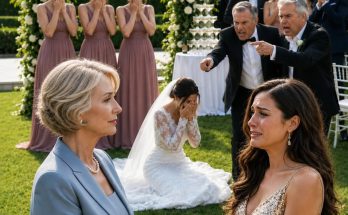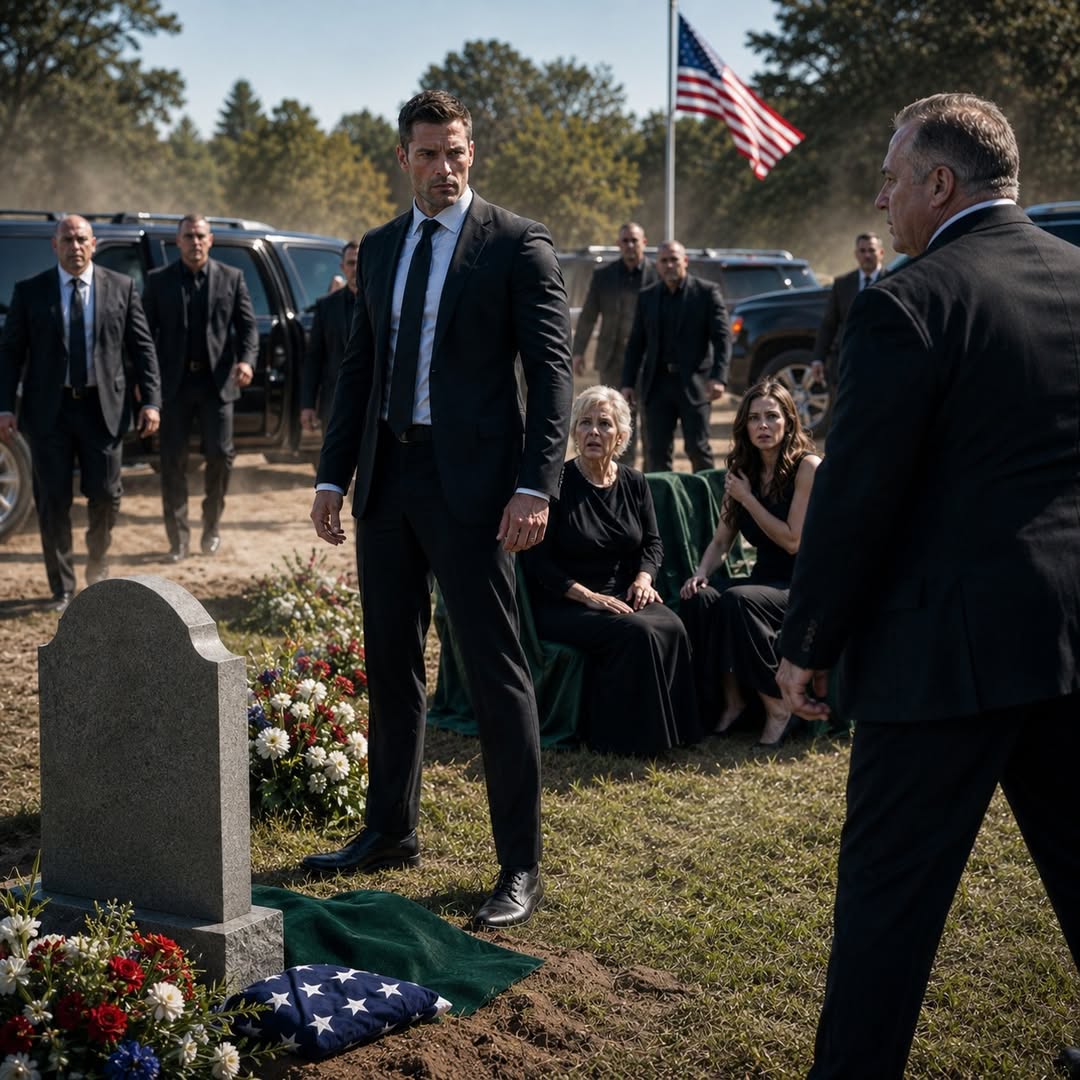
I Was Standing At My Father’s Grave, Where He Taught Me To Ride A Bike As A Kid. Suddenly, Mob Hitmen Surrounded The Cemetery. Black SUVs. Tinted Windows. Engines Running. Behind Me, My Sister And Mother Sat In Chairs—They Didn’t Know This Was An Execution. The Gunmen Thought They’d Find Soft Targets At A Funeral. They Had No Idea They Just Targeted A Navy SEAL Ambush Specialist Who Spent 12 Years Making Terrorists Disappear In The Shadows. Victor Kane’s Crime Empire Only Needed One More Grave.
“Now Ghost’s Revenge Starts.”
Part 1
The air smelled like wet grass, cheap lilies, and fresh-cut earth.
That was the first thing I noticed at my father’s funeral. Not the black casket. Not my mother’s thin shoulders trembling under her wool coat. Not my little sister Eliza wiping her face with the same folded tissue until it started falling apart in her fingers.
The smell.
Rain was coming, the kind of cold spring rain that made the sky hang low over Ohio like a dirty blanket. The cemetery workers had covered the mound of dirt with green carpet, but a corner had curled up in the wind, showing the raw brown soil underneath.
My father hated fake things.
He would have noticed that corner. He would have stepped away from his own funeral, if he could, and fixed it himself.
I stood beside the grave with my hands in my coat pockets, my chin lowered, playing the part everyone expected from a grieving son. Quiet. Broken. Respectful.
But I wasn’t looking at the coffin.
I was counting.
Three rows of folding chairs. Forty-two mourners. One priest. Two cemetery workers pretending not to listen. A white tent with four support poles and two loose ropes that could trip someone running in panic. A narrow lane behind the oak trees. A stone wall to the east. Two news vans at the cemetery gate.
And five black SUVs that did not belong.
They sat beyond the gravel road with their engines idling, windows dark enough to reflect the gray sky. Nobody came out. Nobody brought flowers. Nobody signed the guest book.
I had spent eight years in the Navy, most of them in places where the air was full of dust, diesel, and people trying to kill me. You learned to notice when something did not fit. You learned the difference between grief and surveillance. Between a man adjusting his tie and a man checking the weight under his jacket.
My father, Adrien Kaine, had died two weeks earlier in a warehouse fire.
That was what the report said.
Accidental electrical fault.
Case closed.
I had read the report three times on the plane home and once more in the motel bathroom while the shower ran so my mother wouldn’t hear me cursing through the phone. My father had been a mechanical engineer. He labeled his spice jars by expiration date. He unplugged the toaster before bed. He kept backup batteries in a drawer sorted by size.
He did not die because of a loose wire in a warehouse he knew better than his own garage.
The priest’s voice floated over us.
“Adrien was a man of service, integrity, and quiet strength…”
My mother, Natalie, sat in the front row, pale as candle wax. She had not worn makeup. My father used to tell her she looked prettiest in the mornings, before she tried to look pretty for the world. Eliza sat beside her, clutching her hand. Twenty-three years old, fresh out of college, still soft in the places life had not punched yet.
I stepped closer to them.
Across the grave, a man in a navy suit watched me over the heads of the mourners. I didn’t know him. He was too far back to be family, too still to be a curious neighbor. His left hand stayed near his waist.
Another man stood by a maple tree with an earpiece tucked beneath his collar.
My jaw tightened.
Kyle had told me not to come unprepared.
Kyle Rowe was thirty yards behind me, pretending to study a spray of white roses. He had flown in the night before after I called and said, “Something’s wrong.”
He hadn’t asked what.
Men like Kyle didn’t need essays. We had survived enough together to hear danger in two words.
His eyes met mine for half a second.
He had seen them too.
The priest closed his Bible. The wind lifted the edge of his robe.
“Amen.”
People shifted. Chairs scraped against damp grass. Someone sniffled. Someone dropped a program. Everyone began moving toward the casket to say goodbye.
That was when I saw the man in the gray suit.
He stood near the cemetery road, hands folded in front of him, silver hair neat, face calm. He did not look at my father’s coffin once.
He looked at me.
Then he smiled.
It was not the smile of a mourner. It was not even the smile of a stranger being polite.
It was the smile of a man watching a door close.
My pulse slowed.
That was how my body reacted to danger. Not panic. Not heat. A cold, steady narrowing of the world.
I leaned toward my mother.
“Mom,” I whispered, “when I tell you to move, you take Eliza and get behind the tent.”
She looked up at me, confused. “Dominic, what are you talking about?”
“Don’t ask. Just do it.”
Her lips parted. Then she saw my face.
She had been a military wife long enough to understand that tone.
Eliza turned, eyes red. “Dom?”
I didn’t answer.
The man by the maple tree touched his earpiece.
Two others moved away from the back of the crowd.
The gray-suited man’s smile widened.
My hand closed around the grip beneath my jacket.
And in that breath before the first scream, I understood the ugliest truth of my life.
They had not come to my father’s funeral to mourn him.
They had come to finish burying us.
### Part 2
The first gun came out beneath a folded funeral program.
That detail stayed with me longer than the shot itself. A cream-colored card with my father’s name printed in navy ink, bent around a pistol grip like grief had been turned into a disguise.
The man raised it toward the front row.
Toward my mother.
I grabbed her collar and pulled.
“Move!”
She did not scream. Not then. She moved because I had told her to, dragging Eliza so hard my sister stumbled out of one heel. I shoved both of them toward the tent as the first shot cracked across the cemetery.
The sound shattered the service.
People dropped flowers. Chairs flipped. Someone screamed my father’s name, as if he could still get up and fix this too.
I drew and fired in one motion.
The shooter folded backward into the grass.
I didn’t look at him again.
There were more.
There are always more.
A man near the road stepped out from behind a parked sedan. Another came from the tree line. Two moved through the crowd, using terrified mourners as cover. That told me they were not amateurs. They had planned for panic. They had counted on innocent bodies making me hesitate.
They had miscalculated.
I moved left, low behind a granite headstone shaped like an angel, and put myself between the shooters and my family.
“Kyle!” I shouted.
“I see them!” he called back.
His civilian jacket opened just enough for him to work. He moved like he always did, quiet and exact, steering three guests behind a stone bench before returning fire.
The cemetery became a box of noise.
Gunshots slapped stone. White lilies burst apart. Rain began to fall in cold, fat drops, as if the sky had been waiting for permission to grieve.
I saw the gray-suited man walking away.
Not running. Walking.
Calm.
He had expected this to be finished in seconds. A fast ambush. A dead son. A dead widow. Maybe a sister too, depending on whatever message his boss wanted to send.
He glanced back once.
I wanted to chase him, but two men were still advancing from the SUVs.
One fired wild, hitting the casket stand. My father’s coffin shifted with a heavy wooden groan.
Something inside me went still.
I moved before I thought.
Headstone to headstone. Wet grass under my shoes. Breath steady. Sight picture clean. One man down near the gravel lane. Another behind a maple trunk, shoulder exposed. Kyle took the third before he could flank the tent.
“Dom!” Eliza screamed.
I looked back.
The tent rope had snagged my mother’s coat. She was trying to pull free while Eliza crouched beside her, shaking so badly she could barely help.
A man in black moved toward them from the blind side of the tent.
I didn’t have a clear shot.
I ran.
The ground slipped beneath me. A bullet hit a vase near my knee, spraying glass and water across my pants. I kept moving.
The man saw me too late.
I hit him with my shoulder and drove him into the folding chairs. His gun clattered away under the seat of a woman who had fainted. He swung at my face. I caught his wrist, twisted, and dropped him hard enough that his head struck the metal chair frame.
He stopped moving.
I cut the tent rope with the small blade I kept clipped inside my sleeve and pulled my mother free.
“Stay down,” I said.
She grabbed my wrist. “Dominic, who are these men?”
“I don’t know.”
That was the truth, and it tasted worse than a lie.
Kyle’s voice came from behind me.
“Two running toward the gate. Gray suit is moving.”
I turned.
The man in gray had reached the last SUV. One of his men held the rear door open. Sirens wailed somewhere in the distance, faint but growing.
I should have stayed with my family.
I should have let the police handle it.
But my father was in a coffin behind me because someone thought they could burn the truth and bury the witness.
I ran.
The gray-suited man paused when he saw me coming. He did not reach for his weapon right away. That bothered me. Men who were afraid moved fast. Men who had power waited to see if fear would work for them.
He adjusted his cuff.
“Dominic Kaine,” he said.
Hearing my name in his mouth felt like stepping on glass.
“You know me?”
He smiled again. “Your father talked too much.”
I raised my weapon. “Who sent you?”
“Still asking the wrong questions.”
“Then correct me.”
His eyes flicked toward the road, toward the approaching sirens. “You should have stayed overseas. This town was never safe for men in your family.”
Then his hand moved.
I was faster.
He dropped beside the SUV, his polished shoes scraping gravel. The driver panicked and sped away with the rear door still open, leaving the gray-suited man staring up at the rain.
I crouched beside him.
“Who killed my father?”
His mouth moved. Blood bubbled at the corner of his lips.
For one second, I thought he would tell me.
Instead he whispered, “He kept a copy.”
Then his eyes went empty.
By the time the first patrol cars screamed through the cemetery gate, I was standing over a dead stranger at my father’s funeral, soaked in rain, with one question burning through my skull.
A copy of what?
### Part 3
The police kept asking me why I had brought a gun to a funeral.
I kept telling them I did not trust accidents.
We went through that circle for three hours while rain hammered the roof of a patrol car and mourners gave shaking statements under the cemetery tent. My mother and Eliza sat inside an ambulance wrapped in silver blankets. Every time I glanced over, Eliza was watching me like she no longer knew what I was.
Detective Paul Mason sat across from me in the open back of the patrol car, one elbow on his knee, notebook balanced on his thigh.
He was mid-forties, broad-shouldered, with gray creeping through his beard and eyes too tired to waste words. I knew his type. Local cop who had seen enough to stop believing people were basically good, but not enough to quit trying.
“You understand how this looks,” he said.
“It looks like armed men attacked a funeral.”
“It looks like armed men attacked a funeral and the grieving son dropped half of them before my officers arrived.”
“Then your officers arrived late.”
His pen stopped.
Kyle, standing ten feet away near a cruiser, looked at the ground to hide a smile.
Mason studied me. “You always this cooperative?”
“Only when someone tries to murder my family.”
He looked toward the covered bodies near the road. “No wallets. No phones. No IDs. The SUVs were stolen. Plates swapped. Whoever sent them knew how to clean up.”
“That supposed to reassure me?”
“No. It’s supposed to make you listen.” Mason leaned closer. “This wasn’t random, Mr. Kaine. This was organized. That means you need protection, not revenge.”
I almost laughed.
Protection had not saved my father.
“What did you know about the warehouse?” I asked.
Mason’s face changed by one inch.
A small thing. Easy to miss.
I didn’t miss it.
“What warehouse?”
“The one where my father died.”
He flipped a page too slowly. “Electrical fire. Fire marshal signed off.”
“My father worked with machines for forty years. He could hear a bad breaker through a wall.”
“Smart men still die in accidents.”
“Not two weeks after telling me he found something dangerous.”
Mason’s eyes sharpened. “He told you that?”
I nodded.
“What exactly did he say?”
“That he had something important to show me when I got home.”
“When was this?”
“Four days before the fire.”
Mason tapped his pen once against the notebook. “Did he mention names?”
“No.”
“Files? Accounts? A company?”
“No.”
He sighed, but it was not frustration. It was calculation.
“Go to your hotel,” he said. “Stay with your family. I’ll put a car outside.”
“No.”
His eyebrows rose.
“I’m going to my father’s house.”
“It’s sealed.”
“He’s my father.”
“It’s a crime scene.”
“You said it was an accident.”
That shut him up for half a second.
Then he closed the notebook. “You break that seal, I can arrest you.”
“You won’t.”
“You sure?”
“No. But I’m going anyway.”
Kyle caught up with me in the parking lot after the police released me. The cemetery had emptied except for tire tracks, broken flowers, and my father’s coffin still waiting to be lowered into the ground. That part hurt more than the gunfire.
No man should have to wait alone in the rain after his own funeral.
Kyle tossed me his truck keys.
“You’re shaking,” he said.
I looked down.
My hands were steady.
He knew me better than that. “Not outside.”
I got in the passenger seat. The heater smelled like dust and old fast-food bags. For a few minutes, neither of us spoke.
Finally he said, “The gray suit said something before he died.”
“He said Dad kept a copy.”
“A copy of what?”
“That’s what we’re finding out.”
My father’s house sat on a quiet street lined with maple trees and porch flags. It was the kind of neighborhood where people borrowed ladders and pretended not to know who drank too much. The yellow police tape across the front door looked obscene.
I cut it.
Inside, the house smelled like lemon cleaner, old coffee, and faint smoke from my father’s clothes. His reading glasses sat on the arm of his recliner. A mug waited beside the sink with a brown ring at the bottom. On the refrigerator, a grocery list in his handwriting said eggs, furnace filters, cinnamon.
Ordinary things are cruel after death.
I went straight to his office.
My father’s desk was neat enough to pass inspection. Pens in a cup. Paperclips in a tray. One framed photo of me and Eliza at a lake when we were kids, both sunburned, both laughing.
Kyle checked the window while I searched drawers.
Bills. Manuals. Old tax records. Nothing.
Then I noticed the desk lamp.
It was turned slightly toward the wall. My father hated crooked lamps.
I moved it back and saw a thin scratch on the desktop, fresh, beside the bottom drawer.
Locked.
I found a screwdriver in the garage and pried it open.
Inside was a brown envelope, a stack of shipping manifests, three photographs of warehouses, and a handwritten note.
No names.
Just numbers. Dates. Locations.
And one word circled twice in red ink.
Harborline.
Kyle looked over my shoulder. “Company?”
“Maybe.”
A floorboard creaked behind us.
We both turned.
The house was dark beyond the office doorway.
Someone was inside with us.
### Part 4
Kyle killed the office lamp with one quick twist of the switch.
Darkness swallowed the room.
For half a second, all I heard was rain tapping against the window and the soft tick of my father’s wall clock. Then the floor creaked again, this time closer to the hallway.
Kyle moved left.
I moved right.
We did not speak. The old language came back without effort. Angles. Shadows. Breathing. Patience.
A beam of light swept across the hallway floor.
Flashlight.
Not police. Police would announce themselves because they wanted witnesses to say they had followed procedure. Whoever was in the house moved quietly, drawer by drawer, room by room, like he already knew what he was searching for.
I tucked the envelope inside my coat.
The intruder reached the office doorway.
He stepped in with a small flashlight in his teeth and a pistol low in his right hand.
Young. Nervous. Bad haircut. Not one of the men from the funeral.
His eyes adjusted too slowly.
I took the pistol before he finished understanding that the room was occupied. Kyle hit him behind the knee, and I drove him face-first onto my father’s rug.
The flashlight rolled under the desk.
“Name,” I said.
He groaned.
Kyle put a knee between his shoulder blades. “He asked nicely.”
“Reed,” the man gasped. “My name’s Reed.”
“Who sent you?”
“I don’t know.”
I pressed his own pistol against the floor beside his face, not at him, just close enough for him to feel the cold metal. “Try again.”
“I swear. I swear, man. I was just told to get a brown envelope from the desk.”
My stomach tightened.
“What was in it?”
“I don’t know.”
“Who told you?”
He swallowed hard. “A guy from the docks. Everyone calls him Saint.”
Kyle looked at me.
Saint.
Not Harborline. Not the gray-suited man. Another piece.
“What were you supposed to do after you found it?” I asked.
“Leave it in a trash can behind St. Agnes Church. Midnight.”
“That’s all?”
He nodded too fast. “That’s all.”
Fear has a smell. Sour, warm, humiliating. Reed was soaked in it.
He was a courier, not a killer.
Kyle zip-tied his wrists with a cord from my father’s printer. I called Detective Mason and told him there was an intruder at my father’s house. I did not mention the envelope.
Mason arrived twelve minutes later, wet coat flapping, two uniformed officers behind him.
His eyes went straight to the broken desk drawer.
“You found something,” he said.
“Found a burglar.”
“Dominic.”
I met his stare. “He was looking for my father’s papers. That means your accident theory is getting worse.”
Mason knelt beside Reed. “Who sent you?”
Reed stared at the floor.
I already knew he wouldn’t talk now. Fear of me was temporary. Fear of whoever owned him was permanent.
Mason stood and lowered his voice. “You need to give me anything you found.”
“Do I?”
“You want answers? So do I.”
“I don’t know that yet.”
His jaw tightened. “You think I’m dirty?”
“I think six men attacked my father’s funeral and one more broke into his house before the rain dried on my coat. So yes, Detective, I think everyone is dirty until proven otherwise.”
For the first time, he looked less offended than sad.
“Your father came to me once,” he said.
That hit me harder than I expected.
“When?”
“About a month ago. He said he had concerns about Harborline Logistics. He wouldn’t give me details. Said he needed more proof.”
“What did you do?”
“I told him to bring me what he had.”
“And then he burned to death.”
Mason looked toward the office window.
“I didn’t kill your father.”
“I didn’t ask.”
“No,” he said quietly. “But you wanted to.”
He left with Reed and the uniforms, warning me again not to interfere.
I interfered immediately.
At midnight, Kyle and I parked two blocks from St. Agnes Church. The old brick building sat dark under the rain, its stained glass windows black and blind. Behind it, an alley smelled like wet cardboard and fryer grease from the diner next door.
I placed a fake envelope in the trash can.
Then we waited.
At 12:17, a black sedan rolled into the alley without headlights.
A woman stepped out.
Not a mob soldier. Not a dockworker.
She wore a beige trench coat, carried a red umbrella, and moved like she had never been afraid of a dark alley in her life.
She opened the trash can, took the envelope, and slipped it under her coat.
Kyle whispered, “You know her?”
I did.
Her name was Clara Mitchell.
Investigative reporter.
And three years earlier, she had written a story that nearly ended my father’s career.
I watched her walk back toward the sedan, and for the first time that day, my anger turned in a new direction.
Because if Clara Mitchell was collecting my father’s secrets, then either she had helped get him killed…
Or she knew exactly who did.
### Part 5
I followed Clara Mitchell to a twenty-four-hour coffee shop near the courthouse.
She chose the back booth without looking over her shoulder once. That was how I knew she expected to be followed. People who think they are invisible move carelessly. People who know danger use reflections.
She watched me approach in the chrome napkin dispenser.
“Dominic Kaine,” she said before I sat down. “You look like your father.”
I stayed standing. “You don’t get to say that.”
Her face did not change. Early forties. Sharp eyes. Brown hair pinned carelessly at the back of her head. There were ink stains on her fingers and a healing cut near her cheekbone.
“Sit down,” she said. “You’re blocking my exit.”
“You picked the booth because the kitchen door is ten feet away.”
“And you noticed because Adrien raised a paranoid son.”
“My father raised a careful son.”
That landed.
For a second, the reporter vanished and something like grief appeared underneath.
“I’m sorry about him,” she said.
“Were you sorry before or after you sent someone to steal his papers?”
“I didn’t send Reed.”
“But you came for the envelope.”
“Yes.”
“Why?”
She reached into her coat and placed the fake envelope on the table. “Because your father told me if anything happened to him, someone would try to pass documents through this drop.”
My anger stuttered.
“You worked with him?”
“For six months.”
“You ran a story accusing him of falsifying safety reports.”
“That story was fed to me by Harborline’s legal team. I printed it. I was wrong. Your father came to me afterward with proof that Harborline had doctored his name onto reports he never signed.”
I sat down slowly.
The waitress came by with coffee. Clara ordered black. I asked for nothing.
Clara opened her bag and took out a folder. “Your father was investigating Harborline Logistics. On paper, they move industrial parts, medical equipment, furniture, produce. In reality, some of their containers never match their manifests.”
“Smuggling?”
“Among other things.”
“What other things?”
Her fingers tightened on the cup. “People.”
The word sat between us like a live wire.
My father had died over shipping paperwork. That had made sense in a distant, corporate way. Fraud. Money. Corruption.
But people?
“Children?” I asked.
Clara looked at the window instead of me.
That was answer enough.
I saw Eliza at eight years old, running through sprinklers in our old backyard while my father pretended the hose was out of control. I saw my mother packing school lunches. I saw families torn open by men who treated human life like cargo weight.
My voice came out flat. “Who runs it?”
“I don’t have a name I can print.”
“But you have a name.”
She hesitated.
“Clara.”
“Victor Kaine.”
For one second, I thought I had misheard her.
“My last name is Kaine.”
“I know.”
“No relation.”
“I didn’t say there was.”
Victor Kaine was a ghost story in cities like ours. You heard his name in whispers from dockworkers, cops, bartenders, men who owed money, women who looked over their shoulders after dark. He owned restaurants, trucking companies, nightclubs, warehouses, judges, maybe half the police department depending on who was drunk enough to talk.
My father had not stumbled onto a bad company.
He had stepped on the throat of an empire.
Clara slid a photograph across the table. Grainy. A warehouse at night. Men unloading crates from a Harborline truck. In the corner, barely visible beneath a security light, stood a silver-haired man.
The man in the gray suit.
I felt my pulse in my teeth.
“He was at the funeral,” I said.
“I know.”
“How?”
Clara looked at me for a long moment, then reached into her bag again and pulled out a phone.
She played a voicemail.
My father’s voice filled the booth.
“Clara, if Dominic comes home, don’t tell him everything at once. He’ll charge straight into the fire. He always does. Give him enough to survive. Not enough to get himself killed.”
The coffee shop noise faded.
My father sounded tired. Afraid. Alive.
I closed my eyes.
“When did he leave that?”
“The night before the warehouse fire.”
My hand curled into a fist on the table.
Clara stopped the recording. “Adrien believed someone inside law enforcement was feeding Victor information. Every time he got close, witnesses disappeared, files vanished, raids failed.”
“Mason?”
“I don’t know.”
That answer mattered. It meant she had considered it.
“What did my father keep a copy of?”
Clara’s gaze flicked to the window.
Too fast.
I turned.
Across the street, a man in a raincoat stood under the awning of a closed pharmacy, looking directly at our booth.
His right hand was inside his coat.
Clara whispered, “Dominic, we need to leave.”
The man stepped off the curb.
And behind him, a black SUV rolled slowly through the intersection with its lights off.
### Part 6
The coffee shop had three exits.
Front door. Kitchen door. Bathroom window.
The front door was watched. The kitchen probably led to an alley, and alleys were where people with guns liked to turn a problem into a statistic. The bathroom window was small, high, and painted shut.
I grabbed Clara’s folder.
“Kitchen,” I said.
She didn’t argue.
That told me she had been living scared long enough to understand the value of speed.
We moved just as the bell over the front door jingled. The man in the raincoat entered with water dripping from his sleeves. He looked like any other customer until I saw his eyes sweep the corners instead of the menu board.
The waitress smiled at him.
He ignored her.
Kyle’s voice crackled in my earpiece. “Dom, SUV has two in front, maybe three in back. Another sedan turning the corner.”
“You armed?”
“Enough.”
“Don’t engage unless they force it.”
Clara pushed through the swinging kitchen door. Heat and grease slapped my face. A cook yelled, “Hey!” but stopped when he saw us moving like the building was on fire.
We crossed past a prep table covered in chopped onions and escaped through the rear door into an alley.
The rain had turned the pavement slick. Trash bags leaned against brick walls. Somewhere above us, an air conditioner rattled like loose bones.
Clara pointed left. “My car.”
“No. They know your car.”
“Then what?”
“Kyle.”
At the mouth of the alley, headlights washed across wet pavement.
Too late.
A sedan stopped sideways, blocking the exit.
Two men got out.
Not dock punks. Not frightened couriers. Their movements were quiet, trained, and empty of hesitation.
Clara inhaled sharply.
I pulled her behind a dumpster as the first shot hit the brick wall where her head had been.
Kyle’s truck roared into the far end of the alley like a mad bull. The sedan men turned. Kyle did not slow down until the last possible second. His bumper clipped the sedan’s rear quarter panel and spun it hard enough to pin one attacker against the wall. The other dove away.
“Move!” Kyle shouted.
I dragged Clara up and shoved her toward the truck.
The man who had entered the coffee shop burst through the kitchen door behind us. He raised his weapon.
I threw the folder.
Paper exploded into the rain. For half a second, white sheets filled the alley like startled birds. His shot went wide. I closed the distance, hit his wrist, drove him into the brick, and stripped the gun from his hand.
He smiled with bloody teeth.
That was the second smile in two days that bothered me.
“Victor says hello,” he said.
Then he bit down hard on something hidden in his mouth.
I knew what it was before his body convulsed.
I turned away from the foam, grabbed the papers I could reach, and climbed into Kyle’s truck.
“Was that necessary?” Clara shouted, breathless.
“What?”
“Driving into them!”
Kyle reversed out of the alley. “You’re welcome.”
We ditched the truck twenty minutes later in a parking garage and switched to a rental Kyle had staged earlier. Clara sat in the back seat, soaked, shaking, and furious enough to hide the fear.
“What copy?” I asked her.
She looked at me through the rearview mirror.
“Not now.”
“Now.”
“Your father had a full archive. Documents, videos, account ledgers, names. He said if he died, it would go to you.”
“Where?”
“I don’t know.”
I stared at her reflection.
She swallowed. “I swear. Adrien was careful. He didn’t even tell me. He said he left the key with someone he trusted.”
“Who?”
“His lawyer.”
Oliver Grant.
My father’s estate attorney. A soft-spoken man who sent birthday cards every year in blue envelopes because he thought email was rude.
Kyle took the next turn too fast.
“We go now,” he said.
“No,” Clara said. “You can’t just walk into Oliver’s office at two in the morning.”
“Watch me,” I said.
But Oliver Grant’s office was already burning when we arrived.
Fire trucks crowded the street. Red lights spun across wet brick. Water poured from the second-floor windows. People stood under umbrellas in stunned clusters.
I pushed through the crowd until a firefighter blocked me.
“Sir, stay back.”
“The lawyer who owns this building—Oliver Grant. Where is he?”
The firefighter looked away.
My stomach dropped.
They brought Oliver out on a stretcher with an oxygen mask over his face, his gray hair blackened at the edges. Alive, but barely. His hand slipped from beneath the blanket as they lifted him into the ambulance.
Something fell from his fingers.
A small brass key.
I picked it up before anyone saw.
There was a paper tag tied to it with smoke-stained string.
Unit 47.
I closed my fist around it and stepped back into the rain.
Someone had burned the lawyer’s office less than an hour after Clara told me he had the key.
Which meant one of two things.
Either they had been following us…
Or someone inside my circle was listening.
### Part 7
Unit 47 was in a storage facility beside the railroad tracks, the kind of place where people stored Christmas decorations, divorce furniture, and mistakes they weren’t ready to throw away.
The office was closed. The cameras above the gate were old and angled badly. My father would have liked that. He had always trusted rust more than technology because rust at least told the truth.
Kyle cut the padlock on the side pedestrian gate. Clara stayed in the car with a burner phone and a pistol she held like she hated needing it.
“Five minutes,” Kyle said.
“We need more than five.”
“We never get what we need.”
Unit 47 sat in the back row beneath a flickering security light. Rainwater ran down the corrugated door in thin silver lines. My hand hovered near the lock before I used the brass key.
It turned smoothly.
Inside, the air smelled like cardboard, oil, and dust.
There was no furniture. No boxes of old family photos. No fishing rods. Just a metal filing cabinet, a black laptop, and a framed photograph leaning against the wall.
I stepped closer.
The photo was of me at seventeen, standing beside my father in our garage after we rebuilt an old motorcycle engine. I was filthy, grinning, full of teenage arrogance. My father’s hand rested on my shoulder, proud and tired.
On the back, in his handwriting, he had written:
When the machine fails, check who benefits.
My throat tightened.
Kyle opened the filing cabinet.
“Dom.”
Folders. Dozens of them. Bank records. Shipping manifests. Property deeds. Photographs. Lists of license plates. Names of companies that sounded ordinary enough to hide monsters inside them.
Harborline Logistics appeared on almost every page.
But so did others.
Church charities. Foster agencies. Private security firms. A medical transport company. A judge’s foundation. A senator’s campaign committee.
My father had not found a smuggling route.
He had found a system.
I opened the laptop. It asked for a password.
I tried my mother’s birthday. Wrong.
Eliza’s. Wrong.
Mine. Wrong.
Kyle raised an eyebrow. “Sentimental men are bad at passwords?”
“My father was sentimental, not stupid.”
I looked around the unit.
The motorcycle photo.
The note.
When the machine fails, check who benefits.
I typed: who benefits
Wrong.
Then I remembered something he used to say whenever I complained about unfairness.
“Follow the pressure, Dominic. Machines don’t lie. People do.”
I typed: pressure
The laptop opened.
A video file sat alone on the desktop.
I clicked it.
My father’s face appeared.
He looked thinner than I remembered, sitting in his office at home, the lamp crooked behind him. He must have set it that way on purpose. A marker. A clue.
“If you’re watching this,” he said, “then I’m gone.”
My knees almost failed.
Kyle turned away, giving me the privacy soldiers give each other when grief arrives without permission.
My father continued.
“I’m sorry, son. I wanted to tell you everything, but the more I learned, the more I realized telling you would put you in the line of fire. Maybe that was cowardice. Maybe it was love. I don’t know anymore.”
His voice cracked.
I pressed my fist against my mouth.
“Harborline is part of a trafficking network run through legitimate shipping contracts. Victor Kaine controls the street-level operation, but he isn’t the top. He has protection. Law enforcement. Courts. Politics. I don’t know how high it goes, but I know someone inside the investigation is feeding him information.”
He leaned closer.
“Trust evidence. Not badges. Not old friends. Not grieving faces.”
A chill moved through me.
“Clara Mitchell has part of the story. Oliver has the key. The rest is here. If you choose to walk away, I won’t blame you. Take your mother and Eliza and disappear.”
He paused, then looked straight into the camera.
“But if you choose to finish this, do it smarter than I did. Don’t fight the monster in the dark. Drag it into daylight.”
The video ended.
For a long moment, neither of us moved.
Then Clara’s voice came through the radio.
“Someone just entered the facility.”
Kyle moved to the side of the door. “How many?”
“At least four. No, six. Black SUV. They’re coming down your row.”
I copied the drive contents onto two small flash drives from the cabinet and put one inside my boot, one under the lining of my coat.
Kyle opened the unit door an inch.
Headlights swept across the row.
“Dom,” he whispered, “they’re not here to search.”
A voice called through the rain.
“Dominic Kaine! Bring out what your father stole, and your sister doesn’t have to suffer.”
My blood turned colder than the rain.
Because Eliza was supposed to be at the hotel with my mother.
And I suddenly knew she wasn’t.
### Part 8
The hotel clerk kept saying the same thing.
“They checked out twenty minutes ago.”
I held his collar over the front desk until his shoes barely touched the floor.
“My mother and sister did not check out.”
His face had gone the color of paper. “Sir, I’m telling you what the system says.”
“Show me the cameras.”
“I can’t just—”
Kyle stepped beside me and placed a badge on the counter. It was expired, bent, and not law enforcement, but the clerk didn’t know that.
“Show him,” Kyle said.
We watched the footage in a back office that smelled like burnt coffee and printer toner.
At 9:14 p.m., three men walked down the third-floor hallway. One carried flowers. White lilies, like the ones at the cemetery. He knocked on room 312.
My mother opened the door.
She smiled for half a second because grief makes people stupidly polite.
The men forced their way inside.
Eliza tried to run. One caught her by the hair and dragged her back. My mother hit him with a lamp. I loved her for that. Another man shoved her against the wall and zip-tied her hands.
Thirty-eight seconds later, they were gone through the stairwell.
The clerk whispered, “Oh my God.”
I memorized the time stamp, the faces, the way one man favored his left leg.
Clara leaned over the monitor. “There. The SUV plate.”
Kyle was already typing into his laptop. He had traffic access I never asked about because friendship sometimes meant respecting useful crimes.
“They’re heading south,” he said. “Industrial district.”
My phone rang.
Unknown number.
I answered.
A man breathed softly on the other end, letting me sit inside the silence.
Then he said, “You have something that belongs to my employer.”
“Put my sister on.”
A faint sound came through. Eliza crying.
My hand tightened around the phone until the case cracked.
“You touch her,” I said, “and I will take you apart.”
He laughed. “That military voice might scare boys overseas. It does not scare me.”
“Who are you?”
“Tristan Moore. You killed six of my men at the cemetery. I’m trying not to take that personally.”
Tristan.
The name fit the kind of man who sent flowers before kidnapping a family.
“What do you want?”
“The evidence. All copies. You come alone to the old Bellmark plant in forty minutes.”
“And if I don’t?”
Eliza screamed.
Not long. Just enough to show me he could make her.
The world narrowed to a single point.
“I’m coming,” I said.
“No police. No reporter. No soldier friend.”
“Fine.”
The line went dead.
Kyle looked at me. “You’re not going alone.”
“No.”
“Good.”
“I’m going in first.”
“That is not the same as a plan.”
“It’s the only one they’ll believe.”
Clara grabbed my arm. “Dominic, your father said drag them into daylight. This is the dark.”
“My mother and sister are in that dark.”
She let go.
We parked half a mile from the Bellmark plant under a dead billboard advertising discount mattresses. The factory rose beyond the trees, broken windows catching moonlight, old smokestack leaning like a tired giant.
Kyle checked his weapon.
Clara sat in the back, pale but steady. “I can call Mason.”
“No.”
“The FBI?”
“No.”
“You can’t fight a private army with one friend and grief.”
I looked at her. “I’m not fighting an army. I’m taking back my family.”
Kyle nodded toward the plant. “Eight outside. Maybe more inside. Two on the roof. They expect you from the main road.”
“So we disappoint them.”
We moved through the weeds along the service side. The rain had stopped, leaving everything wet and shining. My shoes sank into mud. Somewhere nearby, water dripped steadily into a metal barrel.
I entered alone through a side door with my hands visible.
The main floor was lit by work lamps connected to a portable generator. Rusted machines stood like dead animals. In the center, tied to chairs, were my mother and Eliza.
Eliza’s face was streaked with tears.
My mother’s lip was split, but her eyes were hard.
Tristan Moore stood beside them.
Mid-thirties. Military posture. Buzzed hair. Calm expression. He held a gun loosely, like an extension of his hand.
“Dominic Kaine,” he said. “The hero son.”
“Let them go.”
“Evidence first.”
I pulled a flash drive from my pocket.
The fake one.
His eyes moved to it, hungry despite himself.
That was when I saw the man in the shadows behind him.
Detective Mason stepped into the light.
And pointed his gun at me.
### Part 9
For a second, my mind rejected what my eyes were seeing.
Mason stood ten yards away with his service weapon steady and his face empty. Not ashamed. Not angry. Empty.
Behind him, my mother made a small sound.
Not fear.
Recognition.
That sound cut through me.
“You,” she whispered.
Mason’s eyes flicked toward her. “Natalie.”
I looked between them. “You know him?”
My mother’s face tightened. “Your father trusted him.”
Tristan chuckled. “That’s the trouble with trust. It’s so easy to sell.”
Mason kept the gun on me. “Drop the drive.”
I did not move.
“Your partner Grant was too obvious,” I said. “That’s why you let me find him later, wasn’t it? Give me a dirty cop to blame. Keep yourself clean.”
Mason’s jaw flexed. “You don’t know what you’re talking about.”
“I know you came to the cemetery ready to manage a crime scene, not investigate one.”
His eyes hardened.
There it was.
A small crack.
Tristan stepped closer to Eliza. “Drive, Dominic.”
I tossed it onto the floor between us.
A young man picked it up and rushed to a laptop on a metal crate. He plugged it in.
“Password protected,” he said.
“Try pressure,” Tristan told him.
My blood chilled.
They had heard the video.
They had heard my father’s voice.
Or someone had told them.
The young man typed. The laptop opened. Then his brow furrowed.
“What?” Tristan snapped.
“It’s empty.”
Tristan looked back at me.
I smiled for the first time that night. “You said come alone. You didn’t say come stupid.”
He raised his gun toward Eliza.
Before he could fire, the factory went black.
Kyle had cut the generator.
Darkness turned every man into a guess.
I moved toward the last place I had seen Tristan. Someone fired. The muzzle flash gave him away. I hit him low, driving him into the concrete. His gun skidded away. Men shouted. My mother screamed my name. Eliza kicked her chair over trying to get free.
Kyle opened fire from the catwalk.
Not wild. Not cinematic. Controlled, disciplined shots that made armed men dive for cover and forget who they were supposed to be threatening.
I grabbed Tristan’s wrist as he reached for a knife at his boot. We rolled across the floor, striking elbows, knees, concrete. He was trained. Strong. Mean in a way that came from enjoying the work.
“You should have stayed buried with your old man,” he hissed.
I drove my forehead into his nose.
He reeled.
I took the knife and ran to my family.
“Dom!” Eliza sobbed.
“Hold still.”
My hands were steady as I cut the ties. That steadiness scared me sometimes. It made terrible things possible.
Mason fired from the shadows.
The bullet hit the chair where my mother had been a second earlier.
I pushed both women down behind a rusted conveyor belt.
“Go to the side door. Clara’s outside.”
My mother grabbed my sleeve. “He came to the house after your father died.”
“Mason?”
She nodded, shaking. “He said he was checking on us. He asked if your father kept anything hidden. I thought he was helping.”
Her guilt was raw enough to bleed.
“You didn’t know,” I said.
Then I turned back toward the dark.
Emergency lights clicked on overhead, dim red, bathing the factory in the color of old blood.
Tristan staggered up, wiping his face.
Mason moved toward the far exit.
He was running.
I went after him.
He burst through a metal door into the loading yard, slipping on wet concrete. Beyond the fence, headlights approached fast.
Police?
FBI?
Victor’s men?
Mason reached his car and fumbled with the keys.
I caught him at the driver’s door and slammed him against it.
“Who hired you?”
He swung at me. I blocked it and hit him once in the ribs. He folded, gasping.
“Who?”
He looked past me and laughed bitterly.
“You still think this ends with Victor?”
A shot cracked from the fence line.
Mason jerked.
His body sagged against the car, blood spreading across his shirt.
I spun toward the shooter, but all I saw was a dark sedan disappearing beyond the factory gate.
Mason slid to the ground, breathing in wet, shallow pulls.
I crouched beside him. “Who is above Victor?”
His eyes rolled toward mine.
“Preston,” he whispered.
Then he died with the rainwater running under him, carrying his blood toward the drain.
Preston.
Not a company. Not a street name.
A person.
And whoever he was, he had just killed his own man to keep me from hearing the rest.
### Part 10
We took my mother and Eliza to a safe house Kyle knew outside the city.
It was not official. Official had gotten my father killed. Official had put Mason at my table asking gentle questions while measuring my family for graves.
The house sat at the end of a gravel lane behind a closed orchard. It smelled like cedar, old blankets, and canned soup. Clara made coffee in a dented pot while Eliza sat wrapped in a quilt, staring at nothing.
My mother stood at the kitchen sink, washing blood from her hands that was not hers.
I wanted to comfort them.
I also wanted to tear the world open.
Kyle caught my eye from the hallway and nodded toward the porch.
Outside, the air had gone cold and clear. Stars hung over the orchard like pinholes in black cloth.
“You heard Mason,” Kyle said. “Preston.”
“I heard.”
“Could be a first name. Last name. Code name.”
“Find all of them.”
He gave me a tired look. “Already started.”
Clara stepped onto the porch holding a folder we had pulled from Unit 47. “I may have something.”
She opened it on the railing.
Inside were copies of campaign donation records, charity board lists, and photographs. Same silver-haired businessmen. Same judges. Same police donors smiling beside banners about community safety.
One name appeared again and again.
Senator Preston Hale.
Senior member of the Judiciary Committee. Favorite son of the state. Churchgoing widower. Tough on crime. Smiling face on billboards near highways.
And, according to my father’s notes, a man who received money through six shell companies tied to Harborline.
Clara tapped a photograph.
Hale stood at a fundraiser beside Victor Kaine.
Their hands were clasped like old friends.
“My father knew,” I said.
“He suspected,” Clara replied. “He didn’t have enough to print. Not safely.”
“Safely is over.”
She looked up. “Publishing this without verification could destroy the case.”
“Keeping it quiet could get us killed before there is a case.”
Kyle’s phone buzzed. He read the message and went still.
“What?” I asked.
“Mason’s death is already being reported.”
“That fast?”
“Listen to this. Local detective killed during shootout with rogue former Navy SEAL Dominic Kaine, who fled with kidnapped family members.”
Clara closed her eyes.
They were making me the story.
Not the murdered father. Not the trafficking network. Not the dead corrupt cop. Me.
A dangerous veteran. Armed. Unstable. Grieving. Easy to fear.
My mother opened the porch door. “Dominic?”
Her voice pulled me back from the edge.
I turned.
Eliza stood behind her, pale but present.
“You need to tell the truth,” my mother said.
“I will.”
“No.” She stepped closer. “Not with bullets. Not alone in some warehouse. Your father tried to gather proof quietly, and they killed him quietly. Make them answer loudly.”
My father’s words came back.
Drag it into daylight.
Clara lifted her chin. “Give me everything.”
Kyle stared at her. “You publish, they come for you too.”
“They already did.”
I looked at my mother, then Eliza.
Eliza wiped her face with the quilt sleeve. “Dad didn’t die so we could hide forever.”
That decided it.
We spent the rest of the night building the story. Clara recorded my statement. Kyle scanned documents. I gave her the video of my father, the Harborline manifests, Mason’s connection, the photographs, the shell companies, the dead drops, everything we could verify.
Clara worked like a machine. No drama. No speeches. Just facts sharpened into a blade.
At dawn, she uploaded the article through three different editors and two legal teams who owed her favors.
By 8:03 a.m., Victor Kaine’s name was everywhere.
By 8:27, Senator Preston Hale’s office issued a denial.
By 9:10, the FBI announced a federal review.
By 9:46, my phone rang.
Unknown number.
I answered on speaker.
Victor Kaine’s voice was smooth as polished stone.
“Dominic,” he said. “Your father was troublesome. You are becoming irritating.”
“You killed him.”
“I approved a solution.”
My mother flinched.
I stepped outside before he could say more.
“You’re exposed,” I said. “It’s over.”
Victor laughed softly. “Men like me are never exposed. We are inconvenienced.”
“Then let me inconvenience you in person.”
A pause.
“You want to meet?”
“I want to look you in the eye.”
His voice warmed with amusement. “Your father had the same weakness. Pride disguised as courage.”
“Name the place.”
“My estate. Tonight. Come alone.”
“You already tried that.”
“This time, I won’t threaten your family.” He paused. “I’ll threaten the forty children being moved out of state before sunrise. Walk away, and they disappear. Come to me, and perhaps I become generous.”
The line went dead.
Clara stared at me through the porch window.
Kyle shook his head once.
But I was already moving.
Because Victor had finally told me the one thing he should have kept hidden.
There were children still alive.
And less than one night to find them.
### Part 11
Victor’s estate sat north of the city behind limestone walls, iron gates, and acres of lawn trimmed by men who probably never asked where their paychecks came from.
On satellite images, it looked like old money.
In person, through binoculars from a wooded ridge, it looked like a fortress pretending to be a wedding venue.
White columns. Fountain. Guesthouse. Service road. Cameras tucked under eaves. Armed guards near the garage. Two dogs behind the west fence. A delivery truck parked by the kitchen entrance.
Kyle lay beside me in the wet leaves.
“Tell me again why we didn’t call the FBI.”
“I did.”
“And?”
“Agent Brooke Lawson is bringing a team.”
“You trust her?”
“My father did.”
“That’s not an answer.”
“It’s the only one I’ve got.”
Clara waited at the safe house with my family and three copies of everything. If we disappeared, the rest of the story would still publish. That was the first smart thing I had done in days.
The second was not walking through Victor’s front gate alone.
Agent Brooke Lawson arrived twenty minutes after sunset in an unmarked SUV, no flashing lights, no speeches. Mid-thirties, dark hair pulled back, bruised-looking eyes from too many sleepless nights. She wore a vest under her jacket and carried herself like the kind of person who apologized after breaking a door only if the door deserved it.
“Dominic Kaine?” she asked.
“Yes.”
“Your father was a brave man.”
“People keep saying that after he’s dead.”
She accepted the hit without flinching. “He brought me pieces. I should have pushed harder.”
“Yes,” I said. “You should have.”
Kyle gave me a look.
Brooke nodded once. “Fair.”
That was when I decided I might be able to work with her.
We showed her the evidence, the call, the threat about the children. Her face changed at that. Not fear. Focus.
“We intercepted chatter after Clara’s article,” she said. “Harborline is moving assets tonight. Could be money. Could be people.”
“Where?”
“Private loading yard twelve miles east.”
“Then why are we here?”
“Because Victor is here, and Hale is likely meeting him before the transfer.”
Senator Hale.
The man above the man.
I looked back at the estate. Lights glowed warmly in the windows. Somewhere inside, people with clean fingernails were deciding what lives were worth.
Brooke’s team moved quietly through the trees.
I entered through the front gate because Victor expected pride, and I was willing to lend him the illusion. Two guards searched me and took the empty pistol I had brought for them to find.
They missed the transmitter sewn into my coat.
They also missed the fact that anger, properly used, could be a weapon.
Victor met me in a sitting room with marble floors, expensive art, and a fire burning too hot for the weather.
He was not tall. That surprised me. Men like him grew in rumors until you expected a giant. He was lean, silver-haired, dressed in a charcoal suit that probably cost more than my first car.
“Dominic,” he said, pouring whiskey. “You have your father’s eyes.”
“I have his evidence too.”
“So you keep saying.”
A second man stood near the fireplace with a glass of water in his hand.
Senator Preston Hale.
Television had softened him. In person, his face was harder, his smile thinner. He looked at me the way a banker looks at a bad loan.
“Mr. Kaine,” Hale said, “you have caused a great deal of damage.”
“Not enough.”
Victor laughed. “There he is. The soldier.”
“The son,” I said.
Victor’s smile faded for a heartbeat.
I had found the tender spot. Men like him understood power. They did not understand love except as leverage.
Hale set down his glass. “This ends tonight. You will record a statement admitting you fabricated evidence out of grief. You will leave the country. Your family will remain safe.”
“No.”
Victor sighed. “Your father also refused reasonable offers.”
“You had him killed.”
“I had him corrected.”
My hands curled.
Hale stepped closer. “Control yourself. That veteran temper is exactly what the public expects.”
There it was. The performance. The frame. The story they had built for me.
Unstable son. Dead detective. Fake evidence. Tragic end.
Victor lifted a remote from the table and turned on a wall screen.
A video feed appeared.
A warehouse loading dock.
Children wrapped in blankets being guided toward a white cargo truck.
My vision narrowed.
“Alive,” Victor said. “For now.”
Hale checked his watch. “Record the statement.”
I looked at both of them and smiled.
Victor’s eyes sharpened. “Why are you smiling?”
“Because you brought Hale into the room.”
The fire popped.
For the first time, the senator looked uncertain.
I touched the transmitter beneath my coat.
A red light blinked.
Every word had gone out.
And outside the estate, the first FBI flashbang split the night open.
### Part 12
The room exploded into motion.
Victor dove behind the sofa faster than I expected. Hale froze, which told me everything about the difference between men who ordered violence and men who lived close to it.
A guard rushed in from the hall, weapon raised.
I threw Victor’s whiskey glass at his face and hit him in the eyes. He fired into the ceiling. Plaster rained down. I closed the distance and drove him into the doorframe hard enough to drop him.
Hale tried to run.
I caught his jacket and slammed him against the wall beneath a painting of horses.
“You don’t get to leave first,” I said.
His face twisted. “Do you know who I am?”
“Yes.”
That was all.
Outside, the estate erupted in sirens and shouted commands. Brooke’s team hit the front and service entrances together. Kyle moved with the second team toward the security office, where the feeds showed the warehouse transfer.
Victor crawled toward a side table.
I saw the drawer.
I kicked it shut on his fingers before he reached the gun inside.
He screamed.
It was not satisfying. Not really. Revenge never filled the hole people promised it would. It just proved the hole was still there.
Victor looked up at me with wet, furious eyes.
“You think this saves them?” he spat. “There are always more trucks. More buyers. More men like me.”
“Maybe.”
I leaned closer.
“But tonight, there’s one less.”
Brooke entered with two agents behind her. “Hands!”
I stepped back.
Victor, bleeding and shaking with rage, raised his hands slowly.
Hale began talking immediately.
“This is a misunderstanding. I was here under duress. This man threatened me. I am a United States senator—”
Brooke shoved him against the wall and cuffed him.
“You are under arrest,” she said.
He stared at her as if the words belonged to another language.
Kyle’s voice came through my earpiece. “Dom, we’ve got the warehouse location confirmed. Team is moving. Clara is sending the feed to every newsroom she trusts.”
“Children?”
“Still on site. Transfer not complete.”
“Go.”
“Already gone.”
The next hour happened in pieces.
Victor’s guards surrendering in the driveway.
Hale shouting for attorneys.
Agents carrying boxes from Victor’s office.
Brooke showing me a live feed from the Harborline yard where FBI tactical teams swarmed the loading dock. Men on the ground. Children wrapped in blankets. Paramedics moving in. One little boy clutching a stuffed rabbit so hard its ear tore.
I had seen combat. I had seen men die. I had seen buildings burn.
Nothing hit me like those children stepping out of that warehouse alive.
At 3:16 a.m., Brooke walked onto the estate porch where I sat with blood on my sleeve and smoke in my lungs.
“Forty-two recovered,” she said. “All alive.”
I looked away before she could see my face break.
“My father said forty might be out there.”
“He was right.”
“He usually was.”
She sat beside me. For a while, neither of us spoke.
Then she said, “Victor is asking for a deal.”
I laughed once. It sounded ugly.
“He’s offering names,” she continued. “Judges. Police chiefs. Donors. International contacts.”
“No deal.”
“Dominic—”
“No forgiveness. No soft landing. No private island. No protected retirement. He gives names because he wants to breathe cleaner air than the people he sold.”
Brooke studied me. “That’s not your decision.”
“I know.”
But she heard what I meant.
Hale was transported before sunrise. He looked smaller in cuffs. Most powerful men do.
Victor was taken out last.
He paused near me, escorted by two agents.
“You’ll spend your life looking over your shoulder,” he said. “You think you won because I’m in chains? I made men rich. I made men powerful. They won’t forget you.”
I stood.
“My father was one man with a file cabinet and a conscience. You couldn’t stop him. What makes you think you can stop all of us?”
For the first time, Victor had no answer.
The agents pushed him into the vehicle.
As the convoy rolled away, my phone buzzed.
A message from Clara.
Story is live. All of it.
Below it was a photo from her article: my father smiling in front of a Harborline warehouse, unaware someone had taken the picture, holding a folder under one arm.
The headline read:
Engineer Murdered After Exposing Trafficking Network Tied to Senator and Crime Boss
I read it twice.
Then another message arrived from an unknown number.
You cut off one head. You didn’t kill the body.
I stared at the screen until the letters blurred.
Because Victor was in custody.
Hale was in custody.
Mason was dead.
And someone else was still watching.
### Part 13
The unknown message came from a prepaid phone that went dead before Kyle could trace it.
That should have terrified me.
Instead, it clarified things.
For months, my father had been chasing men who hid behind companies, titles, badges, and donations. I had been chasing the loudest monsters because loud monsters were easier to hate. Victor. Hale. Mason. Tristan. Men with names that fit cleanly into headlines.
But networks did not die in one night.
They frayed.
They panicked.
They tried to crawl into new shapes.
The difference was that now, they had lost the dark.
Clara’s article became a national storm by breakfast. Cable news ran my father’s video. Papers published the shipping routes. Parents wept outside federal buildings. Harborline’s executives were arrested before lunch. Two judges resigned by evening. A police chief drove himself to the FBI office with an attorney and a face like spoiled milk.
Hale tried to deny everything for three days.
On the fourth, Victor started talking.
Not because he discovered a conscience. Men like Victor did not discover anything that did not benefit them. He talked because Hale’s people tried to have him silenced in federal custody, and survival finally mattered more to him than pride.
The trials took eleven months.
I testified in four of them.
Every time I walked into court, I carried my father’s old fountain pen in my jacket pocket. He had signed mortgage papers with it, birthday cards, school permission slips, complaints to the city about potholes. Ordinary ink. Ordinary life. That was what men like Victor never understood. They thought power lived in money and fear.
Sometimes it lived in a stubborn engineer who kept copies.
Hale was convicted first.
Racketeering. Conspiracy. Obstruction. Conspiracy to commit murder. The judge sentenced him to life without parole. When they led him away, he turned to me.
“You ruined my life,” he said.
I thought of my father’s coffin in the rain. My mother washing blood off her hands. Eliza screaming through a phone. Forty-two children wrapped in blankets.
“No,” I said. “I returned it to you.”
Victor lasted longer. His lawyers tried everything. Illegal search. Unreliable witnesses. Political bias. Veteran instability. They painted me as broken, violent, obsessed.
Then Clara played my father’s video in court.
The room went silent.
Victor stopped looking at me after that.
He was sentenced to multiple life terms. No deal. No special facility. No final smirk.
Tristan Moore took a plea and gave names until his own crew wanted him dead. I did not visit him. I did not write him. I did not need closure from hired hands.
As for the final message, Brooke’s team traced the network over the following months. The “body” was not one person. It was accountants, drivers, lawyers, property managers, campaign aides, border contacts, retired cops, and people who looked ordinary enough to stand beside you in line at the grocery store.
One by one, they fell.
Not all at once. Not cleanly. Real justice was not a movie explosion. It was paperwork, testimony, panic, sealed warrants, crying families, late-night calls, and brave people deciding fear had taken enough from them.
A year after my father’s funeral, we held another service.
Not in the cemetery.
At the community center downtown.
Over two hundred people came. Some were agents. Some were reporters. Some were families of the rescued children. Some were men and women my father had helped without ever telling us. My mother sat in the front row, wearing the blue dress Dad loved. Eliza sat beside her, stronger now, her hand resting over our mother’s.
Kyle stood near the back, scanning exits out of habit.
Some habits save lives.
I stood at the podium with my father’s pen in my pocket.
“My father was not a soldier,” I said. “He didn’t carry a weapon. He didn’t kick down doors. He didn’t think of himself as brave.”
I looked at the faces before me.
“He was a man who noticed something wrong and refused to look away. That refusal cost him his life. But it also saved lives. It saved children. It exposed men who believed money could buy silence forever.”
My voice tightened.
“I used to think courage meant running toward gunfire. My father taught me something harder. Courage is telling the truth when everyone powerful wants you quiet. Courage is keeping copies. Courage is trusting that someday, even if you don’t live to see it, the truth will find daylight.”
Afterward, a little girl approached me with her mother.
She was eight, maybe nine, with dark braids and serious eyes. She held out a folded drawing. In crayon, she had drawn a man standing beside a giant file cabinet while bad men ran away from the sun.
“Is that my father?” I asked softly.
She nodded.
I had to look away.
Her mother hugged me and whispered, “He brought her home.”
I wanted to say I had only finished what he started. I wanted to say I was sorry it took so long. I wanted to say a hundred things that would not fit inside one human throat.
So I just said, “He would be glad.”
That evening, we went back to the cemetery.
This time there were no black SUVs. No hidden guns. No false mourners standing under trees. Just my mother, Eliza, Kyle, Clara, Brooke, and me.
The grass had grown back over my father’s grave.
The headstone read:
Adrien Kaine
Beloved Husband and Father
A Man Who Stood for the Innocent
I knelt and set the little girl’s drawing against the stone.
“We finished it,” I said.
The wind moved through the trees. Somewhere nearby, a bird called once and went quiet.
Eliza slipped her hand into mine when I stood.
“What now?” she asked.
For a long time, I had only known how to answer that with movement. Fight. Search. Hunt. Survive.
But my father had not died so I could spend the rest of my life inside the war that killed him.
“We build,” I said.
And we did.
My mother helped start the Adrien Kaine Foundation for Child Protection. Eliza left her office job and became a victim advocate. Kyle opened a security firm that worked with shelters and witnesses who could not afford protection. Clara kept writing until no one connected to Harborline could sleep comfortably. Brooke kept her promise and followed every lead.
And me?
I stayed.
I did not go back overseas. I had spent enough years fighting strangers in foreign dust. The fight here needed different weapons. Patience. Testimony. Locked doors. Safe houses. Men willing to stand watch while frightened families slept.
Every Sunday morning, I visited my father’s grave with black coffee and a folded newspaper.
I told him about the foundation. About Mom laughing again sometimes. About Eliza becoming tougher than both of us. About the children whose names I could not share but whose lives kept moving forward.
I never told him I forgave Victor.
Because I didn’t.
Some things do not deserve forgiveness. Some men do not deserve soft memories or late mercy. They deserve prison walls, forgotten names, and the full weight of every life they tried to ruin.
But I did tell my father I was no longer angry at him for keeping secrets.
He had been trying to protect us.
I understood that now.
The last time I visited before leaving town for a foundation hearing in Washington, rain began to fall again. Light rain, gentle rain, nothing like the storm that had soaked his funeral.
I stood at his grave and looked toward the cemetery road.
For a moment, I saw that day again. The black SUVs. The gray sky. My mother’s fear. Eliza’s scream. My father’s coffin waiting over the open earth.
Then the memory faded.
Only the rain remained.
I touched the top of the headstone.
“They thought they picked the perfect place to finish us,” I said. “They didn’t know you had already taught me how to survive an ambush.”
The rain slid down the carved letters of his name.
I smiled.
“And they sure as hell didn’t know you had kept a copy.”
THE END!
Disclaimer: Our stories are inspired by real-life events but are carefully rewritten for entertainment. Any resemblance to actual people or situations is purely coincidental.