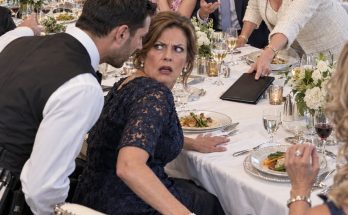
“We Need Serious Investors, Not Dreamers,” Dad Announced At The Shareholders Meeting. Sister Smirked And Said, “Get A Real Job First. Leave Investing To The Adults.” I Calmly Opened My Laptop And Said, “Initiating Full Investment Withdrawal.” Thirty Minutes Later, Emergency Board Alerts Started Exploding Across Their Phones…
For eight years, my father introduced me as the daughter who “worked in the warehouse,” my sister mocked my cheap clothes, and my brother told me to leave serious business to people with money. What none of them knew was that three mysterious investment firms keeping our family company alive belonged to me. I had quietly poured more than $200 million into their business without asking for a title, a board seat, or even thanks. Then my father told me I was too poor to become his partner.
### Part 1
The conference room at Caldwell Manufacturing always smelled faintly of coffee, furniture polish, and hot printer toner, but that Thursday morning it felt like there wasn’t enough oxygen in the room. Twenty-three shareholders sat around a mahogany table while my father, Richard Caldwell, stood beneath a projection of our proposed Midwest expansion and talked about raising another $200 million. I sat in the back corner where I had sat for almost eight years, wearing a navy blouse from an outlet store and the same black flats my sister had once called “aggressively practical.”
“We’re looking for committed partners,” Dad said, tapping the screen with a silver pen. “People who understand what it means to build something real, not hobby investors or people playing entrepreneur because they’ve read a few articles online.” His eyes moved around the table and passed over me without stopping, a small gesture most people would never notice. I noticed because he had been doing it my entire adult life.
My older sister, Vanessa, leaned back in her leather chair and crossed one perfectly tailored leg over the other. At thirty-three, she was Caldwell Manufacturing’s vice president of strategic development, the owner of two graduate degrees, and the person Dad described at charity dinners as “the future of the company.” “The real issue is capital depth,” she said. “Anyone seeking partnership status should demonstrate at least fifty million in deployable capital, and our expansion investors need to be capable of commitments substantially larger than that.”
My brother Nolan gave a quiet laugh from across the table. “Which is why we need institutions, not people who think owning a few shares means they understand corporate finance.” He glanced directly at me this time. “Everybody has limitations. Smart people figure theirs out early.”
A few people shifted uncomfortably, but nobody challenged him. I had heard versions of that sentence at Thanksgiving, Christmas, my grandmother’s funeral reception, and almost every company event since I turned twenty-one. To my family, I was Amelia Caldwell, the disappointing youngest daughter who worked three days a week in the distribution warehouse and somehow kept showing up at shareholder meetings because Dad had given me a modest block of shares when I turned eighteen.
What they didn’t know was why I kept showing up. They didn’t know why, whenever the chief financial officer mentioned a lender pulling back, I quietly wrote a note in the margin of my folder. They didn’t know why I recognized every production bottleneck, why I understood freight costs better than some executives, or why I sometimes disappeared into the warehouse office during lunch with my laptop and noise-canceling headphones.
They had never asked.
The meeting ended shortly before noon, and everyone migrated toward the reception area, where servers had arranged sparkling water, wine, and tiny pieces of steak on ceramic spoons. Sunlight flashed through the glass walls while shareholders congratulated Dad on the expansion plan, and I was reaching for a club soda when he appeared beside me. “Amelia, can we talk?”
His voice had that careful softness he used when he believed he was delivering difficult wisdom. “Sure.”
“I think you should stop attending some of these meetings.”
I looked at him. “I’m a shareholder.”
“You own shares, yes.” Dad exhaled and glanced around to make sure nobody important was listening. “But these discussions are moving into a level that really isn’t useful for you. We’re talking about acquisitions, institutional partnerships, hundreds of millions in capital.”
“And you think I can’t understand those things?”
His expression softened with genuine pity, which hurt more than contempt would have. “You work in shipping and receiving, honey. There is nothing wrong with honest work, but there is also nothing wrong with recognizing where your strengths are.”
Vanessa approached with a champagne flute. “Dad is trying to protect you from embarrassing yourself.”
I stared at her. “How exactly am I embarrassing myself?”
“You ask questions in meetings where everyone else has spent decades building credentials.” She smiled as though she were helping me. “Sometimes you sound informed because you’ve obviously researched the topic, but there’s a difference between reading about capital structures and actually putting money at risk.”
Nolan arrived behind her with two board members, Martin Hale and George Whitaker. “Come on, Amelia. You move pallets three days a week.”
“I manage inventory systems.”
“You scan boxes.”
Martin looked down at his drink, suddenly fascinated by the ice cubes.
I slowly set my glass on the bar. “Suppose I wanted to be considered for partnership status.”
Vanessa actually laughed. “Partnership?”
“Hypothetically.”
“Minimum fifty million in committed capital,” she said. “Proven investment experience, serious operating knowledge, and a track record that establishes credibility.”
“And you believe I have none of those things.”
Nolan snorted. “You drive a seven-year-old Subaru.”
Dad shot him a mild warning look, but then turned back to me. “Amelia, realistically, fifty million dollars is more than you’ll earn in several lifetimes. You are dependable. The warehouse managers like you. Why turn that into something shameful just because you aren’t an investor?”
“I don’t think warehouse work is shameful.”
“Good.”
“I was asking whether you do.”
Dad frowned. “Of course not.”
Before I could answer, Vanessa tilted her head toward my canvas purse. “You still pack your lunch most days because the cafeteria is too expensive.”
“It’s seventeen dollars for a sandwich.”
“That’s exactly my point.”
I almost smiled. They had built an entire story about my life from my shoes, my car, and the fact that I refused to pay seventeen dollars for turkey on stale bread. They had never wondered whether frugality and poverty might be different things.
My phone vibrated in my hand.
The message was from Daniel Park at Northstar Asset Management.
Expansion presentation finished? Call when free. We need a decision on Caldwell before markets move.
I locked the screen before anyone could see it.
Nolan slapped my shoulder. “Tell you what. Maybe they’ll promote you to warehouse supervisor next year. That’s a partnership you can actually afford.”
Vanessa laughed.
Dad didn’t.
That was somehow worse.
I picked up my bag and walked toward the hallway, but Dad called after me. “Amelia.”
I stopped.
“We love you. Nobody is saying you don’t matter.”
I looked back at all three of them. “You’re just saying my contribution doesn’t.”
Nobody answered.
I went downstairs instead of returning to the warehouse and stepped through a service door into the loading yard. Diesel engines rumbled beyond the concrete barrier, forklifts beeped in reverse, and cold October air cut through my blouse as I called Daniel.
He answered on the first ring. “How bad?”
“They’re finalizing the expansion.”
“And?”
“They told me partnership is for people with real money.”
There was a pause. Daniel had managed my investments since I was twenty-two and had learned years ago that silence usually meant I was deciding something expensive.
“How much of Caldwell are you willing to move?”
I watched a truck with our company logo roll through the security gate.
“All of it.”
Daniel went quiet.
Then he asked, “Amelia, are you certain?”
Across the yard, Nolan emerged from the executive entrance with Vanessa and pointed toward me. Even from fifty yards away, I could see him laughing.
I tightened my grip on the phone.
“Prepare the documents,” I said. “Every Caldwell position held through North Ridge, Harbor Point, and Larkspur.”
Daniel inhaled slowly. “That’s more than two hundred million dollars.”
“I know.”
“And roughly forty-one percent of their long-term outside capital.”
“I know that too.”
A forklift horn screamed somewhere behind me.
Daniel lowered his voice. “Once the board receives the notices, there is no keeping this quiet.”
I looked through the glass doors at my father shaking hands beneath the Caldwell Manufacturing logo.
For eight years, I had protected that company because it carried my family’s name.
For the first time, I wondered what would happen if I stopped.
“Send me the authorization package,” I said.
My phone buzzed less than ten seconds later.
The first document opened with three names nobody in my family had ever connected to me: North Ridge Holdings, Harbor Point Ventures, and Larkspur Capital.
Together, they represented $203.7 million.
And every one of them belonged to me.
### Part 2
I didn’t sign the authorization immediately. Instead, I sat in my Subaru in the employee parking lot with the engine off, listening to wind scrape dry leaves across the asphalt while Daniel’s documents waited on my phone. There were signatures that could be completed in less than a minute, but I had spent eight years making sure I never made major financial decisions while angry.
That rule had made me wealthy.
It had also kept Caldwell Manufacturing alive.
My first real money came when I was twenty-one, although nobody in my family knew that either. During my second year working in Caldwell’s warehouse, I built a routing tool at night because watching trucks leave half-empty irritated me; eventually, a regional logistics company bought the software and the small business wrapped around it for $11.8 million. Dad believed I had taken a few community college programming courses, and when I tried to tell him over Thanksgiving that I was “working on a logistics project,” he interrupted to ask Nolan about his internship.
I stopped trying after that.
I invested carefully, founded another company, sold that one too, and discovered I was much better at recognizing operational problems than I was at talking about myself. By twenty-five, I had enough money to stop working forever, yet I kept three warehouse shifts each week because I liked understanding businesses from the floor upward. Employees talked differently beside loading docks than they did in conference rooms.
Six years earlier, Caldwell nearly ran out of cash after an acquisition went wrong. Dad came home pale one Sunday and spent dinner telling Vanessa about an anonymous investment group that had “seen what others couldn’t” and provided the capital that saved the company. I sat across from him eating mashed potatoes, knowing the anonymous group was North Ridge Holdings and the person who had approved the transfer was me.
Two years later, Harbor Point financed new automation equipment when a bank withdrew. During the supply disruptions that followed, Larkspur provided emergency liquidity while other investors demanded brutal terms. Dad called those investors “the quiet angels behind Caldwell.”
He never once asked who they were.
My phone rang.
Daniel.
“Still with me?”
“Yes.”
“You haven’t signed.”
“I know.”
He waited.
“Tell me something,” I said. “If I withdraw, what happens?”
“To Caldwell?”
“Yes.”
“The expansion probably dies immediately. The board will have to disclose the capital change to other major stakeholders, lenders will review covenants, and at least two institutional groups will pause their commitments.” Papers rustled on his end. “The company probably survives, Amelia, but it gets smaller and much less comfortable.”
“So I wouldn’t destroy it.”
“No.”
I closed my eyes.
That distinction mattered.
I didn’t want hundreds of machinists, drivers, welders, clerks, and warehouse employees losing jobs because my brother was an ass. Those people had families, mortgages, braces to pay for, college tuition, and refrigerators that made expensive noises at inconvenient times. My anger belonged to my family, not to them.
“Structure the withdrawal to minimize operating disruption,” I said. “I want my equity sold or redeemed where legally permitted, but do not call any working-capital facilities early.”
“I expected you to say that.”
“And keep the employee credit line untouched for ninety days.”
Daniel gave a soft laugh. “The warehouse worker strikes again.”
“Don’t start.”
“I mean it as a compliment.”
Before I could reply, somebody knocked on my passenger window.
I nearly dropped the phone.
It was Vanessa.
I lowered the glass two inches. “What?”
She folded her arms. “Dad said you left upset.”
“I needed air.”
“You always do this.”
“Do what?”
“Turn ordinary advice into rejection.” She glanced at my phone. “Are you talking to somebody?”
“My investment manager.”
She laughed automatically, then stopped when I didn’t.
“Funny.”
“I wasn’t joking.”
Vanessa studied my face for half a second before dismissing the thought. “Look, I came out because Dad feels bad. Nolan can be obnoxious, but nobody thinks you’re worthless.”
“Just unqualified.”
“For partnership? Amelia, yes.” Her voice became gentler, which made it more insulting. “That isn’t personal. You don’t have the money.”
“How much money do you think I have?”
She blinked. “What?”
“Just curious.”
“I don’t know. Twenty thousand? Thirty?”
I almost laughed.
Vanessa glanced toward my Subaru. “Maybe a little more if you’ve been saving.”
“And if I had fifty million?”
“Why are we doing this?”
“Humor me.”
“If you had fifty million, I’d ask where it came from, whether you understood risk, and whether you had a credible track record.”
“And if I had two hundred million invested in Caldwell?”
She stared at me.
Then she burst out laughing.
Not a cruel little chuckle. A full laugh.
“Oh my God, Amelia.”
I watched her wipe beneath one eye.
“You’re right,” I said. “That was ridiculous.”
“Please don’t turn this into some fantasy where everybody secretly discovers you’re Warren Buffett.”
“I won’t.”
She tapped the roof of my car. “Good. Come to dinner Sunday. Mom is making pot roast.”
As she walked away, Daniel’s voice came through my phone.
“Did she just laugh at the number?”
“Yes.”
“Are you all right?”
“I’m fine.”
“You don’t sound fine.”
I looked at the authorization documents again.
There were three signature boxes.
I signed the first.
North Ridge Holdings.
Then the second.
Harbor Point Ventures.
I paused before the third.
Larkspur Capital had been the hardest one to build because that entity held the shares I bought during Caldwell’s worst crisis. I remembered sitting in this same parking lot during the pandemic, watching workers leave early because shipments had stopped, while Dad told a local newspaper the company would protect every job possible.
He had meant it.
That was the complicated part.
My father wasn’t a monster.
He was a good executive in many ways, a generous donor, and a man who would lend an employee money privately rather than let them lose a house. But somewhere inside our family, he had decided intelligence came packaged in certain ways—degrees displayed on walls, expensive suits, polished résumés, confident voices.
I had none of those things where he could see them.
So he stopped looking.
I signed Larkspur.
“Done,” I told Daniel.
“All three?”
“All three.”
His keyboard clicked rapidly. “I’m submitting the formal notices now. The board secretary will receive them within the hour.”
A knot formed beneath my ribs.
“Daniel.”
“Yeah?”
“Do not identify me unless disclosure requires it.”
“I can keep beneficial ownership confidential during the initial notice. But if they demand formal verification during transfer negotiations, your name comes out.”
“How long?”
“Could be tonight. Could be tomorrow.”
I looked toward the building.
Vanessa was already back inside.
“Fine.”
Daniel hesitated. “There’s something else.”
“What?”
“The renewable logistics company we discussed accepted your preliminary terms.”
That pulled my attention away from Caldwell. “The one in Denver?”
“Yes. Founder started as a forklift mechanic, built the first prototype in a rented garage, and still interviews every operations hire personally.”
“How much are they asking?”
“Thirty million for twenty percent.”
“Schedule the diligence call.”
“Tomorrow?”
“Tonight.”
Daniel laughed softly. “Now you sound like yourself again.”
We ended the call, and I went back inside.
Nobody seemed to notice anything had changed.
For the next thirty minutes, I worked beside Teresa Alvarez at receiving while she complained about a barcode scanner that froze every sixth shipment. I opened the casing, found a loose connection, and fixed it with a screwdriver from her desk.
“You should be running this place,” Teresa said.
I smiled. “Tell my family.”
She looked toward the executive floor.
“They wouldn’t know talent if it drove a forklift over their shoes.”
I laughed so hard I had to lean against the desk.
At 2:17, my phone vibrated.
Daniel: Initial notices delivered.
At 2:21, the warehouse intercom clicked on.
“Amelia Caldwell, please report to the executive conference room.”
Every worker around me went quiet.
Teresa raised an eyebrow.
“Did you break something?”
I stared toward the stairs.
“I think,” I said, “I finally stopped fixing it.”
### Part 3
By the time I reached the executive floor, people were moving too quickly. Assistants hurried between offices carrying tablets, the CFO was speaking into two phones at once, and somebody had abandoned a full cup of coffee on the carpet beside the elevator. The calm confidence from that morning had evaporated.
Vanessa intercepted me before I reached the conference room. “Did you hear anything downstairs?”
“About what?”
“Three major investors issued withdrawal notices.”
I kept my face still. “That sounds serious.”
“It is serious.”
Nolan appeared behind her. “Who told the warehouse?”
“Nobody told the warehouse.”
“Then why is she up here?”
Vanessa lowered her voice. “Dad called her.”
Nolan swore and pushed through the conference-room doors.
Inside, my father stood at the head of the table while Martin Hale, the board chairman, scrolled through documents on a tablet. George Whitaker sat with both hands covering his mouth, and the CFO, Elaine Porter, was writing numbers across a legal pad so fast her pen tore the paper.
Dad looked at me. “Sit down.”
I chose my usual chair in the back.
For once, nobody told me it wasn’t appropriate.
Martin cleared his throat. “At 2:15 this afternoon, North Ridge Holdings, Harbor Point Ventures, and Larkspur Capital submitted formal notices indicating they intend to exit their Caldwell positions and decline participation in the proposed expansion financing.”
Vanessa placed both palms on the table. “Combined exposure?”
Elaine answered without looking up. “Current value of equity, preferred interests, and committed capital is approximately $203.7 million.”
Silence settled over the room.
Nolan’s face changed. “That’s impossible.”
“It isn’t.”
“That’s almost half our strategic outside capital.”
“Forty-one percent,” Elaine said.
Dad turned toward Martin. “Why would three unrelated investors move simultaneously?”
Martin’s jaw tightened. “That is the problem. We assumed they were unrelated.”
I looked out the window.
Below us, trucks moved between loading bays like nothing important was happening.
Vanessa frowned. “Assumed?”
“All three accounts are administered through Northstar Asset Management.”
Nolan stared at him. “One manager doesn’t mean one owner.”
“No, but the notices were transmitted within ninety seconds of one another, with coordinated instructions and identical restrictions protecting operating credit facilities.”
I almost smiled at the last part.
Dad noticed.
“What?”
“Nothing.”
His eyes narrowed for a second before Martin continued.
“I contacted Northstar. Their representative confirmed the three entities are connected to the same beneficial client.”
Vanessa whispered, “One investor controls all three?”
“Yes.”
“Who?”
“They refused to say without authorization.”
Nolan shoved his chair backward. “Then get authorization.”
“I requested an emergency conference call.”
Dad checked the clock. “When?”
“Now.”
Martin tapped the speakerphone.
A moment later, Daniel’s calm voice filled the room. “This is Daniel Park, Northstar Asset Management.”
Dad leaned forward. “Mr. Park, Richard Caldwell. We need to understand what is happening.”
“I understand your concern.”
“Do you? Those investment vehicles have supported this company for years. We announced a major expansion this morning, and hours later all three withdraw simultaneously.”
Daniel answered evenly. “The timing was initiated by the client.”
“What changed?”
“I’m not permitted to discuss the client’s private reasoning.”
Vanessa jumped in. “Then put the client on the phone.”
A pause.
I watched Daniel’s name glow on the speaker display.
“Actually,” he said, “that may be simpler than you think.”
Something cold slid through my stomach.
Dad frowned. “Meaning?”
“My client is already in the room.”
Nobody moved.
For a moment, the only sound was the ventilation system above us.
Nolan looked at Martin.
Vanessa looked at George.
Dad’s eyes moved from Elaine to the CFO, then to the two outside directors near the windows.
Finally, his gaze landed on me.
I did not look away.
Vanessa followed his stare and shook her head before anyone said a word. “No.”
Daniel spoke again.
“Amelia, would you like me to provide the authentication package, or do you want to explain?”
Nolan laughed once.
It sounded wrong.
“What?”
I reached into my bag and removed my laptop.
Dad stared at me. “Amelia.”
I connected to the conference-room display.
My hands were steady, although my heartbeat felt heavy enough to shake my ribs.
Northstar’s client portal appeared on the screen.
Account Holder: Amelia Rose Caldwell.
Total managed assets: $487,642,311.
Nobody spoke.
I opened the entity portfolio.
North Ridge Holdings.
Harbor Point Ventures.
Larkspur Capital.
Caldwell Manufacturing combined position: $203,700,000.
Vanessa sat down without seeming to realize she was doing it.
Nolan stepped closer to the screen. “That’s fake.”
“It’s authenticated through Northstar’s secure portal.”
“You built a fake website.”
Daniel’s voice came sharply through the speaker. “Mr. Caldwell, I can assure you that screen is connected to our institutional client system.”
Nolan turned toward the phone. “Who the hell are you?”
“Daniel Park. Senior managing director, private capital division.”
Martin closed his eyes briefly.
He knew the name.
Dad still hadn’t moved.
“You,” he said finally.
I nodded.
“You own North Ridge?”
“Yes.”
“Harbor Point?”
“Yes.”
His voice weakened. “Larkspur too?”
“Yes.”
Vanessa’s face had lost all color.
“How?”
It was such a simple question that for a moment I didn’t know where to start.
“At twenty-one, I sold a logistics software company.”
Dad blinked.
“What company?”
“RouteLine Systems.”
Elaine looked up sharply. “RouteLine?”
“You’ve heard of it?”
She stared at me. “Everybody in industrial logistics has heard of RouteLine.”
Nolan turned toward her. “What is it?”
“A routing optimization platform. It was acquired years ago.”
“For $11.8 million,” I said. “I kept most of the proceeds, started another company, and invested eight million into Caldwell through North Ridge when the company needed growth capital.”
Dad slowly lowered himself into a chair.
I continued.
“My second company sold when I was twenty-four. I used part of those proceeds to expand Harbor Point. Later investments performed well, and Larkspur grew out of that portfolio.”
Vanessa gripped the edge of the table. “The 2020 emergency facility.”
“Harbor Point.”
“The automation upgrade?”
“North Ridge.”
“The Peterson acquisition?”
“Larkspur.”
Elaine whispered, “The debt restructuring three years ago?”
I nodded.
“That was me too.”
Dad rubbed both hands over his face.
I remembered those same hands carving Thanksgiving turkey while he praised an “exceptionally sophisticated capital partner” for approving that restructuring.
He had been talking about me.
Martin looked from the screen to my work badge, which still said DISTRIBUTION OPERATIONS beneath my name.
“Why hide this?”
“That is a longer answer.”
“We have time.”
“No,” Vanessa said suddenly. “We don’t. We need to reverse the withdrawals.”
She turned toward me.
The desperation in her eyes was new.
“Amelia, whatever happened downstairs earlier, this is completely disproportionate.”
“Downstairs?”
“The conversation with Dad.”
“This didn’t start today.”
Nolan shook his head. “So this is revenge.”
“No.”
“You wait until we announce expansion and then rip out two hundred million because somebody hurt your feelings?”
I stood.
“The protections I instructed Northstar to leave in place will keep your operating credit facilities intact. Nobody needs to miss payroll. No plants need to close because of my withdrawal.”
Elaine’s expression changed slightly.
She understood what that meant.
I had thought about the employees before I thought about punishing the executives.
Dad noticed too.
“Then why leave at all?”
I looked at him.
“Because this morning you told me Caldwell needed serious investors.”
He flinched.
Vanessa opened her mouth.
I continued before she could speak.
“You told me partnership was for people with money, business judgment, and a track record. Nolan told me to stay in the warehouse. You told me I should accept my limitations.”
“Amelia—”
“I’m accepting them.”
My phone buzzed.
Daniel had sent another update.
North Ridge transfer process initiated.
I glanced at it and locked my screen.
Dad’s voice dropped.
“Can this still be stopped?”
Technically, yes.
I could have called Daniel and paused everything.
That was what made the next moment harder.
Before I answered, Elaine’s laptop chimed.
She stared at the notification.
Then she whispered, “We have another problem.”
Everyone turned.
“The first institutional expansion partner just suspended its commitment pending clarification of the Northstar withdrawals.”
Vanessa went rigid.
“How much?”
“Seventy-five million.”
Dad looked at me as if I had suddenly become someone he had never met.
For the first time in my life, my family wasn’t wondering why the warehouse worker was in the room.
They were wondering whether the company could survive if I walked out of it.
### Part 4
The board meeting lasted another three hours, but the part I remembered most clearly was the coffee going cold beside my father’s hand. He didn’t touch it once. Every few minutes he looked at me, then at the numbers on the screen, as though one of them had to be an illusion.
By five-thirty, two more expansion investors had placed their commitments on hold. Nothing had collapsed, but the proposed acquisition of a new plant in Ohio was effectively dead unless Caldwell found replacement capital quickly. Martin asked Daniel to remain available while Elaine ran scenario after scenario.
Nolan blamed market optics.
Vanessa blamed disclosure timing.
Nobody mentioned the word “poor.”
Finally, Dad dismissed everyone except the family.
The conference-room doors clicked shut.
He came around the table and sat across from me instead of at the head.
“When did this start?”
“I told you. When I was twenty-one.”
“I mean all of it.”
I understood.
“When I was seventeen, I started spending Saturdays in the warehouse because Grandma Ruth said I needed to learn where the company actually made money. She taught me to read freight invoices before I knew what EBITDA meant.” I smiled at the memory. “She said executives lied accidentally because they were too far from the loading dock.”
Dad almost smiled too.
Grandma Ruth had been his mother.
“She would have loved this,” he murmured.
“No. She would have been furious with all of us.”
His smile disappeared.
Vanessa sat across the room with her shoes kicked off beneath her chair. “Why didn’t you tell us about RouteLine?”
“I tried.”
“When?”
“Thanksgiving, eight years ago.”
She frowned.
“Nolan had just gotten accepted into the management program.”
That memory apparently returned to her because her expression changed.
I remembered it perfectly.
I had said, “I built something that a transportation company wants to buy.”
Dad had answered, “That’s nice, honey,” before asking Nolan about his relocation package.
“I thought you meant some app,” Vanessa said.
“It was an app.”
“You know what I mean.”
“Yes,” I said. “I do.”
Dad looked sick.
“What about your education?”
“I finished my degree while working.”
“Where?”
“A state university program in information systems and finance.”
Vanessa stared at me. “You have two majors?”
“Yes.”
“You told Mom you were taking night classes.”
“I was.”
“You never said you graduated.”
“I sent invitations.”
Nobody answered.
That silence told me they remembered.
Dad had missed my ceremony because of a supplier meeting.
Vanessa had been traveling.
Nolan texted me a thumbs-up emoji.
Mom sent flowers.
I hadn’t been angry then.
I had been used to it.
Nolan stood near the windows with his arms folded. “This still doesn’t explain why you pretended to be poor.”
“I never pretended.”
“You drive that piece-of-junk car.”
“It works.”
“You buy clothes at outlet stores.”
“So?”
“You pack sandwiches.”
“I like sandwiches.”
“Normal rich people don’t do that.”
I laughed.
The sound surprised everyone, including me.
“Maybe that’s the problem, Nolan. You think money has a uniform.”
He looked away.
Vanessa rubbed her temples. “Why continue working downstairs?”
“Because I like operations.”
“You own almost half a billion dollars.”
“And Teresa Alvarez knows more about our receiving problems than half the consultants you’ve hired. Eddie Brooks can tell whether a shipment is going to be late by looking at the carrier code. Raymond Cho redesigned pallet flow with tape on the floor before operations paid somebody ninety thousand dollars to recommend nearly the same thing.”
Vanessa’s face tightened.
“You’ve been evaluating us.”
“I’ve been learning.”
“Same difference.”
“No. Evaluating you would mean I expected you to pass.”
That landed harder than I intended.
Dad leaned back.
“Were we really that bad?”
I thought about lying.
Then I remembered why we were there.
“At home? Not always. You paid for braces. You came to my high school soccer games when you could. You stayed up all night with me when I had the flu in college.” My throat tightened. “That’s why this took eight years instead of eight minutes.”
Dad looked down.
“You loved me,” I said. “You just didn’t respect me.”
Nobody challenged that.
I continued more quietly.
“You respected titles. Credentials. Money. The right vocabulary. Every time I showed up without those things visible, you treated me like I had nothing useful to offer.”
Vanessa wiped beneath one eye with the heel of her hand.
“I didn’t know.”
“You weren’t curious.”
“That’s not the same thing.”
“It feels the same from my side.”
Nolan pushed away from the window. “Okay. We were arrogant. Fine. But pulling your capital hurts everyone.”
“Keeping my capital here would mean accepting that I’m only valuable now because you’ve seen the number.”
“That’s not true.”
I looked at him.
“This morning you told me moving boxes was my highest realistic contribution.”
His jaw clenched.
Dad whispered, “I said similar things too.”
“Yes.”
“I’m sorry.”
For years, I had imagined hearing those words.
In my imagination, they fixed something.
In reality, they landed softly and disappeared into a room full of damage.
“I believe you.”
Dad looked up, surprised.
“I believe you’re sorry.”
“Then give us a chance.”
“A chance at what?”
“To make this right.”
Vanessa leaned forward. “Board seat. Executive role. Whatever title you want.”
There it was.
I smiled sadly.
“You still don’t understand.”
Her eyes narrowed. “What?”
“I don’t want a title.”
“Then what do you want?”
“I wanted to be worth listening to when you thought I had nothing.”
The room went completely quiet.
My phone vibrated.
Daniel.
I answered.
“Talk to me.”
“North Ridge’s block sale has a buyer. Harbor Point is in negotiations. I can still pause Larkspur if you instruct me within the next twenty minutes.”
I looked at Dad.
Twenty minutes.
Eight years of hoping, compressed into twenty minutes.
“Who bought North Ridge?”
“A pension-backed industrial fund.”
“Employee impact?”
“They’ve agreed to your labor protections for eighteen months.”
“Good.”
Dad’s eyebrows rose.
Even now, I was protecting the workers.
Daniel continued. “There’s another development. Two competing manufacturers heard you may be reallocating capital. Both want meetings.”
Nolan gave a bitter laugh.
“Of course they do.”
Daniel heard him.
“I assume that’s Nolan.”
“That’s Nolan.”
“Tell him one of those manufacturers started its CEO in a warehouse.”
I couldn’t help smiling.
Nolan didn’t.
“Book the meetings,” I said.
Dad stood.
“Amelia, don’t.”
I held up one finger and listened as Daniel described the companies.
One had an employee promotion program that funded technical certifications.
The other had converted dozens of hourly workers into salaried managers over five years.
Both sounded more interesting than another conversation about whether my shoes looked expensive enough.
“Schedule both.”
“I’ll send details.”
“And Daniel?”
“Yes?”
“Proceed with Harbor Point.”
Dad closed his eyes.
“Larkspur?”
I looked around the conference room.
That investment alone represented more than fifty million dollars.
Exactly the amount Vanessa said a serious partner needed.
“Hold it for tonight.”
Daniel paused.
“Understood.”
I ended the call.
Hope flashed across Dad’s face.
Vanessa straightened.
Nolan stopped pacing.
They all thought I was reconsidering.
I wasn’t sure I was.
I just needed to know something before I closed the final door.
“There’s one condition before I decide what happens to Larkspur,” I said.
Dad nodded immediately. “Anything.”
I looked at the three people who had spent years deciding what I was worth.
“Tomorrow morning, I want you to come downstairs.”
Vanessa frowned.
“To the warehouse?”
“Yes.”
“Why?”
“Because I want to know whether you can recognize talent when there isn’t a dollar sign attached to it.”
### Part 5
At seven the next morning, my father arrived in the warehouse wearing loafers that cost more than Teresa’s monthly grocery budget. Vanessa wore sensible flats for once, while Nolan showed up ten minutes late in a sport coat and stared at the loading dock as if he had landed in another country. None of them had spent more than fifteen consecutive minutes on the floor in years.
I gave them safety vests.
Nolan looked at his. “Seriously?”
“OSHA doesn’t care who your father is.”
Teresa coughed to hide a laugh.
Our first stop was receiving, where Teresa demonstrated the scanner problem I had fixed the day before and then showed Vanessa a spreadsheet she had maintained for eighteen months. It tracked rejected shipments, damaged packaging, and recurring supplier errors. The data identified a vendor responsible for almost a third of avoidable receiving delays.
Vanessa stared at the columns.
“Has management seen this?”
Teresa shrugged. “I sent it twice.”
“To whom?”
“Operations planning.”
Vanessa pulled out her phone. “Who specifically?”
“Last time? Your office.”
Vanessa froze.
I said nothing.
Next we met Eddie Brooks, a sixty-year-old dock coordinator with a high school diploma and thirty-eight years at Caldwell. Eddie explained that the company’s new freight-planning software assigned carriers based on average historical times rather than regional weather patterns, which was why winter deliveries kept missing targets. Nolan listened for approximately forty seconds before interrupting.
“The software was designed by experts.”
Eddie nodded politely. “Yes, sir.”
“So they probably accounted for that.”
“They didn’t.”
“How do you know?”
“Because I’ve been rerouting trucks around lake-effect snow since you were in grade school.”
Nolan opened his mouth.
Dad said, “Let him finish.”
That was new.
Eddie showed us six months of handwritten adjustments.
His routes beat the software by eleven percent.
Nolan stopped talking.
At packing, a twenty-four-year-old employee named Leah Grant demonstrated a simple fixture she had built from scrap aluminum to hold irregular components during wrapping. It reduced damaged shipments dramatically.
“Engineering approved this?” Dad asked.
Leah shook her head.
“I submitted it.”
“When?”
“February.”
“Why wasn’t it reviewed?”
“My supervisor said engineering suggestions needed engineering credentials.”
Dad’s shoulders dropped slightly.
He finally understood why I had brought them downstairs.
By lunchtime, we had met seven employees whose ideas had been ignored because they did not have the correct title.
None knew about my money.
They treated me exactly as they always had.
Teresa shoved a granola bar into my hand when I skipped breakfast.
Eddie teased me about my car.
Leah asked whether I could help troubleshoot her laptop after shift.
Dad watched all of it.
At one point, while Vanessa was speaking to a forklift operator, he pulled me aside.
“You know everyone.”
“I’ve worked here eight years.”
“I mean you know what they do.”
“That’s part of working with people.”
He looked toward Leah. “I never saw any of this.”
“No.”
“That’s on me.”
“Yes.”
His willingness to admit it made the anger harder to hold, but it did not erase anything.
At one, we returned upstairs for an emergency board session.
Martin had already drafted a proposal.
He slid copies around the table.
“Based on yesterday’s events and today’s operational review, we propose several immediate changes.”
I read the first page.
Anonymous first-round résumé screening.
Internal promotion pathways.
Tuition assistance for hourly employees.
Quarterly idea submissions reviewed by a cross-functional committee.
Board-level reporting on internal advancement.
It was almost everything I would have asked for.
Almost.
Vanessa watched me. “Well?”
“It’s good.”
Relief crossed Dad’s face.
“But?”
“But why now?”
Nolan threw up his hands. “You literally demanded change.”
“I asked you to see the problem.”
“We saw it.”
“Because two hundred million dollars walked toward the door.”
Vanessa leaned forward. “That doesn’t mean the changes are fake.”
“No. But it means I can’t know yet whether they’re real.”
Dad’s voice was quiet. “What would prove it?”
“Time.”
“We don’t have time.”
“Exactly.”
That answer hurt him.
Martin cleared his throat. “Northstar says Larkspur remains on hold. If that fifty-six million stays, it may reassure other investors.”
I closed the proposal.
“So this is still about my money.”
“No,” Dad said.
Everyone looked at him.
He continued slowly.
“I want the money to stay. Of course I do. I would be lying if I said otherwise.” He looked at me. “But this morning I met people who have worked for me longer than my children have been adults, and I didn’t know their names.”
Nobody spoke.
“I heard a young woman say we ignored an idea because she didn’t have credentials. I heard an employee explain a system problem more clearly than the consultant we paid to install it.” Dad rubbed his forehead. “Whether Amelia leaves or stays, that has to change.”
For the first time since this started, something inside me loosened.
Then Nolan ruined it.
“So if we’ve agreed to all of this, she should restore the capital.”
Dad turned toward him.
“No.”
Nolan blinked.
“No?”
“She doesn’t owe us that.”
My brother stared at our father as if he had switched languages.
Dad looked at me.
“I hope you do. But you don’t owe it.”
Vanessa swallowed.
“I agree.”
Nolan laughed harshly. “Great. Everybody suddenly found religion.”
“Maybe we were wrong,” Vanessa snapped.
“You were wrong because now she’s rich?”
Vanessa flinched.
Nolan turned to me.
“You know what bothers me? You enjoyed this.”
I felt the room tighten.
“You sat there for years knowing you could prove us wrong whenever you wanted, and you didn’t. You were waiting for this.”
Part of me wanted to dismiss him.
Instead, I considered the accusation.
“Maybe part of me was waiting.”
Nolan’s face brightened triumphantly.
“But not for humiliation,” I continued. “I was waiting for one of you to become curious.”
His expression changed.
“I kept thinking somebody would ask why I understood the numbers. Why I attended every meeting. Why I never asked Dad for money. Why I disappeared for calls. Why I knew investors none of you knew.” I shook my head. “You never did.”
Dad stared at the tabletop.
Vanessa whispered, “I’m sorry.”
“I know.”
That afternoon, Daniel called with final terms from the Denver renewable logistics startup, BrightPath Freight Systems. The founder, Maya Reynolds, had spent nine years repairing material-handling equipment before building a routing platform that reduced empty miles for regional carriers.
“She wants you involved beyond capital,” Daniel said.
“In what capacity?”
“Strategy. Hiring. Operational scaling.”
“Does she know about Caldwell?”
“She knows you work in a warehouse.”
I smiled.
“And?”
“She said that’s one of the reasons she wants you.”
Something warm moved through my chest.
Not validation exactly.
Relief.
“What about my net worth?”
“I didn’t disclose it.”
“And she still wants a meeting.”
“She asked whether you can come Friday.”
I looked through the conference-room window.
Dad was downstairs again, standing beside Eddie while they studied a shipping schedule.
Vanessa was with Teresa, taking notes.
Nolan had disappeared.
“Tell Maya I’ll be there.”
Daniel paused.
“And Larkspur?”
I looked at the employee advancement proposal.
Then at my father.
“Release half.”
“Back into Caldwell?”
“No.”
Daniel understood immediately.
“Withdraw half?”
“Yes. Leave enough invested that employees aren’t destabilized, but I’m not restoring the old position.”
“And the remaining stake?”
“Passive. No expansion commitment.”
“That means the Ohio deal stays dead.”
“I know.”
Daniel’s keyboard clicked.
“Done.”
I thought the decision would feel dramatic.
It didn’t.
It felt quiet.
Final.
Then my phone buzzed with a message from Nolan.
You think you won.
A second message appeared.
Wait until Dad sees what you’ve really been doing.
Attached beneath it was a photograph of a document I had not seen in years.
My original North Ridge incorporation paperwork.
And somebody had circled one name that wasn’t mine.
### Part 6
The name Nolan circled belonged to my grandmother.
Ruth Caldwell.
For several seconds, I stood completely still in the hallway while voices drifted through the glass conference-room doors behind me. Grandma had helped me incorporate North Ridge when I was twenty-one because I was terrified I would make a mistake, but she had never invested a dollar.
The document Nolan photographed listed her as an initial adviser.
Nothing more.
I called him.
He rejected the call.
Then he sent another message.
Dad should know where the “self-made genius” really got started.
I found him twenty minutes later in our father’s office, holding a folder.
Dad was behind the desk.
Vanessa stood near the bookshelf.
“What are you doing?” I asked.
Nolan tossed the incorporation page onto the desk. “Telling the whole story.”
Dad picked it up.
“Mom?”
“She helped Amelia set up North Ridge.”
“I know she did.”
Nolan blinked.
So did I.
Dad looked at me.
“You thought I didn’t know?”
“Yes.”
A tired smile crossed his face. “Your grandmother told me shortly before she died that she had helped you form an investment company. She didn’t tell me what it owned.”
Nolan recovered quickly. “So she gave Amelia money.”
“No,” I said.
“How do we know?”
“Bank records.”
“I want to see them.”
I laughed.
“You don’t get to audit my life because your favorite theory collapsed.”
Nolan’s face reddened. “You expect everyone to believe you magically built half a billion dollars while working part-time in a warehouse?”
“No. I expect accountants to believe audited statements.”
Vanessa stepped between us.
“Nolan, stop.”
“No. Everybody is acting like she’s some victim. She hid everything.”
“You mocked her without knowing anything,” Vanessa said.
“She lied.”
“When?”
“She let us think she was broke.”
I looked at him.
“I never told you I was broke.”
“You let us pay when we went out.”
“You insisted because you said I couldn’t afford the restaurants you chose.”
“That’s the same thing.”
“It really isn’t.”
Dad placed the document on his desk.
“Nolan, enough.”
My brother stared at him.
“You’re taking her side now?”
“I’m saying enough.”
Nolan laughed bitterly.
“Of course. She has the money now.”
That sentence changed something.
Dad stood.
“I have plenty of money.”
“Not compared to her.”
“This is not about money.”
“It’s entirely about money! Yesterday she was the family embarrassment. Today everyone is apologizing because she flashed a nine-figure portfolio.”
Nobody answered because there was enough truth in the accusation to hurt.
Nolan looked at me.
“You think they see you now? They see your account balance.”
He stormed out.
The door slammed.
Vanessa sat down slowly.
“He’s awful.”
“He’s scared.”
“Of what?”
“Being ordinary.”
Dad exhaled.
I had never said that aloud before.
Nolan had spent his whole life as the charming son, the natural businessman, the one people expected to inherit authority. Discovering that his younger sister had quietly built something far larger than anything he controlled did not merely embarrass him.
It threatened the story he told himself.
That didn’t excuse him.
But it explained the panic.
Vanessa looked at the incorporation form again.
“Grandma knew?”
“Everything.”
“Why didn’t she tell us?”
“Because I asked her not to.”
“Why?”
I smiled faintly.
“She said money introduces you to the version of people they think you deserve to meet.”
Dad winced.
“That sounds like her.”
“She told me to wait before telling anyone.”
“For eight years?”
“No. She said six months.”
Vanessa almost laughed.
“What happened?”
“Six months became a year. Then Caldwell needed financing, and I realized anonymous capital let me help without turning every family dinner into an investment committee.” I looked through the office window. “After that, I wanted to know whether anything would change naturally.”
Nothing had.
Friday morning, I flew to Denver to meet BrightPath’s founder.
Maya Reynolds met me wearing jeans, steel-toed boots, and a green jacket with grease on one sleeve. Instead of taking me to a conference room, she drove me to a distribution center where BrightPath was testing its routing software.
“You’re Caldwell’s warehouse investor,” she said as we crossed the floor.
“Apparently that’s my brand now.”
“I like it.”
“You haven’t seen my financial statements.”
“I’ve seen your diligence questions.”
That stopped me.
“What about them?”
“You asked about driver turnover before revenue projections.”
“I usually do.”
“You asked how many employees received equity.”
“Yes.”
“You asked whether our dispatchers can override algorithmic routing recommendations.”
“Software doesn’t drive through ice storms.”
Maya grinned.
“Exactly.”
For the next six hours, nobody asked what car I drove.
Nobody asked which university I attended.
Nobody cared that my blouse cost forty dollars.
They argued with me about customer acquisition, challenged my assumptions, showed me failed prototypes, and asked what I thought.
It was exhausting.
I loved every second.
At dinner, Maya slid a folder across the table.
“We changed the offer.”
I opened it.
Thirty-five percent equity.
Board seat.
Strategic operating role.
I closed the folder.
“I don’t want the board seat because of how much I’m investing.”
“Good.”
I looked up.
“Good?”
“I want you on the board because you spotted three scaling problems our existing investors missed.”
That sentence nearly broke me.
Not because it was flattering.
Because it was exactly what I had wanted from my family for eight years.
When I returned home Saturday, Dad was waiting outside my apartment.
He didn’t bring flowers.
He didn’t bring contracts.
He held an old cardboard box.
“What’s that?”
“Your grandmother’s things.”
I let him inside.
He set the box on my kitchen table.
“I found it after Nolan brought up North Ridge.”
Inside were photographs, notebooks, birthday cards, and an envelope with my name written in Grandma Ruth’s shaky handwriting.
I opened it.
The letter was short.
Amelia, if you are reading this, somebody has finally discovered what you built. Be careful. People who ignored your voice may suddenly praise it when they learn what your silence was worth. Forgive them if you want. Love them if you can. But never confuse late recognition with early faith.
I read the last line twice.
Dad was crying when I looked up.
“I failed you,” he said.
I folded the letter carefully.
“You underestimated me.”
“No.” He shook his head. “Failure is the right word.”
For the first time, he wasn’t asking for the investment back.
That made what he said next harder.
“I’m resigning as CEO.”
### Part 7
I stared at my father across my kitchen table while rain tapped softly against the window. For thirty-two years, Caldwell Manufacturing had been the center of his identity, and I had never heard him speak seriously about retirement.
“No.”
He blinked. “No?”
“Don’t resign because of me.”
“It isn’t only because of you.”
“Yesterday you were fighting to save an expansion.”
“And yesterday I thought the biggest threat to this company was losing capital.” He looked at Grandma’s letter. “It isn’t.”
I waited.
“The biggest threat is that I built a culture where people learned to look upward for intelligence instead of around them.”
That sounded dramatic, but I had seen enough in the warehouse to know he meant it.
“I can fix that without disappearing,” he continued. “But not if everyone believes I’m changing only because my daughter turned out to be rich.”
“So what are you proposing?”
“Transition.”
He explained that Martin and the board had already discussed separating the CEO and chairman roles. Dad wanted to remain temporarily as executive chairman while an outside search identified a new CEO, with internal candidates included for the first time.
“Not Vanessa automatically?”
He shook his head.
That surprised me.
“She’s talented.”
“She is.”
“But?”
“But handing her the company because she has the right résumé would prove we learned nothing.”
I smiled despite myself.
Dad noticed.
“That’s the first time you’ve smiled at something I said in two days.”
“Don’t get excited.”
“I won’t.”
He left an hour later.
I did not hug him.
He did not ask me to.
That mattered.
Monday morning brought another surprise.
Nolan resigned.
His email went to the board at 6:43 a.m., accusing Caldwell of abandoning “merit-based leadership” to satisfy “emotional demands created by an undisclosed investor.” He copied several shareholders.
By eight, reporters had the story.
By nine, my phone had twenty-six missed calls.
Daniel called first.
“Do not answer media questions without counsel.”
“I know.”
“Someone leaked your identity.”
“Nolan.”
“We don’t know that.”
“I do.”
News reports framed the story as a mysterious investor pulling more than one hundred million dollars after a family dispute. Some stories called me a reclusive venture capitalist; one described me as a “warehouse heiress,” which annoyed me enough to throw my phone onto the couch.
I was neither reclusive nor an heiress.
Then Teresa texted.
Don’t read the internet. Eddie says half those people couldn’t load a trailer if their pants were on fire.
I laughed for the first time all morning.
Caldwell’s stock and private secondary valuation dropped sharply, then stabilized when the company announced its existing operations remained fully funded. The expansion was officially canceled.
Dad issued a companywide memo.
He did not mention me by name.
Instead, he wrote about overlooked employees, advancement barriers, and leadership failures.
Then he did something I hadn’t requested.
He published internal statistics showing how rarely hourly employees had moved into management during the previous decade.
The numbers were embarrassing.
That was why I believed him.
Vanessa called that evening.
“I’m stepping down as VP.”
I sat up. “Why?”
“I’m applying for the COO position.”
“That sounds like moving sideways.”
“Not exactly. The board is opening it to internal and external candidates.”
“And you’re actually interviewing?”
“Yes.”
I heard the discomfort in her voice.
“You’ve never had to do that here.”
“No.”
“How does it feel?”
“Humiliating.”
I laughed.
“Sorry.”
“You’re not sorry.”
“No.”
She laughed too.
Then her voice softened.
“I deserve that.”
I didn’t answer.
“Amelia, I know saying I’m sorry doesn’t fix anything.”
“No.”
“I keep remembering the parking lot.”
I knew exactly what she meant.
Her laughing when I asked how she would react if I had two hundred million dollars invested.
“I replay it too.”
“I hate who I was in that moment.”
“That person was still you.”
“I know.”
She didn’t ask for forgiveness.
That helped more than an apology designed to extract one.
“I hope you get the job if you deserve it,” I said.
“Not because I’m your sister?”
“Especially not because you’re my sister.”
“Fair.”
BrightPath closed its funding round two weeks later.
I invested seventy-five million dollars for a major minority position, larger than my original plan because the diligence had been exceptional. Maya used part of the capital to open a technical training center that allowed dispatchers, mechanics, drivers, and warehouse employees to train for engineering and management positions.
She named the program the Open Floor Initiative.
I told her the name sounded like office furniture.
She told me to stop complaining unless I had something better.
I didn’t.
Three months passed.
Caldwell survived.
Without the Ohio expansion, growth slowed dramatically, but the company remained profitable.
More importantly, Teresa was promoted to receiving systems manager.
Eddie joined a logistics advisory committee and spent his first meeting telling three executives their software was “pretty but stupid.”
Leah received funding to develop her packing fixture companywide.
Dad sent me updates occasionally.
I answered some of them.
We had dinner twice.
The dinners were polite.
Different.
I cared about him.
I had not forgotten.
Those truths could live together.
Nolan did not contact me.
Then, one Thursday afternoon, six months after the original board meeting, my assistant at BrightPath entered my office.
“There’s someone downstairs asking to see you.”
“Who?”
“She says she doesn’t have an appointment.”
I looked through the glass toward reception.
Vanessa stood there holding a plain folder.
No designer handbag.
No executive assistant.
No special access.
I let her wait ten minutes.
Then I brought her in.
“What happened?”
She placed the folder on my desk.
“I didn’t get the COO job.”
I raised an eyebrow.
She smiled.
“Apparently there was a more qualified candidate.”
“How does that feel?”
“Terrible.”
I waited.
“And strangely fair.”
That answer made me lean back.
She opened the folder.
Inside was a job offer from another manufacturing company.
Not an executive role.
Plant strategy director.
“I’m taking it,” she said.
“That’s a significant pay cut.”
“I know.”
“Dad upset?”
“He told me congratulations.”
I smiled.
Vanessa stood to leave, then hesitated.
“One more thing.”
“What?”
“Nolan called me.”
The warmth disappeared from the room.
“He wants to come home.”
“Why?”
“Because the consulting firm he joined fired him.”
I looked out across BrightPath’s operations floor.
“What does that have to do with me?”
Vanessa’s expression told me the answer before she spoke.
“He says none of this would have happened if you hadn’t humiliated him.”
I almost laughed.
Instead, I asked the only question that mattered.
“Did you give him my number?”
“No.”
“Good.”
Because there were some relationships I was willing to rebuild carefully.
And there were others I was finally ready to stop carrying.
### Part 8
A year after the conference-room disaster, I stood on a mezzanine overlooking BrightPath’s new operations center outside Denver. Autonomous routing screens glowed along one wall, forklifts moved below in clean marked lanes, and the air smelled like fresh concrete, cardboard, and the terrible coffee Maya insisted was “industrial strength.” We had grown faster than our conservative projections without losing the culture that attracted me in the first place.
More than forty hourly employees had moved into technical or management roles.
Two of them now sat in board meetings.
Neither owned an expensive suit.
I still drove the Subaru.
Maya hated it.
“You could buy literally any car.”
“I already own a car.”
“It makes a noise.”
“It has personality.”
“It has a failing wheel bearing.”
“That’s also personality.”
She gave up.
My Northstar portfolio had passed five hundred million dollars months earlier, but I checked that number less often than I used to. Wealth felt different once I stopped measuring it against people who underestimated me.
Caldwell changed too.
Dad completed his transition from CEO and stayed on as nonexecutive chairman for one final year.
The board hired a woman named Priya Shah as chief executive, the daughter of Indian immigrants who had started her manufacturing career on an assembly line and worked her way through operations, procurement, and plant leadership. She kept Dad’s advancement reforms, expanded them, and tied executive bonuses partly to internal development metrics.
Caldwell did not become a magical paradise.
Companies don’t work that way.
Some managers resisted.
Some talented workers were still overlooked.
Some promotions were mistakes.
But the direction changed.
Vanessa spent nine months at her new company before earning responsibility for two plants. She called me once to say, “Apparently I know less about actual manufacturing than I thought.”
I told her that might be the smartest thing she had ever said.
We slowly became sisters again.
Not best friends.
Not the sentimental kind who posted birthday tributes about unconditional family bonds.
But real.
She listened more.
I trusted cautiously.
Dad and I found something similar.
He visited Denver every few months and never once asked me to invest more money in Caldwell.
That mattered more than any apology.
On one visit, we ate hamburgers at a small place near my office.
He looked at my old Subaru through the window.
“You know, I think I finally understand the car.”
“No, you don’t.”
“You don’t care what people think.”
“I care enormously what some people think.”
He nodded.
“Just not people impressed by cars.”
“Exactly.”
He looked down at his fries.
“I was one of those people.”
“Yes.”
“You’re never going to make this easy for me, are you?”
“No.”
He smiled.
Neither of us said “I forgive you.”
I wasn’t sure forgiveness was a switch anyway.
I loved him.
I accepted that he regretted what he had done.
I also knew the relationship we might have had was gone.
We were building another one.
That was enough.
Nolan tried several times.
First came an email accusing me of destroying the family.
I deleted it.
Then came a long apology that spent fourteen paragraphs explaining how insecure he had felt growing up beside Vanessa and how Dad’s expectations had affected him.
I read it twice.
I did not answer.
Three months later he left a voicemail.
“I’m trying to change. I know you don’t owe me anything. I just want a chance to explain.”
I believed he was trying.
That didn’t mean I had to participate.
Eventually, I sent one message.
I hope you build a life you respect. I’m not available to help you rebuild ours.
He never contacted me again.
Some people heard that and thought I was cruel.
They were welcome to think so.
Eight years of contempt did not become harmless because the person delivering it eventually regretted losing access to me.
The anniversary of the original meeting passed without celebration.
Then Dad invited me to Caldwell’s annual shareholder gathering.
My first instinct was to decline.
Then Teresa called.
“You better come.”
“Why?”
“You’ll see.”
So I flew home.
The conference room looked almost exactly the same.
Same mahogany table.
Same glass walls.
Same irritatingly expensive coffee.
But the seating arrangement had changed.
There were no chairs lined against the back wall for “minor participants.”
Everyone sat at the same table.
Teresa was there.
Leah was there.
Eddie wore a jacket that looked like it had been purchased fifteen minutes earlier and complained loudly that ties were “neck prisons.”
I laughed.
Dad stood near the front but did not lead the meeting.
Priya did.
Halfway through the presentation, she showed the company’s internal advancement numbers.
Promotions from hourly positions had increased more than fourfold.
Warehouse turnover had fallen.
Shipping errors were down.
Three employee-designed process improvements had saved several million dollars.
Nobody mentioned my investment.
Nobody mentioned my net worth.
For once, that was exactly what I wanted.
After the meeting, Dad found me standing by the same reception bar where he had once told me fifty million dollars was more than I would earn in several lifetimes.
“Funny place,” he said.
“Very.”
“You remember what I said here?”
“Every word.”
He winced.
“Of course you do.”
Vanessa joined us carrying sparkling water.
“No champagne?” I asked.
“I’m driving.”
“Look at you making financially responsible decisions.”
She rolled her eyes.
Dad smiled.
Then his expression grew serious.
“Priya told me Caldwell has room in the next capital round.”
I stared at him.
He immediately raised both hands.
“I am not asking.”
“Good.”
“I just thought you should know.”
“Thank you.”
He nodded.
That was it.
No pressure.
No speech about family.
No suggestion that returning my capital would prove I loved them.
For the first time, Caldwell Manufacturing was giving me the same choice it gave every other investor.
I considered it for several weeks.
Then I declined.
Not because I wanted revenge.
Not because Caldwell was a bad company.
In fact, it had become a much better one.
But my money was already doing work elsewhere.
BrightPath was expanding into Canada.
A woman in Ohio who had spent fifteen years maintaining industrial robots needed capital for a predictive-maintenance startup.
Two former warehouse supervisors in Tennessee had developed low-cost inventory software for small manufacturers.
Those were the people I wanted to back.
The following spring, I visited the Ohio founder’s workshop.
Her company occupied a converted auto-repair garage with cracked concrete floors and folding tables covered in circuit boards. She apologized twice for the place before finally sitting across from me.
“I know this isn’t exactly impressive.”
I looked around.
A technician was testing sensors beside an old hydraulic press.
Three engineers argued over a laptop.
Someone had written shipment deadlines on a whiteboard with six different marker colors.
It reminded me of the earliest days of RouteLine.
“It’s impressive to me.”
She smiled nervously.
“I should probably warn you. I don’t have an MBA.”
“Neither do I.”
Her eyebrows rose.
“I thought you were some huge investor.”
“I am.”
She laughed, uncertain whether I was joking.
I leaned forward.
“Tell me what problem you solve.”
For the next hour, she did.
I listened.
Really listened.
Not because she had the correct degree.
Not because she wore the correct clothes.
Not because somebody important had already decided she mattered.
I listened because her ideas were good.
When she finished, I asked twelve questions.
Then I offered to fund the company.
As we shook hands, my phone vibrated with a message from Dad.
Hope Denver is treating you well. Proud of you. No need to answer.
I read it.
Then I put the phone away.
There had been a time when those three words—proud of you—would have meant everything.
Now they meant something.
That was healthier.
I had spent years believing I needed my family to finally recognize what I was capable of before my success could feel complete. The strange truth was that by the time they recognized me, I had already outgrown the need.
I never returned my old $203.7 million position to Caldwell.
The company survived.
My family survived.
And so did I.
They had once called me too poor for partnership because they mistook ordinary clothes, warehouse work, and a cheap car for a lack of ambition.
They learned too late that I had been their largest quiet investor for nearly a decade.
But the money was never the part that mattered most.
The real lesson arrived after I withdrew it.
For eight years, I had been waiting for my family to decide I belonged at the table.
Eventually, I realized I had built a much bigger table of my own.
And this time, I chose who deserved a seat.
THE END!