PART 1
The Seven-Chair Betrayal
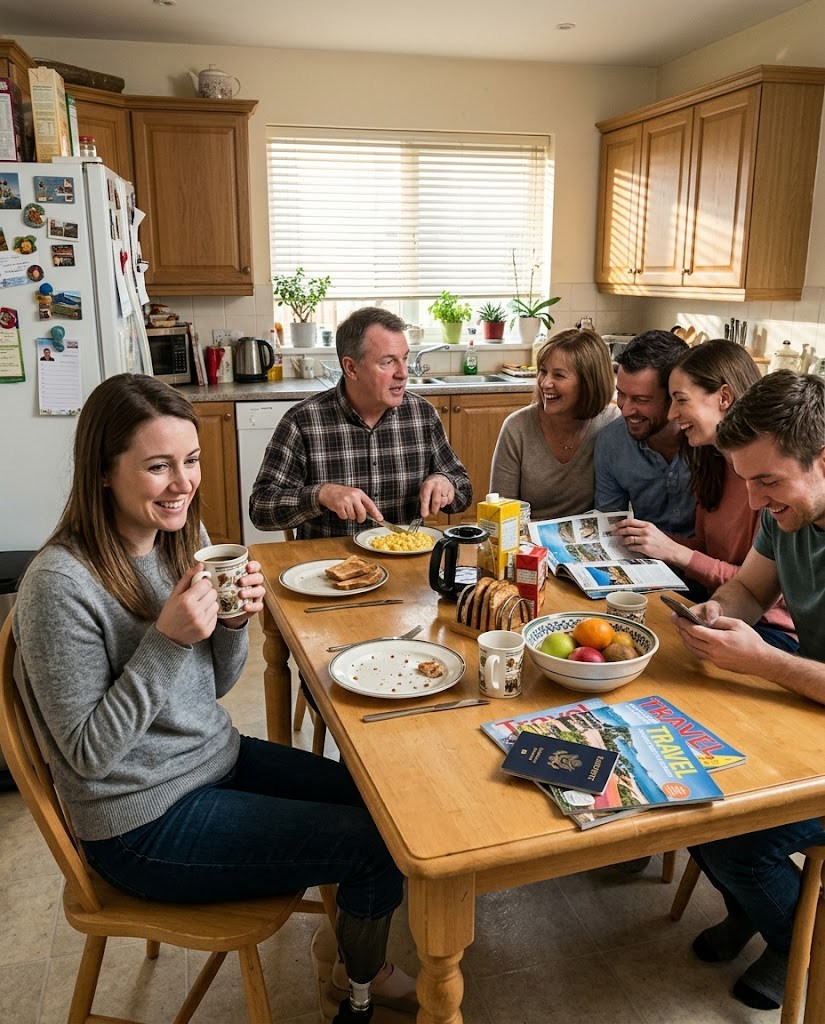
At breakfast, my dad announced: “We booked a trip to Italy just the six of us. You get it.”
I said, “Of course.”
Later that night, I got a bank alert: $9,200 charged from Rome, Venice, and Florence hotels, tours, and meals. I calmly disputed the charges, froze the card, and kept silent.
At the airport, my mom messaged: “Why did our boarding pass vanish?”
I just replied: “I’m not on the trip.”
They spent the first two nights in Terminal 3. By sunrise, their perfect itinerary was already starting to rot.
The Architecture of Exclusion
At breakfast, my father delivered the news the way some people mention a chance of rain. No throat-clearing. No hesitation. No attempt to make it kinder than it was. He cut into his eggs, glanced toward the middle of the table, and said, “We booked a trip to Italy. Just the six of us. You get it?”
The kitchen smelled like burnt toast, bacon grease, and my mother’s dark coffee. Sunlight came through the blinds in pale bars, striping the fruit bowl, the unopened mail, the stack of travel magazines Claire had apparently already brought over, and the framed school photos on the wall. It was such an ordinary room that the sentence landed with almost surgical precision.
Nothing dramatic. Nothing cinematic. Just an exclusion laid down between the butter dish and the jam like it belonged there.
My mother nodded as if this had already been discussed by all reasonable adults. Claire smiled into her orange juice. Her husband Caleb let out a small laugh, not mean exactly, just comfortable—the kind people make when they know somebody else will carry the awkwardness for them. Mike kept scrolling on his phone. Tessa asked whether Florence would still be crowded in July.
I looked around the table.
-
My father.
-
My mother.
-
Claire and Caleb.
-
Mike and Tessa.
Six. Then me. Seven chairs. Six tickets.
And my father, who had always preferred blunt force over honesty, handing me a phrase instead of an explanation: You get it.
That was his way of saying there would be no discussion, no apology, and no room for me to react like a person with feelings. I was expected to understand. I was expected to cooperate with my own exclusion. I was expected, most of all, to keep the room easy for everyone else.
So I put down my fork and said, “Of course.”
I even smiled. Not a bitter smile. Not one sharp enough to make anybody uncomfortable. Just enough softness around the mouth to let them move on.
The “Logistics” of the Family
I had spent most of my life making things easy for them. Easy conversations. Easy rescues. Easy money. Easy forgiveness. If families had job titles, mine had assigned me one years ago without ever saying it out loud.
My Job Title: Logistics & Emergency Funding.
I was the calm person you called when a plan fell apart and somebody else’s card had already been declined.
-
I had covered Claire’s venue deposit when her transfer was delayed.
-
I had paid Mike’s transmission bill after he swore it would only be for a week.
-
I had floated my parents through a furnace replacement one winter and never saw most of that money again.
-
My mother once borrowed my card for a dental crown and returned it two months later tucked into a thank-you note like gratitude and repayment were interchangeable.
I was useful in exactly the ways that kept everyone else comfortable.
Conversation resumed almost instantly. Florence would be hot, my mother said, but at least it was a dry heat. Claire wanted rooftop dinners. Caleb was already comparing wine tours outside Siena. Mike called window seat. Tessa laughed and asked whether Dad could survive with only a carry-on.
Nobody asked if I minded. Nobody invented a fake reason I was being left behind. They didn’t need one. Leaving me out had become part of the family architecture. It was load-bearing.
By the time I stood in the doorway with my keys in my hand, my mother was writing down travel-size toiletries on the back of a grocery receipt. Claire wanted to know whether they should prebook the Vatican. Caleb said, “We should all do the Colosseum at sunrise,” then stopped and corrected himself with a grin that died halfway through.
I almost laughed. Not because it was funny. Because if I had written the scene myself, I would have toned it down to make it believable.
The $9,200 Surprise
The whole drive home, I kept waiting for anger to arrive. I expected heat in my chest, shaking hands, the old humiliation I knew too well. Instead there was just a strange, lucid quiet.
I sat at a red light behind a landscaping truck with one taillight out and adjusted my prosthetic where the humidity always made the socket feel tighter. Jazz hissed softly through the speakers. And with total clarity I thought: They meant every second of that.
Not because there wasn’t room. Not because I couldn’t travel. Not because Italy was somehow impossible for me. I had flown alone, worked long days, climbed stairs, missed trains, handled worse.
But my family had always treated any accommodation as if it were a favor so large it distorted gravity. A hotel elevator became a burden. A slower pace became a sacrifice. A cobblestone street became a reason to sigh. Claire once asked if I would be okay in Europe in the same tone people use for thunderstorms and loose dogs. My mother had a habit of angling family photos from my left side, as if discretion were kindness.
That night, a little after eleven, my phone lit up while I was rinsing a mug in the sink.
-
Fraud alert.
-
Then another.
-
And another.
Rome. Venice. Florence. Boutique hotels. Museum packages. Train upgrades. Restaurant deposits. A private canal tour. A Tuscan tasting. Priority access to the Vatican. By the time I sat down, the total sat at $9,200.
I knew exactly what had happened.
Months earlier, after booking my parents’ anniversary weekend, I had forgotten to remove my premium card from the family travel profile my mother still used because she could never remember her own passwords. They hadn’t asked. They hadn’t even warned me. They had simply moved through the itinerary city by city, charging rooms, tours, and meals to the card of the person they had just informed would not be joining them.
I stared at the screen for a long time, reading every line item. Rome hotel deposit. Venice canal dinner. Florence suite upgrade. Six museum passes. Six rail tickets. Six people arranged into a beautiful vacation, all paid for by the extra chair at breakfast.
Then I called the bank.
My voice was calm enough that the representative repeated herself twice, probably expecting outrage. I told her the charges were unauthorized. I disputed every one of them. I froze the card. I requested a replacement number. When she explained that linked travel reservations might be flagged or voided if the payment method failed, I said I understood.
Then I went to bed.
Stranded in Terminal 3
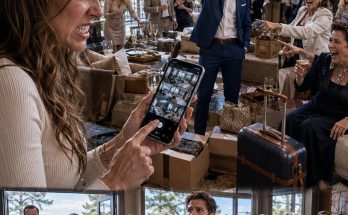
The next morning the family group chat was full of countdown energy. Claire sent a photo of matching luggage tags. My mother texted that everyone should wear shoes that slipped off easily for security. Mike complained about airport coffee prices before even leaving the house.
I said nothing. I went to work. I answered emails. I ate lunch at my desk. I let silence do the most honest thing it had ever done for me.
The message from my mother came just after dawn the following day:
“Why did our boarding pass vanish?”
I looked at it for a full minute before typing back:
“I’m not on the trip.”
My phone rang before I could lock the screen. My father. Then Claire. Then my mother. Then all of them, one after another, as if volume could change what had happened.
When I finally answered, the airport noise on the other end was chaos layered over panic. My father didn’t ask. He accused. “What did you do?”
I leaned back in my chair. “I disputed $9,200 in unauthorized charges.”
A beat of silence. Then, “We were going to pay you back.”
I laughed once, softly, because of course that was the defense. Not we’re sorry. Not we should have asked. Not we shouldn’t have used your card after excluding you from the trip. Just that familiar family theology: consent was optional as long as repayment remained a vague future possibility.
“You didn’t even mention it at breakfast,” I said. My mother grabbed the phone long enough to hiss, “This is not the time.” “No,” I said. “Breakfast would have been the time.”
What followed reached me in fragments over the next few hours.
-
The airline had frozen the ticket bundle tied to the failed travel profile.
-
The hotels had reversed their holds and notified the booking platform.
-
The app that held all six boarding passes emptied itself in front of them while they stood at security like people watching a floor vanish.
My father tried to rebook at the counter and discovered last-minute summer fares for six people to Europe were obscene. His main card was already near its limit. My mother’s daily transfer cap blocked the rest. Claire assumed Caleb would cover the gap. Caleb assumed my father had already handled it. Mike yelled at an airline agent. Tessa cried in a bathroom stall.
By that night, they still hadn’t left.
A storm backed up departures. Airport hotels filled. Every solution cost more money than anyone wanted to admit they didn’t have. So the family that had decided I was too unnecessary to merit a ticket spent the night in Terminal 3 under fluorescent lights, guarding roller bags and pretending hard plastic chairs counted as a plan.
They spent the next night there too.
Claire sent me a photo she probably meant to send Caleb instead. Mascara streaked down her face. My mother was curled against her carry-on with a scarf over her eyes. Mike was stretched on the floor with his backpack under his head. My father sat upright, jaw locked, staring into the middle distance like rage alone might open a gate. Caleb looked exhausted. Tessa looked like she was reconsidering marrying into any of this.
The messages changed tone after that:
-
Selfish.
-
Cruel.
-
After everything we’ve done for you.
-
Do you know how humiliating this is?
That last one almost impressed me. Humiliating. As if humiliation had only become real once it happened to them in public, under airport lighting, with nowhere graceful to put it.
The Confrontation
They came home two days later without ever seeing Rome.
No one warned me they were coming to my house. I heard a car door slam, then another, then a knock that had more force in it than certainty. When I opened the door, my father stood on the porch in the same polo he had worn to the airport, wrinkled and sour with stale travel air.
My mother was behind him, sunglasses on even though the afternoon was overcast. Claire looked like she had been crying. Mike looked furious. Caleb wouldn’t meet my eyes. Tessa stared at the cracked edge of my flowerpot.
For a second nobody spoke.
Then my father said, very quietly, “You think the card is the real reason we didn’t take you. It isn’t. Your mother said if you came, the whole trip would turn into…”
PART 2
The Hidden Truth Revealed
My father stood on my porch, his voice drops to a sharp whisper: “…an accommodation.”
The word left his mouth with a slight twist, like he was delivering a heavy verdict rather than exposing his own pettiness. Behind him, my mother didn’t flinch. She just adjusted her sunglasses. Claire bit her lip, and Mike crossed his arms, looking anywhere but at my left leg.
The Real Burden
“We wanted a vacation, not a logistics operation,” my father continued, his voice hardening as he regained his footing. “We wanted to walk through Rome without calculating steps. We wanted to see Florence without checking for ramps or elevators. We didn’t do it to be cruel. We did it so we could just be. And you ruined it for everyone because your pride was hurt.”
The quiet that followed wasn’t the awkward silence of the breakfast table. It was the heavy, breathless silence of a family that had finally run out of polite euphemisms. They had brought their rage right to my porch, expecting me to shrink under the weight of my own brokenness, just like I always had.
I looked down at my prosthetic, then back up at the five people standing in my driveway, smelling of stale terminal air and defeat.
“You’re right,” I said.
My father blinked. He wasn’t prepared for agreement.
“It is a logistics operation,” I said, leaning against the doorframe. “But you forgot the most important part of the logistics. I’m the one who runs them. I’m the one who pays for the venues, fixes the mistakes, and floats the cards when yours are maxed out. You wanted the freedom of a vacation without me, but you wanted my wallet to carry the bags.”
“With What, Mike?”
“We were going to pay you back!” Mike snapped, his voice cracking with the leftover frustration of forty-eight hours on an airport floor.
“With what, Mike? Your card was declined at a coffee kiosk,” I said evenly.
I looked at all of them.
-
The Reality: You all think my disability is the burden.
-
The Truth: The real burden in this family has always been your entitlement.
“You didn’t leave me behind because of cobblestones,” I continued. “You left me behind because you don’t respect me enough to see me as a person—only as a safety net.”
My mother finally spoke, her voice trembling but sharp. “You humiliated us. Your sister cried for two days. We slept on the floor.”
“No,” I said, looking her dead in the eye. “You sat in a room and planned a trip using my money while looking at my face. You humiliated yourselves the moment you thought that was okay. The airport just made you look at it.”
The Final Deadbolt
My father stepped closer, his jaw locked. “So what now? You’re just going to cut us off? Over a trip?”
“Over the truth,” I said.
I didn’t wait for a reply. I didn’t give them the satisfaction of a shouting match or a dramatic tears-and-forgiveness breakthrough. I just pulled the door closed.
The click of the deadbolt felt remarkably light.
Through the glass, I watched them stand there for a moment longer, waiting for the door to open back up, waiting for the easy rescue that had always come before. When it didn’t, they slowly turned around and walked back to their cars, their shoulders slumped, carrying the full weight of their own bags for the very first time.
PART 3
The New Architecture
The silence that followed their departure lasted for weeks.
For the first time in my adult life, my phone didn’t ring with an emergency. There were no midnight texts about bounced checks, no frantic calls about broken appliances, and no casual check-ins that casually segued into a financial favor.
I kept my card frozen, ordered a fresh replacement with a completely different number, and deleted the shared family travel profile entirely. I didn’t block their numbers, because blocking felt like a reaction born of anger. I wanted them to see that I was simply indifferent.
The Ripples of the Fallout
A family built on a single load-bearing pillar doesn’t stay stable for long once that pillar steps aside. Without my quiet interventions, the cracks in their own lives started to show almost immediately.
-
Claire and Caleb: I found out through a mutual cousin that Claire’s venue deposit bounced because Caleb refused to transfer the funds to cover it. Without me there to silently bridge the gap, they had their first major public argument about finances.
-
Mike: His truck broke down again three weeks later. He sent a text that simply read: “Truck is dead. Guess I’m walking to work since you’re still throwing a tantrum.” I didn’t reply. Two days later, he had to swallow his pride and take out a high-interest personal loan.
-
My Parents: My mother tried to log into her travel app to book a minor weekend trip to see an aunt, only to find the entire account locked because the payment history was flagged for fraud. She had to call customer service herself—something she hadn’t done in a decade.
They were learning, piece by piece, exactly how much effort it took to keep their lives smooth when they couldn’t outsource the friction to me.
The Last Attempt
Six weeks after the airport disaster, my mother sent a text. It wasn’t an apology. It was a summons.
“Sunday dinner at 5:00. Your father wants to put this behind us. Bring the leftover salad bowl you borrowed last Thanksgiving.”
It was a classic move. Act as if nothing happened, frame the peace offering as a demand, and use a mundane object to force a sense of normal obligation. They wanted me back at the table—not because they missed my company, but because the logistics of the family were getting too heavy to carry alone.
I typed back five words: “I have other plans.”
My other plans consisted of sitting on my porch, drinking a quiet cup of coffee, and watching the sunset without calculating how many steps it would take to get back inside.
Standing Firm
They still talk about the “Italy Incident” in hushed, bitter tones to anyone who will listen. To the rest of the extended family, I am the cold, unforgiving sibling who ruined a dream vacation over a financial misunderstanding. They have rewritten the story to make themselves the victims of my sudden, unpredictable cruelty.
And for the first time in my life, I don’t care.
Let them keep their version of the story. Let them believe my pride was the problem. The truth lives in the silence of my phone, the weightlessness of my wallet, and the clean, clear space of my own home.
They wanted a vacation where they didn’t have to think about my accommodations. In the end, they gave me the greatest accommodation of all: a life completely free of their burdens.
PART 4
The Ultimate Test
Three months after the door closed on my porch, the family group chat—which I had muted but never left—exploded with news.
Claire and Caleb were officially getting married. The public financial arguments hadn’t broken them; instead, they had rushed the timeline. The wedding was set for October.
Then came the digital invitation. It was an image of a sleek, formal card sent directly to my phone. I opened it and scrolled to the bottom.
Venue: The Grand Pavilion. RSVP: Please note: This is an outdoor, multi-level historic estate. Ground surfaces include gravel pathways and original stone staircases. No alternative access available.
It wasn’t just a venue description. It was a targeted message written in the exact same language they used before. It was their way of saying, “We’re doing it again. And this time, we gave you a warning so you can’t complain.”
The Pre-Wedding Panic
I clicked “Will Not Attend” within thirty seconds of opening the link. I didn’t add a note. I didn’t send a congratulatory text. I just marked my absence and went back to my evening.
The backlash took less than an hour to arrive. This time, it wasn’t my father or Mike. It was Claire.
-
The Text: “Are you seriously doing this to me on my wedding day? It’s bad enough you ruined the family trip, but now you’re boycotting my wedding because of the stairs? You’re so selfish.”
I didn’t type a furious reply. I just called her. When she picked up, her voice was already tight with defensive anger.
“Claire,” I said, my voice completely level. “I’m not boycotting anything. You chose a venue that doesn’t accommodate my prosthetic. You explicitly wrote it on the invite. I accepted your terms and RSVP’d accordingly. Why are you angry?”
“Because you’re making a statement!” she cried. “You’re making everyone feel guilty!”
“If looking at an empty chair makes you feel guilty,” I replied softly, “that’s your conscience talking, not my statement.”
The Logistics Fail Again
The week of the wedding arrived, and with it came the inevitable.
Without my involvement, the planning had been a disaster. Caleb’s family hadn’t pitched in what they promised. My father’s credit cards were still recovering from the last-minute airport fees from the summer. Mike had promised to handle the rehearsal dinner catering through a friend, but the friend backed out.
At 9:00 PM the night before the wedding, my phone rang. It was my mother. Her voice lacked the sharp hiss from the airport; it sounded hollow, desperate, and exhausted.
“He’s going to cancel the bar,” she whispered, referring to the venue coordinator. “The final vendor payment was due at 5:00 PM. We’re short $3,400. Caleb’s parents are refusing to cover it. Your father is in the hallway screaming at the manager. Claire is locked in the bathroom.”
The silence stretched between us. In the past, this was the exact moment I would have opened my laptop, typed in my routing number, and saved the day. I would have been the hero, the “reliable one,” the logistics savior.
“That sounds incredibly stressful,” I said quietly.
“Can you transfer it?” she begged, abandoning all pretense of the past three months. “Just this last time. For your sister. We will pay you back before the honeymoon ends. I promise you, on my life.”
“No,” I said.
“Please,” she sobbed. “It’s her wedding day.”
“Then you should enjoy it,” I said. “But you’ll have to enjoy it with whatever budget you actually have. I’m not funding the architecture anymore.”
The Clean Break
I hung up. I didn’t check social media the next day. I didn’t look for pictures of Claire’s dress, the gravel paths, or the stone stairs. I spent my Saturday doing exactly what I wanted to do—building a small wooden planter box for my porch, taking my time with the measurements, and enjoying the steady, predictable rhythm of my own tools.
A week later, I heard through the grapevine that the wedding happened. The bar had been limited to beer and wine, the mood had been tense, and my father had spent the reception complaining about the venue’s hidden fees to anyone who would listen.
They had survived without me. They had scrambled, they had suffered a little public embarrassment, and they had managed to get through it on their own steam.
And that was the final piece of the puzzle. They didn’t need me to save them; they just preferred it because it was easier than facing their own limitations.
I sat on my porch that evening, looking out at the driveway where they had stood weeks ago in their wrinkled travel clothes. The sun went down, casting long, peaceful shadows across the grass. My phone sat face down on the table beside me, dark and completely silent.
I adjusted my prosthetic, leaned back in my chair, and took a deep breath of the cool evening air. The extra chair at the table was gone, and for the first time in my life, the space around me felt absolutely perfect.
PART 5
One Year Later
The holidays came and went without a single invite, which was exactly what I expected. I spent Thanksgiving with a few close friends and Christmas in a quiet cabin by a lake, far away from the forced family joy that usually cost me a few thousand dollars to sustain.
A full year had passed since the day their perfect itinerary rotted in Terminal 3.
My life had settled into a beautiful, predictable rhythm. Without the constant weight of their financial crises and emotional emergencies, I had the time—and the money—to focus on my own world. I upgraded my prosthetic to a high-activity carbon fiber model that handled humidity and long walks with ease. I didn’t have to ask anyone’s permission, and I didn’t have to listen to anyone sigh about the “logistics” of it.
An Unexpected Encounter
I was sitting in a quiet, sunlit cafe on a Tuesday afternoon, reviewing some work on my laptop, when a shadow fell across my table.
I looked up. It was Caleb.
He looked different. The comfortable, easy laugh he used to have at the breakfast table was gone. He looked tired, his shoulders slightly hunched, holding a cardboard tray with two coffees.
“Hey,” he said, sounding genuinely surprised. “Mind if I sit for a second?”
I closed my laptop halfway. “Go ahead, Caleb.”
He sat down, sliding one of the coffees toward himself but not drinking it. For a long moment, he just looked at the table, tapping his fingers against the paper cup.
“Claire and I split up last month,” he said quietly.
I didn’t flinch. I just nodded. “I’m sorry to hear that.”
“Don’t be,” Caleb said with a dry, humorless smile. “It was a long time coming. Once the wedding was over, the bills started hitting. Your dad couldn’t help, Mike was always asking us for loans, and Claire… Claire kept waiting for a rescue that never showed up. She wanted to live a life we couldn’t afford, and she spent every day angry that nobody was fixing it for her.”
He looked up at me, his eyes full of a strange, newfound respect.
“I used to think you were just being stubborn at the airport,” Caleb admitted. “But after living with them without you around to catch the fall… I get it now. You weren’t holding a grudge. You were just holding the floor up. And when you walked away, the whole house fell down.”
The View from the Porch
We talked for a few more minutes about mundane things—his new apartment, the weather, his job—before he stood up, thanked me for the time, and walked out into the afternoon sun.
I watched him go, feeling a quiet sense of closure. I didn’t feel a rush of vindication or joy at their misfortune. It wasn’t about winning an argument. It was just validation that my boundaries weren’t cruel—they were necessary.
That evening, I sat on my porch as the sun began to dip below the horizon. The soft warm cream paint on the siding glowed in the fading light.
My phone vibrated once on the table. I picked it up. It was a notification from my banking app, showing a steady, untouched savings balance. No fraud alerts. No unauthorized boutique hotels in Rome. Just my own hard work, safely tucked away for my own future.
I leaned back, resting my hands behind my head, and looked out at the empty driveway. The shadows grew longer, stretching across the grass until they vanished into the twilight.
They had wanted a vacation without an accommodation. In the end, they got exactly what they asked for—and I finally found a home where I didn’t have to accommodate anyone else’s entitlement just to belong.
PART 6
The Silent Architecture
A few weeks after running into Caleb, a heavy summer storm hit the valley. I sat inside my living room, listening to the rain drum against the glass and watching the lightning crack across the dark sky.
In the old days, a storm like this meant a flurry of panic. My mother’s basement would flood, or Mike’s wipers would fail on the highway, or Claire would realize she’d left her expensive patio cushions out to rot. My phone would have been a vibrating mess of demands disguised as family panic.
Tonight, it stayed perfectly dark.
The Unsent Text
Around 9:00 PM, a single message did slide through from my mother.
“The oak branch in the backyard cracked. It’s blocking the driveway. Your father’s back is acting up again.”
It was the old trap—a statement of a problem, wrapped in a medical excuse, left dangling like a lure. They wanted me to grab my chainsaw, drive over in the pouring rain, and clear the path so they could keep pretending they were independent.
I opened the text, looked at it for a moment, and began to type a reply. I wrote out a long, detailed paragraph explaining exactly which local tree removal services were reliable, their estimated costs, and how to file a claim with their homeowner’s insurance. I laid out the complete logistics for them, step by step.
Then, I paused.
I looked at the paragraph. Even though I wasn’t giving them money or physical labor, I was still giving them my mind. I was still organizing their chaos. I was still being the “logistics guy” they refused to accommodate but desperately needed.
I hit delete. I cleared the entire message until the text box was blank.
I locked my phone and set it face down on the counter. I chose the silence.
Moving Forward
The next morning, the sky was a brilliant, washed-clean blue. The air was crisp, and the puddles on the pavement sparkled in the early light. I packed a small bag, locked my front door, and walked out to my car.
I didn’t check in with anyone. I didn’t leave an itinerary. I didn’t make sure my absence was convenient for a single soul.
I adjusted my high-activity carbon fiber prosthetic, stepped on the gas, and drove toward the highway. I had a long weekend ahead of me, a cabin booked up north, and miles of cobblestone and dirt trails I intended to walk at whatever pace I damn well pleased.
Families like mine don’t change because they see the light; they change because you turn the lights out on them. They wanted a life where they didn’t have to carry my weight. In the end, they got exactly what they asked for—and I finally learned how to carry nothing but myself.
PART 7
The Final Balance
Six months after the summer storm, a large white envelope arrived in my mailbox. It didn’t have a return address, just a neat, typed label with my name. Inside was a certified check for $9,200 and a short note written in my mother’s elegant, precise handwriting.
“Your father sold his fishing boat last week. We are settling our debts. We don’t want to owe you anything anymore.”
It was their final attempt to rewrite history. By returning the money, they were trying to turn their entitlement into a simple loan. They wanted to buy back their dignity, to wash their hands of the airport floor, and to pretend that the last year of silence had just been a business dispute.
I looked at the check for a long time. In the past, receiving this money would have felt like a victory. It would have been the proof that they finally admitted they were wrong.
But as I held the paper in my hands, I realized something important: the money had never been the point.
The Unbroken Circle
I didn’t cash the check. I didn’t send a text saying thank you, and I didn’t call to tell them the debt was settled. Instead, I drove down to the local children’s hospital—the same facility that had helped me adjust to my very first prosthetic when I was a teenager.
I walked into the administrative office, signed the check over as an anonymous donation to their mobility equipment fund, and walked back out to my car.
If my family wanted to use that money to clear their conscience, that was their business. But I wasn’t going to let their cash buy them a way back into my thoughts. I had already balanced my books the day I turned the key in my deadbolt.
As I drove home, I caught a glimpse of my reflection in the rearview mirror. I wasn’t smiling a bitter smile anymore. It was just a calm, steady look of a person who knew exactly who they were.
The View from the Peak
The story of my family didn’t end with a dramatic confrontation, a tearful reunion, or a grand apology. It ended the way most things do when you finally stop carrying water for people who don’t appreciate the sweat—it just faded into a quiet, permanent distance.
They still have their dinners. They still sit around the kitchen table with its seven chairs, looking at the empty space where the “logistics guy” used to sit. They probably still mention Italy sometimes, their voices dropping into that familiar, defensive edge whenever my name comes up.
But their architecture is no longer my problem to sustain.
I stepped onto my porch that evening, looking out at the quiet street as the first winter snow began to fall, dusting the steps and the flowerpots in a clean, perfect white. I adjusted my prosthetic, leaned against the railing, and watched the flakes drift down in the silence.
They wanted a world without an accommodation. In the end, they built their own isolation—and I finally found the absolute freedom of standing entirely on my own two feet.
PART 8
The Inheritance of Choice
A year and a half after the “Italy Incident,” my father passed away. It wasn’t a long illness; just a sudden, quiet stop. I found myself back in that kitchen with the sunlight coming through the blinds in the same pale bars, except this time, the seventh chair was truly gone.
My mother sat at the head of the table, her hands trembling as she looked at a stack of legal papers. Mike and Claire were there, too, looking at me with a mixture of hope and old, lingering resentment. Without my father’s blunt force to hold the family narrative together, the room felt fragile.
The Last Document
The lawyer reached into his briefcase and pulled out a single, sealed envelope addressed to me in my father’s rugged, cramped handwriting.
“To the one who stayed standing.”
I opened it, expecting a final lecture or a plea for forgiveness. Instead, it was a deed to a small plot of land in the mountains that I didn’t even know he owned, and a short note:
“I never told you this because I was ashamed. My own father left me with nothing but his debts, and I spent my life terrified of being poor again. I used you because I knew you were the only one strong enough to handle it. I realize now that by making you the safety net, I never taught the others how to fly. This land is yours. It’s the only thing I ever owned that wasn’t bought with a loan or someone else’s kindness. Use it to build something that is only yours.”
The Final Offer
The room was silent as I finished reading. My mother leaned forward, her voice a fragile whisper. “Vibol, the house… the mortgage is more than we thought. Your father was creative with the refinancing.”
Claire looked at the deed in my hand. “If we sold that mountain land, we could save Mom’s house. We could stay together. We could be a family again.”
I looked at the deed, then at the three people who had spent decades seeing me as a set of logistics rather than a sister. I saw the same old pattern trying to re-knit itself—the expectation that I would sacrifice my piece of solid ground to fix the holes they had dug for themselves.
“No,” I said.
The New Foundation
I didn’t sell the land to save the house. My mother eventually moved into a smaller, manageable apartment that she could actually afford. Mike and Claire had to finally learn the hard math of their own lives.
I kept that mountain plot. I didn’t build a mansion or a monument. I built a small, accessible cabin with a wide, wraparound porch and a view that stretched for fifty miles. There are no stairs, no gravel paths, and no “accommodations” because the entire place was designed for me from the ground up.
I sit there now, watching the sun dip behind the peaks. I am a parent to an 18-year-old daughter who knows exactly how to balance her own checkbook and stand on her own feet. I taught her that love isn’t about being a safety net; it’s about building a foundation so strong you never need one.
The seventh chair is finally retired. I don’t carry the weight of their world anymore, and in the silence of the mountains, I’ve finally found my own.
PART 9
The Freedom of the Horizon
The first summer at the cabin brought a different kind of quiet. Up here, the air was crisp, smelling of pine needles and damp earth after a morning rain. There were no frantic phone calls to dodge, no unearned guilt to unpack, and no unspoken expectations hanging over the kitchen table.
My daughter, now eighteen and preparing for her own journey into the world, sat on the edge of the porch, her legs swinging over the side. She was tracing a map on her phone, planning a road trip with her boyfriend—a young man who always spoke with a quiet, well-mannered respect that made it easy to have him around.
Watching her, I didn’t see the anxiety I used to carry at her age. She didn’t look like someone waiting for the other shoe to drop, or someone training to become the family’s unpaid fixer. She looked entirely, beautifully free.
A Lesson in the Soil
“Mom,” she said, looking up from her screen. “Do you think we should plant some lavender along the front walkway next spring? The soft purple would look incredible against the cream wood of the cabin.”
I smiled, leaning my weight comfortably against the porch railing. “I think that’s a perfect idea.”
I had spent decades organizing other people’s chaos, managing their venue deposits, and paying for their emergencies. But standing on this porch, looking out at a piece of earth that belonged completely to me, I realized the ultimate truth of the last two years: the best logistics are the ones you use to build your own peace.
I didn’t teach my daughter how to save a sinking ship. I taught her how to build a vessel that wouldn’t leak in the first place. She knew how to budget, she knew how to protect her boundaries, and most importantly, she knew that love was never supposed to feel like an unpaid debt.
The Architecture of Peace
As the sun began to dip behind the mountain peaks, casting a long, golden light across the valley, my phone chimed once on the outdoor table.
It wasn’t a text from Mike asking for a loan, or a message from my mother pretending the past hadn’t happened. It was a simple automated notification—a routine check-in from my bank showing my untouched, secure balance. No unauthorized charges from Rome. No surprise hotel upgrades in Florence. Just the quiet, steady proof of a life lived on my own terms.
I looked back at the cabin, with its wide, seamless entryways and high-contrast, clean lines designed perfectly for the way I move through the world. It wasn’t an “accommodation” built to appease someone else’s sigh. It was a home.
The story that started at a breakfast table with seven chairs and six tickets was finally over. I didn’t need their validation, I didn’t need their apologies, and I didn’t need to hold a grudge to keep myself safe.
I took a deep breath of the cool mountain air, adjusted my prosthetic, and sat down in the chair next to my daughter. The horizon stretched out before us, vast and completely open, and for the very first time in my life, I knew exactly what it felt like to be completely unburdened.
PART 10
The Final Horizon
The summer air was warm and still, carrying the scent of the new lavender we had planted earlier that spring. I sat on the wide, seamless porch of my mountain cabin, watching the sunset paint the sky in shades of soft peach and lavender. My daughter and her boyfriend were packing the last of their gear into the car, their laughter echoing lightly across the valley.
I watched them with a quiet sense of accomplishment. I hadn’t just built a home with high-contrast, clean lines and accessible spaces; I had built a legacy of independence.
The Unspoken Gift
As they prepared to drive off on their road trip, my daughter walked back up the porch steps and handed me a small, wrapped box.
“I found this while we were packing,” she said, her eyes bright with a knowing softness. “I think it belongs here.”
I unwrapped it to find a simple, framed photograph of the two of us standing on this very porch on the day the cabin was finished. In the photo, I wasn’t the “logistics guy” or the family safety net; I was just a woman standing entirely on her own two feet, looking toward the horizon.
“Thanks, honey,” I whispered, pulling her into a quick hug.
“See you in a week, Mom,” she said, waving as she headed back to the car. “And don’t worry—I’ve got the itinerary, the emergency fund, and the maps all handled.”
The Architecture of a Life
I watched their taillights fade into the distance until the only light left was the glow of the stars and the soft, warm illumination from the cabin windows. I picked up my phone to set an alarm for the morning, and for a brief second, I looked at my contact list.
The names of my mother, Mike, and Claire were still there, but the weight they used to carry was gone. There were no unread messages, no missed calls, and no frantic alerts. The silence wasn’t a wall I had built to keep them out; it was the foundation of the peace I had built for myself.
I adjusted my high-activity carbon fiber prosthetic and stood up, feeling the solid, predictable strength of my own movement. I didn’t need to be anyone else’s rescue anymore.
I walked inside, the door clicking shut with a sound that was no longer a heavy deadbolt, but a simple invitation to rest. The story that began at a breakfast table with an empty chair had finally reached its true conclusion. I was no longer an “accommodation” in someone else’s life; I was the architect of my own.
The Final Clarity
The road trip with my daughter was the first time I traveled purely for the joy of seeing the world, without a single logistical fire to put out. We didn’t rush, we didn’t calculate every step, and we didn’t look at the map with anxiety.
When we returned to the mountain cabin, the lavender along the front walkway had fully bloomed, framing the cream-colored wood with a soft, natural border. I sat on the porch that evening, watching the twilight settle over the valley, feeling a profound sense of completeness.
A Story Fully Written
The long journey that began at a chaotic breakfast table—defined by an extra chair, an unread letter, and a family that only valued me as a financial safety net—had finally ironed itself out into absolute peace.
I looked down at my high-activity carbon fiber prosthetic, then back out at the vast, open horizon.
I had stopped carrying the weight of people who refused to lift their own. I had stopped answering the late-night panic calls, deleting the unsent text messages, and funding itineraries that were built on my exclusion. In doing so, I didn’t lose a family; I gained my own life.
The True Horizon
My phone sat face down on the outdoor table, completely quiet. There were no new alerts, no demands, and no guilt-laden messages. The silence up here wasn’t a punishment or a grudge—it was the quiet, steady rhythm of true independence.
My daughter walked out onto the porch, carrying two cups of tea, and sat down in the chair beside me. She didn’t say anything at first. She just looked out at the mountains, her posture relaxed, her future completely hers to design.
“It’s beautiful tonight, Mom,” she said softly, taking a sip.
“It really is,” I replied.
I leaned back in my chair, the cool mountain breeze catching the edge of the porch. The architecture of my life was finally complete. It wasn’t built on compromise, resentment, or a forced accommodation. It was built on solid ground, designed by my own hands, and for the first time in my life, I was standing entirely, beautifully, on my own two feet. THE END .