“She would have wanted me to have it,” my brother said, calmly carving the turkey with our late mother’s bone-handled carving knife while the rest of the family sat in absolute silence.
I just stood there staring because my brain genuinely stopped working for a second.
We were in the middle of Thanksgiving dinner, and I had just laid the social security audit papers right next to his gravy boat.
My mother passed away four years ago. She was a quiet, frugal woman who lived in a modest ranch home in Toledo, Ohio. She clipped coupons, saved plastic butter tubs, and drove an old Buick until the rust ate through the doors. She didn’t leave behind a massive fortune, but she left us her integrity. Or so I thought.
Last month, a certified letter arrived at my house from the Social Security Administration. Since I was the executor of her estate, government mail still occasionally found its way to my door. But this wasn’t a standard update. It was an audit notification.
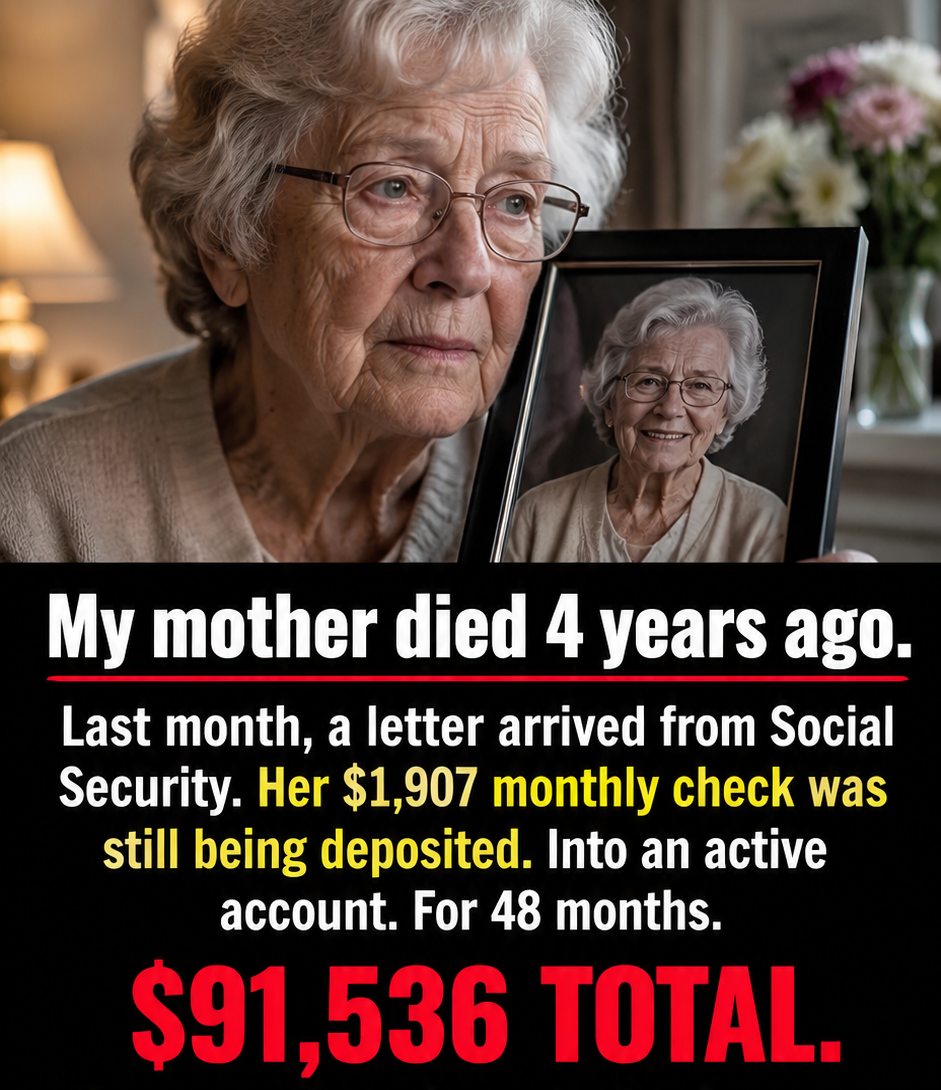
According to the records, my mother’s monthly benefit check of $1,907 was still being deposited into an active joint account. For forty-eight months. That was $91,536 in total.
I remember sitting at my kitchen table, looking at the numbers, and feeling my stomach drop.
My hands were shaking so badly I could barely hold the paper. I checked the account details listed in the letter. The joint account was in my brother Gary’s name.
Gary had always been the golden child, but he was also lazy. He was always looking for a shortcut, a way to make a quick buck without putting in the hours. When Mom got sick, he barely showed up. I was the one who did her grocery shopping at the Meijer on Secor Road. I was the one who cleaned her house, took her to doctor appointments, and held her hand at the end.
To keep the federal money flowing after she died, Gary had forged a doctor’s note. The document claimed our mother was still alive but completely incapacitated, unable to travel or speak on the phone. Because it was a joint account, the bank just kept accepting the automatic deposits.
I decided to confront him on Thanksgiving. It was the only time the whole family would be in one room. I thought the pressure of the holiday would force him to be honest.
I was wrong. Gary didn’t even look up from the turkey. He just shrugged his shoulders.
“You didn’t visit her once during her last two years, Gary. Not once,” I said, my voice shaking with a mix of anger and grief. “And you’ve been pocketing her money ever since she died.”
“I took care of things behind the scenes,” he muttered, reaching for the mashed potatoes. “You don’t know everything, Ellen. Just let it go.”
Nobody else at the table said a word. My sister Brenda just stared down at her plate, her face pale, quietly passing the corn. The silence in the room felt heavy and stale.
I left the dinner early, went home, and filed a formal report with the federal fraud hotline. I knew what it would mean. I knew it would tear the family apart, but I couldn’t let him desecrate our mother’s memory like that.
Two weeks later, a special investigator named Agent Miller sat at my kitchen table. He was a calm, older man with tired eyes. He opened a thick cream-colored folder and laid out several documents.
“Your brother didn’t act alone, Mrs. Vance,” Agent Miller said softly. “To keep these checks active, the social security office required a co-signer on the medical verification forms. Someone had to verify that your mother was still alive and under direct family care.”
I leaned forward, my heart beating fast. “Who was it? Was it one of his friends?”
“No,” Agent Miller replied, sliding a photocopied document toward me. “The co-signer was someone who attended your mother’s funeral. We cross-referenced the signature with the funeral guest book and tax records. It was your sister, Brenda.”
My skin felt suddenly cold. I couldn’t draw a breath.
Brenda. My quiet, sweet sister who lived just two doors down from our mother’s old house. Brenda, who had wept so loudly at the funeral that we had to help her stand up. She had been in on it the entire time.
I stared at the document. There was her signature, with those distinct, looping capital B’s. She had signed her name as Mom’s primary health advocate, lying to the federal government every single year just to help Gary steal our mother’s identity.
“Are you sure?” I whispered, even though I knew the answer. The handwriting was unmistakable.
“We are very sure,” Agent Miller said. “The funds were deposited into the joint account, and we have records of Gary transferring a portion of that money directly to Brenda’s personal account every single month. It was a clean split. Fifty-fifty.”
I felt physically sick. The grief of losing my mother was one thing, but this was a different kind of pain. It felt like something cracked deep inside my chest. My own siblings had turned our mother’s death into a business venture.
I called Brenda that night. She answered on the second ring. I didn’t waste time with small talk.
“I sat with Agent Miller today, Brenda,” I said. My voice was cold and steady. “I saw the signatures. I saw the fifty-fifty split.”
There was a long gasp on the other end of the line. Then, she started sobbing.
“Gary said he was going to lose his house, Ellen,” she cried, her voice cracking. “He said the bank was going to foreclose. He begged me to help him. I didn’t want to do it, I swear.”
“But you kept the money anyway,” I said. “Every single month for four years.”
“We were going to pay it back,” she whimpered. “We had a plan.
Please, Ellen, don’t do this. Don’t ruin our family over some government money. Mom wouldn’t want us in jail.”
“Mom is dead, Brenda. And you used her name to steal ninety thousand dollars.”
I hung up the phone. I didn’t want to hear her excuses. I didn’t want to hear her play the victim when she had been spending stolen money on home renovations and vacations while I was clipping coupons to get by.
The legal hammer fell fast. Because it was a federal offense involving a significant amount of money, the government didn’t play around. Agent Miller and his team moved quickly.
Two months later, Gary and Brenda were both formally indicted on charges of federal grand theft, conspiracy, and identity fraud.
The neighborhood gossip spread like wildfire. A lady from my church actually stopped me at the grocery store to ask if it was true. I just nodded and kept walking. I didn’t have the energy to explain the shame of it all.
Gary ended up taking a plea deal. He was sentenced to two years in federal prison and ordered to pay full restitution of his share of the stolen money. He had to sell his house anyway to cover the fines and the legal fees.
The very house he claimed he was trying to save was gone.
Brenda, because she had no prior record and cooperated with the investigators after the indictment, received five years of federal probation, three hundred hours of community service, and a strict repayment plan.
Our family is completely shattered now. My nieces and nephews won’t speak to me, blaming me for sending their parents to court. But I don’t regret what I did. I couldn’t let my mother’s name be dragged through the mud of their greed.
This year, I hosted Thanksgiving at my house. It was a much smaller gathering. Just me, my husband, and our two children.
My husband carved the turkey. He didn’t use the old bone-handled knife. We had left that behind in my mother’s old house, and I think the police had taken it during the initial search of Gary’s place anyway. Instead, we used a simple, cheap knife we bought at a local hardware store.
It didn’t look fancy. It didn’t have thirty years of family history attached to it.
But as I looked around the table at my kids laughing and my husband smiling, I felt a strange sense of peace.
There were no secrets at this table. No stolen money. No quiet lies passed along with the gravy.
My son reached for a roll and knocked over a glass of water, sparking a flurry of laughing and cleaning with paper towels. It was loud, messy, and imperfect. But it was real. And for the first time in four years, I felt like we were finally moving forward.