“I Locked Your Credit Card,” My Husband Said Over The Phone. Then My Mother-In-Law Added, “Ask Us Before You Spend A Dime.” I Didn’t Argue. I Drove Straight To The Bank. Two Hours Later… 55 Missed Calls.
### Part 1
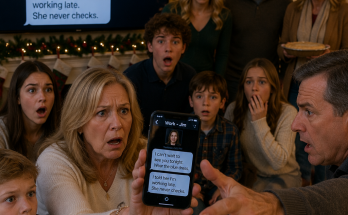
“I locked your credit card.”
My husband’s voice came through the speakers of my SUV with the same casual tone he used when reminding me to buy milk.
I tightened my hands around the steering wheel. “You did what?”
“I locked it,” Daniel repeated. “You won’t be using it again until we talk about your spending.”
Before I could answer, another voice floated through the call.
His mother.
“Ask us before you spend a dime,” Lorraine said, sounding almost pleased with herself.
Us.
That one word did something to me.
For eighteen years, I had been Daniel’s wife, his partner, the mother of his children, the accountant who quietly kept our household steady whenever his construction business stumbled. Yet somehow, in the space of one phone call, I had been reduced to a teenager asking permission for lunch money.
I didn’t scream.
I didn’t defend myself.
I ended the call, started the engine, and drove straight to my bank.
What Daniel and Lorraine didn’t know was that the credit card they had frozen was almost meaningless compared with everything else I had been quietly holding together.
My name is Claire Bennett. I’m a CPA, and for most of my career I’ve helped medical practices untangle bad bookkeeping, plan taxes, and survive financial mistakes before those mistakes became disasters.
At home, I did the same thing without charging anyone.
Daniel knew I earned well. He never knew exactly how well because we had never treated marriage like a contest. When his company had a slow winter, money simply appeared in the household account. When a tax problem threatened his business, it disappeared. When we bought our lake cabin, he assumed his company had finally turned the corner.
He never asked many questions.
For years, I took that as trust.
Then Lorraine moved in after Daniel’s father died.
At first, I liked having her there. She cooked, helped with our teenagers, Hannah and Luke, and filled the house with stories about Daniel’s childhood.
Then the comments started.
“Thirty dollars for coffee?”
“Fresh salmon again?”
“Does Hannah really need that dress?”
Daniel’s answer was always the same.
“Mom’s old-fashioned. Ignore it.”
But Lorraine never criticized his fishing gear, his tools, or the expensive lunches charged to his business card.
Only me.
The moment I should have stopped ignoring her came one afternoon when I returned home early and heard them talking in the kitchen.
Lorraine said, “A man who doesn’t control the money eventually loses control of his family.”
I stood in the garage, waiting for Daniel to laugh.
Instead, after a long silence, he said, “Maybe you’re right.”
A week later, Luke’s laptop died during a school project. I found a reliable replacement on sale and used our household card.
Lorraine saw the transaction.
The next afternoon, Daniel called to “teach me a lesson.”
Now I was sitting across from my longtime bank manager, Natalie Brooks, while she pulled up every account attached to my name.
“What would you like to do?” she asked.
I looked at the screen, then at my wedding ring.
“Separate everything that belongs to me.”
Her fingers paused over the keyboard.
Then she nodded.
And for the first time in eighteen years, I stopped protecting Daniel from the consequences of never asking where the money came from.
### Part 2
Natalie didn’t ask me whether I was angry. She didn’t tell me to calm down. She simply opened each account and let the numbers speak.
First, I redirected my paycheck.
Then I stopped the automatic monthly transfers from my personal investment account into our joint household account.
Those transfers had covered more than Daniel realized: groceries during slow months, insurance premiums, unexpected repairs, and more than one shortfall in his company.
Next came my personal savings, the brokerage account I had built before our marriage, and the inheritance my aunt left me years ago.
I had invested nearly all of it.
Daniel knew about the inheritance.
He had no idea what it had become.
Then Natalie found the business guarantees.
Years earlier, when Daniel’s company was still small, I had backed several credit lines with my income and assets. At the time, I was proud to help.
Now I stared at my signature on those old agreements and felt something cold settle inside me.
“I want to remove myself wherever legally possible.”
“Some can be changed today,” Natalie said. “Others will require review.”
“Start every request.”
For almost two hours, we worked through documents.
No revenge.
No secret withdrawals from joint money.
No games.
I simply stopped volunteering my private assets to support people who had decided I needed financial permission.
Before I left, Natalie handed me a folder.
“Everything solely yours is now separated.”
Outside, afternoon sunlight flashed off windshields. I got into my SUV and turned over my phone.
Twenty-three missed calls.
Most were from Daniel.
Several were from Lorraine.
One was from Hannah.
Then the messages started appearing.
Where are you?
Call me now.
Something is wrong with the business account.
Payroll isn’t processing.
Claire, please answer.
Finally, one from Lorraine:
What did you do?
I drove home without responding.
Hannah sat at the kitchen island with a textbook open in front of her. The house smelled faintly of cinnamon tea.
“Mom?” she said. “Dad left really fast.”
“Did he say why?”
“Something about the bank.”
Luke came home from practice twenty minutes later, dropped his backpack by the door, and immediately looked between us.
“What happened?”
“Adult problem,” I said. “Not yours.”
That was all I managed before the front door slammed open.
Daniel rushed inside, pale and sweating.
Lorraine followed him.
“Claire!” he shouted.
I set down my coffee mug.
“Hi, Daniel.”
He stared at me. “Payroll didn’t go through.”
“I know.”
“The operating account is short.”
“I know.”
Lorraine stepped forward. “What did you do?”
I looked directly at her.
“I protected what belonged to me.”
Daniel’s phone rang. He answered, listened, then slowly lowered it.
His voice was barely audible.
“My accountant wants to know where the monthly transfers went.”
Silence filled the kitchen.
Lorraine frowned. “What monthly transfers?”
Daniel looked at me.
For the first time, I saw genuine fear in his face.
Not because he thought I had stolen something.
Because he was finally realizing I had been giving him something for years.
My phone buzzed again.
Thirty-one missed calls.
And Daniel still had no idea how deep the truth went.
### Part 3
I went upstairs and returned carrying a gray file box.
Daniel watched me place it on the dining table.
“What’s that?”
“Eighteen years.”
I lifted the lid.
Inside were tax records, mortgage statements, business reports, investment summaries, insurance papers, and copies of transfers I had made whenever our family needed help.
I slid the first folder toward him.
“Remember the winter your company nearly missed payroll?”
He nodded.
“You said you figured it out.”
“I thought I did.”
“You didn’t.”
I tapped a highlighted transfer.
Thirty-two thousand dollars from my personal investment account.
Daniel stared at the page.
“You put that into the company?”
“Yes.”
“Why didn’t you tell me?”
“Because I thought we were a team.”
The next folder held an old tax notice.
Daniel remembered the accounting error. What he didn’t remember was the payment that kept penalties from growing.
I had paid it.
Then came the lake cabin.
He had spent years believing his business profits covered the down payment.
They hadn’t.
My inheritance had.
Lorraine crossed her arms. “Married people help each other.”
“I agree,” I said. “That’s why I helped.”
“Then why are you acting like a victim?”
“I’m not. I’m acting like someone who finally stopped being invisible.”
Daniel sat down.
The papers seemed to shrink him with every page.
He had not been a failure. His company was real, and he had worked hard.
But the version of our life he believed in—the one where he carried the family while I casually overspent—had never existed.
Hannah and Luke came downstairs while we were still talking.
Daniel immediately said, “You two don’t need to hear this.”
Hannah didn’t move.
“Actually, we already heard enough.”
Lorraine stiffened.
Hannah looked at her father. “Grandma criticizes everything Mom buys. You started doing it too.”
Luke swallowed hard. “I thought my laptop got Mom in trouble.”
Daniel’s face changed.
“You never should have thought that.”
“But I did.”
My son looked at me, embarrassed.
“I heard Grandma say Mom wastes money. I thought maybe I shouldn’t have asked for it.”
That hurt more than the frozen card.
Our children had started measuring their needs against Lorraine’s approval.
Daniel covered his face.
“I made a mistake.”
Lorraine whispered, “I was only trying to help.”
I believed she believed that.
But intention doesn’t erase damage.
Daniel finally stood and faced me.
“I’m sorry.”
His eyes were wet.
A year earlier, maybe even a month earlier, those words would have softened me.
Now they sounded incomplete.
“I believe you’re sorry,” I said. “But I don’t know if I trust you.”
His face fell.
“Claire—”
“You didn’t just lock a card. You decided I was beneath you. Then you let your mother join the decision.”
Lorraine looked away.
I removed my wedding ring and placed it beside the folders.
Daniel stared at it.
“I need you and your mother to stay somewhere else tonight.”
He looked stunned.
“Are you asking me to leave?”
“Yes.”
“For how long?”
I looked at eighteen years of paper spread across the table.
“I don’t know.”
That night, after the front door closed behind them, the house felt strangely larger.
Then Hannah came to me holding Daniel’s tablet.
“Mom,” she said quietly, “I think you need to see what Grandma was planning next.”
### Part 4
The tablet was open to a message thread Daniel had forgotten to close.
I expected complaints about me.
What I found was worse.
Lorraine had been pushing him for months to tighten the household accounts, move more financial authority into his name, and eventually have me “step back” from managing anything important.
Daniel hadn’t agreed to all of it.
But he had agreed to enough.
The locked credit card hadn’t been a sudden mistake.
It had been a test.
I sat at the kitchen table until midnight reading only what I needed.
By morning, sadness had hardened into clarity.
Daniel called before breakfast.
“Can we talk?”
“Yes,” I said. “But not about fixing this today.”
He arrived alone.
His shoulders sagged when he saw the tablet.
“I can explain.”
“I’m sure you can.”
He admitted Lorraine had convinced him I was becoming “too independent.” He said business stress had made him insecure. He hated that my career was stable while his company rose and fell.
None of that surprised me.
What surprised me was how peaceful I felt hearing it.
For years, I had wondered what I was doing wrong.
Now I understood.
Nothing.
Daniel had turned his insecurity into authority and called it marriage.
“I’ll go to counseling,” he said. “I’ll change. Mom will move out permanently.”
“I hope you do change.”
His eyes lifted.
“But I’m not staying married to you while you practice.”
He started crying.
I didn’t.
That afternoon, I contacted an attorney.
The next several months were painful but clean. We separated our remaining joint property legally, created a fair parenting schedule, and made sure Hannah and Luke understood one thing: they had two parents who loved them, even if those parents no longer belonged in the same marriage.
Without my automatic transfers, Daniel had to restructure his business, cut unnecessary expenses, and learn what his company could actually support.
Lorraine moved in with her daughter across town.
She apologized once.
I accepted the apology.
I did not invite her back into my life.
Forgiveness, I learned, does not require access.
A year after the phone call, I bought a smaller house with tall windows, a quiet backyard, and enough space for both kids.
The first thing Hannah placed on the kitchen counter was a bag of expensive coffee beans.
She grinned.
“Thirty dollars.”
I laughed so hard I nearly cried.
Luke added fresh salmon to the refrigerator and said, “Hope it wasn’t on sale.”
For the first time in years, our home felt light.
Daniel and I became civil. Over time, even friendly in the careful way divorced parents sometimes become.
He once asked if I thought we might have another chance someday.
I looked at the man I had loved for almost two decades.
Late regret can be sincere.
It still doesn’t create an obligation.
“No,” I told him. “But I hope you become better anyway.”
He nodded.
And that was the end of us.
I never regretted going to the bank.
I didn’t destroy my marriage that afternoon.
I simply stopped financing an illusion.
Daniel thought locking one credit card would remind me who controlled the money.
Two hours later, he learned the truth.
The money had never been the source of my power.
Knowing when to walk away was.
THE END!