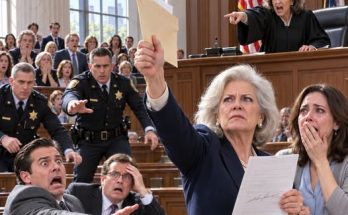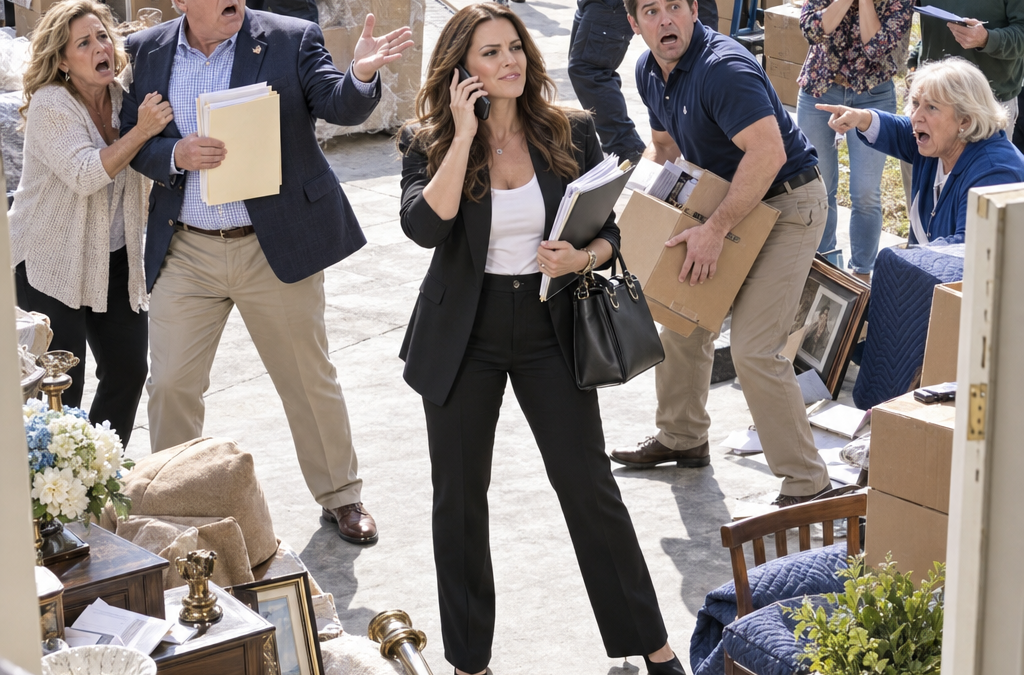
My Neighbor Called, “Movers Are Emptying Your House.” My Dad Smiled And Said, “We Sold It To Pay Your Brother’s Debt. You’re Selfish!” I Just Laughed, Called My Lawyer, And Replied, “I Hope You Like Prison, Because That Power Of Attorney Was Revoked Years Ago.”
At 11:47 on a Tuesday morning, my neighbor called to tell me strangers were carrying furniture out of the house I had spent years sacrificing to buy. My parents insisted they were “saving” my younger brother, and my father claimed an old power of attorney gave him the right to sell everything I owned. There was just one problem: I had revoked that document eighteen months earlier, and I still had proof that my father personally signed for the notice.
### Part 1
The second time Ruth Bennett called me in four minutes, I knew something was wrong. Ruth was sixty-eight, a retired elementary school teacher who lived two houses down from me in Maple Glen, Illinois, and she communicated almost exclusively through texts containing weather warnings, pictures of neighborhood rabbits, or reminders that I had forgotten to drag my recycling bin back from the curb. She knew I worked at a logistics firm in downtown Chicago, knew Tuesdays were usually packed with client meetings, and had never once called me during business hours unless there was a genuine emergency.
I was halfway through a presentation I had spent three weeks preparing when my phone vibrated against the conference table again. Through the glass wall behind our clients, Lake Michigan looked gray beneath the March sky, and my own reflection hovered faintly above a spreadsheet projected across the opposite wall. I apologized, stepped into the hallway, and answered with the kind of irritated concern you use when you expect to hear that a pipe has burst or a tree branch has landed on your garage.
“Natalie, honey, I don’t want to scare you,” Ruth said, and the tremor in her voice erased every ordinary possibility from my mind. “There are two moving trucks outside your house, and men are carrying your things out.”
For several seconds I heard nothing except the hum of the office ventilation and the click of someone’s shoes against polished concrete behind me. I asked Ruth to repeat herself, even though I had understood every word, and she told me she had already watched them carry out my sectional, television, boxes from my guest room, and several pieces of furniture from upstairs. When she confronted one of the workers, he showed her paperwork and said the property had been sold and was supposed to be emptied before the buyer’s final walkthrough.
“My house isn’t for sale,” I said.
“I know that,” Ruth answered. “That’s why I’m calling.”
I pressed my forehead against the cool glass wall and stared thirty floors down at traffic crawling through the Loop. Four years earlier, I had bought that three-bedroom brick house with money I had earned myself, after two years of sixty-hour weeks, packed lunches, canceled vacations, and driving a twelve-year-old sedan whose air conditioner had died halfway through one miserable July. There was no family gift hidden in the down payment, no inheritance, no parental loan, and no brother who had contributed a dime.
“Ruth, I need you to do something for me,” I said. “Don’t argue with them and don’t put yourself in the way, but if you can safely photograph the paperwork they showed you and the plates on those trucks, please do it.”
“I already photographed the plates.”
That was Ruth.
I returned to the conference room, handed the presentation to my colleague, and told the clients I had a home emergency. Twenty minutes later I was sitting in my car five levels beneath the building, both hands wrapped around the steering wheel while my phone filled with photographs from Ruth. One showed a white moving truck backed into my driveway, another caught two workers carrying the walnut media console I had assembled by myself during my first week in the house, and the last showed the top page of a document where two words made my stomach tighten: authorized agent.
My first thought was identity theft. My second was that someone had forged my signature, and my third arrived a few seconds later when I enlarged the photograph and recognized another signature near the bottom. It belonged to my father, Daniel Mercer.
I called my mother.
She answered before the first full ring finished, which told me she had been expecting me. “Natalie, before you get upset—”
“There are movers inside my house.”
“I know.”
Three words, softly delivered, changed the temperature inside my car.
I stared through the windshield at a concrete pillar painted with the number 5C while my mother, Ellen, began telling me that my younger brother, Owen, was in trouble again. Owen was twenty-six and had spent most of his adult life bouncing between jobs, impulsive schemes, sports betting, online wagering, and promises that this particular disaster would be the one that finally scared him straight. My parents had paid off debt twice, replaced a repossessed car, covered months of rent, and once borrowed against an investment account because my father said, “You don’t let family drown when you’re standing on shore.”
“What does Owen have to do with men removing furniture from my house?” I asked.
“His debts have gotten serious.”
“They’ve always been serious.”
“This is different.”
My mother lowered her voice and told me two men had come to their house the previous week demanding repayment. She said my father had become convinced Owen could be hurt if the balance was not settled quickly, and that they needed access to a large amount of money before the end of the month. I listened until she finally reached the sentence she had spent the entire conversation avoiding.
“Your father found a buyer for your house.”
For a second I actually laughed because the statement sounded too absurd to process. “Found a buyer for what?”
“Your house.”
“My house isn’t his to sell.”
“He had the legal paperwork from your surgery.”
Everything inside me went still.
Four years earlier, shortly before a routine surgical procedure, I had signed a limited power of attorney naming my father as the person who could handle certain financial matters if I became temporarily unable to do so. At the time, it had seemed like one of those boring adult tasks you complete because a lawyer recommends it, and I had trusted my father so completely that I barely remembered sliding the document across his kitchen table. Eighteen months later, after watching him guarantee another loan for Owen despite every warning the family had received, I had quietly hired an attorney and revoked that authority.
I had not done it dramatically. There had been no screaming match, no family announcement, and no threat because I did not believe one was necessary. My attorney prepared the revocation, it was recorded where appropriate, and I sent my father a certified copy with a letter clearly stating that he no longer had any authority to act on my behalf.
My father signed for it himself.
“Mom,” I said, “that power of attorney was revoked a year and a half ago.”
The silence on the other end felt suddenly crowded.
“That can’t be right.”
“It is right.”
“Your father wouldn’t have done this if he thought—”
“I don’t care what he thought. He received the revocation.”
She told me I was misunderstanding his intentions, that he was terrified, that Owen was still my brother, and that desperate situations required families to make sacrifices. Then she said something I would remember long after the legal documents and police reports blurred together.
“You have a career, Natalie. You can recover.”
I looked at the photograph of strangers carrying my belongings down my front steps and understood exactly what my mother meant. Somewhere along the way, my stability had stopped making me worthy of protection and started making me the person they believed they could safely rob.
“Call the movers,” I said. “Tell them to stop.”
“Give your father time to explain.”
“No. Call them now.”
“Natalie, don’t do something you’ll regret.”
I ended the call and searched for another number.
Monica Reyes, the attorney who had handled the purchase of my house and later prepared the revocation, answered from court during a short recess. I sent her Ruth’s photographs, explained what my mother had admitted, and listened as her voice changed from confusion to the very controlled tone professionals use when anger has become useful.
“I’m going to ask you one question,” she said. “Did you ever restore your father’s authority after we recorded the revocation?”
“Never.”
“Then don’t call him. Don’t call the agent. Don’t contact the buyer. I’m going to find out exactly what your father signed.”
I could hear papers moving quickly in the background.
Then Monica added, “Natalie, if he represented in writing that this power of attorney was still valid after receiving notice of revocation, this may be much worse than your mother understands.”
For the first time that day, my fear made room for something colder.
“Find everything,” I said.
“I intend to.”
### Part 2
Monica called me back forty-three minutes later. I was still sitting in the parking garage because every time I tried to start the car my hands began shaking, and I had finally stopped pretending I was calm enough to drive. She had already pulled the county records, confirmed the revocation, contacted the real estate brokerage, and learned that my house had been listed privately nine days earlier at a price nearly seventy thousand dollars below what comparable houses in my neighborhood had recently sold for.
“Your father wasn’t trying to maximize the sale,” she said. “He was trying to make it fast.”
According to the agent, my father had introduced himself as my authorized representative and produced the old power of attorney along with several supporting documents. The agent had never spoken to me directly because Daniel claimed I was working overseas on an extended assignment and wanted everything handled without disturbing me. That lie almost impressed me because it took a fact everyone knew—that I traveled frequently for work—and bent it just enough to make the rest believable.
“What supporting documents?” I asked.
Monica paused.
“That is what I’m trying to obtain.”
She had already demanded that no closing occur, warned the brokerage that authority was disputed, and contacted the title company whose name appeared on the preliminary paperwork. The title company immediately froze the file after finding the recorded revocation, which meant the supposed ten-day closing my mother had mentioned was not going to happen. Stopping the sale should have made me feel safe, but all I could think about were the moving trucks still at my house.
Monica called the Maple Glen Police Department while I finally began the drive home. Normally the trip took me a little under an hour if traffic behaved, but an accident near the expressway turned everything red on my navigation screen, and I spent almost two hours inching past brake lights while Ruth kept sending updates. One truck left at 2:16, the second remained, and shortly afterward a dark SUV arrived carrying a man Ruth did not recognize.
At 2:31, Ruth texted, He’s measuring your living room.
I called her instantly.
“He’s walking around with one of those laser measuring things,” she whispered, although there was no reason to whisper from her own front window. “Gray coat, expensive shoes, maybe forty-five. He keeps talking to the movers.”
“Don’t go over there.”
“I wasn’t going to.”
I knew that tone.
“Ruth.”
“I am inside my house.”
“Stay there.”
“Fine.”
Five minutes later she sent me a photograph from behind her curtains showing the man standing in my open doorway as though he already owned the place. Something about his casual posture made me angrier than the moving truck did. He was examining the home I had scrubbed, painted, repaired, financed, and loved while I was still driving toward it, because my father had apparently convinced him I had willingly disappeared from the transaction.
A patrol car reached the house before I did. Monica emailed an electronic copy of the revocation and filed an emergency request seeking to prevent further removal of property or attempts to transfer the house. By the time I turned onto my street, the second moving truck was still there, the gray-coated man had left, two officers were speaking to the moving crew, and Ruth stood on her front porch wearing a purple cardigan with her arms folded like an angry crossing guard.
The movers were not criminals. That became obvious almost immediately.
Their supervisor looked pale when I showed identification and explained that I had not hired them. He produced a work order issued by a storage company, then gave the officers the address where the first truck had been sent. They had been told the owner was relocating permanently and the house needed to be completely cleared by five o’clock.
“Who hired you?” I asked.
He read the name from his paperwork.
Daniel Mercer.
My father.
Inside the house, emptiness had a sound I had never noticed before. Voices echoed where my sectional had been, pale rectangles marked the walls where framed photographs had hung, and small felt pads from furniture legs dotted the hardwood like evidence markers. They had emptied my office completely except for a floor lamp and had packed nearly every box from the guest room.
The officers documented everything while the movers began returning items from the truck. They were apologetic enough that I almost felt sorry for them, especially when one young man carried my television back inside as carefully as though it were an injured animal. I kept telling myself that most of my belongings were recoverable, the house was still standing, the sale had been frozen, and nothing irreversible had happened.
Then I opened my desk drawer.
The locking file box I kept beneath it was gone.
I checked the closet, the hallway, the boxes being unloaded, and finally the supervisor’s inventory sheet. My file box was listed among the items placed on the first truck, along with two storage bins containing old tax records, warranties, insurance policies, and copies of financial documents.
My stomach tightened.
The first truck had been sent to a storage facility thirty miles away, but when the police contacted the facility, the manager said the driver had been redirected before arrival. The company dispatcher confirmed the change had been requested by the customer who hired them.
My father had changed the delivery address after the truck left my house.
That was the moment my remaining doubt disappeared.
This was not a frightened parent improvising in an emergency. My father was controlling the flow of property, paperwork, information, and time because he knew there was a chance I would discover what he had done.
He called at 7:14 that evening.
I was sitting on the floor because my couch had not yet been returned from the first truck, and Ruth had brought over sandwiches, coffee, and the kind of silence people offer when they understand that conversation would only make things worse. My father’s name appeared on my screen, and Ruth looked at it before looking at me.
“You don’t have to answer.”
“I do once.”
I turned on speakerphone.
“Natalie,” my father said, calm and measured, “we need to talk like adults.”
Ruth’s eyebrows shot upward.
“You sent strangers into my house.”
“I authorized a move connected to the sale.”
“A sale you had no authority to make.”
“I acted under a document you signed.”
“A document I revoked, and you know that because you signed for the revocation notice.”
He exhaled heavily, the sound of a man disappointed that someone had introduced facts into a conversation he wanted to control. “You are focusing on paperwork while your brother is facing a genuinely dangerous situation.”
“My paperwork is the only reason I still own my house tonight.”
“You always do this.”
I almost laughed. “Do what?”
“Reduce everything to contracts, receipts, boundaries, rules. Families don’t work that way.”
I looked around my half-empty living room at scratches where furniture had been dragged across hardwood I had refinished myself.
“Apparently they should.”
His voice hardened. “Owen owes more than you understand. Your mother and I have already drained what we can access quickly. You have substantial equity in that house, and you are single. You don’t have children depending on you. You could rent for a year, rebuild the down payment, and be fine.”
There it was again.
You can recover.
My parents had somehow transformed every responsible decision I had made into evidence that taking from me would cause less damage.
“Sell your house,” I said.
Silence.
“You have more equity than I do. Sell yours.”
“That isn’t practical.”
“Why?”
“Your mother and I are close to retirement.”
“So your retirement deserves protection, but my home doesn’t?”
“That is not what I’m saying.”
“It is exactly what you’re saying.”
He began another explanation about family responsibility, shared sacrifice, Owen’s future, and how I would understand someday when I was older. I let him speak until the words blurred into the same moral arithmetic I had heard for years: Owen’s emergencies were everyone’s obligations, while everyone else’s sacrifices belonged exclusively to them.
Then I asked one question.
“Where is my file box?”
My father stopped talking.
It lasted maybe two seconds, but they were the most informative two seconds of the entire call.
“What file box?”
“The locked one from my office.”
“I don’t know anything about that.”
“Interesting.”
“Don’t start accusing me of things.”
“You already admitted hiring the movers.”
“I arranged for your belongings to be stored safely.”
“Where?”
Another silence.
I looked at Ruth, and Ruth slowly set down her coffee.
“Where are my belongings, Dad?”
“They are safe.”
“That isn’t an address.”
“I will deal with it tomorrow.”
“No, Monica will deal with it tonight.”
His tone changed immediately. “You brought an attorney into this?”
“You sold my house.”
“You’re making a mistake.”
“No, Dad. You made one.”
I ended the call.
At 8:03, Monica emailed me three scanned pages the real estate agent had just turned over. The first was the expired power of attorney.
The second was an affidavit signed by my father fourteen days earlier.
On it, beneath language I had to read twice before I understood, he had sworn that his authority remained active and had never been revoked.
### Part 3
I did not sleep that night. I moved between my bedroom, kitchen, and nearly empty living room while the refrigerator clicked on and off, reading my father’s affidavit until the words stopped looking like English. The document was notarized, dated, and unambiguous: Daniel Mercer affirmed that he remained legally authorized to act for me and had received no notice terminating that authority.
The certified receipt proving otherwise was stored digitally in three places.
Monica had insisted on that eighteen months earlier because she believed important documents should survive a house fire, computer failure, or family dispute. I had thought she was being overly cautious when she made me scan the postal receipt with my father’s signature and save it alongside the recorded revocation. At 1:12 in the morning, sitting at my kitchen table beneath the bright pendant light, I realized boring precautions were sometimes the difference between being believed and being erased.
The next morning, Monica met me before work at a small coffee shop near her office. She placed a thick folder between us and told me to breathe before opening it, which naturally made me want to open it immediately. Inside were copies of the listing paperwork, the affidavit, communications from the brokerage, and the preliminary purchase agreement signed by the cash buyer.
The proposed price made me angry all over again.
My father had accepted $372,000 for a house whose recent valuation was closer to $445,000. He had agreed to a rapid closing, waived several ordinary protections, and represented that I wanted a private sale because I needed liquidity for an overseas business relocation. The buyer was an investment company called Northway Residential Partners, which specialized in quick purchases, renovations, and rentals.
“Do they know this was fraudulent?” I asked.
“Right now, I have no evidence they knew your father lacked authority,” Monica said. “Their attorney stopped the transaction as soon as I contacted him.”
“So Dad lied to them too.”
“It appears that way.”
“What about the missing truck?”
“We found the destination.”
I straightened.
The moving company had eventually produced the updated address after speaking with police. My belongings had been redirected to a warehouse leased under my father’s name on the south side of Maple Glen, not far from a commercial storage complex. Nothing had been sold, according to the inventory they received, but Monica wanted police present before anything was retrieved.
“Why would he hide my things?”
“I don’t know.”
She tapped the folder.
“But I think your file box matters.”
We learned why that afternoon.
The police accompanied me and a representative from the moving company to the warehouse. The metal door rattled upward, releasing a smell of cardboard, dust, and cold concrete, and there was my life stacked in rows beneath fluorescent lights: my couch wrapped in moving blankets, office chairs, family photographs, kitchen equipment, winter clothes, lamps, and boxes labeled in handwriting that wasn’t mine.
I went straight to the section containing my office.
The black file box was there.
Its lock had been broken.
My first reaction was relief because the box itself had not vanished. My second came when I lifted the lid and discovered several folders missing.
Bank records.
Mortgage documents.
And the folder containing the original paperwork from the purchase of my house.
I called Monica from the warehouse while an officer photographed the damaged lock. She told me not to touch anything else until they documented it, then asked me to list precisely what was missing. The title documents themselves could be reproduced, she explained, but the fact that someone had apparently targeted specific financial records made the situation more serious.
My father’s explanation arrived before dinner.
He texted me.
I needed copies to complete the sale. Nothing has been destroyed. Stop escalating this.
I read the message three times.
Then I forwarded it to Monica.
She responded almost immediately.
Do not reply.
That became my new routine.
My parents called; I forwarded screenshots. An aunt sent accusations; I saved them. My brother texted that I was destroying the family over “a house you can obviously afford,” and instead of arguing, I exported the conversation and emailed it to myself.
By Friday, the family had mobilized.
My aunt Patricia left an eight-minute voicemail telling me that homes could be replaced but brothers could not. My uncle Raymond sent a message saying my father had “made a desperate choice for the right reasons” and warning me I would regret humiliating him publicly. A cousin I had not seen since her wedding asked whether I seriously intended to “press charges against your own dad.”
Their outrage had a strange pattern.
Everyone wanted me to sacrifice something.
Nobody volunteered anything themselves.
So I created a group message.
If this is a family emergency that requires all of us to save Owen, please tell me what amount each of you is willing to contribute. I will provide Monica’s office information so the funds can be documented and handled appropriately.
The conversation went silent.
Aunt Patricia privately replied that she had college expenses for her youngest child. Uncle Raymond said his money was tied up. My cousin said I was being sarcastic and cruel.
I wasn’t being sarcastic.
I was testing the definition of family they had been using against me.
The answer was clear: family meant my resources.
Friday evening, Owen showed up at my house.
I watched him climb out of an old sedan from my front window, looking smaller than I remembered, shoulders rounded inside a gray jacket. He stood on the porch for almost a minute before ringing the bell, and I nearly refused to answer.
Instead I opened the door but did not invite him inside.
“You look tired,” he said.
“So do you.”
He shoved his hands into his pockets.
“Mom says you’ve got lawyers threatening Dad.”
“Dad used a revoked legal document to sell my house.”
“He was trying to help me.”
“That doesn’t make it legal.”
“I know.”
His answer surprised me enough that I stopped.
Owen looked down at the porch.
“I didn’t know he was selling your place until after he had the buyer.”
I studied his face, trying to decide whether this was another performance.
“What did you know?”
“That they were trying to raise money.”
“How much?”
His jaw tightened.
“Owen.”
“About ninety thousand.”
I stared at him.
My father had attempted to liquidate a house worth over four hundred thousand dollars to solve a ninety-thousand-dollar problem.
“Why didn’t they refinance their own house?”
His eyes flicked away.
I caught it.
“What?”
“Nothing.”
“Owen, what aren’t you telling me?”
He rubbed both hands over his face.
“They could have.”
The cold moved through me again, slow this time.
“What do you mean?”
“Dad told me they couldn’t touch their house because of retirement, taxes, Mom’s pension planning, whatever. I didn’t really understand all of it.”
“But they had options.”
“Yes.”
“And they chose mine.”
Owen nodded.
Then he said, “There is something else.”
I waited.
“Dad didn’t just find the old power of attorney.”
He looked toward the street before meeting my eyes again.
“He asked me two months ago if I remembered where you kept your legal papers.”
### Part 4
For several seconds I simply stared at my brother. A lawn sprinkler clicked rhythmically somewhere down the block even though the air was too cold for anyone to need one, and a delivery van rolled past behind him while my mind tried to place his sentence into a timeline. Two months earlier, there had been no crisis my parents had admitted to me, no threatening visit, no emergency deadline, and supposedly no plan involving my house.
“Why would Dad ask you that?” I said.
Owen shook his head. “He said he was reviewing family documents and couldn’t find the copy you gave him.”
“What did you tell him?”
“That I didn’t know.”
“Did you?”
“No.”
I wanted to believe him.
That was the problem with growing up inside a family where rescue had become a habit. Everyone learned to edit reality according to what would minimize consequences, and Owen had more practice than any of us.
“Were you already in debt two months ago?”
He nodded.
“How bad?”
“Bad enough that Dad knew.”
“Did you ask him to take my house?”
“No.”
His answer came fast enough to feel genuine.
“I swear, Natalie, I didn’t. I thought they were going to borrow against theirs.”
I folded my arms.
“Then when did you find out?”
“A couple weeks ago. Dad told me he’d figured something out and that you would be angry at first but eventually understand.”
Of course he had.
That was my father’s favorite version of consent: disagreement that would eventually expire.
“Did Mom know?”
Owen hesitated.
“Yes.”
That hurt more than I expected.
My mother had presented herself on the phone as a frightened participant pulled along by my father’s plan. According to Owen, she had known about it before the listing agreement was signed.
I asked him one more question.
“Why are you telling me this?”
His face tightened.
“Because I screwed up my life, Natalie. I know that. But I don’t want your house.”
The shame in his expression looked different from the theatrical regret I had seen after other disasters. There was no request hidden behind it, no promise that he only needed one more chance, and no attempt to make me responsible for making him feel better.
“I don’t need you to want it,” I said. “I need you to stop letting other people destroy themselves for you.”
“I know.”
“No, you don’t. Knowing means changing.”
He nodded without arguing.
That was new too.
Before he left, Owen told me my father had been talking to a financial adviser about raising money against their house but rejected the idea because the interest rate was higher than he wanted. My mother had also refused to liquidate part of an investment account because doing so would create a tax bill. They had not been out of options.
They had simply preferred an option that cost me more than it cost them.
That discovery changed something permanent.
Fear could explain bad judgment.
Fear could not explain comparison shopping.
My parents had apparently sat at their kitchen table, evaluated the price of sacrificing their security against the price of sacrificing mine, and chosen mine.
Monica told me to write down everything Owen had said while the conversation was fresh. She also asked whether he would speak to investigators voluntarily, and I told her I did not know. Owen texted that evening agreeing to do it.
Three days later, Detective Samuel Pike interviewed my father.
I was not present, but Monica later explained the sequence based on information provided through the investigation. My father began exactly where I expected him to begin: he believed the power of attorney remained valid, he had acted under extreme family pressure, and he never intended permanent harm.
Then Detective Pike showed him the revocation.
My father said he had forgotten receiving it.
Detective Pike showed him the certified-mail signature.
My father said he received many documents and did not specifically remember that one.
Then the detective showed him something I had not known existed.
A copy of the certified letter itself had been found among the paperwork inside my parents’ home.
Not misplaced.
Not unopened.
Stored in a folder with handwritten notes related to the proposed sale.
Monica called me immediately after hearing about it.
“He kept it?” I asked.
“Yes.”
“With the sale documents?”
“Yes.”
I sat down.
There are moments when betrayal stops being emotional and becomes architectural. You suddenly see the beams holding it up, the decisions layered beneath the final act, and the number of opportunities someone had to turn around before reaching you.
My father had found the revocation letter.
He had read it.
He had kept it.
Then he had signed a sworn statement saying it did not exist.
That afternoon my mother appeared at my office.
Reception called me downstairs because she refused to leave a message. I found her sitting beside a potted plant in the lobby wearing a navy coat and clutching her purse with both hands.
“We need to talk somewhere private,” she said.
“We can talk here.”
Her lips tightened.
“Natalie, please.”
I took her to an empty visitor conference room but left the glass door open.
She immediately began crying.
Not loudly.
That would have been easier.
My mother cried quietly, wiping her face with folded tissues while saying my father had become desperate, frightened, obsessed with solving Owen’s problem before someone got hurt. She said he barely slept, spent nights reviewing accounts, called banks and advisers, and convinced himself that selling my house was temporary damage compared with the potential consequences of doing nothing.
“Temporary damage?” I asked.
“He believed he could help you buy again later.”
“With what money?”
She looked down.
I waited.
“With what money, Mom?”
“We would have figured something out.”
I almost admired the circular logic.
They would take my house because Owen needed immediate rescue, then somehow rescue me later after spending the money that might have rescued me.
“Did you know the power of attorney had been revoked?”
She stared at her tissue.
That was my answer.
“Mom.”
“Your father said there were technical questions.”
“Did you know?”
“Yes.”
The word barely came out.
I leaned back in my chair.
She began speaking quickly, saying she had objected at first, told him they should call me, told him they should ask, and told him I would be devastated. My father answered that asking me would only create a fight because I would refuse, and eventually my mother decided refusal was proof that I did not understand the seriousness of the emergency.
“You knew I would say no, so you removed my ability to say it.”
Her face crumpled.
“I was scared.”
“And you were willing to make me pay for that fear.”
“We thought you would recover.”
There it was.
Again.
I stood.
My mother reached for my wrist, but I stepped backward.
“I need you to understand something. I am not the emergency fund you get to break open because I have been more responsible than everyone else.”
“Natalie—”
“You didn’t make one frightened decision. You helped hide a plan.”
“We are still your parents.”
“And I am still the person you did this to.”
She looked at me as though I had slapped her.
Then she whispered, “Your father could face charges.”
I finally understood why she had come.
Not to apologize.
To ask me to save him.
“I suggest he gets a lawyer,” I said.
### Part 5
The next month was the strangest period of my life because everything looked normal from the outside. I went to work, answered emails, reviewed project schedules, bought groceries, filled my car with gas, and occasionally laughed at something a coworker said. Meanwhile, my house existed at the center of police reports, affidavits, title records, insurance correspondence, and legal meetings that occupied nearly every evening.
The attempted sale was formally terminated within days.
Northway Residential Partners withdrew without fighting once its attorney reviewed the recorded revocation. The brokerage released copies of every communication with my father, refunded the buyer’s deposit, and sent me a written confirmation that the listing had been canceled.
The real estate agent called me personally.
Her name was Melissa Grant, and she sounded mortified.
“I should have insisted on speaking with you,” she said. “Your father had documentation, identification, and a notarized affidavit, but I still should have verified directly.”
I appreciated her saying it.
Monica did too.
The agent had been deceived, but instead of becoming defensive, she cooperated completely.
My father did the opposite.
Through an attorney, he began describing the entire event as a “family misunderstanding regarding the scope of previously granted authority.” That language almost made Monica smile when she read it aloud because, as she put it, “People become very interested in misunderstandings after documentation appears.”
The missing financial folders were eventually returned.
My mother delivered them to Monica’s office inside a grocery bag.
Every page appeared to be there, but several documents contained sticky notes in my father’s handwriting marking mortgage balances, equity estimates, insurance details, and account information.
He had researched exactly what I owned.
What hurt most was the date on one note.
Seven weeks before the men allegedly appeared at my parents’ home demanding money.
The crisis had intensified the plan.
It had not created it.
I drove to Ruth’s house that evening with a bottle of sparkling cider and sat at her kitchen table while she made grilled cheese like I was sixteen. Ruth did not ask complicated questions. She just listened while I explained that my father had apparently been studying my finances long before he claimed desperation forced him into action.
“May I say something impolite about your father?” she asked.
“Please.”
“He had a lot of time to stop.”
That sentence stayed with me.
My relatives kept insisting everything happened because my father panicked.
But panic is a moment.
What he did took weeks.
He located documents, spoke with an agent, gathered records, researched my mortgage, signed an affidavit, arranged photographs, negotiated a price, scheduled movers, redirected my property, and continued after receiving opportunities to stop. At every stage he chose the next step.
My brother entered a residential treatment program before the end of April.
My parents arranged it after his situation became impossible to contain through money alone, and for the first time in years, Owen agreed without bargaining. He called me once during the program from an approved phone line.
“I owe you an apology,” he said.
“You don’t owe me money.”
“I know. That’s not what I mean.”
I sat at my kitchen table, looking out at the maple tree beginning to bud behind my fence.
“I spent years letting Mom and Dad make my consequences somebody else’s problem,” he continued. “I didn’t tell Dad to sell your house, but I created the kind of family where he thought doing that made sense.”
I did not rescue him from the guilt.
That mattered.
Old Natalie would have immediately said, “No, this isn’t your fault,” because discomfort made everyone in my family rush to soften reality. Instead I told him the truth.
“You didn’t sign those documents. Dad did. But yes, your choices helped create the pressure they used to justify it.”
“I know.”
“What are you going to do with that?”
“Change.”
“Then change.”
He was quiet.
“I miss you.”
“I miss who I wanted my brother to be.”
The words hurt both of us.
That did not make them untrue.
“I hope I can become someone you want to know again,” he said.
“So do I.”
It was the most honest conversation we had ever had.
There was no forgiveness scene.
No promise that treatment would magically repair twenty years of family habits.
Just a possibility he would have to earn.
My mother continued contacting me despite Monica’s recommendation that all discussion involving the case go through counsel. Her messages shifted depending on the week.
Sometimes she apologized.
Sometimes she reminded me that my father had paid for my college textbooks one semester when I was twenty.
Sometimes she sent childhood photographs.
Once she wrote, Families survive worse than this.
I stared at that sentence for a long time.
Then I replied for the first time in weeks.
Families survive when the people who caused the damage stop demanding that the injured person repair it.
She did not answer.
Two days later, I received a handwritten letter from my father.
Six pages.
He described Owen’s debt, his fear, his frustration with my “rigid independence,” and his belief that I had misunderstood how serious everything had become. He admitted using the old power of attorney but insisted he never believed I would lose permanently because he planned to “make things right afterward.”
There was one sentence that told me he still did not understand.
I knew you would be angry, but I also knew you were strong enough to recover.
I read it twice.
Then I placed the letter in the evidence folder.
Strength, I realized, had become the excuse people used for hurting me.
Because I could survive betrayal, they had decided betrayal was affordable.
Monica asked whether I wanted to pursue every available civil claim related to the removed property, damaged lock, costs, and attempted transaction. I told her yes.
Not because I wanted revenge.
Because boundaries without consequences had never taught my family anything.
By early summer, investigators had finished the main portion of their work, and my father’s legal problems were no longer something I could erase with a phone call even if I changed my mind. Some decisions had moved beyond family conversations and into processes controlled by attorneys, insurers, investigators, and the courts.
My mother hated that.
I found it strangely comforting.
For once, nobody in my family could simply declare the problem solved because everyone was tired of discussing it.
Then Monica called me on a Thursday afternoon.
“I found out why your father was so desperate to close in ten days,” she said.
“I thought we knew.”
“We knew about Owen.”
Her tone told me there was more.
“What don’t I know?”
“The proposed sale proceeds weren’t all going to Owen.”
### Part 6
According to financial records obtained during the investigation, my parents had another problem. Eighteen months earlier, my father had begun moving increasing amounts of money from their savings into accounts used to cover Owen’s debts, and somewhere along the way he started concealing those withdrawals from my mother.
At least, that was what my mother claimed.
By the time the attempted sale of my house happened, my parents had accumulated almost forty thousand dollars in obligations unrelated to the amount Owen currently owed. Some were the remnants of previous bailouts, some were personal loans, and some came from financial decisions my father had made trying to plug one hole by opening another.
The sale of my house would have done more than rescue my brother.
It would have repaired my parents’ finances without requiring them to surrender their home, retirement accounts, or lifestyle.
“That explains the price,” Monica said. “They weren’t trying to get fair market value. They were trying to generate enough cash quickly to erase several problems at once.”
I sat at my desk after work staring at the numbers she had sent.
For months my father had framed his actions as a moral emergency.
Save Owen.
Protect family.
Prevent disaster.
But underneath all that emotional language was a spreadsheet.
Their assets versus mine.
Their inconvenience versus mine.
Their future versus mine.
My house had simply been the asset they believed they could access without paying the cost themselves.
I called my mother.
It was the first time I had initiated contact since the attempted sale.
“Did you know Dad planned to use the money from my house to pay your debts too?”
She started crying immediately.
That answered part of it.
“Natalie, please understand—”
“No. Answer me.”
“I knew there were other bills.”
“How much?”
“I didn’t know the exact amount.”
“Did you know the sale was supposed to leave you and Dad financially stable afterward?”
Silence.
“Mom.”
“Yes.”
I closed my eyes.
This betrayal was almost easier to understand now that all the sentimental decoration had been stripped away.
“You told everyone my brother’s life was in danger.”
“It was.”
“And you used that fear to convince people I was selfish because I wouldn’t give you hundreds of thousands of dollars.”
“We weren’t going to keep all of it.”
“That sentence is unbelievable.”
She began insisting that most of the proceeds would have been used for Owen, that they planned to repay me, and that nobody intended to leave me homeless. I reminded her that strangers had already been emptying my home before I even knew it was supposedly sold.
“Where exactly did you expect me to live?”
“With us, if necessary.”
I laughed.
I couldn’t help it.
“You were going to steal my house and then generously let me sleep in your guest room?”
“Don’t say steal.”
“What word would make you more comfortable?”
“We made a terrible decision.”
“No, Mom. You made a series of decisions.”
She stopped talking.
I could hear a clock ticking behind her.
“You could have sold your house.”
“We discussed it.”
“You could have used your investments.”
“We discussed that too.”
“You could have changed your retirement plans.”
“Yes.”
“But instead you chose me.”
She whispered my name.
I continued.
“You evaluated the damage each option would cause, and you decided my damage was the most acceptable.”
“That isn’t how it felt.”
“I don’t care how it felt.”
That sentence surprised both of us.
For months I had been forced to listen to how frightened my father felt, how desperate my mother felt, how ashamed Owen felt, how concerned my relatives felt. Everyone’s emotions had been treated like evidence.
Mine had been treated like an obstacle.
“You knew I would say no,” I said. “That’s why you never asked.”
My mother cried harder.
“I am sorry.”
“I believe you’re sorry this happened.”
“No, I’m sorry we hurt you.”
“Maybe someday you’ll understand the difference.”
I ended the call.
That evening I changed the emergency contact listed in my company’s records from my mother to Ruth Bennett.
Ruth cried when I told her.
Then she became embarrassed about crying and pretended something had gone into her eye.
“You realize this means if you collapse during a meeting, they’ll call an elderly woman who yells at squirrels,” she said.
“I trust you with squirrels and medical emergencies.”
“Reasonable.”
I also reviewed every legal document connected to my finances. Monica helped me update estate planning documents, beneficiaries, emergency authorizations, property records, and account instructions.
Nothing required dramatic changes.
That was the strange part.
I had already done almost everything correctly.
The system had not failed me.
A person had attempted to bypass it.
By August, the house looked like mine again.
The scratched floorboards had been repaired.
My desk had been replaced because one side was damaged during the move.
The file box was gone, replaced by a heavier fireproof cabinet bolted inside a closet.
Ruth helped me hang framed photographs in the hallway.
I removed every picture showing my parents.
Not in anger.
I simply did not want to look at them every day.
Owen finished treatment and moved into a sober-living arrangement connected to a structured recovery program. He took a warehouse job and, for the first time I could remember, did not ask our parents to negotiate the difficult parts of adulthood for him.
We spoke occasionally.
Carefully.
One evening he asked whether I thought Dad would ever forgive him.
“For what?”
“For telling the detective what happened.”
I thought about that.
“Dad doesn’t need to forgive you for telling the truth.”
“He thinks I betrayed him.”
“People who demand secrecy usually call honesty betrayal.”
Owen laughed once, bitterly.
“You sound like Monica.”
“That might be the nicest thing anyone’s said to me this year.”
He became quiet.
“Are you going to forgive them?”
I knew who he meant.
“No.”
The answer came easily.
That surprised me too.
“Maybe someday I won’t be angry,” I said. “Maybe someday I can think about them without feeling anything at all. But forgiveness is not a door they are entitled to walk through because enough time has passed.”
Owen did not argue.
“I understand.”
For the first time, I believed he might.
### Part 7
My father’s case moved more slowly than the family gossip had predicted. Real legal processes are not dramatic television scenes where someone slams a folder onto a table and everything ends before the commercial break. There were interviews, motions, negotiations, letters, expenses, delays, and long stretches where nothing happened except attorneys billing six-minute increments.
That slow pace turned out to be useful.
It gave everyone time to reveal who they really were once the immediate crisis faded.
Aunt Patricia eventually apologized.
Not well.
She called one Sunday afternoon and said, “I may not have had the whole story when I left that voicemail.”
“You had enough of the story to know my house wasn’t Owen’s.”
She sighed.
“I was trying to support your mother.”
“You can support someone without helping them pressure the person they hurt.”
She admitted that my mother had initially told relatives only that my father had “used a family legal arrangement” to raise emergency funds and that I was blocking the transaction. Nobody mentioned the revoked authority, the sworn affidavit, the hidden financial problems, or my belongings being removed before I knew anything was happening.
“Would knowing those details have changed what you said to me?” I asked.
“Yes.”
“Then maybe next time ask before deciding who the villain is.”
She accepted that.
Uncle Raymond did not.
He maintained that involving police had been unnecessarily destructive.
“You could have handled this inside the family,” he told me.
“My father tried to sell my house inside the family.”
“That isn’t what I mean.”
“I know.”
That became the end of our relationship.
I did not announce it.
I simply stopped participating.
One of the unexpected consequences of everything was discovering how peaceful life became when I stopped treating shared DNA as an unlimited subscription to my attention.
My mother tried a different approach.
Instead of arguing, she began mailing letters.
The first apologized.
The second described her loneliness.
The third told me my father had become withdrawn and was barely speaking to anyone.
The fourth said she had begun therapy and was learning that she spent most of her adult life protecting the person creating the problem rather than the people affected by it.
That one I read twice.
I still did not respond.
Change deserved room to exist without automatically earning access to me.
In October, I saw my father for the first time in nearly seven months.
It happened during a legal meeting related to the financial resolution of my civil claims. Monica and I entered a conference room where my father sat beside his attorney, and for one shocking moment he looked old.
Not older.
Old.
His hair had gone almost completely gray near the temples, his shoulders curved slightly forward, and his navy suit hung loosely enough that I wondered whether he had lost weight.
My first emotion was grief.
The second was anger at myself for feeling grief.
Monica must have noticed because she quietly said, “You don’t have to manage his feelings.”
My father looked directly at me.
“Natalie.”
“Daniel,” Monica said before I answered, “let’s keep communications through counsel.”
He flinched.
For most of my childhood, my father had been the person who handled difficult rooms.
He negotiated bills, fixed broken appliances, argued with insurance companies, organized family vacations, and explained every complicated decision with a confidence that made disagreement feel childish.
Seeing him forced to sit quietly while other people controlled the process changed something in me.
Authority, I realized, had disguised itself as wisdom for most of my life.
The meeting lasted almost two hours.
By the end, my father agreed to reimburse costs connected to the unauthorized move, property damage, legal expenses covered under the negotiated terms, and other documented losses. Specific aspects of the broader legal process remained outside my control, and Monica repeatedly reminded both sides that the civil agreement did not erase separate decisions made by investigators or prosecutors.
When the attorneys began packing their files, my father spoke.
“I need thirty seconds.”
His attorney looked at Monica.
Monica looked at me.
I almost said no.
Then I nodded.
My father turned toward me.
“I was wrong.”
That was all.
No explanation.
No Owen.
No emergency.
No family.
Just four words.
I waited.
He swallowed.
“I knew you had revoked the document. I convinced myself it didn’t matter because I was still your father and because I believed I knew what needed to happen.”
My chest tightened.
He continued.
“When you were little, you trusted me with everything. Somewhere along the way I started treating that trust as authority I still owned.”
Nobody moved.
“I told myself I would replace what I took. I told myself you would understand after the crisis passed. The truth is I knew you wouldn’t agree, so I decided your agreement wasn’t necessary.”
For months I had wanted him to say exactly that.
When he finally did, it brought no relief.
“I am sorry,” he said.
I looked at the man who had taught me to ride a bicycle, helped move me into college, and once driven three hours through a snowstorm when my car broke down.
Both versions of him were real.
That was what made betrayal difficult.
People did not become strangers simply because they hurt you.
Sometimes they stayed painfully familiar.
“I believe you’re sorry,” I said.
Hope flashed across his face.
I ended it immediately.
“But I’m not coming back.”
His eyes dropped.
“Natalie—”
“I spent most of this year learning that an apology and reconciliation are different things.”
“I know.”
“Do you?”
He said nothing.
“You made me unsafe in the one place I had built entirely for myself. You used my trust, my records, and my responsibility against me. I can believe you regret it without giving you another opportunity to do it.”
My father nodded slowly.
Then he whispered, “I understand.”
Maybe he did.
Maybe he would someday.
Either way, understanding was no longer my responsibility to produce.
I left the building beside Monica and stepped into bright autumn sunlight.
For the first time since Ruth’s phone call, I did not feel like I was running from something.
I felt like I had finally stopped carrying it.
### Part 8
A year after strangers carried my furniture out of my front door, I woke on a Tuesday morning to sunlight falling across the same hardwood floor. The house smelled like coffee and the rosemary plant Ruth had given me after declaring I needed “something green you can’t accidentally negotiate away.” Outside, someone started a lawn mower, a dog barked twice, and the ordinary sounds of the neighborhood felt more valuable than silence ever had.
I still owned the house.
That sentence sounds simple.
It was not.
I owned it financially, legally, and emotionally in a way I had never understood before someone tried to take it from me.
The legal aftermath eventually reached its conclusions through a combination of negotiated resolutions and proceedings I will not pretend were satisfying in the cinematic sense. My father faced consequences for decisions he made, paid substantial financial costs, and spent months dealing with institutions that did not care whether he believed his intentions were loving. The exact legal labels mattered less to me than the principle underneath them: being someone’s father did not create ownership over that person’s property.
My mother remained with him.
She continued therapy.
Every few months she sent a short letter without asking for a response.
The letters changed over time.
At first they contained explanations.
Then fewer explanations.
Eventually one arrived that said only, I understand now that asking you to forgive us was another way of asking you to make what we did easier for us.
I kept that letter.
I did not answer it.
Not answering was not revenge.
It was a boundary.
Owen’s story remained unfinished, which I think is the only honest way to describe recovery.
He held the warehouse job for eleven months, moved into a small apartment, attended meetings, gave our parents access to none of his finances, and started paying back money he owed through structured agreements.
Not me.
I refused repayment for a debt he had never personally taken from me.
What I wanted from him was responsibility, not tribute.
We had dinner every few weeks.
Sometimes those dinners were awkward.
Sometimes we laughed until my stomach hurt.
Sometimes I looked at him and remembered every birthday, every emergency call, every bailout, every promise, and wondered whether I was being foolish to let him near me again.
Trust did not return because someone completed a program.
It returned in teaspoons.
When Owen said he would arrive at seven, he arrived at seven.
When he could not afford something, he went without it.
When he made a mistake, he told me before someone else had to.
Those tiny boring behaviors meant more to me than dramatic apologies.
One evening he sat across from me at a diner, turning a coffee mug between his hands.
“Dad asks about you,” he said.
“I assumed he did.”
“He doesn’t ask me to talk to you anymore.”
“Good.”
“He says he understands why.”
I nodded.
Owen studied me.
“Do you hate him?”
The question surprised me.
“No.”
“Mom?”
“No.”
“Then what do you feel?”
I thought about it.
“Distance.”
“That sounds worse.”
“It isn’t.”
I looked through the window at headlights moving along the wet street.
“Hate keeps someone close. You think about them constantly. You argue with them in your head. You imagine different endings. Distance means they stop being central.”
Owen was quiet for a while.
“I think Dad hoped you’d forgive him eventually.”
“He probably did.”
“Do you think you ever will?”
I stirred my coffee.
“Maybe forgiveness means different things to different people. I don’t wake up hoping he’s miserable. I don’t want his life destroyed. I can remember good things about him without pretending the bad thing didn’t happen.”
“So maybe that’s forgiveness.”
“Maybe.”
He raised an eyebrow.
“But?”
“But if he means, ‘Will I return to Sunday dinners and hand him a spare key and behave like trust has been restored?’ No.”
Owen nodded.
“Fair.”
That was enough.
At work, I was promoted to senior project manager the following spring.
The raise let me accelerate my mortgage payments, but for the first time in years I also booked a vacation without calculating how many months it would delay some financial goal.
I went to Maine for a week.
I ate lobster overlooking a harbor, hiked through pine forests, read two novels, and spent an entire afternoon sitting beside the ocean doing absolutely nothing useful.
Four years earlier, I had skipped experiences like that because I believed security required constant sacrifice.
What happened with my family taught me something more complicated.
Security mattered.
But so did living inside the life I was protecting.
When I returned, Ruth met me at my house because she had watered my plants.
Naturally, she had also reorganized my spice cabinet.
“You own four kinds of paprika,” she said when I walked into the kitchen.
“I have depth.”
“You have a problem.”
I laughed.
She had become family in the only definition that mattered to me now: someone who respected my boundaries even when she did not understand my spice purchases.
That evening, after Ruth went home, I opened the fireproof cabinet where I kept my important records.
The revocation document was there.
So was the certified-mail receipt bearing my father’s signature.
Sometimes I still looked at it.
Not because I was afraid.
Because it reminded me of the quiet decision that saved my home.
There had been no dramatic instinct behind revoking the power of attorney eighteen months before my father tried to use it.
I simply saw a pattern.
My father was increasingly willing to risk his own financial security for Owen, and I decided I did not want him holding legal authority over mine.
That was all.
A small boundary.
Properly documented.
Filed correctly.
Delivered with proof.
That boring paperwork became the wall my father could not cross.
People ask how I stayed calm when everything happened.
I did not.
I cried on my bathroom floor.
I woke at three in the morning imagining what would have happened if Ruth had been away that week.
I replayed conversations from years earlier and searched for signs I should have noticed.
I wondered whether buying the house had made me selfish, whether refusing to rescue Owen made me cruel, and whether pursuing consequences against my father made me a terrible daughter.
Then I remembered the simplest fact.
My father could have asked.
My mother could have asked.
They did not ask because they knew the answer would be no.
Everything complicated came after that.
Family pressure.
Fear.
Debt.
Good intentions.
Emergency.
Love.
Sacrifice.
Those words mattered, but none of them transformed my property into theirs.
The final time my father called me directly was several months after the legal process ended.
I almost ignored it.
Then I answered.
“Natalie,” he said.
His voice sounded older but steady.
“I won’t keep you.”
“Okay.”
“I wanted to tell you that your mother and I are selling the house.”
That surprised me.
“Why?”
“We don’t need that much space anymore, and financially it makes sense.”
I waited.
He gave a short, humorless laugh.
“I suppose I should have figured that out sooner.”
Neither of us said anything.
Then he added, “We’re handling Owen differently now.”
“I hope so.”
“He handles Owen differently now too.”
“Good.”
Another pause.
“I miss you.”
There it was.
The sentence I once thought would break me.
It didn’t.
“I know.”
“Is there anything I can do?”
I looked around my living room.
At the shelves I rebuilt.
At the repaired floor.
At the windows glowing with late-afternoon light.
At everything he had nearly taken because he believed my strength made the loss acceptable.
“No,” I said. “There isn’t.”
He breathed slowly.
“I understand.”
This time I believed him.
“Goodbye, Dad.”
“Goodbye, Natalie.”
I ended the call.
Then I walked outside with a mug of coffee and sat on my front steps.
Across the street, Ruth was arguing with a squirrel near her bird feeder.
A delivery truck rolled past.
Somewhere a child was practicing basketball, the ball striking concrete in a slow, uneven rhythm.
My house stood behind me.
Mine.
Not because my family finally agreed it was mine.
Not because my father apologized.
Not because the rest of the family eventually learned the full story.
It was mine because I had built the life that paid for it, signed the documents that protected it, and refused to let somebody else’s emergency erase my right to say no.
I did not forgive my parents in the way they once wanted.
I did not return to the old family structure.
I did not pretend love made trust automatic.
I simply stopped allowing their choices to control mine.
And if there is one thing I learned from watching strangers carry my life toward a moving truck while my own father called it sacrifice, it is this:
Keep records.
Read what you sign.
Revoke authority when trust changes.
Save the receipt.
Because sometimes the difference between losing everything and keeping what you built is a piece of paper someone else hoped you had forgotten.
I didn’t forget.
THE END!