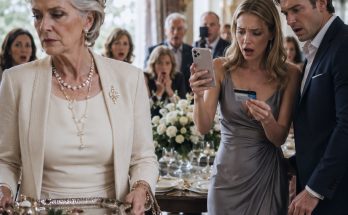
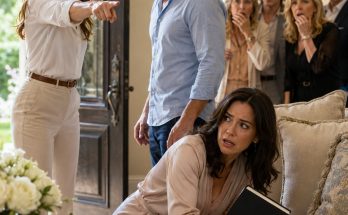
Family Ignored 48 Calls From The Hospital After I Collapsed At Graduation—3 Days Later, They …
My Family Skipped My Graduation, Saying They Had “More Important Plans.” Minutes After I Collapsed, The Hospital Called Them 48 Times. They Ignored Every Call. Three Days Later, I Woke Up Surrounded By Machines And Found One Voicemail Waiting, “Answer Your Phone. We Need You Now.” I Smiled And Hit Delete.
### Part 1
My name is Liora Wren, and I was eighteen years old when I collapsed onstage before I could give the valedictorian speech I had spent six months writing.
I remember the folding chairs first. Rows and rows of them, packed tight across the high school auditorium floor, parents fanning themselves with graduation programs, little brothers kicking their dress shoes against metal legs, grandmothers wiping their eyes before anyone had even crossed the stage. The air smelled like floor polish, hairspray, and those waxy grocery-store roses people buy when they forget flowers until the last second.
Three seats in the front row were empty.
I had checked them too many times to pretend I hadn’t noticed. One for my mother, Celeste Wren. One for my father, Dorian Wren. One for my older brother, Callum, who had promised me he might come if “nothing more important came up.”
Something more important had come up.
Nashville.
Callum had a private music showcase that weekend. Not a sold-out show, not a record deal, not even a real audition the way my parents kept describing it at dinner. It was a rented room, a paid slot, a few industry people who may or may not show up, and a lot of expensive pretending. But in my house, Callum’s dreams were sacred, and mine were useful only when they made my parents look good.
My mother had taken a photo of me that morning in my cap and gown before rushing out the door. She tilted my chin with two fingers, smoothed one curl near my ear, and said, “Smile properly, Liora. You look exhausted.”
I was exhausted.
For months, I had lived on coffee, scholarship essays, part-time shifts at the campus bookstore, and the quiet pressure of being the child my parents bragged about but rarely protected. I had perfect grades because perfect grades were harder to criticize. I had awards because awards gave me proof I was real. I had a speech folded in my pocket because I wanted, just once, for my family to sit still and listen to me.
My father tossed his keys in one hand and said, “You understand, right? Your brother may only get one shot like this.”
I wanted to say, “So do I.”
Instead, I said, “Yeah. I understand.”
That was the sentence I had been trained to use whenever being hurt was inconvenient for everyone else.
By the time the principal called my name, the auditorium had turned strangely bright. Not bright like celebration. Bright like a camera flash trapped behind my eyes. I stood from my chair, and the applause rolled toward me in a warm wave. My knees felt hollow, but I kept walking.
The podium waited at the center of the stage with the school seal taped to the front. I saw my English teacher, Mrs. Harlow, smiling with both hands clasped under her chin. I saw my guidance counselor, Mr. Ibarra, standing near the side aisle with his phone lifted, recording because he knew no one in my family would.
Then I saw the empty seats again.
Three empty spaces in a crowded room.
I reached into my pocket for the speech, but my fingers would not close properly. The paper slipped. My heartbeat kicked once, hard and wrong, like a fist striking the inside of my ribs.
The stage tilted.
Someone called my name, but it sounded far away, underwater. White light split into long streaks above me. My knees hit the wood first. Then my shoulder. Then everything disappeared.
When I woke up, my throat burned. My chest felt heavy, as if someone had laid a stack of wet towels over my lungs. A machine beeped beside me in a steady rhythm, and clear plastic lines ran from my arms. There were wires across my chest, tape tugging at my skin, a cuff squeezing my finger.
For a few seconds, I thought I was still backstage, waiting for someone to tell me the ceremony was over.
Then a nurse leaned into view. She had warm brown skin, silver hoops in her ears, and calm eyes that did not lie to me.
“Liora,” she said softly, “you’re at Saint Agnes Medical Center. You’re safe. Don’t try to sit up yet.”
My mouth opened, but only a rasp came out.
She reached for a cup with a straw. “Small sip.”
The water tasted like plastic and mercy.
“My family,” I whispered.
The nurse’s expression changed so quickly that someone less used to disappointment might have missed it.
“My name is Tessa Moreno,” she said. “I’ve been one of your nurses since yesterday afternoon. Your grandfather is on his way back from the cafeteria. He’s been here most of the night.”
“My grandfather?”
I hadn’t seen my grandfather, Milton Vale, in almost a year except for holidays where my mother watched him like he might say something honest.
Tessa checked the monitor and adjusted the blanket near my waist. “You were unconscious for a while. The doctors stabilized your heart rhythm. You’re in the cardiac intensive care unit.”
Cardiac. Intensive. Care.
The words did not belong to me.
I stared at the ceiling tiles, trying to piece together what had happened. Graduation. The podium. The empty seats. The white light.
“How long?” I asked.
Tessa hesitated. “Three days.”
The machine beside me kept beeping. I listened to it because it was easier than understanding her.
Three days.
“Did my parents come?”
Tessa looked down at the tablet in her hand. “The hospital called your emergency contacts.”
“How many times?”
She did not answer immediately. That was when I knew the number was bad.
“Forty-eight documented attempts across three numbers,” she said. “Messages were left when possible.”
Something in my chest tightened harder than the monitor wires.
“Forty-eight?”
“I’m sorry.”
“Did anyone answer?”
Tessa’s fingers paused on the edge of the tablet.
“One call was answered,” she said.
That hurt worse than the other forty-seven. Not because they had missed everything, but because someone had known.
Before I could ask more, my phone buzzed faintly on the bedside table. The battery was nearly dead. Tessa picked it up, glanced at the screen, and set it beside my hand.
“One new voicemail,” she said.
My thumb shook as I pressed play.
My mother’s voice filled the room. Not crying. Not frantic. Not even worried.
“Answer your phone, Liora. We need you now. Stop making this harder than it has to be.”
The message ended.
I stared at the screen until it dimmed.
For three days, machines had kept me alive while my family ignored the hospital. But now they needed me.
And as I pressed delete, I felt something inside me go very, very still.
### Part 2
My grandfather returned ten minutes later carrying a paper cup of coffee he had not touched.
Milton Vale was not the kind of man who filled a room. He was tall, narrow-shouldered, always clean-shaven, always dressed as if he might be called into a bank meeting at any moment. Retired auditor, my mother used to say with a roll of her eyes, like it was a disease. He wore gray slacks, polished brown shoes, and a cardigan even though the hospital was warm.
When he saw my eyes open, his face broke.
Not dramatically. Not with loud sobs or shaking hands. His mouth tightened, his glasses fogged, and he had to look away for a second before crossing the room.
“Liora,” he said.
I had not heard my name spoken like that in years. Like it mattered more than what I had achieved.
He sat beside the bed and took my hand carefully, avoiding the IV.
“I came as soon as I heard,” he said. “Your school called me after they couldn’t reach your parents.”
“My school called you?”
“Mr. Ibarra found my number in an old emergency packet. I was in Kentucky visiting Hollis. I drove straight here.”
That meant my guidance counselor had tried harder than my family.
My grandfather’s thumb moved once across my knuckles. “I’m sorry.”
“For what?”
His eyes met mine.
“For being late to the truth.”
I did not know what that meant yet, but the way he said it made the room feel colder.
The doctor arrived before I could ask. Dr. Anjali Mercer, cardiology, spoke in clean, careful sentences. She explained that I had suffered a dangerous arrhythmia, likely worsened by dehydration, stress, and an underlying heart condition nobody had caught because I had always explained away the warning signs.
The dizziness during exams. The racing pulse after climbing stairs. The exhaustion I blamed on studying.
“We performed a stabilizing procedure while you were sedated,” she said. “You’ll need follow-up care, medication management, and rest. Real rest.”
I almost laughed. Rest sounded like something rich people bought with someone else’s labor.
Then I asked about the answered call.
Dr. Mercer glanced at Tessa, then at my grandfather. “You’re an adult, Liora. You have the right to your medical record. A nurse reached a woman who identified herself as your mother at 11:26 a.m. on graduation day.”
My throat tightened.
“She was informed that you had collapsed, your heart rhythm was unstable, and that family should come immediately. According to the note, she said she was out of town, that you had always been dramatic under pressure, and that the hospital should handle it until morning.”
The monitor beeped faster.
Dr. Mercer waited until I breathed slowly again.
“The call lasted fifty-three seconds,” she said.
Fifty-three seconds.
That was how long my life had been worth before my mother returned to her music weekend.
I closed my eyes and remembered her in the driveway that morning, sunglasses already on, lipstick perfect, telling me not to wrinkle my gown. I remembered my father loading Callum’s guitar cases into the SUV while I stood on the porch with my speech in my pocket. I remembered Callum grinning at me from the back seat.
“You’ll give another speech someday,” he had said. “This could be my only shot.”
Only shot.
I had nearly died while he chased his.
After the doctor left, Grandpa reached beside his chair and lifted a canvas bag. He placed it on the bed with the solemn care of a man setting down evidence.
“I need to show you something,” he said.
“I don’t know if I can handle more.”
“I know.” His voice cracked. “But they’re going to ask you for something, and you need to understand why.”
From the bag, he removed a red folder secured with a rubber band. Inside were bank statements, trust documents, printed emails, and copies of checks. The top page had my full legal name across it.
Liora Mae Wren Education Trust.
I had known about the trust in the vague way children know about family money adults refuse to explain. My grandmother, Elspeth Vale, had left it for me before she died. My mother always said it was “not as much as people think” and “locked up until twenty-one.” Whenever I asked, she told me not to be greedy.
The first statement in Grandpa’s folder showed a balance of $118,300 from eighteen months earlier.
The most recent statement showed $8,941.
At first, the numbers did not make sense. My eyes moved over them again and again, waiting for them to rearrange themselves into something less brutal.
“Where did it go?” I whispered.
Grandpa removed his glasses and wiped them with a handkerchief.
“That’s what I started asking two months ago.”
The transfers were listed by date. Payments to Wrenlight Events, my father’s struggling event rental company. Payments to a credit card account in my mother’s name. Payments to vendors in Nashville. A rehearsal studio. A private showcase fee. Equipment rental. Travel upgrades.
Callum’s weekend had not merely mattered more than my graduation.
My graduation fund had paid for it.
“There are authorizations,” Grandpa said quietly. “Electronic ones. Your name is attached to three of the withdrawals.”
“I didn’t authorize anything.”
“I believe you.”
His answer came so fast that I looked at him.
“I should have believed the records less and my instincts more,” he said. “Your grandmother named me original trustee. After she died, I added your parents as co-trustees because Celeste said I was making her feel like a visitor in her own daughter’s life. I wanted peace.”
He swallowed.
“They used peace as cover.”
My fingers curled around the blanket. My body was weak, but anger moved through me clean and sharp.
“Why do they need me now?”
Grandpa opened another page. “The bank’s fraud department froze a pending transfer yesterday after I reported irregularities. Eighteen thousand dollars for Callum’s showcase balance. They need you to confirm you approved the withdrawals. If you don’t, the investigation widens.”
My phone buzzed again.
A text from my mother appeared on the cracked screen.
“We know you’re awake. Call before you make this worse.”
Then my father.
“The bank is misunderstanding a private family arrangement. One conversation fixes everything.”
Then Callum.
“Don’t wreck my future because you’re emotional.”
I read all three messages once.
Then I took screenshots, emailed them to a new account, and turned the phone face down.
For the first time in my life, I did not explain. I did not apologize. I did not answer.
I looked at my grandfather and said, “Call a lawyer.”
### Part 3
The lawyer’s name was Mara Quinn, and she joined us by video call from an office filled with dark bookshelves and one crooked painting of a storm over the ocean.
She had silver-streaked black hair, a blunt voice, and the kind of patience that felt like a locked door. She did not gasp when Grandpa explained the trust. She did not call my parents monsters. She took notes, asked dates, requested copies, and then looked directly into the camera.
“Liora, because you’re eighteen, this is not simply a family disagreement,” she said. “If your name was used without consent, we may be dealing with fraud, breach of fiduciary duty, and identity theft. Do not sign anything. Do not agree to a private meeting. Do not threaten them. Preserve everything.”
I liked her immediately.
“Evidence first,” she said. “Emotion later.”
That became the first rule of my new life.
We built a timeline from my hospital bed. Mara asked questions, and Grandpa sorted papers while Tessa brought ice chips and pretended not to listen. She was good at pretending, but not so good that I missed the way her mouth tightened whenever my family’s choices became clear.
At 8:42 a.m. on graduation morning, my mother had posted a photo of me in my cap and gown with the caption, “So proud of our brilliant girl.”
At 9:17 a.m., she posted a highway selfie from the passenger seat of my father’s SUV, Nashville bound.
At 10:51 a.m., I collapsed.
At 11:03 a.m., the hospital placed the first call.
At 11:26 a.m., my mother answered and dismissed the emergency.
At 1:14 p.m., my father authorized the final showcase payment from an account linked to my trust.
At 5:02 p.m., my mother appeared in Callum’s livestream under purple stage lights, dancing with a plastic cup in her hand.
Over the next two days, the hospital called again and again. Some calls went unanswered. Some went to voicemail. A few showed as opened afterward.
My parents had not been unreachable.
They had been unwilling.
That distinction changed something in me.
The money records were worse. My trust had paid for more than Callum’s showcase. It had covered my father’s business loans, overdue taxes, my mother’s wardrobe for “client-facing events,” and a cosmetic dental bill disguised in one memo as “medical expense support.” There were school-related withdrawals too, which made the theft harder to see at first. Test fees. College application costs. Laptop repairs.
Truth hidden inside enough half-truths to pass quickly.
Then Mara found the credit card.
It had been opened two weeks after my eighteenth birthday using my Social Security number. The statements went to my mother’s email. The balance was $14,680. Minimum payments had been drafted from my checking account, the one where my scholarship stipends and bookstore wages were deposited.
My mother had not only spent my inheritance. She had used my future credit as a cushion.
Grandpa stood and walked to the hospital window. Outside, an ambulance backed into the emergency bay, lights flashing silently through the glass. For a while, he said nothing.
Then he whispered, “I spent forty years catching men who did exactly this.”
I watched his reflection in the window, shoulders bent beneath guilt.
“You didn’t open the card,” I said.
“No. But I trusted people because I wanted them to be better than they were.”
I did not comfort him. Not because I wanted to punish him, but because I was learning not to rescue adults from the pain of their own choices.
At noon the next day, my parents arrived.
I heard my mother before I saw her.
“This is my daughter,” she snapped somewhere beyond the door. “You people have mishandled this from the beginning.”
A security officer answered in a lower voice.
My father joined in. “I’m an authorized trustee. We have legal documents she needs to sign.”
Legal documents.
Not flowers. Not pajamas. Not a trembling apology. Documents.
Callum’s voice cut through the hallway next. “How long is this going to take? I have a flight.”
Tessa looked at me. “You do not have to see them.”
I thought about it. My heart monitor ticked beneath my hospital gown. My limbs felt weak, but there was a calm in me that had not existed before the collapse.
“I’ll see my parents,” I said. “Only with Grandpa here. And you.”
Tessa nodded. “Security stays outside.”
When my parents entered, my mother rushed toward the bed with her arms open wide, performing for the room.
“My baby.”
I raised one hand.
She stopped so abruptly her face twitched.
My father looked older than he had three days earlier, but not sad. Angry. Cornered. He wore the same leather jacket he used for business meetings when he wanted to look creative but powerful. Under one arm, he carried a blue folder.
“Liora,” he said, setting the folder on my tray table, “we can talk about feelings after we fix the financial issue.”
There it was.
The entire family hierarchy in one sentence.
My mother pressed her lips together. “Your father means this situation has become unnecessarily complicated.”
He opened the folder and slid a document toward me. A retroactive authorization. It stated that I had approved all trust withdrawals for educational and family support purposes. Another page claimed the credit card had been opened at my request to teach me financial responsibility.
I read the first paragraph, then looked up.
“You wrote that while I was in intensive care?”
My father exhaled through his nose. “Mara Quinn is poisoning you against us.”
“You know her name?”
His expression flickered.
My mother pushed a pen across the tray. “Sign it, Liora. Then we can all go home and recover from this.”
“Recover?”
Her face softened into something almost convincing. “We were terrified.”
Tessa’s hand tightened around the tablet she was holding.
“You answered the hospital,” I said.
My mother’s eyes sharpened.
“They said you told them I was dramatic.”
“You have always been sensitive under pressure.”
“My heart was unstable.”
“We didn’t understand how serious it was.”
“They called forty-eight times.”
My father leaned forward. “And we are here now. But if you don’t sign, your brother’s event collapses, my business account locks, and your mother’s reputation is dragged through mud. Is that what you want?”
What I wanted was my mother’s hand in mine when I woke up. What I wanted was my father in the front row. What I wanted was one person in my family to say my life had mattered before their money froze.
Instead, I had a pen.
I pushed it back.
“You already used my name,” I said. “You don’t get my signature too.”
My mother’s mouth opened.
Callum shouted from the hallway, “Are you kidding me?”
Grandpa stood and opened the door. “This meeting is over.”
My father grabbed the folder. My mother stared at me as if I had become a stranger by refusing to be stolen from.
At the doorway, she turned back and lowered her voice.
“You have no idea what happens to this family if you refuse.”
For the first time, I did.
And for the first time, I did not care more about their survival than my own.
### Part 4
Refusing to sign did not bring the truth into the open immediately.
It brought a storm.
By evening, my aunt Odette texted me three paragraphs about forgiveness even though she had not asked one question about my heart. A cousin I barely knew wrote that money should never come between family. My mother’s friend from church sent me a praying-hands emoji and told me not to “weaponize a misunderstanding.”
The family group chat filled with messages I watched appear from my hospital bed.
“Your parents are devastated.”
“You’re too young to understand financial pressure.”
“Callum has worked so hard.”
“Don’t let outsiders turn you against your own blood.”
Nobody wrote, “Why did your mother answer the hospital and stay in Nashville?”
Nobody wrote, “Why did your father bring documents to intensive care?”
Nobody wrote, “Are you scared?”
That last one would have undone me.
Instead, I saved screenshots.
Mara filed preservation notices with the bank, the credit card company, my father’s business, and the Nashville vendors. The hospital released a certified contact log. My school provided the emergency report and footage from the auditorium showing the empty seats in the front row and paramedics lifting me from the stage.
Mrs. Harlow wrote a statement saying she had called my mother from her personal phone after the ambulance left. It had gone to voicemail. Mr. Ibarra wrote that he stayed at the hospital until midnight because no family arrived.
My parents, meanwhile, built their own version.
Callum posted a black screen on social media with white text: “Family emergency. Please respect our privacy.”
Ten minutes later, one of his friends posted a rooftop video from Nashville. In the background, my mother laughed under string lights, her head tipped back, a champagne glass catching gold reflections from the bar.
The timestamp showed it was filmed fourteen hours after the hospital’s first call.
Mara told me not to respond publicly.
“People who are lying want you frantic,” she said. “Calm documentation scares them more.”
So I stayed quiet.
Silence had once been the role my family assigned me. Now it became a strategy they could not control.
I was discharged two days later with a bag of instructions, a heart monitor, and legs that trembled when I stood too quickly. My parents did not come. Grandpa drove me to his small brick house in Franklin, where he had cleared the downstairs study and placed a bed beside the window.
The room smelled faintly of lemon oil and old paper. There was a lamp shaped like a brass heron, a stack of folded towels, a blue quilt, and nothing that had been purchased with my money.
I slept for sixteen hours.
When I woke, sunlight lay across the floor in pale rectangles. On the desk, Grandpa had left a notebook and a note written in his careful block letters.
“Write down what happened before anyone convinces you it didn’t.”
So I wrote.
I wrote about graduation first. Then the hospital. Then Nashville. Then I kept going backward.
I wrote about the debate tournament when I was fourteen and my father forgot to pick me up, leaving me outside school until nearly midnight. The next day, he told relatives I had failed to communicate properly.
I wrote about the summer job money my mother “borrowed” when I was sixteen to cover Callum’s car insurance, then called me selfish for asking when she would return it.
I wrote about my statewide academic award at seventeen, the dinner where my parents let me order dessert only after Callum announced he wanted to move into professional music. Everyone toasted him. My certificate stayed in the back seat of the car.
The notebook did not heal me. It made me furious.
That anger scared me until Dr. Naomi Sloane, the therapist my cardiologist recommended, told me anger was not a command.
“It’s information,” she said during our first session. “It tells you a boundary was crossed. Your job is not to erase it. Your job is to decide what protects you now.”
What protected me was distance.
I changed passwords, froze my credit, opened a new bank account, redirected my mail, replaced my phone plan, and blocked my parents everywhere except the email address Mara monitored. Grandpa removed them from every account he controlled. Mara helped me file an identity theft report and formal disputes with the credit bureaus.
Each practical step felt better than screaming.
Then my father came to Grandpa’s house after dark.
His truck rolled up slowly, headlights spilling across the curtains. He parked at the curb but left the engine running. My phone began buzzing.
One call.
Two.
Five.
Twelve.
Grandpa told me to stay inside.
I watched from behind the study curtain as he stepped onto the porch beneath the yellow light. My father got out, slammed the truck door, and pointed toward the house.
“You’re stealing my daughter,” he shouted.
Grandpa stood still. “Your daughter is recovering from a medical emergency.”
“You turned her against us.”
“No,” Grandpa said. “You gave her evidence.”
My father laughed once, ugly and loud. “You think you’re some hero now? Where were you when bills needed paying? Where were you when I was keeping this family afloat?”
Grandpa’s voice stayed low. “Name one sacrifice you made that wasn’t paid for by someone else.”
My father had no answer.
Before he left, he shouted one final thing.
“We’re hosting a graduation celebration for her Saturday. Clients, relatives, school people, donors. If she doesn’t come, everyone will know exactly how ungrateful she is.”
After his truck disappeared, Grandpa came inside and locked the door.
“We can stop it,” he said. “Mara can send notice tonight.”
But I had already seen the shape of it.
My parents were not finished using me. They were turning my collapse into a stage.
I looked at the notebook, at the timeline, at the proof stacked neatly beside my medication schedule.
“No,” I said. “Let them invite everyone.”
### Part 5
The invitation arrived in my email the next morning.
My face filled the top half.
It was a picture from graduation morning, cropped so nobody could see the empty driveway behind me or my mother’s impatient hand pulling away from my shoulder. I looked polished, pale, obedient.
Under the photo, elegant gold letters read:
“Liora Wren: A Celebration of Resilience, Family Sacrifice, and Academic Excellence.”
Tickets were seventy-five dollars. Proceeds, according to the invitation, would support “local student opportunities and medical recovery expenses.”
At the bottom were two logos: my mother’s admissions consulting business and my father’s event company. Callum was listed as the featured performer.
I stared at the screen until the words blurred.
They had missed my graduation, ignored my hospital calls, drained my trust, and now they were selling tickets to my survival.
Mara investigated the event within hours. There was no registered scholarship fund. No medical recovery account. Ticket money went directly into Wrenlight Events. Several local sponsors had donated because my parents claimed I would announce a mentorship program for low-income students.
My principal, Dr. Emmett Rowe, had agreed to speak because he believed the event would help cover my hospital bills.
“They’re using everyone,” I said.
Mara’s voice over the phone was calm. “Yes. And because they’re using your name, you have options.”
We could shut it down privately. Send letters. Warn sponsors. Stop the event before my parents could collect more money.
Or we could let the people being misled hear from me.
Dr. Sloane asked me a question that stayed with me all afternoon.
“Do you want accountability,” she said, “or do you want humiliation?”
I sat in Grandpa’s study, heart monitor tucked beneath my shirt, the notebook open on my lap. Outside, rain tapped against the window in soft, uneven fingers.
“I don’t want to become like them,” I said.
“Then decide what truth requires, not what revenge wants.”
Truth required witnesses.
Not screaming. Not insults. Not a dramatic collapse into their arms. Just records in a room full of people they had invited for applause.
“Accountability,” I told her. “But I’m done protecting them from embarrassment caused by their own actions.”
So we prepared.
Mara contacted the venue manager, a careful woman named Sable Trent, and explained that I would attend with legal counsel. Sable sounded shaken when she learned no scholarship fund existed. She agreed to preserve payment records and said if I was invited onto the stage, the presentation system could be used.
Dr. Rowe gave written permission to use the graduation emergency report. Tessa wrote a statement confirming the documented hospital call attempts without revealing private medical details. Grandpa turned the trust records into a simple timeline anyone could understand.
I wrote my speech.
Then I deleted it.
Then I wrote it again.
This time, I did not write like a valedictorian trying to inspire a room. I wrote like a witness.
Two days before the celebration, my mother came to Grandpa’s house alone.
She parked in the driveway without calling first. Grandpa opened the door but did not invite her farther than the living room. I stood near the hallway entrance where I could leave if my chest tightened.
My mother looked smaller without an audience. Her blond hair was twisted into a clip, and she wore a cream sweater I recognized from a shopping trip she had claimed was “for client meetings” and charged to the trust. She carried a leather folder against her ribs.
“Liora,” she said softly. “Can we please stop this before it destroys us?”
Us.
Such a small word. Such a convenient hiding place.
“What do you want?” I asked.
She sat on the edge of Grandpa’s sofa. “I want my daughter back.”
I waited.
Her eyes flickered toward Grandpa, then returned to me. “And I want you to understand that families make financial choices together. Your father’s business was under pressure. Callum’s opportunity could have changed all our lives. Your trust was family money in every way that mattered.”
“No,” Grandpa said.
My mother’s face hardened. “Dad, not now.”
“Yes,” he said. “Now.”
She turned back to me, forcing gentleness into her voice. “We made mistakes. I can admit that. But you need to admit you’re being influenced while you’re medically fragile.”
“You answered the hospital.”
She looked down.
“The music was loud,” she said. “I didn’t understand.”
“The nurse told you my heart rhythm was unstable.”
“We thought you had fainted from nerves.”
“You opened later voicemails.”
Her jaw tightened. “Your father said if it were truly serious, they’d keep calling.”
“They did. Forty-seven more times.”
The room went quiet except for the old wall clock above Grandpa’s bookshelf.
My mother opened the folder and slid papers onto the coffee table.
“If you sign this statement, we’ll close the card, repay half the trust money over ten years, and apologize publicly for missing graduation. You’ll withdraw the fraud complaint, attend the celebration, and tell people we handled this privately.”
I picked up the first page.
Halfway down, I found the sentence that told me everything.
“I acknowledge that any prior accusations were influenced by medical distress, medication, and confusion.”
I read it twice.
They were not asking for peace.
They were asking me to erase reality.
When I looked up, my mother was watching me with the old impatience, the one that said my hurt had better become convenient quickly.
“No.”
Her mask slipped.
“You are enjoying this,” she said. “You finally have power, and you’re using it to punish us.”
For one second, the old training pulled at me. Apologize. Explain. Make her understand.
Then I thought of the forty-eight calls.
“I’m using it to protect myself.”
She stood so fast the papers slid to the floor.
“You will regret humiliating this family.”
I looked at her, really looked, and realized I no longer needed her to become the mother I had been waiting for.
“No,” I said. “I regret waiting so long to believe you.”
### Part 6
On Saturday evening, I wore the navy dress I had planned to wear beneath my graduation gown.
It hung looser than before because hospitals take weight from you in ways food cannot quickly repair. Beneath the fabric, my heart monitor sat taped near my ribs. I brushed my hair carefully, applied a little mascara, then removed it when my hands shook and it smudged. I did not need to look untouched. I only needed to look present.
Grandpa drove. Mara sat in the passenger seat with two document cases at her feet.
The venue was a renovated cotton warehouse near downtown Franklin, all exposed brick, polished concrete, and Edison bulbs strung in warm lines overhead. Through the front windows, I could see people moving inside with wine glasses and paper programs bearing my face.
Nearly two hundred guests had come.
Relatives. School officials. My father’s clients. My mother’s consulting parents. Donors. Local business owners. People who believed they were attending a celebration.
Before I stepped out of the car, my phone buzzed from an unfamiliar number.
It was Callum.
“Smile, say thank you, and stop making everything about you.”
I showed Mara.
She nodded once. “Save it.”
Inside, the air smelled like perfume, catered chicken, and fresh flowers. A banner hung near the stage.
“The Wren Family: Turning Sacrifice Into Success.”
My mother saw me first.
Relief flashed across her face so quickly it almost looked like love. My father turned from the donation table and straightened his jacket. Callum stood onstage adjusting a microphone, his guitar strapped across his chest.
They thought my presence meant surrender.
My mother hurried toward me with both arms open. Cameras lifted around the room.
“My brave girl,” she whispered as she embraced me too tightly. “Do not embarrass this family.”
I leaned close enough that only she could hear.
“I won’t,” I said. “You already did.”
She pulled back, eyes narrowing, but the principal approached before she could respond.
Dr. Rowe took my hand gently. “Liora, I’m so relieved to see you standing.”
That single sentence almost broke me because it contained more care than my parents had managed in a week.
The program began with a video montage.
Baby photos. Science fair ribbons. Christmas mornings. A clip of me reading at six years old. My mother had chosen every image to make us look whole. In picture after picture, I smiled beside people who had learned how to crop pain out of the frame.
My father spoke first.
He told the audience about long nights helping with homework, about sacrifices parents make quietly, about how frightening it had been to watch his daughter face a medical crisis.
I watched him accept sympathy with both hands.
Callum performed next. A song about loyalty. His voice was good; I had never denied that. It was rich and wounded in the way audiences love. People closed their eyes while he sang, and I wondered how many things in life become beautiful simply because nobody asks who paid for them.
Then my mother took the microphone.
She spoke about motherhood. About resilience. About how my collapse had reminded her never to take family for granted. Her voice trembled at exactly the right places.
When she invited me onto the stage, the room applauded.
I walked slowly. Partly because Dr. Mercer had warned me not to push my body. Partly because I wanted every eye to follow.
My mother handed me the microphone and positioned herself beside me for photographs.
I looked out at the crowd.
At Mrs. Harlow, crying already. At Dr. Rowe, smiling uncertainly. At Aunt Odette, arms folded. At sponsors near the donation table. At Callum, watching me like a guard dog.
“Thank you for coming,” I said. “I want to begin by thanking the people who actually helped me survive graduation day. Dr. Rowe. Mr. Ibarra. Mrs. Harlow. The paramedics. The staff at Saint Agnes Medical Center. Nurse Tessa Moreno. Dr. Anjali Mercer. My attorney, Mara Quinn. And my grandfather, Milton Vale.”
My father’s smile began to collapse.
I did not thank my parents.
“I was asked to speak tonight about sacrifice,” I continued. “So I brought a record of who actually made it.”
The screen behind me changed.
Mara had given the technician the first slide.
A simple timeline appeared. No private numbers. No medical details beyond what I chose to share. Just timestamps.
10:51 a.m. Collapse on graduation stage.
11:03 a.m. First hospital call to emergency contacts.
11:26 a.m. Call answered by mother.
I heard my mother inhale beside me.
“The hospital attempted to contact my family forty-eight times while I was unconscious,” I said. “Forty-seven calls were not answered. One was answered for fifty-three seconds.”
People shifted in their chairs.
I read the hospital note aloud. Not dramatically. Not with tears. Just the words.
“Mother informed patient collapsed, unstable heart rhythm, family requested immediately. Mother states family out of town, patient dramatic under pressure, hospital should handle until morning. Background music loud. Call ended.”
The room did not explode.
It went still.
That silence hurt my parents more than shouting ever could.
My mother reached for the microphone.
I stepped away.
“You will have your turn,” I said. “I did not have mine when I was unconscious.”
The next slide showed public posts from Nashville beside hospital call times. My mother dancing after opening a voicemail. My father posting about Callum’s showcase after the emergency report. Callum smiling in purple light while my school counselor sat in a hospital waiting room.
Callum shouted, “That’s out of context.”
I looked toward the technician. “Please play the message.”
Callum’s own voice filled the room.
“Don’t wreck my future because you’re emotional.”
A murmur moved across the audience.
Then I addressed the money.
I did not show account numbers. I did not exaggerate. Mara had drilled that into me. Say only what the documents support.
I showed the trust balance eighteen months earlier. The remaining balance. The disputed withdrawals. The payments to my father’s company, my mother’s expenses, Nashville vendors, and Callum’s showcase. I explained that electronic authorizations bearing my name had been submitted without my knowledge.
Then I showed the credit card.
Opened after my eighteenth birthday. Issued under my Social Security number. Paid from my checking account.
My father rushed up the stage steps.
“This is a private family matter,” he snapped. “She’s been manipulated by an old man with a grudge.”
Grandpa rose from the front row.
He did not raise his voice.
“I trusted my daughter and son-in-law with Liora’s trust,” he said. “That was my failure. Hiding what followed would be another.”
My mother grabbed a second microphone from the podium.
“Parents sometimes borrow from one child to save another,” she cried. “Callum had a once-in-a-lifetime chance. Liora already had scholarships. She didn’t need that money as much as we did.”
And there it was.
Not misunderstanding. Not confusion. Not pressure.
Need.
Their need had been bigger than my health, my name, my future, my life.
The audience heard it too.
One sponsor walked to the donation table and picked up her check. Another man asked the venue manager where the ticket money had gone. Dr. Rowe stepped away from my parents as if distance could answer the shame on his face.
Sable Trent, the venue manager, closed the donation box and told her staff to stop processing payments.
Mara stepped onto the stage and stated that the records had been referred to the bank’s investigation unit, that formal complaints were pending, and that ticket holders would receive information regarding refunds.
My parents were not arrested in a perfect dramatic moment. Real consequences rarely arrive on cue.
But consequences had begun.
Clients walked out. Sponsors withdrew. The school district representative removed my mother from an upcoming seminar by phone before the event even ended. The venue held equipment connected to the disputed showcase payment until ownership could be verified. The producer Callum had invited left without speaking to him.
In the hallway afterward, my father blocked my path.
“Fix this,” he said. “Tell them we handled it privately.”
For years, that command would have worked.
This time, I took out my phone.
I did not call my mother. I did not call him. I called the police officer stationed near the entrance and said, “I need help leaving safely.”
It was the forty-ninth call in the story.
The first one I made for myself.
### Part 7
The investigation lasted nine months.
That is the part people do not picture when they imagine a public confrontation. They imagine gasps, apologies, instant justice, maybe someone being led away in handcuffs while the wronged person stands under perfect lighting.
Real life was slower.
It was certified mail and phone appointments. It was credit disputes, bank interviews, legal statements, cardiology follow-ups, and mornings when I woke up angry before I remembered why. It was taking my medication with toast in Grandpa’s kitchen while sunlight warmed the tile and wondering how I could miss people who had treated me like a resource.
Dr. Sloane said grief was not proof that I had made the wrong choice.
“You are mourning the family you kept hoping they would become,” she told me. “That family was real to your heart, even if it was not real in their behavior.”
I started Vanderbilt one semester late.
The school had offered flexibility after my medical emergency, and emergency housing became available near campus. Grandpa helped me move into a small dorm room with cinderblock walls, a narrow bed, and a view of a courtyard where students threw Frisbees between classes. It was not glamorous. It was mine.
For the first time, nobody searched my backpack for receipts. Nobody asked how my scholarship money would help the family. Nobody turned my achievements into proof of their parenting.
I learned ordinary freedom in small ways.
Buying a cheap lamp without defending the purchase. Letting my phone ring without panic. Eating dinner at 8 p.m. because I wanted to, not because Callum’s rehearsal schedule shifted. Saying, “I can’t,” and discovering the world did not end.
Mara kept me informed but shielded me from unnecessary contact. The bank confirmed that my electronic signatures had been copied from an old school financial aid form. The credit card company removed the fraudulent account from my record. The trust was restructured with independent oversight, and my parents were permanently removed from access.
Through a civil settlement, the remaining trust assets were restored. My parents transferred their share of my grandmother’s lake property to repay part of the loss. My father sold equipment from Wrenlight Events. My mother liquidated investments she had once described as “untouchable family security.” Callum sold the recording gear purchased through disputed funds.
None of them went to prison.
At first, that bothered me.
Then Mara explained that accountability is not always shaped like a cell door. Sometimes it is restitution, public record, revoked access, ruined credibility, and the permanent loss of control over the person they thought would never say no.
Their businesses closed within the year. My father’s clients vanished after the fundraiser documents circulated privately among sponsors. My mother resigned from two community boards and lost her admissions consulting referrals. Callum moved to Los Angeles without the showcase, without the producer, and without the family money that had made his confidence look like destiny.
They sent letters through Mara.
My father’s came first. It was three pages long and full of careful phrases.
“I was under pressure.”
“I made decisions I believed would preserve the family.”
“I never intended permanent harm.”
He apologized for “financial confusion,” not theft. He apologized for “not understanding the seriousness” of my hospitalization, not for choosing not to come.
My mother’s letter was shorter.
She wrote that motherhood should count for something. She wrote that she had carried me, raised me, fought for my opportunities, and hoped I would one day understand the impossible choices parents make.
At the bottom, she added, “I still believe you will come home when your anger fades.”
Callum wrote three sentences.
“You destroyed my launch. I hope the money was worth it. Don’t contact me unless you plan to make this right.”
I read each letter once.
Then I placed them in a cardboard box with the hospital call log, the unsigned authorization, and the old voicemail transcript.
I did not reply.
People sometimes think not answering is weakness. It is not. Sometimes silence is the wall you build after spending your whole childhood as a door.
Grandpa faced consequences too, though not the kind my parents did.
He apologized without asking me to comfort him. He paid his own legal fees. He attended counseling and told me, awkwardly but honestly, that he was learning the difference between keeping peace and enabling harm.
He never called himself my savior.
That mattered.
He just kept showing up.
When I gave my first presentation at Vanderbilt, he sat in the front row twenty minutes early with a paper program folded in his hands. When my cardiologist cleared me for light exercise, he walked with me through Centennial Park at a pace so slow we were passed by a woman pushing twins in a stroller. When I got my first A in college, he did not post about it. He took me to dinner and asked what I had learned.
The answer changed every month.
At first, I learned how to protect my documents.
Then I learned how to sleep without listening for footsteps.
Then I learned that love without control feels almost boring at first, because it does not keep you guessing.
With part of the settlement, I worked with Vanderbilt’s student support office to create a small emergency grant for students dealing with identity theft or financial abuse at home. We called it The Forty-Eight Fund.
The number no longer belonged only to the calls my family ignored.
It became forty-eight chances for someone else to keep trying.
A nurse. A teacher. A bank teller. A counselor. A friend. A student who finally says, “Something is wrong,” and gets believed before the damage becomes permanent.
On the anniversary of graduation, Dr. Rowe invited me back to speak to the next senior class.
I stood on the same stage where I had collapsed.
The wood beneath my shoes looked smaller than I remembered. The auditorium smelled the same, floor polish and flowers and nervous summer heat. Three seats in the front row were empty because I had asked that they remain empty.
Not for drama.
For truth.
I told the students that achievement could not purchase love. I told them loyalty did not require surrendering their health, money, identity, or dignity. I told them to notice who answered when they were inconvenient, and who appeared only when they needed something.
When the students rose to applaud, I looked at those three empty seats.
For the first time, they did not feel like a wound.
They felt like space.
### Part 8
One year after graduation, my mother called from an unfamiliar number.
I was walking across campus with a folder of workshop materials pressed against my chest. It was late afternoon, the kind of Tennessee heat that makes sidewalks shimmer and magnolia leaves hang heavy over the grass. Students moved around me in bright little clusters, laughing, arguing, carrying iced coffees and backpacks and all the ordinary weight of lives still becoming.
My phone rang once.
Twice.
The number had no name attached, but I knew before I answered. Some part of me would always know the shape of her interruption.
I stopped beneath a tree near the student center and watched the screen glow in my hand.
For a moment, I imagined picking up.
I imagined her voice softened by loss. I imagined her saying the words I had once needed so badly that I built my life around earning them.
“I’m sorry.”
Not “I’m sorry you misunderstood.”
Not “I’m sorry this became public.”
Not “I’m sorry, but.”
Just sorry.
Then I imagined what would come after. The hook hidden beneath the apology. The request. The emergency. The family crisis that would somehow require my money, my silence, my presence, my forgiveness, or my signature.
The phone kept ringing.
My pulse stayed steady.
That was new.
I let the call end.
No anger came. No shaking. No guilt sharp enough to make me call back. Only a quiet certainty, almost gentle.
A voicemail appeared a few seconds later.
I did not play it.
Instead, I walked into the workshop room where twelve students sat waiting around a long table. Some looked embarrassed. Some looked scared. One girl had a manila envelope clutched so tightly the corners had bent. A boy in the back kept checking his phone like he expected someone to punish him for being there.
I set my materials down and smiled.
“Today we’re going to talk about freezing your credit, protecting your documents, and asking for help without shame,” I said.
Nobody in that room needed the details of my mother’s call. They needed the thing I had fought to become.
Present.
Clear.
Unowned.
After the workshop, I finally checked the voicemail transcript. It was short.
“Liora, this has gone on long enough. Your father’s health isn’t good, and Callum won’t speak to us. We need to talk as a family. Answer your phone.”
I read it twice.
There it was again.
“We need.”
The same opening. The same center. The same world where my existence became urgent only when they could not bear the consequences of their own choices.
I deleted it.
Not because I hated her.
Hatred would have tied me to the old house, the old rules, the old version of myself waiting in a doorway with a speech in her pocket. I deleted it because I no longer accepted need as a substitute for love.
My parents had taught me that family could ignore forty-eight calls from a hospital and still expect the forty-ninth to save them. They had taught me that some people do not come when your life is at risk, but they will arrive breathless when their access is threatened. They had taught me that silence can be used to erase you, unless you turn it into evidence.
But other people taught me the rest.
Tessa taught me that strangers can tell the truth gently.
Mara taught me that calm records can be louder than rage.
Dr. Sloane taught me that anger is information, not a home.
Grandpa taught me that apology without changed behavior is performance, and changed behavior without demanding applause is repair.
I did not forgive my family in the way people usually mean it. I did not invite them back. I did not attend holidays, send updates, or soften the story so relatives could feel comfortable at dinner. If forgiveness ever came, it would be private, distant, and useless to them. It would not restore access.
Late love, I learned, is not always love.
Sometimes it is hunger arriving after the table has been cleared.
That summer, The Forty-Eight Fund helped its first student replace stolen documents and move into emergency housing. She sent me a thank-you note written on yellow stationery, three lines only.
“I thought nobody would believe me. Somebody did. I’m still here.”
I pinned it above my desk.
Not beside my awards. Beside my medication schedule, my campus map, and a photo of Grandpa sitting proudly in the front row at my presentation.
My life did not become perfect. Healing did not turn me into someone who never flinched when phones rang. There were still nights when I dreamed of the stage tilting beneath me, mornings when I woke with my mother’s voice in my head, afternoons when I saw families eating together on campus and felt grief pass through me like weather.
But weather moves.
So did I.
I graduated from needing their version of me to survive. I graduated from explaining pain to people committed to misunderstanding it. I graduated from being the family emergency contact for people who had not come when I was the emergency.
My success did not belong to them.
My pain was not theirs to spend.
My name was not a signature they could borrow.
And my silence, at last, belonged to me.
The voicemail from the hospital week had said, “Answer your phone. We need you now.”
Deleting it was not the end of my family.
It was the beginning of my life.
THE END!