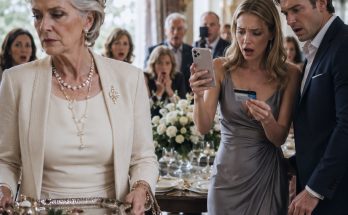
Dad Walked Out When I Was 18, Then Came Back at Mom’s Funeral with His Hand Out for My Success
“Get Out!” I Screamed At Dad At My Mother’s Funeral. He Was Demanding Half Of My YouTube Millions. “You Don’t Deserve That Money—You’re Worthless!” He Screamed. When We Went To Court, The Judge Looked At Me And Asked…
### Part 1
The morning my father left, the bacon burned.
That is the detail my mind keeps instead of the bigger things. Not the suitcase in his hand. Not the way my mother’s face went hollow. Not even the sentence that split our family clean in half. Just the sharp, bitter smell of bacon smoking in a cheap skillet while sunlight poured through our kitchen blinds in thin white stripes.
I was eighteen that day, wearing my senior class hoodie, standing barefoot on the cracked linoleum floor of our rental house in Cedar Falls, Ohio. I had a scholarship letter pinned to the refrigerator with a pizza-delivery magnet, a half-finished college packing list on the counter, and the foolish belief that if you worked hard enough, families stayed families.
My father, Callum Vale, walked in from the hallway carrying a brown leather suitcase I had never seen before.
“I’m done,” he said.
He did not yell. He did not cry. He did not even look embarrassed.
My mother, Lenora, stood at the stove with a spatula in her hand. Her yellow diner uniform smelled faintly like coffee and syrup, because she had pulled a double shift and still come home to make breakfast before I left for school.
“Callum,” she whispered.
He looked past her like she was a chair in his way.
“You two can figure it out from here.”
Six words. That was all twenty-one years of marriage got. Six words and a suitcase.
I remember the sound of my mother setting the spatula down. Not dropping it. Setting it down carefully, like if she moved too fast, the whole world would shatter. Her fingers trembled against the counter. Her wedding ring made a tiny click against the fake granite.
I stood there with my backpack on one shoulder, waiting for him to say something that would make it make sense. A joke. A breakdown. An explanation. A secret diagnosis. Another woman. A debt. Anything.
He only reached for the door.
“Dad,” I said.
For one second, he stopped.
I hate that part. I hate that my voice still sounded hopeful.
He turned just enough for me to see his profile. Same pressed shirt. Same combed-back hair. Same man who had taught me how to parallel park and told me I could be “anything but lazy.”
“Don’t make this dramatic, Mara,” he said.
Then he left.
The door did not slam. It clicked softly behind him. Somehow, that hurt worse. A slam would have meant anger. A click meant he had already practiced leaving us in his head.
Mom turned off the burner and opened a window. Cold October air rushed into the kitchen, carrying the smell of wet leaves and somebody’s lawn mower from down the block.
“Sweetheart,” she said, and then her voice broke.
I crossed the room and wrapped my arms around her. She was smaller than I remembered. Not short, exactly, but worn down from bills and shifts and all the invisible work of keeping a house from collapsing around a man who had already checked out.
“We’ll find a way,” she whispered into my hair. “We always do.”
For thirteen months, we did.
I finished high school. Mom worked mornings at Hazel’s Diner and evenings at a catering company that paid under the table. I worked at a grocery store after school and picked up weekend shifts folding sweaters at a mall outlet where the music loop drove me half insane. We ate boxed pasta, used coupons, and pretended thrift-store jeans were a style choice.
At night, when Mom thought I was asleep, I heard her crying in the bathroom with the fan on.
I never told her.
She never told me when rent was late.
We became experts at protecting each other from fear.
By spring, I had my graduation gown hanging on the closet door and my college orientation packet sitting on my desk. State University was only three hours away, but to me it felt like the moon. I had planned everything: business major, campus job, internships, a future big enough to make all the tight years worth it.
Then Mom started getting tired.
Not normal tired. Not double-shift tired. Something deeper. She would sit down on the stairs halfway up and laugh it off. She pushed food around her plate. She said coffee tasted metallic. Once, while folding towels, she pressed a hand against her stomach and closed her eyes so tightly I could see the pain move through her.
“Mom,” I said. “You need a doctor.”
She smiled too fast.
“I need a nap and a rich husband. Since one of those ran off, I’ll take the nap.”
But the morning everything changed, there was no joke.
I was tying my shoes for a grocery shift when I heard retching from the bathroom. Violent, awful, body-deep. Then a crash.
I found her on the tile, one hand gripping the side of the tub, her face gray beneath the bathroom light. The little glass jar of cotton balls had shattered beside her. White cotton rolled everywhere like snow.
“Bad eggs,” she gasped.
There had been no eggs.
The emergency room smelled like bleach, old coffee, and fear. We sat beneath buzzing fluorescent lights while a toddler cried three chairs away and a television in the corner played a home renovation show nobody watched. Mom kept apologizing for making me miss work. I kept telling her to stop.
Eight hours later, a doctor with tired eyes brought us into a small consultation room.
He did not rush.
That was how I knew.
“Ms. Vale,” he said gently, “the scans show a mass on your pancreas. We need to run more tests, but I’m concerned this is advanced.”
The room tilted.
Mom reached for my hand under the table. Her fingers were cold.
Advanced became stage three. Stage three became treatment plans. Treatment plans became bills with numbers that looked fake, like somebody had accidentally added too many zeros.
“How long?” Mom asked one afternoon, her voice barely there.
The doctor glanced at me before answering.
“With treatment, we fight for time. Without it…”
He did not finish.
He did not need to.
That night, I sat beside Mom’s hospital bed while she slept with one hand tucked under her cheek. The machines hummed. A nurse’s shoes squeaked in the hallway. Outside the window, the parking lot lights glowed over rows of cars belonging to people whose lives had also been interrupted.
My college orientation email was still unread on my phone.
I opened it.
Then I opened the withdrawal form.
My thumb hovered over the button longer than I want to admit.
I thought about the dorm room I had imagined. The campus coffee shop. The version of me who got to be young for a while.
Then Mom shifted in her sleep and whispered my name.
I submitted the form.
In the morning, she cried harder about my lost scholarship than she had cried about her diagnosis.
“Mara, no,” she said. “I didn’t raise you to give up your life.”
“You didn’t,” I told her. “You raised me to know what matters.”
I thought that was the hardest choice I would ever make.
I did not know then that losing my future would be only the first bill my father left me to pay.
### Part 2
The first job was nights at a call center beside the interstate.
The building looked like an abandoned insurance office from the outside, all gray windows and flickering security lights. Inside, it was freezing year-round, smelled like burnt coffee and microwave noodles, and had no clocks anywhere. They said clocks made shifts feel longer. As if angry strangers screaming into your headset about phone bills did not already stretch time into punishment.
My shift ran from eleven at night to seven in the morning.
By eight, I was usually at Hazel’s Diner helping Mom through breakfast rush if she was well enough to go. By noon, I stocked shelves at Martinez Family Market. By five, I drove Mom to treatment, appointments, pharmacy pickups, or whatever new paperwork the insurance company had decided we needed before they could deny us politely.
I learned to sleep in pieces. Twenty minutes in the car. Forty minutes at the kitchen table with my cheek on a stack of bills. Once, I woke up in the laundry room with a towel still in my hand and the dryer buzzing like an alarm.
Mom noticed everything.
“You’re wearing yourself down to bone,” she told me one night while I reheated soup.
“And you’re supposed to be eating.”
She gave me that look mothers give when they are too sick to argue but still planning to win later.
Our house changed around her illness. The coffee table disappeared under appointment folders, insurance envelopes, and pharmacy receipts. The couch had a permanent dent from where Mom curled up under her blue quilt. The bathroom smelled like peppermint soap because she said it helped her feel less like a patient. On good days, she wore bright scarves and sang along badly to old country songs while I made dinner. On bad days, the whole house listened to her breathe.
The bills were their own kind of monster.
$4,880.
$12,316.
$27,902.
Some arrived in crisp white envelopes. Some came with red warnings. Some used friendly language that somehow made the threat worse. We appreciate your prompt attention. Your account is past due. Failure to respond may result in further action.
I kept them in a shoebox at first. Then two shoeboxes. Then a plastic storage bin under my bed.
Every night, I made lists. Rent. Utilities. Gas. Groceries. Treatment. Co-pay. Payment plan. Minimum due. Past due. Final notice.
Math did not care how much I loved my mother.
One Friday in July, I was at Martinez Family Market unloading canned soup when my phone rang. The hospital billing department.
The woman on the line sounded young. Maybe my age. That made it worse.
“Ms. Vale, your mother’s next procedure requires partial payment before scheduling.”
“How partial?”
She gave me a number.
I sat down on a milk crate between the canned tomatoes and the bags of rice.
“That’s not partial,” I said. “That’s my entire month.”
“I understand this is difficult.”
People said that a lot. They understood. They were sorry. They wished they could help. Then they waited for money I did not have.
After work, I went to the parking lot behind the market and screamed into my sleeve so customers would not hear me.
That was where Mrs. Martinez found me.
She was a broad-shouldered woman in her sixties with silver hair always pinned in a bun and the terrifying ability to know when somebody had not eaten. She opened the back door, saw me, and stepped outside with a paper bag.
“Chicken tamales,” she said.
“I’m not hungry.”
“Good. Then they’ll last longer.”
I laughed and cried at the same time, which made my face feel strange.
She sat beside me on the curb.
“You cannot carry this alone, Mara.”
“I don’t have a choice.”
“Then let people see what you’re carrying.”
I wiped my eyes with my sleeve. “People don’t want to see this.”
“You don’t know that.”
I thought she meant church groups or neighbors. Maybe a fundraiser jar by the register. I did not know her words would become the hinge my life turned on.
That night, after my call center shift, a man yelled at me for twenty-three minutes because his family plan had been charged a late fee. He called me useless. He said people like me were the reason companies were failing. When the call ended, I stared at my reflection in the black computer screen. Pale face. Greasy ponytail. Red eyes. Headset dent across my hair.
Useless.
The word followed me home.
Mom was asleep in the recliner when I got there, wrapped in the blue quilt. Her scarf had slipped, revealing the soft fuzz growing back on her head. Beside her sat a paper plate with two bites of toast missing.
I took a picture.
I do not know why.
Maybe because she looked fragile and brave at the same time. Maybe because I needed proof that the world was asking too much of one woman and one girl. Maybe because I had nobody else to tell.
I opened Instagram. My account had maybe three hundred followers, mostly classmates, coworkers, and people I had not spoken to since sophomore year.
I uploaded the photo.
Then I wrote:
Day 92 of fighting for my mom. She asked me today if I regret leaving college. I told her no. The truth is, I regret that love costs money in this country. I regret that she apologizes for being sick. I regret that I can work three jobs and still not be enough. But I will never regret choosing her.
I almost deleted it.
My thumb hovered over the trash icon.
Then Mom stirred and whispered, “Mara?”
I set the phone down and went to her.
By morning, the post had nine hundred likes.
At first, I thought it was a glitch. Then I saw the comments.
My mom had cancer too. You are not alone.
Drop a donation link.
I’m praying for Lenora.
This made me call my mother.
I cried in my truck reading this.
People I had never met knew my mother’s name.
By noon, my phone would not stop buzzing. By evening, a local nurse had shared my post. Then a teacher. Then a woman with a big parenting account from Columbus. Someone messaged me step-by-step instructions to create a donation page. Someone else sent twenty dollars with a note that said, For gas and coffee. I remember because I sat on the kitchen floor and sobbed over that twenty dollars like it was gold.
Mom hated it at first.
“I don’t want to be somebody’s sad story,” she said.
“You’re not,” I told her. “You’re somebody’s reason to help.”
She looked at the comments with her reading glasses low on her nose. Her mouth trembled when she read one from a woman in Arizona who said Mom’s smile reminded her of her late sister.
“They don’t even know me,” Mom whispered.
“They know enough.”
So I kept posting.
Not polished. Not pretty. I posted hospital parking lots at dawn. Grocery-store break rooms. Mom laughing because her scarf was crooked. My hands shaking over bills. The casserole Mrs. Martinez left on our porch. The quiet humiliation of arguing with insurance while sitting beside a woman who was trying not to cry.
People came for the pain, maybe. But they stayed for Mom.
She was funny even when she was exhausted. She rated hospital pudding like a food critic. She told strangers on livestreams to wear sunscreen and call their mothers. She cried when followers sent handmade blankets. She insisted on writing thank-you cards until her fingers hurt.
Within months, my account became a community.
Then a woman named Clover Peck, a small-business coach from Denver, sent me a message that changed everything.
You have more than a story, she wrote. You have trust. Trust can become income without exploiting pain. Let me help you build something that lasts.
I ignored the message for two days because it scared me.
Then the hospital called about another payment.
I wrote back.
Clover taught me how to make videos. How to speak without apologizing. How to build a website for updates and resources. How to sell simple printable planners for caregivers, budget sheets, meal-train templates, appointment trackers. Things I had created for myself because chaos was eating us alive.
The first week, we made $312.
The second week, $1,900.
By Christmas, after a video of Mom dancing badly to “Jingle Bell Rock” in the kitchen reached half a million views, my caregiver planners had paid for two treatment cycles and three months of rent.
I should have felt proud.
Mostly, I felt terrified.
Because for every kind stranger, there was somebody watching from the shadows.
Somebody who had left when the bacon burned and now, quietly, had started following me again.
### Part 3
I found out my father was watching because of a comment he forgot to hide.
It appeared beneath a video I had posted at two in the morning after Mom’s fever sent us to the emergency room. In the video, I was sitting in my car under the hospital parking garage lights, wearing yesterday’s sweatshirt, whispering because I did not want to fall apart in the waiting room.
The comment was short.
Always knew she’d turn this into a show.
The username was not his name. It was some blank account with no profile photo, no posts, and three followers. But I knew the rhythm of his cruelty. My father always made judgment sound like observation.
By the time I tapped on it, the comment was gone.
I sat there with my phone in my lap while rain ticked against the windshield and a vending machine hummed near the elevator doors. For one stupid second, I wanted to call him. I wanted to say, Are you really watching us suffer and still finding a way to look down on us?
Instead, I screenshotted the notification.
That was the first piece of evidence I saved.
Not because I had a plan. Not yet. I saved it because I needed proof I was not imagining the meanness.
After that, I saved everything.
Aunt Sable’s Facebook post about how “some people monetize tragedy instead of getting real jobs.”
Uncle Orrin’s comment under a family photo from years earlier: “Lenora always did raise that girl soft. World’s going to eat her alive.”
Cousin Brynn’s message to an old classmate, forwarded to me by someone with more conscience than loyalty: “Mara acts like she’s some saint, but she’s just begging online.”
And the worst one, the sentence that buried itself under my ribs.
My father, in a private message to his brother that eventually found its way to me, wrote: “I got out before the ship sank. Not paying for Lenora’s medical mess or Mara’s little victim act.”
I read that message while sitting on the bathroom floor, the same place where I had found Mom collapsed months earlier. The tiles were cold through my jeans. Downstairs, Mom was laughing weakly at an old sitcom. The laugh came up the stairs in pieces.
I pressed my fist to my mouth until the urge to scream passed.
Then I printed the message and put it in a folder.
The folder lived in the bottom drawer of my desk beneath shipping labels, tax forms, and extra thank-you cards. At first, it held only hurt. Later, it would hold something sharper.
My online work grew faster than I could understand.
I stopped thinking of it as “posting” and started thinking of it as building. Clover helped me turn the caregiver planners into digital bundles. A nurse from Michigan offered to review the medical appointment logs for clarity. A retired accountant volunteered to help create debt trackers. People submitted recipes that were gentle on sick stomachs. Caregivers wrote essays. Grieving daughters sent voice notes. Sons caring for fathers joined live chats. Strangers became moderators, donors, customers, friends.
We named the website The Wayfinder Table, after Mom’s habit of solving every crisis at our old kitchen table.
Mom cried when I showed her the logo, a simple blue table with a little sunrise behind it.
“That sounds too fancy for me,” she said.
“It sounds exactly like you.”
The first month the website made five figures, I did not celebrate. I paid bills. I caught up on rent. I bought Mom the softest blanket I could find from a store in the mall I used to walk through pretending not to want anything. Then I sat in my car and shook so hard I had to wait twenty minutes before driving home.
Money did not feel like success.
It felt like oxygen.
But people began using different words for me.
Founder.
Entrepreneur.
Content creator.
Young caregiver advocate.
I saw articles about myself and did not recognize the woman in them. She looked composed in photos. She spoke in quotes. She had a mission. Meanwhile, I still kept a spare shirt in my trunk because stress sweat was real, and I still counted every grocery item before checkout.
Mom saw the disconnect.
One evening, she made me sit on the porch with her while the whole neighborhood smelled like cut grass and somebody’s charcoal grill. She wore a lavender scarf and held a mug of tea she barely drank.
“You flinch when people call you successful,” she said.
“I don’t flinch.”
“Mara.”
I looked at the porch boards. The paint was peeling near my foot.
“It feels wrong,” I admitted. “Like I built it out of you being sick.”
She reached over and tapped my knee.
“You built it because I got sick. Not out of it.”
“That sounds like the same thing.”
“It isn’t.” She turned toward the street, where kids rode bikes under the maple trees. “Pain is going to happen whether we use it or not. You used ours to help people. Don’t let anyone make that dirty.”
I swallowed hard.
“Dad thinks it’s dirty.”
Mom’s face changed. Not surprise. Something sadder.
“He contacted you?”
“Not directly.”
I told her about the comments. Not all of them. Enough.
She closed her eyes.
“I’m sorry,” she said.
“You didn’t do anything.”
“I loved someone who could be cruel and called it complicated for too long.”
That was the first time she said anything like that.
For years, she had protected his image for me. Even after he left, she said things like, “Your dad is lost,” or “He doesn’t know how to handle pressure.” She wrapped his abandonment in soft cloth so I would not cut myself on it.
But illness made her honest.
“Mara,” she said, “if he comes back when there’s something to take, do not confuse that with love.”
A breeze moved through the porch screen. Somewhere down the block, a dog barked.
“Why would he come back?” I asked.
She looked at me then, really looked.
“Because men like your father can smell survival. They disappear for the drowning and return for the rescue boat.”
I hated how certain she sounded.
That winter was brutal.
Mom’s good days got smaller. The house filled with medical equipment and covered dishes from neighbors. The Christmas tree stayed in its box because neither of us had the energy to put it up. Instead, I taped fairy lights around the living room window, and Mom said it looked magical even though half the bulbs blinked out after New Year’s.
In January, she made me promise to meet with a lawyer.
“I don’t have anything worth making official,” she said, “but I want what little I have protected from people who treat grief like an opportunity.”
The lawyer was a calm woman named Tamsin Rowe, with silver glasses and a voice that made chaos feel manageable. She reviewed the house paperwork, insurance documents, business accounts, donation records, tax filings, and Mom’s will.
“Everything related to the business is yours,” Tamsin said. “Your mother has no ownership in it?”
“No. I used my name, my accounts. She insisted.”
Mom, sitting beside me in her wheelchair, gave a tired smile.
“I was sick, not foolish.”
Tamsin’s mouth twitched.
“And the house?”
Mom had inherited our small house from her aunt years earlier, but my father’s name had appeared on old paperwork from a refinancing attempt. Tamsin untangled it over two meetings and a lot of signatures. By February, everything was clean. The house would pass to me. The business was mine. The donation records were documented down to the dollar.
“Keep copies of everything,” Tamsin told me. “Especially if you expect trouble.”
I thought of the folder in my drawer.
“I do.”
Mom died six weeks later, on a Tuesday morning while rain tapped against the bedroom window.
Her hand was in mine. Her blue quilt covered her legs. The fairy lights still hung in the living room even though it was March.
Her last clear words were, “You found a way.”
I bent over her hand and broke in a way no camera ever saw.
For three days, I moved through arrangements like a ghost. Funeral home. Flowers. Calls. Obituary. Dress. Casket. Neighbor casseroles. Sympathy cards. I chose blue hydrangeas because she loved them. I picked the song she used to hum while washing dishes.
I thought grief would be the only thing waiting for me at her funeral.
Then, through the funeral home doors, my father walked in wearing a black suit and a business smile.
And behind him came relatives who had not visited once.
### Part 4
The funeral home smelled like lilies, furniture polish, and old carpet.
I had been standing beside Mom’s casket for almost two hours, accepting hugs from neighbors, coworkers, nurses, followers who had driven in quietly from other states, and people from the community center where Mom used to volunteer. My cheeks hurt from holding my face still. My hands smelled like everyone else’s perfume and hand lotion.
Mom looked too still.
That was the part I could not get past. Even sick, she had always seemed in motion. Folding napkins. Stirring soup. Tapping my knee. Adjusting her scarf. Now her hands rested calmly over a pale blue dress she had worn to my high school awards night.
I kept waiting for her to open one eye and say, “Well, this is dramatic.”
Then the room shifted.
Not loudly. No gasp. No music stopping. Just the subtle turning of heads that happens when someone unwanted enters a space pretending they belong.
My father walked toward me with slow, practiced steps.
Callum Vale had aged, but not enough. His hair was grayer at the temples. His face had loosened around the jaw. But he still held himself like a man entering a meeting where everyone owed him attention.
Aunt Sable followed, wearing a black dress and pearls big enough to look fake. Uncle Orrin came behind her, thick-necked and stern, with his hands shoved into his coat pockets. My cousin Brynn wore sunglasses on top of her head and carried a designer purse I knew cost more than Mom’s last month of groceries.
My stomach went cold.
“Mara,” Dad said.
Not sweetheart. Not daughter. Not I’m sorry.
Just my name, like a file label.
“What are you doing here?” I asked.
A woman from Mom’s diner, Miss Joanie, turned sharply beside me. She knew enough to dislike him on sight.
Dad gave me a small smile.
“I came to pay my respects.”
I looked at his dry eyes. His polished shoes. The way he had not glanced at the casket.
“No, you didn’t.”
His smile tightened.
“This isn’t the place.”
“For what?”
“For hostility.”
Something inside me laughed. It was not a kind laugh.
“My mother is in a casket ten feet away, and you’re worried about my tone?”
Aunt Sable stepped in with a sigh.
“Grief makes girls say ugly things.”
I turned to her slowly.
Girls.
I had worked ninety-hour weeks, managed treatment schedules, built a company from a dying kitchen table, and buried my mother before twenty-two. But to Sable, I was still a girl who needed correcting.
Miss Joanie put a hand on my arm.
“You want me to handle them, honey?”
I almost said yes.
Then I saw Dad’s eyes flick toward the donation board near the entrance. A framed display showed photos from The Wayfinder Table community: meal trains, caregiver kits, volunteer drives, Mom smiling in her yellow scarf. Beneath it, the funeral director had placed a small note about donations being made to the community center in Mom’s memory.
Dad was not looking at Mom.
He was reading numbers in his head.
“No,” I told Miss Joanie. “I can handle them.”
The service began.
Dad sat in the second row, not the front, probably because even he understood that front-row grief had to be earned. Sable cried into a tissue with dry eyes. Orrin stared at the ceiling. Brynn checked her phone twice.
When it was my turn to speak, I walked to the small podium with Mom’s folded recipe card in my pocket. My knees shook under my black dress, but my voice held.
“My mother believed there was always another way,” I said. “When the car broke down, she found a ride. When money ran short, she made soup stretch three days. When people left, she made room for better people to enter.”
I did not look at my father.
I did not need to.
“She taught me that love is not what people say when a room is warm and easy. Love is who stays when the lights are fluorescent, the bills are late, and hope is running on fumes.”
Someone in the back sniffed. Mrs. Martinez pressed a napkin to her eyes.
After the burial, when the last neighbor had hugged me and the funeral director had lowered his voice into that careful tone people use around the newly orphaned, I walked alone to the parking lot.
The sky was white and heavy. The pavement smelled like rain.
I had just unlocked my car when Dad appeared beside the driver’s door.
“We need to talk,” he said.
I looked past him. Sable, Orrin, and Brynn stood near a black SUV, pretending not to watch.
“No.”
“Mara.”
“You lost the right to say my name like it comes with authority.”
His mouth thinned.
“I know emotions are high, but there are practical matters.”
There it was.
The real funeral.
I turned to face him.
“What practical matters?”
He glanced around, lowered his voice, and stepped closer. I could smell his aftershave. Same sharp cedar scent from my childhood.
“I know about your online business. I know money came in. Donations. Product sales. Sponsorships. Whatever you’re calling it.”
“Whatever I’m calling it?”
“Don’t get defensive.” He held up a hand, like he was calming a client. “Your mother and I were still legally connected for years after I left. That house was part of our marriage. The fundraising was for family medical expenses. I’m not trying to be cruel. I’m trying to be fair.”
Fair.
The word landed so wrong I almost smiled.
“You want money.”
“I want what’s owed.”
“You walked out.”
“I was under pressure.”
“She was dying.”
“I didn’t know at first.”
“You knew,” I said. “You knew by January. You knew before her first major treatment. You knew because I called you seventeen times.”
His eyes shifted.
“I had my own life to manage.”
My hand tightened around my keys until the metal bit my palm.
“Where were you when she was too weak to climb the stairs?”
He exhaled through his nose.
“Mara, don’t do this.”
“Where were you when I was choosing between the electric bill and the hospital payment?”
“You made choices.”
“Yes,” I said. “I did. That’s why you’re standing here asking me for money.”
For the first time, his polished calm cracked.
“You think that little platform makes you powerful?”
“No. I think the truth does.”
He leaned closer.
“Careful. Success disappears fast when people start asking questions. You were young. Emotional. Taking donations online. Maybe not everything was handled correctly.”
A threat, wrapped in concern.
My grief went still.
That was the moment something changed in me. Not rage. Rage burns too hot to aim. This was colder. Cleaner.
“You should come by the house Saturday,” I said.
He blinked.
“What?”
“Two o’clock. Bring whoever thinks they have a claim.”
Suspicion crossed his face.
“Why?”
I opened my car door.
“Because if you want to discuss family money, we should do it at the family table.”
He studied me, trying to decide whether I was breaking or surrendering.
Then he smiled.
“We can be reasonable.”
I got into my car.
Through the windshield, I watched him walk back to the others. Sable leaned in eagerly. Brynn’s eyebrows lifted. Orrin clapped Dad on the shoulder like a man congratulating someone on a good deal.
My phone buzzed.
A text from Tamsin Rowe, the lawyer.
Everything is ready if you need it. Say the word.
I looked at my father’s reflection in the rearview mirror.
Then I typed back.
Saturday. Two o’clock. Bring copies.
For the first time since Mom died, I did not feel alone in my grief.
I felt prepared.
### Part 5
I spent Friday night cleaning the dining room like Mom was coming home.
That sounds strange, I know. But grief makes ordinary tasks sacred. I polished the old wooden table with lemon oil until the scratches shone darker. I washed the blue curtains. I swept under the radiator and found one of Mom’s missing earrings, a tiny silver moon, dusty but whole.
I held it in my palm for a long time.
Then I clipped it onto the collar of my black dress for Saturday.
The dining room looked almost exactly as it had when I was little. Same oval table. Same mismatched chairs Mom had painted white during one ambitious summer. Same china cabinet filled with plates we never used because they were “for good,” though good apparently never came with enough warning.
But the table was different now.
At each seat, I placed a folder.
Not thick. Not dramatic. Just enough.
The real stack sat in a banker’s box under the sideboard.
I brewed coffee because Mom would have. I put out water glasses because I had manners even when other people had none. I opened the blinds so hard white afternoon light filled the room. No shadows. No soft corners. If they wanted to ask for a share of our suffering, they could do it clearly.
At 1:46, Aunt Sable’s SUV pulled up first.
Of course she came early.
She stepped out in cream-colored slacks and a black cardigan, looking less like a mourner and more like someone touring a house she expected to own. Her husband, Mercer, followed with his jaw set in permanent judgment. Uncle Orrin arrived next, carrying a leather briefcase that made my blood hum. Brynn came in heels too high for our cracked walkway, her teenage daughter Liora trailing behind with earbuds in and bored eyes.
Dad arrived last.
That was his style. Make people wait. Enter after the room had formed around his absence.
He wore navy this time, not black. A hopeful color.
I opened the door before he could knock.
“Mara,” he said smoothly. “You look tired.”
“And you look comfortable.”
His eyes narrowed, but Sable pushed past him, kissing the air near my cheek.
“Sweetheart, this house brings back memories,” she said, looking around the living room. “Your mother never did know how to decorate, but she kept things cozy.”
I stepped aside.
Everyone filed in.
The house reacted to them badly. Or maybe I did. Their shoes sounded too loud on the floor. Their voices filled corners Mom’s absence had made tender. Sable picked up a framed photo of Mom in her yellow scarf and made a sympathetic noise that felt rehearsed. Orrin glanced toward the hallway, probably estimating square footage. Brynn took a picture of the living room before pretending she was checking a text.
“Phone away,” I said.
She looked up. “Excuse me?”
“No recording. No photos. You want to talk business, we talk business.”
Dad gave a little laugh.
“Listen to you.”
“I am listening,” I said. “That’s why I invited you.”
We sat at the dining room table.
For a moment, nobody spoke. Dust floated in the sunlight. The refrigerator hummed. Outside, a neighbor’s leaf blower started up and then faded away.
Dad cleared his throat.
“Since you called this meeting, why don’t you begin?”
“No,” I said. “You wanted practical matters. Be practical.”
He exchanged a glance with Sable, who folded her hands on the table.
“We all loved Lenora,” she began.
I looked at her until she stopped.
Dad tried again.
“Fine. The situation is simple. There are assets connected to your mother’s illness and passing. The house. The donations. The business income built around her story. We believe those assets should be reviewed and distributed fairly among immediate family.”
“Immediate family,” I repeated.
“Blood family,” Orrin added, opening his briefcase.
“Interesting distinction,” I said.
Brynn leaned back in her chair. “Nobody’s attacking you, Mara. We’re just saying you got a lot of attention from all this. It wouldn’t hurt you to share.”
“From all this,” I said.
Her face flushed.
Sable reached over and patted the table like she was calming a pet.
“You’re young. Money can confuse young people. Your mother would want adults involved.”
“My mother wanted adults involved when she was alive,” I said. “None showed up.”
Mercer snorted.
“That’s unfair.”
I turned to him.
“How many treatments did you drive her to?”
He looked away.
“How many meals did you bring?”
“Mara,” Sable warned.
“How many nights did you sit with her so I could sleep?”
Nobody answered.
Dad sighed like I was wasting time in a meeting he chaired.
“Emotional accusations won’t change legal facts.”
“Great,” I said. “Let’s discuss facts.”
He brightened slightly, mistaking my tone for surrender.
He pulled several printed pages from a folder. Screenshots of my website. Public donation totals. A rough estimate from an online valuation tool. He had highlighted numbers in yellow.
I nearly laughed.
“Based on visible revenue streams,” Dad said, “your platform has generated substantial income. I estimate at least $320,000 over two years, possibly more. The house, modest as it is, has appreciated. Add personal property, accounts, and continuing revenue from Lenora’s story, and we need a fair structure.”
“What structure?”
“A family trust,” Sable said quickly.
“For whose benefit?”
“All of us,” Brynn said, as if I was slow.
Liora looked up from her phone for the first time.
“Wait, are we getting money?”
Brynn hissed, “Not now.”
I leaned back. “So the plan is that I place my company, my house, and the money I earned while caring for Mom into a trust controlled by people who ignored us?”
Dad’s face hardened.
“Careful with the language.”
“No, I want to understand. You mocked the work while I was doing it. Now that it succeeded, you’ve decided it was a family project.”
Orrin tapped the table.
“You wouldn’t have had a story without Lenora.”
My vision sharpened.
“That may be the ugliest true thing anyone has ever said in this room.”
Even Sable looked uncomfortable for half a second.
Dad pushed his chair back slightly.
“Mara, nobody wants ugliness. We want resolution. You can either cooperate privately, or we can involve attorneys and possibly the public.”
There it was again.
The threat.
I nodded slowly.
“You’re right.”
The room went still.
Dad’s eyes flickered with victory.
“You’re absolutely right,” I continued. “We should involve an attorney. And since you brought up the public, we should discuss that too.”
Sable’s smile faltered.
I reached beneath my chair and lifted my folder onto the table.
Then I opened it.
“Before we talk about what you think you’re owed,” I said, “I want to review what each of you contributed.”
Dad frowned.
“What is this?”
“Receipts.”
Brynn laughed nervously. “Receipts for what?”
I slid the first page toward Aunt Sable.
“March 18. Three weeks after Mom’s diagnosis. Your Facebook comment under Mrs. Alvarez’s prayer post.”
Sable’s lips parted.
I read aloud.
“‘Lenora always loved attention. I’d be careful donating until somebody verifies this whole sob story.’”
The dining room went silent except for the hum of the refrigerator.
Sable’s face drained.
“I was concerned about scams.”
I slid another page forward.
“April 2. Text to Brynn. ‘If Mara put half as much effort into real work as she does crying online, maybe they wouldn’t need handouts.’”
Brynn whispered, “Mom.”
I looked at Uncle Orrin.
“May 11. Group chat with Dad and Mercer. ‘That girl will never amount to anything. Lenora made her weak.’”
Orrin’s jaw clenched.
I felt the room tilt, not from fear, but from power shifting its weight.
Dad reached for the paper.
I pulled it back.
“We’re not done.”
### Part 6
My father had always hated being surprised.
When I was a child, surprise made him angry before he knew whether it was good or bad. A birthday party. A flat tire. A grade lower than expected. Anything he had not controlled became somebody else’s fault.
So when I pulled the next paper from my folder, I saw the old anger rise in his face.
“Mara,” he said quietly, “think carefully.”
“I have.”
“No, you’re grieving.”
“I am,” I said. “But I’m also organized.”
That landed harder than yelling would have.
I set three documents in the center of the table.
“These are not emotional accusations. These are payment records. Every bill. Every donation. Every business transaction. Every tax filing. Every account is in my name, reported properly, and reviewed by an attorney and accountant.”
Dad’s eyes dropped to the documents despite himself.
“The donations were made to me for Mom’s care,” I said. “The products were sold through my business. The business is mine. The house is mine through Mom’s will and corrected title. There is no shared marital property left for you to claim.”
Orrin scoffed.
“That’s what your lawyer says.”
A voice from the living room answered.
“It is.”
Everyone turned.
Tamsin Rowe stepped into the dining room wearing a charcoal suit, holding a slim leather folder. She had arrived through the back door fifteen minutes earlier, exactly as planned, and waited in Mom’s sewing room where she could hear everything.
Sable’s hand flew to her throat.
“Who is this?”
“My attorney,” I said.
Dad stood halfway.
“You had a lawyer listening?”
“You threatened legal action in a funeral home parking lot,” Tamsin said calmly. “My client took you seriously.”
My client.
I had never heard anything more beautiful.
Tamsin placed her folder beside mine and looked around the table with a professional expression that somehow made every person there sit straighter.
“I’ll be brief,” she said. “Ms. Vale’s business is solely owned by her. Her fundraising records are compliant. The late Ms. Lenora Vale’s estate documents are clear. Mr. Callum Vale has no current ownership interest in the property. Any claim suggesting otherwise would be frivolous based on the documents already filed.”
Dad’s face flushed.
“That’s your interpretation.”
“That is the county recorder’s interpretation, the probate court’s interpretation, and likely any judge’s interpretation,” Tamsin said. “You are, of course, free to pay an attorney to explain it to you again.”
Brynn coughed into her hand.
I almost smiled.
Dad did not.
He turned on me.
“You think bringing in a lawyer makes you untouchable?”
“No,” I said. “I think the truth makes me tired of being touched by people who only reach for my pockets.”
Sable’s eyes watered on command.
“After everything your mother believed about family—”
“No.” My voice cut across the room. “You do not get to borrow my mother’s goodness like a coat.”
The tears paused.
I stood, because sitting made me feel too polite.
“My mother believed in showing up. She believed in casseroles and rides to appointments and sitting in ugly waiting rooms with someone even when you didn’t know what to say. She believed in paying back kindness with kindness. She did not believe family meant arriving after the burial with a spreadsheet.”
Mercer muttered, “This is ridiculous.”
I looked at him.
“You are welcome to leave.”
No one moved.
Because none of them had come for dignity. They had come for money.
I reached into the folder again.
“And Dad, I saved yours for last.”
His eyes narrowed.
“Don’t.”
One word. Low and sharp.
A warning.
Maybe once it would have worked. At thirteen, when he slammed cabinets. At sixteen, when he called disappointment “motivation.” At eighteen, when he walked out and left me with the smoke from burned bacon.
But I was not that girl anymore.
I tapped my phone screen.
His voice filled the dining room.
“I got out before the ship sank. Lenora can handle her own mess. Mara’s not my problem anymore. If she wants to play hero, let her. I’m not wasting money on two sinking women.”
The recording crackled faintly. Bar noise in the background. A man laughing. My father’s voice, unmistakable and cruel.
Then another line.
“And if Mara ever does make something of herself, she’ll owe me anyway. I raised her, didn’t I?”
The audio ended.
Nobody breathed.
Sable stared at Dad like even she had found a new bottom.
Liora whispered, “Grandpa.”
Brynn grabbed her daughter’s wrist. “Quiet.”
Dad’s face had gone a strange gray-red.
“Where did you get that?”
“From someone who thought Mom deserved to know the truth before she died.”
“Did she hear it?” he demanded.
His panic surprised me. Not guilt. Panic about exposure.
“No,” I said. “I didn’t let your ugliness be one of her last memories.”
For one moment, something almost human flickered in his face.
Then it vanished.
“You recorded me illegally.”
Tamsin spoke before I could.
“You may want to avoid making legal threats without knowing the recording laws involved or how the file was obtained. More importantly, you may want to consider whether you want discovery attached to any claim you bring.”
Dad looked at her.
She held his gaze.
“Because if you sue my client, every relevant communication regarding your alleged entitlement, your abandonment, your knowledge of Ms. Lenora Vale’s illness, and your attempts to obtain money from Ms. Mara Vale becomes part of the record.”
The room changed again.
I could feel it. The hunger drained out and fear moved in.
Sable pulled her cardigan tighter.
Orrin closed his briefcase slowly.
Brynn stopped looking bored.
Dad sat down.
I did not.
“For years,” I said, “you all spoke about me like I was a failure waiting to happen. You said I was dramatic. Lazy. Soft. Begging. Playing nurse. Wasting my life. You called my work fake until it became profitable enough to interest you.”
I picked up one of Dad’s highlighted pages and held it between two fingers.
“You saw numbers and forgot there were nights attached to them. You saw donations and forgot strangers sent those because my mother’s own family would not send soup. You saw a business and forgot I built it from hospital chairs, grocery-store breaks, and three hours of sleep.”
My voice shook then, but I let it.
“I wanted you to love her. That’s the pathetic part. Even after everything, I kept thinking one of you would knock on the door. Bring a casserole. Sit with her. Say you were sorry. Anything.”
No one met my eyes.
“But you waited until she was gone, because the dead cannot ask why you weren’t there.”
Sable began crying for real now, or close enough.
“Mara, we didn’t know how bad it was.”
I opened the folder again and slid a stack of printed messages toward her.
“I posted updates every week. I texted you appointment dates. I called when she was hospitalized. You knew exactly enough to criticize me. You just didn’t know enough to help.”
Liora pulled her earbuds out completely.
I saw her looking at her mother differently.
That was not why I had done this, but I did not mind it.
Dad leaned forward, lowering his voice.
“This family has already lost enough. Don’t destroy what’s left.”
I stared at him.
“What’s left?”
He swallowed.
“Us.”
For a second, I saw the trap. The old one. The idea that any scrap of blood connection, no matter how rotten, was better than being alone.
Then I thought of Mrs. Martinez leaving tamales by the back door. Miss Joanie holding my hand at the funeral. Clover answering emails at midnight. Strangers mailing quilts. Mom tapping my knee on the porch.
“I’m not alone,” I said. “That’s what you never understood.”
Dad’s jaw worked.
Tamsin slid a final document across the table.
“This is a cease-and-desist letter,” she said. “You will not claim ownership, threaten litigation in bad faith, use Ms. Vale’s or her mother’s story for personal fundraising, contact sponsors, harass her online, or imply affiliation with The Wayfinder Table. Any violation will be addressed formally.”
Sable stared at the page.
Brynn whispered, “You’re serious.”
I looked at her.
“I learned from serious things.”
Dad stood so fast his chair scraped the floor.
“You ungrateful little—”
“Finish that sentence,” I said.
He stopped.
Not because he respected me. Because Tamsin was there. Because the folder was there. Because for once, consequences sat at the table too.
I picked up Mom’s silver moon earring from my collar and held it between my fingers.
“My mother’s last gift to me was clarity. So here it is. You are leaving my house today with nothing. No money. No control. No story. No second chance. And after you walk out that door, you do not come back.”
Sable stood shakily.
“This is cruel.”
“No,” I said. “Cruel was abandoning a dying woman and calling her dramatic. This is a boundary.”
One by one, they rose.
The dining room filled with the awkward sounds of failed greed: chairs pushed in too hard, folders snatched, throats cleared, shoes scuffing against Mom’s clean floor.
Dad remained seated.
For one wild second, I thought he might apologize.
Instead, he looked up at me and said, “You’ll regret humiliating me.”
I leaned both hands on the table.
“The only regret I have is that Mom wasted years teaching me to be gentle with people who were never gentle with her.”
His eyes held mine.
Then he stood and walked out.
The front door closed with the same soft click I remembered from the morning he left.
But this time, it did not sound like abandonment.
It sounded like release.
### Part 7
They did not disappear quietly.
People like my father rarely do. Quiet would have required dignity, and dignity had not been invited to the dining room that Saturday.
The first sign came two days later, when a sponsor emailed my business account.
We received an anonymous concern regarding your financial transparency and the authenticity of your caregiving story. We value your partnership and would appreciate clarification.
Anonymous.
I sat at Mom’s kitchen table with my laptop open, the late afternoon sun warming the wood. For a moment, my old fear woke up. The fear that everything I had built was fragile. That one whisper from the wrong person could send it all crashing down. That maybe success was only a rental and humiliation owned the deed.
Then I looked at the blue table logo on my screen.
The Wayfinder Table had been built in public. Messy, honest, documented. Every donation report. Every expense summary. Every product sale. Every tax form. Clover had insisted on transparency long before my family smelled money.
I forwarded the email to Tamsin and my accountant.
Then I made tea in Mom’s chipped sunflower mug and waited.
By evening, Tamsin had sent the sponsor a professional response with documentation attached. By morning, they replied with an apology and renewed our contract for another six months.
The next attempt came from Brynn.
She posted a vague status about “young people who exploit family tragedy, then turn against the relatives who raised them.”
It got twelve likes.
One of them was from Sable.
Then Miss Joanie commented.
Interesting. I was at Lenora’s appointments. Never saw you there.
Mrs. Martinez followed.
I brought groceries every Thursday. Which day did you bring yours?
Then a nurse who had cared for Mom wrote one careful, devastating sentence.
Lenora spoke often of her daughter’s devotion.
By the time I saw the post, Brynn had deleted it.
I should have felt triumphant.
Instead, I felt tired.
That was something nobody tells you about standing up for yourself. It is not always cinematic. Sometimes justice looks like answering emails, saving screenshots, talking to lawyers, and reminding your body that the danger has passed. Sometimes the people who hurt you do not explode. They leak poison quietly and hope you step in it barefoot.
I went to therapy because Clover told me, “You built support for everyone else. Now use some.”
My therapist’s office was above a bakery downtown, so every session smelled like cinnamon rolls and coffee. Dr. Halden was a calm woman with short gray hair and a basket of worry stones on her table. The first day, I sat on her couch and said, “I don’t know why I’m here. I handled it.”
She smiled gently.
“Handling it and healing from it are different jobs.”
I hated how right she was.
Healing was ugly.
It meant admitting that part of me still wanted Dad to call and say he had been wrong. It meant saying out loud that I missed a version of him that may never have existed. It meant grieving my mother without turning every memory into content, proof, or purpose. It meant sleeping eight hours and waking up guilty because nobody needed me at 3 a.m.
Spring came slowly.
The trees outside our house turned green. The neighbor kids started leaving bikes on the sidewalk. The first warm Saturday, I opened every window and let the house breathe. For months it had smelled like medicine, lilies, and grief. Now it smelled like lemon cleaner, cut grass, and the banana bread Mrs. Martinez left on the porch with a note that said, Eat breakfast or I haunt you.
I kept the house.
People asked if I wanted to move, and maybe someday I will. But not yet. Not while Mom’s handwriting still labels the spice jars. Not while the porch still holds the chair where she gave me her warning. Not while the dining room, once a battlefield, has started to become a table again.
I changed things slowly.
I painted the front door blue, Mom’s favorite shade. I turned her bedroom into a small office and memory room, with shelves for letters from caregivers and a framed photo of her laughing in the yellow scarf. I donated her medical equipment. I kept the blue quilt.
The business grew.
That summer, The Wayfinder Table launched a grant program for caregivers under twenty-five. We funded gas cards, respite care, grocery help, and emergency bills. The first recipient was a nineteen-year-old in Kentucky caring for his grandfather. During our video call, he cried when I told him the grant was approved.
“I thought nobody saw us,” he said.
I had to mute myself for a second.
“I see you,” I told him when I could speak.
The local newspaper ran a story about the program. They wanted a photo at the community center because that was where Mom had volunteered before she got sick. The building sat on Maple Street beside a basketball court with cracked paint and a playground that squeaked in the wind. Mom used to help serve free lunches there in the summer. She said hungry kids got loud before they got sad.
I used part of the business profits to commission a mural on the side wall.
The artist, a young woman named Nesra, painted Mom larger than life in bright colors: yellow scarf, kind eyes, one hand resting on a blue table covered with bowls of soup, notebooks, flowers, and keys. Around her, people gathered. Not perfect people. Tired people. Caregivers. Kids. Nurses. Neighbors. The kind of people who stay.
At the bottom, in Mom’s handwriting copied from an old birthday card, Nesra painted:
We’ll find a way. We always do.
The unveiling happened on a Saturday morning in June. White sunlight poured over the brick wall. Someone set up folding chairs. Mrs. Martinez brought trays of pastries. Miss Joanie wore waterproof mascara and still lost the battle. Clover flew in from Denver and hugged me so hard my sunglasses fell off.
I gave a short speech.
Not because I wanted attention, but because Mom deserved witnesses.
“My mother did not have an easy life,” I said, standing in front of her painted smile. “But she made life easier for other people. She taught me that love is a verb. It has hands. It brings soup. It gives rides. It answers the phone. It stays.”
My voice caught.
I let it.
“For a long time, I thought family was something you had to prove yourself worthy of. Now I know family is built by people who show up without needing ownership.”
Applause moved through the crowd like rain.
Afterward, people lined up to take photos by the mural. An older man told me Mom had once paid for his lunch when he forgot his wallet. A nurse told me Mom used to ask about her kids during treatment. A little girl pointed at the painting and asked if Mom was a superhero.
“Yes,” I said. “But the quiet kind.”
Near the edge of the parking lot, I saw a navy sedan slow down.
For a second, my body knew before my mind did.
Dad.
He sat behind the wheel, one hand on top, watching the crowd around Mom’s mural. He did not get out. He did not wave. His face was unreadable through the windshield.
Then he drove away.
My heart pounded so hard I heard it in my ears.
Clover touched my shoulder.
“You okay?”
I watched the sedan disappear around the corner.
“Yes,” I said, surprised to realize it was true. “I think I am.”
But that night, when I got home, there was an envelope waiting in my mailbox.
No return address.
Inside was a single folded page.
In my father’s handwriting, it said:
You made your point. Now let’s talk like family.
I stood under the porch light, holding the paper while moths threw themselves against the bulb.
For the first time, his words did not make me feel small.
They made me reach for my phone.
### Part 8
I did not call my father.
That was the first victory.
Old Mara would have called. Eighteen-year-old Mara would have needed to hear his voice, needed to test the note for tenderness, needed to ask whether “family” meant apology this time or only another door with a trap behind it.
Twenty-two-year-old me took a picture of the letter, sent it to Tamsin, and put the original in the folder.
Then I made dinner.
Pasta with jarred sauce and too much parmesan. Mom would have approved of the cheese and criticized the lack of vegetables. I ate at the kitchen table with the windows open while summer bugs clicked in the grass outside. The house was quiet, but not empty in the same way. Some silences punish you. Others let you rest.
The next morning, Tamsin called.
“Do you want me to respond formally?”
“Yes.”
“Do you want any personal message included?”
I looked at the blue front door, glowing in the morning light.
“No. He knows what he did.”
That afternoon, she sent him a letter reminding him that all communication should go through counsel and that further attempts to pressure me would be documented.
He did not write again.
Not that week.
Not that month.
In August, I heard through Miss Joanie, who heard through a cousin of Sable’s hairdresser, that Dad had moved two towns over and was telling people I had been “turned against him by money.” Aunt Sable apparently said I was “cold now.” Uncle Orrin said success had made me arrogant.
Good.
Let them use small words for a spine they never expected me to grow.
I did not correct every rumor. That was another victory. For years, I had lived like being misunderstood was an emergency. Now I understood that some people misunderstand you on purpose because the truth would require them to change.
The Wayfinder Table kept expanding.
We hired two part-time coordinators, both former caregivers. We partnered with hospitals to distribute resource guides. We created a private support network where people could ask questions at midnight without feeling foolish. I still posted, but differently. Less of my raw wounds. More of the work. More of Mom’s lessons. More of other people’s voices, shared with consent and dignity.
One video went viral that fall.
I was sitting at Mom’s table, holding a stack of bills from the first year of her illness. Not showing details, just the weight of them.
“Caregiving does not just cost money,” I said. “It costs sleep. It costs friendships. It costs futures people assume you abandoned because they never saw what you were carrying. So if you know a caregiver, don’t say, ‘Let me know if you need anything.’ Show up with something specific. Gas card. Dinner. A clean bathroom. Two hours of quiet. Love is not vague.”
Millions watched it.
Thousands commented.
One message came from a woman named Rhea, whose mother had just been diagnosed. She wrote, I was about to quit school and disappear into the panic. Your tools helped me make a plan instead.
I cried over that one.
Not broken crying. Full-circle crying.
The kind that feels like grief and gratitude holding the same cup.
On Mom’s birthday in October, I drove to the cemetery before sunrise.
The grass was wet, and the air smelled like leaves and cold stone. I brought blue hydrangeas, a diner coffee, and one of Mrs. Martinez’s tamales wrapped in foil because Mom had loved them and claimed they tasted better when eaten illegally for breakfast.
I sat beside her grave, pulling my coat tight around me.
“I kept the house,” I told her. “Painted the door blue. You were right. It looks cheerful, not childish.”
The cemetery stayed quiet.
“I also kept the company. It’s bigger now. Scary bigger. Clover says I need to stop calling every good thing scary.”
A crow landed on a bare branch nearby and shouted once.
“Exactly,” I said. “Rude but fair.”
I told her about the grants. The mural. The young man in Kentucky. The little girl who called her a superhero. I told her Dad had tried again, and I had not answered.
That was when I cried.
“I wanted him to become someone else,” I whispered. “Even after everything. Isn’t that stupid?”
Wind moved through the trees.
In my mind, Mom tapped my knee.
No, sweetheart. That’s human.
I wiped my face.
“I’m not forgiving him,” I said. “Not the way people mean when they want the victim to make everyone comfortable. I’m not carrying hatred around like a second job either. I’m just done leaving the porch light on for people who only come by to steal bulbs.”
That sounded like something Mom would have laughed at.
So I laughed too.
A week later, I received one last unexpected message.
Not from Dad.
From Liora, Brynn’s daughter.
She found my business email and wrote:
I know you probably don’t want to hear from anyone in our family. I get it. I just wanted to say I’m sorry for being there that day and not saying anything. I didn’t know everything. I do now. My mom is mad I follow your page, but I’m eighteen soon and I wanted you to know your mom’s mural is beautiful.
I stared at the message for a long time.
Then I replied:
Thank you. You are not responsible for what the adults did. Be kinder than what you were taught.
She wrote back a heart.
That was all.
I did not invite her over. I did not open the family door again. But I left a window cracked for the next generation to climb out if they wanted.
By winter, the house felt like mine.
Not Dad’s absence. Not Mom’s illness. Mine.
I bought a real dining table for the office and moved Mom’s old one into the sunroom, where I used it for grant reviews, coffee with friends, and Sunday dinners with the family I had built. Mrs. Martinez came every other week. Clover visited when she could. Miss Joanie brought gossip and pie. Dr. Halden once told me community was not a consolation prize, and I finally believed her.
On the anniversary of Mom’s death, I did not post a crying video.
I posted a photo of her mural at sunrise.
The caption said:
One year without her. One year of living what she taught me. We found a way.
That afternoon, I walked downtown alone. Cedar Falls was ordinary in the way small American towns are ordinary: flags outside the courthouse, teenagers cutting through the coffee shop parking lot, a hardware store with handwritten sale signs, church bells ringing five minutes late. For years, I had wanted to escape places like this. Now I understood that a life did not become small because it had familiar streets.
It became small when you let small people define it.
I stopped outside Hazel’s Diner.
The windows were fogged from the heat inside. The bell over the door jingled when I entered, and the smell of coffee, fries, and maple syrup hit me so hard I almost saw Mom in her yellow uniform, laughing behind the counter.
Mrs. Hazel, old and sharp-eyed, waved me to a booth.
“Your usual?”
“I don’t have a usual.”
“You do now.”
She brought pancakes with blueberries and bacon cooked too crisp.
I looked at the bacon and smiled.
The morning Dad left, bacon had burned because everyone forgot the pan.
This time, nothing burned.
I ate slowly, watching sunlight move across the table.
My phone buzzed with a notification from The Wayfinder Table. Another grant application. Another caregiver asking for help before the panic swallowed them whole.
I paid the check, left a tip big enough to make Mom proud, and stepped back into the cold bright day.
For a long time, I thought revenge would feel like shouting. Like making my father suffer. Like forcing every relative who doubted me to kneel in regret.
But the truth was quieter.
Revenge was my mother’s face painted thirty feet high on a wall in the town that loved her better than her own family did.
Revenge was my father driving past and realizing there was no empty chair waiting for him.
Revenge was legal documents signed, accounts protected, doors locked, and my name on everything I had built.
Revenge was answering a young caregiver’s email with, “You are not alone,” and meaning it.
Most of all, revenge was becoming the woman they said would never amount to anything, then refusing to let them take credit when I did.
My father walked out when I was eighteen.
He came back at my mother’s funeral with his hand out.
And I gave him exactly what he had given us when we needed him most.
Nothing.
THE END!