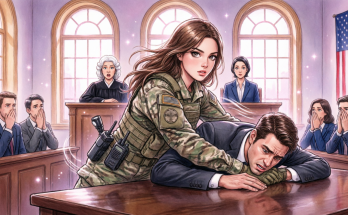
At My Silver Star Ceremony, My Father Said, “We’ll Never Stand Beside You”—One Hour Later, I Had 49 Missed Calls
“We Will Never Stand Next To You. You Are The Disgrace Of This Family,” My Dad Said As He Refused To Attend My Silver Star Ceremony. So, I Gave His VIP Seat To My Aunt Instead. On Live Television, The Pentagon Surprised Her With An Incredibly Valuable Gift. Just One Hour Later, My Phone Screen Flashed: 49 Missed Calls From My Parents.
### Part 1
“We will never stand beside you.”
My father leaned close enough for me to smell the coffee and bitterness on his breath.
“You smell like gunpowder, blood, and filthy sweat,” he continued. “You are an embarrassment to this family.”
Those were the last words Grant Mercer said to me before I left my childhood home and drove back to Washington alone.
Three nights later, I stood at rigid attention beneath the white lights of a packed Defense Department auditorium, waiting for a four-star general to pin the Silver Star to my uniform.
The room smelled of brass polish, starched wool, and hot electrical equipment from the television cameras. Generals filled the first several rows. Reporters whispered behind their notebooks. Red lights blinked above the broadcast lenses, warning us that the ceremony was being carried live across the country.
I kept my chin level and my shoulders square, but my eyes drifted toward the VIP section.
The seat reserved for my mother was empty.
So was the seat reserved for my father.
They had thrown away the gold-embossed invitation because my younger sister, Brielle, had received a promotional deal from a small luxury handbag company. My parents had chosen to celebrate her at the most expensive restaurant in the city rather than watch me receive one of the military’s highest honors.
At least, that was what they believed.
They did not know I had reassigned one of those seats.
They did not know that a woman they had dismissed for years was sitting in the front row wearing a navy dress, her weathered hands folded nervously in her lap.
And they certainly did not know that General Marcus Hale was preparing to announce a reward worth more than anything my family had ever owned.
Exactly one hour after the broadcast ended, the screen inside my truck glowed in the darkness.
Forty-nine missed calls.
My father had called seventeen times.
My mother had called twenty-one.
Brielle had called eleven.
Dozens of messages crowded the screen.
“Answer immediately.”
“You had no right.”
“That property belongs to this family.”
“Call the general and fix this.”
I pressed the mute button and watched their names disappear from the dashboard.
I did not cry.
Five years earlier, their silence might have destroyed me. Back then, I still believed obedience could purchase affection. I believed that if I sent enough money home, solved enough problems, and made myself useful enough, my parents would eventually look at me and say, “We are proud of you, Natalie.”
Instead, my twenties disappeared into desert heat, concrete bunkers, and midnight alarms.
For half a decade, my permanent address was wherever my medical unit happened to set up its tents. Some nights I slept with my protective vest beneath my head because the ground was too hard for anything else. My clothes always carried the smell of dust, fuel, and antiseptic.
Every day came down to one brutal calculation: reach the wounded before the clock inside their bodies ran out.
When the rare satellite phone rang, I used to feel a spark of hope.
Maybe my mother wanted to know whether I was safe.
Maybe my father wanted to hear my voice.
They never did.
Their calls always began with money.
One afternoon, after our convoy had been attacked, I stood beside a medical tent with dried mud on my boots and someone else’s blood on my sleeves. A communications specialist handed me the receiver.
“It’s your mother,” he said.
I lifted it to my ear and waited for comfort.
“Natalie, the transfer didn’t go through,” Denise snapped. “Brielle has an important networking brunch tomorrow, and your card was declined. Fix it.”
She did not say hello.
She did not ask why my hands were shaking.
She did not know that only twenty minutes earlier I had been kneeling beside a damaged vehicle, trying to keep a nineteen-year-old soldier conscious.
I apologized to her.
Then I contacted military finance and fixed the transfer.
That was who I had been then—a daughter bleeding in the dirt, apologizing because her sister could not pay for brunch.
But a person can only live that way for so long.
Eventually, even the strongest rope snaps.
Mine snapped on a Tuesday afternoon, while a medic was cleaning a fresh wound in my left arm and my father was demanding another two thousand dollars.
### Part 2
The medical tent was unbearably hot.
A portable fan rattled in one corner, pushing around air that smelled of dust, antiseptic, and diesel exhaust. I sat on a metal folding chair while a medic examined the torn fabric around my upper arm.
A jagged fragment had cut through the muscle during an attack outside the base. The wound was not life-threatening, but every heartbeat sent a deep pulse of pain toward my fingertips.
“Hold still,” the medic told me.
I gripped the edge of the chair and stared at a stain on the canvas wall.
With my uninjured hand, I opened my banking app. I wanted to see whether I had saved enough for private rehabilitation when I returned home. The military would treat the injury, but I knew recovery might take months.
My balance appeared.
It was almost zero.
Before I could review the transactions, the satellite phone rang across the tent.
The communications specialist answered, listened, and turned toward me.
“It’s your father.”
I crossed the tent with gauze pressed against my arm and accepted the receiver.
“You need to send Brielle two thousand dollars today,” Grant said without greeting me. “She has a fashion event coming up. She needs new clothes and premium access if she wants serious sponsors.”
Behind me, metal instruments clinked against a tray.
“I can’t,” I said.
Silence crackled through the line.
“What did you say?”
“I was injured an hour ago. I need the money for my recovery.”
Another silence followed, this one heavier.
Then I heard movement and my mother’s voice exploded through the receiver.
“How dare you be so selfish?”
Her anger was so loud the speaker distorted.
“Brielle has an image to maintain,” Denise continued. “She is building a real career. What do you even need money for out there?”
I looked at my boots. Dust had dried in pale lines along the leather. A dark stain spread beneath the bandage on my arm.
“I keep people alive,” I said.
My mother laughed.
It was a short, dismissive sound.
“Your job is filthy. You crawl through mud and blood, and nobody even sees you. Brielle is building a public name. Why would you need nice things? You are only going to ruin them.”
Something inside me became completely still.
For years, I had imagined that my parents misunderstood my work. I had excused their behavior by telling myself they were frightened, ignorant, or emotionally awkward.
But my mother understood perfectly.
She simply believed Brielle’s photographs mattered more than my life.
“No,” I said again.
“Natalie—”
“I will not send another dollar.”
I ended the call and handed the receiver back.
The medic watched me carefully.
“You all right?”
“No,” I answered. “But I will be.”
Several weeks later, during an overnight watch, I saw the photograph that ended the last of my denial.
Brielle stood in a polished driveway wearing a cream-colored coat. Behind her was an enormous black luxury SUV with a red ribbon tied across the hood. My parents stood on either side of her, smiling as if she had won an international prize.
The caption read, “Hard work creates opportunities. Grateful for parents who always support my dreams.”
I knew my parents’ finances.
Grant changed jobs frequently and complained about every supervisor he ever had. Denise spent money faster than he earned it. They could not afford that vehicle.
I checked the credit alerts connected to my old home address.
Within minutes, I found the answer.
They had taken out a second mortgage.
They had borrowed against nearly every dollar of equity in their house to purchase Brielle’s vehicle. The loan carried a punishing interest rate, but they had signed it without hesitation.
They believed my automatic military transfers would cover the payments.
They had gambled their home on my continued obedience.
The bunker door trembled in the night wind as I opened my military pay account. One by one, I canceled every allotment.
Brielle’s rent.
Her club membership.
My parents’ household account.
Every financial artery connecting me to them disappeared beneath my thumb.
Then I opened my emergency beneficiary documents.
Grant Mercer.
Delete.
Denise Mercer.
Delete.
I redirected my income into an account they could not access and locked it behind new security credentials.
Within hours, their messages began arriving.
“Why did Brielle’s rent payment fail?”
“Turn the transfers back on.”
“You are punishing the entire family.”
I did not respond.
I placed the phone at the bottom of my pack and returned to duty.
Ten minutes later, an emergency order sent my unit outside the wire.
By sunrise, twelve soldiers would owe their lives to the decision I made in the middle of that chaos.
And before the week ended, the military would send me home with an invitation that would expose exactly what my family valued.
### Part 3
The rescue operation began before dawn.
Our vehicles moved through gray morning light while dust curled behind the tires. The radio whispered with clipped voices and coordinates. Every soldier inside the transport sat forward, alert and silent.
The first burst of gunfire came from the left.
The second came from the rooftops.
Within seconds, the street became a storm of noise and pulverized dirt. The ground kicked beneath my boots as explosions struck nearby. Smoke swallowed the buildings, turning familiar shapes into shadows.
Someone shouted for a medic.
Then another voice joined him.
I moved toward the wounded.
That was my job. Not looking heroic. Not collecting medals. Not proving anything to my parents.
Reaching people before death did.
I crawled beneath the worst of the crossfire, using broken walls and damaged vehicles for cover. My injured arm screamed whenever I pulled someone by the handle on the back of his vest, but I kept moving.
One soldier had collapsed near a doorway.
Another lay exposed in the street.
A third was trapped behind a vehicle that had begun to burn.
Time lost its normal meaning. The sun rose, but I barely noticed. The world narrowed to breathing, bleeding, pressure, and movement.
“Stay with me,” I told one young soldier as I worked.
His face was gray beneath the dust.
“I can’t feel my hand.”
“Then focus on my voice.”
“Am I dying?”
“Not today.”
I did not know whether that was true when I said it.
I only knew he needed to believe me.
Four hours later, twelve injured soldiers had been moved out of the direct line of fire. Some were conscious. Some were not. All of them still had heartbeats when the evacuation aircraft arrived.
I sat on the metal floor during the flight back, surrounded by the sharp smell of fuel and medical supplies. Across from me, the young soldier opened his eyes.
He had lost part of two fingers.
But his chest rose and fell.
In that moment, the need for my parents’ approval finally died.
I did not need Denise to understand my worth.
I did not need Grant to call me successful.
The twelve people breathing around me were proof that my life mattered.
Four days later, my commander called me into a temporary office and handed me orders to return to the United States.
“You are being recommended for the Silver Star,” he said.
I stared at him.
“For the rescue operation?”
“For refusing evacuation after you were wounded and continuing to treat casualties under fire.”
I looked down at the thick envelope he placed on the desk.
Inside were two front-row invitations for immediate family.
The paper was textured, formal, and marked with a raised gold seal.
For several minutes, I considered tearing them in half.
Instead, I decided to conduct one final test.
I drove to my parents’ house the day after I returned.
The neighborhood looked smaller than I remembered. Trim lawns stretched between identical driveways. Sprinklers clicked beneath the afternoon sun. Everything was orderly, polished, and completely disconnected from the life I had just left.
I opened the front door with my old key.
The house smelled of vanilla air freshener and cold takeout food. A reality program blared from the television. Two women on the screen were screaming at each other beside a swimming pool.
My father sat on the leather sofa with one hand inside a bowl of chips. My mother was scrolling through her phone.
Neither looked up.
I walked to the glass coffee table and placed the invitation on it.
The sharp sound finally caught their attention.
“The Defense Department is awarding me the Silver Star on Friday,” I said. “There are two seats for you in the front row.”
Grant opened the invitation and scanned the lettering.
Then he snorted.
“I am not wasting Friday night at some military ceremony.”
“It will be broadcast nationally.”
“So what? They probably give those medals to everyone now.”
My mother never stopped tapping her phone.
“We already have plans,” she said. “I spent an hour getting a table at Bellamy House.”
Bellamy House was the sort of restaurant where people photographed their food before tasting it.
“What are you celebrating?” I asked.
Denise finally looked up.
“Brielle signed a promotional contract. A boutique company is sending her a handbag to feature online. This could be the beginning of something important.”
I stared at them.
Twelve lives.
A wound beneath my sleeve.
A Silver Star.
And they had chosen a handbag.
My mother’s eyes traveled over my boots and military jacket. Her mouth tightened.
“We will never stand beside you,” she said. “You smell like gunpowder, blood, and filthy sweat. You are an embarrassment to this family.”
The last thread connecting me to that house broke without making a sound.
“Enjoy your dinner,” I said. “I will never come back here.”
I walked out, pulled the door closed, and drove away.
At sunrise the next morning, I sat in a roadside diner across from Sergeant First Class Elena Torres.
Between us lay the unused invitation.
Elena read it, took a sip of coffee, and pushed it back toward me.
“We are not leaving that seat empty,” she said.
Then I called the only relative who had ever treated me like a daughter.
### Part 4
Aunt Laura answered on the second ring.
“Natalie?”
The familiar warmth in her voice almost broke my composure.
Behind her, I heard a washing machine turning and a kettle beginning to whistle. Ordinary sounds. Safe sounds.
“I need a favor,” I said.
“Name it.”
“I have a ceremony in Washington on Friday. There is a seat in the front row, and I want you in it.”
She did not ask how much the ticket cost.
She did not complain about missing work.
“What kind of ceremony?”
“I am receiving the Silver Star.”
For several seconds, she said nothing.
When she spoke again, her voice was unsteady.
“I don’t care about the medal, sweetheart. I care that you are alive. Tell me what time to be at the airport.”
Laura Bennett was my mother’s older sister, but the resemblance ended with the shape of their eyes.
Denise spent her life chasing status. Laura spent thirty years as a trauma nurse at a veterans’ hospital.
Every month during my deployments, a cardboard box arrived from her. Inside were thick socks, practical medical supplies, handwritten letters, and tins of shortbread cookies wrapped in newspaper.
She never asked for money.
She never demanded gratitude.
Her letters always ended with the same sentence.
“Come home standing.”
Elena booked Laura’s flight before I finished the call. Then she arranged for a simple navy evening dress to be delivered to my apartment.
“You did not have to pay for all of this,” I told her.
“You dragged me out of a damaged transport three years ago,” Elena replied. “I can buy a plane ticket.”
The next afternoon, I waited outside the airport beneath a sky the color of steel.
Automatic doors opened, releasing a wave of travelers into the pickup lane. Laura emerged wearing a wool coat and pulling a battered suitcase with one broken wheel.
The suitcase clicked unevenly over the pavement.
When she saw me, she let go of the handle.
She crossed the curb and wrapped both arms around me.
Her coat smelled like peppermint gum and laundry detergent.
“You’re here,” she whispered.
“I’m here.”
She pulled back and looked at my left arm.
I had not told her the full extent of the injury, but her eyes immediately found the stiffness in my movements.
“What happened?”
“Fragment wound.”
“Show me.”
“It’s healing.”
“Natalie.”
That tone had intimidated physicians twice her size.
I unzipped my jacket enough for her to see the dressing.
Her mouth tightened, but she did not cry. She touched the edge of the bandage with two fingers.
“You should have called me.”
“I knew you would worry.”
“I worried anyway.”
That evening, Laura, Elena, and I sat in my small apartment eating soup from mismatched bowls.
No television shouted in the background.
Nobody discussed sponsorships or restaurant reservations.
Laura asked about the soldiers I had treated. She listened without interrupting while I described the smoke, the confusion, and the weight of pulling a wounded man across broken ground.
When I finished, she placed her hand over mine.
“I am proud of you,” she said.
The words were quiet.
They did not come with a camera, a gold envelope, or an audience.
They were the words I had spent years paying my parents to say.
Hearing them for free hurt more than I expected.
I turned my face toward the window until the pressure behind my eyes passed.
On Friday evening, the auditorium doors closed at seven.
Officers, officials, and members of the press filled every row. Lights glared down from the ceiling. The low conversation faded when General Marcus Hale approached the podium.
I sat beside Laura in the VIP section.
Her hands trembled slightly, so I covered one with mine.
General Hale did not begin with compliments.
He described the operation.
He spoke about the ambush, the damaged vehicles, and the twelve soldiers who would not have survived without immediate treatment. He described a medic who continued working after being wounded and refused evacuation until everyone else had been removed.
Then he said my name.
“Captain Natalie Mercer.”
The auditorium rose.
Applause hit me like a physical wave.
I walked onto the stage, every step measured. General Hale pinned the Silver Star to my uniform. The metal felt cold against my chest.
After I returned to my seat, he raised one hand.
The applause stopped.
“Tonight,” he said, “we are also recognizing the people who serve without wearing a uniform.”
A black folder was carried onto the stage.
Laura leaned toward me.
“What is happening?”
I kept my eyes forward.
“Just listen.”
General Hale opened the folder.
“The inaugural recipient of the National Homefront Honor is Laura Bennett.”
A spotlight found us.
Laura stopped breathing.
And in a restaurant several miles away, my parents were about to discover exactly what they had rejected.
### Part 5
Laura’s face appeared on the enormous screen above the stage.
She looked bewildered, almost frightened. Tears gathered around her eyes as a camera turned toward the VIP section.
“I don’t understand,” she whispered.
I stood and pulled her gently to her feet.
“You don’t have to understand yet.”
General Hale waited until the applause settled.
“For thirty years, Laura Bennett served wounded veterans as a trauma nurse,” he announced. “During Captain Mercer’s deployments, she provided medical supplies, practical support, and steady encouragement without seeking recognition or repayment.”
A military aide entered carrying a large document sealed behind glass and dark wood.
General Hale accepted it.
“By authorization of the National Homefront Honor Initiative, Laura Bennett is granted lifetime ownership of a fully maintained lakefront residence.”
Laura gripped my arm.
The audience went completely silent.
“All property taxes and essential maintenance costs will be covered for the duration of her life,” General Hale continued. “She will also receive comprehensive medical coverage and an all-expenses-paid first-class journey through Europe in recognition of her service to veterans and military families.”
For one second, Laura simply stared at the stage.
Then she shook her head.
“No,” she whispered. “They made a mistake.”
“They didn’t.”
“I only sent boxes.”
“You sent what I needed.”
“They were cookies and socks.”
“They reminded me somebody wanted me to survive.”
Her face folded.
She covered her mouth with one hand as tears finally spilled down her cheeks.
I guided her toward the stage.
The auditorium rose again.
Laura climbed the steps slowly, clutching my forearm for balance. When she reached General Hale, he bowed his head to her before placing the framed document in her hands.
She held it against her chest as camera flashes filled the room.
I looked toward the broadcast lens.
I knew my parents were watching.
Bellamy House had large televisions above its bar. The ceremony had been promoted for days. Grant, Denise, and Brielle were probably seated beneath soft chandeliers, celebrating a promotional handbag while pretending they belonged among the city’s elite.
I imagined my father cutting into an overpriced steak.
I imagined my mother looking up when she heard Laura’s name.
I imagined Brielle watching a retired nurse receive the lakefront life she had tried to manufacture through photographs.
The ceremony ended shortly before eleven.
Laura carried the framed award to my truck as if someone might take it away.
“I don’t deserve this,” she said once we were inside.
“Yes, you do.”
“You saved those men.”
“And you helped save me.”
The truck’s dashboard connected to my phone.
The screen immediately filled with alerts.
Forty-nine missed calls.
Messages rolled across the display.
“Call us now.”
“How could you give that house to Laura?”
“Tell the general there was a mistake.”
“You embarrassed Brielle.”
“You owe your family an explanation.”
Laura read two of them before turning away.
“I am sorry,” she said.
“For what?”
“For being the reason they are attacking you.”
“You are not the reason. Money is the reason.”
I muted the phone and drove her to a hotel.
By midnight, I reached my apartment building. The parking garage was nearly empty, and the elevator hummed as it carried me to the seventh floor.
When the doors opened, I stopped.
My parents and sister stood outside my apartment.
Brielle was still wearing a red dinner dress. Her makeup had smeared beneath her eyes, and the handbag from her new promotion hung from her wrist.
Grant paced near the stairwell.
Denise stood directly in front of my door.
The instant they saw me, all three began talking.
“Where have you been?” Denise demanded.
“You planned this,” Brielle shouted. “You did it to humiliate me.”
Grant stepped forward.
“You are going to call that general and change the paperwork.”
I walked out of the elevator.
“The award belongs to Laura.”
“That house belongs to this family,” Brielle said. “I am the one building a public career. Do you understand what I could do with a lakefront property? I could host events there. I could create content. It would change everything.”
“It has already changed everything.”
She spread her arms across my doorway.
“You are not going inside until you agree to fix this.”
I took out my keys.
“Move.”
“No.”
I stepped forward without slowing.
Brielle expected me to stop.
I used my forearm to push her away from the lock. She stumbled sideways and caught herself against the wall.
“Do not touch me!” she screamed.
I opened my door and turned to face them from the threshold.
“The paperwork is final. Laura owns the property. No one is changing the name.”
My father’s face darkened.
His right hand curled into a fist.
Then he stepped close enough that I could see the veins rising in his neck.
### Part 6
Grant swung his fist.
He did not hit me.
Instead, he punched the wall beside my head.
The drywall cracked with a hollow thud, and white dust scattered across the carpet. He pulled his hand back, his knuckles scraped and red.
For years, that display would have frightened me into obedience.
I would have apologized to restore peace.
I would have offered money just to make the shouting stop.
Now I saw it for what it was—the tantrum of a man who had lost control of his favorite source of income.
“You owe us,” he said through clenched teeth.
“I owe you nothing.”
“We raised you.”
“You charged me for it with interest.”
His mouth opened, but no words came.
Denise moved next.
Her expression changed so quickly it would have been impressive if it were not so ugly. The rage vanished. Her eyes filled with tears.
She grabbed my injured arm.
Pain shot through the healing wound, but I did not react.
“Natalie, please,” she sobbed. “We are your blood. I gave birth to you. Families share their blessings.”
I looked down at her fingers gripping my sleeve.
Hours earlier, I had been a disgrace.
Now I was family again because a valuable property existed.
I pulled my arm free.
“Do not touch me.”
Her tears stopped for half a second.
That pause told me everything.
Brielle dropped her handbag onto the floor and covered her face.
“You ruined my life,” she cried. “Everyone saw the ceremony. My friends are talking about it. People are asking why Aunt Laura was in the family seat instead of us.”
“Tell them the truth.”
“What truth?”
“That you chose dinner over my ceremony.”
“We were celebrating my career.”
“You received one handbag.”
“It was an important opportunity.”
“So was watching your sister receive the Silver Star.”
Brielle lowered her hands.
Her eyes were dry.
“You have always hated me.”
“No. I spent years financing you.”
“You were jealous because people noticed me.”
“I was pulling wounded people out of burning vehicles while you posted photographs from an apartment I paid for.”
Her face twisted.
“That was your choice.”
She was right.
Those words should have hurt, but instead they freed me.
Sending the money had been my choice.
Allowing the manipulation had been my choice.
Ending it was also my choice.
Denise wiped beneath her eyes and tried again.
“We can move past this. Your father became emotional, and Brielle is under pressure. We all said things we did not mean.”
“You told me I smelled like blood and called me an embarrassment.”
“I was upset.”
“You meant every word.”
Her shoulders sagged.
The hallway became quiet.
I looked at each of them—the father who had used intimidation, the mother who had converted affection into currency, and the sister who believed my survival existed to decorate her life.
“I accept that you are sorry,” I said.
Denise’s face brightened with instant relief.
Then I continued.
“I accept it because I do not want to carry your poison anymore. Acceptance is not forgiveness, and it is not reconciliation.”
Her relief disappeared.
“You cannot cut off your own family.”
“I already did.”
“Natalie, we need your help with the vehicle payments,” Grant said. “The transfers stopped without warning.”
“The transfers were my money.”
“We made commitments based on them.”
“That was your mistake.”
“The house is tied to those loans.”
“I know.”
For the first time, fear replaced anger in his eyes.
He had believed I knew nothing about the second mortgage.
“How long have you known?” he asked.
“Long enough.”
Brielle stared at me.
“You would let Mom and Dad lose their house?”
“I am not taking their house. The bank may take it because they borrowed against it to buy you a vehicle.”
Denise stepped toward me again.
“You can prevent that.”
“I could. I will not.”
Her face hardened.
“You are cruel.”
“No. I am finished.”
I stepped backward into my apartment.
“Do not call me. Do not email me. Do not come to my home or my workplace. My money, my career, and my life are closed to you.”
Grant pointed a trembling finger at me.
“You will regret this when you have no family left.”
I looked past them toward the elevator.
“I finally know who my family is.”
Then I shut the door.
The deadbolt turned with a solid click.
I added the security chain and stood in the dark entryway, listening.
For a moment, no one spoke.
Then I heard their footsteps moving toward the elevator.
No screaming.
No sobbing.
The performance was over because the audience was gone.
Four months later, the black luxury SUV was lifted onto a tow truck while Brielle screamed from the sidewalk.
By then, the financial collapse had already begun.
### Part 7
The first missed payment triggered a late fee.
The second triggered collection calls.
By the third month, Brielle had maxed out three credit cards trying to maintain the appearance of success. Her apartment rent increased, her promotional agreement expired, and the boutique company declined to renew it.
Without my money, her “career” could not support her lifestyle for even one season.
The repossession happened at noon on a Tuesday.
I did not witness it personally. Elena sent me a video someone had posted publicly.
A tow truck backed toward the black SUV while its warning alarm echoed between downtown buildings. The driver lowered the metal equipment and secured the vehicle.
Brielle ran from the apartment lobby in a silk robe and slippers.
“Put it down!” she shouted. “You cannot take that car!”
The driver handed her a document and continued working.
Several of Brielle’s friends stood nearby with their phones raised.
None offered help.
When the truck lifted the SUV, Brielle grabbed the door handle and tried to pull it down with her body weight. The driver calmly told her to step away.
The video ended with the vehicle disappearing around a corner and Brielle standing barefoot at the curb.
I watched it once.
Then I deleted the message.
Her humiliation gave me no pleasure. I had already won the only battle that mattered—the one for control of my own life.
Grant and Denise called extended relatives for loans.
By then, most of the family had seen the ceremony and heard what happened. Laura never attacked them publicly, but when relatives asked why she had occupied the VIP seat, she told the truth.
“They refused to attend.”
That simple sentence closed more doors than any revenge campaign could have.
Grant withdrew his retirement savings and paid heavy penalties. The money covered several months of debt but did not solve the larger problem.
The second mortgage continued growing.
Eventually, the bank began foreclosure proceedings.
My parents sold the house before it could be seized. After fees, penalties, and outstanding loans, they had little left.
They moved into a small rental on the edge of the city.
I learned these details from a cousin, not because I asked, but because the family expected me to react.
I did not.
I had warned no one to borrow against that house.
I had signed no contracts.
Their collapse was not punishment I created. It was the delayed arrival of consequences.
While their world became smaller, Laura’s expanded.
Her lakefront home stood among tall pines at the end of a quiet road. The first time we visited, morning mist floated above the water, and the wooden deck smelled of cedar and rain.
Laura walked through each room slowly.
The house had broad windows, pale walls, and a stone fireplace. In the kitchen, she opened every cabinet as if expecting someone to announce that a mistake had been made.
“I have lived in the same apartment for twenty-three years,” she said.
“Not anymore.”
“What am I supposed to do with all this space?”
“Fill it with people who deserve to be there.”
She chose the smallest bedroom for herself and turned the largest into a guest room for veterans traveling for treatment. Within weeks, she was coordinating with her former hospital to provide short-term accommodation for patients and their families.
Even after receiving everything, her first instinct was to share it.
That was why she deserved it.
On weekends, I drove to the lake.
The house smelled of roasted chicken, coffee, and fresh bread. Laura planted herbs behind the kitchen and kept a jar of shortbread cookies beside the door.
Elena visited with her husband and two sons. We ate dinner on the deck while the boys skipped stones across the water.
Nobody asked about my salary.
Nobody expected me to solve their debts.
Nobody treated my presence as a financial opportunity.
One evening, Laura brought out the framed document from the ceremony.
“You should keep this,” she said.
“It belongs to you.”
“This house would not exist without you.”
“It exists because of what you did for thirty years.”
She looked toward the water.
“Your mother called me.”
My fork stopped above my plate.
“When?”
“Yesterday.”
“What did she want?”
“To move into the guest room.”
I waited.
“What did you say?”
Laura’s expression was calm.
“I told her the guest room is reserved for wounded veterans and their families.”
Despite myself, I smiled.
“She accused me of stealing her daughter.”
“You did not steal me.”
“No,” Laura said. “You walked away on your own.”
Then she reached across the table and squeezed my hand.
For the first time in my life, walking away did not feel like abandonment.
It felt like coming home.
### Part 8
My promotion arrived six months after the Silver Star ceremony.
I was reassigned to a training command in North Carolina, where I became a senior instructor for advanced combat medics.
My days began before sunrise.
The training fields smelled of wet grass, hot metal, and packed earth. Helicopters crossed the pale morning sky while recruits moved through simulated rescue drills carrying heavy equipment.
I taught them how to enter dangerous spaces without becoming another casualty. I taught them to control panic, read injuries quickly, and keep working when every instinct told them to freeze.
Most importantly, I taught them that courage rarely feels courageous while it is happening.
It feels like fear with no time to obey it.
During one exercise, a young medic hesitated beside a mock casualty.
“I’m going to make the wrong decision,” he said.
“You will,” I replied.
He stared at me.
“So will every person standing here. The goal is not perfection. The goal is to keep thinking after the mistake.”
He nodded and returned to the drill.
Watching him move, I understood that my life had finally become mine.
My parents occasionally tried to reach me through new phone numbers. Their messages shifted depending on what they wanted.
Some were angry.
“You destroyed this family.”
Some were sentimental.
“We miss the daughter you used to be.”
Some were desperate.
“Your father needs help with rent.”
I blocked every number.
Brielle sent one long email accusing me of sabotaging her future. She claimed the national broadcast had caused brands to distance themselves from her.
I replied with one sentence.
“Your choices were shown; I did not create them.”
Then I blocked her too.
I did not forgive them.
Forgiveness was not required for healing, and reconciliation was not a prize awarded to people who waited until consequences arrived before pretending to be sorry.
I stopped wishing they would change.
That was the greatest freedom of all.
Laura eventually took her trip through Europe. She sent me photographs from Rome, Vienna, and Prague. In every picture, she wore comfortable shoes and the same blue scarf she had owned for fifteen years.
In one photograph, she stood beside a fountain holding a paper cup of coffee.
The message beneath it read, “Your mother would hate these shoes.”
I laughed so loudly Elena looked over from the next office.
“What happened?”
“Laura discovered international sarcasm.”
The following Sunday, we gathered at the lake house for a barbecue.
Elena brought food. Several former patients from Laura’s hospital came with their families. Children ran across the grass while smoke curled from the grill.
Near sunset, I walked alone to the end of the dock.
The water reflected the orange sky in long, trembling lines. Behind me, voices rose from the deck. Plates clinked. Someone laughed. Laura called for everyone to come inside before the evening air turned cold.
My phone buzzed.
For one second, my body remembered the forty-nine missed calls.
Then I looked at the screen.
It was a message from one of the soldiers I had pulled from the street during the rescue operation.
“Captain, my daughter was born this morning. Thought you should know there are two lives here because you refused to leave me behind.”
A photograph followed.
A tired young man held a sleeping baby against his chest.
I sat at the edge of the dock and stared at the picture until the light faded.
For years, my parents had convinced me that my value depended on what I could provide for them. They measured love in transfers, rent checks, vehicles, and access.
But my life had never been valuable because of the money entering their accounts.
It was valuable because a young father was alive to hold his daughter.
It was valuable because Laura finally had a home where she could care for people without fear of losing everything.
It was valuable because recruits listened when I taught them how to bring someone back from the edge.
The Silver Star remained in a small case in my bedroom. I rarely opened it.
The medal was not the part of the story I treasured most.
What mattered was the moment I stood inside my parents’ living room and finally understood that sharing blood did not make them safe.
What mattered was closing my bank account, closing my door, and opening a different life.
Laura called from the deck.
“Natalie, dinner is ready.”
“I’m coming.”
I stood and slipped the phone into my pocket.
The lake was quiet behind me. Ahead, warm light spilled through the windows of the house. I could smell grilled vegetables, fresh bread, and the faint sweetness of Laura’s tea.
I walked toward the people waiting for me.
Not the people who demanded pieces of my life.
The people who had stood beside me when I had nothing left to give.
My father once told me that no one in the family would ever stand beside me.
He was right about one thing.
They never did.
But when I finally stopped looking back at them, I discovered an entire line of people already standing at my side.
THE END!