### Part 1
I knew something was wrong before I even unlocked my apartment door.
There were two unfamiliar cars parked outside, music coming through my living-room window, and somebody had left three cardboard boxes beside the hallway wall.
I had owned the apartment for eleven days.
Eleven.
I had worked overtime for years to afford the down payment, skipped vacations, driven the same dented truck since college, and eaten more microwave dinners than I wanted to remember.
Nobody in my family had contributed a dollar.
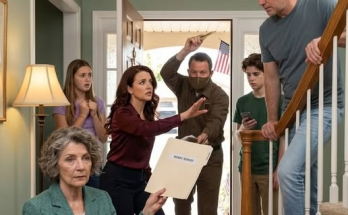
Then I opened the door.
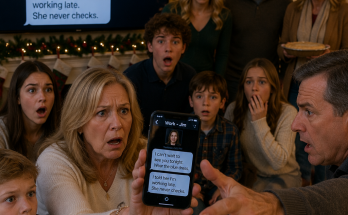
My sister, Jenna, was sitting on my couch with a glass of wine.
Her husband, Mason, had his shoes on my coffee table.
My mother was opening my kitchen cabinets.
And my father, Robert, was carrying a box toward my bedroom.
I just stood there.
Jenna smiled like I was the guest.
“There you are. Mom told us you’d probably be dramatic.”
“What are you doing in my apartment?”
Mom turned around with that exhausted expression she used whenever I objected to something Jenna wanted.
“Don’t start, Evan. Jenna and Mason need somewhere temporary. You have two bedrooms.”
I looked at the boxes.
One was labeled MASTER CLOSET.
“You decided they’re moving in?”
Dad put the box down.
“We’re family. Nobody needed a formal invitation.”
“It’s my home.”
Jenna laughed.
“You live alone. Why are you acting like you’re losing something?”
That sentence did something to me.
Not because it surprised me.
Because it didn’t.
Growing up, Jenna’s emergencies became everyone’s emergencies. Her rent was short? Dad helped. Her car broke? Mom called relatives.
When I needed something, I was told independence built character.
Apparently I’d built enough character to finance Jenna’s next rescue.
I noticed something else.
My spare key wasn’t hanging inside the small drawer where I kept it.
“How did you get in?”
Dad answered too quickly.
“The locksmith.”
My eyes moved to him.
“What locksmith?”
“You weren’t answering.”
“I was working.”
He shrugged.
“We explained the situation.”
I wanted to yell.
Instead, I pulled out my phone.
Jenna rolled her eyes.
“Oh God. Are you seriously calling the cops on your own sister?”
“No.”
I opened the security app connected to the camera above my front door.
“I just want to see something.”
At 9:12 that morning, my father appeared on camera with a locksmith.
Dad handed him paperwork.
The locksmith examined it, looked at Dad’s ID, and opened my door.
Then my parents and Jenna walked inside carrying boxes.
They hadn’t made a spontaneous family decision.
They’d prepared for it.
That distinction made me strangely calm.
I looked at Jenna.
“Take everything out.”
Her smile disappeared.
Mom stepped between us.
“You’re not throwing your sister onto the street.”
“She has an apartment.”
“Her lease ends next month.”
“Then she can stay there until next month.”
Dad’s voice hardened.
“You need to stop being selfish.”
I walked to the door and held it open.
Nobody moved.
So I called building security.
Twenty-five minutes later, Jenna was standing in the hallway surrounded by her boxes, screaming that I’d humiliated her.
Mason wouldn’t look at me.
Dad said, “You’re going to regret treating family this way.”
I closed the door.
Then I called a locksmith of my own and had every lock changed.
I thought that was the end of it.
At 7:18 the next morning, my phone rang.
The man introduced himself as Owen Mercer—the locksmith from my security footage.
“I pulled yesterday’s paperwork before filing it,” he said carefully. “Your father told me you authorized him to enter.”
“I didn’t.”
Silence.
Then Owen said something that made me sit down.
“Then we have a bigger problem. Because I have an authorization letter with your signature on it.”
And according to Owen, that wasn’t the only suspicious thing on the page.
### Part 2
Owen texted me a photograph while we were still talking.
I opened it at my kitchen table.
My full legal name appeared above my address, followed by language supposedly giving my father authority to enter my residence and make decisions while I was unavailable.
At the bottom was my signature.
Almost.
I had signed my name thousands of times.
My final letter always ended in an unfinished loop.
The signature on Owen’s document closed perfectly.
Beneath it sat a notary seal belonging to a woman named Patricia Sloan.
“Do you know her?” Owen asked.
“Never heard of her.”
He exhaled.
“If this is forged, I entered your home based on fraudulent paperwork. I have to report it.”
That afternoon, I called Patricia.
She asked me to send the document.
Thirty seconds later, her voice changed.
“That’s not my seal.”
I stared at my laptop.
“You’re sure?”
“My actual stamp has a double border around my commission number. This doesn’t.”
“So somebody copied it?”
“Somebody tried.”
She told me she was legally required to report suspected misuse of her credentials.
That was when my family problem became something else.
I collected genuine copies of my signature from employment forms, my vehicle title, and my apartment paperwork.
Then I filed a police report.
Detective Naomi Brooks handled financial fraud for the department.
She studied everything without interrupting.
When I finished, she said, “Family cases usually fall apart because the victim gets pressured into withdrawing.”
“I won’t.”
“Make sure.”
I thought I was sure.
Four days later, I learned I hadn’t understood how far my family had already gone.
My bank called while I was making coffee.
A fraud analyst named Lauren Pierce asked whether I’d recently applied to finance a vehicle.
“No.”
She paused.
“Then we need to stop something.”
An application had been submitted through a local dealership.
My correct name.
My date of birth.
My identification information.
But the employer listed wasn’t mine.
It was my father’s small accounting business.
The income listed was almost twice what I earned.
“Who’s the primary applicant?”
Lauren answered.
“Jenna Miller.”
My sister.
The financing request was for $38,400.
I was listed as her co-applicant.
Without my permission.
Funding was scheduled for the following morning.
I drove to the dealership immediately.
The finance manager, Paul Moreno, pulled the file.
“I remember them,” he said. “Your sister came with an older gentleman. He said you couldn’t leave work.”
“Did anyone speak to me?”
Paul checked the records.
His face tightened.
The verification box had been marked complete.
There was no call log.
He froze the financing and handed me a fraud affidavit.
I signed my real signature across the bottom.
Open loop.
Mine.
Detective Brooks called after I sent her the paperwork.
“This changes things,” she said. “The forged access letter could have been explained away as one terrible decision. A loan application using your identity shows a pattern.”
I leaned against my truck.
“What else should I check?”
“Everything.”
I didn’t realize how literal she meant it.
Two days later she called again.
“We traced the prepaid number used on the loan application.”
“And?”
“It contacted your employer’s payroll processor three weeks ago.”
I stopped breathing for a second.
“What were they trying to do?”
Naomi’s answer was quiet.
“They tried to change where your paycheck was being deposited.”
### Part 3
My payroll administrator confirmed it.
Someone claiming to be me had called and requested that my direct deposit be moved to another account.
They knew my identification number.
They knew my address.
They knew my date of birth.
But they failed one security question.
“What question?” I asked.
“The name of your childhood dog.”
For the first time in days, I almost laughed.
We had owned that dog when I was nine.
His name was Rusty.
My parents gave him away after Jenna complained she was scared of him.
Apparently they remembered enough about me to steal my identity, but not enough to remember the dog I’d cried over for months.
That detail hurt more than I expected.
Detective Brooks built the case piece by piece.
The fake notary seal was confirmed.
Owen turned over the original authorization letter.
A document examiner compared the forged signature against my genuine samples.
His conclusion was simple: whoever wrote it had carefully imitated my signature.
Someone had studied it.
My father’s attorney refused a voluntary handwriting comparison.
Meanwhile, my lawyer, Aaron Whitaker, filed for an emergency protective order.
Dad’s attorney called everything “an unfortunate family misunderstanding.”
Judge Rebecca Harmon didn’t look impressed.
“Misunderstandings don’t usually require counterfeit notary seals,” she said.
Dad sat across the courtroom staring straight ahead.
My mother sat behind him.
Jenna wasn’t there.
The judge reviewed the loan application and payroll attempt.
Then she granted the order.
Dad could not contact me, approach my home or workplace, or represent himself as acting on my behalf.
Outside the courthouse, Mom finally spoke.
“You’ve destroyed your father.”
I looked at her.
“He tried to take my home, my credit, and my paycheck.”
“He was helping Jenna.”
“With my identity.”
Her face hardened.
“Someday you’ll understand what family means.”
“I think I’m finally understanding it.”
I walked away.
The prosecutor eventually filed charges related to the forged document and attempted financial fraud.
Dad accepted a plea agreement rather than go to trial.
Probation.
Restitution.
A permanent record.
Jenna wasn’t criminally charged over the forged seal because prosecutors couldn’t prove she knew exactly how Dad had gained access.
But the dealership confirmed she had knowingly submitted the vehicle application with me listed as co-applicant without my consent.
They permanently barred her from financing there.
She called me after Dad’s plea.
No hello.
“Dad might lose his business because of you.”
“Because of me?”
“You could’ve handled this privately.”
“It stopped being private when you put $38,400 in my name.”
“We would’ve paid it.”
“With what?”
Silence.
Jenna had barely been managing her existing bills.
Then she said the sentence that erased the last bit of guilt I’d been carrying.
“You had room in your budget.”
Not permission.
Room.
The same logic she’d used about my apartment.
I had extra space, so she deserved it.
I had decent credit, so she could borrow it.
I earned a steady paycheck, so apparently that could become family property too.
“I don’t have anything extra for you anymore,” I said.
“Evan—”
“Not space. Not money. Not credit. Nothing.”
I ended the call.
But Jenna’s husband, Mason, contacted me three weeks later.
And what he admitted explained something I’d been wondering since the night I found him sitting comfortably in my home.
### Part 4
Mason sounded embarrassed.
“I didn’t know about the forged letter,” he said. “I thought your parents had permission.”
“Why?”
“Because Jenna told me you agreed.”
I didn’t answer.
He continued.
“She said you felt guilty for not helping her sooner.”
That almost made me laugh.
“I never said that.”
“I know that now.”
He told me Jenna had presented the move as temporary and already approved.
She’d even told him my father was handling the paperwork because I was too busy.
“And the car?”
Silence.
“I knew she wanted it. I didn’t know you were being added without permission.”
“Would you have asked if the loan went through?”
Another silence.
“Probably not.”
At least that answer was honest.
Mason and Jenna separated several months later.
He told me once that my situation hadn’t ended their marriage.
It had simply forced him to start questioning things he’d spent years avoiding.
I didn’t become friends with him.
I didn’t need another relationship built around Jenna.
Most of my extended family chose sides.
An uncle told me real men handled disagreements without police.
A cousin accused me of ruining Dad’s reputation over “paperwork.”
I stopped defending myself.
Anyone who believed forging someone’s identity was merely paperwork wasn’t interested in the truth.
My aunt Claire was different.
She asked one question.
“Did he really forge your signature?”
“Yes.”
“Then I don’t care how embarrassed he is. How are you?”
It was such a normal question that I nearly couldn’t answer.
Owen kept his locksmith license after an investigation determined he’d been deliberately deceived, though he had to complete additional verification training.
Patricia’s real notary credentials had never been compromised.
My employer strengthened the fraud warning on my payroll account.
I froze my credit.
Opened a new bank account.
Changed every password.
Rekeyed my apartment again.
And I blocked Jenna, Dad, and eventually Mom when every conversation with her became another attempt to make me apologize.
The apartment became quiet after that.
Actually quiet.
No surprise boxes.
No strange keys turning in my lock.
No relatives deciding my spare bedroom belonged to whoever needed it most.
About six months later, I bought a small dining table.
Nothing expensive.
I carried the pieces upstairs myself, assembled it badly, took it apart, and assembled it again correctly.
When I finished, I sat there eating takeout under the warm kitchen light.
I remember looking around and realizing nobody had given me permission to own any of it.
That was the point.
I had bought this place because I wanted one thing in my life that couldn’t be reassigned according to Jenna’s needs.
For years, I’d thought independence meant never asking my family for help.
I eventually learned it also meant refusing to let them turn everything I’d earned into something they could claim.
Dad never apologized.
Jenna sent messages through relatives for a while.
Mom still tells people I chose money over family.
Maybe that’s the version they need.
I know what actually happened.
They entered my home without permission.
They forged my signature.
They nearly attached a $38,400 debt to my name.
They tried to redirect my paycheck.
And when everything collapsed, they were more upset about the consequences than what they’d done.
I kept one copy of the forged signature in a folder.
Not because I enjoy looking at it.
Because whenever somebody tells me I should forgive and forget, I remember how close that imitation came to becoming legally more powerful than my real name.
Then I sign another document the way I always have.
The final loop stays slightly open.
Imperfect.
Recognizable.
Mine.
And nobody in my family gets to decide what belongs to them anymore.
THE END!