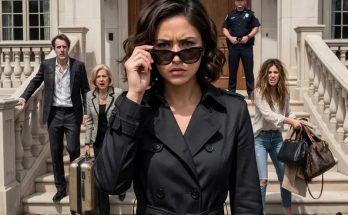
My Sister’s “Prank” During Our Family Ski Trip Sent Me To The ER. Dad Leaned Over My Hospital Bed And Said, “We’ll Handle This At Home. Keep Quiet—Don’t Destroy Your Sister’s Future.” I Didn’t Argue. But A Resort Employee Found My Sister’s Action Camera In The Snow. The Recording Showed Her Tampering With My Snowboard Bindings, Then Laughing About What Would Happen. When A Deputy Arrived With The Camera, My Parents Turned Pale. She Started Begging For Mercy.
### Part 1
The first thing my father asked after I woke from emergency surgery was not whether I could move my fingers.
He did not ask whether the surgeon had saved my knee, whether I could breathe without pain, or whether I remembered hitting the snow.
He leaned over the rail of my hospital bed until I could smell wintergreen gum on his breath and said, very quietly, “You understand how much Lauren has to lose, right?”
My name is Tessa Reed. I was twenty-six years old, my left wrist was wrapped in layers of white bandage, three ribs were fractured, and my knee was locked inside a rigid brace that made the entire lower half of my body feel borrowed.
For several seconds, I thought the anesthesia had scrambled his words.
“What?”
Dad glanced toward the door.
“We’ll handle this at home. Don’t make accusations while you’re confused. Don’t destroy your sister’s future over an accident.”
Across the room, my mother stood beside the window with one hand pressed to her mouth. Snow was falling beyond the glass, soft and almost beautiful against the black Colorado sky.
Lauren sat in a vinyl chair near the wall.
My older sister looked devastated.
Perfectly devastated.
Her blond hair was pulled into a loose ponytail. Her eyes were swollen. Her hands were clasped tightly in her lap. Anyone walking into that room would have seen a terrified sister keeping vigil after a terrible accident.
I saw something different.
I remembered her kneeling beside my snowboard that morning.
I remembered the small tool in her hand.
I remembered her saying, “Your front binding angle is wrong. Let me fix it.”
Then I remembered the mountain.
My board turning one direction.
My body going another.
Trees rushing sideways.
My wrist striking packed snow with a sound I felt more than heard.
Then nothing.
“I felt the binding move,” I whispered.
Dad’s expression hardened.
“You had a concussion.”
“Lauren adjusted it.”
Mom turned from the window. “Honey, she was helping.”
Lauren lifted her face.
“Tess, I barely changed anything.”
My younger brother, Owen, stood near the foot of the bed, staring at the floor.
That bothered me.
Owen always looked at people when they spoke.
Dad lowered his voice again. “A mechanical failure is not sabotage.”
“I didn’t say sabotage.”
“No, but I know where this is going.”
That sentence chilled me more than the room.
How could he know where it was going unless he had already considered the possibility himself?
I tried to sit higher. Pain tightened around my ribs like wire.
Lauren immediately stood.
“Don’t move.”
Her concern sounded real enough that, for one weak second, I hated myself for suspecting her.
Then I noticed something.
She wasn’t wearing the black action camera that had been mounted to her helmet all morning.
“Where’s your camera?”
Lauren stopped.
Mom answered too quickly.
“The battery died. She left it at the condo.”
I looked at Lauren.
She nodded.
“Yeah.”
But I could see the lift line again in my mind: Lauren tapping the camera mounted above her forehead and joking that she was going to record our “sister race.”
A tiny red light had been blinking.
Or had it?
My memories came in flashes, blurred around the edges by medication and exhaustion.
Maybe Dad was right.
Maybe I was confused.
Maybe grief, pain, and anesthesia had stitched separate moments together into something sinister.
That was the most frightening part.
I was beginning to doubt the memory inside my own body.
Dad must have seen it happening because his shoulders relaxed.
“Rest,” he said. “We’ll talk when you’re thinking clearly.”
He walked toward the door.
Then it opened before he reached it.
A uniformed county deputy entered carrying a clear evidence bag.
Inside was a small black action camera.
Lauren made a sound like she had forgotten how to breathe.
The deputy looked at me.
“Ms. Reed? This was recovered near the location of your accident. The memory card is intact.”
Nobody spoke.
He continued.
“The recording appears to have started before your fall.”
My father’s face lost its color.
Lauren stepped toward my bed, grabbed the edge of my blanket, and whispered, “Tessa, please.”
Not I’m sorry.
Not I didn’t mean it.
Just please.
And suddenly I understood something that made the pain in my ribs feel insignificant.
My sister wasn’t afraid that I would misunderstand a prank.
She was afraid the camera would show exactly what she had done.
### Part 2
Thirty-six hours before that camera came through my hospital door, we had been driving west from Denver for our annual family ski weekend.
The highway cut through snow-covered mountains while my mother, Diane, passed around protein bars and reminded everyone that our dinner reservation was at seven sharp.
Mom sold luxury homes and treated family vacations the way she staged properties.
Nothing could look messy.
Not the luggage.
Not the photographs.
Not us.
Dad, Grant Reed, was an attorney who had spent most of my childhood explaining that reputation was a form of currency.
Lauren had apparently inherited both lessons.
At twenty-nine, my sister was halfway through an MBA program and already spoke about her future career as though the press release had been written.
Dad encouraged it.
At restaurants, he introduced her to strangers as “our future consultant.”
When Lauren received an interview, Dad called it evidence of ambition.
When I received one, he usually asked who had recommended me.
I worked as an operations analyst for a regional outdoor retailer and took MBA classes at night. I liked practical problems—inventory bottlenecks, staffing gaps, costs people ignored because fixing them wasn’t glamorous.
I also liked that my job belonged entirely to me.
No Reed family introductions.
No favors.
No polished speeches from Dad.
Then I applied for a paid summer fellowship with Summit Crest Advisory, a hospitality consulting firm expanding its mountain-property division.
I told nobody.
The fellowship offered only one Denver placement.
I knew Lauren had applied too.
She didn’t know I had.
At least, not until we were checking into our condo in Beaver Creek.
My phone rang while Mom was arranging everyone’s coats for a photograph.
I stepped toward the hallway.
“Hello?”
The recruiter confirmed that I had reached the final interview.
Monday morning.
My stomach flipped.
I thanked her, hung up, and turned.
Lauren was standing behind me.
“Final interview for what?”
There was no point lying.
“Summit Crest.”
Her smile didn’t disappear.
It just stopped reaching her eyes.
“You applied?”
“Yeah.”
“But the Denver fellowship?”
“That’s the one.”
Dad heard us and walked over.
For a second, I expected congratulations.
Instead he said, “Interesting.”
That single word told me everything.
Lauren had been preparing for the same interview for weeks. Dad had introduced her to one of the firm’s senior partners. Mom had already talked about the apartment Lauren might rent downtown if she got the position.
My application had entered their carefully arranged picture like a stain.
At dinner, Dad raised his glass.
“To Lauren. Summit Crest needs people with executive presence.”
Owen leaned back in his chair.
“Tessa’s interviewing too.”
Silence.
Even the clinking silverware from neighboring tables seemed louder.
Lauren recovered first.
She lifted her wineglass toward me.
“Then may the best sister win.”
Mom laughed.
Dad didn’t raise his glass.
Later that night, Lauren knocked on my bedroom door.
She entered wearing flannel pajamas and the friendly expression she used whenever she wanted something to sound reasonable.
“This fellowship matters more to me,” she said.
I stared at her.
“Excuse me?”
“You already have a full-time job.”
“So?”
“So this is my entry into consulting.”
“And it’s an opportunity for me too.”
She crossed her arms.
“Dad already introduced me to someone there.”
“A referral isn’t ownership.”
Her jaw tightened.
“You know what I mean.”
“No. I don’t.”
She paced once toward the window.
Then she turned.
“You always do this.”
I almost laughed.
“Do what?”
“You wait until I’ve worked for something, then suddenly appear with this quiet underdog act.”
That hurt more than I wanted it to.
For years, I had edited her presentations, solved technical problems for her, and stayed out of competitions she cared about because Mom said sisters shouldn’t make each other feel threatened.
Apparently my existence became offensive the moment I stopped shrinking.
“The interview will decide,” I said.
Lauren stared at me.
For one second, the pleasant mask vanished.
Then she smiled.
“Sure.”
The next morning, she brought me coffee.
That should have frightened me.
Instead, I mistook it for peace.
### Part 3
Lauren acted completely normal at breakfast.
That was her greatest talent.
She could fight with you at midnight and offer you half her blueberry muffin at seven as though nothing had happened.
“Blue run first?” she asked.
I looked up.
“Just us?”
“Sister warm-up. Then we meet everyone.”
Owen glanced between us.
“You two suddenly friends again?”
Lauren tossed a napkin at him.
“Don’t ruin the miracle.”
Everyone laughed.
Even me.
Outside, morning light reflected off the snow so brightly that I had to squint behind my goggles. The air smelled like cold metal and pine. Boards scraped over concrete near the lodge entrance while music thumped from outdoor speakers.
Lauren wore her action camera on top of her helmet.
She tapped it.
“Family documentary.”
“Delete anything embarrassing.”
“No promises.”
I sat on a bench and tightened my boots.
Lauren crouched beside my snowboard.
“Wait.”
“What?”
She pressed my front binding.
“Your angle looks weird.”
I leaned forward.
“It was fine yesterday.”
“You’ll feel it in your knee.”
Lauren had snowboarded longer than I had. She knew equipment better, or at least I believed she did.
She pulled a small multitool from her jacket.
“I’ll move it a couple degrees.”
“Don’t mess it up.”
She laughed.
“Trust me.”
Those two words stayed with me for years.
Trust me.
I watched her lift the base plate cover. Her helmet dipped as she worked.
Metal clicked against metal.
She turned the tool several times, pressed down, adjusted something else, then rocked the binding.
“Perfect,” she said.
I flexed the board.
Nothing moved.
“You’ll barely feel a thing.”
We rode the lift together.
Lauren talked about dinner.
I talked about the interview.
She asked whether I was nervous.
“Obviously.”
“What are you presenting?”
“My mountain-property waste case.”
“The one from your application?”
“Yeah.”
She stared ahead.
Two weeks earlier, the external drive containing that project had mysteriously become corrupted after Lauren borrowed it.
She had needed to transfer “one tiny file.”
When I got the drive back, my case-study folder wouldn’t open.
Lauren called it bad luck.
Dad bought me another drive.
Mom told me to keep better backups.
Nobody asked why Lauren had accessed a folder she claimed she never touched.
I rebuilt the project from old email drafts and submitted it minutes before the deadline.
At the time, I forced myself to call it coincidence.
Sitting beside her on that chairlift, I almost asked again.
Instead I said, “I think the final interview will be mostly behavioral questions.”
Lauren smiled.
“I’m sure you’ll do fine.”
At the top, she pushed off first.
I followed.
The first few turns felt normal.
Snow hissed beneath my board.
Wind slid under the edge of my jacket.
Lauren carved wide arcs twenty or thirty feet ahead of me, occasionally glancing back.
Then, on my third hard turn, something shifted beneath my front foot.
Not much.
Just a soft lateral movement.
I straightened.
The board responded normally again.
I told myself Lauren had changed the angle.
Next turn.
The movement returned.
My knee rotated slightly inward.
Fear hit before pain did.
I tried to slow down.
The trail curved beside a stand of trees.
I leaned onto my heel edge.
The binding twisted.
My boot remained strapped in, but the entire plate turned against the snowboard.
My shoulders faced left.
The board pointed downhill.
For one impossible second, my body and equipment seemed to disagree about which direction I existed in.
Then the edge caught.
My wrist hit first.
My ribs slammed into packed snow.
My knee folded under me.
I slid toward the trees and struck a boundary marker hard enough to drive every breath out of my chest.
I remember lying there unable to inhale.
Someone shouted uphill.
Skis scraped.
Then Lauren appeared.
She dropped beside me.
Her face was pale.
But before she touched my shoulder, before she checked my breathing, before she called for patrol, she looked directly at my front binding.
And pressed the base plate cover down with her gloved hand.
I tried to speak.
“Don’t…”
Nothing came out except air.
Lauren looked into my eyes.
For half a second, neither of us moved.
Then she screamed for help.
### Part 4
By the time ski patrol arrived, Lauren had a story ready.
“She caught an edge.”
The patroller knelt beside me.
“Did she hit anything?”
“A marker. We were racing.”
We weren’t racing.
I wanted to say it.
My lungs refused.
Lauren kept talking.
“I told her to slow down.”
That had never happened either.
The rescue sled carried me down while the sky bounced in and out of view above me.
At the base clinic, Dad repeated Lauren’s version before anyone asked him.
“Tessa gets competitive around her sister.”
Mom added, “Especially when she feels overshadowed.”
I lay on an exam table listening to my own family turn my shattered body into proof of a personality flaw.
The clinic found the fractures.
The hospital found everything else.
My wrist required surgery. My knee needed reconstruction after the swelling decreased. The doctor warned me recovery would take months.
The fellowship interview was Monday.
That realization made me cry harder than the pain.
Not because the job mattered more than my body.
Because Lauren had wanted me to miss it.
And now I would.
When I woke after surgery, I asked about her camera.
Mom said the battery had died before our run.
Lauren later claimed I had adjusted my own binding the night before.
Dad told the deputy taking the accident report that I’d been desperate to prove myself.
Mom said anesthesia was confusing me.
Then Dad gave me his instruction.
“Keep quiet.”
For hours afterward, I lay awake listening to my monitor beep.
Maybe they were right.
That was the poison of having four people agree against you.
They didn’t need to prove anything.
They only needed to sound certain longer than I could.
The following afternoon, my phone rang from a local number.
“Tessa Reed?”
“Yes.”
“My name is Marisol Vega. I’m with resort risk management.”
My pulse jumped.
She explained that an employee had found an action camera partly buried near the side of the run where I had been treated.
A lost-property sticker matched our family reservation.
Security had transferred the camera to the sheriff’s office.
“The memory card appears intact,” she said.
I gripped the phone.
“Did you watch it?”
“I can’t discuss the contents. A deputy will contact you.”
“Was it recording?”
There was a pause.
“It contains footage from the morning of your accident.”
My mouth went dry.
After we hung up, I felt relief for about three seconds.
Then terror replaced it.
What if the recording proved Lauren innocent?
What if it showed her making an ordinary adjustment?
What if my fall really had been my fault?
Owen came in carrying my charger.
When I told him about the camera, he stopped halfway across the room.
“What’s wrong?”
He set the charger down.
“Tess… Lauren went back to the mountain.”
“When?”
“While you were in surgery.”
My skin prickled.
“Why?”
“She said she’d dropped a glove.”
He hesitated.
“But she asked patrol if anyone found a little black camera.”
I stared at him.
“Mom told me the camera was at the condo.”
Owen looked sick.
“She told me the battery was dead and nothing was on it.”
Neither of us spoke.
Then he said something else.
“I saw her working on your binding at the lodge.”
“You did?”
“I thought she was helping.”
“So did I.”
That sentence broke something between us—not trust, but innocence.
Owen photographed my snowboard after learning resort security had sealed it in storage. He saved his messages with Lauren. Then he sent everything to the deputy.
For the first time, someone in my family preserved evidence instead of explaining it away.
That night Lauren returned with wet cuffs on her ski pants.
“I helped patrol look for your phone,” she said.
My phone was lying on my blanket.
She saw it.
Stopped.
Then looked at Dad.
Dad immediately asked whether I wanted soup.
That tiny silence told me more than all their speeches had.
The next morning, someone knocked.
Deputy Aaron Pike entered with Marisol and a digital-evidence technician.
Dad stood.
“I’m her father and an attorney.”
The deputy looked at me.
“We need to discuss what was recovered.”
Dad stepped between us.
“She’s medicated.”
I heard myself say, “I’m available.”
Lauren’s head snapped toward me.
The deputy placed a laptop on my tray table.
And for the first time since the accident, my sister looked genuinely afraid.
### Part 5
Deputy Pike explained that the original memory card had been preserved and the file timestamps showed no breaks or alterations.
My father immediately began asking procedural questions.
The deputy held up one hand.
“Mr. Reed, right now I’m speaking to Tessa.”
Dad wasn’t used to that sentence.
Lauren stood near the door with Mom holding her wrist.
The first clip began.
The camera angle moved through the lodge because it had been mounted on Lauren’s helmet.
I saw myself sitting on the bench.
I watched myself tighten both bindings.
I pressed each plate.
Checked the straps.
Then walked away to buy coffee.
Twelve minutes passed.
Lauren returned alone.
The camera tilted toward my snowboard.
Nobody in the hospital room breathed normally after that.
On-screen, Lauren removed one glove.
She opened my front binding cover.
She pulled the multitool from her pocket.
Then she began turning the mounting screws.
Counterclockwise.
Slowly.
Carefully.
This wasn’t someone making a casual angle adjustment.
She worked in a pattern.
Turn.
Pause.
Press.
Turn.
Rock the binding.
She tested the plate until it moved beneath her hand.
Then she laughed softly.
I felt every hair on my arms rise.
Her recorded voice came through the laptop speakers.
“Let’s see her make that interview with one leg.”
Mom gasped.
Lauren whispered, “Oh my God.”
The video continued.
A resort employee walked behind her.
Lauren immediately pretended to tighten one of my straps.
When he disappeared, she returned to the screws.
“It only has to fail once,” she murmured.
My father lowered his head.
The next part was worse.
The chairlift.
My voice.
“Thanks for helping with the binding.”
Lauren laughed.
“That’s what sisters are for.”
I stared at her across the hospital room.
She began crying before the crash footage even started.
The image shook as she rode behind me.
Then I saw my board twist.
My body snapped sideways.
The camera swung wildly as Lauren stopped.
She rushed toward me.
I saw the snow.
My board.
My own body lying near the trail marker.
Lauren’s breathing came fast through the microphone.
Then her helmet dipped toward my binding.
Her hand reached out.
She pressed the cover into place.
Exactly as I remembered.
The camera tore loose sometime afterward and landed in the snow, lens tilted upward.
The final audio captured Lauren speaking to a patroller.
“Can loose equipment get thrown away? It might confuse the report.”
The screen went dark.
Nobody spoke.
The machine beside my bed beeped steadily.
Lauren finally said, “It was a prank.”
Her voice sounded strangely calm.
Maybe because calling it a prank was the last available door through which she could escape.
“I wasn’t trying to hurt her like this.”
Deputy Pike looked at her.
“What were you trying to do?”
“I wanted her to miss the interview.”
“By sending her down a mountain on equipment you deliberately loosened?”
“I thought she’d notice.”
“You tested it so it wouldn’t move under light pressure.”
Lauren looked at Dad.
“Dad.”
He reached for his phone.
“I’m calling counsel.”
The deputy nodded.
“You may arrange an attorney for your daughter. You may not answer questions for Ms. Reed.”
Dad’s face reddened.
“This family will cover all medical expenses. There is no reason to turn a stupid sibling rivalry into—”
“Grant.”
Mom said his name softly.
He stopped.
Deputy Pike’s expression did not change.
“This is no longer a private family matter.”
Lauren rushed toward my bed.
“Tessa, please listen.”
I didn’t move.
She grabbed the rail instead.
“Summit Crest is my only real shot. I have loans. I have two years invested in this program. I made one horrible decision.”
I looked down at my wrist.
Then at the massive brace holding my knee still.
“You made several.”
Her face collapsed.
“I would never really hurt you.”
The words came out before I had time to soften them.
“You already did.”
Mom started crying.
“She was under so much pressure.”
Something inside me finally snapped.
Not violently.
Cleanly.
I looked at Mom.
“Then why did you lie?”
She froze.
I turned to Dad.
“Why did you tell the deputy I ignored Lauren’s warning when there wasn’t one?”
No answer.
“Why did you tell me to stay quiet before anyone had examined the board?”
Dad’s jaw tightened.
“Tessa, you’re emotional.”
“No. I’m finished.”
Deputy Pike asked whether I wanted to provide a formal statement.
Lauren dropped to her knees beside the bed.
“Tess.”
Mom whispered my name like a warning.
Dad stared at me like I was about to betray the family.
That was when I understood how backward everything had become.
Lauren had sabotaged my equipment.
They had lied.
But somehow telling the truth was the betrayal.
I looked at Deputy Pike.
“Yes. I want my statement recorded.”
Then I pointed toward the door.
“And I want them out of my room.”
### Part 6
Hospital security escorted my parents and Lauren into the hallway.
Owen stayed.
Through the glass panel in the door, I watched Lauren grab Dad’s coat and beg him to “fix this.”
For most of her life, that phrase had worked.
Fix my grade.
Fix my internship problem.
Fix the professor who doesn’t understand me.
Fix the recruiter who didn’t call.
Dad had built his identity around opening doors for Lauren.
Now the door in front of him belonged to the criminal justice system.
And this one did not care about his business card.
My statement took almost an hour.
I told Deputy Pike about the corrupted drive.
Lauren asking me to withdraw from the fellowship.
Her offer to adjust my binding.
The movement under my boot.
Her hand pressing the plate after I crashed.
The contradictory stories about the camera.
Dad’s warning.
Mom calling me confused.
A nurse stepped into the doorway while I was speaking.
“I heard some of that conversation last night,” she said.
Dad, standing outside, immediately turned.
The nurse continued.
“I heard Mr. Reed tell her an accusation would destroy her sister’s future.”
Deputy Pike wrote it down.
That was when Dad stopped looking angry and began looking careful.
The investigation widened quickly.
An independent equipment specialist examined my snowboard and found tool marks consistent with deliberate loosening.
Resort security footage showed Lauren returning to the mountain while I was in surgery.
Owen preserved texts in which she asked whether anyone had found her camera, despite telling everyone the battery had died.
Then Summit Crest produced something none of us expected.
Emails.
Only hours after my crash, Lauren had contacted the fellowship coordinator.
She expressed concern for my recovery.
Then asked whether my inability to attend Monday’s interview meant the Denver placement would automatically pass to the remaining finalist.
When Deputy Pike told me, I felt strangely calm.
That email changed everything for me.
Until then, some tiny injured part of my mind still wanted to believe Lauren had acted impulsively and panicked afterward.
But she had been thinking about the fellowship while I was being prepared for surgery.
She searched for the camera before asking whether I was awake.
That wasn’t panic.
It was priority.
The criminal process dragged on for months.
Lauren’s attorney argued that she had intended to inconvenience me, not cause catastrophic injury.
The prosecutor pointed to her own words.
“It only has to fail once.”
Eventually, Lauren pleaded guilty to serious felony charges related to the assault and her effort to conceal evidence.
At sentencing, she stood in front of the judge wearing a plain navy suit.
I barely recognized her without the polished confidence she had worn like perfume all our lives.
She read from a prepared statement.
She talked about academic pressure.
Student debt.
Our father’s expectations.
Sibling rivalry.
The judge interrupted her.
“None of those circumstances placed a tool in your hand.”
Lauren went silent.
When it was my turn, I did not ask for revenge.
I said, “Please don’t reduce what happened to a sibling mistake. A mistake is forgetting to tighten something. She loosened it intentionally and sent me down the mountain.”
Lauren cried.
I didn’t look at her again.
She received a prison sentence followed by strict supervision and restitution obligations.
Her university first suspended her, then expelled her after the plea.
Summit Crest removed her application.
Other offers disappeared after background checks.
Later, after leaving custody for a supervised reentry program, she took overnight work at a commercial laundry serving hotels.
There was nothing shameful about the job.
The consequence was not that Lauren had to work with her hands.
The consequence was that she finally lived in a world where our parents could not purchase an exception.
But the person whose fall shocked me most wasn’t Lauren.
It was Dad.
Because investigators had begun examining what he did after my crash.
And this time, there was no helmet camera for him to blame.
There were witnesses, messages, and his own words.
### Part 7
Dad had spent his career telling clients never to create unnecessary evidence.
Apparently panic made him forget his own advice.
After the hospital confrontation, investigators recovered messages he had sent Owen.
“Support the accident version.”
“Your sister is confused.”
“Don’t turn one bad morning into a criminal case.”
Owen never replied.
Dad sent more.
At one point, he told him that tuition assistance depended on “family loyalty.”
That message cost him more than he could have imagined.
The district attorney pursued charges connected to attempted witness influence.
Dad avoided jail through a plea agreement, probation, and community service, but professional consequences arrived anyway.
His firm placed him on leave.
Clients requested different counsel.
A regulatory investigation followed.
Eventually he resigned before his partners could decide his future for him.
His law license was suspended.
The irony wasn’t subtle.
The man who had leaned over my hospital bed and warned me not to destroy Lauren’s future destroyed his own credibility trying to protect her.
Mom insisted she was different.
For a while, I almost believed her.
“I didn’t know Lauren had loosened the screws,” she kept saying.
That was true.
But she had known something was wrong.
She had told the first deputy that I adjusted the binding myself even though she never saw me do it.
She called me confused.
She repeated Dad’s story about me racing Lauren.
She told me the camera was at the condo.
Eventually, Mom admitted Lauren had called her from the mountain while I was being transported.
Lauren said the camera was missing.
Mom agreed not to mention it.
That ended Mom’s favorite defense: “I was just a scared mother.”
Fear explained why her voice shook.
It did not explain why every lie protected Lauren.
Her real-estate brokerage terminated her contract after the legal proceedings became public.
Several clients removed expensive listings.
The charity board she chaired asked her to resign.
For someone who had spent twenty years arranging every family photograph to look effortless, public disgrace was almost physically painful.
She blamed me.
Of course she did.
So did Dad.
Their savings disappeared into legal fees, medical expenses, restitution, and eventually a civil settlement.
They sold the Beaver Creek condo.
Mom called me crying after the sale.
“That place held every good family memory we had.”
I sat in my apartment with my knee elevated on a stack of pillows.
“No,” I said. “It held pictures of them.”
She went silent.
There is a difference.
Owen paid heavily too, but for different reasons.
Three weeks after the camera surfaced, Dad demanded he change his statement.
Owen refused.
Dad cut off tuition support.
So Owen moved in with an EMT classmate’s family, worked overnight shifts, and finished his training with help from a county grant.
Watching my younger brother lose financial security because he told the truth taught me something important.
The cover-up had never been about family unity.
It was about obedience.
The person who obeyed was protected.
The person who didn’t became the problem.
Meanwhile, I was learning to walk again.
First wheelchair.
Then crutches.
Then a brace.
Physical therapy was humiliating in small, ordinary ways.
Sweating because I bent my knee another few degrees.
Celebrating one unsupported step.
Standing in a grocery aisle and realizing I couldn’t carry milk while using crutches.
At night, I dreamed about the binding twisting.
But the worst part of the dream was never the crash.
It was everyone standing over me afterward saying it hadn’t happened.
Summit Crest offered to postpone my final interview.
I nearly declined.
Every time I saw the company’s name, I thought of Lauren.
My physical therapist finally asked me, “Do you actually not want the fellowship?”
“I don’t know.”
“Or do you not want anything connected to what happened?”
That question followed me home.
Six weeks after my second surgery, I opened my laptop.
Put on a clean blouse.
Positioned my brace beneath the desk.
And logged into the rescheduled interview.
Lauren had nearly taken away my ability to walk.
I decided she was not taking Monday morning too.
### Part 8
I presented the same case study Lauren had once helped corrupt.
I didn’t mention her.
I didn’t mention the criminal case.
I didn’t need sympathy.
For forty-five minutes, I talked about staffing inefficiencies, supply waste, maintenance scheduling, and how mountain properties could reduce operating losses without destroying guest experience.
Normal problems.
Solvable problems.
I had almost forgotten how comforting those were.
Three days later, Summit Crest called.
They offered me the fellowship.
I cried after hanging up.
Not because I had beaten Lauren.
That idea no longer mattered.
I cried because I had spent my childhood believing there was only enough success for one daughter.
Lauren believed it too.
That belief had grown inside our family until she decided my opportunity was something stolen from her.
The fellowship later became a full-time operations strategy role after graduation.
My parents heard through relatives.
Dad sent an email.
“We’re proud of you despite everything.”
I deleted it.
Mom sent flowers to my office.
The card said, “Someday you’ll understand that parents sometimes make terrible choices trying to save their children.”
I threw the card away and gave the flowers to the receptionist.
They kept describing consequences as things I had done to them.
I stopped correcting them.
Lauren chose the tool.
Dad chose the pressure.
Mom chose the lies.
Owen chose the truth.
I chose my statement.
Everything after that belonged to the institutions and people who finally refused to pretend those decisions were equal.
Three years after the crash, I could walk without a brace.
Cold weather still tightened my knee.
A pale scar crossed my wrist.
I stayed at Summit Crest and moved into work designing safety and incident-reporting systems for mountain properties.
There was something satisfying about helping create processes that made it harder for powerful people to rewrite accidents after they happened.
Owen became a paramedic.
He rebuilt his relationship with me long before he spoke to our parents again.
We had Thanksgiving together the first year after sentencing.
Just the two of us and some friends.
No matching sweaters.
No staged photographs.
No instructions about what not to mention at dinner.
Lauren sent her first letter from the reentry program eleven months after sentencing.
The envelope said:
I hope you’re ready to help us both move on.
I returned it unopened.
A year later, another letter arrived through a therapist managing limited family communication.
This one was different.
Lauren finally wrote what she had done without hiding behind pressure.
She admitted she had wanted me removed from the interview because she believed my success diminished hers.
She admitted that after the crash, she searched for her camera before asking a nurse whether I had woken up.
That sentence hurt more than anything else in the letter.
I read it three times.
Then I put it down.
People sometimes assume accountability automatically produces forgiveness.
It doesn’t.
An apology can be sincere and still arrive after the relationship it might have saved has died.
I allowed Lauren one monitored email every few months.
That was all.
No visits.
No holidays.
No promise of reconciliation.
When one message drifted into self-pity, I stopped responding for six months.
She eventually learned the boundary.
My parents never did.
Dad regained limited professional privileges and immediately proposed a “family healing meeting.”
The invitation described the ski incident as “the tragedy that happened to all of us.”
I declined.
Something does not happen equally to the person whose body is broken and the people who break it, hide it, then suffer consequences when exposed.
Mom called afterward.
“How long are you going to punish us?”
I looked out my apartment window.
It was snowing.
For years, snow had made my chest tighten.
That evening, it didn’t.
“I’m not punishing you,” I said. “I’m simply not coming back.”
She started crying.
“Tessa, we’re your parents.”
“I know.”
“Doesn’t that mean anything?”
“It used to mean I believed you’d protect me.”
She had no answer.
Neither did I.
So I ended the call.
And for the first time, silence didn’t feel like something my family had forced on me.
It felt like peace.
### Part 9
The first Thanksgiving I truly enjoyed happened four years after the crash.
Owen arrived early carrying two pies and complaining that one of them had slid sideways in his car.
Marisol Vega, the resort risk manager who had first called me about the camera, brought wine.
Two friends from physical therapy came.
So did the family who had given Owen a room after Dad cut him off.
Nobody cared that the plates didn’t match.
Nobody rearranged chairs for a photograph.
Nobody whispered, “Don’t bring that up tonight.”
At one point, Owen looked around the table and laughed.
“Mom would hate this centerpiece.”
The centerpiece was three grocery-store candles surrounded by pinecones he’d grabbed from outside.
“That’s why I love it,” I said.
We laughed until my ribs hurt.
Not the old pain.
Just normal laughter.
Later that night, after everyone left, I found myself standing by the window.
Snow covered the roofs below.
For a long time, I had thought Lauren’s camera saved me.
In the most practical sense, it did.
Without that recording, the investigation might have become an argument about memory.
My injured, medicated memory against Lauren’s confidence, Dad’s authority, and Mom’s polished certainty.
But the camera did something more important than prove what happened.
It forced me to hear my own instincts again.
When Lauren touched my snowboard, something had felt wrong.
When Dad told me to stay quiet, something had felt wrong.
When Mom explained my own memory back to me, something had felt wrong.
My biggest mistake wasn’t trusting Lauren with the binding.
It was believing that people who loved me had more authority over my reality than I did.
Lauren eventually finished her supervision.
She found steady work.
According to Owen, she lived quietly and stayed out of trouble.
I was glad.
Not because I wanted her back.
Because accountability should leave room for someone to build a better life.
It does not require the person they hurt to participate in it.
People confused those ideas constantly.
“She’s changed.”
“She’s paid her debt.”
“She’s still your sister.”
All three things could be true.
I still didn’t owe her access to me.
Our monitored emails became less frequent.
Eventually, there were none.
There was no dramatic final fight.
No last insult.
No movie-scene reconciliation.
One day I realized six months had passed without hearing from her.
Then nine.
Then a year.
I felt nothing except relief.
My relationship with my parents ended much the same way.
Dad occasionally sent formal birthday messages.
Mom mailed cards.
I stopped opening them.
Owen maintained limited contact with them, and I never asked him to choose.
That was another lesson I refused to inherit from my family.
Love did not require loyalty tests.
My own life became wonderfully ordinary.
I advanced at work.
I bought a small townhouse outside Denver.
I learned to hike again.
Eventually, I returned to the mountains.
Not to snowboard.
Not at first.
I spent an afternoon walking near a lodge while boards scraped across snow and chairlift cables hummed overhead.
My knee ached in the cold.
For a moment, I smelled pine and machine oil, and I was twenty-six again, staring at trees coming toward me.
Then the feeling passed.
The mountain hadn’t betrayed me.
Lauren had.
The distinction mattered.
Two winters later, I took a beginner snowboarding lesson.
The instructor was younger than me and endlessly patient.
I checked my own bindings three times.
He noticed.
“Want me to check those?”
I almost said no.
Then I handed him the board.
“Check them with me.”
Together, we inspected every screw.
Every plate.
Every strap.
Trust, I had learned, did not mean closing your eyes.
It meant being allowed to keep them open.
At the top of the easiest run, my heart hammered.
I looked down the slope.
White snow.
Blue sky.
Families shouting.
A child falling ten feet away and immediately laughing.
Nothing dramatic.
Nothing waiting for me.
I pushed forward.
My first turn was ugly.
My second was worse.
By the third, I was laughing.
At the bottom, I sat in the snow and looked back uphill.
Years earlier, Lauren had whispered into her own camera that my equipment only had to fail once.
She was right about one thing.
Some things only have to fail once.
A binding.
A lie.
A family’s claim to your trust.
What she never understood was that failure did not have to be the end of me.
She lost the future she had tried to protect by hurting me.
My father lost the authority he believed could silence consequences.
My mother lost the perfect family picture she had spent decades arranging.
I lost something too.
I lost the belief that being related to someone meant I had to keep giving them opportunities to hurt me.
I never got that belief back.
I don’t want it back.
As I stood at the bottom of the mountain, I brushed snow from my gloves and felt the scar beneath my sleeve.
Then I looked toward the lift and got in line for another run.
The camera had spoken once when nobody wanted to believe me.
After that, I learned to speak for myself.
THE END!