### Part 1
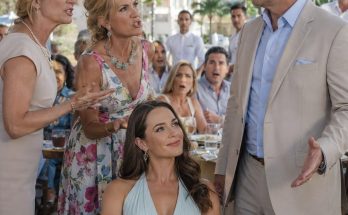
My aunt Vanessa slammed her palm against the table hard enough to make three wineglasses jump.
“You’re not blood, Evelyn. You don’t belong in this family.”
The private dining room went so quiet I could hear silverware clattering in the restaurant kitchen beyond the swinging doors.
Grandma Eleanor’s eightieth birthday cake sat untouched on a side table, eighty little candles arranged in neat rows beside blue frosting roses. My father, Daniel Hart, stopped halfway through reaching for his water. My mother, Melissa, stared at Vanessa with the expression people wear when they know a car is about to crash but can’t get out of the road.
And me?
I reached into my purse.
I’d been carrying two folded pages around for three weeks.
They’d gone to work with me, ridden beside a bag of groceries, survived a terrible coffee date, and sat inside my glove compartment during two thunderstorms.
I’d imagined showing them to my mother.
I’d imagined showing them to Dad.
I’d imagined burning them.
I had never imagined sliding them across a white tablecloth while my grandmother’s birthday dinner died around us.
“You’re right about one thing,” I said.
Vanessa’s mouth curled slightly.
I pulled out the first page.
“I took a DNA test.”
Dad looked at me.
“Evelyn?”
I couldn’t look at him yet.
I pushed the paper toward Vanessa.
“The results came back three weeks ago.”
She grabbed it.
Her eyes moved quickly down the page.
Then she laughed.
It wasn’t a happy laugh. It was a sharp little breath of victory, like she’d just found a receipt proving she’d been overcharged after arguing with the cashier for twenty minutes.
“There,” she said, holding up the paper. “Finally.”
My cousin Natalie whispered, “Mom, stop.”
Vanessa ignored her.
She looked around the table as though she expected everyone to congratulate her.
“I’ve been saying this for years.”
Page one confirmed the thing Vanessa had spent most of my twenty-nine years suggesting without ever having the courage to say directly.
Daniel Hart was not my biological father.
Zero biological relationship.
Not uncertain.
Not inconclusive.
Zero.
Vanessa put the paper down with enormous satisfaction.
My father finally spoke.
“I don’t care.”
His voice sounded rough.
Vanessa blinked.
Dad reached across the table and took my hand.
“I changed your diapers. I taught you how to ride a bike. I sat outside your bedroom when you had pneumonia because you were scared to sleep. I taught you to drive even though you almost put my truck into Mr. Henderson’s mailbox.”
A few people smiled despite themselves.
Dad squeezed my fingers.
“I walked you into college. I helped move you into your first apartment. I’ve been your father for twenty-nine years.”
He looked at the test.
“That piece of paper got here three weeks ago. I got here twenty-nine years ago.”
Something inside me cracked.
Not painfully.
More like ice breaking on a lake after winter.
Vanessa rolled her eyes.
“That’s sentimental, Daniel, but we’re talking about family.”
“We are,” Dad said.
“No.” Vanessa leaned forward. “We’re talking about blood.”
That word.
Blood.
She had used it my entire life like it was a key to a room I wasn’t allowed inside.
I remembered being eleven at Grandpa’s retirement party when the photographer called all the grandchildren together. Vanessa had moved her two kids toward the center.
“Just scoot in.”
That was what she’d said.
Except somehow I ended up half a step behind everybody else.
In every printed picture, half my shoulder was missing.
Mom framed a different photograph in our hallway.
One where I was fully visible.
She never explained why.
She didn’t have to.
Vanessa tapped the DNA report.
“Some of us have known the truth for a long time.”
I looked at her.
Then I reached for the second page.
“You should probably read this too.”
She took it with considerably less excitement.
At first, her expression didn’t change.
Then she reached the section marked close family match.
Her forehead tightened.
24.3% shared DNA.
Estimated relationship: half uncle.
A profile containing almost no information.
Just one name.
Arthur B.
Vanessa read it twice.
“Who’s Arthur B.?”
Nobody answered.
She looked at Mom.
“Melissa? Do you know some Arthur?”
Mom wasn’t looking at her.
Mom was staring toward the head of the table.
So was I.
Grandma Eleanor had gone completely still.
Her hand reached blindly for her water glass.
Instead of grabbing it, she knocked it over.
Water spread across the tablecloth.
Nobody moved.
Grandma stared at the initials on the page as if they belonged to someone who had just walked through the wall.
And in a voice I barely recognized, she whispered:
“Arthur Bell.”
That was when I realized the DNA test wasn’t only about me.
Whatever I’d uncovered had begun fifty years before I was born.
And Grandma was the only person at the table who knew where to start.
### Part 2
For most of my life, being a Hart had felt like wearing somebody else’s winter coat.
It technically fit.
It kept me warm.
But every once in a while, someone would look at me just long enough to remind me they thought I’d borrowed it.
I was an only child. Dad never treated me like anything else.
He coached my soccer team when he knew nothing about soccer, stayed up until two in the morning building a volcano for my fifth-grade science fair, and cried so hard at my college graduation that Mom had to give him tissues from her purse.
Vanessa was different.
She was Dad’s older sister and Grandma Eleanor’s first child, and she treated being a Hart like membership in a private club.
She controlled family holidays with military precision.
Who brought what.
Who sat where.
Who slept in which bedroom.
Who appeared in photographs.
Who received a birthday post online and who got a private text two days late.
She never openly called me illegitimate.
She was too careful for that.
Instead she’d say things like, “Evelyn doesn’t really have the Hart nose.”
Or, “Genetics are funny, aren’t they?”
Or my personal favorite, delivered at a cousin’s baby shower while everyone ate cupcakes:
“Depends which side you’re asking about.”
People laughed half a second too late.
That half second followed me home.
I sat in my car in my driveway for nearly twenty minutes that afternoon, hands still around the steering wheel, staring at my porch light flickering above the door.
Inside, my cat, Pickles, was probably screaming because dinner was fourteen minutes late.
I couldn’t make myself move.
That night I called my friend Maya.
She’d known me since college and had heard every Vanessa story at least twice.
“Take the test,” she said.
“I didn’t say I wanted to.”
“You called me at eleven-thirty on a Tuesday because your aunt made another comment about your father.”
“Fair.”
Maya was quiet.
Then she asked something more useful.
“What would you do if you knew?”
I didn’t answer.
Because that was the problem.
I wanted the truth without wanting any of the consequences that came attached to it.
Two days later, I ordered the test anyway.
I did it alone at my bathroom sink beneath fluorescent lighting that made everybody look guilty.
I mailed it the next morning.
Then I almost forgot about it.
Almost.
The results arrived nineteen days later.
I opened the email at my kitchen table while Pickles slept against my thigh and the dishwasher rattled through its final cycle.
Page one loaded first.
I stood up before I finished reading.
Daniel Hart: no biological relationship.
I read the sentence once.
Twice.
Five times.
Then I closed the laptop.
I didn’t cry until Pickles woke up, stretched, and climbed into my lap.
That stupid ordinary movement destroyed me.
Because suddenly I was thinking about Dad sitting cross-legged on my apartment floor assembling a bookshelf when I was twenty-two.
Dad driving three hours because my first car wouldn’t start.
Dad calling every Sunday morning even when we had nothing to talk about.
And Vanessa.
Vanessa had been right.
At least about that.
For four days, I told nobody.
Then I told my therapist, Dr. Lena Whitaker.
Her office smelled faintly like peppermint tea. A white-noise machine hummed outside the door.
She listened without interrupting.
Finally she asked, “What frightens you most?”
“That everyone will look at me differently.”
“Everyone?”
I knew what she meant.
“Dad won’t.”
“How do you know?”
I stared at the carpet.
“Because he’s Dad.”
Dr. Whitaker nodded.
“Then perhaps the test answers a biological question without answering the most important one.”
I wanted that sentence to fix everything.
It didn’t.
For another week, I avoided page two.
I thought I’d already received the only surprise that mattered.
Then one Thursday night I opened the report again.
I scrolled.
And there it was.
Close family match.
24.3%.
Arthur B.
Estimated relationship: half uncle.
My first reaction wasn’t curiosity.
It was irritation.
I didn’t know an Arthur.
Nobody in my family had ever mentioned one.
I assumed the testing company had made a mistake.
So I contacted support.
Their answer arrived the next afternoon.
The match was real.
But the relationship label wasn’t necessarily.
At roughly twenty-five percent shared DNA, the person could be a half uncle.
Or a grandparent.
Or a half sibling.
There were several possibilities.
That was when I stopped thinking I’d found an answer.
I’d found another question.
And the first person who helped me investigate it asked me one thing that made the hair rise on my arms.
“Are there any missing years in your family’s history?”
There were.
Exactly two.
### Part 3
Grandma Eleanor kept photographs the way some people keep legal records.
Everything was dated.
Everything was labeled.
Christmas 1989.
Daniel’s tenth birthday.
Vanessa’s school play.
Lake trip, August 1984.
She had shelves of matching leather albums in her living room, each one filled with carefully mounted photographs and handwritten notes in blue ink.
Except for 1974 and 1975.
Those years didn’t exist.
I’d noticed the gap when I was thirteen.
I was helping Grandma reorganize a cabinet when I saw one album end with Thanksgiving 1973.
The next began with spring 1976.
“What happened to these years?” I’d asked.
Grandma had closed the cabinet.
“Nothing worth remembering.”
At thirteen, that sounded mysterious.
At twenty-nine, after discovering Arthur B., it sounded like evidence.
The genetic genealogist I contacted was named Dr. Hannah Mercer.
She had calm eyes, silver-streaked hair, and the unsettling enthusiasm of someone who genuinely enjoyed complicated family secrets.
“The percentages are useful,” she told me over video. “But they’re not labels from heaven.”
She drew a family tree on her screen.
“Your mystery match shares about a quarter of your DNA. The software calls him a half uncle because that’s statistically plausible. But a grandparent can produce the same percentage.”
“So how do we know?”
“We build the tree.”
I gave her everything.
Grandma’s maiden name.
Dad’s birthday.
Vanessa’s birthday.
The city where the family had lived for decades.
Then I mentioned the missing albums.
Dr. Mercer stopped typing.
“Two years?”
“About that.”
“People usually keep taking pictures,” she said. “Sometimes they just stop keeping the pictures.”
Two days later, she sent me an old newspaper clipping.
The scan was blurry, gray, and crooked.
But the names were readable.
Arthur Bell, twenty-six, and Eleanor Price, twenty-three, announced their engagement.
Wedding planned for the following spring.
I stared at Grandma’s younger name until the letters stopped looking real.
She had never married Arthur Bell.
Grandpa Henry was the only grandfather I’d ever known.
According to every family story, Grandma and Grandpa had been together since they were practically kids.
Apparently every family story had editing.
The following Saturday, I went to the county historical archive.
It occupied the second floor of an old courthouse annex where the hallways smelled like dust, radiator heat, and paper.
An archivist named Mrs. Patel helped me load microfilm into a machine that looked older than I was.
We found the original announcement.
Arthur Bell.
Engineering apprentice.
Eleanor Price.
Wedding planned.
Beside the announcement was a photograph the digital archive had cropped out.
Grandma was smiling.
Not the polite smile she used in old church pictures.
A huge, open smile.
Arthur had one arm around her waist.
They looked young enough to believe every promise they were making.
“What happened to weddings that got canceled back then?” I asked.
Mrs. Patel shrugged.
“Usually nothing.”
“Nothing?”
“No announcement. No explanation. People went quiet.”
She printed the page.
“Families were very good at going quiet.”
The sentence stayed with me all the way home.
Three days later, I drove to Grandma’s house.
I didn’t bring the printout inside.
I left it in my glove compartment like a coward.
Grandma made tea too strong, as always, and we sat on her back porch while the old wooden swing creaked beneath us.
I tried to sound casual.
“Remember your photo albums?”
“Of course.”
“What happened to the ones from seventy-four and seventy-five?”
The swing stopped.
Grandma’s cup paused halfway toward her mouth.
Only for a second.
Then she smiled.
“Water damage.”
“Really?”
“When we moved.”
“Everything from those years?”
“Unfortunately.”
She sipped her tea.
I looked at her fingers.
They were trembling.
Barely.
But they were.
“That’s too bad,” I said.
“Yes.”
Neither of us spoke for a moment.
A lawn mower started somewhere down the street.
Grandma finally asked me whether work was going well.
And I let her change the subject.
That night, the engagement announcement stayed folded in my glove compartment.
I told myself I’d confront her when I knew more.
The truth was simpler.
I loved her.
And suddenly I was afraid of whatever answer could make Eleanor Hart lie with shaking hands fifty years later.
Then the family group chat began discussing her birthday dinner.
Vanessa posted a seating chart.
I was near the end.
She revised it the next day.
I moved one seat farther from Grandma.
The third revision put Vanessa directly beside her.
My cousin Natalie jokingly wrote:
“Mom, are you slowly exiling Evelyn?”
Vanessa responded with one laughing emoji.
That was all.
Two days before dinner, I put the DNA report in my purse.
I still didn’t intend to use it.
But after twenty-nine years of being treated like a question mark, I had finally learned something important.
Silence didn’t keep families together.
Sometimes silence was simply how cruelty got comfortable.
### Part 4
Grandma’s birthday dinner was held at Bellini’s, the same family-owned Italian restaurant we’d used for graduations, anniversaries, and two engagement parties that later became divorces.
The private room smelled like garlic, wine, and warm bread.
Grandma wore a blue dress and pearl earrings.
She looked beautiful.
For the first hour, everything behaved itself.
Dad complained about parking.
My cousins argued about baseball.
Grandma opened gifts and pretended not to know exactly how much each person had spent.
I kept my purse beside my chair.
Inside were the DNA results and the old engagement announcement.
Every few minutes, Mom glanced at me.
I wondered if she somehow knew.
I’d almost told her earlier that week.
I had texted:
Can we talk before Saturday? It’s important.
Then deleted it.
Instead, I sent:
Want coffee sometime next week?
She replied that work was crazy and asked whether it could wait until after Grandma’s birthday.
I said yes.
Part of me was relieved.
Part of me was angry at myself for being relieved.
Then Vanessa started drinking wine.
Vanessa after two glasses became louder.
After three, she became philosophical.
Her philosophy usually involved explaining why everyone else’s choices were inferior to hers.
That evening, she had recently ended a relationship and was in the particular mood where sadness came out disguised as authority.
My cousin Brian made an innocent comment about how his new baby had inherited the Hart chin.
Vanessa set down her fork.
“Well,” she said, “genetics don’t work equally for everyone.”
I knew immediately.
Dad knew too.
“Vanessa,” he warned.
She leaned back.
“What?”
“Leave it alone.”
“I’m just talking.”
“No, you’re not.”
A server entered carrying another basket of bread, sensed something in the room, and left with impressive speed.
Vanessa looked at me.
“You’ve always been so sensitive about this.”
“About what?”
Her smile sharpened.
“The obvious.”
Grandma said, “Not tonight.”
Vanessa ignored her own mother.
“Why? Because it’s Eleanor’s birthday? Maybe we’re all old enough to stop pretending.”
My heart began pounding.
There are moments when you’ve spent years imagining how you’d react, only to discover your body has already chosen before your brain catches up.
I felt strangely calm.
“What are we pretending about?” I asked.
Vanessa pushed her chair back.
My cousin Natalie whispered, “Mom, don’t.”
Vanessa stood.
Then she slammed her hand on the table.
“You’re not blood, Evelyn. You don’t belong in this family.”
Dad stood immediately.
“Sit down.”
“No, Daniel. Someone should have said this years ago.”
Mom’s chair scraped against the floor.
“How dare you?”
Vanessa pointed at me.
“Everybody has wondered. Look at her. She doesn’t look like Daniel. She never has.”
Grandma’s face had gone rigid.
My throat hurt.
But I didn’t cry.
Instead I reached into my purse.
“I took a DNA test.”
That stopped her.
I placed page one on the table.
Vanessa read it.
And smiled.
She actually smiled.
Not because she’d learned something.
Because she’d won.
Or thought she had.
“See?” she said.
Dad took my hand.
“You are my daughter.”
Vanessa laughed.
“Emotion doesn’t change biology.”
I looked at her.
“No. It doesn’t.”
Then I handed her page two.
She skimmed it.
Her expression changed.
“Arthur B.?”
Nobody answered.
“This says half uncle.”
“That’s the software’s estimate.”
Vanessa frowned.
“Who is he?”
I could have answered.
I had the newspaper clipping.
I knew Arthur Bell had once planned to marry Grandma.
But I still didn’t know why he shared a quarter of my DNA.
So I stayed silent.
Vanessa turned toward Mom.
“Melissa?”
Mom looked confused.
“I’ve never heard that name.”
Then Grandma knocked over her water.
Every face turned toward her.
She stared at the paper.
“Arthur Bell,” she whispered.
Vanessa’s voice dropped.
“You know him?”
Grandma didn’t answer immediately.
She looked at me.
Then at Dad.
Then at Vanessa.
Finally, she folded her hands in her lap.
“I was engaged to Arthur before I married your father.”
Dad looked like someone had struck him.
Vanessa laughed once in disbelief.
“That’s impossible.”
“No.”
“But you and Dad—”
“Separated.”
Grandma looked toward the ruined patch of tablecloth.
“For almost two years.”
Nobody spoke.
My fingers tightened around the edge of my chair.
Grandma inhaled slowly.
“There’s something else.”
And whatever anger I’d felt toward Vanessa disappeared beneath something colder.
Because I suddenly understood those missing albums hadn’t been hiding a romance.
They’d been hiding what happened afterward.
### Part 5
Grandma’s hands were shaking.
I’d seen those hands knead dough, sew Halloween costumes, clean scraped knees, plant tomatoes, and shuffle playing cards with enough speed to embarrass anyone under forty.
I’d never seen them shake like that.
“Arthur and I were engaged,” she said. “Then your grandfather Henry and I found our way back to each other.”
Vanessa stared at her.
“You left Dad for someone else?”
Grandma closed her eyes.
“Life wasn’t as tidy as you’ve been told.”
That sentence hit the table harder than Vanessa’s palm had.
Grandma explained slowly.
She and Grandpa Henry had grown up together.
They’d dated young.
Then they fought.
There were family pressures, money problems, pride—ordinary things that become enormous when you’re twenty-three.
They separated.
She met Arthur.
They planned to marry.
Then that relationship collapsed too.
Grandma swallowed.
“Arthur and I found each other again briefly later.”
Mom asked quietly, “During those missing years?”
Grandma looked at her.
“Yes.”
“What happened?”
Grandma stared at her lap.
“I became pregnant.”
A spoon slipped from somebody’s hand near the end of the table.
Vanessa sat down.
Nobody bothered picking up the spoon.
Dad’s face had gone blank.
“A baby?” he asked.
Grandma nodded.
“A boy.”
She rubbed her thumb over one knuckle.
“I wasn’t married. Arthur’s family didn’t approve of me, and he wasn’t prepared to stand up to them. Henry and I weren’t speaking. I was terrified.”
Her voice cracked.
“Things were different then. At least they felt different when you were the one living through them.”
She placed the baby through a private adoption.
Closed records.
She told Grandpa Henry she’d gone to stay with a relative for several months.
She never told him the truth.
Then she returned.
She and Grandpa eventually reconciled.
They married.
Vanessa came first.
Dad several years later.
And the little boy born between those two lives disappeared from the official family story.
“What was his name?” I asked.
Grandma shook her head.
“I wasn’t allowed to name him officially.”
Her eyes filled.
“But I called him Tommy when nobody was listening.”
The air left Mom’s lungs.
It was a tiny sound.
Barely more than a gasp.
I turned toward her.
“Mom?”
She didn’t look at me.
Her eyes were fixed on Grandma.
“What did you say?”
“Tommy.”
“What year?”
“1975.”
Mom’s hand rose to her mouth.
Dad noticed too.
“Melissa?”
She shook her head once.
As if denying something inside her own mind.
Then she looked at me.
Before Dad, Mom explained, there had been someone else.
She was twenty-two.
Taking classes at the local college.
Working mornings at a diner.
A man used to come in every Sunday and order eggs, toast, and black coffee.
“He tipped too much,” Mom said faintly. “I told him that once.”
Grandma was staring at her now.
Mom continued.
“He said he did it because nobody ever remembered waitresses.”
His name had been Thomas Reed.
He’d been adopted.
His adoptive parents died when he was young.
After that, he’d bounced among relatives and foster homes.
He knew almost nothing about where he’d come from.
Mom dated him for eight months.
Then Thomas received a job offer two states away.
Mom wasn’t willing to follow.
There was no huge breakup.
No screaming.
They simply became two people whose lives moved in different directions.
This was before social media.
Before everyone could locate everyone else in ten seconds.
They lost touch.
Dad looked at Mom.
“When exactly were you seeing him?”
Mom started crying.
“Before you. Mostly.”
“Mostly?”
“I met you right near the end.”
Dad leaned back.
I could see the hurt in his face.
But he didn’t release my hand.
Mom looked at me.
“Evelyn, I never knew.”
My mind was moving faster than the conversation.
Arthur Bell.
Twenty-four percent shared DNA.
Grandma’s biological son.
Thomas Reed.
My mother’s former boyfriend.
Dr. Mercer’s warning echoed in my head.
The software cannot distinguish a half uncle from a grandparent at that range.
Suddenly the family tree snapped into place.
I turned toward Grandma.
“Arthur isn’t my half uncle.”
Grandma stared at me.
“No.”
“He’s my grandfather.”
Everyone looked confused except Mom.
She was already crying harder.
I continued.
“You and Arthur had Thomas.”
Grandma’s face crumpled.
“Thomas grew up.”
My voice trembled now.
“He met Mom without either of them knowing who he really was.”
Dad closed his eyes.
“And Thomas became my biological father.”
Vanessa looked from Grandma to me.
“No.”
Nobody answered her.
She shook her head.
“No. That can’t be right.”
But it was.
The same woman who had announced that I wasn’t blood had accidentally forced open a secret proving I was biologically connected to the family after all.
Just not through the branch anybody expected.
Then I asked Mom the question I almost wished I’d never asked.
“Where is Thomas now?”
Her expression told me before her mouth did.
“He died eight years ago.”
And with those five words, the father I had discovered less than a minute earlier became someone I could never meet.
### Part 6
Thomas Reed died in an industrial accident.
Mom had found out years afterward.
She’d searched his name once out of curiosity, the way people sometimes search old boyfriends when they’re alone and nostalgic.
She found an obituary.
She never contacted anyone.
“I didn’t know about you,” she kept saying. “Evelyn, I swear. I didn’t know.”
I believed her.
That didn’t mean I understood everything.
“Did you ever wonder?”
Mom looked down.
“Yes.”
Dad turned toward her.
The room became tense again.
She took a breath.
“When Evelyn was born, I wondered.”
Dad’s jaw tightened.
“But you never told me.”
“I was afraid.”
“Afraid of what?”
“Everything.”
Mom wiped her cheeks.
“Thomas was gone by then. You loved her before she was even born. I told myself the dates probably meant you were her father. Then I told myself it didn’t matter. And every year I waited, telling you became harder.”
Dad stared at the table.
I watched him process twenty-nine years inside ten seconds.
“Dad,” I said.
He looked at me immediately.
That was all I needed.
Whatever argument he and Mom would have later belonged to them.
I wasn’t going to let biology steal him from me because Vanessa wanted a courtroom verdict at Grandma’s birthday party.
“You’re still my father.”
His eyes watered.
“I know.”
“No. I mean it.”
I squeezed his hand.
“You don’t get demoted because somebody mailed me a tube.”
A laugh escaped him despite everything.
Grandma covered her mouth.
Then she began to cry.
Not politely.
Not the controlled tears of an eighty-year-old woman trying to preserve dignity in a restaurant.
She cried like someone finally being charged interest on a debt she’d carried for half a century.
“My boy,” she whispered.
I moved beside her.
Grandma looked at me with a kind of disbelief.
“I wondered about him every birthday. Every Christmas. Every time I saw a child his age.”
Her fingers found mine.
“I used to calculate how old he’d be.”
Twenty.
Thirty.
Forty.
Fifty.
She’d carried those numbers privately through decades of family dinners.
“Did Arthur know about the adoption?” I asked.
“Yes.”
“Did you ever see him again?”
“No.”
“Did you know he was alive?”
She shook her head.
The DNA profile connected to me had very little information. Dr. Mercer hadn’t determined whether Arthur himself managed it or whether a relative maintained it for him.
For the first time that night, Vanessa spoke without confidence.
“So Evelyn is…”
Grandma looked at her.
“Say it.”
Vanessa frowned.
“Mom.”
“You were very comfortable speaking five minutes ago.”
“That’s not fair.”
I almost laughed.
Fair.
Vanessa wanted fairness now.
Grandma wiped her face.
“You stood at my birthday table and told my granddaughter she wasn’t blood.”
“Because Daniel isn’t her biological father.”
“And yet she is my biological granddaughter.”
Vanessa looked away.
Grandma continued.
“The fact that you accidentally turned out to be wrong isn’t the most important part.”
“What is?”
“That you enjoyed saying it.”
Vanessa flinched.
Nobody defended her.
Not even Natalie.
Especially not Natalie.
My cousin had spent years quietly apologizing for her mother with expressions, subject changes, and whispered “ignore her” comments.
This time she looked exhausted.
“Mom,” Natalie said, “why do you always do this?”
Vanessa stared at her daughter.
“Do what?”
“Make somebody smaller so you can feel bigger.”
The sentence landed perfectly.
Vanessa picked up her napkin.
“I don’t have to sit here and be attacked.”
She stood.
Dad almost smiled.
“You stood up voluntarily.”
Vanessa grabbed her purse.
Then she turned to me.
For one strange second, I thought she’d apologize.
Instead she said, “Well, none of us knew the full story.”
I stared at her.
“You didn’t need the full story to be decent.”
She opened her mouth.
Nothing came out.
“You’ve been humiliating me since I was a child,” I said. “The photographs. The comments. The jokes. Every holiday where you found some tiny way to remind me that you thought I was temporary.”
“I never said temporary.”
“You didn’t have to.”
Vanessa’s face hardened.
“This whole thing has been overwhelming.”
“For you?”
That came from Grandma.
Vanessa looked stunned.
Grandma’s voice remained quiet.
“It’s my son who’s dead.”
Vanessa finally stopped talking.
She left without dessert.
Nobody followed.
Twenty minutes later, a waiter cautiously opened the door.
“Would anyone like cake?”
We all looked at Grandma.
She wiped her eyes.
Then she laughed.
A tired, broken little laugh.
“I’ve waited eighty years for cake. I suppose I shouldn’t let Vanessa ruin that too.”
So we lit the candles.
Not all eighty. The restaurant manager wisely vetoed that.
We sang.
Grandma blew out the flame.
And while everyone gathered plates, she leaned toward me.
“You were always mine.”
I looked at her.
She squeezed my hand.
“Even when I didn’t understand exactly how.”
I wanted that to be the ending.
But families don’t repair fifty years of secrets over birthday cake.
And Vanessa wasn’t finished either.
By the following morning, she’d already rewritten the entire story.
### Part 7
At nine the next morning, my phone contained forty-three unread messages.
Most were from the family group chat.
Vanessa had apparently gone home and decided that if she couldn’t control what happened, she could at least control how it was described.
Her first message said:
“I want everyone to understand that last night became unnecessarily dramatic because certain private information was deliberately revealed at an inappropriate event.”
Certain private information.
As though Grandma’s secret had simply fallen out of my purse and attacked her.
My cousin Natalie replied first.
“You told Evelyn she wasn’t family at Grandma’s birthday.”
Vanessa responded:
“I was speaking from what everyone believed at the time.”
Dad:
“No. You were being cruel from what YOU believed.”
Vanessa:
“Daniel, emotions are high.”
Dad:
“Mine aren’t.”
I smiled at that.
Then Grandma entered the chat.
Grandma rarely texted anything longer than three words and occasionally signed messages “Love, Grandma” despite everyone knowing who sent them.
That morning she wrote an entire paragraph.
“Vanessa, you will not blame Evelyn for what happened. She did not expose my secret. I did. You chose to humiliate her publicly and discovered the family history was more complicated than your assumptions. That is your responsibility, not hers.”
No one wrote anything for eleven minutes.
Then Vanessa left the group chat.
Dad added her back.
She left again.
Dad added her again.
I called him.
“Stop adding her.”
“I’m having fun.”
“Dad.”
“Fine.”
He sounded tired beneath the joke.
“How are you?”
I looked around my apartment.
Coffee going cold.
Pickles sitting inside a cardboard box three sizes too small because apparently cats enjoy making bad decisions.
“I don’t know.”
“Fair.”
“What about you?”
Another pause.
“Your mom and I have a lot to talk about.”
That scared me.
“Are you leaving?”
“I didn’t say that.”
“But—”
“Evelyn.”
His voice softened.
“Whatever happens between your mother and me has nothing to do with whether I’m your dad.”
My throat tightened.
“I need you to know that.”
“I do.”
Mom called later.
She apologized.
Not for Thomas.
Not exactly.
She apologized for allowing uncertainty to grow around me while pretending she didn’t see it.
“I should have shut Vanessa down years ago,” she said.
“Why didn’t you?”
“Because every time she hinted, I was afraid pushing too hard would make people ask questions.”
That answer hurt.
Mom heard it in my silence.
“I protected my secret,” she said. “Not you.”
I closed my eyes.
“Yes.”
“I’m sorry.”
I believed that too.
But belief doesn’t erase consequences.
“I need some space from you.”
She started crying.
I didn’t take it back.
For once, I refused to manage everyone else’s emotions before my own.
Then I called Dr. Mercer.
We spent the next several weeks verifying the family tree through records.
She located Thomas’s adoption trail through documents that had recently become accessible.
His original birth record identified Eleanor Price as his biological mother.
Additional DNA matches linked him to Arthur Bell’s family line.
There was no longer serious doubt.
Thomas Reed was Grandma’s son.
Thomas was my biological father.
Arthur Bell was my biological grandfather.
Daniel Hart remained Dad.
No laboratory could measure that part.
Dr. Mercer also found something else.
Arthur was still alive.
Ninety-nine years old.
Living in an assisted-living community three hours away.
I stared at her on the video screen.
“Alive?”
“According to current records.”
“Does he know about me?”
“No idea.”
“Does he know Thomas died?”
“I don’t know.”
My first instinct was to tell Grandma immediately.
My second was to protect her.
For fifty years she’d lived with uncertainty.
What if Arthur refused contact?
What if he remembered everything differently?
What if reaching backward only created another wound?
So I asked Grandma.
Not whether she wanted to see Arthur.
I simply told her we’d found him.
She sat silently at her kitchen table.
Sunlight fell across the old sugar bowl between us.
Finally, she said, “I thought he died years ago.”
“He didn’t.”
“Does he know about Thomas?”
“I don’t think so.”
Grandma looked toward the window.
For a long time, neither of us spoke.
Then she said something I hadn’t expected.
“I don’t want to meet Arthur first.”
“Okay.”
“I want to see my son.”
I didn’t understand.
Grandma looked at me.
“His grave.”
So the following Sunday, Dad drove us.
Mom stayed home.
Grandma sat beside me in the passenger seat holding a bouquet of yellow flowers.
And after fifty years of calculating an invisible son’s age every birthday, Eleanor Hart finally stood in front of a stone containing his name.
THOMAS REED.
1975–2018.
She touched the engraved letters with two fingers.
Then she whispered:
“I’m sorry I took so long to find you.”
I stepped away to give her privacy.
Dad stood beside me.
After several minutes, Grandma turned around.
There was grief in her face.
But something else too.
Relief.
Not happiness.
Never that.
Just the relief of finally having a place to put fifty years of missing someone.
And that was when I understood something Vanessa never had.
Blood can tell you where you came from.
It cannot tell you who stayed.
### Part 8
Vanessa attempted an apology six weeks later.
I say attempted because the sentence began with:
“I regret that you interpreted what I said as—”
I stopped her.
We were at Grandma’s house for Sunday lunch.
Dad had invited her after Grandma agreed to let her come.
Vanessa had spent more than a month avoiding most family gatherings, mostly because Natalie refused to help her pretend nothing had happened.
“Evelyn, please let me finish.”
“No.”
She blinked.
I’d almost never interrupted her before.
It felt wonderful.
“You don’t get to apologize for my interpretation.”
“I’m trying to make peace.”
“Then apologize for what you did.”
Her shoulders stiffened.
“I said something I believed was true.”
“There you go again.”
“Biologically, based on what we knew—”
“Vanessa.”
Grandma’s voice stopped her.
Vanessa looked toward her mother.
Grandma was sitting near the window working on a crossword puzzle.
She didn’t even look up.
“If you still think the problem was accuracy, you haven’t learned anything.”
Silence.
Vanessa turned back to me.
“I’m sorry I said it publicly.”
I shook my head.
“Still not it.”
Her frustration surfaced.
“What exactly do you want from me?”
“Nothing.”
That surprised her.
It surprised me too.
But once I said it, I knew it was true.
For years I’d imagined some perfect moment where Vanessa finally recognized how much she’d hurt me.
I thought I’d feel vindicated.
Instead, standing there looking at her, I realized I no longer needed her understanding.
“You spent years trying to make me prove I belonged,” I said. “I’m done applying.”
“Evelyn—”
“I don’t forgive you.”
Her face changed.
Maybe she’d expected the family script.
An apology.
A hug.
Someone saying life is short.
Grandma was eighty, after all. Life actually was short.
That didn’t mean I had to spend mine beside people who enjoyed hurting me.
“I won’t make a scene when we’re both invited somewhere,” I continued. “I won’t ask anyone to choose sides. But you and I aren’t going to have a relationship.”
Vanessa stared.
“Over one comment?”
Natalie groaned from the kitchen.
I almost smiled.
“No. Over twenty-nine years.”
That finally shut her up.
Mom and I took longer.
She and Dad entered counseling.
I stayed out of their marriage.
For several months, Mom and I spoke once a week.
Then twice.
Trust returned slowly.
Not because she was my mother.
Because she did the work.
She answered questions even when they embarrassed her.
She never defended Vanessa again.
Most importantly, she stopped asking me to make her feel better about the years she’d stayed silent.
Dad?
Dad changed absolutely nothing.
Every Sunday morning, he still called before nine.
He still asked whether I’d checked my tire pressure.
He still showed up one Saturday carrying a toolbox because I’d mentioned that my kitchen cabinet hinge was loose.
I opened the door.
“You drove forty minutes for a hinge?”
“It’s a structural issue.”
“It’s one screw.”
“That’s how houses fall down.”
Pickles hissed at him.
Dad pointed at her.
“See? She understands.”
Grandma eventually wrote Arthur a letter.
Not to restart anything.
Not to seek romance at eighty.
She told him Thomas had lived.
She told him Thomas had been kind, according to the people who knew him.
She included one photograph of me.
Arthur answered three weeks later.
His handwriting was shaky.
He said he’d spent fifty years wondering too.
He didn’t ask for forgiveness.
Grandma didn’t offer it.
They spoke by phone once.
Then twice.
That relationship belonged to them, so I never asked what was said unless Grandma wanted to tell me.
Arthur died the following winter.
Before he did, I spoke with him once.
Only once.
He told me Thomas had his eyes.
I didn’t know whether that was scientifically meaningful or an old man desperately trying to find resemblance in a family he’d discovered too late.
I let him have it.
A year after Grandma’s birthday dinner, we gathered again at her house.
Smaller group this time.
Vanessa wasn’t invited.
Grandma had made that decision herself.
We ate too much food.
Dad argued with Natalie about football.
Mom burned the rolls.
Grandma put a new photograph into one of her leather albums.
It was the picture from her eightieth birthday.
Not the formal one taken before dinner.
The one taken after.
Grandma sat in the center.
Dad stood behind her.
Mom beside him.
I was next to Grandma with her hand wrapped around mine.
There was an empty space where Vanessa had been.
Grandma wrote beneath the photograph in blue ink:
Family, after the truth.
Then she opened another album.
A new one.
Inside were copies of the engagement announcement, Thomas’s birth documents, photographs we’d collected from people who had known him, and one picture of his grave covered in yellow flowers.
No more missing years.
No more locked doors.
Grandma handed me the album.
“You should keep this someday.”
“Hopefully not for a very long time.”
She smiled.
“Hopefully.”
I looked through the photographs.
For most of my life, Vanessa had taught me that belonging was something other people could grant or revoke.
One test proved Daniel wasn’t my biological father.
Another page proved Eleanor was still my biological grandmother.
Neither discovery changed the people who had loved me.
They only exposed the people who hadn’t.
Vanessa wanted blood to be a weapon.
Instead, it became the thing that dismantled every certainty she’d used against me.
But even that wasn’t the lesson I carried forward.
The lesson was Dad driving across town for one loose cabinet hinge.
Mom learning that apologies require patience.
Grandma standing over the grave of a son she’d never been allowed to know.
Natalie finally telling her mother to stop.
Me learning that a family name doesn’t have to fit perfectly to be yours.
I never reconciled with Vanessa.
Years later, if we happened to be in the same room, I was polite.
Nothing more.
She became a person I happened to share relatives with.
And strangely, once I stopped needing her to recognize me as family, I finally stopped feeling like an outsider.
Because blood had answered the question everyone kept asking.
Love answered the one that mattered.
And Daniel Hart—the man with no shared DNA, a toolbox always rattling in his truck, and twenty-nine years of evidence no laboratory could print—was still the first person I called Dad.
THE END!