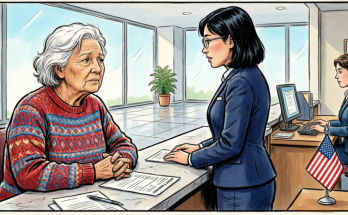
My daughter-in-law was showing my house to buyers when I caught her in my living room. “You’re already going to assisted living,” she told me. “You don’t run anything anymore.” She claimed my son had signed the paperwork and my move had been arranged, as if forty years of my life could be boxed up without asking me. I did not scream. I walked into my kitchen, picked up my phone, and made the call I had been quietly preparing for months.

My daughter-in-law was showing my house to buyers when I caught her in my living room. “You’re already going to assisted living,” she told me. “You don’t run anything anymore.” She claimed my son had signed the paperwork and my move had been arranged, as if forty years of my life could be boxed up without asking me. I did not scream. I walked into my kitchen, picked up my phone, and made the call I had been quietly preparing for months.
The first thing I noticed was the laughter.
Not family laughter.
Not the kind that used to roll through my house when my husband was alive and Nolan was young enough to slide across the hardwood floor in socks.
This laughter was different.
Sharp.
Careless.
Followed by a woman’s voice saying, “Honestly, you could strip all of this out. The house has great bones.”
I stopped halfway down the staircase.
My name is Janine Fletcher.
I was sixty-two years old, healthy, independent, and fully capable of deciding what happened inside the house where I had lived for forty years.
Apparently, my daughter-in-law had developed another opinion.
I moved quietly down the remaining steps.
When I reached the archway, Harlo was standing beside my antique mantel with a middle-aged couple I had never seen before.
The woman held her phone open to a notes app.
The man studied my windows like he was already calculating replacement costs.
Harlo’s blonde hair was perfectly arranged, as usual. She wore a cream blouse and tailored pants, the sort of outfit that made every sentence sound more official than it was.
“This wall should probably go,” she told them. “Then you could open the kitchen into the living room.”
The man nodded.
“And upstairs?”
“Plenty of space for a larger primary suite once everything old is cleared out.”
Everything old.
She said it while standing three feet from the mantel my late husband and I had refinished together.
“Excuse me.”
All three turned.
The couple immediately looked uncomfortable.
Harlo did not.
“Oh, Janine,” she said. “You’re up.”
I stared at her.
“This is my house. Who are these people?”
The man cleared his throat.
“We’re the Hendersons. We were told the property may be available.”
“Available?”
The woman looked from Harlo to me.
“You didn’t know?”
Before I could answer, Harlo stepped between us.
“I’m sorry. There’s been some confusion.”
Then she lowered her voice in a way that was clearly meant to be heard.
“She’s been having a difficult time lately. The family is handling everything.”
The humiliation was so precise I almost admired the craftsmanship.
She was not merely showing strangers my home.
She was making me unreliable in front of them before I could object.
“I am not confused,” I said.
Harlo gave the Hendersons a patient smile.
“This probably isn’t the best time. I’ll call you later.”
The couple left quickly.
As the front door closed, I heard the woman whisper, “Poor thing.”
I stood in my living room staring at Harlo.
For two years, I had tolerated her because Nolan loved her.
For six months, I had suspected something was wrong.
For three months, I had been preparing for the possibility that my instincts were right.
That morning, she finally stopped hiding.
“Sit down, Janine.”
“In my own living room?”
She folded her arms.
“We need to stop pretending you’re still in charge of everything.”
“I own this house.”
“You’re already going to assisted living. You don’t run anything anymore.”
The words landed as casually as if she were telling me trash pickup had moved to Thursday.
I looked at her.
“What assisted living?”
“Sunset Manor.”
I knew the name.
A low-cost facility across town that advertised cheerful activities and twenty-four-hour supervision.
One of my neighbors had spent her final months there.
I had never once discussed moving there.
“The arrangements are already being made,” Harlo continued. “Nolan signed the paperwork yesterday.”
My stomach tightened.
“What paperwork?”
“The legal documents. The house. Your care. Power of attorney.”
“When did I give Nolan power of attorney?”
She sighed.
“Janine, this is exactly the problem. You don’t remember half of what’s been happening.”
That sentence landed harder than the others.
Not because I believed her.
Because I understood what she was doing.
For months, Harlo had been building a story about me.
I was tired.
Forgetful.
Confused.
Unsafe alone.
The first incident came three months earlier.
She called Nolan and told him I had left my stove on overnight.
I had not.
I had been at a doctor’s appointment that morning, and Harlo had been inside my house while I was gone.
A month later, Nolan mentioned I had forgotten two utility payments.
Impossible.
My bills had been on automatic payment for years.
When I showed him the bank withdrawals, he frowned and said Harlo must have misunderstood.
Then came smaller things.
Harlo telling Nolan I repeated the same story three times.
Harlo asking whether I remembered where I kept medications I did not take.
Harlo moving my keys and then acting relieved when they were “found.”
Separately, the incidents looked petty.
Together, they looked like preparation.
That was when I called Rick Morrison.
Rick had been my neighbor for fifteen years before moving across town. He also happened to be a longtime detective.
At first, even I worried I was overreacting.
I asked only for advice.
Then Harlo’s stories about her past started changing, and I asked him to quietly look into whatever could legally be checked.
Since then, I had been waiting.
Not helplessly.
Carefully.
Now Harlo stood in my living room and told me my life had already been packed away.
“The moving company comes next week,” she said.
“I’m not moving.”
“Yes, you are.”
“No.”
She smiled.
“Nolan agrees with me.”
“Where is he?”
“At work.”
“Does he know you brought buyers through my house?”
“He knows we need to sell.”
I watched her face.
She believed Nolan was sufficiently under her control that the difference no longer mattered.
“You can’t sell a house I own.”
She picked up her phone from the coffee table.
“That’s what the documents are for.”
“Show me.”
“He has them.”
“Of course.”
Her expression sharpened.
“You’re making this much more difficult than it needs to be.”
I laughed once.
“My daughter-in-law brings strangers through my house, tells them I’m confused, informs me I’m being moved to a facility I never chose, and somehow I’m the difficult one.”
“You should hear yourself.”
“I do.”
She stepped closer.
“Face reality, Janine. This house is too much for you. Nolan worries constantly. I’m trying to solve a problem everyone else is too emotional to solve.”
“By selling my home?”
“The house will bring at least four hundred thousand dollars. Maybe more.”
“And where does the money go?”
“To make sure you’re cared for.”
“Controlled by whom?”
A tiny pause.
There it was.
She recovered quickly.
“Nolan, obviously.”
I looked around the room.
My husband, Thomas, had installed the hardwood himself after we bought the place.
I rocked Nolan to sleep in the chair beside the fireplace.
We celebrated graduations here.
Birthdays.
Thirty-nine Christmas mornings.
Thomas spent the last months of his life in the downstairs bedroom because climbing the stairs became too hard.
Forty years reduced to a number Harlo could divide.
She watched me, waiting for tears.
Instead, I smiled.
That unsettled her.
“What?”
I kept smiling.
“You’re going to prison.”
Her phone slipped from her hand and hit the floor.
For the first time since I had known her, Harlo looked frightened.
“What did you say?”
“You heard me.”
“What are you talking about?”
I walked toward the kitchen.
Behind me, her heels struck the hardwood quickly.
“Janine.”
I picked up my phone from the counter.
“Janine, what do you know?”
That question confirmed more than she realized.
If she had done nothing wrong, the natural response would have been, What are you talking about?
Instead, she asked what I knew.
I scrolled to the number I had been preparing to call for months.
Rick answered on the third ring.
“Detective Morrison.”
“Rick, it’s Janine.”
A pause.
Then his voice changed.
“Did something happen?”
“I think we’ve reached the point you warned me about.”
“What happened?”
“My daughter-in-law was showing my house to buyers this morning. She says Nolan signed papers, I’m going to Sunset Manor, and they’re selling the property.”
“Do not sign anything.”
“I haven’t.”
“Do not leave the house voluntarily until we understand what documents exist.”
“I won’t.”
“I’m coming over.”
I ended the call.
Harlo stood in the doorway.
“Who was that?”
“A friend.”
Her eyes narrowed.
“You’re making a mistake.”
“No, dear.”
I set the phone down.
“I think I’ve spent six months correcting one.”
Rick arrived less than an hour later.
Harlo had already left, claiming she had errands, though I suspected she needed privacy to call Nolan and decide how much damage I had done.
Rick sat in Thomas’s old recliner while I poured coffee.
“When you called me six months ago,” he said, “I thought there was a reasonable chance this was simply a bad relationship between a mother-in-law and daughter-in-law.”
“And now?”
He placed a manila folder on the table.
“Now I think you were right to be careful.”
My hands tightened around my mug.
“What did you find?”
“The woman your son married has used more than one name.”
I sat down slowly.
“Harlo Chen is one of them. Helen Crawford appears to be her birth name.”
That alone was not proof of wrongdoing.
People change names for legitimate reasons.
Rick knew that.
The problem was everything around it.
“She has been connected to several families in different states,” he continued. “The pattern is concerning.”
The first was Robert Chen in Arizona.
An older widower with early cognitive decline.
Helen Crawford married him, later used the surname Chen, and became deeply involved in decisions about his care and finances.
Robert eventually entered memory care.
His house was sold.
A substantial portion of his assets moved before he died.
“Was anything proven illegal?”
“Not enough at the time.”
That mattered.
Rick was not giving me a dramatic story.
He was giving me facts.
“The next situation was in Colorado,” he said. “A man named James Wright. His elderly mother lived with him.”
I already knew where the story was going.
“Harlo?”
“Helen, Harlo, whatever name she was using then, began pushing the family toward institutional care for the mother. Competency questions. Guardianship discussions. Financial disputes.”
“What happened?”
“The mother died after being moved. Nothing about the death was ruled criminal, but the family later raised concerns about financial exploitation.”
My stomach tightened.
“And the third?”
“Oregon. David Kim. Software engineer. Elderly grandmother in the household. That family became suspicious before the care arrangements went very far.”
“What did they do?”
“David’s sister hired a private investigator. Helen left abruptly. Joint funds were drained before she disappeared.”
I looked toward my living room.
The Hendersons had stood there an hour earlier discussing renovations.
Same pattern.
New family.
Older relative.
Questions about competence.
Care facility.
Property.
Money.
Rick folded his hands.
“I need to be careful, Janine. Her history is suspicious. It does not automatically prove what she’s doing to you. We still need evidence connected to your situation.”
“I have some.”
His eyebrows rose.
For three months, after the stove incident, I had started documenting conversations.
Not because I planned a criminal case.
Because Harlo kept telling people I was forgetting things.
I wanted a record for myself.
Rick was careful about what could and could not be used directly, but recordings could preserve timelines and point investigators toward documents.
I played him the conversation from that morning.
Harlo’s voice came through clearly.
The house will sell for at least four hundred thousand dollars.
That’s a nice nest egg for Nolan and me to start our real life together.
Rick stopped the audio.
“She said that?”
“To my face.”
“And she explicitly said Nolan has power of attorney?”
“Yes.”
“Have you ever executed one naming him?”
“No.”
“Any estate planning documents allowing him to transfer the property?”
“No.”
“Any diagnosis of cognitive impairment?”
“No.”
“Recent medical evaluation?”
“Annual physical last month. No concerns.”
Rick wrote something down.
“We need to see the documents she claims exist.”
Then he looked at me.
“And we need to talk to Nolan separately.”
I flinched.
“He believes her.”
“Maybe,” Rick said. “That doesn’t mean he knows what she is doing.”
I hated that he might be right.
Nolan was my only child.
He could analyze bridge load calculations for work and still believe someone he loved because he wanted to.
Harlo knew how to use that.
She had turned his demanding schedule into evidence that someone else needed to manage me.
For months, she told him I was deteriorating while telling me Nolan had lost patience.
She kept us close enough to remain family and far enough apart to stop comparing notes.
That was not an accident.
Rick took the folder and told me not to confront Harlo about what we knew.
The next morning, I called my oldest friend, Margie Williams.
Margie had worked in the county clerk’s office for decades.
I was careful not to ask her to do anything improper.
I gave her the names and public records Rick already had and asked where legitimate public searches might be done.
Two hours later, she called back.
“Janine, tell your detective friend to look closely at the divorce records.”
“Why?”
“I can find marriages. I’m not finding matching divorces where I’d expect them.”
That did not automatically prove anything.
Records can be incomplete.
People file elsewhere.
Names change.
But it was enough for investigators to dig deeper.
Rick called that afternoon.
“Your friend gave us a useful lead.”
“What did you find?”
“Potential overlapping marriages. We’re verifying officially.”
“Harlo married Nolan two years ago.”
“I know.”
“If she was still married—”
“Let us establish that before we say it.”
Again, reality instead of drama.
I appreciated him for that.
The deeper investigators looked, the worse things became.
Inconsistent identity documents.
Financial transfers between accounts tied to multiple surnames.
Relationships that overlapped in ways that required explanation.
And then there was Sunset Manor.
Not a conspiracy of mysterious deaths, as my frightened mind briefly feared.
Something more believable and uglier.
Regulators had previously cited the facility for poor documentation and inadequate safeguards around residents’ financial representatives.
That made it attractive to someone who wanted minimal resistance.
Rick believed Harlo had chosen it because its administration was weak, not because its staff were part of some grand scheme.
That distinction mattered.
The truth was already serious enough.
I did not need to make it larger.
That week, I invited Nolan to Sunday dinner.
I asked for time alone.
He told Harlo.
Of course he did.
They both came.
At five o’clock, Harlo entered with one hand wrapped around Nolan’s arm.
He hugged me.
The embrace felt cautious.
That hurt.
I served pot roast and mashed potatoes, the meal he used to request on birthdays as a boy.
For twenty minutes, I behaved exactly like myself.
I asked about his bridge project.
Remembered the South American contractor he had mentioned weeks earlier.
Asked whether the foundation-soil problem had been resolved.
Nolan looked surprised.
Harlo noticed.
Her expression tightened each time I remembered something she had probably described as forgotten.
After dessert, Nolan set down his fork.
“Mom, we need to talk.”
“I assumed we did.”
“Harlo and I are worried about you.”
“About what specifically?”
“The house. Living alone.”
Harlo took over.
“Your safety.”
“The stove?” I asked.
She hesitated.
“Yes.”
“I wasn’t home when you claimed it was left on.”
“You could have left it on before you left.”
“At eight in the morning? Why would I have used that burner?”
Nolan looked at Harlo.
She moved quickly.
“The missed payments.”
“All automatic.”
I turned to my son.
“I can show you the bank drafts.”
His forehead creased.
Then he said, “There have been other things.”
“What other things?”
He looked at Harlo again.
That hurt more than anything.
His evidence of my decline lived almost entirely in her mouth.
Harlo leaned forward.
“Sunset Manor has a room.”
I let the silence sit.
Nolan spoke gently.
“We put down a deposit.”
“You did?”
He nodded.
“We thought it would give us options.”
“And the house?”
Harlo answered.
“It should sell for around four hundred thousand.”
“You’ve had it appraised?”
“Yes.”
“Without telling me?”
“We were trying not to overwhelm you.”
“And the power of attorney?”
Nolan blinked.
“What power of attorney?”
Harlo went still.
I looked at my son.
“She told me you signed paperwork giving you authority to sell my house.”
“I didn’t sign that.”
“Nolan,” Harlo interrupted.
He turned toward her.
“What is she talking about?”
“It’s not that simple.”
“It sounds simple.”
“We discussed getting authority because your mother clearly needs help.”
“We discussed talking to an attorney.”
“Exactly.”
“I never signed anything.”
Harlo’s face changed.
That was the first crack.
I stood, walked to the kitchen counter, and returned with my phone.
“Then perhaps we should listen to what Harlo told me.”
I played the recording.
You’re already going to assisted living.
You don’t run anything anymore.
Nolan and I are making the decisions now.
Then another section.
The house will sell for at least four hundred thousand dollars.
That’s a nice nest egg for Nolan and me to start our real life together.
Nolan stared at her.
“Harlo?”
She stood.
“She’s been recording me?”
I stopped the audio.
“That’s your concern?”
“She’s paranoid. This proves it.”
Nolan was still looking at his wife.
“Did you bring buyers here?”
“They were only looking.”
“Did you tell Mom I signed documents?”
“I was trying to make the transition easier.”
“I did not sign anything.”
“You would have.”
The sentence came out too fast.
Harlo realized it immediately.
Nolan leaned back.
“What?”
She tried to recover.
“You know this has to happen. We’ve talked about your mother for months.”
“You told me she was forgetting things.”
“She is.”
I opened a folder.
“Then maybe you can explain why your stories about yourself are also hard to remember.”
Harlo’s face tightened.
I placed copies of public records on the table.
Not accusations.
Not conclusions.
Questions.
Different names.
Prior marriages.
Locations she had never mentioned.
“Who is Helen Crawford?”
Nolan looked down.
Harlo did not.
“I told you that was my old name.”
“No,” Nolan said quietly. “You didn’t.”
She turned to him.
“It doesn’t matter.”
“It matters to me.”
I pointed to the records.
“What about David Kim?”
Her face lost color.
Nolan looked at the name.
“Who is David?”
Nobody answered.
I did not need to tell Harlo she was going to prison.
I picked up my phone.
“Rick?”
“Ready?”
“Yes.”
Ten minutes later, Detective Morrison arrived with investigators who had already been working the case.
No theatrical raid.
No army of officers.
Just professionals carrying folders, asking Harlo to remain while they clarified her identity and the financial evidence under investigation.
When she realized they knew her birth name, she stopped arguing.
Then she looked at Nolan.
“You’re going to let her do this to me?”
He sat motionless.
“Harlo,” he whispered, “who are you?”
For once, she had no answer prepared.
Part 2
The investigation took months.
There were no instant convictions.
No magical document that solved everything in one afternoon.
Investigators confirmed Harlo, legally Helen Crawford, had maintained relationships and financial arrangements under multiple names.
At least two prior marriages had not been properly terminated before later ceremonies.
That created its own legal problems.
The larger case involved financial fraud, identity-related offenses, and interstate transfers of money, bringing federal investigators into parts of the investigation.
Earlier families were contacted.
David Kim cooperated.
So did relatives of Robert Chen and James Wright.
Their stories were not identical.
That mattered.
Helen had adjusted her methods to each household.
But the structure was recognizable.
Win trust.
Create dependence.
Separate family members from one another.
Raise questions about an older relative’s competence.
Gain influence over care decisions or money.
Move assets.
Leave when resistance became dangerous.
My case had not reached the final stage because I interrupted it.
The power-of-attorney paperwork Harlo claimed Nolan had signed was never valid.
Some draft documents existed.
Others appeared to contain information inserted without proper authorization.
My house had never legally transferred.
The Hendersons had never signed a contract.
Sunset Manor never received legal authority to admit me against my wishes.
Everything had been close to a plan rather than a completed crime.
Close was enough.
Nolan took it hardest.
A week after Harlo’s arrest, he sat at my kitchen table holding his head in both hands.
“I was going to let her do it.”
“No.”
“Yes, Mom. I was going to put you in Sunset Manor.”
“You thought I was unsafe.”
“Because she told me.”
“Exactly.”
He looked up, eyes red.
“You tried to tell me something was wrong.”
“I didn’t tell you enough.”
“Why?”
“Because six months ago, if I said your wife was targeting me financially, would you have believed me?”
His silence answered.
Part 3
“I would’ve thought you disliked her,” Nolan said.
“Yes.”
“I might’ve thought you were afraid of losing me.”
“Yes.”
He closed his eyes.
“I hate that.”
“I don’t.”
He looked at me.
“It means she manipulated both of us. Different methods. Same purpose.”
Nolan’s marriage was eventually found to have serious legal defects because of Helen’s unresolved prior marital status.
He also discovered financial losses of his own.
Money he had transferred for investments that never existed.
Charges he had never examined closely.
Accounts he thought were shared plans but were controlled almost entirely by her.
He cooperated with investigators.
Not because he wanted revenge.
Because he finally understood silence would leave other families vulnerable.
Months later, I testified.
I was not the star witness in some courtroom spectacle.
I was one person among several.
I described the staged incidents.
The buyers.
The false claims about power of attorney.
The planned assisted-living placement.
The comments about the house money.
I did not exaggerate.
I did not need to.
When asked why I had started documenting conversations, I answered honestly.
“Because she kept telling people my memory was failing. I wanted to know whether it was.”
“And was it?”
“No.”
“What did you learn instead?”
“That someone else was trying very hard to make me doubt myself.”
The case ended with convictions and guilty pleas covering financial and identity-related offenses across several jurisdictions.
Helen received a lengthy prison sentence.
I did not attend every hearing.
By then, I was tired of letting her schedule define my life.
The morning the final sentencing came through, Nolan called.
“It’s over.”
“No,” I said.
He went quiet.
“It’s finished legally. That’s different.”
He understood.
Healing took longer.
Part 4
For months, Nolan apologized every time we spoke.
Eventually, I asked him to stop.
“An apology that becomes permanent guilt isn’t useful.”
“I almost lost you.”
“But you didn’t.”
“I should have known.”
“You should have asked more questions,” I said. “So should I.”
He looked surprised.
“I thought protecting you meant quietly investigating her.”
“That was one right thing.”
“Wasn’t it enough?”
“No.”
I smiled sadly.
“I should also have trusted the son I raised enough to risk an ugly conversation earlier.”
We both had things to learn.
Six months after the morning I found strangers walking through my house, I hosted Sunday dinner.
Rick and his wife came.
Margie and her husband came.
Nolan arrived carrying dessert.
The living room sounded different than it had that October morning.
Warm laughter.
The kind I remembered.
Someone asked whether I planned to sell the house eventually.
I looked around.
The mantel.
Thomas’s old chair.
The hardwood he installed.
The staircase Nolan once slid down inside a laundry basket before I nearly grounded him for life.
“Eventually,” I said. “Maybe.”
Nolan looked at me.
“Your decision.”
Two words.
Nothing dramatic.
They meant more than any speech.
After everyone left, I stood alone in the living room.
At sixty-two, I had no intention of pretending I would live there forever.
Maybe one day the stairs would become inconvenient.
Maybe I would choose a smaller home.
Maybe I would even choose a good senior community if I wanted more company.
The difference was choice.
Harlo believed age automatically transferred authority from me to someone younger.
She believed if she repeated confused often enough, people would eventually stop asking what I wanted.
She almost succeeded.
Not because I was weak.
Because families are vulnerable when trust is weaponized.
Part 5
I walked into the kitchen and picked up the same phone I had used that morning.
The call log still contained Rick Morrison’s number.
Months earlier, making that call felt like declaring war.
Now I understood it differently.
I had not called because I wanted to destroy my daughter-in-law.
I called because someone was dismantling my life without my consent, and I finally refused to cooperate.
There is a strange thing people do to older women.
They praise us for spending decades building homes, raising children, managing finances, surviving loss, and carrying families through crises.
Then one day, someone notices gray hair and begins speaking as though all that experience expired overnight.
Mine had not.
Forty years in that house had not made me fragile.
They taught me exactly what was worth protecting.
Before going upstairs, I touched the edge of the counter Thomas and I had chosen together.
The house was still mine.
My decisions were still mine.
My relationship with my son survived because, eventually, truth became stronger than manipulation.
I lost some innocence.
That was probably overdue.
But I gained something more useful.
I learned the difference between someone helping me and someone taking over.
And if the day ever comes when I need help, I will be involved in choosing it.
Nobody will pack forty years of my life into boxes while I stand in the doorway asking what is happening.
Nobody will tell strangers I am confused because my clarity is inconvenient.
Nobody will tell me I no longer run anything while standing inside a house whose key is still in my pocket.
Not again.
The End.