The message appeared in our family group chat at 8:17 on a Tuesday morning.
I remember the exact time because I was sitting at my kitchen table, half awake, drinking coffee and scrolling through the endless stream of messages from relatives who usually contacted one another only when they needed something.
My grandmother, Eleanor Bennett, had written just three sentences.
“I’m sorry to bother everyone. I need a little money for something important. It isn’t much, but I can’t manage it alone right now. If anyone can help, please let me know.”
She was sixty-eight years old.
She had raised three children, buried a husband, worked for decades, and spent most of her life making sure everyone else had what they needed.
Yet there she was, apologizing for asking her own family for help.
The message sat beneath a photograph my cousin had posted of her new car.
For several minutes, nobody replied.
Then my aunt posted a picture of her lunch.
My uncle sent a joke.
My cousin asked whether anyone knew a good mechanic.
The conversation moved on as if Grandma had never written anything at all.
I stared at the screen, feeling a familiar mixture of anger and shame.
Our family had always treated Grandma like a permanent fixture in our lives. She was the person who remembered birthdays, mailed cards, baked cakes, and called when somebody was sick. If a child needed school supplies, she found a way to help. If someone lost a job, she brought groceries. If a marriage fell apart, she opened her front door and made room at her table.
Nobody ever asked how she managed it.
Nobody ever wondered what she sacrificed.
And when she finally asked for something herself, the entire family suddenly became too busy to notice.
I opened a private message to her.
“Grandma, how much do you need?”
Her reply came almost immediately.
“Oh, sweetheart. I didn’t want to put pressure on you. Don’t worry if you can’t.”
That answer bothered me more than the original message.
She hadn’t told me what she needed. She hadn’t named an amount. She was already preparing herself for rejection.
I called her.
She answered after the third ring.
“Hello, my darling.”
Her voice sounded softer than usual, but I assumed she was tired.
“Grandma, what’s going on? Why do you need money?”
There was a pause.
“It’s for something I should have taken care of a long time ago.”
“What does that mean?”
“It’s difficult to explain over the phone.”
“Then tell me when I come over.”
Another pause followed.
“I don’t want you to think I’ve done something foolish.”
I pushed my coffee aside.
“Grandma, you could never make me think that.”
She gave a little laugh, but it sounded as though she was trying not to cry.
“I need $2,400,” she finally said. “I know it’s a lot to ask.”
It was more than I had expected, but I had enough saved to help her without putting myself in trouble.
“Okay,” I said. “I’ll send it to you tomorrow.”
“Oh, sweetheart…”
“Please don’t thank me. Just tell me what it’s for when I see you.”
She went quiet again.
Then she said something I would remember for the rest of my life.
“Thank you for believing me before you knew the whole story.”
I didn’t understand what she meant.
Not then.
Two days later, I transferred the money.
That night, my mother called me, crying so hard I could barely understand her.
“It’s Grandma,” she managed to say. “She’s gone.”
For a moment, the room seemed to tilt.
“What do you mean, gone?”
“She’s died, sweetheart.”
I couldn’t speak.
My grandmother had been alive when I sent that money. She had thanked me. She had promised to explain everything when I visited.
Now she was gone, and the only clue she’d left me was a message asking for help that nobody else in the family had bothered to answer.
The next morning, I drove to her house.
I expected to find a quiet, familiar home filled with the ordinary things that made Grandma who she was: the floral curtains, the old clock above the fireplace, the photographs of our family, and the little wooden table where she used to roll out dough for Christmas cookies.
Instead, I opened her front door and froze.
The living room had been transformed.
There were boxes everywhere. A stack of children’s books sat beside the sofa. A small wooden crib stood against the wall. On the dining table lay folded baby blankets, tiny sweaters, and a thick envelope bearing my name.
But it wasn’t the baby things that made my knees weak.
It was the photograph sitting in the center of the table.
A photograph of my grandmother, much younger, holding a newborn baby in a hospital room.
Beside her stood a woman I recognized immediately.
My mother.
Only the date written on the back of the photograph was impossible.
It was dated thirty-one years before I was born.
And underneath the date, in Grandma’s unmistakable handwriting, were six words:
“The child they told us died.”
Part 2 — The Secret Behind the Photograph
I read the words again.
The child they told us died.
My hands began to tremble.
My mother had always told me that Grandma’s first pregnancy had ended in tragedy. According to the family story, my grandmother had given birth to a little girl who lived for less than a day. Grandma had never spoken much about it, and my mother said the loss had been too painful for her to discuss.
That was all I knew.
I had assumed the baby had been my mother’s older sister.
But the photograph showed my mother holding a newborn, not Grandma.
And the date was thirty-one years before my birth.
I turned it over.
On the back, beneath the date, Grandma had written another sentence.
“If you’re reading this, I finally found the courage to bring her home.”
Bring whom home?
I looked around the room again.
The crib.
The baby clothes.
The children’s books.
The blankets.
Suddenly, the $2,400 made sense in the most confusing way possible. Grandma hadn’t spent the money on herself. She had been preparing for someone.
Someone who was supposed to arrive.
I picked up the envelope with my name on it. My full name was written across the front in blue ink.
Inside was a letter.
The first line made my heart pound.
My darling,
If you’re reading this, then I wasn’t able to tell you everything in person. I’m sorry. I wanted to sit beside you, hold your hand, and explain why I asked for your help. I wanted you to meet someone before you heard the truth from anybody else.
I sat down at the dining table.
Thirty-one years ago, your mother gave birth to twins.
I stopped breathing for a moment.
Twins?
My mother had never mentioned having a twin.
I read the sentence again, hoping I had misunderstood.
But the next line made everything unmistakable.
One baby was brought home. The other was reported to have died.
I felt a chill travel down my arms.
Your mother was young, frightened, and recovering from a difficult delivery. Your father was not the man you remember from your childhood. He was controlling, and he believed he had the right to decide what our family could and could not know.
I was told that the second baby had not survived. I was devastated, but I trusted the doctors. I trusted the papers they showed us. And because your mother was struggling, I did what I thought was best. I stopped asking questions.
For years, I believed I had buried a grandchild.
My eyes filled with tears.
Grandma had carried this grief for more than three decades.
But there was more.
Six months ago, I received a letter from a woman named Claire.
She said she had been adopted as a newborn. Her adoption papers contained information that did not match the story she’d been told. She had recently found a copy of an old hospital record and was trying to locate her birth family.
She believed she might be my granddaughter.
I put the letter down.
Claire.
I had never heard that name connected to our family.
I continued reading.
At first, I was afraid to believe her. I was afraid of making another mistake. So I asked for documents. I spoke to the hospital’s records office. I contacted the adoption agency. I asked questions I should have asked thirty-one years ago.
And then I saw her photograph.
She had your mother’s eyes.
I pressed my fingers against my mouth.
The records did not give me every answer. Some documents were missing, and some details contradicted one another. But they gave me enough reason to believe that Claire might truly be the child we had been told was gone.
I have spent the last six months trying to find her.
Last week, I finally spoke to her on the telephone.
She lives three hours away. She is thirty-one years old. She has a little daughter named Lily, who is four.
She has known she was adopted for as long as she can remember. She has a loving adoptive family, and I would never want her to think they loved her any less because of where she came from.
She doesn’t want to replace anyone. She simply wants to know the truth.
I wiped my eyes.
The final paragraph on the first page was short.
She is coming to meet me tomorrow.
I looked at the crib again.
Tomorrow.
Grandma had been preparing to meet the granddaughter she had spent thirty-one years believing was dead.
And now she was gone.
I turned to the second page, desperate for an explanation of the money.
The $2,400 you sent me was for Claire and Lily.
Claire has been struggling financially after losing her apartment. She didn’t ask me to rescue her, and I promised I would not interfere with her life. But she told me that she and Lily were staying temporarily with a friend, and that they needed somewhere safe to stay while she arranged her next steps.
I offered to help with a deposit on a small apartment.
She refused at first.
She said she didn’t want a stranger to pay her way simply because they shared a possible connection.
I told her that she wasn’t a stranger to me.
I told her I had spent thirty-one years mourning her.
She cried. So did I.
Then she agreed to let me help with the deposit.
I covered my face.
Grandma had asked her family for money, not for a holiday, not for a new car, and not for some extravagant purchase.
She had asked us to help her welcome home a granddaughter she had believed was lost forever.
And we had ignored her.
Every one of us.
Except me.
I turned to the last page.
There were only two sentences.
I wanted you to be the first person in our family to meet Claire because you have always been the one who listens before judging.
Please find her. Tell her she was wanted long before she knew our names.
I lowered the letter.
For a long time, I couldn’t move.
Then I noticed something else beneath the envelope.
A small white card.
It contained a telephone number and a handwritten message.
Claire Bennett. Call after 10 a.m.
I checked the time.
It was 9:42.
I had eighteen minutes to decide whether I was brave enough to make a phone call that could change our family forever.
At 10:01, I dialed.
A woman answered on the fourth ring.
“Hello?”
Her voice was cautious.
“Hi. My name is Emma. I’m Eleanor Bennett’s granddaughter.”
Silence.
Then I heard a shaky breath.
“Is she there?”
I closed my eyes.
“I’m so sorry,” I whispered. “Grandma died last night.”
The woman began to cry.
And for the first time in my life, I heard someone mourn a grandmother she had never even met.
Part 3 — The Woman Who Had Been Missing for Thirty-One Years
Claire and I spoke for nearly two hours.
At first, neither of us knew what to say.
She asked whether Grandma had been ill.
I told her I didn’t know all the details, only that her death had been sudden to us.
She asked whether Grandma had suffered.
I told her that I hadn’t been there, and I didn’t want to pretend to know what I couldn’t know.
Then she asked the question that broke my heart.
“Did she really want to meet me?”
I looked at the letter lying open on the table.
“Yes,” I said. “She prepared a room for you and your daughter. She bought books, blankets, and clothes. She kept your photograph beside her bed.”
Claire made a small sound.
“What photograph?”
I found the picture Grandma had placed beside the crib and described it.
It showed Claire as a child, perhaps five or six years old, standing in front of a birthday cake. She was smiling, her dark hair falling across her forehead.
On the back, Grandma had written:
“The little girl I hope to hold someday.”
Claire was crying openly now.
“I sent her that picture last month,” she said. “I didn’t think she would keep it.”
“She kept it.”
“I thought she might change her mind.”
“She didn’t.”
“How do you know?”
“Because she spent the last six months trying to find you.”
The line went quiet.
Then Claire told me her story.
She had been adopted by a couple named Michael and Susan Harris. They had raised her in a small town outside the city. They had given her a happy childhood, encouraged her education, and never hidden the fact that she had been adopted.
Her adoptive parents had always told her that her birth mother had been young and that the circumstances surrounding her birth were complicated.
They didn’t know much more.
Claire had never been angry with them.
“They were my parents,” she explained. “They raised me. They sat beside me when I was sick, helped me with school, and taught me how to drive. I love them. Finding my birth family doesn’t change that.”
“I understand.”
“But when I had Lily, I started wondering about my own beginning. I wondered who I looked like. I wondered whether anyone had ever held me when I was born.”
She paused.
“Then I found a document in the adoption papers. There was a name on it that wasn’t supposed to be there.”
“Whose name?”
“Eleanor Bennett.”
My grandmother.
Claire explained that her original records were incomplete, but the name appeared on an old hospital form. It was listed beside a note indicating that a maternal relative had requested information about an infant.
The record had raised more questions than it answered.
Claire had contacted the relevant agencies and requested whatever records could legally be released. She had also tried to locate living relatives.
Eventually, she found Grandma.
“At first, she thought I was mistaken,” Claire said. “She was kind, but she sounded afraid. She told me she had been told the baby died.”
I gripped the edge of the table.
“What happened next?”
“We exchanged letters. She asked for copies of my documents. I sent what I could. She told me what she remembered. We realized that there were serious gaps in the records, but we couldn’t prove everything just from those papers.”
“Did you arrange a DNA test?”
“We discussed it. She wanted to make sure we were doing everything properly, especially because the hospital records were confusing. We hadn’t completed it yet.”
That detail mattered.
The photograph and the documents suggested a family connection, but they didn’t establish the entire truth. Grandma had been careful about that. She wanted answers, not assumptions.
“I was supposed to meet her tomorrow,” Claire whispered.
“I know.”
“I had the train ticket. I had packed Lily’s little bag. I even bought a cake because I thought we might have tea together.”
I looked at the empty chair across from me.
Grandma would have loved that cake.
“Claire,” I said, “there’s something you need to know.”
I told her about the money.
I told her how Grandma had asked the family group chat for help.
I told her that everyone had ignored the message.
And I told her that I had sent the money two days later.
Claire was quiet for a long time.
“Did she tell you what it was for?”
“No. She said she wanted to explain in person.”
“Then she never told you about me?”
“Not directly. I found her letter this morning.”
I heard Claire take a deep breath.
“I don’t know what to feel.”
“You don’t have to decide right now.”
“I feel terrible. She was trying to help me, and she died before we met.”
“You didn’t cause that, Claire.”
“But if I hadn’t contacted her—”
“No.” My voice was firmer than I intended. “You didn’t do anything wrong by wanting to know where you came from. Grandma chose to help you because she loved you. You didn’t force her.”
Claire began to cry again.
I wished I could reach through the telephone and hold her hand.
Instead, I said, “There’s a room here for you and Lily. Grandma prepared it. I don’t know what happens next, but I don’t want you to think you have to face this alone.”
“Why would you do that for me?”
I looked at the photograph.
“Because Grandma asked me to find you.”
Claire didn’t answer immediately.
Then she said, “I’ll come.”
We agreed that she would arrive the following afternoon.
When I ended the call, I finally understood why Grandma had thanked me for believing her before I knew the whole story.
She had been afraid that I would judge her.
She had been afraid that I would think she was throwing money away on a stranger.
She had been afraid that, after thirty-one years of silence, her family might still choose indifference.
And she had been right to worry.
Because when I opened the family group chat that afternoon, I discovered that the silence hadn’t ended.
My aunt had posted a photograph from a restaurant.
My cousin was discussing a vacation.
My uncle was complaining about the price of groceries.
Not one person had asked why Grandma needed money.
Not one person had asked whether she was okay.
I stared at the conversation until my vision blurred.
Then I typed a message.
Grandma is dead.
The replies came almost instantly.
What?
How?
Oh my God.
When did this happen?
Why didn’t anyone tell us she was sick?
I read every message.
Then I wrote:
She wasn’t asking for money for herself. She was trying to help a granddaughter she had been told died thirty-one years ago. She found evidence that the child might still be alive. She was preparing a room for her and her four-year-old daughter. She asked us for $2,400 to help them get somewhere safe to stay.
I paused.
Then I added:
I sent it. I found her letter this morning. The room is still here. The baby clothes are still here. The photographs are still here.
I could barely see the screen through my tears.
You all had the same opportunity I had to ask her what she needed. Not one of you did.
I pressed send.
For the first time in years, nobody had a joke.
Nobody posted a photograph.
Nobody changed the subject.
The family chat remained silent.
But this time, the silence belonged to them.
Part 4 — The Family Came to the House
By noon the next day, my grandmother’s house was full of relatives.
My mother arrived first.
She looked as though she hadn’t slept. Her eyes were swollen, and her hands shook as she removed her coat.
“Where is she?” she asked.
I knew she meant the letter.
I handed it to her.
She read the first page standing beside the dining table.
Then she sat down.
I watched her face change as she reached the sentence about twins.
“No,” she whispered.
I pulled out a chair beside her.
“Mom?”
She shook her head.
“No. That isn’t possible.”
“Grandma believed it might be true.”
“My mother would have told me.”
“Maybe she wanted to. Maybe she was trying to find the right time.”
My mother covered her mouth.
“I had a difficult delivery,” she said. “I remember being in the hospital. I remember being exhausted. I remember your grandmother sitting beside me.”
She stared at the photograph.
“But nobody told me I had twins.”
“Do you remember being told that one of the babies died?”
My mother closed her eyes.
“I remember someone saying there had been a complication. I remember being given medication. I remember waking up and being told that my daughter hadn’t survived.”
She began to cry.
“I was young, Emma. I was terrified. Your father kept telling me not to ask questions. He said the doctors knew what they were doing. He said I needed to concentrate on the baby I had brought home.”
The baby she had brought home.
Me.
I reached for her hand.
“Mom, this doesn’t prove exactly what happened. We need to get the records and speak to the right people.”
She nodded, but she looked devastated.
“I never knew.”
“I believe you.”
She held my hand tightly.
“I have a daughter I never knew existed.”
“We don’t know everything yet.”
“But what if it’s true?”
I had no answer.
A little later, my aunt and uncle arrived.
My aunt, Patricia, immediately began asking about the money.
“Two thousand four hundred dollars?” she said. “Where did Mother get that idea? Why didn’t she tell us what it was for?”
I stared at her.
“She did tell us she needed help. You ignored her.”
“That isn’t fair. We didn’t know it was urgent.”
“Did you ask?”
My aunt looked away.
“No.”
“Did you call her?”
“No, but—”
“Did you even send her a private message?”
She didn’t answer.
My uncle stepped between us.
“This isn’t the time to start blaming people.”
“Then when is the time?” I asked. “After we finish dividing up her belongings? After we forget about the message? After we pretend none of this happened?”
“Emma,” my mother said quietly.
I stopped.
Not because I had nothing else to say, but because I could see how deeply my words were hurting her.
My mother had her own grief to face.
The possibility that she had a daughter who had been taken from her was more than enough for one day.
I stepped away from the table.
“I’m not going to argue. But Claire is coming tomorrow. Grandma wanted us to meet her. If this connection is confirmed, she’s family. And even if we still need answers about the records, she deserves to be treated with kindness.”
My aunt looked uncomfortable.
“Is she expecting money?”
The question landed like a slap.
I turned toward her.
“She’s expecting to meet the grandmother who invited her. She doesn’t even know Grandma has died yet.”
My aunt’s face went pale.
“Oh.”
“Yes. Oh.”
I walked out of the room.
I went upstairs to the bedroom where Grandma had kept her sewing machine and her old collection of books. I sat on the edge of the bed and let myself cry.
I wasn’t angry only because my relatives had ignored the message.
I was angry because Grandma had spent her life making everyone feel welcome, and when she needed something, she had been left to ask the same people twice.
I was angry because she had died with a secret she had only just begun to understand.
And I was afraid.
Afraid that Claire would arrive at the house and feel that she had missed her only chance to know the woman who had searched for her.
Afraid that my mother would discover a painful truth about her past.
Afraid that our family would turn a woman’s life into an argument over who was responsible.
Then I heard a soft knock.
My mother stood in the doorway.
“Can I sit with you?”
I moved over.
She sat beside me and stared at the floor.
“I keep thinking about what you said,” she whispered. “About asking whether she was okay.”
I didn’t respond.
“Your grandmother used to call me every Sunday. Sometimes I was busy. Sometimes I told her I would call back. Sometimes I forgot.”
She swallowed.
“I always thought there would be another Sunday.”
I felt my anger soften, but it didn’t disappear.
“That’s what I thought, too.”
My mother leaned her head against my shoulder.
“I don’t know how to be a mother to someone I have never met.”
“You don’t have to figure that out tomorrow.”
“What if she hates me?”
“What if she doesn’t?”
My mother looked at me.
“What if she needs me?”
I took her hand.
“Then you start by listening.”
For a long time, we sat in Grandma’s bedroom without speaking.
Then my mother looked toward the hallway.
“Did you say she has a little girl?”
“Lily. She’s four.”
My mother began to cry again.
“A granddaughter.”
I squeezed her hand.
“Yes.”
And for the first time since Grandma’s death, my mother smiled through her tears.
Part 5 — Claire Arrives
Claire arrived the following afternoon at 2:15.
I saw her through the front window before she reached the door.
She was wearing a dark blue coat and carrying a small suitcase. A little girl with curly brown hair held her hand.
Lily.
The child looked around curiously, clutching a stuffed rabbit against her chest.
Claire stood on the porch for several seconds before knocking.
When I opened the door, she looked at me as though she were searching my face for a sign that she belonged there.
“Emma?”
“Yes.”
She tried to smile.
“Thank you for letting us come.”
I stepped aside.
“You don’t need to thank me. Come in.”
Lily walked through the doorway first.
She looked at the decorations on the walls, the family photographs, and the little shoes beside the staircase.
“Is this Grandma’s house?” she asked.
Claire knelt beside her.
“It was.”
“Will she be here?”
Claire’s eyes filled with tears.
“No, sweetheart. Grandma Eleanor isn’t here anymore.”
Lily looked confused.
“Is she at the shop?”
“No.”
“Then where is she?”
Claire pulled her daughter close.
“She’s gone, sweetheart.”
The little girl frowned.
“Can we see her when she comes back?”
Claire closed her eyes.
I crouched beside them.
“Lily, your great-grandmother loved you very much. She bought you some books and blankets because she was excited to meet you.”
Lily looked up.
“She knows my name?”
I nodded.
“She knew your name.”
“Did she see my picture?”
“Yes. She kept it.”
Lily thought about that.
Then she held up her stuffed rabbit.
“Can Bunny see her room?”
Claire began to cry.
I opened the door to the spare bedroom.
The room was small, but Grandma had made it beautiful.
A pale yellow blanket lay across the bed. Children’s books were arranged on a shelf. There was a little table beside the window, and a basket of toys stood near the wall.
The crib was still there, though Lily was too old for it. Grandma had apparently bought it before she learned that Claire’s daughter was already four.
Beside the bed sat a framed photograph of Claire as a little girl.
Lily walked toward it.
“Mommy!”
Claire stood still.
Lily pointed at the photograph.
“That’s you!”
Claire covered her mouth.
“Yes, sweetheart.”
“Why is your picture here?”
Claire knelt beside her.
“Because Grandma wanted to know me.”
Lily considered this.
“Can I sleep here?”
Claire looked at me.
I nodded.
“Of course.”
Lily climbed onto the bed and hugged the yellow blanket.
“It smells like flowers.”
I smiled through my tears.
“Grandma liked flowers.”
Claire sat down beside her daughter.
For several minutes, neither of us spoke.
Then Claire reached into her bag and removed a small envelope.
“I brought this for Eleanor,” she said. “I was going to give it to her tomorrow.”
She handed it to me.
Inside was a photograph of Claire and Lily standing together in a park.
On the back, Claire had written:
Dear Eleanor,
I don’t know yet what it means to find you, but I know I’m grateful that you wanted to find me. Thank you for making room in your heart for a person you haven’t met.
I hope we get to make memories together.
Love, Claire.
I pressed the photograph against my chest.
Grandma would have treasured it.
Claire looked at the room again.
“She did all this for us?”
“Yes.”
“Even though she wasn’t sure I was really her granddaughter?”
“She wanted to know you either way.”
Claire began to cry.
“I don’t understand why she cared so much.”
I sat beside her.
“Because she was your grandmother.”
“But she didn’t know me.”
“She knew that someone might have spent thirty-one years believing they had no family who wanted them. She wanted to make sure you never felt that way again.”
Claire looked at the photograph in her hands.
“My adoptive parents love me. I never thought I was unwanted.”
“I know.”
“I don’t want anyone to think they weren’t enough.”
“Grandma wouldn’t have wanted that. She wasn’t trying to replace the people who raised you. She was trying to find the people who had lost you.”
Claire nodded slowly.
Then she looked toward the doorway.
My mother had been standing there quietly.
She took one step into the room.
Claire turned.
For several seconds, the two women simply looked at one another.
My mother was sixty years old. Claire was thirty-one.
They shared the same dark eyes.
The same small crease beside the left side of their mouths.
The same habit of pressing their lips together when they were trying not to cry.
My mother raised a hand to her face.
“Hello,” she whispered.
Claire stood.
“Hello.”
My mother took another step.
“My name is Margaret.”
Claire nodded.
“I know.”
My mother began to cry.
“I don’t know what to say to you.”
Claire’s eyes shone.
“Neither do I.”
There was a long, painful silence.
Then my mother said the only thing she could think of.
“I’m sorry.”
Claire lowered her eyes.
“For what?”
“For not knowing you.”
Claire took a shaky breath.
“You didn’t know.”
“But I was your mother.”
“And I was your daughter.”
My mother covered her face.
Claire stood motionless for a moment.
Then she reached out and touched my mother’s arm.
“I’m not here to punish you,” she whispered. “I’m here because I wanted to know where I came from.”
My mother looked at her.
“Can I hug you?”
Claire nodded.
They embraced in the middle of the little bedroom Grandma had prepared.
It wasn’t the reunion either of them had imagined.
There were no photographs of the moment Grandma had hoped to capture. There was no laughter around the dining table. There was no grandmother telling everyone to sit down and have something to eat.
There were only two women who had lost thirty-one years they could never recover.
And a little girl watching them with her stuffed rabbit tucked beneath her arm.
After a while, Lily approached them.
“Are you crying because you’re sad?”
My mother knelt.
“Yes, darling. A little.”
“Do you want my bunny?”
My mother laughed through her tears.
“That’s very kind of you.”
Lily handed her the rabbit.
And somehow, in that small gesture, the room became a little less painful.
Because even though Grandma wasn’t there, something she had wanted had happened.
Her family had finally opened the door.
Part 6 — The Truth Was More Complicated Than We Expected
The days that followed were filled with phone calls, documents, and difficult conversations.
My mother contacted the hospital where she had given birth. The hospital still had some archived records, but many documents from that period had been transferred or stored under different systems.
The staff explained that certain records could only be released through the appropriate legal process.
Claire contacted the adoption agency.
She requested copies of the documents she was entitled to receive and asked for help clarifying the discrepancies.
My mother also spoke with a lawyer who specialized in family records and adoption matters.
Nobody promised us an easy answer.
Nobody claimed that a single photograph could explain what had happened thirty-one years earlier.
The more we learned, the more questions emerged.
There were conflicting dates on several documents.
One record suggested that two babies had been registered during the same period. Another referred to a single surviving infant. A third document contained a handwritten notation that had never been properly explained.
It was enough to justify further investigation.
It wasn’t enough to establish exactly what had happened.
My mother struggled with that uncertainty.
She wanted an answer immediately.
She wanted someone to explain how a child could disappear from a family’s history while everyone else went on living.
She wanted to know whether Claire had been separated from her by a mistake, a deliberate decision, or a chain of circumstances that nobody had ever fully documented.
I wanted answers, too.
But Grandma’s letter had taught me something.
Sometimes the truth begins with a question that nobody has the courage to ask.
And sometimes finding the answer takes longer than we want.
One evening, Claire and I sat at Grandma’s dining table after Lily had gone to bed.
She was looking through a box of photographs.
“Do you think she knew?” Claire asked.
“Who?”
“Grandma. Do you think she really believed I was her granddaughter?”
I thought carefully before answering.
“I think she believed there was enough evidence to look for you. I think she hoped it was true. But I also think she wanted to be careful.”
Claire nodded.
“She kept telling me that she didn’t want to make promises before we knew everything.”
“That sounds like her.”
Claire picked up a photograph of Grandma holding me as a baby.
“She seems happy.”
“She was. She loved being a grandmother.”
“Was she always kind?”
I smiled.
“Almost always. She could be stubborn when she thought someone was being unfair.”
Claire laughed softly.
“I think I might have inherited that.”
“You probably did.”
She set the photograph down.
“Can I tell you something?”
“Of course.”
“When she first called me, I didn’t answer right away. I thought it might be a scam. I had received strange messages before, and I didn’t want to get my hopes up.”
“That makes sense.”
“Then she left a voicemail. She said her name was Eleanor Bennett, and that she might be my grandmother.”
Claire’s eyes filled with tears.
“I listened to it about twenty times.”
I reached for her hand.
“What did she say?”
Claire closed her eyes, trying to remember.
“She said, ‘I don’t know if I’m the person you’re looking for, but if there’s even a chance that you belong to our family, I would like to know you.’”
My throat tightened.
“That sounds like her.”
“I called her back the next day. We talked for almost an hour.”
Claire smiled sadly.
“She asked about Lily. She asked about my adoptive parents. She wanted to know whether I was happy. She asked what books I liked as a child and whether I had learned to bake.”
“She loved baking.”
“I told her I wasn’t very good at it.”
I laughed.
“What did she say?”
“She said, ‘That’s all right. Nobody gets it right the first time. I’ll teach you.’”
Claire covered her mouth.
“She was going to teach me how to bake.”
I looked at the empty kitchen.
On the counter sat Grandma’s old mixing bowl.
It was scratched and worn, but she had used it for years.
“Would you like to learn?” I asked.
Claire stared at me.
“Now?”
“Not tonight. But someday.”
She nodded slowly.
“Yes.”
We sat together for a while longer.
Then Claire asked the question I had been afraid she would ask.
“Do you think I should have come sooner?”
I turned toward her.
“No.”
“But if I had contacted her a year ago—”
“You couldn’t have known.”
“If I had searched harder—”
“Claire.”
She stopped.
I took her hands.
“You didn’t know where to look. You didn’t know who to trust. You were trying to understand your own history while raising a child. Grandma didn’t blame you for taking time, and I don’t blame you either.”
Claire’s face crumpled.
“I just wanted one day with her.”
I held her while she cried.
There was no answer that could give her that day.
There was no promise I could make that would bring Grandma back.
All I could do was stay beside her until the pain became bearable enough for her to breathe again.
Part 7 — The Family Meeting
A week after Grandma’s funeral, my aunt insisted that the family meet at her house.
She said we needed to discuss the estate, the house, and the questions surrounding Claire.
I almost refused to go.
But my mother asked me to come with her, and Claire wanted to attend because she hoped to understand Grandma’s final wishes.
We arrived together.
My uncle had already prepared a stack of documents.
My cousin sat on the sofa, looking uncomfortable.
My aunt stood beside the fireplace.
“Before we begin,” she said, “I think we need to establish what we actually know.”
I nodded.
“That would be a good place to start.”
She glanced at Claire.
“I’m sorry for your loss.”
“Thank you,” Claire replied.
My aunt folded her hands.
“We all want to help, but we need to be realistic. We don’t know for certain who you are.”
Claire’s face tightened.
“I understand that the records still need to be reviewed.”
“Then you understand why this is complicated.”
“Yes.”
My aunt seemed surprised that Claire hadn’t argued.
Claire continued.
“I didn’t come here to demand money or claim anything that isn’t mine. I came because Eleanor invited me to meet her. I came because I wanted to know her.”
My aunt looked away.
“I didn’t mean to suggest otherwise.”
“Then perhaps we should talk about what Eleanor actually wanted,” I said.
My uncle cleared his throat.
“That’s what we’re trying to do.”
“No. We’re talking about what we want to happen now. Grandma’s letter explains what she wanted.”
I placed a copy of the letter on the table.
My aunt didn’t touch it.
My mother did.
She read the final lines again.
Please find her. Tell her she was wanted long before she knew our names.
My mother began to cry.
“I think we should honor that,” she said.
My uncle shifted in his chair.
“Of course. But we also have to be careful about the house and the estate.”
I understood that practical questions needed answers. Grandma’s belongings, property, and finances would have to be handled properly.
But I couldn’t accept the way everyone kept turning Claire into a problem to be managed.
“She isn’t asking us to give her Grandma’s house,” I said. “She’s asking us to stop treating her like an inconvenience.”
My cousin finally spoke.
“I think we owe Claire an apology.”
Everyone looked at him.
He stared at the floor.
“I ignored Grandma’s message, too. I saw it, and I kept scrolling. I told myself someone else would help her.”
He looked at Claire.
“I’m sorry.”
Claire nodded.
“Thank you.”
My aunt’s eyes filled with tears.
“I saw the message,” she admitted. “I thought she was asking for help with another bill. I had a lot going on, and I assumed your mother or Emma would handle it.”
My mother lowered her head.
“I thought the same thing about other things she needed. I thought someone else would call her.”
My uncle rubbed his forehead.
“I didn’t even open the message until the next day.”
The room fell silent.
There it was.
Not a conspiracy.
Not a dramatic family feud.
Just a group of people who had grown so accustomed to Grandma being there that they had stopped considering what it cost her to keep showing up.
They had assumed she would always be available.
Always patient.
Always generous.
Always waiting.
And when she finally needed them, everyone assumed someone else would take responsibility.
My aunt wiped her eyes.
“What do we do now?”
Claire looked at her.
“I don’t expect you to fix the past.”
My aunt shook her head.
“But we ignored her.”
“Yes,” Claire said gently. “You did.”
There was no cruelty in her voice.
That made the truth harder to hear.
Claire continued.
“I can’t tell you how to feel about what happened. I don’t know you well enough. But I do know Eleanor wanted us to meet. I think the kindest thing we can do is stop making this harder than it already is.”
My mother reached for Claire’s hand.
“I would like to get to know you.”
Claire looked at her.
“I would like that, too. But I need time.”
“Of course.”
“And I need you to understand something. My adoptive parents are my parents. I love them. I won’t pretend they aren’t part of my life.”
My mother nodded.
“I would never ask you to.”
“Good.”
Claire took a breath.
“Because if we are going to build a relationship, it has to be honest. I don’t want to spend the rest of my life trying to make everyone comfortable with the truth.”
My mother squeezed her hand.
“You shouldn’t have to.”
For the first time since we had entered the room, my aunt looked at Claire without suspicion.
She looked at her as a person.
A woman who had lost someone she had only just begun to know.
A woman who had traveled to meet her grandmother and arrived too late.
A woman who was still trying to understand how she fit into a family that had existed without her for thirty-one years.
My aunt reached for the letter.
She read it from beginning to end.
Then she folded it carefully.
“Eleanor would have wanted us to welcome you,” she said.
Claire smiled sadly.
“Then let’s do that.”
Part 8 — What the $2,400 Really Bought
A month after Grandma died, Claire and I returned to the little apartment Grandma had helped arrange.
It was on the second floor of a quiet building, with a small balcony overlooking a courtyard.
The rent was affordable, and the landlord had agreed to hold the apartment while Claire completed the paperwork.
The $2,400 covered the deposit and initial costs.
It wasn’t a fortune.
It wouldn’t solve every problem Claire faced.
But it gave her and Lily something they hadn’t had for weeks.
A place of their own.
A front door they could close at night.
A kitchen where Lily could sit at the table and draw.
A bedroom where Claire could sleep without worrying that she might be asked to leave.
When we arrived, Lily ran into the living room and spun around.
“Mommy! We have a house!”
Claire laughed.
“It’s an apartment, sweetheart.”
“It has a window!”
“So it does.”
“And a kitchen!”
“Yes.”
“And I can put Bunny here?”
She pointed toward a little shelf beside the bed.
Claire knelt.
“You can put Bunny wherever you like.”
Lily placed her stuffed rabbit on the shelf and stepped back to admire it.
Then she looked at me.
“Emma, did Grandma buy this house?”
“No, sweetheart. Grandma helped your mommy get it.”
“Why?”
I thought for a moment.
“Because she wanted you to have somewhere safe to live.”
Lily smiled.
“Can I say thank you?”
I felt tears rise in my eyes.
“You can.”
Lily turned toward the ceiling.
“Thank you, Grandma Eleanor!”
Claire covered her mouth.
I looked out the window because I didn’t want Lily to see me crying.
The apartment wasn’t grand.
The furniture was secondhand. The curtains didn’t quite reach the floor. The kitchen cupboards were chipped, and the balcony was barely large enough for two chairs.
But it was filled with sunlight.
There were books on the shelf.
There was food in the refrigerator.
There was a little girl laughing in the bedroom.
And there was a woman who no longer had to wonder where she would sleep next week.
That evening, Claire invited me to stay for dinner.
We made pasta, and Lily insisted on helping by carrying napkins to the table.
After we ate, Claire brought out a small box.
“I found this among my adoption papers,” she said.
Inside were copies of old documents, photographs, and a letter from the agency that had arranged her adoption.
She had brought the papers to the apartment because she wanted to review them with someone who knew the family.
We spent several hours comparing dates and names.
Some details matched Grandma’s memories.
Others remained unclear.
The evidence supported further investigation, but it still didn’t tell us exactly why the records had been handled the way they had.
We agreed to continue seeking answers through the proper channels.
Then Claire found an envelope she hadn’t noticed before.
It contained a short note from Grandma, written in the weeks before her death.
Dear Claire,
I keep thinking about the day you will walk through my front door.
I don’t know whether I will cry, laugh, or make too much tea. Probably all three.
I want you to know that you don’t owe me anything. You don’t owe me a relationship because I am related to you. You don’t owe me your time, your affection, or your trust.
I would simply like the chance to know you.
If we discover that the records mean something different from what we hope, I will still be grateful that you reached out.
And if we discover that you really are the granddaughter I lost, I hope you will let me tell you how many times I wondered about you.
With love,
Eleanor.
Claire read the letter twice.
Then she pressed it to her chest.
“She gave me permission to say no,” she whispered.
I nodded.
“She wanted you to have a choice.”
Claire wiped her cheeks.
“I think that’s why I trusted her.”
She folded the letter and placed it in the box.
Then she looked at me.
“Can I ask you something?”
“Anything.”
“Why did you send the money?”
I thought about it.
“I didn’t know the whole story.”
“But you sent it anyway.”
“Grandma asked for help. I had enough to give her, and I trusted her.”
Claire studied my face.
“You didn’t wonder whether she was being foolish?”
“Of course I wondered what was going on. But I didn’t need to understand every detail before deciding she deserved help.”
Claire looked toward Lily’s bedroom.
“I’m glad you did.”
“So am I.”
She smiled faintly.
“Not because of the money itself. Because if you hadn’t sent it, I might never have known that she was trying to bring me home.”
I couldn’t answer.
The money had bought a deposit.
It had bought a few boxes of groceries.
It had bought time.
But it had also done something no one in our family had anticipated.
It had given Grandma the opportunity to prepare a place for someone she loved.
And even though she never got to welcome Claire through the door herself, that place had not gone to waste.
Part 9 — The Test Results
Several weeks later, the results of a DNA test arrived.
Claire called me early on a Thursday morning.
“Emma?”
I sat up in bed.
“What’s wrong?”
“Nothing. I mean… I don’t know. The results are here.”
My heart began to race.
“Have you opened them?”
“No.”
“Do you want me to come over?”
“Yes, please.”
I arrived at Claire’s apartment forty minutes later.
She was sitting at the kitchen table with the unopened envelope in front of her.
Lily was at preschool, so the apartment was quiet.
Claire looked frightened.
“What if it says I’m not related to her?”
I sat down across from her.
“Then we will have an answer we didn’t have before.”
“What if it says I am?”
“Then we’ll have another answer.”
She laughed nervously.
“You make everything sound simple.”
“It’s not simple. I’m just trying to remember that whatever the results say, you are still you.”
Claire took a deep breath.
Then she opened the envelope.
She read the first page silently.
I watched her face.
At first, there was no change.
Then she covered her mouth.
“Oh.”
“What does it say?”
She pushed the paper toward me.
The results strongly supported a close biological relationship between Claire and my mother, consistent with a parent-child relationship.
My hands trembled.
For thirty-one years, my mother had believed she had lost one baby.
Now there was evidence that the daughter she had mourned might be sitting at a kitchen table three miles away.
Claire began to cry.
I moved around the table and hugged her.
She held me tightly.
“I have a mother,” she whispered.
I closed my eyes.
“Yes.”
“I mean, I have my parents. Michael and Susan. They’re my parents. But I have a birth mother, too.”
“Yes.”
“I don’t know how to explain what I’m feeling.”
“You don’t have to explain it.”
She cried for a long time.
Eventually, she pulled away and wiped her face.
“Can we tell your mother?”
I nodded.
We called her together.
My mother answered almost immediately.
“Claire? Is everything all right?”
Claire looked at me.
I squeezed her hand.
“The results came,” she said.
There was a pause.
“And?”
Claire closed her eyes.
“They support that we’re mother and daughter.”
For several seconds, my mother didn’t speak.
Then we heard a sound that seemed to come from somewhere deep inside her.
A sob.
“Oh, my baby,” she whispered.
Claire covered her face.
“Mom.”
It was the first time she had called her that.
My mother began to cry harder.
“I thought you were gone.”
Claire held the telephone with both hands.
“I know.”
“I didn’t know where you were. I didn’t know whether you were safe. I didn’t know whether anyone loved you.”
Claire looked at me.
“My adoptive parents loved me.”
“I know that now,” my mother said quickly. “I know. I’m grateful they loved you. I would never want you to lose that.”
Claire nodded, though my mother couldn’t see her.
“I don’t want to lose them either.”
“You won’t.”
There was another silence.
Then my mother asked, “Can I see you today?”
Claire glanced at me.
“Can we have dinner together?”
My mother laughed through her tears.
“Yes. Yes, of course.”
After the call ended, Claire remained still for a long time.
Then she looked at the results again.
“I keep thinking about Eleanor.”
“So do I.”
“She was right.”
“About what?”
Claire touched the paper.
“She said she hoped I would let her tell me how many times she wondered about me.”
I swallowed.
“She would have told you every single story.”
Claire smiled sadly.
“I wish I had heard them.”
I reached across the table and held her hand.
“We can’t give you the time you lost with her.”
“I know.”
“But we can tell you what we remember.”
Claire nodded.
“Will you?”
“Every story I can remember.”
She wiped her cheeks.
“Then I want to hear them all.”
Part 10 — The Stories Grandma Left Behind
We began with the simplest memories.
Grandma’s kitchen.
Her garden.
The way she hummed while washing dishes.
The way she kept emergency chocolate in a tin behind the flour.
The way she always had a spare umbrella, a spare blanket, and a spare place at the table.
Claire listened to everything.
Sometimes she laughed.
Sometimes she cried.
Sometimes she asked the same question twice because she wanted to be sure she had understood.
I told her how Grandma used to call me every year on the first day of school, even after I was old enough to drive myself.
I told her how she had once traveled across town in a rainstorm because I had forgotten my lunch.
I told her how she remembered the name of every teacher I ever complained about.
I told her how she had helped my mother after my parents separated, even though my mother insisted she was fine.
Claire absorbed each story as though she were collecting pieces of a puzzle.
One evening, we sat on the balcony of her apartment while Lily played inside.
Claire had placed Grandma’s photograph on the small table between us.
“Do you think she would have liked me?” she asked.
I turned toward her.
“Claire, she spent six months trying to find you.”
“I know, but what if we hadn’t gotten along?”
I smiled.
“Then she would have complained about your stubbornness, offered you tea, and tried again the next day.”
Claire laughed.
“That sounds about right.”
“She didn’t believe love meant everything had to be perfect.”
Claire looked at the photograph.
“I think that’s what I liked about her letters. She didn’t demand anything from me.”
“She wanted you to have the freedom to choose.”
Claire nodded.
Then she asked, “Did she ever talk about the baby she lost?”
I knew what she meant.
“Not often. My mother said Grandma kept a small box of things from that time. She never showed anyone.”
Claire’s expression changed.
“Where is it?”
“I don’t know.”
We searched the house the following weekend.
We looked through cupboards, drawers, storage boxes, and the shelves in Grandma’s bedroom.
Finally, I found a small wooden box at the back of a closet.
It was wrapped in an old blue scarf.
Inside were three things.
A hospital bracelet.
A tiny white knitted cap.
And a folded piece of paper.
The bracelet carried a date and a number, but the printed information was faded.
The cap was delicate and yellowed with age.
The paper contained a short note in Grandma’s handwriting.
I don’t know what happened. I don’t know whether I will ever understand it. But if this child is alive somewhere, I hope she knows that someone wanted her.
I sat down on the floor.
Claire knelt beside me.
She read the note.
Then she held the little cap in her hands.
“Was this for me?”
“I think Grandma believed it might be.”
Claire looked at the cap for a long time.
“I don’t know how to feel about this.”
“You don’t have to decide.”
She touched the soft yarn.
“My adoptive mother knitted things for me when I was little.”
I smiled.
“Then maybe you were loved in more ways than you knew.”
Claire’s eyes filled.
She carefully returned the cap to the box.
“Can I keep a photograph of this?”
“Of course.”
She took a picture of the bracelet, the cap, and the note.
Then she put her phone away.
“I’m going to tell Lily about Eleanor when she’s older,” she said. “I want her to know that someone was looking for us.”
I nodded.
“Grandma would have loved that.”
Claire looked toward the window.
“Do you think she knew she was dying?”
I thought about the letter.
The preparations.
The way she had tried to bring Claire and Lily into the house.
“I don’t know,” I said honestly. “But I think she knew that time mattered.”
Claire looked down.
“I wish I had been there.”
“So do I.”
We sat quietly for a while.
Then Claire wrapped the blue scarf around the wooden box.
She held it against her chest.
“I can’t give her back the thirty-one years she lost,” she whispered.
“No.”
“But I can make sure she isn’t forgotten.”
I put my arm around her.
“That would mean everything to her.”
Part 11 — The Apology Nobody Expected
Two months after Grandma’s death, my aunt Patricia came to my apartment.
She arrived carrying a paper bag.
“I brought something,” she said.
I let her in.
She placed the bag on the kitchen counter and removed a small tin.
It was the kind Grandma used to keep cookies in.
“I found this in Mother’s kitchen,” she explained. “I thought you should have it.”
I opened the lid.
Inside were handwritten recipe cards, each stained with butter and flour.
Grandma’s sugar cookies.
Her apple cake.
Her cinnamon rolls.
And a recipe for lemon biscuits that I had never managed to make correctly.
I smiled despite myself.
“She wrote everything down.”
“Everything except how much sugar she actually used,” my aunt said.
We both laughed.
Then the laughter faded.
My aunt sat down.
“Emma, I owe you an apology.”
I remained standing.
“For what?”
“For the family chat. For ignoring her. For the things I said about Claire.”
She folded her hands.
“I keep thinking about that morning. I saw Mother’s message, and I thought I would answer later. I was in a hurry. I had errands. I told myself that someone else would help her.”
She looked up.
“And then I never answered.”
I sat across from her.
“Why didn’t you ask what she needed?”
My aunt’s eyes filled with tears.
“I don’t know. I think I assumed she was always going to be all right.”
“That isn’t the same as not knowing.”
“I know.”
She took a breath.
“I was wrong.”
I looked at the tin of recipes.
“I can’t tell you that it doesn’t hurt.”
“I wouldn’t expect you to.”
“I was angry because Grandma was always there for us. She deserved to know we would be there for her.”
My aunt nodded.
“She did.”
She reached into her bag again and took out a folded piece of paper.
“I wrote something for Claire. I don’t know whether she’ll want to read it.”
I took the letter.
“Have you spoken to her?”
“Once. She was polite, but I could tell she was cautious.”
“She has every reason to be.”
“I know.”
My aunt lowered her eyes.
“I want to do better. Not because I expect her to forgive me. Because Mother deserved better, and Claire deserves better.”
I looked at her for a long moment.
Then I nodded.
“That’s a start.”
After my aunt left, I called Claire.
I told her about the apology.
She was quiet.
“Do you think she means it?”
“I think she’s trying.”
Claire considered that.
“Then I’ll read the letter.”
The next day, she came over.
She opened the envelope and read the letter slowly.
It was brief.
My aunt apologized for ignoring Grandma’s request. She apologized for treating Claire’s arrival as a problem rather than a person. She admitted that she had been afraid of the unknown and had allowed that fear to make her unkind.
At the end, she wrote:
I cannot give you back the time we lost. I cannot give your grandmother back to you. But if you are willing, I would like to know you as a person, not as a question I need answered.
Claire folded the letter.
“That’s a good apology,” she said.
“Do you forgive her?”
Claire looked at me.
“I don’t know yet.”
“That’s okay.”
“But I’m willing to have coffee with her.”
I smiled.
“That’s a start.”
Claire placed the letter in the wooden box with Grandma’s photographs.
Then she looked at the recipe tin.
“Do you know how to make these?”
“Not properly.”
She laughed.
“Then I think we have a project.”
For the first time since Grandma died, the thought of family brought something other than pain.
It brought the possibility of beginning again.
Part 12 — The Last Recipe
The first time Claire and I tried Grandma’s lemon biscuit recipe, we failed spectacularly.
The dough was too sticky.
The oven was too hot.
And I accidentally added twice as much lemon zest as the card called for.
Claire stared at the tray.
“Are they supposed to look like that?”
“No.”
“Are they supposed to smell like that?”
“Probably not.”
We looked at each other.
Then we burst out laughing.
Lily came running into the kitchen.
“Are the cookies ready?”
I glanced at the tray.
“Not exactly.”
She peered over the counter.
“They look funny.”
Claire covered her mouth, trying not to laugh.
“They do look a little funny.”
Lily considered this.
“Can I eat one?”
I hesitated.
“Maybe a small one.”
She took a bite.
Her face scrunched up.
“It’s sour!”
Claire began laughing so hard that she had to sit down.
I tried one myself.
It tasted like a lemon had fallen into a bag of flour.
We threw the batch away and started again.
This time, we followed the instructions more carefully.
When the biscuits came out of the oven, they were golden around the edges and soft in the middle.
The kitchen smelled like Grandma’s house.
For a moment, I was back in her kitchen as a child, standing on a stool while she showed me how to measure flour.
I could almost hear her voice.
Don’t rush, Emma. Baking is supposed to take time.
I closed my eyes.
Claire noticed.
“Are you all right?”
I nodded.
“I can almost hear her.”
Claire looked toward the oven.
“So can I.”
We sat at the table with the biscuits between us.
Lily took one and smiled.
“Grandma made these?”
I nodded.
“She wrote the recipe.”
“Can we make them again?”
“Of course.”
Lily looked satisfied.
“Good. Then we won’t forget.”
Those words stayed with me.
Then we won’t forget.
That evening, I copied Grandma’s recipe onto a clean card.
At the top, I wrote:
Eleanor’s Lemon Biscuits — Made with Claire and Lily.
I placed it in the tin with the others.
Claire watched me.
“Thank you,” she said.
“For what?”
“For keeping her here.”
I looked at the recipe cards.
“I can’t keep her here.”
“You can keep telling her stories.”
I smiled sadly.
“Yes. I can do that.”
Claire reached across the table and squeezed my hand.
“And I can make sure Lily knows her name.”
We sat together until the sun began to set.
For once, the house didn’t feel like a place where someone was missing.
It felt like a place where someone had left us something worth carrying forward.
Part 13 — One Year Later
A year after Grandma’s death, our family gathered at her house for the first time without arguing about the past.
The living room had been cleaned.
The old clock still hung above the fireplace.
The photographs remained on the walls.
The house was no longer filled with boxes and baby clothes, but we had kept the little yellow blanket from the spare bedroom.
Claire brought it with her that afternoon.
She had washed it carefully and folded it into a basket.
Lily was five now.
She ran through the garden with my cousin’s children, laughing as they chased one another around the apple tree.
My mother stood beside the kitchen window, watching them.
“She looks like you,” I said.
My mother smiled.
“Sometimes I see myself in her.”
“Do you think about what happened?”
“Every day.”
She turned toward me.
“I still have questions. I still wish someone had told me the truth when I was young. I still wish I had known Claire from the beginning.”
She paused.
“But I don’t spend every day wondering what I could have done differently anymore.”
“Why not?”
“Because I know what I can do now.”
She looked outside.
“I can listen to her. I can show up. I can let her decide what kind of relationship she wants with me.”
I nodded.
“That sounds like Grandma.”
My mother smiled.
“I hope so.”
Claire came into the kitchen carrying a plate.
“Who wants biscuits?”
Everyone raised a hand.
My aunt laughed.
“Are these the famous lemon biscuits?”
Claire grinned.
“Much better than the first batch.”
“Thank goodness.”
We all laughed.
It was a small moment, but it felt enormous.
A year earlier, Grandma had sent a message asking for money.
Nobody had answered.
Two days later, I had sent it.
That night, she had died.
For months, I had thought about the timing. I had wondered whether the story would always feel like a cruel joke: she had been so close to bringing her family together, yet she hadn’t lived long enough to see it happen.
But standing in the kitchen that afternoon, I understood something I hadn’t understood before.
Grandma hadn’t failed.
She had made a beginning.
She had searched for Claire.
She had opened her heart to a woman she had never met.
She had prepared a room for a child whose name she had only recently learned.
And she had asked for help because she believed her family could be part of something good.
We had failed her when we ignored her message.
But her kindness had given us another chance to do better.
Later that afternoon, we gathered around the dining table.
My mother placed Grandma’s photograph in the center.
Claire sat beside her.
Lily climbed into a chair and placed her stuffed rabbit on the table.
“Is this Grandma Eleanor?” she asked.
“Yes,” Claire replied.
Lily looked at the photograph.
“Hi, Grandma.”
Everyone grew quiet.
Then Lily smiled.
“Thank you for my blanket.”
My mother began to cry.
My aunt reached for a tissue.
Claire took Lily’s hand.
And I looked at the woman in the photograph.
Grandma was smiling, her hands folded in her lap, as though she knew a secret the rest of us had only just begun to understand.
Love doesn’t always arrive in the form we expect.
Sometimes it arrives as a telephone call from a stranger.
Sometimes it arrives in an old photograph.
Sometimes it arrives as a message in a family chat that nobody wants to answer.
And sometimes, it arrives too late for the person who started everything.
But not too late for everyone else.
Part 14 — The Message I Finally Understood
A few weeks after the anniversary gathering, I opened the old family group chat.
Grandma’s original message was still there.
“I’m sorry to bother everyone. I need a little money for something important. It isn’t much, but I can’t manage it alone right now. If anyone can help, please let me know.”
I had read those words so many times that I knew them by heart.
At first, they made me angry.
Then they made me sad.
Now they made me think about the person who had written them.
Grandma had never been good at asking for help.
She was the one who brought meals to sick neighbors. The one who stayed late after family gatherings to wash dishes. The one who slipped money into birthday cards when she knew someone was struggling.
She was generous in ways that were easy to overlook because she never made a show of them.
When she finally asked for something herself, she apologized before anyone had even answered.
That was the part I couldn’t forget.
She had been made to feel that her need was an inconvenience.
I scrolled up through the messages.
My cousin’s car photograph.
My aunt’s lunch.
My uncle’s joke.
All the ordinary conversations that had continued around Grandma’s request.
I no longer wanted to punish my relatives for those messages.
They had already faced the consequences of their choices.
What I wanted was for us to remember what had happened.
Not to live in guilt.
Not to keep score.
But to stop assuming that someone else would always be there.
I opened a new message.
For a moment, I struggled to find the right words.
Then I typed:
I was thinking about Grandma today. I don’t want us to remember her only for the way we failed her. I want us to remember how she spent her life helping people without asking for anything in return.
I paused.
Then I added:
Let’s try to notice one another before someone has to ask twice. Let’s call. Let’s listen. Let’s ask what someone needs instead of assuming another person will handle it.
I read the message once.
Then I sent it.
My mother replied first.
I love you all. I miss her every day.
My cousin sent a heart.
My uncle wrote that he had been thinking about her, too.
My aunt said she had started calling her friends more often because she didn’t want anyone to feel forgotten.
Claire replied last.
She would have liked that.
I stared at those words.
Then I put down my phone.
I went to the kitchen and opened the recipe tin.
Grandma’s handwriting filled the cards.
Some were neat.
Some were smudged.
Some had little notes in the margins.
Add more cinnamon if it’s cold outside.
Don’t overmix.
Make extra for the neighbors.
I smiled.
At the bottom of the tin, I found one final card I hadn’t seen before.
It wasn’t a recipe.
It was a note addressed to me.
Emma,
If you are reading this, I hope you know that kindness is not a debt. You don’t have to save everyone, and you don’t have to solve every problem. But when someone you love asks for help, don’t let fear of getting it wrong stop you from listening.
Sometimes you will be able to help.
Sometimes you won’t.
The important thing is to make sure the person knows they matter.
Love,
Grandma.
I sat down at the kitchen table and cried.
Not because I regretted sending the money.
Not because I wished I had somehow known what would happen.
But because I finally understood what she had been trying to teach me all along.
She hadn’t asked for $2,400 because she wanted to test her family.
She hadn’t asked because she wanted to expose anyone’s selfishness.
She had asked because she was trying to do something loving, and she needed help.
That was all.
The tragedy wasn’t that I had sent money two days before she died.
The tragedy was that she had spent so much of her life believing she had to apologize for needing anything at all.
I folded the note carefully and placed it back in the tin.
Then I called my mother.
She answered immediately.
“Hello, sweetheart.”
“Hi, Mom.”
“Is everything okay?”
“Yes.”
I looked at the note in my hand.
“I just wanted to hear your voice.”
There was a pause.
Then my mother said, “I’m glad you called.”
We spoke for nearly an hour.
We talked about the family.
We talked about Claire and Lily.
We talked about Grandma’s garden, the old house, and the lemon biscuits.
We laughed about the disastrous first batch.
And when we ended the call, I felt something I hadn’t felt in months.
Not happiness exactly.
Not the absence of grief.
Something quieter.
The knowledge that we could still choose to show up for one another.
That the story didn’t have to end with the message nobody answered.
Part 15 — What Grandma Really Bought
Two years later, Claire sent me a photograph.
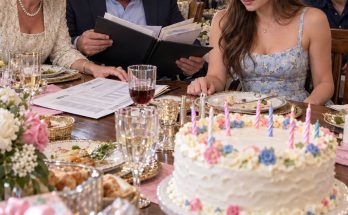
It showed Lily standing in front of a birthday cake.
She was wearing a yellow dress, and her hair was tied back with a ribbon.
Behind her stood Claire and my mother.
Everyone was smiling.
The caption read:
“Lily wanted to know whether Grandma Eleanor would have liked her cake. I told her Eleanor would have asked for a second slice.”
I laughed when I read it.
Then I looked more closely at the photograph.
On the table beside the cake sat the little yellow blanket Grandma had bought.
Lily had insisted that it be part of the celebration.
Claire had explained that the blanket had belonged to the woman who had searched for her.
Lily had listened carefully.
Then she had said, “If Grandma wanted me to have it, I want to keep it safe.”
Claire had cried.
So had my mother.
I saved the photograph.
Then I opened the family group chat and sent it to everyone.
My aunt replied almost immediately.
Look at that beautiful girl.
My uncle wrote:
She has Eleanor’s smile.
My mother sent several heart emojis.
And then Claire wrote something that made me stop scrolling.
I used to wonder whether anyone had ever wanted to find me. Now I know someone spent the last months of her life trying to bring me home.
I read the message several times.
Then I replied:
She did. And she would be proud of you.
Claire called me that evening.
“I’ve been thinking about the money,” she said.
“Again?”
She laughed.
“I know. But I keep thinking about what Eleanor bought with it.”
I leaned back in my chair.
“The apartment deposit?”
“Yes. But not only that.”
She paused.
“She bought Lily a safe place to sleep. She bought me time to get back on my feet. She bought us a chance to begin again.”
I smiled.
“She would have liked that.”
“And she bought something for your family, too.”
“What?”
“The chance to know each other.”
I looked toward the kitchen, where Grandma’s recipe tin sat on the shelf.
Claire continued.
“I know we can’t change what happened. I know we can’t give Eleanor back the day she wanted with us. But because she asked for help, you found the letter. Because you sent the money, I knew someone in the family had listened. And because you called me, I met my mother.”
I swallowed.
“I didn’t do anything extraordinary.”
“Maybe not. But you answered.”
Those two words stayed with me.
You answered.
It sounded so simple.
Yet that was the difference between the morning Grandma asked for help and everything that followed.
She had sent a message.
I had answered.
And in doing so, I had helped carry out something she had been trying to do for months.
I didn’t save her.
I couldn’t.
I didn’t solve every mystery about the past.
I couldn’t do that either.
But I listened.
And sometimes, listening is where everything begins.
That evening, I went to Grandma’s house.
The old clock still hung above the fireplace. Her photograph remained on the mantel.
I placed Lily’s birthday picture beside it.
For a moment, I imagined Grandma looking at the two photographs together.
One showed the woman she had been.
The other showed the family she had helped bring together.
I touched the edge of the frame.
“She’s happy, Grandma,” I whispered. “Claire is happy. Mom is trying. We’re all trying.”
The room was quiet.
Then I smiled through my tears.
“And we learned how to make the biscuits.”
I could almost hear Grandma laughing.
I turned off the light and closed the door behind me.
For a long time, I had believed the most important part of this story was the money I had sent two days before her death.
Now I knew better.
The money was only the beginning.
What Grandma had really bought was a chance.
A chance for a lost daughter to discover that she had been wanted.
A chance for a mother to meet the child she had mourned.
A chance for a little girl to grow up knowing the name of the grandmother who had prepared a room for her.
And a chance for the rest of us to understand that love means very little if we only show it when it is convenient.
Grandma had asked for help.
Everyone had ignored her.
But one person had answered.
And that answer had changed more lives than any of us could have imagined.
THE END.