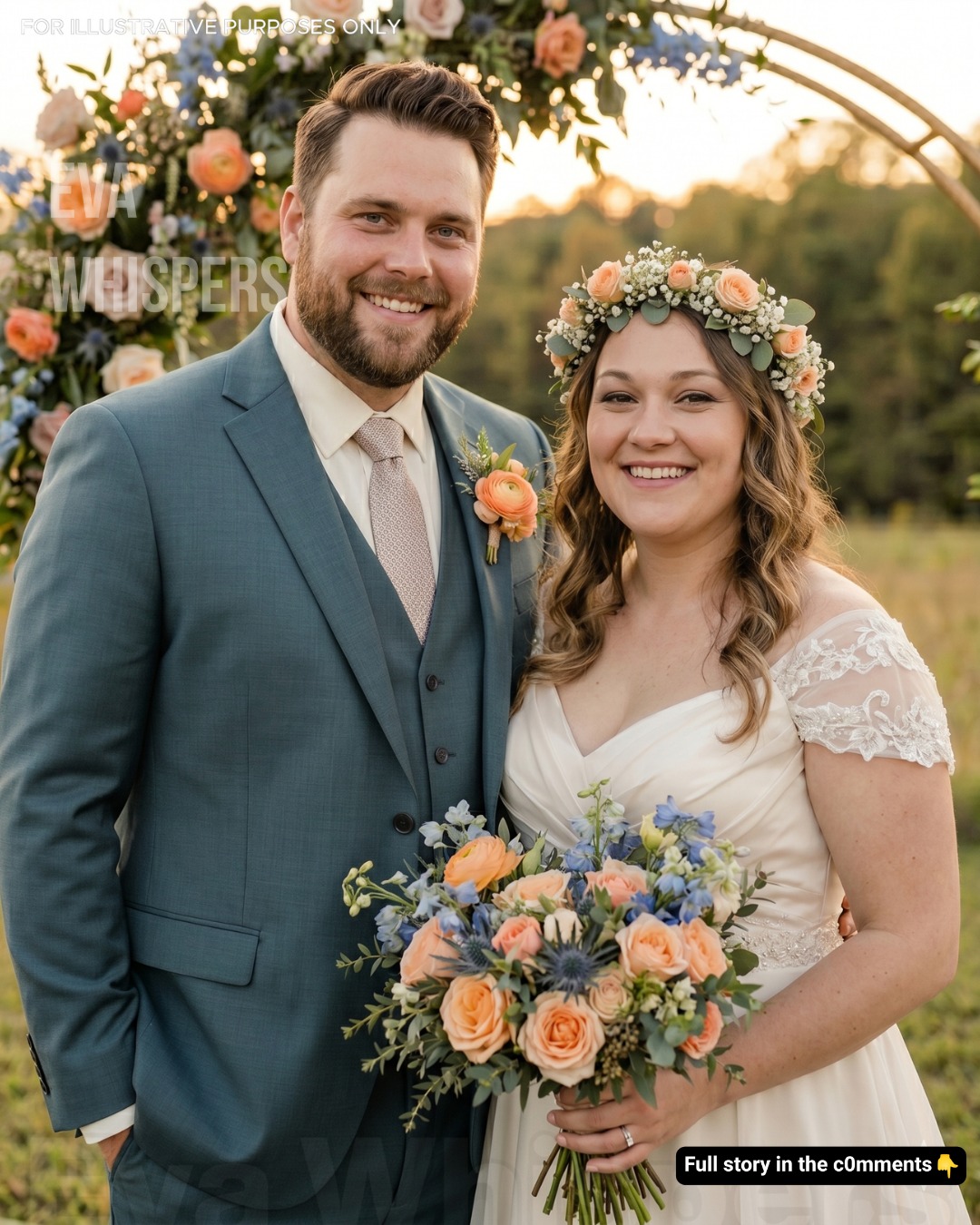
Claire didn’t kiss me when we stepped inside the apartment.
She stopped just beyond the doorway, clutching her purse tightly against her chest. Under the soft hallway light, her expression looked nervous—almost frightened.
“Adam,” she said quietly, “before anything else happens tonight, I need you to promise me something.”
A knot tightened in my stomach.
Even though our marriage was built on an agreement rather than love, I hadn’t expected any real surprises from her.

“Okay,” I said carefully. “What is it?”
She hesitated, forcing a faint smile.
“Whatever happens… please don’t panic. At least not until I explain.”
And standing there, on the first night of a marriage neither of us had expected to be real, I suddenly realized I might be stepping into a story far bigger than my own.
Every moment of my life—every cold family dinner, every impossible expectation, every woman who cared more about my surname than who I actually was—had somehow led me to this exact moment.
I was raised in a mansion so enormous it barely felt like a home.
My father, Richard, treated life like a business negotiation. Even on weekends, he wore tailored suits and answered phone calls between bites of breakfast. My mother, Diana, valued appearances above everything else. She loved spotless rooms, perfect photographs, and carefully curated impressions.
As their only son, I wasn’t raised to become happy.
I was raised to become an extension of the family legacy.
Long before I understood what marriage meant, my parents had already started planning mine. Every party, every gala, every holiday dinner included another “perfect” daughter from another wealthy family.
The message was always clear:
One day, I would marry someone acceptable.
A few months before my thirty-first birthday, my father casually changed my life over dinner.
“If you aren’t married before next year,” he said while setting down his fork, “you’ll be removed from the will.”
Just like that.
No emotion. No discussion.
I stared at him. “You’re giving me a deadline?”
Mother barely looked up from her wineglass. “We’re thinking about your future, Adam. People your age settle down all the time.”
“With someone appropriate,” my father added.
I laughed bitterly. “Appropriate according to who?”
“We introduced you to many excellent women,” he replied.
“Excellent?” I muttered. “Or wealthy?”
My mother sighed impatiently. “This isn’t about money.”
But we all knew it was.
Everything in our family was.

After that, the setup dates became relentless.
Elegant women with polished smiles and rehearsed personalities sat across from me at expensive restaurants, asking questions that sounded more like financial interviews than conversations.
Every encounter felt empty.
One night, after another unbearable dinner, I escaped into a tiny café downtown.
That was where I met Claire.
She moved through the restaurant with effortless warmth, laughing with customers, remembering everyone’s orders without writing anything down. She teased children, joked with exhausted office workers, and somehow made the whole place feel brighter.
When she reached my table, she topped off my coffee and smiled.
“You look like you’ve had a terrible day.”
“You have no idea,” I admitted.
“I’m Claire,” she said.
And before I even realized it, an impossible idea had begun forming in my head.
Two hours later, Claire sat across from me during her break, nibbling on a cookie while eyeing me curiously.
“So,” she said, “what’s this strange proposal you mentioned?”
I took a deep breath.
“My parents are extremely wealthy,” I began. “And they’ve decided I need to get married immediately.”
“That sounds dramatic already.”
“If I don’t marry before my birthday, I lose everything.”
Her eyebrows shot up.
“I’m serious,” I continued. “And I don’t want to marry any of the women they’ve chosen.”
Claire leaned back slowly.
“So what exactly are you asking me?”
I swallowed hard.
“Marry me. Temporarily.”
She stared at me.
“One year,” I explained quickly. “A legal marriage. We act like a happy couple around my parents, then quietly divorce later. I’ll compensate you generously. Everything will be written into a contract.”
Claire folded her arms thoughtfully.
“And during this fake marriage, I’m allowed to tell my family it’s real?”
“Of course.”
She studied me for a long moment before laughing softly.
“You seem either very honest… or completely desperate.”
“Probably both.”
A few hours later, she texted me.
I’m in.

The wedding happened so quickly it barely felt real.
My parents arranged everything at their country club—expensive flowers, tasteless luxury, stiff smiles.
Claire looked beautiful in a simple gown, though she seemed uncomfortable beneath the judgmental stares surrounding her.
Her parents sat quietly near the back of the room, looking proud but slightly out of place among the wealthy guests.
And her mother…
There was something strangely familiar about her face.
I just couldn’t place it.
During the reception, I overheard my mother whisper to my father:
“At least her family dressed appropriately.”
Claire’s mother hugged me afterward and whispered warmly, “Thank you for taking care of her.”
Even though she knew our marriage wasn’t real.
Her father shook my hand firmly.
“Look after each other.”
Oddly enough, they felt more like family than my own parents ever had.
Later that night, I drove Claire home.
The silence between us was heavy, but not uncomfortable.
Inside the apartment, I pointed toward the guest room.
“You can stay there,” I said gently. “We only need to pretend when my parents are around.”
Claire nodded.
But instead of walking away, she slowly opened her purse.
“Before tonight ends,” she whispered, “there’s something you need to see.”
She handed me an old faded photograph.
“Please,” she said softly. “Don’t panic.”
I looked down at the picture.
And the world stopped.
A little girl stood beside a woman wearing a white apron, sunlight shining across both their faces.
Behind them was a swimming pool.
My swimming pool.
The woman beside the child was Martha—our former housekeeper.
The woman who secretly baked cookies for me when my mother wasn’t looking.
The woman who sat beside my bed when I was sick while my parents attended charity galas.
The woman who once wrapped me in towels beside the pool while I cried after swimming lessons.
“Martha…” I whispered.
Suddenly, I understood why Claire’s mother had looked familiar.
Claire took a shaky breath.
“She’s my mother.”
I stared at her speechless.
“My mother recognized your name immediately,” Claire continued. “She told me everything.”
A horrible memory resurfaced.
“She was fired,” I murmured. “My mother accused her of stealing a bracelet.”
Claire’s expression hardened.
“She never stole anything. Your mother found the bracelet later, but by then the damage was already done. Nobody would hire her afterward.”
Guilt crashed through me.
I remembered Martha slipping extra sandwiches into my lunchbox because she worried I wasn’t eating enough.
I remembered how kind she’d been.
And how carelessly my parents destroyed her life.
Claire squeezed my hand gently.
“My mom always talked about you,” she said quietly. “She said you were the loneliest child she’d ever met.”
I felt my throat tighten.
Every warm memory from my childhood belonged to a woman my parents treated as disposable.

The next morning, I called my parents.
“We need to talk.”
We met at the country club restaurant.
The moment we sat down, Claire slid the faded photograph across the table.
“Do you remember her?” she asked my mother calmly.
My mother barely glanced at it.
“You honestly think I didn’t recognize her yesterday?” she replied coldly. “You married the maid’s daughter, Adam. But technically, you fulfilled the agreement.”
Claire’s voice remained steady.
“My mother had a name. Martha.”
Several nearby diners turned toward our table.
My father shifted uncomfortably.
“Lower your voice,” he muttered.
“Why?” Claire asked. “Your wife certainly didn’t whisper when she called my mother a thief.”
My mother’s face stiffened.
“She stole from us.”
“No,” I interrupted. “You found the bracelet later.”
Silence.
“You ruined her life anyway.”
My father looked around nervously.
“Adam, enough.”
But for the first time in my life, I refused to back down.
“No,” I said firmly. “Not this time.”
My mother stood abruptly, humiliated.
“Richard, we’re leaving.”
Claire rose calmly beside me.
“My mother deserved better.”
Without another word, my parents walked out.
And for the first time in years, I felt free.
As Claire and I walked home together, she pulled a folded recipe card from her purse.
“My mom’s cookie recipe,” she said with a small smile.
I laughed softly.
“Thank you,” I told her honestly. “For bringing part of my childhood back to me.”
Claire looked at me carefully.
“You know,” she said, “maybe we don’t have to treat this like just a contract anymore.”
I smiled.
“Are you suggesting an actual date?”
“Maybe.”
Later that evening, while eating warm homemade cookies in our tiny kitchen, I finally understood something Martha had known all along:
Love had never existed in my parents’ wealth.
It existed in kindness.
In warmth.
In the people they considered beneath them.