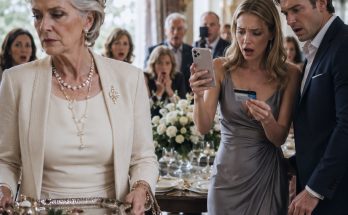
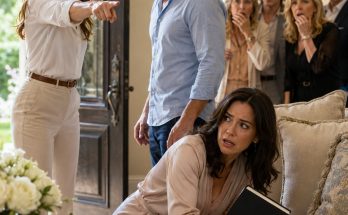
My Dad Locked My Life-Saving Medication In His Safe… Then Smirked, “You Don’t Need Navy Drugs Under My Roof.” He Thought He’d Taken Control. What He Didn’t Know… I’d Already Filed A Military Security Report. 18 Hours Later, Three Government SUVs Stopped At His Front Door.
### Part 1
The rain over northern Virginia came down so hard my windshield wipers looked useless, just two black arms swinging back and forth against a wall of water.
I kept both hands on the steering wheel and watched my knuckles tighten when the familiar tremor began in my left wrist. It started small, like a trapped bird fluttering beneath the skin, then crept toward my elbow.
I checked the dashboard clock.
I still had a little over an hour before my next scheduled dose.
That should have been enough time.
Should have.
My Navy ID sat in the inner pocket of my jacket, pressing lightly against my ribs every time my SUV rolled over a pothole. Most people in my parents’ world thought a military card was just a symbol. A rank. A decoration. Something to mention at dinner when it made the family sound impressive.
To me, it meant responsibility.
It meant my body did not belong to their opinions.
It meant the sealed treatment pouch in my overnight bag was not optional, not casual, and not something anybody had the right to touch.
I had spent fifteen years working medical logistics for the Navy. Field hospitals. Emergency shipments. Evacuation chains. Supply routes nobody talked about at cocktail parties. Somewhere along the way, after too many rough deployments and too many nights sleeping beside humming generators, my nervous system stopped behaving like it trusted the world.
The treatment plan kept me steady. Not perfect. Not cured. Just steady enough to work, drive, sleep, and stand upright without pretending I was fine when I was not.
My parents’ estate appeared through the rain like a photograph from a magazine. White columns. Curved driveway. Lanterns glowing beside the front steps even though it was barely late afternoon. The hedges looked sharp enough to cut paper.
That house had always known how to look welcoming from the outside.
Inside was a different story.
I parked near the front entrance and grabbed my overnight bag from the passenger seat. Before I reached the porch, the front door opened. Not because anyone had been waiting with warmth. Someone had seen me through the security cameras.
My mother stood in the foyer beside a crystal vase full of white orchids. Her name was Vivienne Vale, and she had the kind of beauty people called graceful because they had never watched her use silence like a knife.
She looked me up and down.
“Oh,” she said. “You wore that.”
I glanced at my jeans, clean boots, and navy pullover. “It’s called normal clothing, Mom.”
“It looks temporary.”
“I didn’t know clothing could be temporary.”
“It can when it makes you look like you wandered out of a warehouse.”
I stepped inside and wiped rain from my sleeve. “Nice to see you too.”
She adjusted one orchid without smiling. “Liora has important guests arriving tomorrow. Try not to embarrass her.”
There it was.
Not “How was the drive?”
Not “Are you feeling okay?”
Not “We’re glad you came home.”
Just my younger sister’s name, placed on the table like a law.
Liora had always been the sun in that house. My parents orbited her with money, praise, and excuses. She was an artist now, according to the articles my mother sent to relatives. Her gallery launch was the reason I had been summoned home for the weekend. Not invited. Summoned.
I carried my bag upstairs to the guest room. My old bedroom had become Liora’s “creative study” eight years earlier while I was deployed. Nobody asked. Apparently leaving home to serve your country meant surrendering square footage.
I placed my sealed medical pouch inside the closet beside my suitcase. Then I checked my phone.
Medication reminder in forty-eight minutes.
Still enough time.
Downstairs, laughter drifted from the dining room. I followed the sound and found Liora standing beside two event planners, holding a champagne flute like she had invented champagne.
“There she is,” she said, turning toward me with a smile polished enough to reflect light. “My heroic big sister.”
I knew that tone. Sweet on the surface. Poison underneath.
One of the planners smiled. “Liora said you work in healthcare.”
“I’m a Lieutenant Commander in the United States Navy,” I said.
“Oh,” the woman replied, suddenly unsure where to place me.
Liora laughed softly. “Maren works with supplies and spreadsheets.”
“Sometimes,” I said.
I did not explain medical logistics. I did not explain what happens when the right supply case arrives five minutes before a casualty transport. I did not explain controlled inventories, emergency routing, or why paperwork can save a person’s life when everyone else thinks paperwork is boring.
My father entered from his study before anyone could ask more. Bram Vale wore a charcoal suit inside his own home because casual comfort had always looked too much like weakness to him.
His eyes went to the window.
Then to me.
“Is that your SUV out front?”
“Yes.”
“It’s muddy.”
“It was raining.”
“It ruins the entrance.”
“The weather did most of the work.”
His jaw tightened. “Move it behind the service garage.”
“The driveway is almost empty.”
“It won’t be tomorrow.”
“I’ll move it later.”
“You’ll move it now.”
I felt the tremor reach my fingertips.
I needed to keep my schedule. I needed to eat something. I needed to avoid pointless conflict.
But Bram Vale had built his life on turning pointless conflict into loyalty tests.
I picked up my keys.
“Fine.”
Outside, the rain had turned the service lane into thick brown mud. I drove behind the detached garage and parked where delivery trucks usually sat. When I stepped out, a stronger tremor ran up both arms.
Then I heard the garage door motor.
I turned.
The heavy steel door beside me began lowering.
“Hello?”
No answer.
The door came down slowly, loudly, swallowing the gray daylight inch by inch until it slammed against the concrete with a crash that echoed through the service yard.
For a moment, I stood there in the rain with my overnight bag in one hand and my keys in the other, staring at the closed door.
Someone inside had pressed that button.
Someone had watched me move my car.
And no one came out to ask why I was still standing in the rain.
By the time I returned to the house, dinner had already begun.
### Part 2
The dining room looked like a place where money went to be admired.
White linen covered the long table. Crystal glasses caught the chandelier light. Silver serving dishes lined the center beside arrangements of pale roses and orchids. The room smelled like butter, wine, expensive perfume, and polished wood.
My parents always knew how to make guests feel like they were witnessing something important.
They had never learned how to make their own daughter feel wanted.
My father stood at the head of the table with a glass raised.
“To Liora,” he announced. “The most gifted artist this family has ever produced.”
Everyone applauded.
Liora lowered her eyes like humility was part of the performance. “I couldn’t have done any of this without my parents.”
That was true.
Her gallery sat inside a renovated warehouse my father bought through one of his development companies. My mother handled the donor list, the interviews, the charity board invitations, even the private previews. I once heard my father’s accountant say the launch had already passed seven figures before a single painting sold.
Meanwhile, I bought my first used car with money saved from training pay and a summer job at a marina.
Independence is only admired in families that are not offended by it.
I pulled out a chair near the end of the table.
My mother’s smile did not move. “Maren is probably exhausted. Government work doesn’t prepare people for social evenings.”
A few polite laughs floated around the table.
I sat anyway.
“I’ve survived procurement reviews at the Pentagon,” I said. “Dinner should be manageable.”
A man halfway down the table laughed for real. Liora’s smile tightened.
Small victory.
A server placed a plate in front of me. Steak, roasted potatoes, green beans tied with something that looked decorative and unnecessary. I should have been hungry. Instead, my stomach tightened as numbness spread through my fingers.
I checked my watch under the edge of the table.
Nine minutes overdue.
I needed my treatment pouch.
Now.
I pushed my chair back. “Excuse me. I’ll be right back.”
Nobody asked if I was okay.
The guest room was exactly as I had left it.
Except the medical pouch was gone.
At first, I searched calmly. Closet. Suitcase. Bathroom. Desk. Nightstand. Under the bed. Inside every zipper pocket.
Nothing.
Then I emptied the entire overnight bag onto the bed. Clothes, charger, toiletries, folded Navy sweatshirt, spare socks.
No sealed brown pouch.
I stood very still.
I had not misplaced it. I had placed it in the closet beside the suitcase. I remembered the motion exactly because I always kept it away from heat, sunlight, and strangers.
My pulse climbed, but I did not panic.
Training makes panic feel like a luxury.
I walked downstairs and found my father in the hallway outside his study, pouring bourbon into a glass.
He looked at my face and smiled faintly.
“You look pale.”
“I need my medical pouch.”
He took a sip. “Do you?”
“My treatment pouch is missing.”
“Then perhaps you should be more careful with your belongings.”
“You went through my bag.”
“I had it inspected.”
“My medical property is not yours to inspect.”
“This is my house.”
“That is my treatment.”
He turned his gold signet ring around his finger, the way he always did when he believed he was being reasonable and everyone else was being difficult.
“I removed something dangerous.”
My whole body went still. “You took my medication.”
“I secured it.”
“You stole it.”
“I confiscated it.”
“You do not get to rename theft.”
His smile thinned. “Those military treatments have made you dependent.”
“They keep my nervous system functioning.”
“They keep you weak.”
“No. Taking them from me does that.”
“You’ve always been dramatic.”
“I am overdue.”
“You’ll survive.”
“My physician would disagree.”
“I am your father.”
“And not my doctor.”
The hallway seemed quieter now. Even the party noise from the dining room faded behind the thick walls.
“Where is it?” I asked.
“In my study safe.”
I looked at the mahogany door. “Open it.”
“No.”
“My treatment schedule is already late.”
“Good. Maybe you’ll realize you don’t need it.”
I stared at him.
For years, I had mistaken his ignorance for arrogance. In that moment, I understood it was worse.
It was control.
He did not care what the treatment did. He cared that something essential to my life existed outside his permission.
He stepped closer. I could smell bourbon and expensive cologne.
“You have spent too many years letting people salute you.”
“They salute the uniform.”
“They obey the rank.”
“That rank means responsibility.”
“In this house,” he said, raising one finger and pressing it against my jacket, directly over the Navy ID in my pocket, “that rank means nothing.”
His finger stayed there for one extra second.
Then he stepped back.
I wanted to shout. I wanted to grab the study door handle and force it open. I wanted to ask why a father would rather watch his daughter shake than admit he had crossed a line.
Instead, I walked away.
Because the tremor had spread to both hands, and anger would not unlock a safe.
Upstairs, I closed the guest room door and leaned against the wall.
My vision blurred at the edges.
My phone flashed again.
Missed dose.
I sat on the bed and forced myself through box breathing.
Four seconds in.
Hold.
Four seconds out.
Hold.
By the fifth cycle, my hands shook a little less.
Then someone knocked once and opened the door without waiting.
Liora stepped in carrying a black folder and a glass of white wine.
“You look terrible,” she said.
“I’d return the compliment, but I’m conserving energy.”
She smiled. “Still sharp.”
“Still standing.”
“For now.”
She placed the folder on the bed.
“What is that?” I asked.
“A solution.”
I opened it.
The first page was a durable power of attorney.
The second authorized liquidation of my military retirement investment account.
My eyes stopped on the balance estimate.
$684,912.47.
Years of deployments. Years of automatic contributions. Years of choosing practical apartments, used furniture, and quiet savings because I thought the future mattered.
Every dollar was a piece of my life I could never get back.
I looked up slowly. “You’re out of your mind.”
“My gallery has temporary cash flow issues.”
“Temporary does not require my retirement.”
She sipped her wine. “Family helps family.”
“Family does not hide medication in a safe.”
“You’ll get it back.”
“When?”
“When you stop being selfish.”
The room narrowed around her words.
“So this was planned.”
She did not answer.
She did not have to.
I thought of my father ordering me behind the garage. The door lowering. The missing pouch. The safe.
All of it was a trap dressed up as a weekend invitation.
Liora leaned closer.
“You’ll sign before this weekend is over.”
“No.”
Her eyes dropped to my shaking hands.
“Yes,” she said softly. “You will.”
Then she smiled in a way that made my stomach turn.
“A broken sailor isn’t worth much without her little pouch.”
The door clicked shut behind her.
And I finally understood that my family had not misunderstood my condition.
They had weaponized it.
### Part 3
One hour and twenty-three minutes overdue.
That was the number glowing on my phone when I sat at the writing desk with both hands pressed flat against the wood.
My neurologist’s voice came back to me with irritating clarity.
“Don’t try to be tough, Lieutenant Commander. Your body doesn’t care about pride. Follow the schedule.”
I had followed it for nearly three years.
Until my family decided suffering was a negotiation tool.
Three alerts waited on my treatment app. The last one had shifted from yellow to red. I closed it without confirming anything. I could not log a dose I had not taken. I could not lie to make a bad situation look clean.
People outside the military imagine medication is just a bottle with your name on it. They do not see the custody records, the required storage logs, the refill tracking, the physician notes, the inventory verification, the compliance questions.
With some treatments, especially those issued through military medical channels, documentation matters because every missing item creates risk.
Loss.
Tampering.
Diversion.
Abuse.
Fraud.
My father thought he had locked away his daughter’s “problem.”
He had actually broken a documented chain.
In the bottom drawer of the desk, I found the secure Navy device I kept for official communication. It was black, plain, and heavier than a normal phone. No social media. No games. No family group chats full of fake smiles and holiday photos.
Just work.
I pressed my thumb to the reader.
Access verified.
The medical dashboard opened immediately.
Dose not logged. Response required.
Three options appeared.
Medication administered.
Medical delay authorized.
Continue monitoring.
My finger hovered over the third option. It would have been easier. A delay note. A simple explanation. No fuss tonight. No scandal during Liora’s precious launch weekend.
Then my hand dropped.
No.
A delay was a canceled flight.
A pharmacy problem.
A storm.
This was theft.
I opened the administrative exception menu.
Compliance.
Treatment custody incident.
Unauthorized access.
The device asked for a description.
I typed slowly because my hands would not cooperate.
“Federally tracked treatment pouch removed from authorized possession without consent while off duty. Civilian individual admitted placing it in private safe. Current storage conditions unknown. Scheduled dose missed.”
I stared at the words.
Facts.
No anger.
No accusation beyond what had already happened.
Then the final menu appeared.
Routine review.
Medical consultation.
Immediate compliance notification.
My breathing slowed.
That last option mattered.
Using it when unnecessary invited questions.
Using it when necessary started a machine no family name could charm, threaten, or delay.
A line from annual compliance training came back to me.
“The treatment belongs to the patient plan. The accountability belongs to the United States government.”
I selected immediate notification.
The screen asked for final authentication.
Name: Lieutenant Commander Maren Vale.
Status: Active duty.
Medical treatment: Federally tracked.
Custody flag: Severed.
Continue?
Outside the window, laughter drifted up from the dining room. Glasses clinked. Someone applauded my sister again.
My family believed they were in control of the evening.
They had no idea I was staring at the one button that could remove the entire situation from their hands.
I pressed yes.
The device dimmed.
Encrypted transmission in progress.
My hands shook as the progress bar moved across the screen.
Not from fear.
From recognition.
Somewhere inside Navy Medical Command, my report would connect to inventory records, prescription logs, custody documents, and compliance requirements. No one needed to believe my feelings first.
The records would speak.
Transmission sealed.
Compliance protocol activated.
Case reference generated.
No siren screamed outside.
No helicopter landed on the lawn.
No dramatic voice called from the hallway.
Just a silent confirmation disappearing into a system my father did not control.
I powered off the device and sat in the dark room while my body got worse and the house below me celebrated.
The next morning, I woke after less than three hours of broken sleep.
My hands would not close properly around my jacket zipper. My shoulders felt locked. My vision sharpened and blurred in waves depending on how quickly I turned my head.
Fourteen hours overdue.
The house had transformed overnight.
Florists filled the foyer with white orchids and pale roses. Caterers carried silver trays through the halls. A string quartet tuned near the staircase. Temporary art walls lined the ballroom, each one lit by soft white spotlights.
It smelled like flowers, coffee, perfume, and money.
Liora’s gallery preview was not really about art.
It was about proving she belonged among people who paid more for a painting than most families paid for a car.
I stood near a marble column because standing in the open took too much effort.
A young catering assistant approached with a bottle of water.
“Ma’am, would you like this?”
“Yes. Thank you.”
He hesitated. “You don’t look okay.”
“I’ll manage.”
His eyes flicked to my posture, then my hands. “I was a Navy corpsman before catering.”
That explained why he noticed.
I gave him a small nod. “Then you know what ‘I’ll manage’ usually means.”
He did not smile. “It usually means someone should be paying closer attention.”
Before I could answer, my mother waved me over with two fingers.
I crossed the foyer carefully.
She stood beside a state senator and his wife.
“Senator Harrow,” she said, “this is our older daughter, Maren.”
He extended his hand. “A pleasure.”
“You too, Senator.”
My mother touched his sleeve. “Maren has had a difficult few years. She came home to get her footing again.”
There it was.
The story.
Not officer.
Not daughter.
Not professional.
Just unstable woman returning home.
“I actually serve as a Lieutenant Commander in the United States Navy,” I said.
The senator blinked. “Oh. I appreciate your service.”
My mother laughed lightly. “She has always been very busy with government things.”
Government things.
Fifteen years reduced to a phrase that sounded like filing receipts at a post office.
“Medical logistics,” I said. “Operational support.”
The senator’s expression changed. Respect returned to his face. “That sounds significant.”
“It can be.”
Mother’s smile hardened. “Well, Liora is the artist in the family.”
I stepped back before my body or my patience failed.
Across the ballroom, Liora stood beneath a spotlight explaining a large blue painting to a cluster of donors.
“This collection explores emotional freedom,” she said.
I almost laughed.
Nothing captured emotional freedom like blackmailing your sister for retirement money.
The afternoon stretched.
Guests whispered when my hand shook visibly.
My father gave a speech about excellence, vision, and character.
Liora dabbed at her eyes like she had personally overcome hardship by spending other people’s money beautifully.
Then the crystal glasses on the nearest table trembled.
At first, I thought it was thunder.
But thunder did not move with precision up a gravel driveway.
One by one, guests turned toward the front windows.
Three dark SUVs rolled through the estate gates.
No lights.
No markings.
No rush.
They moved in a clean line to the front entrance and stopped in formation across the circular drive.
The string quartet fell silent.
My father lowered his champagne glass.
“What is this?” someone whispered.
I already knew.
The report had not disappeared into a computer.
It had reached people who documented facts for a living.
The lead SUV door opened.
Then another.
Then six more.
Uniformed Navy personnel stepped out into the pale afternoon light.
And for the first time in my life, my parents’ house went silent for a reason that had nothing to do with them.
### Part 4
The front doors opened before any guest reached them.
Seven uniformed personnel entered with the calm, practiced movement of people who had no interest in drama because procedure was stronger.
They did not shout.
They did not threaten.
They simply took control of the room by understanding exactly why they were there.
At the front walked Chief Hospital Corpsman Oren Voss. I recognized the name from compliance messages, though I had never met him in person. His dress uniform looked sharp enough to cut paper. Every ribbon was aligned. His face carried no anger, no amusement, no sympathy.
Just standards.
His eyes swept the foyer once.
Guests.
Entrances.
Security cameras.
My father.
My mother.
Then me.
I straightened automatically despite the stiffness in my back.
Chief Voss gave one small nod.
He had found the reporting officer.
That was enough.
My father stepped forward wearing his investor smile, the one that usually made contractors apologize for problems he had caused.
“Good afternoon,” he said. “I’m Bram Vale. This is a private event, so if there’s been some misunderstanding—”
Chief Voss did not take his offered hand.
The silence stretched just long enough for every guest to notice.
My father lowered his hand slowly.
Chief Voss spoke. “Lieutenant Commander Maren Vale.”
“Present.”
Every face turned toward me.
I stepped away from the column. My right hand shook. I did not hide it this time.
Chief Voss watched the tremor, then looked back at my father.
“Are you Bram Vale?”
“I just told you that.”
“Answer clearly.”
“Yes.”
“Are you in possession of federally tracked medical treatment property assigned to Lieutenant Commander Vale?”
The room changed.
Not loudly.
But completely.
My father laughed as though the question were embarrassing for everyone except him.
“This is a family matter.”
“No, sir.”
“She is my daughter.”
“She is an active-duty officer under a documented treatment plan.”
“We secured medication because she has not been herself.”
“Did she voluntarily surrender it?”
My father’s smile thinned. “That’s not how I’d phrase it.”
“How would you phrase it?”
“I placed it in a safe location.”
“So you are in possession of it.”
“I am protecting her.”
“From whom?”
He hesitated.
That hesitation said more than any answer.
My mother stepped forward, her diamond bracelet flashing under the chandelier. “Chief, Maren has been under tremendous stress. We’re only trying to help our daughter.”
Chief Voss turned to her. “Identify yourself.”
“Vivienne Vale. Her mother.”
“Did you participate in removing the treatment pouch from Lieutenant Commander Vale’s custody?”
“We didn’t remove anything. We secured it.”
“That was not the question.”
Her lips parted. She looked at my father.
He stepped in again. “This conversation is humiliating my family in front of our guests.”
Chief Voss removed a small notebook from his pocket.
“Noted,” he said.
My father blinked. “Noted?”
“Yes, sir. You are concerned about embarrassment.”
A few guests shifted uncomfortably.
My father’s face flushed.
“You people have no right to walk into my home like this.”
Chief Voss’s expression did not change. “We have a compliance authorization based on a reported custody breach involving federal medical property.”
“It’s medication.”
“It is federally tracked treatment property.”
“She’s dependent on it.”
“She is prescribed it.”
“I locked it away because I believed it was dangerous.”
“Are you a physician?”
“No.”
“Neurologist?”
“No.”
“Military medical officer?”
“No.”
“Pharmacist?”
“No.”
“Then your belief is not medical authority.”
The sentence landed so cleanly that nobody spoke for several seconds.
Liora appeared near the hallway, pale now beneath her makeup.
“This is ridiculous,” she said. “Maren is making everything dramatic because she doesn’t support my launch.”
Chief Voss looked at her. “Identify yourself.”
“Liora Vale.”
“Did you participate in pressuring Lieutenant Commander Vale to sign financial documents while her treatment was withheld?”
The air left the room.
My father turned sharply toward her.
Liora’s mouth opened and closed.
I had not included that detail in my first report. Not fully. I had documented the missing treatment pouch. I had documented unauthorized custody. I had not known whether the financial coercion belonged in the initial incident.
But apparently my treatment app, missed dose, and the power of attorney folder had already become part of my follow-up statement when I confirmed the custody issue with a compliance nurse that morning.
The Navy did not gossip.
But it noticed patterns.
Liora tried to recover. “I brought family documents. That’s all.”
“Did you tell Lieutenant Commander Vale she would receive her treatment after cooperating?”
“No.”
I looked at her.
Her eyes darted away.
Chief Voss wrote one line in his notebook.
My father raised his voice. “Enough. You’re twisting a private disagreement into something criminal.”
Chief Voss closed the notebook.
“Sir, unauthorized interference with federally tracked treatment assigned to an active-duty service member is not private.”
“This is my house.”
“The location is irrelevant.”
“My safe is private property.”
“Not when it contains federal medical property.”
My father folded his arms. “You’re not opening my safe.”
Chief Voss looked toward two Navy security officers. “Establish controlled perimeter.”
“Yes, Chief.”
The officers moved smoothly. One to the front entrance. One to the hallway. Two near the study. They did not touch guests. They did not frighten people on purpose.
They simply removed the illusion that my father was still hosting.
The senator who had spoken to me earlier took one careful step back from my mother.
A judge near the buffet suddenly stared at his shoes.
My parents had spent years collecting influential people like artwork.
Now every piece in the room wanted distance.
Chief Voss took a sealed folder from a medical compliance specialist.
“This is an audit authorization,” he said. “We require immediate physical verification of the assigned treatment pouch, storage condition, seal status, and inventory integrity.”
My father laughed once, but there was no confidence in it.
“I’m calling my attorney.”
“You may.”
He lifted his phone.
No one stopped him.
That seemed to unsettle him more than resistance would have.
An officer recorded the time.
My father slowly lowered the phone without dialing.
Chief Voss spoke again. “Where is the pouch?”
My father said nothing.
“Mr. Vale.”
“In my study safe.”
“Then the audit begins there.”
My mother’s voice cracked. “You can’t treat us like criminals.”
Chief Voss looked at her evenly.
“Ma’am, we are treating this as a custody breach.”
The difference did not comfort her.
The hallway to my father’s study suddenly looked longer than it ever had. Family portraits watched from the walls. Ski trips. Charity galas. Liora’s graduation. My commissioning photo, tucked at the far end near a thermostat, where guests rarely looked.
My father stopped at the study door.
“This has gone far enough.”
“No,” Chief Voss said. “It has reached the safe.”
For the first time in my life, Bram Vale opened his private study because someone else told him to.
### Part 5
My father’s study smelled like leather, bourbon, and old paper.
It had always been his kingdom.
Dark shelves. Brass desk lamp. Persian rug. Oil painting of a sailing ship over the wall safe. As a child, I thought important men became important because they owned rooms like this.
As an adult, I knew some men built rooms like this so no one would question what they hid inside.
Chief Voss entered first. Two Navy medical compliance specialists followed with gloves, scanners, and sealed evidence bags. Behind them came two Fairfax County detectives who must have arrived during the foyer exchange.
One was tall, gray-haired, and tired in a way that seemed permanent. “Detective Calder.”
The other, a woman with sharp eyes and a notepad already open, nodded. “Detective Ames.”
They did not take over.
They watched.
This was still the Navy’s audit.
For now.
Chief Voss pointed toward the painting. “Expose the storage compartment.”
My father pulled the painting aside with visible irritation. The safe door appeared.
A compliance specialist photographed it before anyone touched it. Another recorded the safe brand, serial number, wall location, room condition, and time.
“You people write down everything,” my father muttered.
Chief Voss answered, “That is why our records hold up.”
My father’s mouth tightened.
“Open it,” Chief Voss said.
“I already told you what’s inside.”
“Open it.”
My father placed his hand over the keypad.
His first attempt failed.
Invalid entry.
The room was so quiet the little electronic buzz sounded enormous.
He tried again. This time, the lock clicked.
The heavy safe door opened.
Inside, sitting on the middle shelf, was my brown sealed medical pouch.
Seeing it did not bring relief.
It brought a kind of cold anger I had no name for.
That pouch had sat behind steel while my hands shook, while my vision blurred, while my sister asked me to sign away my future.
My father had not lost control.
He had chosen control.
Chief Voss spoke. “Photograph before retrieval.”
The specialist documented everything. Shelf position. Seal condition. Safe interior. Surrounding items.
Then he put on fresh gloves and removed the pouch.
“Seal appears intact.”
“Scan it.”
The scanner beeped once.
“Assigned to Lieutenant Commander Maren Vale. Inventory match confirmed.”
I let out a slow breath.
Chief Voss turned slightly toward me. “You will not resume treatment until medical verification is complete.”
“I understand.”
My father seized on that. “See? Even you admit she shouldn’t take it.”
Chief Voss looked at him. “Because you compromised custody.”
My father fell silent.
The specialist opened the outer seal according to procedure and checked each internal container against the inventory log. One by one, the numbers matched.
Then his hand paused inside the safe.
“Chief.”
“What do you have?”
“There’s a folder underneath.”
My father said quickly, “Personal files.”
Detective Ames looked up.
Chief Voss did not touch it. “Does the folder contain medical property?”
“No,” my father snapped.
“Then it may fall outside our primary audit.” Chief Voss looked to Detective Calder. “But it was located beneath recovered federal medical property in a safe involved in a custody incident.”
Detective Calder stepped closer. “Mr. Vale, what’s in the folder?”
“Business documents.”
“What kind?”
“Private.”
Detective Ames’s eyes moved to the folder. “May we view them?”
“No.”
Detective Calder nodded as if he expected that answer. “Then we’ll preserve the scene while we contact the Commonwealth Attorney.”
My father’s confidence flickered.
“Over paperwork?”
“Over possible evidence discovered during a lawful compliance recovery.”
“It has nothing to do with her medication.”
“Maybe not,” Detective Calder said. “That is what makes it interesting.”
For twenty minutes, nobody moved much.
Guests whispered beyond the closed study door. My mother sat in a leather chair twisting a tissue in both hands. Liora stood by the bookshelves, staring at the floor. She looked younger suddenly, like a child waiting for someone else to clean up a mess she had helped make.
My symptoms kept pressing against me. My jaw tightened. My shoulders ached. My fingers shook so badly I tucked them under my arms.
The former Navy corpsman from catering appeared at the doorway with a glass of water and looked at Chief Voss first.
“Permission to assist, Chief?”
Chief Voss glanced at me, then nodded. “Water only. No medication until cleared.”
The man handed it to me.
His voice was low. “Hang in there, ma’am.”
“I’m trying.”
“I know.”
That simple sentence almost undid me.
Not sympathy.
Recognition.
Detective Calder’s phone rang. He stepped into the hall, spoke quietly, then returned.
“Authorization granted to inspect the folder in place.”
My father stood. “Absolutely not.”
Detective Ames took out gloves. “Mr. Vale, do not approach the safe.”
“This is my study.”
“And now it is a documented scene.”
The words struck him harder than any shout.
Detective Ames lifted the gray folder and placed it on the desk.
It was thick. Too thick for “personal files.”
When she opened it, the top page showed financial ledgers for Liora Vale Fine Art LLC.
Then another company name.
Harbor Finch Holdings.
Then another.
Ashwick Cultural Trust.
Then bank statements.
Wire confirmations.
Tax notices.
Invoices with matching numbers and different amounts.
Liora whispered, “Dad?”
My mother’s tissue stopped twisting.
Detective Calder leaned over the pages. “These are not gallery sketches.”
My father said, “Those were kept for my daughter.”
Liora’s head snapped toward him. “What?”
He did not look at her.
Detective Ames turned another page. “Offshore transfers.”
Calder read over her shoulder. “Several.”
Another page.
“Charity funds routed through consulting entities,” Ames said.
“That sounds bad,” the catering assistant murmured from the doorway, then wisely stepped back.
My father pointed at the folder. “Those documents are out of context.”
Detective Calder looked at him. “Most documents are, until we find the rest.”
Then Ames pulled out a smaller envelope.
Inside were copies of driver’s licenses, signatures, and account forms.
None of the names belonged to anyone in my family.
Detective Ames’s face changed.
“Calder.”
He looked once and exhaled.
“Possible identity fraud.”
Liora’s voice cracked. “You said the gallery was just in debt.”
My father did not answer.
“Dad,” she whispered. “What did you do?”
That was when I understood.
The safe had not just held my treatment pouch.
It had held the first loose thread of their entire empire.
And the Navy medic had just pulled it.
### Part 6
The ballroom was nearly silent when we came out of the study.
Only half the guests remained. The others had slipped away as soon as it became clear that staying might make them witnesses instead of spectators.
The white orchids still looked perfect. The champagne still sparkled. Liora’s paintings still glowed under rented lights.
But the house felt stripped.
Without confidence, wealth looked like furniture.
Two local officers entered through the front door carrying sealed paperwork. Detective Calder met them near the staircase. He reviewed the pages, signed one, and handed another to Detective Ames.
My mother stood beside my father, her face pale beneath flawless makeup.
“What is that?” she asked.
Detective Calder looked at her with professional calm. “Warrants.”
Liora made a small sound.
My father straightened. “This is absurd.”
“No, sir,” Calder said. “This is probable cause.”
“My attorney isn’t here.”
“You may contact your attorney.”
“My guests are watching.”
“Yes.”
That one word nearly broke him.
For Bram Vale, punishment was not the worst thing.
Being seen was.
Detective Ames turned to Liora. “Liora Vale, we need to ask questions regarding several business entities registered under your name.”
“My accountant handled everything.”
“These signatures appear to be yours.”
“I signed what Dad told me to sign.”
My father’s face hardened. “Do not speak.”
Liora stared at him.
For the first time, she did not obey instantly.
“You told me everything was legal.”
“Liora,” my mother warned.
“No.” Liora’s voice rose. “You said the gallery just needed temporary transfers. You said the accounts were normal. You said keeping documents here was safer.”
Detective Ames wrote quickly.
My father closed his eyes.
Liora turned toward me suddenly, as if my face gave her somewhere to put the panic.
“You did this.”
I said nothing.
“You called them.”
“I reported my treatment pouch stolen.”
“You humiliated us during my launch.”
“You planned this during your launch.”
Her face twisted. “You always hated that people loved me.”
“No, Liora. I hated that people hurt me to keep loving you.”
She flinched, but only for a second.
Then the anger came back because anger was easier than shame.
“All of this over medicine?”
Chief Voss, standing near the foyer, answered before I could.
“All of this over unauthorized custody, missed treatment, coercion concerns, and evidence discovered during recovery.”
Liora stared at him.
He added, “Accuracy matters.”
My mother began crying then.
Softly at first.
The same way she cried at charity luncheons when talking about children she had no intention of helping after dessert.
“Maren,” she whispered. “Please tell them it was a misunderstanding.”
I looked at her.
There was a time when that voice would have pulled me apart. I would have rushed to comfort her, even if I was the one bleeding inside. I would have softened the truth, apologized for my tone, accepted the blame just to restore peace.
But peace built on lies always sends the bill to the quietest person in the room.
“No,” I said.
Her tears spilled over. “We were trying to protect you.”
“You were trying to control me.”
“We are your parents.”
“You are not my physicians.”
“We made mistakes.”
“You made choices.”
My father finally looked at me.
His eyes were full of fury, but beneath it was something new.
Fear.
“You think the Navy will protect you forever?”
I almost laughed, but I was too tired.
“I don’t need forever. I needed them yesterday.”
Detective Calder stepped toward him. “Bram Vale, you have the right to remain silent.”
The room froze at the first sentence.
People hear those words on television all the time. In real life, they land differently. They make the air colder.
My father did not fight.
Neither did my mother.
Liora began crying only when an officer asked her to put down her wine glass.
Outside, through the tall front windows, I saw camera flashes.
Reporters had arrived.
Someone must have followed the SUVs or heard the police call. Two local news vans waited beyond the drive. Photographers stood near the gates, lenses aimed at the front doors.
My mother saw them and made a broken sound.
“No. Not outside.”
Detective Ames answered gently. “Ma’am, we need to go.”
The guests moved apart without being asked, creating a path through the foyer.
A strange thing happened then.
The same people who had applauded Liora an hour earlier would not look at her.
The same people who had praised my father’s leadership lowered their eyes.
The same people who had smiled at my mother’s charity invitations stepped back as if scandal were contagious.
My family had built a life around admiration.
They had forgotten admiration is rented, not owned.
As officers guided them toward the front door, Liora turned back.
Her mascara had begun to run.
“You ruined everything!”
“No,” I said. “I stopped helping you hide it.”
“You’ll regret this.”
I held her stare.
“No. I already regret waiting this long.”
My mother reached toward me as she passed.
I did not step away.
But I did not take her hand.
“Please,” she whispered. “Family doesn’t do this.”
I looked at the woman who had watched me shake for a day because my suffering was useful.
“You’re right,” I said. “Family doesn’t.”
Her face collapsed.
Then the officers led them outside.
Camera flashes burst through the open doorway. Reporters called questions. My father kept his chin lifted, trying to look wronged. My mother hid her face. Liora stared straight ahead like the entire world had betrayed her by noticing what she had done.
The transport doors closed one after another.
Heavy.
Final.
The convoy pulled away.
The reporters followed.
The guests disappeared.
The music never resumed.
I stood alone in the foyer beneath the chandeliers, shaking so badly I had to grip the back of a chair.
Chief Voss approached with my sealed treatment case in a government transport container.
“Lieutenant Commander Vale,” he said. “Your medication has been recovered and verified. Medical review is waiting.”
I nodded.
“Thank you, Chief.”
He looked at me for a moment.
Then he said, “You filed correctly.”
It was not comfort.
It was better.
It was confirmation that the truth had been enough.
### Part 7
Three weeks later, Norfolk smelled like salt water, diesel, hot coffee, and wet rope.
I had missed that smell.
Not because it was pleasant. It was not. It clung to your clothes and followed you into your car. But it was honest. A working waterfront never pretended to be anything else.
Forklifts moved pallets near the pier. A tugboat pushed against the side of a cargo vessel. Someone shouted inventory numbers across the dock while gulls circled overhead like tiny opportunistic lawyers.
No crystal chandeliers.
No orchids.
No one asking me to smile smaller so someone else could shine brighter.
Just work.
I had spent three weeks at Naval Medical Center Portsmouth after the incident. Proper treatment. Monitoring. Bloodwork. Interviews. Rest I did not know how badly I needed until my body stopped fighting me.
The tremors faded first.
Then the stiffness.
Then the pressure behind my eyes.
The final medical review cleared me for limited duty before full return.
The corpsman handed back my updated treatment schedule and looked me dead in the eye.
“Same interval,” he said. “No hero behavior.”
“I’m offended that you think I need that warning.”
“You absolutely need that warning.”
Fair.
Every official interview had asked for facts.
Not feelings.
Not family history.
Facts.
Who removed the pouch?
Who admitted possession?
When was the dose missed?
What documents were presented?
What words were used?
I answered all of it.
Nobody asked why I did not protect my parents.
Nobody asked whether I could forgive them before the investigation became inconvenient.
The legal process moved without needing my permission after that. Financial crimes. Tax issues. identity misuse. Evidence handling. Coercion. The list grew longer every time someone opened another account record.
My parents’ estate was no longer hosting gallery previews.
It was hosting search teams.
Liora’s gallery closed within days. Her donors vanished faster than guests leaving a room with federal officers in it. Articles that once called her “a bold emerging voice” now used phrases like “ongoing investigation” and “financial irregularities.”
My mother sent one message through her attorney.
“Your mother hopes you will remember she loves you.”
I did not answer.
Love that appears only after consequences is not love.
It is strategy wearing perfume.
My father sent nothing.
That suited us both.
Chief Voss found me near the logistics office, holding a paper cup of coffee that tasted like burnt cardboard.
“Lieutenant Commander.”
“Chief.”
“How are you feeling?”
“Better.”
“I read the clearance.”
“I figured you would.”
The smallest hint of a smile touched his face. For him, that was practically a parade.
“I wanted to thank you,” I said.
“You already did.”
“Not properly.”
“You filed the report correctly.”
“I almost didn’t.”
“But you did.”
We stood side by side looking toward the harbor.
“My father kept calling it a family matter,” I said.
Chief Voss folded his hands behind his back. “People use that phrase when they want accountability to stop at the front door.”
“That doesn’t work?”
“No.”
The answer was so dry I almost smiled.
He continued, “A family matter ends where someone’s health, safety, property, or legal rights begin.”
I let that settle.
For years, I had treated my parents’ cruelty like weather. Something unpleasant but unavoidable. Something I could prepare for, endure, and leave behind. I never called it what it was because naming it meant admitting I had stayed too long.
Chief Voss glanced at me. “You didn’t create the consequences.”
“I know.”
“Do you?”
I looked at the water.
The honest answer was no.
Not completely.
Some part of me still heard my mother crying. My sister screaming. My father calling me disloyal. Old training from childhood runs deeper than any military habit. A person can know the truth and still feel guilty for refusing the lie.
“I’m learning,” I said.
He nodded. “Good enough.”
Then he left for a meeting, because Navy chiefs do not hover around emotional moments unless paperwork requires it.
I reached into my jacket pocket and felt my old dog tags.
The chain was worn smooth from years of deployments. My father hated them. He once told me they made family dinners feel “grim.” Another time, he said guests did not need reminders that I had chosen “that life.”
That life.
The one that gave me structure.
The one that paid me fairly.
The one that documented what happened instead of asking who looked bad.
I wrapped the chain around my fingers and let the metal warm in my hand.
My name.
My blood type.
My service number.
Nothing flashy. Nothing expensive.
Just true.
A text came through from one of my fellow officers.
“O’Malley’s tonight? Everyone’s buying since you’re cleared again.”
I laughed out loud.
No speech.
No dramatic welcome back.
Just too many appetizers, bad fries, and people arguing over who owed whom from last month’s trivia night.
Perfect.
As I started walking toward the logistics building, something else weighed down my pocket.
A ring of keys.
Front gate.
Side entrance.
Wine cellar.
Study.
My parents had insisted I keep them years ago because, as my mother always said, “Family should have access.”
I turned the keys over in my palm.
Steel.
Ordinary.
Useless.
There was not a single room in that house I wanted to enter again.
Not the dining room where my achievements became jokes.
Not the guest room where I shook alone.
Not the study where my father locked away my treatment and accidentally unlocked his own lies.
I walked to the edge of the pier.
The water below moved dark and steady between the pilings.
For a moment, I thought I would feel something dramatic. Rage. Victory. Grief. Freedom arriving like music.
Instead, I felt quiet.
Maybe that was better.
I opened my hand.
The keys dropped.
They hit the water with a small splash and disappeared beneath the surface.
No audience.
No applause.
No final argument.
Just the end of access.
I adjusted my sea bag on my shoulder and walked toward my ship.
For thirty years, I had believed walking away from my family meant losing something.
Now I understood.
I was not walking away from home.
I was walking toward one.
### Part 8
The thing about betrayal is that it rarely arrives looking like betrayal.
Sometimes it looks like a dinner invitation.
Sometimes it looks like a mother adjusting orchids in a foyer.
Sometimes it looks like a sister smiling with a folder under her arm.
Sometimes it looks like a father saying, “I’m only protecting you,” while the thing you need to stay well sits locked behind his private steel door.
For a long time, I thought strength meant enduring.
I endured the comments.
The comparisons.
The way my mother introduced me like an unfinished project.
The way my father treated my career like a phase I had rudely refused to outgrow.
The way Liora took every sacrifice made for her as proof that she deserved more.
I thought if I stayed calm enough, useful enough, successful enough, one day they would see me clearly.
They never did.
Because people committed to using you do not become kinder when you become stronger.
They become more creative.
Lying in a Navy hospital bed after my treatment schedule was restored, I replayed the weekend more times than I wanted to admit.
The rain.
The garage door.
The missing pouch.
My father’s finger pressing my Navy ID.
Liora’s voice saying I would sign.
My mother crying only when the truth started costing her something.
I wanted to find one clean moment where everything changed. One line they crossed that made leaving simple.
But the truth was harder.
They had crossed lines for years.
I had just finally stopped moving the line farther away.
Real strength is not how much mistreatment you can survive while calling it loyalty.
Real strength is the moment you stop handing people your health, future, money, peace, and dignity just because they taught you to feel guilty for having boundaries.
The Navy medic did not save me by yelling.
He did not need to.
He ordered an audit.
He followed the records.
He treated facts like facts.
And in a house built on appearances, facts were the most dangerous thing anyone could bring through the front door.
My parents chose control over care.
My sister chose greed over love.
Those choices belonged to them.
They do not belong to me.
I still carry scars from my service. Some visible. Some private. I still follow a treatment plan. I still set reminders. I still have days when my body reminds me that discipline is not the same as invincibility.
But I no longer apologize for needing what keeps me alive.
I no longer make my life smaller to protect someone else’s image.
I no longer confuse family with permission to harm.
If someone truly loves you, they will not demand your silence as proof.
They will not call your boundaries betrayal.
They will not hold your health hostage and call it help.
And they will never ask you to surrender your future so they can keep pretending their life is flawless.
The last time I saw my parents’ estate on the news, the camera showed the front columns glowing under evening lights. Reporters stood at the gate. A legal analyst spoke over footage of officers carrying boxes down the front steps.
For once, the house looked exactly the way it had always felt to me.
Cold.
Beautiful.
Empty.
I turned off the television before the segment ended.
Then I set my medication reminder for the next morning, packed my uniform for work, and slept better than I had in years.
Not because everything was fixed.
Because everything was finally true.
THE END!