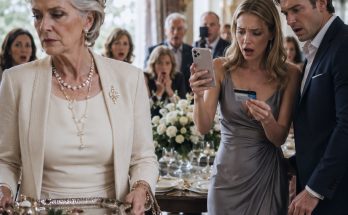
A Week Before College, My Parents Admitted They Gave My Tuition Money To My Brother Because “His Business Mattered More.” Then They Told Me To Be Proud Of “Supporting The Family.” I Just Packed My Bags And Left. 1 Year Later, His Company Had Collapsed… While I Was Quietly Making Millions. Now They Keep Calling—But I Don’t Pick Up.
### Part 1
I was seventeen days away from leaving for college when my mother told me my future had found a better use.
That was exactly how she said it, too. Not “we need to talk.” Not “something happened.” She stood in our kitchen with the refrigerator humming behind her, the smell of overbaked chicken hanging in the air, and said, “Your college fund can do more for this family right now than sit in an account waiting for you.”
I remember staring at the yellow dish towel in her hands. It had little lemons printed on it, faded from years of washing. She kept twisting it tighter and tighter until the cloth looked like a rope.
My father sat at the table, still in his work shirt, his elbows spread wide like he owned not just the house but every decision that could happen inside it. My brother, Corbin, leaned against the counter with his arms crossed, trying to look humble and visionary at the same time. He was twenty-three, handsome in the lazy way that made adults excuse him before he even asked to be excused.
I was eighteen. I had three boxes packed in my bedroom. One held towels, a cheap desk lamp, and a blue shower caddy from Target. One held used textbooks I had bought online months early to save money. The last one held everything my grandmother had slipped to me over the years for college: a quilt, a little sewing kit, envelopes of cash taped inside old birthday cards.
My grandmother, Maribel, had started my college account the week I was born.
She drove a school bus for thirty-one years in a county where everybody knew everybody else’s truck, dog, and church. She was not rich. She made coffee in the same dented pot every morning, wore sneakers until the soles peeled, and kept a coffee can of quarters for laundry even after she owned her washer outright. But every month, whether she was tired or sick or angry at the world, she put fifty dollars into that account for me.
“Small money becomes big money when nobody gets greedy,” she used to say.
By the time I graduated high school, that account had become the only thing in my life that felt untouchable. It was not just money. It was a promise that someone had seen me coming from far away and prepared a place for me.
Forty-three thousand two hundred dollars.
That was the number I had checked that morning before work. $43,218.16, to be exact. I had stared at it on my phone while sitting in my old Corolla outside the grocery store where I worked the early shift. I had smiled so hard my cheeks hurt because for once, a number meant freedom.
Now my father tapped the table with two fingers and said, “It’s just sitting there.”
The sound of his fingers on the wood was so calm it made my stomach turn.
Corbin cleared his throat. “It’s not like I’m wasting it, Liora. This is a real opportunity.”
Liora. That is my name. He only used it when he wanted to sound serious. Most days I was “Li,” the sister who picked him up when his car died, the sister who covered for him when he forgot Mom’s birthday, the sister who gave him half her shift money because he was “between ideas.”
“What opportunity?” I asked.
My mother sat across from me. She folded the lemon towel into a perfect square and placed it beside her plate as if that made the conversation orderly.
“Corbin’s startup has investor interest,” she said. “They need to see that the family believes in him first.”
“A startup he hasn’t even named,” I said.
Corbin’s jaw tightened. “We have three names in consideration.”
My father sighed like I was being childish on purpose. “This is bigger than a semester bill.”
“It’s all my semesters,” I said. My voice came out small, which embarrassed me more than crying would have.
“You can take out loans,” my mother said. “Your brother can’t take out an investor.”
That sentence landed so softly I almost missed the violence inside it.
I looked from her to my father, then to Corbin. Nobody looked ashamed. They looked tense, irritated, a little inconvenienced by my reaction. Like I was standing between the family and a better version of itself.
“Whose name is on the account?” I asked.
My father leaned back. “That’s not the point.”
“It is to me.”
My mother’s eyes went flat. “We’re a family. Stop acting like a stranger.”
That was when I understood it had already happened. This was not a request. This was a funeral for something they had already buried.
I walked down the hall to my room with my legs feeling hollow. My college boxes sat beside the bed, neat and hopeful. Sunlight came through the blinds in thin white lines across the cardboard. Everything smelled like packing tape and the lavender detergent Grandma used on the quilt.
I opened my laptop. My hands shook so badly I had to type the password twice.
The account balance was $14.72.
For a while, I did not move. I only listened. My mother running water in the sink. My father’s low voice. Corbin laughing once, nervous and relieved.
Then I did the thing that would later become my profession.
I documented it.
I took screenshots of the balance. I saved the morning screenshot from my phone. I saved every text from my father about the account. Especially the one he had sent two days earlier after I asked if I should pay the dorm housing deposit.
“Don’t worry about that account. It’s not going anywhere.”
I stared at those words until they stopped looking like language and started looking like evidence.
That night, Grandma called me. I almost did not answer because I was afraid my voice would betray me. When I finally picked up, she said, “You sound like a girl standing in smoke.”
I told her nothing.
Not yet.
But in the silence after her question, I heard her breathing change.
And I wondered if she already knew the fire had started.
### Part 2
I left for college seventeen days later with two loans, three jobs lined up, and a smile so stiff my cheeks ached in every photo my mother insisted on taking.
She cried in the driveway, of course. People like my mother always knew when to cry in public. She hugged me in front of the neighbors and said, “We’re so proud of our girl.”
Our girl.
The words stuck to my skin like syrup.
Corbin did not come to say goodbye. He had a meeting, my father said, as though meetings were holy events and sisters leaving home were ordinary traffic. I watched my parents’ house shrink in the rearview mirror until it looked like a shoebox dropped on the edge of a cornfield.
Grandma rode with me for the first three hours.
She wore her church cardigan even though it was August and had packed sandwiches wrapped in wax paper. At a gas station outside Knoxville, while cicadas screamed in the trees and the air smelled like hot pavement, she bought me a bottle of orange soda and said, “Your mother told me Corbin needed help with his business.”
I froze with my hand on the bottle cap.
“She did?”
“She said the family made an investment.”
I laughed once. It came out sharp. “That’s one way to call it.”
Grandma studied me. Her eyes were the color of creek stones, pale gray and steady. “Did they ask you?”
The refrigerator case hummed behind me. A man at the next pump slammed his truck door. I could have told her everything right there. I could have handed her the whole ugly thing and watched her carry it with me.
Instead I said, “It’s fine.”
She did not believe me. I knew she did not. But she did not push. Grandma never forced a door. She only stood beside it long enough for you to decide whether to open it.
College was not the movie I had imagined. There were no lazy afternoons under oak trees, no soft reinvention where I became effortless and bright. I worked in the campus library until midnight. I folded sweaters at a mall store on weekends. I ate ramen in a dorm room that smelled like wet towels and burnt microwave popcorn. Sometimes I watched girls call their parents and complain about cafeteria food, then hang up laughing.
I called home every Sunday because my mother expected it.
She wanted cheerful updates, not truth. She wanted dean’s list grades, not the fact that I once fell asleep in a study room with my face on an accounting textbook and woke up with the spiral binding printed across my cheek. When I mentioned tuition bills, she said, “Everybody struggles in college. It builds character.”
My father would get on the phone and ask, “You keeping your grades up?”
Not “Do you have enough money?”
Not “Are you eating?”
Not “Did we break something we should repair?”
Corbin’s company finally got a name in October: NorthPier Systems. He announced it on LinkedIn with a logo that looked like three blue rectangles trying to escape each other. My mother shared the post with thirteen exclamation points.
“So proud of my son for chasing his dream!”
I saw it while sitting in the back of an accounting lecture. The professor was explaining asset misappropriation. I remember the phrase because I wrote it in the margin of my notebook and circled it three times.
Asset misappropriation.
It sounded cleaner than theft. Rich people loved clean names for dirty hands.
For the next year, NorthPier became the weather system in our family. Every dinner conversation bent toward it. Every holiday toast included it. My brother got introduced as “our entrepreneur.” I got introduced as “our practical one.”
At Thanksgiving, Corbin wore a gray blazer with the sleeves too tight and talked about “scaling logistics solutions” while Grandma sat at the end of the table, slicing pecan pie with a knife that clicked softly against the plate.
My mother placed her hand on Corbin’s shoulder. “Sometimes one child just has that spark.”
The table went quiet for half a second. Not long enough for anyone else to notice. Long enough for me.
Grandma looked at me.
I looked down at my mashed potatoes.
That night, while everyone watched football, Grandma found me on the back porch. The air smelled like wet leaves and wood smoke from someone’s fireplace down the road.
She handed me a folded napkin. Inside was a check for $1,200.
“No,” I said immediately.
“Yes,” she said.
“Grandma, I can’t.”
“You can, and you will.”
I shook my head. “They’ll ask questions.”
“Let them.”
But I knew better. In our family, questions were not meant to find truth. They were meant to punish whoever had made everyone uncomfortable.
I kept the check. I used it for rent and books, and I kept the napkin too, pressed flat inside my accounting textbook like a leaf.
By spring, Corbin had an office. Not a big one, but enough for my parents to drive over and take photos beside the glass door. There were balloons, catered sandwiches, and a champagne toast I found out about from my cousin Marnie’s Instagram story.
In the video, Corbin raised his glass and said, “To the people who believed in me before anyone else did.”
My mother clapped. My father beamed.
Grandma was not there.
Neither was I.
I watched the video twice in my dorm laundry room while a dryer thumped unevenly behind me. Something metal kept hitting the inside of the drum. Clank. Clank. Clank.
I saved the video.
I did not know why yet.
I only knew that numbers told stories, but so did timestamps, captions, smiles, and who got cropped out of celebration photos.
A week later, Grandma mailed me a birthday card. Inside, instead of cash, there was a sticky note in her careful slanted handwriting.
“Keep records, little bird. One day, the paper will speak when you are tired of explaining.”
I read it under the harsh fluorescent light of my dorm room.
Then I opened a folder on my laptop and named it “Family.”
### Part 3
By the time I graduated, I had learned how to survive on coffee, scholarships, and silence.
I also learned that people who take from you rarely remember the exact amount. The person who loses it remembers down to the cent. I could still tell you the number nine years later: $43,203.44 taken after small fees cleared. $14.72 left behind like a cruel joke.
I became a forensic accountant because regular accounting was too polite for what I knew numbers could do.
Forensic accounting had teeth.
It asked where the money came from, where it went, who touched it, and what story they were trying to sell after the fact. I liked that. I liked clean columns and ugly truths. I liked watching excuses collapse under bank records.
I met my husband, Orson, during my second year at a firm in Nashville. He was an electrician rewiring part of our office after a pipe burst in the ceiling. I found him standing on a ladder, holding a flashlight in his teeth, calmly telling my boss that the previous contractor had “treated code compliance like a suggestion.”
I liked him immediately.
He was steady in a way that did not ask me to be smaller. He listened when I spoke. He remembered what I said. On our third date, he noticed I kept receipts for everything in a little accordion file in my purse.
“Is that a habit or a warning sign?” he asked.
“Both,” I said.
He laughed, but not at me.
We got married six years after my parents emptied that account. Grandma came in a navy dress with pearl buttons and danced with Orson even though her knees hurt. My mother gave a toast about family sacrifice. My father said Orson was lucky to have “a girl who knew the value of hard work.” Corbin arrived late and left early, claiming he had investor calls.
NorthPier was still alive then.
That surprised me sometimes. I had assumed the company would burn through my tuition in six months and collapse under the weight of Corbin’s confidence. Instead, it floated. Not successfully, exactly, but visibly. He had a small team, a website, a few clients, and enough jargon to make my parents believe the future was wearing his face.
At family dinners, my mother still brought him up like a weather report.
“Corbin’s meeting with a major regional distributor.”
“Corbin’s expanding.”
“Corbin’s looking at office space downtown.”
Every sentence began with his name and ended with the implication that all of us should feel honored to stand near his glow.
I did not argue. I carved turkey, passed salt, smiled when required, and kept my distance from the parts of my family that still expected me to pay admission.
Grandma grew quieter in those years.
Not weak. Never weak. Just quieter, like she was listening to something the rest of us could not hear. She moved from her little house into a one-bedroom apartment near a grocery store and a clinic. I visited every other Thursday after work, sometimes more. We ate tomato soup and grilled cheese at her small kitchen table while Jeopardy played low in the living room.
She asked about my job. She asked about Orson. She asked if I was tired.
Nobody else asked that last one.
One rainy afternoon, I found her sitting with a shoebox open on the table. Inside were old bank envelopes, property tax receipts, yellowed photographs, and a key tied to a red ribbon.
“What’s all this?” I asked.
“Old life,” she said, closing the lid.
I saw a name printed on one of the papers before it disappeared. Juniper Ridge.
“Is that a place?”
She smiled without showing her teeth. “Was.”
I waited for more, but she only patted the box. “Some things don’t need witnesses until they’re ready.”
At the time, I thought she meant old love letters or family secrets from before I was born. Maybe land sold long ago. Maybe nothing.
That was the first clue, though I did not know it yet.
The second came three months later, when my mother called me in a bright, strange voice and asked if Grandma had been “confused” lately.
“Confused how?” I asked.
“Oh, you know. Old people get ideas.”
“What ideas?”
My mother went quiet for one beat too long. Then she laughed. “Never mind. I’m just worrying.”
I told Orson that night while he fixed the loose hinge on our kitchen cabinet. He paused with the screwdriver in his hand.
“Your mom doesn’t ask questions without a reason,” he said.
“I know.”
“What do you think the reason is?”
I looked at our kitchen table, scarred from years of bills, takeout containers, and Sunday pancakes. “Money usually.”
He nodded once, because Orson had learned my family’s language without needing a translator.
When Grandma had her stroke the following March, everything changed shape.
The hospital smelled like antiseptic, old coffee, and the faint plastic scent of oxygen tubing. My mother cried loudly in the hallway and complained that the nurses were not updating her fast enough. My father asked about power of attorney before asking whether Grandma could speak. Corbin sent flowers from NorthPier with a card that said, “Keep fighting, Grandma!”
He did not visit for eleven days.
I came most afternoons. I read to her. I brushed her hair. I brought the soft socks she liked and rubbed lotion into her hands, the skin thin and cool as tissue paper.
One evening, she opened her eyes and squeezed my fingers.
“Little bird,” she whispered.
“I’m here.”
Her mouth trembled. “Did you keep the paper?”
I leaned closer. “What paper?”
Her eyes sharpened, just for a moment. “All of it.”
My throat tightened. “Yes.”
She relaxed back into the pillow.
At the time, I thought she meant my records.
Only later did I understand she had been asking whether I was ready for hers.
### Part 4
Grandma died on a Sunday morning while rain tapped gently against the window of her room.
It was not dramatic. No thunder, no last speech, no family gathered in a circle holding hands. Just a nurse touching my shoulder and saying, “I’m sorry,” while the monitor beside the bed kept making soft little sounds that suddenly seemed too loud.
My mother arrived forty minutes later wearing perfume so strong it cut through the hospital smell. My father came behind her, looking tired and irritated, as if death had scheduled itself poorly. Corbin arrived after lunch in a black jacket and expensive sneakers, holding his phone like it might save him from having to feel anything.
At the funeral, my mother performed grief beautifully.
She chose a dark green dress, dabbed at her eyes with a lace handkerchief, and told everyone, “Mama loved all her grandchildren equally.” She said it three times that day. The third time, I noticed my aunt Selah look away.
Grandma’s attorney called eight days later.
His name was Ansel Okoro, and his voice had the careful calm of a man who had delivered many surprises in rooms with bad coffee. He said there would be a reading of the will the following Thursday at his office downtown.
My mother was delighted.
Not openly. She had enough manners to coat it in sorrow. But I heard the lift in her voice when she called me that night.
“Mr. Okoro said all immediate family should attend,” she said. “Your grandmother was always very organized.”
“Yes,” I said.
“She didn’t have much, of course.”
“She had enough.”
My mother went quiet. “I only mean nobody should expect some dramatic windfall.”
I almost smiled. That was how I knew she expected one.
The office was on the third floor of a brick building between a dentist and an insurance agency. The conference room had gray carpet, beige walls, and a window overlooking a parking lot where someone had abandoned a red shopping cart beside a rain puddle. The fluorescent lights buzzed faintly overhead.
It was the kind of room where ordinary things happened.
Insurance claims. Estate signatures. Quiet arguments over paper cups of water.
Not reckonings.
My mother sat straight-backed beside my father, her purse centered neatly on her lap. My father checked his watch twice before Mr. Okoro even opened the folder. Corbin sat closest to the attorney, one ankle resting on his knee, trying to look mournful and important. Aunt Selah sat near the wall, silent, her hands folded.
Orson came with me. He did not speak. He only sat beside me, his knee touching mine under the table, warm and steady.
Mr. Okoro confirmed our names. Then he began.
There were small things first. Grandma’s apartment furniture to Aunt Selah. Her jewelry divided between me and my mother, though most of it was costume and sentimental. Her old school bus service pins to the county transportation office. The quilt she made the year I was born to me.
My mother’s mouth tightened when my name came up.
Then Mr. Okoro turned a page.
“Mrs. Maribel Voss also established the Maribel Voss Education and Restitution Trust, dated September 18, 2014, amended twice and reaffirmed last year.”
My father stopped moving.
My mother blinked. “I’m sorry, what trust?”
Mr. Okoro did not look surprised. “A private trust.”
Corbin leaned forward. “How much are we talking about?”
My mother shot him a warning look, but the question had already shown its teeth.
Mr. Okoro read from the document. His voice stayed even. Professional. Almost gentle.
“The trust was funded primarily through the sale of a parcel known as Juniper Ridge, along with subsequent deposits from Mrs. Voss’s personal savings.”
Juniper Ridge.
The paper in the shoebox. The key with the red ribbon.
My pulse began to beat in my throat.
“The trust balance as of the date of her death,” Mr. Okoro continued, “is approximately one hundred sixty-one thousand dollars.”
The room changed temperature.
My father whispered, “That can’t be right.”
My mother’s fingers tightened around her purse strap until her knuckles whitened. Corbin sat back slowly, as if someone had pushed him.
Mr. Okoro continued.
“The sole beneficiary of the trust is Liora Voss Calder.”
For one second, nobody breathed.
Then my mother laughed. Not because anything was funny. Because her mind had rejected the words and sent out the wrong sound.
“That’s impossible,” she said.
Mr. Okoro looked at her through his glasses. “It is not.”
My father’s voice hardened. “My mother-in-law would never cut out the rest of her family.”
“She did not phrase it that way,” Mr. Okoro said.
He turned the document toward me, one finger resting near a paragraph halfway down the page.
I read the clause silently at first.
Then I read it again because my eyes had filled and made the letters swim.
“In recognition of the education account taken from Liora without her consent in August of 2014, which I was not consulted about and would not have permitted, this trust is intended to restore what was stolen from her and to honor the future she was forced to rebuild alone.”
Stolen.
The word sat there in black ink, calm and final.
My mother made a low sound. My father said, “She was confused.”
Mr. Okoro folded his hands. “Mrs. Voss executed this trust nine years ago. She reaffirmed it twice while medically and legally competent. I have witness statements, physician letters when applicable, and contemporaneous notes.”
Corbin’s face flushed. “So she just believed whatever Liora told her?”
I looked at him. “I didn’t tell her.”
That was the truth, and somehow it made the room worse.
Mr. Okoro slid a sealed envelope across the table.
“Mrs. Voss left this for you privately,” he said to me. “You may read it whenever you choose.”
I took it with numb fingers.
My mother reached toward it. “What does that say?”
I pulled it back.
For the first time in my life, I watched her hand stop in midair because she realized I would not let her take something from me.
I did not open the letter until I was in my car.
The rain had stopped. The parking lot smelled like wet asphalt. Orson sat beside me without turning on the engine.
The letter was four sentences.
“My little bird, I knew more than you thought. I am sorry I let you carry the silence so long. You were never the cost of this family. You were the one paying for everyone else’s math.”
I pressed the paper to my chest and cried so hard I could not see the windshield.
Not because I had won.
Because someone had counted correctly at last.
### Part 5
For eleven days after the will reading, nobody asked how I was.
My mother left one voicemail on the second day. Her voice was sweet, bright, almost musical.
“Hi, honey. Just checking on you. I know Thursday was emotional for everyone. Call me when you can.”
Emotional for everyone meant expensive for her.
My father texted on day four.
“Your grandmother was elderly. We need to discuss this like adults.”
Corbin waited until day six.
“You know this isn’t fair, right?”
I did not answer any of them.
Instead, I met with my attorney, a sharp woman named Petra Vale who wore red glasses and had the rare gift of making silence feel like a legal strategy. She read the trust. She read my screenshots from 2014. She read my father’s old text. She read the launch party caption I had saved from Corbin’s office opening one year after my tuition disappeared.
“To the people who believed in me before anyone else did.”
Petra sat back in her chair. “You kept all this?”
“Yes.”
“For nine years?”
“Yes.”
She smiled a little. “Good.”
That was all.
We drafted letters. Formal notice. Polite language. Hard edges.
The trust was valid. The beneficiary designation was clear. Any attempt to pressure, threaten, misrepresent, or unlawfully access the funds would be documented and addressed through counsel. The money was not family money. It was not negotiable. It was not available for loans, advances, emergency rescue, startup support, vendor payments, investor reassurance, or emotional blackmail disguised as fairness.
Petra did not put that last phrase in the letter.
I wish she had.
While the letters were being prepared, Corbin came to my house.
It was Sunday afternoon. Orson was in the backyard repairing a loose fence panel, and I was at the kitchen table sorting mail. The house smelled like lemon cleaner and coffee. Sunlight poured through the small window over the sink, catching dust in the air.
When I opened the door, Corbin smiled like we were old friends.
“Hey, Li.”
I did not invite him in immediately. That annoyed him. I saw it flicker across his face before he smoothed it away.
“Can we talk?”
I stepped aside.
He sat at my kitchen table without asking, the way he used to sprawl across every room in our parents’ house like space had been invented for him first. He looked thinner than he had at the funeral. His shirt was expensive but wrinkled at the cuffs. His watch was new. His eyes were tired.
“I know things got weird with Grandma’s will,” he began.
“Weird?”
He rubbed his face. “You know what I mean.”
“I’m not sure I do.”
He exhaled. “Fine. I know the trust was a shock. But that money is kind of family money.”
I folded my hands on the table. “No.”
He blinked. “No?”
“No, it is not.”
His smile strained. “Liora, come on. Grandma loved all of us.”
“She did.”
“Then you know she wouldn’t want you hoarding it.”
There it was. The switch from charm to accusation. It usually took him longer.
“What do you need?” I asked.
That threw him off. “What?”
“You didn’t come here because you care about Grandma’s intentions. You came because you need something. What is it?”
His mouth opened, then closed.
Outside, Orson’s hammer struck wood. Once. Twice.
Corbin leaned forward. “NorthPier is in a tight quarter.”
“How tight?”
“It’s temporary.”
“That wasn’t my question.”
He looked toward the backyard, then back at me. “We have receivables delayed. A vendor issue. Some investor timing.”
I had heard enough failing-business language in my career to recognize fog when someone released it into a room.
“What was your burn rate last quarter?” I asked.
His eyes shifted.
“That’s not really—”
“What was it?”
“Liora.”
“You’re asking me for money. You should know how fast you’re losing it.”
His face hardened. “You always do this.”
“Ask for numbers?”
“Make people feel small.”
I laughed softly, not because it was funny. “Corbin, you used my college fund to make yourself feel big.”
He stood so fast the chair scraped the floor.
“Mom and Dad made that decision.”
“And you took the money.”
“I was twenty-three.”
“I was eighteen.”
The room went still.
For once, he had no quick answer.
Then he said, “So what, you’re punishing me forever?”
I stood too. “No. I’m refusing to pay twice.”
His face changed. Just slightly. Fear passed behind the anger like a shadow behind a curtain.
That was my third clue that NorthPier was worse off than anyone had admitted.
After he left, Orson came inside and found me still standing by the table.
“You okay?” he asked.
“No.”
He set the hammer down and waited.
I looked at the chair Corbin had scraped across my floor. “He doesn’t know his own burn rate.”
Orson gave a low whistle. “That bad?”
“Bad enough to come here pretending it’s about Grandma.”
Two days later, Petra sent the letters.
My mother called within three hours. I let it ring. Then my father. Then Corbin.
By dinner, there were nine missed calls and one text from my mother.
“We need to settle this as a family before you do something you regret.”
I took a screenshot.
Then I made soup, set the table for two, and ate dinner with my husband while my phone lit up beside my plate like a warning flare.
### Part 6
The family dinner invitation came three weeks later.
My mother sent it in a group text, which meant she wanted witnesses before I even arrived.
“Sunday at six. Lasagna. We need to gather as a family after everything. No lawyers. Just us.”
No lawyers was the loudest part of the message.
Orson read it over my shoulder and said, “Absolutely not.”
“I’m going.”
He stared at me. “Why?”
“Because they think a room full of relatives is leverage.”
“And?”
I closed my laptop. “I want to see what they do when leverage becomes audience.”
He did not like it. I knew he did not. But he understood me well enough not to mistake calm for surrender.
On Sunday, I dressed simply: dark jeans, cream sweater, low boots. I tied my hair back. I put Grandma’s letter in one folder and the financial records in another. I did not bring the original trust documents, only copies. A forensic accountant knows better than to carry originals into a room full of people who believe taking is a family value.
My parents’ house looked exactly the same from the outside. White porch railings. Two hanging ferns my mother replaced every summer. A brass welcome sign beside the door that had always felt less like hospitality and more like branding.
Inside, the house smelled like garlic bread, tomato sauce, and lemon furniture polish. Too clean. Too staged.
My mother hugged me before I could refuse. Her perfume scratched at my throat.
“You look tired,” she whispered.
“I’m fine.”
She pulled back, searching my face for weakness. “We’re all fine if we choose to be.”
That was new. My mother had always been good at turning threats into decorative pillows.
My father stood near the dining table with a glass of iced tea. Corbin was by the window, checking his phone. Aunt Selah sat stiffly on the sofa. Cousin Marnie avoided my eyes. Two uncles I rarely saw had been invited, which told me my parents had decided numbers mattered only when counting people on their side.
Orson had offered to come. I asked him not to. This was not because I wanted to face them alone. It was because I wanted them to believe I had.
Dinner began with forced politeness.
My mother served lasagna in oversized squares. My father complimented the garlic bread like we were all guests at a normal table. Corbin barely ate. He kept wiping his palms on his napkin. I watched him and thought of vendor invoices, investor updates, payroll deadlines.
Halfway through dinner, my father tapped his fork against his water glass.
A toast.
Of course.
He stood at the head of the table beneath the chandelier my mother loved, its little glass drops catching the light and scattering it across the walls.
“Your grandmother,” he began, “believed in family above all else.”
Aunt Selah lowered her fork.
My father continued. “Sometimes legal documents don’t reflect the full heart of a person. Sometimes grief, confusion, or outside influence can create division where there should be unity.”
Outside influence.
That meant me.
My mother stared into her plate with wet eyes, performing wounded dignity. Corbin looked up now, hope and panic braided together across his face.
My father turned to me.
“So, Liora, we’re asking you to do the right thing. Split the trust evenly. Not because we need it, but because it’s fair.”
Not because we need it.
Corbin’s fingers tightened around his napkin.
I set down my fork.
“May I speak?”
My father smiled. He thought I was about to make a speech soft enough to interrupt. “Of course.”
I opened the folder.
The room shifted. Just a small movement. Shoulders tightening. Eyes dropping to the papers. People who fear documents always recognize them quickly.
I placed the first page on the table.
“This is the account balance from August 4, 2014, at 9:12 a.m. Forty-three thousand two hundred eighteen dollars and sixteen cents.”
My mother whispered, “Liora.”
I placed the second page beside it.
“This is the balance that evening. Fourteen dollars and seventy-two cents.”
Nobody reached for the garlic bread.
I placed the third page down.
“This is Dad’s text from two days before the transfer. He wrote, ‘Don’t worry about that account. It’s not going anywhere.’”
My father’s face darkened. “You saved private family texts?”
“I saved a lie about my money.”
Corbin pushed back slightly from the table. “This is insane.”
“No,” I said. “This is organized.”
Aunt Selah covered her mouth with one hand.
My mother’s voice trembled. “That was a long time ago.”
“Nine years, four months, and thirteen days before Grandma’s will reading,” I said.
My father snapped, “Nobody keeps count like that unless they want to stay bitter.”
I looked at him. “People keep count when nobody else will.”
For the first time that night, he looked away.
Then I placed the trust clause in the center of the table.
I did not read it dramatically. I did not raise my voice. I read it the way Mr. Okoro had read it: calmly, clearly, letting the words stand without decoration.
“In recognition of the education account taken from Liora without her consent, which I was not consulted about and would not have permitted…”
My mother went pale.
Not embarrassed. Not sorry. Pale because she understood that Grandma had known. Grandma had judged. Grandma had written it down where no one could interrupt her.
Corbin stood. “You’re trying to humiliate us.”
I looked at him. “No. I’m refusing to let you edit the story.”
His voice cracked. “NorthPier could still make it if we had bridge funding.”
There it was.
The real dinner guest had finally arrived.
My father hissed, “Corbin.”
But the room had heard him.
Bridge funding.
My mother closed her eyes.
Aunt Selah looked from Corbin to my parents, and something in her face changed. A little loyalty leaving. A little truth entering.
I reached into the folder one last time and took out the photo from NorthPier’s launch party. Corbin smiling with champagne raised. My parents beside him. The caption printed below.
“To the people who believed in me before anyone else did.”
I placed it beside the drained account balance.
The papers looked almost peaceful next to each other.
Celebration and theft. Champagne and fourteen dollars. Belief and absence.
Nobody spoke.
Then Aunt Selah said quietly, “I wondered why Maribel stopped coming to Sunday dinners that year.”
My mother’s head snapped toward her. “Selah.”
Aunt Selah did not flinch. “I wondered,” she repeated. “I should have asked.”
It was not enough. It was not repair. But it was the first honest sentence anyone at that table had offered me.
My mother tried one last time.
“Your grandmother wouldn’t have wanted money to come between us.”
I gathered my papers slowly.
“Money didn’t come between us,” I said. “You put me on one side of it when I was eighteen. Grandma just left a receipt.”
Then I stood up.
My father said, “If you walk out now, don’t expect this family to forget it.”
I paused at the doorway and looked back.
“That’s the first thing you’ve said tonight that sounds fair.”
I left with my folder under my arm, my hands steady, and the smell of garlic still clinging to my sweater.
Behind me, someone started crying.
For once, it was not me.
### Part 7
The trust released six weeks later.
One hundred sixty-one thousand dollars, transferred exactly as Grandma had instructed, untouched by guilt, speeches, or lasagna. When Petra called to confirm it, I was standing in my office break room watching coffee drip into a glass pot.
“It’s done,” she said.
I closed my eyes.
The coffee machine gurgled. Someone down the hall laughed at something on a conference call. Life kept moving in its rude, ordinary way.
“Thank you,” I said.
“What do you want to do if they contact you again?”
“Document it.”
Petra chuckled. “I assumed.”
I paid off my student loans first.
There was no ceremony. No dramatic music. Just me at our kitchen table on a Thursday night, Orson sitting across from me with two mugs of tea between us, while I clicked the final payment button. The confirmation page loaded slowly, spinning and spinning as if the debt itself did not want to leave.
Then the screen changed.
Paid in full.
I stared at those three words until my vision blurred.
Orson reached across the table and covered my hand with his. “There she goes.”
“Who?”
“The girl in the dorm laundry room. The one listening to the dryer clank.”
I laughed through tears. “You weren’t even there.”
“No,” he said. “But she’s been living with us for a while.”
That was when I finally understood something I had avoided naming. My parents had not only taken money. They had kept a younger version of me trapped at the edge of leaving, always calculating whether freedom would cost more than I could survive.
Paying off the loans did not erase what happened.
It simply unlocked the door.
NorthPier dissolved four months later.
Not with an explosion. Not with a headline. Just paperwork filed with the state, a quiet website shutdown, and Corbin’s LinkedIn changing from “Founder and CEO” to “Consultant.” I knew because Marnie sent me a screenshot with no comment, just the image and three dots like she had typed something and deleted it.
I did not reply.
The public version was “market conditions.” My father repeated that phrase to relatives like it was a medical diagnosis. My mother said investors had “lost their nerve.” Corbin posted something about “lessons, resilience, and the next chapter.”
But one of NorthPier’s former vendors hired my firm months later for an unrelated review, and though I never touched that file because of the conflict, I heard enough in passing to understand the shape of it.
Late payments. Inflated projections. Personal expenses blurred into business accounts. Not illegal enough to become a headline. Not clean enough to survive due diligence.
The same family arithmetic, dressed in a logo and rented office space.
Corbin texted me after the dissolution.
“I hope you’re happy.”
I looked at the message while standing in line at the grocery store. The woman in front of me was buying strawberries and birthday candles. The cashier was asking if she wanted paper or plastic. Ordinary life all around, while my brother tried to hand me responsibility for a fire he had built with stolen wood.
I typed, “I’m at peace with not funding it.”
Then I deleted that.
I typed nothing.
Screenshot. Archive. Silence.
My parents stopped calling for nearly three months.
The quiet was strange at first. I kept expecting my phone to light up during dinner, while brushing my teeth, while standing in a checkout line. It did not. Their absence had a texture. At first it felt like punishment. Then it felt like space. Then, slowly, it felt like air.
Aunt Selah called in November.
“I owe you an apology,” she said.
I was folding laundry on the bed. Orson’s socks were in one pile, mine in another. Rain tapped against the windows.
“For what?”
“For being at tables where people treated you like a spare part and pretending I didn’t understand what I was seeing.”
I sat down on the edge of the bed.
“You weren’t the one who took the money.”
“No,” she said. “But silence has fingerprints too.”
That sentence stayed with me.
We talked for forty minutes. Not dramatically. No sobbing confession. Just a careful conversation between two people standing near the same old wreckage, deciding which pieces were safe to pick up.
Thanksgiving came two weeks later.
My mother texted, “Dinner at four. You and Orson are welcome.”
No apology. No acknowledgment. Just an invitation placed like a rug over a hole in the floor.
Orson read it and said, “Do you want to go?”
I thought about it.
The old me would have gone automatically. She would have brought a pie. She would have smiled until her jaw hurt. She would have mistaken being included for being loved.
The woman I had become asked a different question.
“What will it cost me?”
In the end, we went for one hour.
Not because I forgave them. I did not.
We went because I wanted to prove to myself that I could enter that house without becoming eighteen again.
My mother opened the door wearing an apron and a smile too bright to trust. My father nodded like a man allowing a difficult employee back into a meeting. Corbin was not there.
Dinner smelled like turkey, sage, and old tension. I sat beside Orson. I answered questions politely. I did not offer extra information. When my mother reached for my hand during grace, I let my hand rest in my lap.
She noticed.
Good.
After dessert, my father cleared his throat and said, “It’s been a hard year for everyone.”
I looked at him.
Everyone.
That word again, trying to spread one person’s wound over a crowd so nobody had to hold the knife.
I set down my coffee cup.
“Yes,” I said. “Some of us had to learn the same lesson twice.”
Nobody asked what I meant.
They knew.
We left before the football game started. On the porch, my mother followed me out. The daylight was fading, turning the bare trees black against the pink November sky.
“Liora,” she said softly. “Are you really going to keep punishing us?”
I turned.
“No.”
Her face opened with hope.
Then I finished.
“I’m going to stop paying for you.”
The hope closed.
I walked to the car where Orson was waiting, and for the first time, leaving did not feel like escape.
It felt like choosing myself on purpose.
### Part 8
A year after NorthPier dissolved, Corbin asked to meet me for coffee.
His message came on a Tuesday morning, because apparently my family’s worst ideas loved Tuesdays.
“I’m not asking for money,” he wrote. “I just want to talk.”
I stared at that first sentence for a long time.
People who are not asking for money usually do not need to announce it.
Still, I met him.
Not at my house. Never again at my kitchen table. I chose a busy coffee shop downtown with big windows, white walls, and enough witnesses to discourage family theater. It smelled like espresso, cinnamon, and wet coats. Rain streaked the glass. A barista called names over the hiss of steamed milk.
Corbin arrived late.
He looked older. Not ruined. I will not pretend karma had carved dramatic lines into his face. Life is rarely that artistic. But he looked less polished, less inflated. His jacket was plain. His hair was too long. When he sat across from me, he kept both hands around his coffee cup.
“Thanks for coming,” he said.
I nodded.
He looked toward the window. “I messed up.”
I waited.
“With NorthPier. With the money. With you.”
The words were right. His voice was almost right. But I had spent my career learning that correct numbers could still be placed in misleading columns.
“What do you want from this conversation?” I asked.
He gave a tired laugh. “You don’t make anything easy.”
“No. I make things clear.”
He looked down at his coffee. “I wanted to say I’m sorry.”
I studied him. The rain moved down the window behind him in crooked lines.
“For what exactly?”
His mouth tightened.
That was the test people hate. They like apology as a fog. They do not like naming the road they took through it.
“For taking the money,” he said finally. “For letting Mom and Dad call it an investment. For acting like your future was less real than mine.”
Something in my chest loosened.
Not healed. Loosened.
I nodded once. “Thank you for saying that.”
He looked relieved too quickly.
Then came the second part. There is almost always a second part.
“I’m trying to rebuild,” he said. “Not a startup. Something smaller. Consulting. Real work this time. But the vendor debt followed me, and I’m trying to negotiate it down.”
I looked at him until he stopped talking.
His face flushed. “I said I’m not asking for money.”
“Then don’t.”
He swallowed.
The coffee shop clattered around us. Cups hitting saucers. Chairs scraping. Someone laughing at a table near the door. Ordinary sounds, protecting me from old patterns.
Corbin rubbed his forehead. “I don’t know how to fix this.”
“That might be the first honest thing you’ve said.”
He looked wounded, but not angry this time.
“I can’t go back,” he said.
“No. You can’t.”
“I was young.”
“So was I.”
He nodded slowly. “I know.”
Maybe he did. Maybe he was beginning to. But beginning is not completion, and regret is not repayment.
I reached into my bag and took out a business card. Not mine. Petra’s.
“If any vendor debt is personal and you need legal advice, talk to someone who represents only you. Not Mom. Not Dad. Not another investor. You.”
He took the card like it weighed more than paper.
“That’s it?” he asked.
“That’s what help looks like from me now.”
He stared at it. “A phone number.”
“Boundaries sometimes look small from the outside.”
His eyes lifted to mine. For a second, I saw the boy he might have been if my parents had not raised him like a winning lottery ticket. Then the man returned. Tired. Accountable, perhaps. Still not my responsibility.
“I really am sorry, Li.”
I stood and put on my coat.
“I believe you’re sorry now.”
His face changed. He heard the difference.
Now.
Not then. Not enough to undo. Not enough to reopen accounts.
I left him sitting by the window, turning Petra’s card between his fingers while rain made the city look blurred and unfinished.
That spring, I used another part of Grandma’s trust to start a scholarship in her name at the community college near her old bus route.
The Maribel Voss Quiet Grit Scholarship.
Orson helped me with the application wording because every sentence I wrote sounded too much like a legal disclosure. We made it for students who worked while studying, students with complicated families, students who showed up even when nobody celebrated them for it.
The first recipient was a nineteen-year-old nursing student named Tessa who worked nights at a diner and sent a thank-you email with three exclamation points and a photo of her acceptance letter. I printed the email and put it in the same drawer where I keep Grandma’s letter.
Not because it was evidence.
Because it was proof.
There is a difference.
My parents heard about the scholarship through Aunt Selah. My mother texted me three days later.
“Your grandmother would be proud. I wish you had told us.”
I stared at the message for a long time.
Then I wrote back, “This was not a family decision.”
She did not respond.
That was answer enough.
### Part 9
I keep Grandma’s letter in the top drawer of my desk now, under the warranty for our dishwasher and beside the deed to our house.
It does not really belong with household documents, but I like it there. Important things should live near other important things. And unlike my parents, I know the difference between what can be replaced and what cannot.
Orson and I still live in the small brick house with the kitchen too narrow for the table we refuse to give up. The wood is scratched, one leg wobbles slightly, and there is a pale ring near the center from a mug I forgot to use a coaster under. I love that table. It has held bills, birthday cakes, tax returns, hard conversations, and the night I paid off the last loan created by someone else’s choice.
My family exists at a distance now.
That is the cleanest way to say it.
My mother sends holiday texts with careful punctuation. My father writes “Hope you’re well” twice a year, like he is signing a sympathy card. Corbin updates me occasionally in short, cautious messages. He did call Petra. He did negotiate his debts. He did get a job managing operations for a regional warehouse company, which is probably what he should have done before convincing everyone he was born to disrupt an industry he barely understood.
I am glad he is not drowning.
I am also not swimming out to carry him.
Both things can be true.
At Aunt Selah’s birthday dinner last summer, my mother tried to hug me in the restaurant parking lot. It was a warm evening, the kind where asphalt gives back the day’s heat and the air smells like cut grass from somewhere nearby.
She opened her arms and said, “Can we please stop being like this?”
I asked, “Like what?”
She looked pained. “So formal.”
I thought about the kitchen on that Tuesday years ago. The lemon towel. My father’s fingers tapping the table. Corbin saying his company was a real opportunity. My mother telling me I could take out loans, as if debt were a door prize.
Then I thought about Grandma’s sentence.
“You were never the cost of this family. You were the one paying for everyone else’s math.”
I stepped back gently.
“I’m comfortable being formal.”
My mother’s eyes filled. Maybe from grief. Maybe from frustration. Maybe because she had finally met a version of me she could not spend.
“I’m your mother,” she whispered.
“I know.”
That was all I gave her.
Not because I wanted to be cruel. Because I had learned that some people treat your softness like a shared account. They withdraw and withdraw, then act shocked when you close it.
People ask sometimes whether getting the trust felt like revenge.
It did not.
Revenge, at least the kind people imagine, is loud. It kicks down doors. It makes speeches. It wants applause.
What Grandma gave me was not revenge.
It was correction.
It was a number placed back where it belonged. It was an old woman with school-bus hands and creek-stone eyes refusing to let thieves write the final version. It was love documented properly.
That is what my parents never understood. The money was not the whole wound. If they had come to me at eighteen and said, “We are scared. We made a terrible decision. We stole from you. We will spend the rest of our lives paying it back,” maybe the story would have bent another way.
But they did not.
They dressed theft as family. They dressed favoritism as faith. They dressed my silence as agreement. Then years later, when the ledger finally balanced without their permission, they called the balance unfair.
I work with numbers every day. I trace missing funds through shell accounts and fake invoices. I sit in conference rooms with people who lie badly and people who lie beautifully. I have learned that most financial betrayal begins long before money moves.
It begins when someone decides your need is negotiable.
It begins when someone decides their dream is more real than your plan.
It begins when a family teaches one child to reach and another child to make room.
I do not make room like that anymore.
The scholarship has helped four students so far. Not huge money. Not life-changing in the way movies use that phrase. But enough to buy books. Enough to cover a certification fee. Enough to let someone cut one shift from a brutal week and sleep.
Every year, I attend the small award breakfast at the community college. The room smells like coffee, powdered creamer, and the kind of scrambled eggs that sit too long in silver trays. There are paper programs, nervous students, proud grandparents, and teachers who clap like every name matters.
I sit near the back.
When they say Grandma’s name, I picture her in her bus driver jacket, one hand on the wheel, watching children climb aboard with backpacks bigger than their bodies. I picture her dropping coins into an account no one else respected enough to leave alone. I picture her sitting across from Mr. Okoro, signing papers with a hand that must have trembled not from doubt, but from age.
And I hope she knew.
I hope she knew the paper would speak.
I hope she knew I would hear it.
On the anniversary of the trust release, I made coffee in our kitchen before sunrise. The house was quiet except for the low hum of the refrigerator and the soft click of the heater waking up. Orson was still asleep. The sky outside the window was pale gray, not yet morning but no longer night.
I opened the desk drawer and read Grandma’s letter again.
Four sentences.
A whole inheritance.
I did not cry that time. The words did not cut the same way anymore. They felt solid in my hands, like a railing on stairs I no longer feared climbing.
Then I took out a blank sheet of paper and wrote down my own sentence, because some records are for courts and some are for the soul.
“I am not the family debt.”
I folded it once and placed it with her letter.
Then I closed the drawer, made breakfast, and went to work.
Because the best ending was never watching Corbin’s business collapse. It was never seeing my parents lose the argument. It was never the silence after I laid the papers on the dinner table and let the truth breathe.
The best ending was this: my life, finally funded by my own choices, with no one allowed to steal from it again.
THE END!