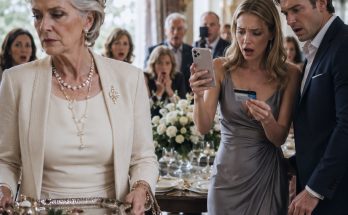
I Woke Up After A 9-Hour Spine Surgery To 73 Missed Calls. My Dad’s Voicemail Said, “We Sold Your Condo To Pay For Your Sister’s Wedding. You Were Out Cold, So We Signed The Papers For You.” $425,000. Gone. The Wedding Was Just 3 Weeks Away. I Could Hardly Stand, But I Made One Phone Call. By The Next Day…
### Part 1
The last thing I remember before surgery was the cold sting of the operating room air and a nurse named Talia squeezing my hand like she already knew I was scared.
She had kind brown eyes above her mask, and she told me, “Start counting backward from ten, Maren. When you wake up, the hardest part will already be behind you.”
I wanted to believe her.
I was thirty-one years old, lying flat under bright white lights, about to have spinal fusion surgery after two herniated discs had turned my life into a slow, humiliating negotiation with pain. I had spent months pretending I was fine at work, smiling through meetings, gripping counters when no one was looking, and walking like an old woman from my desk to my car because one wrong step sent fire down my legs.
The surgery was supposed to give me my life back.
Ten. Nine. Eight.
The ceiling blurred.
Seven.
Then nothing.
When I woke up, my mouth felt like it had been packed with cotton, and my body felt too heavy to belong to me. There were machines beeping beside me, a blanket tucked under my arms, and a deep ache in my back that pulsed with every breath. I blinked at the ceiling until the room sharpened.
Talia was there again, checking the monitor. “You did great,” she said softly. “Surgery went well.”
I tried to answer, but only a dry sound came out.
She brought me ice chips. Then she asked, “Do you want your phone? Your neighbor dropped your bag off earlier.”
I nodded because I expected ordinary things. Maybe a message from my boss. Maybe a get-well text from someone at the office. Maybe my sister Liora sending one of her half-hearted heart emojis, the kind she sent when she wanted credit for caring without doing anything inconvenient.
Talia placed my phone in my palm.
Seventy-three missed calls.
At first, I thought the screen was wrong. I held it closer, my fingers clumsy and shaking. Most were from my mother. A dozen from my father. Six from Liora. Three from numbers I didn’t recognize. My stomach tightened so sharply that, for one dizzy second, I forgot about my back.
My first thought was my grandmother.
She had been in and out of the hospital for months, and my parents had a talent for making every emergency my responsibility. I pressed my thumb against the voicemail icon.
The first message was from my father, Barrett Vale.
His voice was calm.
That was what scared me before the words even landed.
“Maren, honey, it’s Dad. Listen, we know this is bad timing, but we didn’t have a choice. We sold your condo. We needed the money for Liora’s wedding. The venue situation got complicated, and your mother was beside herself. You were out, so your mom and I signed the papers for you. Don’t worry. Everything’s handled. We’ll explain when you’re feeling better.”
I stared at the wall across from my bed.
The wall had a framed print of a blue lake and pine trees. Peaceful. Generic. The kind of picture hospitals hang because real calm is too expensive.
I played the voicemail again.
Then again.
“We sold your condo.”
My condo.
The one I bought two years earlier after saving every dollar I could from my job as a project coordinator. The one with the tiny balcony where I grew basil in chipped ceramic pots. The one where I had ripped out the stained carpet myself, knees bruised, hair tied up, YouTube tutorial playing on my laptop while I learned how to lay flooring because hiring someone would have cost too much.
The condo worth $425,000.
The only real thing in my life that was mine.
And while I had been unconscious on an operating table, unable to speak, unable to object, unable even to know what was happening, my parents had sold it to pay for my sister’s wedding.
Talia must have seen my face change because she stepped closer. “Maren? Are you in pain?”
I almost laughed.
“Yes,” I whispered.
She reached for the call button, but I shook my head.
“Not that kind.”
Her eyes flicked to the phone, then back to me. Nurses see things. They see families crying beside beds. They see husbands who don’t show up. They see daughters who come every day and sons who call once from the parking lot. She didn’t ask. She just said, “Do you need a minute?”
I nodded.
When she left, the room became too quiet. Only the machines kept talking.
I called my mother.
She picked up on the first ring, breathless and bright, like she had been waiting beside the phone with a script in her hand.
“Oh, thank God. You’re awake. Sweetheart, listen, before you get upset, you need to understand how stressful this has been for all of us. The florist is being impossible, and your sister has been crying for two days.”
I closed my eyes.
“Mom,” I said, my voice rough, “how did you sign anything for my condo?”
There was a pause.
Not long. Just long enough for me to hear the hospital air vent humming above my bed.
Then she said, “You gave your father power of attorney, sweetheart.”
My fingers tightened around the phone.
“For medical decisions.”
“In case something happened,” she said quickly. “And something did happen. We had a family emergency.”
“Liora’s wedding is not a family emergency.”
“You’re being cruel because you’re groggy. We used it a little more broadly than you probably meant, but your father handled everything.”
A little more broadly.
That was how my mother described stealing my home.
Not theft. Not betrayal. Not a crime.
A little more broadly.
I remembered the night my father slid that document across my kitchen table three weeks earlier. He had brought takeout soup and worn his old college sweatshirt, the one he wore when he wanted to look harmless. He said, “It’s just a precaution, Maren. During surgery, if you can’t speak for yourself, someone needs to make medical decisions.”
I had hesitated.
He had smiled.
“Don’t make this dramatic.”
So I signed.
Now, lying in a hospital bed with my spine bolted together and my throat raw, I understood that my signature had not been a precaution to him.
It had been a key.
“Mom,” I said, “tell Dad to undo it.”
Her voice hardened instantly. “The deposits are paid.”
“Undo it.”
“The wedding is in three weeks.”
“Undo it.”
“You are not going to ruin your sister’s wedding because you’re attached to an apartment.”
I hung up.
For a few seconds, I just stared at the phone in my hand. Then a message from Liora appeared.
“Please don’t make this about you.”
That was when the pain changed shape.
It stopped being shock.
It became something colder.
I couldn’t sit up without my incision pulling like fire, and my vision still swam at the edges. But my neighbor, June, had dropped off my laptop bag with my clothes. I pressed the nurse button and asked for it.
My hands shook so badly that I mistyped my password twice.
Then I opened my old files and searched for one name I had not thought about in years.
Vesper Quinn.
Real estate attorney.
I had met her when I bought the condo. She was sharp, direct, and impossible to intimidate. Back then, she had reviewed my closing documents and told me, “Never sign anything you don’t understand just because the person handing it to you says they love you.”
I should have listened better.
I attached the power of attorney document, my father’s voicemail, and a message so short it looked almost childish.
“My parents sold my condo while I was under anesthesia. Can they do that?”
Twenty-six minutes later, my phone rang.
Vesper did not start with sympathy.
She started with, “Maren, who has the original copy of this document?”
My heart thudded once.
“My father,” I said.
“Then we need to move fast.”
And for the first time since waking up, I felt something besides fear.
I felt the floor shift under the people who thought I couldn’t stand.
### Part 2
Vesper Quinn had the kind of voice that made panic feel inefficient.
While I lay there with an IV taped to my hand and hospital socks twisted around my feet, she spoke like a woman already walking through a burning building with a clipboard.
“This document is limited,” she said. “Very limited. It authorizes medical decisions during your procedure and immediate recovery only. It does not grant financial authority, property authority, or the right to sign closing documents.”
I stared at the blue lake picture again, but it didn’t look peaceful anymore. It looked fake.
“So they couldn’t sell it?”
“No,” Vesper said. “Not legally.”
The word legally settled over me like a blanket and a blade at the same time.
I wanted to cry. Not because I was relieved, exactly. Relief was too clean for what I felt. I felt sick. I felt exposed. I felt stupid for ever believing my father’s soft voice at my kitchen table. I felt like my parents had reached into my chest while I was sleeping and removed something that kept me upright.
Vesper continued, “I need you to send me every message, every voicemail, every document you have. Do not talk to your parents by phone anymore unless you record it legally, and since I don’t want you managing that from a hospital bed, let them go through me.”
“My sister’s wedding is in three weeks,” I said.
“That sounds like your sister’s problem.”
I almost smiled, but it hurt my back.
“Do you want to reverse the sale quietly,” Vesper asked, “or do you want to pursue a formal fraud claim?”
The word fraud made the room feel smaller.
I thought of Dad’s voicemail. Calm. Practiced. Like he was calling to tell me he had borrowed my lawn chair.
I thought of Mom saying, “You’re attached to an apartment.”
I thought of Liora texting, “Please don’t make this about you.”
My whole life had been a series of small rehearsals for that sentence.
When Liora crashed my sixteenth birthday by announcing she had gotten into a summer dance program, I was told, “Let her have her moment.”
When my parents missed my college graduation dinner because Liora had a breakup, I was told, “You’re stronger than she is.”
When I bought my condo, my mother walked through the empty rooms and said, “It’s cute. Small, but cute.” Then she opened the kitchen cabinets like she was inspecting a motel.
When Liora got engaged, my parents called it “our family’s big year.” My surgery was mentioned in lower voices, like an inconvenient bill.
“I want everything documented,” I said. “I want it done right.”
“Good,” Vesper replied. “Then rest. I’ll start with the title company and escrow.”
Rest.
That word had become a joke.
Within an hour, my phone started buzzing again.
Dad.
Mom.
Liora.
Unknown number.
Mom again.
I turned the phone face down on the blanket and listened to it vibrate against my thigh. Each buzz felt like a little knock from a life I no longer wanted to open the door to.
Talia came in to check my vitals. “Bad news?” she asked carefully.
“My parents sold my home while I was in surgery.”
Her hand paused on the blood pressure cuff.
For one second, professional calm slipped from her face.
Then she said, “I’m going to get you more ice chips.”
I think it was the kindest thing she could have said.
Later that afternoon, June called.
June lived across the hall from me, a retired mail carrier with silver braids and the strongest opinions in our building. She had watered my basil, taken in my packages, and once scared away a man trying door handles at 2 a.m. by yelling, “I have a bat and bad knees, and I don’t care which one I use first.”
When I answered, her voice came low and tight.
“Maren, there are people in your condo.”
The heart monitor beside me sped up.
“What people?”
“A man in a blazer and a woman with a clipboard. Your father was here earlier with two boxes. I thought maybe you asked him to get things for you, but he didn’t look at me. He just kept saying, ‘She won’t need most of this.’”
My mouth went dry again.
“What boxes?”
“Kitchen stuff. Some framed pictures. That green lamp you like. Honey, do you want me to call the police?”
I closed my eyes, and for a moment I could smell my condo. Lemon cleaner. Coffee. The faint dusty scent of old wood from the bookshelf I had found at a flea market. My place was not fancy, but it had been built out of the small stubborn choices that made me feel like a person.
My father had been boxing it up while I was still unable to walk.
“Take pictures,” I whispered. “Please. Don’t confront anyone. Just take pictures.”
“I already did.”
That nearly broke me.
Not my mother. Not my father. Not my sister.
June.
The woman across the hall knew enough to protect my home better than my family did.
I forwarded everything to Vesper. The photos came through one by one. My father’s back turned in my hallway. A cardboard box labeled in his handwriting. The woman with the clipboard standing near my kitchen island. My green lamp wrapped in bubble wrap like a body.
Then came a photo that made my blood go cold.
On my counter sat a folder I had never seen before. White label. Blue ink.
“Seller Authorization Packet.”
I enlarged the image until the letters blurred.
My signature appeared on the top page.
But I had not signed it.
Not before surgery. Not ever.
A strange calm moved through me. It began behind my ribs and spread outward.
I sent the picture to Vesper.
She called back in seven minutes.
“Maren,” she said, and her voice had changed. It was still controlled, but sharper now. “That signature is going to matter.”
“Because it’s fake?”
“Because if they forged your signature on seller documents, this stops being a family dispute.”
I looked down at my legs under the blanket, weak and useless for the moment, and thought about my father standing in my kitchen, writing my name like I had already disappeared.
Then my phone lit up again.
This time it was a text from Dad.
“Call me before you embarrass this family.”
I read it twice.
Then I forwarded it to Vesper and turned off my phone.
For the first time, I understood something that should have been obvious.
They were not afraid they had hurt me.
They were afraid someone would see.
### Part 3
The next morning smelled like antiseptic, burnt coffee from the nurses’ station, and the stale fear that comes from waking up in a place where your body has rules you don’t know yet.
A physical therapist named Grant came in after breakfast and taught me how to stand without twisting. He was cheerful in the way hospital people sometimes are, like optimism was part of the uniform. He showed me how to roll onto my side, brace my arms, breathe through the pain, and push up slowly.
The first time my feet touched the floor, I cried without meaning to.
Not loud. Not dramatic.
Just two hot tears sliding down my face while I gripped the walker and stared at the beige tile.
Grant pretended not to notice. “Good. That’s good. Small steps.”
Small steps.
That was all anyone ever lets women like me have. Small steps. Small asks. Small anger. Small boundaries. Don’t make things uncomfortable. Don’t ruin your sister’s wedding. Don’t embarrass the family.
I took three steps to the door and three steps back to the bed.
It felt like crossing a desert.
After Grant left, I turned my phone back on.
Thirty-one new messages.
I did not open my mother’s. I opened Liora’s because some part of me still wanted one human sentence from her. One crack in the wall. One “I didn’t know.” One “Are you okay?”
Instead, she wrote, “Mom says you hired a lawyer. Are you serious? We already paid the venue. My dress is altered. People booked flights. You can’t do this now.”
I typed, “Did you know they were selling my condo?”
Three dots appeared.
Disappeared.
Appeared again.
Then, “I knew they were helping with money. I didn’t ask details.”
That sentence was a locked door pretending to be a window.
I wrote, “Did you know I was under anesthesia when they signed?”
This time, the wait was longer.
Finally, she replied, “Dad said you’d understand.”
I set the phone down.
There it was.
Not innocence. Not full guilt either. Something worse, maybe. Convenience. She had stood close enough to the truth to feel its heat and chosen not to turn her head.
Vesper called at 10:17 a.m.
“I filed an emergency challenge with the escrow company and sent notice to the title insurer. We’re requesting an immediate freeze pending signature verification and review of authority.”
“Can they ignore it?”
“Not if they enjoy being sued.”
I breathed for what felt like the first time all morning.
She continued, “The buyer hasn’t received title yet. Funds are still in escrow because of a verification contingency.”
“What does that mean?”
“It means your parents were counting money before it legally belonged to anyone.”
A memory flashed through my mind: my mother at Liora’s bridal shower, standing under a balloon arch in the backyard, telling a cousin, “We believe in giving our daughters magical moments.” I had been sitting in a folding chair with a heating pad hidden under my cardigan, smiling for photos while pain crawled down my leg.
I wondered if she had already known then.
I wondered if she had looked at me and seen not her daughter, but an asset with a bad back.
“What about the deposits?” I asked.
Vesper paused. “Some money appears to have been advanced or charged based on expected closing. I don’t know the full structure yet. But I saw enough in the preliminary emails to believe your parents promised payment from the sale proceeds before they had legal access.”
“How much?”
“I have confirmation of at least sixty-two thousand dollars paid or committed.”
The number hit me strangely.
Not because it was bigger than I expected, but because it was smaller than my home.
They had risked my entire life for centerpieces, plated dinners, a ballroom, and whatever dream Liora had pinned to a Saturday night.
Vesper said, “Maren, there’s something else.”
My hand tightened around the phone.
“What?”
“Your father told the escrow officer you were unreachable due to ‘post-surgical cognitive impairment’ and that he had authority to act in your best interest.”
I looked toward the window. A gray pigeon sat on the ledge outside, puffed up against the wind. Beyond it, the hospital parking lot glittered with morning sun on windshields. The world looked offensively normal.
“In my best interest,” I repeated.
“Yes.”
I laughed then. One short sound that hurt so badly I pressed a pillow against my ribs.
“My best interest was keeping my house.”
“I know,” Vesper said. “That phrase may help us.”
By noon, my father called from a number I didn’t recognize. I answered by mistake, thinking it might be the hospital discharge coordinator.
His voice came through tight and low.
“What did you do?”
I didn’t answer right away.
He hated silence. Growing up, silence was how he knew he had lost control of the room.
“Maren.”
“I hired an attorney.”
“You had no right to involve strangers in family business.”
“You sold my home while I was unconscious.”
“We were going to pay you back.”
“When?”
“When things settled.”
“When Liora’s wedding was over? When the honeymoon photos were posted? When I got discharged to a home I no longer owned?”
He exhaled hard. I could picture him rubbing his forehead, standing in the garage where he always took calls he didn’t want my mother to overhear.
“You’re emotional.”
I looked at the IV bruise blooming on my hand.
“No,” I said. “I’m awake.”
That silence came again.
Then he said the sentence that ended the last soft place in me.
“You’ve always been jealous of your sister.”
I stared at the wall. For a second, I was seventeen again, standing in a department store while my mother bought Liora a homecoming dress we couldn’t afford and told me I could wear something from last year because “you don’t care about those things anyway.”
I was twenty-two, wiring my parents money for a mortgage payment because Dad’s hours had been cut, while Liora posted beach photos and called it a mental health break.
I was thirty-one, waking up without a home.
“Don’t call me again,” I said.
“Maren, don’t you dare—”
I hung up.
Then I blocked the number.
My hands were shaking so hard that I almost dropped the phone. But under the shaking was something solid.
Information had a sound. I had never noticed that before.
It was the buzz of texts they shouldn’t have sent. The click of photos arriving from June. The hum of a voicemail saved before someone could deny it. The quiet voice of an attorney saying, “Send me everything.”
For years, my family had survived by making their version of events louder than mine.
Now mine had timestamps.
### Part 4
By the third day, I could walk twelve steps with the walker before my legs trembled.
The nurses celebrated like I had won an Olympic medal. Talia clapped softly. Grant said, “That’s what progress looks like.” I smiled because they meant it, and because genuine encouragement felt almost suspicious after years of love that came with invoices attached.
June visited that afternoon with a tote bag full of things I didn’t know I needed: soft socks, dry shampoo, a phone charger with an extra-long cord, and a small plastic container of homemade chicken soup.
She set it on the tray table and said, “Hospital food tastes like someone described flavor to a committee.”
I laughed, then winced.
She pulled the chair close to my bed. Her face looked more serious than her voice.
“I need to show you something.”
She opened her phone.
The first video was from the hallway outside my condo. June must have filmed through the peephole or a crack in her door. My father stood with a box tucked under one arm. Beside him was my mother, Celia, wearing her cream coat and oversized sunglasses indoors like she was trying not to be recognized in a building where everyone knew she didn’t live.
A woman with a clipboard stood between them.
My mother said, “She won’t fight it. Maren hates conflict.”
The words were faint, but clear enough.
My father replied, “Once closing clears, there won’t be anything to fight.”
The video wobbled slightly because June’s hand must have shaken.
I felt cold from the inside out.
June watched me carefully. “There’s more.”
In the second video, my mother was at my kitchen counter, speaking on speakerphone. Liora’s voice came through tinny but recognizable.
“Is her surgery done yet?”
My mother said, “Not for hours.”
“And the money?”
“Your father says the title company is being picky, but it’s handled.”
Liora sighed. “I just don’t want drama.”
My mother laughed softly. “Your sister is in no condition to create drama.”
The video ended there.
I wanted to throw up.
Not because Liora knew everything. The video did not prove that.
It proved something worse.
They had discussed my incapacity like it was useful.
June put her hand over mine. Her palm was dry and warm.
“I’m sorry, honey.”
I did not cry. I think my body had decided pain was already using too many resources.
I sent both videos to Vesper.
Her reply came back almost immediately.
“Do not delete these. I’m adding them to the file.”
The file.
That word made the betrayal feel less like fog and more like a building.
My parents had built their plan out of paper, signatures, phone calls, assumptions, and my predictable silence. Vesper was building something too.
Only hers had walls.
That evening, my aunt Briar called.
Aunt Briar was my father’s younger sister, a woman with sharp earrings, sharper eyes, and a talent for hearing family secrets through closed doors. She and my mother had never liked each other, mostly because Briar asked questions out loud.
I answered because she was not one of the seventy-three missed calls.
Her first words were, “Your father is telling people you had a breakdown after surgery.”
I closed my eyes.
“Of course he is.”
“He says you agreed to help with the wedding, then changed your mind because anesthesia made you confused.”
“Do you believe him?”
“No.”
The answer came so fast that my throat tightened.
She continued, “But other people might. Your mother is crying to anyone who will listen. She says you’re trying to humiliate Liora because you can’t stand seeing her happy.”
I looked at the ceiling. The tiles had tiny pinprick holes in them, thousands of little shadows.
“What do you want me to do?” I asked.
“Nothing yet,” Briar said. “I just wanted you to know. And Maren?”
“Yeah?”
“Your grandmother asked me why your father was in her lockbox last month.”
My breath caught.
“What lockbox?”
“Her old metal one. The blue one she keeps in the hall closet. She said he borrowed some paperwork because he was ‘getting family affairs organized.’ I didn’t think much of it then.”
A warning moved through me, slow and electric.
My grandmother, Sable Vale, had owned three things that mattered: her wedding ring, a cedar chest full of letters from my grandfather, and a small lake cabin in northern Michigan that everyone in the family pretended not to care about while quietly circling it like wolves.
“Did he take anything?”
“I don’t know,” Briar said. “But after what he did to you, I’d check.”
My hospital room seemed to tilt.
The condo might not have been the beginning.
It might have just been the first thing I caught.
I called Vesper again and told her about the lockbox.
She listened without interrupting.
Then she said, “Does your grandmother have her own attorney?”
“She did. I don’t know if she still does.”
“Find out. Carefully.”
“Do you think my father did something else?”
“I think people who forge one signature rarely wake up that morning with no practice.”
That sentence stayed with me long after we hung up.
Outside my window, the parking lot lights flickered on one by one. My reflection appeared faintly in the glass: pale face, messy hair, hospital gown, eyes too awake.
My father had counted on me being weak.
But weakness is not the same as stillness.
And lying there, unable to bend, unable to drive, barely able to walk to the bathroom, I realized I was in the perfect position to do the one thing my family hated most.
Watch carefully.
### Part 5
I was discharged on the fifth day with a brace, a walker, a list of restrictions, and a folder of instructions that made normal life sound like a dangerous sport.
No bending. No lifting. No twisting. No driving. No stairs if possible. No pretending I was fine, though that last one was not printed anywhere.
June brought me home.
The ride from the hospital to my building felt longer than any trip I had ever taken. Every pothole sent a dull shock through my back. Every turn made me grip the seatbelt. Outside the window, people walked dogs, carried groceries, argued into phones, drank coffee from paper cups. They all looked casual and unbroken.
When we pulled into my building’s parking lot, my throat tightened.
My condo windows faced east. In the mornings, sunlight poured across the living room floor and hit the green lamp beside my couch. I used to sit there on Sundays with coffee and bills and the quiet pride of owning four walls no one could take from me.
June parked and said, “I went in yesterday. Nothing’s missing that I could tell. I changed the deadbolt too.”
I turned to her.
“You changed my lock?”
She shrugged. “Technically, my nephew did. He’s a locksmith. He owed me after I caught him lying about college.”
I started laughing and crying at the same time, which hurt enough to stop both.
Inside, my condo smelled faintly of cardboard and my mother’s perfume.
That nearly undid me.
There were still two boxes near the kitchen island. My father had not had time to remove them before Vesper’s legal notice froze everything. One box held framed photos from my hallway. In one, I stood between my parents at my college graduation, smiling so hard my cheeks looked strained. Liora was not in the picture because she had refused to come after a fight with her boyfriend.
I set it face down.
The second box held kitchen items wrapped in my own dish towels. My blue mugs. My grandmother’s pie plate. A chipped bowl I had bought at a street fair because the glaze looked like storm clouds.
They had packed my life like it was already estate property.
June made tea while I lowered myself onto the couch inch by careful inch. The afternoon sun was bright, almost cruel, showing dust on the floor where furniture had been shifted.
My phone buzzed.
Vesper.
“The buyer has formally withdrawn.”
I closed my eyes.
“Good?”
“Very good. The sale is dead unless they try to restart it, and they won’t. The title company is not touching this now.”
My hand trembled around the phone. “So my condo is safe?”
“For now, yes. We still need formal correction and written acknowledgment of invalid authority. I’m pushing for that.”
I looked around my living room. The green lamp was crooked, but still there. The basil on the balcony looked thirsty, but alive.
For now.
“Thank you,” I whispered.
“Don’t thank me yet,” Vesper said. “Your parents already spent money they did not have.”
“How much?”
“I have confirmed sixty-four thousand in deposits and vendor payments tied to expected proceeds. Some were made on credit. Some appear to have been paid from a short-term loan your father signed personally.”
I stared at the wall.
“So they’re in trouble.”
“They made choices.”
There was no softness in her voice, and I liked her for it.
That evening, Aunt Briar came by with groceries and news.
She stood in my kitchen wearing red lipstick and a denim jacket, unloading eggs, bread, grapes, and a rotisserie chicken like she was preparing for a siege.
“Your mother has moved from crying to campaigning,” she said.
“Against me?”
“Against reality.”
I sat at the kitchen island, braced upright, feeling every muscle complain.
Briar continued, “She told Cousin Nessa that you offered the condo money as a wedding gift, then panicked after surgery. She said your attorney is taking advantage of your fragile condition.”
“Did Nessa believe her?”
“Nessa believes coupon codes are government surveillance. I wouldn’t worry about her.”
Despite everything, I smiled.
Then Briar reached into her purse and pulled out a folded piece of paper.
“What is that?”
“Your grandmother’s attorney. Sable remembered the name after I asked. Alder & Finch. She said your father took copies of her cabin deed, an old will, and some bank papers.”
My mouth went dry.
“Why?”
Briar’s face tightened. “He told her he wanted to simplify things before Liora’s wedding because the family had enough stress.”
I felt a slow, sick understanding.
For years, my father had managed family stress by moving other people’s resources into whatever problem he considered most important. Usually Liora’s problem. Sometimes my mother’s. Occasionally his own.
My condo had been the largest thing he could reach.
But Grandma’s cabin was quieter. Older. Easier to confuse. Easier to dress up as planning.
I called Vesper from the kitchen while Briar washed grapes in the sink.
When I told her the attorney’s name, she said, “I’ll contact them with your grandmother’s permission only. Do not let this become you speaking for her unless she asks you to.”
“She’s eighty-six.”
“Is she competent?”
“Yes. Forgetful sometimes, but sharp when it matters.”
“Then let her decide. But make sure she knows what happened to you.”
After we hung up, I called Grandma.
She answered on the sixth ring.
“Marenny?” she said, using the nickname no one else did. “Are you home from the bone carpentry?”
I laughed softly. “Yes, Grandma.”
“Good. Hospitals smell like boiled sheets.”
I swallowed.
Then I told her.
Not everything at first. Just enough. The surgery. The condo. The power of attorney. The signature.
There was silence on the line.
Then Grandma said, very quietly, “He told me you wanted to sell.”
My fingers went numb.
“What?”
“Your father. He said you were thinking of moving after surgery. Somewhere easier. He said the condo was too much for you now.”
I looked across the kitchen at Briar.
She had stopped washing grapes.
Grandma continued, “I thought it sounded strange. You love that little place.”
My throat closed.
“I do.”
“And then he asked if I still had the cabin papers.”
The room around me sharpened. The hum of the refrigerator. The wet shine of grapes in the colander. The pale line of sunlight across the floor.
My father had not only stolen from me.
He had used my injury as a story.
And now I had to wonder how many people had already heard it.
### Part 6
Liora’s wedding invitations had been expensive.
I knew because my mother mailed one to me even after the condo disaster, as if heavy cardstock could smother fraud. The envelope arrived three days after I got home, cream-colored, thick, and addressed in gold ink by someone with better handwriting than anyone in my family.
June brought it in with my mail and held it between two fingers.
“Want me to burn it in a coffee can?”
“Not yet.”
I opened it at the kitchen island.
The invitation smelled faintly floral, like perfume trapped in paper. Liora and her fiancé, Callum, were getting married at The Maribel House, a historic venue outside Chicago with marble fireplaces, imported chandeliers, and a price tag my parents had no business touching.
At the bottom, in delicate script, it said, “With love and gratitude to our families for making this dream possible.”
My stomach turned.
I placed it in the folder Vesper had told me to keep.
Evidence came in strange costumes.
Sometimes it looked like a voicemail.
Sometimes it looked like a forged signature.
Sometimes it looked like gold ink thanking you for your own robbery.
The next day, Callum called me.
That surprised me. Callum was polite in a distant, country-club kind of way. He worked in finance, wore sweaters tied over his shoulders without irony, and treated every family gathering like a networking event with casseroles.
“Maren,” he said carefully, “I wanted to check in.”
“Did Liora ask you to call?”
A pause.
“Not exactly.”
That meant yes, but not only yes.
He cleared his throat. “I’m hearing different things, and I’d rather ask directly. Did your parents sell your condo without your approval?”
I looked down at my brace, at the stiff plastic wrapped around my torso like armor I never wanted.
“Yes.”
“And the money was meant for the wedding?”
“Yes.”
He exhaled. It sounded like he had sat down.
“Liora told me it was a family loan.”
“From me?”
“She said you had agreed to help, then became upset after surgery.”
I pressed my palm flat against the counter.
“Callum, I was unconscious when they signed the paperwork.”
Silence.
Then, much quieter, “Did she know that?”
“You should ask her.”
“I’m asking what you know.”
I thought of the video. Liora’s voice asking, “Is her surgery done yet?” My mother saying, “Not for hours.” Liora asking about the money.
“I know she knew enough not to ask too many questions.”
He did not answer right away.
In the background, I heard traffic. A horn. The muffled sound of someone ordering coffee.
Finally, he said, “I’m sorry, Maren.”
It was the first apology anyone close to the wedding had given me.
It landed strangely. Not healing. Not enough. But clean.
“Thank you.”
After we hung up, I sat still for a long time.
Then I sent Vesper a summary of the call.
She replied, “Document date and time.”
So I did.
By then, Vesper had formally notified my parents that all communication needed to go through her office. My father ignored that instruction twice. My mother ignored it six times.
Her messages changed flavor by the hour.
At 8:12 a.m.: “You need to think about what this is doing to your sister.”
At 11:46 a.m.: “Your father hasn’t slept.”
At 2:03 p.m.: “Families forgive. That’s what decent people do.”
At 7:19 p.m.: “You are enjoying this.”
I didn’t answer.
Not answering my mother felt, at first, like standing outside in winter without a coat. Wrong. Dangerous. Against instinct. I had been trained since childhood to manage her moods before my own. If she cried, I softened. If she snapped, I apologized. If she went silent, I chased.
Now I let the messages sit there unanswered until they became what they really were.
Noise.
Fourteen days before the wedding, The Maribel House contacted my parents about additional payment verification.
I know this because Aunt Briar had dinner with Cousin Nessa, who may have believed coupon codes were surveillance but had excellent access to gossip. According to Nessa, my father’s face went gray when he read the email at the table. My mother started whispering, “Not now, not now, not now,” like prayer could replace money.
The following morning, Liora came to my condo.
June called first.
“Your sister is in the lobby wearing sunglasses indoors. Should I trip the elevator breaker?”
“No.”
“You sure?”
“No, but don’t.”
I was not supposed to handle stress. My discharge papers said so in polite medical language. But no one had given my family a copy, or maybe they had and considered it optional like property law.
Liora knocked three times.
When I opened the door, she looked beautiful and furious. Her hair was smooth, her makeup perfect, her cream coat belted tight. She looked like a bride from a magazine article about women who say they want simple weddings and then choose eight-piece string quartets.
Her eyes dropped to my walker.
For half a second, guilt crossed her face.
Then she buried it.
“Can I come in?”
“No.”
Her mouth tightened.
“Maren, don’t be dramatic.”
The phrase was so familiar that it almost made me tired.
I stood in my doorway, one hand gripping the walker, the other braced against the frame. Behind her, June’s door was cracked open. I could see one silver braid and one suspicious eye.
Liora lowered her voice. “Do you understand what you’re doing? The venue might cancel.”
“Because the payment came from stolen money?”
She flinched.
“Don’t use that word.”
“What word would you prefer?”
“Mom and Dad made a mistake.”
“A mistake is sending a package to the wrong address. They forged my signature.”
Her eyes flashed. “You always do this.”
I stared at her.
“Do what?”
“Act like you’re the only person who has ever suffered. My wedding is supposed to be one day where everything is finally about me.”
A laugh rose in my throat, sharp and humorless.
“Liora, everything has been about you since 1998.”
Her face changed.
For one second, I saw the little girl she had been. The one who cried until Dad carried her out of my piano recital because the applause was too loud. The one who learned young that tears could rearrange adults.
Then the adult came back.
“If you don’t drop this, I will never forgive you.”
I looked at my sister, really looked at her.
At the perfect coat. The diamond ring. The trembling anger. The complete absence of concern for the fact that I had just had my spine fused and was standing only because pride had locked my knees.
“You’re confused,” I said. “You think your forgiveness is still valuable to me.”
Her lips parted.
I stepped back and closed the door.
My whole body shook afterward. I barely made it to the couch before my legs gave out.
From the hallway, I heard June say loudly, “Elevator’s working fine, princess.”
Despite the pain, I smiled.
Then my phone buzzed.
It was Callum.
“Can you send me the attorney’s contact? I need to know exactly what happened before I marry into this.”
For the first time, I wondered whether Liora’s wedding was not the only thing about to collapse.
### Part 7
Callum met with Vesper three days later.
I did not ask for details I wasn’t entitled to, and Vesper would not have given them anyway. But I knew enough from the way Liora’s messages stopped.
Silence from my sister had a texture. It was not peace. It was pressure building behind a closed door.
My parents filled the space instead.
Dad sent one email to Vesper that began with, “This unfortunate misunderstanding has been inflated by Maren’s emotional state.” Vesper forwarded it to me with only one sentence attached.
“This is useful.”
I printed it and put it in the folder.
Mom left a voicemail from Aunt Briar’s phone after realizing I had blocked her.
Her voice was soaked in tears.
“Maren, I hope you’re proud. Your sister is falling apart. Callum is asking questions. Your father is humiliated. People are talking. I don’t know when you became so cold.”
I listened once.
Then I saved it.
Cold.
That was the word people use when your pain stops serving them.
Grandma Sable, meanwhile, had become quietly dangerous.
With Briar’s help, she contacted her attorney and reviewed her documents. My father had not changed her will, not yet. But he had requested copies of the cabin deed and asked whether transferring ownership before her death might “simplify family taxes.” He had framed it as responsible planning.
Grandma told me this over the phone while eating toast loudly.
“I may be old,” she said, “but I am not decorative.”
“No one thinks you are.”
“Your father does when he wants something.”
I smiled despite myself.
Then she said, “I changed the lockbox code.”
“Good.”
“And I removed him as emergency contact.”
My smile faded.
“Grandma.”
“Don’t sound sad. I should have done it when he tried to sell my piano after your grandfather died.”
I sat up straighter, ignoring the pull in my back.
“He what?”
“Oh, he said no one used it. I told him grief was not a garage sale.”
I closed my eyes.
There are moments when your childhood rearranges itself. Things you thought were isolated become part of a pattern. The missing necklace. The borrowed money. The way Dad always said, “I’m handling it,” whenever anyone asked too many questions.
He had been handling us for years.
Ten days before the wedding, The Maribel House canceled the ballroom reservation unless my parents could provide verified funds within forty-eight hours.
They could not.
Liora called me from Callum’s number.
I answered because I didn’t know it was her.
She was crying so hard I could barely understand her.
“He wants to postpone.”
I sat at my kitchen island with a heating pad against my side and a stack of medical bills beside me.
“Callum?”
“He says he can’t marry me until he understands what my family did. He said trust matters. Trust. Like I did this.”
I said nothing.
“Maren, please. Just tell him you’re not pressing charges. Tell him it was a misunderstanding. You don’t have to forgive Mom and Dad. Just say it got exaggerated.”
There it was.
Not an apology.
A request for a cleaner lie.
“Liora,” I said, “did you know they were using my condo sale before my surgery was over?”
She sobbed once. “I knew there was money coming.”
“Did you ask where it came from?”
“No.”
“Because you didn’t want the answer?”
Silence.
Then, smaller, “I wanted one thing to go right.”
I looked around my condo. The sunlight was hitting the basil again. One plant had recovered. One had not.
“So did I,” I said.
She inhaled sharply.
“My spine, Liora. My home. My life. I wanted one thing to go right too.”
For a second, I thought she might finally say it.
I’m sorry.
Two words. Small enough to fit through any door if she had wanted to open one.
Instead, she whispered, “You’re really going to let my wedding die.”
“No,” I said. “You’re going to watch what happens when a wedding is built on somebody else’s stolen floor.”
She hung up.
I sat there shaking, not from guilt this time, but grief.
Because I had loved her.
That was the ugliest part. I had loved all of them. Not perfectly, not blindly, but with the stubborn loyalty of a daughter who kept thinking one day they would look up and see her. Really see her. Not as the responsible one, not as the backup account, not as the person who could absorb the damage and still send birthday cards.
Just Maren.
That evening, Callum emailed me directly. He was formal, almost stiff, but the message was clear.
“I am sorry for what happened to you. I was told a different version. I have decided to postpone the wedding until I can determine whether my relationship with Liora can continue honestly.”
I read it twice.
Then I replied, “Thank you for telling me. I hope you make the decision that protects your future.”
I meant it.
Protecting your future sounded simple until the people threatening it had your last name.
Two days later, my parents showed up at my door.
No warning.
June called from across the hall in a whisper that was somehow also a shout.
“They’re here. Both of them. Your father looks like a tax audit, and your mother looks like she’s going to faint on purpose.”
I almost told her not to open her door.
But then I looked at the folder on my table.
The voicemails. The forged signature. The hallway videos. The invitation. The emails. The proof.
For once, I did not feel like the smallest person in the room.
I opened my door with the chain still on.
My father looked older. His face had sagged around the mouth, and his eyes were red. My mother clutched her purse against her chest like I had invited thieves.
“Maren,” Dad said. “We need to talk.”
“No. You need to email my attorney.”
Mom’s face crumpled instantly. “Please don’t do this in the hallway.”
I glanced past them.
June’s door was cracked open.
So was Mr. Alvarez’s down the hall.
So was the door of the college girls in 4B.
For once, my parents had an audience they had not chosen.
“You didn’t mind letting strangers into my condo,” I said.
Dad lowered his voice. “We made a bad decision.”
It was the closest he had come to truth.
But close is not the same as arrival.
“You forged my signature.”
His jaw tightened. “Your mother did that.”
The hallway went silent.
My mother turned her head slowly toward him.
“What?”
And in that single word, I heard the first crack run through the house my parents had built together.
### Part 8
My mother’s face changed in a way I had never seen before.
Not guilt. Not sorrow.
Betrayal.
It would have been funny if it had not been so late.
For years, she and my father had moved like one machine when it came to me. He made decisions. She softened them. He took. She explained why giving was love. He crossed lines. She cried until the person bleeding apologized for staining the carpet.
But now, standing in my hallway under fluorescent lights, with neighbors pretending not to listen and my door chain between us, Dad had handed her the blade.
“Barrett,” she whispered.
He looked immediately sorry, but not for the reason that mattered. He looked sorry he had said it out loud.
“I mean,” he said quickly, “we both agreed, but you signed the packet.”
My mother’s hand flew to her throat. “You told me Maren had already agreed.”
I felt the hallway tilt again.
“What?”
Dad’s eyes snapped to me. “This is not a conversation for public consumption.”
I laughed once.
The sound startled all three of us.
“You sold my home while I was unconscious, and now you’re worried about the hallway?”
Mom’s eyes filled with tears. For once, they did not seem aimed at me.
“He said you wanted to downsize after surgery,” she said. “He said you were scared to manage the condo alone. He said you had agreed to use the equity as a temporary loan for Liora because you wanted to help but didn’t want a fuss.”
I stared at her.
There are lies so large you can’t step over them all at once.
“You believed that?”
Her mouth trembled. “You always help.”
That sentence hit harder than any insult.
You always help.
Not you are generous.
Not you are loved.
You always help.
Like I was a tool kept in a kitchen drawer.
Dad interrupted, voice hard. “Celia, stop talking.”
My mother flinched.
I noticed it. Really noticed it.
For the first time, I wondered how many lies he had told her too. Not to excuse her. Not to rescue her from responsibility. But to understand the architecture of the damage.
Vesper had told me not to argue with them, so I kept my voice steady.
“You both need to leave. Anything else goes through my attorney.”
Dad stepped closer. The chain held.
“You are going to destroy this family over paperwork.”
“No,” I said. “The paperwork is how I found out this family was already destroyed.”
His face flushed.
Then June’s door opened fully.
She stood there with her arms crossed, silver braids over one shoulder.
“She said leave.”
Dad turned. “This doesn’t concern you.”
June smiled without warmth. “When you carried boxes out of her condo while she was in the hospital, you made it concern the hallway.”
Mr. Alvarez opened his door wider.
One of the college girls lifted her phone, not quite recording, but close enough.
My father looked around and saw what he hated most.
Witnesses.
He grabbed my mother’s arm. “We’re leaving.”
She pulled away from him.
It was small. Barely anything.
But I saw it.
They left separately. Dad first, walking fast toward the elevator. Mom slower, her shoulders curved inward, one hand pressed against her mouth.
I closed the door.
Then I slid down to the floor because my legs could not hold me anymore.
June was inside my condo within seconds with the spare key.
“Absolutely not,” she said, crouching beside me. “We are not giving them the satisfaction of you collapsing dramatically where they can hear it.”
I started laughing, then crying, then both again.
She helped me to the couch.
That night, I told Vesper everything.
She listened, then said, “Your father may have misrepresented your consent to your mother. That does not erase her responsibility if she signed forged documents, but it may change how this unfolds.”
“Do I have to feel sorry for her?”
“No.”
The answer was so immediate that I almost cried again.
Vesper continued, “Understanding someone’s role is not the same as absolving it.”
I wrote that down later.
Understanding is not absolution.
The next day, my mother sent one message.
Not twenty. One.
“I need to know what he told you.”
I did not answer.
She sent another two hours later.
“I am not asking you to forgive me. I am asking if the document really only said medical decisions.”
I took a picture of the power of attorney and sent it.
No commentary.
No comfort.
Ten minutes later, she replied.
“Oh my God.”
I stared at those three words for a long time.
Then I put the phone down.
Some daughters wait their whole lives for their mothers to finally understand.
I had waited too.
But the terrible thing about late understanding is that it does not travel backward. It does not unsell the condo. It does not unforge the signature. It does not put me back in the hospital bed and let me wake up to flowers instead of theft.
It only arrives at the wreckage and says, “I see it now.”
The wedding was officially postponed four days before it was supposed to happen.
Not canceled. Postponed.
That was the word Liora used in her public post, which Aunt Briar sent me even though I had not asked. The photo was black text on a beige background, because apparently even family implosions needed branding.
“Due to unforeseen family circumstances, we have decided to postpone our celebration. We appreciate privacy and love during this difficult time.”
Unforeseen.
I wondered how my unconscious body felt about being called unforeseen.
The comments were full of heart emojis, prayers, and women named Tammy saying, “Everything happens for a reason.”
Then Aunt Briar sent a screenshot from Callum’s sister.
“Girl, is the unforeseen circumstance felony adjacent?”
I should not have laughed as hard as I did.
Three days later, the formal acknowledgment arrived.
My parents, through separate attorneys now, confirmed that the attempted sale had been unauthorized, that the power of attorney did not grant property authority, and that all title actions connected to the transaction were void.
My condo was mine.
Fully. Legally. On paper and in fact.
I thought I would feel victorious.
Instead, I stood in my living room with the document in my hands and cried so hard June had to take the pages before I bent them.
Because getting back what should never have been stolen is not the same as being made whole.
### Part 9
The family meeting happened two months later at Grandma Sable’s house.
I did not want to go.
My back was healing, slowly but stubbornly. I could walk without the walker by then, though I still moved carefully, like my body had become a glass object I was trusted to carry across a crowded room. I was back at work part-time. My basil had recovered. I had changed every lock, every password, every emergency contact, every document that had once included my father’s name.
But Grandma asked.
Not my parents. Not Liora. Grandma.
“I want everyone in one room while I am alive enough to enjoy the truth,” she said.
So I went.
Aunt Briar drove me. We stopped for coffee on the way, and she bought me a cinnamon roll the size of a paperback novel. The morning was bright and cold, sunlight flashing through bare trees. Grandma’s neighborhood looked exactly as it always had: brick ranch houses, clipped lawns, porch flags, wind chimes singing in the sharp air.
Inside, her house smelled like lemon polish and toast.
My parents were already there.
Dad sat stiffly in the armchair, looking thinner, his hands clasped between his knees. Mom sat on the sofa with her purse in her lap. She looked at me when I came in, then looked away, eyes red.
Liora stood near the fireplace.
No ring.
I noticed before I meant to.
Callum was not there.
Grandma sat at the dining table with a folder in front of her, wearing a purple cardigan and the expression of a queen disappointed in her court.
“Sit,” she said.
Everyone sat.
No one argued with Sable Vale in her own house.
Grandma opened the folder.
“I have changed my will,” she announced.
Dad’s head jerked up. “Mom, this isn’t necessary.”
“It is if I say it is.”
He closed his mouth.
She continued, “The cabin will be placed in a trust. Briar and Maren will oversee it together after I’m gone. It cannot be sold without both signatures and a waiting period. Barrett, you are removed from all financial roles.”
Dad went pale.
“Mom.”
“No.”
Just that.
No.
A whole wall in one word.
Mom started crying quietly. Liora stared at the floor.
Grandma looked at me. “Marenny, you are not responsible for saving people from the consequences of biting you.”
My throat tightened.
Dad stood abruptly. “I made one mistake.”
The room went still.
Grandma’s eyes narrowed. “You made a plan.”
He looked at my mother. “Celia signed too.”
Mom flinched, but this time she did not fold.
“You lied to me,” she said.
“And you believed him because it got you what you wanted,” I said.
My voice surprised me. It was not loud. It did not shake.
Mom looked at me like I had slapped her.
I had not.
I had simply stopped catching the truth before it hit her.
Liora finally spoke.
“Callum ended it.”
No one moved.
Her voice was small. “He said he couldn’t marry into a family where everyone edits the truth to protect themselves.”
A bitter part of me wanted to say he was smart.
I didn’t.
Liora looked at me. Her face was bare, no perfect bridal makeup, no polished anger. Just exhaustion.
“I didn’t know they forged your signature,” she said.
I waited.
“But I knew something was wrong,” she continued. “And I didn’t ask because I wanted the wedding more than I wanted to know.”
The room was so quiet I could hear the refrigerator click on in the kitchen.
Then, finally, she said it.
“I’m sorry.”
Two words.
Months late.
Still real, maybe.
But real did not mean enough.
I nodded once.
“Thank you for saying it.”
Her eyes filled. “Can we ever be sisters again?”
I looked at her and thought about all the years I had bent toward her. All the times I had made myself smaller so she could feel brighter. All the times I had mistaken peacekeeping for love.
“I don’t know,” I said honestly. “But not the way we were.”
She cried then, silently.
I did not get up to comfort her.
That was the moment I knew I had changed.
Dad left before lunch. He said he had a headache. No one stopped him.
Mom lingered in the hallway as I put on my coat.
“Maren,” she said.
I turned.
Her hands twisted around her purse strap. “I don’t know how to fix this.”
I looked at her carefully.
For the first time, she seemed smaller than my memory of her. Not harmless. Just smaller.
“You can’t fix it by asking me to make you feel better.”
She nodded, tears spilling over. “I know.”
Maybe she did.
Maybe she didn’t.
“I’m sorry,” she whispered.
I believed that she was sorry.
I also believed she was sorry too late.
“I hope you get honest with yourself,” I said.
Then I walked out with Aunt Briar into the cold sunlight.
The sky was painfully blue. The air smelled like leaves and chimney smoke. My back ached with every careful step down Grandma’s porch stairs, but I kept going.
At the car, Briar opened the passenger door and said, “You okay?”
I looked back at the house.
Through the window, I could see Grandma at the table, gathering her papers. Liora sat on the sofa, head bowed. Mom stood alone in the hallway. Dad’s chair was empty.
Was I okay?
No.
Not completely.
But my condo was mine. My name was mine. My signature was mine. My future was no longer a family resource waiting to be redirected.
“I’m getting there,” I said.
And for once, that was enough.
### Part 10
A year later, I still lived in the condo my parents tried to sell.
I changed the paint in the living room from beige to a soft green that made morning light look alive. I replaced the green lamp because the old one never felt right after seeing it wrapped in bubble wrap in my father’s box. I bought a new one at a flea market with June, who negotiated six dollars off the price and then bragged about it for three weeks.
My back healed, though not into the body I had before. I had scars now. Limits. Weather aches. Days when I moved slowly and let the laundry wait because pride does not fold towels.
But I also had peace.
Real peace.
Not the fake peace I used to buy by swallowing anger.
I kept working with Vesper until every legal thread was tied down. My parents avoided criminal charges after formal correction, financial restitution agreements, and written admissions handled through attorneys. That was Vesper’s advice, and I took it because revenge was not my goal.
Freedom was.
My father had to repay the vendors and loan balances himself. He sold his fishing boat, his second car, and a collection of watches he used to pretend were investments. The Maribel House kept part of the deposit. The caterer kept another. The dream wedding dissolved into invoices.
Liora moved into a smaller apartment across town after Callum ended the engagement for good. For months, she sent careful messages. Not dramatic. Not demanding. Careful.
“I hope your appointment went okay.”
“I saw this basil planter and thought of your balcony.”
“Grandma said you made soup. I’m glad.”
Sometimes I answered.
Sometimes I didn’t.
We were not close. We were not enemies either. We were something quieter and more honest than sisters who pretended damage was history just because no one mentioned it at Thanksgiving.
My mother started therapy. Aunt Briar told me this, not Mom. Then Mom told me herself in a letter mailed to my condo because she said texting made it too easy to perform instead of think.
The letter was six pages.
I read it once, then put it away for a week, then read it again.
She did not ask for forgiveness. That mattered. She wrote about believing my father because his lie gave her permission to want what she wanted. She wrote about teaching me to be useful instead of protected. She wrote, “I called you cold because I could not face how cruel I had been.”
I cried over that line.
Then I placed the letter in a drawer.
I did not invite her over.
My father never wrote.
He sent one message through Mom around Christmas: “Tell Maren I hope she’s doing well.”
I told Mom, “Please don’t carry messages from him to me.”
She said, “Okay.”
And she didn’t do it again.
That was new.
Grandma Sable lived long enough to spend one more summer at the cabin. I drove up with Briar and June, all three of us packed into Briar’s SUV with snacks, pillows, and Grandma’s extremely specific instructions about which roadside pie stand was acceptable.
The cabin sat near a lake so still it looked like polished steel at sunrise. The porch boards creaked. The screen door snapped shut too loudly. The kitchen smelled like cedar, coffee, and the kind of dust that belongs to beloved places.
Grandma sat on the porch wrapped in a quilt, watching the water.
“You kept your home,” she said.
“With help.”
“Help counts.”
I sat beside her carefully.
After a while, she added, “Don’t let what they did turn you into a locked house.”
I looked at her.
She smiled without looking away from the lake. “Locked doors are good. Boarded windows are sad.”
I thought about that for a long time.
So I built a life with locks, but also windows.
I invited June for Sunday dinners. I let Briar bully me into dating apps, then deleted them after one man opened with, “So how flexible is your spine now?” I took a pottery class and made the ugliest bowl in Illinois. I learned to ask for help before I was desperate. I learned that silence could be peace, not punishment.
And one crisp October afternoon, I hosted dinner in my condo.
Grandma had passed by then, peacefully, with Briar holding one hand and me holding the other. The cabin trust held. Dad did not challenge it. Maybe because he knew he would lose. Maybe because some part of him finally understood that papers could protect people who had stopped trusting promises.
I made roast chicken, garlic potatoes, and a salad June claimed needed more cheese because “lettuce alone is just wet paper.” Briar brought wine. Liora came too, nervous and empty-handed except for flowers.
She stood in my doorway and looked around.
“You painted,” she said.
“I did.”
“It’s beautiful.”
“Thanks.”
She swallowed. “I wasn’t sure you’d invite me.”
“I wasn’t either.”
That was the truth.
During dinner, we talked about ordinary things. Work. Grandma’s terrible driving. June’s nephew. Briar’s neighbor who trained his dog to fetch beer but not the newspaper. Liora laughed once, then looked startled by the sound.
After dessert, she helped me carry plates to the sink.
Quietly, she said, “Thank you for letting me come.”
I rinsed a fork.
“You’re welcome.”
“I know it doesn’t mean everything is fine.”
I turned off the water and looked at her.
“No. It doesn’t.”
She nodded.
Then she said, “I’m trying to become someone who doesn’t need everything to be about her.”
I believed she was trying.
That was not the same as trusting her.
But it was something.
After everyone left, I stood alone in my living room. The new lamp glowed warmly beside the couch. The basil on the balcony had grown wild, reaching toward the glass. My scar ached faintly, the way it did when rain was coming.
I thought about the woman I had been in the hospital bed, waking up to seventy-three missed calls and a stolen home. I wished I could sit beside her for one minute. I wished I could put ice chips in her dry mouth and tell her, “You are not crazy. You are not selfish. You are not alone. What they took can be fought for. What they broke can become a boundary.”
My parents sold my $425,000 condo while I was under anesthesia.
That is the sentence people react to.
But it is not the whole story.
The whole story is that I woke up.
Not just from surgery.
From years of being trained to call betrayal a misunderstanding if it came from family.
I did not forgive my father. I may never.
I did not return to the daughter my mother knew how to control.
I did not become Liora’s safety net again.
But I kept my home.
I kept my name.
I kept my future.
And on quiet mornings, when white sunlight spills across my green walls and the city hums awake below my balcony, I drink coffee from one of the blue mugs my father once packed away and remember the most important thing I learned.
Love that requires you to disappear is not love.
It is ownership.
And I was done being signed away.
THE END!