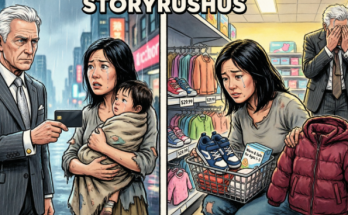
During Family Lunch, My Sister’s Daughter Shouted, “Mom Says Poor People Should Stand While We Eat”—So I Stood Up and Took Back Everything They Thought Was Theirs
During Family Lunch, My Sister’s Daughter Shouted, “Mom Says Poor People Should Stand While We Eat.” Everyone Laughed And Applauded. Dad Added, “She’s Right.” I Left Without A Word. That Night, All Three Of Their Vacation Homes Were Locked—And Every One Was Under My Name.
### Part 1
The moment my ten-year-old niece pointed at my chair and announced, “Mom says poor people should stand while rich people eat,” the dining room became so quiet that I could hear tomato sauce bubbling inside the covered serving dish.
Sunlight poured through the tall windows of my father’s dining room, striking the water glasses and scattering pale reflections across the white tablecloth. My sister Madeline sat across from me with one hand resting beside her wineglass, while her husband, Grant, leaned back with the satisfied expression of a man waiting to see whether I would laugh or cry.
I did neither.
I looked at my niece Lily, who was standing beside her chair in a pale blue dress, her blond hair tied with a ribbon that matched her shoes. She did not look cruel. She looked proud, as though she had remembered a lesson correctly and expected praise.
“Is that what your mother told you?” I asked.
Lily nodded eagerly.
“She said that in the old days, important people sat at the table while servants stood behind them. She said that was the natural order because everyone should know their place.”
My father, Robert, lowered his fork.
Madeline’s cheeks turned pink, but instead of correcting her daughter, she glanced at Grant. He covered his mouth, unsuccessfully hiding a grin.
“Lily,” Madeline said, “that was part of a private conversation.”
“But you said Aunt Claire is poor,” Lily continued. “You said she wears cheap clothes, drives an old car, and doesn’t own anything. So shouldn’t she stand?”
One of the seven-year-old twins giggled.
The other whispered, “Like a waitress.”
Grant began clapping.
Slowly.
Deliberately.
Each clap struck the room like a small slap.
“Out of the mouths of babes,” he said.
The twins copied him immediately, their hands smacking together while Lily smiled at the approval. Madeline hesitated for perhaps two seconds before joining them.
That was the part I remembered most clearly afterward—not Lily’s innocent cruelty, not Grant’s smug applause, but the way my sister’s uncertainty hardened into pleasure.
She wanted me humiliated.
She had wanted it for years.
That Sunday lunch had begun like nearly every family meal since our mother died four years earlier. Dad insisted that we gather at his house once a month because he believed traditions could hold a family together, even when the people inside that family had begun quietly pulling apart.
I had arrived shortly before noon wearing jeans, a charcoal sweater, and brown leather boots polished enough to be respectable but old enough to have creases across the toes.
Madeline noticed immediately.
“You’re wearing that?” she asked before saying hello.
I looked down at myself. “It’s lunch at Dad’s house.”
“It’s Sunday lunch,” she corrected. “Some of us still make an effort.”
She was dressed in cream-colored slacks and a silk blouse with pearl buttons. Grant wore a jacket he kept adjusting whenever he passed a reflective surface. Their children looked ready for a catalog photograph rather than baked pasta at their grandfather’s house.
Dad had ordered food from the same little Italian restaurant he always used. The kitchen smelled of garlic, warm bread, and the lemon cleaning spray he had used on the counters that morning.
While I helped him carry dishes to the table, Madeline rearranged the place settings.
“Dad, you really need proper china,” she said. “These plates look so ordinary.”
“They hold food,” Dad replied.
“That isn’t the point.”
“It usually is with plates.”
I smiled, but Madeline didn’t. Humor only interested her when someone else was the target.
Grant stood near the window scrolling through his phone. The twins argued over a handheld game in the living room, while Lily examined framed family photographs as though deciding which ones were worth keeping.
Dad handed me a bowl of salad.
“How’s work?” he asked.
“Busy. We added six new properties this quarter.”
He nodded, though I could tell he didn’t fully understand what that meant.
Madeline heard us.
“You’re still doing the property management thing?” she asked.
“Yes.”
“I thought that was temporary.”
“It’s been eight years.”
“Eight years in the same position?” She gave Grant a knowing look. “That sounds stagnant.”
Grant finally looked up from his phone.
“I’ve been promoted three times in eight years,” he said.
“Congratulations,” I replied.
The truth was that I had also been promoted three times.
The difference was that I had promoted myself.
But correcting Madeline had never been useful. She did not collect facts. She collected evidence for conclusions she had already reached.
To her, I was the unmarried younger sister who rented an apartment, drove a nine-year-old sedan, and wore the same winter coat for several seasons. She saw simplicity and translated it as failure.
I had stopped trying to change her mind.
At the table, Madeline began discussing the family’s summer schedule.
“We’ll use the lake house for July,” she said. “Then the mountain cabin during the first two weeks of August. We may do Christmas at the beach house this year.”
Dad shifted in his chair.
“You’ve already planned all that?”
“The children need consistency.”
I tore a piece of bread and watched olive oil soak into its center.
Three houses.
Three sets of keys.
Three places Madeline described as though she had inherited them.
I knew every loose floorboard, every property-tax deadline, every repair hidden behind their freshly painted walls.
Yet I said nothing.
Not then.
Madeline smiled across the table and asked, “Claire, do you have any summer plans, or are you working straight through again?”
Before I could answer, Lily leaned toward me.
“Aunt Claire, do you have a vacation house?”
“No,” I said.
It was the first lie I told that afternoon.
And judging by Madeline’s pleased expression, it was exactly the answer she had hoped to hear.
### Part 2
“Why don’t you have a vacation house?” Lily asked.
Her question was innocent, but Madeline’s smile sharpened as she lifted her glass.
“Not everyone can afford those things, sweetheart.”
“Oh.” Lily studied my sweater. “Is Aunt Claire poor?”
Dad’s fork scraped against his plate.
“Lily,” he warned.
“What?” Madeline asked lightly. “Children ask questions.”
She turned toward her daughter with the patient expression she used when pretending to be thoughtful.
“Your aunt works very hard,” she said. “She simply isn’t at the same financial level as our family.”
Our family.
The words hung in the air between us, separating me from everyone else at the table.
Grant smirked. “Different priorities produce different outcomes.”
I glanced at him. “What priorities are those?”
He looked pleased that I had asked.
“Career advancement. Investment. Long-term planning. Building something for your children instead of just earning enough to survive.”
Grant worked in regional sales for a company that manufactured office fixtures. As far as I knew, his greatest investment was a leased luxury SUV that cost nearly as much per month as my first apartment.
Still, he spoke about wealth with the confidence of someone who assumed no one would ever ask for proof.
Madeline reached for the bread basket.
“Claire has always been more comfortable living simply.”
“That’s one way to describe it,” Grant said.
The twins laughed, though they probably did not understand why.
I continued eating.
The pasta was slightly overcooked, but the sauce was good—bright tomato, basil, roasted garlic. I focused on small details because the alternative was admitting how familiar this felt.
Madeline had been assigning us roles since childhood.
She was the impressive one.
I was the practical one.
She was ambitious.
I was cautious.
She deserved to be seen.
I was useful when something needed to be fixed, organized, or quietly paid for.
After Mom died, those roles became even more rigid. Madeline took charge of the funeral flowers and received compliments for their elegance. I handled hospital bills, insurance forms, and the sale of Mom’s car.
Madeline posted photographs about grief.
I changed Dad’s sheets when he could not get out of bed.
She was praised for loving loudly, while I was expected to love invisibly.
Perhaps that was why the houses had become such an easy trap.
Six years earlier, Dad called me one evening sounding embarrassed.
“Madeline keeps asking why we don’t have a family vacation place,” he said. “Apparently several of her friends’ parents own lake homes.”
I was sitting at my desk, reviewing foreclosure listings while rain tapped against my apartment window.
“What did you tell her?”
“That I’m retired and can’t suddenly buy a lake house.”
He laughed, but there was strain underneath it.
“She says the children are missing out.”
That sentence stayed with me.
Not because I agreed with Madeline, but because Dad had sounded old.
Mom had been gone less than a year. He was lonely, sleeping badly, and trying to preserve whatever remained of our family. I had recently found a neglected house two hours north of the city, sitting beside a quiet lake with a collapsing dock and cedar siding stained almost black from weather.
The price was low because the previous owners had abandoned it halfway through renovations.
I bought it through my company.
For six months, I spent weekends replacing damaged flooring, negotiating with contractors, painting walls, and cleaning sawdust from rooms that seemed to produce more dust overnight. I chose sturdy furniture, rebuilt the dock, and installed wide windows facing the water.
When it was finished, I gave Dad a key.
“This is for you,” I told him. “Use it whenever you need somewhere peaceful.”
He stared at the key in his palm.
“You bought a lake house?”
“It’s an investment property. I’ll rent it when we aren’t using it.”
“Does Madeline know?”
“Not yet.”
Dad’s expression changed.
It was subtle—a pause, a narrowing of his eyes, the beginning of a calculation.
“Maybe we don’t need to explain everything immediately,” he said.
I should have recognized that moment for what it was.
Instead, I told myself he wanted to avoid embarrassing Madeline after all her complaints.
When she saw the house, she never asked who owned it.
She simply ran through the rooms, claimed the largest bedroom for her family, and began taking photographs from the dock.
By evening, she had posted pictures online with captions about “our new family lake house.”
Dad said nothing.
Neither did I.
At first, the arrangement seemed harmless. Madeline and Grant visited a few weekends each summer. I booked paying guests around them. Dad used the house in early fall, when the lake was quiet and the maple leaves turned red along the shore.
Then their visits became longer.
Their belongings multiplied.
A closet filled with children’s life jackets, plastic toys, and monogrammed towels. Grant left fishing equipment in the garage. Madeline replaced my neutral bed linens with embroidered sets she preferred.
She behaved like an owner because no one forced her to behave otherwise.
Two years later came the mountain cabin.
Then the beach house.
Each time, Dad received a key.
Each time, Madeline assumed.
And each time, I remained silent because the properties kept increasing in value, the rental income remained strong, and Dad looked happier when his grandchildren visited.
I thought I was purchasing peace.
I did not understand that I was financing their contempt.
At lunch, Madeline described plans to upgrade the lake-house dock.
“Grant wants a large pontoon boat,” she said. “It would improve the property.”
“Boats don’t usually improve property value,” I replied.
She gave me a dismissive glance.
“That’s why owners make those decisions, Claire.”
I looked at Dad.
He stared down at his plate.
That was the first moment I realized he might not merely be allowing Madeline’s assumptions.
He might be protecting them.
### Part 3
After Lily told me poor people should stand, Grant’s applause gave everyone permission to stop pretending it was a child’s mistake.
The twins clapped because their father did.
Madeline clapped because cruelty was easier when it sounded like a joke.
Even Lily joined them, delighted by the noise she had created.
Dad’s voice cut through the room.
“That’s enough.”
Grant lowered his hands but kept smiling.
“Oh, come on, Robert. No one’s being serious.”
“I don’t find it funny.”
Madeline set down her glass. “Why? Because it’s uncomfortable?”
“Because it’s rude.”
“Honesty often feels rude to people who don’t want to hear it.”
I watched my sister carefully.
Something had changed in her expression. The embarrassment was gone. What remained was resentment so old and polished that it almost looked calm.
“There are levels in life,” she continued. “Some people build wealth, create opportunities, and establish a legacy. Other people stay in the same place because they’re afraid to take risks.”
“Madeline,” Dad said.
“No, let’s stop pretending. Claire judges us constantly.”
I almost laughed.
“I barely speak during these lunches.”
“Exactly. You sit there with that expression, acting superior because you don’t care about appearances.”
“I don’t care about your appearances.”
“That’s the same thing.”
Grant folded his arms.
“Your sister has a point,” he said. “You’ve always been defensive about success.”
“Whose success?”
His smile faltered, but only for a moment.
“Our success.”
I looked around the table.
“Tell me about it.”
Madeline’s eyes flashed. “We own a beautiful home. Our children attend an excellent school. We have access to three vacation properties. Grant has a senior position, and I’ve built a respected social circle. What exactly do you have?”
My first instinct was to answer.
I could have told her about the seventy-three properties managed by my company, eighteen of which I owned partly or completely. I could have described the apartment buildings, small commercial spaces, duplexes, and vacation rentals that had taken eight years of careful debt, risk, and work to build.
I could have told her my “old” car was paid off, my apartment was owned by a holding company registered to me, and the sweater she had mocked cost less than one night’s rental income from the beach house she called hers.
But something stopped me.
Perhaps I wanted to see how far she would go.
“I have enough,” I said.
Madeline leaned back, triumphant.
“That answer is exactly the problem. You have no ambition.”
Lily looked from her mother to me.
“So Aunt Claire really should stand?”
“No,” Dad said sharply.
Grant chuckled. “Technically, it would complete the demonstration.”
Madeline picked up her fork.
“It might teach the children something about consequences.”
“Consequences of what?” I asked.
“Choices.”
The room smelled suddenly too warm—garlic, wine, melted cheese, perfume. The ceiling fan clicked once with every rotation. Outside, a lawn mower droned somewhere down the street, an ordinary Sunday sound that made the scene around me feel even more unreal.
I turned to Dad.
He was the only person at the table whose opinion could still hurt me.
“Do you think I should stand?” I asked.
His mouth tightened.
“Claire, don’t make this larger than it is.”
“I’m asking a simple question.”
Madeline watched him.
So did Grant.
Dad looked exhausted. For years, he had survived conflict by giving the loudest person whatever they needed to become quiet. When Mom was alive, she challenged him. After she died, Madeline’s demands filled the empty space.
He glanced at the children.
Then at my sister.
Finally, he looked at me.
“Maybe you should stand,” he said.
The words were quiet.
That made them worse.
I waited for him to smile, to show me that it was a clumsy attempt to end the joke.
He did not.
Madeline’s expression brightened.
Grant leaned back as though a verdict had been delivered in his favor.
I pushed my chair away from the table.
The wooden legs scraped across the floor.
“Claire,” Dad said, but there was no apology in his voice. Only discomfort that I was making him witness the result of his decision.
I stood.
Lily clapped again.
“See? She knows the rule.”
I picked up my bag from the back of the chair. My fingers felt cold, though heat pressed against my face.
Madeline smiled.
“There’s no reason to be dramatic.”
I walked toward the hallway.
Behind me, Grant said, “She can never take a joke.”
The twins laughed.
Dad did not tell me to stay.
At the front door, I paused beside a small table where Dad kept his keys in a ceramic bowl. Three keys stood out among the others.
One had a blue plastic tag.
One had a carved wooden tag shaped like a pine tree.
One had a white shell attached to its ring.
The lake house.
The mountain cabin.
The beach house.
I looked back through the doorway.
Madeline had already resumed eating.
Dad was staring at his plate.
No one believed I had anything they could lose.
I stepped outside, closed the door, and sat inside my car with both hands resting on the steering wheel. My breath came slowly at first, then faster as humiliation gave way to something cleaner.
Something colder.
For six years, I had confused generosity with love.
That afternoon, I finally understood the difference.
I took out my phone and made the first call.
### Part 4
The emergency locksmith answered on the fourth ring.
“This is Mason Lock and Entry.”
“My management company has three properties that need immediate lock changes.”
The dispatcher asked for the addresses.
I gave her the lake house first, followed by the mountain cabin and the beach property. All three were within the network used by my company, though completing the work that day required separate technicians and a substantial weekend fee.
“That’s fine,” I said. “Replace the physical locks and reset every keypad. No active access codes except mine.”
“Are you the legal owner?”
“Yes.”
“We’ll need verification.”
“I can send the deeds, identification, and authorization documents within five minutes.”
My voice sounded strangely calm.
The second call went to Jenna, my operations manager.
She had worked with me for five years and knew the history of the vacation properties, including the weeks I blocked for “family use” without charging anyone.
“Everything okay?” she asked after I explained what I needed.
“No.”
There was a brief silence.
“Do you want me to ask what happened?”
“Not yet.”
“Understood. I’ll remove every guest profile connected to your father, your sister, and her husband. Future reservations will require your direct approval.”
“Cancel all family blocks.”
“Even July?”
“Especially July.”
Madeline had reserved the lake house from July 1 through July 31, the most profitable month of the year. I had turned away thousands of dollars in rental income every summer so her children could swim from my dock while she posted photographs about their privileged childhood.
Jenna typed rapidly.
“There are personal belongings at each property.”
“Inventory them. Photograph everything. Nothing gets released unless pickup is scheduled in writing.”
“Do you expect a dispute?”
I looked through the windshield at Dad’s house. Madeline’s SUV remained in the driveway, polished black paint reflecting the afternoon sun.
“Yes.”
My third call went to my attorney, Noah Benton.
He listened without interrupting as I described the lunch, the keys, and the possibility that Madeline would attempt to enter after access was revoked.
“You’ve never signed any agreement granting her use?” he asked.
“No.”
“Has she ever paid rent, taxes, repairs, insurance, or utilities?”
“Not a dollar.”
“Then she has no ownership claim. I’ll draft written revocation of permission and formal trespass notices. Send them before she discovers the locks have changed.”
I drove home through light afternoon traffic, noticing details I usually ignored—the shimmer of heat above the pavement, the rhythmic click of my turn signal, a paper cup rolling across the floor near the passenger seat.
My apartment occupied the top floor of a renovated brick building near downtown. Madeline had visited only once, years earlier, and described it as “cute but temporary.”
She did not know I owned the entire six-unit building.
I parked in my usual space, carried my laptop upstairs, and opened the secure folder containing the property records.
The documents told the truth more cleanly than any argument could.
Lake property purchased in 2018.
Mountain property purchased in 2020.
Beach property purchased in 2023.
Every deed listed a limited-liability company whose sole member was me.
I drafted an email to Madeline and Grant.
“Effective immediately, you no longer have permission to access the properties on Willow Lake Road, North Pine Ridge, or Seabrook Lane. All locks and access codes are being changed. Any attempt to enter without written authorization will be treated as trespassing. Personal belongings may be retrieved through scheduled appointments arranged by my attorney.”
I attached the deeds, corporate ownership records, and notices.
Then I added one final paragraph.
“These properties were never family-owned. I purchased them, renovated them, insured them, maintained them, and allowed you to use them at no cost. That permission has ended.”
I read the message three times before sending it.
At 5:42 p.m., the lake-house locksmith uploaded photographs of the new deadbolts and keypad.
At 6:18, the mountain cabin was secured.
At 7:56, the beach house technician confirmed completion.
I expected my phone to ring immediately.
It did not.
At first, I assumed Madeline had not seen the email. Then I remembered she had mentioned taking the children to the lake for the night. Their bags had been packed inside the SUV when I arrived at Dad’s house.
They were probably driving north.
I imagined Grant talking about boats while Madeline planned which photographs to post from the dock. The children would be arguing in the back seat, surrounded by expensive bags, completely unaware that their mother had spent lunch applauding the person who controlled their destination.
At 9:07 p.m., the electronic security system sent me an alert.
Invalid code entered.
Then another.
And another.
The front-door camera activated.
On my laptop screen, Madeline stood beneath the porch light, pressing buttons on the keypad. Grant was behind her carrying two suitcases. The twins ran around the driveway while Lily peered through the windows.
Madeline tried the code again.
The red light flashed.
She pulled out her phone and called someone.
A second later, Dad’s name appeared on my screen.
I watched it ring until it stopped.
The camera captured Madeline reading my email for the first time.
Even through the grainy night image, I could see the exact moment she opened the attachments.
She went completely still.
Then she looked straight into the security camera.
My phone began vibrating across the desk.
This time, it was my sister.
### Part 5
Madeline called eleven times that night.
I answered none of them.
Her first voicemail was confused.
“Claire, something is wrong with the lake-house keypad. Call me immediately.”
The second was irritated.
“Your email makes no sense. Dad needs to fix this before the children get too tired.”
By the fourth, she had read the deeds.
“You need to explain what you’ve done. You cannot suddenly claim family property as your own.”
Her seventh message contained tears.
The ninth contained threats.
The final voicemail arrived shortly after midnight.
“You have humiliated my children. We drove two hours, and now they’re sleeping in the car while Grant looks for a hotel. Whatever happened at lunch does not justify this. Call me before you destroy this family.”
I listened from my kitchen while drinking a glass of water.
The refrigerator hummed. Rain had begun tapping against the window above the sink. On the counter beside me sat a bowl of apples and the unopened bottle of wine a tenant had given me at Christmas.
I felt no triumph.
Only clarity.
At 6:03 the next morning, my phone rang again.
Dad.
This time, I answered.
“Claire, what is going on?”
His voice was hoarse, as if he had barely slept.
“What did Madeline tell you?”
“She said you locked them out of the lake house.”
“That’s correct.”
“Why?”
“Because it belongs to me.”
Silence filled the line.
I could hear the faint ticking of the clock in Dad’s kitchen.
“What do you mean, it belongs to you?”
“I mean I purchased it. My company holds the deed.”
“The lake house?”
“Yes.”
“Since when?”
“Since before you received the first key.”
He breathed out slowly.
“But I thought…”
“You knew I bought it.”
“I knew you were involved in the purchase. I didn’t understand that you owned it completely.”
That was not true, and we both knew it.
“You signed the delivery receipt for the closing documents, Dad.”
“I don’t remember that.”
“You also signed the local emergency-contact form stating that you were not the owner.”
Another silence.
“What about the cabin?”
“Mine.”
“The beach place?”
“Also mine.”
“All three?”
“All three.”
His voice dropped.
“Madeline thinks they belong to the family.”
“Madeline thinks many things she has never bothered to verify.”
“You allowed her to believe it.”
“So did you.”
“I didn’t want to embarrass her.”
The sentence struck me harder than I expected.
“You didn’t want to embarrass her,” I repeated. “So you let her treat me like a failure while using properties I paid for.”
“She never asked directly.”
“Neither did you correct her when she said they were hers.”
“It seemed harmless.”
“Did yesterday seem harmless?”
Dad exhaled.
“Claire, Lily is a child.”
“Lily repeated what Madeline taught her.”
“Children misunderstand conversations.”
“She quoted her mother accurately. Madeline confirmed it.”
“They were joking.”
“Were you joking when you told me to stand?”
His breathing changed.
“That was a mistake.”
“It was a choice.”
“I was trying to end the argument.”
“You ended it by sacrificing the quietest person in the room.”
“That isn’t fair.”
“No, it isn’t.”
He shifted the phone, and I heard the creak of his kitchen chair.
“The children are upset,” he said. “They expected to spend the weekend at the lake.”
“Then Madeline can explain why they aren’t.”
“She says you’re punishing them.”
“I revoked access to my property. No one is being denied food, housing, education, or safety. They are losing free vacations.”
“You could have waited until after summer.”
“So she could enjoy another month at my house while telling everyone I’m too poor to sit at her table?”
“Claire…”
“No.”
The word came out sharper than I intended.
For years, I had answered Dad’s requests before he completed them. I paid emergency repair bills he could not afford. I drove him to medical appointments. I reviewed insurance forms and prepared his taxes. When he needed something, I became the dependable daughter.
Madeline became the daughter whose feelings required protection.
I was finished with that arrangement.
“You told me to know my place,” I said. “Now I know it. My place is not beneath Madeline. It is not standing behind her chair while she uses the life I built. My place is wherever I decide to stand.”
Dad was quiet for so long that I thought the call had dropped.
Finally, he said, “She has plans for July.”
“So do I.”
“What plans?”
“I’m listing the lake house for peak-season rentals.”
“You can’t do that.”
“I already have.”
“It’s part of our family tradition.”
“No. It was part of my generosity.”
He whispered my name, but I ended the call.
Twenty minutes later, Madeline sent a text long enough to fill the screen.
She accused me of being jealous, vindictive, unstable, and obsessed with money. She said the houses had become emotionally shared property, regardless of what legal documents claimed. She said everyone knew about their lake-house summers and that my actions made her family look foolish.
That last sentence contained the real injury.
Not the children’s disappointment.
Not the loss of time together.
She was ashamed that people might discover the houses were never hers.
I typed one response.
“You applauded when your daughter told me to stand because you believed I owned nothing. You were wrong. My properties, my decision. Final.”
Her reply came immediately.
“This is theft.”
I looked at the deed displayed on my computer screen.
Then another number called me.
I did not recognize it, but I answered.
Grant’s voice filled the line.
“Claire, we need to discuss how you managed to put your name on Robert’s properties.”
His accusation was so absurd that I laughed.
That was when Grant stopped sounding angry.
And started sounding afraid.
### Part 6
“What exactly is funny?” Grant demanded.
“The idea that I somehow stole three houses without anyone noticing.”
“Madeline says your father intended those properties for the family.”
“Intentions do not make mortgage payments.”
“You expect me to believe you could afford them?”
His tone changed on the final word.
There it was again—the assumption beneath everything.
Poor Claire.
Ordinary Claire.
Claire with the practical shoes and old car.
Claire who should be grateful to be invited.
“What do you think I do for a living?” I asked.
“You work for a property management company.”
“I own a property management company.”
He did not respond.
I continued.
“We manage seventy-three residential and vacation properties. I have ownership interests in eighteen. The lake house was one of my first major investments.”
“That’s impossible.”
“Why?”
“Because Madeline said…”
He stopped.
“Madeline said I was poor,” I finished for him.
“She said you were barely getting by.”
“Madeline has never seen my financial records.”
“She said you rent a small apartment.”
“I own the six-unit building.”
Silence.
“She said your car is almost ten years old.”
“It runs well.”
“What about the houses?”
I turned my chair toward the window. Morning traffic moved below, tires hissing across wet pavement.
“The lake house cost me three hundred and sixty thousand dollars after foreclosure. Renovations were just under ninety thousand. A recent appraisal valued it at eight hundred and twenty thousand.”
Grant breathed into the phone.
“The mountain cabin?”
“Purchased for two hundred and eighty-five thousand. Current estimated value is around six hundred and ten thousand.”
“And the beach place?”
“Five hundred and twenty thousand at purchase. It’s worth roughly seven hundred thousand now.”
“That’s over two million dollars.”
“Approximately.”
He muttered something I could not hear.
“When family wasn’t using them,” I continued, “the properties produced rental income. The lake house alone could bring in more than twelve thousand dollars during a strong summer month, though I repeatedly blocked the best dates for your family at no charge.”
“You made money off our vacations?”
I almost admired the speed with which he rearranged reality.
“No, Grant. I lost money on your vacations.”
“That’s not what I meant.”
“I know.”
He lowered his voice.
“Why did Robert let us believe he owned them?”
“You should ask him.”
“Madeline built traditions around those houses.”
“Madeline built a public image around those houses.”
“The children think of the lake place as their second home.”
“Then perhaps their parents should have learned who owned their second home before teaching them that the owner was too poor to sit down.”
His breathing became heavier.
“We can apologize.”
“You can apologize because you were wrong, or you can apologize because you want the keys back. I’m not interested in guessing which.”
“We made a joke.”
“You applauded.”
“It got out of hand.”
“You encouraged three children to humiliate their aunt.”
“Lily started it.”
“Lily is ten. You are forty-two.”
He had no answer.
I looked at the time.
“I have a meeting in ten minutes. Your belongings are being inventoried. Contact my attorney to arrange collection.”
“You’re involving a lawyer?”
“Yes.”
“We’re family.”
“That did not seem important when you thought I was poor.”
I ended the call.
At the office, Jenna had already prepared new revenue projections for the three properties. The lake house was booked within twenty-four hours for three separate summer stays. A family from Ohio reserved two weeks in July. A retired couple took ten days in August. A group of four women booked a quiet fall weekend for a college reunion.
For the first time in years, the calendar reflected business rather than Madeline’s preferences.
Still, the family pressure intensified.
Dad sent messages asking me to reconsider.
An aunt I had not heard from in eighteen months called to say I was “breaking the children’s hearts over a misunderstanding.”
A cousin wrote that vacation homes should be shared because “blood matters more than paperwork.”
I asked whether he wanted to contribute toward taxes, insurance, utilities, maintenance, cleaning, and repairs.
He did not reply.
Madeline began posting vague messages online about relatives who valued money over family. She described herself as a mother protecting her children from a bitter woman’s emotional abuse.
She never mentioned telling that woman to stand.
She never mentioned the deeds.
Two days later, one of my employees called from the mountain cabin.
“We have a problem,” he said.
“What kind?”
“Someone tried to force the back door.”
My stomach tightened.
“Is anyone inside?”
“No. The alarm scared them off. We have camera footage.”
“Who was it?”
He hesitated.
“It appears to be your brother-in-law.”
I opened the security application.
The footage showed Grant walking around the side of the cabin shortly after midnight. He wore a baseball cap pulled low and carried a pry bar in one hand.
Madeline stood near their SUV, looking over her shoulder.
They had not come to retrieve belongings.
They had come to take possession.
By the time the police arrived, they were gone.
But the camera had captured everything.
And for the first time since Sunday lunch, I wondered whether my sister’s entitlement was not merely insulting.
It might be dangerous.
### Part 7
Noah advised me not to call Madeline directly.
“Let the evidence speak,” he said.
The following morning, his office sent formal notices to both Madeline and Grant. The letter referenced the attempted entry, included still images from the security footage, and warned that another unauthorized visit would result in immediate legal action.
Dad called within an hour.
“You reported Grant to the police?”
“He tried to break into my cabin.”
“He says he was checking whether the old key worked.”
“He was holding a pry bar.”
“He claims it was a tire tool.”
“He walked around the house testing doors at midnight.”
Dad’s voice became strained.
“Madeline says some family belongings are inside.”
“They were offered scheduled pickup.”
“She doesn’t want strangers handling the children’s things.”
“The ‘strangers’ are bonded employees who manage luxury rentals.”
“That isn’t the point.”
“It is exactly the point. She does not get to reject a lawful option and replace it with breaking into my property.”
He sighed.
“Everything is escalating.”
“No, Dad. Everything is becoming visible.”
“What does that mean?”
“It means Madeline has always behaved this way. People simply gave her what she wanted before she had to reveal how far she would go.”
“That’s your sister.”
“Yes. And you are my father. Neither fact gives you ownership of me.”
Dad did not respond.
I had expected anger after taking back the houses. What surprised me was the grief.
Every conversation stripped away another comforting explanation I had maintained for years. Dad was not unaware of the imbalance between us. He had participated in it because pleasing Madeline was easier than respecting me.
She complained.
I solved.
She demanded.
I provided.
She displayed affection when an audience was present.
I showed up when work needed to be done.
And because I required less attention, everyone decided I needed less care.
A week after the attempted break-in, Madeline appeared at my office.
Our receptionist called upstairs.
“There’s a woman in the lobby claiming to be your sister.”
“Is she alone?”
“Yes.”
I considered having security escort her out, but part of me wanted to hear what she would say without Grant, Dad, or the children watching.
“Send her to the conference room.”
Madeline entered wearing oversized sunglasses, though the day was cloudy. She removed them after closing the door.
For the first time in years, she looked tired rather than polished.
“I came to apologize,” she said.
I waited.
She placed her handbag on the table.
“What happened at lunch was inappropriate.”
“What happened?”
She pressed her lips together.
“Lily repeated something she misunderstood.”
“What did she misunderstand?”
“Claire, do we have to dissect every word?”
“Yes.”
Madeline looked toward the glass wall, where blurred figures moved through the office hallway.
“She overheard me discussing social structures.”
“You told her I was poor.”
“I said you had fewer resources.”
“You told her poor people should stand while wealthy people eat.”
“It was an exaggerated historical example.”
“You applauded when she ordered me to stand.”
Madeline’s expression hardened.
“Grant started clapping.”
“And you joined him.”
“I was uncomfortable.”
“You smiled.”
“People smile when they’re uncomfortable.”
“You told me there are people who sit and people who serve.”
Her face flushed.
“I was angry.”
“Why?”
“Because you always act as though you’re better than me.”
I leaned back.
“There it is.”
“What?”
“The apology ended.”
She stood and walked toward the window.
“You have always judged me for wanting a beautiful life.”
“No. I judged you for claiming my beautiful houses while insulting the work that paid for them.”
She turned sharply.
“You allowed us to believe they belonged to Dad.”
“I allowed Dad to use them. You assumed the rest.”
“He never corrected us.”
“Neither of you asked.”
“Why didn’t you tell me?”
The question sounded almost wounded.
“Would you have treated me better?”
She opened her mouth, then closed it.
“That isn’t fair.”
“It is the only question that matters.”
Madeline returned to the table.
“The children miss the lake house.”
“I’m sure they do.”
“They’ve spent every summer there.”
“At my expense.”
“We created memories.”
“You created captions.”
Her eyes narrowed.
“You enjoyed watching us believe we had something.”
“No. I enjoyed seeing Dad happy. I tolerated your assumptions because I believed family peace was worth the cost.”
“And now?”
“Now I know the peace only existed because I paid for it and remained quiet.”
She sat across from me.
“What would it take to fix this?”
“Nothing.”
Her eyes widened.
“You don’t mean that.”
“I do.”
“What about Thanksgiving? Christmas? Dad’s birthday?”
“I’ll decide which events I attend.”
“You’re going to abandon the whole family over one lunch?”
“No. I am leaving a pattern that became impossible to deny during one lunch.”
Madeline stared at me.
“You could at least let us use the beach house for Christmas. The children already know about the plan.”
“No.”
“We’ll pay a cleaning fee.”
“No.”
“Rent it to us, then.”
“No.”
“Why?”
“Because I don’t trust you.”
Her face changed at last.
Not anger.
Fear.
I continued before she could interrupt.
“You attempted to break into the mountain cabin. You taught your children that wealth determines human worth. You mocked me because you thought I had less than you, then demanded access when you learned I had more. Your apology is not remorse. It is a negotiation.”
Madeline picked up her handbag.
“You’re going to regret this.”
“Perhaps.”
“When Dad is gone, I’ll be the only close family you have.”
I looked directly at her.
“Then I’ll build a life that does not depend on close family.”
She left without another word.
Through the conference-room window, I watched her cross the lobby and disappear through the glass doors.
Only after she was gone did I notice something on the table.
A small silver key.
The old key to the lake house.
She had placed it there like an offering.
Or a threat.
### Part 8
Six months later, I sold the lake house.
The decision had nothing to do with Madeline, though she never believed that.
Property values in the area had risen sharply, and the buyers made an offer far above the latest appraisal. They were a quiet couple from the city with two teenagers, an elderly dog, and plans to spend their summers kayaking rather than displaying wealth.
During the final walk-through, the lake was smooth as glass. Morning fog hovered above the water, and damp cedar scented the porch. I ran my hand along the railing I had sanded and stained years earlier.
I remembered Dad’s face when I first gave him the key.
I remembered Lily jumping from the dock in an orange life jacket.
I remembered Madeline arranging white cushions on the outdoor furniture and complaining that the neighbors’ boat spoiled her photographs.
The house had held good memories.
It had also become a monument to everything my family believed they could take without gratitude.
Selling it felt less like losing a home and more like ending an unhealthy agreement.
The new owners signed the papers on a Friday afternoon.
Three days later, Madeline called for the first time since our meeting at my office.
“You sold our lake house?”
I was reviewing invoices when the call came.
“I sold my lake house.”
“I saw photographs from the new owners. They’re already changing the dock.”
“They purchased it. They can change what they like.”
“You didn’t even tell us it was for sale.”
“You were not involved in the transaction.”
Her voice broke.
“My children grew up there.”
“They visited during summers.”
“It was part of our family.”
“It was a property I owned.”
“Why do you keep saying that as though paperwork matters more than memories?”
“Because you keep discussing memories as though they gave you legal and moral ownership.”
She inhaled sharply.
“You’re heartless.”
“No, Madeline. I simply stopped confusing love with unlimited access.”
She hung up.
I kept the mountain cabin and beach house, but both became full-time rentals. The income funded new investments and allowed me to expand my company into two neighboring counties.
I also bought another property.
Not for my father.
Not for my sister.
Not for family use.
For me.
It was a modern ski chalet in northern Vermont, set among tall pines at the end of a narrow road. The main room had high windows, a stone fireplace, and a long wooden table large enough for twelve people.
The first night I stayed there, snow fell quietly beyond the glass. The air smelled of burning cedar and fresh paint. I cooked soup, opened a bottle of wine, and sat at the head of the table wearing wool socks and the same charcoal sweater Madeline had mocked.
No one told me what to wear.
No one evaluated whether I deserved my chair.
The silence was not lonely.
It was peaceful.
My relationship with Dad changed after the lake-house sale. He apologized several times, first in vague language about misunderstandings and later with greater honesty.
“I used you,” he admitted one evening. “I relied on you because you never made things difficult.”
“You mean I never punished you for disappointing me.”
He lowered his eyes.
“Yes.”
“I forgive the fact that you were weak,” I told him. “But forgiveness does not restore the access you had before.”
He nodded, though I could tell he had hoped for more.
I visited him occasionally. I helped when the situation was truly necessary, but I stopped solving every inconvenience. When Madeline complained to him, I allowed him to handle it.
I forgave him in the sense that I no longer wanted anger occupying space inside me.
I did not forget.
And I did not give him keys.
Madeline and Grant never offered another genuine apology. Their marriage became strained after the attempted break-in, especially when Grant blamed her for convincing him that the properties were “basically theirs.”
The irony did not escape me.
They had been united when they believed they stood above me. Once that belief collapsed, they turned on each other.
I saw the children twice over the following year.
At Dad’s birthday dinner, Lily approached me while the adults were in the kitchen.
“I’m sorry I told you to stand,” she whispered.
She was eleven then, taller and less certain of herself.
“Do you understand why it was wrong?” I asked.
She nodded.
“People aren’t better because they have more money.”
“That’s right.”
“Mom said you took the houses because you hated us.”
“I took back access to houses I owned because the adults treated me badly.”
Lily considered that.
“Were you really poor?”
“No.”
“Would it have been okay if you were?”
“No.”
She looked down at her shoes.
“I’m sorry.”
I believed her.
Children can outgrow lessons when someone finally tells them the truth.
Her parents had chosen not to.
Two years after that lunch, my company managed more than one hundred properties. I still drove a practical car. I still wore jeans to Sunday meals. I still preferred quiet rooms, strong coffee, and useful things over impressive ones.
The difference was that I no longer allowed people to mistake my quietness for permission.
That winter, I invited several employees and friends to the Vermont chalet. Jenna brought her husband. Noah came with his sister. My neighbor from the apartment building brought homemade bread and a ridiculous board game that kept everyone laughing until midnight.
We crowded around the long table while snow piled against the windows.
Every chair was occupied.
At one point, Jenna raised her glass and asked how I had chosen such a large dining table when I originally planned to use the chalet alone.
I looked around at the people gathered there—people who knew what I had built, people who respected the work behind it, people who would never demand that someone stand so they could feel more important while sitting.
“I wanted enough room for everyone,” I said.
And that was the rule in my house.
No servants standing behind chairs.
No hierarchy disguised as humor.
No relatives confusing generosity with weakness.
Everyone I welcomed sat at my table because human dignity was not a reward for wealth, status, marriage, clothing, or social approval.
Madeline once believed there were people who sat and people who stood.
She was right about one thing.
Eventually, everyone had to choose a place.
She chose to sit at a table built from arrogance, appearance, and borrowed privilege.
I chose to stand up, walk away, and build a table of my own.
THE END!