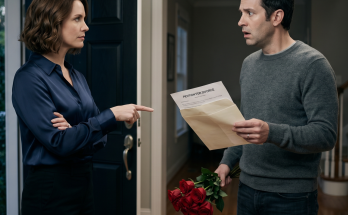
My Daughter Went Crazy When I Refused To Give Her The Money From Selling My Farm. My Older Son Took Her Side And Broke My Rib. Twenty Minutes Later, Both Of Them Regretted Ever Being Born.
## Part 1
My name is Walter Hale. I am seventy-one years old, and until one Sunday afternoon, I still believed there were certain lines your own children would never cross.
I had spent forty years working two hundred acres of unforgiving farmland, waking before sunrise, repairing machinery in winter cold, harvesting through brutal August heat, and measuring my life in seasons instead of vacations. That farm paid for braces, college tuition, cars, weddings, failed business ideas, and more “temporary emergencies” than I could count.
Three weeks before everything collapsed, I sold it for $1.2 million.
Signing the final papers should have felt like freedom. Instead, I sat on my porch afterward with black coffee cooling between my hands, staring across fields that would never truly belong to me again. I expected my children to understand.
My son, Ethan, was forty-two. My daughter, Claire, was thirty-seven. They had grown up in that farmhouse, chased fireflies along the creek, learned to ride bicycles beside the equipment shed, and eaten thousands of dinners around my scarred oak table. I thought they might come say goodbye to the place.
Instead, Ethan’s sports car tore up my gravel driveway before noon, followed closely by Claire’s oversized luxury SUV. Neither of them looked at the fields.
Ethan climbed the porch steps staring at his phone and said, “Did the buyer’s transfer clear yet?” Claire brushed past me through the screen door.
“How long before you can wire money out?” she called from the kitchen. “My suppliers aren’t going to wait forever.”
I sat there with my coffee for another moment, wondering if either of them realized I had just sold the only life I had ever known. They didn’t.
When I entered the kitchen, they were already dividing money that did not belong to them.
Claire wanted $100,000 for her boutique. She called it an “advance on her inheritance,” as casually as someone requesting repayment for groceries. Ethan needed far more.
He had placed a $75,000 nonrefundable deposit on a luxury condominium downtown, assuming my farm sale would provide the financial backing required to close.
“When the money clears,” he said, “we’ll finally be able to straighten everything out.”
I looked at him. “We?”
His mouth tightened. “You know what I mean.”
Unfortunately, I did.
For decades, I had mistaken providing for my children for protecting them. My late wife, Eleanor, had been even worse. She could not tolerate seeing either child struggle. Every mistake became an emergency, every bad decision became something money could erase.
When Ethan wrecked his first car at nineteen, I told him he would work and replace it himself. Two weeks later, another car appeared in our driveway. Eleanor claimed insurance had handled everything.
Years later, Claire maxed out several credit cards during college. I insisted she find a job. Somehow, her balances disappeared instead.
I had been too busy working to ask enough questions.
Now, looking at my two adult children, I finally understood what Eleanor and I had created. They had never learned consequences because someone had always paid to remove them.
Claire leaned against my counter.
“Dad, I need the hundred thousand by Friday.”
“No.”
She blinked. “Excuse me?”
“I said no.”
## Part 2
The refrigerator hummed in the silence.
Claire gave a short laugh, as though I must be joking. “You have over a million dollars.”
“I have retirement money earned through forty years of work.”
“You’re seventy-one,” she snapped. “What exactly are you planning to do with all of it?”
There it was. Not concern. Not love. Calculation.
Ethan stepped between us, raising both hands. “Come on, Dad. Helping Claire won’t hurt you.”
“Then you help her.”
His expression changed immediately. “That isn’t the point.”
Of course it wasn’t. Neither of them intended to risk their own money.
Claire suddenly slammed both palms onto the counter. “Mom would have helped me!”
Those words landed harder than she expected. For several seconds, nobody spoke.
Then memories began rearranging themselves in my mind. Missing savings. Bills I thought had been paid one way but somehow disappeared another. Vacations the children supposedly funded themselves. Deposits. Credit cards. Cars.
Eleanor had spent years secretly cushioning every fall.
Claire folded her arms. “Mom never would have watched me lose everything.”
I studied my daughter carefully. “Your mother isn’t here anymore.”
Her eyes hardened.
“And neither am I,” I continued. “Not for this.”
Ethan moved closer. “You’re making a mistake.”
“No. I’m correcting one.”
His jaw flexed. “You’ll need us eventually.”
That sounded less like concern than a threat.
I stood. “There are no bridges left to burn. You burned them when you came here asking about money before asking how I felt about selling my farm.”
Claire grabbed her handbag. “You’re unbelievable.”
She stormed toward the door. Ethan did not follow.
Instead, he went outside and returned carrying a black leather folder. He sat across from me in the living room and suddenly became calm. Too calm.
He opened the folder and spread glossy photographs across my coffee table. A penthouse. Marble counters. Floor-to-ceiling windows. Rooftop terrace.
Then came the loan documents.
“I already put down the deposit,” he said.
“How much?”
“Seventy-five thousand.”
I stared at him. “You spent seventy-five thousand dollars before knowing whether you could qualify for the mortgage?”
“I knew you were selling the farm.”
That answer told me everything.
He needed a co-signer with strong credit and substantial assets. He pushed a silver pen toward me.
“It costs you nothing.”
“It could cost me everything.”
“It won’t.”
“I said no.”
His face slowly changed. The polished salesman disappeared.
“You don’t understand how much pressure I’m under.”
“I understand perfectly.”
“If this deal collapses, I lose my deposit.”
“You gambled it.”
“You’re my father.”
“You’re forty-two.”
He stood over me. For a moment, something ugly moved behind his eyes.
Then he gathered his papers. “This isn’t over.”
He left without saying goodbye. Claire had already disappeared.
For the next three weeks, neither of them contacted me. I packed boxes, arranged my move, and tried convincing myself their silence meant they had finally accepted reality.
I should have known better.
Because on the twenty-first day, both of them returned together.
And this time they did not bring requests.
They brought paperwork designed to take control of my life.
## Part 3
They arrived on Sunday afternoon without knocking.
Ethan carried a thick manila folder. Claire held a silver pen.
The second they entered my kitchen, I felt the difference. This was not another argument. This had been planned.
Ethan dropped the folder onto the counter and removed several pages. At the top, in heavy black letters, were words that made my stomach tighten.
Durable Power of Attorney.
Claire stepped closer wearing an expression of theatrical concern. “Dad, we are worried about you.”
I almost laughed.
Three weeks earlier, she had told me I was selfish for refusing to rescue her boutique. Now she was studying my face like a doctor delivering a diagnosis.
“You’ve been making irrational decisions,” she continued. “Selling the farm has clearly affected you.”
Ethan folded his arms. “You’ve been forgetful.”
“No, I haven’t.”
“You have.”
“When?”
He hesitated. “That isn’t important.”
I looked down at the document. It granted them authority over financial accounts, property transactions, legal decisions, and several other areas of my life.
They did not want to help me pay bills. They wanted ownership of me.
Claire extended the pen. “Just sign it. We’ll handle everything.”
I picked up the papers. I read every page slowly.
Ethan’s breathing grew louder. “Dad, we don’t have all day.”
I reached the signature line. Then I gripped the documents with both hands.
Claire’s eyes widened.
I tore them in half.
The ripping paper sounded unbelievably loud.
“What are you doing?” she screamed.
I folded the halves together and tore them again. Then I let the pieces fall onto the linoleum.
“No.”
Claire stared at the scraps around her expensive shoes. Ethan’s face turned dark red.
“You stubborn old fool.”
“Get out of my house.”
Something broke inside him.
He crossed the kitchen so quickly I barely had time to straighten. Both hands struck my chest.
My boots slid backward. The edge of the oak table caught me hard along my right side.
I heard the crack before I fully felt the pain. Then came fire.
My breath disappeared.
I hit the floor clutching my ribs while the kitchen blurred around me.
Claire screamed.
Ethan stumbled backward staring at his hands. “Oh my God.”
I could not answer.
Every attempt to breathe felt like dragging broken glass through my chest. For several seconds, I remained curled on the floor.
Neither child touched me. Neither called for help. They simply stared.
And in that moment, something inside me became very calm.
I finally understood the truth without excuses. My children were willing to hurt me for money.
Slowly, I reached into my pocket and pulled out my phone.
Ethan’s voice shook. “Dad…”
I opened a prepared message to my attorney, Grant Mercer. Three words were already waiting.
Proceed as discussed.
I pressed send.
Then I looked at Ethan. “You just lost everything.”
I forced myself upright using the cabinets.
Claire began crying. “Please don’t do anything crazy.”
Crazy.
I almost admired the word.
I had been pushed hard enough to break a rib, yet somehow I was the dangerous one.
I walked outside, climbed painfully into my truck, and drove toward the county hospital. Every pothole sent another wave of pain through me.
The emergency room smelled of antiseptic and burnt coffee. Fluorescent lights buzzed overhead as a nurse led me into a pale blue examination room.
Imaging confirmed a fractured rib.
## Part 4
While I sat alone afterward, the emotional pain finally caught up with the physical one.
For forty years, I had believed hard work could protect a family. I had been wrong.
Money could shelter people. It could educate them. It could rescue them. But if used carelessly, it could also prevent them from ever developing character.
My phone buzzed.
I expected an apology.
Instead, I saw a fraud warning from my bank. Someone had attempted to restrict access to one of my accounts.
A second message arrived from my financial manager.
An individual identifying himself as my son had submitted a scanned power of attorney, claiming I was hospitalized and mentally unable to manage my finances.
I stared at the screen. The pain in my ribs suddenly felt distant.
Ethan had already scanned the document.
Whether he originally planned to use it with or without my signature, I could not know. But while I sat injured in the hospital, he was trying to use my condition as proof that I needed to be removed from control.
That was the moment grief vanished.
I called Grant. He answered on the second ring.
“My son tried to access my accounts using fraudulent paperwork,” I said.
There was a pause. “Are you safe?”
“Yes.”
“What do you want done?”
“Everything we discussed.”
Grant knew exactly what I meant.
Months earlier, during the farm sale negotiations, we had talked about protecting the proceeds through a tightly controlled trust structure. At the time, it was only estate planning.
Now it had become self-defense.
“I want the proceeds protected,” I said. “And I want Ethan and Claire removed from every document where they have access, expectation, or leverage.”
“Understood.”
“One more thing.”
“Go ahead.”
“I don’t want threats. I want records.”
Grant became very quiet.
Then he said, “Come home. Secure your financial documents. I’ll be there in the morning.”
By the time I returned to the farmhouse, darkness covered the fields.
The shredded power-of-attorney pages still littered the kitchen floor. My phone contained fourteen calls from Ethan and nine from Claire.
I played the first voicemail.
“Dad, it was an accident,” Ethan said. “I tripped. I bumped into you. Please don’t call the police. This could destroy my career.”
He never asked whether I was all right.
Claire’s message was worse.
“You cannot ruin everyone’s life over one misunderstanding.”
Everyone’s life.
Apparently, mine did not count.
I walked into my office, unlocked the filing cabinet, and removed forty years of ledgers, contracts, tax records, deeds, loan agreements, and bank correspondence.
My children had always thought I was only a farmer. They saw mud on my boots and assumed ignorance.
They never understood that surviving in agriculture for four decades required more than planting crops.
You learned contracts. Taxes. Liability. Debt. Land values. Insurance. Corporate structure.
You learned to plan for droughts before the sky turned dry.
And Ethan had just given me the financial equivalent of a drought warning.
At sunrise, a black sedan rolled into my driveway.
Grant Mercer stepped out carrying a leather briefcase.
He walked into my kitchen, looked at the shredded papers on the floor, then at the bandage beneath my shirt.
“Walter,” he said quietly, “tell me you are absolutely certain.”
I opened my financial ledger.
“I have never been more certain of anything in my life.”
Grant opened his briefcase.
What he placed on the table would permanently change where every dollar from my farm would go.
## Part 5
Grant called it the lock.
The legal structure was an irrevocable trust managed independently, designed so neither Ethan nor Claire could reach the proceeds from the farm sale through intimidation, forged paperwork, emergency claims, or family pressure.
Once completed, I would no longer be able to casually reverse it because I suddenly felt sentimental. That was exactly why I wanted it.
For forty years, sentiment had cost me enough.
Grant pushed the documents across my oak table.
“You understand this is permanent.”
“I do.”
“If you regret it later—”
“I won’t.”
He studied me.
I pressed one hand against my aching ribs.
“My son broke a bone because I wouldn’t finance a penthouse. My daughter stood beside him holding the pen they wanted me to use to surrender control of my money. What exactly do you think I will miss?”
Grant said nothing after that.
I signed. Page after page.
With each signature, I felt something loosen inside my chest that had nothing to do with the fracture.
The farm proceeds would eventually support an agricultural foundation assisting young farming families with training, equipment, and land access.
People willing to work.
People who would understand what soil, weather, debt, and sacrifice actually meant.
When Grant stamped the final page, the sound reminded me of a vault door closing.
“The transfer is initiated,” he said.
I leaned back.
For the first time since selling the farm, I felt peaceful.
Then I opened another binder.
“Now we deal with everything else.”
Grant raised one eyebrow.
I showed him Claire’s commercial lease. She loved telling people she had built her boutique herself.
In reality, my holding company owned the building. I had purchased it years earlier to help her begin.
Her rent was far below market value.
For more than two years, she had stopped paying even that. I had allowed the debt to accumulate because she was my daughter.
No longer.
“Serve the default notice.”
Grant nodded. “How much does she owe?”
I gave him the figure.
He whistled softly. “She cannot pay that.”
“I know.”
Then came Ethan.
His luxury car looked impressive parked in front of restaurants, offices, and my farmhouse. What nobody saw was my signature on the financing agreement.
Whenever Ethan missed payments, I had quietly covered them to protect my own credit.
I gave Grant the records.
“I am done supporting it.”
“Understood.”
We spent the morning reviewing every financial connection I had foolishly left intact.
Loans. Guarantees. Commercial property. Old advances. Written acknowledgments. Transfers they had called temporary but never repaid.
I did not invent penalties. I did not create revenge.
I simply stopped protecting them from obligations already sitting there.
That distinction mattered to me.
By noon, Grant packed everything into his briefcase.
“You realize they’re going to panic.”
“They should.”
“They may come after you again.”
“I expect them to.”
Four days later, I moved temporarily into a furnished apartment in the city.
Then I sent Ethan and Claire one message.
Meet me here at 2:00. We need to finalize the farm money.
That was all.
At exactly two, they knocked.
I opened the door.
Ethan wore a tailored navy suit and carried another leather portfolio. Claire arrived in a bright red dress, tapping impatiently on her phone.
Neither apologized. Neither asked about my ribs.
Ethan looked around the modest apartment.
“This is better for you,” he said. “Safer than living alone out there.”
Claire dropped her handbag onto the coffee table.
“Can we hurry? My suppliers need payment today.”
They believed I had surrendered.
## Part 6
Ethan removed fresh documents and placed them neatly on the glass table.
“I know things got heated,” he said. “Let’s forget about that.”
Forget.
Such a convenient word when you are the person who caused the pain.
He held out a pen. I ignored it.
“The financial arrangements are already finished.”
Claire exhaled dramatically. “Thank God.”
She actually smiled.
“I knew you’d come to your senses.”
I reached into my jacket and removed two manila envelopes. One for Ethan. One for Claire.
Their faces brightened.
Claire tore hers open immediately. Her smile disappeared first.
“What is this?”
She read faster.
“Notice of default?”
Then louder.
“Commercial eviction?”
I remained standing.
“You haven’t paid rent in twenty-six months.”
Her mouth fell open. “But you own the building!”
“Yes.”
“I’m your daughter!”
“That didn’t seem important when you were trying to take control of my accounts.”
She dropped the papers. “You can’t shut down my business!”
“I am not shutting down anything. Your unpaid rent did that.”
Ethan ripped open his envelope. His complexion changed.
He found notices connected to the debts I had stopped carrying. Then he saw the withdrawal of financial support tied to his car.
“If you stop backing this loan, they can take the car.”
“Yes.”
His breathing quickened.
“My condo closes tomorrow.”
“I know.”
“The bank needs your financial support.”
“I know.”
“Then fix this!”
“No.”
Claire started crying. Ethan’s hands shook.
Then both of them found the final document.
Notice of the trust.
Ethan read slowly. His eyes moved line by line.
When he reached the beneficiary section, he stopped breathing for a moment.
“You gave it away.”
“Not all at once. The trust will support its stated purpose over time.”
“To strangers.”
“To people willing to build something.”
Claire looked at me as though I had struck her.
“What about us?”
“You had more advantages than most people receive in a lifetime.”
“We’re your children!”
“You were.”
Silence.
That sentence hurt me more than it hurt them. But it was true.
The people who once ran barefoot through my fields had vanished somewhere beneath years of entitlement.
Ethan stood. His chair scraped hard against the floor.
“You think this is over?”
I watched anger return to his face.
“I’ll challenge the trust.”
“Go ahead.”
“I’ll tell a judge you aren’t competent.”
Claire stopped crying.
Ethan leaned toward me.
“I’ll prove you were confused after Mom died. I’ll prove Grant manipulated you. I’ll have every decision you’ve made reviewed.”
For the first time that afternoon, I smiled.
Not because I enjoyed his fear.
Because I had been waiting for those exact words.
I reached into my pocket and placed a small USB drive on the coffee table.
Ethan stared at it.
“What is that?”
“Insurance.”
The apartment became completely still.
“My farmhouse has security cameras.”
The color drained from Claire’s face.
I continued.
“The kitchen footage shows everything.”
Ethan stared at me.
“No.”
“Yes.”
“The shove. The table. Me hitting the floor. You standing over me.”
His lips moved without sound.
“And the hospital documented the fracture.”
Then a bedroom door behind me opened.
Grant Mercer stepped into the living room carrying a folder.
Neither of my children had known he was there.
Ethan slowly turned toward him.
Grant placed the folder beside the USB drive.
“Before you threaten my client with claims of incompetence,” he said, “you may want to consider the evidence already preserved concerning the attempted account access and the incident at the farmhouse.”
Claire whispered, “Oh my God.”
Ethan looked at me.
For the first time in my life, my son seemed to understand that money was not the most dangerous thing he was about to lose.
## Part 7
Ethan tried to recover his confidence.
He failed.
“You recorded me without permission,” he said.
Grant answered calmly.
“Your legal theories would be better discussed with your own attorney.”
Ethan’s eyes moved between Grant, the USB drive, and me.
“What do you want?”
That question told me everything.
Not “Are you okay?”
Not “Can you forgive me?”
What do you want?
Still transactional. Always transactional.
“I want you out of my life.”
Claire gasped. “Dad.”
I turned toward her.
“You stood in my kitchen while your brother tried to force legal control over me. After he hurt me, you asked me not to ruin your lives. Neither of you cared whether I could breathe.”
Her mouth trembled.
“I was scared.”
“So was I.”
“We didn’t mean—”
“Stop.”
I had heard enough unfinished excuses.
Ethan’s voice hardened.
“So that’s it? You leave us with nothing?”
“No. I leave you with yourselves.”
He stared at me.
I continued.
“You both have educations. You’re healthy. You’re adults. You are leaving this apartment with every tool necessary to build a life except my wallet.”
Claire began sobbing again.
“My boutique is everything I have.”
“No. My money was everything you had.”
That silenced her.
Ethan gathered his paperwork slowly.
“You’ll regret this.”
“I already regret plenty.”
Grant remained standing beside me.
“You are free to contest anything through proper legal channels,” he told them. “But any false representations concerning Mr. Hale’s mental capacity or financial authorization will be answered with documentation.”
Ethan understood. His shoulders dropped. The fight left him.
Claire picked up her handbag.
For one brief second, she looked like the little girl who used to stand at the end of my bed during thunderstorms.
That nearly broke me.
Then she said, “Mom would hate you for this.”
And the feeling disappeared.
“Your mother loved you,” I replied. “But loving you without boundaries helped create this disaster.”
Claire flinched.
Neither said goodbye.
The apartment door shut behind them.
I locked it.
The silence afterward was not joyful. It was simply clean.
By that evening, the family campaign began.
Claire called my sister Margaret claiming Grant had manipulated me.
Ethan told cousins I was confused from grief and making reckless financial decisions.
They expected relatives to surround me with pressure.
Instead, something unexpected happened.
Nobody believed them.
Margaret called me the next morning laughing.
“Claire spent twenty minutes telling me she’s being thrown out of her boutique.”
“What did you say?”
“I told her she should probably pay rent.”
I laughed for the first time in weeks.
Margaret became serious.
“Walter, we’ve watched this for years.”
“What do you mean?”
“Eleanor protected those two from everything, and you kept paying for it. We all saw it.”
I stared through the apartment window at traffic moving below.
“You never said anything.”
“You wouldn’t have heard us.”
She was probably right.
Other relatives reacted the same way.
A nephew Ethan once mocked for working two jobs refused to lend him money.
A cousin Claire had insulted at Christmas declined to help with housing.
Their attempt to turn the family against me collapsed because they had spent years treating everyone as inferior.
## Part 8
The practical consequences followed quickly.
Ethan’s car disappeared first.
The lender acted after months of missed payments and the end of my support.
He walked outside one rainy morning and found an empty parking space.
Then came the condominium.
Without my backing, the mortgage failed.
His closing deadline passed.
The $75,000 deposit was gone.
The creditors he had been juggling began demanding payment.
His expensive image cracked almost overnight.
Claire’s decline was equally fast.
Her commercial default finally caught up with her.
She lost access to the storefront after failing to satisfy the debt.
Suppliers began demanding payment.
Her carefully cultivated image of a glamorous entrepreneur collapsed when there was no longer anyone quietly covering the losses.
I heard most of this secondhand.
I never called.
That distinction mattered.
I did not destroy their lives.
I simply stopped funding them.
Ethan eventually moved from his upscale apartment into a small studio in an industrial neighborhood.
He sold several suits and took a lower-level sales job.
For the first time in years, he rode public transportation because he could not afford another luxury vehicle.
Claire sold handbags and jewelry to cover basic expenses.
After weeks of rejected applications, she accepted a retail job.
Nothing glamorous.
Nothing impressive enough for social media.
Just honest hourly work.
A family acquaintance saw her one afternoon folding shirts behind a counter.
When I heard, I felt no triumph.
That surprised me.
I had imagined revenge might feel satisfying.
It didn’t.
What I felt was distance.
Their suffering did not make me happy.
But neither did it make me reach for my checkbook.
For once, their problems belonged entirely to them.
Several weeks passed.
My rib slowly healed.
The sharp pain became an ache.
The ache became an occasional reminder.
One afternoon, Grant called.
“The trust made its first major grant.”
“To whom?”
“A farming cooperative helping several young families acquire equipment.”
I closed my eyes.
“What kind?”
“Used tractors, irrigation equipment, seed storage.”
For the first time since the farm sale, I pictured the money without seeing Ethan’s condominium or Claire’s boutique.
I pictured a young farmer climbing onto a tractor before sunrise.
I pictured a family standing in a field they were terrified of losing.
I pictured callused hands.
Something warm settled inside me.
“That sounds right.”
A month later, I bought a modest house beside a freshwater lake.
No barn.
No grain silo.
No machinery requiring repairs.
Just large windows, wooden floors, a small dock, and water stretching into the distance.
On my first morning there, I woke before sunrise out of habit.
I brewed coffee.
Then I carried the mug onto the deck.
Mist floated across the lake.
For forty years, waking before dawn had meant responsibility.
That morning, for the first time, it meant freedom.
I thought the story was over.
Then my phone rang.
Claire.
I watched her name glow on the screen.
She had not contacted me since the apartment confrontation.
For several seconds, I considered ignoring it.
Then I answered.
Her first words were not an apology.
“Dad, Ethan is in trouble.”
I closed my eyes.
Of course he was.
## Part 9
I said nothing.
Claire continued.
“His creditors are threatening legal action. He may lose his job. He can’t keep up with everything.”
I looked across the lake.
Morning sunlight moved across the water in broken silver lines.
“What do you want me to do?”
She hesitated.
That hesitation gave me my answer before she spoke.
“He only needs enough to stabilize things.”
I almost laughed.
After everything, here we were again.
Different home.
Different morning.
Same request.
“No.”
“Dad, please.”
“No.”
“He’s your son.”
“He broke my rib.”
“It was one terrible moment.”
“He tried to use false authority to seize my money while I was in the hospital.”
Claire became quiet.
I continued.
“And you helped him bring those papers into my house.”
“I know.”
For once, she did not argue.
The silence stretched.
Then she said something I had never heard from her before.
“I was wrong.”
I waited.
She began crying softly.
Not the dramatic sobbing I remembered from the apartment.
This sounded different.
“I lost everything,” she said. “The store. The apartment. Most of my friends disappeared. I thought they loved me. They loved being around somebody who always paid for dinner.”
I kept watching the lake.
“I work at a clothing store now.”
“I heard.”
“My feet hurt every night.”
“That happens when you work on them.”
A tiny, embarrassed laugh came through the phone.
“I know that now.”
She told me about a customer who had screamed at her over a return.
About a manager who refused to let her leave early.
About calculating grocery prices in the aisle.
About waiting for payday.
Ordinary problems.
The kind millions of people face without demanding their parents sell pieces of themselves to make those problems disappear.
“I understand more now,” she said.
“I hope you do.”
“Can we start over?”
There it was.
The question I had known might eventually come.
I took a slow breath.
Months earlier, that movement would have hurt.
Now my ribs expanded freely.
“No, Claire.”
She began crying again.
“Dad…”
“I forgive enough to stop carrying anger. But starting over would require me to trust you.”
“I can change.”
“Maybe you can.”
“Then why won’t you give me a chance?”
“Because your change cannot depend on getting me back.”
She said nothing.
“You need to become better because you finally understand better. Not because doing so might restore access to me, my home, or my money.”
Her voice became very small.
“Do you still love me?”
That question hurt.
“Yes.”
“Then how can you leave me out there?”
“Because loving you does not require allowing you back into my life.”
She cried quietly.
I hated hearing it.
But I did not change my answer.
Some boundaries exist precisely because love once made you too weak to create them.
Before hanging up, Claire asked whether I would ever see her again.
“I don’t know.”
That was the truth.
I would not promise reconciliation simply because she finally sounded remorseful.
Late love and late regret do not erase consequences.
Sometimes they arrive after the door has already closed.
## Part 10
Ethan never called me personally.
Months later, I received a letter.
Three pages.
Grant screened it before forwarding it.
Ethan wrote that he had lost the condominium, his car, his position, most of his social circle, and nearly every illusion he had about himself.
He admitted that he had spent years pretending to be successful because he was terrified of looking ordinary.
He said the farm money had become, in his mind, the answer to every mistake.
He admitted the shove.
He admitted the documents.
He admitted that when I refused to rescue him, he stopped seeing me as his father and began seeing me as the obstacle between himself and survival.
The last paragraph asked for forgiveness.
I read the letter twice.
Then I placed it in a drawer.
I never answered.
Forgiveness, for me, did not mean reopening the door.
It meant I no longer wished him harm.
It meant I could sleep without replaying the kitchen over and over.
It meant I could hear his name without feeling rage.
But he would never again have access to my life.
Claire eventually stopped calling.
Through Margaret, I learned she kept her retail job for almost a year, then moved into purchasing for a smaller local company.
Nothing glamorous.
But she apparently became good at it.
She rented a modest apartment alone.
She paid her own bills.
She even began returning some of the money she owed, sending small monthly payments through Grant’s office.
I never asked her to.
The first payment was only a few hundred dollars.
Grant called me.
“Do you want me to send it back?”
“No.”
“Do you want to contact her?”
“No.”
I respected what she was doing.
But respect was not reconciliation.
Ethan took longer.
He changed jobs several times before settling into steady sales work.
According to relatives, he stopped talking about luxury property and stopped trying to impress people.
Maybe hardship changed him.
Maybe it merely exhausted him.
Either way, that journey belonged to him.
Mine had moved elsewhere.
The agricultural trust grew into something I could finally feel proud of.
One spring morning, Grant invited me to visit a small farm outside the county.
A young couple had received equipment support from the program.
Their tractor was old but dependable.
Their fields were uneven.
Their farmhouse needed paint.
Their two children ran through the grass while their parents showed me the irrigation improvements.
The father shook my hand.
His palm was rough.
“Whoever funded this program gave us another chance,” he said.
I looked across the field.
For a moment, I could smell my old farm after rain.
“I think that’s what the money was supposed to do.”
He had no idea who I was.
I preferred it that way.
## Part 11
That evening, I returned to my lake house.
I poured coffee even though it was too late for coffee and carried it onto the deck.
The sunset turned the water orange.
For years, I thought legacy meant leaving money to your children.
Now I understood it differently.
Legacy is what remains of your values after you are gone.
If money strengthens greed, giving more money is not love.
If protection prevents growth, protection becomes damage.
And if family demands the destruction of your dignity as proof of loyalty, then blood alone is not enough.
My son broke one of my ribs because I would not finance the life he wanted.
My daughter stood beside him because she believed my retirement belonged to her.
For a while, I wondered whether refusing reconciliation made me cold.
I no longer wonder.
I did not punish them forever.
I simply stopped rescuing them forever.
There is a difference.
They finally learned to live without my money.
And I finally learned to live without their approval.
Some mornings I take a small boat onto the lake before the sun fully rises.
I cut the motor a few hundred yards from shore and let the boat drift.
The water rocks gently beneath me.
No phones ringing.
No creditors.
No children demanding transfers.
No one waiting for me to solve a disaster I did not create.
Just open sky.
I am seventy-one years old.
My farm is gone.
My marriage exists now only in memory.
The children I thought I knew are living lives separate from mine.
Some people might call that a sad ending.
I don’t.
A sad ending would have been spending my final years financing people who were willing to destroy me.
A sad ending would have been confusing surrender with forgiveness.
A sad ending would have been dying as the walking bank account they thought I was.
Instead, I still wake before sunrise.
I still drink strong black coffee.
I still remember the smell of wet soil and diesel fuel.
And when I breathe deeply now, nothing hurts.
My ribs healed.
My finances are protected.
My legacy is helping people who understand what work means.
Most importantly, when I look across that quiet lake, I know the life around me belongs completely to me.
Ethan managed to fracture a bone.
Claire helped fracture a family.
But neither of them broke me.
In the end, the greatest thing I ever gave my children was not money.
It was the one thing they had spent their entire lives avoiding.
Consequences.
And the greatest thing I finally gave myself was permission to walk away.
THE END!