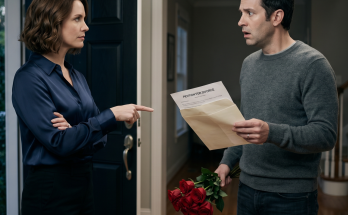
While I Was In Surgery, My Sister Sold My Apartment And Kept The Money. She Texted, “Thanks For The Down Payment On My New House!” I Replied, “Congratulations.” The Next Morning, Her Mortgage Application Was Mysteriously Declined. She Had No Idea Why…
### Part 1
The morning I went into surgery, I handed my older sister, Vanessa, the keys to my apartment and a slim blue folder containing the temporary power-of-attorney documents my attorney had prepared.
“You’re really sure about this, Claire?” she asked, turning the keys over in her palm.
Her voice sounded concerned. Her eyes didn’t.
There was something almost eager in the way she glanced at the folder, but I blamed my nerves. The hospital room smelled like disinfectant and burnt coffee, an orderly was rattling a cart somewhere in the hallway, and I was ten minutes away from being wheeled into an operating room. I didn’t have the energy to analyze my sister’s expression.
“It’s temporary,” I said. “The surgeon thinks I’ll need six weeks before I’m completely back to normal. Just pay anything urgent, check the mail, water the plants, and make sure nothing catches fire.”
Vanessa laughed.
“I can handle that.”
Then she squeezed my hand and said exactly what anyone wants to hear before surgery.
“You don’t have to worry about anything. I’ll take care of you.”
I believed her.
That was my first mistake.
What Vanessa didn’t know was that the apartment she had mocked for years as my “industrial little bachelor pad” was a renovated warehouse loft worth around $2.3 million. There was no mortgage on it. I had bought it years earlier because I loved the exposed brick, the tall windows, and the fact that I could walk to my office.
She also didn’t know very much about that office.
To Vanessa, I had “some finance job.”
That was how she described it at family dinners.
Meanwhile, her husband, Grant, owned a successful dental practice, drove an expensive SUV, belonged to two private clubs, and had a boat he seemed determined to mention within five minutes of meeting anyone new.
Vanessa loved their lifestyle.
Their house had marble counters nobody cooked on, a wine refrigerator full of bottles nobody drank, and furniture that looked like guests should sign a waiver before sitting down.
I drove an eight-year-old sedan.
I wore plain sweaters.
I didn’t collect jewelry, didn’t post vacation photos, and didn’t talk about money.
Vanessa interpreted all of that as failure.
In reality, I was the founder, chief executive, and majority owner of Meridian Lending Group, a mortgage and commercial lending company I had spent eight years building from twelve employees in a rented office into a regional business with hundreds of employees across multiple states.
My net worth had passed $180 million the previous year.
I didn’t tell people because I had learned that money changes the temperature of a room.
The moment someone knows what you have, ordinary conversations stop being ordinary.
Vanessa was my sister. I didn’t think she needed to know my balance sheet to respect me.
I was wrong about that too.
The surgery itself went well.
Recovery did not.
A complication kept me hospitalized longer than expected, and the medication left whole stretches of time soft and blurry. I remember nurses adjusting machines, sunlight moving across the wall, my attorney calling once and me being too groggy to answer, and Vanessa appearing beside my bed with flowers.
“You look terrible,” she joked.
I smiled because that was our language.
“You always know what to say.”
She asked me to sign something that afternoon.
I remember the paper.
I remember the pen.
What I don’t remember is what she told me it was.
That detail would bother me later.
For nearly two weeks, my phone stayed on the rolling table beside my bed. I glanced at messages occasionally but couldn’t focus long enough to understand most of them.
Then, finally, one morning, my head felt clear.
I drank half a cup of lukewarm coffee, reached for my phone, and found a message from Vanessa waiting near the top of the screen.
Thanks for the down payment on our new house. You’re the best sister ever.
I stared at it.
At first, I assumed it was a joke.
Then I scrolled upward.
There were messages I barely remembered receiving.
Claire, Grant and I found the perfect house.
Your place is honestly way too much space for one person.
The realtor says your loft could sell incredibly fast.
You’d be happier somewhere smaller.
I found you a cute studio closer to work.
You’re going to love it.
My stomach tightened.
I kept scrolling.
One message contained a photograph of Vanessa standing in front of a large stone house with tall columns, manicured hedges, and an enormous circular driveway.
Another said:
We made an offer!
Another:
Closing next week!
Then I saw the sentence that made the room feel suddenly too small.
Your apartment sold for $2.1 million. Cash buyer. Amazing, right?
I read it three times.
My apartment.
Sold.
While I was unconscious.
I called my property manager immediately.
“Claire?” Janet sounded genuinely shocked. “Thank God. I’ve been trying to reach you.”
“What happened to my apartment?”
There was a pause.
“Your sister listed it.”
The monitor beside me gave a steady electronic beep.
“She what?”
“She presented the power of attorney. Our counsel reviewed it. She had authority to act as your financial agent, and she insisted you wanted the property sold quickly.”
“How quickly?”
“Three days.”
I gripped the edge of the blanket.
“How much?”
“Two-point-one million. Honestly, it was below market. After fees, commissions, and closing costs, roughly $1.97 million was released.”
“To whom?”
“Vanessa. As your legal agent.”
My mouth went dry.
“Where am I supposed to live?”
Janet hesitated.
“Your sister said she arranged something.”
“What?”
“A studio rental.”
I laughed once, but there was nothing funny in it.
“She sold my two-million-dollar home and rented me a studio?”
“She said it would be more appropriate for your financial situation.”
That sentence hit harder than the sale itself.
After the call, I sat motionless for several minutes.
Then I opened Vanessa’s newest message.
I typed:
Congratulations on the new house.
Her reply came almost instantly.
I knew you’d understand.
That told me everything.
She wasn’t ashamed.
She wasn’t scared.
She thought she had done something smart.
I set my phone down, looked through the hospital window at the city I had helped finance one mortgage, one development, one calculated risk at a time, and called my executive assistant.
Elena answered on the first ring.
“Claire? Are you okay?”
“I’m getting there.”
“What do you need?”
I looked again at Vanessa’s smiling photograph in front of the house.
“Elena, pull every pending residential mortgage under the names Vanessa and Grant Holloway.”
Her keyboard started clicking.
A few seconds passed.
Then she stopped.
“Oh.”
“What?”
“They have an approved loan with us.”
My pulse slowed instead of speeding up.
“How much?”
“Six hundred fifty thousand dollars.”
“And the property?”
“Westfield Hills.”
That was the neighborhood in Vanessa’s photograph.
I closed my eyes.
My sister hadn’t just sold my home.
She had taken my money and used it to qualify for a mortgage from my company.
And according to Elena, the loan was scheduled to close the next morning.
### Part 2
“Run the application through enhanced verification,” I told Elena.
She was silent for a second.
“Claire, the loan has already cleared underwriting.”
“Run it again.”
“What exactly am I looking for?”
“The source of the down payment.”
More keyboard clicks.
Then silence.
Not normal silence.
The kind where someone has just realized they’re standing in the middle of a disaster.
“Elena?”
“Oh my God.”
“You found it.”
“The funds came from the sale of a property owned by Claire Bennett.”
“Correct.”
“Your apartment.”
“Yes.”
Another pause.
“So Vanessa used your money to meet the liquidity requirement for a mortgage from Meridian.”
“That’s what it looks like.”
“Did you authorize it?”
“No.”
Elena breathed out slowly.
“Then we have a serious problem.”
“We have several.”
I instructed her to freeze the closing, notify compliance, preserve every document attached to the application, and call our general counsel.
I didn’t tell her to reject the loan because I was angry.
That would have been reckless.
I told her to stop it because the down payment had become disputed funds, and any legitimate lender would do the same.
By lunchtime, my phone was ringing.
Vanessa.
I watched it vibrate across the hospital tray.
Once.
Twice.
Three times.
On the fourth call, I answered.
“Claire!” she blurted. “Something awful happened.”
“Really?”
“The mortgage company froze our loan.”
I stared at the ceiling.
“That does sound inconvenient.”
“This isn’t funny. We’re supposed to close tomorrow. They’re saying there’s a problem with our down payment.”
“What kind of problem?”
“They won’t explain! Something about verification and ownership. It makes no sense. It’s legitimate money.”
“Whose money?”
A beat of silence.
“Yours.”
There it was.
Not shame.
Not apology.
Just irritation that the money she stole was becoming difficult to spend.
“You need to call them,” she said. “Explain that you gave me permission.”
“Did I?”
“Claire, don’t do this.”
“Do what?”
“Turn everything into a technicality.”
I nearly laughed.
“You sold my home while I was unconscious.”
“I was helping you.”
“Then help me understand something.”
“What?”
“When were you planning to return the $1.97 million?”
Nothing.
I could hear faint traffic on her end and what sounded like a turn signal clicking.
“Vanessa?”
“We weren’t thinking about it like that.”
“How were you thinking about it?”
“Grant and I were going to take care of you.”
“With my own money?”
“You’d have a place with us.”
That caught my attention.
“What place?”
“The lower level of the new house has a private entrance. There’s a bedroom, a bathroom, even a little kitchenette.”
I sat very still.
“You were going to put me in your basement.”
“Don’t call it that.”
“What should I call it?”
“A guest suite.”
“And that was repayment for nearly two million dollars?”
Her voice sharpened.
“You’re making this sound ugly on purpose.”
“No, Vanessa. I’m repeating what happened.”
“You were living beyond your means anyway.”
For a second, I thought I had misheard her.
“My means?”
“The property taxes, the maintenance, the neighborhood. It didn’t make sense for someone in your situation.”
“What situation?”
She sighed in that patient, older-sister way I had hated since childhood.
“Single. No family. Regular salary. No serious investments that we know of. You don’t need that kind of property.”
Something cold settled inside me.
Not rage exactly.
Rage burns.
This felt cleaner.
“You thought I had one major asset,” I said.
“Yes.”
“And you sold it.”
“I converted it into something the family could actually use.”
“You mean something you could use.”
“Claire—”
“What would I have had left?”
“You’d have your job. Your savings. And us.”
That answer changed something permanently.
If Vanessa had believed I was wealthy, what she did would have been theft.
But she didn’t.
She thought the apartment was almost everything I had.
And she took it anyway.
That was worse.
I leaned back against the pillows.
“You’re right about one thing, Vanessa.”
Her voice softened immediately.
“What?”
“We need to clear up some assumptions.”
“Exactly.”
“The company that froze your mortgage is Meridian Lending Group.”
“Yes. They’re being impossible.”
“I own Meridian.”
Silence.
“What?”
“I founded it.”
Another silence.
I could practically hear her mind rejecting the sentence.
“No, you didn’t.”
“Yes, I did.”
“You told us you worked in lending.”
“I do.”
“You never said you owned a company.”
“You never asked.”
“That’s ridiculous.”
“Is it?”
“Claire, Meridian is huge.”
“We’re not huge, but we’re doing well.”
“How well?”
“Last year we originated a little over four hundred million dollars in residential and commercial loans.”
I heard Vanessa whisper something away from the phone.
Then Grant’s voice.
“What did she say?”
Vanessa didn’t answer him.
Instead she asked me, “How much of the company do you own?”
“Most of it.”
“How much are you worth?”
“That shouldn’t matter.”
“How much?”
I looked through the window.
“Somewhere north of one hundred eighty million.”
Her breathing changed.
Grant was speaking louder now.
“What’s going on?”
Then he took the phone.
“Claire?”
“Hi, Grant.”
“Vanessa says you own Meridian.”
“I do.”
“Then fix the loan.”
No apology.
No surprise about my home.
Straight to the loan.
I smiled.
“I can’t.”
“You own the company.”
“That’s exactly why I can’t. Our compliance standards apply to everyone.”
“This is family.”
“The mortgage application isn’t.”
He exhaled hard.
“Vanessa made a judgment call.”
“She sold my home while I was incapacitated.”
“She had power of attorney.”
“For paying bills and handling necessary financial matters. Not enriching herself.”
“We can repay you.”
“When?”
“We’ll work something out.”
“That wasn’t my question.”
He lowered his voice.
“Claire, we have hundreds of thousands of dollars tied up in this purchase. If the closing fails, we could lose our deposit. The sellers could come after us.”
“I understand.”
“You understand?”
“Yes.”
“And you’re still doing this?”
“I’m not doing anything to you.”
I looked down at the faint bruising around my IV.
“I’m simply refusing to rescue you from what you did to me.”
Grant cursed under his breath.
Then Vanessa was back.
“Please.”
It was the first time she had sounded scared.
“What do you want?”
“My money returned.”
“We can’t do that immediately.”
“You found a way to move it immediately when you thought it belonged to you.”
“That’s not fair.”
“No. Selling my home from under me while I was in a hospital bed wasn’t fair.”
She started crying.
I felt nothing.
Not because I hated her.
Because some betrayals burn through sympathy before the apology ever arrives.
“Return the full amount,” I said, “or my attorney proceeds.”
“With what?”
“Whatever remedies he believes are appropriate.”
“Claire, are you threatening your own sister?”
“No.”
I kept my voice calm.
“I’m finally treating you like an adult responsible for her own decisions.”
After I hung up, Elena called.
“The sellers’ attorney is furious. Grant’s agent is furious. Grant himself called our office and screamed at two employees.”
“I’m sorry.”
“You don’t have anything to apologize for.”
I looked around the hospital room.
For the first time, the place felt temporary.
“Elena?”
“Yeah?”
“Pull the Riverside Tower listings.”
She paused.
“The luxury building?”
“The one overlooking the river.”
“There’s a penthouse available.”
“I know.”
“Claire, that unit is more than four million.”
“I know that too.”
She laughed softly.
“Are you finally going to spend some money?”
“Maybe.”
I smiled for the first time since waking up.
Then another call came through.
My attorney.
His opening sentence wiped the smile from my face.
“Claire, we found something in the sale paperwork that you need to see.”
### Part 3
My attorney, Daniel Reeves, came to the hospital that afternoon carrying a leather folder and the expression of a man who had bad news arranged in chronological order.
He closed the door.
“You remember signing anything the day after surgery?”
“Barely.”
“Vanessa presented a document during the apartment closing that appears to carry your signature.”
I felt my stomach tighten.
“What document?”
“A written acknowledgment stating that the sale was consistent with your wishes.”
“I never knowingly signed that.”
“I didn’t think you did.”
He slid a photocopy onto the tray.
My signature was there.
It looked like mine because technically it was mine.
But the writing above it was not something I remembered reading.
I could picture Vanessa beside my hospital bed, placing a pen into my hand while the room drifted in and out of focus.
“What did she tell me I was signing?”
“That’s something we’ll need to establish.”
I stared at the page.
Suddenly the betrayal wasn’t just financial.
It was physical in a way I hadn’t fully understood before.
She had looked at me drugged, weak, and barely conscious and seen opportunity.
“Does this help her legally?” I asked.
“Not as much as she probably thinks. Especially considering your medical records, witness statements, and the timing.”
“So what happens?”
“That depends on you.”
Before I could answer, my phone buzzed.
Vanessa.
Daniel looked at the screen.
“Take it if you want. Don’t discuss legal strategy.”
I answered.
Her voice was raw.
“We got the money.”
“All of it?”
“All of it.”
“How?”
“Grant borrowed against the practice. We liquidated investment accounts. We sold some assets.”
“The boat?”
A pause.
“Yes.”
I almost admired the universe’s sense of humor.
“The transfer will be completed within the hour.”
“Good.”
“Does that mean you’ll call Meridian?”
“No.”
Her voice cracked.
“Claire.”
“Returning stolen money doesn’t make the mortgage application legitimate retroactively.”
“But the money is back.”
“And your source of funds for the house is gone.”
She started crying again.
“We’re going to lose everything.”
“No. You’re going to lose a house you couldn’t buy without taking my money.”
“The deposit—”
“Was your decision.”
“Grant’s practice is leveraged now.”
“Also your decision.”
“Our retirement accounts took penalties.”
“Your decision.”
She went quiet.
Then, almost whispering, she said, “I really thought I was helping.”
Daniel glanced at me, but I kept my eyes on the window.
“No, Vanessa. You thought you were entitled to decide what my life should look like.”
“I thought you were struggling.”
“That makes it worse.”
“What?”
“If you believed I was rich and took two million dollars, you’d be greedy. But you believed I was financially vulnerable. You believed that apartment was basically everything I had. And you took it anyway.”
She had no answer.
“You left me with a rented studio and expected me to be grateful for your basement.”
“I know how it sounds.”
“It sounds exactly like what it was.”
“I was wrong.”
“Yes.”
“How do I fix it?”
That question should have made me feel better.
Instead, it made me tired.
“You don’t get to fix everything.”
“Claire, please.”
“You spent years treating me like the family disappointment. Every time I talked about work, you redirected the conversation to Grant. Every time I made a different choice from you, you called it impractical. You didn’t know me because you never considered there might be anything worth knowing.”
“That’s not true.”
“It is.”
“I love you.”
“I believe you think you do.”
She inhaled sharply.
“That’s cruel.”
“So was deciding I didn’t deserve my own home.”
I ended the call.
Daniel waited.
“You know she may keep trying.”
“I know.”
“Do you want to pursue a criminal complaint?”
I looked at the suspicious acknowledgment lying between us.
Part of me wanted to.
Another part wanted distance more than punishment.
“I want every legal option documented. I want the entire sale reviewed. I want to know whether we can recover damages from anyone who ignored obvious warning signs. And I want Vanessa formally notified that she no longer has any authority to act for me.”
“Done.”
“I also want my will, trusts, emergency contacts, and medical directives changed.”
He raised his eyebrows.
“Removing her?”
“From everything.”
He nodded.
That decision hurt more than I expected.
Not because I regretted it.
Because there was a time when Vanessa had been the person I called when something went wrong.
Now she was the reason my emergency documents needed stronger protection.
Three days later, I was discharged.
The studio Vanessa had rented for me sat above a noisy intersection with one narrow window facing a brick wall. Inside were a folding table, an inexpensive sofa, and several boxes of my belongings stacked against the wall like inventory.
One box had been labeled:
THINGS CLAIRE ACTUALLY NEEDS.
I stood there with Daniel beside me.
“Wow,” he said quietly.
I opened another.
Vanessa had gone through my desk.
Files were shuffled.
Personal letters mixed with tax records.
A framed photograph of our mother had been wrapped in one of my old T-shirts.
I ran my fingers across the glass.
That small violation made me angrier than almost anything else.
She hadn’t only taken my money.
She had curated my life.
Decided what I needed.
What I could afford.
What mattered.
I left without unpacking.
That afternoon, I toured the penthouse at Riverside Tower.
The elevator opened directly into a bright room wrapped in glass. The river curved below, traffic moved like tiny threads across the bridges, and the late afternoon sun filled the hardwood floors with clean white light.
The agent kept talking.
Custom kitchen.
Private terrace.
Three bedrooms.
Library.
Home office.
I barely heard him.
I walked to the windows and looked down at the city.
For years, I had kept myself small because small was uncomplicated.
No questions.
No jealousy.
No people calculating what I could do for them.
But hiding had not protected me.
It had only made it easier for my family to invent a version of me that fit their assumptions.
“I’ll take it,” I said.
The agent blinked.
“You’d like to make an offer?”
“No.”
I looked at him.
“I’ll take it.”
“Financing?”
“Cash.”
Two weeks later, the penthouse was mine.
Vanessa lost the Westfield Hills house.
The sellers kept a large portion of the deposit and threatened additional claims before their attorneys eventually negotiated a settlement.
Grant sold the boat permanently.
Their investments took a beating.
Their marriage, according to messages I didn’t answer, was not doing much better.
I had my money back.
I had a new home.
I should have felt finished.
Then Grant showed up at my building alone.
And what he admitted about his role in Vanessa’s plan made me realize my sister hadn’t betrayed me by herself.
### Part 4
When the lobby desk called to say Grant Holloway was downstairs, I almost told security to send him away.
Instead, curiosity won.
I let him up.
The private elevator opened, and Grant stepped into the penthouse wearing jeans and a plain button-down shirt. No expensive watch. No polished confidence. He looked older than he had a month earlier.
Then he saw the view.
His mouth actually fell open.
“Wow.”
I folded my arms.
“You didn’t come here for a tour.”
“No.”
His eyes moved around the room anyway.
“You bought this?”
“Yes.”
“Cash?”
“That’s really none of your business.”
He gave a tired nod.
“Fair.”
We sat in the living room.
Grant rubbed both hands over his face.
“I owe you an apology.”
“You owe me more than one.”
“I know.”
He looked at the floor.
“Vanessa didn’t make the decision alone.”
I said nothing.
“I knew she was selling your apartment.”
That landed differently than hearing it indirectly over the phone.
“You knew.”
“Yes.”
“And you were comfortable with it?”
He swallowed.
“At the time, I convinced myself it made sense.”
“For whom?”
“For us.”
At least he was no longer pretending.
“Vanessa said you were wasting money maintaining a place that big. We were talking about the Westfield house, and she said your apartment had enough equity to make the numbers work.”
“So the two of you discussed converting my home into your down payment.”
“When you phrase it like that—”
“That is what happened.”
He nodded.
“Yes.”
“Did you ever ask whether I had agreed?”
“No.”
“Why?”
Grant looked toward the windows.
“Because I thought you needed Vanessa to make decisions for you.”
I laughed once.
“That’s incredible.”
“I know.”
“No, I don’t think you do.”
I stood.
“You sat in my apartment. You ate food I bought. You watched me pay for family vacations, dinners, gifts, emergencies, and you still somehow decided I was financially incompetent.”
“I didn’t know you paid for those things.”
“Exactly.”
Vanessa had always let people assume generosity originated with her.
I remembered family trips where I quietly covered my parents’ hotel rooms, holiday dinners I paid for before anyone saw the bill, emergency repairs I handled through anonymous transfers because I didn’t want gratitude to become leverage.
Grant looked ashamed.
“We built this story about you.”
“What story?”
“That Vanessa and I were the successful ones. That you were smart but… drifting.”
“Drifting.”
“I know how insulting it sounds.”
“It sounded insulting when you believed it too.”
He nodded.
“Our life looked successful. The practice, the house, the clubs. You didn’t show any of that.”
“Because I didn’t care about showing it.”
“We mistook visibility for success.”
That sentence, at least, was honest.
Grant leaned forward.
“I don’t expect you to forgive me.”
“Good.”
He looked surprised.
“Vanessa thinks if she apologizes enough, eventually things can return to normal.”
“They won’t.”
“I told her that.”
I studied him.
“Why are you here?”
“Because she still doesn’t fully understand.”
“What doesn’t she understand?”
“She thinks the worst thing she did was sell the apartment.”
My jaw tightened.
“And you disagree?”
“Yes.”
He rubbed his palms together.
“The worst part was why she felt entitled to do it.”
For the first time since he arrived, I listened without interrupting.
Grant continued.
“She’s spent her whole life believing she’s the responsible sister. The successful sister. The one who knows how things should be done. You challenged that without even trying because you built something bigger than either of us knew.”
“I didn’t challenge anything. I was living my life.”
“I know.”
He looked uncomfortable.
“That’s the point.”
He told me Vanessa had been spiraling since the mortgage collapse.
At first she obsessed over the lost house and money.
Then she became obsessed with me.
She searched articles about Meridian.
Read interviews I had given to trade publications.
Found photographs from industry conferences.
Discovered awards I had never mentioned at family dinners.
“She keeps saying, ‘How did I not know?’”
I looked out at the river.
“The answer is simple. She never asked.”
“I told her that.”
Grant’s mouth tightened.
“She didn’t like hearing it.”
“Most true things aren’t improved by being pleasant.”
He almost smiled.
Then his expression became serious again.
“There’s something else.”
Of course there was.
“What?”
“Your parents know now.”
I closed my eyes.
My mother and father lived three states away. I hadn’t told them anything about the apartment because I had no desire to turn betrayal into a family committee meeting.
“What did Vanessa tell them?”
“Her version.”
“Meaning?”
“That she made a financial mistake while trying to help you and you retaliated by destroying their home purchase.”
I wasn’t surprised.
I was disappointed that I wasn’t surprised.
“What did my parents say?”
“They’re coming here.”
“When?”
“Tomorrow.”
“No.”
Grant blinked.
“I think they already booked flights.”
“They can unbook them.”
“They want everyone together.”
“Of course they do.”
Family togetherness was my mother’s favorite solution to problems she didn’t want to understand.
Grant stood.
“For what it’s worth, I told them the truth.”
“All of it?”
“Yes.”
“That you knew?”
“Yes.”
I looked at him.
That mattered.
Not enough to repair anything.
But it mattered.
“I’m not forgiving you, Grant.”
“I know.”
“I’m not helping you financially.”
“I’m not asking.”
“I’m not fixing the consequences of the house.”
“I know.”
“And I’m not going to pretend this was a misunderstanding.”
He nodded.
“You shouldn’t.”
When he left, I finally opened the messages Vanessa had sent over the previous two weeks.
There were thirty-eight.
I read none of them fully.
I deleted the thread.
The next morning, my mother called from the airport.
“Claire, sweetheart, we’re here.”
“I know.”
“We want to come over.”
“No.”
A pause.
“Excuse me?”
“You heard me.”
“We are not discussing something this serious over the telephone.”
“That’s exactly how we’re discussing it.”
“Your sister is falling apart.”
“I’m aware.”
“She made a terrible mistake.”
“She committed a deliberate betrayal.”
“Claire, she’s your sister.”
“And I was hers when she sold my home.”
My mother went quiet.
Then my father’s voice came onto the line.
“Claire, your mother says Vanessa told us you’re refusing to help them recover.”
“That’s correct.”
“You apparently have the means.”
There it was.
Not hello.
Not how are you feeling after surgery.
Not are you okay after losing your home.
You have the means.
I stared at the city below.
“Dad, did Vanessa mention I was hospitalized when she sold my apartment?”
“She said there were documents.”
“Did she mention I was heavily medicated when she had me sign one?”
Silence.
“Did she mention she used almost two million dollars of my money for herself?”
Another silence.
Then my mother came back.
“We should speak in person.”
“No.”
“Claire—”
“For once, you’re going to listen when I tell you what I want.”
My voice stayed calm.
“I don’t want a family meeting. I don’t want mediation. I don’t want everyone sitting around a dining table explaining why Vanessa’s intentions mattered more than my autonomy. I want distance.”
“How much distance?”
“I don’t know.”
“Christmas is only a few months away.”
I almost laughed.
My mother was already thinking about seating arrangements.
“I’m not discussing Christmas.”
“Claire, don’t tear the whole family apart over money.”
That sentence ended whatever patience I had left.
“This was never about money.”
I disconnected the call.
Ten minutes later, an email arrived from Vanessa.
The subject line contained only three words.
YOU DON’T UNDERSTAND.
I almost deleted it.
Then I opened it.
And the first paragraph told me she still believed I was the one who needed to apologize.
### Part 5
Vanessa’s email was nearly four pages long.
She wrote about embarrassment.
About losing the Westfield house.
About Grant borrowing against his practice.
About our parents asking questions.
About friends wondering why the purchase collapsed.
She described sleepless nights and panic attacks and arguments with Grant.
She wrote that my decision to freeze their mortgage had “humiliated” her.
Not until halfway through did she mention my apartment.
And even then, she called it “the property situation.”
That phrase told me she still didn’t understand.
My home had become a property situation.
Her humiliation remained a tragedy.
I closed the laptop.
For three days, I didn’t respond.
Then I wrote one sentence.
I understand perfectly. That is why we no longer have the relationship you think we have.
She called immediately.
I declined it.
She called again.
Declined.
Then came a text.
Please let me explain.
I responded:
You already have.
That was the last message I sent her for six months.
Daniel completed the legal review of the apartment sale. Because my money had been fully returned and several parties were cooperating, I chose not to turn the case into a public courtroom battle. The sale itself could not simply be reversed because an innocent buyer had purchased the property, but financial settlements covered the losses created by the rushed transaction, and the suspicious documents were formally recorded through my legal team.
Vanessa’s authority over my affairs was permanently revoked.
My medical directives named Daniel and a trusted friend instead.
My estate plan was revised.
Vanessa would never again be in a position to decide what happened to my money, property, company, or health.
I didn’t do those things because I wanted revenge.
I did them because trust without boundaries is simply access.
And Vanessa had shown me what she would do with access.
My parents eventually returned home without seeing me.
For months, my mother sent messages about reconciliation.
My father sent shorter ones about “moving forward.”
I answered only when their messages acknowledged what actually happened.
Most didn’t.
Eventually, they learned.
I wasn’t refusing to forgive because I was angry.
I was refusing to pretend.
There is a difference.
Life became strangely peaceful after that.
I returned to Meridian full time.
The first morning I walked back into headquarters, Elena had the staff line the hallway and applaud, which embarrassed me so badly I nearly turned around and left.
“You own the building,” she whispered. “You can survive applause.”
“I’m reconsidering the building.”
She laughed.
Work felt different afterward.
For years, I had minimized my achievements because I didn’t want to appear arrogant.
I stopped doing that.
When people asked what I did, I told them.
“I founded Meridian Lending Group.”
No apology.
No vague “I work in finance.”
No shrinking.
I started hosting small employee dinners in my penthouse.
I joined a nonprofit board focused on financial education.
I finally bought artwork I had admired for years instead of talking myself out of it because expensive things felt too visible.
I even replaced my old car.
Not with something ridiculous.
Just something I genuinely liked.
That became the larger lesson of Vanessa’s betrayal.
I had spent years confusing privacy with invisibility.
Privacy is deciding what people deserve to know.
Invisibility is erasing yourself before anyone else gets the chance.
I wasn’t going to do that anymore.
Grant contacted me several times.
Unlike Vanessa, he never asked for money.
He sent one handwritten letter acknowledging that he had knowingly benefited from a decision he should have stopped.
He did not call it a misunderstanding.
He called it greed.
I respected the honesty.
That did not mean I forgave him.
Eventually, he and Vanessa separated.
I learned through my mother that their marriage had been strained long before my surgery, and the failed house purchase exposed arguments that had been hidden behind expensive vacations and polished photographs.
I didn’t celebrate.
I didn’t feel vindicated.
Their marriage belonged to them.
I had stopped building my emotional life around the consequences of their choices.
Almost a year after the surgery, I saw Vanessa again.
It happened at our father’s seventieth birthday dinner.
I considered skipping it.
Then I realized I was tired of surrendering rooms to people who had hurt me.
So I went.
The restaurant was quiet and elegant, with white tablecloths and tall windows facing a garden. My mother hugged me too tightly.
My father looked genuinely happy to see me.
Then Vanessa walked in.
She had changed.
Not dramatically.
Life rarely changes people in cinematic ways.
She simply looked tired.
She stopped when she saw me.
“Hi, Claire.”
“Hello, Vanessa.”
For several seconds, neither of us moved.
Then she said, “Can we talk outside?”
I glanced toward my father.
“Five minutes.”
We stepped onto the terrace.
The air smelled like rain and cut grass.
Vanessa wrapped her arms around herself.
“I owe you an apology that doesn’t contain explanations.”
I waited.
“I stole from you.”
That was the first time she had used the word.
“I used your condition to make a decision I had no right to make. I convinced myself I was helping because that sounded better than admitting I wanted your money.”
I said nothing.
She continued.
“I looked down on you.”
Her voice trembled.
“I thought because your life looked smaller than mine, you were smaller than me.”
“That’s true.”
“I know.”
She wiped beneath one eye.
“I thought if I said I was helping, it made what I wanted less selfish.”
“It didn’t.”
“No.”
She looked at the ground.
“I’m sorry.”
“I believe you.”
Hope flashed across her face.
Then I finished.
“But I’m not interested in rebuilding what we had.”
It disappeared.
“Ever?”
“What we had depended on me accepting disrespect because it came from family.”
“I can change.”
“I hope you do.”
“For us?”
“For yourself.”
She looked like she wanted to argue, but didn’t.
“What does that mean for us?”
“It means I don’t hate you.”
Her eyes filled.
“But I don’t trust you.”
“I understand.”
“And I’m not going to organize my life around the possibility that someday I might.”
She nodded slowly.
“Can I at least see you sometimes?”
“At family events, probably.”
“Coffee?”
“Maybe someday.”
It wasn’t punishment.
It was the truth.
Some relationships survive betrayal by becoming new relationships.
Others survive only by becoming distant ones.
Ours became distant.
We returned to dinner.
Vanessa sat across the table from me.
We were polite.
My mother watched us nervously until I finally said, “Mom, eat your dinner.”
My father laughed.
The tension broke.
And for the first time, I realized something.
I didn’t need everyone to understand my boundaries for them to work.
I simply had to maintain them.
Years have passed since then.
Meridian continued growing.
I eventually stepped back from day-to-day operations and promoted Elena to president while I remained chairwoman.
I travel more now.
I spend money on experiences I enjoy.
I still live in the Riverside penthouse.
The view never gets old.
Vanessa and I exchange birthday messages.
We see each other at family gatherings.
She rebuilt her own career after separating from Grant and, from what I can tell, became much more careful about judging other people’s lives.
I’m glad.
But we never became close again.
People sometimes hear the story and ask whether I regret that.
I don’t.
Forgiveness is not the same as restoration.
You can stop carrying anger without handing someone the keys again.
That is what I did.
The apartment Vanessa sold was eventually renovated by its new owners.
One afternoon, years later, I happened to drive past the building.
For a moment, I remembered my old kitchen.
The scratched wooden floor near the windows.
The sound of rain against the glass.
The plant Vanessa promised to water.
I expected sadness.
Instead, I smiled.
That apartment had once represented the quiet life I thought I needed to keep other people comfortable.
Losing it hurt.
But what came after forced me to stop living as a smaller version of myself.
Vanessa thought she was taking away the best thing I owned.
She was wrong.
The most valuable thing I had was never the apartment, the company, or the money.
It was the ability to build my own life.
She took my home once.
She never got the chance to take that.
And she never got the keys again.
THE END!