My Parents Invited Me To Christmas Dinner. When I Walked In, Twenty-Two Relatives Were Sitting In A Circle With One Empty Chair In The Middle. My Mom Said, “We All Agree You’re The Problem.” I Took The Chair, Listened For 30 Minutes, Then Played A Three-Year-Old Recording. The Room Cleared Out In Under Three Minutes.
## Part 1
My name is Claire Bennett. I was thirty-four when my parents invited me to their house outside Chicago for what they described as a quiet Christmas dinner.
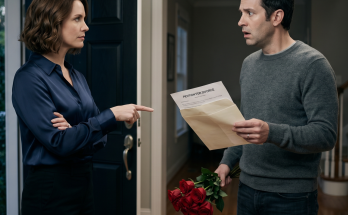
I knew something was wrong the moment I opened their heavy front doors. There was no smell of turkey or cinnamon. No Christmas music. No clatter of dishes coming from the kitchen. The only sound was the low hum of the heating system and the faint ticking of my father’s antique clock in the hallway.
Twenty-two members of my family were sitting in a circle in the living room. Every sofa and side table had been pushed against the walls. Folding chairs covered the Persian rug, and in the exact center sat one empty wooden chair. For me.
My mother, Eleanor, stood beside it wearing a cream cashmere sweater and an expression I knew far too well. “Sit down, Claire,” she said. “There is no Christmas dinner.”
Nobody smiled. My father, Martin, remained near the fireplace with one hand in his pocket. My older sister Vanessa sat beside him, pressing a tissue against perfectly dry eyes. Her husband, Marcus, stared at the floor.
Then my mother folded her arms. “We all agree you are the problem in this family.”
A murmur traveled through the room. I almost laughed. Almost. Instead, I slipped off my coat, folded it carefully over my arm, and looked at my watch.
My career had taught me something useful about hostile rooms. I was a forensic accountant. I spent my days following hidden money, untangling fraudulent companies, and sitting across from executives who believed a loud voice could make arithmetic disappear. It never did.
I placed my coat over the back of the empty chair, sat down, crossed my legs, and looked slowly around the circle. “You have thirty minutes,” I said.
My aunt Linda leaned forward immediately. “That attitude is exactly why we’re here.” Her folding chair squealed against the floor. “You think you’re better than everybody because you have some important job downtown.”
My uncle Paul jumped in. “You make more money than most people in this room and act like your own family is beneath you.”
Then came the others. I never attended enough birthdays. I rarely answered family group texts. I wore expensive clothes. I lived alone in a beautiful apartment. Apparently, being thirty-four, unmarried, financially independent, and unwilling to finance other people’s mistakes had become evidence of a defective personality.
But eventually every accusation curved toward the same person. Vanessa. My mother’s favorite child.
My sister was thirty-six, two years older than me, and had spent most of our lives being introduced as “the sensitive one.” When Vanessa made a mistake, she was overwhelmed. When I made a mistake, I was irresponsible. When Vanessa wanted something, she needed support. When I wanted something, I was selfish.
Aunt Linda pointed toward her. “Look at your sister. She’s been through hell trying to start a family.”
Vanessa lowered her head. Linda’s voice became louder. “She needs another forty thousand dollars for treatment, and you refused to help her.”
Several relatives muttered their agreement. “You have bonuses,” Uncle Paul said. “You have investments.” “Family should come before money,” someone added.
My mother watched quietly. That was when I understood the structure of the evening. This wasn’t an intervention. It was a trial.
## Part 2
Eleanor had assembled the jury, written the charges, and decided the verdict before I arrived. So I did what I always did when people started lying in front of me. I let them keep talking.
For nearly twenty minutes they called me selfish, cold and greedy. Vanessa periodically covered her face. Marcus sat beside her looking miserable.
Then Aunt Linda leaned toward me and placed a hand over her chest. “It breaks my heart that you hate your own sister this much.”
I finally moved. “Aunt Linda?”
She stopped. “Yes?”
“That’s a beautiful sweater.”
Confusion crossed her face. She glanced down at the soft gray fabric. “Thank you. Vanessa bought it for my birthday.”
“Did she?”
Linda smiled proudly. “She did. That’s what family does.”
I nodded. “I saw that sweater in a boutique downtown last week. It costs a little over a thousand dollars.”
The smile weakened. Then I looked at Vanessa. “That’s interesting.”
My mother stiffened. Vanessa stopped pretending to cry.
I continued. “Because according to everyone in this room, Vanessa is drowning in medical debt.”
Nobody spoke. I leaned forward. “So how exactly does someone who can’t afford her own bills spend more than a thousand dollars on a birthday present?”
Vanessa’s fingers tightened around the edge of her chair. My mother quickly said, “Claire, don’t change the subject.”
“I’m not.”
I looked around the room. “Two years ago Vanessa came to my apartment. She cried on my couch for almost three hours. She told me she needed forty thousand dollars and that without it, she might lose her last chance to become a mother.”
Several relatives looked confused. They clearly hadn’t heard what came next.
“I gave it to her.”
Silence. Aunt Linda blinked. “What?”
“Forty thousand dollars. A certified check. No loan agreement. No repayment schedule.”
My mother shifted. “That was years ago.”
“Exactly.”
I turned back toward Vanessa. “Would you like to tell everyone where that money went?”
Her face drained of color. Marcus finally looked up. “What does she mean?”
Vanessa said nothing. I let five seconds pass.
Then I nodded toward the front windows. “The silver luxury sedan sitting in the driveway wasn’t paid for with Marcus’s bonus.”
Marcus stood. His chair crashed backward. “That’s a lie.”
He stepped between me and Vanessa. “I bought that car.”
His voice shook with anger. “I used my annual bonus. I signed the paperwork myself.”
I studied him. And that was the moment everything changed. Because Marcus wasn’t lying. He genuinely believed what he had just said.
I looked at him carefully. “Marcus, check your statements.”
His expression changed. Three words. That was all it took.
Because while twenty-two relatives were still staring at me, Vanessa suddenly whispered, “Don’t.” And Marcus slowly reached for his phone.
## Part 3
Marcus stood in the center of the room with his phone in one hand. “Why would I check my statements?”
Vanessa immediately grabbed his wrist. “She’s trying to confuse you.”
He pulled away. I kept my voice calm. “When that forty thousand dollars appeared in your checking account, you assumed it was your bonus.”
“It was.”
“Then check your secondary credit line.”
His anger vanished. The silence around us changed texture. A moment earlier, people had been waiting for me to be humiliated. Now they were watching Vanessa.
My sister stood so abruptly that her chair scraped backward. “Mom, stop her.”
Eleanor came toward me. “This evening is about Claire’s behavior. Not Vanessa’s finances.”
I smiled. “Funny how those two things suddenly became separate.”
My father finally left his position beside the fireplace. Martin Bennett had spent his entire adult life perfecting the appearance of authority. He wore tailored suits even at family dinners. He spoke slowly because people were accustomed to waiting for him to finish.
He raised one hand. “Enough.”
The room obeyed. Then he looked directly at me. “You’ve manipulated everyone long enough.”
He walked into the circle. “We invited you here because we were hoping you might finally understand what family means.”
Then his expression softened theatrically. “And tonight should have been a celebration.”
That got everyone’s attention. My father glanced around. “As all of you know, my father created a family trust decades ago. Today is the final maturity date.”
I noticed my mother’s mouth tighten. My father continued. “At midnight, I will distribute the remaining four million dollars among the beneficiaries.”
The room exploded. People gasped. Someone actually clapped. My cousin Kelsey covered her mouth. Aunt Linda hugged Uncle Paul.
Suddenly nobody cared about Vanessa’s bank statements. Money has an extraordinary ability to erase inconvenient questions.
My father waited until the excitement peaked. Then he looked at me. “Your individual share is five hundred thousand dollars.”
The room quieted. Martin reached into his briefcase and removed several pages. He dropped them onto my lap.
The title on the first page told me everything. Relinquishment of Beneficiary Interest.
I looked up. My father removed a gold pen from his pocket. “Sign it.”
I didn’t touch the document. “Excuse me?”
“Your sister needs the money more than you do.”
Vanessa lowered her face. My father continued. “You have a career. Investments. No husband. No children. Vanessa is trying to save her family.”
Aunt Linda nodded eagerly. “You don’t need half a million dollars.”
Someone behind me said, “Do the right thing.” Another voice followed. “Family sacrifices.”
Then everyone started speaking again. They said I was hoarding money. They told me my grandfather would be ashamed. They said being single meant I had fewer responsibilities.
Apparently, my independence made my money communal property.
Vanessa began crying softly. “I don’t want her money if she hates me.”
That performance worked beautifully. Aunt Linda stood. “Look what you’re doing to her!”
My father extended the pen. “Sign.”
I looked around at twenty-two relatives waiting for me to surrender five hundred thousand dollars so they could continue feeling morally superior. Then I took the pen.
The room went silent. My father smiled. Vanessa’s shoulders relaxed.
I turned the pen slowly between my fingers. Then I asked, “What happens if I refuse?”
## Part 4
Martin’s smile disappeared. “You will be finished with this family.”
“That sounds manageable.”
My mother’s expression changed. The wounded-mother act disappeared. What replaced it was colder.
“If you don’t sign,” Eleanor said, “you’ll lose more than family.”
She walked toward me. “Three years ago, two hundred thousand dollars disappeared from our retirement savings.”
Several relatives gasped. My father removed a thick folder from his briefcase. My mother pointed toward it.
“We have evidence showing the transfer originated from your apartment.”
I stared at her.
“We have server logs,” she continued. “Digital records. Investigators.”
My father held the folder higher. “If you sign tonight, we forget what happened.”
There it was. Not family counseling. Not reconciliation. Blackmail.
My mother leaned close enough for me to smell her floral perfume. “If you refuse, we’ll take everything to law enforcement. Your career will be destroyed.”
The room became completely still. “You’ll lose your professional license,” she whispered. “Maybe your freedom.”
I looked down at the gold pen. Then at the document. Then at my watch. Exactly thirty minutes had passed.
I placed the pen gently on top of the papers. “That was impressive.”
My mother frowned. “What?”
“Your performance.”
My father laughed harshly. “You think this is funny?”
“No.”
I reached inside my jacket and removed my phone. “I’m just saying my thirty minutes are over.”
Uncle Paul looked nervous. “What’s she doing?”
My father stepped toward me. “Put that phone away.”
I opened the audio controls. A wireless speaker system was installed throughout my parents’ house. My father had bragged about it for years.
My phone connected with a soft chime. Vanessa heard it. Her head snapped toward me.
I had never seen pure terror spread across someone’s face so quickly. My thumb hovered over one audio file. The recording was three years old.
And the moment Vanessa recognized what I was about to play, she stood and screamed, “Claire, don’t you dare.”
I pressed play.
For several seconds, the only sound coming from the ceiling speakers was crying. Not the delicate crying Vanessa had performed all evening. This was frantic. Breathless. Terrified.
Marcus looked at his wife. Then my mother’s recorded voice filled the room.
“Stop crying and tell me what happened.”
Vanessa covered her mouth. The recording continued.
“The money is gone, Mom.”
My sister’s voice cracked through the speakers. “All of it.”
My mother asked what money she meant. “The house fund.”
Marcus went still.
“The two hundred thousand Marcus saved. I lost everything.”
Nobody moved. Marcus looked like he had forgotten how to breathe.
On the recording, Vanessa explained that she had secretly transferred the entire account into an online investment scheme promising enormous returns. The platform vanished. So did the money.
I kept my eyes on Marcus. His face changed from confusion to disbelief, then to something worse. Betrayal.
“Please help me,” Vanessa’s recorded voice begged. “Marcus is going to leave me.”
My mother asked when he would check the account. “In a few days.”
Then another voice entered the recording. My father’s.
“What happened?”
My mother answered. “Vanessa lost Marcus’s house money.”
A long silence followed. Then Martin said, “We have to replace it before he notices.”
Uncle Paul slowly turned toward my father. My father stared at the floor.
The recording continued. My parents discussed loans. Retirement accounts. Possible ways to create cash quickly.
Then my mother’s voice became suddenly calm. “What about the family trust?”
Nobody in the living room moved.
## Part 5
My mother continued on the recording. “There’s more than four million sitting there. You’re the manager.”
Aunt Linda stood. “What?”
My father’s recorded voice answered. “If I move two hundred thousand, the beneficiaries could notice when distributions begin.”
My mother responded immediately. “Then blame Claire.”
Twenty-two faces turned toward me.
“We’ll say she accessed the account. She works in financial investigations. People will believe she knew how to hide the transfer.”
My mother sitting in front of me turned completely white. On the recording she continued.
“We can create records that point toward her apartment. If anyone questions the missing money, Claire becomes the thief.”
The file ended. No music. No dramatic announcement. Just silence.
My father still held the folder containing his supposed evidence against me. It suddenly looked ridiculous.
Uncle Paul was the first to speak. “Martin?”
My father looked up. “What did you do?”
Martin opened his mouth. Nothing useful came out.
Then he moved. He rushed toward me, reaching for my phone.
Marcus stepped between us. “Don’t touch her.”
My father stopped. Marcus didn’t raise a hand. He didn’t need to. His voice was enough.
He turned slowly toward Vanessa. “Where is my money?”
Vanessa began crying. “Marcus, I made a mistake.”
“A mistake?”
“I thought I could double it.”
“You took everything.”
“I was trying to help us.”
Marcus stared at her for several long seconds. Then his eyes moved toward the driveway.
“The car.”
Vanessa stopped crying.
Marcus looked at me. “If my savings were gone, where did the down payment come from?”
I opened my handbag and removed a thin folder. “This.”
I handed him a copy of a property filing. He read the first page. Then the second. His expression emptied.
“She borrowed against your home,” I said. “Using documents containing a signature represented as yours.”
Marcus looked toward Vanessa. She couldn’t meet his eyes.
“Part of the money paid for the car. The rest covered credit cards and other spending.”
Marcus lowered the papers. For the first time all evening, there was no anger in him. That was worse.
He looked exhausted. Almost old.
Vanessa reached toward him. He stepped away.
Then Uncle Paul suddenly said, “Wait.”
Everyone turned. He pointed toward my father. “The trust.”
Martin’s eyes lifted.
Paul stepped closer. “You admitted on that recording that you could move money from it without anyone noticing.”
“It was only a discussion,” my father said.
“Then show us the account.”
Martin swallowed.
Aunt Marlene stood. “Yes. Show us.”
My father backed toward the wall. “You’re all overreacting.”
Uncle Paul’s voice rose. “You told us ten minutes ago there were four million dollars waiting for us tonight.”
Several relatives began standing. The folding chairs that had once formed a perfect circle were suddenly scattered.
“Show us the money, Martin.”
My father’s face told them the truth before I did.
I stood. “Don’t bother checking his phone.”
Everyone turned toward me.
Aunt Linda whispered, “Why?”
I looked directly at my father. “Because the account is empty.”
The room erupted.
“What do you mean empty?”
“Four million dollars can’t be empty!”
“Claire, what are you saying?”
I raised one hand. The shouting slowly faded.
“I mean my grandfather’s trust currently has almost nothing left in it.”
My father closed his eyes.
I continued. “The first two hundred thousand wasn’t the end.”
“It was the beginning.”
## Part 6
Once I heard that three-year-old recording, I did what my parents should have expected me to do. I followed the money. Quietly.
My father had controlled the trust for years, but control did not make him invisible. Property records existed. Corporate registrations existed. Tax filings existed. Money leaves marks.
I started with three small companies connected indirectly to Martin. They supposedly provided consulting and property-management services.
The problem was that two of those companies appeared to have no employees. One listed an address attached to a mailbox service. Another supposedly billed the family trust for repairs to properties the trust did not even own.
Once I saw that, I kept going. Fraud is rarely one giant clever move. Usually it is dozens of small arrogant moves made by someone who believes nobody competent is watching.
My father had been very arrogant.
“He transferred trust money into fake companies?” Aunt Linda whispered.
“Over several years.”
Uncle Paul looked sick. “How much?”
“Eventually? Almost all of it.”
Aunt Marlene grabbed the back of a chair. My mother suddenly spoke.
“She’s lying.”
Nobody looked at her.
That seemed to frighten Eleanor more than anything else. For decades, when my mother spoke, relatives adjusted their opinions accordingly. Not anymore.
I pointed toward the room around us. “You want to know where the money went?”
I gestured toward the expensive furniture. “The house renovations.”
Toward my father’s suit. “The lifestyle.”
Toward my mother’s jewelry. “The purchases.”
Then I looked at Vanessa. “And a great deal went toward keeping one member of this family from ever experiencing consequences.”
Vanessa lowered her head.
My father tried to recover. “These are allegations. Nothing more.”
“No, Martin.”
I reached into my handbag. “Allegations are what you brought tonight.”
I nodded toward the fake folder. “What I built is an audit.”
Uncle Paul stepped toward me. “How long have you known?”
“Three years.”
He stared. “And you didn’t tell us?”
“I wanted proof.”
My father laughed nervously. “You don’t have access to private trust records.”
“I didn’t need illegal access.”
His smile vanished.
“Public filings. Property records. corporate records. tax documents. lien histories. vendor registrations. Enough pieces existed outside your control.”
I paused. “And once I knew what I was looking at, I documented everything.”
The room became so quiet I could hear the furnace turning on.
My mother looked suddenly small. “Claire,” she said. “Think carefully about what you’re doing.”
“I have.”
“We can solve this privately.”
“No.”
Aunt Linda turned on her. “Privately?”
Her face hardened. “You were going to accuse Claire of stealing two hundred thousand dollars.”
Eleanor said nothing.
“You were going to take her inheritance too!”
“It was complicated.”
“No,” Uncle Paul said. “It was theft.”
Twenty-two people who had arrived ready to condemn me were now looking at my parents.
The transformation was almost clinical. Greed had brought them into the circle. Fear had kept them obedient. Now self-preservation was tearing the circle apart.
## Part 7
“Where is the four million?” someone demanded.
My father tried one final strategy. He lifted both hands. “We still have assets.”
The shouting began again. People talked about mortgages, retirement plans, tuition bills, debts. They had built futures around money Martin had promised them. Money that no longer existed.
Aunt Marlene pointed toward the house. “Sell this.”
My mother gasped. “This is our home.”
“So was the trust ours!”
Voices rose. Chairs fell. Someone knocked over a small table.
I stayed where I was. Watching.
For the first time in my life, nobody needed me to be the villain. They finally had the real ones.
Eventually, I pulled on my coat. That simple motion caught my mother’s attention.
“Where are you going?”
“Home.”
“You can’t leave.”
I laughed softly. “You invited me here to tell me I wasn’t family.”
My father stepped forward. “Claire, this affects you too.”
“Not in the way you think.”
Uncle Paul turned toward me. “What does that mean?”
I picked up my handbag. “Call your attorneys.”
My father went pale. “You don’t need attorneys.”
“Yes, they do.”
“Claire.”
His voice shook. “This stays inside the family.”
I studied him for a moment. Then I asked the question that finally destroyed what remained of his confidence.
“Do you honestly think the first time anyone outside this house will hear about your trust companies is tomorrow?”
Nobody moved. My mother’s hand went to her throat.
“What have you done?”
I checked my watch. “Before I came inside tonight, I sent my evidence package to the appropriate investigators.”
My mother made a sound I had never heard before. Not anger. Fear. Real fear.
My father gripped the edge of a table. “You’re bluffing.”
“I’m not.”
“Claire, you don’t understand what that could do.”
I stared at him. “You were prepared to fabricate evidence and accuse me of a serious financial crime.”
His mouth opened.
I continued. “You threatened my career. My reputation. My freedom.”
I looked toward the fake relinquishment document still lying on the chair. “And you tried to use that threat to force me to surrender five hundred thousand dollars.”
Aunt Linda slowly reached for her coat. Uncle Paul did the same.
Then one cousin headed toward the hallway. Another followed.
Within seconds the relatives who had arrived as a united jury started leaving in a rush. Nobody wanted to remain inside a house they suddenly viewed as the center of a financial investigation.
Twenty-two people had entered convinced I was the family disgrace. Now they were almost tripping over one another to escape my parents.
And when the last of them reached the door, only five people remained. My parents. Vanessa. Marcus. And me.
Marcus stood beside the overturned chairs staring at Vanessa. “You knew.”
She shook her head. “I didn’t know they were going to blame Claire.”
“You knew they were replacing the money.”
“I was scared.”
“You knew the trust was being touched.”
Vanessa cried harder. “Marcus, please.”
He removed his wedding ring. My sister’s crying stopped.
He placed it carefully on the small table beside her. No throwing. No yelling. Just one quiet movement.
“I trusted you with everything.”
“Please don’t leave.”
He looked at her. “You didn’t make one mistake, Vanessa.”
His eyes moved toward the financial documents in his hand. “You made choices. Then you built lies around those choices.”
## Part 8
He walked toward the door. Vanessa followed two steps.
“What am I supposed to do?”
Marcus stopped without turning. “For once?”
He opened the door. “Figure it out yourself.”
Then he left. Cold December air rushed into the hallway before the door shut again.
Vanessa sank into a chair. My father lowered himself against the wall. My mother looked around the ruined room as though somebody else had destroyed it.
Then she saw me reaching for the door.
“Claire.”
I kept walking.
“Claire, wait.”
Her voice cracked.
I stopped. Eleanor crossed the room toward me. The proud woman who had stood over me thirty minutes earlier threatening to ruin my life was gone.
She reached for my sleeve. “We can fix this.”
I pulled my arm away. “No.”
“You’re our daughter.”
There it was. The word she had weaponized my entire life. Daughter. Family. Blood. Obligation. Words that had always meant I owed them something.
“Please,” she whispered. “Tell the investigators there was a misunderstanding.”
I stared at her. “You want me to lie?”
“We’re your parents.”
“You were my parents when you planned to frame me.”
Eleanor started crying. Unlike Vanessa, she wasn’t acting now. But the tears still weren’t for me. They were for the house. The money. The possibility of prosecution. The life she was about to lose.
“You can’t do this to us.”
I nearly smiled. “I’m not.”
She blinked.
“You did it to yourselves.”
My father finally spoke from across the room. “I made mistakes.”
I turned toward him. “Did you?”
He looked down.
“Or did you make decisions that worked perfectly until somebody found them?”
He didn’t answer.
I looked at both of them. “For years you told me I was cold because I didn’t let emotion overrule judgment.”
My mother’s face twisted. “You don’t know how hard it was raising you.”
“There it is.”
“What?”
“Even now you’re trying to make yourself the victim.”
Vanessa began sobbing again behind us.
I looked toward her. For most of my childhood, I had wanted what Vanessa had. Protection. Automatic forgiveness. Parents who rushed toward her when she cried.
It had taken me decades to understand that being the golden child was not actually love. It was dependence disguised as affection.
My parents had protected her from consequences until she became someone who believed consequences were things other people should suffer for her.
I wasn’t jealous anymore. I felt sorry for the person she had chosen to become. But pity wasn’t forgiveness.
“You can all deal with what comes next without me.”
My mother’s face collapsed. “Claire, Christmas is in three days.”
I opened the door. The winter air touched my face.
“Then I hope you use the time wisely.”
I walked toward my car. Behind me, nobody followed.
For the first time in my entire life, I didn’t wonder if leaving made me a bad daughter. I didn’t wonder whether I should go back inside and calm everyone down. I didn’t rehearse explanations in my head.
I simply drove toward Chicago.
The highway was almost empty. Christmas lights blurred in the windows of houses along the road. Snow gathered lightly against the shoulder.
By the time the skyline appeared in the distance, I realized something strange. I wasn’t angry. I felt lighter.
For thirty-four years, I had carried an invisible courtroom around with me. My mother was always the prosecutor. My father was always the judge. Vanessa was always the protected witness. And I was always expected to defend myself.
That night, I finally walked out of the courtroom.
## Part 9
Six months later, real courtrooms finished what had begun in that living room.
The investigation confirmed much of what my audit had uncovered. Accounts were frozen. Assets connected to the missing trust funds were reviewed and seized.
The suburban house my parents had used as the stage for their Christmas intervention was eventually sold during the legal aftermath. My parents accepted plea agreements involving serious financial charges.
When sentencing came, I attended. Not because I wanted revenge. I wanted closure.
Eleanor looked smaller than I remembered. Martin avoided my eyes. Neither looked powerful anymore.
Their wealth had been rented. Their authority had been borrowed. Their family loyalty had been purchased. And once the money disappeared, so did almost everyone around them.
The judge imposed prison sentences.
As officers prepared to escort them away, my mother turned toward the back row and found me. For one second, she looked exactly like the woman kneeling in the living room begging me to save her.
I didn’t wave. I didn’t smile. And I didn’t look away.
Vanessa’s life unraveled differently.
Marcus filed for divorce immediately. There were no children involved, which made one part of the separation simpler, but the money was a disaster.
The missing savings. The loan against the house. The signatures. The credit-card balances. Every secret became another document. Every document became another question.
Marcus rebuilt slowly.
Months after everything happened, he sent me one message. “I’m sorry I believed them.”
I read it twice. Then I replied. “You believed your wife. I understand why.”
That was all.
We never became close. We didn’t need to. Sometimes closure doesn’t require friendship. It only requires the truth.
Vanessa lost the lifestyle my parents had secretly financed for years. The expensive car disappeared first. Then the house. Then the shopping.
The relatives who once rushed to defend her suddenly stopped answering her calls. That part didn’t surprise me. People who build relationships around money rarely stay after the money leaves.
She eventually found ordinary work and moved into a small apartment. I heard bits and pieces through extended family. Long shifts. Public transportation. Bills she had to pay herself.
For the first time, Vanessa lived in a world where crying didn’t automatically produce a rescue.
I didn’t celebrate her hardship. But I didn’t rescue her either. That distinction mattered.
My relatives contacted me too. Aunt Linda apologized. So did Uncle Paul. Several cousins sent long messages explaining that my parents had misled them.
Most ended with some version of the same sentence. “We hope we can be a family again.”
I never responded.
They hadn’t merely believed a lie. They had enjoyed believing it.
Twenty-two adults had sat around me and called me selfish, defective, heartless and unworthy because doing so protected their access to money.
Not one person asked for my side before the recording played. Not one person questioned why a family gathering required a legal document and twenty-two witnesses.
Their apologies arrived only after the trust disappeared. That told me everything I needed to know.
My life changed too.
The investigation brought professional attention I never expected. At work, senior leadership saw how carefully I had documented everything while maintaining legal boundaries.
Months later, I was promoted. The title mattered. The compensation was excellent.
But the real reward was simpler. Nobody had handed it to me. Nobody could take it away because I refused to obey them.
Eventually I bought a new apartment overlooking the Chicago River. Floor-to-ceiling windows. A quiet office. A kitchen I actually used. No folding chairs arranged in circles.
My first Christmas there was almost aggressively peaceful.
I didn’t host twenty-two relatives. I didn’t receive speeches about sacrifice. I didn’t spend the evening defending my career, my relationship status or my bank account.
I cooked dinner for myself and two friends from work. We drank good wine, burned dessert, laughed about it, and watched snow collect against the windows.
Around ten, after my friends left, I stepped onto the balcony. The city below was glowing. Car headlights moved across the streets like tiny rivers of white and red.
Somewhere several miles away stood the house where my family had once placed one empty chair in the center of a room and expected me to sit down and surrender.
The house belonged to somebody else now. The furniture was gone. The luxury sound system was gone. The money was gone.
But I still had the recording.
I rarely listened to it. I didn’t need to.
The important part wasn’t hearing their conspiracy again. The important part was remembering what happened immediately before I played it.
Twenty-two people believed I was trapped. My mother believed shame would break me. My father believed money would control me. Vanessa believed tears would protect her.
They had spent years mistaking my silence for weakness. What they never understood was that silence is useful when you’re gathering evidence.
I poured another glass of wine and watched snow drift between the towers.
My phone buzzed on the table behind me. An unfamiliar number. The message contained only five words.
“Claire, this is your mother.”
I stared at it.
Another message arrived. “I need to explain everything.”
A third followed. “Please don’t shut me out.”
Years earlier, those messages would have destroyed my evening. I would have analyzed every word. I would have wondered whether ignoring her made me cruel.
That version of me no longer existed.
I blocked the number. Then I went back outside.
People sometimes imagine revenge as screaming louder than the people who hurt you. It isn’t.
Sometimes revenge is evidence. Sometimes it is boundaries. Sometimes it is refusing to rescue people from consequences they deliberately created.
And sometimes the deepest revenge is building such a peaceful life that the people who tried to destroy you no longer have any place inside it.
My parents once gathered twenty-two relatives to convince me that losing my family would ruin me.
They were wrong.
Losing them was the first moment I finally understood what freedom felt like.
And I never went back.
THE END!